
Crypto World
Bitcoin ETFs log longest inflow run since October as institutional demand returns



Spot Bitcoin exchange-traded funds in the US have now logged their longest streak of inflows since October last year, extending to six consecutive days as Bitcoin climbed over 12% during the same period.
Summary
- U.S. spot Bitcoin ETFs extend inflow streak to six days with $199.4 million added on Monday, led by BlackRock and Fidelity products.
- Total net inflows have reached $962.8 million since March 9 as Bitcoin has climbed from $65,960 to over $74,000 during the same period.
- Renewed institutional demand is being supported by Bitcoin’s safe-haven positioning.
According to data from Farside Investors, Bitcoin ETFs pulled in $199.4 million in net inflows on Monday, with BlackRock’s iShares Bitcoin Trust leading the charge at $139.4 million, followed by Fidelity’s Wise Origin Bitcoin Fund at $64.5 million.
Other funds such as the Bitwise Bitcoin ETF and Franklin Bitcoin ETF recorded modest inflows of $2.8 million and $2.1 million, while products from VanEck and ARK 21Shares moved in the opposite direction, posting outflows of $6.3 million and $3.1 million, respectively.
Cumulative flows have now reached $962.8 million since March 9, tracking closely with Bitcoin’s move from $65,960 to $74,250 over the same stretch.
However, the current run remains smaller than the nine-day inflow streak seen between September and October 2025, when Bitcoin ETFs absorbed nearly $6 billion as prices pushed toward a peak of $126,080.
One of the primary reasons behind the latest resurgence of institutional demand is the digital gold narrative. Analysts have highlighted that Bitcoin has outperformed a number of traditional risk assets and even some commodities, even as geopolitical tensions across the globe have rattled traditional equity markets.
Investors have now started rotating into Bitcoin as the battle-tested geopolitical hedge and a decentralized store of value.
Against this backdrop, concerns over sticky global inflation are adding another layer of bullish sentiment to Bitcoin’s narrative, specifically as a hedge against fiat currency debasement.
Lastly, rumors of a potential de-escalation between the US and Iran are a contributing factor behind Bitcoin’s latest recovery above the $74,000 mark, according to Santiment.



The ETH treasury company posted its largest weekly purchase since December, and will begin trading on the main NYSE board on Thursday.
Tom Lee’s Bitcoin (BTC) mining company turned Ethereum (ETH) digital assset treasury (DAT), BitMine Immersion Technologies, has been approved to uplist from NYSE American to the New York Stock Exchange (NYSE). The company announced the news in a press release today, April 6, alongside its latest ETH purchase and staking data.
The largest Ethereum treasury firm’s move to NYSE is an indicator of growth and maturity for the firm, as the main NYSE board has stricter requirements, including for number of shareholders and float. Generally, the move marks an ascent from small-cap to large-cap status. Trading under the same ticker, BMNR, will move to the NYSE at the open on Thursday, April 9, the release notes.
BMNR shares on NYSE American are up over 6% today on the news, per data from Yahoo Finance, trading near $21.
The uplisting news came alongside BitMine’s weekly treasury update, which showed the company acquired 71,252 ETH in the past week — its largest single-week purchase since the week of December 22, 2025.
Total ETH holdings now stand at 4,803,334 tokens, valued at an average purchase price of $2,123 per ETH. The firm’s combined crypto, cash, and moonshot holdings total $11.4 billion, the release notes.
As of April 6, the company has staked 3,334,637 ETH, worth approximately $7.1 billion, making it the second-largest Etheruem staking entity after Lido, per Dune.
BitMine now owns 3.98% of the total ETH supply, placing it 79% of the way toward its self-described “Alchemy of 5%” target, according to today’s release.
As The Defiant previously reported, the largest DATs, namely BitMine and Michael Saylor’s Strategy, have continued to increase their crypto purchases as markets more broadly stagnate.
Also today, Strategy disclosed its latest weekly Bitcoin purchase, reporting that it has a 4,871 BTC purchased for approximately $329.9 million at an average price of $67,718 per coin. Strategy now holds 766,970 BTC in total, making it the largest DAT by holdings, followed by BitMine.
Spot ETH is up nearly 6% as well today as the broader crypto markets rally. ETH is trading near $2,155 and is currently the best performing asset among the top-ten large-caps on the daily and weekly timeframes.
This article was written with the assistance of AI workflows. All our stories are curated, edited and fact-checked by a human.
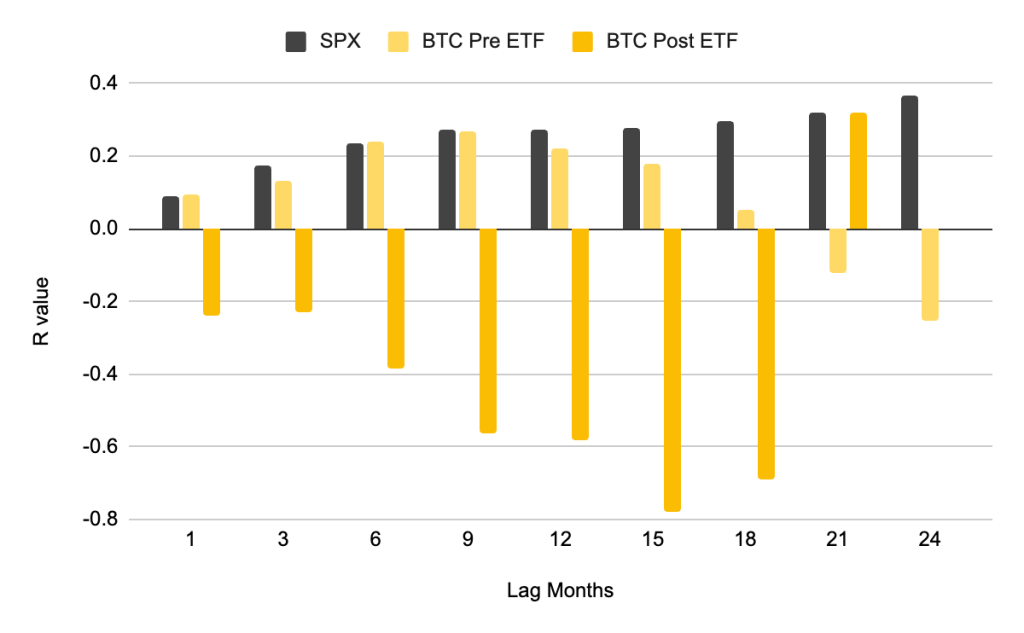
Bitcoin price correlation with Binance Research‘s Global Easing Breadth Index, a composite tracking monetary policy direction across 41 central banks, has flipped from +0.21 before spot ETF approval to −0.778 in 2026.
That isn’t a weakening of the old relationship; it’s a complete structural inversion, nearly three times stronger in the opposite direction.
The new Binance Research case study argues that Bitcoin has evolved from a macro lagging receiver to a leading pricer, front-running Fed interest rate decisions rather than reacting to them, and increasingly indifferent to ETF flow headlines that once moved the market within hours.
If that thesis holds, the entire macro playbook that active traders have used for the past decade breaks down.
CPI prints, FOMC language, and rate trajectory models were once the primary variables in any serious BTC position. In 2026, Binance’s data suggests those triggers have been demoted, and knowing what replaced them is now the edge.
- Correlation inversion: Bitcoin’s correlation with Binance’s Global Easing Breadth Index shifted from +0.21 before ETF approval to −0.778 in 2026-a complete structural reversal, not a gradual drift.
- Institutional positioning lead: ETF-driven institutional investors now build BTC positions 6–12 months ahead of Fed policy changes, making Bitcoin a forward-looking price discovery mechanism rather than a reactive risk asset.
- ETF market scale: Cumulative Bitcoin ETF inflows reached $56 billion by Q1 2026, with assets under management at $87.5 billion-approximately 6% of Bitcoin’s total market cap.
- Flow reversal signal: After $6.4 billion in outflows from November 2025 through February 2026, Bitcoin ETFs absorbed $1.3–$2.5 billion in March 2026 inflows, suggesting institutions are treating dips as accumulation opportunities.
- Supply shock trajectory: Bitwise projects ETFs will purchase more than 100% of all new Bitcoin issuance in 2026, a demand-supply dynamic with no historical precedent in BTC’s market structure.
- On-chain confirmation: Exchange reserve depletion and elevated LTH supply corroborate the Binance macro data-internal accumulation metrics, not Fed language, are now the load-bearing price drivers.
Discover: The Best Crypto Presales Live Right Now
What the Binance Data Actually Shows – and Why the Old Correlation Is Now Running in Reverse
The −0.778 correlation reading between Bitcoin price and the Global Easing Breadth Index is the headline number, but the mechanism behind it is what matters.
Before the January 2024 launch of spot Bitcoin ETFs in the United States, retail traders dominated BTC price discovery, reacting immediately to macro signals, selling on rate-hike language, and buying when easing breadth widened.
That reflex produced a mild positive correlation: more global central bank easing led to greater risk appetite, and BTC benefited.
Institutional investors entering through ETF vehicles operate on a fundamentally different timeline. Binance Research documents that these players now build positions 6–12 months ahead of expected policy changes, effectively pricing in Fed decisions before official announcements arrive.
The result: when the Fed finally eases, BTC has already moved, and the correlation appears negative to any observer measuring it in real time.
On-chain data reinforces the structural argument. Long-term holder (LTH) supply has remained at historically elevated levels through Q1 2026 despite price volatility, consistent with accumulation rather than distribution.
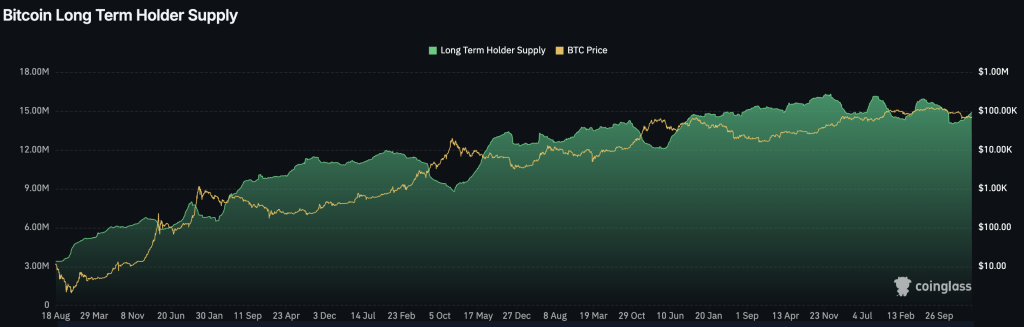
Exchange reserve depletion continues-Bitcoin held on centralized exchanges has trended lower across the cycle, a signal that coins are moving into cold storage rather than toward sell-side liquidity.
The MVRV ratio, which compares market cap to realized cap, has held below 2.0 throughout early 2026, indicating the market remains well below the euphoria zone that has historically preceded major tops.
Together, these on-chain metrics describe a market structure where supply is contracting and patient capital is dominant-conditions that make BTC less reactive to short-term macro noise, not more.
The data makes the decoupling thesis concrete: Bitcoin isn’t ignoring the Fed because traders have become irrational. It’s ignoring the Fed because the marginal buyer has changed, and the new marginal buyer already knows what the Fed is going to do.
What the Decoupling Means for How You Position in Q2 2026
The practical consequence of the Binance thesis is a signal hierarchy reorder. Traders who treat CPI prints and FOMC meetings as tier-one BTC catalysts are using outdated inputs.
The new signal stack, as the data implies, runs: ETF weekly flow data first, LTH supply and exchange reserve metrics second, legislative and regulatory developments third, and Fed language a distant fourth.
The bull case requires three conditions to remain intact: ETF inflows sustain above $1 billion per month through Q2, exchange reserves continue declining (currently trending toward multi-year lows), and LTH supply holds above 14.5 million BTC without a significant distribution event.
If those three hold simultaneously, the supply-demand math supports a price structure where $90,000 functions as support rather than resistance, and the Bitwise supply-shock thesis moves from projection to observable market dynamic.
The bear case activates if institutional conviction breaks. A return to sustained ETF outflows, specifically two consecutive months above $2 billion net negative, would signal that the marginal buyer has stepped back, removing the demand anchor that has held the decoupling structure in place.
In that scenario, macro sensitivity could partially reassert, and the $70,000–$72,000 on-chain support band identified in current technical analysis becomes the first meaningful test level.
Binance Research put it plainly: a peak in global easing may already be old news for BTC. Watch monthly ETF flow totals and LTH supply in Q2; those two numbers will confirm or invalidate the decoupling thesis faster than any Fed statement will.
Explore: The best pre-launch token sales with asymmetric upside potential
The post Binance Case Study: Bitcoin Price Is Decoupling From the Fed and ETFs in 2026 appeared first on Cryptonews.
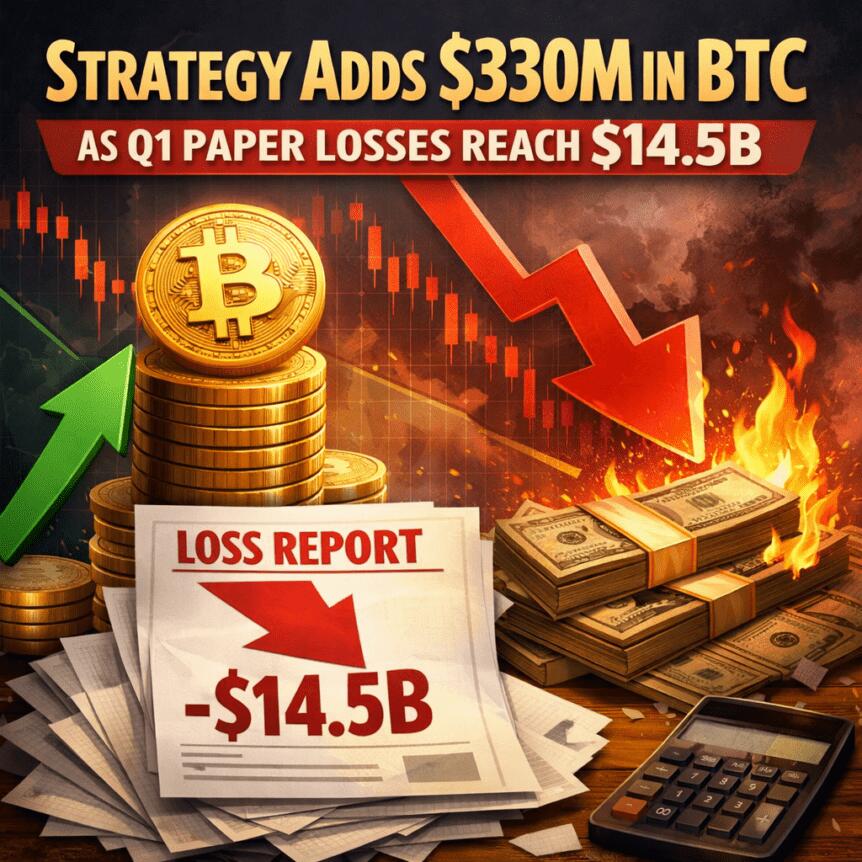
MicroStrategy’s Strategy, the world’s largest publicly listed holder of Bitcoin, resumed new purchases last week after reporting no buys in the final week of March. The company disclosed it acquired 4,871 BTC for $329.9 million, at an average price of $67,718 per coin, according to an 8-K filing with the U.S. Securities and Exchange Commission.
With these additions, Strategy’s Bitcoin stash climbs to 766,970 BTC, acquired for roughly $58 billion. The acquisitions come as Bitcoin traded below Strategy’s cost basis at times, including a dip in early February that marked the first time since late 2023 BTC traded under the fund’s average purchase price.
Key takeaways
- Strategy bought 4,871 BTC for $329.9 million in the latest week, at an average of $67,718 per BTC, bringing total holdings to 766,970 BTC (cost about $58 billion).
- The company’s first-quarter 2026 results show a $14.46 billion unrealized loss on digital assets, offset by a $2.42 billion deferred tax benefit.
- A deferred tax asset related to unrealized losses totaled $1.73 billion as of March 31, offset by a $1.73 billion valuation allowance, with an expectation of an additional $0.5 billion valuation allowance.
- Strategy purchased roughly 54,000 BTC since February 2, with March deliveries among its largest weekly buys, contributing to 89,316 BTC bought in Q1 2026 for about $6.3 billion.
- The company is expanding its at-the-market program with new $21 billion offerings for Stretch (STRC) and Common A (MSTR) stock, while terminating and replacing the prior STRK offering with a new $2.1 billion STRK program; recent share sales generated hundreds of millions of dollars in proceeds.
Strategy’s ongoing Bitcoin accumulation amid tax and valuation dynamics
The latest 8-K filing confirms that Strategy’s accumulation activity continued into the first week of April, underscoring the management’s commitment to Bitcoin as a long-term treasury reserve. The 4,871 BTC purchased last week equate to an average entry price below Strategy’s historical cost basis, reinforcing a pattern of stepping into dips rather than reducing exposure. Since February 2, the company has added approximately 54,000 BTC, signaling persistent confidence in Bitcoin as a store of value and a core part of its balance sheet strategy.
cumulatively, Strategy has spent about $6.3 billion on 89,316 BTC in the first quarter of 2026. This level of buying activity sits against a backdrop of continued price volatility in the broader crypto market, where Bitcoin has experienced retracements and recoveries within a wide trading range.
First-quarter results: unrealized losses and tax accounting under scrutiny
Strategy reported a sharp contrast in its Q1 2026 results: an unrealized loss on its digital assets of $14.46 billion, paired with a $2.42 billion deferred tax benefit. The company explained that the fair value of its Bitcoin holdings remains below its cost basis, triggering the reported deferred tax asset tied to unrealized losses.
As of March 31, the deferred tax asset related to these unrealized losses stood at $1.73 billion, offset by an equivalent $1.73 billion valuation allowance. Management indicated it expects to establish an additional $0.5 billion valuation allowance against these deferred tax assets as fair value movements continue to unfold.
The accounting picture underscores how Strategy’s mark-to-market Bitcoin position interacts with its tax posture, a dynamic closely watched by investors given the volatility of Bitcoin pricing and the company’s ongoing accumulation strategy.
ATM program expansion and latest share-offering moves
Beyond its Bitcoin purchases, Strategy disclosed plans to refresh its at-the-market (ATM) financing program, signaling a broader equity capital strategy alongside its crypto holdings. The company outlined a new $21 billion offering of Stretch (STRC) stock and a new $21 billion offering of Common A (MSTR) stock. It also terminated its previous Strike (STRK) program and launched a new $2.1 billion STRK offering. The aggregate figures reflect the total remaining capacity under both existing programs plus the newly added issuances. In practice, issuances and sales may proceed once existing capacity is exhausted or as market conditions permit.
Recent stock activity illustrates the program’s tempo: from March 30–31, Strategy sold roughly 2.28 million STRC shares and 582,550 MSTR shares, generating about $299.3 million in net proceeds. In the first five days of April (April 1–5), it sold an additional 1,000,000 STRC shares and 593,294 MSTR shares, raising approximately $174.6 million.
These capital movements accompany the ongoing Bitcoin strategy, signaling a dual approach to liquidity management: leveraging equity markets while continuing to deploy capital into BTC.
According to the 8-K filing with the U.S. Securities and Exchange Commission, Strategy’s actions reflect a disciplined, long-horizon approach to its Bitcoin holdings, balanced against tax considerations and capital-raising needs. The filing provides a detailed window into how the company navigates the interplay between crypto markets, accounting rules, and shareholder value creation.
As investors parse Strategy’s latest moves, several questions loom: will Bitcoin’s price trajectory influence the pace of further BTC purchases or redemptions? How will additional valuation allowances affect Strategy’s reported tax position in upcoming quarters? And how will the ATM program evolve in light of market conditions and the company’s broader capital strategy?
Readers should monitor Strategy’s next quarterly update for any shifts in its purchase cadence, cost-basis dynamics, and the balance between crypto exposure and equity-financing activity as the firm maintains its distinctive, long-term treasury strategy.
XRP price trades at $1.33 on April 6, up 3% over the past 24 hours, but sitting inside a developing head and shoulders pattern on the daily chart. The right shoulder is forming, and any rally from here needs to push through a 1.24 billion token supply wall overhead.
The problem is that the buying pressure, which would normally drive that kind of move, has halved since late March, raising the question of whether the current bounce has enough fuel to absorb the supply or will simply complete the bearish pattern.
A Right Shoulder Is Forming, and Two EMAs Stand in the Way
The daily chart shows a clear head and shoulders structure. The left shoulder formed in late February, the head peaked near $1.60 in mid-March, and the right shoulder is currently developing as XRP price consolidates around $1.33. The neckline sits near $1.26. A confirmed break below that level would activate a near 19% measured move.
Before the bearish pattern can be invalidated, XRP needs to reclaim two Exponential Moving Averages (EMAs), which are trend indicators that give greater weight to recent price action. The 20-day EMA sits at $1.35 and the 50-day at $1.42. The last clean reclaim of the 20-day EMA happened on March 13, after which prices rallied 15.26% and also recaptured the 50-day.
Want more token insights like this? Sign up for Editor Harsh Notariya’s Daily Crypto Newsletter here.
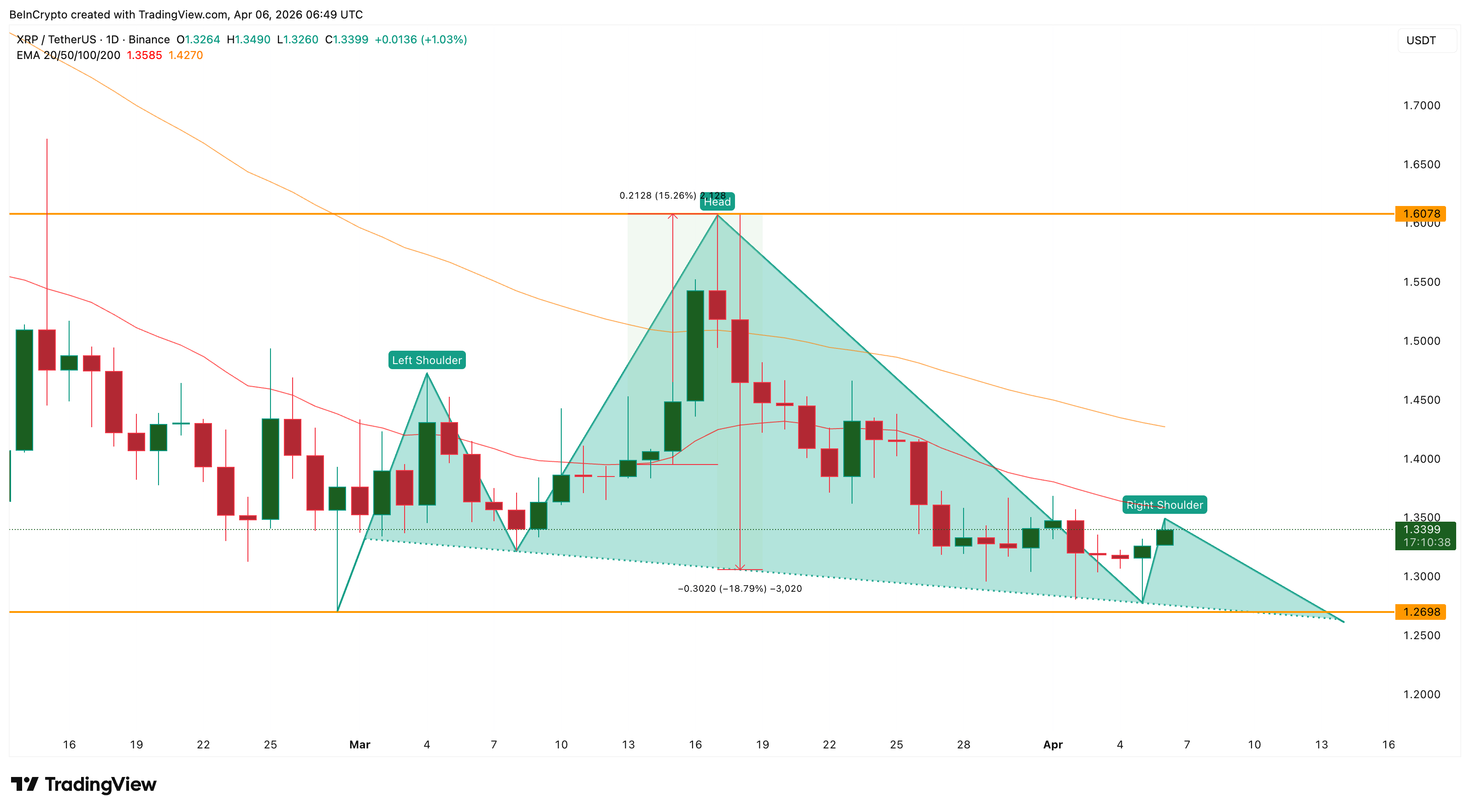
A daily close above $1.35 would reclaim the 20-day EMA and provide the first signal of short-term strength. However, any price peak that stays below the head at $1.60 remains inside the head and shoulders structure and risks forming the right shoulder rather than breaking the pattern. The supply data reveals exactly where the resistance begins (as the shoulder develops) and why absorbing it will be difficult.
1.2 Billion Tokens and Fading Conviction
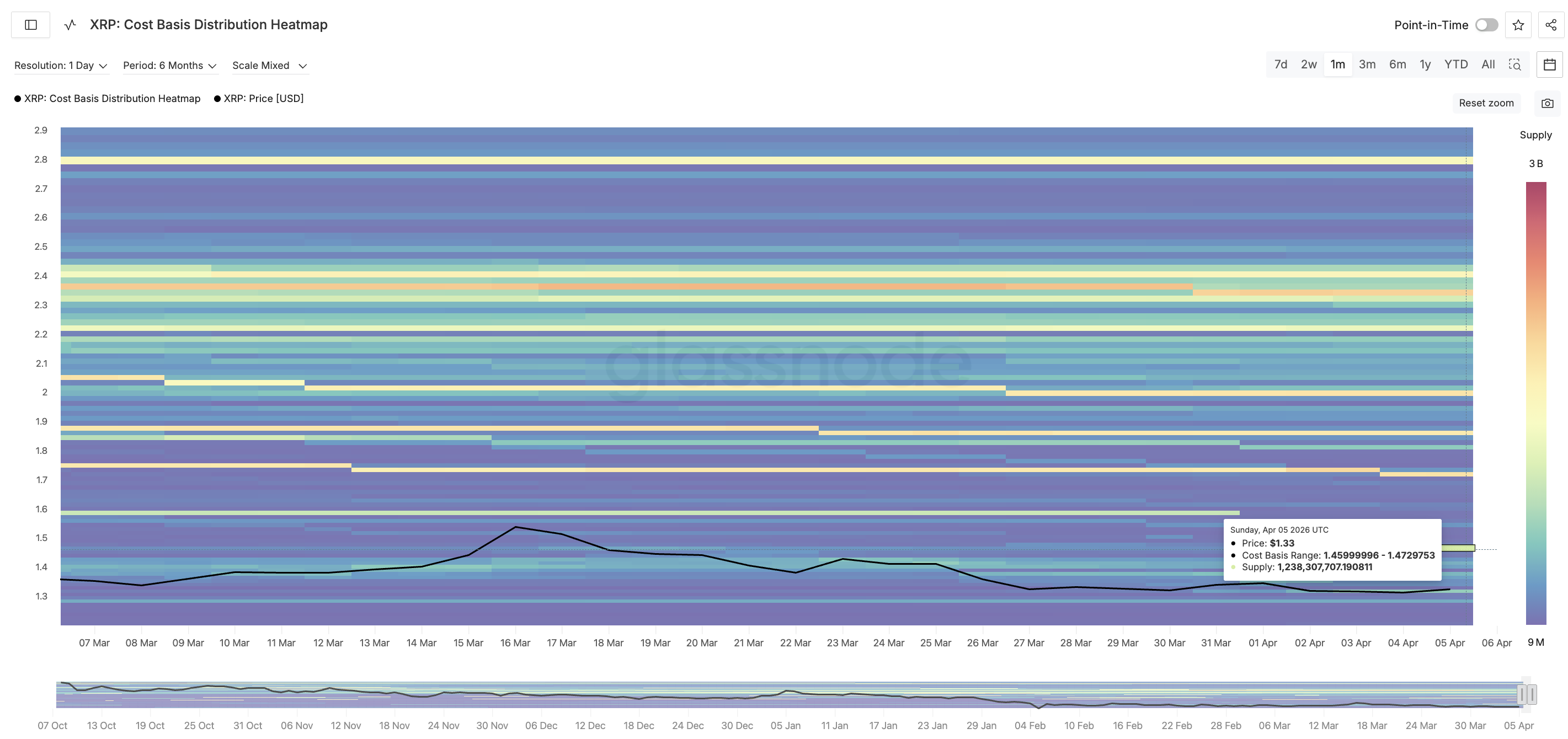
The Cost Basis Distribution Heatmap, which maps how much XRP supply was last acquired at each price level, identifies two critical clusters that frame the current setup.
The first sits between $1.31 and $1.32, where approximately 719 million XRP has its cost basis. This cluster acts as the floor supporting the right shoulder. As long as these holders remain confident and do not sell, the XRP price maintains its current level.
If this cluster begins distributing, the right shoulder would erode quickly and the neckline at $1.26 comes under direct threat.
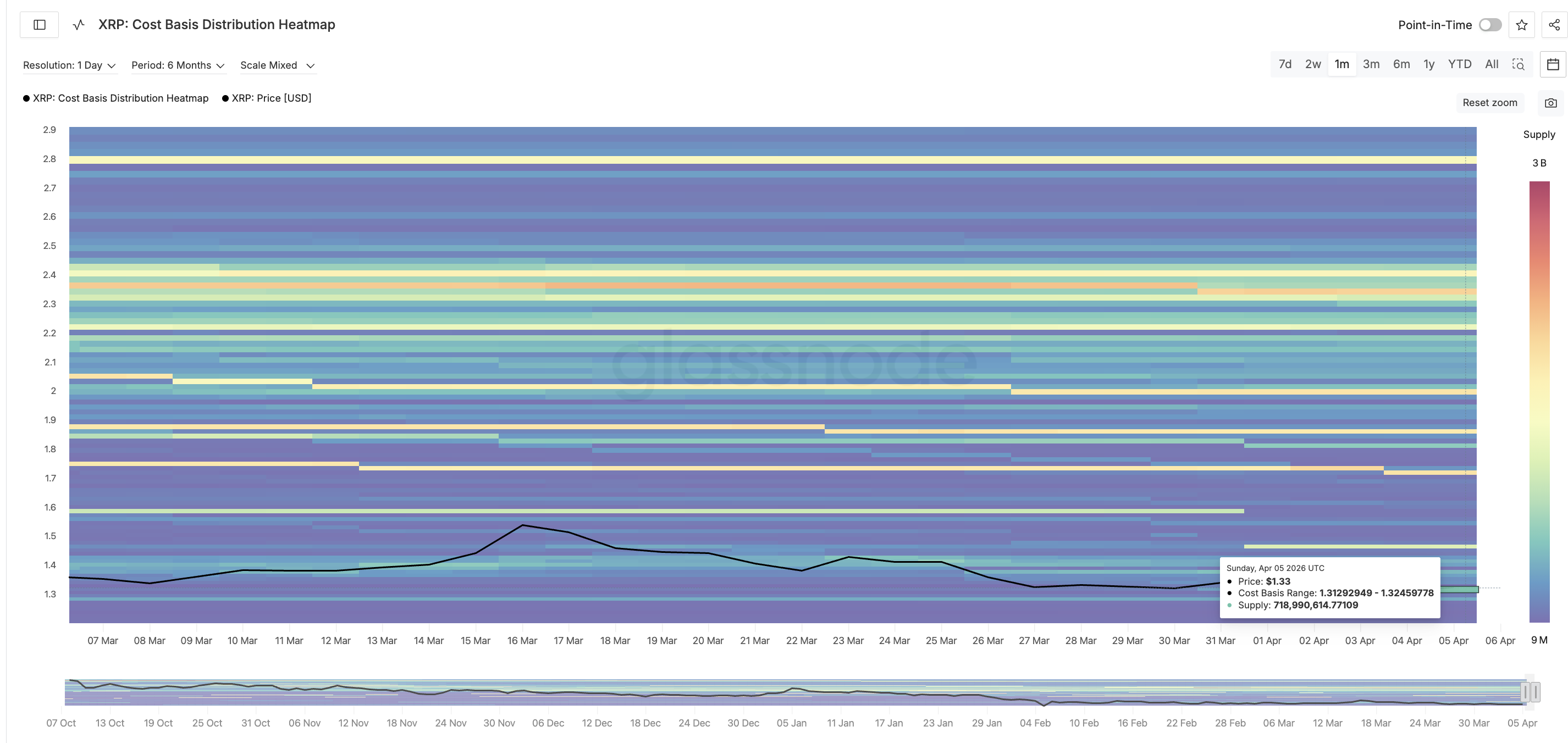
The second and larger cluster sits between $1.45 and $1.47, holding approximately 1.24 billion XRP. This is the overhead wall that any meaningful rally must absorb. These holders acquired their positions at higher prices. And they might look to exit at or near breakeven if price approaches their cost basis. Pushing through 1.24 billion tokens worth of potential selling pressure requires sustained and aggressive buying.
The Exchange Net Position Change, which tracks whether tokens are moving onto or off exchanges, reveals whether that buying power exists. A negative reading means more XRP is leaving exchanges than entering, which signals accumulation. The metric peaked at approximately -117 million XRP around late March, indicating strong buying conviction. By April 5, it had dropped to -57 million XRP, a decline of roughly 51%.
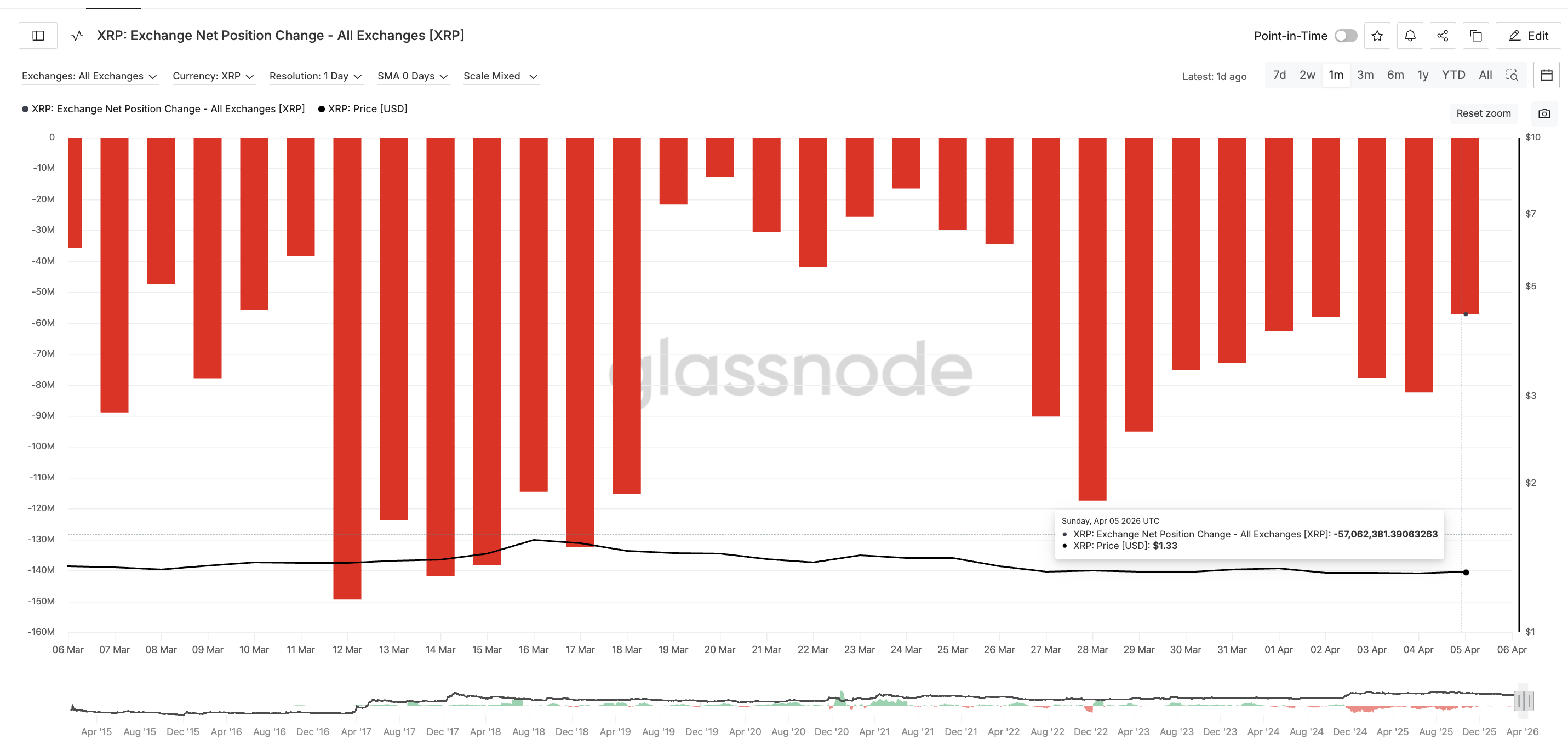
The buying pressure that supported the mid-March rally has halved. With 1.24 billion tokens sitting overhead and only half the exchange conviction remaining, the math for absorbing the supply wall becomes significantly harder. If no fresh buying power arrives, the right shoulder could finalize near this $1.45-$1.47 supply cluster zone.
XRP Price Levels Between a Breakout and a Breakdown
The daily price chart with technical levels from the completed swing frames every critical level.
The first hurdle is $1.35, the 0.236 level that closely aligns with the 20-day EMA. A daily close above this would mirror the March 13 reclaim that preceded a 15% rally. Above that, $1.40 and $1.44 come into focus, with $1.48 at the 0.618 level acting as the key confirmation. A close above $1.48 would mean that the 1.24 billion token cluster between $1.45 and $1.47 did not sell or that their selling pressure was absorbed by new demand.
The XRP price would only show genuine strength above $1.60, the head of the pattern. A reclaim of the head would fully invalidate the head and shoulders and shift the structure from bearish to bullish.
On the downside, a failure to reclaim $1.35 keeps the right shoulder intact and $1.26-$1.27 remains directly at risk. A confirmed break below the neckline at $1.26 would activate the 19% measured move and project a drop toward $1.03.
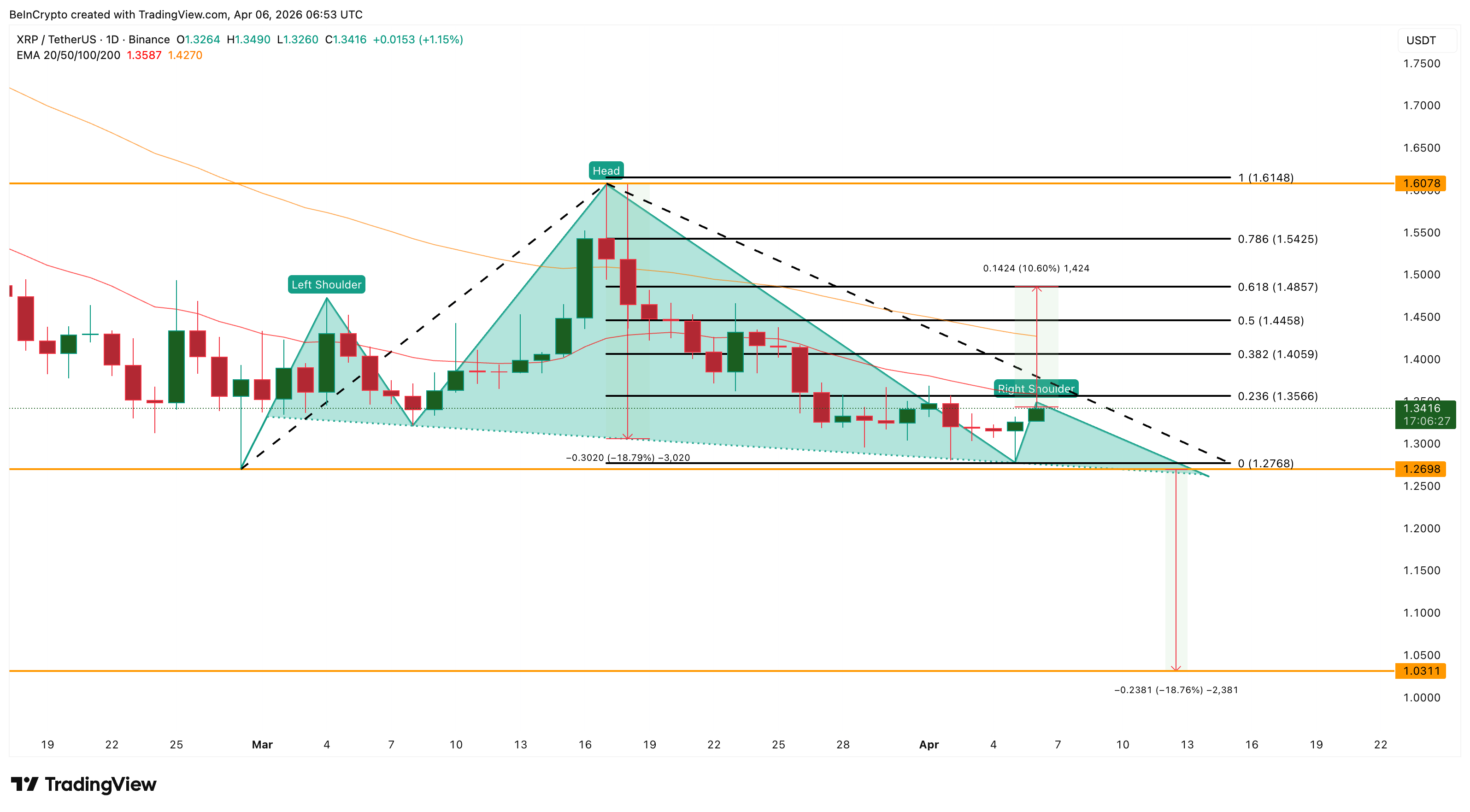
A daily close above $1.48 confirms the rally absorbed the 1.2 billion token wall. That shifts XRP price toward a potential head invalidation. However, a break below $1.26 confirms the pattern and opens a path toward $1.03.
The post XRP Price Rally Needs to Absorb 1.2 Billion Tokens, but Buying Power Is Fading appeared first on BeInCrypto.
Crypto World
The $0.000022 Window: Choosing BlockDAG Control Over XRP & Pi Network Market Competition

The crypto market in early 2026 is defined by a fascinating split between legacy recovery and fresh market entries. While established players navigate complex technical resistance and regulatory shifts, newer projects are offering structured entry points that bypass traditional market volatility.
Current Pi Network news highlights a struggle to convert technical milestones into price action, and the XRP price today remains locked in a battle with long-term moving averages.
Amidst this backdrop of “wait and see,” BlockDAG (BDAG) has surfaced with a time-sensitive $0.000022 offer, leading many to label it the best crypto to buy for those looking to avoid the friction of open-market competition. This comparative look explores the dynamics of all three.
Pi Network News: Tech Milestones vs. Market Pressure
The latest Pi Network news presents a fascinating dichotomy between developmental progress and bearish market sentiment. While the Pi Core Team recently celebrated a major technical leap, the launch of a Remote Procedure Call (RPC) server on the testnet, the price of PI remains under significant duress.
This new infrastructure is designed to unlock smart contract functionality and potential MetaMask integrations, yet retail demand hasn’t followed suit. Instead, the network is grappling with “sell-side” pressure, as PiScan data reveals deposits exceeding 1.20 million tokens onto exchanges, signaling persistent profit-taking.
Technically, the PI token is hovering precariously above the $0.1736 support level, trading below key moving averages. Despite the promise of a more robust ecosystem, delays in KYC verification and migration frustrations continue to weigh on the community. For PI to avoid a deeper correction toward its February lows, it must bridge the gap between its ambitious backend upgrades and the cautious sentiment of its massive user base.
XRP Price Today: Navigating Resistance & Regulatory Shifts
The XRP price today reflects a delicate balancing act between short-term stabilization and lingering bearish pressure. Currently trading around $1.34, the asset has managed a modest 2.04% gain, yet it remains firmly capped by its major moving averages, including the SMA-20 and SMA-50.
Technical indicators like the RSI in the low 40s and a negative Awesome Oscillator suggest that while downside exhaustion is present, a bullish reversal is not yet in the cards. Analysts expect a sideways drift between $1.32 and $1.39 over the coming days, with a decisive break above $1.45 needed to shift the narrative.

Despite the muted price action, fundamental developments are brewing. Ripple is making strides toward obtaining a national trust bank charter under a new 2026 federal regulatory framework, a move that could redefine its institutional utility.
However, with co-founder Jed McCaleb planning to reallocate $1 billion of his holdings, investors remain cautious. For now, the XRP market is a zone of “wait and see,” as traders watch for technical exhaustion to turn into a genuine recovery spark.
BlockDAG: Why the $0.000022 Entry Makes it the Best Crypto to Buy Now
The clock is ticking on a rare market anomaly that positions BlockDAG as the best crypto to buy for those prioritizing strategy over a scramble. With only days remaining in this phase, the opportunity to secure BDAG at the fixed price of $0.000022 is rapidly closing.
While the asset already reflects a value above $0.20 on CoinMarketCap, this final presale phase allows participants to enter at a fraction of the current market price. This is the fundamental difference between exercising control over your portfolio and fighting against the inevitable competition of open-market trading.
As global exchanges activate and liquidity begins to flow across international borders, the transition from a structured presale to public trading will be swift. In just 96 hours, the price will no longer be defined by a set schedule but by the raw force of global demand. When the floodgates open, the entry points will become tighter and significantly more volatile. By loading your wallet now, you lock in priority and bypass the friction of the upcoming market acceleration.

The momentum is visible, and the target is set. With the project already eyeing a climb toward the $1 milestone, the current $0.000022 entry represents a final moment of calm before the storm of institutional and retail competition.
Choosing to act today means you are no longer just watching the market; you are staying ahead of it. Secure your position, beat the crowd, and join the move before the open market shift changes the game forever.
Key Takeaways
Navigating the current crypto landscape requires a balance between monitoring established trends and identifying unique entry points.
While the latest Pi Network news shows a community waiting for technical utility to manifest in price, and the XRP price today remains tethered to institutional and regulatory hurdles, BlockDAG presents a more direct opportunity. Its $0.000022 presale price offers a level of control that is rare in a market often defined by chaos.
With only days left to act, BlockDAG has emerged as the best crypto to buy for those ready to move before the global exchange activation. Transitioning from a spectator to a priority participant is the key to outperforming the broader market competition.

Presale: https://purchase.blockdag.network
Website: https://blockdag.network
Telegram: https://t.me/blockDAGnetworkOfficial
Discord: https://discord.gg/Q7BxghMVyu
Disclaimer: This is a Press Release provided by a third party who is responsible for the content. Please conduct your own research before taking any action based on the content.



Opinion by: Dominic Lohberger, chief product officer at Sygnum.
Counterparty risk in crypto markets has always moved in cycles. Exchanges default or get hacked. Standards tighten for a while. Then, complacency quietly returns as losses are forgotten.
What is happening this time is different.
Leading traditional finance players entering crypto must adopt practices from established financial markets. For the first time, the infrastructure exists to enable them to do so. They can mirror assets held with regulated custodians onto trading venues without ever depositing on-exchange.
This is a lasting change in how serious money actually moves through digital assets.
The separation of powers
Consider the mergers and acquisitions deal flow. Ripple deployed $1.25 billion to acquire Hidden Road. Hidden Road is a global multi-asset prime broker. This was the largest acquisition in crypto history. It signalled that institutional trading infrastructure is where value will concentrate.
Standard Chartered is building a crypto prime brokerage under its venture arm. These are infrastructure bets by firms that see where the market is heading.
For most of crypto’s history, exchanges have played every role at once. From trading venues, custodians and clearing houses, exchanges played them all. That conflation of roles was a necessity in Bitcoin’s earliest days. It was never going to survive institutional adoption at scale. The FTX collapse made that risk glaring, and the $1.4 billion Bybit hack reinforced it. The broader patterns of 2025 showed where counterparty exposure became a first-order operational risk. That’s where the separation of custody from execution became a baseline institutional requirement.
In traditional finance, this separation of powers is a bedrock principle. Crypto is finally catching up. A growing number of regulated off-exchange custody solutions now make this possible in practice. They allow institutions to hold assets with a custodian while trading on exchanges, with balances mirrored and settlement automated. Capital efficiency and security no longer have to be traded off against each other. Most market makers, hedge funds and OTC desks use some form of off-exchange custody. What was once considered a cost has become a basic pillar of risk management.
Two models, with different trade-offs
The market now offers two distinct approaches to removing exchange counterparty risk, and they solve different problems.
Off-exchange custody, sometimes called tri-party arrangements, allows traders to hold assets with a third-party custodian while receiving a mirrored balance on the exchange. If the custodian holds those assets segregated and off-balance-sheet, counterparty risk is eliminated. These setups tend to be cost-efficient because the custodian does not need to deploy its own balance sheet.
Prime brokerage is operationally richer. A prime broker acts as an intermediary and offers unified onboarding across exchanges, cross-venue net settlement and leverage. These are critical for market makers running strategies across dozens of venues. That active role means counterparty risk shifts from the exchange to the prime broker. In traditional finance, that risk is backstopped by investment banks with massive balance sheets. In crypto, the largest prime brokers are growing but still carry comparatively modest balance sheets. They’re capable and well-connected, but not yet at the scale of globally systematically relevant investment banks. Some institutional clients are comfortable with that trade-off.
The collateral economics that changed the conversation
The part of this shift that deserves equal attention is how collateral now works. When a custodian is a bank, it can accept traditional financial instruments as collateral, and that changes the economics. An institutional client holding short-dated US Treasurys can pledge them as collateral, mirrored onto an exchange at full loan-to-value. The T-bills never leave the custodian. The custody fees are a mere fraction of the yield this provides. The client earns a net positive return on collateral that protects them from exchange default.
Related: BitGo launches portfolio-based crypto lending platform for institutions
The vast majority of collateral deployed in bank-grade off-exchange custody structures today is in T-bills. When counterparty protection generates yield instead of costing money, the adoption question flips from “should we de-risk?” to “why are we leaving yield on the table?” The exception is strategies like the basis trade, where the client must pledge the underlying asset itself. Even there, holding crypto with an independent custodian reduces the risk surface.
What comes next
The eligible collateral story is expanding fast. Stablecoins are already accepted across multiple off-exchange setups. Tokenized money market funds that accrue yield continuously in real-time are next. The direction is toward multi-asset collateral frameworks that allow institutions to shift margin between venues and ensure security. In crypto, that reallocation can happen in near real-time around the clock.
In the months ahead, more global systemically important banks will enter off-exchange custody. This will rapidly widen the range of accepted collateral. As both models mature, custodians may add more operational tooling. Prime brokers will strengthen their custody frameworks. This will continue until the distinction matters less than the outcome. That outcome is institutional-grade risk management.
The crypto industry spent the better part of a decade debating whether institutions would arrive. They have, and they are not adapting to crypto’s infrastructure. Crypto’s infrastructure is adapting to them. The firms that recognise this shift and build accordingly will define the next era of digital asset markets. The ones that don’t will be left managing yesterday’s risk with yesterday’s tools.
Opinion by: Dominic Lohberger, chief product officer at Sygnum.
This opinion article presents the author’s expert view, and it may not reflect the views of Cointelegraph.com. This content has undergone editorial review to ensure clarity and relevance. Cointelegraph remains committed to transparent reporting and upholding the highest standards of journalism. Readers are encouraged to conduct their own research before taking any actions related to the company.
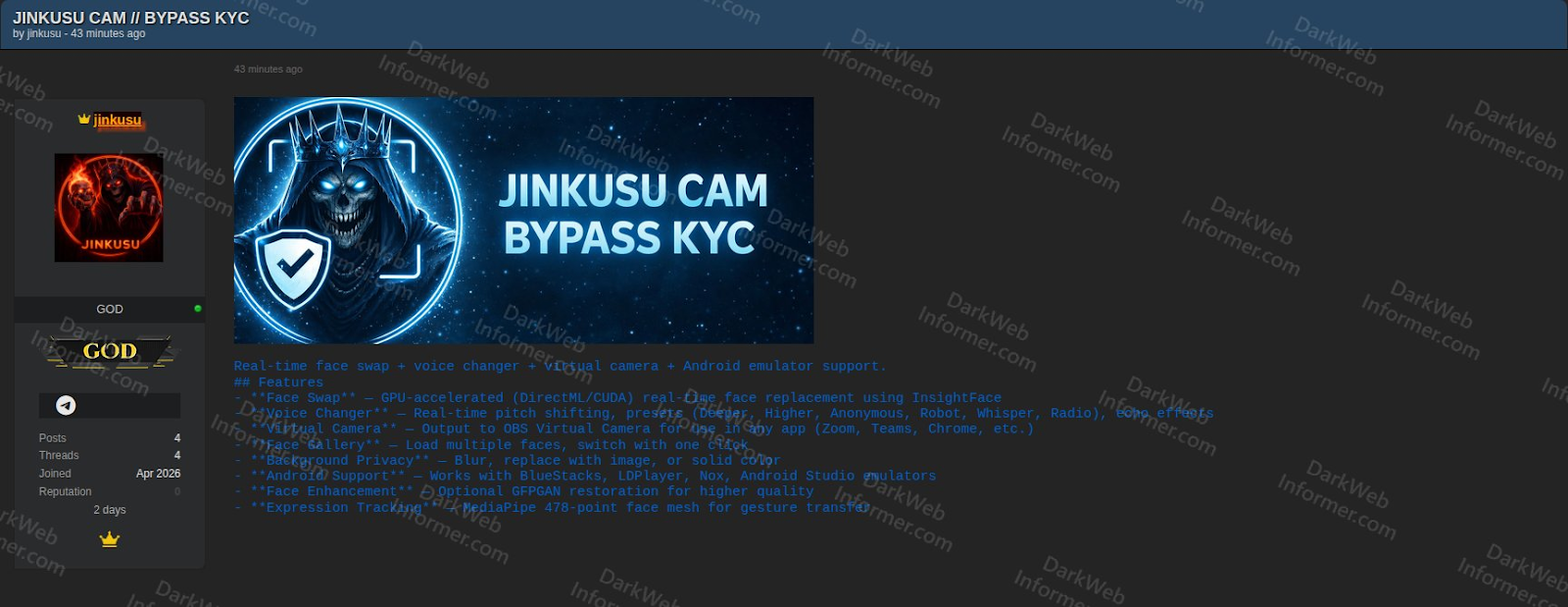
A threat actor known as “Jinkusu” is allegedly selling cybercrime tools designed to bypass Know Your Customer (KYC) checks at banks and crypto platforms.
The tool uses deepfakes and voice manipulation to trick KYC verification systems on finance platforms, cybercrime tracker Dark Web Informer wrote in a Sunday X post.
Cybersecurity company Vecert Analyzer added that Jinkusu uses AI for real-time face swaps via InsightFace for “fluid gesture transfers,” along with voice modulation to evade biometrics.

The emergence of deepfake tools is a “wake-up call” for the industry, as it highlights the shortcomings of KYC verification systems, according to Deddy Lavid, CEO of blockchain security platform Cyvers.
“As AI lowers the barriers to synthetic identity fraud, the front door will always remain vulnerable,” Lavid told Cointelegraph, urging platforms to adopt a layered security approach combining identity verification with real-time AI monitoring.
AI can crack KYC systems with a single picture
Binance chief security officer Jimmy Su highlighted the growing threat of deepfake technology back in May 2023.
He warned that improving AI algorithms will be able to crack KYC identity systems by using a single picture of the victim.
Related: Revolut confirms ex-employee threatened to leak KYC data for crypto ransom
The new fraud kit also enables scammers to run romance scams, such as “pig butchering,” with no technical knowledge.
Crypto investors lost $5.5 billion to 200,000 flagged pig butchering cases in 2024.
Scam-as-a-service threatens crypto investors
The author of the new fraud package, Jinkusu, is suspected to be the same threat actor who released the phishing kit Starkiller in February 2026.
Unlike traditional, HTML-based phishing kits, Starkiller creates a real-time reverse proxy by creating a headless Chrome browser inside a Docker container, loading the genuine login page of the target brand and relaying all user input, including login and passwords, to the threat actor, explained cybersecurity platform Abnormal, in a Feb. 19 report.

While losses to crypto phishing attacks fell 83% in 2025, malicious crypto wallet drainer scripts remained active and new malware continued to emerge, Scam Sniffer said in a January report.
Magazine: Everybody hates GPT-5, AI shows social media can’t be fixed


Strategy was willing to lose more than a billion dollars buying bitcoin (BTC) during the first three months of 2026. Had management not made that sacrifice on behalf of their shareholders, almost no other buying would have occurred at publicly traded bitcoin companies.
If it wasn’t for Michael Saylor’s money-losing, leveraged trades at Strategy (formerly MicroStrategy), 94% of BTC purchased by public companies in Q1 2026 would have never happened.
As of Friday’s market close, Strategy had lost $6.7 billion over its corporate lifetime buying 762,099 BTC at an average $75,694 apiece. At the New York close of trading for Strategy’s MSTR common stock on Friday, BTC was trading at $66,830 or 11.7% below Strategy’s average cost basis.
Limiting the time window to Q1, Strategy purchased 88,594 BTC between January and March, spending $7.25 billion at a volume-weighted average of $80,929 per coin. At Friday’s close, it had lost $1.25 billion or $14,099 per BTC on those purchases.
Read more: Buying the dip? Strategy prefers the top of the range
Across the quarter as well as during the month of March, Strategy represented 94% of the roughly 47,000 BTC acquired by all corporate treasuries, per a report from BitcoinTreasuries.net.
In January, the company similarly accounted for 93% of gross corporate buying, per the same tracker.
Indeed, all other 194 public companies combined added a comparatively paltry 4,000 BTC over Q1.
One company with two-thirds of all assets in its industry
Strategy now holds 762,099 BTC, roughly 65% of all bitcoin on public company balance sheets.
Over the weekend, BTC was trading below $67,000, well below Strategy’s 2026 average purchase price.
As of Friday, the company’s entire Q1 buying activities lost more than $1.2 billion for its shareholders.
The contrast with the rest of the sector is remarkable. Non-Strategy treasury companies purchased a combined 1,000 BTC in the 30 days ending late March, a nearly 99% decline from their August 2025 peak of 69,000 BTC. Their share of total corporate purchases collapsed to 2%, down from 95% in October 2024.
Several large bitcoin treasury companies actually liquidated portions of their holdings. MARA Holdings sold over 15,100 BTC for roughly $1 billion in Q1. Riot Platforms dumped over 3,700 BTC for about $290 million. Cango slashed holdings by roughly 60%, unloading more than 4,400 BTC. Bitdeer Technologies fully liquidated its bitcoin treasury over several months, reducing its position to zero.
The only other notable buyer was Japan’s Metaplanet, which acquired 5,075 BTC at roughly $79,900 per coin, vaulting past MARA to become the third-largest corporate holder at 40,177 BTC.
Strategy leads industry buys and its losses
Worse, Protos has previously documented how Strategy consistently bought near the top of each week’s trading range. Across 12 weekly SEC filings in Q1, Saylor’s purchases landed above the midpoint of the available price range 80% of the time.
Strategy funded its Q1 buying mostly through dilution of its non-dividend paying MSTR common stock as well as sales of STRC preferred shares, which pay an 11.5% annualized dividend.
Strategy’s common stock has lost 21% year to date and sits 74% below its 52-week high.
Corporate bitcoin has lost its appeal and consolidated toward a one-buyer market. Strategy holds more BTC than the next couple hundred public companies combined, and it purchased more in a single quarter than all of them put together.
Got a tip? Send us an email securely via Protos Leaks. For more informed news, follow us on X, Bluesky, and Google News, or subscribe to our YouTube channel.
The U.S. Department of the Treasury has announced a major milestone in the rollout of its new “Trump Accounts” program. It named BNY Mellon as its official financial agent and bringing Robinhood on board as a key partner.
According to a Treasury statement released Monday, BNY Mellon will oversee the management of the initial accounts while also helping develop a dedicated mobile application designed to give families easy access to their funds.
Treasury Partners Robinhood and BNY Mellon to Launch Trump Accounts App
The app, described as a secure, white-label platform, is being built exclusively for the Treasury and will remain under full government control.
Robinhood’s role will center on brokerage services, acting as the initial trustee for the accounts. This partnership signals a notable collaboration between traditional banking infrastructure and a fintech platform known for its retail investing reach.
“We’re bringing our technology and resources to this groundbreaking initiative to democratize finance for the next generation,” Robinhood shared on X.
Officials say the goal of the Trump Accounts initiative is to streamline financial access for eligible families, with a strong emphasis on usability and security.
The platform’s interface is being designed to ensure that even first-time users can navigate their accounts with confidence.
The Treasury emphasized that, despite private-sector involvement, it will maintain strict oversight of the program. This includes enforcing performance standards, safeguarding public funds, and ensuring compliance with federal regulations.
The announcement comes as part of broader efforts tied to financial inclusion and literacy initiatives, with the government aiming to expand access to structured savings or investment accounts for younger Americans.
While details on eligibility and funding mechanisms are still emerging, the partnership with BNY Mellon and Robinhood marks a significant step toward bringing the Trump Accounts program from concept to reality.
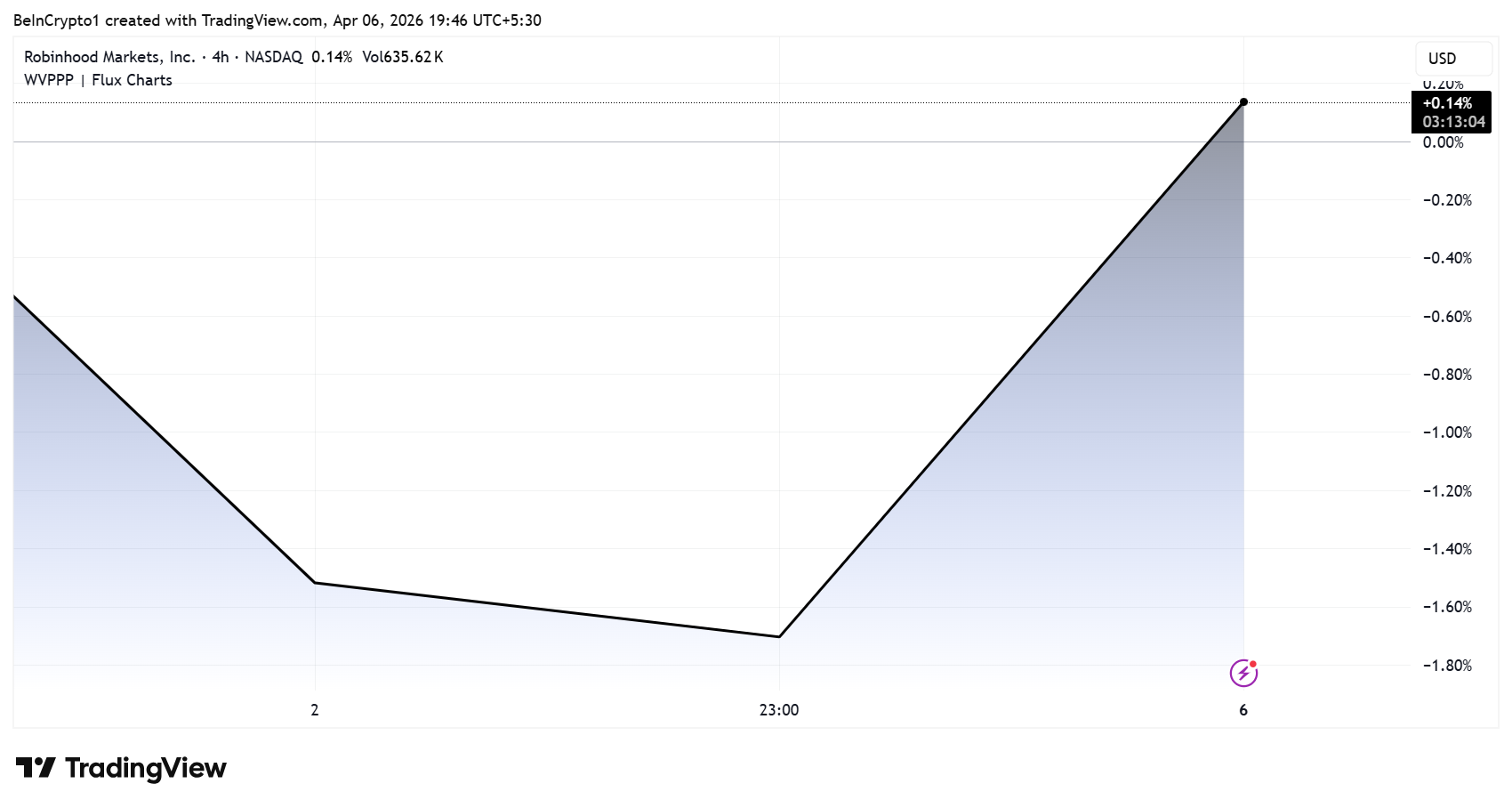
Despite the news, Robinhood’s HOOD stock only saw a modest surge, rising only slightly. As of this writing, HOOD was trading for $70.13.
The post Trump Accounts Go Live: Kids Get Early Access to Investing Via Robinhood and BNY appeared first on BeInCrypto.

Key Takeaways
- Commercial spaceflight operations remain suspended at Virgin Galactic while the company develops its Delta Class spacecraft program.
- The inaugural test flights for the new spacecraft are scheduled for Q3 2026, with commercial operations targeting a Q4 2026 launch.
- Q4 2025 revenue totaled a mere $0.31 million, reflecting the operational pause.
- The company recorded negative free cash flow of $438 million throughout 2025, representing improvement year-over-year despite the magnitude.
- Analyst sentiment leans bearish with a Reduce rating and a consensus 12-month price target of $3.45.
Shares of SPCE are trading at significantly depressed valuations, with the Street’s consensus 12-month forecast pegged at $3.45.
Virgin Galactic Holdings, Inc., SPCE
The space tourism company reported minimal quarterly revenue of $0.31 million during Q4 2025. Flight operations have been deliberately suspended while resources focus on developing the Delta Class fleet.
For the complete 2025 fiscal year, free cash flow registered at negative $438 million. This figure encompasses $240 million in operational cash usage plus an additional $198 million allocated to capital investments.
While the latest earnings release showed the company exceeded analyst estimates on a loss-per-share basis, the virtually nonexistent revenue makes this achievement largely symbolic.
The Delta Class system promises enhanced flight frequency capabilities and significantly reduced operational expenses compared to Virgin Galactic’s earlier generation technology. The prior platform generated substantial public interest but ultimately failed to achieve commercial viability at scale.
Company leadership has established an explicit development schedule. Initial test operations are targeted for Q3 2026. Following successful testing, commercial service resumption is planned for Q4 2026, beginning with a research-focused mission.
For shareholders in SPCE, this timeline represents the critical factor determining the investment thesis. Execution failures will likely intensify downward pressure on shares. Successful milestone achievement could reinvigorate investor interest and market confidence.
Liquidity Concerns Demand Attention
Virgin Galactic continues consuming substantial capital reserves while generating virtually zero flight revenue. Each passing quarter without operational Delta Class spacecraft extends the financial runway required.
The year-over-year reduction in cash consumption from 2024 to 2025 provides some reassurance, yet the absolute figures remain substantial. The company must eventually reach an operational state where flight revenues meaningfully offset ongoing expenditures.
Current financial disclosures don’t suggest immediate solvency concerns, but liquidity management will remain a focal point for investors as the 2026 milestones draw closer.
Analyst Perspectives on SPCE
Wall Street analysts maintain a Reduce consensus rating on SPCE stock. The breakdown includes 1 buy rating, 3 hold ratings, and 2 sell ratings, per MarketBeat data.
The consensus 12-month target price stands at $3.45. While this suggests modest appreciation potential from current trading levels, it underscores the prevailing analyst skepticism.
The Virgin Galactic brand maintains recognition. The high-profile founder narrative continues generating media coverage. However, neither factor directly funds Delta Class development costs.
Absent tangible flight performance data and meaningful revenue generation, analyst community sentiment is unlikely to shift materially in a positive direction.
Bottom Line
Virgin Galactic represents a high-risk, binary investment proposition as the second half of 2026 approaches. The outcome hinges on whether Delta Class achieves performance targets and commercial operations restart according to plan, or whether additional delays materialize and financial sustainability becomes increasingly questionable.
A legitimate catalyst exists on the near-term horizon. The Q3 2026 testing phase and subsequent Q4 2026 commercial restart constitute a meaningful opportunity to transform the company’s narrative trajectory.
Analyst sentiment remains decidedly cautious, reflected in the Reduce consensus and $3.45 average target, while SPCE continues generating essentially zero revenue in the interim.
Startup Battlefield 200 applications open until May 27

Sort Your Life Out fans ‘can’t wait’ as expert shares huge announcement

Marine Biologics launches seaweed powder ingredient

Smart energy pays enters the US market, targeting scalable financial infrastructure

Why Israel is blocking foreign journalists from entering

Bitcoin: We’re Entering The Most Dangerous Phase

HDFC BANK #equitymarket #financialfreedom #financeshorts #finance #nbstocksnew#hdfcbank #share

XRP PATH TO $XXXX IS HAPPENING – BANKS DON’T CARE ABOUT THE ESCROW – RIPPLE AT SIBOS 2026 WOW!

ICICI PRUDENTIAL AMC#equitymarket#financialfreedom#stockmarket#financeworld#iciciprudential#finance
-

 NewsBeat4 days ago
Steven Gerrard disagrees with Gary Neville over ‘shock’ Chelsea and Arsenal claim | Football
-

 Business4 days ago
No Jackpot Winner and $194 Million Prize Rolls Over
-

 Fashion3 days ago
Weekend Open Thread: Spanx – Corporette.com
-

 Crypto World5 days ago
Gold Price Prediction: Worst Month in 17 Years fo Save Haven Rock
-

 Business16 hours ago
Three Gulf funds agree to back Paramount’s $81 billion takeover of Warner, WSJ reports
-
Crypto World6 days ago
Dems press CFTC, ethics board on prediction-market insider trades
-

 Sports2 days ago
India men’s 4x400m and mixed 4x100m relay teams register big progress | Other Sports News
-

 Business5 days ago
Login and Checkout Issues Spark Merchant Frustration
-

 Tech7 days ago
Apple will hide your email address from apps and websites, but not cops
-

 Tech6 days ago
EE TV is using AI to help you find something to watch
-

 Sports6 days ago
Tallest college basketball player ever, standing at 7-foot-9, entering transfer portal
-

 Politics7 days ago
Should Trump Be Scared Strait?
-
Tech6 days ago
Daily Deal: StackSkills Premium Annual Pass
-

 Tech6 days ago
Flipsnack and the shift toward motion-first business content with living visuals
-

 Sports7 days ago
Women’s hockey camp eyes fitness boost, tactics ahead of WC 2026 campaign | Other Sports News
-

 Crypto World7 days ago
U.S. rule change may open trillions in 401(k) funds to crypto
-

 Politics7 days ago
BBC slammed for ignoring author of The Fraud
-

 Tech6 days ago
How to back up your iPhone & iPad to your Mac before something goes wrong
-

 Tech7 days ago
This is a 3D-Printed Macintosh That Apple Never Built
-

 NewsBeat7 days ago
Newscast – Scott Mills Sacked By BBC
You must be logged in to post a comment Login