

Crypto World
Bitcoin Options Traders Brace for Volatility

Bitcoin options traders remain heavily positioned for downside protection, with both crypto-native and exchange-traded fund investors showing elevated demand for downside hedges, according to new research by Anchorage Digital’s head of research, David Lawant.
The report analyzed options activity across Deribit, BlackRock’s iShares Bitcoin Trust (IBIT) and Strategy (MSTR), saying the three markets together provide a broader view of crypto-native, institutional and retail investor sentiment than any single options market alone.
Both Deribit and IBIT options markets showed elevated put skew, indicating traders are paying a premium for downside protection rather than positioning for further gains. The report found defensive positioning ranked in the 82nd percentile of IBIT’s history and the 84th percentile of Deribit’s five-year history.
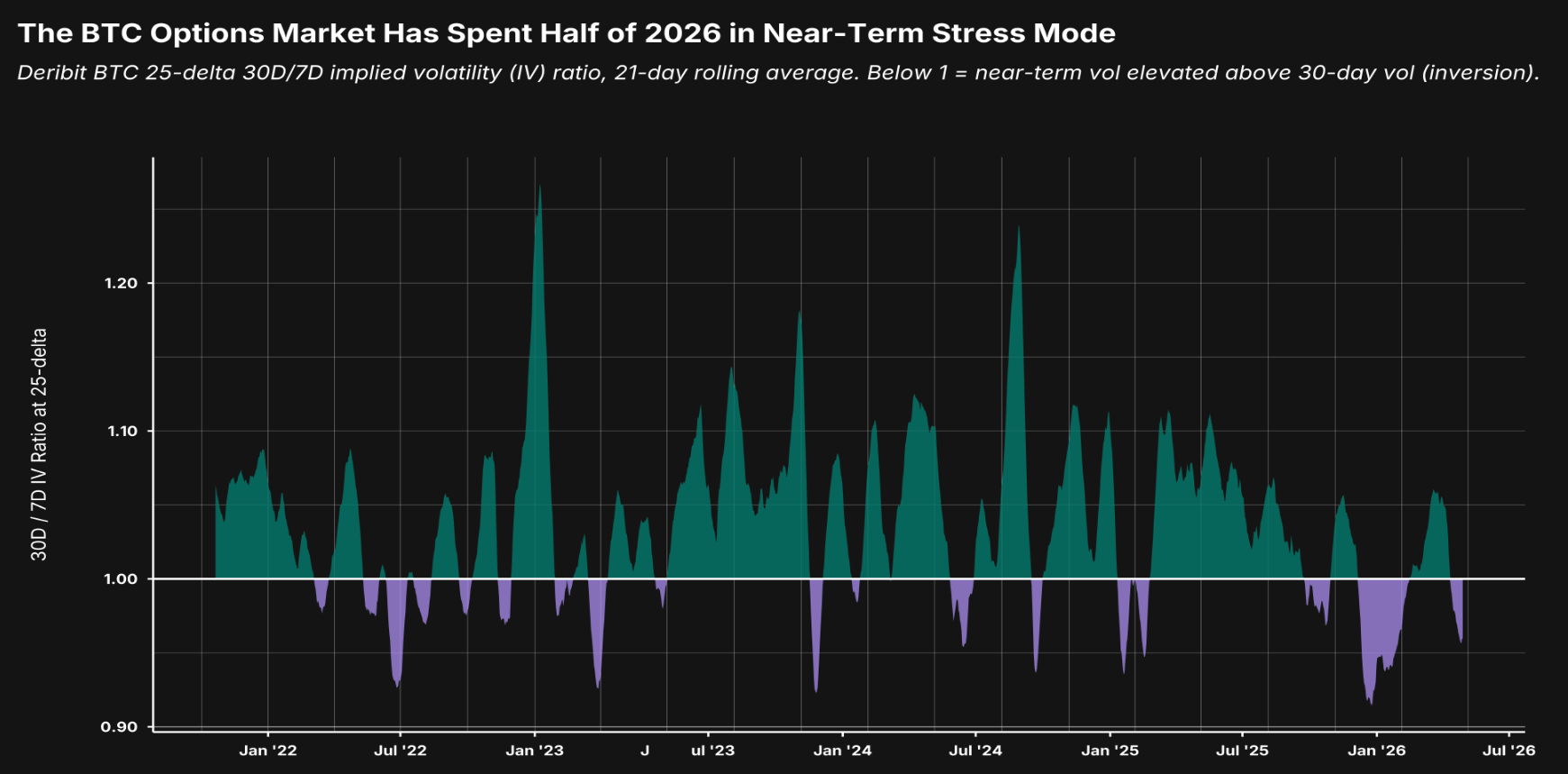
Anchorage also found that Bitcoin (BTC) options markets have spent nearly half of 2026 pricing higher implied volatility over the next week than over the next month, an unusual inversion that has historically been episodic and short-lived. The report attributed the pattern to a succession of macroeconomic, geopolitical and crypto-specific catalysts that have kept traders focused on near-term risks.
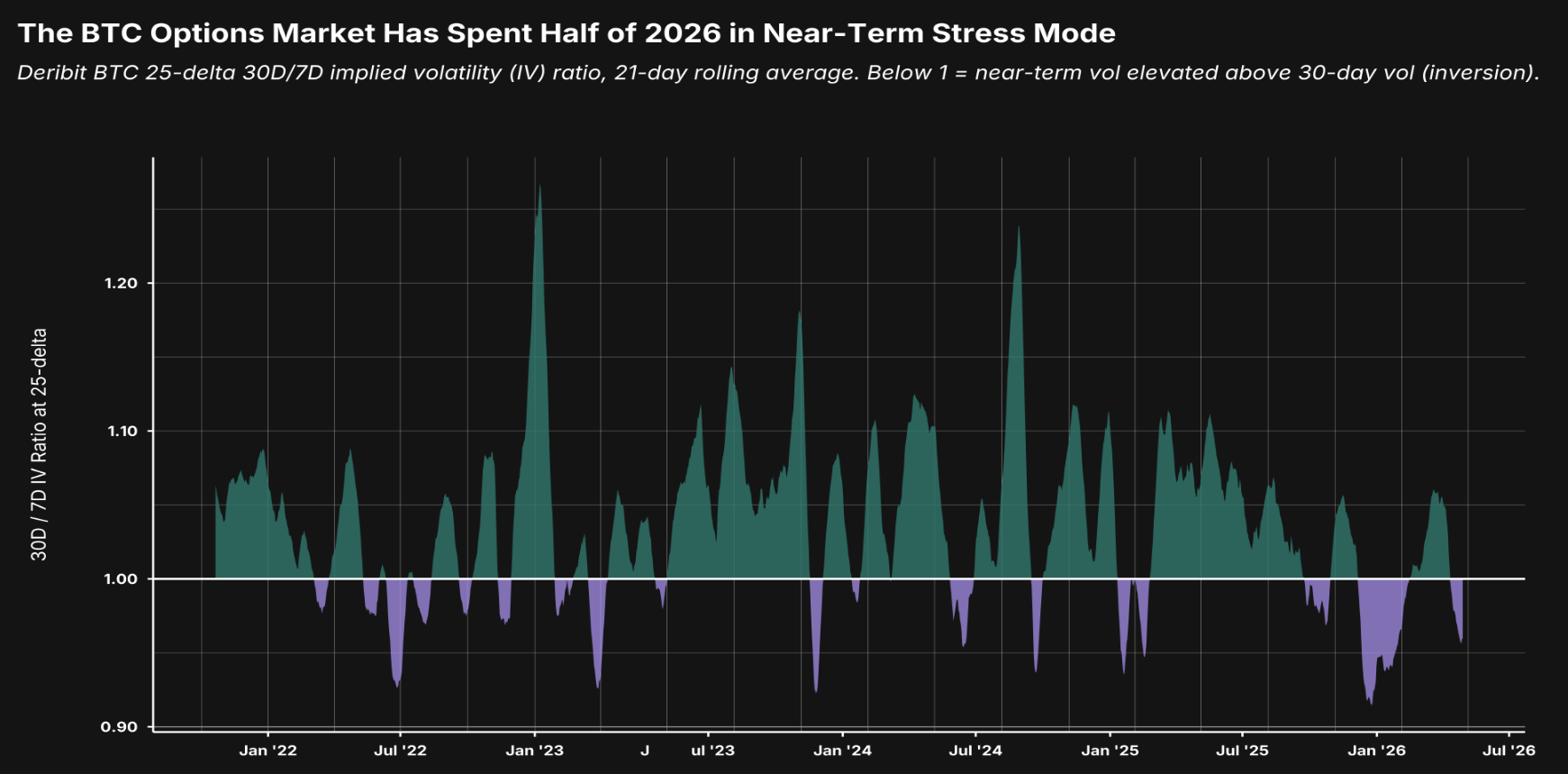
Bitcoin options 30-day/7-day implied volatility ratio. Source: Anchorage Digital report
Taken together, the findings suggest options traders remain focused on managing near-term risks rather than positioning for a clear directional move. Lawant said he is watching for one-month implied volatility to once again exceed one-week implied volatility, a shift he said would indicate markets are becoming more comfortable looking beyond immediate risks.
Related: Bitcoin price is down over 40% since STRC launched: Is Strategy ‘fine’?
Options market not signaling Strategy crisis
The analysis from Anchorage Digital also suggests investors remain cautious but are not pricing a severe downside scenario for Strategy despite recent weakness in the company’s preferred and common shares.
Strategy’s perpetual preferred stock, STRC, fell as low as $82.53 on June 22, or about 17% below its $100 par value, before partially recovering after the company disclosed it had increased its fiat reserves to $1.3 billion. As of Thursday, it was trading around $77, roughly 23% below par.
The weakness has extended beyond STRC. Strategy’s common shares (MSTR) were down about 78% over the past year and traded around $87 on Thursday, according to Yahoo Finance data.
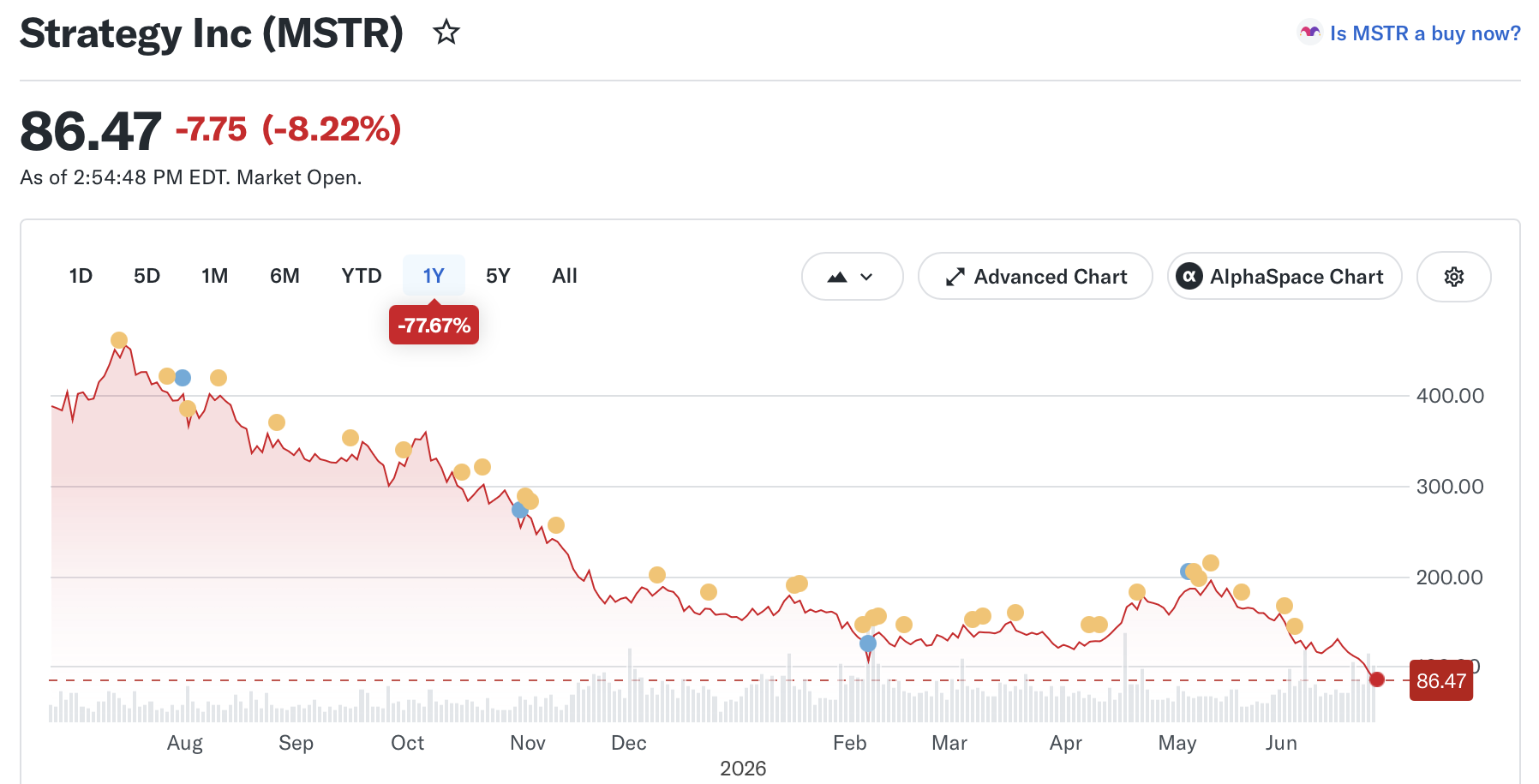
Strategy stock. Source: Yahoo Finance
Despite the sell-off, Anchorage found that Strategy’s options market remains well below stress levels seen during previous market corrections. While traders continue to hedge against downside risk, put skew has not reached levels typically associated with fears of forced deleveraging or a broader crisis, according to the report.
Strategy, led by Executive Chairman Michael Saylor, pioneered the corporate Bitcoin treasury model in 2020 and remains the world’s largest corporate holder of Bitcoin, with 847,363 BTC on its balance sheet.
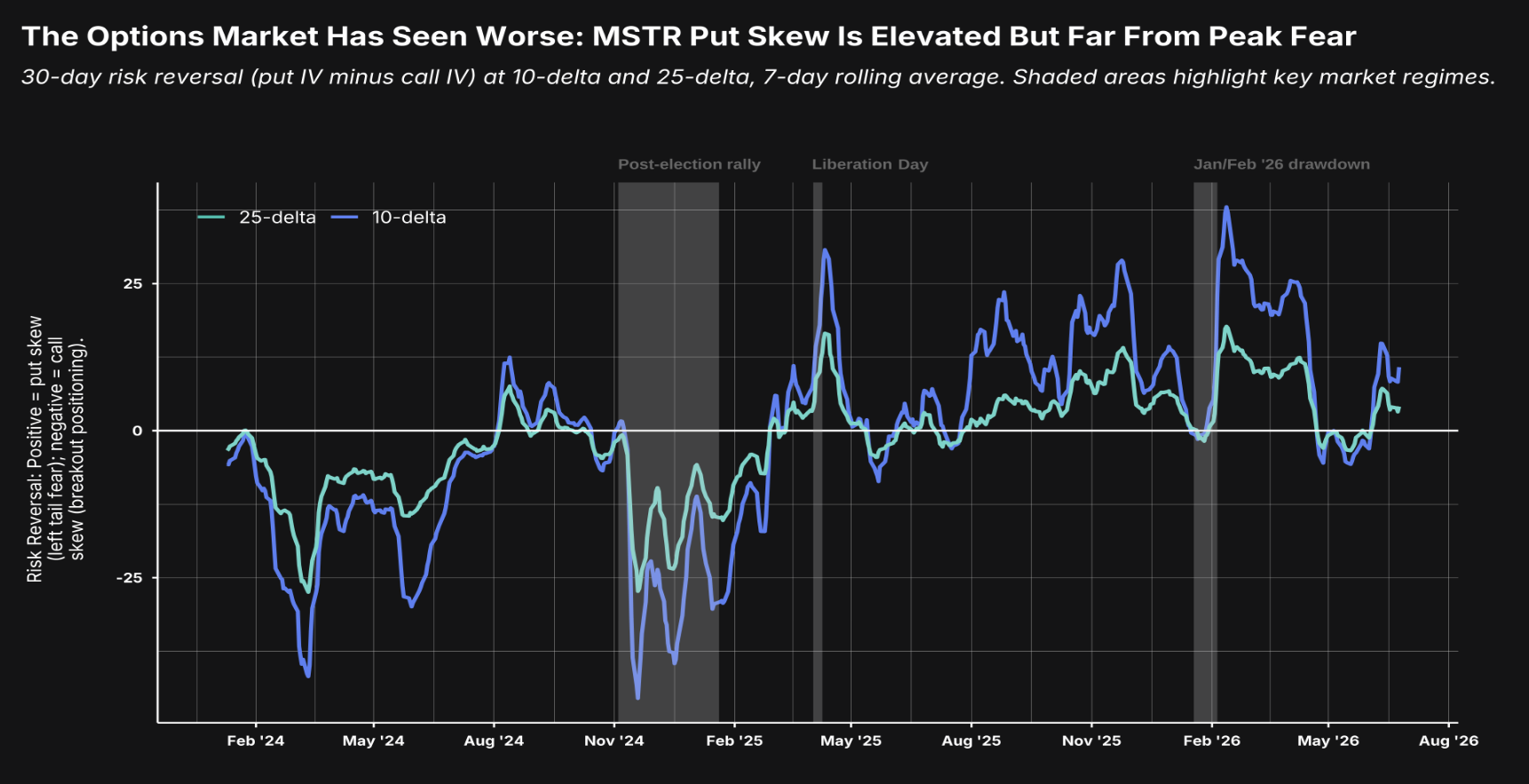
30-day risk reversals in Strategy (MSTR) options markets. Source: Anchorage Digital report
Magazine: Bitcoin decouples from tech stocks, Ether eyes ‘selling wave’: Market Moves



Institutional trading platform LMAX Group is working with Morgan Stanley and KBW, Stifel’s investment banking arm, to review a possible sale or public listing.
Summary
- LMAX reviews a sale, SPAC merger, or listing that could value it at $5 billion.
- Morgan Stanley and KBW are advising LMAX, while Nasdaq ranks as its preferred listing venue.
- Ripple’s $150 million financing and Omnia exchange launch support LMAX’s push into institutional digital markets.
People familiar with the private discussions told CoinDesk that a transaction could value the London-based company at up to $5 billion. The options include a full sale, a special purpose acquisition company merger, and initial public offerings in the U.S. or Europe.
A Nasdaq listing currently ranks as the preferred route, according to one of the unnamed sources. However, LMAX has not started a formal public process or agreed to a transaction. The company said it “declines to comment on speculation.” Morgan Stanley also declined to comment, while Stifel had not responded when the report was published.
LMAX considers several routes to a $5 billion valuation
LMAX operates trading venues and infrastructure for foreign exchange and digital assets. Its clients include banks, brokers, hedge funds and asset managers. The group owns LMAX Exchange, LMAX Global and LMAX Digital. It runs matching infrastructure in London, New York, Tokyo and Singapore, giving institutional clients access across major financial centres. The U.K. Financial Conduct Authority authorises LMAX Limited for specified financial activities.
The reported review does not mean LMAX will complete a sale or IPO. One source said the company felt no pressure to list while crypto markets remained weak. Its established foreign-exchange operation gives it a wider revenue base than companies that depend only on digital asset trading. That mix could allow management and shareholders to wait for better market conditions. It also gives potential buyers exposure to established currency markets and institutional crypto services.
Ripple financing supports LMAX’s cross-asset expansion
LMAX expanded its digital asset business in January through a multi-year partnership with Ripple. Ripple agreed to provide $150 million in financing, while LMAX agreed to integrate the RLUSD stablecoin across its institutional infrastructure. The companies said clients could use RLUSD for settlement, collateral and margin across spot crypto, perpetual futures and contracts for difference.
As crypto.news previously reported, the agreement formed part of a wider flow of capital into centralised finance and institutional market infrastructure. LMAX said RLUSD would also connect with LMAX Custody and its Kiosk service. The arrangement gives institutions another way to move dollar-denominated value between foreign exchange and digital asset positions outside standard banking hours.
Omnia and Kiosk widen the platform beyond spot crypto
In February, LMAX introduced Omnia Exchange, a 24/7 platform designed to let institutions convert traditional and tokenised assets through one API. The company said Omnia would support foreign exchange, cryptocurrencies, commodities and tokenised securities. The launch moved LMAX beyond its earlier focus on separate FX and spot crypto venues.
LMAX added Kiosk in May to combine custody, collateral management and trading access.institutions can deposit digital assets into LMAX Custody and use them across spot FX, precious metals, cryptocurrencies, perpetual futures and other products. In July, LMAX and Standard Chartered also completed their first digital asset prime brokerage trades for Bitcoin and Ether with T+1 settlement.
Crypto firms pursue deals despite weaker IPO conditions
The reported review comes as crypto firms seek scale through acquisitions and public listings. Kraken parent Payward completed its purchase of U.S. derivatives platform Bitnomial in May. Bullish also agreed to buy transfer agent Equiniti for $4.2 billion, adding shareholder recordkeeping and tokenisation infrastructure to its exchange business.
Public market conditions remain uneven. As crypto.news reported, hardware wallet maker Ledger paused its IPO plans because of weak investor demand and difficult market conditions. Blockchain.com, by contrast, filed confidentially for a U.S. listing. LMAX’s foreign-exchange business and recent institutional partnerships may separate it from crypto-only candidates, but any valuation will depend on market demand, financial results and the final structure.
LMAX last disclosed a major private valuation in July 2021. J.C. Flowers agreed to buy a 30% stake for $300 million, valuing the group at $1 billion. That deal involved a secondary sale by employees, while chief executive David Mercer and the management team kept substantial holdings.
A valuation of up to $5 billion would mark a fivefold increase from the 2021 transaction. No adviser or company statement has confirmed that figure as an agreed price. The strategic review remains at an early stage, and LMAX may choose to remain private if available offers or listing terms do not meet its requirements. LMAX has not named a timetable for completing the review process.
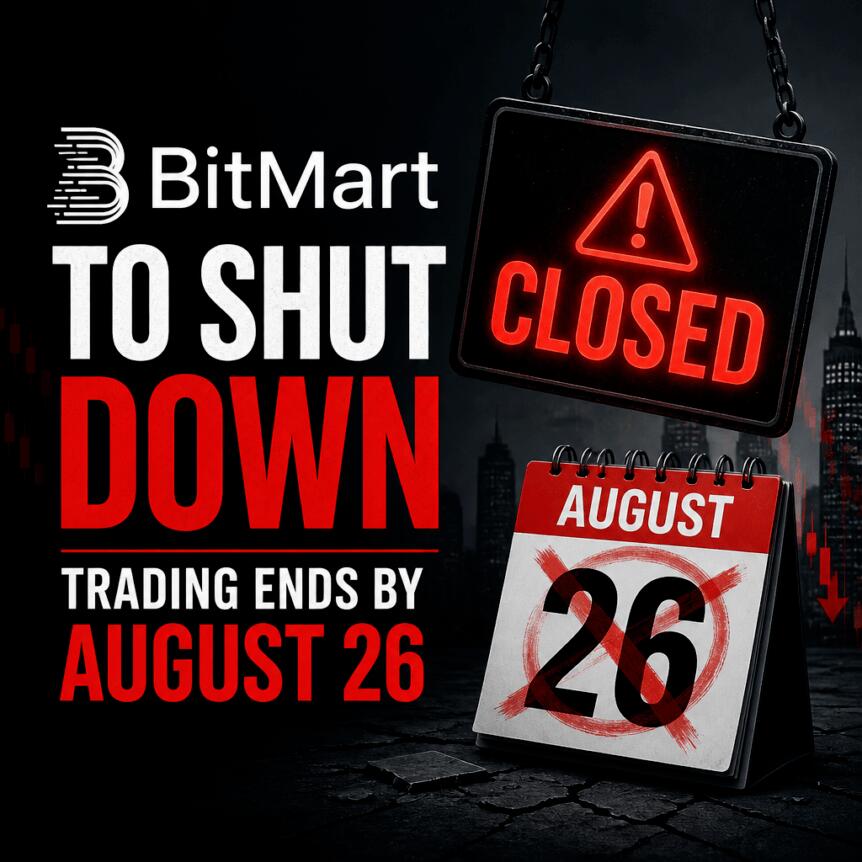
BitMart, a cryptocurrency exchange, has announced an orderly wind-down of its trading platform. The firm will end all trading services on Aug. 26 and fully cease operations on Jan. 31, 2027, according to a notice posted to its support portal on Sunday.
As part of the shutdown plan, BitMart said it has stopped accepting new user registrations and deposits. Futures trading has been moved to reduce-only mode, while spot markets will no longer accept new orders—changes that can materially affect liquidity and how quickly users can reposition or exit positions.
Key takeaways
- BitMart will halt trading services on Aug. 26 and close permanently on Jan. 31, 2027, following an orderly wind-down announcement.
- The platform has stopped new registrations and deposits; futures are reduce-only and spot trading no longer accepts new orders.
- BitMart’s native token BMX fell sharply, losing nearly 70% in a short window amid user complaints about withdrawals.
- According to Arkham data, wallets attributed to BitMart held about $71 million in crypto assets on Sunday, down from roughly $102 million on July 6.
BitMart’s wind-down timeline and trading restrictions
In its notice, BitMart said it reached the decision after evaluating “operating conditions, market environment, and future strategic direction,” and that it would begin an orderly wind-down of its trading platform operations.
Operationally, the company has already tightened access: it stopped accepting new user registrations and deposits. It also introduced trading limitations consistent with a platform winding down risk: futures trading was shifted to reduce-only mode, and spot markets stopped taking new orders.
For users, these restrictions typically mean the exchange becomes less capable of accommodating new risk-taking activity, and positions may become harder to manage as market depth changes. The policy also increases the importance of withdrawal functionality, since exiting holdings may be the primary remaining action.
BMX plunges as withdrawal complaints surface
BitMart’s BMX token came under heavy pressure during the announcement cycle. At the time of writing, BMX traded around $0.09464, down nearly 70% from about $0.31 late Friday. The token reportedly slipped as low as $0.1058 early Saturday before extending its decline.
Several users on X reported that withdrawals were taking longer than usual. Some claims focused on Tether’s USDT withdrawals remaining pending for hours.
BitMart also warned that some withdrawal requests could be subject to additional compliance and security reviews, which may extend processing times. That detail can be important for users deciding whether to wait, cancel, or resubmit withdrawal requests as the exchange transitions toward shutdown.
Before publication, BitMart did not respond to a request for comment made by Cointelegraph.
On-chain balances and what Arkham data suggests
While trading has been winding down in stages, attention has turned to whether user funds can be withdrawn smoothly. Arkham data, accessible via its explorer, indicated that wallets attributed to BitMart held about $71 million in crypto assets on Sunday—down from roughly $102 million on July 6.
Of the tracked holdings, about $41.5 million was in stablecoin-banking platform WeFi’s WFI tokens, while BitMart-attributed wallets held about $91,000 in USDT, according to the same Arkham view.
The decline in total assets over the period highlighted by Arkham does not, by itself, explain whether assets are moving into customer withdrawals, into other custody arrangements, or into operational buffers. Still, it provides traders and users with a real-time way to observe whether BitMart-attributed balances are shrinking as the wind-down progresses.
More platform shutdowns—and token confusion around BitMart vs BitMEX
BitMart’s plan places it among a growing list of crypto trading platforms announcing closures. Earlier in the week, BitMEX and Dango also said they would shut down their respective trading platforms, according to Cointelegraph’s coverage of those announcements.
Separately, social media chatter showed some confusion between BitMart’s token and BitMEX-related tickers. On Saturday, an X user in a Mandarin-speaking crypto community referred to BMX’s drop while speculating about the reason, and another user responded—citing a mismatch between online discussion and BitMEX’s announced shutdown date.
That reference did not align with BitMEX’s Sept. 23 shutdown date, as Cointelegraph previously reported. Cointelegraph also noted that BitMEX’s own token BMEX fell about 90% shortly after BitMEX’s notice, while multiple accounts in the same community appeared to mix up BMX with BitMEX.
It was not immediately clear whether that confusion materially affected BMX trading or simply reflected broader information noise during the broader shutdown cycle. Still, it highlights a recurring risk for users: during periods of exchange closures, similarly named products and tokens can lead to misinterpretation of price moves and the underlying drivers.
As BitMart moves from trading restrictions toward full cessation in January 2027, users should watch withdrawal processing times and any further changes to compliance review steps, while traders may want to monitor whether on-chain balances tied to BitMart continue trending downward as the wind-down advances.


Bitcoin mining’s annualized electricity demand rose to about 190 terawatt-hours in December 2025, up 38% from 138 the in June 2024, according to preliminary research reported by theEnergyMag.
Summary
- Bitcoin mining electricity use rose 38% to 190 TWh between June 2024 and December 2025.
- Hydropower became mining’s largest energy source as low-carbon power reached 59.4% of the reported mix.
- Only 10% of surveyed miners had already allocated power to AI or accelerated computing services.
Alexander Neumueller of the Cambridge Centre for Alternative Finance presented the figures at the Energy Investors Forum in Dallas. Cambridge expects to publish the second edition of its Digital Mining Industry Report later in 2026.
The research also found that hydropower had overtaken natural gas as Bitcoin mining’s largest single energy source. Low-carbon power supplied 59.4% of the reported mining mix, up from 52.4% in the previous study. However, total estimated greenhouse-gas emissions still increased by 20%, from about 40 million to 48 million tonnes of carbon-dioxide equivalent.
Hydropower takes the largest share of mining power
The 2025 Cambridge Digital Mining Industry Report found that natural gas supplied 38.2% of surveyed miners’ electricity, making it the largest single source at the time. Renewables provided 42.6% in total, while nuclear power added 9.8%. Coal’s share had fallen to 8.9%, down from 36.6% in the earlier 2022 estimate.
The preliminary update changes that order. Hydropower now ranks ahead of natural gas, although Cambridge has not released the full breakdown for each source. Neumueller linked part of the change to stronger survey coverage in hydro-rich markets such as Ethiopia.Ethiopia expanded Bitcoin mining around low-cost electricity from the Grand Ethiopian Renaissance Dam.
Electricity demand rises faster than emissions
The network’s annualized power use increased by about 52 TWh between the two reference points. Annualized demand measures the electricity Bitcoin mining would use over a year if the December 2025 rate continued. It does not mean miners consumed exactly 190 TWh during the 2025 calendar year.
Emissions rose more slowly than electricity demand because miners reported using a lower-carbon power mix. Even so, Cambridge’s estimate still increased from roughly 40 million to 48 million tonnes of CO₂ equivalent. The cleaner mix slowed the rate of emissions growth, but it did not offset higher overall electricity consumption.
More mining machines joined the network during the measured period, raising total computing power. Newer hardware can perform more calculations for each unit of electricity, but efficiency gains did not fully counter the increase in hashrate. Cambridge’s Bitcoin Electricity Consumption Index tracks how prices, transaction fees, mining equipment and network difficulty can change estimated electricity demand over time.
Preliminary figures carry survey limits
Cambridge based the new estimates mainly on responses from mining companies representing slightly more than half of global Bitcoin hashrate. The wider coverage gives researchers a larger sample than the first report. However, the final publication may revise some figures after Cambridge completes further checks.
The 2025 report also warned that survey participation can distort geographic estimates. U.S. companies supplied a large share of responses, which likely overstated the country’s portion of global mining activity. The latest rise in reported hydropower may partly reflect better coverage of miners in Ethiopia and other markets that rely more heavily on hydroelectric generation.
Cambridge’s earlier study estimated 39.8 million tonnes of emissions using its survey-based method. A separate location-based model produced a much higher estimate of 69.6 million tonnes. The gap shows that results depend on assumptions about mining locations, electricity contracts, grid mixes and the use of stranded or flared energy.
Miners explore AI, but deployments remain limited
The new survey also examined whether Bitcoin miners are shifting power capacity into artificial intelligence and high-performance computing. About 10% of respondents said they had already allocated some power to AI or accelerated computing. More than 40% of the remaining miners said they were actively exploring the option.
Neumueller cautioned that “intent to look into it is not commitment to deploy.” AI data centers need costly networking, cooling and reliability systems that basic Bitcoin mining sites may not have. Miners can quickly reduce Bitcoin loads when electricity prices rise, while AI customers usually require steady power and stronger service guarantees.
Still, almost nine in ten respondents expected AI and HPC diversification to gain ground over the next several years. As crypto.news reported, listed miners have already announced more than $70 billion in AI and HPC contracts as they seek steadier revenue outside Bitcoin production.
The change is already visible in some company results. TeraWulf generated more revenue from HPC hosting than Bitcoin mining during the first quarter of 2026. It reported $21 million from HPC services, compared with less than $13 million from digital asset mining.
The Cambridge findings show two changes taking place together. Bitcoin mining uses more electricity, while hydropower and other low-carbon sources account for a larger share. At the same time, mining companies are assessing whether their power connections and sites can support AI services. Cambridge’s full report will provide a detailed energy breakdown and final methodology later in 2026.


The XRP Ledger added about $2.6 billion in tokenized real-world asset value during the past six months, excluding stablecoins, according to data from RWA.xyz.
Summary
- XRP Ledger added $2.6 billion in RWA value, ranking second among blockchains over six months.
- JMWH alone represents $2.23 billion, making tokenized energy XRPL’s largest real-world asset category by value.
- Most XRPL RWA value is represented, while distributed assets total only about $323 million currently.
That placed XRPL second among tracked blockchain networks for net RWA inflows during the period. BNB Chain ranked first with about $3 billion, while Stellar followed XRPL with roughly $2.1 billion.
The increase lifted XRPL’s combined distributed and represented RWA value to about $4.38 billion on July 26. The RWA.xyz dashboard listed $323.21 million in distributed assets and $4.06 billion in represented assets. The network also held $995.12 million in stablecoins, taking its broader total above $5.37 billion when those tokens are included.
XRP Ledger moves higher in RWA rankings
The six-month figures placed XRPL ahead of several larger smart-contract networks for new tokenized asset value. Solana added about $1.6 billion, while Avalanche attracted roughly $972 million. Ethereum remained the largest home for distributed tokenized assets, but its net addition during the measured period was lower at about $424 million.
The latest rise continues a trend visible earlier in 2026.XRPL moved into sixth place in the tokenized RWA rankings in February after adding $354 million in one month. A crypto.news report in July found that tokenized assets on the ledger had passed $3 billion as developers added compliance tools, permissioned trading and proposed lending features.
Tokenized energy drives most of XRPL’s total
Justoken’s JMWH product accounts for the largest share of XRPL’s RWA value. RWA.xyz valued the represented commodity asset at $2.229 billion on July 26. Each JMWH token represents one megawatt-hour of contracted energy output. The issuer mints tokens against energy agreements and burns them after the electricity is delivered and consumed.
The asset also shows why represented value and active onchain liquidity are not the same measure. RWA.xyz recorded only 19 JMWH holders, one active address over 30 days, no monthly transfers and no monthly transfer volume. The token therefore works mainly as a blockchain record for energy contracts rather than a widely traded asset. JMWH alone accounts for about 51% of XRPL’s total RWA value.
Justoken said it had tokenized more than $2.84 billion in total value across its products. In March, the company announced an energy tokenization project with Argentina-based power producer YPF Luz using the XRP Ledger. The wider product links blockchain records with contracts for electricity generation and consumption.
Distributed assets and stablecoins expand
XRPL’s distributed asset segment remains much smaller than its represented segment, but several financial products now operate on the network. RWA.xyz listed about $323 million in distributed assets. Ondo Finance, Braza Crypto, OpenEden Digital, Société Générale-FORGE and other issuers contribute to this category through tokenized Treasuries, credit products and regulated digital money.
Ripple’s RLUSD remains the largest stablecoin platform on XRPL. RWA.xyz showed about $894.7 million in RLUSD on the network, while all XRPL stablecoins totalled about $995.12 million. Braza Crypto ranked behind RLUSD with products worth about $83.4 million. Stablecoin transfer volume reached $4 billion over 30 days.
A May pilot also tested how tokenized funds can connect XRPL with bank payment rails. As crypto.news reported, Ripple redeemed part of its holdings in Ondo Finance’s OUSG Treasury product on XRPL. Mastercard sent settlement instructions to Kinexys by J.P. Morgan, which moved U.S. dollars to Ripple’s Singapore bank account.
Ondo said the asset leg settled in under five seconds. Ondo Finance President Ian De Bode called it the “first time tokenized U.S. Treasuries have settled across borders and banks in near real time.” The transaction combined a public blockchain asset transfer with traditional bank settlement.
RWA growth does not equal direct XRP demand
RWA growth measures asset value recorded or issued on the ledger. It does not show how much XRP investors purchased or how often they used the native token. Most institutional products can use XRPL for issuance and settlement while paying only small network fees in XRP. Stablecoins such as RLUSD can also handle the cash side of transactions without using XRP as a bridge asset.
The asset mix also matters when comparing networks. Represented assets refer to offchain holdings or contracts recorded on a blockchain, while distributed assets are issued and held more directly onchain. XRPL’s represented value accounts for more than 92% of its non-stablecoin RWA total. JMWH alone drives more than half of that figure.
Even so, XRPL has added more issuers and asset types during 2026. Its RWA count reached 373, while the number of tracked holders rose 14.29% over 30 days to 176. The ledger’s stablecoin holders reached about 60,080. These figures show a broader tokenization base, although ownership remains concentrated in several products.
Ripple and XRPL developers are also building infrastructure for regulated markets. Crypto.news reported that permissioned domains, credentials and a permissioned exchange layer now support identity-based access rules on the public ledger. Proposed lending standards could add fixed-term credit products if validators approve them. The next stage will depend on whether issuers turn the growing asset base into regular transfers, trading and settlement activity.
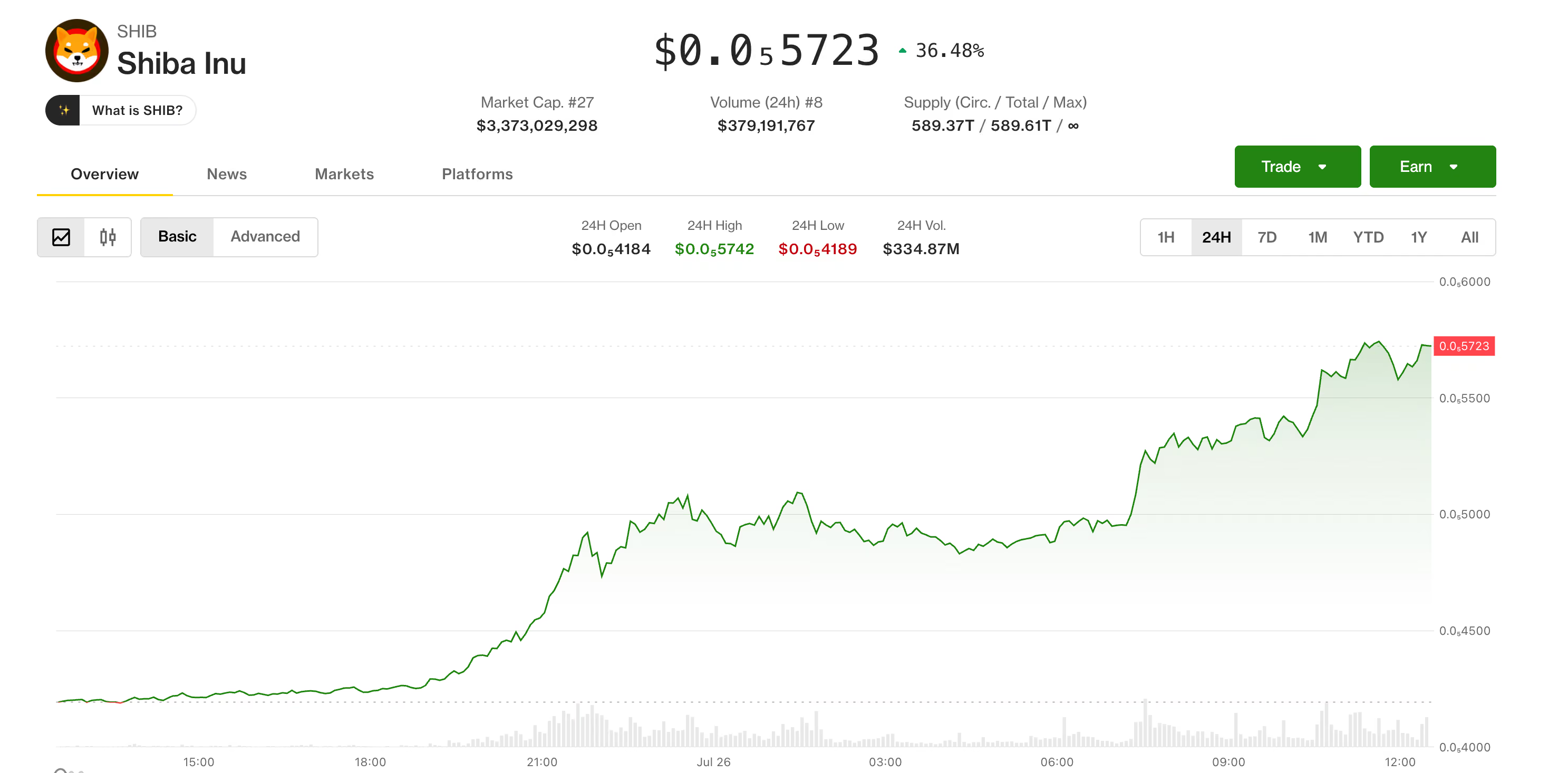
Shiba Inu rose 36% to about $0.0000057 on Sunday, adding roughly a billion dollars to its market value in a day, with no announcement or development to account for it.
The token now carries a market cap near $3.4 billion on almost $380 million of daily volume, its highest turnover ranking in months.

Nothing has emerged from Shibarium, the network’s layer-2, and the wider dog-token complex has lagged. Dogecoin gained 6% over the same stretch, and smaller-cap tokens moved as much as 10%, which pointed to something specific to SHIB rather than a rotation into memecoins.
South Korean buying stands out. Upbit’s SHIB/KRW pair is the single largest market at about $62 million, over a tenth of global volume, and it prints a slight premium to Binance and the other dollar venues.
The country’s traders are known to drive exuberant rallies in high-volatility tokens, and the token’s climb fits that pattern, with a first push late Saturday, nine flat hours, then a second move through the Asian morning.
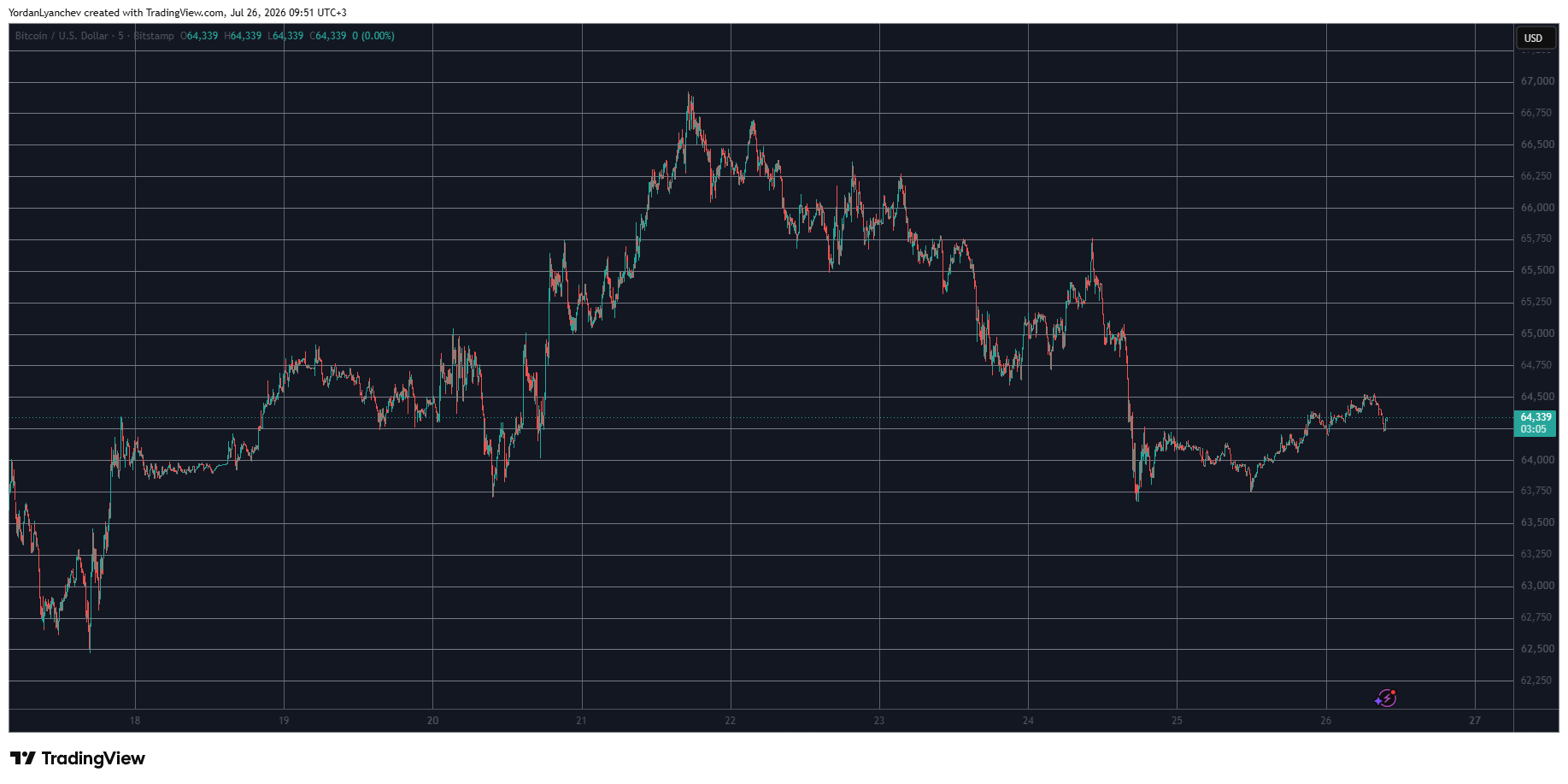
Bitcoin’s price climbed slightly on Saturday evening after US President Donald Trump halted the planned attacks on Iran, and jumped to $64,500 before it retreated slightly.
Shiba Inu has stolen the show from the larger-cap alts, rocketing by over 35%. Most larger-cap alts are also in the green but in a more modest manner.
BTC Defends $64K
Last Monday began with a somewhat expected leg down that drove bitcoin south from $65,000 to $63,750. However, the asset reacted well, defended that support level, and jumped by two grand by the end of the day. Tuesday was even better in terms of gains, as the cryptocurrency jumped to roughly $67,000 on some exchanges to mark a monthly high.
After gaining over $3,000 in just over 24 hours, BTC was primed for a correction given the overall market landscape. It started to lose value gradually and dropped below $65,000 on Thursday. It initiated another breakout attempt on Friday, but it was stopped at $65,750. The subsequent rejection drove it south by $2,000.
The bulls finally intervened and didn’t allow another leg down. Instead, BTC showed some resilience around that level and remained at around $64,000 on Saturday and climbed to $64,500 later that day after Trump ordered the US military to stand down while waiting for the resumed talks between Iran and Oman.
For now, BTC stands above $64,000, with its market cap returning to $1.290 trillion on CG. Its dominance over the alts has risen to almost 57%.
SHIB Pumps Hard
In a rare reminder of the meme coin mania from a few years ago, Shiba Inu’s largest native token has rocketed by over 35% today to mark a two-month peak. PEPE is the other big gainer from the meme coin niche, surging by 9.6% daily and 26% in the past month. Dogecoin has risen by 5.8% to $0.073. VVV sits among the meme coin gainers, surging by 12% to $14.5. AVAX has pumped by 9% as well.
The rest of the larger-cap alts have posted significantly more modest increases. ETH is close to $1,900 after a 1.5% jump, XRP is back at $1.10, while HYPE is up by 2.5%, but it still trades below $60. ZEC and CC are also in the green.
The total crypto market cap has increased slightly since yesterday, but it’s still below $2.3 trillion on CG.

The post These Meme Coins Steal the Show as Bitcoin Defends $64K Support: Weekend Watch appeared first on CryptoPotato.
BitMart will wind down its cryptocurrency exchange, ending all trading services on Aug. 26 before ceasing operations entirely on Jan. 31, 2027.
“After a careful evaluation of the Company’s operating conditions, market environment, and future strategic direction, BitMart has made the difficult decision to commence an orderly wind-down of its trading platform operations,” it said in a Sunday notice.
Under the shutdown plan, BitMart has stopped accepting new user registrations and deposits, while futures trading has entered reduce-only mode and spot markets no longer accept new orders.
BitMart joins a growing list of crypto trading platforms that have announced plans to close shop in recent months. Among them are BitMEX and Dango, which both said this week they would shut down their respective trading platforms.
Related: As BitMEX exits, analysts warn crypto consolidation is accelerating
BMX sinks amid withdrawal complaints
BitMart’s native token, BMX, lost nearly 70% of its value while users reported delayed withdrawals from the exchange.
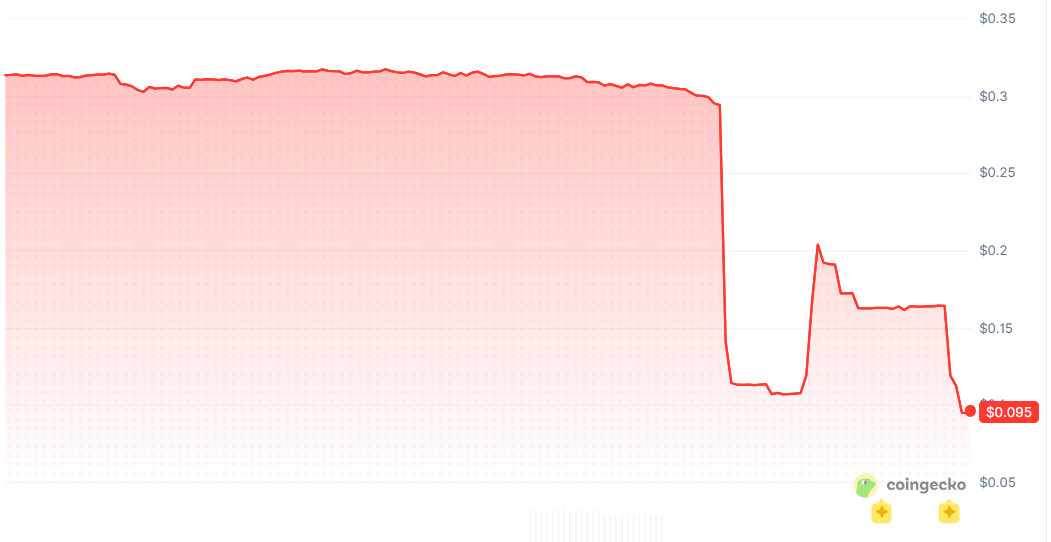
BMX traded at about $0.09464 at the time of writing, down nearly 70% from about $0.31 late Friday. The token fell as low as $0.1058 early Saturday before extending its losses.
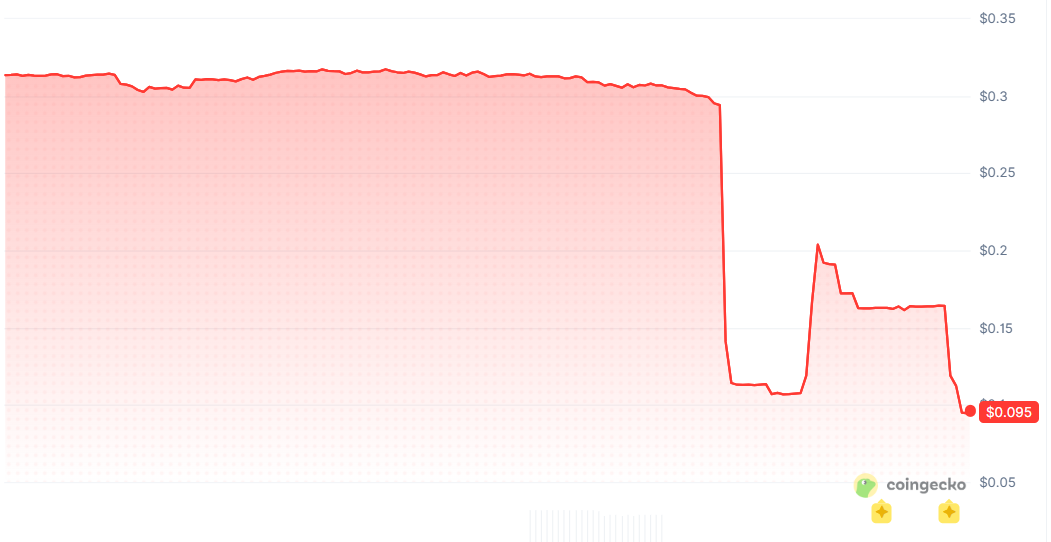
BMX resumes losses after Saturday’s brief recovery, falling below $0.10. Source: CoinGecko
Several users on X reported that withdrawals were taking longer than usual, with some claiming that Tether USDt (USDT) withdrawal requests remained pending for hours.
Arkham data showed wallets attributed to BitMart held about $71 million in crypto assets on Sunday, down from roughly $102 million on July 6. About $41.5 million was in stablecoin banking platform WeFi’s WFI tokens, while the tracked wallets held about $91,000 in USDT.
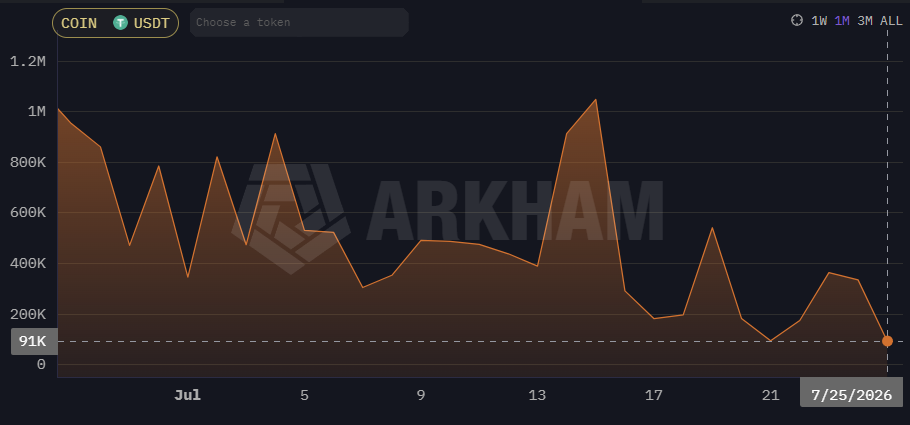
BitMart’s USDT balance over the past month. Source: Arkham
In its wind-down announcement, BitMart said some withdrawal requests could be subject to additional compliance and security reviews, potentially extending processing times.
BitMart did not respond to Cointelegraph’s request for comment before publication.
Related: BitMEX hit with 623 BTC lawsuit on day it announces shutdown
BMX? BMEX? BitMEX?
Some users on X also appeared to confuse BitMart and its BMX token with BitMEX.
On Saturday, an X user in the Mandarin-speaking crypto community who goes by “Brother Lu” drew attention to BMX’s price drop while speculating about its cause.
“The whole internet was posting yesterday that it was shutting down on Sept. 30. Did you just wake up?” another X user replied, according to a machine translation.
The reference to Sept. 30 did not match BitMEX’s Sept. 23 shutdown date announced Thursday. BitMEX’s own token, BMEX, fell 90% shortly after the notice.
Several other users in the Mandarin-speaking community also mixed up BMX with BitMEX.
It was not immediately clear whether the confusion had any impact on BMX trading.
Magazine: Here’s why the CLARITY Act’s ethics deal may be so hard to reach


The Bitcoin Policy Institute has joined the U.S. State Department’s Freedom Tech Excellence Program as a founding partner.
Summary
- Bitcoin Policy Institute staff will support temporary State Department assignments focused on digital freedom worldwide.
- Palantir, Anduril, and a human-rights foundation joined BPI as founding partners in the new programme.
- FTEP covers online expression, privacy tools, digital surveillance, scams, and responsible artificial intelligence governance standards.
The programme will place private-sector specialists inside the department for limited assignments tied to digital freedom and freedom of expression. Palantir Technologies, Anduril Industries and the Victims of Communism Memorial Foundation are the other founding partners.
BPI announced its role in a July 24 post on X. It said participating employees would work with State Department experts on online speech, privacy tools, digital surveillance and responsible artificial intelligence governance. The announcement did not state how many BPI employees will take part, when placements will begin or which offices will receive them.
State Department opens roles to outside specialists
The State Department describes FTEP as a talent partnership that brings private-sector workers into government for fixed periods. Participants remain linked to their organisations while supporting diplomatic projects in areas where the department wants more technical knowledge. They will also gain direct experience in foreign policy and international development.
The department lists several possible work areas. They include protecting online freedom of expression, countering unlawful surveillance and scams, expanding access to encryption and virtual private networks, supporting responsible AI governance and improving online safety for children. The programme is not a Bitcoin reserve, payment system or crypto licensing project.
BPI said the programme would allow its employees to “work alongside State Department experts and defend digital freedoms around the world.” However, neither party has released individual assignments. The scope may vary according to each participant’s skills and the needs of diplomatic teams.
BPI brings Bitcoin and privacy research into diplomacy
Founded in 2021, the Bitcoin Policy Institute describes itself as a non-partisan, non-profit research organisation. Its work covers Bitcoin policy, national security, financial inclusion, energy and human rights. The group has argued that encryption and open monetary networks can help journalists, dissidents and users in countries where governments restrict speech or financial access.
BPI’s inclusion does not mean the State Department will promote Bitcoin in every FTEP project. The official description focuses on broad digital-policy questions. BPI staff may advise on privacy technology, censorship-resistant systems or financial access, but the government has not named a Bitcoin deployment linked to the programme.
The group will continue its wider policy work outside FTEP. Its Freedom Tech DC summit is scheduled for September 22 and 23 in Washington. The event will bring together policymakers, researchers, investors and technology builders to discuss money, speech and computing systems. The summit is separate from the State Department partnership.
Palantir, Anduril and rights group join as partners
Palantir and Anduril bring experience in data software, defence technology and government contracts. The Victims of Communism Memorial Foundation works on human rights, political repression and authoritarian governments. Together, the four organisations provide policy, engineering, national-security and civil-society backgrounds.
The department has not explained how it will divide projects among the partners. It has also not listed the countries, embassies or bureaus involved. Those details will determine whether placements focus on policy research, technical tools, staff training or overseas programmes.
FTEP uses limited-term assignments rather than permanent appointments. That structure can bring specialised staff into government without creating full-time roles. Partner employees may later return to their organisations with direct knowledge of diplomatic processes and government needs.
Bitcoin reserve advocacy remains a separate policy track
BPI has supported efforts to turn President Donald Trump’s Strategic Bitcoin Reserve order into federal law. Trump signed the executive order establishing the reserve on March 6, 2025. It created a reserve based on Bitcoin forfeited through criminal or civil proceedings and directed officials to study budget-neutral ways to acquire more BTC.
Senator Cynthia Lummis reintroduced the Bitcoin Act in March 2025 at a BPI-organised event. The bill proposed that the U.S. government acquire one million BTC, but it had not completed passage when FTEP was announced. The State Department programme does not advance that bill or give BPI authority over federal Bitcoin.
The reserve also remains under development. As crypto.news reported in July 2026, federal officials were still reviewing which agency could legally control the assets and how custody should work. The White House order named the Treasury, while later discussions also involved the Commerce and Justice departments.
FTEP therefore gives BPI a role in a foreign-policy talent programme, not control over U.S. crypto policy. Its work will centre on assigned digital-freedom projects. Further updates should show how many experts take part, where they serve and which technologies the programme uses.


BMX, the platform’s token, fell to about 8 cents, down 58% over 24 hours, cutting its market value to roughly $27 million. The token was already down about 70% over the past year, so Sunday’s drop extended a long decline rather than starting one.
The exchange’s trading figures are significant, despite the closure. BitMart reported about $1.6 billion in 24-hour volume, up 51% from the previous period, with bitcoin accounting for nearly half of it. That jump more plausibly reflects users unwinding positions and moving funds out than any fresh demand, but it leaves open why a platform still clearing that kind of flow is closing.
Meanwhile, the withdrawal terms carry more friction than a routine exit. BitMart said requests may face additional review covering identity verification, device and IP checks, withdrawal-address screening, source-of-funds questions and sanctions checks, and warned that processing could stretch if request volumes spike.
BitMart lost about $196 million to a hot-wallet breach in December 2021, one of the larger exchange hacks of that cycle, and covered customer losses at the time.
In another relatively boring and uneventful trading day during the weekend, in which most cryptocurrencies have remained sideways, the second-largest meme coin by market cap exploded in a rare reminder of what the niche used to do a few years ago.
Some of the potential reasons behind this massive surge seem to be related to a returning whale and other on-chain factors.
SHIB’s Big Pump
The popular meme coin, once touted as the Dogecoin killer, actually began its ascent yesterday evening. It stood below $0.0000042 before it shot up to $0.0000052 and to $0.0000058 earlier today, posting a massive double-digit surge. The latter became its highest price tag in just over two months.
Recall that the token was rejected at $0.0000067 in May, and the subsequent painful correction drove it south toward $0.000004, which translated into a multi-year low. As such, SHIB has now returned to the top 30 alts by market cap as its own has jumped to over $3.3 billion on CoinGecko.
Moreover, it has solidified its spot as the second-largest meme coin by that metric, even though a few others have posted impressive gains as well. PEPE is up by 9%, M has added 4%, while DOGE has jumped by 5.5%.

Why Is That?
Surging by double digits on a random Sunday used to be the norm in the meme coin space years ago. However, the niche has fallen out of investors’ grace lately, with interest dwindling over time. As such, it’s intriguing to see what the latest developments in the Shiba Inu ecosystem are that might have propelled this rally.
The one thing that stands out on X is the behavior of a certain SHIB whale who has resumed accumulating after over half a year of inactivity. According to reports, the unknown market participant has splashed $125,000 to accumulate over 30 billion tokens. Although one standalone purchase cannot guarantee a 35% jump, it can be regarded as the market signal other investors are waiting for to join.
The SHIB token burn mechanism also shows a massive surge in the past day of over 3,200% (and 500% weekly). This means that the actual number of coins in circulation has declined violently, which is typically a bullish signal.
SHIB coins stored on crypto exchanges have also fallen in the past few weeks, according to data from CryptoQuant. Lastly, some analysts argued that the asset has broken out of key resistance levels and trendlines, while the community rejoices in the move, indicating that it’s finally paying off after “years of accumulation.”
The post Shiba Inu Price Soars 35% on a Dull Day as Whale Returns With Massive SHIB Purchase appeared first on CryptoPotato.

(VIDEO) Tim Tszyu Stuns Errol Spence Jr in Sydney as Fight Ends with Shock Retirement Announcement Ringside

Elon Musk Attacks Media After Reporter Says People ‘Loathe’ Him

Sarkodie Vs Dee Money And The Drip Conversation


-

 Fashion2 days ago
Weekend Open Thread: Brooks Brothers
-

 Politics7 days ago
Democrats look to World Cup watch parties to register thousands of voters
-

 News Videos7 days ago
Big Money Is Entering XRP
-

 Tech5 days ago
Sail Virtually Aboard The “Itanic” With IA-64 Emulator
-
 Tech5 days ago
Turtle Beach Command Series KB7 review: a nifty screen-equipped gaming keyboard
-

 Crypto World5 days ago
Grayscale Files For Worldcoin ETF, WLD Registers Sharp Rise
-

 NewsBeat6 days ago
Unregistered fitter used Gas Safe logo on business flyers
-
 Business4 days ago
New Jersey voter registration controversy explained: How 6,600 noncitizens got on the rolls, and what happens next
-
 Entertainment5 days ago
Johnny Depp’s R-Rated Gothic Cult Classic Gets New Release Ahead of Sydney Sweeney Remake
-

 Crypto World3 days ago
Ethics, other provisions in crypto Clarity Act to be further discussed
-

 Tech6 days ago
Watch Flock Safety CEO Garrett Langley discuss the future of surveillance at TechCrunch Disrupt 2026
-
 NewsBeat5 days ago
Shanghai science forum photos show China’s AI and robotics advances in rivalry with US
-

 Crypto World6 days ago
Circle’s President Sold Over 360,000 Shares, The Filings Explain Why
-

 Tech6 days ago
Subway Sandwich Computers Get a Second Life as Gaming Machines
-

 Sports2 days ago
2026 3M Open leaderboard: Scottie Scheffler finds putter in Round 1, sits three back
-

 News Videos3 days ago
The Peugeot Family: How 200 Years of an “Old Money” Dynasty Died in A Boardroom
-

 Fashion2 days ago
16 Dresses for the High Summer Event
-

 Tech7 days ago
How To Use Claude’s Reflect Dashboard And Learn When It’s Time To Touch Grass
-

 Tech6 days ago
The 35 Best Board Games for Family Game Night
-

 Entertainment6 days ago
Stephen Colbert Returns to Social Media After Late Show End
You must be logged in to post a comment Login