
Crypto World
Bitcoin Price Suddenly Rockets Past $80K Leaving $180M in Shorts Liquidated

Just a few days after receiving major blows from the US Federal Reserve and the Senate, bitcoin’s price suddenly skyrocketed by a few grand and topped $80,000 for the first time in over ten days.
The altcoins have followed suit, with ETH surging past $2,550, while XRP has rocketed to over $1.35. Naturally, the liquidations are on the rise.
Recall that the primary cryptocurrency slumped to $75,000 on Tuesday evening after the CLARITY Act setback in the US Senate. Although the asset defended that zone, more volatility ensued a day later when the Fed hiked rates for the first time since July 2023.
However, BTC rebounded almost immediately after the initial shock and went past $76,000. It kept fluctuating in the following days, but the bulls appeared to be in control. Today’s decision by the Bank of Japan to increase the rates to a 31-year high was well received by the cryptocurrency, which jumped to just over $78,000.
It remained there for hours before it went on the offensive minutes ago, skyrocketing to over $80,000. This level was last breached on September 7.
Most altcoins have marked substantial 2-3% gains over the past hours as well. Ethereum has seemingly reclaimed the $2,550 level after a 2.3% hourly jump, while XRP is above $1.35 after a 3% increase. SOL and BNB have marked slightly more modest gains.
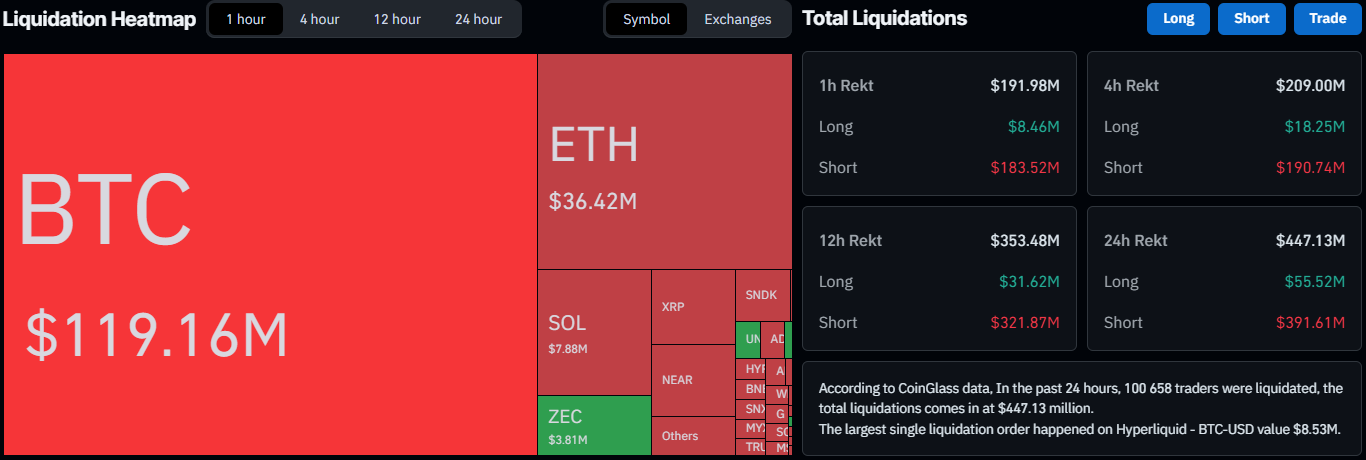
Data from CoinGlass shows that $192 million worth of over-leveraged positions were wrecked in the past hour, with shorts responsible for more than $183 million. BTC holds the lion’s share ($119 million), followed by ETH ($36 million).
On a daily scale, the numbers are even higher, with $450 million wrecked. $390 million was from shorts. In total, more than 100,000 traders have been wiped out within this timeframe.
The post Bitcoin Price Suddenly Rockets Past $80K Leaving $180M in Shorts Liquidated appeared first on CryptoPotato.


Sure, investing is all about performance. But placing big bets on hot stocks, piling into top-performing sectors or swinging for the fences to turbocharge gains isn’t required to retire in comfort. An index fund can do the job. The data shows you don’t have to beat the market to build wealth or boost the odds of a secure retirement. Just…
Copyright ©2026 Investor’s Business Daily, LLC. All rights reserved. 87990cbe856818d5eddac44c7b1cdeb8
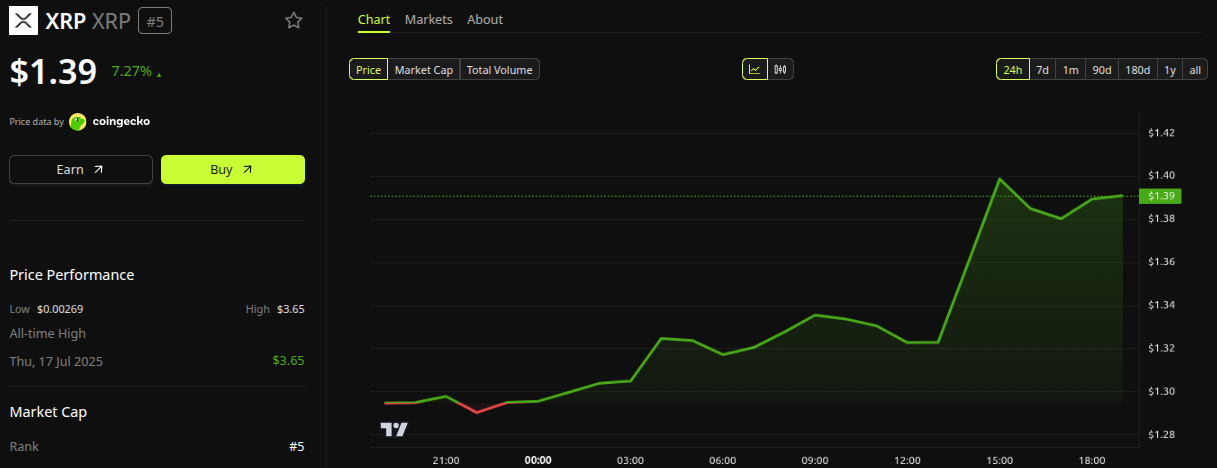
XRP shook off a sharp regulatory setback this week, climbing more than 7% over 24 hours to trade near $1.39 after briefly touching lows around $1.27.
The rebound followed a rocky 48 hours that combined a failed Senate vote with the Federal Reserve’s first rate hike since 2023.
What Actually Triggered This Week’s Selloff
Cloture is the Senate procedure required to end debate and move a bill toward a final vote, needing 60 senators to succeed. On September 15, the CLARITY Act fell short in a narrow 50-49 tally, missing that threshold and stalling a proposed federal framework for digital assets.
XRP dropped more than 8% in the immediate aftermath, touching lows near $1.27 to $1.28. Pressure intensified the next day when the Fed raised its benchmark rate by 25 basis points to a range of 3.75% to 4.00%, a move that typically weighs on risk assets broadly.
The sell-off, however, proved short-lived. XRP has since rebounded to $1.39, up 7.23% over 24 hours, even as the token slipped slightly by 0.30% in the past hour. Trading volume held near $3.9 billion, close to its 30-day average, suggesting genuine buying rather than thin, low-liquidity trading.
Follow us on X to get the latest news as it happens.

Is This Rebound Built on Solid Ground?
Whale deposits to Binance reached six-month highs, according to CryptoQuant data, while futures open interest climbed back above levels seen before the failed vote, both signals of renewed large-scale participation.
The broader market moved in tandem. Bitcoin gained 5.49% to trade near $80,752, Ethereum rose 5.53% to roughly $2,595, and Solana surged 10.75% to $112.34. Total altcoin market cap climbed to $222 billion, its highest level in eight months.
Some analysts point to a potential inverse head-and-shoulders pattern forming on the daily chart, with a neckline around $1.55 that could open a path toward $2 if confirmed.
The RSI sits near neutral territory at 54, leaving room for further upside without yet flashing overbought conditions. XRP still trades 62% below its all-time high and remains inside a broader consolidation range that has persisted for months.

Subscribe to our YouTube channel to watch leaders and journalists provide expert insights.
Whether the token can consistently close above $1.41 on strong volume will likely determine whether this recovery becomes a durable trend reversal or another temporary bounce within the same range.
For now, the market has clearly absorbed both the CLARITY Act’s failure and the Fed’s rate decision without lasting damage.
The post XRP Shakes Off CLARITY Act Failure to Surge 7%: Will It Hold? appeared first on BeInCrypto.

Elon Musk owns 28% of Tesla (TSLA) — making him the largest shareholder of the S&P 500 stock. The same goes for Mark Zuckerberg’s 13% CEO and founder position of Meta Platforms (META). What about Nvidia (NVDA)? Not even close. The company’s founder and CEO Jensen Huang only owns 3.6% of the AI giant — ranking him just fifth, says…
Copyright ©2026 Investor’s Business Daily, LLC. All rights reserved. 87990cbe856818d5eddac44c7b1cdeb8


Weyerhaeuser Company (WY) is one of the world’s largest private owners of timberlands and a major U.S. producer of wood products. The company manages millions of acres of timberlands across the U.S. and Canada, harvesting trees and turning them into lumber, oriented strand board, engineered wood products and other materials used in construction. Headquartered in Seattle, Washington, Weyerhaeuser has a market capitalization of roughly $16.1 billion.
Weyerhaeuser also generates revenue from timberland real estate, natural resources, energy and emerging climate solutions, giving the company several ways to monetize its vast land portfolio. That scale has pushed WY into “large-cap” territory, sitting comfortably above the commonly used $10 billion threshold for large-cap stocks.
More News from Barchart
Shares of Weyerhaeuser have had a rough stretch lately. Shares are down 21.4% from their 52-week high of $27.75, reached on Feb. 12. The weakness has continued over the past three months, with WY stock falling 12%, while the S&P 500 Index ($SPX) has managed marginal gains over the same period.

And if you zoom out a little, the picture does not get much prettier. Over the past 52 weeks, WY has slipped 12.6%, even as the S&P 500 has climbed 14.3%. So far in 2026, the gap remains visible, with WY down 7.9% compared with a 10.3% gain for the broader index.
The technical picture adds another layer of caution. WY is trading below both its 50-day and 200-day moving averages, suggesting the stock remains under pressure.

Weyerhaeuser’s weak stock performance over the past year has largely reflected a problem that is bigger than the company itself – the U.S. housing market. After the post-COVID construction boom faded, higher mortgage rates and expensive financing have kept homebuilding activity under pressure. And with long-term rates still elevated, investors have little reason to expect a quick turnaround. Fewer homes being built ultimately means less demand for lumber and other wood products, which has weighed on expectations for WY’s earnings.
There is a bit of a twist, though. Lumber prices have recently bounced back as supply constraints tightened the market. That sounds encouraging, but investors appear more focused on whether those higher prices can last when residential construction and renovation activity remain soft. With demand recovery potentially stretching into 2027, the earnings outlook remains difficult to read.


It’s not easy to adapt a classic novel across cultures, but The Scandal does it beautifully. Like The Handmaiden before it, the Netflix series transposes a story originally set in the Western world—in this case, the frequently adapted 1782 French novel Les Liaisons dangereuses—into the setting of 18th century Joseon. Under Jung Ji-woo’s masterful direction, the story of two aristocrats who toy with the lives of others for fun moves seamlessly into the rigid, Confucian society of the East Asian kingdom.
There, Son Ye-jin (Crash Landing on You, Decision to Leave) stars as Lady Cho Yun, a deeply intelligent woman whose potential is hindered by her sex. Bored within the limitations placed on her, Lady Cho suggests a game with her cousin Cho-won (The Colony’s Ji Chang-wook), a writer and consummate libertine. If Cho is able to seduce An Hui-yeon (Mask Girl’s Nana), the widow who vows to remain chaste following the death of the husband she never met, then Cho will sleep with Cho-won after years of denying him. However, if he fails to do so, then he must impregnate So-ok (Shin Yoon-ha), the aspiring concubine of Lady Cho’s husband, Lord Yoo (Lee Ji-hoon).
As the game develops, things get messy, leading to a conclusion that is as devastating as it is inevitable.
What is The Scandal based on?

The Scandal is based on Les Liaisons dangereuses, the 1782 French epistolary novel by Pierre Choderlos de Lactos. The book’s many adaptations include a 1988 film starring Glenn Close, John Malkovich, and Michelle Pfeiffer. It was also the basis of 1999’s Cruel Intentions, which transposes the action to contemporary Manhattan and stars Sarah Michelle Gellar, Ryan Phillipe, and Reese Witherspoon.
In 2003, Korean filmmaker E J-Yong directed an adaptation set in 18th century Korea. Called Untold Scandal in English, the film stars Lee Mi-sook (Queen of Tears) as Lady Cho, Jeon Do-yeon (Possible Love) as Lady Jeong, and Bae Yong-joon (Winter Sonata) as Cho-won. While The Scandal Netflix series does not follow the exact same plot as Untold Scandal, it is quite close. In this way, The Scandal is an adaptation of Untold Scandal as much as it is an adaptation of Les Liaisons dangereuses.
The Scandal ending, explained

In the final act of The Scandal, Lady Cho’s scheme spirals out of her control. In an attempt to seduce Hui-yeon, Cho-won convinces her to run away in the middle of the night. Everyone thinks she has finally done the respectable thing and killed herself to join her dead husband, and begins celebrating her extreme virtue. Her mother-in-law, the Left State Councilor’s wife (Kang Ji-eun) pressures Lady Cho into writing to the King to request that a memorial gate be built in Hui-yeon’s honor.
Unfortunately for most of the powerful people in this story, Hui-yeon is not actually dead. Also, now that she has further interpreted the religious teachings from the secret Catholic gatherings she has been attending, she now believes that it would be wrong to take her own life. When she and Cho-won sleep together, she falls in love with him, finally believing his months of vows that she is also the one he loves. Hui-yeon realizes that she wants to live.
Meanwhile, Cho-won has been tasked by the King with finding Hui-yeon’s body so that he can rule on the memorial gate request. When he brings these updates to Yun, she outlines the easy solution: Hui-yeon must be convinced to kill herself, wrapping up this situation in a nice, tidy bow. However, Cho-won has begun to develop feelings for Hui-yeon. He decides to run away with her, asking his servant Chil-seong (Kwon Do-gyun) to prepare a ferry for them to leave Joseon.
The situation is a heartbreaking echo of the plan Cho-won once had with Yun. Years prior, when the two were young, they decided to run away together, rather than allow Yun to marry someone who wasn’t Cho-won. They booked the ferry, but before Yun could sneak out of her home, she found her father crying. When she asked what was wrong, he lamented the fact that she was born a woman, and therefore she could not reach the heights of her massive potential. The conversation convinced Yun to stay and marry Lord Yoo. Cho-won was left waiting for Yun at the ferry port until daybreak, and then yelling for Yun as she married Lord Yoo. Following the heartbreak, Cho-won fell into the life of a notorious playboy, never fully giving up on Yun.
Worried that Cho-won will face harsh repercussions for lying to the King, Hui-yeon flees to Lady Cho’s in the middle of the night, not knowing Yun’s role in her predicament. When Cho-won finds her there, Yun asks him outright: Who do you choose? In that moment, Cho-won decides he cannot go with Hui-yeon, as he had planned. Even if he loves her, he realizes he is not willing to let go of Yun. A heartbroken and betrayed Hui-yeon runs into the night without her gat to disguise her as a man.
Lady Cho believes she has won, and that she still has Cho-won’s complete loyalty. However, after he leaves, he finds Hui-yeon and gives her the gat. He tells her the truth, and she tells him that she will live with the resentment she now has for him. They part ways. Meanwhile, Lady Cho realizes that Cho-won has gone to Hui-yeon, and worries that she has lost him. She tears apart her wardrobe in anger before asking her servant to help her look pretty.
Later, Cho-won brings the official report on Hui-yeon’s supposed death. Written by Lady Cho, it outlines how a papermaker saw a woman fitting Hui-yeon’s description jump from a cliff into the raging river below. The King decides to grant Hui-yeon’s memorial gate in recognition of her exemplary virtue as a lady, but later calls Cho-won into a private meeting. He knows that the report was false because the details of a torrential downpour the night before the death do not match up with his other reports. Cho-won is shocked, either set-up by Lady Cho or felled by her showy arrogance in coming up with the vivid imagery of the report. The King tells Cho-won that he shall never again be welcome in his presence.
In a letter to Yun, Cho-won spares his cousin of this particular outcome, instead saying that the report moved the King to tears and was a resounding success. Lady Cho asks her servants to bring in celebratory drinks and food. She doesn’t yet understand that her schemes have lost her Cho-won forever.
Does Cho-won die in The Scandal?
Cho-won dies in the final episode of The Scandal. After breaking Hui-yeon’s heart and realizing that Yun will never choose him, Cho-won goes to the Mapo port, where he had previously prepared a ferry to bring himself, Hui-yeon, Chil-seong, and Eun-sil to Yanjing (the historical name for Beijing). However, before the ferryman can bring him all the way across, Cho-won jumps off of the boat into the water. The ferryman looks for him in the darkness, but can only see his gat, floating in the water. Cho-won is gone.
Does The Scandal have a happy ending?

Definitely not. As in the novel on which it is based, the cruel machinations of Lady Cho and Cho-won could never lead to happiness. They could only ever lead to the confirmed status quo of their miserable lives as lords and ladies. Yun gets what she ostensibly wants: a continuation of the comfortable life she leads as Lady Cho. However, without Cho-won, she has neither a way to get her writing to a broader audience, nor a confidant in her games. The final shot of the character sees her alone, at her writing table, “left with nothing but longing.” Longing for a love that she will never see again, and for a life she didn’t choose, with no one left to write to.
Hui-yeon is not doing particularly well, either. She is alive, and committed to her Catholic faith, but she has to live life in the margins. When Eun-sil, her former servant who believes her to be dead, comes to a secret Catholic service of which she is a part, Hui-yeon has to take off into the night to keep from being discovered. She travels to Cho-won’s old home, where she sees a stack of letters Lady Cho has continued to write to her cousin. Cho-won’s loyal servant comforts her, and beckons her inside for a warm cup of tea because it is what Cho-won would have wanted. She cannot, however, offer Hui-yeon the comforting lie that Cho-won is still alive; it’s clear this woman who has known Cho-won since he was a child believes he is dead.
So-ok is doing comparatively well. She has become a concubine for Lady Cho’s husband, but she has continued her love affair with In-ho (Chani), the Left State Councilor’s younger son. When So-ok becomes pregnant, it’s pretty clear to everyone but Lord Yoo that the baby is In-ho’s. For now, So-ok is happy, but there’s an implication that it will not always be like this. What will her future look like? In-ho is unable to claim his child as his own, and So-ok is stuck as a member of Lady Cho’s household. Throughout The Scandal, we see examples of youthful characters able to withstand bitterness solely through their naivete. What will be waiting for So-ok when the ignorance of her youth fades?
Much of the narration for these things left unsaid is given in the form of pansori, a traditional Korean art form that includes a single singer and a drummer. In the final episode, we learn that the pansori describing much of the plot is actually diegetic, as Lady Cho and other members of her household listen to the pansori singer describe their lives through the thinnest veil of fiction. This is a brilliant nod to Les Liaisons dangereuses’ status as one of the earliest and most famous examples of roman à clef, a French term translating to “novel with a key.” It is used to describe works of fiction that are about real-life events, and featuring real-life public figures, overlaid with the facade of fiction.
What is The Scandal ultimately about?

Like its source material, which famously depicted the French nobility as corrupt shortly before the French Revolution took hold of the country, The Scandal is interested in critiquing the ruling class, giving the series a complexity missing from many romantic historical dramas. Following Cho-won’s jump into the water, the man ferrying him across says aloud to the night, seemingly somewhat facetiously: “Do you know how hard it is to be born a nobleman?” The line serves as a judgment of Cho-won and Lady Cho’s life choices, which, in their carelessness, caused so much pain for those around them.
In the end, the couple that seems the happiest is also the poorest of our main characters. Prior to his death, Cho-won paid for the freedom of nobi Chil-seong and Eun-sil, who fell in love with one another while serving Cho-won and Hui-yeon, respectively. In the final episode, we see them happy with a baby, and with a steady income. In some ways, they serve as a representation of what Cho-won and Hui-yeon, or perhaps Cho-won and Yun, could have been, if they were not noble. But, in other ways, there is no comparison. A self-involved superiority, born of their social class, is integral to who Cho-won, Yun, and even Hui-yeon are as characters. That—as The Scandal argues through its constant, background depiction of the vibrant, working class life going on around these noble characters—is the point.
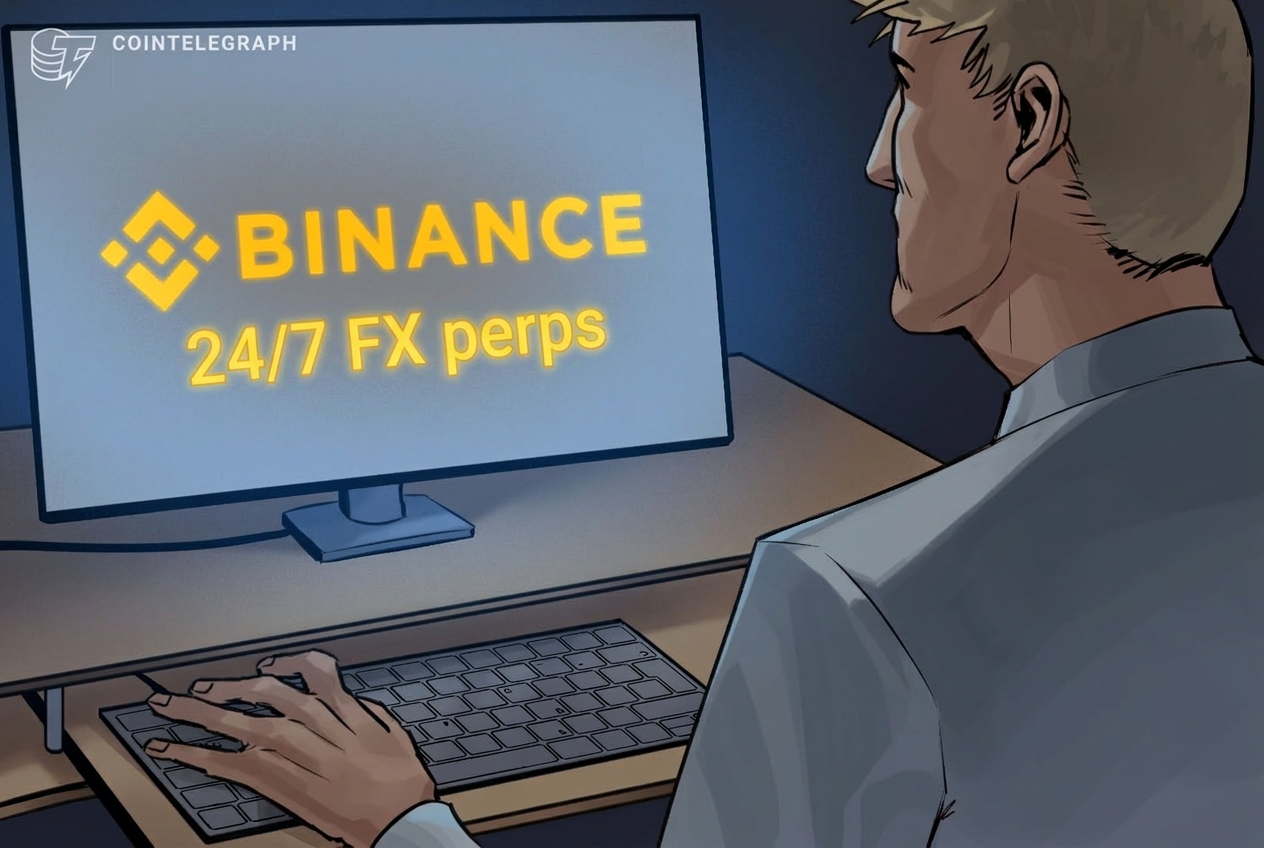
Binance is expanding its derivatives offering into foreign exchange with the launch of 24/7 perpetual futures, starting with a US dollar-Brazilian real contract on Monday.
Unlike traditional FX markets, which close for the weekend, Binance’s contracts will trade continuously using a dual-mode pricing system. During regular FX trading hours, prices will track a weighted index from third-party data providers, while weekends and public holidays will use an orderbook-based pricing mechanism.
The USDBRLUSDT contract will go live on Sept. 21, settle in USDT and offer up to 100x leverage, according to a Friday announcement. Binance said the weekend system uses an exponentially weighted moving average of orderbook prices, rather than relying on external price feeds.
Binance trading head Shunyet Jan said the contracts are intended to extend price discovery beyond traditional FX trading hours, while giving traders a venue to hedge or take positions around the clock.
Related: Binance brushes off Lagarde MiCA speculation, reaffirms Europe commitment
Crypto exchanges expand into foreign exchange
The launch comes less than two weeks after Bybit introduced 24/7 perpetuals tracking EUR/USD, GBP/USD and USD/JPY, also settled in USDT and offering up to 100x leverage.
Other crypto exchanges entered the market earlier. Kraken launched FX perpetuals tracking the euro, British pound, Australian dollar, Japanese yen and Swiss franc in April 2025, with up to 50x leverage. The exchange had offered spot FX trading since 2020 and reported $5.7 billion in FX spot volume in the first part of 2025.
The products give crypto traders exposure to currency movements without owning the underlying currencies, tapping into a market that handles more trading than any other financial market. Global OTC FX turnover averaged $9.6 trillion a day in April 2025, according to a report from the Bank for International Settlements.
Magazine: Bitcoin treasury firms can outperform BTC… but is the risk worth taking?


Fake YouTube tutorials promoting AI-powered crypto arbitrage bots have tricked 224 victims into deploying malicious smart contracts that stole 274.6 ETH worth about $517,000.
Summary
- Nine similar YouTube videos directed users to compilers controlled by the scam operators.
- Victims deployed 234 contracts and funded them through transactions they approved themselves.
- A malicious backend replaced the code shown to users with contracts designed to steal ETH.
- Stolen funds moved to six collection addresses, with the median victim losing 1 ETH.
TRM Labs said in a Sep. 14 report that the operation disguised malicious Ethereum contracts as automated trading tools built with Anthropic’s Claude, allowing the scammers to steal funds without relying on conventional phishing links or suspicious wallet approvals.
The blockchain intelligence firm traced 234 contracts deployed by victims, although the campaign affected 224 people because some participants created more than one contract. Funds taken through the contracts eventually reached six collection addresses controlled by the operators.
Based on ETH’s value when the transfers occurred, the 274.6 ETH stolen was worth approximately $517,000. TRM calculated a median loss of 1 ETH per incident, showing that the total did not depend on a single large victim.
Fake AI trading bot tutorials turned victims into contract deployers
Rather than sending users to a page that immediately requested access to their wallets, the operators presented the scheme as an educational process. Victims found the videos, followed the instructions, and took each onchain step themselves.
TRM identified nine nearly identical YouTube tutorials presented under different creator identities. AI-generated virtual hosts and voiceovers gave the videos the appearance of independent guides, while each tutorial promised to help viewers create a fully automated crypto arbitrage bot using Claude.
During the videos, users were told to copy code and open a compiler website selected by the presenter. Some of the websites copied the design of Remix, a commonly used browser-based development environment for writing and deploying Ethereum smart contracts.
Victims then connected their wallets, compiled what appeared to be trading software, and deployed the resulting contracts. Because the users initiated and approved each action, the transactions looked different from attacks in which a fraudulent site asks for a direct token allowance or an unclear signature.
Funding the newly deployed contracts completed the trap. Users believed they were supplying capital that the bot would use to exploit price differences between trading venues, but TRM found no arbitrage system or AI function in the malicious contract variant it examined.
The malicious contracts drained deposits above 0.05 ETH
In one version of the scheme, a backend script ignored the source code that victims pasted into the compiler. The website instead retrieved a separate contract from a server operated by the scammers and prepared the replacement for deployment.
As a result, the clean code displayed in the browser was never placed onchain. Victims saw one program on their screens while their wallets deployed another, preventing them from verifying the real contract through a visual check of the compiler window alone.
The replacement contract could accept ETH deposits, matching the expected behavior of a trading bot that needed funds to operate. Once its balance exceeded 0.05 ETH, however, the contract was set to transfer the money to an address controlled by the operators when the user selected either the Start or Withdraw function.
Both buttons therefore served the same purpose despite carrying labels associated with normal bot controls. Pressing Start did not activate a trading strategy, while pressing Withdraw did not return the deposited funds to the user.
No AI model interacted with the deployed contract, according to TRM’s findings. The Claude branding formed part of the sales pitch, while the onchain code only received deposits and moved qualifying balances to the scammers.
The method also reduced the chance that common wallet protections would interrupt the process. A wallet could accurately show that its owner was deploying a contract, sending ETH to it and later calling one of its functions, yet still lack the context needed to determine that the tutorial and compiler had misrepresented the code.
AI trading bot scam bypassed common phishing defenses
Traditional crypto phishing campaigns often depend on copied domains, poisoned search results or prompts that request broad token permissions. Blocklists and wallet simulations can sometimes identify a known malicious address, deceptive domain, or transaction that grants an attacker control over existing assets.
The AI trading bot operation used a different path because each victim became the deployer of a newly created contract. A fresh address would not necessarily appear on an existing blacklist, and the wallet owner authorized the deployment and funding transactions without surrendering a seed phrase.
In July, crypto.news explained how drainers commonly abuse legitimate blockchain permissions. Such tools often convince a user to approve a malicious contract, which can then transfer tokens while the blockchain processes the action as authorized.
The campaign described by TRM moved the deception one step earlier by controlling the code-generation and deployment process. Instead of asking victims to trust an existing contract, the tutorials convinced them that they were creating the software themselves.
A separate Hyperliquid phishing case in August showed how online advertising can also direct crypto users toward malicious infrastructure. One user lost about 550,000 USDC after a sponsored Google result led to a fake Hyperliquid website linked by security firm Salus to the Inferno drainer ecosystem.
Salus said the infrastructure in that incident automatically divided stolen funds among addresses connected to the operation. Investigators linked related groups to approximately $52.74 million in losses, showing how backend services can handle theft, swaps, consolidation, and revenue sharing while separate operators focus on attracting victims.
U.S. users can report crypto losses through the FBI
For U.S. users, the FBI’s Internet Crime Complaint Center accepts reports involving cryptocurrency fraud and other cyber-enabled crimes. The bureau says complaint data can help investigators identify connected cases, follow emerging methods and, in some situations, freeze stolen funds.
The FBI recorded $16.6 billion in reported internet-crime losses during 2024, up from $12.5 billion in 2023, according to figures published by the center. The agency advises victims to file reports even when they are unsure whether a complaint meets a specific crime category because submissions may be shared with federal, state, local, or international law enforcement agencies.
Onchain security groups have also increased their focus on attacks that use valid user actions to execute theft. In February, the Ethereum Foundation backed a Security Alliance engineer assigned to track and disrupt wallet drainers targeting Ethereum users.
Security Alliance cited data placing drainer-related losses at $84 million in 2025, the lowest level on record. Its security network includes MetaMask, Phantom, WalletConnect, and Backpack, which share threat intelligence designed to identify phishing campaigns and other malicious infrastructure.

The failure of the CLARITY Act in the US Senate has been a major setback for the crypto industry. The outcome raised new questions about the future of regulation in the country and whether the setback could hurt Bitcoin and other digital assets.
But Bitwise Chief Investment Officer Matt Hougan believes the vote may not be enough to derail the broader crypto market rally.
Wall Street Isn’t Waiting
Hougan said the CLARITY Act would have been useful for the industry. The legislation was designed to provide a clearer regulatory framework for digital assets. It also aimed to strengthen investor protections and create rules that could remain in place beyond the current administration. Despite this, the exec said Bitcoin’s latest rally did not depend on the bill’s chances of passing.
According to Hougan, Bitcoin bottomed at about $57,950 on July 1. It then climbed above $80,000 by September 4. During the same period, Polymarket odds of the CLARITY Act becoming law this year fell from 39% to 18%. The two trends moved in opposite directions. For Hougan, that suggests crypto investors were not waiting for Congress to provide regulatory clarity.
Wall Street has also continued moving into the sector. For instance, Robinhood has launched its own blockchain. Morgan Stanley has launched a Solana ETF. The Depository Trust & Clearing Corporation, or DTCC, has also completed its first batch of tokenized stock settlements.
At the same time, US regulators have been working on rules outside Congress. In August, the SEC proposed Regulation Crypto Assets. This does not mean the loss of the CLARITY Act is unimportant. Agency rules can be changed by a future administration. Congress is also needed to give the CFTC broader authority over spot crypto markets.
Bitcoin fell after the Senate vote, which added short-term market pressure. But Hougan believes the setback is more of a speed bump than a roadblock.
“Crypto spent its first 17 years without core market legislation. Without Clarity, it has managed to go from a fringe idea to a $2.5 trillion asset class that’s reshaped everything from global payments to capital markets.”
Shift Back to Buying
US-based Bitcoin ETFs returned to net inflows after two days of heavy withdrawals. The funds attracted more than $159 million on Thursday. BlackRock’s IBIT was the only ETF to report a net inflow. Interestingly, HYPE also recorded $4.25 million in inflows.
Ethereum ETFs, on the other hand, moved in the opposite direction after posting $39.2 million in net outflows. These investment vehicles extended their losing streak to three days. Market analyst Darkfost said the end of the week appears “calmer” for the ETF market.
The post Here’s Why Bitwise CIO Believes Crypto Could Keep Rallying Without Congress appeared first on CryptoPotato.


AI researcher and investor Leopold Aschenbrenner is suspected of being behind the purchase of $96 million worth of SanDisk, Micron, Intel, and Marvell call options.
Aschenbrenner runs hedge fund Situational Awareness, most famous for losing billions of dollars during a sudden downturn in AI stock prices. It was a wipeout the Financial Times ranked as the largest in hedge fund history.
JPMorgan Chase subsequently terminated its lending relationship with the fund.
Although SEC filings haven’t yet disclosed the name of the buyer, Jim Cramer posted today, “If I didn’t know any better I would say Leopold is back!”
ZeroHedge agreed.
Options provide financial leverage by design, and their short time to maturity makes these contracts even more volatile. All these options expire on October 2.
Situational Awareness previously ran on leverage as high as 400%, growing from $225 million at launch in 2024 and soaring past $45 billion in July before liquidating assets in a fire sale to Ken Griffin’s Citadel.
ZeroHedge listed four particularly bullish prints of October 2 expiry calls:
- $44 million worth of Micron $1,000 per share strikes
- $41 million worth of SanDisk $1,600 per share calls
- $11 million worth of calls on Intel and Marvell
Read more: Leopold Aschenbrenner is back to losing money in AI stocks
The theory that Aschenbrenner is behind these trades rests on pattern-matching, not definitive proof. Predictions are, after all, one the most popular activities on X.
How ‘back’ is Leopold Aschenbrenner?
First of all, it is true that Aschenbrenner has returned to buying options on AI stocks this month, generally speaking.
He’s previously proven his ability to raise hundreds of millions of dollars for his hedge fund, so the size of his portfolio could easily be sufficient to take on these positions.
Second, he’s fond of the AI industry and short-term financial leverage, so the trades certainly match his profile.
Third, SanDisk and Micron in particular were Aschenbrenner’s two largest positions in his fund’s latest regulatory disclosure, so two matching tickers provides further pattern-matching.
CNBC reported on September 11 that Situational Awareness was also buying options this month, so options are certainly another clue.
After Situational Awareness lost billions of dollars and lost a JPMorgan relationship in July, the fund told investors it would rebuild. It mentioned potentially less risky products like FLEX options.
So far, if Aschenbrenner is actually the person behind these trades, his portfolio is probably doing well this week.
Over the last five trading days, SanDisk is up 6%, Intel is up 3%, Micron is up 2%, and Marvell is up 1%. Although these gains are modest, leveraged products like options trade idiosyncratically, often amplifying losses and gains dramatically.
Situational Awareness’s SEC Form 13F for the third quarter of 2026 is due in mid-November, which might be the next time the public learns about Aschenbrenner’s precise stock picks.
Until then, social media commentators are happy to name the man behind the tape and imagine his day-to-day profitability.
Got a tip? Send us an email securely via Protos Leaks. For more informed news and investigations, follow us on X, Bluesky, and Google News, or subscribe to our YouTube channel.
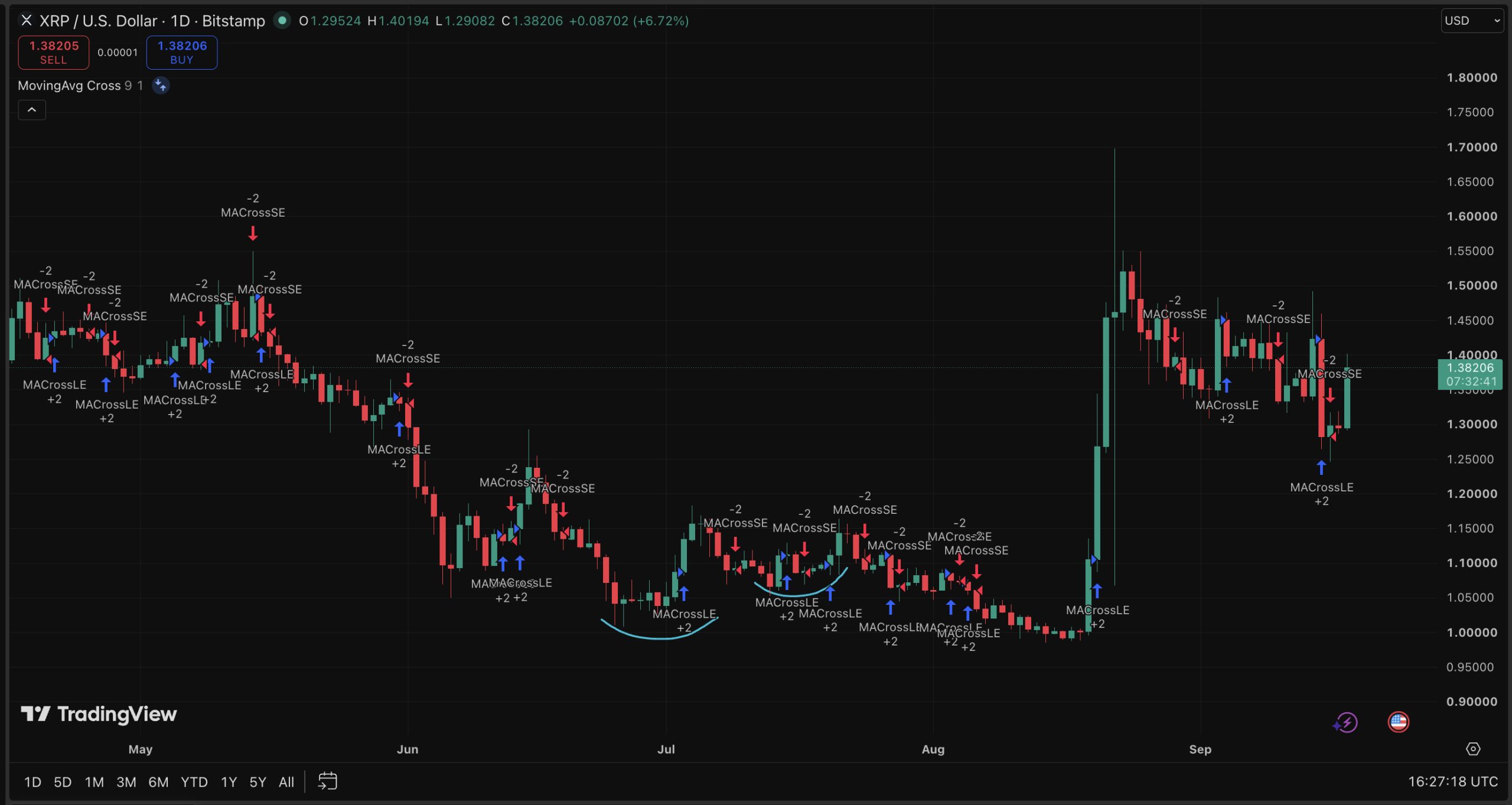
XRP should be in every news headline as its 50-day moving average sits about 2% below its 200-day average, the closest the gap has been since the token’s last golden cross in August 2024. The setup is emerging as bitcoin dominance, or bitcoin’s share of total crypto market capitalization, has fallen to a one-month low below 59%.
A golden cross is confirmed when an asset’s 50-day moving average crosses above its 200-day moving average. Chart analysts widely view the pattern as a bullish long-term signal. Bitcoin recently confirmed its own golden cross, while cautioning that XRP has shown a different historical record.
The 16 previous XRP golden crosses and found that all were terminated by a death cross within 12 months. Six did not survive three months. Of the 10 crosses that reached the three-month mark, five produced gains ranging from 85% to more than 1,000%. Those included a 1,009.6% gain following the April 2017 cross and a 135% gain after the February 2021 cross. The other five lost as much as 32%.

Half of the crosses that lasted at least three months generated substantial gains, while the other half produced losses. The historical figures indicate that the golden cross, like other technical indicators, was not fully reliable when used in isolation.
Bitcoin is now trading near $80,000, and its dominance rate has dropped below 59%, which implies a rotation into altcoins. The data points to attention shifting within the crypto market, even as bitcoin’s price remained near its level from a week earlier.
Earn $50 and Enter $300K Prize Draw on EdgeX
How to Read the Moving Averages?
Confirmation requires the 50-day average to cross above the 200-day average. With XRP’s 50-day average about 2% below the longer-term average since the August 2024 golden cross. The difference between the two averages is therefore the immediate technical measure for traders following the setup.

Our AI price analysis identified the $1.26-$1.27 area as a support zone that aligns with the 200-day moving average and former range support. XRP technical structure was neutral, and the near-term direction hinged on whether the asset could hold above that support area despite some bearish news from the Clarity Act.
Moving averages provide one way to assess trend conditions, but the historical XRP results show why the crossover itself does not settle the question of what follows. A cross can confirm the technical pattern while leaving the duration and price performance of that pattern uncertain.
Trade XRP on Bybit and Get a Chance to Win Our $1,000 USDT Airdrop
What’s Next for XRP Beyond The News?
If XRP’s 50-day average crosses above its 200-day average, it will confirm the pattern we are tracking. That would be a technical event, not a guarantee of a lasting advance. A later death cross would be consistent with the outcome recorded for all 16 prior XRP golden crosses within a year.
The three-month historical split remains central to interpreting the signal. Five of the 10 crosses that reached that point posted gains of 85% to more than 1,000%, while five recorded losses of as much as 32%. The outcomes show both the potential for large gains and the limits of relying on the indicator alone.
We characterized the broader move into altcoins as cautious rather than complete. FxPro chief market analyst Alex Kuptsikevich said traders appeared to be cautiously shifting their focus toward altcoins, while the altcoin season index and overall market sentiment had not reached high levels.
Bitcoin dominance below 59% is consistent with our assessment that attention was rotating toward altcoins, while the available indicators did not establish a broad altcoin cycle.
Discover: The Best Token Presales
The post XRP News: 16-Cross History Complicates the Golden Cross Signal appeared first on Cryptonews.

In-N-Out says average store manager pay tops $200K a year

Index Fund: You Don’t Have To Beat The Market To Retire In Style
How to craft Zephyr Runeword uniques in Diablo 4 (and why they’re good)

Weekend Open Thread – Corporette.com

Memory prices are slowing because buyers ran out of money

Micron Stock Climbs Above $1,031 as AI Memory Crunch and a $50 Billion Outlook Fuel the Rally

Crypto Holders.. this is not good

Does Financial Audit Help You?! Blanko Caleb Hammer #fyp #calebhammer #financialaudit #money

PARKOUR VS MONEY HEIST! 6 | BAD GUYS: No ESCAPE, THE BOAT IS HERE… LET’S GO! (BELLA CIAO) Epic POV
-

 Tech5 days ago
The Latest Weird Thing to Play Doom Is the Mapped-Out Brain of a Fruit Fly
-

 Crypto World4 days ago
Kraken Lets xStocks Holders Earn Yield Through DeFi
-

 Entertainment7 days ago
News Specials, Movies, Shows, More
-

 Crypto World2 days ago
US Charges Robinhood Engineers Over Crypto Listing Trades
-

 Crypto World6 days ago
Can AI Build a Startup in 72 Hours? Elon Musk's Team Will Livestream the Test
-

 Crypto World4 days ago
Elon Musk Drops a Bombshell: Grok 5 Could Be the AGI Breakthrough
-

 Crypto World3 days ago
What Is the Status of the U.S.-Iran Peace Talks? Here's What Both Sides Are Saying
-

 Business6 days ago
Rivals Sam Altman and Elon Musk Rally Behind Dario Amodei’s Call for a Slowdown in AI Development
-

 Crypto World7 days ago
Robinhood Chain Never Stopped But its Blobs Did Stop Reaching Ethereum For 14 Minutes
-
 NewsBeat4 days ago
‘Sick conspiracy’: Trump says only guardrails AI needs is ‘a strong and smart (High IQ!) president’ in all-caps rant
-
 Crypto World5 days ago
New Tesla Roadster Uses SpaceX Tech. Will It Impact the Stock Price?
-
 Crypto World4 days ago
NVIDIA Analysis: Attempted Rising Wedge Breakout Amid Pressure on the AI Sector
-
 Entertainment7 days ago
New Horror Movie Officially Earns a Rare Stephen King Recommendation
-

 Business6 days ago
Marvell: Most Potent Setup Of The AI Factory Decade
-

 Crypto World4 days ago
Revolut Attackers Warn of Ongoing Daily Customer Data Leaks
-

 Crypto World4 days ago
DOJ Seeks to Seize $61M in Iran Oil Funds From Binance Accounts It Vouched For
-

 Crypto World7 days ago
Bitcoin ETFs lose $462.7M as Ethereum funds gain $196.9M
-
 Crypto World5 days ago
3 Token Unlocks to Watch in the Third Week of September 2026
-
Crypto World4 days ago
Can Circle’s Arc Repeat Robinhood Chain’s Meme Coin Boom?
-
Business4 days ago
SK Hynix ADRs Fall More Than 6% as Memory Rally Breaks on Fears of Slower AI Spending
You must be logged in to post a comment Login