
Crypto World
Bitcoin Whales Show Confidence in Accumulating Despite Market Instability


TLDR
- Bitcoin whale holdings have increased by 3.4% over the past two months, reaching 3.1 million BTC.
- The surge in whale accumulation follows a sharp 7% drop in Bitcoin’s price before December 2025.
- Darkfrost notes that whale buying behavior typically occurs during market corrections, signaling future recovery.
- Despite a 46% decline from Bitcoin’s all-time high, whales view the current price as a favorable accumulation zone.
- Bitcoin faces continued selling pressure, with price fluctuations remaining between $66,615 and $68,434.
Bitcoin whales are increasing their holdings of the cryptocurrency, as price fluctuations continue. Data from CryptoQuant Analyst Darkfrost shows that whale Bitcoin accumulations have risen by 3.4% over the past two months. This uptick, following a significant drop in November 2025, suggests that large investors are taking advantage of current price levels. At present, Bitcoin’s price remains volatile, but whale activity indicates a strong belief in future growth.
Bitcoin Whale Accumulations Show Growth
Whale holdings of Bitcoin have seen a steady increase since mid-December 2025. According to CryptoQuant Analyst Darkfrost, these accumulations have gone up by 3.4%. The total amount of Bitcoin in whale wallets has reached 3.1 million BTC, a rise from 2.9 million BTC. Despite the volatile market conditions, Bitcoin whales are clearly acting on these price fluctuations.
The trend marks a significant rebound after a sharp decline in Bitcoin’s price. Prior to December, Bitcoin saw a 7% drop, leading to a temporary halt in whale accumulation. The increase in whale Bitcoin holdings now reflects a more confident outlook. Darkfrost notes that this behavior is usually seen during market corrections and that whales tend to accumulate when prices are lower.
The last recorded whale accumulation occurred in April 2025. At that time, the market had experienced a large correction, with Bitcoin’s price falling below $80,000. However, this accumulation helped fuel a recovery, pushing Bitcoin’s price from $76,000 to an all-time high above $126,000. The return of buying activity now, even with Bitcoin still down by 46% from its ATH, signals that whales see this as a favorable accumulation zone.
Darkfrost argues that Bitcoin price is currently undervalued, which has led to increased buying pressure from whales. He believes that these investors are positioning themselves for future gains once market conditions improve. However, he also pointed out that, despite the growing demand, market forces are still influencing prices in the short term.
Bitcoin Faces Continued Sell-Off Pressure
Despite the increased whale activity, Bitcoin continues to face selling pressure. Darkfrost highlighted that while demand for Bitcoin remains strong, sell-offs are still affecting the market. Bitcoin’s price has been fluctuating between $66,615 and $68,434 over the past 24 hours, indicating ongoing uncertainty. As the market consolidates, traders are keeping a close eye on the broader trend.
In the midst of this, firms like Michael Saylor’s Strategy Inc are continuing to show support for Bitcoin. While some experts point to a crypto winter, Saylor remains confident in Bitcoin’s long-term potential. The firm’s continued interest in Bitcoin reinforces the belief that the cryptocurrency will eventually overcome current price challenges.
At the time of writing, Bitcoin’s price was $67,469.58, reflecting a 0.44% drop in the last 24 hours. As the market remains volatile, it remains to be seen whether whale accumulation will continue to drive Bitcoin’s price upward.


Bitget, the world’s largest Universal Exchange (UEX), in partnership with Visa and DCS, launched the Bitget Card across selected markets in Asia Pacific (APAC), extending crypto out of exchanges into everyday spending and marking another step toward a more unified financial experience where digital assets work quietly in the background of daily life.
The initial rollout makes a virtual Bitget Card available to APAC users, with a physical card set to follow in the coming months. Issued in collaboration with DCS and powered by Visa’s global payments network, Bitget Card enables users to convert crypto into fiat for everyday spending across merchants across APAC. Payments are processed instantly and feel no different from a standard card transaction, removing the friction typically associated with off-ramping or manual conversion. Crypto operates quietly in the background while users transact through familiar payment rails, supporting seamless everyday adoption
“Partnerships across the ecosystem are key to bringing digital assets into everyday payments,” said Joan Han, COO of DCS and DeCard.
“By combining Bitget’s ecosystem with DCS’s issuing infrastructure and Visa’s global acceptance network, the Bitget Card enables users to move from crypto holdings to everyday spending through a familiar card experience.”
To accompany the launch, Bitget Card offers one of the most competitive reward structures in the region, with up to 20% cashback on eligible spending, capped at $800. Low foreign exchange fees further position the card for globally mobile users who expect spending tools to work across borders without friction.
“For crypto to become truly mainstream, it can’t ask people to constantly think about it,” said Gracy Chen, CEO of Bitget.
“It should operate quietly in the background while people go about living their lives. Bitget Card reflects the shift where crypto becomes infrastructure, not an interruption.”
The launch aligns with Bitget’s Universal Exchange vision, which brings crypto, derivatives, and tokenised traditional assets into a single ecosystem. By extending that framework into payments through partnerships with Visa and DCS, Bitget is narrowing the gap between digital assets and real-world commerce, allowing users to move between markets and everyday spending without switching contexts.
Additional features include enhanced benefits for VIP members, including higher rebates and complimentary physical card issuance once available.
“As digital assets become more widely held, consumers increasingly expect simple and reliable ways to use that value in everyday life,” said Adeline Kim, Country Manager for Singapore & Brunei at Visa.
“The Bitget Card reflects how payments are evolving — enabling a seamless move from digital assets to everyday spending through a familiar Visa card experience, at scale and across borders.”
Looking ahead, Bitget plans to expand the Bitget Card with premium physical designs, fee-free ATM withdrawals of up to $100 per month, and access to a global network of airport lounges, reinforcing its positioning as a long-term lifestyle payment tool.
As financial systems continue to converge, the line between crypto and traditional finance is becoming less visible to consumers. With Bitget Card, digital assets integrate seamlessly into everyday payments, allowing users to spend, travel, and move globally through familiar card experiences.
To apply for a Bitget card, please visit here.
Disclaimer: This is for information only, not investment advice or solicitation to trade or use any service. Our services may not be available in certain jurisdictions or for users in certain regions.
About Bitget
Bitget is the world’s largest Universal Exchange (UEX), serving over 125 million users and offering access to over 2M crypto tokens, 100+ tokenized stocks, ETFs, commodities, FX, and precious metals such as gold. The ecosystem is committed to helping users trade smarter with its AI agent, which co-pilots trade execution. Bitget is driving crypto adoption through strategic partnerships with LALIGA and MotoGP™. Aligned with its global impact strategy, Bitget has joined hands with UNICEF to support blockchain education for 1.1 million people by 2027. Bitget currently leads in the tokenized TradFi market, providing the industry’s lowest fees and highest liquidity across 150 regions worldwide.
For more information, visit: Website | Twitter | Telegram | LinkedIn | Discord
Risk Warning: Digital asset prices are subject to fluctuation and may experience significant volatility. Investors are advised to only allocate funds they can afford to lose. The value of any investment may be impacted, and there is a possibility that financial objectives may not be met, nor the principal investment recovered. Independent financial advice should always be sought, and personal financial experience and standing carefully considered. Past performance is not a reliable indicator of future results. Bitget accepts no liability for any potential losses incurred. Nothing contained herein should be construed as financial advice. For further information, please refer to our Terms of Use.
The post Bitget Brings Crypto Into Everyday Spending With APAC Launch of Bitget Card appeared first on BeInCrypto.

Bitcoin has stubbornly maintained a 60,000 to 73,000 USD trading band as macro headwinds intensify. Oil prices hover at levels not seen since 2008, geopolitical tensions flare across the US, Israel and Iran, and stock markets remain volatile after a choppy start to the year. In this environment, BTC has drawn steady bids on pullbacks toward the 60k mark, but the path forward remains uncertain as traders weigh whether a breakout or deeper correction lies ahead.
Analysts point to a technical setup that could tilt the risk balance either way. A rising wedge and a bear-flag pattern have been in focus, with a key stake on whether Bitcoin can sustain a rally above a critical resistance area. Market technicians stress that a daily close above roughly 76,000 USD would be necessary to invalidate the current bearish configuration and shift the narrative toward a potential fresh leg higher. Until such a breakout occurs, the market may remain in a waiting game as traders seek a catalyst to unlock capital and directional bets.
Key takeaways
- Bitcoin remains range-bound between 60,000 and 73,000 USD despite challenging macro conditions, with support at 60k and resistance nearer 70k–73k.
- A bear-flag/bearish continuation pattern dominates near-term view, requiring a close above 76,000 USD to negate the setup; a breakdown could push toward the mid-50k to 52,500 USD area per some scenarios.
- Trading activity shows subdued demand and a cautious stance, as aggregated open interest stays below 20 billion USD and negative funding rates are treated as opportunistic signals rather than reliable catalysts for rallies.
- Liquidity dynamics hint at risk for leveraged longs if BTC weakens toward 63–65k USD, with a liquidity gap below and another cluster of longs starting around 57,500–56,000 USD.
- Market participants await a clear catalyst—whether a macro shift or a technical breakout above 76k—before the next sustained move, keeping the focus on the 60k–70k range until then.
Bearish patterns and the price action
Bitcoin’s recent price action has framed a cautious setup. A correction to 60,014 USD occurred on Jan. 20 as BTC traded within the broader range, reinforcing a bearish continuation narrative. Since February 8, attempts to break past the bear-flag’s overhead trendline have failed, reinforcing the view that the pattern remains intact unless a decisive breakout occurs.
Technical observers underscore that clearing 76,000 USD on a multi-day basis is the prerequisite for negating the current bearish configuration. In practical terms, a rally to that level would need to sustain for two or three consecutive daily candles and then retest the trendline at around 75,000 USD to confirm a change in role from resistance to support.
“Breakdown of the lower boundary will be the signal for a possible move toward 52,500 USD.”
That outlook aligns with a broader sentiment among some technicians who monitor price channels and chart patterns for guidance on possible trajectories. While not a guaranteed forecast, the emphasized level of 52,500 USD sits as a potential magnet in a scenario where downside momentum intensifies.
Liquidity, funding and risk in the wings
Across spot and futures markets, demand appears relatively flat by several market-tracking measures. Data suggests that traders still view episodes where the funding rate turns negative as potential buying opportunities, but such signals have not reliably translated into sustained upside as Bitcoin tests the bear-flag resistance.
Aggregated open interest provides a corroborating view: it has remained below 20 billion USD, a threshold last associated with BTC trading near 79,000 USD earlier in February. The muted open interest implies that traders are selectively taking on risk, rather than piling into directional bets with high leverage.
In the options and futures space, risk dynamics show a clustering of leveraged long positions vulnerable to liquidation if price declines into the 63,000–65,000 USD range. A liquidity gap exists below, with the next sizable block of long positions projected around 57,500–56,000 USD. These pockets of risk hint at how quickly sentiment could shift if Bitcoin breaks lower and triggers cascading liquidations in highly leveraged positions.
Market path to watch
The prevailing mood appears to be one of consolidation, with market participants waiting for a meaningful trigger to re-accelerate volatility in either direction. Traders are watching for catalysts—whether from macro data, geopolitical news, or a fresh technical breakout—that could reallocate capital and tip BTC out of its current range.
Absent such catalysts, the price action is likely to continue trading within the 60,000–70,000 region, with 60,000 acting as a stubborn floor and 70,000 representing a more challenging hurdle for those hoping to reestablish momentum above the long-standing resistance area. The broader picture suggests that the market is seeking a narrative or data point that justifies larger bets, rather than reacting to mid-cycle noise alone.
What readers should watch next
As the market evolves, key milestones to monitor include a sustained break above 76,000 USD on a multi-day basis, followed by a confirmatory retest of the 75,000 USD level. If the price fails to clear this zone, attention will likely shift back to the lower boundary near 60,000 USD and the risk of a renewed test of the bears’ target around 52,500 USD. On the funding and liquidity front, any meaningful shifts in open interest and leverage dynamics—especially a surge in long liquidations around the 63–65k window—could catalyze sharper moves. The coming weeks will be telling as macro headlines and on-chain signals converge to redefine BTC’s trajectory.
According to analysts like Aksel Kibar, who shared charts and commentary on X, the path of least resistance will hinge on whether the support and resistance lines hold or give way. For now, Bitcoin’s fate rests on whether buyers can step forward with conviction above the critical 76k level or whether a fresh wave of selling drives the market toward mid- to low-50k territory. Readers should stay tuned to both price action and the evolving liquidity landscape, as these are the levers most likely to determine the next leg in BTC’s ongoing range-bound saga.


Summary
- YZi Labs has made a strategic follow-up investment in prediction market protocol Predict.fun after its EASY Residency accelerator.
- The round includes participation from Susquehanna Crypto, the digital asset arm of quantitative trading giant Susquehanna International Group.
- Since graduation, Predict.fun has processed over 4 million orders and more than $1.8 billion in trading volume on BNB Chain.
YZi Labs has announced a strategic additional investment in prediction market platform Predict.fun following the second season of its EASY Residency program, according to an official update from the firm. The follow‑on round brings in Susquehanna Crypto, the digital asset trading arm of global quantitative trading firm Susquehanna International Group, signaling growing institutional interest in on‑chain prediction markets.
The Predict.fun team graduated from YZi Labs’ EASY Residency Season 2 cohort, unveiled during Binance Blockchain Week, where the incubator highlighted the protocol’s blend of DeFi yield, self‑custody and gasless UX as the basis for “mainstream prediction markets.” YZi Labs described Predict.fun as enabling a new class of event trading by routing user collateral into DeFi strategies while positions are open, turning predictions into a yield‑generating primitive rather than idle bets.
Since its launch in December 2025, Predict.fun has processed more than 4 million orders and surpassed $1.8 billion in cumulative trading volume, according to figures shared by YZi Labs and third‑party coverage. Trust Wallet, which recently integrated Predict.fun, said the protocol has handled over $1.7 billion in volume across roughly 125,000 users and 3.7 million transactions, underscoring the pace of adoption on BNB Chain.
Built as a self‑custodial app on BNB Chain, Predict.fun lets users trade on outcomes across crypto prices, sports, politics and macro events using USDT, while their collateral earns DeFi yield in the background. The platform resolves markets using a combination of AI‑assisted proposals, human verification against reputable data sources and UMA’s Optimistic Oracle, a design YZi Labs says balances automation with accountability for high‑stakes outcomes.
Susquehanna Crypto’s participation aligns Predict.fun with one of the world’s largest options and ETF market makers, adding credibility as prediction protocols vie to become institutional‑grade trading venues. Data from YZi Labs shows that the EASY Residency network now backs multiple prediction and trading projects, with Predict.fun singled out as BNB Chain’s “dominant prediction market” and a core beneficiary of the firm’s $1 billion Builder Fund for the ecosystem.
For YZi Labs, doubling down on Predict.fun fits a strategy of investing at the intersection of Web3 and AI, with on‑chain markets framed as both retail‑facing products and data feeds for more advanced models. If the protocol can sustain multi‑billion‑dollar volumes while keeping slippage low and resolutions trusted, the latest round positions it to compete with centralized prediction venues and emerging rivals across other L1s and L2s.


The integration launches with more than a dozen U.S. stocks, major equity indices, and commodity contracts resolved using Pyth’s real-time price data.
Polymarket has expanded beyond crypto and event-based contracts into traditional financial assets, integrating oracle provider Pyth Network as the resolution source for a new suite of equity, index, and commodity markets.
The collaboration, announced on Wednesday, launches with daily up/down and daily close markets for major equity indices, commodities including gold, silver, WTI crude, and natural gas, and more than a dozen U.S. equities such as TSLA, COIN, PLTR, NVDA, and AAPL.
Alongside the integration, Pyth unveiled Pyth Terminal, a live data interface that allows traders to explore and verify price feeds in real time. The tool includes benchmark comparisons for U.S. equities and foreign exchange, publisher-level transparency for each feed, and free API key access for new sign-ups.
Polymarket traders can follow a live “price to beat” chart that updates every second as markets move, with the Terminal serving as the public source of truth for how each market resolves.
Over 125 leading trading firms, exchanges, and market makers publish first-party price data directly to Pyth, creating what the network describes as a price discovery system rooted in real trading activity rather than a single exchange or market window.
“Millions of dollars can hinge on a single price point, and that demands absolute confidence in the source of truth. Pyth delivers that assurance, enabling Polymarket to expand into high-stakes financial markets,” said Mustafa Aljadery, Product Lead at Polymarket.
The launch significantly deepens Polymarket’s push into finance-related markets. The prediction market already hosts 138 active commodities markets and a finance category covering earnings, Fed rate decisions, IPOs, and forex.
Polymarket’s monthly volumes have surged from roughly $1 billion in mid-2025 to over $8 billion by March 2026, with weekly notional volume consistently exceeding $1 billion through the first quarter.
The expansion comes as Polymarket continues to deepen its institutional and mainstream partnerships, having recently been named MLB’s exclusive prediction market partner.
For Pyth, the Polymarket deal adds to a string of recent product launches, including a 24/7 oil index designed to fill pricing gaps left by traditional commodity markets that shut down overnight and on weekends.
This article was written with the assistance of AI workflows. All our stories are curated, edited and fact-checked by a human.

SpaceX appears poised to launch what could become the largest initial public offering in history, with a potential valuation above USD 1.75 trillion and up to USD 75 billion in proceeds. If confirmed, the listing would give public investors exposure to SpaceX’s broader space ecosystem, including Starlink’s connectivity and launch capabilities, while funding the continued development of Starship and expansion into new verticals such as AI infrastructure, including space-based data centres. The move follows SpaceX’s merger with xAI, creating a vertically integrated platform that blends space and artificial intelligence and invites scrutiny of how such a multi‑line business should be valued. The prospect of retail ownership, potentially up to 30%, adds another near‑term dynamic.
Key points
- Possible largest IPO ever with valuation above $1.75 trillion and up to $75 billion in proceeds.
- Public exposure to SpaceX’s ecosystem, including Starlink connectivity and launch capabilities.
- Proceeds earmarked for Starship development, Starlink expansion, defence initiatives, and AI infrastructure, including space-based data centres.
- SpaceX-xAI merger introduces vertical integration spanning space and AI, raising valuation questions for investors.
- Retail share allocation expected to be up to 30% of the offering.
Why it matters
If SpaceX moves forward with a valuation in this range, it would set a new benchmark for mega-tech listings tied to space, infrastructure, and AI. The IPO would broaden public exposure to a space-based ecosystem beyond traditional hardware, while the xAI tie-in signals a broader ambition that spans multiple high-capital segments. For investors, the arrangement raises questions about how to price a company with profitable space operations alongside capital-intensive AI ventures, and how share distribution to retail participants could influence demand and pricing.
What to watch
- Final confirmation of IPO details: valuation, proceeds, and timing.
- Retail investor share allocation up to 30%.
- Impact of SpaceX-xAI merger on valuation and strategy.
- Near-term signals on Starship and Starlink funding implications.
Disclosure: The content below is a press release provided by the company or its PR representative. It is published for informational purposes.
SpaceX IPO Set to Become Largest in History, Marking a Defining Moment for Global Markets
Abu Dhabi, UAE – April 01, 2026
SpaceX is reportedly preparing to go public in what could become the largest IPO in history, with a potential valuation exceeding USD $1.75 trillion and plans to raise up to USD $75 billion. If confirmed, this would surpass Saudi Aramco’s 2019 listing, which raised USD $29.4 billion.
The listing would mark the first opportunity for public market investors to gain exposure to Elon Musk’s space ecosystem. SpaceX has established itself as a global leader, with its Starlink broadband network generating significant revenue and its launch capabilities dominating the commercial space sector.
Proceeds from the IPO are expected to fund the continued development of Starship, expand Starlink into new verticals, support defence-related initiatives, and accelerate investments in AI infrastructure, including the concept of space-based data centres.
The company’s recent merger with xAI introduces an additional dimension for investors. While the move creates a vertically integrated innovation platform spanning space and artificial intelligence, it also raises questions around valuation, given xAI’s capital-intensive nature.
Josh Gilbert, Market Analyst at eToro, commented: “SpaceX’s IPO represents a watershed moment for global markets. It’s not just about gaining exposure to a leading space company, but about investing in a broader ecosystem that spans connectivity, defence, and artificial intelligence. However, the complexity of the business model — combining a highly profitable space and broadband operation with a capital-intensive AI venture — means investors will need to carefully assess whether the proposed valuation is justified.”
The IPO also has implications for Tesla investors, as Tesla holds a stake in SpaceX following its USD $2 billion xAI investment. Increasing operational ties between the companies have fuelled speculation about a potential future merger, which could create a new type of multi-sector technology conglomerate.
Notably, SpaceX is expected to allocate a significant portion of shares to retail investors, potentially up to 30%, signalling a shift in how major IPOs engage with individual market participants.
As anticipation builds, the key question for investors remains whether the scale, ambition, and integration of SpaceX’s business lines can support what would be one of the most ambitious valuations ever seen in public markets.
Crypto World
Wirex and Ultra Stellar Launch Native Stellar Payment Infrastructure to Power Millions of Users and AI Agents

Wirex, a leading stablecoin payment infrastructure provider serving over 7 million users globally, and Ultra Stellar, the company behind Stellar’s largest wallet LOBSTR and leading decentralized exchange StellarX, today announced the launch of a native Stellar payment infrastructure, built directly on Soroban, Stellar’s smart contract platform.
This first-of-its-kind initiative establishes a fully integrated, blockchain-native payment layer that enables wallets, fintech platforms, and developers across the Stellar ecosystem to offer stablecoin bank accounts, global card issuance, payouts, and yield — all settled directly on Stellar.
By combining Wirex’s global payment connectivity, licensing coverage, and integration with Visa and banking rails, with Ultra Stellar’s deep expertise in Stellar infrastructure and millions of active users, the partnership brings real-world financial capabilities directly on-chain.
Rather than a traditional integration model, Wirex and Ultra Stellar will jointly develop and evolve this infrastructure, combining their respective strengths to build a unified, Stellar-native payment layer for the ecosystem.
The infrastructure is designed to support the next generation of financial applications — including those used by millions of users and autonomous AI agents, enabling seamless global transactions powered entirely by stablecoins.
A Complete Payment Stack Built Natively on Stellar
The new infrastructure introduces production-ready financial capabilities for the Stellar ecosystem, including:
- Stablecoin-Powered Virtual Bank Accounts.
Fully functional accounts enabling users and businesses to store, receive, and manage stablecoins with real-world financial usability.
- 1:1 Fiat–Stablecoin Conversion
Instant conversion between fiat and stablecoins at true 1:1 value, removing spreads and friction.
- Global Co-Branded Card Issuing
Stablecoin-powered cards accepted at over 80 million merchants worldwide, enabling direct spending from Stellar-native balances.
- Global Payouts and Settlement
Seamless transfers via major global payment rails including ACH, SEPA, PIX, FPS, SWIFT, and Push-to-Card, bridging on-chain assets with traditional finance.
- Native Stablecoin Yield
Up to 6% APY on stablecoin balances through secure, on-chain yield infrastructure with full liquidity and no lock-ups.
Connecting Stellar to Global Financial Rails
Unlike traditional blockchain payment integrations that rely on external infrastructure, this solution is built directly on Soroban, ensuring seamless interoperability with Stellar wallets, tokens, and applications.
This allows developers and platforms to embed fully functional financial services natively — transforming Stellar into a complete payment ecosystem capable of supporting real-world financial use cases at scale.
With Ultra Stellar powering millions of users through LOBSTR and StellarX, and Wirex providing global payment connectivity and regulatory coverage, the infrastructure is positioned to onboard millions of new users, applications, and AI-driven financial agents.
Both companies will continue to co-develop and expand the infrastructure, ensuring it evolves in line with the needs of the Stellar ecosystem and its growing developer and user base.
Leadership Commentary
Pavel Matveev, CEO and Co-Founder of Wirex, said:
“This partnership goes beyond integration — together with Ultra Stellar, we are building a native payment layer for the entire Stellar ecosystem. By combining Wirex’s global payment connectivity with Ultra Stellar’s deep expertise in Stellar, we’re creating infrastructure that allows developers, businesses, and future AI agents to access real-world financial services directly on-chain.
Our goal is to make Stellar one of the leading ecosystems for stablecoin-powered payments — where cards, bank accounts, payouts, and yield are all seamlessly connected through a unified, on-chain financial layer.”
Gleb Pitsevich, Founder of Ultra Stellar, added:
“Ultra Stellar has helped scale Stellar through applications like LOBSTR and StellarX, which serve millions of users worldwide. Together with Wirex, we are building and evolving native payment infrastructure on Stellar, enabling developers, platforms, and users to access real-world financial capabilities directly on-chain.”
Powering the Next Generation of Financial Applications
This launch positions Stellar among the first blockchain ecosystems with fully native payment infrastructure capable of supporting global cards, bank accounts, payouts, and yield — all powered by stablecoins.
As stablecoins become the backbone of global finance, Wirex and Ultra Stellar are building the infrastructure that will enable millions of users and autonomous agents to transact seamlessly across borders, networks, and applications.
About Wirex
Wirex is a leading stablecoin payment infrastructure provider connecting blockchain networks to real-world financial systems. Serving over 7 million users across 130+ countries, Wirex enables stablecoin-powered bank accounts, global card issuing, and payment connectivity through direct integration with Visa, Mastercard, and global banking rails.
Learn more here | https://www.wirexapp.com/developers
About Ultra Stellar
Ultra Stellar builds core infrastructure and applications for the Stellar ecosystem. The company is behind LOBSTR, the largest Stellar wallet with millions of users, and StellarX, the leading decentralized exchange on Stellar. Ultra Stellar focuses on building scalable, user-friendly financial infrastructure and accelerating global adoption of Stellar.
Learn more:https://UltraStellar.com/
The post Wirex and Ultra Stellar Launch Native Stellar Payment Infrastructure to Power Millions of Users and AI Agents appeared first on BeInCrypto.
Key takeaways:
-
Private credit risks and weak US jobs market data drive Bitcoin lower, but is there a silver lining?
-
Institutional Bitcoin ETF outflows and miner sales test BTC’s strength, but the Federal Reserve’s options for addressing the federal deficit may also favor scarce assets.
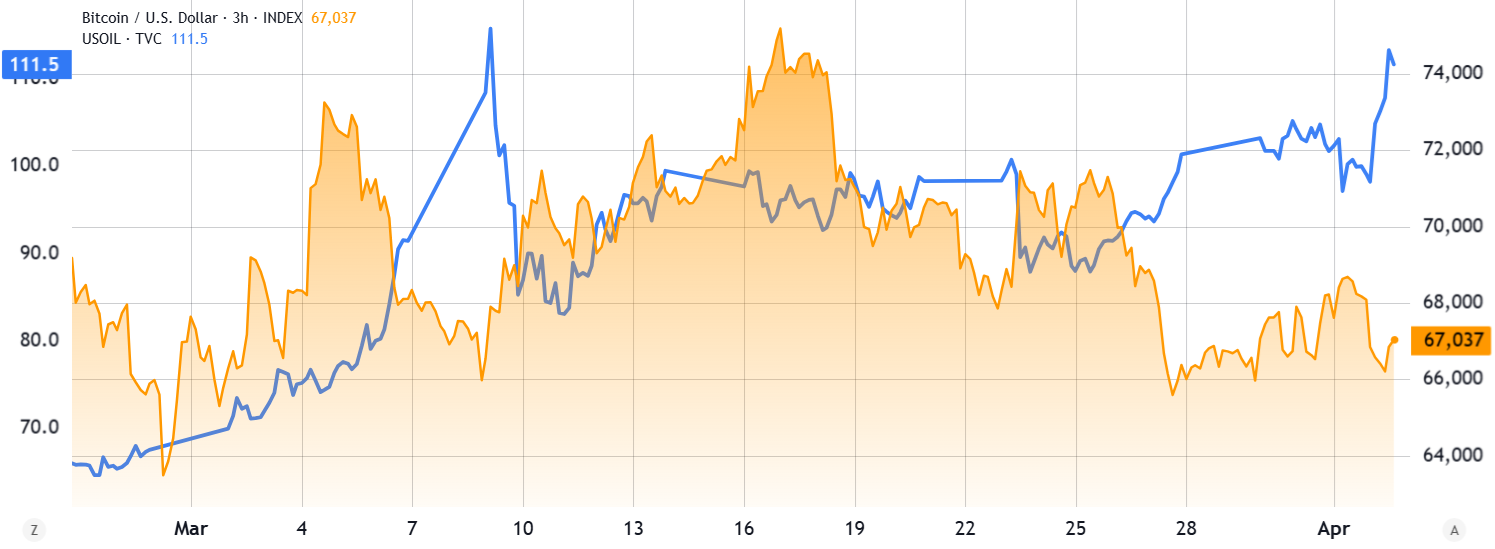
Bitcoin (BTC) faced rejection at $69,000 on Wednesday after President Donald Trump’s speech failed to guarantee an end to the war in Iran. Oil prices soared following the speech and beyond traders’ war-related worries, tumult in the private credit markets is also taking a toll on investor confidence across multiple markets.
While Bitcoin has successfully defended the $66,000 level throughout the week, traders remain concerned about downside risk over the upcoming weekend, as US and European markets will be closed on Friday for Easter.

The threat of additional US-led military action in Iran caused WTI crude oil prices to rally above $110, triggering a move away from risky assets. Traders chose to cut their exposure to Bitcoin and stocks as the US Treasury Department expressed concerns regarding the $2 trillion private credit markets on Wednesday. Domestic and international insurance regulators will be surveyed through early May.
Private credit markets sound the alarm: Will BTC respond?
Blue Owl, a $307 billion alternative asset manager, announced “extraordinary redemption requests” for two of its private credit funds in shareholder letters issued Thursday. Over 70% of the companies Blue Owl lends to are in the software industry, as reported during a quarterly earnings call. The fund manager capped withdrawal requests at 5%, adding fresh concerns to the credit market.
Adding to the short-term bearish sentiment among traders was a surge in US continuing jobless claims, which rose to 1.84 million for the week ending March 21, up from 1.82 million the week prior. This data is not inherently negative for equities; however, as the global outplacement firm Challenger, Gray & Christmas noted, most layoffs originated from companies “shifting budgets toward AI investments at the expense of jobs.”

The odds of economic stimulus initiatives amid weakening economic activity could ultimately support Bitcoin’s price in the medium term. The US federal deficit is expected to reach a massive $1.9 trillion in 2026, leaving little room to maneuver other than injecting liquidity, which tends to benefit scarce assets.
An improvement in the risk perception of Bitcoin will be decisive for a potential rally above $75,000. There has been a considerable negative impact from net outflows from US-listed spot exchange-traded funds (ETFs), the liquidation of positions held by companies that previously focused on building corporate reserves, and the unwinding by publicly listed miners.

US-listed Bitcoin ETFs have seen $450 million in net outflows since March 24, which serves as a proxy for weak institutional demand. Traders fear further selling pressure because the industry holds $88 billion in Bitcoin under management, with BlackRock’s iShares Bitcoin Trust (IBIT US) leading at $53.9 billion. However, these outflows should slow if Bitcoin continues to show strength near $66,000.
Related: Bitcoin hits weekly low on oil fears as analyst teases $10K BTC price target
MARA Holdings (MARA US) announced the sale of 15,133 BTC in March at a price far below the company’s estimated cost basis. Meanwhile, Riot Platforms (RIOT US) reportedly transferred 500 BTC for sale on Wednesday. Additionally, Nakamoto Holdings (NAKA US) disclosed a sale of 284 BTC, despite having previously announced its intention to continue accumulating the asset.
As long as companies such as Strategy (MSTR US) and Metaplanet (MTPLF US) continue to absorb some of this selling pressure, investors will likely recognize that Bitcoin serves as a safeguard against increasing money supply. Governments will do everything possible to avoid a recession, raising the odds that Bitcoin’s path to $75,000 stays firmly in play despite worsening macroeconomic conditions.
This article is produced in accordance with Cointelegraph’s Editorial Policy and is intended for informational purposes only. It does not constitute investment advice or recommendations. All investments and trades carry risk; readers are encouraged to conduct independent research before making any decisions. Cointelegraph makes no guarantees regarding the accuracy or completeness of the information presented, including forward-looking statements, and will not be liable for any loss or damage arising from reliance on this content.
The ongoing Iran conflict is now costing Americans real money—and the numbers are starting to add up. New estimates show the war has cost roughly $30–45 billion in just over a month.
When broken down, that equals about $2.5 to $3.8 per person per day, with a central estimate near $3 daily.
The biggest driver is US military spending. Early data suggests tens of billions have already been spent on operations, making it the largest direct cost.
However, Americans are feeling it most at the pump. Oil prices surged from around $79 a month ago to over $110 per barrel, driven by supply fears and disruptions around the Strait of Hormuz.
That pushed gasoline prices sharply higher, adding billions in extra household fuel costs.
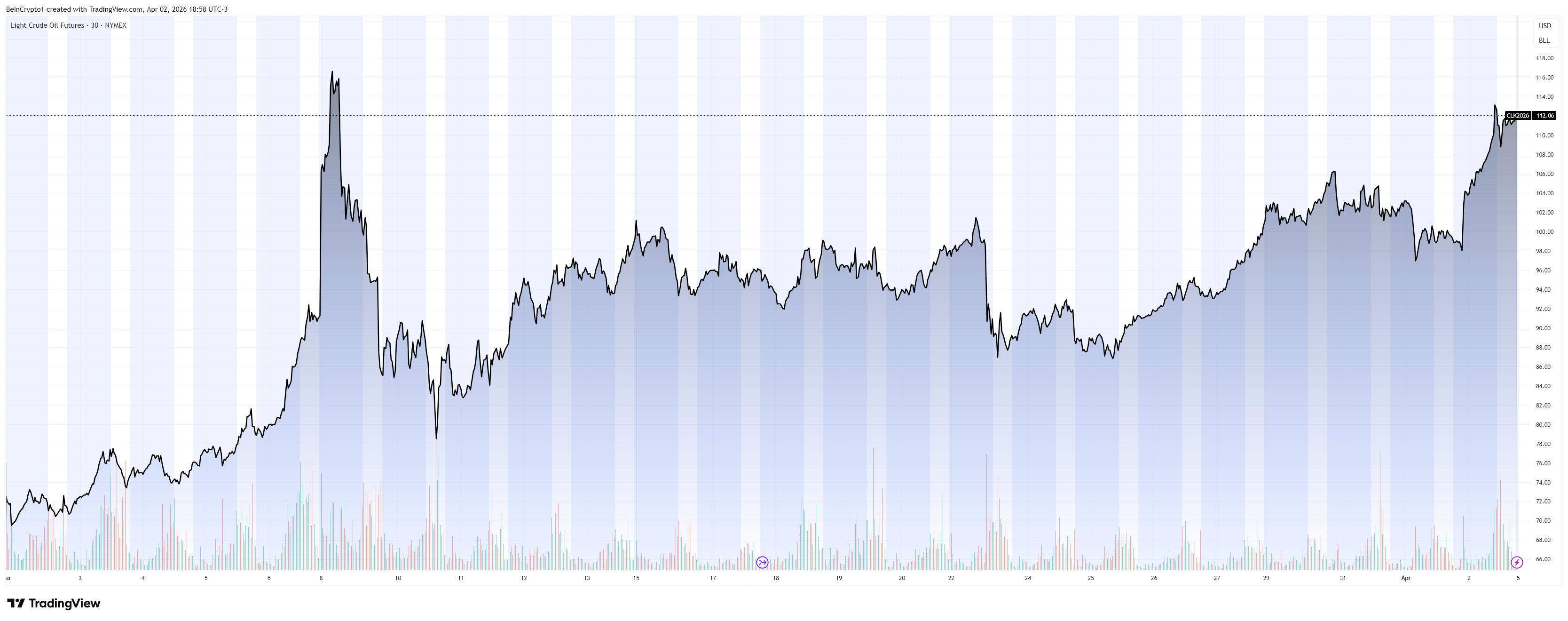
Meanwhile, inflation is starting to creep up. Rising oil feeds into transport, food, and goods pricing. Mortgage rates have also moved higher, increasing borrowing costs.
There is also a much higher “hidden” cost. US stocks have lost trillions in value during the conflict. That hits retirement accounts and savings, though it is not a direct daily expense.
Simple Cost Breakdown (34 Days)
| Category | Estimated Cost |
| Military spending | $23B – $34B |
| Higher fuel costs | $4B – $6B |
| Inflation spillover | $2B – $4B |
| Total | $30B – $45B |
Implications are Higher
In simple terms, the average American is quietly paying a few dollars a day through higher prices and government spending.
But the real risk is escalation. If oil keeps rising—or the war expands—these costs could increase sharply, hitting both inflation and financial markets at the same time.
The post How Much Has the Iran War Cost the Average American Per Day? appeared first on BeInCrypto.

Soluna Holdings, a publicly traded Bitcoin mining and AI infrastructure firm focused on renewable energy, disclosed a $53 million deal to acquire the Briscoe Wind Farm in Briscoe County, Texas. The purchase is aimed at powering its upcoming Project Dorothy 3 AI data center campus. The Briscoe facility carries a potential capacity of up to 300 megawatts (MW), and Soluna expects the site to generate annualized revenue in a range of $20 million to $24.4 million. On the news, Soluna’s shares rose about 7.6%, trading near $0.76 per share.
Soluna has been diversifying beyond crypto mining since February 2024, expanding into AI data center infrastructure in the midst of a broader industry pivot toward AI and high-performance computing to shore up revenues as mining profits faced pressure.
Related coverage on the strategic shift and its implications for the crypto mining sector provides additional context for readers following this transition.
Key takeaways
- Soluna commits to a wind-powered expansion with the Briscoe Wind Farm, potentially adding up to 300 MW of capacity to feed its Dorothy 3 AI campus.
- The project is expected to generate $20–$24.4 million in annual revenue, illustrating a shift toward diversified infrastructure revenue streams for crypto-focused operators.
- Industry profitability remains under pressure: CoinShares reports show up to 20% of mining companies aren’t profitable as of early 2026, with miners facing higher energy costs and flattening block rewards.
- Mining economics have deteriorated: the average cost to mine one BTC rose to nearly $80,000 in Q4 2025, while Bitcoin traded well below that level amid a volatile price environment.
- Hashrate growth and balance-sheet strain have driven renewed emphasis on renewables, with several operators adopting wind and solar solutions to reduce exposure to traditional energy markets.
Wind power as a hedge for an evolving sector
The Briscoe Wind Farm purchase aligns with Soluna’s broader strategy of integrating renewable energy with cutting-edge compute capacity. The company’s plan to power Dorothy 3 with wind capacity reflects a longer-term thesis: align infrastructure assets with revenue streams less tied to the cyclical swings of crypto mining. Soluna previously highlighted its foray into AI hosting and co-location services as part of a February 2024 expansion into AI data center infrastructure, signaling a deliberate pivot away from relying solely on volatile mining rewards.
In September, Soluna also announced a collaboration with Canaan, a major mining hardware manufacturer, to deploy a wind-powered BTC mining facility at the Briscoe site. That partnership underscores a dual objective: leveraging renewable energy to improve mining cost structures while integrating AI-focused data center capabilities to diversify cash flows.
The move comes amid a broader industry environment where operators are rethinking energy strategies. The growing emphasis on renewables is partly driven by the need to reduce exposure to asymmetric power costs and by the search for predictable, long-term capacity utilization that AI and HPC workloads can provide.
Industry profitability in the crosshairs
The mining sector continues to grapple with a convergence of challenges. A March 2026 report from asset manager CoinShares notes that a sizable portion of miners are operating at or near breakeven, with as many as 20% of surveyed firms not profitable in that period. The report attributes slipping margins to several factors, including the halving cycle’s aftermath, elevated energy costs, and a tougher price environment for BTC.
The trajectory of Bitcoin prices has also weighed on miners. CoinShares notes that the October 2025 market crash pulled BTC from a peak near $125,000 to around $60,000, a move that compressed margins further as network hashrate continued to climb. The rising hashrate implies more competition for block rewards, intensifying the push for cost-efficient energy and hardware strategies.
In response, several miners have been retreating to renewable energy and smarter energy arrangements. The industry’s energy-cost sensitivity is evident in the fact that miners sold more than 15,000 BTC between October and early March to cover operating expenses, with selling continuing into recent weeks. The pivot to renewables, including partnerships and wind/solar-powered facilities, has become a cornerstone of efforts to sustain operations in a tighter profitability environment.
Renewable deployments are not limited to Soluna’s circle. Other operators—such as The Phoenix Group and Sangha Renewables—have begun integrating renewables to power mining operations, highlighting a broader market trend: energy resilience is increasingly a competitive differentiator for miners facing margin compression.
The momentum around AI-oriented data centers and renewable energy co-location has also fed into broader industry discussions about how Bitcoin mining can coexist with high-demand compute workloads. A related piece of coverage has explored whether AI buildouts could crowd out or compete with mining for energy resources, a dynamic that investors are watching closely as the sector evolves.
What changes, and what remains uncertain
Soluna’s strategic bet on a wind-powered, high-capacity data center campus signals an ongoing effort to diversify revenue beyond commodity mining rewards. The Briscoe deal illustrates how renewable energy assets can bolster a capital-intensive plan to scale AI infrastructure while mitigating the sensitivity of traditional mining to price swings.
Yet the path forward is not without risk. The profitability gap for miners, volatile BTC pricing, and ongoing energy price dynamics remain central uncertainties. The success of Dorothy 3 will hinge on the pace of AI compute adoption, the cost of wind-energy integration, and the ability to sustain utilization at scale. Investors will also be watching how revenue from AI-focused data center operations compares to, and complements, traditional mining earnings over time.
As the sector navigates a period of transition, market participants will likely scrutinize the economics of similar renewable-energy collaborations, the pace of AI demand growth, and the regulatory environment shaping both mining and data-center development.
Readers should monitor Soluna’s project updates, energy grid considerations in Texas, and how the company’s revenue projections progress against actual performance once the facility becomes operational. The evolving balance between AI infrastructure and mining economics will help determine whether renewables can reliably stabilize cash flows for crypto-native operators moving forward.
For context, Soluna’s objectives and the broader industry dynamics continue to be discussed in tandem with coverage on AI-hosting momentum and its potential impact on Bitcoin mining, underscoring a pivotal moment for the sector’s energy strategies and growth trajectories.
Source context: Soluna’s deal details and the Briscoe Wind Farm capacity were reported by Cointelegraph, while CoinShares provided analysis on mining profitability, energy costs, and hashrate dynamics. Market price references for Soluna shares come from Yahoo Finance, reflecting intraday movement around the announcement.
Crypto World
Coinbase’s x402 Payment Protocol Moves to Linux Foundation With Backing From Google, Stripe, and Visa
The open standard for embedding payments into HTTP interactions aims to become the settlement layer for AI agent commerce, with over 20 founding members spanning tech, payments and crypto.
The x402 protocol, Coinbase’s open standard for embedding stablecoin payments directly into web interactions, has officially moved to the Linux Foundation as the newly launched x402 Foundation opens its doors with a broad coalition of industry heavyweights.
The announcement, made Thursday at the MCP Dev Summit North America, marks the protocol’s transition from a Coinbase-led project to a vendor-neutral, community-governed standard designed to accelerate adoption as AI agents increasingly need to pay for services autonomously.
The foundation’s initial governing body includes Cloudflare and Stripe, and founding members include Adyen, Amazon Web Services, American Express, Ampersend.ai, Ant International, Base, Circle, Fiserv Merchant Solutions, Google, KakaoPay, Mastercard, Merit Systems, Microsoft, Polygon Labs, PPRO, Sierra, Shopify, Solana Foundation, Thirdweb and Visa.
From HTTP Error Code to Payment Layer
The x402 protocol revives HTTP’s long-dormant “402 Payment Required” status code, turning it into a functional payment handshake. When an AI agent requests a paid resource, the server responds with a 402 status containing machine-readable price and settlement details. The client signs a payment payload and retries the request, and a facilitator verifies and settles the transaction on-chain.
The design supports both fiat and crypto payment methods across multiple blockchains.
The launch comes as the race to build the internet’s AI payment layer intensifies. x402 faces competition from the Machine Payments Protocol, developed by Stripe and Paradigm’s Tempo blockchain, which uses session-based authentication rather than x402’s per-request model.
Google has already integrated x402 into its Agentic Payments Protocol as the default stablecoin rail. The surrounding infrastructure is also expanding: MoonPay last week released the Open Wallet Standard for AI agent wallet interactions, Visa launched its CLI payment tool targeting agent commerce, and Circle built its Nanopayments directly on x402 for sub-cent USDC transactions.
Coinbase and Cloudflare first announced their intent to create the foundation in September 2025. By placing the protocol under the Linux Foundation’s governance, x402 aims to function as an AI commerce equivalent to SSL, the encryption standard that has become foundational to secure web browsing.
This article was written with the assistance of AI workflows. All our stories are curated, edited and fact-checked by a human.
Bitget Brings Crypto Into Everyday Spending With APAC Launch of Bitget Card

Tiger Woods said he was ‘talking to the president’ in post car-crash phone call

Oura’s Gen 3 Horizon Smart Ring is close to its Black Friday bargain


-

 NewsBeat6 days ago
The Story hosts event on Durham’s historic registers
-

 Sports6 days ago
Sweet Sixteen Game Thread: Tide vs Michigan
-

 NewsBeat6 hours ago
Steven Gerrard disagrees with Gary Neville over ‘shock’ Chelsea and Arsenal claim | Football
-
Entertainment3 days ago
Fans slam 'heartbreaking' Barbie Dream Fest convention debacle with 'cardboard cutout' experience
-
 Entertainment5 days ago
Lana Del Rey Celebrates Her Husband’s 51st Birthday In New Post
-
Crypto World3 days ago
Dems press CFTC, ethics board on prediction-market insider trades
-

 Crypto World1 day ago
Gold Price Prediction: Worst Month in 17 Years fo Save Haven Rock
-

 Tech4 days ago
The Pixel 10a doesn’t have a camera bump, and it’s great
-

 Sports2 days ago
Tallest college basketball player ever, standing at 7-foot-9, entering transfer portal
-

 Tech3 days ago
EE TV is using AI to help you find something to watch
-

 Fashion5 days ago
Amazon Sundays: Soft Spring Layers
-

 Tech3 days ago
Apple will hide your email address from apps and websites, but not cops
-

 Politics3 days ago
Should Trump Be Scared Strait?
-

 Tech3 days ago
How to back up your iPhone & iPad to your Mac before something goes wrong
-

 Crypto World3 days ago
U.S. rule change may open trillions in 401(k) funds to crypto
-

 Tech3 days ago
Flipsnack and the shift toward motion-first business content with living visuals
-

 Tech4 days ago
Avatar Legends: The Fighting Game comes out in July and it looks pretty slick
-

 Tech5 days ago
Elon Musk’s last co-founder reportedly leaves xAI
-

 Business7 days ago
Chinese universities with military links bought Super Micro servers with restricted AI chips
-

 Fashion6 days ago
Weekly News Update, 3.27.26 – Corporette.com
You must be logged in to post a comment Login