

Crypto World
BlackRock brings Ethereum staking yield to ETFs as Mutuum Finance expands on-chain yield opportunities



Disclosure: This article does not represent investment advice. The content and materials featured on this page are for educational purposes only.
BlackRock launches Ethereum ETF with staking rewards as DeFi platforms like Mutuum Finance expand crypto yield opportunities.
Summary
- DeFi yield models expand as Mutuum Finance builds Ethereum-based non-custodial lending pools.
- Mutuum Finance lets users deposit assets for mtTokens, earning yield as borrowers pay interest.
- MUTM is currently trading at $0.04 with 19k holders, as audits by CertiK and Halborn support its development.
BlackRock has introduced a new Ethereum investment product that combines spot ETH exposure with staking rewards, expanding institutional access to yield-generating crypto strategies.
The firm’s iShares Staked Ethereum Trust ETF (ETHB) will trade on Nasdaq and aims to distribute staking income to investors while holding Ethereum in custody through Coinbase. As institutional products begin incorporating staking-based returns, yield generation is also expanding across decentralized finance, where platforms such as Mutuum Finance are developing on-chain lending systems designed to provide users with alternative ways to earn yield through crypto assets.
BlackRock expands Ethereum ETF offering with staking
BlackRock has introduced the iShares Staked Ethereum Trust ETF (ETHB), a Nasdaq-listed product designed to provide investors with spot Ethereum exposure while generating income through staking. The exchange-traded product will allocate a portion of its ETH holdings to staking, allowing investors to participate in Ethereum network rewards without directly managing the staking process.
According to the company’s filing with the U.S. Securities and Exchange Commission, Coinbase will act as custodian and staking provider, while the approved validators currently include Figment, Galaxy Digital, and Attestant. Staking rewards are expected to be distributed monthly, or at least quarterly, to ETF investors. At launch, the ETF carries a 0.25% sponsor fee, which will be temporarily reduced to 0.12% for the first $2.5 billion in assets under management.
The product expands BlackRock’s existing digital asset ETF lineup, which already includes the iShares Bitcoin Trust (IBIT) and iShares Ethereum Trust (ETHA). These products have accumulated more than $55 billion and $6.5 billion in assets, respectively, making them the largest funds in their category.
BlackRock’s move follows similar developments from competitors. Grayscale Investments became the first U.S. issuer to enable staking for Ethereum ETFs in October 2025, while other asset managers such as 21Shares and REX-Osprey have also introduced or planned staking-enabled products.
DeFi yield opportunities
As institutional products begin incorporating staking-based returns, yield generation is also expanding across decentralized finance platforms. Protocols such as Mutuum Finance are developing on-chain systems where users can earn yield by supplying digital assets to lending pools. Mutuum Finance is an Ethereum-based lending and borrowing protocol designed to provide users with non-custodial access to liquidity while generating returns from lending activity within the platform.
Within the Mutuum Finance model, users deposit assets into liquidity pools and receive mtTokens, which represent their share of the deposited funds and accumulate yield as borrowers pay interest on borrowed assets. These mtTokens can also be staked, allowing users to receive dividends in MUTM tokens, which are the native tokens of the Mutuum Finance ecosystem. The reward distribution works through a mechanism that allocates a portion of protocol-generated fees to purchase MUTM tokens from the market and distribute them to users who stake their mtTokens. This structure links lending activity within the protocol to token-based rewards for participants.
From the token side, MUTM is currently priced at $0.04, with the project reporting more than 19,000 token holders and over $20.8 million raised to date. The MUTM token smart contract has also undergone a security review by CertiK, while the lending and borrowing smart contracts were audited by Halborn prior to the launch of the protocol’s V1 on the Sepolia testnet.
Testing Mutuum Finance’s protocol
The Mutuum Finance V1 protocol is currently running on the Sepolia testnet, where users can explore the main functions of the platform’s lending and borrowing system. Since it operates in a test environment, users interact with Sepolia test tokens instead of real assets, allowing them to try the protocol’s features without using actual funds.
At present, four crypto assets are available in the test environment: Ethereum (ETH), Chainlink (LINK), Wrapped Bitcoin (WBTC), and Tether (USDT). Users can mint test tokens, supply them to liquidity pools, borrow against collateral, and test staking functionality within the protocol.
Several core components of the system have already been implemented on the testnet, including mtTokens, debt tokens, the Stability Factor risk metric, Safe Mode Borrow Presets, and an automated liquidator bot designed to monitor positions and trigger liquidations when collateral risk exceeds safe thresholds.
A recently introduced feature, Safe Mode Borrow Presets, allows users to select predefined risk levels when opening borrowing positions. The system offers three options: Safe, Balanced, and Aggressive, each corresponding to a different Stability Factor and borrowing limit.
For example, if a user deposits $2,000 worth of ETH as collateral and the protocol allows a maximum loan-to-value (LTV) ratio of 80%, the theoretical borrowing limit would be $1,600. Using the Safe preset, the protocol may restrict borrowing to roughly $900–$1,000, maintaining a larger safety buffer against price volatility. Under the Balanced preset, borrowing could increase to approximately $1,200–$1,300, while the Aggressive preset allows borrowing closer to the upper limit, around $1,500–$1,600, depending on the selected risk parameters.
The Mutuum Finance team regularly publishes development updates across its official social channels, including X (Twitter), Discord, and Telegram, providing information about new features and protocol improvements.
In its latest development update, the team stated that it has been working on position alert notifications, which will notify users through email, Telegram, or Discord if their Stability Factor changes or falls below a safe level. The team also noted that the next protocol feature has already been completed and is currently undergoing an internal audit, with deployment expected within the coming days.
Overall, the launch of staking-enabled Ethereum ETFs reflects growing demand for yield-generating crypto investment products at the institutional level. At the same time, decentralized platforms such as Mutuum Finance are developing on-chain alternatives that allow users to access lending-based yield and collateralized borrowing directly through smart contracts, highlighting continued expansion across both traditional crypto investment products and DeFi infrastructure.
Disclosure: This content is provided by a third party. Neither crypto.news nor the author of this article endorses any product mentioned on this page. Users should conduct their own research before taking any action related to the company.



Michael Saylor has responded sharply after former UK Prime Minister Boris Johnson criticized Bitcoin (BTC) and suggested that it resembles a Ponzi scheme.
Former UK Prime Minister Boris Johnson criticizes Bitcoin
Johnson described a conversation with a church acquaintance who lost money after being lured into a supposed crypto investment opportunity. According to Johnson, the man initially handed over £500 to someone who promised to double his money through Bitcoin.
“After three and a half years of muddle… he was down £20,000,” Johnson wrote in a report. He also described how the individual paid repeated fees in an attempt to recover the funds. The former prime minister used the story to question the value and structure of cryptocurrencies.
He contrasted BTC with traditional assets and collectibles.“I can see the intrinsic value of gold,” Johnson wrote. “I can even understand why Pokemon cards have kept their value.”
He then questioned the foundations of digital assets, arguing that Bitcoin lacks an identifiable authority or issuer. “But Bitcoin? What is it? It’s just a string of numbers stored in a series of computers,” he wrote.
Johnson also referenced the mysterious origins of the BTC’s creator, Satoshi Nakamoto, adding that the system depends heavily on collective belief. “The whole thing depends completely on the collective belief… of the Bitcoin holders,” Johnson said.
He warned that increasing cases of fraud linked to crypto investments could weaken confidence in the sector. “I have always suspected from the outset that all cryptocurrencies were basically a Ponzi scheme,” Johnson wrote. He argued that the ecosystem relies on a continuous flow of new investors.
Michael Saylor claps back at Johnson
Saylor rejected that characterization in a post on the social platform X. “Bitcoin is not a Ponzi scheme,” Saylor wrote. “A Ponzi requires a central operator promising returns and paying early investors with funds from later ones.”
He argued that Bitcoin’s structure makes it fundamentally different from such schemes. “Bitcoin has no issuer, no promoter, and no guaranteed return—just an open, decentralized monetary network driven by code and market demand,” Saylor said.
The executive has long been one of the most prominent corporate advocates for Bitcoin. His company, MicroStrategy, holds billions of dollars worth of the crypto on its balance sheet. Johnson’s comments also revisited broader debates about monetary systems.
In his remarks, he referenced historical currency models backed by government authority, pointing to Roman coins bearing the image of emperors as an example of trust in state-backed money. Crypto supporters, however, often argue that Bitcoin’s decentralized structure is precisely what protects it from political influence and inflation tied to government spending.
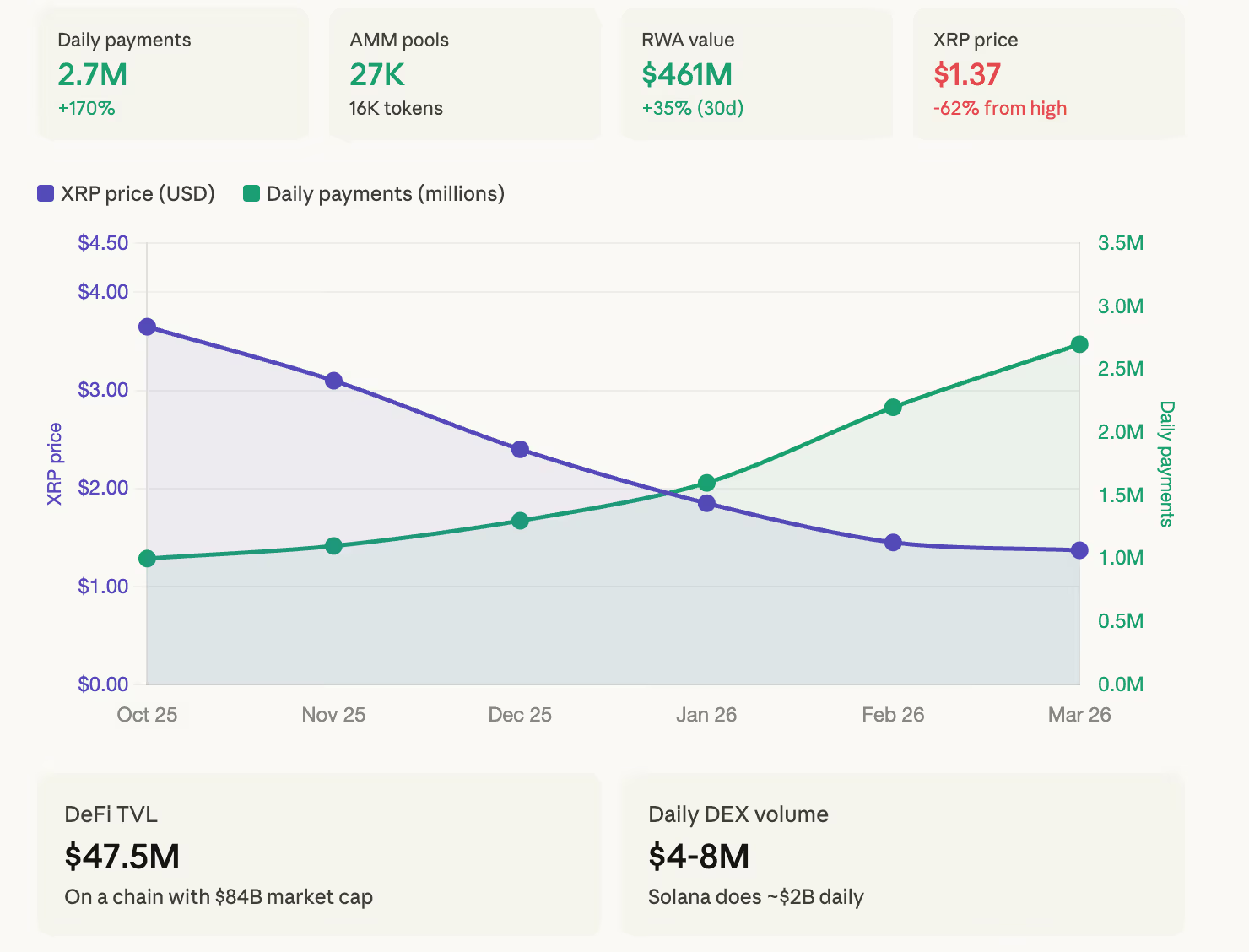
The XRP Ledger has never been busier, but traders are yet to catch up.
Daily successful payments on XRPL recently hit a 12 month high of over 2.7 million, up from roughly 1 million in late 2025, according to XRPSCAN data. The network is processing between 2 and 2.8 million transactions per day at 20 to 26 transactions per second.

Automated market maker pools have exploded to nearly 27,000 active pools supporting more than 16,000 unique tokens. Tokenized real-world asset value on the ledger climbed to $461 million, up 35% in the past 30 days, per RWA.xyz. Stablecoin transfer volume over the same period hit $1.19 billion.
XRP is trading at $1.37 and is down 26% year-to-date. It’s 62% below its late-2025 high of $3.65.
That gap between what the ledger is doing and what the token is doing is the most important thing happening in XRP right now, and it’s a question the market hasn’t answered yet.
The standard crypto thesis is that network activity drives token value. More usage means more demand for the native asset, which pushes price higher. It’s the framework that worked for Ethereum during DeFi summer and for Solana during the meme coin boom.
But XRP is breaking the pattern. Every metric that should matter for a utility token is up, but the price is down.
The most likely explanation is structural. XRPL’s growing activity is increasingly driven by RLUSD, Ripple’s stablecoin, and tokenized assets that flow through XRP as a bridge currency but don’t create sustained demand for the token.
A payment that uses XRP for three seconds to settle a cross-border transaction between fiat currencies doesn’t generate the same kind of buy pressure as someone staking ETH for months or locking SOL in a DeFi protocol. The network gets busier, but the token stays liquid and transient. Activity goes up but scarcity doesn’t.
The DeFi numbers make this stark. DeFiLlama shows XRPL’s total value locked at $47.54 million. That’s the entire DeFi ecosystem on a chain whose native token has an $84 billion market cap.

For comparison, Solana carries roughly $4 billion in TVL. Ethereum has over $40 billion. XRP’s DeFi layer is a rounding error relative to its valuation, which means the market cap is still overwhelmingly driven by speculative positioning and ETF expectations rather than capital locked into productive on-chain activity.
The native DEX tells a similar story. Daily volume runs between $4 million and $8 million on recent data, modest for any Layer 1 and especially small for one ranked fifth by market cap.
The AMM pool growth is real, with 27,000 pools and 12 million XRP deposited, but the dollar value of that liquidity remains thin relative to the scale of the token’s market.
The RWA picture is the one area where the data genuinely supports the bull case. $461 million in distributed asset value and $1.5 billion in represented asset value puts XRPL ahead of several larger chains in specific tokenization categories.
Stablecoin market cap on the ledger sits at $339 million with 35,800 holders. The 30-day RWA transfer volume of $149 million, up over 1,300%, suggests real institutional activity rather than wash trading. If the tokenization thesis plays out over the next few years, XRPL has a foothold that most competitors don’t.
As such, March historically averages an 18% return for XRP, and the $1.27 to $1.30 support zone has held through multiple tests. If macro conditions stabilize and the Iran conflict moves toward resolution, a relief bounce to $1.60 or higher is plausible.
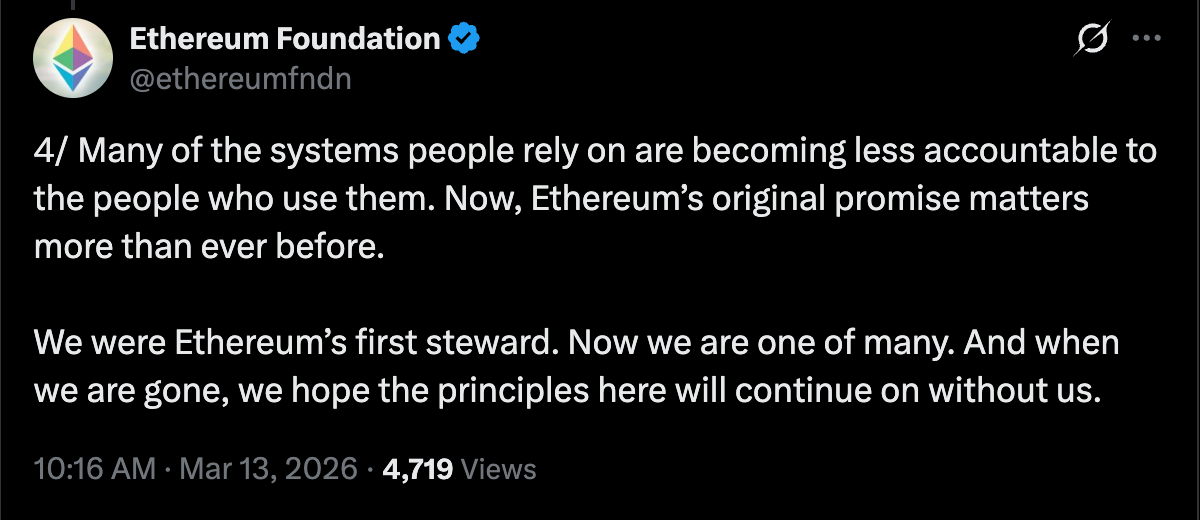
The Ethereum Foundation, the non-profit organization that stewards the development of the Ethereum ecosystem, published its mandate on Friday, reaffirming its role and the core pillars of Ethereum.
The Ethereum Foundation’s two stated goals are that Ethereum remains decentralized and that users have a “final say” over their onchain assets and data, while the protocol achieves mass scale, according to the mandate.
Censorship resistance, open source code, privacy, security, and freedom-preserving technology are the core properties of Ethereum that will be upheld, the mandate, the document said.

The Ethereum Foundation said it will continue to focus on core protocol upgrades, “long-horizon research,” cybersecurity, and providing tooling for Ethereum’s developers, while minimizing its role as much as possible. The mandate said:
“Our ultimate goal is for Ethereum to pass the walkaway test: its protocol and core application layers become robust and trustless enough that they would continue to reliably function and evolve even if the Foundation and today’s core developers disappeared tomorrow.”
The Ethereum Foundation said it aims to focus on tasks that become less necessary over time through a process of subtraction.
The mandate follows a challenging year for the protocol, with Ethereum co-founder Vitalik Buterin saying that Ethereum’s approach to scaling through layer-2 networks “no longer makes sense,” and that many L2s are centralized projects.
Related: AI ‘vibe coding’ could put Ethereum roadmap ahead of schedule: Vitalik Buterin
Buterin says a drastic change in how Ethereum scales is needed
Buteirn said that many layer-2 networks feature centralized points of control, including private trusted networks and centralized sequencers, and have no plans to transition to a fully decentralized model.
“The original vision of L2s and their role in Ethereum no longer makes sense, and we need a new path,” Buterin said in February.
Buterin argued that a layer-2 project that boasts a throughput of 10,000 transactions per second (TPS) but relies on a multi-signature bridge to interact with the layer-1 protocol is not scaling the Ethereum ecosystem in a decentralized way.
Instead of acting as scaling layers for Ethereum, the ecosystem’s many layer-2 networks should specialize in a niche such as privacy, identity solutions, finance platforms and social media applications, Buterin said, which drew mixed reactions from L2 projects.
Magazine: Ethereum’s roadmap to 10,000 TPS using ZK tech: Dummies’ guide

The Bitcoin Policy Institute (BPI), an industry advocacy group, is eyeing a target window between March and August 2026 to pass a de minimis tax exemption for Bitcoin through Congress, warning that time to pass meaningful legislation is running out.
BPI said it has engaged with 19 Congressional offices in both the House and Senate over the last three months to pitch US lawmakers on a tax exemption for Bitcoin (BTC) transactions below a certain threshold.
Expanding the de minimis tax exemptions beyond dollar-pegged stablecoins has bipartisan support, but the BPI warned that the “window is narrowing” for Bitcoin tax legislation. The BPI said:
“Congress will be increasingly consumed by midterm dynamics as summer approaches, and the bandwidth for complex tax legislation shrinks with every passing week. Senator Lummis, the issue’s most forceful champion, departs the Senate in January 2027.
If a package does not come together in the next few months, the opportunity may not return for years,” the BPI continued.
Under current US tax rules, using BTC to pay for goods and services triggers a taxable event and tax reporting to the Internal Revenue Service (IRS), preventing the use of Bitcoin as a medium of exchange.
A de minimis exemption would allow small crypto transactions, typically below a set dollar threshold, to be excluded from capital gains reporting, allowing users to spend Bitcoin without calculating gains or losses on minor purchases.
Related: Bitcoin advocate group to fight Basel’s ‘toxic’ treatment of cryptocurrency
Tax policy has kept Bitcoin as an investment and out of commerce
Wyoming Senator Cynthia Lummis introduced a bill in July 2025 proposing a de minimis tax exemptionfor cryptocurrency transactions of $300 or less, capped at $5,000 annually.
However, the bill failed to gain traction in the Senate, and a competing bill focused entirely on tax exemptions for stablecoins was introduced to the House of Representatives by Congresspersons Max Miller and Steven Horsford in 2025.
A comparison of the Lummis standalone crypto tax bill and the stablecoin de minimis tax bill.
Bitcoin payments are held back by the digital asset’s current treatment under the US tax code, according to Pierre Rochard, a board member for BTC treasury company Strive. “The number one impediment to Bitcoin payments adoption is tax policy, not scaling technology,” Rochard @said on X.
Magazine: Big questions: Should you sell your Bitcoin for nickels for a 43% profit?
1) Introduction
The Bitcoin Policy Institute is pushing for a de minimis tax exemption for Bitcoin transactions, targeting a window from March to August 2026 to move a measure through Congress. The group highlights that time is running short as lawmakers grapple with competing priorities ahead of midterm dynamics. In the past three months, BPI says it has engaged with 19 offices across the House and Senate to advocate for a carve-out allowing BTC transfers below a defined threshold to avoid capital gains reporting. While there is bipartisan interest in extending de minimis relief beyond dollar-pegged stablecoins, observers warn that the window to legislate could close swiftly, especially with Senator Lummis set to depart the Senate in January 2027. The push centers on changing how small Bitcoin transactions are treated for tax purposes, potentially unlocking greater everyday use without tax accounting for minor expenditures.
2)
Key takeaways
- The stated legislative window for a Bitcoin de minimis tax exemption runs March through August 2026, a period proponents describe as the last best chance to pass meaningful tax relief before midterms shift congressional priorities.
- nineteen congressional offices across the House and Senate report engagement by the Bitcoin Policy Institute over a three‑month period, underscoring active lobbying for a BTC-focused exemption and broader expansion beyond stablecoins.
- Senate sponsor Senator Cynthia Lummis pushed a standalone crypto tax bill in July 2025 proposing a de minimis threshold of $300 per transaction, capped at $5,000 annually, but the measure stalled in the Senate.
- In parallel, a House-friendly proposal by Max Miller and Steven Horsford in 2025 aimed to deliver de minimis relief specifically for stablecoins, reflecting a split focus within crypto tax policy debates.
- The central argument stresses that current tax treatment has effectively kept Bitcoin as an investment vehicle rather than a practical medium of exchange, with advocates positioning tax policy as the primary bottleneck to broader adoption.
3)
Tickers mentioned: $BTC
4)
Market context: The push for a Bitcoin de minimis exemption sits within a broader regulatory and policy environment where tax treatment shapes crypto payments and consumer spending. If Congress acts, small BTC transactions could flow more freely in everyday commerce, while inaction risks maintaining a framework that treats Bitcoin primarily as an asset rather than an everyday currency.
5)
Why it matters
The ongoing debate over de minimis tax treatment matters because it shapes how readily individuals can use Bitcoin for routine purchases. A successful exemption would reduce the administrative burden for ordinary consumers who transact in small amounts, potentially expanding merchant acceptance and consumer spending in the crypto space. Advocates argue that tax policy, not technology, has been the primary obstacle to widespread BTC payments adoption, a claim echoed by industry voices who emphasize the upside of aligning tax rules with the realities of digital asset use.
Yet lawmakers face a crowded legislative calendar. The BPI’s warning that the window could close as summer approaches reflects a structural challenge: tax policy is entangled with midterm dynamics, budget considerations, and broader regulatory debates. The political calculus is further complicated by aging leadership in the crypto policy arena; Senator Lummis, a leading proponent, will exit the Senate in early 2027, potentially narrowing the coalition that has championed a de minimis approach to crypto taxation.
Supporters argue that a targeted exemption for small BTC transactions would not only ease everyday spending but also set a clearer precedent for how digital assets should be treated when used as currency rather than solely as investments. The tension remains: should policy favor incremental relief that could unlock practical use cases, or push for comprehensive tax reform that addresses all digital assets at once? The next several months are likely to reveal how aggressively Congress will pursue a path forward and which constituencies—consumer advocates, merchants, or financial policy wonks—will shape the outcome.
6)
What to watch next
- March–August 2026: Legislative activity window for Bitcoin de minimis tax exemption moves through committees and potentially a full vote.
- Ongoing congressional engagement: The Bitcoin Policy Institute’s continued outreach to 19 offices to secure support and build a bipartisan coalition.
- Senator Lummis’s departure in January 2027: Assess how the leadership changes might affect the likelihood of enacting any BTC-specific tax relief.
- Comparison of bills: The trajectory of Miller–Horsford’s stablecoins-focused exemption versus the Lummis standalone crypto tax bill will influence the final framework if a package advances.
- Public-facing tax policy messaging: Watch for statements from tax authorities and industry groups clarifying how a de minimis exemption would interact with existing reporting requirements for small BTC transactions.
7)
Sources & verification
- Bitcoin Policy Institute article outlining the de minimis exemption for Bitcoin and the policy window.
- Cointelegraph reporting on the Bitcoin Policy Institute’s de minimis tax exemption push and related legislative activity.
- July 2025 Lummis proposal for a standalone crypto tax exemption with a $300 threshold and $5,000 annual cap.
- 2025 Miller and Horsford House proposal extending de minimis relief to stablecoins.
- Statements from Pierre Rochard about tax policy as the principal barrier to Bitcoin payments adoption.
7)
Why it matters
This policy debate matters because it could redefine how everyday users interact with Bitcoin, moving it from a speculative asset toward a practical currency for small purchases. If enacted, the de minimis exemption would reduce tax complexity for minor BTC transactions, potentially spurring broader acceptance by merchants and consumers alike. The timing of any agreement is critical, given midterm dynamics and the leadership shift anticipated in early 2027, which could alter legislative momentum for crypto tax reform.
At stake is whether policymakers view Bitcoin as a financial instrument warranting strict capital gains considerations or as a platform for everyday commerce needing pragmatic, policy-aligned rules. The discourse reflects broader questions about how the U.S. tax code should treat digital assets as their use cases evolve—from store of value to medium of exchange—and how to balance investor protection with practical adoption. The coming months will test whether a narrowly tailored exemption can bridge these aims without creating new loopholes or regulatory gaps.
9)
What to watch next
- March–August 2026: Legislative activity window for Bitcoin de minimis tax exemption moves through committees and potentially a full vote.
- Ongoing congressional engagement: The Bitcoin Policy Institute’s continued outreach to 19 offices to secure support and build a bipartisan coalition.
- Senator Lummis’s departure in January 2027: Assess how the leadership changes might affect the likelihood of enacting any BTC-specific tax relief.
- Comparison of bills: The trajectory of Miller–Horsford’s stablecoins-focused exemption versus the Lummis standalone crypto tax bill will influence the final framework if a package advances.
- Public-facing tax policy messaging: Watch for statements from tax authorities and industry groups clarifying how a de minimis exemption would interact with existing reporting requirements for small BTC transactions.
9)
Sources & verification
- Bitcoin Policy Institute article outlining the de minimis exemption for Bitcoin and the policy window.
- Cointelegraph reporting on the Bitcoin Policy Institute’s de minimis tax exemption push and related legislative activity.
- July 2025 Lummis proposal for a standalone crypto tax exemption with a $300 threshold and $5,000 annual cap.
- 2025 Miller and Horsford House proposal extending de minimis relief to stablecoins.
- Statements from Pierre Rochard about tax policy as the principal barrier to Bitcoin payments adoption.
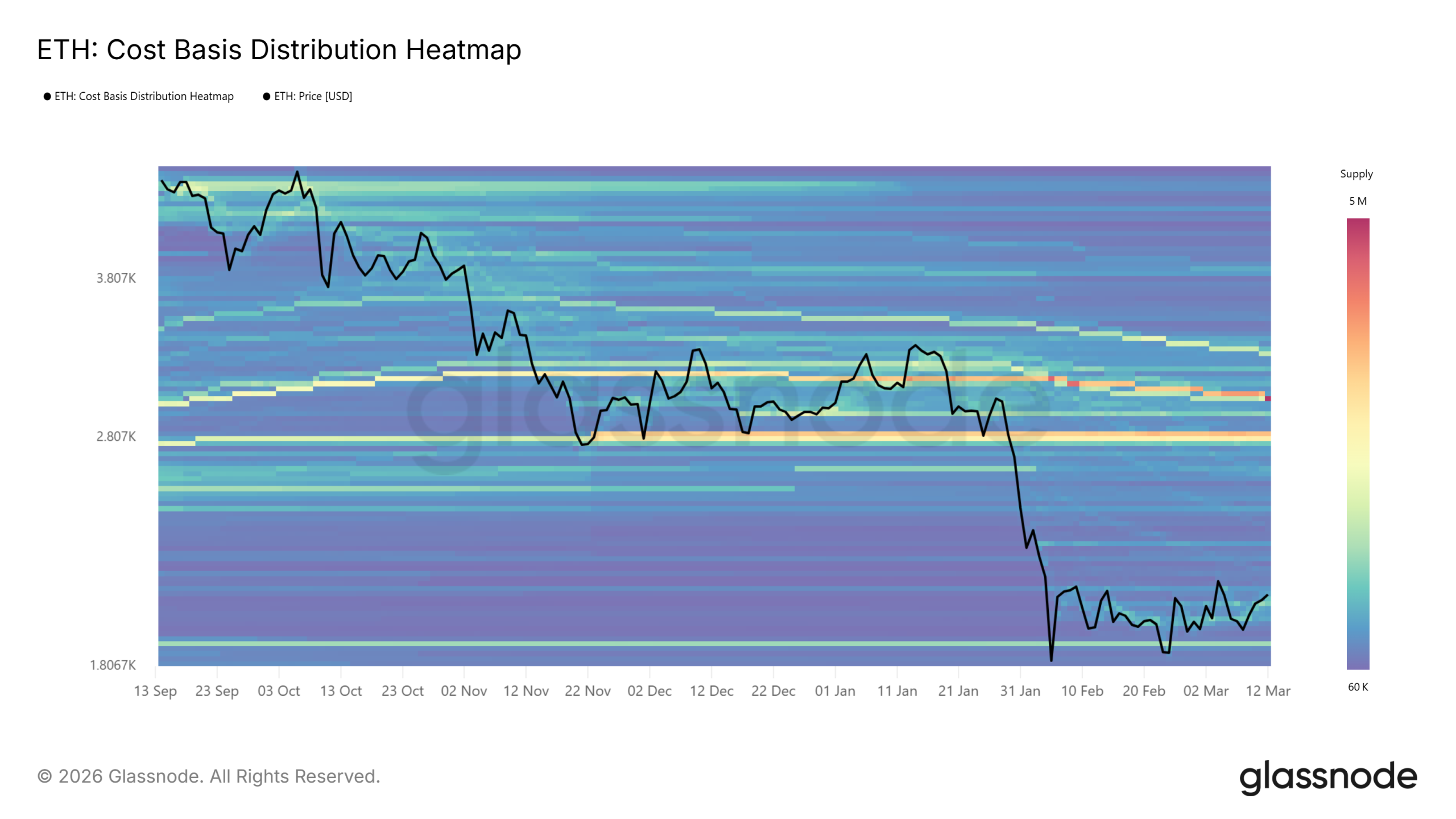
After reaching a monthly high of $2,209 on Friday, Ether (ETH) price fell back below a key monthly resistance, which has been tested five times since February.
While onchain data highlights a large cluster of investors near $2,800, Ether’s futures market data shows traders are scaling back positions after this week’s rally.
Investors’ $2,800 cost basis highlights a major accumulation zone
Data from Glassnode indicated that ETH’s cost-basis distribution heatmap shows a heavy accumulation near $2,800, where more than 3 million ETH were previously purchased.
The cost-basis clusters identify the price zones where large groups of investors established positions, often acting as magnets during upward moves as investors defend entry levels or add exposure.

The data suggests a potential pathway toward $2,800. Notably, there is a relatively limited historical supply concentration between $2,200 and the $2,800 cost-basis cluster, meaning a break above the current range may allow the price to move more freely into that range.

From a technical standpoint, the 200-day simple moving average (SMA) also intersects near the $2,800 level on the daily chart, a key indicator ETH has not approached since early January.
However, derivatives data suggest traders remain cautious near the present price range.
Related: Ethereum Foundation publishes mandate clarifying role and goals
Ether futures activity fades after $2,200 test
Ether’s futures market activity expanded during this week’s rally, with open interest rising 21% to $10.9 billion from $9 billion this week as the price pushed toward $2,200. The increase suggests traders were opening new leveraged positions as Ether moved higher.

However, the positioning shifted once ETH tested the upper range. Open interest fell roughly 6% after the $2,200 test, indicating some traders began closing positions rather than adding new exposure.
The pullback suggests long traders likely took profit or reduced risk near the upper boundary of the range, slowing the rally’s momentum.
Spot market activity showed improving demand during the move. Spot volume cumulative delta (CVD), which tracks aggressive buying versus selling, rose sharply to $87 million from -$150 million on March 8, indicating buyers stepped in as Ether rebounded from the $2,000 region.

However, order-flow data reflected a fading bullish sentiment. The bid–ask ratio remained strongly positive while Ether consolidated near $2,000, showing buyers dominated trading during the range phase.
That strength faded as the price approached $2,150, signaling reduced buying pressure near the top of the move.
Hyblock data offered additional clarity in the derivatives markets. The futures positioning remains relatively balanced, with long traders accounting for about 59.4% of Ether futures exposure on Binance.
Such a balanced outlook often leads to choppy price action as the market struggles to decisively break through nearby resistance levels.

The data shows a divergence forming, while past ETH accumulation points toward a rally to $2,800. With this in mind, it is clear that Ether futures traders remain cautious near ETH’s current range.
Related: Ethereum accumulation wallets jump 30%: Will ETH price follow?
This article does not contain investment advice or recommendations. Every investment and trading move involves risk, and readers should conduct their own research when making a decision. While we strive to provide accurate and timely information, Cointelegraph does not guarantee the accuracy, completeness, or reliability of any information in this article. This article may contain forward-looking statements that are subject to risks and uncertainties. Cointelegraph will not be liable for any loss or damage arising from your reliance on this information.
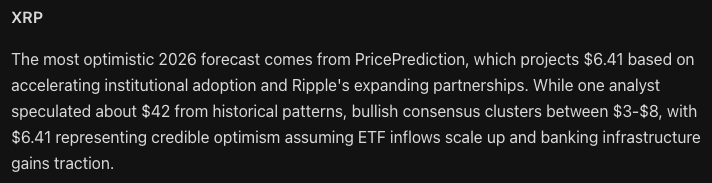
Global market volatility persists, yet when Alibaba’s AI models are fed a carefully engineered prompt, they reveal strikingly optimistic forecasts for XRP, Bitcoin, and Ethereum heading into the latter part of 2026.
Bolstering the broader crypto outlook, a recent agreement between the SEC and CFTC to align their regulatory strategies signals that comprehensive U.S. cryptocurrency legislation could soon take shape.
If that regulatory framework emerges, Alibaba’s bullish AI projections could begin to look far more realistic.
Let’s take a look at the charts…
XRP (XRP): Alibaba AI Forecast: XRP to $8 by Christmas
Ripple recently emphasized that XRP ($XRP) serves as the foundational asset in its vision to evolve the XRP Ledger into a worldwide enterprise-grade payment infrastructure.
Designed for swift, low-cost settlements, the XRPL now positions Ripple advantageously in booming areas like stablecoins and tokenized real-world assets.
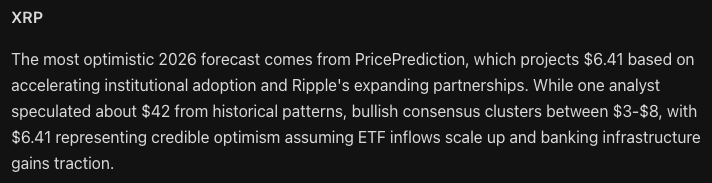
XRP trades near $1.45 today, with Alibaba AI predicting a surge as high as $8 by year-end, delivering 5.5x returns for those holding positions if it plays out.
The chart displays a sustained bullish flag pattern, typically preceding strong upward moves. XRP’s current position is also strengthened by its neutral relative strength index (RSI) reading of 53.
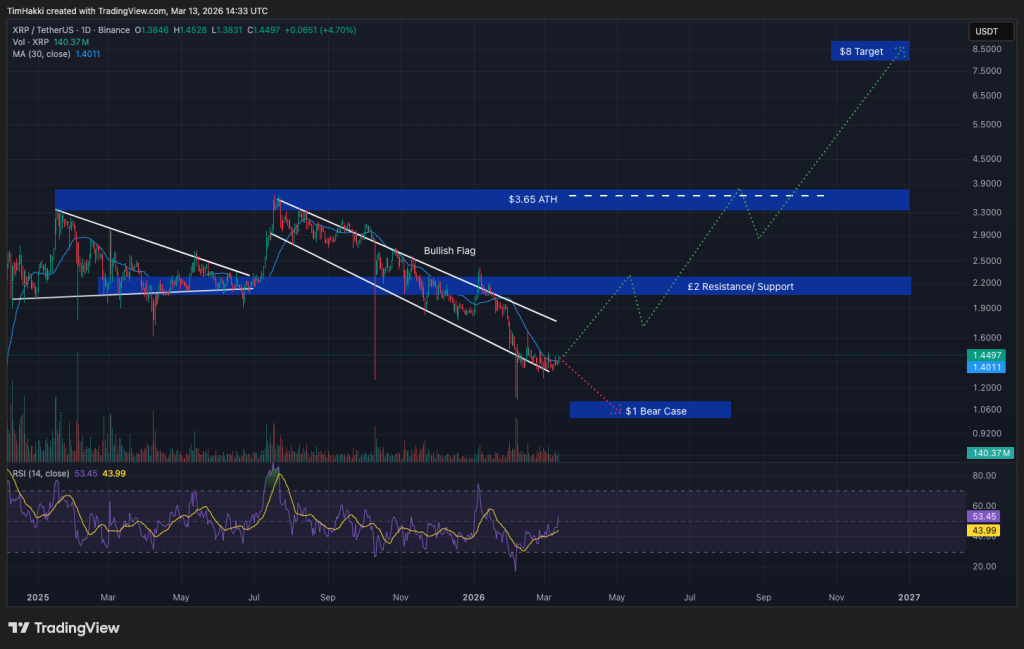
Watch for catalysts such as inflows via newly launched U.S. XRP ETFs, Ripple’s growing international partnerships, and the likely passage of the CLARITY Act through Congress soon.
Bitcoin (BTC): Alibaba AI Sees Bitcoin Hitting $250,000 by Year-End
Bitcoin ($BTC) hit a peak of $126,080 in early October before experiencing a sharp correction, shedding roughly half its value amid broader pressures.
Even so, AI evaluations suggest Bitcoin remains positioned for major upside, possibly rising from today’s price of $73,500 all the way up to $250,000 by 2027.
Viewed as “digital gold,” BTC draws capital seeking portfolio diversification and protection from inflation plus geopolitical risks.
With a $1.4 trillion market cap within the $2.4 trillion total crypto space, Bitcoin’s dip aligned with rising tensions between US and Iran and Greenland, yet after all-out war between Iran and US on February 28, Bitcoin appears to be doing better, a sign that the volatility was likely priced in beforehand.
If President Trump follows through on establishing a national Strategic Bitcoin Reserve, Bitcoin could go even further, potentially hitting $1 million in the years to come.
Ethereum (ETH): Could Ether Reach Five Figures in 2026?
Ethereum ($ETH) stands as the leading smart contract blockchain, powering much of decentralized finance activity.
Boasting a market cap of $264 billion and a substantial $57 billion TVL, it functions as the core layer for on-chain commerce.
Robust network security, dominance in stablecoins, and increasing real-world asset tokenization strengthen arguments for wider institutional participation.
Regulatory progress remains pivotal; the passing of the CLARITY Act would deliver the certainty needed for institutions to deploy large amounts of capital on the network.
ETH hovers just below $2,200 currently, facing sticky resistance at $3,000, $4,000 and $5,000, as seen en route to its ATH of $4,946 last summer.
A firm breakout could propel Ethereum to a new ATH just above its last, around $5,041, according to Alibaba AI.
Maxi Doge: Emerging Meme Coin Aims for Major Upside
In a crypto bull market, meme coins frequently deliver outsized performance by magnifying overall price trends.
Maxi Doge ($MAXI) stands out as an intriguing fresh meme coin, having secured $4.7 million in its ongoing presale amid expectations it might challenge leaders like BONK or Floki.
Touted as a bold, hard-pumping, distant degen cousin to Dogecoin, it channels the viral comic memes and high-risk-high-reward marketing of the 2021 meme coin boom.
Built as an ERC-20 token on Ethereum’s proof-of-stake chain, MAXI offers a greener alternative to Dogecoin’s proof-of-work mechanism.
Presale participants can stake $MAXI for yields reaching up to 67% APY, though rates taper as more people stake.
Currently priced at $0.0002808 in this stage, the token sees nominal fixed price rises as it moves through funding rounds.
Prospective buyers should visit the official website and connect a supported wallet such as Best Wallet.
Card payments are also supported.
Visit the Official Website Here
The post China’s Alibaba AI Predicts the Price of XRP, Bitcoin and Ethereum by The End of 2026 appeared first on Cryptonews.


Analysts at the investment company said the change was significant because the stablecoin “winner” will be the one people use for everyday transactions.
Japanese investment bank Mizuho reported that stablecoin issuer Circle’s USDC overtook Tether’s USDt in transaction volume for the first time since 2019.
In a research note released on Friday, Mizuho said it had raised its price target for Circle stock from $100 to $120 after comparing transaction volumes between the two major stablecoins. According to Mizuho, USDC (USDC) had about $2.2 trillion in adjusted transaction volume for the year to date, compared with USDt (USDT) at $1.3 trillion.
“The data shows USDC vs. USDT volumes at 64% market share,” said Mizuho. This is a reversal in a long-term trend of USDT volumes surpassing USDC in 2019-2025.”
The stock price for Circle, which went public on the NYSE in June 2025, was little changed following the Mizuho report’s release. While the investment bank reported that USDC had overtaken USDT in transaction volume, Tether’s stablecoin remained the largest by market capitalization, at about $184 billion, compared with USDC’s $79 billion.
Related: DOJ and Europol take down SocksEscort network tied to crypto fraud
According to Mizuho analysts, volume data is significant because the stablecoin “winner” will be the one people use for everyday transactions, not just market capitalization.
Fight over stablecoin yield continues in US government
In Washington, DC, it’s unclear whether lawmakers and policymakers will reach an agreement that would allow a digital asset market structure bill to move forward in Congress.
The legislation, called the CLARITY Act when it passed the House of Representatives, has been stalled in the Senate amid debates over stablecoin yield, ethics, and tokenized equities.
Senate Majority Leader John Thune reportedly said on Thursday that the chamber would prioritize a bill on voting requirements rather than market structure, which he didn’t anticipate passing before April.
Magazine: Bitcoin’s ‘narrative vacuum,’ Ethereum now inevitable: Trade Secrets


Trend Research is again moving size through Binance, pulling 27,000 ETH off‑exchange while wiring in about $150m USDC, signaling fresh positioning after its brutal ETH unwind.
Summary
- An address tied to Trend Research withdrew 27,000 ETH from Binance, then sent roughly $150.47m in USDC back to the exchange in recent hours.
- Earlier this year the same firm dumped over 700m worth of ETH to Binance to repay Aave loans, realizing an estimated $700m‑plus loss on a looped long.
- The new pattern of ETH out and USDC in suggests Trend Research is rotating into fresh ETH strategies rather than simply de‑risking, making its flows a key ETH liquidity signal.
Trend Research is back moving size through Binance, this time cycling Ethereum (ETH) out and USDC in, in a way that looks like renewed ammo for directional ETH positioning rather than simple de‑risking.
Trend Research pulls ETH, then pushes USDC to Binance
On‑chain monitoring shows an address linked to Trend Research withdrawing 27,000 ETH from Binance in recent hours, before later transferring approximately $150.47 million in USDC back to the exchange. At current prices, the ETH withdrawal represents tens of millions of dollars in value, while the subsequent USDC inflow reloads the firm’s on‑exchange stablecoin balance. The sequence — assets out, stables in — fits a pattern seen before with Trend Research, where it actively rotates between ETH spot, derivatives exposure, and loan repayment.
This latest move comes against the backdrop of Trend Research’s highly publicized ETH strategy over the past months. The firm, associated with LD Capital, previously built a position of around 600,000–650,000 ETH using large Aave loans, then repeatedly transferred six‑figure ETH amounts to Binance to cut risk as prices moved against it, crystalizing hundreds of millions of dollars in realized losses.
Context: from forced selling to fresh firepower
Earlier this year on‑chain analysts tracked Trend Research sending 216,000 ETH — roughly $411 million — to Binance in a single day, having sold a total of 404,600 ETH at an average price of about $2,071 to avoid liquidation. In another episode, the firm was reported to have effectively “almost sold all of its ETH,” depositing 772,865 ETH back to Binance at around $2,326 after originally buying 792,532 ETH near $3,267, locking in an estimated $747 million loss. Those flows were clearly defensive, aimed at repayment and survival of a heavily leveraged book.
By contrast, the current pattern of withdrawing ETH while sending a fresh nine‑figure USDC tranche into Binance suggests Trend Research is again actively positioning rather than just unwinding. One plausible read is that ETH is being moved to self‑custody or DeFi while USDC sits on Binance as dry powder for new derivatives or spot entries, consistent with prior behavior where the firm borrowed stablecoins from Aave, sent them to Binance, and ran a large ETH carry and directional strategy.
What it signals for ETH traders
For market participants, Trend Research’s renewed activity matters because of sheer size. When a player that has moved hundreds of thousands of ETH and billions of dollars through Binance starts rotating again in 20,000–30,000 ETH clips and nine‑figure USDC transfers, it can affect short‑term liquidity, funding, and sentiment around key levels.
Traders watching ETH should monitor follow‑through: if on‑exchange ETH balances fall while USDC balances associated with Trend Research rise, that tilts toward accumulation or DeFi deployment; if the reverse happens and ETH deposits spike with spot selling, it points back to forced de‑risking. Either way, Trend Research’s flows remain a live barometer of how an over‑levered institutional whale is trying to navigate this phase of the cycle, and ignoring them is a luxury only small accounts can afford.


Summary
- French Hill said the CLARITY Act could resolve issues left open by the GENIUS Act.
- Hill noted the House passed the CLARITY Act with bipartisan backing, including 78 Democratic votes.
- Lawmakers aim to ensure equal rules for bank and nonbank stablecoin issuers, Hill said.
French Hill, chair of the U.S. House Financial Services Committee, said the CLARITY Act could help address unresolved issues in the GENIUS Act.
French Hill remarks on CLARITY and GENIUS Acts
Hill discussed concerns raised by banks about how crypto firms may be regulated under the proposed framework, according to a Fox Business interview. The lawmaker pointed out that the House had already passed the CLARITY Act with bipartisan support.
“In the House last summer, we created the act, and we passed CLARITY Act in the House, with 78 Democratic votes,” Hill said. The legislation is part of broader efforts in Washington to define how stablecoins and other digital assets should operate within U.S. financial markets. Policymakers are also debating whether crypto firms should face the same oversight as banks.
Hill said lawmakers from both parties have already agreed on one key principle. “On a bipartisan basis we said stablecoin should not pay yield,” he said. The issue has become central to discussions around the GENIUS Act. That bill focuses on the regulatory framework for stablecoin issuers.
Hill suggested that some remaining concerns could be addressed through the CLARITY Act. “In my view this independent issue can be resolved in the CLARITY Act,” he said.
He also indicated that certain questions may be handled through regulatory rulemaking rather than new legislation. In particular, he pointed to potential rules on rewards or incentives tied to stablecoin transactions.
“I think all the issues about paying rewards should be dealt with in the regulatory proposal that Treasury has to come up with,” Hill said. “I think that’s best resolved in the GENIUS Act,” he added.
Banks Oppose CLARITY Act
Major banks have argued that crypto companies could gain a competitive advantage if they operate under lighter regulation. Executives from traditional finance have called for equal standards across the industry.
Hill said parity between different issuers is a key objective. “We want equal treatment between bank and nonbank issuers of stablecoins,” he said. The debate has drawn comments from banking leaders such as Jamie Dimon of JPMorgan Chase & Co.
Some executives have questioned whether the proposed legislation gives crypto firms too much flexibility. Hill said lawmakers want to avoid regulatory imbalance as the market evolves. “All issuers should be treated the same way,” he said. “You don’t want to have an imbalance between people using a dollar-backed stablecoin on their platform,” Hill remarked.
Crypto World
DeepSnitch AI Price Prediction 2026: Investors Rush In After $14 Targets As March 31 Launch Approaches, Can This New AI Coin Replace Bonk After Bonk.Fun Hack?

Solana will be joining the Mastercard Crypto Partner Program with an aim to bring digital payments into everyday use. As confirmed in a post on X by Solana Payments, the firm has joined more than 85 crypto firms focusing on bringing clear payment solutions.
Despite this development, the price of Solana (SOL) remained red on March 12. However, market participants are now rotating into DeepSnitch AI (DSNT) as the DeepSnitch AI price prediction for 2026 points to a breakout towards $14.
DeepSnitch AI is a market analytics and prediction platform capitalizing on AI to provide retail investors with actionable insights. This crypto, now in presale, is priced at $0.04399. DeepSnitch AI has accumulated more than $2.1 million, as interest continues to grow day-by-day.
Solana joins Mastercard’s crypto partner program in a bid to boost payments
The Mastercard Crypto Partner Program brings together top crypto entities looking to work together to bring effective payment solutions. By joining the program, Solana will be a part of a shared platform where expertise flows both ways, bridging on-chain solutions with everyday commerce.
Currently, Solana can process up to 65,000 transactions per second. However, the network aims to continue building sustainable growth for digital asset use cases. Other notable firms on the program include the likes of Binance, Ripple, and PayPal.
DeepSnitch AI price prediction for 2026 as Bonk gets hacked
1. DeepSnitch AI prediction 2026: Is DSNT set for a rally to $14?
Artificial intelligence is here to stay, especially in crypto. AI agents introduce speed and accuracy in a sector where they matter the most. As you know, one moment a coin may be up, the next, it’s crashing.
DeepSnitch AI understands that fully, and that’s why SnitchFeed, SnitchCast, SnitchGPT, SnitchScan, and AuditSnitch were developed to offer you a helping hand. These tools flag sentiment shifts, potential risks, gems, and FUD changes. Interestingly, these tools are all found under one roof.

However, DeepSnitch AI is not a one-size-fits-all. Instead, each tool has a distinct purpose. But together, the tools combine to make DYOR easier, turning crypto trading into a lucrative venture.
Because of its clear value, DeepSnitch AI is experiencing significant bullish sentiment, with a bullish DeepSnitch AI price prediction. The forecasts suggest that a 300x rally could materialize.
According to the DeepSnitch AI token outlook, DSNT is now priced at $0.04399. A 300x rally could push the DeepSnitch AI future price to $14. This could turn even $1,000 into a huge portfolio.
2. Midnight price prediction for 2026
Midnight (NIGHT) traded at $0.04739 on March 12, following a 1.9% surge on the day. However, NIGHT is down by 21% over the past 7 days, signaling this crypto could be fading out.
According to the daily chart on TradingView, Midnight is plummeting towards a key support zone around $0.04382. If this level breaks, NIGHT could slide further. However, a surge past $0.06215 could invalidate the bearish Midnight price prediction.
3. Bonk price prediction as Bonk.fun gets hacked
Bonk.fun, a community-driven Solana token issuance platform backed by Raydium and the BONK, was hacked on Thursday as malicious individuals installed wallet drainers on the official website. While the team moved swiftly to warn users, the news spread across the market.
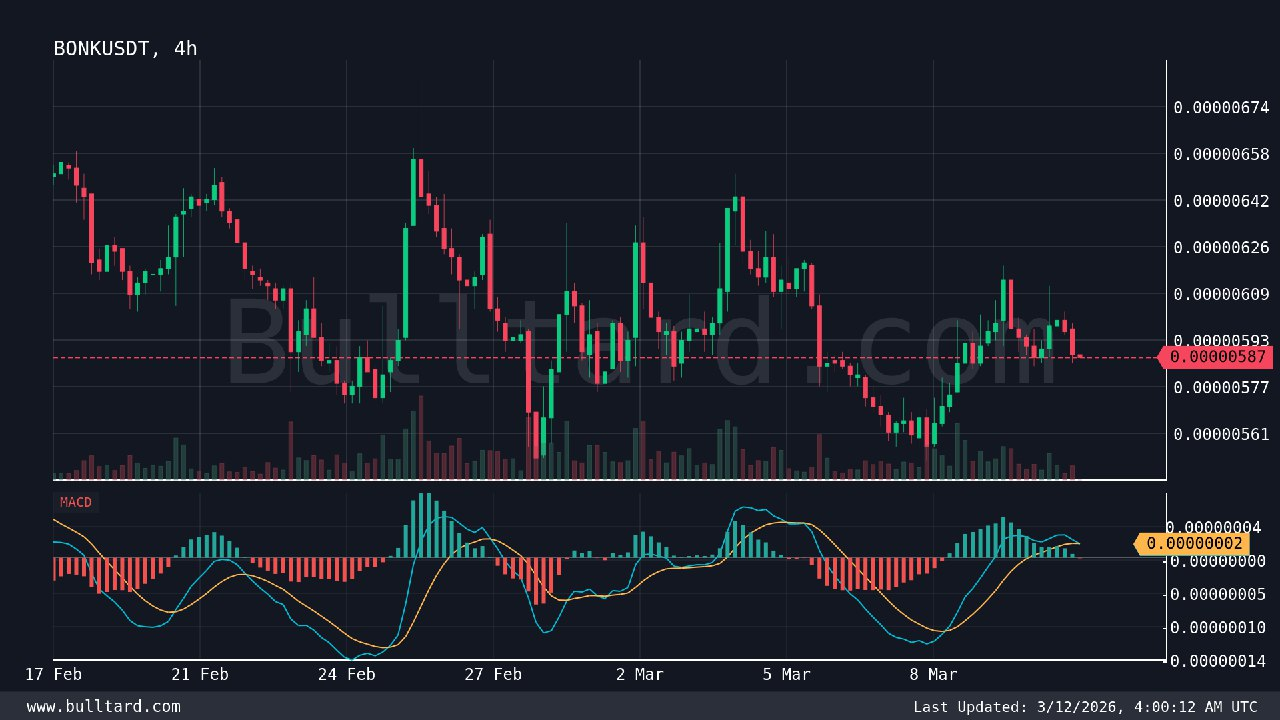
However, the incident did not have much impact on the BONK token. Bonk traded at $0.000005977, down by 1.1% on the weekly timeframe and 0.7% over the past 24 hours. The latest Bonk price prediction shows that Bonk could continue to face bearish pressure as the MACD remains bearish.
Final verdict
The DeepSnitch AI price prediction for 2026 is bullish, while Bonk and Midnight face bearish pressure. Stemming from the bullish sentiment, the DeepSnitch AI future price may reach $14.
Such a move would mean actualization of the 300x rally, as rumors swirl. DeepSnitch AI could launch soon, hence now is the right time to buy this 2026 runner.
Visit the official website for more information, and join X and Telegram for community updates.
FAQs
1. How high will DeepSnitch AI go in 2026?
The DeepSnitch AI token outlook shows that DeepSnitch AI is very bullish. Once launched, this crypto is expected to rally to $14 this year, as indicated by the ‘DeepSnitch AI prediction 2026’.
2. Is DeepSnitch AI legit?
Yes, DeepSnitch AI is a legit crypto, audited by SOLIDProof and Coinsult. This year, the DeepSnitch AI price prediction highlights a potential 300x rally.
3. Is DeepSnitch AI a good investment?
The DeepSnitch AI future price is expected to reach above $14. This positions DSNT as the best crypto presale to purchase if you are chasing substantial returns.
Disclaimer: This is a Press Release provided by a third party who is responsible for the content. Please conduct your own research before taking any action based on the content.


The Claudia Winkleman Show viewers complain it’s a ‘dull’ Graham Norton copy
Progyny issues notice of settlement for derivative action regarding director pay

R-Rated Sci-Fi Sequel So Awful, It Nearly Killed Legendary Franchise


-

 News Videos4 days ago
10th Algebra | Financial Planning | Question Bank Solution | Board Exam 2026
-
 Tech3 days ago
A 1,300-Pound NASA Spacecraft To Re-Enter Earth’s Atmosphere
-

 Crypto World4 days ago
Paradigm, a16z, Winklevoss Capital, Balaji Srinivasan among investors in ZODL
-

 Business3 days ago
ExxonMobil seeks to move corporate registration from New Jersey to Texas
-

 Tech3 days ago
ChatGPT will now generate interactive visuals to help you with math and science concepts
-

 Sports6 days ago
Three share 2-shot lead entering final round in Hong Kong
-

 Sports6 days ago
Braveheart Lakshya downs Lai in epic battle to enter All England Open final | Other Sports News
-

 NewsBeat2 days ago
Residents reaction as Shildon murder probe enters second day
-

 Fashion6 hours ago
Weekend Open Thread: Addict Lip Glow
-

 Entertainment7 days ago
Hailey Bieber Poses For Sexy Selfies In New Luscious Lip Thirst Traps
-

 Business5 days ago
Search for Nancy Guthrie Enters 37th Day as FBI Probes Wi-Fi Jammer Theory
-

 Business3 days ago
Search Enters Sixth Week With New Leads in Tucson Abduction Case
-
 NewsBeat4 days ago
Pagazzi Lighting enters administration as 70 jobs lost and 11 stores close across Scotland
-

 Tech4 days ago
Despite challenges, Ireland sixth in EU for board gender diversity
-

 Business4 days ago
Search Enters 39th Day with FBI Tip Line Developments and No Major Breakthroughs
-

 NewsBeat2 days ago
I Entered The Manosphere. Nothing Could Prepare Me For What I Found.
-

 Business7 days ago
Iran war enters second week as Trump demands ’unconditional surrender’
-

 Sports5 days ago
Skateboarding World Championships: Britain’s Sky Brown wins park gold
-
 Crypto World3 days ago
Will Chainlink price reclaim $10 amid volatility squeeze?
-

 Sports5 days ago
Tomorrow’s Top 25 Today: Florida jumps to No. 4; Louisville, Wisconsin enter projected rankings