
Crypto World
Block (XYZ) Gets $78 Price Target After Q4 Beat and Major Restructuring Plan


TLDR
-
Block’s price target was lifted to $78 by Cantor Fitzgerald, up from $70, with the firm keeping its Overweight stance.
-
Fiscal 2026 projections indicate gross profit reaching approximately $12.2 billion with EPS around $3.66.
-
The fintech company surpassed Q4 expectations for both gross profit and adjusted earnings metrics.
-
A major restructuring will see Block eliminate approximately 40% of its staff to focus on AI integration.
-
Wall Street analysts anticipate that expense reductions will enhance profitability and drive sustainable growth.
Following impressive quarterly results and forward-looking guidance, Block (XYZ) secured an upgraded price target from Cantor Fitzgerald. The investment firm elevated its target from $70 to $78 while continuing to rate the stock as Overweight.
This reassessment comes after Block delivered fourth-quarter numbers that exceeded Wall Street’s projections. The payment technology firm beat consensus estimates on both gross profit and adjusted EPS.
Block’s diluted earnings came in at $2.10 per share for the trailing twelve-month period. The company’s gross profit figure also topped analyst predictions, prompting several firms to revise their outlooks upward.
Following management’s fiscal 2026 outlook, Cantor adjusted its financial models accordingly. Block anticipates generating approximately $12.2 billion in gross profit alongside adjusted operating income near $3.2 billion.
For the full fiscal 2026 year, adjusted EPS is expected to reach roughly $3.66. The company’s first-quarter outlook calls for gross profit around $2.8 billion with adjusted EPS approximately $0.67.
Wall Street Perspective and Stock Metrics
The revised $78 target from Cantor reflects a 16x multiple applied to its calendar 2027 EPS projection of $4.85. This represents an upgrade from the prior methodology using a 14x multiple on more conservative earnings estimates.
Block’s stock price has jumped approximately 25.5% in the last week alone. Trading recently around $63.70, the company commands a market cap approaching $38.2 billion.
Block trades at approximately 30 times earnings currently. Analysts noted the valuation looks reasonable when measured against anticipated earnings expansion and discounted cash flow analysis.
Additional Wall Street firms have reaffirmed bullish stances following the earnings report and restructuring reveal. UBS, RBC Capital, and Bernstein each maintained Buy or Outperform designations with targets spanning the mid-$80s to $90 range.
Truist kept its Hold recommendation with a $72 target. Raymond James reduced its objective to $79 while retaining an Outperform view, pointing to potential execution challenges.
Staff Reductions and AI Transformation
Block disclosed plans to eliminate roughly 40% of its employee base in a significant restructuring. Leadership characterized this as a strategic realignment designed to integrate artificial intelligence throughout the business.
Company executives indicated the workforce adjustments will result in a more streamlined cost structure and improved organizational efficiency. Analysts project these modifications could bolster operating margins going forward.
Block highlighted that its Cash App platform delivered substantial contributions to recent gross profit expansion. The Cash App ecosystem remains central to the company’s revenue generation and profitability.
Leadership noted that updated fiscal guidance incorporates strong business momentum from the end of Q4 2025. The revised forecasts include elevated projections across gross profit, operating income, and per-share earnings.
Block’s stock has experienced significant price swings over the trailing year but surged dramatically after the restructuring disclosure. Market participants are closely tracking the implementation of cost initiatives and achievement of updated financial targets.



Bitcoin rose about 4% in minutes after news that U.S. President Donald Trump signaled a temporary de-escalation of the Iran conflict and a path toward negotiations. The move in traditional markets was mixed: oil briefly spiked before retreating, while the S&P 500 advanced, yet Bitcoin’s derivatives indicators continued to suggest a cautious posture and limited conviction for a sustained breakout above the recent resistance near $68,000.
Analysts pointed to a disconnect between the spot price bounce and what the derivatives market was signaling. Bitcoin futures were trading at a modest premium over the spot, a sign that demand for leveraged bullish bets remains restrained. The two-month futures were pricing in roughly a 2% annualized premium, well below the neutral band usually seen around 4% to 8%. That estreched premium implies market participants are not confident enough to press the gas on bullish exposure, even as BTC flirted with higher levels and briefly approached $76,000 in the prior session.
Key takeaways
- Bitcoin futures sit at a roughly 2% annualized premium, below the neutral range, indicating cautious demand for bullish leverage.
- Derivatives data point to muted upside conviction: the April 24, $80,000 call on Deribit traded at about 0.017 BTC, with 31 days to expiry and implied volatility near 48%, implying roughly a 20% probability of reaching $80,000 by expiry.
- Stablecoin funding remains calm, with OKX data showing a 1.3% premium to the USD/CNY rate, suggesting no urgent demand imbalances in the region.
- The macro backdrop—Fed’s pause on rate cuts, elevated energy costs, and mixed risk-on signals—continues to temper Bitcoin’s risk appetite despite short-term relief rallies.
Two-month futures reflect a tempered risk appetite
Despite the intraday rally, the closest futures curve remained relatively subdued. Laevitas data show the two-month Bitcoin futures annualized premium hovering near 2%, a level that signals modest willingness to take on longer-dated bullish bets but stops short of the exuberance that characterized more bullish phases. In practical terms, traders are demanding less compensation for the longer settlement, which translates into a cautious stance rather than a rally-driven squeeze.
For context, a more typical bullish curve would carry a higher premium to reflect the cost of carrying a position for longer, especially during periods of renewed demand for upside exposure. The persistent softness in the futures slope has been a recurring feature over the past month, even as spot prices moved through波 around the mid-to-high $60,000s and briefly north of $70,000 earlier in the period. This dynamic underscores a broader theme: a stubborn lack of conviction among buyers that the market can sustain a breakout without additional catalysts.
Options signal a cautious stance on outsized moves
Options data corroborate a cautious mood. Deribit’s market for the April 24 options shows the $80,000 call trading at approximately 0.017 BTC, with 31 days left to expiry and an implied volatility around 48%. The pricing implies roughly a 20% chance of reaching the $80,000 threshold by expiry—a probability that, in crypto markets, reflects a comparatively modest expectation for a large, single-session move. In other words, traders are not pricing in a high-likelihood surge that would push BTC above the prior highs within the near term.
The combination of a low call premium and relatively subdued implied volatility adds up to a market that is comfortable with limited upside risk, but not confident enough to chase a dramatic breakout. This dynamic aligns with the broader narrative witnessed in other risk assets while Bitcoin remains tethered to macro-driven headwinds rather than idiosyncratic catalysts in the crypto space.
Macro context remains the primary driver of sentiment
Beyond the crypto-specific data, Bitcoin’s path continues to be shaped by the wider market environment. The Federal Reserve’s decision to pause rate cuts has kept fixed-income instruments attractive relative to risk assets, a factor that tends to cap speculative capital flows into volatile assets like BTC. Concurrently, energy prices and geopolitical tensions continue to exercise a palpable influence on risk sentiment. While a relief rally can occur in a supportive moment, the prevailing backdrop—higher financing costs and ongoing macro uncertainty—tends to constrain sustained upside for Bitcoin.
In this context, a 3% rebound in broader equity indices on a given day does not automatically translate into a durable shift in crypto risk appetite. Market participants appear to be weighing a potential macro regime shift—one where inflation pressures abate and central banks ease—against the immediate risks of a slower economy and ongoing geopolitical frictions. Against that backdrop, Bitcoin’s peers and on-chain indicators have shown mixed signals, highlighting a market that is still searching for a clearer directional impulse.
What to watch next
As traders rotate through macro headlines and micro-structural data, several key themes will shape Bitcoin’s near-term trajectory. A sustained move above the $68,000–$70,000 region could invite a fresh wave of hedging and speculative activity, but it would likely need to be supported by a shift in the futures curve toward a more positive premium. Conversely, a renewed stress in energy markets or a hawkish turn from central banks could reinforce risk-off dynamics and push BTC back toward recent support levels near $65,000 or lower.
In the near term, investors will be watching the interplay between the macro backdrop and the crypto derivatives market. If the two-month futures premium remains compressed and the options market continues to price in limited upside, the market will likely require a tangible catalyst—whether a policy signal, a breakthrough in adoption, or a clearer geopolitical development—to re-energize bullish bets. Until then, Bitcoin’s path may continue to be characterized by cautious consolidations rather than decisive breakouts.
Look for ongoing updates on how shifts in macro policy, energy pricing, and global risk sentiment influence the balance between spot demand and derivatives positioning, as these factors will likely determine whether Bitcoin can sustain any relief rallies or remain tethered to its current, more restrained trajectory.

TLDR
- The Solana Foundation released a report outlining a customizable privacy framework for institutions.
- The report presents privacy as a spectrum with four distinct operational modes.
- The framework includes pseudonymity, confidentiality, anonymity, and fully private systems.
- The Solana Foundation said enterprises can combine privacy tools within one blockchain network.
- The report links privacy controls with compliance tools such as auditor keys.
The Solana Foundation has released a new report that outlines a customizable privacy framework for institutions. The document states that enterprises require flexible disclosure controls rather than full transparency. The foundation said privacy options can operate on Solana without reducing network performance.
The report, titled “Privacy on Solana: A Full-Spectrum Approach for the Modern Enterprise,” sets out a structured model for privacy. It states that companies need control over data visibility and counterparties. The foundation presented privacy as a configurable feature within one blockchain system.
Solana Foundation Outlines Privacy Spectrum for Enterprises
The Solana Foundation defined four privacy modes within its proposed framework. These modes include pseudonymity, confidentiality, anonymity, and fully private systems. The report stated, “For enterprises, privacy is a spectrum, not a switch.”
The foundation explained that pseudonymity hides identities behind wallet addresses while keeping transaction data public. It said confidentiality allows known participants to encrypt balances and transfer amounts. It added that anonymity conceals identities but keeps transaction records visible on-chain.
The report described fully private systems as shielding both identity and transaction data. It cited zero-knowledge proofs and multiparty computation as supporting technologies. The foundation stated that companies can combine these methods within a single network.
The document argued that no single model fits all enterprise needs. It stated that firms may select privacy levels based on operational and regulatory requirements. It emphasized that each privacy level remains compatible with the broader Solana ecosystem.
Framework Links Privacy Controls With Compliance Tools
The report stated that financial institutions often must verify transactions without exposing counterparties. It added that payroll processors cannot publish employee salary data on public ledgers. The foundation positioned its framework as a response to these operational constraints.
The Solana Foundation said its high throughput and low latency enable advanced encryption methods at near-web speeds. It argued that network performance supports encrypted order books and private credit assessments. The report described these features as practical under current network conditions.
The document also addressed regulatory requirements tied to anti-money laundering rules. It introduced “auditor keys” that allow approved parties to decrypt transaction details when required. The report stated that wallets can prove compliance status without disclosing full identity data.
The foundation wrote, “Privacy is a market requirement. Customers expect it and applications require it.” It added that enterprises can choose encrypted balances, zero-knowledge anonymity, or multiparty confidential computing.
The report stated that each privacy mode maps to a defined compliance path. It explained that companies can mix tools such as hidden transaction amounts or selective data access. The Solana Foundation released the report on Monday as part of its institutional outreach efforts.


Iran-linked attacks are hammering Dubai’s property and gold while oil jumps and airspace shuts, pushing some crypto workers out and reinforcing Bitcoin as mobile war‑risk hedge.
Summary
- Iran-linked missile and drone attacks have rattled Dubai’s real estate and gold markets, forcing crypto workers to reassess risk.
- Long-term residents still see Dubai as a safe, flexible base for crypto, but highly mobile professionals are already rotating to Hong Kong and other hubs.
- War-driven stress on oil, the Strait of Hormuz and inflation is reinforcing Bitcoin’s “flight asset” narrative, even as liquidity and leverage remain fragile.
Dubai’s position as a premier crypto hub is now colliding, in real time, with the hard math of war: missiles, airspace closures, and a property index that has fallen roughly 20–30% since late February as Iran’s conflict with the US and Israel spilled across the Gulf.
In a recent WuBlockchain Space episode, co‑founder of MegaETH Shuyao Kong describes the moment that abstraction turned into physical risk: “By the afternoon, missiles started flying overhead… that night, I was on the phone with my co‑founder while interception blasts were still going off overhead.” Yet even as she evacuated via Oman, she stresses that “over the medium to long term, I’m still very bullish on Dubai… Right now, Dubai just happens to be in its own bear‑market phase.”
At the same time, market data is catching up with that “bear‑market phase.” The Dubai Financial Market real estate index has plunged around 30% from roughly 16,000 points to the 11,500–11,700 area in just weeks, wiping out 2026 gains and echoing the sentiment reversal among leveraged offshore wealth parked in UAE assets. Housing sales have dropped more than 25–30% since the war began, as buyers step to the sidelines even while prime assets hold better than the headline index implies.
The second leg of the story is gold. Dubai, “the biggest gold gray market in the world” in Shuyao’s words, is now seeing bullion offered at discounts of up to about $30 per ounce versus London benchmarks as flight bans and partial airspace closures leave metal stranded. “Now that it’s hard to move gold out, prices there are lower,” she notes. “So yes, comrades, this is why you should still believe in Bitcoin.” That line is not just ideology: disruptions to oil flows through the Strait of Hormuz and IRGC attacks on Gulf energy infrastructure have already pushed Brent crude above $104–$110 per barrel, complicating inflation and driving spasms in Bitcoin price action from roughly $73,000 down toward the $67,000–$72,300 zone as risk appetite whipsaws.
For crypto markets, this is where the macro and micro collide. One crypto.news analysis notes that the effective closure of Hormuz, through which about 15% of global oil passes, is feeding a “perfect storm” of energy shock plus hot US inflation, forcing traders to reprice rate‑cut odds and hitting Bitcoin and equities together. Another piece shows how IRGC strikes on Qatar’s LNG hub and UAE energy assets have driven oil above $110, with JPMorgan cutting its S&P 500 target and warning that a 30% oil spike historically precedes demand destruction and recession. In parallel, BitMEX co‑founder Arthur Hayes has argued that a prolonged U.S.–Iran war plus spiking Brent will eventually force the Federal Reserve “back to the printer,” which he frames as structural rocket fuel for BTC.
On the ground, the war is reshaping who stays and who leaves. Exchange worker Jarseed, who moved to Dubai in March 2024 because “the crypto scene felt dense and active” and praised a life where “when you say you work in crypto, there’s no sense of having to be cautious,” quietly exited to Hong Kong in December after sensing rising tail risk: “Anyone who’s been paying attention knows this round may have been more serious, but the broader conflict… has been there all along.” He describes a city where many exchange employees have “bought homes, moved their families over, and their kids are going to school there,” making them far stickier than the digital‑nomad class that can rotate capital and residency on short notice.
This bifurcation is becoming visible in industry logistics. Token2049’s Dubai edition has already been postponed to April 2027 due to security concerns over the Iran–Israel–US war, even as other events and day‑to‑day life continue under interception sirens and sporadic debris damage in neighborhoods like JBR and around DIFC. In the meantime, Hong Kong’s licensing push and Singapore’s still‑tight regime give capital an obvious hedge: a way to be “in Asia, in size” without daily missile‑defense risk.
Yet neither Shuyao nor Jarseed thinks this automatically kills Dubai’s hub status. For now, they see a repricing of risk rather than an exodus: “For people who actually live in Dubai long term… there hasn’t been this huge panic or a universal rush to leave,” he says. The harder question is whether repeated rounds of Iran‑linked escalation, oil shocks, and airspace closures turn Dubai into a high‑beta proxy on Gulf war risk — and whether, as one LinkedIn analysis put it, that simply accelerates a rotation of movable capital into Bitcoin as “global financial insurance” when real estate and gold can’t move.
If physical assets in Dubai are now visibly “in the blast radius” of geopolitical risk, the logic of crypto as a mobility hedge becomes less abstract. Whenever airspace shuts and bank rails slow, stablecoins and Bitcoin are the instruments that still clear value cross‑border, 24/7, with no need to queue at DXB. That helps explain the persistent bid in BTC around the $70,000 area despite violent liquidations, including over $450 million in long positions wiped as Iran’s Gulf strikes and $110 oil triggered a leverage flush on derivatives venues like Hyperliquid.
For Dubai, the near‑term path is binary and brutally simple. Either interception systems keep working, energy targets remain the priority, and the city continues to function as a discounted, higher‑yield hub where property and gold occasionally trade “cheap” in dollar terms — or saturation, miscalculation, or political escalation pushes the conflict into residential and financial districts in a way that forces a structural outflow of people, capital, and events. In that world, the same crypto workers who once flocked to Dubai for tax efficiency and lifestyle would likely treat the city’s boom as a completed trade — and rotate, again, to the next jurisdiction willing to offer regulatory clarity, low taxes, and something closer to peacetime airspace.
Crypto World
BlackRock CEO Larry Fink Compares Tokenization to the 1996 Internet in Annual Chairman’s Letter
TLDR:
- Larry Fink compared tokenization to the internet in 1996, signaling a major shift in institutional thinking.
- BlackRock manages nearly $150B in digital assets, including BUIDL, the world’s largest tokenized fund.
- Fink sees digital wallets as a gateway for retail investors to access tokenized bonds, stocks, and ETFs.
- BlackRock holds $65B in stablecoin reserves, reflecting deep and growing institutional commitment to digital finance.
Tokenization is at the heart of BlackRock CEO Larry Fink’s 2026 Annual Chairman’s Letter, where he outlines a case for digital assets reshaping global investing.
Fink, who oversees $14 trillion in assets under management, drew a direct parallel between tokenization and the early internet.
His remarks come as BlackRock deepens its presence in the digital finance space, managing nearly $150 billion in digital assets, including BUIDL, the world’s largest tokenized fund.
BlackRock Sees Tokenization as a Gateway to Broader Market Access
Fink’s letter points to digital wallets as a key driver of change in how everyday people access financial markets. He noted that half the world’s population already carries a digital wallet on their phone.
That existing infrastructure, he argued, could become a gateway to investing in tokenized stocks, bonds, and ETFs.
Ondo Finance shared key excerpts from the letter on X, drawing attention to Fink’s vision for a more accessible financial system.
In his own words, Fink wrote: “Half the world’s population carries a digital wallet on their phone. Imagine if that same digital wallet could also let you invest in a broad mix of companies for the long term, as easily as sending a payment.”
He went further, adding that “tokenization could help accelerate that future,” framing the technology as a practical tool for expanding market participation. That statement captures the scale of what tokenization could mean for retail investors globally.
Tokenized assets allow for fractional ownership, meaning investors with limited capital can still access markets previously reserved for larger institutions.
Beyond equities, tokenized bonds and ETFs could also become part of everyday portfolio-building, settling faster and at lower cost on blockchain infrastructure.
Regulation and Stablecoin Reserves Reflect Institutional Commitment to Digital Finance
BlackRock’s letter also touched on the role of regulation in advancing digital finance. Fink made clear that regulatory clarity around investor protection and digital identity is not a roadblock. Instead, he described it as the very infrastructure that makes progress possible.
Ondo Finance summarized his position directly, noting that Fink sees regulation as something that “enables” progress rather than restricts it.
That framing aligns with how many in the crypto industry have long argued for structured, workable rules rather than blanket restrictions.
The letter also pointed to $65 billion in stablecoin reserves held by BlackRock, reflecting deep institutional commitment to digital finance.
That figure shows how far digital assets have moved from the fringes of finance into mainstream capital allocation strategies.
As the world’s largest asset manager puts tokenization at the center of its annual communication to shareholders, the technology moves further into the institutional mainstream. BlackRock’s position makes that direction increasingly difficult to overlook.

Spanish authorities have arrested a suspect in the 2025 kidnapping of Ledger co-founder David Balland, marking a cross-border breakthrough in one of Europe’s most high-profile crypto-linked abduction cases.
Spain’s Civil Guard said the suspect was detained in Benalmádena, in the southern province of Málaga, under a European arrest warrant issued by France. The man is accused of involvement in the abduction and torture of Balland, in which attackers demanded a ransom of 10 million euros (around $11.5 million).
Balland was abducted from his home in central France on Jan. 21, 2025, and was held captive until a police operation secured his release on the night of Jan. 22.
The arrest marks the latest development in the case, which prompted a cross-border investigation by French and Spanish authorities. French authorities had previously identified and arrested other members of the group who attacked Balland, with the remaining suspect allegedly fleeing to Spain to evade capture, the Civil Guard said.

Fugitive moved across Spain before arrest
Investigators tracked the suspect to the province of Valencia, where he was living with his partner and a friend. The group kept a low profile, staying in apartments rented through online platforms and using a third party’s bank card to avoid leaving a trace.
Related: Wrench attacks against crypto holders are rising and growing ‘more violent’
According to the Civil Guard, he later moved through Seville and Cádiz before being located and arrested in the town of Benalmadena,
Authorities added that the arrest, transfer and detention required a large police operation due to the suspect’s dangerousness and the risk that members of the criminal organization he was linked to could attempt to free him.
Crypto-linked attacks targeting individuals in France
The case is one of a broader wave of crypto-linked attacks in France throughout 2025. In June, French authorities charged 25 suspects over a series of kidnappings and attempted kidnappings of crypto executives and investors.
That same month, a crypto user was abducted and held captive in France for several hours, with attackers demanding cash and access to a hardware wallet containing an undisclosed amount of funds.
Earlier in the year, the daughter and grandson of Pierre Noizat, CEO of French crypto exchange Paymium, were targeted in an attempted abduction, but the victims fought back and escaped.
Magazine: Big Questions: Can Bitcoin save you from the dreaded Cantillon Effect?
Solana is handling 100M+ daily transactions and $650B in monthly stablecoin volume while SOL trades below $95, leaving traders to decide if a $100+ rerating is overdue.
Summary
- Solana is processing over 100 million transactions a day and $650 billion in monthly stablecoin volume, outpacing every other major chain.
- Spot SOL ETFs have attracted around $1 billion–$1.5 billion in net inflows despite SOL trading roughly 57% below post‑ETF highs.
- Analysts see a potential breakout if SOL can clear resistance near $92–$100, with ETF flows and derivatives positioning acting as key catalysts.
Solana (SOL) is trading around the low‑$90s after a series of 5–7% daily moves, even as its underlying network posts activity figures normally associated with far richer valuations. Dune Analytics data shared by Solana Payments shows the blockchain processing roughly 105.3 million transactions per day as of February 19, 2026, “more than all other major blockchains combined.” In February alone, Solana handled about 3.4 billion transactions excluding votes, one of its most active months on record. At the same time, research cited by Grayscale shows the network processed about $650 billion in stablecoin transfers in February, more than doubling its previous record and overtaking both Ethereum and Tron in monthly stablecoin volume.
According to a price outlook from crypto.news, SOL spent early March consolidating near $88–$89 with a market cap around $50 billion, “a blue‑chip alt that has forgotten how to trend” after a brutal February drawdown. On March 4, Solana emerged as the standout top‑10 performer with a 6% jump to $91.45 and a market cap near $52 billion, as 24‑hour trading volume surged to $7.5 billion and the volume‑to‑market‑cap ratio climbed to 14.4% from a 30‑day average of 11.2%. Another 5.12% daily advance pushed SOL to about $91.46 as ETF inflows rose and whale wallets staked roughly 200,000 SOL worth over $17 million, reinforcing support in the $84–$86 band.
Behind the price, regulated products are quietly building a structural bid. U.S. spot Solana ETFs are near the $1 billion net‑inflow mark and have attracted about $1.5 billion since launch, even as SOL’s price has fallen roughly 57% from its July 2025 levels, according to Bloomberg data cited by multiple analysts. “Solana ETFs recorded $16.8 million in net inflows on Monday, lifting cumulative inflows to $1.09 billion,” one recent report noted, with the Bitwise Solana Staking ETF alone drawing over $638 million. Crypto.news has reported that around 30 institutions now hold about $540 million in SOL ETF exposure, highlighting how much of this demand is institutional rather than purely retail.
Those flows are increasingly shaping the tape: Bitwise analysis suggests spot ETF flows now account for around 25% of SOL’s price variance, while basis trades remain subdued. Recent derivative market data shows open interest hovering near $5.01 billion, funding rates turning positive and long‑to‑short ratios hitting monthly highs as SOL traded above $89 after a roughly 10% weekly gain. Technical forecasters at crypto.news say a sustained move into the $95–$105 range is possible if buying pressure persists, with upside confirmation coming on a clear break above $100.
The core question for traders is whether SOL’s price can catch up to a chain that already looks like a high‑throughput payments and stablecoin backbone. Network statistics indicate Solana is handling around 150 million transactions per day and supporting roughly $2 trillion in quarterly stablecoin transfers, placing it “at the center of the stablecoin economy” according to recent market research. Grayscale and Standard Chartered analysts argue that the activity shift away from memecoins toward payments and tokenized finance justifies structurally higher valuations, with one 2026 base case targeting $250 per SOL and a bull case extending to $320 if ETF flows and technical upgrades land cleanly.
Yet technical risk remains. Crypto.news analysis notes that SOL still trades in a broad $80–$100 “trap,” with $80 acting as crucial support and $96–$116 marked out as the zone that would “reopen structural recovery” if reclaimed. Bears warn that a confirmed break below $80 could trigger a slide toward $64 or even the $59 head‑and‑shoulders target flagged on multi‑day charts. For now, the market is paying blue‑chip prices for a chain that is already settling hundreds of billions a month in stablecoins—but not yet the full premium implied by its usage. Whether that gap closes via a rerating higher or a normalization of activity will define Solana’s next leg.
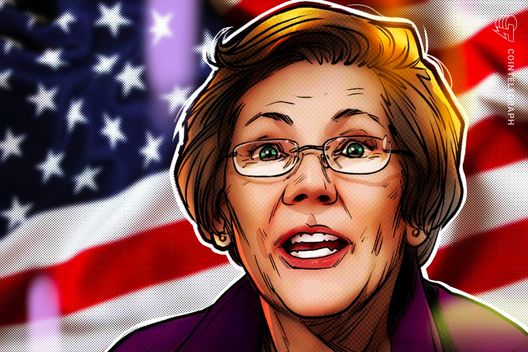
Massachusetts Senator Elizabeth Warren has raised concerns about whether YouTuber Jimmy Donaldson, better known as “MrBeast,” intends to market cryptocurrency to teenagers and young adults following his purchase of a mobile banking app.
In a Monday letter to Donaldson, Warren questioned whether the online influencer planned to use his company’s acquisition of the mobile banking app Step to push crypto transactions and purchases on young people. Donaldson, a YouTuber who grew an online following due in part to his stunts and financial giveaways, founded his holding company, Beast Industries, in 2012 with the launch of his channel.
In February, the company acquired Step, with a reported seven million-person user base. At the time, Donaldson said the purchase was aimed at “giv[ing] millions of young people the financial foundation I never had.” An October 2025 trademark application for MrBeast Financial included plans for a mobile app “providing cryptocurrency exchange services.”
With more than 472 million subscribers on YouTube, Donaldson has one of the largest audiences on the video-sharing platform. His holding company, Beast Industries, already has financial ties with the crypto industry following a $200 million investment from BitMine Immersion Technology in January.
Related: MrBeast allegedly reaped $10M promoting and dumping altcoins
Step announced plans for an app that would allow “teens under 18 and young adults to buy, sell, hold and receive crypto” in 2022. However, the notice said that “parents will be able to oversee their teen’s access” for investments.
“Despite Step’s careful claims that crypto investing by minors was only with the permission of a parent or guardian, Step published resources encouraging kids to pressure their parents into crypto investments,” said Warren in the Monday letter, adding:
“Beast Industries is primarily an entertainment and consumer product company – and any foray into financial services, particularly services aimed at children – must be done with great care and in compliance with the law.”
Warren requested information from Donaldson and Beast Industries CEO Jeff Housenbold on Step’s plans to allow its young user base to invest in cryptocurrencies or non-fungible tokens (NFTs) by April 3. Cointelegraph has sought comment from both Beast Industries and Warren’s office, but had not received a response as of the time of publication.
‘Hawk Tuah’ influencer speaks out about memecoin
Another online influencer, Haliey Welch, who became known as the “Hawk Tuah” girl following her appearance in a TikTok video went viral in 2024, has addressed the public for the first time in months after the launch of her memecoin left investors with losses estimated at $200,000. Welch reported receiving death threats after her HAWK memecoin surged to a market capitalization of about $500 million before collapsing by more than 90% in what many speculated was a rug pull.
Magazine: Are DeFi devs liable for the illegal activity of others on their platforms?
TLDR
- Fidelity submitted a formal letter to the SEC seeking clear rules for crypto market infrastructure.
- The firm asked the SEC to define standards for tokenized securities under existing laws.
- Fidelity urged regulators to update reporting requirements for decentralized finance platforms.
- The letter stated that tokenizing a security does not change its legal status.
- Issuer-sponsored tokens provide voting rights, while third-party tokens often offer only price exposure.
Fidelity submitted a formal letter to the SEC outlining demands for clearer crypto market infrastructure rules. The firm called for defined standards on tokenized securities, revised DeFi reporting requirements, and guidance on distributed ledger recordkeeping. The request targets regulatory barriers that limit institutional participation in digital assets.
Fidelity Urges Clear Rules for Tokenized Securities and DeFi
Fidelity asked the SEC to define standards for tokenized securities under existing securities laws. The firm stated that tokenizing an asset changes its format, not its legal status. It added that a security remains a security after it moves onto a blockchain.
However, Fidelity said uncertainty persists over the rights attached to tokenized holdings. Issuer-sponsored tokens link directly to official shareholder registers and grant full voting rights. In contrast, third-party tokens often provide price exposure only and increase counterparty risk.
Fidelity also addressed decentralized finance reporting obligations in its letter. The firm said current financial reporting rules rely on centralized institutions. It urged the SEC to update frameworks because decentralized platforms lack a central reporting authority.
The letter focused on institutional access rather than retail participation. Fidelity said large capital allocators require legal clarity before entering the market. Estimates project up to $5 trillion in institutional capital could be unlocked by 2026 under a clear U.S. framework.
Compliance spending continues to rise under new U.S. and MiCA regimes. Firms now allocate between 20% and 30% of budgets to regulatory and audit requirements. Fidelity researchers also reported that Bitcoin showed limited price movement throughout 2025.
The researchers forecast that traditional money managers could enter crypto markets in 2026. They stated that infrastructure development will determine the pace of that transition. The firm linked regulatory clarity directly to operational readiness.
Market Data Shows Ethereum Leads as Stablecoin Value Reaches $300.79 Billion
Kraken’s parent company, Payward, announced work with Nasdaq to build tokenized stock and ETF infrastructure. Payward also became the first crypto-related firm to access the Federal Reserve payment system. These developments reflect ongoing integration between traditional finance and digital asset platforms.
Major exchanges expanded offerings beyond cryptocurrencies into tokenized equities and commodities. Infrastructure for broader asset exposure continues to expand across networks. As a result, fresh capital entered the market under evolving regulatory frameworks.
Data from RWA.xyz shows U.S. Treasury debt leads tokenized real-world assets at $11.84 billion. Commodities follow at $5.06 billion, and asset-backed credit stands at $3.15 billion. Real estate accounts for $292 million despite frequent projections about growth potential.
Ethereum holds $15.3 billion in distributed real-world asset value across networks. BNB Chain follows with $3.2 billion, while Solana records $1.7 billion. Stellar reports $1.4 billion in distributed value across tokenized assets.
Flow data over the past 30 days shows Ethereum gained $845 million in net inflows. BNB Chain added $808 million, while Solana recorded $398 million in inflows. XRP Ledger lost $68 million, and Liquid Network declined by $156 million.
Stablecoin value across tracked networks totals $300.79 billion, down 2.4% month over month. Meanwhile, the holder count rose to 239.36 million, reflecting a 5.05% increase. The data highlights the current distribution of assets across blockchain networks.
TLDR
- Cliff Asness said crypto currently trades like a risk-on asset rather than a safe haven.
- He cited chart correlations showing Bitcoin moving in line with S&P 500 futures.
- Asness rejected the idea that Bitcoin provides diversification during stock market declines.
- He described Bitcoin as an imaginary asset and questioned extreme valuation claims.
- Asness criticized the concept of Bitcoin yield promoted by Michael Saylor.
Cliff Asness rejected claims that cryptocurrencies function as digital gold or safe havens. He said recent market data shows crypto moving with equities. The AQR Capital Management founder argued that Bitcoin price trades like a risk asset.
Asness addressed market behavior and challenged claims that Bitcoin protects against equity downturns. He cited chart correlations between Bitcoin and S&P 500 futures during recent selloffs. He said the data shows crypto falling when stocks decline.
Crypto Acts Like a Risk-On Asset, Says Asness
Asness stated that crypto acts like a risk asset in current conditions. He said, “Crypto does not look like a store of value.” He added that it looks like “risk on” during recent trading sessions.
He pointed to chart correlations between Bitcoin and S&P 500 futures. He said both assets moved in the same direction during market stress. Therefore, he rejected the claim that Bitcoin offers diversification benefits.
He explained that crypto has not behaved like gold during volatility. He said the data shows joint declines during equity pullbacks. He maintained that current patterns contradict the haven narrative.
Asness also dismissed claims that Bitcoin drives broader equity markets. He described Bitcoin as another volatile asset class. He said maximalist arguments overstate its market influence.
Asness Targets Bitcoin Yield and MicroStrategy Premium
Asness criticized the concept of “Bitcoin yield” promoted by Michael Saylor. He argued that the metric does not represent actual yield or total return. He said the term misleads investors about performance.
He mocked the phrase in blunt terms. He said, “Every time someone says Bitcoin yield, an angel gets their wings violently ripped off.” He used the remark to underline his rejection of the metric.
Asness directed sharper criticism at MicroStrategy’s corporate strategy. He said the company trades at a large premium to its Bitcoin holdings. He described the structure as similar to a 2x net asset value closed-end fund.
He argued that this pricing reflects weak market efficiency. He called the structure “moronic” in public comments. He maintained that the premium lacks fundamental justification.
Asness reiterated that he views Bitcoin as an “imaginary asset.” He questioned how a digital currency could equal the value of global assets. He rejected projections that place Bitcoin at aggregate world asset levels.

Marc Rowan, chief executive officer of Apollo Global Management LLC, during a Bloomberg Television interview in New York, US, on Tuesday, Dec. 5, 2023.
Jeenah Moon | Bloomberg | Getty Images
Apollo, the asset management giant, told investors in its flagship private credit fund that it will limit withdrawals this quarter to just under half of requests, the latest sign of stress in the asset class.
In a filing with the Securities and Exchange Commission late Monday, Apollo Debt Solutions BDC said that it received redemption requests equal to 11.2% of shares outstanding in the first quarter, far exceeding the 5% quarterly cap the fund allows.
Unlike some other private credit players, Apollo is sticking with the 5% cap, an industry standard that rivals including Blackstone have recently relaxed to satisfy investor demands for their funds.
The vehicle — a non-traded business development company, or BDC — expects to return about $730 million to investors on a prorated basis, meaning redeeming shareholders will receive roughly 45% of the capital they requested. The fund has a net asset value of $15.1 billion, as of Feb. 28.
“Today’s decision reflects our ongoing commitment to long-term value creation for the Fund’s shareholders,” Apollo said. “As long-term stewards of capital, we have a fiduciary duty to act in the best interests of all Fund investors, balancing the interests of shareholders seeking liquidity with those who choose to remain invested.”
Apollo said the fund’s net asset value per share declined 1.2% over the past three months through Feb. 28, but outperformed the U.S. Leveraged Loan Index, which fell 2.2% over the same period.
The withdrawals show that Apollo didn’t avoid the rush of investor redemptions plaguing rivals, driven by concern over private credit loans to software companies. Apollo executives have sought to distance themselves from other players recently, saying the firm typically made loans to larger, more stable companies.
Software is the single biggest sector at 12.3% of loans in the Apollo Debt Solutions BDC, according to the company.

Major Cambridgeshire road upgrade on track to be finished in spring 2027

Irish government to cut excise duty on diesel and petrol

Bitcoin Stalls at $70K as Traders Ditch Bullish Bets


-
 Crypto World3 days ago
NIO (NIO) Stock Plunges 6.5% as Shelf Registration Sparks Dilution Worries
-

 Fashion3 days ago
Weekend Open Thread: Adidas – Corporette.com
-

 Politics3 days ago
Jenni Murray, Long-Serving Woman’s Hour Presenter, Dies Aged 75
-
 Tech6 days ago
Are Split Spacebars the Next Big Gaming Keyboard Trend?
-

 Crypto World2 days ago
Best Crypto to Buy Now: Strategy Just Spent $1.57 Billion on Bitcoin During Fear While Early Investors Quietly Enter Pepeto for 150x Potential
-

 News Videos5 days ago
RBA board divided on rate cut, unusually buoyant share market | Finance Report | ABC NEWS
-

 Crypto World2 days ago
Bitcoin Price News: Bhutan Sells $72 Million in BTC Under Fiscal Pressure, but the Smart Money Entering Pepeto Sees What the Market Does Not
-

 Politics6 days ago
The House | The new register to protect children from their abusers shows Parliament at its best
-

 Tech4 days ago
inKONBINI Lets You Spend Summer Days Behind the Register
-
 Politics6 days ago
Real-time pollution monitoring calls after boy nearly dies
-

 Crypto World5 days ago
Canada’s FINTRAC revokes registrations of 23 crypto MSBs in AML crackdown
-

 Sports12 hours ago
Remo Stars and Kano Pillars Strengthen Survival Hopes in NPFL
-
 NewsBeat5 days ago
Residents in North Lanarkshire reminded to register to vote in Scottish Parliament Election
-

 News Videos5 days ago
PARLIAMENT OF MALAWI – PAC MEETING WITH REGISTRAR OF FINANCIAL ON AMARYLLIS HOTEL – INQUIRY LIVE
-

 Politics4 days ago
Gender equality discussions at UN face pushbacks and US resistance
-

 Business1 day ago
No Winner in March 21 Drawing as Prize Rolls to $133 Million for Next
-

 Business5 days ago
Who Was Alex Pretti? 5 Key Facts About the ICU Nurse Killed by Federal Agents in Minneapolis
-

 Sports11 hours ago
Gary Kirsten Accuses Pakistan Cricket Board Of ‘Interference’, Mohsin Naqvi Responds
-

 Tech1 day ago
Give Your Phone a Huge (and Free) Upgrade by Switching to Another Keyboard
-

 Sports3 days ago
2026 Kentucky Derby horses, odds, futures, preview, date: Expert who nailed 12 Derby-Oaks Doubles enters picks
You must be logged in to post a comment Login