

Crypto World
BPI Eyes August BTC Tax Relief as Deadline Looms


The Bitcoin Policy Institute (BPI), an industry advocacy group, is eyeing a target window between March and August 2026 to pass a de minimis tax exemption for Bitcoin through Congress, warning that time to pass meaningful legislation is running out.
BPI said it has engaged with 19 Congressional offices in both the House and Senate over the last three months to pitch US lawmakers on a tax exemption for Bitcoin (BTC) transactions below a certain threshold.
Expanding the de minimis tax exemptions beyond dollar-pegged stablecoins has bipartisan support, but the BPI warned that the “window is narrowing” for Bitcoin tax legislation. The BPI said:
“Congress will be increasingly consumed by midterm dynamics as summer approaches, and the bandwidth for complex tax legislation shrinks with every passing week. Senator Lummis, the issue’s most forceful champion, departs the Senate in January 2027.
If a package does not come together in the next few months, the opportunity may not return for years,” the BPI continued.
Under current US tax rules, using BTC to pay for goods and services triggers a taxable event and tax reporting to the Internal Revenue Service (IRS), preventing the use of Bitcoin as a medium of exchange.
A de minimis exemption would allow small crypto transactions, typically below a set dollar threshold, to be excluded from capital gains reporting, allowing users to spend Bitcoin without calculating gains or losses on minor purchases.
Related: Bitcoin advocate group to fight Basel’s ‘toxic’ treatment of cryptocurrency
Tax policy has kept Bitcoin as an investment and out of commerce
Wyoming Senator Cynthia Lummis introduced a bill in July 2025 proposing a de minimis tax exemptionfor cryptocurrency transactions of $300 or less, capped at $5,000 annually.
However, the bill failed to gain traction in the Senate, and a competing bill focused entirely on tax exemptions for stablecoins was introduced to the House of Representatives by Congresspersons Max Miller and Steven Horsford in 2025.
A comparison of the Lummis standalone crypto tax bill and the stablecoin de minimis tax bill.
Bitcoin payments are held back by the digital asset’s current treatment under the US tax code, according to Pierre Rochard, a board member for BTC treasury company Strive. “The number one impediment to Bitcoin payments adoption is tax policy, not scaling technology,” Rochard @said on X.
Magazine: Big questions: Should you sell your Bitcoin for nickels for a 43% profit?
1) Introduction
The Bitcoin Policy Institute is pushing for a de minimis tax exemption for Bitcoin transactions, targeting a window from March to August 2026 to move a measure through Congress. The group highlights that time is running short as lawmakers grapple with competing priorities ahead of midterm dynamics. In the past three months, BPI says it has engaged with 19 offices across the House and Senate to advocate for a carve-out allowing BTC transfers below a defined threshold to avoid capital gains reporting. While there is bipartisan interest in extending de minimis relief beyond dollar-pegged stablecoins, observers warn that the window to legislate could close swiftly, especially with Senator Lummis set to depart the Senate in January 2027. The push centers on changing how small Bitcoin transactions are treated for tax purposes, potentially unlocking greater everyday use without tax accounting for minor expenditures.
2)
Key takeaways
- The stated legislative window for a Bitcoin de minimis tax exemption runs March through August 2026, a period proponents describe as the last best chance to pass meaningful tax relief before midterms shift congressional priorities.
- nineteen congressional offices across the House and Senate report engagement by the Bitcoin Policy Institute over a three‑month period, underscoring active lobbying for a BTC-focused exemption and broader expansion beyond stablecoins.
- Senate sponsor Senator Cynthia Lummis pushed a standalone crypto tax bill in July 2025 proposing a de minimis threshold of $300 per transaction, capped at $5,000 annually, but the measure stalled in the Senate.
- In parallel, a House-friendly proposal by Max Miller and Steven Horsford in 2025 aimed to deliver de minimis relief specifically for stablecoins, reflecting a split focus within crypto tax policy debates.
- The central argument stresses that current tax treatment has effectively kept Bitcoin as an investment vehicle rather than a practical medium of exchange, with advocates positioning tax policy as the primary bottleneck to broader adoption.
3)
Tickers mentioned: $BTC
4)
Market context: The push for a Bitcoin de minimis exemption sits within a broader regulatory and policy environment where tax treatment shapes crypto payments and consumer spending. If Congress acts, small BTC transactions could flow more freely in everyday commerce, while inaction risks maintaining a framework that treats Bitcoin primarily as an asset rather than an everyday currency.
5)
Why it matters
The ongoing debate over de minimis tax treatment matters because it shapes how readily individuals can use Bitcoin for routine purchases. A successful exemption would reduce the administrative burden for ordinary consumers who transact in small amounts, potentially expanding merchant acceptance and consumer spending in the crypto space. Advocates argue that tax policy, not technology, has been the primary obstacle to widespread BTC payments adoption, a claim echoed by industry voices who emphasize the upside of aligning tax rules with the realities of digital asset use.
Yet lawmakers face a crowded legislative calendar. The BPI’s warning that the window could close as summer approaches reflects a structural challenge: tax policy is entangled with midterm dynamics, budget considerations, and broader regulatory debates. The political calculus is further complicated by aging leadership in the crypto policy arena; Senator Lummis, a leading proponent, will exit the Senate in early 2027, potentially narrowing the coalition that has championed a de minimis approach to crypto taxation.
Supporters argue that a targeted exemption for small BTC transactions would not only ease everyday spending but also set a clearer precedent for how digital assets should be treated when used as currency rather than solely as investments. The tension remains: should policy favor incremental relief that could unlock practical use cases, or push for comprehensive tax reform that addresses all digital assets at once? The next several months are likely to reveal how aggressively Congress will pursue a path forward and which constituencies—consumer advocates, merchants, or financial policy wonks—will shape the outcome.
6)
What to watch next
- March–August 2026: Legislative activity window for Bitcoin de minimis tax exemption moves through committees and potentially a full vote.
- Ongoing congressional engagement: The Bitcoin Policy Institute’s continued outreach to 19 offices to secure support and build a bipartisan coalition.
- Senator Lummis’s departure in January 2027: Assess how the leadership changes might affect the likelihood of enacting any BTC-specific tax relief.
- Comparison of bills: The trajectory of Miller–Horsford’s stablecoins-focused exemption versus the Lummis standalone crypto tax bill will influence the final framework if a package advances.
- Public-facing tax policy messaging: Watch for statements from tax authorities and industry groups clarifying how a de minimis exemption would interact with existing reporting requirements for small BTC transactions.
7)
Sources & verification
- Bitcoin Policy Institute article outlining the de minimis exemption for Bitcoin and the policy window.
- Cointelegraph reporting on the Bitcoin Policy Institute’s de minimis tax exemption push and related legislative activity.
- July 2025 Lummis proposal for a standalone crypto tax exemption with a $300 threshold and $5,000 annual cap.
- 2025 Miller and Horsford House proposal extending de minimis relief to stablecoins.
- Statements from Pierre Rochard about tax policy as the principal barrier to Bitcoin payments adoption.
7)
Why it matters
This policy debate matters because it could redefine how everyday users interact with Bitcoin, moving it from a speculative asset toward a practical currency for small purchases. If enacted, the de minimis exemption would reduce tax complexity for minor BTC transactions, potentially spurring broader acceptance by merchants and consumers alike. The timing of any agreement is critical, given midterm dynamics and the leadership shift anticipated in early 2027, which could alter legislative momentum for crypto tax reform.
At stake is whether policymakers view Bitcoin as a financial instrument warranting strict capital gains considerations or as a platform for everyday commerce needing pragmatic, policy-aligned rules. The discourse reflects broader questions about how the U.S. tax code should treat digital assets as their use cases evolve—from store of value to medium of exchange—and how to balance investor protection with practical adoption. The coming months will test whether a narrowly tailored exemption can bridge these aims without creating new loopholes or regulatory gaps.
9)
What to watch next
- March–August 2026: Legislative activity window for Bitcoin de minimis tax exemption moves through committees and potentially a full vote.
- Ongoing congressional engagement: The Bitcoin Policy Institute’s continued outreach to 19 offices to secure support and build a bipartisan coalition.
- Senator Lummis’s departure in January 2027: Assess how the leadership changes might affect the likelihood of enacting any BTC-specific tax relief.
- Comparison of bills: The trajectory of Miller–Horsford’s stablecoins-focused exemption versus the Lummis standalone crypto tax bill will influence the final framework if a package advances.
- Public-facing tax policy messaging: Watch for statements from tax authorities and industry groups clarifying how a de minimis exemption would interact with existing reporting requirements for small BTC transactions.
9)
Sources & verification
- Bitcoin Policy Institute article outlining the de minimis exemption for Bitcoin and the policy window.
- Cointelegraph reporting on the Bitcoin Policy Institute’s de minimis tax exemption push and related legislative activity.
- July 2025 Lummis proposal for a standalone crypto tax exemption with a $300 threshold and $5,000 annual cap.
- 2025 Miller and Horsford House proposal extending de minimis relief to stablecoins.
- Statements from Pierre Rochard about tax policy as the principal barrier to Bitcoin payments adoption.


TLDR:
- TON cancels Dubai event scheduled for May 1–2, citing safety concerns tied to the ongoing Middle East conflict.
- TOKEN2049 postponed its Dubai conference to April 2027 due to regional uncertainty and travel disruptions.
- TON Gateway ticket holders will receive full refunds within 14 days following the cancellation.
- TOKEN2049 attendees can keep tickets for 2027 or transfer them to the Singapore conference this year
TON cancels Dubai event scheduled for May after escalating Middle East tensions raised safety concerns in the United Arab Emirates. Organizers confirmed the cancellation as regional attacks triggered travel disruptions and uncertainty for international crypto conference participants.
TON Cancels Dubai Event Over Security Concerns
TON cancels Dubai event planned for May 1 and May 2, 2026. Organizers cited security risks linked to the escalating Middle East conflict.
The Open Network shared the decision in a post on X. The organization stated that safety conditions in the region required canceling the conference.
“Unfortunately, due to the Middle East conflict and safety conditions in the UAE area, we have made the decision to cancel Gateway Dubai,” the statement said.
Gateway Dubai was designed to gather developers and builders working within the TON ecosystem. The event aimed to encourage collaboration across projects and teams.
Dubai remains a major destination for blockchain conferences and technology investors. However, recent military developments changed the regional security outlook.
Following strikes by the United States and Israel against Iran, retaliatory missile and drone attacks targeted the United Arab Emirates.
Reports indicated the UAE received a large share of the strikes during the exchange. Analysts linked the attacks to the country’s close cooperation with Western partners.
Travel disruptions soon followed across several Middle Eastern cities. Airlines adjusted schedules while many travelers reconsidered regional visits.
TON organizers acknowledged that many participants had already planned their travel. They said the cancellation decision came after reviewing the evolving situation.
Despite the cancellation, the TON team said it may organize another Gateway event later this year using a different format.
Participants who purchased tickets for the conference will receive refunds within fourteen days.
TOKEN2049 Postpones Dubai Conference Until 2027
Regional tensions also affected another major crypto gathering in Dubai. TOKEN2049 announced that its Dubai conference will not take place this year.
The organizers confirmed the update through a post shared on X. The event had been scheduled for April 29 and April 30.
“In collaboration with our partners and stakeholders, and in light of ongoing uncertainty in the region, TOKEN2049 Dubai will be postponed,” the announcement stated.
The conference will now take place on April 21 and April 22, 2027. Organizers said the change allows time for regional stability to improve.
TOKEN2049 usually attracts global blockchain founders, investors, and technology executives. The Dubai event was expected to host several well-known speakers.
Scheduled participants included Polymarket founder Shayne Coplan. Tether chief executive Paolo Ardoino and Circle co-founder Jeremy Allaire were also listed.
Attendees who purchased tickets will have multiple options following the postponement. They may keep their tickets for the 2027 conference.
Participants may also transfer their tickets to the TOKEN2049 Singapore event scheduled later this year.
Ticket prices for the Dubai conference ranged from $699 for early access. Standard passes reached $1,499, while premium packages cost $5,999.
Organizers encouraged attendees with travel bookings to contact airlines and hotels to modify reservations.

Crypto World
Bitcoin can survive 72% of the world’s submarine cables being cut, but a targeted attack on five hosting providers could cripple it
Bitcoin’s network has been running nonstop since 2009. The question nobody had rigorously answered until now is what it would actually take to break it.
Researchers at the Cambridge Centre for Alternative Finance last week published the first longitudinal study of Bitcoin blockchain’s resilience to physical infrastructure disruption, analyzing 11 years of peer-to-peer network data against 68 verified submarine cable fault events.
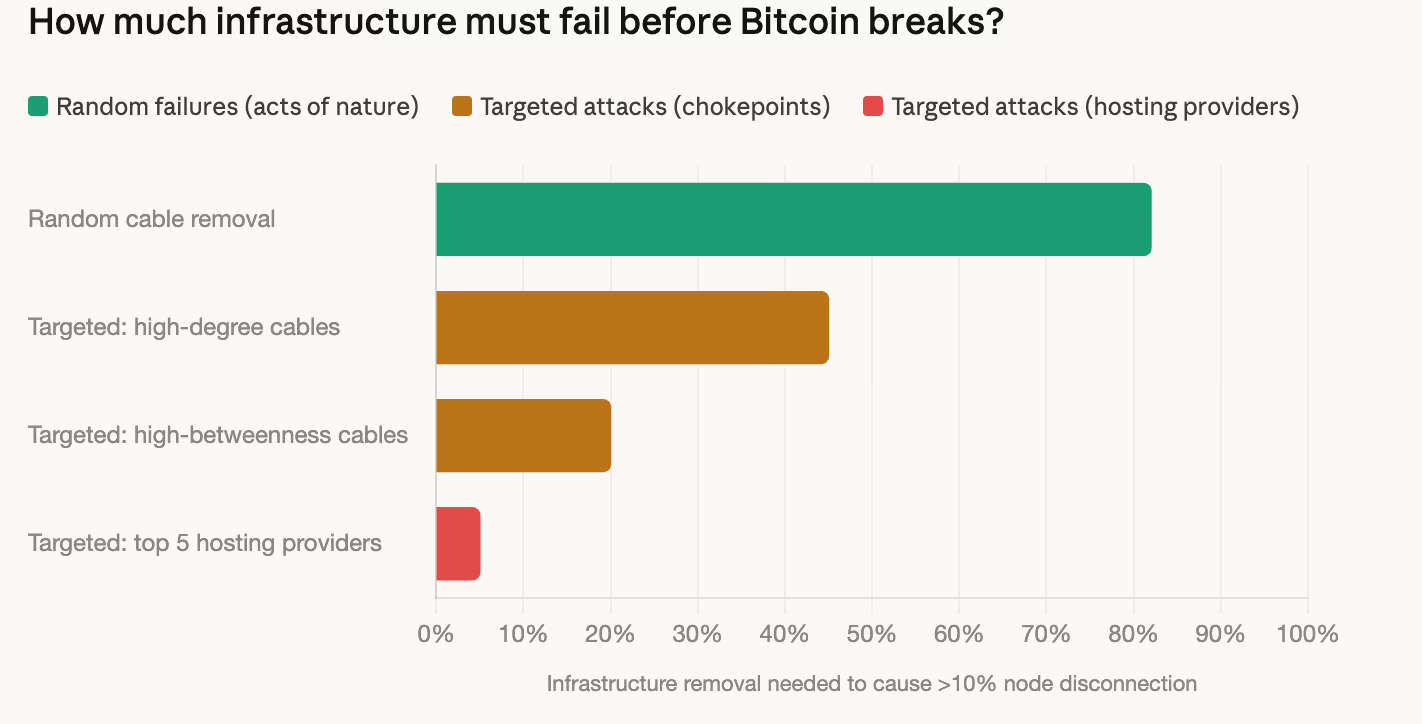
The headline finding is that between 72% and 92% of the world’s inter-country submarine cables would need to fail simultaneously before Bitcoin experiences significant node disconnection.
In a world where the Strait of Hormuz is currently disrupted and infrastructure vulnerability is front of mind, the study provides the first empirical benchmark for how hard Bitcoin actually is to knock offline.
The numbers tell a story of a network that degrades gracefully rather than collapsing catastrophically. The researchers ran 1,000 Monte Carlo simulations per scenario across the full dataset and found that random cable failures barely register.
Over 87% of the 68 real-world cable fault events they studied caused less than 5% node impact. The largest single event, when seabed disturbances off Côte d’Ivoire damaged 7-8 cables simultaneously in March 2024, knocked out 43% of regional nodes but affected only 5-7 bitcoin nodes globally, roughly 0.03% of the network.
The correlation between cable failures and bitcoin’s price was essentially zero, at -0.02. Infrastructure disruptions are invisible against daily price volatility.

But the paper’s most important finding is the asymmetry between random and targeted attacks.
While random cable failures require 72-92% removal to cause damage, a targeted attack on the cables with the highest betweenness centrality, the ones that serve as chokepoints between continents, drops that threshold to 20%.
And targeting the top five hosting providers by node count, Hetzner, OVH, Comcast, Amazon, and Google Cloud, requires removing just 5% of routing capacity to achieve the same impact.
That’s a fundamentally different threat model. Random failures are acts of nature. Targeted attacks are acts of state, coordinated regulatory shutdowns of hosting providers or deliberate severing of critical cable routes. The study essentially maps two very different adversaries: one Bitcoin can easily survive, and one that remains a credible risk.
How threats to bitcoin change over time
The paper tracks how resilience evolved over time, and the trajectory isn’t a straight line. Bitcoin was most resilient in its early years from 2014-2017, when the network was geographically diverse and the critical failure threshold sat around 0.90-0.92.
Resilience declined sharply during 2018-2021 as the network grew rapidly but concentrated geographically, hitting its lowest point of 0.72 in 2021 during peak mining concentration in East Asia. The China mining ban in 2021 forced redistribution, and resilience partially recovered to 0.88 in 2022 before settling at 0.78 in 2025.
The TOR finding is the one that challenges conventional thinking. As of 2025, 64% of Bitcoin nodes use TOR, making their physical location unobservable.
The assumption has been that this inability to observe might hide fragility, that if TOR nodes turned out to be geographically concentrated, the network could be more vulnerable than it appears.
The Cambridge researchers built a four-layer model to test this and found the opposite. TOR relay infrastructure is heavily concentrated in Germany, France, and the Netherlands, countries with extensive submarine cable and land border connectivity.
An attacker trying to disrupt TOR relay capacity by cutting cables faces a compound problem because those countries are among the hardest to disconnect. The four-layer model consistently showed higher resilience than the clearnet-only baseline, with TOR adding between 0.02 and 0.10 to the critical failure threshold.

The paper frames this as “adaptive self-organization.” TOR adoption surged after censorship events like Iran’s internet shutdown in 2019, the Myanmar coup in 2021, and the China mining ban.
The Bitcoin community shifted toward censorship-resistant infrastructure without any central coordination, and that shift happened to also make the network physically harder to disrupt.
With the Strait of Hormuz effectively closed and a regional war disrupting infrastructure across the Middle East, the question of what happens to Bitcoin if submarine cables get damaged isn’t theoretical.
The study suggests the answer is probably nothing, unless someone is deliberately targeting the specific cables and hosting providers that matter most.
Key takeaways:
-
Bitcoin sits above $71,000 as weak US economic data and the US and Israel-Iran war drive investors toward scarce assets.
-
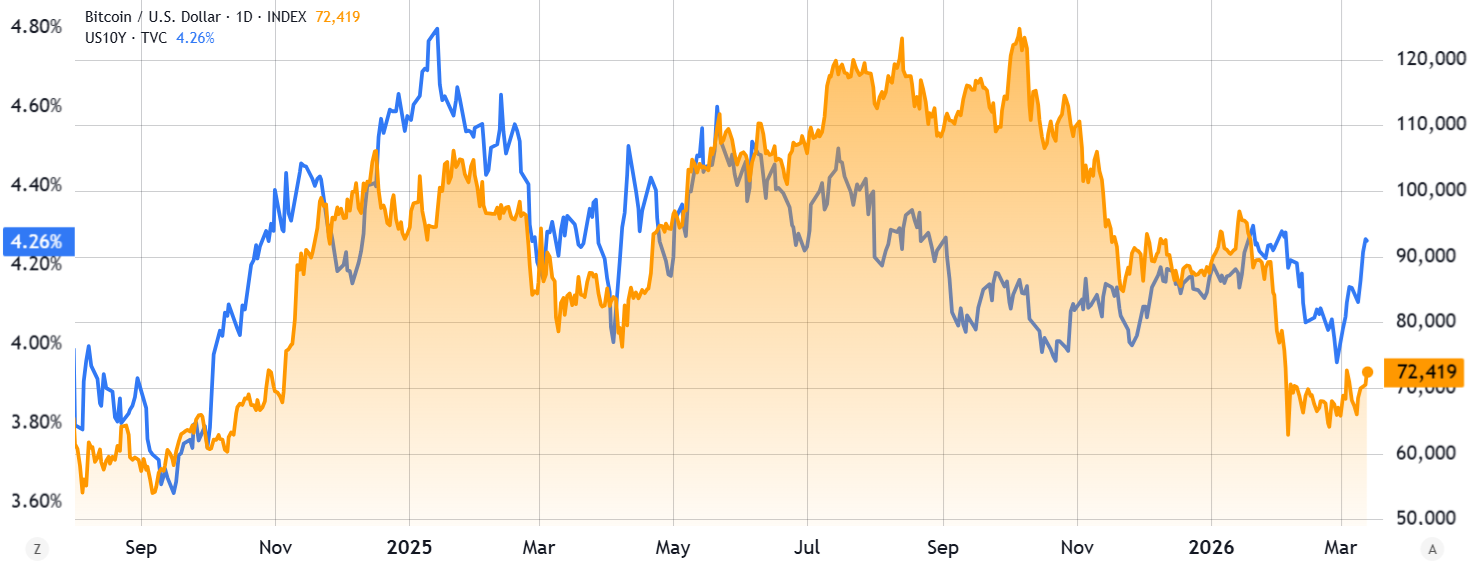
Tech stocks’ correlation to BTC and rising oil prices suggest that the 5-month correction from $126,000 might not be over.
Bitcoin (BTC) jumped above $73,000 on Friday, successfully locking in the 70,000 support for the week. These gains occurred as the US reported weak economic activity data, triggering concerns of an impending recession while the war in Iran continues to drag on.
While socio-economic events and institutional inflows might have led to Bitcoin’s bullish momentum, traders are still questioning if the bear market has actually ended.
Economic turmoil, growing investor appetite for BTC back Bitcoin’s breakout
The US economy grew by a mere 0.7% between October and December 2025, which was a significant downgrade from previous estimates, according to a US Commerce Department report released on Friday. While the final report is due April 9, the risks of a recession throughout 2026 have increased, driving investors away from US Treasuries.

Yields on the US 10-year Treasury surged to 4.26%, meaning investors are demanding a higher return to hold those assets. The mere risk of additional liquidity causes traders to seek shelter in scarce assets. This partially explains why the S&P 500 traded just 5% below its all-time high despite the worsening economic conditions.

On Monday, the S&P 500 futures plummeted to their lowest levels in over three months after oil prices briefly surged to $119.50. The US decision to temporarily authorize the purchase of Russian oil stranded at sea helped to cool off some of the risks. This move, announced by US Treasury Secretary Scott Bessent on Friday, eased the markets’ short-term concerns.

Institutional demand for Bitcoin has also been signaled as a potential driver for the recent bullish momentum. Spot exchange-traded funds (ETFs) faced four consecutive days of net inflows totaling $583 million, while analysts estimate that Strategy (MSTR) accumulated over $900 million through the yield-bearing STRC instrument.
Related: Bitcoin’s ‘extremely precise’ macro signal puts $100K target back in play
Bitcoin’s momentum turned bullish, but the bear market carries on
At first glance, the economic backdrop points toward liquidity injections and rising institutional interest in Bitcoin. However, that doesn’t necessarily mean the five-month correction following the $126,000 peak in October 2025 has ended.
Bitcoin’s 50-day correlation with the Nasdaq 100 sits at 84%. As concerns grow over sticky inflation and stagnant economic growth, the odds of a stock market pullback increase. Traders are unlikely to use Bitcoin as a hedge, especially given its recent underperformance compared to gold.
Adding to this, oil prices remain $30 higher than levels seen before the war in Iran began. These high fuel costs hit consumer spending and create inflationary pressure, which reduces the capital retail traders have available for crypto investments.
Inflows to the spot BTC ETFs have surged as $2.14 billion entered the ETFs from Feb. 24 to March 4, driving a 14% rally. However, prices slipped 10% over the next four days as those flows reversed. This suggests spot ETF activity is just reacting to Bitcoin’s price rather than acting as a leading indicator.
Whether Bitcoin stays above $70,000 over the weekend may not shift investor sentiment. While a five-week consolidation and several tests of the $64,000 support show bulls’ confidence, the recent price action hasn’t delivered a clear signal for a breakout.
This article does not contain investment advice or recommendations. Every investment and trading move involves risk, and readers should conduct their own research when making a decision. While we strive to provide accurate and timely information, Cointelegraph does not guarantee the accuracy, completeness, or reliability of any information in this article. This article may contain forward-looking statements that are subject to risks and uncertainties. Cointelegraph will not be liable for any loss or damage arising from your reliance on this information.

Billionaire investor Stanley Druckenmiller said blockchain and stablecoins may only be a decade away from powering the global payments system — though he isn’t sold on the idea of crypto functioning as a store of value.
In an interview with Morgan Stanley recorded on Jan. 30 and released on Friday, the former hedge fund manager said blockchain-based tokens — particularly stablecoins — boost productivity in the payments space:
“Blockchain and the use of stablecoins, if you want to throw crypto into that, tokens, incredibly useful in terms of productivity,” Druckenmiller said.
“I assume our whole payment systems will be stablecoins in 10 or 15 years,” he said, adding that stablecoins are more efficient, faster and cheaper than existing solutions.

Druckenmiller founded Duquesne Capital Management in 1981 and closed the fund in late 2010. During that time, he achieved an average annual return of 30% and never experienced a down year.
Druckenmiller said back in May 2021 that a blockchain-based system could replace the payment rails that power the US dollar due to a lack of trust in the traditional banking system.
“Well, the problem has been clearly identified. It’s Jerome Powell and the rest of the world, central bankers. There’s a lack of trust,” he told CNBC’s Squawk Box at the time.
Several traditional payments firms, such as Western Union, MoneyGram and Zelle, announced plans to launch stablecoin settlement systems last year following the passage of the stablecoin-focused GENIUS Act in July, which provided a clear regulatory framework for payment firms to offer digital asset services.
Drunkenmiller not sold on crypto as a store of value
Despite Druckenmiller’s conviction on blockchain and stablecoins, he isn’t convinced that cryptocurrencies like Bitcoin (BTC) can function as a store of value.
“It’s a solution looking for a problem. I’m very sad that it ever happened,” Druckenmiller told Morgan Stanley.
Related: Crypto Biz: Circle stock defies Wall Street and digital asset selloff
“It wasn’t needed,” but crypto has become a brand that some people love, so it will function as a store of value to them, he said.
Back in October 2023, Druckenmiller said he compared Bitcoin to gold, stating that he prefers the latter because it is a “5,000-year-old brand.”
Druckenmiller went on to say that he doesn’t own any Bitcoin, but that he should.
Magazine: Bitcoin’s ‘narrative vacuum,’ Ethereum now inevitable: Trade Secrets

A U.S. federal appeals court has closed the book on Custodia Bank’s bid for direct access to the Federal Reserve’s master-account program, delivering a setback after years of legal maneuvering. In a 7-3 ruling, the U.S. Court of Appeals for the Tenth Circuit declined to rehear the case, leaving intact the Fed’s long-standing discretion over who receives master accounts and access to the central bank’s payment rails. The decision arrives as crypto firms continue to seek direct lines to Fed services, while other players in the sector push for broader access and clearer regulatory pathways.
Key takeaways
- The Tenth Circuit rejected Custodia Bank’s final challenge in a 7-3 vote, effectively ending the bank’s bid for a Fed master account.
- Custodia originally applied in October 2020; after initial Fed rejection, it argued that the Monetary Control Act entitles state-chartered banks to Fed services, including a master account.
- Multiple courts have upheld the Fed’s discretion in granting master accounts, reinforcing the central bank’s gatekeeping role in access to payment rails.
- Kraken became the first crypto platform to receive a master account from the Federal Reserve Bank of Kansas City on March 4, tying it to Fedwire payments, albeit with a narrower set of services than a traditional bank.
- Disagreeing with the majority, Judge Tymkovich warned that a master account is “indispensable” for a bank’s operations and suggested denial could be viewed as a prohibitive outcome for a crypto-focused institution.
- The case underscores ongoing regulatory debate about “skinny” or limited master accounts for crypto firms, signaling a cautious but evolving approach to central-bank access.
Market context: The ruling lands amid broader regulatory discussions about how crypto-native firms should access traditional financial rails and liquidity. As more players seek direct Fed access to improve settlement efficiency and risk management, regulators have signaled openness to narrower, crypto-specific arrangements, while maintaining the Fed’s discretionary authority over master accounts.
Why it matters
The decision reinforces a foundational policy stance: the Federal Reserve controls who earns entry to its payment system through master accounts. For Custodia, the outcome closes a five-year pursuit that began with ambitions to settle digital-asset transactions with direct Fed support, reducing the likelihood of a direct route around traditional correspondent banking relationships. The ruling clarifies that the Fed’s authority to grant or withhold master accounts is not easily trumped by statutory arguments and that courts are unlikely to compel the Fed to provide access in the absence of a clearly defined statutory mandate.
Yet the same period has also seen notable progress elsewhere. Kraken, a prominent crypto exchange, secured a master account from the Fed’s regional arm in Kansas City, marking a pivotal milestone for the sector’s integration with the U.S. central bank’s system. This development demonstrates that the Fed is willing to grant access, albeit selectively, to entities that can demonstrate robustness, compliance, and operational readiness to connect to Fedwire payments. The distinction between “full” access and the more limited services available to nontraditional banks highlights the evolving nature of central-bank engagement with digital-asset firms.
While Custodia’s setback narrows the path for state-chartered banks seeking direct Fed access, the broader ecosystem remains engaged in a pragmatic dialogue about what accommodations crypto firms should receive. Proponents of increased access argue that direct ties to the Fed could reduce settlement risk and improve liquidity management in a sector characterized by rapid custody and settlement needs. Opponents caution against broadening eligibility without stringent risk controls and robust compliance frameworks. The tension mirrors larger regulatory dynamics as policymakers weigh consumer protection, financial stability, and innovation in parallel tracks.
The court’s opinion also underscores a practical reality: the Fed’s discretion has persisted through multiple adjudications. Although some judges have criticized the Fed’s stance, the majority’s analysis emphasizes that, absent a legislative change, master accounts remain a matter of administrative choice rather than automatic entitlement. In this sense, Custodia’s experience serves as a cautionary tale for other applicants that seek to accelerate entry into federal settlement rails without meeting the precise criteria the Fed applies in evaluating risk, governance, and operational readiness.
In the same thread, commentary around “skinny” master accounts—limited types of accounts designed to offer essential access without granting the full suite of services reserved for traditional banks—continues to gain attention. Advocates contend that even a pared-down pathway could substantially reduce the frictions crypto firms encounter when scaling and integrating with regulated financial infrastructure. Critics, however, argue that the integrity of the payment system requires careful calibration of who can participate and under what conditions. The recent disclosures, including Kraken’s march toward Fed-linked settlement capabilities, illustrate a cautious but tangible shift toward more inclusive mechanisms that balance safety with innovation.
What to watch next
- Regulators and the Fed may continue refining criteria for “skinny” master accounts and similar arrangements for crypto firms.
- Other applicants could reassess their strategies in light of the Custodia decision, potentially pursuing alternative means of direct Fed access or partnerships with traditional banks.
- Ongoing regulatory discussions and potential policy guidance could shape how future master-account decisions are communicated and implemented.
- Industry observers will monitor Kraken’s ongoing integration efforts and any further expansions of its Fed-connected capabilities.
Sources & verification
- U.S. Court of Appeals for the Tenth Circuit — Opinion documenting the denial of Custodia’s appeal: https://www.ca10.uscourts.gov/sites/ca10/files/opinions/010111400884.pdf
- Custodia Bank rehearing en banc master account coverage: https://cointelegraph.com/news/custodia-bank-rehearing-en-banc-master-account
- Custodia crypto bank appeal federal reserve master account coverage: https://cointelegraph.com/news/custodia-crypto-bank-appeal-federal-reserve-master-account
- Kraken receives master account and links to Fedwire coverage: https://cointelegraph.com/news/kraken-crypto-exchange-fed-master-account
- Additional context on Fed services not related to central bank digital currencies: https://cointelegraph.com/news/federal-reserve-service-not-related-to-cbdcs
Why it matters
The court’s ruling crystallizes the principle that access to the Fed’s payment rails is not an automatic entitlement for crypto-focused banks. It foregrounds the Fed’s discretion as a central feature of how digital-asset firms can participate in the U.S. financial infrastructure, at least in the near term. For stakeholders seeking to integrate digital assets into mainstream settlement processes, the decision clarifies the legal landscape and raises the bar for establishing the robust governance, risk controls, and compliance frameworks that the Fed expects of applicants.
At the same time, the Kraken milestone demonstrates that meaningful progress is possible even within a system that remains cautious about crypto-adjacent actors. By securing a master account from a regional Fed bank, Kraken has opened a pathway to improved liquidity and settlement efficiency, though with a narrower set of services than those enjoyed by conventional banks. The contrast between Custodia’s unresolved bid and Kraken’s operational foothold suggests that the road to broader access will likely be incremental, tempered by risk, regulatory clarity, and demonstrated resilience in transaction processing and governance.
Sources & verification
To verify the key elements of this story, readers can consult the official court filing and the referenced industry coverage:
- The Tenth Circuit opinion PDF confirming the denial of Custodia’s appeal: https://www.ca10.uscourts.gov/sites/ca10/files/opinions/010111400884.pdf
- Cointelegraph coverage on Custodia’s rehearing and related master-account discussions: https://cointelegraph.com/news/custodia-bank-rehearing-en-banc-master-account
- Cointelegraph coverage on Custodia’s crypto-bank appeal and Fed master account issues: https://cointelegraph.com/news/custodia-crypto-bank-appeal-federal-reserve-master-account
- Cointelegraph coverage on Kraken obtaining a master account: https://cointelegraph.com/news/kraken-crypto-exchange-fed-master-account
What the story means for the crypto ecosystem
As policy discussions evolve, the industry is watching how regulators balance the benefits of direct Fed access—lower settlement risk, faster liquidity management, and greater resilience—with the imperative to maintain safety, transparency, and financial stability. The Custodia ruling reinforces the notion that central-bank access is not guaranteed and that applicants must meet rigorous criteria and demonstrate systemic readiness. Simultaneously, Kraken’s milestone signals real-world progress and a potential blueprint for future entrants who can align with enhanced risk controls and compliance standards while leveraging more direct settlement capabilities. The next chapter will likely hinge on policy direction, the development of “skinny” account frameworks, and continued collaboration between policymakers, banks, and crypto firms to expand access without compromising systemic integrity.
Crypto World
US CLARITY Act Unlikely to Pass Senate Banking Committee Before April: Senator John Thune


Senator John Thune said the crypto-focused CLARITY Act faces further delays due to unresolved disagreements between banks and stablecoin issuers.
The long-awaited Crypto Clarity Act is unlikely to advance through the Senate Banking Committee before April, according to Senator John Thune. The delay stems from ongoing disagreements between banks and stablecoin issuers over key legislative provisions, per reporting from The Block.
The CLARITY Act has been a focal point for crypto industry advocates seeking regulatory clarity on digital assets and stablecoin issuance. The continued stalling of the legislation signals that critical stakeholders have yet to align on framework details, pushing any Senate committee vote further into 2025.
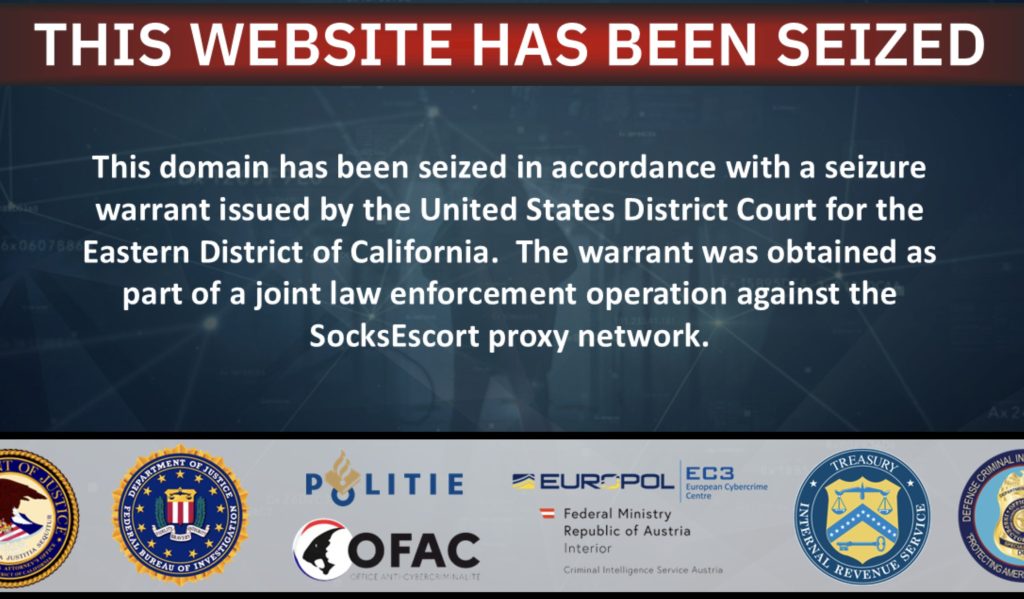
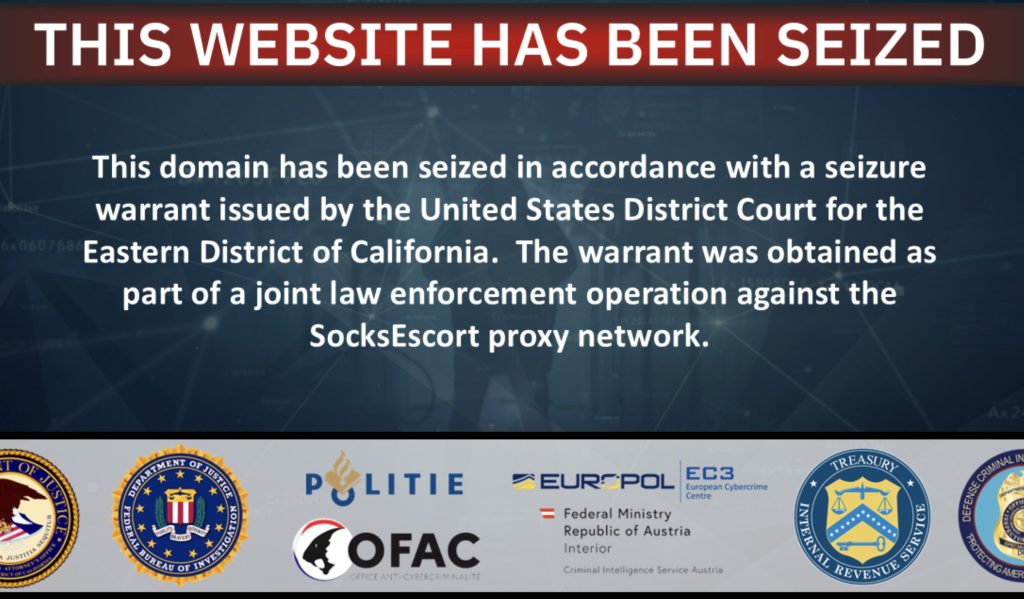
The DOJ and Europol just took down SocksEscort. A residential proxy network that has been running since 2009.
34 domains seized. 23 servers were knocked offline across 7 countries. $3.5 million in crypto frozen.
SocksEscort was the infrastructure layer cybercriminals used to stay invisible. Account takeovers, ransomware attacks, crypto fraud. All of it ran through this network to mask where the attacks were actually coming from.
It took over a decade. But the operation is done.
What the DOJ-Europol Takedown Actually Targeted
The network had hijacked 369,000 devices across 163 countries. Routers, IoT devices, residential IPs. All were infected with AVRecon malware and rented out to criminals who needed clean addresses to bypass fraud detection at banks and crypto exchanges.
20,000 new devices are infected every week since early 2024. Total revenue is estimated at $5.8 million over the life of the operation. One victim in New York lost roughly $1 million in crypto alone after their account was hit through a SocksEscort proxy.
8 countries were involved in Operation Lightning. France, Germany, and the Netherlands, among them. The coordination was deliberate. Authorities are no longer just chasing individual criminals. They are targeting the infrastructure that makes crypto crime possible in the first place.
Europol’s executive director put it plainly. Proxy services like SocksEscort are the anonymity shield that lets illicit funds move across borders undetected. Remove the shield, and the whole operation falls apart.
That is exactly what happened here.
The Compliance Pressure This Puts on Exchanges and Mixers
The takedown creates an immediate problem for everyone who used the service.
SocksEscort had 124,000 registered users. All of them were masquerading as legitimate residential traffic to defeat IP-based fraud detection at exchanges. Credential stuffing, password spraying, wash trading, and account takeovers. The proxy network was the tool that made all of it invisible.
Now the servers are seized. And they are full of transaction data.
FBI Deputy Assistant Director Jason Bilnoski confirmed it directly. Thousands of users are now exposed. A wave of downstream indictments is coming.
For exchanges, the pressure is also shifting. Regulators are drawing a harder line between legitimate privacy tools and criminal evasion infrastructure. Compliant platforms are already moving to verify that user traffic comes from legitimate ISPs rather than compromised botnets. Those who do not will be next in the crosshairs.
SocksEscort is gone. But the forensic trail it left behind is just getting started.
Discover: The best new crypto in the world
The post DOJ and Europol Dismantle Crypto-Linked Proxy Network SocksEscort in Joint Action appeared first on Cryptonews.
Bitcoin’s brief jump above $73k shows bulls still in control, but Iran war risks, oil shocks and crowded leverage leave BTC vulnerable to a violent flush.
Summary
- Bitcoin price reclaimed the $73k area as global risk assets bounced despite ongoing Iran war headlines and oil market stress.
- Derivatives data show rising funding, packed longs and whale leverage on BTC and ETH, primed for cascade liquidations if momentum stalls.
- With Iran threatening shipping and higher oil, traders are shifting to tighter stops, staged profit‑taking and options hedges into late‑cycle volatility.
Bitcoin (BTC) price briefly cleared the $73,000 mark in the last trading session, signaling the current bullish phase is intact but leverage and positioning are now approaching blow‑off conditions.
Bitcoin breaks above $73K as risk appetite returns
Bitcoin pushed above $73,000 in the past 24 hours, gaining around 4% and extending its march to new all‑time highs against a backdrop of renewed risk appetite in global markets. This move comes as US equities continue to trade near record levels and traders maintain expectations for at least one Federal Reserve rate cut before year‑end, keeping liquidity conditions supportive for high‑beta assets such as BTC. On major derivatives venues, funding rates and open interest have been grinding higher, reflecting aggressive long positioning rather than spot‑led demand.
The latest leg higher follows weeks of sustained inflows into Bitcoin exchange‑traded products and centralized exchanges, with market depth still thinner than in prior cycles despite the larger nominal price. That combination of rising leverage and limited resting liquidity leaves the market vulnerable to sharp liquidations if price momentum stalls or macro data surprise to the upside on inflation.
Leverage and whale positioning intensify
Onchain and derivatives‑tracking dashboards show that a handful of large traders have materially increased risk into the breakout, using double‑digit leverage on both BTC and ETH. One heavily watched account has built sizeable long positions on Ethereum with leverage around 15x, echoing similar high‑stakes trades reported in prior ETH rallies in 2025 that at times exceeded 25,000 ETH notional and over $100 million in exposure. While the current configuration differs in size and entry levels, the underlying dynamic is the same: concentrated players are amplifying upside moves, but also raising the risk of cascade liquidations if the market reverses.
In parallel, research firm Trend Research and its affiliates have repeatedly moved large ETH tranches between self‑custody, lending protocols and centralized exchanges in recent weeks, including deposits and withdrawals in the tens of thousands of ETH and tens to hundreds of millions of dollars in value. These flows underline how a small group of funds can influence short‑term liquidity and sentiment when Bitcoin tests new highs and investors chase beta down the risk curve.
What this means for traders
For directional traders, Bitcoin reclaiming and holding above the $70,000–$73,000 band confirms that the primary trend remains intact, but it also suggests that risk management now matters more than raw conviction. Elevated open interest, richer funding rates and large whale leverage all point to a market that can overshoot higher but will unwind violently on any macro or regulatory shock.
From a portfolio‑construction perspective, professional desks are likely to favor staggered profit‑taking on strength, tighter stop‑losses on high‑leverage BTC and ETH longs, and increased use of options to hedge downside tails while keeping upside participation. Retail investors chasing the breakout should be aware that the easy part of the move is probably behind, and that late‑cycle volatility around psychological levels like $75,000 and $80,000 historically separates disciplined participants from forced sellers.
Ethereum price surges as derivatives open interest jumped nearly 9% to above $30b, concentrating leverage on Binance, Gate, Bybit and OKX and priming Ethereum for sharper liquidations.
Summary
- Ethereum derivatives open interest climbed about 9% in 24 hours to roughly $30.4b, tracking Ethereum above $2,180.
- Binance, Gate, Bybit and OKX now hold most ETH OI, raising spillover risk if one venue sees a funding squeeze or outage.
- Rising OI with higher prices signals a reflexive setup: further gains could richen funding, while any stall may trigger fast deleveraging.
Ethereum (ETH) derivatives just lit up. Here’s a clean crypto.news-style piece on the ETH open interest story, using $ not “dollar.”
ETH derivatives open interest has jumped nearly 9% in 24 hours, pushing total ETH contract exposure above $30 billion and underscoring how fast leverage is building behind the latest leg of the rally.
ETH open interest climbs as traders add leverage
According to derivatives tracker Coinglass, total ETH contract open interest has increased by 8.94% over the past 24 hours, with aggregate open interest now at $30.451 billion across major exchanges. Binance leads with $6.593 billion in ETH OI, followed by Gate at $3.875 billion, Bybit at $2.358 billion, and OKX at $2.042 billion. The move comes as ETH trades above $2,180 and tracks Bitcoin’s push into fresh all‑time highs, drawing in both speculative longs and basis traders.
The pace of growth in ETH open interest mirrors similar spikes seen in late February, when Ethereum derivatives OI rose between 7% and 14% in a single day as traders positioned around key resistance and ETF narratives. Each of those prior expansions in open interest preceded periods of elevated intraday volatility, as crowded positions were tested by relatively small spot flows.
Market structure: more size, more sensitivity
With more than $30 billion now tied up in ETH futures and perpetuals, relatively minor price moves can trigger meaningful liquidation flows. Recent Coinglass data shows that when open interest in ETH contracts has sat in the mid‑20s to high‑20s billions range, subsequent 24–48 hour windows often featured sharp wipe‑outs as funding flipped and over‑levered longs or shorts were forced out.
Exchange concentration also matters. Binance, Gate, Bybit, and OKX have repeatedly accounted for the bulk of ETH derivatives risk in recent months, with Binance alone often carrying more than $5 billion in ETH OI. That clustering means that any sudden funding squeeze, outage, or large liquidation event on one of these venues can spill quickly into spot books and cross‑exchange pricing.
What traders should watch next
For short‑term ETH traders, the combination of rising open interest and higher spot prices typically signals a more reflexive environment: price drives positioning, and positioning in turn drives price. If ETH continues grinding higher with OI expanding, funding rates and basis are likely to richen, creating both carry opportunities and greater downside risk if the trade becomes too crowded.
If, instead, OI starts to roll over while price stalls or pulls back, that would indicate aggressive deleveraging and could mark a local top or a reset phase similar to prior episodes where ETH contract open interest dropped 4–6% in a day. In both cases, the key tells will be funding, liquidation clusters, and whether open interest continues to climb above the $30 billion mark or snaps back toward the mid‑20s.
Crypto World
DeepSnitch AI Bonus: Hurry Up, Only a Few Days Left! The Bull Run Every Trader Has Been Waiting For Finally Has a Starting Gun

Oil almost touched $100 this week after tensions around the Strait of Hormuz sparked a macro panic. Stocks sold off and macro Twitter went into meltdown mode. Then, US Treasury Secretary Scott Bessent stepped in with a temporary license allowing countries to buy Russian oil already stranded at sea, calling the spike a short-term disruption. Oil dropped quickly, and crypto reacted fast.
Bitcoin pushed close to $72,000 with strong ETF inflows and continued accumulation from major buyers. The dollar also weakened, which is exactly the kind of macro setup that usually fuels risk assets.
The macro setup that every trader has been waiting for is building exactly the way the textbook says it should, and the Deepsnitch AI bonus codes are still live, but not for long. Here’s why you should hurry up ahead of the launch.
BTC jumps to $72K after Bessent kills the oil scare
Treasury Secretary Scott Bessent stepped into a market that was panicking about oil racing toward $100 a barrel and cooled things down fast. Iran’s new supreme leader had said the Strait of Hormuz would stay closed, and Donald Trump said stopping Iran mattered more than oil prices, which sent equities sliding and macro Twitter into full panic mode.
Then Bessent announced General License 134, a temporary move allowing countries to buy Russian oil that was already stuck at sea. He called the spike a short-term disruption and said the economy could actually benefit once things settle. Oil quickly dropped about $2 a barrel, and Bitcoin jumped close to $72,000 within hours while stocks were still trying to catch up.
This is what the setup looks like right before a sustained bull move starts: macro fear gets resolved faster than expected, institutional buying was already happening before the resolution, and the Deepsnitch AI bonus countdown is ticking in the exact window when new capital starts looking for the highest-asymmetry entries it can still access before the crowd arrives.
Three positions to load before this window shuts: $DSNT, BTC and ETH
1. The DeepSnitch AI bonus still live! Hurry up, only a few days left!
If you are still sitting on the sidelines reading about the Deepsnitch AI bonus and not positioning, this section is your last clear-headed moment before FOMO kicks in at the Uniswap listing price.
$DSNT is the only presale in this market where five AI security tools are already live and working for traders every single day at $0.04399 before the ground floor closes.
AuditSnitch scans any smart contract in seconds and risk-scores it before you sign anything. SnitchGPT handles your on-chain research with real market context, so you are not walking into positions based on vibes and influencer threads.
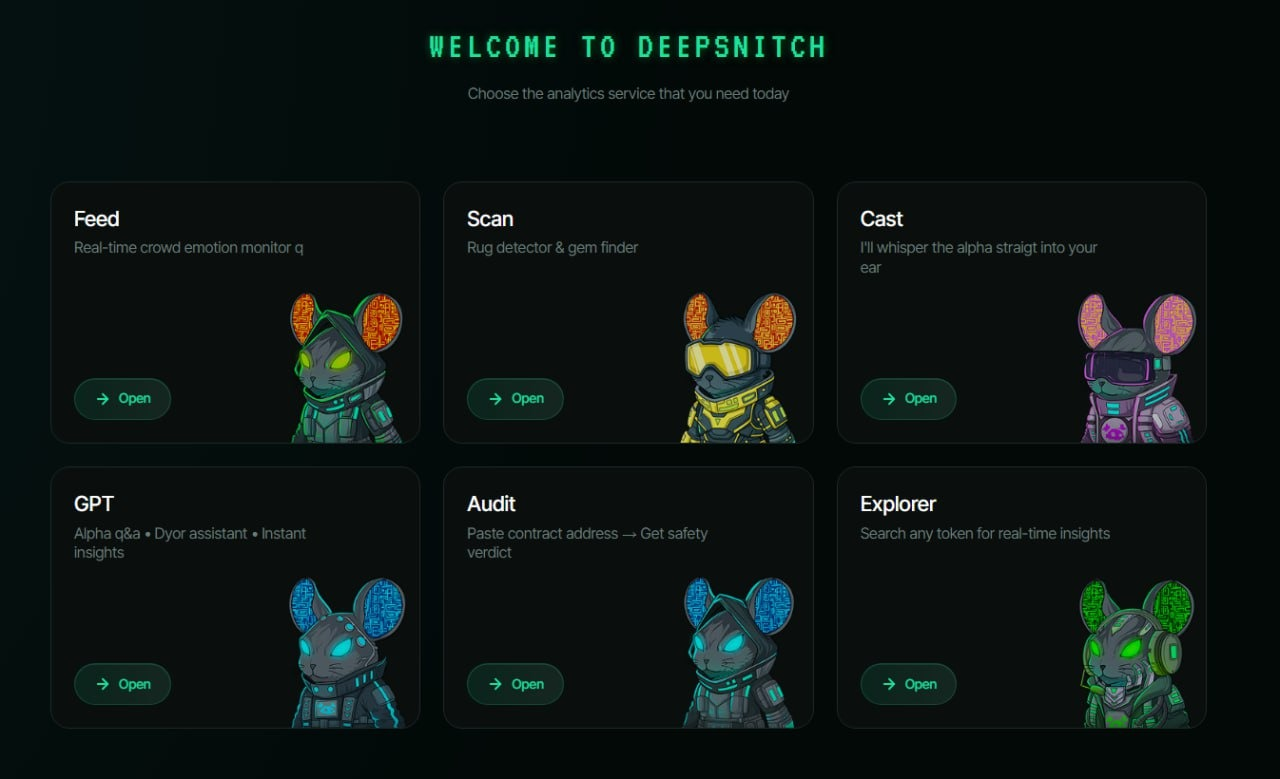
SnitchFeed streams whale wallet activity and volume anomalies in real time, so you see the move before the chart confirms it and before retail gets trapped. Token Explorer gives you full holder concentration, liquidity depth, and risk scoring on any token before you commit a dollar.
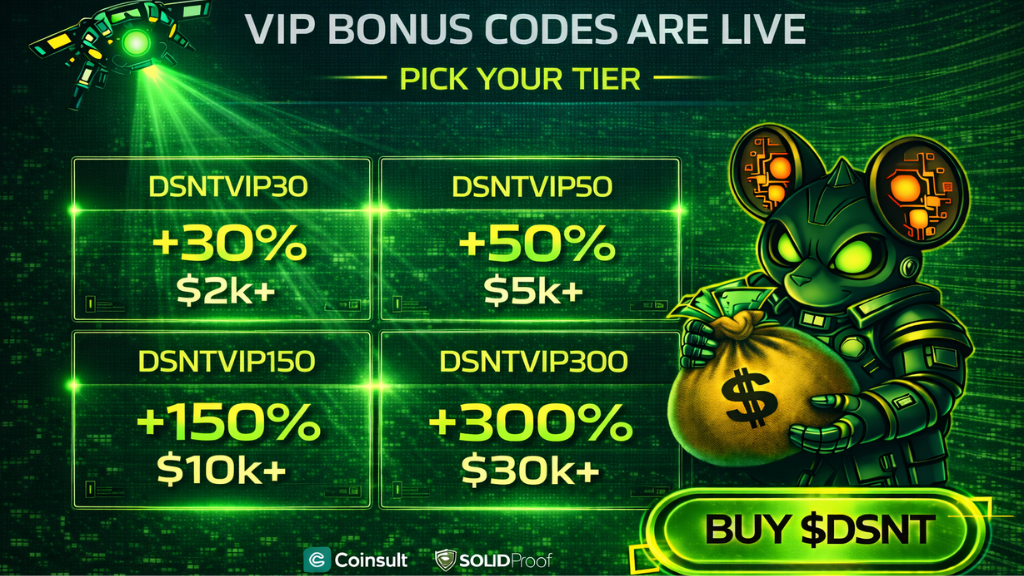
SnitchCast keeps your market read sharp and current without building your own research stack from scratch. Coinsult and SolidProof have both independently audited the smart contract, and $2 million has already been raised with up to 300% bonuses still active.
If the bull case sends $DSNT to $30, this is the type of trade that creates serious wealth. This is a crypto presale ending soon situation with zero wiggle room because March 31 is the date and there is no extension coming.
2. Bitcoin (BTC) update for March 2026
BTC is currently trading around $72,000 on March 13 after recovering from the $63,000 to $64,000 range that defined February’s fear cycle, and the setup underneath it right now is the strongest it has been since Q4 2025 when BTC hit its all-time high of $126,000.
The 2026 bull target sits at $200,000, and the majority of analyst consensus clusters between $120,000 and $150,000 for the cycle high. BTC will not give you 100x from here. But as a store-of-value position running alongside a presale like $DSNT that is still in its final days of token presale window, BTC is the safest way to make sure you have exposure to the broad market recovery without having to time an altcoin rotation correctly.
3. Ethereum (ETH) update for March 2026
ETH reclaimed $2,000 this week and is currently trading around $2,100 on March 13 after spending the past several months in a brutal drawdown from its $4,105 ATH in December 2024.
The current entry is sitting 50% below the all-time high, with the Pectra upgrade scheduled for Q1 to Q2 2026.
The 2026 ETH high target sits at $6,000, and the most bullish analyst projections reach $10,000 to $15,000 in the supercycle case.
The upside math is still a 3x to 5x from here in the base case. That is a good trade, but it is not the same as DeepSnitch AI.
DeepSnitch AI bonus code: Hurry up, only a few days left before launch!
Bessent just gave the market a macro green light by capping oil at $100, BTC responded by jumping to $72K with ETF inflows running for three straight weeks, and the bull run setup that serious traders have been positioning for all year is starting to look a lot more like the real thing.
BTC and ETH are the right plays for traders who want cycle exposure with lower volatility and a clear path to 3x to 5x from current levels. But the Deepsnitch AI bonus is for the traders who want the move that makes the BTC chart look boring in comparison.
$DSNT at $0.04399 with five live tools, dual audits, 41.4M staked coins, and a 150% bonus on $10K-plus entries is the final days token presale setup that closes March 31 and never reopens at this price.
Visit the official DeepSnitch AI website and lock in your $DSNT before the deadline. Join X and Telegram community to catch the listing announcement drop.
FAQs
What exactly is the Deepsnitch AI bonus and does the deadline actually move?
The Deepsnitch AI bonus deadline is March 31 and the team has confirmed zero extension. It is a crypto presale ending soon situation with up to 300% bonuses that disappear the moment the presale closes.
Is the limited-time crypto bonus on DSNT worth stacking alongside BTC at $72K and ETH at $2,100 right now?
BTC and ETH are solid cycle plays, but a 3x to 5x is the realistic ceiling from current prices. The limited-time crypto bonus of up to 300% on $DSNT at $0.04399 puts tokens in your wallet for free.
Why is the final days token presale window on $DSNT more urgent than waiting for a discount after the Uniswap listing?
There is no discount after the listing. The final days token presale price of $0.04399 could be the floor that never returns. Every AI infrastructure token from TAO to RENDER listed above presale and never looked back. This is the last entry at ground floor and it is closing on March 31.
Disclaimer: This is a Press Release provided by a third party who is responsible for the content. Please conduct your own research before taking any action based on the content.

Persimmon gets go ahead for 67 new homes in Brayton, Selby
Form 4 Bank of America Corp For: 14 March
TON Cancels TOKEN2049 Dubai Event as Security Risks Rise Across the UAE Region


-

 News Videos5 days ago
10th Algebra | Financial Planning | Question Bank Solution | Board Exam 2026
-
 Tech3 days ago
A 1,300-Pound NASA Spacecraft To Re-Enter Earth’s Atmosphere
-

 Crypto World5 days ago
Paradigm, a16z, Winklevoss Capital, Balaji Srinivasan among investors in ZODL
-

 Business3 days ago
ExxonMobil seeks to move corporate registration from New Jersey to Texas
-

 Tech3 days ago
ChatGPT will now generate interactive visuals to help you with math and science concepts
-

 Fashion10 hours ago
Weekend Open Thread: Addict Lip Glow
-

 Sports6 days ago
Three share 2-shot lead entering final round in Hong Kong
-

 Sports6 days ago
Braveheart Lakshya downs Lai in epic battle to enter All England Open final | Other Sports News
-

 NewsBeat2 days ago
Residents reaction as Shildon murder probe enters second day
-

 Business5 days ago
Search for Nancy Guthrie Enters 37th Day as FBI Probes Wi-Fi Jammer Theory
-

 Business3 days ago
Search Enters Sixth Week With New Leads in Tucson Abduction Case
-
 NewsBeat4 days ago
Pagazzi Lighting enters administration as 70 jobs lost and 11 stores close across Scotland
-

 Tech5 days ago
Despite challenges, Ireland sixth in EU for board gender diversity
-

 Business4 days ago
Search Enters 39th Day with FBI Tip Line Developments and No Major Breakthroughs
-

 NewsBeat3 days ago
I Entered The Manosphere. Nothing Could Prepare Me For What I Found.
-

 Sports5 days ago
Skateboarding World Championships: Britain’s Sky Brown wins park gold
-
 Crypto World4 days ago
Will Chainlink price reclaim $10 amid volatility squeeze?
-

 Sports5 days ago
Tomorrow’s Top 25 Today: Florida jumps to No. 4; Louisville, Wisconsin enter projected rankings
-

 Sports2 days ago
PWHL, Senators discussing plan to keep Charge in Ottawa
-

 Politics3 days ago
Trump Says Middle East Is ‘Very Lucky’ That He’s President