

Crypto World
Brazil Solar Mega-Project Studies Bitcoin Mining Plan


TLDR
- Engie received full commercial approval for the Assu Sol solar complex in Brazil on February 13, 2026.
- The project has a peak capacity of 895 MWp and includes 16 plants with over 1.5 million panels.
- Brazil has faced recurring curtailment since 2023 due to grid bottlenecks and excess renewable generation.
- Engie is studying Bitcoin mining as a flexible offtaker to monetize surplus electricity.
- The company estimates it would need about two years to deploy any mining or storage solution.
Engie has secured full approval for its Assu Sol solar complex in Brazil and has begun studying Bitcoin mining to monetize surplus electricity. The project reached commercial clearance on February 13, 2026, and now operates as the company’s largest solar asset worldwide. Engie plans to evaluate mining and battery storage to capture value from recurring grid curtailment.
Brazil Grid Bottlenecks Drive Search for Flexible Demand
Brazil has expanded wind and solar generation faster than its transmission infrastructure has developed, and that gap has led to recurring curtailment since 2023. Grid operators have forced plants to shut down during oversupply periods, and producers have lost revenue on unused megawatt-hours. Engie now seeks a flexible demand solution that can consume excess electricity behind the meter and reduce financial losses.
The Assu Sol complex carries 895 MWp of peak capacity and 753 MW of installed capacity across 16 plants. The BRL 3.3 billion project spans more than 1.5 million photovoltaic panels in northeastern Brazil. Brazilian authorities granted full commercial approval on February 13, 2026, and Engie confirmed operational status.
Bitcoin Mining and Storage Under Review
Engie is assessing whether Bitcoin mining facilities can operate as a flexible offtaker for surplus power. Mining rigs can switch on and off quickly, and operators can match activity with excess generation periods. The company has stated that it does not seek speculative crypto exposure but aims to protect plant revenues.
Eduardo Sattamini, Engie’s country manager in Brazil, addressed the timeline for any deployment. He said, “We would need around two years to develop and implement a mining or storage solution.” He also confirmed that Engie continues to evaluate utility-scale battery systems as an alternative option.
Brazil’s foreign trade council has reduced import duties to zero on high-efficiency mining equipment through January 2028. That temporary measure lowers capital expenditure requirements for energy-linked mining operations. Engie is reviewing both mining and storage models before making a final investment decision.
The company has framed the initiative as a revenue management strategy tied to curtailed output. Engie plans to operate any mining capacity only during periods of excess supply. Company officials have confirmed that studies remain ongoing and that no final commitment has been announced.
Assu Sol now stands as Engie’s largest solar asset globally, and the company continues to monitor grid conditions in Brazil. Executives have stated that the project must align with regulatory requirements and operational standards.

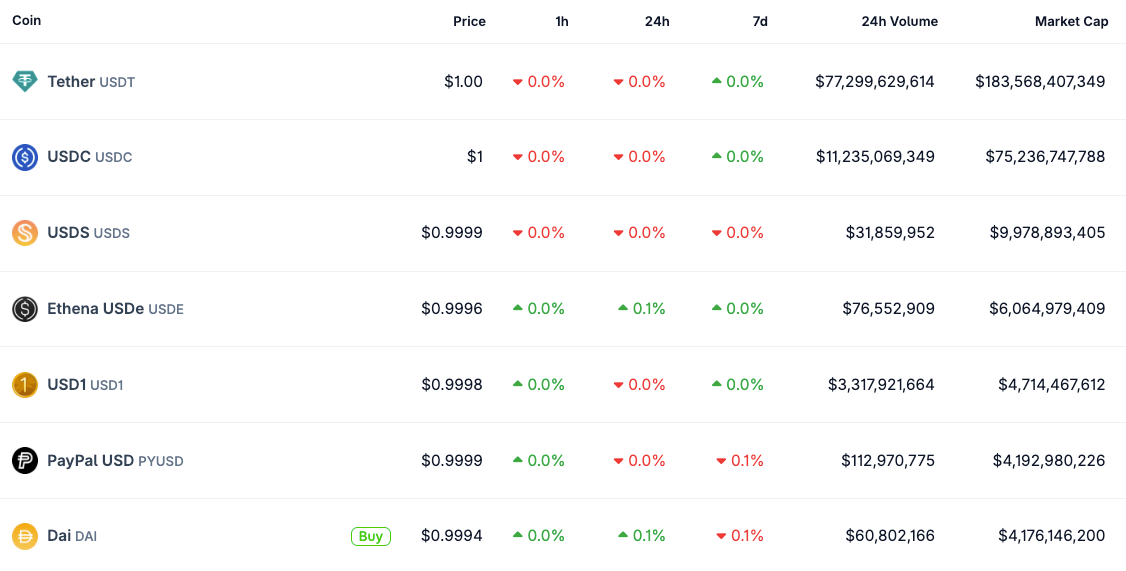
Payment giant PayPal is expanding access to its stablecoin through a new platform it says will allow devleopers to create their own US dollar-pegged tokens backed by PayPal USD.
PayPal, MoonPay and stablecoin platform M0 on Friday announced PYUSDx, a product aimed at helping developers launch PayPal USD (PYUSD)-backed stablecoins for use within applications, or tokens designed for use inside a particular app, platform or ecosystem, according to a joint announcement shared with Cointelegraph.
The companies said the rollout is planned for next month.
“The next phase of stablecoin adoption is happening at the application layer. Developers want to build differentiated experiences, but they shouldn’t have to rebuild trusted monetary infrastructure from scratch,” said May Zabaneh, PayPal’s head of crypto.
The launch comes as competition intensifies in the stablecoin market, with companies including Meta reportedly planning stablecoin-based payments across its suite of apps including Facebook, Instagram and WhatsApp.
PYUSDx combines M0’s universal stablecoin and MoonPay platform
Launched in August 2023, PayPal USD is a US dollar-pegged stablecoin issued by Paxos Trust Company, a federally regulated national banking association.
PYUSDx is separate from PYUSD and is described as a tokenization and issuance framework offered by MoonPay Digital Assets, the announcement said.

The companies said PYUSDx combines M0’s universal stablecoin and digital token platform with MoonPay Group’s infrastructure to simplify the launch of US dollar-backed stablecoins by reducing technical and operational burdens.
It also features fast launch speed, cross-chain compatibility, flexible economics, reserve transparency and the ability to create branded stablecoins.
“We’re excited to see MoonPay and M0 use PYUSDx to help bring new, application-specific stablecoins to market, anchored in a regulated, trusted foundation,” PayPal’s Zabaneh said.
Related: Stripe considers acquiring some or all of PayPal: Report
USD.ai, a decentralized finance protocol that issues stablecoins including USDai and yield-bearing sUSDai, is the first developer building on PYUSDx, using the platform to support an application-specific stablecoin for AI infrastructure.
PYUSDx tokens are separate from PayPal USD and cannot be used, sent or stored in PayPal or Venmo accounts, the announcement noted.
The launch of PYUSDx comes as PayPal continues expanding real-world use cases for its stablecoin. In late 2025, video-sharing giant YouTube reportedly enabled US-based creators to accept payouts in PYUSD, highlighting the growing adoption of the digital dollar beyond traditional finance.
Magazine: Clarity Act risks repeat of Europe’s mistakes, crypto lawyer warns
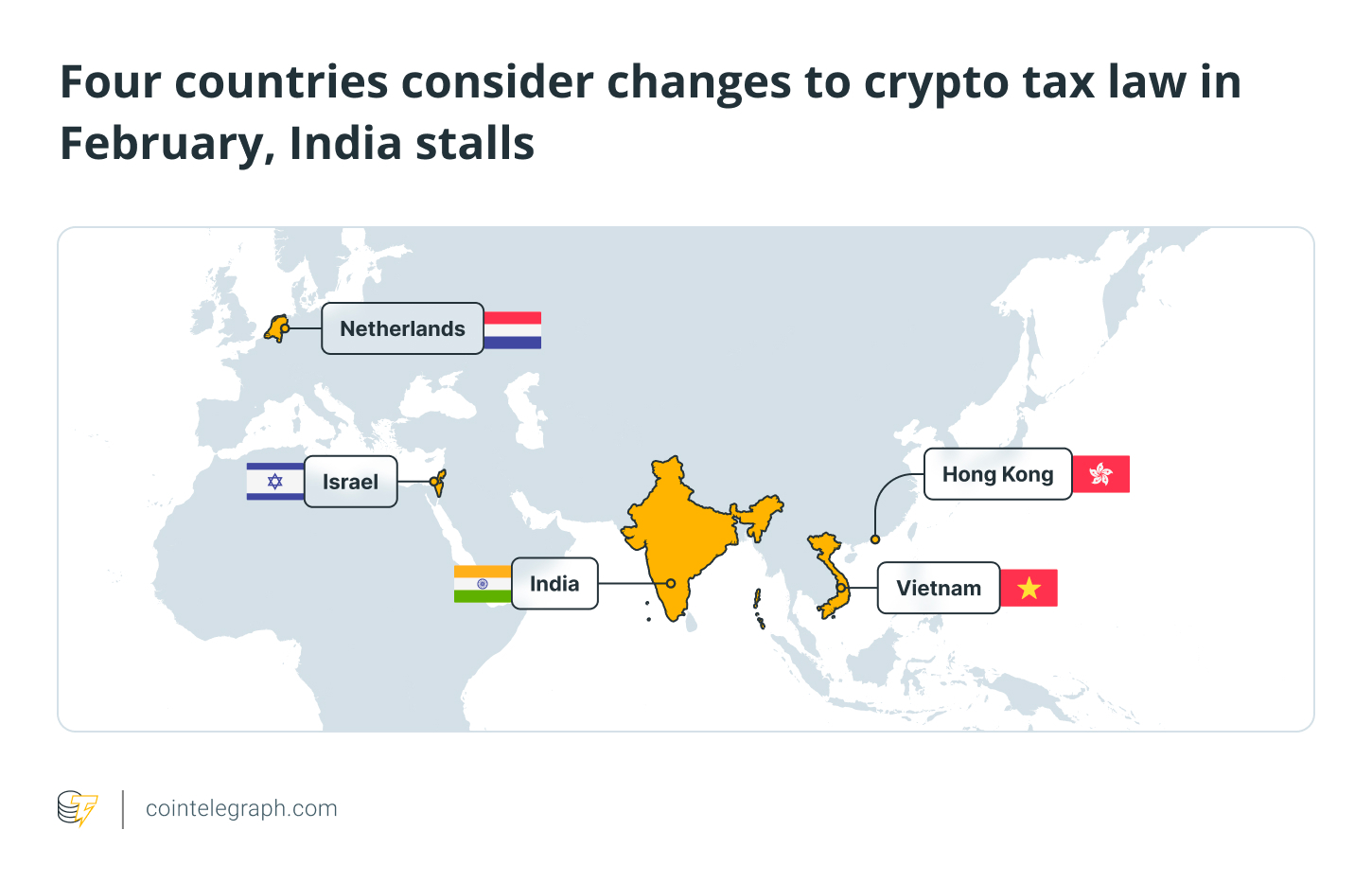
The taxman cometh. In February, the tax authorities of four countries began to reconsider how they tax crypto.
In the US, the number of crypto ATMs hit nearly 40,000, returning to 2021 levels of interest in crypto kiosks. The number of installations had dipped significantly after the crypto crash of 2022.
Japan’s inflation dipped below 2% in February, less than in the United States. Berkshire Hathaway CEO Warren Buffett said earlier this year that dollar investments were looking less attractive as the yen is providing a more stable currency.
Bitcoin (BTC) was stuck below $70,000 this month. Many crypto observers have noted that US tariffs are putting pressure on the asset. US President Donald Trump’s new 10% levy has done nothing to alleviate this.
Here’s February by the numbers:
Four countries consider changes to crypto tax laws in February
The Netherlands’ House of Representatives, the lower house of the country’s parliament, advanced a tax proposal on Feb. 12. The draft law would introduce a 36% capital gains tax on unrealized gains on savings and liquid investments, including crypto.

Critics say the tax, which is supported by 93 of the 150 representatives, will chase money out of the country.
Detractors appear to have won out. The new Dutch cabinet said that it will reconsider the measure.
“There is a lot of criticism of the Actual Return Act. We are not deaf to that … The bill needs to be amended. The Minister and State Secretary will discuss this with the Senate and parliament,” a cabinet spokesperson said.
In Israel, the Israeli Crypto Blockchain & Web 3.0 Companies Forum launched a lobbying effort to reform the country’s crypto tax laws. Forum leader Nir Hirshmann-Rub said there is broad public support to relax laws on stablecoins and tokenization, as well as simplify compliance.
He noted that many Israelis already own and invest in crypto. “More than 25% of the public already has had crypto dealings in the last five years and more than 20% currently hold digital assets,” he said.
In Hong Kong, Financial Secretary Paul Chan said that the special administrative region is tweaking its tax laws. He said the Inland Revenue Ordinance will implement the Organisation for Economic Co-operation and Development’s Crypto-Asset Reporting Framework (CARF).
The CARF is a global tax exchange standard for crypto that aims to tackle tax evasion. It requires crypto service providers to report on client activity.
Vietnam has proposed a crypto transaction tax. Crypto transfers and trading would be exempt from the usual value-added tax. But transferring crypto assets through licensed service providers would incur a 0.1% personal income tax on the transaction value.
In India, which imposes a flat 30% tax on crypto gains and doesn’t allow users to offset losses, calls to reform the law have fallen on deaf ears. Despite intense lobbying, the proposed 2026 Union Budget did nothing to reform crypto tax.
Bitcoin stays below $70,000; Trump raises tariffs 10%
Bitcoin has had a rough past couple of months, and in February, it struggled to breach the $70,000 mark.

Analysts have cited several macro pressures on Bitcoin’s price. One is the lack of progress on the CLARITY Act, the US’ proposed framework for cryptocurrency markets. Lawmakers can’t agree on ethics provisions or possible bailout provisions, and prominent lobbies, namely the crypto and banking lobbies, are at loggerheads over stablecoin interest.
Related: When will crypto’s CLARITY Act framework pass in the US Senate?
Chris Waller, a governor of the United States Federal Reserve, said, “The lack of passing of the CLARITY Act I think has kind of put people off on this.”
Another issue is tariffs. The US Supreme Court invalidated the tariffs Trump implemented using the 1977 International Emergency Economic Powers Act (IEEPA). Trump responded by hiking global tariffs 10% using the Trade Act of 1974 as a legal foundation.

Crypto analysts and observers have noted the negative effect Bitcoin has on markets. Swan CEO Cory Klippsten said, “The biggest drag on Bitcoin price the past year has been tariffs … That’s the drag on risk assets in general, and in particular [with] Bitcoin, there’s just uncertainty around what’s gonna happen.”
Japan’s inflation dips below 2%, and Takaishi takes elections
The inflation rate of the Japanese yen has dipped below that of the dollar, falling below 2%, its lowest in three years.

The new inflation low for the yen comes after Prime Minister Sanae Takaichi called for snap elections. The gamble hoped to restore the majority of the Liberal Democratic Party (LDP) to a parliamentary majority.
The gambit paid off, and now the LDP dominates the Japanese House of Representatives, the National Diet’s lower house, with a 316-member two-thirds majority.
Stock markets in Japan responded well. The Nikkei 225 (JP225) increased 10% on the month, spiking significantly after the Feb. 9 election.
[chart]
Japanese JP225 is up over 10% in February.
This could spell short-term trouble for Bitcoin, which tends to correlate with US equities, according to XWIN Research Japan. The increasing attractiveness of Japanese bonds could slow into US equity exchange-traded funds.
Related: BTC traders wait for $50K bottom: Five things to know in Bitcoin this week
Buffett said that his company will increase its investments in Japanese trading houses. These include five major “sogo shosha,” or wholesale companies: Itochu, Marubeni, Mitsubishi, Mitsui and Sumitomo.
Crypto ATMs number 40,000 as companies add new requirements
The number of cryptocurrency kiosks worldwide grew by 290 in February, bringing the total number up to nearly 40,000, according to data from Coin ATM Radar.
[graph]
290 crypto ATMs opened globally in February.
The number of cryptocurrency kiosks has fluctuated over the years. The total number dropped significantly after the crypto crash of 2022.
[graph]
Crypto ATMs globally now number nearly 40,000.
Regulators worldwide have raised concerns over crypto ATMs and the possibility of their use in money laundering, as well as scams. Some companies have taken strides to allay these concerns.
In February, the biggest Bitcoin ATM operator in the US, Bitcoin Depot, began phasing in user ID requirements for its terminals in the United States. The move followed pressure from regulators and lawmakers nationwide.
Magazine: Would Bitcoin really be at $200K if not for Jane Street? Trade Secrets
Cointelegraph Features and Cointelegraph Magazine publish long-form journalism, analysis and narrative reporting produced by Cointelegraph’s in-house editorial team and selected external contributors with subject-matter expertise. All articles are edited and reviewed by Cointelegraph editors in line with our editorial standards. Contributions from external writers are commissioned for their experience, research or perspective and do not reflect the views of Cointelegraph as a company unless explicitly stated. Content published in Features and Magazine does not constitute financial, legal or investment advice. Readers should conduct their own research and consult qualified professionals where appropriate. Cointelegraph maintains full editorial independence. The selection, commissioning and publication of Features and Magazine content are not influenced by advertisers, partners or commercial relationships.
Ripple’s latest funding push for the XRP Ledger is drawing renewed attention to XRP, with traders closely watching whether the ecosystem expansion can translate into sustained price momentum.
Summary
- Ripple boosts XRPL funding: New grants and investments aim to accelerate DeFi, tokenization, and enterprise adoption.
- XRP consolidating near $1.40: Price remains range-bound between $1.35 and $1.50 after February volatility.
- Breakout level to watch: A move above $1.50–$1.60 could signal bullish continuation, while $1.35 remains key support.
While the Ripple token (XRP) remains range-bound near $1.40, the announcement might reinforce bullish long-term sentiment around the network’s growth prospects.
In a recent blog post, Ripple detailed expanded financial backing for developers building on the XRP Ledger (XRPL), including grants and strategic investments targeting compliance-first DeFi, real-world asset (RWA) tokenization, and enterprise-grade blockchain solutions.
The initiative is designed to deepen liquidity, expand institutional participation, and strengthen core infrastructure.
By prioritizing regulated DeFi applications and tokenization frameworks, Ripple is positioning XRPL as a scalable, enterprise-ready network aligned with global financial standards. The move shows Ripple’s strategy of pairing institutional partnerships with grassroots developer growth, a combination that could enhance long-term demand for XRP as a utility asset within the ecosystem.
XRP price analysis
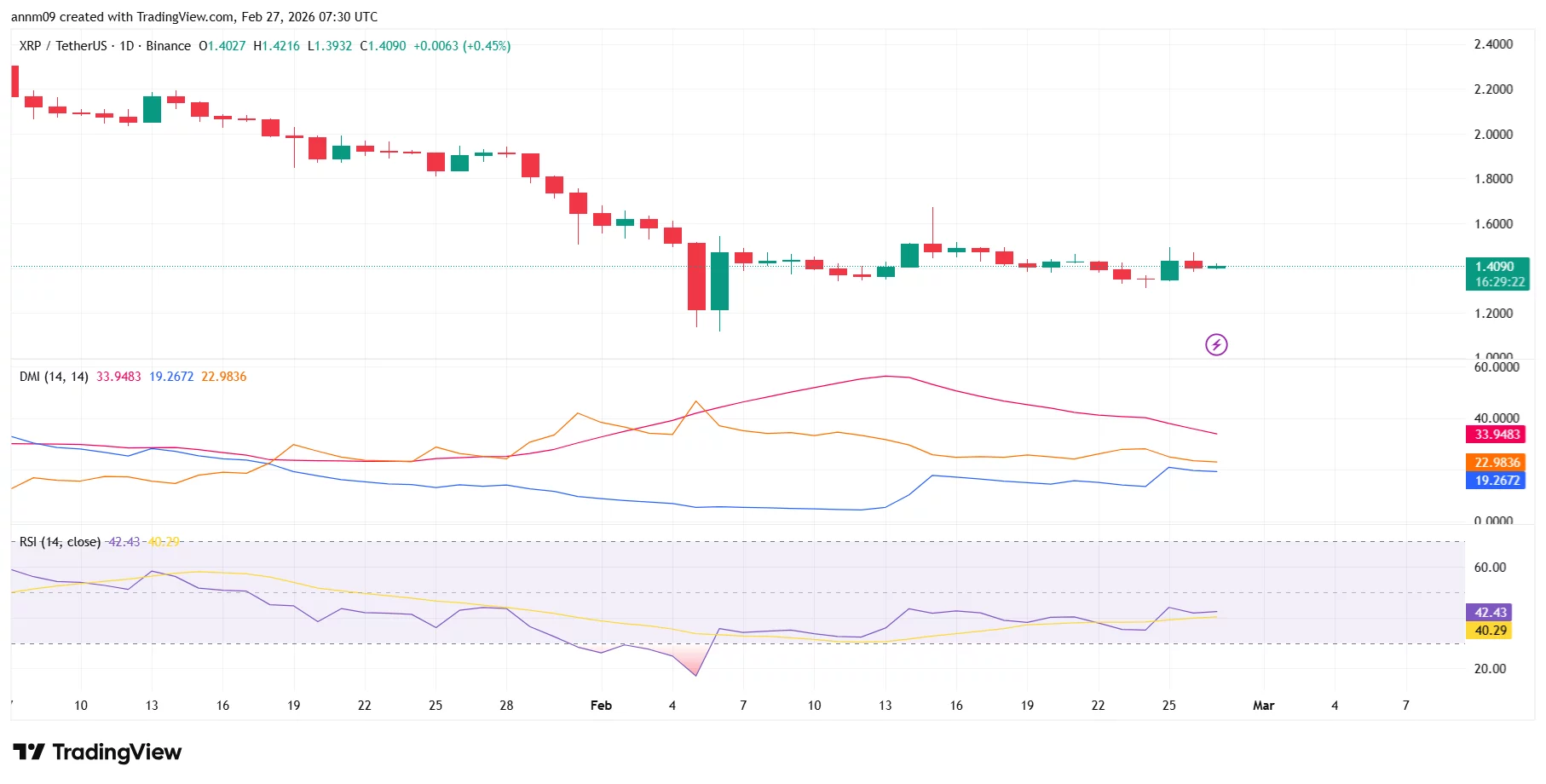
XRP is currently trading around $1.40, up modestly on the day, as price action consolidates following a sharp early-February decline that briefly drove the token toward $1.20 before a rebound.
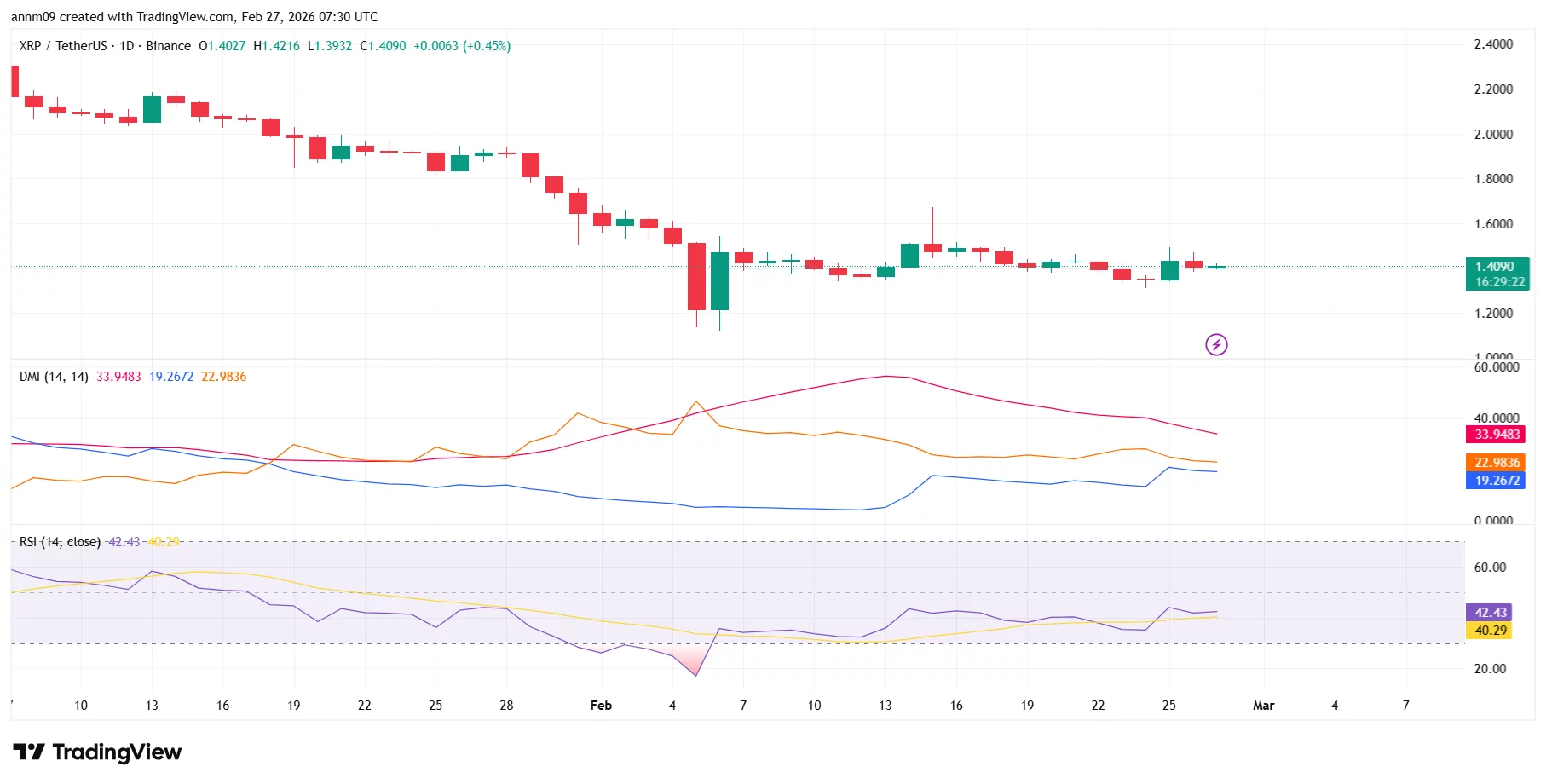
Since that capitulation move, XRP has traded within a tight $1.35–$1.50 range, signaling potential accumulation. Immediate resistance stands near $1.50, with a stronger ceiling around $1.60, where prior rejection occurred.
A confirmed breakout above $1.60 could open the door toward $1.80. On the downside, key support remains at $1.35, followed by the psychological $1.20 level.
Meanwhile, the RSI (14) sits near 42, below the neutral 50 mark, indicating subdued bullish momentum but no longer oversold conditions. Meanwhile, the DMI shows the negative trend line still leading, though the gap is narrowing, suggesting bearish pressure may be weakening.
A decisive move above $1.50, particularly on rising volume, would be needed to confirm a bullish shift.
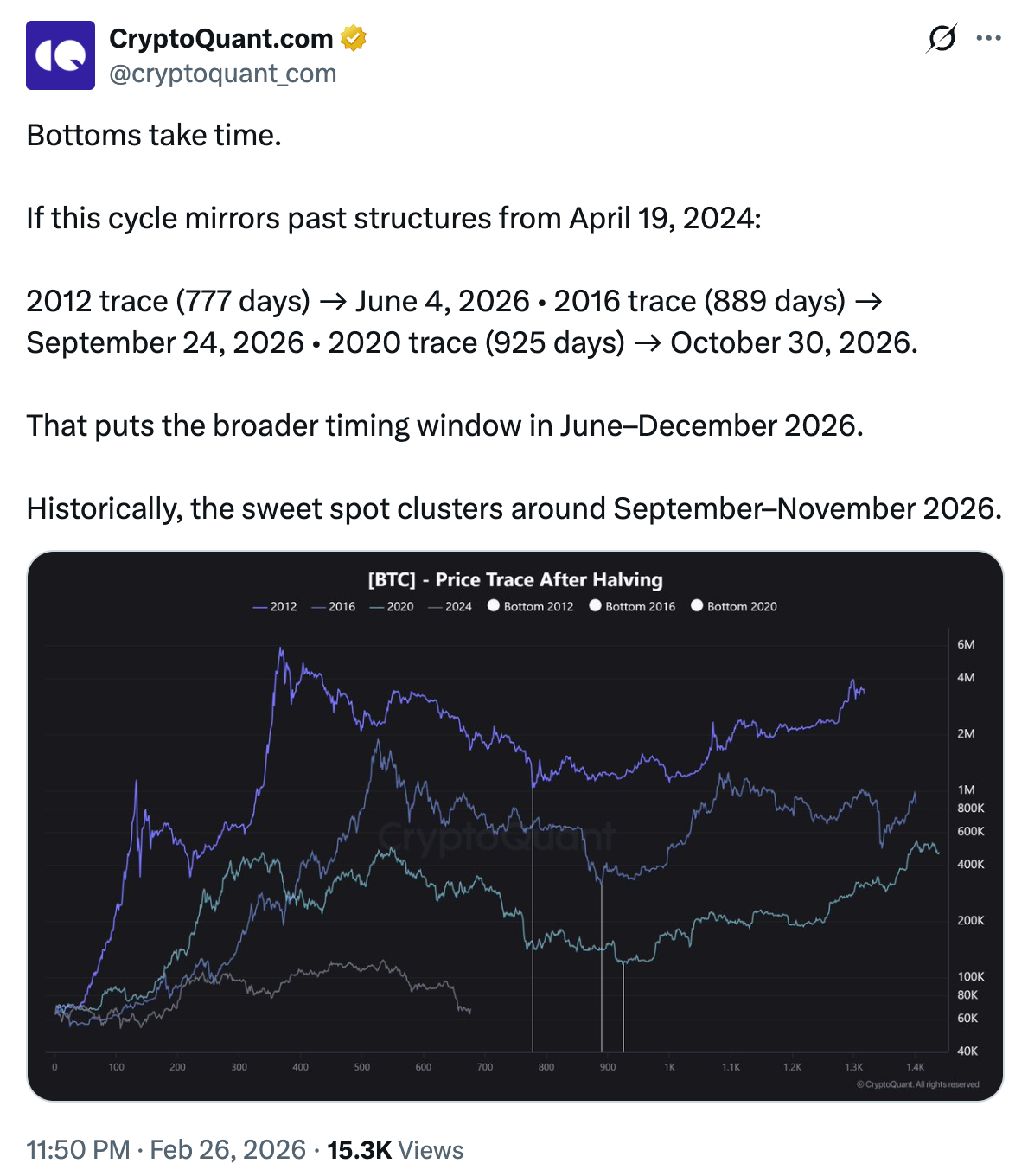
Bitcoin (BTC) sellers returned on Friday, pulling BTC price 5.5% below Wednesday’s high of $70,000 to trade at $65,950 at the time of writing. Several analysts said Bitcoin is “going much lower,” potentially reaching a bottom during the last quarter of 2026.
Key takeaways:
-
Analysts forecast BTC price to hit a bottom in Q4 based on various technical and onchain metrics.
-
Rising exchange reserves and “supply in profit” falling to 2022 lows suggest further downside pressure.
Analysts say Bitcoin price will bottom after June
According to multiple analysts, Bitcoin could extend its downtrend, possibly reaching as low as $30,000 to $45,000 during the last quarter of the year.
Related: Bitcoin’s five-month losing streak may not end in March as $70K caps price
The shortest bear market lasted 365 days, and “Bitcoin is currently about 140 days into its current bear market,” crypto trader Darky said in a Friday post on X, adding:
“We are going much lower, just a matter of time.”
Onchain data provider CryptoQuant said “bottoms take time” to form, and that Bitcoin could reach its cycle lows between “June and December,” based on previous post-halving price structures.
“Historically, the sweet spot clusters around September–November 2026.”

Fellow analyst Batman said that previous bear cycles printed their lows 365 and 396 days after the market top.
Bitcoin’s current all-time high of over $126,000 was reached on Oct. 2, 2025, and “adding 365 to 396 days puts us around October to November 2026,” Batman said, adding:
“So whatever price we get by then, I think it’s fair to say it will be a no-brainer buy.”
Meanwhile, the Bitcoin “supply in profit” metric has dropped to levels last seen at the depths of the 2022 bear market, according to data from CryptoQuant.
In 2022, the bottom phase lasted for about six months.
Overlaying the exact downward price action from that period onto the current chart, it aligns with the -70% to -75% drawdown range projected for the fifth cycle.
This suggests that Bitcoin could drop further from current levels, possibly bottoming between $31,500 and $38,000 six months from now.

On-Chain College shared a chart showing that Bitcoin broke below its Long-Term Holder True Cost Basis at $65,700 and needed to reclaim it as support.
Cost basis levels act as psychological pivots, and when the price trades below them, investors face unrealized losses and the risk of distribution increases.
A sustained position below the band tends to increase investor stress and encourages BTC capitulation.
“History would suggest that Bitcoin is due for a trip down to $42K or lower.”

As Cointelegraph reported, many analysts expect 2026 to be a bear market year, and various forecasts predict the BTC price dropping to as low as $40,000.
Bitcoin supply on exchanges keeps rising
Onchain data from CryptoQuant shows Bitcoin balance on exchanges has grown to 2.752 million BTC from 2.723 million in mid-January. This represents a total increase of about 28,489 BTC (+1.0%) over 45 days.
Increasing BTC supply on exchanges is a classic bearish signal that can outpace demand.
“Until the reserve turns lower and breaks back below 2.723M BTC, structural selling pressure remains intact,” analyst Axel Adler Jr. said in a recent analysis, adding:
“The key trigger for a regime change is a sustained decline in the reserve below the January lows.”

This article does not contain investment advice or recommendations. Every investment and trading move involves risk, and readers should conduct their own research when making a decision. While we strive to provide accurate and timely information, Cointelegraph does not guarantee the accuracy, completeness, or reliability of any information in this article. This article may contain forward-looking statements that are subject to risks and uncertainties. Cointelegraph will not be liable for any loss or damage arising from your reliance on this information.

UK banking giant Barclays is reportedly exploring blockchain technology for core banking services, the latest sign that major financial institutions are evaluating digital ledger infrastructure to modernize legacy systems.
Citing people familiar with the matter, Bloomberg reported Friday that Barclays is seeking technology providers for a blockchain platform capable of handling payments, deposits and crypto-related applications such as stablecoins and tokenized deposits.
The lender has issued requests for information to several technology suppliers, though the companies were not identified. A vendor selection could be made as early as April, the report said.

The move would align with Barclays’ recent activity in the digital asset space. As Cointelegraph reported last month, the bank made its first stablecoin-related investment in Ubyx, a US-based stablecoin clearing platform, signaling a growing interest in tokenized payment infrastructure.
Separate reports have also suggested that Barclays may play a role in a potential initial public offering by crypto hardware company Ledger, though that involvement has not been confirmed.
Related: Wall Street’s crypto debate is over as banks go all-in on BTC, stablecoins, tokenized cash
Banks and Big Tech accelerate stablecoin push
Bloomberg framed Barclays’ reported blockchain initiative within a broader push by banks and technology companies to evaluate stablecoins, which enable faster, lower-cost and around-the-clock settlement compared to traditional payment rails.
Interest in stablecoins has accelerated as institutions explore tokenized deposits and onchain payment systems that could streamline cross-border transfers and reduce reliance on intermediaries.
The shift isn’t limited to banks. Meta Platforms is reportedly revisiting its stablecoin ambitions years after shelving its high-profile Diem project, signaling renewed Big Tech interest in blockchain-based payments.
For traditional lenders such as Barclays, stablecoins present both an opportunity and a competitive risk. If widely adopted, privately issued digital dollars could weaken banks’ control over deposits and payment flows, two pillars of their business model.

The debate is especially relevant in the United States, where lawmakers are weighing market structure and stablecoin legislation, including discussions around whether issuers should be permitted to offer rewards.
Even without yield-bearing features, however, large-scale stablecoin adoption could shift liquidity away from traditional bank deposits and into tokenized alternatives.
Related: Modern Treasury integrates stablecoin settlement alongside ACH and wires
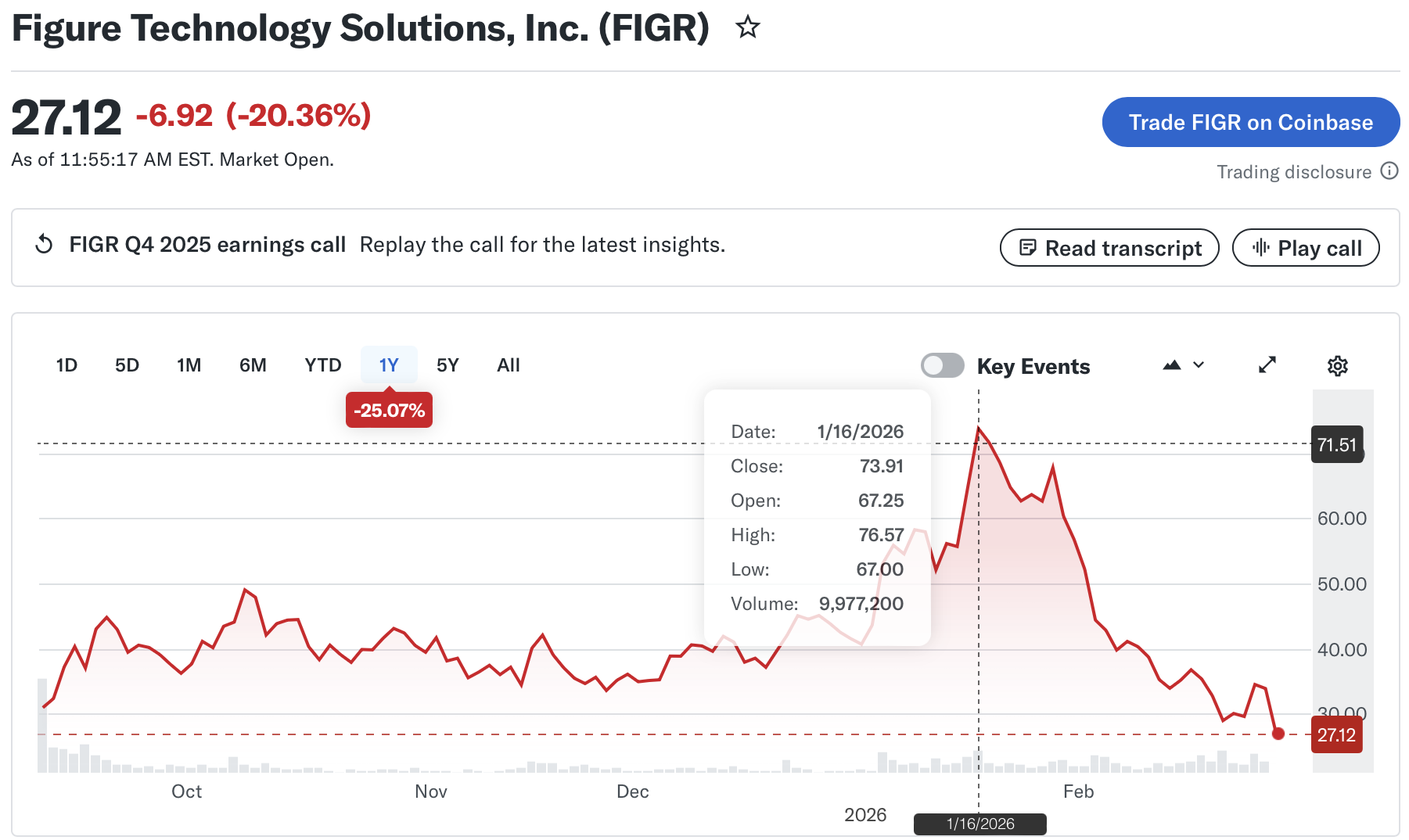
Shares of Figure Technology Solutions, a blockchain-based consumer lending marketplace, plunged on Friday after the company reported mixed fourth-quarter results the prior day, signaling a more difficult operating environment even as revenue continued to climb.
For the quarter ended Dec. 31, the company posted revenue of $159.9 million, up from $83.9 million a year earlier, and net income of $15.1 million, compared with $5.9 million in the same period of 2024. Earnings were $0.06 per diluted share, compared to zero a year earlier.
Analysts polled by Yahoo Finance expected earnings of $0.18 per share on revenue of $157.7 million.
Growth was driven by increased lending activity. Consumer Loan Marketplace volume, which reflects total loans originated and traded on the platform, reached $2.7 billion during the quarter, up from $1.2 billion a year earlier.
For the full year, net income totaled $134.3 million, up from $19.9 million in 2024, while revenue reached $506.9 million, compared with $340.9 million a year earlier.
The company also authorized a share repurchase program allowing it to buy back up to $200 million of its stock over the next 12 months.
Shares fell about 20% to $27.12 in morning trading on Friday following the earnings release.

Related: Figure Technology unveils blockchain platform for direct stock lending: Report
Crypto stocks surged in 2025 before retracing
Figure began trading on the Nasdaq in September after pricing its initial public offering at $25 per share, raising nearly $800 million. The stock rose more than 24% on its first day of trading and climbed to a high near $74 in January, before retreating.
Figure’s post-IPO trajectory mirrors volatility seen across other crypto-linked equities, many of which rallied sharply in late 2025 before surrendering gains amid the broader crypto market pullback.
Shares of crypto exchange Gemini Space Station (GEMI) surged on its Nasdaq debut on Sept. 12 after pricing its IPO at $28 per share. The stock briefly topped $40 on its first day of trading, but has since fallen to around $5.94, at the time of writing.

Stablecoin issuer Circle also experienced a volatile debut. The company went public on June 5, after upsizing its IPO to $1.05 billion, selling 34 million shares at $31 each, above its initial target of 24 million shares priced between $24 and $26.
In its first day of trading, Circle’s shares surged 167%, opening at $69 and climbing as much as 235% intraday before closing at $82. The stock later reached an all-time high of $263.45 on May 25, then retraced nearly 70% to around $83, per Yahoo Finance data.

Magazine: Would Bitcoin really be at $200K if not for Jane Street? Trade Secrets


The White House pushed for a breakthrough on stablecoin yield negotiations for the CLARITY Act this weekend. It did not happen. Instead, fresh reports from sources close to the talks suggest the crypto market structure bill remains far from a final deal.
Banking representatives and crypto lobbyists are still divided over whether stablecoins can generate yield for users. That dispute continues to block progress in the Senate.
The CLARITY Act Nowhere Near a Resolution?
According to Eleanor Terrett, banking-side sources described the negotiations bluntly. Draft language exists, but the sides are “not close.”
Other banking trade groups pushed back on claims the talks are collapsing, saying discussions are ongoing and input on draft text continues.
The split narrative reflects how fragile the negotiations have become.
Where the Bill Stands Now
The House passed the CLARITY Act in July 2025 with bipartisan support. The bill aims to define when digital assets fall under SEC oversight and when they qualify as commodities under the CFTC. It also establishes registration rules for exchanges, brokers, and custodians.
After clearing the House, the bill moved to the Senate Banking Committee. There, it stalled.
No markup has been completed. No floor vote is scheduled.
The legislation remains stuck in committee.
Stablecoin Yield Is the Flashpoint
Originally, the bill focused on regulatory clarity between the SEC and CFTC. But in early 2026, the fight shifted to stablecoins.
Senate negotiators introduced draft language that would restrict interest or yield payments tied to stablecoin holdings. Banks support tighter limits. They argue that yield-bearing stablecoins could function like unregulated bank deposits.
Crypto firms strongly oppose that view. Coinbase CEO Brian Armstrong has publicly argued that stablecoins can generate yield responsibly and that banning rewards would harm innovation.
That disagreement now threatens the broader market structure framework.
White House Pressure, But No Breakthrough
The White House has convened meetings between banks and crypto firms in recent weeks. Officials reportedly wanted a deal on yield before March.
However, sources say key language remains unresolved.
Bank trade groups such as the American Bankers Association and the Independent Community Bankers of America have reportedly rejected claims that negotiations are collapsing. Still, there is no finalized text.
What Is Still Unresolved
Four core issues remain:
- Whether stablecoin rewards count as prohibited interest
- How sharply to limit exchange incentives
- The final boundary between SEC and CFTC authority
- The scope of obligations for DeFi developers
Until yield language is settled, broader market structure reforms cannot move forward.
When Will the CLARITY Act Pass?
The next key step is a Senate Banking Committee markup. No date has been announced.
If negotiators narrow differences in March, a committee vote could follow later in the month. If talks drag on, the bill risks slipping deeper into election-year politics.
For now, the CLARITY Act remains alive — but stalled.
The question is no longer whether Congress wants crypto rules. It is whether banks and crypto firms can agree on who controls stablecoin economics.


ARB is trading ~96% below its 2024 ATH, with analysts framing current demand-zone compression as a potential long-term accumulation phase for a future trend reversal.
Summary
- ARB sits near historic lows, roughly 96% below its 2024 peak and at major wick support in a multi‑year descending channel.
- Price is compressing in a high‑timeframe demand block, with volume absorption signaling weakening sell pressure and possible Wyckoff‑style accumulation.
- Traders watch two key resistance levels for structure confirmation; a breakdown below invalidation would void the accumulation thesis.
Arbitrum’s (ARB) native token is trading near historic lows following a prolonged decline from its 2024 peak, with technical analysts identifying the current price level as a potential long-term entry point, according to market analysis.
The token reached its all-time high in 2024 before entering a sustained downtrend. The asset now trades at approximately 96% below its peak, positioned within what analysts describe as a high-timeframe demand block, according to technical chart analysis.
One market analyst noted the token is positioned at the bottom of a multi-year descending channel inside a high-timeframe demand block. The level holds historical significance, with prior capitulation wicks forming in the same area, according to the analysis. Price action has compressed sideways following the most recent decline.
Technical analysts are treating the current range as a structural accumulation zone. Volume absorption at this level suggests diminishing selling momentum, according to market observers. The compression in volatility supports the possibility that a price base could be forming, analysts stated.
Characteristics of a Wyckoff accumulation cycle appear to be forming on the token’s chart, according to technical analysis. Phase C, which typically marks the final shakeout before a recovery in the classical framework, appears to be in play. Demand absorption signals point to institutional-style accumulation at the current price range, analysts reported.
Two levels stand out as critical confirmation points for traders monitoring the asset. A break above initial resistance would mark the first break of structure favoring buyers, while a move above higher resistance would signal a full trend regime change, according to the technical analysis.
The analyst outlined a multi-stage target path reaching prior resistance zones and longer-term projection targets. A full cycle expansion would represent substantial gains from current levels, according to the analysis. On the downside, a defined invalidation level remains the reference point for the accumulation thesis. A sustained close below that level would void the current technical structure, analysts stated.
The setup draws attention from technically driven traders due to multiple technical confluences, including channel support, historical wick lows, volume absorption, and volatility compression converging at the same zone, according to market analysis.
Arbitrum is classified as a high-beta asset, meaning it tends to move sharply when broader cryptocurrency market conditions shift. This amplified sensitivity creates both downside risk and potential upside opportunity during recovery cycles, analysts noted.
No directional move has been confirmed, and traders are waiting on structure confirmation before taking larger positions, according to market observers.

Tensions between Washington and Tehran escalated further on February 27 after the FBI designated Iran as a State Sponsor of Wrongful Detention. The bureau said it remains committed to returning Americans held captive abroad and bringing their captors to justice.
The FBI highlighted two long-running cases. One involves Robert A. Levinson, a retired FBI special agent who disappeared in 2007 during a trip to Kish Island, Iran.
The US government continues to offer rewards totaling up to $25 million for information leading to his recovery
The second case involves Shayan Kazemi, a US citizen who went missing in Istanbul in 2011. The US government is offering up to $200,000 for information leading to his safe return.
What the FBI’s Designation Means
A “State Sponsor of Wrongful Detention” designation signals that the US government believes a country is detaining American citizens unfairly, often for political leverage. It does not automatically trigger military action.
However, it elevates diplomatic pressure and centralizes recovery efforts under the US Hostage Recovery Fusion Cell.

The move sharply increases political friction. It frames detentions not as isolated incidents but as state-backed tactics.
US Military Posture Tightens
The announcement comes amid heightened military activity in the Middle East. The US has moved advanced fighter jets and additional assets into Israel and the surrounding areas as tensions with Iran rise.
Officials describe the deployment as a deterrence. Yet markets view the buildup as preparation for a potential escalation if nuclear talks collapse or regional clashes intensify.
Cuba Pressure Adds to Global Risk
Meanwhile, President Donald Trump suggested earlier today that the US could pursue a “friendly takeover” of Cuba.
His comment follows weeks of economic pressure on Havana, including oil restrictions that triggered blackouts and fuel shortages.
The combination of Iran escalation and Cuba pressure rattled markets.
Bitcoin, which had been attempting to recover toward $70,000, fell more than 3% on the day to around $65,000. Traders appear to be reducing risk exposure as geopolitical uncertainty rises.
For now, diplomatic channels remain open. But the language from Washington suggests tensions are entering a more dangerous phase.
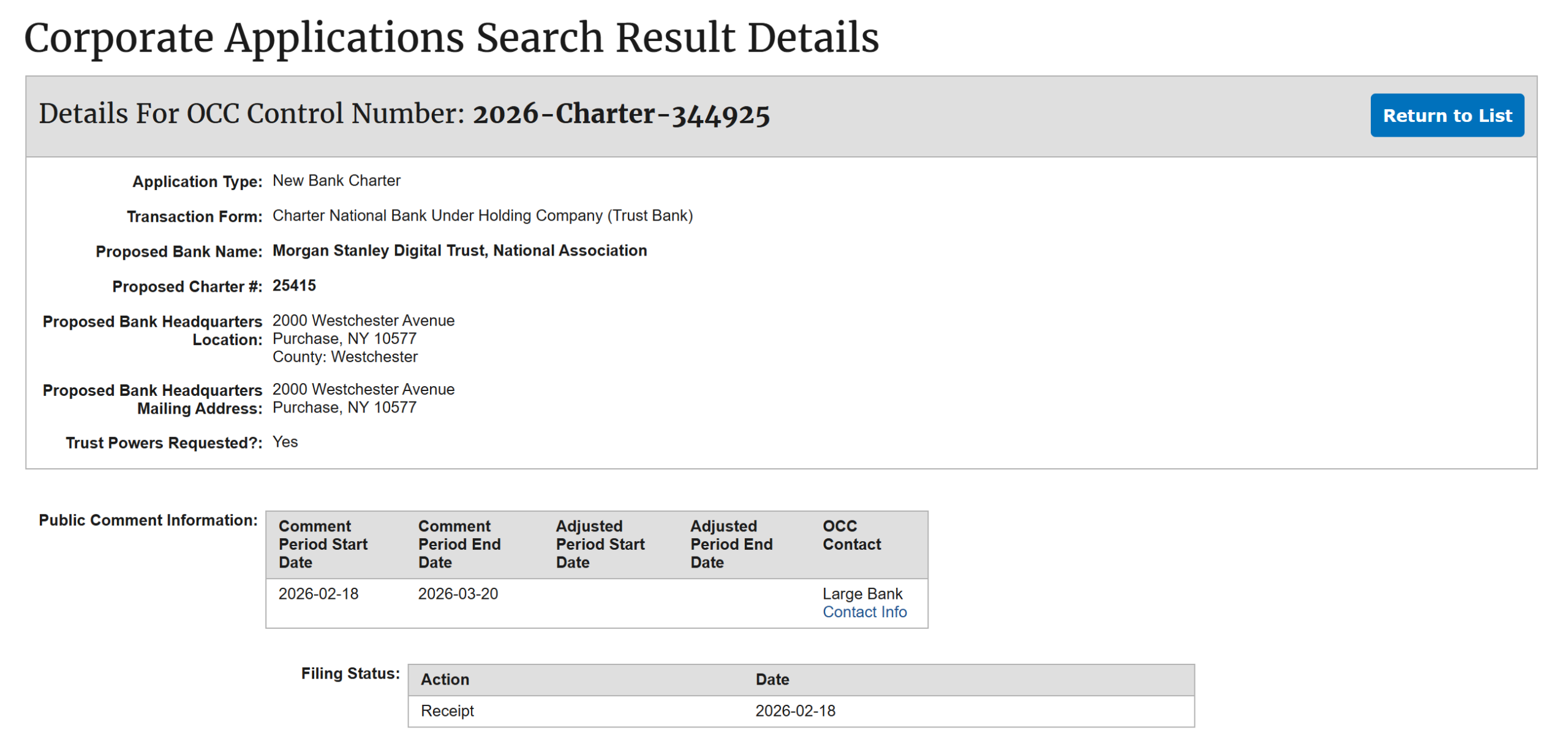
Morgan Stanley has applied for a de novo national trust bank charter, allowing the bank to hold digital assets on behalf of its clients — a move in rhythm with its recent crypto expansion.
A public filing with the Office of the Comptroller of the Currency (OCC) shows the application for a bank trust charter was received on Feb. 18 under the name “Morgan Stanley Digital Trust, National Association.”
More details of the business plan were released on Friday, according to reports from Bloomberg and Forbes, revealing that the Morgan Stanley subsidiary will custody certain digital assets and execute purchases, sales, swaps and transfers to support client investment activities, along with crypto staking.

A national bank trust charter authorizes a financial institution to engage in fiduciary activities such as trust services, custody and asset safekeeping. “De novo” is a Latin term for “anew,” meaning it is a newly created entity rather than an acquired one.
This is Morgan Stanley’s first trust charter with a specific focus on crypto and follows 14 de novo bank charter applications in 2025. There are approximately 60 national trust banks supervised by the OCC in the US.
Rush for crypto bank charters
In December, the OCC conditionally approved five applications for crypto-related national trust banks, including First National Digital Currency Bank, Ripple, BitGo, Fidelity Digital Assets and Paxos.
Stablecoin platform Bridge, owned by payments processor Stripe, said it received conditional approval for a national trust bank earlier this month, which was followed by Crypto.com on Monday.
Related: OCC proposal seeks to settle stablecoin yield debate, clearing way for CLARITY
Days later, Payoneer, a global financial services firm, said it had filed for a national trust bank charter in the US, which could enable it to issue a stablecoin and provide various crypto services.
Morgan Stanley doubling down on crypto
Morgan Stanley has accelerated its moves toward crypto in recent months. In January, the Wall Street bank tapped equity markets executive Amy Oldenburg to lead its new crypto unit.
Job listings on LinkedIn show the $2 trillion investment bank is also looking to expand its crypto team, advertising positions for digital assets strategy director, digital assets strategist and digital assets product lead.
Morgan Stanley also filed to launch spot Bitcoin (BTC) and Solana (SOL) exchange-traded funds in January, and later filed for a staked Ether (ETH) ETF.
Big Questions: Is China hoarding gold so yuan becomes global reserve instead of USD?

Apple at 50: Michael Scott, the company's first CEO, made bold and bad choices

Financial Glow Up: 10 Ways I’m Building Stability | Tagalog

Baby found with broken neck and 28 stab wounds on beach before tragic twist


-

 Politics6 days ago
Baftas 2026: Awards Nominations, Presenters And Performers
-

 Sports4 days ago
Women’s college basketball rankings: Iowa reenters top 10, Auriemma makes history
-

 Fashion9 hours ago
Weekend Open Thread: Iris Top
-

 Politics4 days ago
Nick Reiner Enters Plea In Deaths Of Parents Rob And Michele
-

 Business3 days ago
True Citrus debuts functional drink mix collection
-

 Politics1 day ago
ITV enters Gaza with IDF amid ongoing genocide
-

 Crypto World4 days ago
XRP price enters “dead zone” as Binance leverage hits lows
-

 Business6 days ago
Mattel’s American Girl brand turns 40, dolls enter a new era
-

 Business5 days ago
Law enforcement kills armed man seeking to enter Trump’s Mar-a-Lago resort, officials say
-

 NewsBeat2 days ago
Cuba says its forces have killed four on US-registered speedboat | World News
-
 NewsBeat2 days ago
Manchester Central Mosque issues statement as it imposes new measures ‘with immediate effect’ after armed men enter
-

 Tech3 days ago
Unsurprisingly, Apple's board gets what it wants in 2026 shareholder meeting
-
 NewsBeat5 days ago
‘Hourly’ method from gastroenterologist ‘helps reduce air travel bloating’
-

 Tech5 days ago
Anthropic-Backed Group Enters NY-12 AI PAC Fight
-

 NewsBeat5 days ago
Armed man killed after entering secure perimeter of Mar-a-Lago, Secret Service says
-

 Politics6 days ago
Maine has a long track record of electing moderates. Enter Graham Platner.
-

 Business2 days ago
Discord Pushes Implementation of Global Age Checks to Second Half of 2026
-
 NewsBeat3 days ago
Police latest as search for missing woman enters day nine
-

 Business1 day ago
Only 4% of women globally reside in countries that offer almost complete legal equality
-
 Sports5 days ago
2026 NFL mock draft: WRs fly off the board in first round entering combine week