
Crypto World
Browser maker Opera seeks 160 million CELO stake to become key network stakeholder



Browser marker Opera (OPRA) wants to replace its cash-based deal with Celo with a 160 million CELO token allocation, a move that would make the browser company a major stakeholder in the payments network if token holders approve it.
The proposal, submitted to Celo’s governance forum, would swap a quarterly U.S. dollar grant for a three-year token award. Using the roughly 600 million CELO now in circulation according to CoinMarketCap data, the proposed allocation equals about 27% of circulating supply.
It also represents 16% of the token’s 1 billion maximum supply. CELO is at the time of writing trading at $0.07, down significantly from a peak above $6 seen in late 2021.
The transaction would involve a “one-time transfer of 160 million CELO from the unreleased treasury to an Opera-controlled Safe.” To maintain governance, the proposal reads, the voting power of these tokens will be “capped at 10% of total staked CELO,” with protocol emergencies being the exception.
Opera and Celo said the change reflects the role of self-custodial crypto wallet MiniPay, which the browser maker operates, on the network. MiniPay runs on Celo, an Ethereum layer-2 network built for low-cost payments, and lets users hold their own funds, send stablecoins with phone numbers instead of wallet strings and pay using local methods in various countries including Argentina and Brazil.
“Since MiniPay is already Celo’s most-used app, we have a clear, long-term incentive to see the entire ecosystem thrive,” Jorgen Arnesen, EVP at Opera, told CoinDesk. “The terms of this agreement reflect the scale and maturity of the partnership and Opera’s genuine belief in and commitment to the long-term value of the Celo ecosystem and its native governance token, CELO, and our goal to be a supportive, key stakeholder.”
According to the companies, MiniPay has reached more than 14 million registrations and over 420 million transactions across more than 66 countries since launching in 2023.
They also said more than 50 million Opera browser users who earned rewards in recent months will be able to redeem them as USDT inside MiniPay.
If approved, the proposal would turn Opera into a long-term stakeholder in the Celo ecosystem. Opera’s shares are trading at $14.6 after losing 1.2% of their value in yesterday’s trading session.

The US Department of the Treasury’s Office of Cybersecurity and Critical Infrastructure Protection (OCCIP) announced on Thursday that it is expanding its cybersecurity threat identification program to include digital asset companies.
Blockchain companies that choose to take part in the program will receive the same cybersecurity threat intelligence provided to traditional financial institutions at “no cost,” according to the Treasury’s announcement.
“Cyber threats targeting digital asset platforms are growing in frequency and sophistication,” Cory Wilson, the deputy assistant secretary for cybersecurity at the OCCIP, said.

The initiative fulfills policy recommendations from US President Donald Trump’s administration, outlined in its July 2025 report, titled “Strengthening American Leadership in Digital Financial Technology.”
Cointelegraph reached out to the Department of the Treasury but did not receive a response by the time of publication.
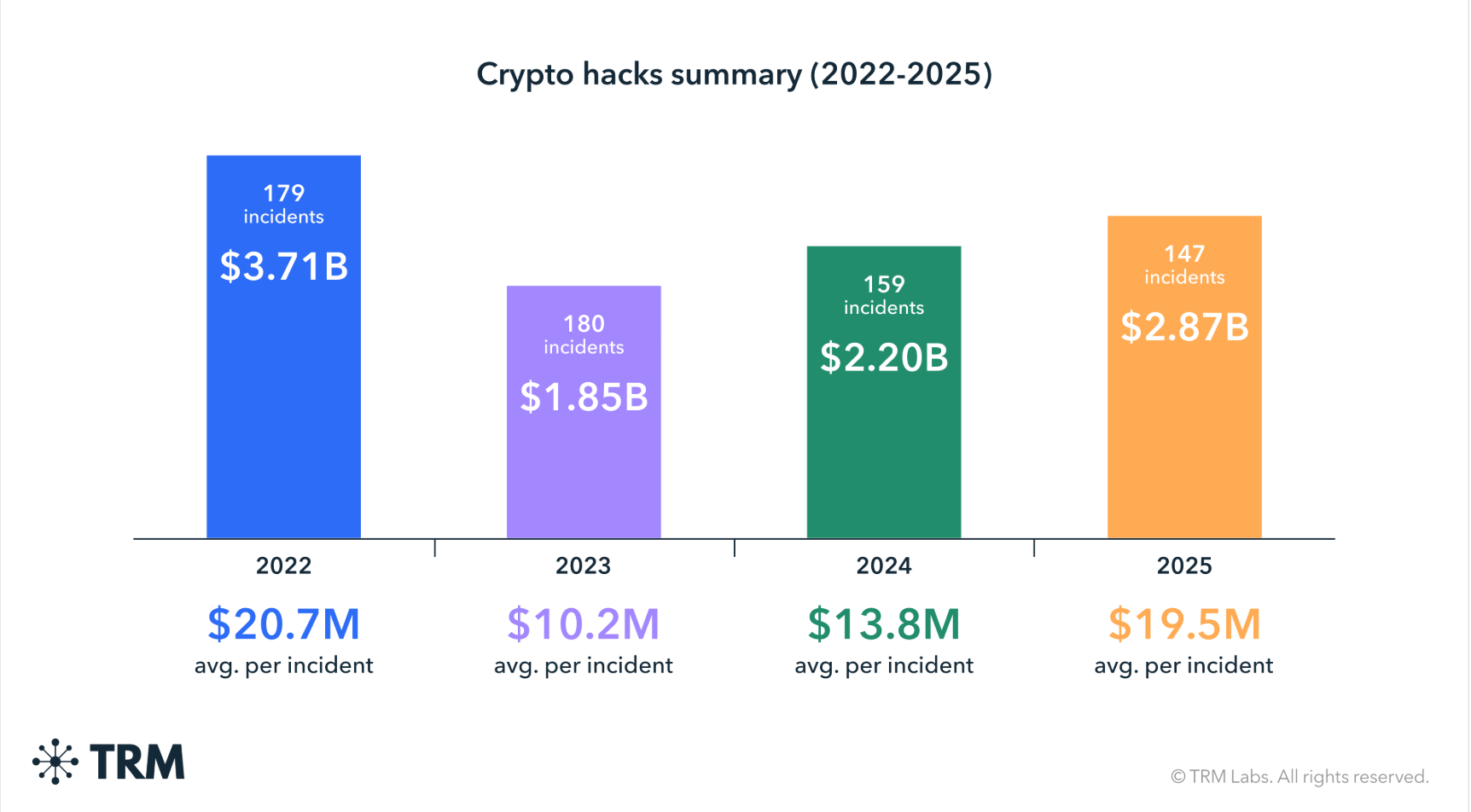
The initiative reflects the ongoing challenge of countering evolving cybersecurity threats impacting blockchain protocols and their users, as financial losses from decentralized finance (DeFi) platform hacks alone reached nearly $169 million in the first quarter of this year.
Related: Google Threat Intel flags ‘Ghostblade’ crypto-stealing malware
Foreign intelligence operatives continue infiltrating crypto projects and companies
Crypto projects and users are increasingly subject to evolving cybersecurity threats, which can be carried out by social engineering or infiltration by state-affiliated hackers, including the North Korean-linked Lazarus Group.
Drift Protocol, a decentralized cryptocurrency exchange, suffered a $280 million exploit this month at the hands of suspected North Korean-affiliated hackers.
The Drift team physically met the malicious actors at a “major” crypto industry conference and interacted with them for months after the initial meeting, according to a preliminary incident report from Drift Protocol.

During the months-long interaction, the hackers deployed crypto-stealing malware on the Drift team’s developer machines, which was activated in the April exploit.
The individuals who first approached the Drift team at the industry conference were not North Korean nationals, according to the report.
The Seals911 team, a group of blockchain cybersecurity specialists, said with “medium-high confidence” that the attack was likely carried out by the same hacker group responsible for the October 2024 hack of the Radiant Capital DeFi platform.
Magazine: Lazarus Group’s favorite exploit revealed — Crypto hacks analysis

TLDR
- Ripple minted 2,000,000 RLUSD on the Ethereum network on April 9.
- The new supply carried an estimated value of about $2 million.
- The transaction used a gas fee of about 0.0000195 ETH.
- Ripple moved the minted tokens to wallet 0xFbcA8B5f…0Db600BB6.
- The transaction followed Ripple’s ongoing supply management across Ethereum and the XRP Ledger.
Ripple added 2,000,000 RLUSD to Ethereum on April 9, according to the Ripple Stablecoin Tracker. The mint was estimated to be worth $2 million. The transaction also used about 0.0000195 ETH in gas fees.
RLUSD Mint Expands Ethereum Supply
Tracker data showed Ripple created the tokens from a null address. It then sent the full amount to wallet 0xFbcA8B5f…0Db600BB6.
The transaction followed the standard token issuance flow on Ethereum. In this process, issuers mint assets and then move them to a destination wallet.
RLUSD kept its stated 1:1 value with the U.S. dollar during the mint. As a result, the new supply represented about $2 million.
The blockchain record placed the activity on Thursday, April 9. Ripple Stablecoin Tracker displayed the movement shortly after the transaction appeared.
The wallet transfer formed the second step of the issuance process. Ripple first created the supply and then moved it into circulation.
The gas fee stayed near 0.0000195 ETH for the Ethereum transaction. That cost covered the mint and transfer activity on-chain.
Ripple has used Ethereum and the XRP Ledger for RLUSD operations. This latest transaction added fresh supply only on Ethereum.
Ripple Continues Daily RLUSD Supply Management
Ripple has continued to remove and mint RLUSD across supported networks since launch. Its supply actions have appeared regularly on Ethereum and the XRP Ledger.
The company has kept that pattern in place for about a year. Tracker updates have shown both token burns and new mints during that period.
The fresh mint pointed to another treasury action by Ripple. The company used the transaction to place new RLUSD into a designated wallet.
Market participants have linked these moves to liquidity management. They have also tied them to routine treasury rebalancing across supported blockchains.
The transfer record showed no public statement attached to the mint. Still, the on-chain data confirmed the token creation and the destination address.
The update also matched Ripple’s practice of adjusting RLUSD supply in measured amounts. That pattern has continued through repeated blockchain entries.
Ripple has presented RLUSD as a stablecoin pegged to the U.S. dollar. The April 9 Ethereum transaction added 2,000,000 more RLUSD to that circulating supply.

TLDR:
- Bitmine officially uplisted to the NYSE on April 9, 2026, trading under its existing ticker symbol BMNR.
- The company’s share repurchase program was expanded from $1 billion to $4 billion, one of 2026’s largest buybacks.
- Bitmine holds 4.803 million ETH, representing 3.98% of the total Ethereum supply after just nine months of accumulation.
- Institutional backers, including ARK’s Cathie Wood, Pantera, and Founders Fund continue to support Bitmine’s 5% ETH goal.
Bitmine Immersion Technologies has officially uplisted to the New York Stock Exchange, beginning trade under the ticker BMNR on April 9, 2026.
The company simultaneously expanded its share repurchase authorization from $1 billion to $4 billion. As of April 6, 2026, Bitmine holds approximately 4.803 million ETH, representing 3.98% of the total Ethereum supply.
The company has now crossed 79% of its stated goal of acquiring 5% of total ETH supply within just nine months.
Bitmine Joins the NYSE Big Board With a $4 Billion Buyback Program
Bitmine’s common stock began trading on the NYSE at market open on April 9, 2026. The company previously listed on NYSE American, where trading concluded at market close on April 8, 2026. This transition to the main board positions Bitmine among a more elite group of publicly traded companies.
Chairman Thomas Lee marked the moment with a formal statement on the milestone. “Today, Bitmine achieved a major milestone by being uplisted to the ‘Big Board’ NYSE,” Lee said.
“The NYSE is the most prestigious venerable stock exchange with a storied history. The NYSE is the envy of capital markets around the world and Bitmine is proud to be the newest company traded on this exchange.”
Chris Taylor, NYSE Group Chief Development Officer, also issued a formal welcome. “We are pleased to welcome Bitmine to the New York Stock Exchange,” Taylor said.
“With its focus on advancing the Ethereum ecosystem, Bitmine is a strong addition to the NYSE community.” The statement coincided with the commencement of BMNR trading on the exchange.
Bitmine’s Board of Directors unanimously approved the expansion of its repurchase program to $4 billion. The authorization was originally established on July 25, 2025, and continues under its previous terms.
According to Fundstrat, this buyback ranks among the 10 largest corporate repurchase programs announced in 2026.
Ethereum Accumulation and Institutional Backing Drive Bitmine’s Strategy
As of April 6, 2026, Bitmine holds approximately 4.803 million ETH tokens, equal to 3.98% of total supply. The company accumulated this position over nine months as part of its “Alchemy of 5%” goal. At its current pace, Bitmine has completed over 79% of its total ETH acquisition target.
Bitmine’s combined crypto, cash, and other holdings total $11.4 billion. This figure includes the ETH position, $864 million in total cash, and other crypto assets the company classifies as “Moonshots.”
The company continues to attract strong institutional support for its ETH accumulation strategy. Backers include ARK’s Cathie Wood, Founders Fund, Pantera Capital, Kraken, DCG, Galaxy Digital, MOZAYYX, and Bill Miller III.
Lee also addressed the rationale behind the expanded buyback program. “Bitmine’s expanded $4 billion buyback reflects our commitment to shareholders,” he stated.
“There may be a time in the future when Bitmine shares are trading below intrinsic value, and the Company wants to be in a position to accretively retire common shares.”


The crypto regulation standoff between Coinbase and the US Senate intensified this month when the exchange formally told Senate offices it cannot support the latest CLARITY Act draft, marking its second withdrawal from legislation that could define US digital asset law for a generation.
Summary
- Coinbase told Senate Banking Committee offices it has significant concerns about the Tillis-Alsobrooks compromise draft, which bans passive yield on stablecoin balances and restricts access to transaction size data used to calculate rewards, changes that attack the infrastructure Coinbase uses to generate stablecoin revenue rather than just limiting a single product feature
- Coinbase reported $1.35 billion in stablecoin revenue in 2025, largely tied to its USDC distribution agreement with Circle; provisions eliminating stablecoin yield could strip the exchange of an estimated $800 million in annual revenue, making this a core financial question rather than a policy objection
- CEO Brian Armstrong first pulled support in January, stating “we’d rather have no bill than a bad bill”; the second formal withdrawal, reported by Punchbowl News around March 25, followed a revised draft that tightened yield language further rather than loosening it
As TheStreet reported, Coinbase representatives told Senate offices the exchange could not yet support the latest version, citing significant concerns about the stablecoin yield language. Armstrong confirmed talks are ongoing. The Tillis-Alsobrooks draft goes beyond the base bill’s existing yield limitations by also restricting exchange access to transaction size data, which is the calculation layer that makes volume-based or activity-based stablecoin rewards technically feasible. For Coinbase, that second provision is the more alarming one because it removes not just a product feature but the technical infrastructure needed to generate yield at all.
Stablecoin revenue represents close to 20 percent of Coinbase’s total 2025 revenue. Under its USDC agreement with Circle, Coinbase receives most of the interest income on USDC held on its platform. Any restriction eliminating the structural capacity to calculate or distribute yield attacks that revenue line directly. Every round of negotiation since January has narrowed the yield carve-outs, not expanded them. Coinbase’s leverage is real: a markup without its endorsement signals to senators on both sides that industry consensus has fractured, and the bill needs bipartisan votes it cannot afford to lose.
The Industry Split and What It Means
Coinbase is not the whole industry. Andreessen Horowitz and other major investors have publicly supported the CLARITY Act even in its current form, arguing that the institutional legitimacy the bill provides outweighs stablecoin revenue concessions. An industry call in late March reportedly featured sharp disagreements over how to proceed. As crypto.news has reported, the CLARITY Act faces four factions each with effective veto power, and Coinbase’s withheld support does not automatically kill the bill but significantly complicates the vote count.
What the May Deadline Means for Both Sides
As crypto.news has noted, the GENIUS Act’s stablecoin framework advances through financial regulators regardless of CLARITY’s fate. What CLARITY provides, including SEC and CFTC jurisdictional clarity, DeFi oversight rules, and tokenized equity frameworks, has no alternative legislative path. Senator Bernie Moreno has warned that missing May risks losing the bill to midterm season entirely. The Senate Banking Committee markup target remains late April, and Coinbase’s continued refusal to endorse the draft is the single largest obstacle between that target and an actual vote.

Hidden Funders Face Shareholder-Level Scrutiny
Thailand is moving to tighten control over crypto ownership structures while expanding regulated market access. Authorities plan to track hidden financiers and restrict illicit capital flows. At the same time, regulators are opening pathways for Bitcoin-linked derivatives and exchange-traded products.
Ownership Reforms Expand Control Definitions
Thailand’s Securities and Exchange Commission is preparing rules to capture undisclosed financial backers of crypto firms. The proposal targets entities that provide significant funding support to formal shareholders. It aims to align their oversight with existing major shareholder approval standards.
The framework will cover guarantees, structured financing, and layered investment arrangements. Regulators believe these tools often obscure real control within crypto businesses. Therefore, the new approach will extend accountability beyond visible ownership records.
The rules will apply to licensed exchanges, brokers, and dealers under the digital asset business law. Authorities intend to close gaps that allow indirect influence without formal disclosure. As a result, firms must reassess relationships with silent financial partners.
AML Crackdown Intensifies as Market Opens
Earlier measures already tightened definitions of major shareholders within digital asset companies. Authorities now classify individuals with more than five percent voting rights as key stakeholders. Moreover, they include those exercising control through indirect or operational influence.
The Ministry of Finance introduced these updates to strengthen transparency across the sector. Regulators want to ensure that control reflects actual decision-making power. Consequently, firms must identify all parties exerting meaningful influence over management.
Companies have received a 180-day window to review and update ownership disclosures. They must submit approval requests for any newly identified major shareholders. This process aims to eliminate nominee arrangements and layered holding structures.
Authorities will also apply look-through tests to funding channels linked to ownership control. These checks will trace capital sources behind complex financial arrangements. Therefore, financiers shaping business outcomes will fall under regulatory supervision.
Thailand is increasing enforcement against money laundering activities tied to digital asset platforms. Authorities recently froze thousands of suspicious accounts linked to mule wallet operations. This move signals a stronger stance against illicit transaction networks.
Regulators are also advancing rules requiring transaction data sharing between crypto service providers. The framework will mandate identification details for both senders and recipients. This system aims to improve traceability across digital asset transfers.
Officials view these measures as essential for protecting market integrity and preventing fraud. They are integrating global compliance standards into domestic regulations. As a result, the ecosystem faces tighter monitoring and reporting obligations.
At the same time, Thailand is promoting regulated crypto investment products. Authorities now recognize cryptocurrencies as eligible underlying assets for derivatives markets. This shift supports the launch of structured financial products tied to digital assets.
Regulators are also preparing guidelines for crypto exchange-traded funds within the domestic market. The framework will allow limited portfolio exposure to digital assets. This approach balances innovation with controlled risk management.
Thailand’s dual strategy reflects stricter oversight alongside measured market expansion. Authorities aim to attract institutional participation while limiting financial crime risks. Consequently, the country is positioning itself as a regulated hub for digital asset activity.
RLUSD Minting Activity on Ethereum
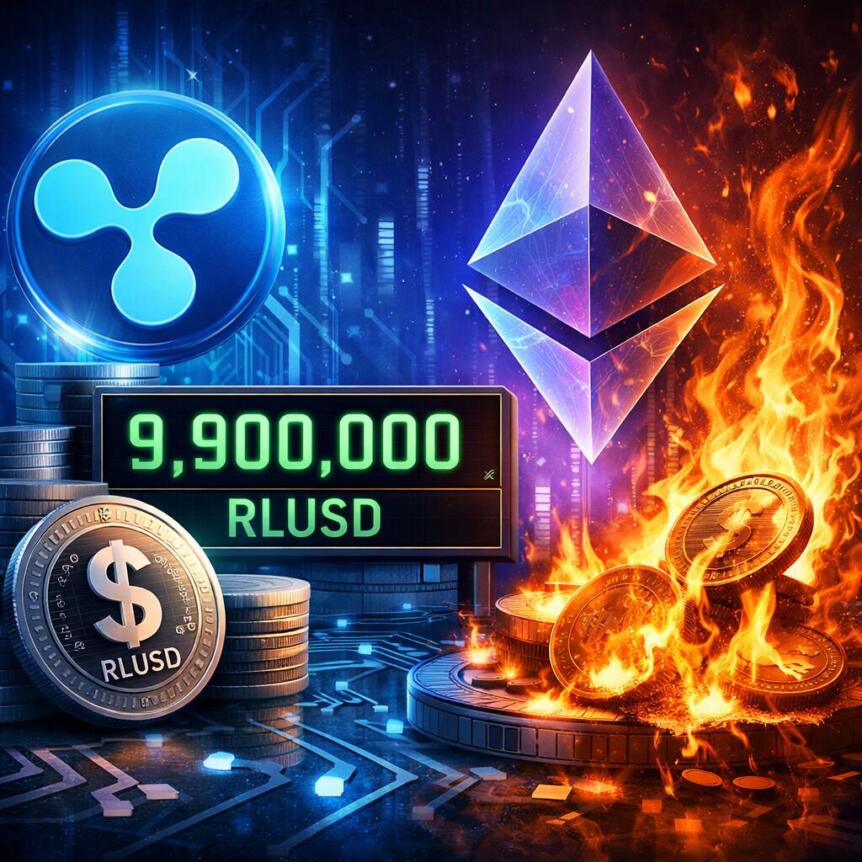
Ripple Labs has minted nearly 10 million RLUSD tokens after weeks of heavy token burns across networks. The issuance took place on Ethereum and signals a shift in supply activity. The move follows large-scale reductions that tightened circulation and reshaped recent stablecoin flows.
XRP Ledger and Supply Rebalancing Strategy
Ripple continues to balance RLUSD supply between Ethereum and the XRP Ledger through coordinated minting and burning cycles. This approach supports network efficiency and ensures availability across different blockchain environments. Additionally, it allows the firm to respond quickly to shifting transactional demand.
During late March and early April, Ripple executed several large burns exceeding $230 million within one week. One notable event removed about 180 million RLUSD tokens within a few hours. These actions reduced excess supply and prepared the system for controlled re-expansion.
The recent mint indicates that Ripple has recalibrated its supply strategy following those aggressive burns. It now distributes liquidity more evenly between supported chains and user segments. As a result, RLUSD remains adaptable to both institutional and retail transaction requirements.
Stablecoin Growth and Market Integration
RLUSD continues to expand its presence as a bridge between traditional finance and digital asset markets. Exchanges have begun listing new trading pairs that improve accessibility and increase transactional use cases. This expansion strengthens RLUSD’s role within broader crypto liquidity networks.
Bitrue introduced trading pairs that match RLUSD with tokenized gold assets such as PAXG and XAUT. These assets represent physical gold exposure issued by established providers in the market. Therefore, RLUSD gains additional utility in diversified trading environments.
Meanwhile, Binance has enabled RLUSD support on the XRP Ledger, allowing direct transactions within its platform ecosystem. This integration increases exposure and simplifies cross-platform transfers for users. Furthermore, it aligns with Ripple’s goal of improving cross-border payment efficiency.
Recent reports indicate that RLUSD reserves exceed its circulating supply, reinforcing its backing structure. Reserve holdings reached approximately $1.56 billion, while token supply remained slightly lower. Hence, the stablecoin maintains a surplus-backed position within regulated custody frameworks.
💵💵💵💵💵💵 9,900,000 #RLUSD minted at RLUSD Treasury.https://t.co/UQY0Dx1bZm
— Ripple Stablecoin Tracker (@RL_Tracker) April 8, 2026
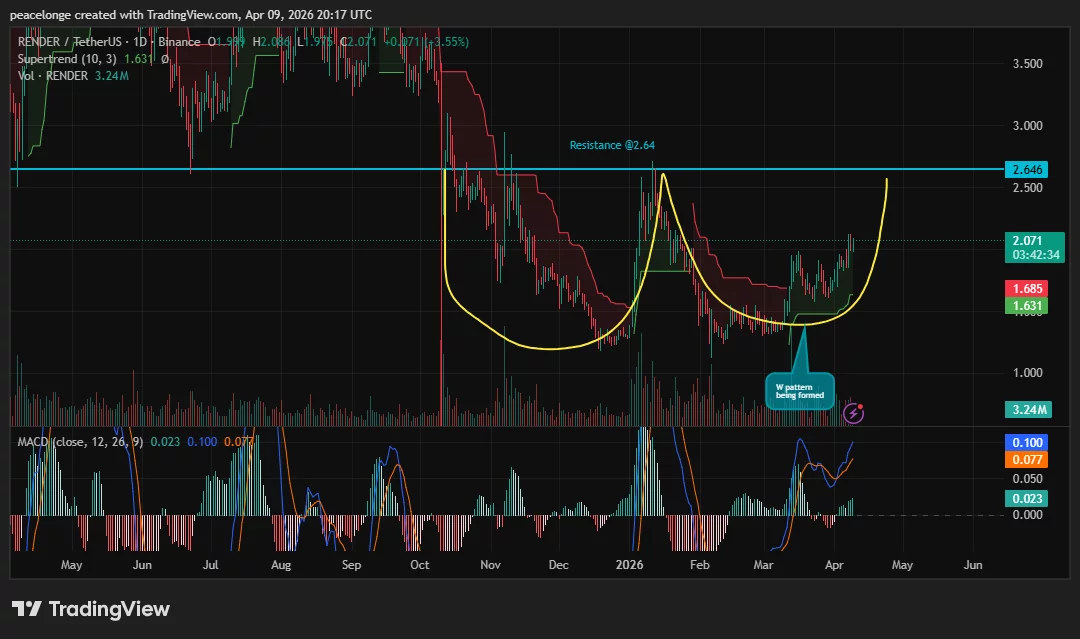
Render price is up 3.55% on April 9 as a W pattern develops across the daily chart, with the Supertrend flipping green and the MACD histogram turning positive for the first time in months. The $2.646 resistance is the pattern confirmation trigger and the immediate bull case target.
Summary
- Render price is trading at $2.071 on April 9, up 3.55% on the session, as a W pattern develops across the daily chart with bottoms in September 2025 and February 2026.
- The daily Supertrend (10,3) has flipped green at $1.631 and the MACD histogram is printing a positive 0.077, confirming early upside momentum behind the move.
- The immediate bull target is $2.646 resistance; a daily close below $1.631 Supertrend support invalidates the recovery thesis and risks a return to the February lows near $1.20.
Render (RENDER) price is trading at $2.071 on April 9, up 3.55% on the session, as a W pattern takes shape on the daily chart following a seven-month decline from 2025 highs above $3.50. The token has printed two distinct lows, the first in September 2025 and the second in February 2026, and is now pushing toward the $2.646 resistance level that capped the January recovery attempt. The daily Supertrend has flipped green and the MACD histogram has turned positive for the first time in months, supporting the early recovery case.
The daily chart shows Render forming a W pattern, defined by two successive troughs separated by a brief interim high. The first low appeared in September 2025 during a broader AI token sector sell-off, and the second developed through February and March 2026 after price failed to break the $2.646 resistance ceiling. Price is now rising from the second trough with improving momentum, but pattern confirmation requires a sustained daily close above $2.646.
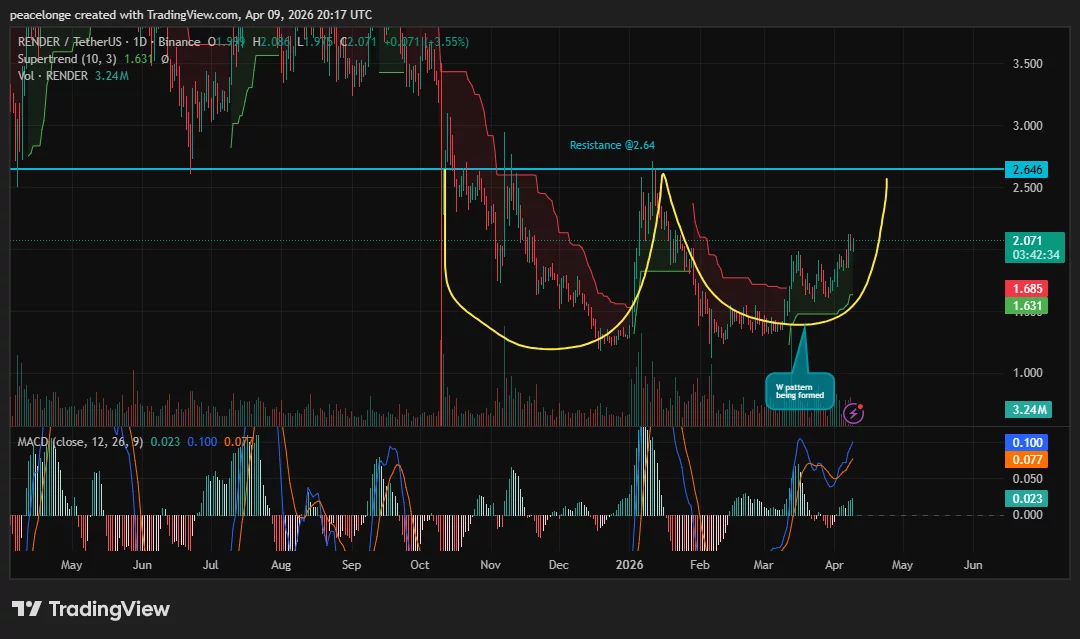
The Supertrend indicator (10,3) has turned green at $1.631, marking its first bullish reading after an extended bearish period. The MACD (12,26,9) supports the shift: the MACD line sits at 0.023, the signal at 0.100, and the histogram is printing a positive 0.077. The expanding positive histogram bars confirm that buying pressure is building, even as the MACD line has not yet crossed above the signal.
Wintermute, a leading algorithmic market maker, noted in a recent market intelligence update that AI stocks have been siphoning liquidity from crypto-native AI tokens, a dynamic that contributed to RENDER’s slide from the March high of $3.17 before the current base began forming.
Key Levels: Support, Resistance, and Price Targets
The $2.646 level is the immediate resistance and the W pattern confirmation trigger. A confirmed daily close above it opens the extended bull case toward $3.00, the nearest psychological level on the daily chart. If momentum accelerates from there, the March 2026 high near $3.17 represents the next reference point.
On the downside, the Supertrend at $1.631 is the primary support to monitor. A daily close below that level shifts the indicator back to red and invalidates the recovery thesis. The February 2026 lows near $1.20 represent the last structural demand zone before the W pattern collapses entirely.
Invalidation: a daily close below $1.631.
On-Chain and Market Data Context
Render connects GPU providers with users requiring compute power for AI inference and 3D rendering, giving the token direct exposure to AI sector sentiment. RENDER surged 40% to $3.17 on March 11 as AI token sentiment briefly recovered before sector-wide selling resumed. Daily trading volume on April 9 stands at 3.24 million RENDER tokens, reflecting sustained participation as price builds from the second W pattern trough.
According to Coinglass data, funding rates in RENDER perpetual contracts have shifted from negative toward neutral as price recovered from the February base, consistent with short-side pressure beginning to ease and a healthier foundation for a sustained move.
If RENDER holds $1.631 on a daily close basis and volume supports the advance, a test of the $2.646 W pattern trigger becomes the near-term base case, with $3.00 the next level to watch on a confirmed breakout.
Crypto World
Comcast (CMCSA) Stock: Strategic Streaming Bundle Expansion Strengthens Competitive Edge

Key Highlights
- Xfinity bundles now include Disney+, Hulu, and HBO Max subscriptions
- Customers can save up to 45% with new flexible StreamSaver packages
- Enhanced StreamStore platform provides centralized subscription management
- Strategic bundle expansion reinforces Comcast’s streaming market presence
- Integration of internet, TV, and streaming creates unified entertainment ecosystem
Comcast Corp (CMCSA) shares trade at $28.13, gaining 0.64%, following the announcement of significant enhancements to its Xfinity StreamSaver bundle offerings. The telecommunications giant incorporates premium streaming platforms to enhance its competitive stance in the digital entertainment landscape. This strategic initiative aims to improve customer loyalty and drive subscription growth throughout its service portfolio.
Comcast Corporation, CMCSA
The telecommunications provider now incorporates Disney+, Hulu, and HBO Max within its bundle portfolio. These additions complement previously available services including Netflix, Apple TV, and Peacock. Consequently, Xfinity establishes itself as a comprehensive gateway for accessing premium streaming content.
This strategic enhancement addresses increasing consumer appetite for consolidated digital entertainment packages. Subscribers increasingly prioritize affordability and streamlined billing across various platforms. Therefore, Comcast adapts its service structure to match shifting consumption patterns in the streaming sector.
StreamSaver Package Upgrades Deliver Enhanced Subscriber Benefits
Comcast rolls out customizable bundle configurations featuring three to five streaming services. Subscribers can tailor packages according to personal entertainment preferences and financial parameters. These bundled options provide discounts reaching 45% versus individual platform subscriptions.
The provider organizes eight distinct bundle configurations through its StreamStore interface. This digital marketplace enables subscribers to explore and control numerous streaming accounts from a single location. Comcast consolidates access to an extensive library of entertainment options.
Subscribers maintain the ability to select ad-free subscription tiers or incorporate additional services. This adaptability gives users greater autonomy over entertainment expenditures and content choices. Therefore, Comcast elevates its competitive advantage within the crowded streaming marketplace.
StreamStore Platform Updates Deliver Improved User Experience
Comcast upgrades StreamStore capabilities to accommodate the broadened bundle selections. Subscribers can navigate the platform through web browsers, Xfinity hardware, or voice-activated controls. This multi-channel approach ensures smooth interaction across streaming platforms.
The interface provides access to more than 450 applications and thousands of entertainment titles. Customers can complete rentals, purchases, or subscriptions through a consolidated dashboard. Therefore, Comcast minimizes the complexity inherent in managing multiple streaming accounts.
Furthermore, the system facilitates straightforward migration of current subscriptions into bundled offerings. This functionality streamlines the transition process and enhances subscriber satisfaction. Thus, Comcast improves prospects for maintaining long-term customer relationships.
Comprehensive Strategy Integrates Streaming with Core Services
Comcast connects the StreamSaver enhancement with its overarching digital infrastructure approach. Subscribers can merge streaming packages with broadband, wireless, and television services. This methodology delivers an integrated digital entertainment ecosystem across all offerings.
The organization provides supplementary discounts when subscribers consolidate multiple services. These comprehensive packages incorporate high-performance internet access and premium television capabilities. Therefore, Comcast amplifies revenue opportunities across its entire service range.
The platform integration encompasses advanced features including 4K resolution streaming and simultaneous multi-screen viewing. These technological improvements elevate subscriber satisfaction and system functionality. Thus, Comcast establishes Xfinity as an all-inclusive entertainment platform.
Industry Dynamics and Strategic Market Positioning
The streaming industry maintains rapid transformation characterized by intensifying rivalry and content dispersion. Leading platforms aggressively pursue subscriber acquisition and sustained engagement. Bundle-based strategies have emerged as critical tools for competitive distinction.
Comcast capitalizes on its technical infrastructure and content collaborations to maintain competitive viability. The incorporation of premier streaming platforms reinforces its market significance. The organization expands its identity beyond conventional cable television services.
Consolidated billing systems and unified account management resonate with contemporary subscriber preferences. Modern consumers prioritize accessibility and economic efficiency in subscription-based services. Therefore, Comcast refines its business approach to satisfy these evolving demands.
Comcast enhances Xfinity StreamSaver packages to solidify its standing within the streaming entertainment sector. The incorporation of major platforms delivers improved value and customization options for subscribers. The company advances its strategic vision of unifying connectivity infrastructure with content delivery.
This initiative mirrors broader industry movements toward consolidated service offerings and enhanced user convenience. Comcast applies its operational scale and partnership network to compete effectively. Consequently, the organization establishes foundations for continued expansion in digital entertainment markets.


The latest AI video tool to go viral this week is HeyGen’s Avatar V, announced April 8 with 472,000 views on X, which builds a photorealistic digital twin of a user’s face, voice, and gestures from a single 15-second webcam recording and then generates unlimited studio-quality video without any professional equipment.
Summary
- Avatar V captures a user’s specific micro-expressions, lip geometry, facial silhouette, and natural movement from one 15-second clip, then maintains that identity across every video generated regardless of length, angle, outfit, or scene, solving the identity drift problem that has caused most AI avatars to degrade in quality after a few seconds
- Once the digital twin is created, users pick a base photo as their identity reference, apply any outfit or setting via text prompts, and generate video in 175 languages with full lip-sync; voice cloning is a separate optional step the company recommends for maximum realism
- Avatar V is now the foundation all other features in HeyGen’s platform run on, integrated with Seedance 2.0 for cinematic video generation and available across paid subscription tiers
HeyGen’s official launch page describes Avatar V as built on a single belief: the output has to be good enough that users would be willing to put their name on it, not good for AI, just good. The model is trained on what HeyGen calls a temporally grounded identity embedding built from the 15-second clip, capturing the specific gestures and expression transitions that make a person recognizably themselves across different contexts. Wide shots, medium frames, and close-ups all stay consistent from one recording. The process requires no studio lighting and no crew; a standard phone or webcam is enough.
The key design principle is separating identity from appearance. The 15-second clip defines how a person moves. A separate base photo defines how they look. Users can then change the look freely while the motion stays unmistakably theirs.
Most AI avatar systems optimize for a single impressive moment: the screenshot, the short clip, the controlled demo where everything works in the model’s favor. They look sharp in two seconds and collapse in twenty as the face drifts from the source. Avatar V was designed specifically to hold across the full runtime of a video without that drift. HeyGen describes this as identity consistency: the same face, the same micro-expressions, the same presence from the first frame to the last, across a 30-second clip or a 10-minute module.
What Users Can Actually Build With It
The practical workflow is three steps: record a 15-second video, optionally record a standalone voice clone, then choose a base photo as the identity reference for every scene generated afterward. From that base, users write prompts to generate new outfits, settings, and styles, or use the HeyGen library. The finished video can be delivered in any of 175 languages with lip-sync adapted to the target language automatically. HeyGen advises users to be expressive during recording because, as the company put it, “the energy you put in is the energy you get out.”
Why This Matters for Content Creation at Scale
As crypto.news has reported, AI tools that reduce the cost and time of producing professional content are directly reshaping enterprise headcount decisions in 2026. As crypto.news has noted, the proliferation of AI content tools is a key variable in how institutional investors are assessing the durability of AI infrastructure spending. Avatar V is now fully available through HeyGen’s paid plans, with access to the platform’s full suite of templates, translation, and studio tools.


Anthropic revenue surpassed $30 billion on an annualized basis as of early April 2026, the company disclosed alongside a major new compute deal with Google and Broadcom, marking a more than threefold increase from the approximately $9 billion run rate it reported at the end of 2025.
Summary
- The $30 billion figure puts Anthropic ahead of OpenAI’s reported run rate of approximately $24 to $25 billion, with the gap driven by Anthropic’s enterprise-heavy revenue mix: 80 percent of its revenue comes from business customers rather than consumers, producing higher retention and lower churn than a consumer-first product strategy
- Over 1,000 business customers are now each spending more than $1 million annually on Claude services, doubling from 500 when Anthropic raised its Series G at a $380 billion valuation in February 2026; the company says that number doubled in less than two months
- Alongside the revenue disclosure, Anthropic confirmed a new long-term agreement with Google and Broadcom for multiple gigawatts of next-generation TPU computing capacity beginning in 2027, described by CFO Krishna Rao as “our most significant compute commitment to date”
Anthropic’s official announcement states plainly: “Our run-rate revenue has now surpassed $30 billion, up from approximately $9 billion at the end of 2025.” The trajectory behind that figure is striking. The company had a run rate of roughly $1 billion at the start of 2025, $4.5 billion by mid-year, $9 billion by year-end, $14 billion in February when it announced its Series G, and $30 billion in April. Each milestone came faster than the prior one. CEO Dario Amodei has noted repeatedly that he has consistently underestimated his own company’s growth, saying he is “always very conservative” on the business side and has been wrong every time.
Claude Code, the company’s agentic coding platform, has been a particular standout, generating over $2.5 billion in run-rate revenue as of February 2026, with weekly active users doubling since January 1.
The enterprise customer expansion tells the most important part of the story. When Anthropic announced its Series G in February, it noted that over 500 business customers were each spending more than $1 million annually. That number now exceeds 1,000 and doubled in less than two months. This is not organic drift from marketing. It reflects a fundamental shift in how large organizations are deploying AI: not as a search replacement or productivity experiment, but as core infrastructure for legal, finance, consulting, and communications workflows where knowledge worker productivity carries a measurable premium. Claude’s API market share expanded from 12 percent in 2023 to 32 percent by mid-2025, overtaking OpenAI to become the enterprise language model leader by that measure.
What the Google and Broadcom Compute Deal Signals
The timing of the compute announcement alongside the revenue disclosure is deliberate. Anthropic is signaling to the market that it has the demand to justify infrastructure at a scale few companies can access. The deal gives Anthropic access to approximately 3.5 gigawatts of TPU-based computing capacity beginning in 2027, an extension of the $50 billion US AI infrastructure commitment announced in November 2025. Anthropic already runs workloads on AWS Trainium, Google TPUs, and Nvidia GPUs, matching each workload to the chips best suited for it.
What a $30 Billion Run Rate Means for the AI Market
As crypto.news has reported, the revenue signals coming from frontier AI companies are now primary inputs for institutional investors assessing whether the AI buildout justifies current infrastructure spending levels. As crypto.news has noted, the competitive dynamics between Anthropic and OpenAI have direct market effects on AI-adjacent crypto assets and the broader perception of the AI sector’s capital efficiency. Anthropic projects positive free cash flow by 2027 while OpenAI has pushed its breakeven target to 2030, a structural gap that is now visible in revenue terms.

Lidl to open 50 new UK supermarkets creating 2000 jobs

SpaceX posted nearly $5 billion loss in 2025, The Information reports

US Treasury To Give Crypto Industry Cybersecurity Intelligence at ‘No Cost’


-

 Fashion6 days ago
Weekend Open Thread: Spanx – Corporette.com
-

 Business4 days ago
Three Gulf funds agree to back Paramount’s $81 billion takeover of Warner, WSJ reports
-

 Sports5 days ago
India men’s 4x400m and mixed 4x100m relay teams register big progress | Other Sports News
-

 Business6 days ago
Expert Picks for Every Need
-

 Tech2 days ago
How Long Can You Drive With Expired Registration? What Florida Law Says
-

 Business5 days ago
No Jackpot Winner, Prize to Climb to $231 Million
-

 Fashion4 days ago
Massimo Dutti Offers Inspiration for Your Summer Mood Board
-

 Fashion2 days ago
Let’s Discuss: DEI in 2026
-
Politics7 days ago
Wings Over Scotland | The quality of mercy
-

 Crypto World1 day ago
Bitcoin recovers as US and Iran Agree a Ceasefire Deal
-

 Business5 days ago
Akebia Therapeutics, Inc. (AKBA) Discusses Pipeline Progress and Strategic Focus on Kidney Disease Treatments at R&D Day – Slideshow
-

 Politics7 days ago
East Jerusalem Palestinian families eviction orders
-

 Politics7 days ago
Why so many children are now classified as ‘disabled’
-

 Crypto World13 hours ago
Canary Capital Files SEC Registration for PEPE ETF
-

 Politics6 days ago
The UK should not pay a penny in slavery reparations
-

 Politics7 days ago
Nuclear rockets, moon bases and NASA’s Mars plan
-

 Tech7 days ago
The Threadless Ball Screw Never Took Off, But Don’t Write It Off
-
 Business7 days ago
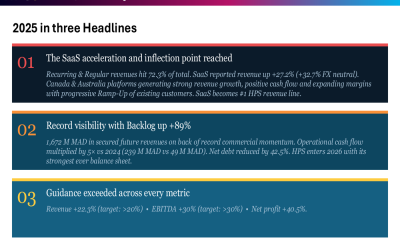
HPS FY 2025 slides: SaaS inflection drives 22% revenue growth
-

 Fashion7 days ago
Tory Burch’s Spring 2026 Campaign Goes on a Getaway
-

 Fashion7 days ago
Frugal Friday’s Workwear Report: Hammered Metallic Button Sweater Vest
You must be logged in to post a comment Login