

Crypto World
BTC back below $65,500, MSTR, COIN, CRCL falls amid macro risks

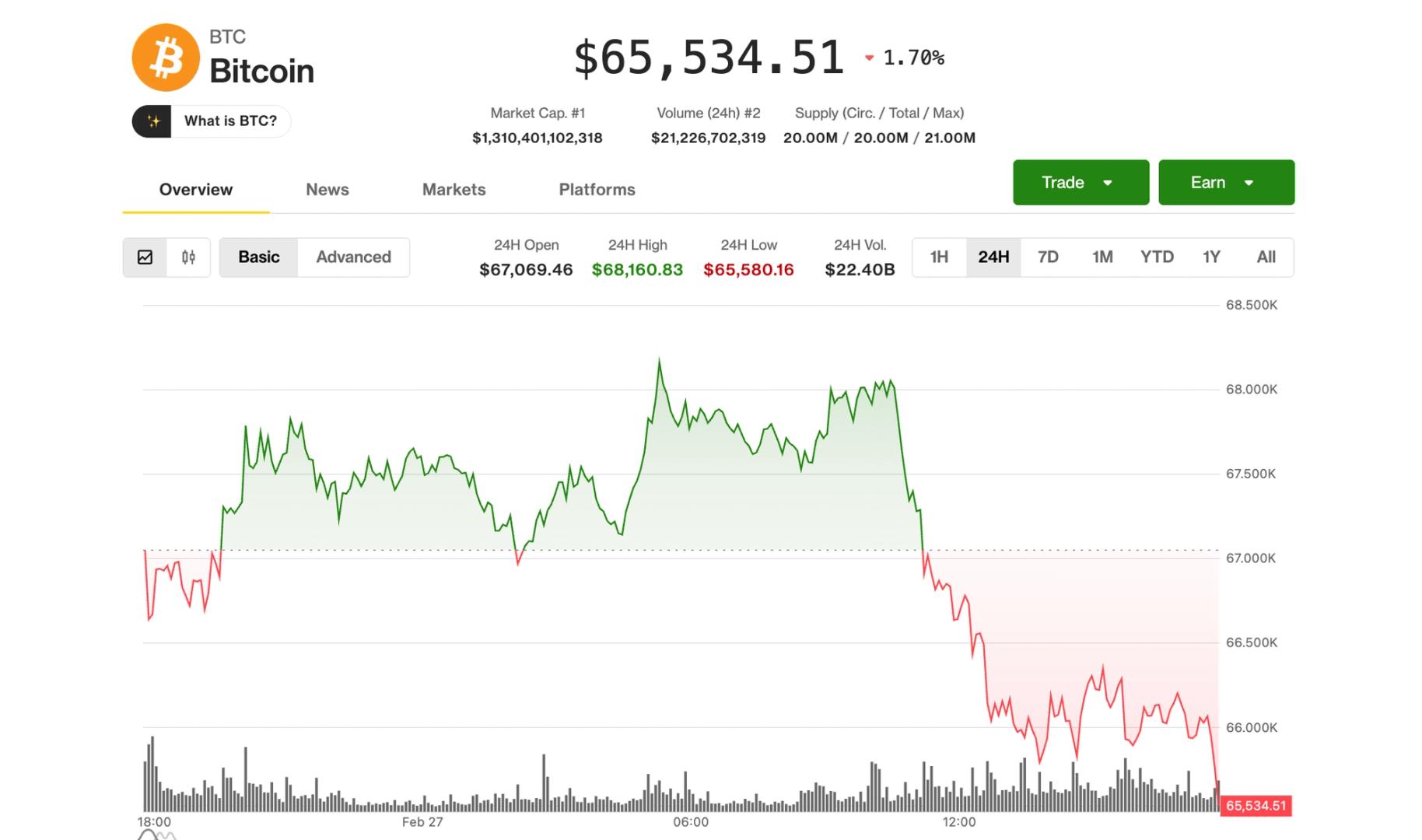
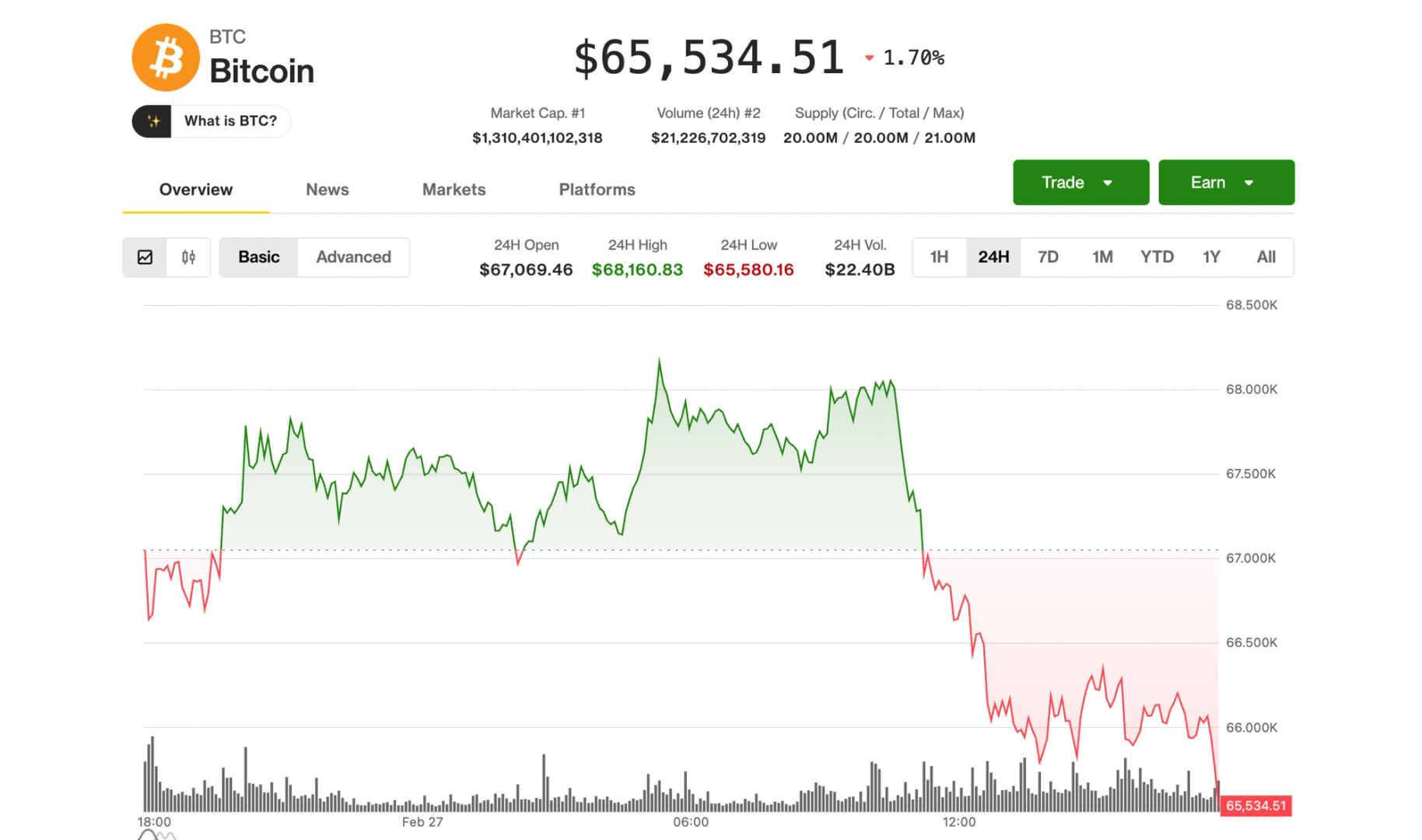
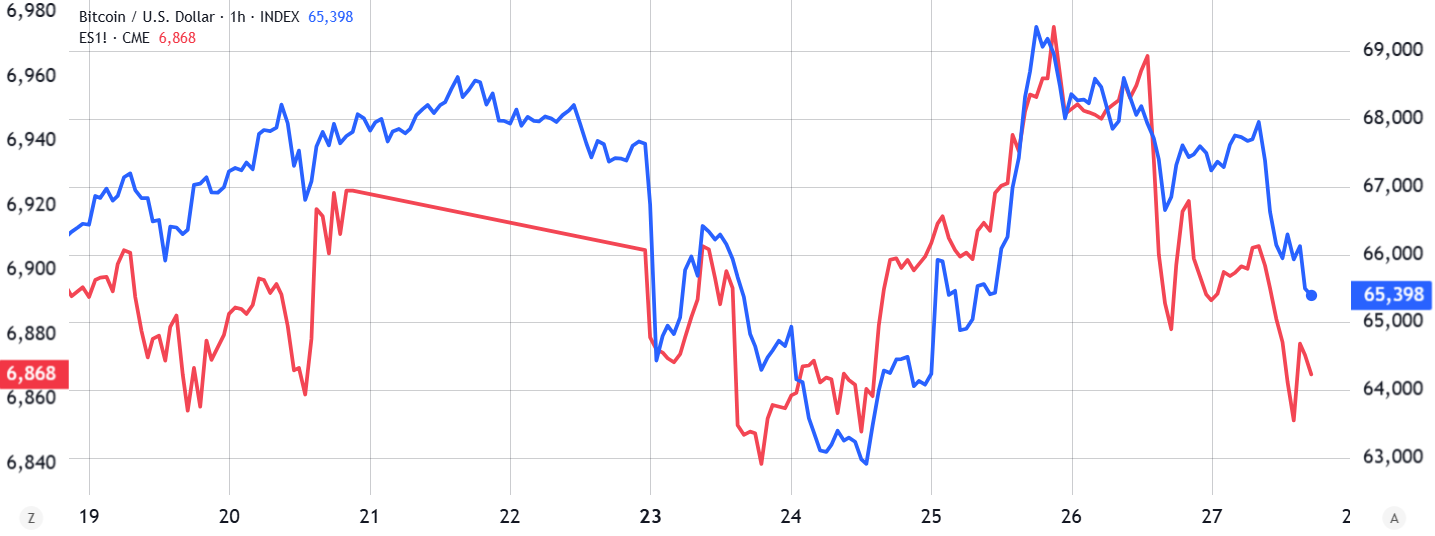
Bitcoin fell back below $66,000 Friday in the early U.S. session as mounting macro risks are spooking investors away from risky assets.
The largest crypto now has erased most of Wednesday’s surge, plunging 3% from around $68,000 in the past few hours to $65,600 in the morning hours. The braod-market CoinDesk 20 Index was 2.3% lower in the past 24 hours, with ether (ETH), XRP (XRP) and solana (SOL) down similar amounts.
Crypto-related stocks also followed the move, giving up part of the gains earlier this week. Strategy (MSTR), the largest corporate bitcoin holder, slipped 3%, while Coinbase (COIN) was more than 2% lower. Stablecoin issuer Circle (CRCL), declined almost 5%%, snapping its rebound that saw the stock gaining nearly 50% in a couple of sessions.
Miners, increasingly linked to AI infrastructure buildout, performed even worse, with IREN (IREN), Cipher Mining (CIFR), Core Scientific (CORZ) and TeraWulf (WULF) losing 6%-8%.
The action occurred as U.S. equity indexes fell, with the Nasdaq down 0.8% and the S&P 500 lower by 0.6%.
In the backdrop, there was a mix of risks for investors to get concerned about.
A hotter-than-expected Producer Price Index (PPI) inflation reading for last month spooked those who hoped for a continuation in the cooling inflation trend. In January, core PPI rose 3.6% year over year, above the 3.0% estimate, and up from 3.3% previously. Markets are now pricing in a 96% chance of no rate cut for the March 18 Federal Reserve meeting.
Concerns about stress in the credit markets also linger, with credit spreads at their widest in four months. Private equity firms KKR (KKR), Ares (ARES) and Apollo Global Management (APO) plunged 6%-7% to fresh lows during the session.
On top of that, prediction market odds of U.S. strikes against Iran rose this morning after the U.S. has begun evacuating embassy staff from Israel.
Money flows to safe-havens
In fixed income, the U.S. 10-year Treasury yield has slipped below 4% for the first time since November 2024. Precious metals continue to rally, with gold up 1% to above $5,230 an ounce, while silver has surged 4% to trade back above $92. Meanwhile, crude oil jumped 2.3% to above $67 a barrel.
Read more: The worst may lie ahead. Bitcoin chart revisits historic pattern

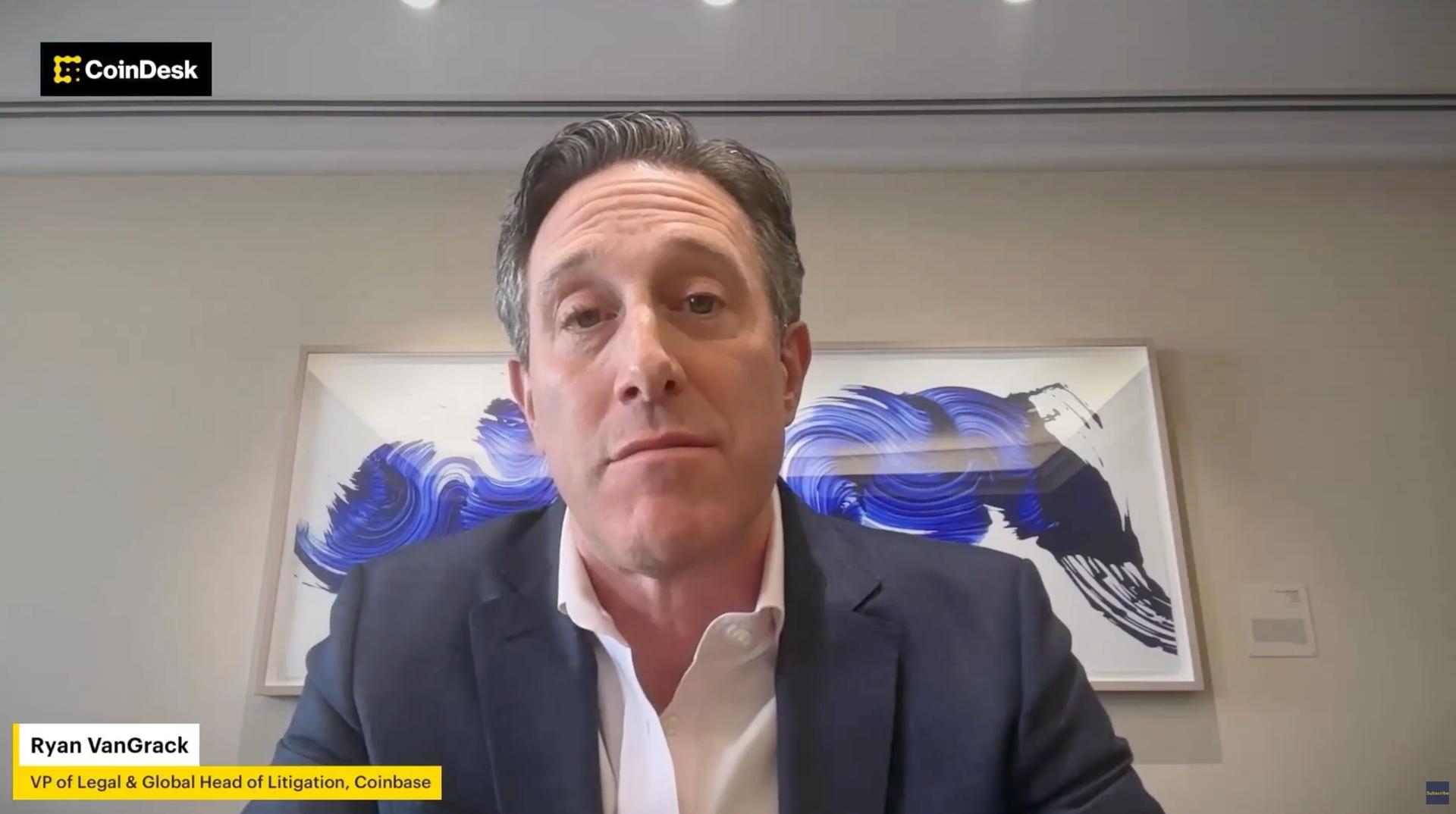
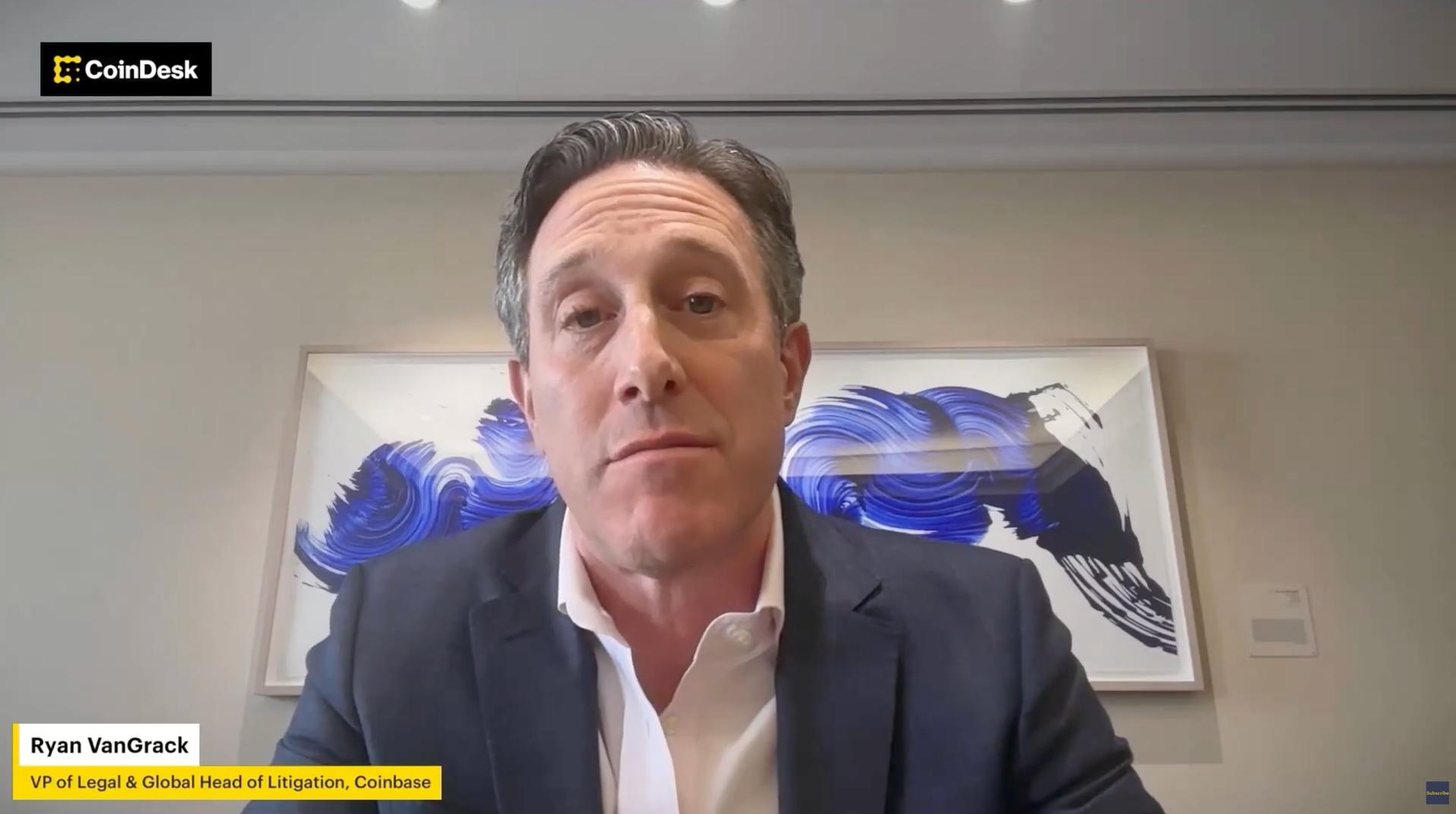
Why it matters: Ryan VanGrack, Coinbase’s VP of legal and global head of litigation, is sharpening Coinbase’s challenge to state regulators, saying they are trying to rewrite Congress’ authority over derivatives.
- Coinbase has filed lawsuits in Connecticut, Illinois, Michigan and Nevada after launching prediction markets in partnership with Kalshi.
- Some of those states issued cease-and-desist letters or public warnings, arguing sports event contracts amount to illegal gambling.
- VanGrack said those actions left customers facing “real and imminent” threats that forced Coinbase to seek clarity in federal court.
The argument: VanGrack says states are framing the issue incorrectly.
- Illinois officials argued in court that without state intervention, the markets would go unregulated due to limited CFTC resources.
- VanGrack called that claim “gaslighting,” saying the Commodity Futures Trading Commission has long overseen multi-trillion-dollar derivatives markets.
- He pointed to recent CFTC enforcement reminders around insider trading in event contracts as evidence the agency is actively policing the space.
Federal vs. state power: At the center is who gets to regulate sports-related event contracts.
- VanGrack argued the Commodity Exchange Act grants the CFTC exclusive jurisdiction over swaps and derivatives, including event contracts.
- The law contains a “special rule” allowing the CFTC — not states — to prohibit gaming event contracts on public policy grounds.
- States are attempting to carve sports contracts out of the federal definition of swaps, a reading VanGrack said is unsupported by the statute’s text or precedent.
Sports betting distinction: Coinbase says exchange-traded contracts differ fundamentally from sportsbook wagers.
- On a designated contract market like Kalshi, buyers and sellers set prices on an exchange overseen by the CFTC.
- In traditional sportsbooks, operators set odds and take the other side of the bet, a structure regulated by states.
- No one is arguing the CFTC regulates sportsbooks, VanGrack said — only that exchange-traded event contracts fall under federal derivatives law.
Bigger stakes: The dispute mirrors broader crypto fights over fragmented oversight.
- VanGrack said states retain authority over consumer protection and fraud.
- But subjecting national derivatives markets to “a patchwork of 50 regulators” would undermine investor confidence and market stability.
- Congress long ago chose a unified federal framework for derivatives, he said, and prediction markets should be treated no differently.
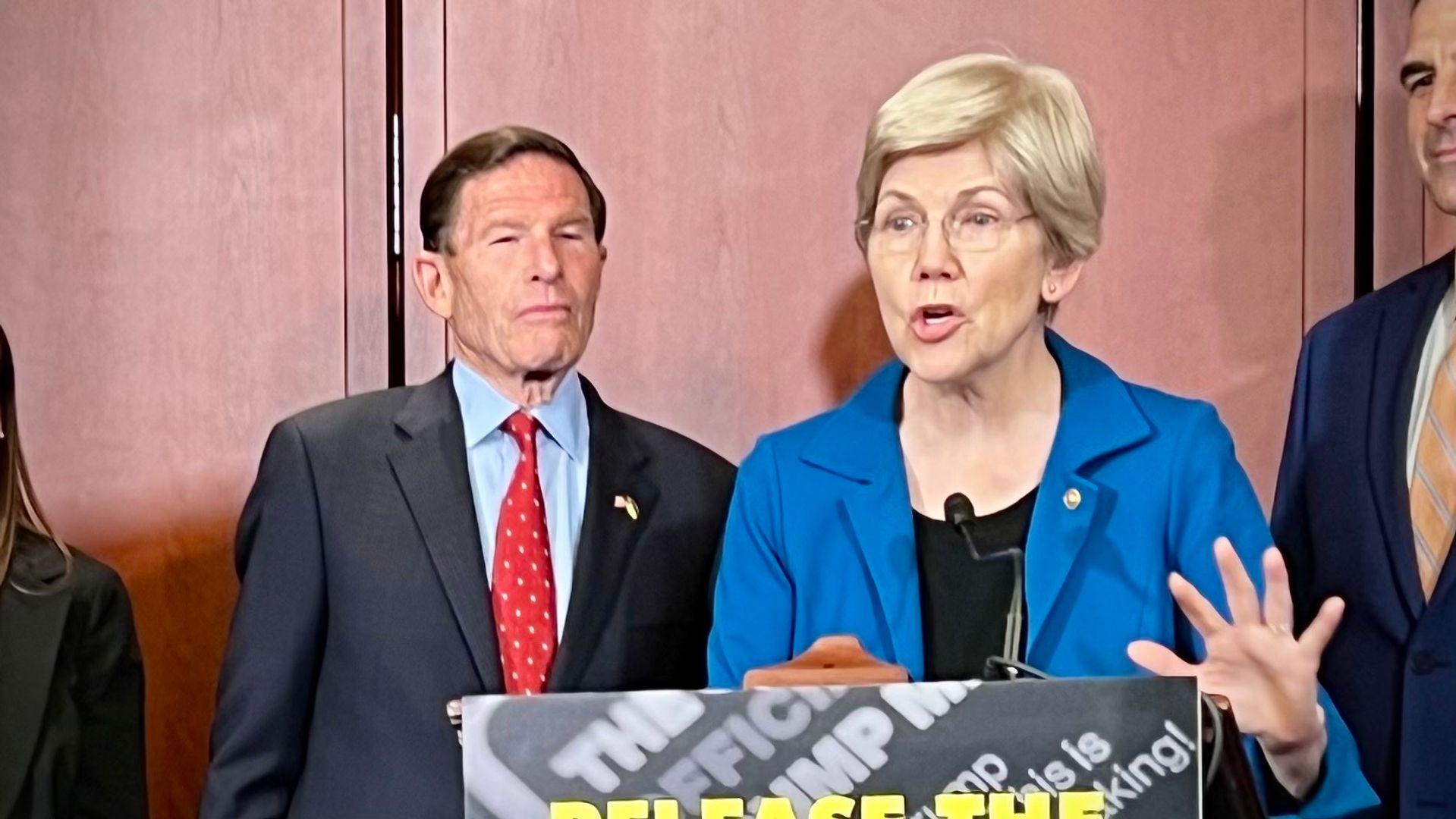
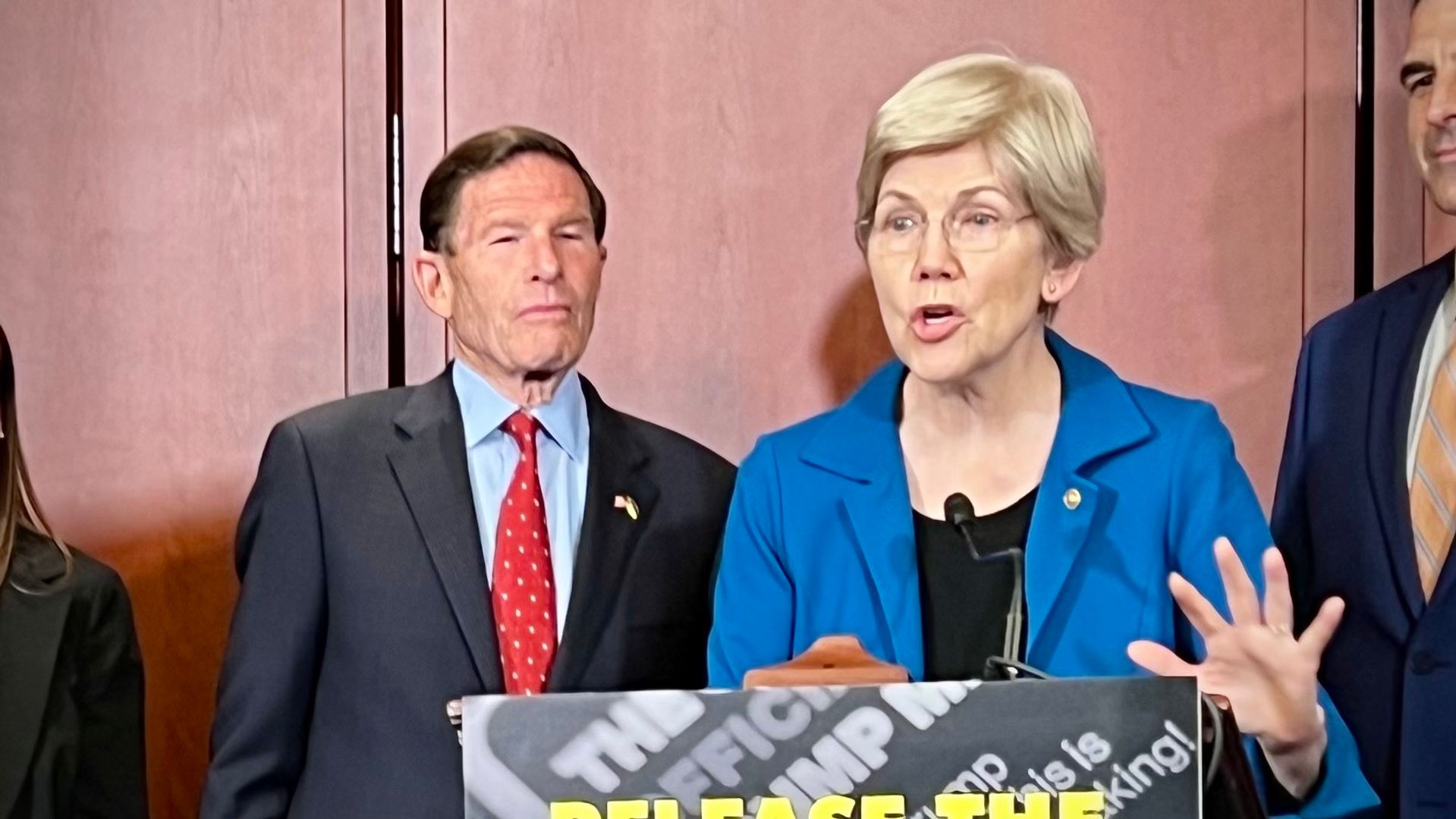
Democrats in the U.S. Senate continue to pile onto Binance, asking the Treasury and Justice departments to investigate its sanctions compliance and protections against illicit finance following reports of potential terrorism funding.
Nine senators, including a few that have been instrumental in negotiations over the crypto industry legislation known as the Digital Asset Market Clarity Act, sent a letter Friday to the chiefs of the federal agencies, requesting they probe the exchange after news reports on possible breaches, which also claimed the company had fired some of the compliance personnel involved in discovering the transactions.
The latest move from Democrats follows an announcement earlier this week from Senator Richard Blumenthal, a Connecticut Democrat who is a senior member of the Senate Homeland Security Committee, that he was inquiring into Binance and had written a letter to the company asking for information. However, neither he nor the other Senate Democrats are in the majority, meaning they don’t currently have control over committee investigations.
Richard Teng, Binance co-CEO, has said some of the earlier media reports were “inaccurate” and “defamatory.” A spokesperson for the company didn’t immediately respond to a request for comment Friday on the senators’ request, which had been sent to Secretary of the Treasury Scott Bessent and Attorney General Pam Bondi.
“These allegations raise grave concerns that poor illicit finance controls at Binance remain a significant threat to national security,” according to the Friday letter from senators including Elizabeth Warren, Ruben Gallego, Angela Alsobrooks, Mark Warner and five others, who also asked for information about the company’s compliance with requirements from its 2023 settlement.
“Our illicit finance controls are dangerously compromised if enormous sums can flow through Binance to terrorist groups or sanctions evaders,” they wrote in the letter, which comes at a delicate point in the ongoing discussions over U.S. legislation that would govern the crypto markets.
The prevention of illicit finance in crypto is among the issues that are still being discussed in that bill. Senator Warner has taken a lead among Democrats seeking to hash out legislative language on the topic.
Another unresolved issue centers around U.S. President Donald Trump and his family’s crypto activities, which the letter also referenced. The lawmakers wrote that they “recognized” Binance had ties to World Liberty Financial, the Trump-backed crypto venture behind the USD1 stablecoin. They also referenced Trump’s pardon of Binance founder Changpeng “CZ” Zhao — he had pleaded guilty and served four months in prison tied to Binance’s past issues with anti-money laundering and know-your-customer provisions.

TLDR
- Senate Democrats urged the Justice Department and Treasury to investigate Binance over alleged Iran sanctions violations.
- Lawmakers cited reports that $1.7 billion in digital assets moved to Iranian entities through Binance.
- The senators raised concerns that Binance may have breached its 2023 federal settlement obligations.
- The letter referenced Binance’s ties to a Trump family-backed stablecoin project.
- Binance denied the allegations and said it remains committed to its compliance agreements.
Senate Democrats have urged the Justice Department and Treasury to investigate Binance over Iran sanctions concerns and Trump-linked ties. Lawmakers sent a formal letter requesting a prompt federal review of the crypto exchange’s compliance controls. They cited reports that billions in digital assets flowed to sanctioned Iranian entities through the platform.
Binance Faces Scrutiny Over Iran Sanctions Compliance
Sen. Mark Warner led the letter and secured signatures from Sen. Elizabeth Warren and nine other Democrats. The senators asked Attorney General Pam Bondi and Treasury Secretary Scott Bessent to open a comprehensive review. They referenced media reports that linked Binance to illicit finance activity tied to Iran.
According to the letter, compliance staff identified $1.7 billion routed to Iranian entities last year. Those entities included the Iran-backed Houthis and the Islamic Revolutionary Guard Corps. The senators also claimed that a Binance vendor moved $1.2 billion connected to Iran-linked actors.
The lawmakers stated that Iranian users accessed more than 1,500 Binance accounts. They also raised concerns about the possible use of the platform by Russian actors to evade sanctions. They warned that such activity could breach Binance’s 2023 federal settlement obligations.
The letter alleged that Binance dismissed employees who flagged the transactions. It also claimed the exchange became less responsive to law enforcement requests. The senators argued that those actions would conflict with the company’s plea agreement terms.
In 2023, Binance pleaded guilty to violating U.S. sanctions laws and anti-money laundering rules. The company agreed to pay more than $4 billion in penalties. It also committed to enhanced know-your-customer procedures and sanctions screening under U.S. supervision.
Trump Ties and Russia Concerns Add Pressure
The senators also pointed to business links involving President Donald Trump and his family’s crypto ventures. They referenced Binance’s promotion of USD1, a stablecoin issued by World Liberty Financial. Lawmakers stated that the project has ties to the Trump family.
According to the letter, Binance offered interest incentives to users holding USD1. The exchange also assisted with technology related to the token. Lawmakers further cited a $2 billion investment tied to the stablecoin.
The senators referenced Trump’s pardon of Binance founder Changpeng Zhao last fall. Zhao had pleaded guilty to failing to implement an effective anti-money laundering program. He served a four-month prison sentence before receiving the pardon.
Beyond Iran, the lawmakers cited Binance’s launch of crypto-linked payment cards in parts of the former Soviet Union. They warned that similar products have helped users bypass restrictions on Russia’s financial system. They also noted Binance’s partnership with Kyrgyzstan on a stablecoin and digital currency initiative.
“These allegations raise grave concerns that poor illicit finance controls at Binance remain a threat to national security,” the senators wrote. They urged federal agencies to conduct what they described as a “thorough, impartial” probe.

The market mood has shifted as cross-asset dynamics tighten around valuation, policy uncertainty, and the path of inflation. A respected equity research team recently downgraded US stocks to neutral, citing high price levels, a weaker dollar, and lingering policy risks that could cap upside in the near term. Against this backdrop, traders are weighing whether the growth-driven narrative in artificial intelligence and related infrastructure can sustain earnings momentum, while risk-off currents push alternative assets into sharper focus. The combination of these factors creates a delicate balance for investors seeking yield, capital preservation, and growth in a tightening macro regime.
Key takeaways
- UBS’s global equity strategy team downgraded US equities to neutral, highlighting stretched valuations, dollar strength concerns, and policy headwinds that could limit upside.
- With limited upside for the S&P 500, there is a possibility of capital rotating toward non-equity assets, a dynamic that could create space for crypto and other alternative stores of value if macro conditions deteriorate.
- A fresh wave of inflation data intensified rate‑cut uncertainty, as the January producer price index rose 0.5%, contributing to a risk-off impulse that nudged government yields and equities lower in tandem.
- The yield on the 10-year Treasury declined to 3.97% from around 4.21% just weeks earlier, signaling a shift toward more risk-averse positioning as traders reassess the trajectory of monetary policy.
- While AI investment remains a tailwind for earnings, the UBS note cautions that AI-driven growth may not decouple the US equity market from broader macro and policy tensions, keeping a lid on broad risk appetite in the near term.
Tickers mentioned: $BTC, $TSLA
Sentiment: Neutral
Price impact: Negative. Bitcoin traded under important intraday resistance after inflation data, reflecting a risk-off impulse that pressed risk assets broadly.
Market context: The environment sits at the intersection of elevated equity valuations, a debate over rate paths, and rising interest in non-traditional asset classes as investors reassess risk premia in a high-valuation regime.
Why it matters
The UBS downgrade to neutral underscores a broader question facing markets: can the US equity complex sustain elevated multiples amid policy ambiguities and a dollar that has shown episodic strength? The report points to asymmetric downside risks if policy moves introduce volatility in credit conditions or weigh on consumer and business spending. In that sense, the market narrative is bifurcated. On one side, corporate earnings in AI-enabled sectors may show resilience, but on the other, policy frictions, tariffs, and potential reforms could erode the optimism priced into equities.
Against this backdrop, investors are turning their attention to the so‑called rotation trade—the idea that capital could shift from richly valued equities toward other assets that offer hedging properties or different risk premia. In practice, that can mean more demand for fixed income, gold, or other non-traditional stores of value, and it leaves room for crypto to be considered as part of a diversified risk-off toolkit. The notion benefits from a mounting narrative that a variety of macro catalysts—rising inflation surprises, policy uncertainty, and the prospect of a more cautious stance from central banks—could reweight portfolios away from equities and into assets that historically behave differently in downturns.
The report also remarks on the size and structure of the US market, noting that even a sizable reallocation may not dramatically swing the broader risk landscape. The US market, with its outsized capitalization and deep liquidity, remains a dominant engine, but valuations in the US are increasingly stretched relative to global peers. UBS’s longer‑range target for the S&P 500 remains a key consideration for investors mapping risk budgets. In this framework, the relative attractiveness of international equities, commodities, and emerging-market exposure could rise if the US growth outlook deteriorates or if currency dynamics continue to shift in a way that compounds downside risk for US assets.
On the inflation front, the January PPI data added to the challenge of predicting monetary policy paths. A 0.5% month‑over‑month uptick intensified concerns about price pressures, complicating expectations for rapid rate cuts. Traders often interpret such surprises as signals that the Federal Reserve might maintain a higher-for-longer stance than priced into some market scenarios. The ripples extend beyond equities; higher inflation prints can alter risk premia across asset classes, including crypto, where liquidity conditions and hedging demand remain important determinants of price action in both the short and long term.
The Treasury market has also shown a cautious tilt. The 10-year yield’s move down toward 3.97% reflected a flight to quality in times of uncertainty. When risk appetite wanes, investors gravitate toward safer, longer-duration assets, and the pullback in yields can support risk-off trades across a spectrum of markets. The interplay between yields, inflation data, and equity valuations continues to shape the liquidity environment in which crypto assets operate, underscoring why macro signals often drive cross-asset moves as investors reassess correlations and diversification benefits.
Within the broader crypto narrative, the possibility of increased institutional involvement—whether through strategic BTC reserves or ETF exposure—has long been cited as a potential catalyst for sentiment and liquidity. The UBS note does not hinge on a single outcome but acknowledges that capital could migrate toward non-equity assets as a form of hedge or ballast when stock markets look vulnerable. The dynamics are not deterministic, and the timing of any shift remains uncertain. Still, market participants increasingly weigh the conditional probability that the macro backdrop could align with a crypto‑positive regime—especially if new large holders step into the space or if instrument design enables easier access for institutional buyers.
As the debate about AI’s impact on productivity and earnings continues, the market remains cognizant that technology-driven drivers can influence multiple asset classes, sometimes in ways that are not perfectly correlated. Even in a scenario where AI spending sustains corporate profits, the degree to which this translates into a broad risk-on environment will depend on policy developments, inflation trajectories, and global economic momentum. The nuanced picture, therefore, is one of cautious optimism paired with prudent risk management—a stance that may favor assets offering diversification benefits, including those with distinct liquidity and return dynamics.
In practical terms, traders are watching whether new entrants—sovereign funds or large corporates—will disclose any BTC reserve commitments or equity-like exposure to crypto via ETF structures. The timing remains uncertain, but historical precedents show that when marquee players announce sizable crypto bets, market psychology can shift rapidly. Tesla (EXCHANGE: TSLA) has previously been cited as a bellwether in this regard, illustrating how a single high-profile position can alter risk perceptions and liquidity dynamics, even if such moves do not instantly reshape price trajectories. The implication for market structure is clear: if institutional appetite for crypto grows, liquidity can improve, correlations may shift, and price discovery could become more resilient to stock market downturns.
Ultimately, the near-term narrative suggests that crypto will remain sensitive to the health of traditional risk assets. The absence of a decisive decoupling signal means that Bitcoin and other digital assets could still track broader market tides, especially in sessions dominated by inflation surprises, policy hints, or unexpected macro data. Yet, the longer-term picture remains open to revision as new players and new structures emerge, potentially altering the calculus for diversification, inflation hedging, and the role of crypto in a multi‑asset portfolio.
What to watch next
- Monitor upcoming inflation and employment data for evolving rate‑cut expectations and policy signaling that could recalibrate risk appetite.
- Watch for any announcements or filings related to strategic BTC reserves by major corporations or sovereign entities, including progress on the Missouri Bitcoin Strategic Reserve HB2080.
- Track flows into spot Bitcoin ETFs and other crypto investment vehicles that could shift liquidity and price discovery dynamics.
- Observe earnings commentary on AI infrastructure and related capital expenditure to gauge whether the sector can sustain earnings growth without amplifying macro risks.
Sources & verification
- UBS global equity strategy note discussing US equities’ valuation, dollar dynamics, and policy risk (CNBC coverage referenced in the input).
- U.S. Producer Price Index data for January showing a 0.5% month‑over‑month increase.
- U.S. 10-year Treasury yield movements, with the yield dipping to 3.97% from a prior level around 4.21%.
- Discussion of AI adoption’s potential impact on earnings and risk sentiment referenced to CNBC and related materials in the input.
- Missouri Bitcoin Strategic Reserve HB2080 and related coverage in the input materials.
Market reaction and key details
Bitcoin (CRYPTO: BTC) traded in a risk-off framework after the latest inflation data reinforced uncertainty about the pace of monetary policy normalization. The move came as the broader market weighed a UBS downgrade of US equities to neutral—an assessment rooted in valuations, policy risk, and a less favorable macro backdrop. While this dynamic pushed a rethink of how capital may reallocate, it also underscored the complexity of predicting how crypto assets fit within a tightening cycle and a volatile macro mosaic. The path forward remains contingent on a constellation of factors, including central bank signals, fiscal policy developments, and the evolving appetite of large holders to commit capital to BTC or related crypto exposures.
The price action reflected a tug-of-war between resilience in certain technology-led earnings and the reality of a cautious macro environment that values liquidity and risk controls. As yields retreated and inflation surprises persisted, traders sought safer havens and diversified strategies. In this context, the potential for institutional involvement—whether through strategic BTC reserves or ETF exposure—keeps the dialogue alive about crypto’s role as a hedge or diversification asset. While such developments could alter sentiment, the near-term setup remains sensitive to the cadence of macro data releases and policy commentary, rather than a single catalyst alone.
In terms of market structure, the conversation around gold and other traditional stores of value continues to frame how investors think about risk allocation. With gold already commanding a roughly $36.5 trillion market capitalization and the tech behemoths aggregating around $24.2 trillion in value, the relative scale of Bitcoin—though substantial in its own right within the digital asset class—highlights the challenge of achieving parity with more established assets. Even a substantial upside for BTC would have to contend with the macro framework and the liquidity dynamics that shape how capital moves between risk-on and risk-off regimes. Still, the possibility of a broader rotation toward non-equity assets—should the S&P 500 struggle to upside—remains a plausible scenario for patient investors exploring hedges and diversification strategies, including those that could involve crypto exposures in a regulated, institutional-friendly format.
As the year unfolds, the market will likely hinge on a mix of data points, policy signals, and the willingness of large players to publicly disclose crypto-related exposures. The ongoing dialogue about regulatory clarity and the evolution of crypto infrastructure will ultimately influence how readily crypto assets participate in broad market rotations. In the meantime, traders and investors will continue to assess whether the current macro setup favors a more defensive posture and how any future developments could alter the balance between traditional assets and digital currencies.
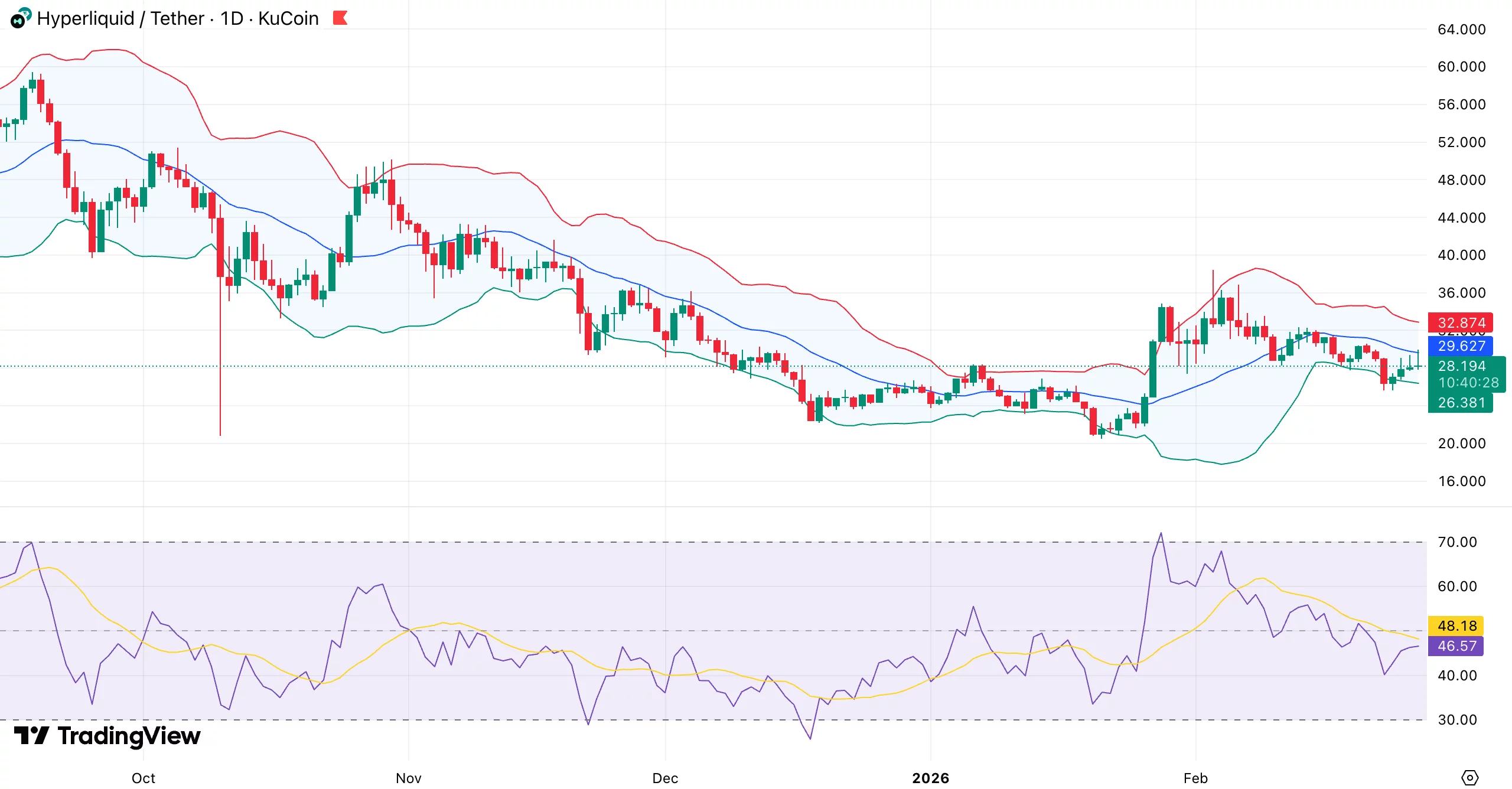
Hyperliquid price trades near $28 as traders watch a potential $30 breakout driven by the HIP-6 token launch proposal.
Summary
- Hyperliquid price is consolidating between $26.3 and $30 after a multi-week pullback.
- HIP-6 could increase on-chain token launches and expand fee-driven buybacks.
- A confirmed move above $30 may shift short-term momentum in favor of buyers.
Hyperliquid (HYPE) is trading at $28.04 at press time, down 0.8% over the past 24 hours. The token has fallen 5% in the last week and is lower by 17% over the past 30 days, keeping it well below its recent highs.
Price is hovering near the upper end of its weekly range between $25.86 and $30.52, showing signs of stabilization after a broader pullback.
In the last 24 hours, trading volume reached $268.9 million, a sharp 25% decline from the previous day. That drop in activity suggests some traders have stepped to the sidelines as HYPE approaches a key resistance zone near $30.
CoinGlass data shows leverage cooling rather than building. Open interest has fallen 4.63% to $1.10 billion, and derivatives volume is down 5.72%. When open interest declines, it typically means positions are being closed instead of added.
HIP-6 proposal could strengthen fee-driven buybacks
Attention has shifted to HIP-6, a new Hyperliquid Improvement Proposal introduced on Feb. 25. The proposal would allow fully on-chain, permissionless token launches directly on HyperCore, the network’s layer-1 infrastructure.
Today, projects launching tokens on Hyperliquid must raise funds off-chain and manually seed liquidity. HIP-6 aims to streamline that process through a Continuous Clearing Auction system.
Tokens would be sold gradually at a uniform clearing price, with funds held in protocol custody until settlement. A portion of the proceeds would automatically seed liquidity, while 5% would flow to the Assistance Fund.
That detail matters for HYPE holders. Hyperliquid directs the vast majority of protocol fees into the Assistance Fund, which is used for token buybacks. If HIP-6 leads to more token launches, it could drive higher platform activity, increasing fee generation and buybacks.
Hyperliquid price technical analysis
On the chart, HYPE has moved out of a short-term downtrend and into a consolidation range between $26.3 and $30. The price is maintaining the structure by remaining above $26.3, which is the lower limit of that range. A narrowing of the Bollinger Bands indicates less volatility.
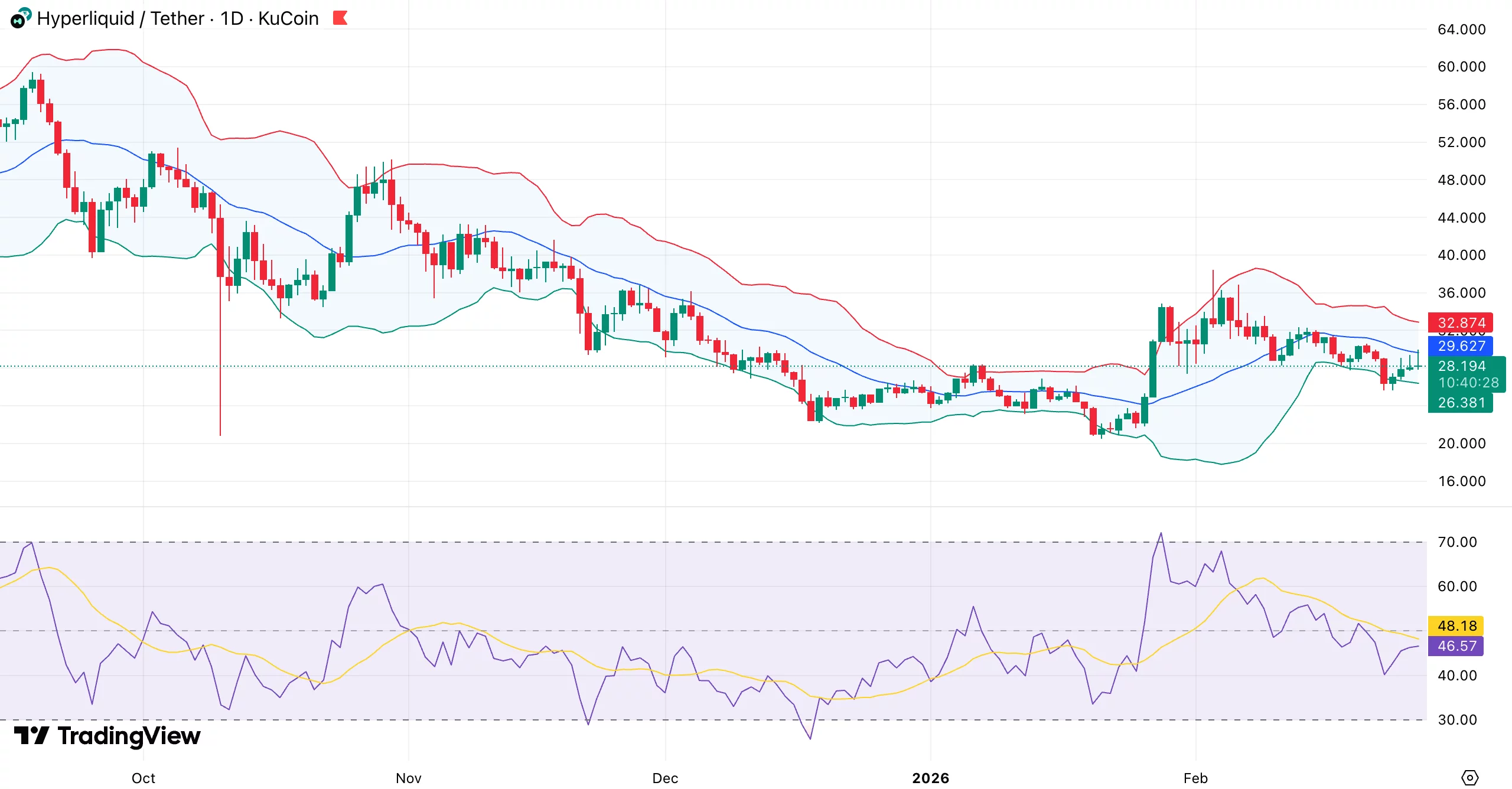
When the price breaks out, periods of compression frequently result in sharper moves. HYPE is currently trading just below the mid-Bollinger Band, which aligns with the 20-day moving average near $29.6. That level is the first barrier bulls need to reclaim.
The relative strength index sits around 46–47, slightly below neutral. A move above 50 would signal that buyers are regaining control. Until then, momentum remains balanced but fragile.
A daily close above $29.6 would improve short-term momentum. A sustained move above $30 would strengthen the breakout case and expose the next resistance zone around $32.8. Clearing that area would mark a higher high on the daily timeframe and shift the broader structure more clearly upward.


Perpetual funding rates have turned negative across major exchanges, signaling that short sellers are paying to maintain bearish positions.
Bitcoin perpetual funding rates on major exchanges have flipped negative, signaling that short sellers now dominate the derivatives market and are paying to keep their positions open.
While negative funding typically reflects bearish sentiment, one analyst is interpreting the current extreme as a potential setup for a short squeeze, arguing that excessive short positioning often precedes sharp upside reversals rather than continued downside.
Funding Flips Negative as Shorts Crowd the Market
In a February 27 market update, analyst Amr Taha noted that funding rates across major derivatives venues simultaneously moved into negative territory, with Binance at -0.005%, OKX at -0.007%, and Bybit at -0.011%.
Funding rates are periodic payments between long and short traders in perpetual futures, and when they turn negative, it means short sellers are paying longs, reflecting dominant bearish positioning.
Taha also pointed to data from the BTC liquidation heat map showing dense clusters of leveraged positions above the current price, many originating around the $92,000 level. According to the analyst, if Bitcoin pushes higher, those short positions could be forced to close, accelerating upside volatility.
“If macroeconomic conditions improve, the probability of a renewed price pump in the short to medium term increases,” Taha wrote.
They added that historically, heavy short exposure combined with negative funding has often foreshadowed sharp reversals, though the metric alone does not predict direction.
Meanwhile, retail activity is also ticking up. Nino, a CryptoQuant contributor, indicated that trading frequency among smaller investors has spiked relative to its one-year average, a sign that individual participants are re-entering the market after weeks of caution.
You may also like:
“The current spike underscores a growing sense of anticipation for the next major market expansion,” explained the analyst.
Whale Flows and Market Structure
In a separate post, Taha tracked roughly 1,700 BTC in positive net inflows from so-called “Octopus” wallets, representing medium-term holders, into Binance. A larger 5,000 BTC inflow from the same cohort on February 2 preceded a drop from above $77,500.
This time, the movement, while positive, is significantly less aggressive, suggesting it may not carry the same bearish force.
“Of course, market reaction also depends on liquidity conditions and broader positioning,” Taha stated. “But strictly from the chart data — the intensity is lower.”
Bitcoin briefly tested $70,000 on February 26 but failed to hold that threshold, settling into a range between $66,600 and $68,600 over the past 24 hours per CoinGecko data, with observers at Glassnode saying that despite the relative stabilization, the BTC market is yet to recover.
At the time of writing, the flagship cryptocurrency was trading almost 200 bucks below the $68,000 level, down slightly by 0.4% in the last 24 hours and seeing no change over seven days. However, on a 30-day basis, the asset is nearly 24% lower, and it is also about 46% below its October 2025 all-time high.
Binance Free $600 (CryptoPotato Exclusive): Use this link to register a new account and receive $600 exclusive welcome offer on Binance (full details).
LIMITED OFFER for CryptoPotato readers at Bybit: Use this link to register and open a $500 FREE position on any coin!


Disclosure: This article does not represent investment advice. The content and materials featured on this page are for educational purposes only.
Crypto market rebounds as buying surge drives total capitalization toward $2.4 trillion.
Summary
- Capital rotation from BTC and ETH is lifting utility plays like Mutuum Finance, now with $20.6m raised.
- Mutuum’s V1 testnet enables non-custodial lending, letting users borrow against ETH, USDT, LINK, and WBTC.
- Lenders earn via mtTokens while borrowers receive debt tokens, powering a decentralized credit market model.
The cryptocurrency market has experienced a decisive shift in momentum over the last 24 hours. After weeks of horizontal trading and minor corrections, a wave of buying pressure has pushed the total market capitalization toward the $2.4 trillion mark. This reversal is characterized by a sharp increase in trading volume across both centralized exchanges and decentralized protocols.
Market data shows that the “Fear & Greed Index” has jumped from a state of extreme fear to a neutral-to-positive reading in a single session. This rapid change in sentiment follows a period of heavy liquidations that effectively cleared out over-leveraged short positions. With the market “cleaner” from a structural standpoint, the path of least resistance has moved to the upside, bringing the $70,000 price target back into focus for the world’s biggest crypto.
Crypto market surges as bitcoin eyes $70k
Bitcoin (BTC) is currently leading the charge, trading near $66,200 after a nearly 8% single-day gain. The asset is now within striking distance of the psychological $70,000 barrier, a level it has not firmly held since early February. This move has triggered a “halo effect” across the altcoin market, where several top-tier assets are outperforming Bitcoin on a percentage basis.
Solana (SOL): Known for its high beta to market moves, SOL jumped 13% on February 25, reaching an intraday high of $89 as it tests key resistance zones.
Ripple (XRP): Rebounding from recent lows, XRP added 8% to its value, supported by increased clarity in ongoing regulatory discussions.
Dogecoin (DOGE): The leading memecoin saw a 9% spike, reflecting a return of retail speculative appetite as the broader market turns green.
3 reasons why the crypto market is surging
Record ETF Inflows: US-based spot Bitcoin ETFs recorded over $506 million in net inflows on February 25 alone. This represents the strongest single day of institutional buying since early 2026. This “smart money” accumulation provides a solid floor for the price and offsets selling pressure from short-term traders.
Short Squeeze and Liquidations: The sudden price jump forced the closure of over $571 million in bearish short positions. As these traders were “squeezed” out of their bets, they were forced to buy back Bitcoin and Ethereum, creating a feedback loop that accelerated the upward price movement.
Sparkling Retail Interest in Utility Protocols: There is a noticeable shift in how retail investors are allocating their capital. Instead of chasing high-risk memecoins, many are moving into utility-driven protocols that offer functional financial services. This new wave of interest is focused on platforms that provide financial tools, such as decentralized lending.
Profit reallocation and the rise of utility protocols
Historically, bullish periods in the crypto market follow a specific pattern. Once large-cap assets like Bitcoin and Ethereum finish their initial rally, investors and traders often reallocate their profits into cheaper sectors.
This “capital rotation” is currently favoring new utility protocols that show significant momentum. A prime example of this trend is Mutuum Finance (MUTM). This Ethereum-based project is building a non-custodial lending and borrowing ecosystem designed to help long-term holders unlock the value of their assets without selling them.
Mutuum Finance is already proving its concept with a recently launched protocol version that has attracted the attention of over 19,000 investors. The project has successfully raised over $20.6 million in funding, signaling strong confidence from its community. Currently, the MUTM token is priced at $0.04, reflecting a steady growth phase as the project prepares for its full mainnet transition.
The design and functionality of the V1 protocol
The Mutuum Finance V1 protocol is currently live on the Sepolia testnet, allowing users to interact with a fully functional decentralized credit market. The system is designed to handle high-value assets, including USDT, ETH, LINK, and WBTC.
Lending and mtTokens: When a user supplies assets to the protocol, they receive mtTokens. These interest-bearing receipts represent the user’s share of the liquidity pool. For example, if a lender deposits 1,000 USDT, they receive 1,000 mtUSDT.
As borrowers pay interest, the value of these tokens grows automatically; if the pool earns 5% interest, those 1,000 mtUSDT become redeemable for 1,050 USDT after one year, providing the lender with a passive yield.
Borrowing and Debt Tokens: Borrowers can use their deposited assets as collateral to take out loans. This process generates debt tokens, which track the borrower’s liability within the system. For instance, if a user provides $2,000 in ETH as collateral to borrow $1,000 in stablecoins, the protocol issues 1,000 debt tokens to their account.
Because the system is non-custodial, the user retains full control of their funds through smart contracts, and they simply need to return the value represented by those 1,000 debt tokens plus interest to unlock their original collateral.
A user provides more collateral than they borrow to maintain ownership of their assets while gaining liquidity. By borrowing instead of selling, a user keeps 100% of any future price increases on that collateral and avoids the capital gains taxes triggered by a sale.
Top assets eyeing new highs
As the market stabilizes, top cryptocurrencies like BTC, ETH, and XRP are eyeing significant technical milestones. Bitcoin is currently focused on flipping the $70,000 resistance into a support level, which many believe would trigger a run toward its previous all-time highs. Ethereum is similarly eyeing the $2,100 mark, supported by the technical upgrades outlined in the recent “Strawmap” roadmap.
At the same time, Mutuum Finance is moving forward with its official roadmap plans with a focus on facts and technical milestones. The next crypto stages include the integration of Layer 2 (L2) scaling to reduce transaction costs and the implementation of a buy-and-distribute mechanism. This model will use protocol fees to support the MUTM token’s ecosystem directly.
Disclosure: This content is provided by a third party. Neither crypto.news nor the author of this article endorses any product mentioned on this page. Users should conduct their own research before taking any action related to the company.
Key takeaways:
-
Analysts downgraded US stocks due to high valuations, a weak dollar and policy risks despite AI-driven earnings growth.
-
Limited S&P 500 upside may shift capital toward Bitcoin, especially if major sovereign funds announce BTC reserves.
Bitcoin (BTC) price plunged below $65,500 on Friday, effectively erasing gains established on Wednesday. This correction closely tracked intraday S&P 500 movements after wholesale inflation data in the US triggered increased risk aversion. A report from investment bank UBS downgrading US stocks to neutral likely accelerated the surge in demand for the safety of fixed-income assets.

Investors fear that a potential doomsday scenario for the US equities market could drive Bitcoin to new yearly lows. While increased spending on artificial intelligence infrastructure remains a primary concern for some, Bitcoin’s long-term trajectory is unlikely to remain dependent on the technology sector.
Institutional Bitcoin adoption could improve market sentiment
According to the UBS global equity strategy team, valuations within the US equity market are no longer attractive compared to other global regions. Analysts cited mounting risks from a weakening dollar and US policy turbulence, which are creating asymmetric structural downside risks. Furthermore, corporate buybacks appear to be losing their effectiveness in sustaining price levels.
The relevance of the $70 trillion US market capitalization should not be overstated, even as it disturbs price trends on supposedly uncorrelated assets like Bitcoin. Still, the UBS report is far from a doomsday prediction, especially considering their year-end S&P 500 target remains at 7,500.
Part of the recent decline to $65,500 is explained by Friday’s US Producer Price Index jumping 0.5% in January from the previous month. When inflation metrics surprise to the upside, traders often become less certain regarding interest rate cuts from the US Federal Reserve. A restrictive monetary policy negatively impacts the economy as credit remains expensive and companies have fewer incentives to expand production.

The US Treasury yield serves as a proxy for investor risk assessment. During periods of uncertainty, traders seek shelter in government bonds, regardless of current inflationary trends. The unusual decline in the US 10-year Treasury yield to 3.97% from 4.21% just three weeks prior signals a shift toward risk-averse sentiment. This is particularly notable as the S&P 500 exhibited signs of weakness despite positive surprises in corporate earnings.
The UBS global equity strategy report says US stocks are trading 35% above global peers, versus an average premium of 4% since 2010. Analysts mentioned volatility added by US policy proposals to cap credit card interest rates, implement additional import tariffs and place potential limits on private equity investment in housing. However, the bank expects AI adoption in the US to help sustain earnings growth across key industries, according to CNBC.

If the S&P 500 upside proves limited, Bitcoin could benefit from eventual capital rotation as gold, the absolute leader store of value, has already soared to a $36.5 trillion market capitalization. To put things in perspective, the 10 largest tech companies have a combined market capitalization of $24.2 trillion. Even if Bitcoin price rallies by 52% to $100,000, its market capitalization would be $2 trillion. Thus, unless fixed income or real estate markets benefit from the potential capital rotation, Bitcoin remains a valid candidate.
Related: Spot Bitcoin ETFs take in $1B in three days as investors buy the dip
Sentiment toward Bitcoin could shift favorably as soon as new major companies or sovereign funds announce strategic BTC reserves, even if formed through exchange-traded fund (ETF) exposure. There is no way to predict when those events could happen, but history has proven how trader risk perception can shift favorably when a company such as Tesla (TSLA US) announced a relevant Bitcoin position. But until then, the odds of an onchain decoupling from the US stock market remain low.
This article does not contain investment advice or recommendations. Every investment and trading move involves risk, and readers should conduct their own research when making a decision. While we strive to provide accurate and timely information, Cointelegraph does not guarantee the accuracy, completeness, or reliability of any information in this article. This article may contain forward-looking statements that are subject to risks and uncertainties. Cointelegraph will not be liable for any loss or damage arising from your reliance on this information.
Crypto World
Buterin Offloads ETH, Bitcoin Unable to Push Past $70K, XRP Spot Buying Increases: This Week’s Crypto Recap
Bitcoin played a trick on us this week, making us believe that a recovery is inbound but the positivity was for not.
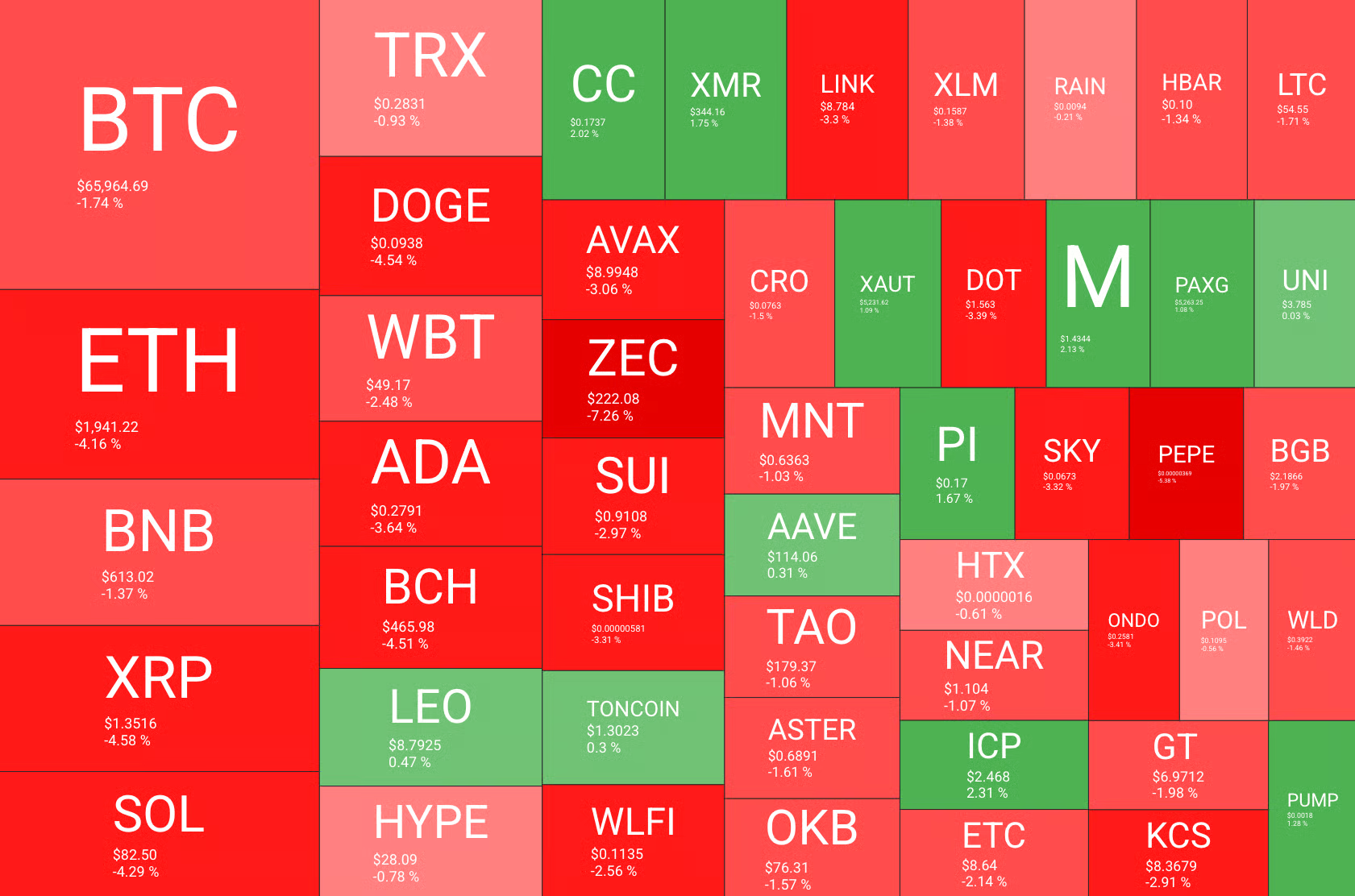
It’s been a relatively dynamic week within the cryptocurrency industry. The total market capitalization currently stands at around $2.36 trillion, which is more or less where it was last Friday when we did the previous weekly recap, but this doesn’t paint the whole picture.
You see, BTC started the week as anyone would expect – chopping to the downside, which inevitably led to an abrupt crash on Monday, when it dropped from above $67K to around $64K. This was followed by an intraday dead cat bounce and an immediate continuation to below $63,000. Sentiment was down bad, as was most of Crypto Twitter, but what followed raised a few eyebrows.
Bitcoin actually started recovering… notably. It soared from $63K to $70K in less than two days. And then came yet another sign that we are amidst the depths of crypto winter – the recovery was put to a halt, and the bears once again took control, pushing the price down to where we currently sit at slightly above $66K. In case you are wondering, we are still in a state of “extreme fear,” according to the popular Crypto Fear and Greed index, meaning that the masses are definitely not convinced that the worst is behind us. In fact, the most recent bounce did very little to improve the overall sentiment.
Meanwhile, the co-founder of Ethereum, Vitalik Buterin, continues selling ETH. So far, his total disposals reached around 18,700 ETH, even though he previously stated that he plans to sell 16,384 ETH to fund open-source software and hardware development, privacy tools, and security-critical infrastructure projects.
Elsewhere, we have some light at the end of the tunnel for XRP holders, with spot buying seemingly on the rise. While it has done little for the price so far, this could be a sign of a structural shift in XRP’s market dynamics. Bitrue reported a 212% surge in spot buying on February 26th, most of which was linked to ETF inflows, suggesting steady demand from funds.
All in all, the week started off as depressing, turned bullish, and then went back exactly to where it was in the beginning. Strength is being dissolved quickly as negative sentiment prevails, which is incredibly indicative of bear markets. That also makes it quite exciting to see what the next seven days have in store for us.
Market Data
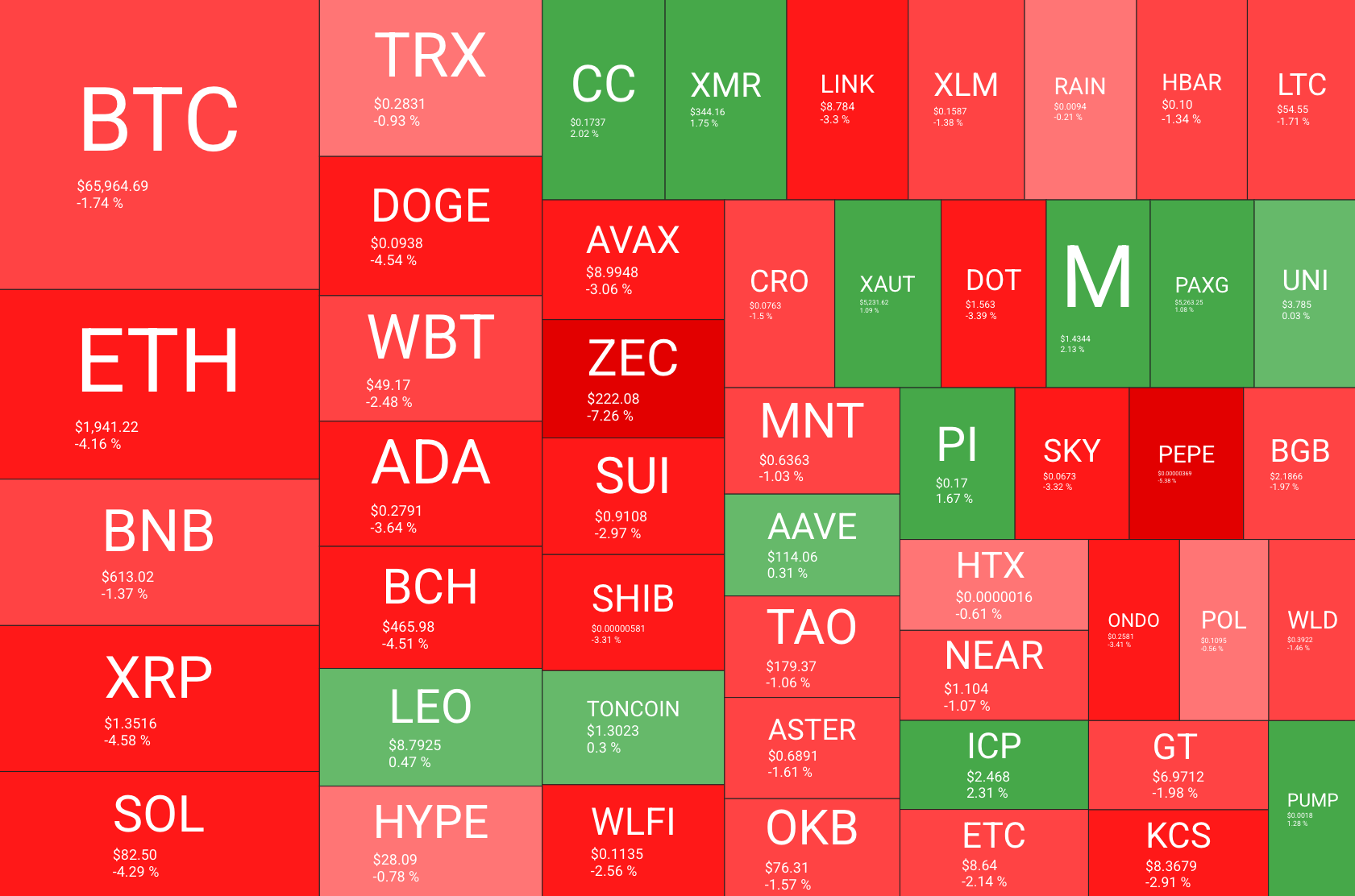
Market Cap: $2.35T | 24H Vol: $113B | BTC Dominance: 56.1%
You may also like:
BTC: $66,097 (-1.5%) | ETH: $1,947 (+0.2%) | XRP: $1.35 (-3.2%)
This Week’s Crypto Headlines You Can’t Miss
Bitwise CIO Matt Hougan Rejects Jane Street Blame for Bitcoin Dip. Matt Hougan, the chief investment officer at Bitwise, has dismissed claims that Jane Street is orchestrating Bitcoin’s ongoing downturn. Instead, he said that the current price action is typical of a “classic crypto winter.” Read more.
BSC Fees Hit Multi-Month Lows as History Signals Bitcoin Rebound Ahead. The Binance Smart Chain (BSC) saw its total fees paid drop to $593,000, which pretty much marks the network’s lowest usage cost since at least August 2025. Read more.
2026 US Midterms Emerge as Potential Turning Point for Crypto Markets. The 2026 US midterm elections are closing in. Many view them as a potential catalyst that’s tied to liquidity cycles in traditional financial markets, as well as a recovery in the broader cryptocurrency market. Read more.
Bitcoin’s Recovery Isn’t Here Yet – Here’s What Still Needs to Flip. Data shows that BTC remains trapped in a structurally defensive consolidation. This happens as the price oscillates between $60K and $90K. Therefore, for a recovery to start shaping, the price needs to push above the upper boundary. Read more.
Vitalik Buterin Exceeds 16,384 ETH Selling Target with $38M in Total Disposals. The co-founder of Ethereum (and likely the most prominent person behind it), Vitalik Buterin, is dumping ETH. In fact, he has exceeded his previously stated plan to sell 16,384 ETH by almost 20%. Read more.
Wall Street Is Going On-Chain, And Investors Still Don’t Get It, Says Bitwise CIO. According to the CIO of Bitwise, investors often misinterpret what is truly happening in the market due to behavioural biases and think that Wall Street is already going on-chain. Read more.
Charts
This week, we have a chart analysis of Ethereum, Ripple, Cardano, Binance Coin, and Hyperliquid – click here for the complete price analysis.
Binance Free $600 (CryptoPotato Exclusive): Use this link to register a new account and receive $600 exclusive welcome offer on Binance (full details).
LIMITED OFFER for CryptoPotato readers at Bybit: Use this link to register and open a $500 FREE position on any coin!

Major US Bank SoFi now supports Solana network deposits. This means 13.7 million users of the bank can send SOL directly to their SoFi crypto accounts from external wallets.
The US-chartered bank announced the update on X, stating users can buy, sell and hold SOL inside the SoFi app.
Major Solana Access For US Banking Customers
In practice, SoFi is enabling direct on-chain deposits for a major public blockchain within a regulated national bank. Users can manage balances alongside checking, savings and other financial products in a single interface.
The move expands SoFi’s digital asset offering beyond simple brokerage-style exposure. It connects a traditional bank charter with a live blockchain network, which remains rare among nationally chartered US banks.
An Important US Access for Solana
SoFi began as a student loan refinancing platform in 2011 and later secured a national bank charter. It has grown into a mid-sized US bank with more than $50 billion in assets and tens of billions in deposits.
While far smaller than Wall Street giants, it ranks among the larger digital-first banks in the country.
The company’s brand extends beyond finance. SoFi holds naming rights to SoFi Stadium in Inglewood, California.
The venue hosted Super Bowl LVI in 2022 and WrestleMania 39 in 2023. It is also scheduled to host multiple matches during the 2026 FIFA World Cup and will play a central role in the 2028 Los Angeles Olympics.

Against that backdrop, adding Solana deposits signals deeper integration between US banking infrastructure and public blockchains.
It allows regulated bank customers to move assets directly on-chain while staying inside a traditional banking framework.

How Wolves beat Aston Villa to surpass Premier League record low points tally
Form S-1 COLLAB Z INC. For: 27 February

Coinbase’s head of litigation says states are “gaslighting” on prediction markets


-

 Politics6 days ago
Baftas 2026: Awards Nominations, Presenters And Performers
-

 Sports4 days ago
Women’s college basketball rankings: Iowa reenters top 10, Auriemma makes history
-

 Politics4 days ago
Nick Reiner Enters Plea In Deaths Of Parents Rob And Michele
-

 Business3 days ago
True Citrus debuts functional drink mix collection
-

 Politics22 hours ago
ITV enters Gaza with IDF amid ongoing genocide
-

 Crypto World4 days ago
XRP price enters “dead zone” as Binance leverage hits lows
-

 Business5 days ago
Mattel’s American Girl brand turns 40, dolls enter a new era
-

 Business5 days ago
Law enforcement kills armed man seeking to enter Trump’s Mar-a-Lago resort, officials say
-

 Fashion3 hours ago
Weekend Open Thread: Iris Top
-
 NewsBeat2 days ago
Manchester Central Mosque issues statement as it imposes new measures ‘with immediate effect’ after armed men enter
-

 NewsBeat2 days ago
Cuba says its forces have killed four on US-registered speedboat | World News
-

 Tech3 days ago
Unsurprisingly, Apple's board gets what it wants in 2026 shareholder meeting
-
 NewsBeat4 days ago
‘Hourly’ method from gastroenterologist ‘helps reduce air travel bloating’
-

 Tech5 days ago
Anthropic-Backed Group Enters NY-12 AI PAC Fight
-

 NewsBeat5 days ago
Armed man killed after entering secure perimeter of Mar-a-Lago, Secret Service says
-

 Politics5 days ago
Maine has a long track record of electing moderates. Enter Graham Platner.
-

 Business2 days ago
Discord Pushes Implementation of Global Age Checks to Second Half of 2026
-
 NewsBeat3 days ago
Police latest as search for missing woman enters day nine
-
 Sports4 days ago
2026 NFL mock draft: WRs fly off the board in first round entering combine week
-

 Business1 day ago
Only 4% of women globally reside in countries that offer almost complete legal equality