

Crypto World
BTC Stuck Below $70K, Japan Inflation Below 2%: Month In Charts

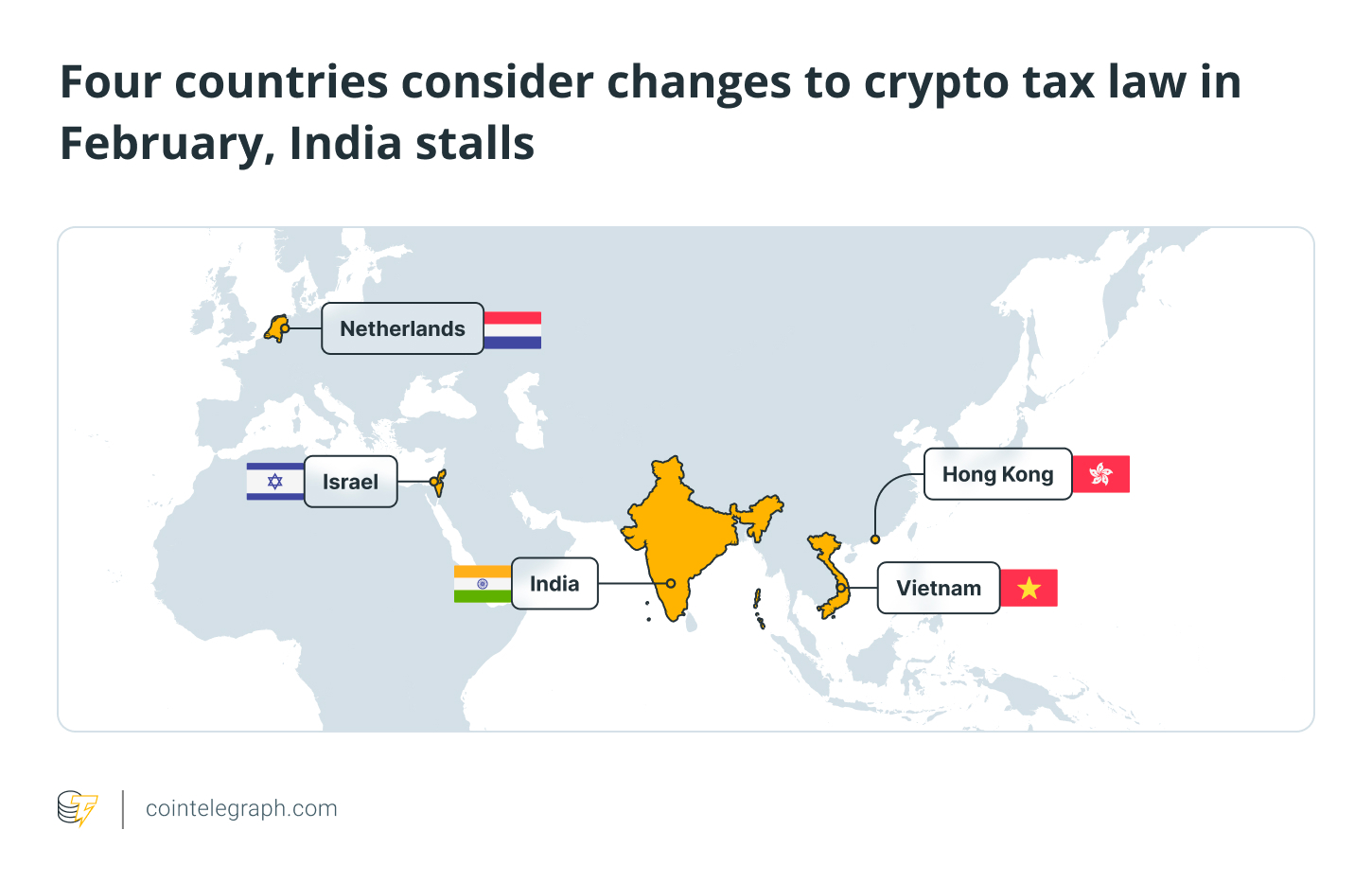
The taxman cometh. In February, the tax authorities of four countries began to reconsider how they tax crypto.
In the US, the number of crypto ATMs hit nearly 40,000, returning to 2021 levels of interest in crypto kiosks. The number of installations had dipped significantly after the crypto crash of 2022.
Japan’s inflation dipped below 2% in February, less than in the United States. Berkshire Hathaway CEO Warren Buffett said earlier this year that dollar investments were looking less attractive as the yen is providing a more stable currency.
Bitcoin (BTC) was stuck below $70,000 this month. Many crypto observers have noted that US tariffs are putting pressure on the asset. US President Donald Trump’s new 10% levy has done nothing to alleviate this.
Here’s February by the numbers:
Four countries consider changes to crypto tax laws in February
The Netherlands’ House of Representatives, the lower house of the country’s parliament, advanced a tax proposal on Feb. 12. The draft law would introduce a 36% capital gains tax on unrealized gains on savings and liquid investments, including crypto.

Critics say the tax, which is supported by 93 of the 150 representatives, will chase money out of the country.
Detractors appear to have won out. The new Dutch cabinet said that it will reconsider the measure.
“There is a lot of criticism of the Actual Return Act. We are not deaf to that … The bill needs to be amended. The Minister and State Secretary will discuss this with the Senate and parliament,” a cabinet spokesperson said.
In Israel, the Israeli Crypto Blockchain & Web 3.0 Companies Forum launched a lobbying effort to reform the country’s crypto tax laws. Forum leader Nir Hirshmann-Rub said there is broad public support to relax laws on stablecoins and tokenization, as well as simplify compliance.
He noted that many Israelis already own and invest in crypto. “More than 25% of the public already has had crypto dealings in the last five years and more than 20% currently hold digital assets,” he said.
In Hong Kong, Financial Secretary Paul Chan said that the special administrative region is tweaking its tax laws. He said the Inland Revenue Ordinance will implement the Organisation for Economic Co-operation and Development’s Crypto-Asset Reporting Framework (CARF).
The CARF is a global tax exchange standard for crypto that aims to tackle tax evasion. It requires crypto service providers to report on client activity.
Vietnam has proposed a crypto transaction tax. Crypto transfers and trading would be exempt from the usual value-added tax. But transferring crypto assets through licensed service providers would incur a 0.1% personal income tax on the transaction value.
In India, which imposes a flat 30% tax on crypto gains and doesn’t allow users to offset losses, calls to reform the law have fallen on deaf ears. Despite intense lobbying, the proposed 2026 Union Budget did nothing to reform crypto tax.
Bitcoin stays below $70,000; Trump raises tariffs 10%
Bitcoin has had a rough past couple of months, and in February, it struggled to breach the $70,000 mark.

Analysts have cited several macro pressures on Bitcoin’s price. One is the lack of progress on the CLARITY Act, the US’ proposed framework for cryptocurrency markets. Lawmakers can’t agree on ethics provisions or possible bailout provisions, and prominent lobbies, namely the crypto and banking lobbies, are at loggerheads over stablecoin interest.
Related: When will crypto’s CLARITY Act framework pass in the US Senate?
Chris Waller, a governor of the United States Federal Reserve, said, “The lack of passing of the CLARITY Act I think has kind of put people off on this.”
Another issue is tariffs. The US Supreme Court invalidated the tariffs Trump implemented using the 1977 International Emergency Economic Powers Act (IEEPA). Trump responded by hiking global tariffs 10% using the Trade Act of 1974 as a legal foundation.

Crypto analysts and observers have noted the negative effect Bitcoin has on markets. Swan CEO Cory Klippsten said, “The biggest drag on Bitcoin price the past year has been tariffs … That’s the drag on risk assets in general, and in particular [with] Bitcoin, there’s just uncertainty around what’s gonna happen.”
Japan’s inflation dips below 2%, and Takaishi takes elections
The inflation rate of the Japanese yen has dipped below that of the dollar, falling below 2%, its lowest in three years.

The new inflation low for the yen comes after Prime Minister Sanae Takaichi called for snap elections. The gamble hoped to restore the majority of the Liberal Democratic Party (LDP) to a parliamentary majority.
The gambit paid off, and now the LDP dominates the Japanese House of Representatives, the National Diet’s lower house, with a 316-member two-thirds majority.
Stock markets in Japan responded well. The Nikkei 225 (JP225) increased 10% on the month, spiking significantly after the Feb. 9 election.
[chart]
Japanese JP225 is up over 10% in February.
This could spell short-term trouble for Bitcoin, which tends to correlate with US equities, according to XWIN Research Japan. The increasing attractiveness of Japanese bonds could slow into US equity exchange-traded funds.
Related: BTC traders wait for $50K bottom: Five things to know in Bitcoin this week
Buffett said that his company will increase its investments in Japanese trading houses. These include five major “sogo shosha,” or wholesale companies: Itochu, Marubeni, Mitsubishi, Mitsui and Sumitomo.
Crypto ATMs number 40,000 as companies add new requirements
The number of cryptocurrency kiosks worldwide grew by 290 in February, bringing the total number up to nearly 40,000, according to data from Coin ATM Radar.
[graph]
290 crypto ATMs opened globally in February.
The number of cryptocurrency kiosks has fluctuated over the years. The total number dropped significantly after the crypto crash of 2022.
[graph]
Crypto ATMs globally now number nearly 40,000.
Regulators worldwide have raised concerns over crypto ATMs and the possibility of their use in money laundering, as well as scams. Some companies have taken strides to allay these concerns.
In February, the biggest Bitcoin ATM operator in the US, Bitcoin Depot, began phasing in user ID requirements for its terminals in the United States. The move followed pressure from regulators and lawmakers nationwide.
Magazine: Would Bitcoin really be at $200K if not for Jane Street? Trade Secrets
Cointelegraph Features and Cointelegraph Magazine publish long-form journalism, analysis and narrative reporting produced by Cointelegraph’s in-house editorial team and selected external contributors with subject-matter expertise. All articles are edited and reviewed by Cointelegraph editors in line with our editorial standards. Contributions from external writers are commissioned for their experience, research or perspective and do not reflect the views of Cointelegraph as a company unless explicitly stated. Content published in Features and Magazine does not constitute financial, legal or investment advice. Readers should conduct their own research and consult qualified professionals where appropriate. Cointelegraph maintains full editorial independence. The selection, commissioning and publication of Features and Magazine content are not influenced by advertisers, partners or commercial relationships.

Crypto World
BTC Plunges Below $64K as US-Israel Military Action Against Iran Triggers Crypto Selloff
TLDR
- BTC plummeted almost 5% toward $63,000 following coordinated US-Israeli military operations against Iranian targets
- The cryptocurrency reached its weakest level since the February 5 market crash when BTC momentarily fell under $60,000
- Israel’s Defense Minister Israel Katz announced a nationwide state of emergency throughout the country
- BTC’s continuous trading schedule positions it as an immediate outlet for risk aversion when traditional markets remain closed
- Market participants dumped bitcoin as it represented one of the only major liquid assets accessible during weekend hours
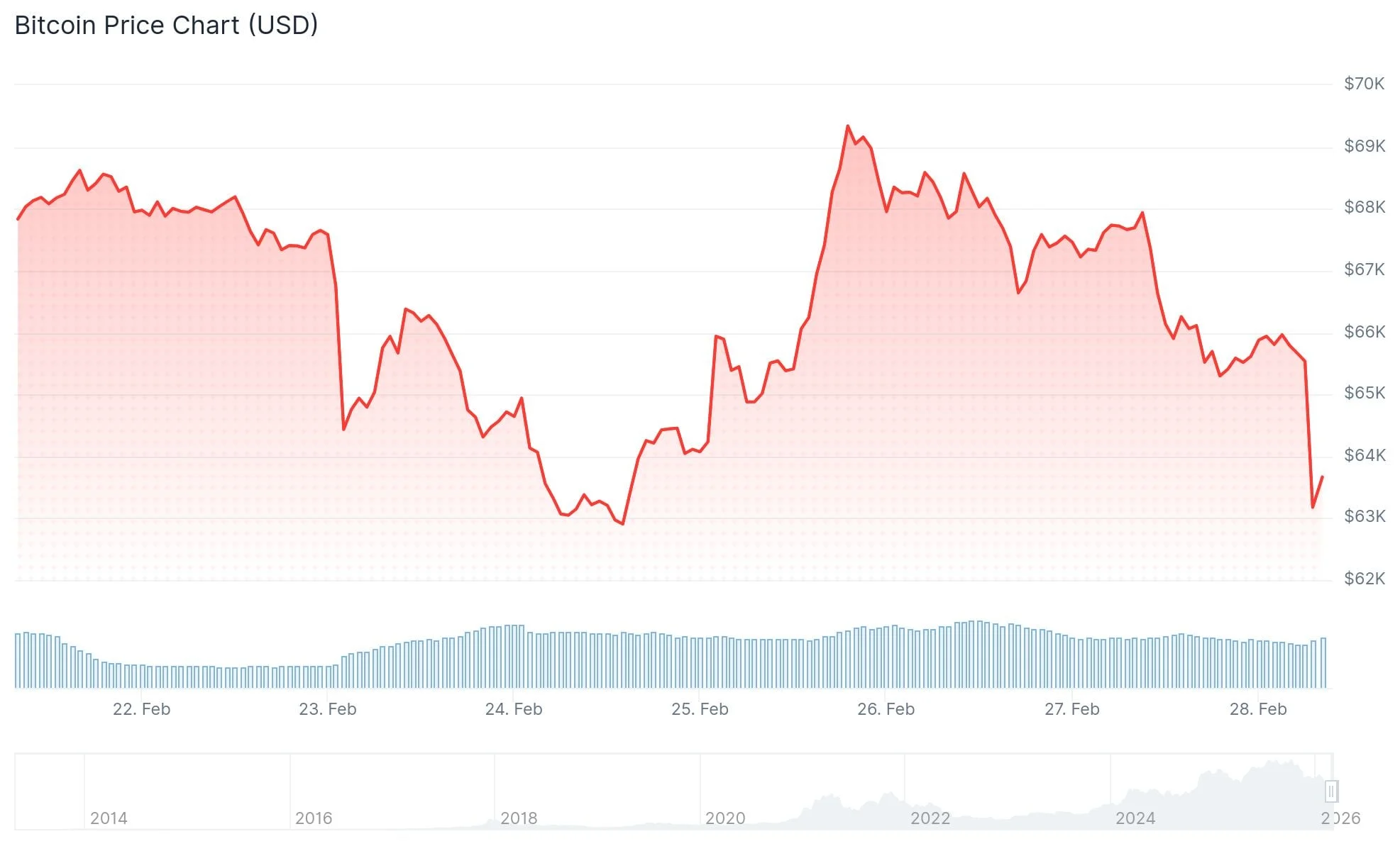
The world’s leading cryptocurrency experienced a dramatic decline on Saturday, February 28, 2026, plunging toward $63,000 following military strikes executed by the United States and Israel against Iran.
The digital asset shed nearly 5% of its value within mere minutes, representing a significant blow to the cryptocurrency market.
The selloff pushed bitcoin to levels not witnessed since February 5, when the digital currency momentarily traded beneath the $60,000 threshold.
Israeli Defense Minister Israel Katz announced a comprehensive state of emergency covering the entire nation immediately following the commencement of the military operations.
According to The Wall Street Journal, a U.S. official verified American involvement in the coordinated attacks.
Reuters reported that Israeli officials characterized the military action as a “preemptive strike,” citing statements from the nation’s defense leadership.
Why Bitcoin Sold Off First
Unlike traditional equity and bond markets that close for weekends, Bitcoin operates continuously without interruption, 24 hours daily, seven days weekly.
This constant availability positions it as among the few substantial, liquid assets accessible for traders to offload during heightened risk periods outside conventional market operating hours.
This behavior represents a recurring phenomenon. BTC frequently experiences rapid selloffs during geopolitical crises, often rebounding once conventional markets resume trading.
“Bitcoin just dropped off a cliff,” one market observer shared on X, further predicting that “Monday will be a bloodbath in the market.”
Geopolitical Context
The military operations arrive after several weeks of escalating U.S. military presence and unsuccessful nuclear discussions with Iranian leadership.
Market analysts had previously been examining potential implications of Iranian conflict for bitcoin, precious metals, and equity markets.
The military action heightens the possibility of expanded regional warfare in one of the globe’s most economically critical regions.
In recent months, bitcoin’s price movement has diverged from gold, challenging its narrative as a safe-haven or “digital gold” investment vehicle.
As of Saturday morning hours, bitcoin was changing hands near $63,000, with additional market volatility anticipated when conventional financial markets resume operations Monday.

Crypto World
Altcoins Bleed Out After Trump Confirms Attacks Against Iran, BTC Down to $63K: Weekend Watch
KCS, STABLE, and PIPPIN are today’s top losers after the latest attacks.
Bitcoin’s price moves took another turn for the worse in the past few hours after Israel attacked Iran, and then US President Trump confirmed his country was also involved.
Numerous altcoins have bled out heavily, while Binance Coin has taken advantage and surpassed XRP in terms of market cap.
BTC Dumps Again
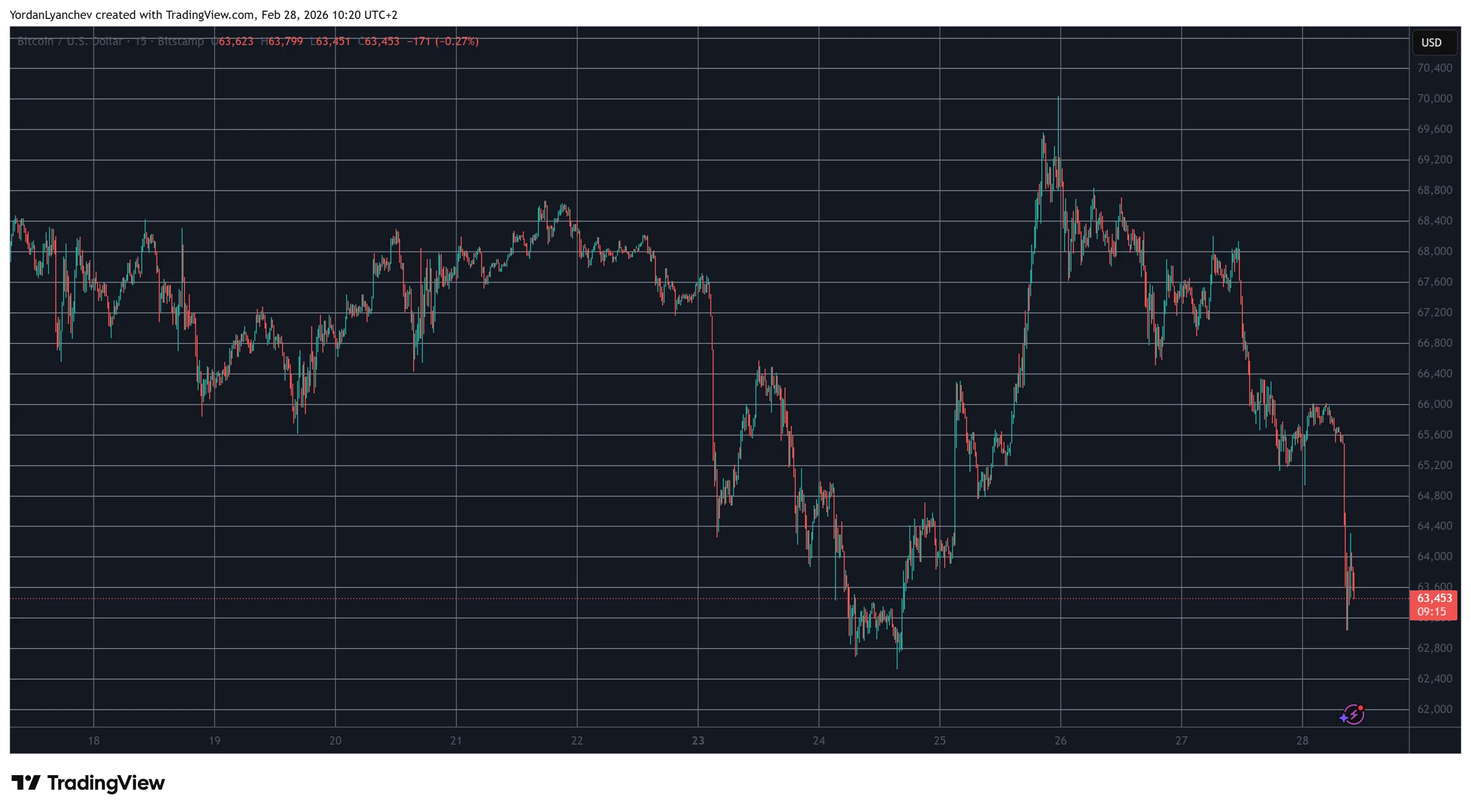
It was already a highly volatile trading week for the primary cryptocurrency as the bears seemed to be in full control by Tuesday. At the time, they pushed the asset south to a multi-week low of $62,500. However, bitcoin rebounded almost immediately and skyrocketed by several grand to $70,000 on Wednesday.
Many analysts speculated whether this was a typical dead-cat bounce, which turned out to be the case. At first, BTC slipped to around $68,000, where it spent most of Thursday and Friday. However, the situation worsened once again on Saturday morning when Israel launched a “preemptive” attack against Iran and issued a state of emergency.
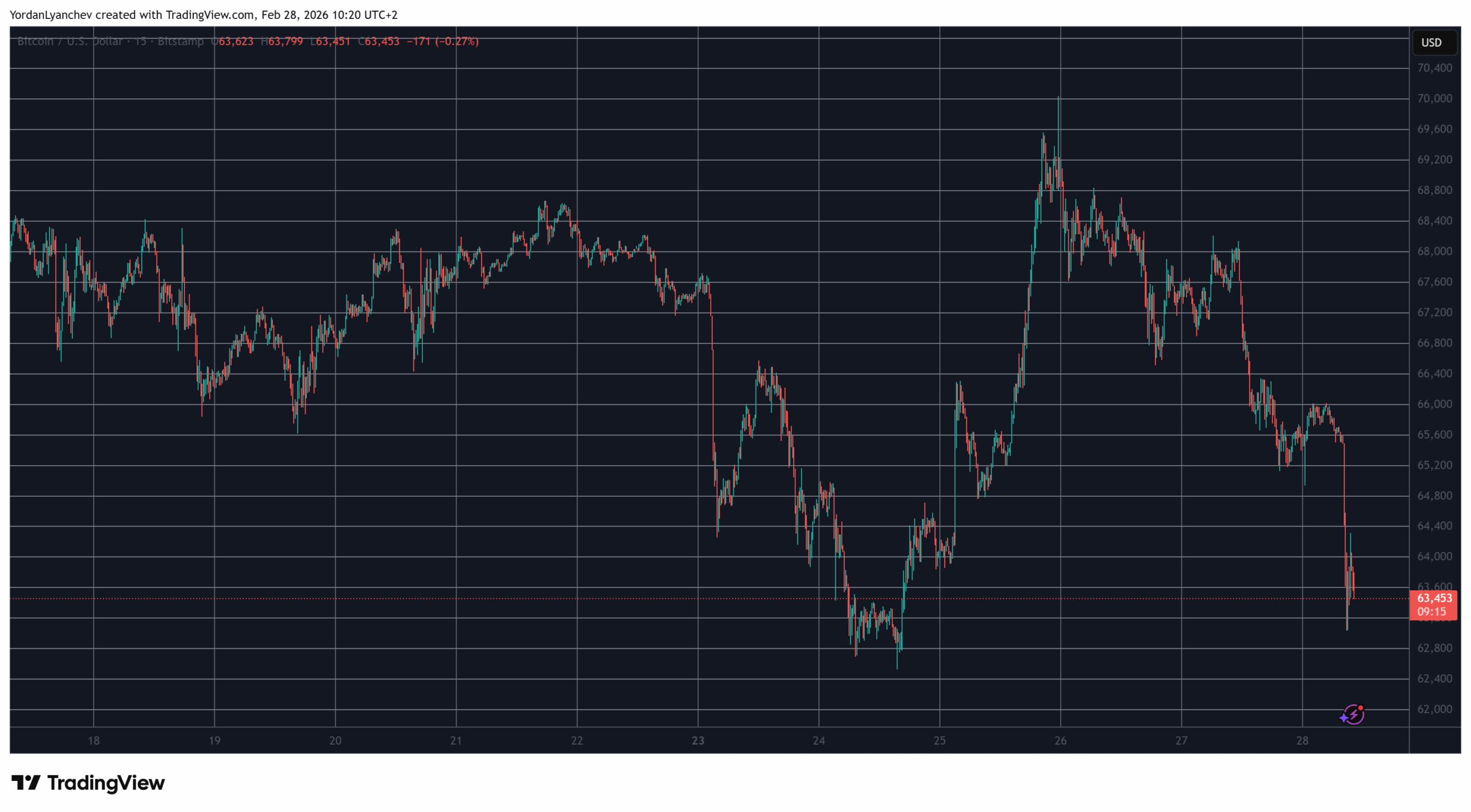
In minutes, BTC plunged to under $62,800 before it recovered some ground to $63,400 as of press time. US President Donald Trump confirmed that the US was also involved in the attacks, and more volatility is expected later today as the situation unravels.
As of now, bitcoin’s market cap has slid to $1.275 trillion on CG, while its dominance over the alts is below 56%.
Alts Bleed
The graph below will show the painful reality in the altcoin space, in which almost all assets are deep in the red. ETH has plunged by $200 in the past few days to $1,850. XRP was surpassed by BNB after a 9% drop, while SOL has slumped by double digits to under $80.
ADA, HYPE, BCH, DOGE, CC, LINK, and XLM have plummeted hard as well. Declines of up to 20% are evident from KCS, PIPPIN, and STABLE, while stablecoins linked to gold are in the green.
The total crypto market cap has erased over $100 billion in the past day or so and is deep below $2.3 trillion on CG.

Binance Free $600 (CryptoPotato Exclusive): Use this link to register a new account and receive $600 exclusive welcome offer on Binance (full details).
LIMITED OFFER for CryptoPotato readers at Bybit: Use this link to register and open a $500 FREE position on any coin!
Disclaimer: Information found on CryptoPotato is those of writers quoted. It does not represent the opinions of CryptoPotato on whether to buy, sell, or hold any investments. You are advised to conduct your own research before making any investment decisions. Use provided information at your own risk. See Disclaimer for more information.
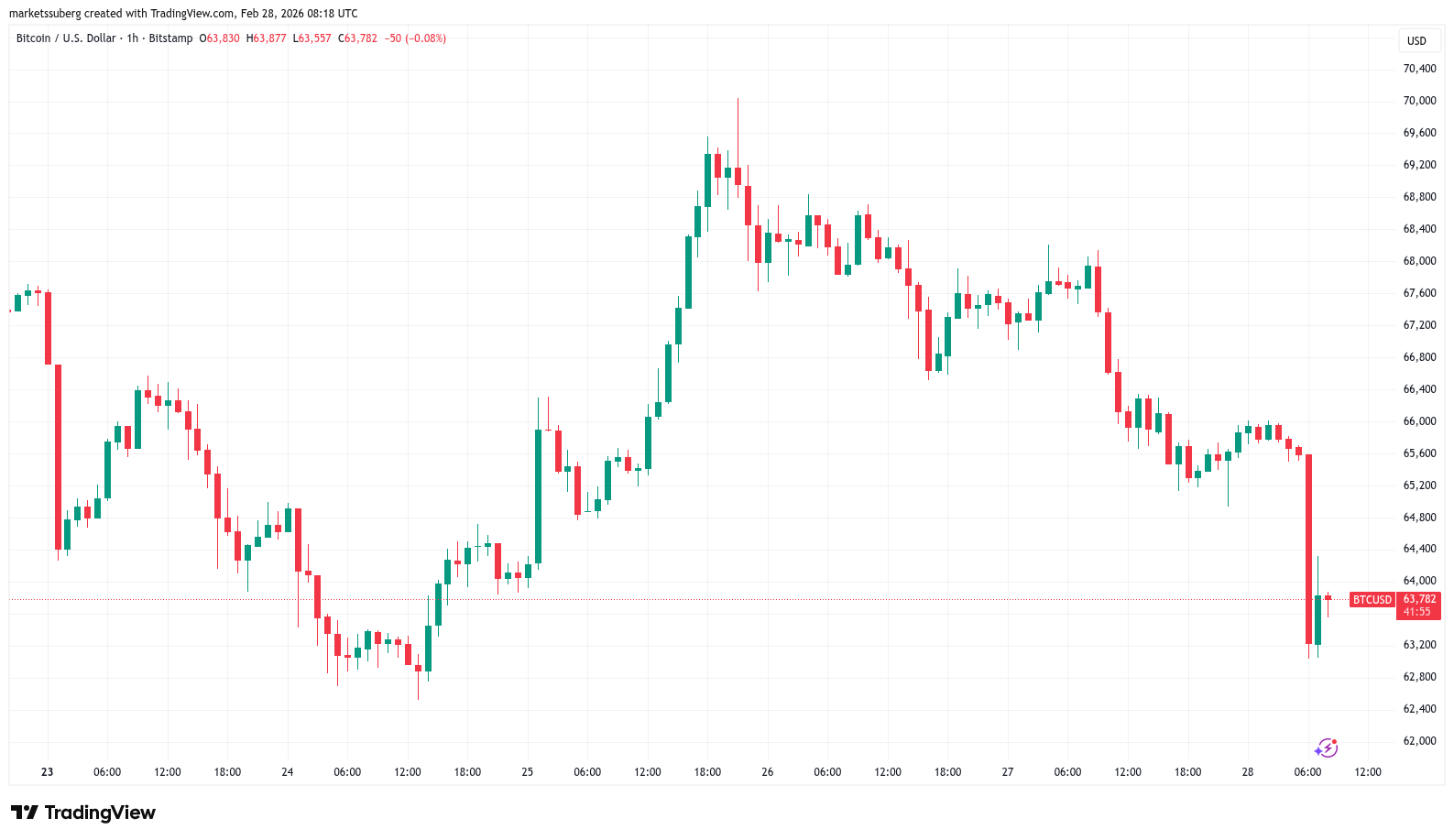
Bitcoin faced geopolitical instability alone as a weekend move on Iran saw traditional markets closed, with key support still holding.
Bitcoin (BTC) daily losses neared 4% on Saturday as the US and Israel announced a military operation in Iran.
Key points:
-
Bitcoin targets $63,000 as US President Donald Trump confirms a major bombing campaign inside Iran.
-
Trump highlights nuclear infrastructure as a key target of the joint raids with Israel.
-
Crypto markets react alone with TradFi trading suspended until futures return.
Trump tells Iranians: “Take over your government”
Data from TradingView showed BTC price action testing $63,000 as crypto markets reacted to the weekend’s events.

In a video address, US President Donald Trump said that the goal of the move was to target Iran’s nuclear infrastructure, but finished by calling on Iranians to take control of the incumbent government.
“When we are finished, take over your government; it will be yours to take,” he said.
“This will be, probably, your only chance for generations. For many years, you have asked for America’s help, but you never got it.”
With US stock market futures yet to open, crypto was alone in deciding on how to react to fresh geopolitical instability.
Data from CoinGlass showed liquidations passing $250 million in the four hours to the time of writing.

“The US and Israel now appear to be at war with Iran for the second time in 8 months,” trading resource The Kobeissi Letter wrote in a response on X.
Kobeissi referenced a previous Iran offensive in 2025 — an event that sparked an immediate, volatile reaction across crypto and risk assets.
Bitcoin reacts to familiar cues
With core support levels still holding for BTC/USD, the fresh escalation comes at a key time for traders as the final hours tick down to the February monthly close.
Related: Price predictions 2/27: BTC, ETH, XRP, BNB, SOL, DOGE, BCH, ADA, HYPE, LINK
As Cointelegraph reported, the pair is now down roughly as much as in February 2025, and due to seal its fifth consecutive month of losses — something not encountered in seven years.
Hot US inflation data added another headwind for Bitcoin bulls on Friday, after they tried and failed to reclaim key support levels closer to $70,000.
This article does not contain investment advice or recommendations. Every investment and trading move involves risk, and readers should conduct their own research when making a decision. While we strive to provide accurate and timely information, Cointelegraph does not guarantee the accuracy, completeness, or reliability of any information in this article. This article may contain forward-looking statements that are subject to risks and uncertainties. Cointelegraph will not be liable for any loss or damage arising from your reliance on this information.
Quick Summary
- On February 28, 2026, Israel executed a coordinated “pre-emptive strike” against Iran alongside US forces
- President Trump announced “major combat operations” were active in Iranian territory
- Iranian authorities shut down national airspace and vowed “crushing” retaliation
- Supreme Leader Khamenei was evacuated from Tehran to an undisclosed secure facility
- Washington simultaneously added Iran to its “state sponsor of wrongful detention” list
On February 28, 2026, Israel executed a coordinated pre-emptive military operation against Iranian targets. A senior Israeli defence official speaking to Reuters confirmed the attack was synchronized with United States forces.
President Donald Trump publicly acknowledged American involvement, stating the United States had initiated “major combat operations” on Iranian soil. CNN’s reporting indicated the strikes concentrated on Iranian military installations.
According to the Israeli defence official, operational planning extended across several months. The specific execution date was finalized weeks before the actual strikes commenced.
Israeli Defence Minister Israel Katz made the official strike announcement while simultaneously implementing emergency protocols throughout Israel. Officials cited expectations of Iranian counter-strikes as justification for the emergency measures.
Around 08:15 local time, warning sirens activated throughout Israeli territory. Citizens received emergency mobile notifications characterizing the situation as an “extremely serious” security threat.
Journalists from AFP stationed in Tehran documented two powerful explosions. Dense smoke columns rose from central and eastern sections of Iran’s capital city.
According to Iran’s Fars news agency, the “type of explosions suggests a missile attack.” Iranian officials have not yet released comprehensive damage assessments.
Following the explosions, Iranian aviation authorities ordered a complete national airspace shutdown. The Civil Aviation Organisation issued the closure directive “until further notice.”
Tehran’s Reaction and Command Structure
A senior Iranian official informed Reuters that Tehran is organizing a “crushing” counter-offensive. Supreme Leader Ayatollah Ali Khamenei was transported from Tehran to a protected location outside the capital.
These military actions occurred approximately eight months after a 12-day aerial conflict between Israeli and Iranian forces in June 2025. Both Washington and Jerusalem had issued multiple warnings about potential strikes should Iran persist with its nuclear enrichment and ballistic missile development.
Washington’s Detention Designation
Coinciding with the military strikes, the United States formally classified Iran as a “state sponsor of wrongful detention.” Iran became the inaugural nation added to this sanctions list, established through a Trump executive order issued in September 2025.
Secretary of State Marco Rubio publicly demanded Iran release all detained American citizens. He indicated future possibilities include invalidating US passport travel authorization to Iran.
Trump additionally declared his objective of eliminating all uranium enrichment activities in Iran, including civilian nuclear programs. This statement followed indirect diplomatic discussions between US and Iranian representatives in Geneva, where both delegations reported constructive progress.
Oman’s Foreign Minister revealed that Iranian negotiators committed during Geneva talks to permanently cease enriched uranium stockpiling. He characterized this commitment as a significant diplomatic achievement with potential to avert broader conflict.
On Friday, Trump stated he hadn’t reached a “final decision” regarding military action. By Saturday morning, operations had commenced.

Morgan Stanley has taken another step deeper into digital assets, filing for a new national trust bank charter that would allow the firm to custody cryptocurrencies and carry out related services for clients in the United States.
Key Takeaways:
- Morgan Stanley applied for a national trust charter to custody crypto and provide trading and staking services.
- The move is part of a broader institutional push for regulated digital asset infrastructure.
- Approval would let the bank hold client crypto directly as it expands ETFs and wealth management offerings.
A public filing with the Office of the Comptroller of the Currency shows the application, submitted Feb. 18, is under the name Morgan Stanley Digital Trust, National Association.
The move would establish a newly created banking entity rather than an acquired institution.
Morgan Stanley Subsidiary to Offer Crypto Custody, Trading and Staking Services
According to reports from Bloomberg and Forbes, the subsidiary would provide custody for selected digital assets and support investment activity through purchases, sales, swaps and transfers.
The filing also outlines plans to offer staking services, an increasingly common feature among institutional crypto platforms.
A national trust charter permits fiduciary operations such as asset safekeeping, custody and trust services. “De novo” status indicates the bank is being formed from scratch.
If approved, it would mark Morgan Stanley’s first trust charter dedicated specifically to crypto.
The application comes amid a broader push by financial institutions to secure federal oversight for digital asset operations.
— Mark (@markchadwickx) February 28, 2026
 BREAKING: This is MASSIVE news for Alts…
Morgan Stanley is going all-in on Crypto – and they like $XRP over Bitcoin.
Morgan Stanley just applied for a national trust bank charter to custody Bitcoin and crypto assets.
This is a Wall Street giant applying to custody crypto… pic.twitter.com/vKjmMGu7oD
More recently, payments firms and trading platforms, among them Stripe-owned Bridge and Crypto.com, have also pursued similar approvals.
The race reflects growing demand from institutional clients seeking regulated custody and trading infrastructure following years of market volatility and high-profile exchange failures.
Morgan Stanley has been steadily expanding its presence in the sector. In January, the bank appointed equity markets executive Amy Oldenburg to lead a newly formed digital asset division.
Job postings indicate the firm is hiring additional specialists across strategy and product roles tied to crypto services.
The investment bank has also filed to launch spot Bitcoin and Solana exchange-traded funds, followed by a proposed staked Ether ETF.
Together, the filings suggest a wider strategy aimed at integrating digital assets into traditional wealth management offerings.
If regulators approve the charter, Morgan Stanley would be able to directly safeguard client holdings instead of relying on third-party custodians, potentially positioning the firm as a full-service provider for institutional crypto investors.
OCC Grants Trust Bank Charters to Major Crypto Firms
The OCC approved national trust bank charters in December for a slate of crypto and digital asset firms, including BitGo, Fidelity Digital Assets, Circle, Ripple and Paxos, widening the on ramp for tokenized finance.
Trust banks sit in a narrower lane than full-service banks, since they generally cannot take deposits or make loans.
Even so, the model can still open doors for stablecoin issuers that want to custody assets and run conversion and settlement services without relying entirely on third-party providers.
Earlier this year, World Liberty Financial also filed for a US national banking charter as stablecoins shift from a trading tool into payment infrastructure.
The post Morgan Stanley Applies for National Trust Charter to Hold Clients’ Crypto appeared first on Cryptonews.

OpenAI has secured a deal to run its AI models on the Pentagon’s classified network, a move announced by OpenAI CEO Sam Altman in a late Friday post on X. The arrangement signals a formal step toward embedding next-generation AI within sensitive military infrastructure, framed by assurances of safety and governance that align with the company’s operating limits. Altman’s message described the department’s approach as one that respects safety guardrails and is willing to work within the company’s boundaries, underscoring a methodical path from civilian deployment to classified environments. The timing places OpenAI at the center of a broader debate about how public institutions should harness artificial intelligence without compromising civil liberties or operational safety, particularly in defense contexts.
The news comes as the White House directs federal agencies to halt use of Anthropic’s technology, initiating a six-month transition for agencies already relying on its systems. The policy demonstrates the administration’s intent to tighten oversight over AI tools used across government while still leaving room for carefully orchestrated, safety-conscious deployments. The juxtaposition between a Pentagon-backed integration and a nationwide pause on a rival platform highlights a government-wide reckoning about how, where, and under what safeguards AI technologies should operate in sensitive domains.
Altman’s remarks emphasized a cautious but constructive stance toward national-security applications. He framed the OpenAI arrangement as one that prioritizes safety while allowing access to powerful capabilities, an argument that aligns with ongoing discussions about responsible AI use in government networks. The Defense Department’s approach—favoring controlled access and rigorous governance—reflects a broader policy impulse to build operational safety into deployments that could otherwise accelerate where and how AI informs critical decisions. The public signaling from both sides suggests a model in which collaboration with defense entities proceeds under strict compliance frameworks rather than broad, unfiltered usage.
Within this regulatory and political backdrop, Anthropic’s situation remains a focal point. The company had been the first AI lab to deploy models across the Pentagon’s classified environment under a $200 million contract signed in July. Negotiations reportedly collapsed after Anthropic sought assurances that its software would not enable autonomous weapons or domestic mass surveillance. The Defense Department, by contrast, insisted that the technology remain available for all lawful military purposes, a stance designed to preserve flexibility for defense needs while maintaining safeguards. The divergence illustrates the delicate balance between enabling cutting-edge capabilities and enforcing guardrails that align with national security and civil-liberties considerations.
Anthropic later stated it was “deeply saddened” by the designation and signaled its intention to challenge the decision in court. The move, if upheld, could set a significant precedent affecting how American technology firms negotiate with government agencies as political scrutiny of AI partnerships intensifies. OpenAI, for its part, has indicated it maintains similar restrictions and has written them into its own agreement framework. Altman noted that OpenAI prohibits domestic mass surveillance and requires human accountability in decisions involving the use of force, including automated weapons systems. These provisions are meant to align with the government’s expectations for responsible AI use in sensitive operations, even as the military explores deeper integration of AI tools into its workflows.
Public reaction to the developments has been mixed. Some observers on social platforms questioned the trajectory of AI governance and the implications for innovation. The discussion touches on broader concerns about how security and civil liberties can be reconciled with the speed and scale of AI deployment in governmental and defense contexts. Nonetheless, the core takeaway is clear: the government is actively experimenting with AI in national-security spaces while simultaneously imposing guardrails to prevent misuse, with the outcomes likely to shape future procurement and collaboration across the tech sector.
Altman’s comments reiterated that OpenAI’s restrictions include a prohibition on domestic mass surveillance and a requirement for human oversight in decisions involving force, including automated weapons systems. Those commitments are framed as prerequisites for access to classified environments, signaling a governance model that seeks to harmonize the power of large-scale AI models with the safeguards demanded by sensitive operations. The broader trajectory suggests a sustained interest among policymakers and defense stakeholders in harnessing AI’s benefits while maintaining tight oversight to prevent overreach or misuse. As this enters a phase of practical implementation, both government agencies and tech providers will be measured against their ability to maintain safety, transparency, and accountability in high-stakes settings.
The unfolding narrative also underscores how procurement and policy decisions around AI will influence the technology’s broader ecosystem. If the Pentagon’s experiments with OpenAI’s models within classified networks prove scalable and secure, they could set a template for future collaborations that blend cutting-edge AI with rigorous governance, a model likely to ripple into adjacent industries—including those exploring AI-assisted analytics and blockchain-based governance mechanisms. At the same time, the Anthropic episode demonstrates how这样 procurement negotiations can hinge on explicit guarantees regarding weaponization and surveillance—an issue that could shape the terms under which startups and incumbents pursue federal contracts.
In parallel, the public discourse around AI policy continues to evolve, with lawmakers and regulators watching closely how private firms respond to national-security demands. The outcome of Anthropic’s intended legal challenge could influence the negotiating playbook for future government partnerships, potentially affecting how terms are drafted, how risk is allocated, and how compliance is verified across different agencies. The OpenAI-aided deployment inside the Pentagon’s classified network remains a test case for balancing the speed and utility of AI with the accountability and safety constraints that define its most sensitive applications.
As the regulatory landscape continues to shift, many in the tech community will be watching for how these developments crystallize into concrete practice—how assessments of risk, security protocols, and governance standards evolve in next-generation AI deployments. The interplay between aggressive capability development and deliberate risk containment is now a central feature of strategic technology planning, with implications that extend beyond defense to other sectors that rely on AI for decision-making, data analysis, and critical operations. The coming months will reveal whether the OpenAI-DoD collaboration can serve as a durable model for secure, responsible AI integration within the state’s most sensitive enclaves.
OpenAI’s late-Friday X post framing the Pentagon deployment, and the Defense Department’s safety-oriented stance toward Anthropic, anchor the narrative in primary statements. The Truth Social post attributed to President Trump further contextualizes the political climate surrounding federal AI policy. On Anthropic’s side, the company’s official statement provides the formal counterpoint to the designation and its legal trajectory. Together, these sources outline a multi-faceted landscape where national security, civil liberties, and commercial interests intersect in real time.
TLDR:
- BTC dropped below $64,000 within hours of Israel’s confirmed strike on Iran’s presidential HQ.
- Ethereum fell over 5% to under $1,900 as traders liquidated risk positions across altcoins.
- Over $100M in long positions were wiped out within 15 minutes of the strike news hitting markets.
- Polymarket trader Vivaldi007 turned $385K profit betting on a U.S.-Israel Iran strike since Feb 8.
Explosions rocked Tehran after Israel launched strikes on Iran’s presidential headquarters and Ministry of Intelligence. Sirens blared across Israel as the IDF sent emergency alerts to citizens’ phones.
Crypto markets responded immediately, shedding over $100 million in long positions within 15 minutes. The joint operation, reportedly involving the United States, sent shockwaves far beyond the Middle East.
Israel-Iran Strike Sends Crypto Prices Into Freefall
Bitcoin dropped roughly 3% within hours of the news breaking. It fell below $64,000 as traders rushed to cut exposure.
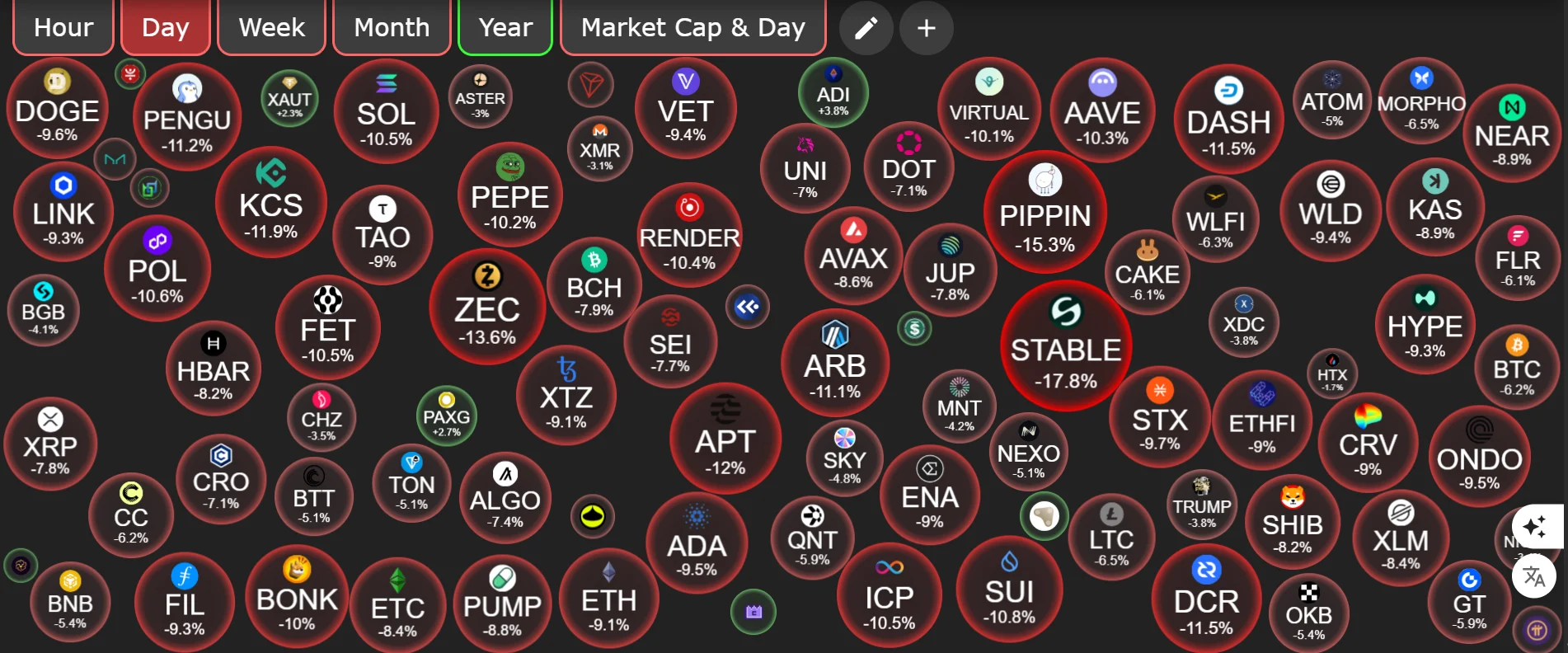
Ethereum took a harder hit, sliding over 5% to under $1,900. The broader crypto market cap lost around 6% in early trading, according to market data. According to a snapshot from the cryptobubbles, the market appears red. Most assets are recording substantial drops.
The IDF confirmed sirens sounded throughout Israel shortly before the strikes became public. Citizens received direct cellular alerts to stay near protected spaces. The military framed the alert as a proactive measure. It signaled the scale of what was unfolding.
On-chain tracking platform Lookonchain reported one high-profile casualty of the volatility. Trader Machi, who had deposited $245,000 just four days prior, was liquidated again. His account dropped to only $13,580. The timing proved catastrophic for leveraged long positions across the board.
Not everyone lost. Lookonchain also flagged Polymarket trader Vivaldi007, who had been betting on a U.S.-Israel strike against Iran since February 8. He placed wagers on nearly every available date and kept losing until now. The strikes pushed his total profit to $385,000.
Geopolitical Risk Reignites Crypto Market Volatility
This pattern is not new. When the U.S. struck Iranian nuclear sites in June 2025, BTC plunged below $100,000 during a 7% market-wide selloff.
Oil supply fears and global economic uncertainty drove the move. Crypto behaved like a risk asset, not a safe haven.
The April 2024 Israel-Iran exchange produced a similar response. BTC briefly dipped under $60,000 as capital rotated toward gold and the dollar. Markets recovered once tensions cooled. Whether that playbook repeats depends on what comes next.
Iran’s potential response remains the key variable. A closure of the Strait of Hormuz, which handles roughly 20% of global oil, could spike energy prices and reignite inflation fears.
Central bank tightening in that scenario would add further pressure on risk assets. Past modeling suggests a full escalation could cut crypto valuations by 10 to 20% in the short term.
The IDF has not issued further operational updates. Markets remain on edge.
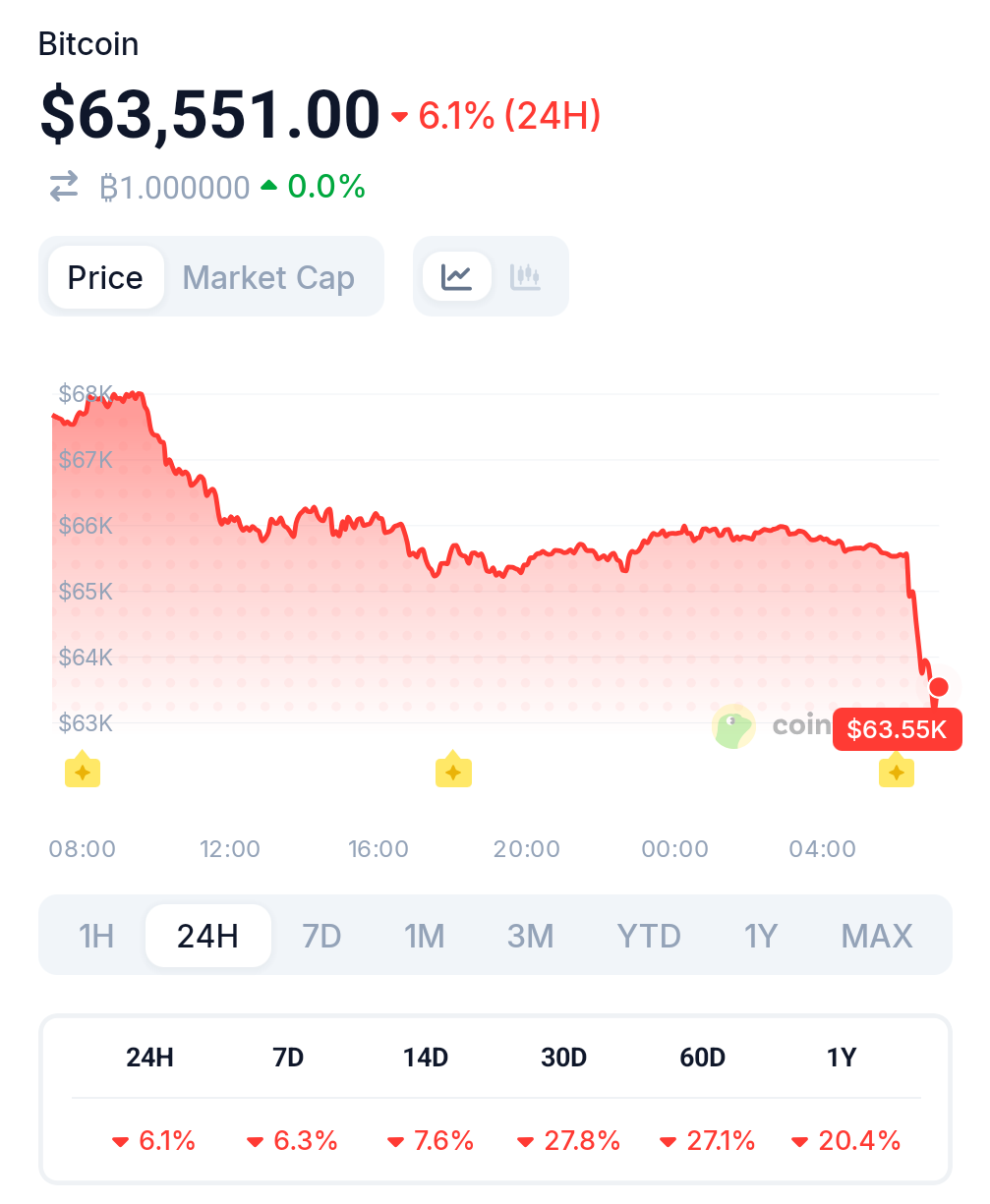
Israel and the United States carried out a joint strike on Iran early Saturday, marking a major escalation in regional tensions. Bitcoin reached extremely to the news, dropping straight to $63,000 and extending daily losses to nearly 7%.
Israeli Defense Minister Israel Katz described the operation as a “preemptive strike.” The Israeli government declared a nationwide state of emergency, warning of possible Iranian retaliation using drones and ballistic missiles.
US Iran War Officially Starts
According to CNN, the strike was coordinated between Washington and Jerusalem. Officials said the action aimed to counter what they described as an immediate threat.
Details on the specific targets have not yet been fully disclosed.The move follows weeks of rising tensions between the U.S. and Iran. Washington yesterday designated Iran a State Sponsor of Wrongful Detention, accusing Tehran of holding American citizens for political leverage.
At the same time, the U.S. increased its military presence in Israel, deploying advanced fighter jets and additional assets across the region.
Bitcoin Crashes and Erased Weekly Gains
Bitcoin fell sharply following news of the strike. The cryptocurrency dropped more than 6% in 24 hours, sliding to around $63,300.
The decline erased recent recovery attempts and extended broader weakness over the past month.Traders appear to be cutting risk exposure amid fears of a wider regional conflict.
If Iran retaliates directly against Israeli or U.S. assets, the situation could escalate quickly. Energy markets are also on alert, given Iran’s strategic position in global oil routes.
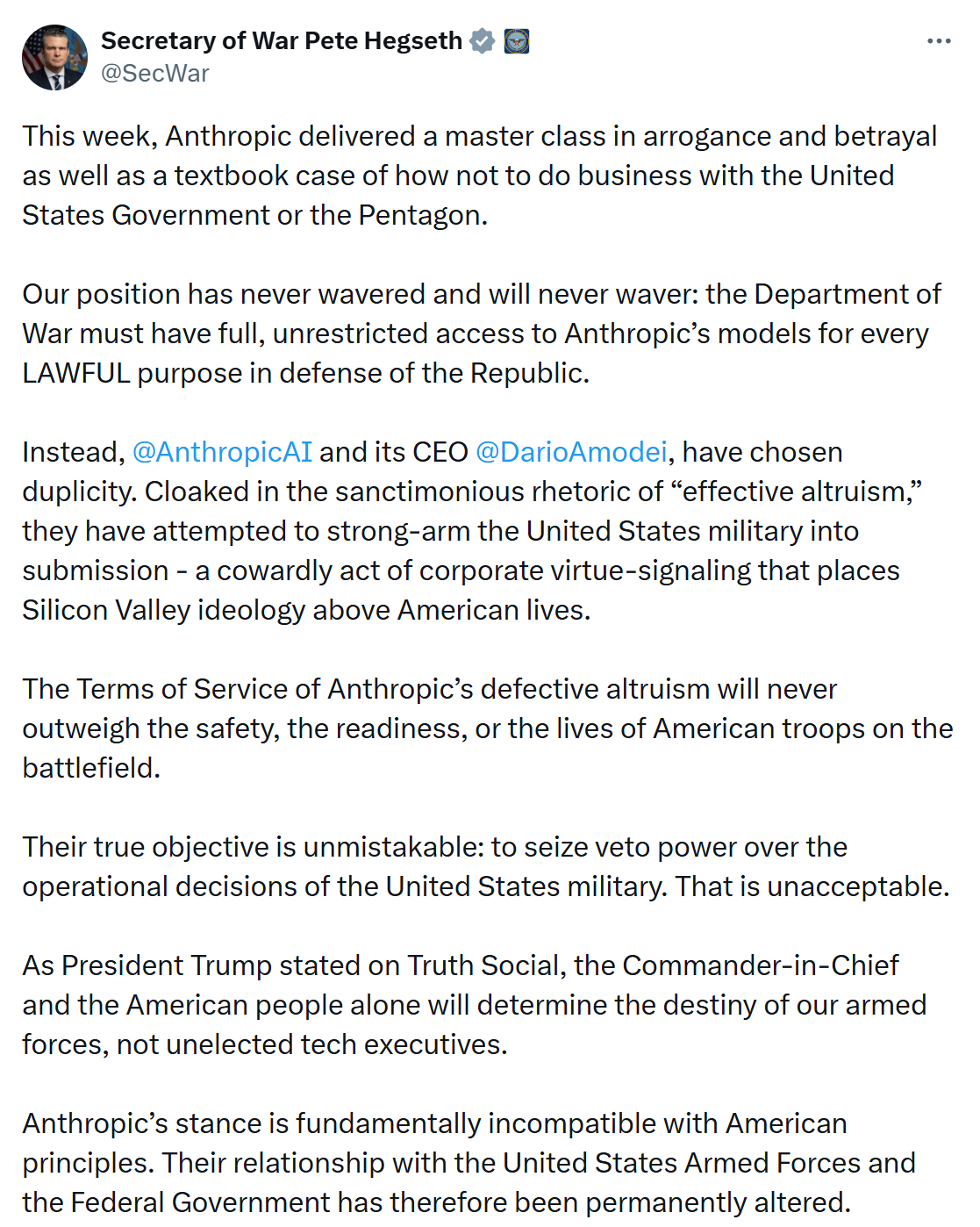
OpenAI has reached an agreement with the United States Department of Defense to deploy its artificial intelligence models on classified military networks, just hours after the White House ordered federal agencies to stop using technology from rival firm Anthropic.
In a late Friday post on X, OpenAI CEO Sam Altman announced the deal, saying the company would provide its models inside the Pentagon’s “classified network.” He wrote that the department showed “deep respect for safety” and a willingness to work within the company’s operating limits.
The announcement came amid a turbulent week for the AI sector. Earlier the same day, Defense Secretary Pete Hegseth labeled Anthropic a “Supply-Chain Risk to National Security,” a designation typically applied to foreign adversaries. The ruling requires defense contractors to certify they are not using the company’s models.

President Donald Trump simultaneously directed every US federal agency to immediately halt use of Anthropic technology, with a six-month transition period for agencies already relying on its systems.
Related: Crypto VC Paradigm expands into AI, robotics with $1.5B fund: WSJ
Anthropic Pentagon talks collapse over AI use limits
Anthropic was the first AI lab to deploy models across the Pentagon’s classified environment under a $200 million contract signed in July. Negotiations collapsed after the company sought guarantees that its software would not be used for autonomous weapons or domestic mass surveillance. The Defense Department insisted the technology be available for all lawful military purposes.
In a statement, Anthropic said it was “deeply saddened” by the designation and intends to challenge the decision in court. The company warned the move could set a precedent affecting how American technology firms negotiate with government agencies, as political scrutiny of AI partnerships continues to intensify.
Altman said OpenAI maintains similar restrictions and that they were written into the new agreement. According to him, the company prohibits domestic mass surveillance and requires human responsibility in decisions involving the use of force, including automated weapons systems.
Related: Pantera, Franklin Templeton join Sentient Arena to test AI agents
OpenAI faces backlash after deal
Meanwhile, some users on X voiced skepticism. “I just canceled ChatGPT and bought Claude Pro Max,” Christopher Hale, an American Democratic politician, wrote. “One stands up for the God-given rights of the American people. The other folds to tyrants,” he added.

“2019 OpenAI: we will never help build weapons or surveillance tools. 2026 OpenAI: department of War, hold my classified cloud instance. Integrity arc go brrrrrrr,” one crypto user wrote.
Magazine: Bitcoin may take 7 years to upgrade to post-quantum — BIP-360 co-author
Israel also announced a state of emergency as it expects a quick retaliation by Iran.
The enhanced price volatility this week continues, as bitcoin has started to lose value rapidly once again, dropping to a multi-day low of well under $63,600.
The latest leg down was likely prompted by the quickly escalating global tension, especially between the two old enemies – Iran and Israel.
The breaking story started to develop less than half an hour ago on Saturday morning when multiple news outlets reported that Israel had launched an “preemptive attack” against Iran. The former’s Defense Minister, Israel Katz, announced a state of emergency within the country because they expect retaliation from Iran by drones and other strikes.
Similar instances in the past have impacted bitcoin’s price, and this time is no different. Given the fact that the cryptocurrency space is the only financial market open during the weekend, the effects were immediate.
In the span of just minutes, bitcoin went from $66,000 to $63,600 before recovering some ground to $64,000. However, the asset is down by over four grand since yesterday when it was rejected at $68,000.
Before that, it peaked at $70,000 on Wednesday after it bounced from a multi-week low of $62,500 marked a day earlier. The altcoins have experienced similar volatility, with many dropping by 2% or more in the past hour alone.
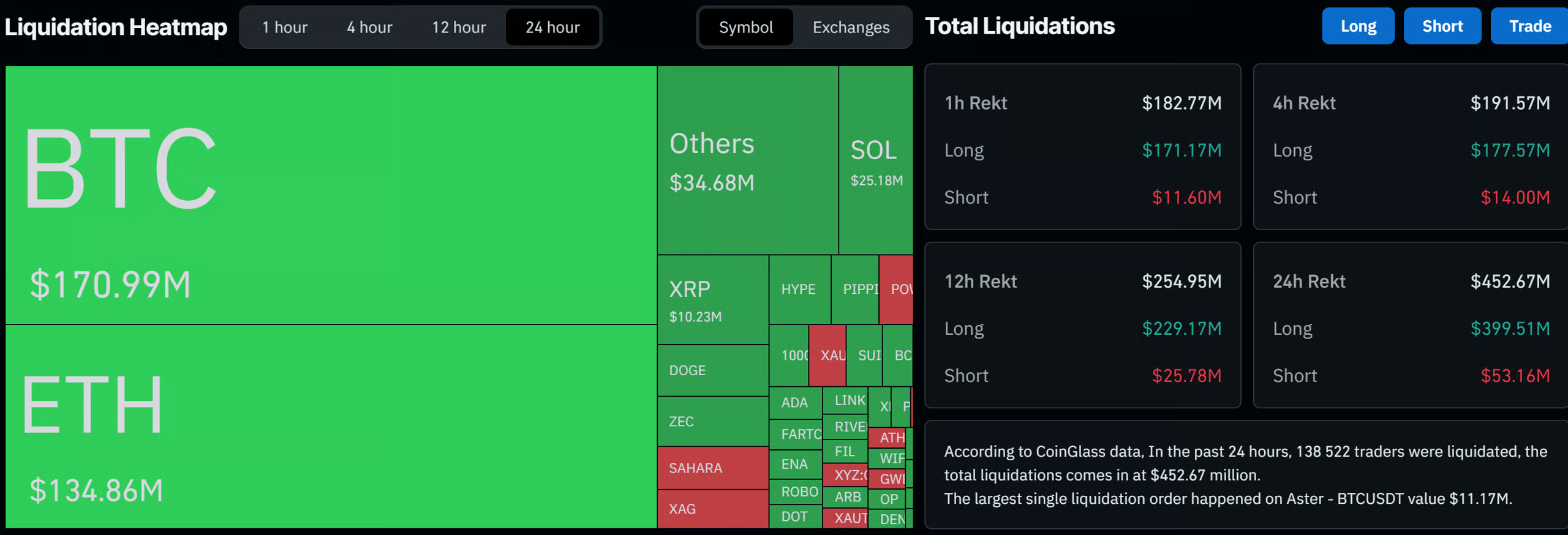
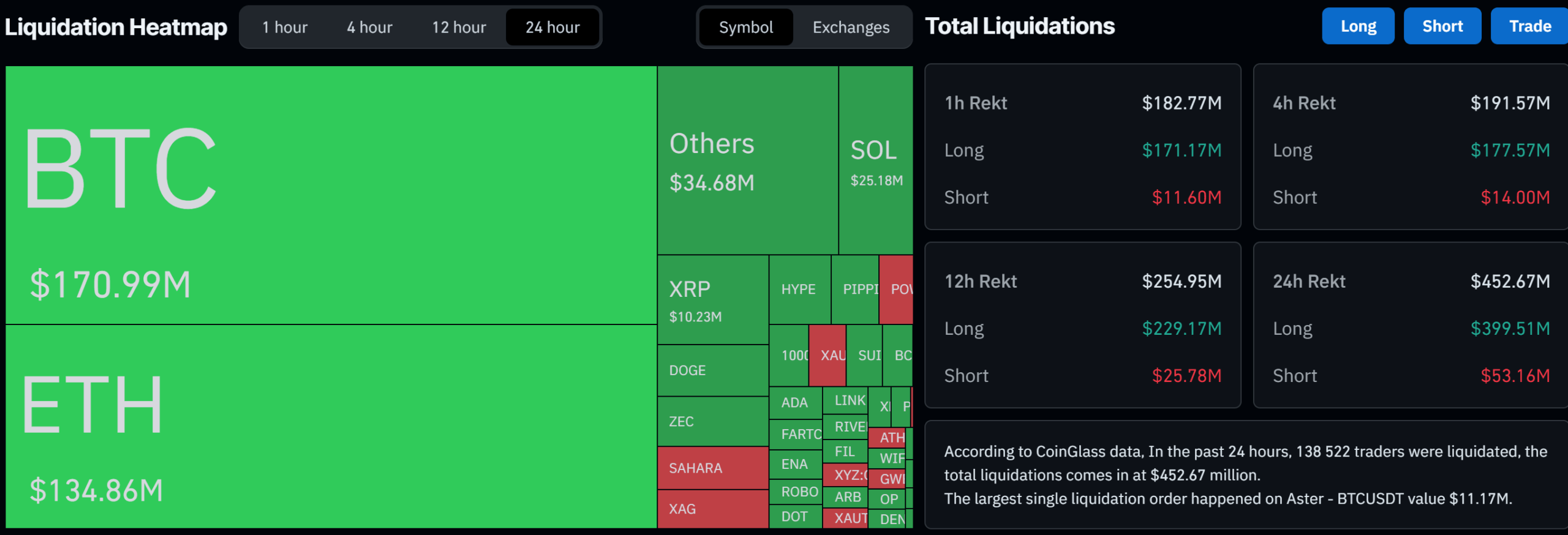
Consequently, the liquidations are on the rise again, hitting $450 million on a 24-hour scale. $185 million from the total came in just the last hour.
You may also like:
Binance Free $600 (CryptoPotato Exclusive): Use this link to register a new account and receive $600 exclusive welcome offer on Binance (full details).
LIMITED OFFER for CryptoPotato readers at Bybit: Use this link to register and open a $500 FREE position on any coin!

Benfica suspends five supporters following Champions League incidents

Vivo X300 FE Moves Closer to Debut; X300 Ultra Could Get Dual Teleconverter Kit

Northern Ireland weekend weather as spring officially begins

Smart energy pays enters the US market, targeting scalable financial infrastructure

Why Israel is blocking foreign journalists from entering

Bitcoin: We’re Entering The Most Dangerous Phase

Crypto Trading for Beginners 2026 | Crypto Trading Kaise Kare | Crypto Trading Strategy

Tamannaah Bhatia Credits Father For Financial Success And Diversified Investment Portfolio

The American Dream | College Friends Face Hard Choices Between Fame, Money & Loyalty | Full HD Movie
-

 Politics6 days ago
Baftas 2026: Awards Nominations, Presenters And Performers
-

 Sports5 days ago
Women’s college basketball rankings: Iowa reenters top 10, Auriemma makes history
-

 Fashion14 hours ago
Weekend Open Thread: Iris Top
-

 Politics5 days ago
Nick Reiner Enters Plea In Deaths Of Parents Rob And Michele
-

 Business4 days ago
True Citrus debuts functional drink mix collection
-

 Politics1 day ago
ITV enters Gaza with IDF amid ongoing genocide
-

 Crypto World4 days ago
XRP price enters “dead zone” as Binance leverage hits lows
-
Sports4 hours ago
The Vikings Need a Duck
-

 Business6 days ago
Mattel’s American Girl brand turns 40, dolls enter a new era
-

 Business6 days ago
Law enforcement kills armed man seeking to enter Trump’s Mar-a-Lago resort, officials say
-

 Tech4 days ago
Unsurprisingly, Apple's board gets what it wants in 2026 shareholder meeting
-
 NewsBeat2 days ago
Manchester Central Mosque issues statement as it imposes new measures ‘with immediate effect’ after armed men enter
-

 NewsBeat2 days ago
Cuba says its forces have killed four on US-registered speedboat | World News
-
 NewsBeat5 days ago
‘Hourly’ method from gastroenterologist ‘helps reduce air travel bloating’
-

 Tech6 days ago
Anthropic-Backed Group Enters NY-12 AI PAC Fight
-

 NewsBeat6 days ago
Armed man killed after entering secure perimeter of Mar-a-Lago, Secret Service says
-

 Politics6 days ago
Maine has a long track record of electing moderates. Enter Graham Platner.
-

 Business2 days ago
Discord Pushes Implementation of Global Age Checks to Second Half of 2026
-
 NewsBeat3 days ago
Police latest as search for missing woman enters day nine
-

 Business1 day ago
Only 4% of women globally reside in countries that offer almost complete legal equality