

Crypto World
Can AI Predict Crypto Markets? Reality vs Hype


Artificial intelligence has quickly become one of the hottest narratives in crypto trading. From automated trading bots to fully autonomous AI agents scanning blockchain data in real time, many believe AI could unlock the holy grail of trading: consistent market prediction.
But can AI truly predict crypto markets better than traditional strategies? Or is much of the excitement driven by hype rather than proven results?
Let’s break down the reality behind AI-driven crypto trading.
The Rise of Machine Learning Models in Crypto
Machine learning models are increasingly being used by traders, hedge funds, and algorithmic platforms to analyze massive amounts of market data. Unlike traditional trading systems that rely on fixed rules, machine learning models continuously learn from historical patterns and adapt to new information.
Some of the most common AI models used in crypto trading include:
1. Time Series Forecasting Models
These models attempt to predict future prices using historical market data such as:
-
Price movements
-
Trading volume
-
Order book depth
-
Volatility patterns
Techniques like LSTM neural networks, ARIMA models, and transformers are often applied to detect patterns that humans may overlook.
2. Reinforcement Learning Trading Agents
Reinforcement learning allows AI agents to learn trading strategies through trial and error. Instead of predicting prices directly, the AI learns to maximize profit by:
These models simulate thousands of trading scenarios to refine strategies.
3. On-Chain Data Analysis
Crypto markets provide a unique advantage: transparent blockchain data. AI models can analyze:
By combining on-chain analytics with market data, AI systems attempt to detect early signals of market trends.
Limitations of AI Prediction
Despite the promise, predicting financial markets — especially crypto — remains extremely difficult, even for advanced AI systems.
1. Markets Are Highly Chaotic
Crypto markets are influenced by countless unpredictable factors, including:
-
Regulatory news
-
Macro economic changes
-
Social media sentiment
-
Whale activity
Even the most advanced models struggle to incorporate sudden events that can instantly move markets.
2. Overfitting Is a Major Problem
Many AI models perform extremely well in backtests but fail in live markets. This is often due to overfitting, where a model memorizes historical data rather than learning genuine patterns.
In simple terms:
The model learns the past perfectly but fails to generalize to the future.
3. Alpha Decay
When a profitable trading strategy becomes widely used, its edge quickly disappears. AI strategies are no exception.
As more funds deploy similar models, the market adapts, and the advantage fades. This constant cycle forces traders to continuously develop new models.
4. High Competition From Institutional Quant Firms
Large hedge funds and proprietary trading firms already deploy highly sophisticated machine learning systems. Competing against these players requires massive data infrastructure, computing power, and research teams.
For most retail traders, replicating this level of sophistication is nearly impossible.
The Data Quality Problem in Crypto
One of the biggest obstacles to AI prediction in crypto markets is data quality.
Machine learning models rely heavily on large, clean datasets. Unfortunately, crypto data often contains serious issues.
1. Market Fragmentation
Crypto trading happens across hundreds of exchanges, each with different:
-
Liquidity levels
-
Order books
-
Price discrepancies
This fragmentation makes it difficult to build unified datasets for accurate modeling.
2. Fake Volume and Wash Trading
Many smaller exchanges inflate trading volume through wash trading. If this distorted data enters a training dataset, AI models can learn misleading signals.
This leads to inaccurate predictions.
3. Limited Historical Data
Compared to traditional markets like equities or forex, crypto markets are relatively young. Many assets have only a few years of reliable historical data.
For complex machine learning models, this limited data can significantly reduce predictive accuracy.
4. Rapid Market Evolution
Crypto markets evolve faster than most financial systems. New narratives — DeFi, NFTs, AI tokens, meme coins — constantly reshape trading behavior.
A model trained on data from two years ago may already be outdated.
So… Can AI Actually Predict Crypto Markets?
The honest answer: sometimes — but not consistently.
AI can be extremely useful for:
However, fully predicting price movements remains incredibly difficult due to the chaotic and rapidly evolving nature of crypto markets.
The most successful strategies today usually combine:
In other words, AI is a powerful tool — but it’s not a magic crystal ball.
The Future of AI in Crypto Trading
While AI may not perfectly predict markets, its role in crypto trading will continue to grow.
The next generation of trading systems is already emerging, including:
-
Autonomous AI trading agents
-
AI-driven DeFi portfolio managers
-
Real-time on-chain intelligence systems
-
Cross-chain liquidity prediction models
Instead of replacing traders, AI will likely become a co-pilot for decision-making, helping traders navigate increasingly complex markets.
The hype may be loud — but the technology is still evolving.
Final Thoughts
AI has undoubtedly changed the landscape of crypto trading, offering powerful tools for analyzing massive datasets and identifying hidden patterns. However, the idea that AI can consistently predict crypto markets remains largely exaggerated.
Markets are adaptive, unpredictable, and constantly evolving — qualities that challenge even the most advanced machine learning systems.
The real opportunity lies not in blindly trusting AI predictions, but in combining human judgment with intelligent algorithms to build more resilient trading strategies.
Because in crypto, the edge rarely comes from one tool alone.
REQUEST AN ARTICLE

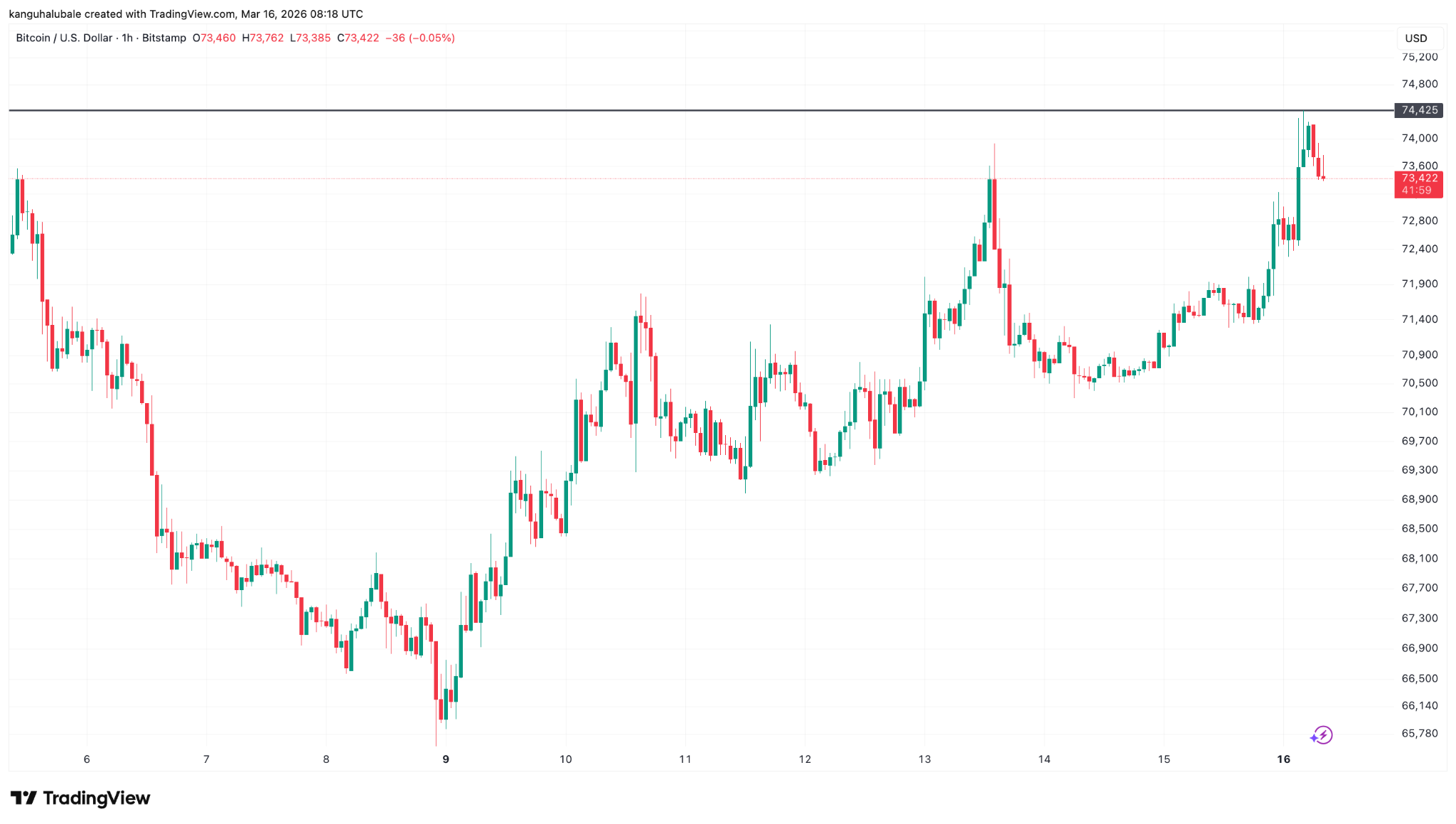
Bitcoin (BTC) found fresh strength during the early Asian trading hours on Monday as bulls eyed further short-term gains.
Key takeaways:
-
Bitcoin price rises to a six-week high of $74,400 on Monday, liquidating $300 million in shorts.
-
The 50-day moving average above $71,120 is a key support level to watch for BTC/USD going forward.
Bitcoin leads market in new relief bounce
Data from TradingView showed 2.5% daily BTC price gains, with BTC/USD rising as high as $74,400 for the first time since Feb. 4.

Ether (ETH), the largest altcoin by market capitalization, was trading at $2,250 at the time of writing, up 7% over the last 24 hours. Fifth-placed XRP (XRP) has gained nearly 5% over the last day to trade just above $1.48.
Solana (SOL) has also posted significant gains among the top 10 cryptocurrencies, up 6% over the same period. As a result, the global crypto market capitalization is up 4% over the day to $2.49 trillion on Monday.

“Bitcoin pumped $1,800 in just 30 minutes, hitting a 40-day high of $74,300,” analyst Bull Theory said in the latest post on X, adding:
“It’s surprising how risk assets are performing better than safe-haven assets like gold and silver during an active war.”
Bitcoin’s relief rally is accompanied by significant short liquidations across the crypto market totaling $300 million over the last 24 hours. Meanwhile, Bitcoin futures open interest (OI) continued to rise, with monitoring resource Coinglass showing a 6% jump to $49.2 billion in the past 24 hours.
Commenting on the data, Coinglass said that the same pattern of the OI rising in tandem with the price “preceded the last volatility spikes,” adding:
“New fuel is building again.”

Bulls reclaim the 50-day BTC price trend line
Bitcoin’s latest recovery saw it reclaim a key support level in the form of the 50-day simple moving average (SMA) at $71,120.
“Impressive strength on BTC today – set to close a daily candle above its 50MA for the first time in 55 days,” said trader and investor MacroSRG in a Monday post on X.
BTC rallied 33% in just a month following the last time the price reclaimed this trend line after a long period of trading below it.

Bitcoin is also “set to close 8 consecutive daily green candles for the first time since December 2020,” analyst Max Crypto said in an X post, adding:
“Last time this happened, BTC rallied 145% in just 2 months.”
Echoing this, MN Capital founder Michael van de Poppe said that while Bitcoin continues to build momentum, its valuation against gold “rallies substantially,” adding:
“There’s more upside to come; $ETH broke out of the range, which means it’s a matter of time until Bitcoin continues the rally towards $80K.”

Along with the 50-day SMA, the BTC/USD pair now also trades above other key long-term levels, including the 200-week exponential moving average (EMA) and the old 2021 all-time high at $68,300 and $69,400, respectively.
This article does not contain investment advice or recommendations. Every investment and trading move involves risk, and readers should conduct their own research when making a decision. While we strive to provide accurate and timely information, Cointelegraph does not guarantee the accuracy, completeness, or reliability of any information in this article. This article may contain forward-looking statements that are subject to risks and uncertainties. Cointelegraph will not be liable for any loss or damage arising from your reliance on this information.
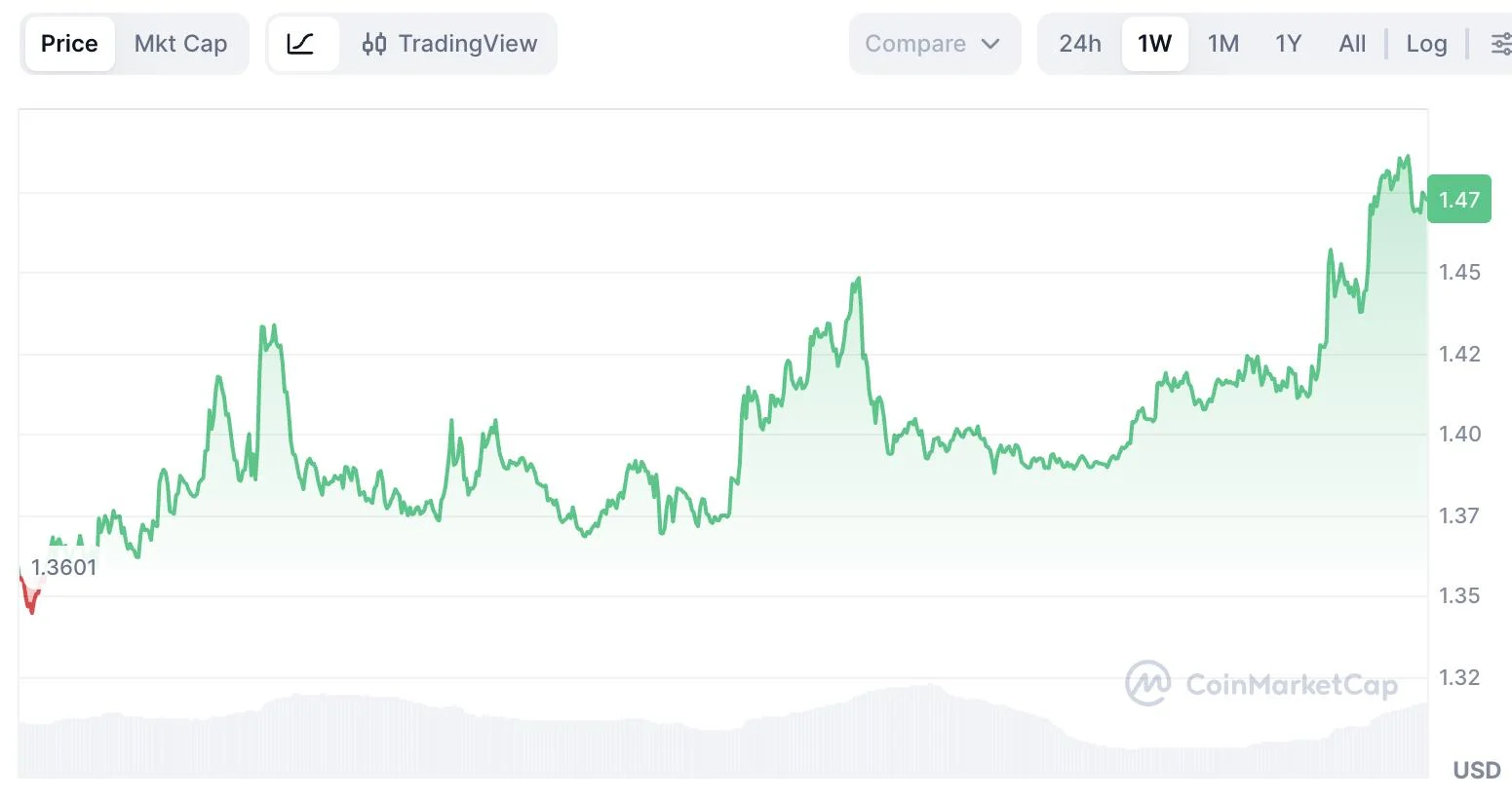
The cryptocurrency market is seeing renewed bullish momentum as XRP climbed to around $1.47, gaining nearly 4% in the past 24 hours. The move highlights growing investor interest in major altcoins as traders rotate back into digital assets amid broader volatility across traditional financial markets.
Meanwhile, Bitcoin surged past $74,000, rising more than 3% in a single day and triggering roughly $115 million in short liquidations. The rally comes as global markets react to geopolitical tensions, with cryptocurrencies showing resilience compared to some traditional assets. Since the start of the latest market volatility, Bitcoin has climbed more than 12% from around $66,000, helping push the total crypto market capitalization toward $2.5 trillion.
As the market heats up, new projects are also entering the spotlight, including the Ethereum-based memecoin APEPEPE, which has officially launched its presale phase. The project is positioning itself within the fast-growing memecoin sector that previously produced breakout successes such as Dogecoin and Shiba Inu. By focusing on community engagement and viral branding, the team behind APEPEPE aims to build momentum during the early stages of its launch.
Institutional activity is also playing a role in the current market strength. U.S. spot Bitcoin ETFs have recorded hundreds of millions of dollars in inflows, helping support Bitcoin’s climb while improving overall sentiment across the crypto sector. However, analysts still warn that macroeconomic uncertainty and global events could create short-term volatility.
Despite these risks, many traders believe the current environment could spark a new wave of innovation and speculative interest across the crypto ecosystem. With major assets like XRP and Bitcoin leading the rally, attention is increasingly shifting toward emerging projects that could capture the next cycle of market excitement.
For early-stage investors and crypto enthusiasts watching the memecoin sector, projects like APEPEPE are gaining attention precisely because they are still in their early phases. As the presale unfolds and the community continues to grow, supporters hope the project could become one of the standout newcomers in the evolving memecoin landscape.
Learn more about APEPEPE:
Website: https://apepepe.com
X (Twitter): https://x.com/realAPEPEPE
Disclaimer: This is a Press Release provided by a third party who is responsible for the content. Please conduct your own research before taking any action based on the content.


Key Takeaways
- Shares of Ulta Beauty tumbled over 10% following its Q4 earnings release, pressured by conservative fiscal 2026 projections and a modest bottom-line shortfall
- The company’s Q4 earnings per share of $8.01 exceeded both internal projections and analyst consensus, while sales reached $3.90B, marking an 11.8% year-over-year increase
- Comparable store sales climbed 5.8% in Q4, with positive momentum across all primary product segments
- Fiscal 2026 comp sales outlook of 2.5%–3.5% fell short of Street expectations, with management signaling flat operating margin performance ahead
- The beauty retailer announced a $1 billion share repurchase program for this year; institutional shareholders control 90.39% of shares, while analyst consensus leans “Moderate Buy” at $671.27 price target
Ulta Beauty delivered what would typically be considered a strong fourth-quarter performance, yet investors fixated on softer full-year projections and a minor earnings shortfall against elevated expectations. Shares plummeted more than 10% following the earnings announcement, extending losses to approximately 19% since Barron’s recommended the stock less than 30 days prior.
The beauty retailer reported Q4 earnings of $8.01 per share, surpassing the consensus forecast of $7.93 by eight cents. Top-line results reached $3.90 billion, representing an 11.8% year-over-year improvement and exceeding analyst projections of $3.81 billion. Gross profit margins also came in ahead of estimates. What triggered the selloff? Earnings missed certain higher-end projections, and the company’s fiscal 2026 outlook proved more conservative than investors anticipated.
For the current fiscal year, management projected comparable sales expansion of 2.5% to 3.5% — landing below Wall Street’s midpoint expectations — while signaling operating margins would remain essentially unchanged. Elevated marketing expenditures, rising incentive-based compensation, and strategic reinvestment initiatives are compressing profitability. The company also faces more challenging year-over-year comparisons following a robust FY25 performance.
With a new chief financial officer recently appointed, the measured guidance approach may reflect fresh leadership caution. Raymond James analyst Olivia Tong observed that the conservative stance aligns with Ulta’s traditional guidance philosophy, potentially reinforced by current macroeconomic and geopolitical uncertainty.
Wall Street Moderates Targets While Maintaining Support
Though the market’s response was severe, few analysts issued downgrades. UBS maintained its “buy” recommendation with an $810 price objective. William Blair analyst William Carden suggested the sharp decline “could reverse quickly” following the reset of 2026 expectations around stable margins. TD Cowen’s Oliver Chen emphasized Ulta’s “low-to-luxe” product range as an enduring competitive advantage.
Overall analyst sentiment remains at “Moderate Buy,” comprising 15 Buy ratings, 10 Hold recommendations, one Strong Buy, and a single Sell rating. The consensus price target stands at $671.27, compared to Monday’s opening price of $535.72 — suggesting substantial upside potential if operational execution meets projections.
Zacks Investment Research shifted its rating from “Strong Buy” to “Hold” in February, ahead of the earnings release. Jefferies, which initiated coverage in January, maintains a “Hold” stance with a $700 target.
Institutional Investors Increasing Stakes
Despite the post-earnings turbulence, several institutional investors expanded their holdings. Holocene Advisors LP increased its ULTA position by 339.6% during Q3, acquiring an additional 293,516 shares for a combined stake valued at approximately $207.7 million. Focus Partners Wealth, Intech Investment Management, and multiple other institutional funds similarly added exposure in recent quarters.
Institutional ownership currently represents 90.39% of outstanding shares.
The company’s Q4 comparable sales growth of 5.8% compares favorably against flat performance in Kohl’s Sephora partnership. Digital channels continue gaining traction, with artificial intelligence-powered personalization identified as a key catalyst. The retailer also plans to introduce a curated TikTok Shop presence, aiming to capture younger demographic segments.
Ulta’s 52-week trading range spans from $323.36 to $714.97. Monday’s opening price of $535.72 sits notably below the 50-day moving average of $665.60 and the 200-day average of $587.65.
Management established fiscal 2026 EPS guidance at $28.05–$28.55, compared to the current analyst consensus of $23.96 for the period.
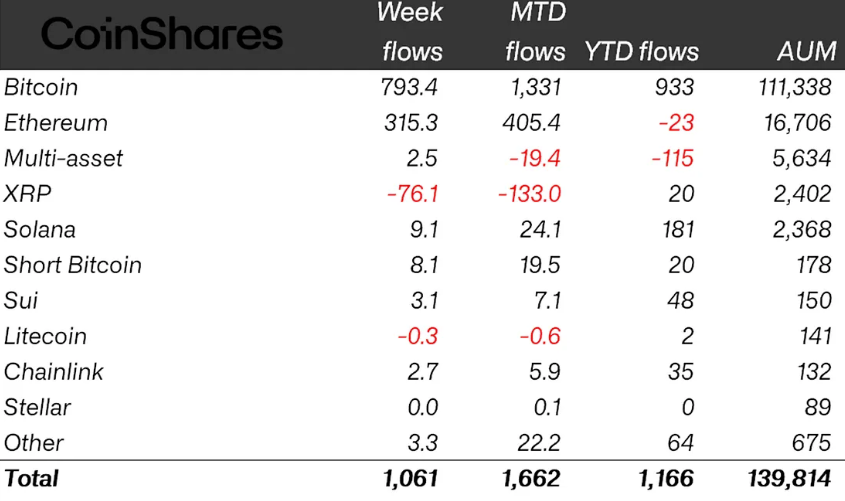
Crypto investment products continued their momentum last week, signaling resilience to geopolitical stress and strengthening the case for Bitcoin’s role as a safe-haven asset.
Crypto exchange-traded products (ETPs) recorded $1.06 billion in inflows last week, led by $793 million into Bitcoin (BTC), CoinShares reported on Monday.
The inflows mark three consecutive weeks of positive flows totaling $2.7 billion, driving net inflows to around $1.2 billion year-to-date.
CoinShares’ head of research, James Butterfill, said the rising momentum over the past few weeks underscores the resilience of digital assets, particularly Bitcoin, as a “relative safe haven” compared with other asset classes.
Since the onset of the Iran crisis, total assets under management (AuM) in digital asset ETPs have risen by 9.4% to nearly $140 billion, he said.
Ethereum ETP flows about to turn neutral with fresh $315 million inflows
With the latest inflows, Bitcoin ETPs increased year-to-date gains to $933 million. Ether (ETH) funds are still in the red, with around $23 million in outflows YTD after $315.3 million of inflows last week.
Butterfill said the launch of new staking ETF listings in the US contributed to the positive momentum, bringing the flows close to a net neutral position.

XRP (XRP) suffered its second week of outflows totaling $76 million, while Solana (SOL) saw $9.1 million of inflows.
Related: Bitcoin ETFs add $251M as Goldman Sachs tops XRP ETF holders
Short-Bitcoin products also recorded inflows of $8.1 million last week, highlighting that market opinion remains “somewhat polarized,” Butterfill said.
Spot Bitcoin ETFs post first five-day inflow streak, year-to-date losses still at $500 million
The majority of Bitcoin fund inflows were driven by US spot Bitcoin exchange-traded funds (ETFs), which recorded their first five-day inflow streak of 2026, attracting $767.3 million in new funds last week.
Despite three consecutive weeks of inflows totaling $2.1 billion, the ETFs remain in negative territory for the year, with approximately $493 million in net outflows year-to-date.

This week will reveal whether US spot Bitcoin ETFs can finally turn positive for 2026, after $1.8 billion in outflows in January and February were partially offset by $1.34 billion in inflows in March.
Magazine: Spot Bitcoin ETFs first green week, crypto ATM losses surge 33%: Hodler’s Digest, Mar. 8 – 14


President Donald Trump’s family-backed crypto project, World Liberty Financial (WLFI) has passed a governance proposal requiring token holders to lock up their tokens for nearly six months in order to participate in protocol voting.
Summary
- WLFI holders approved a governance proposal requiring token holders to stake their tokens for 180 days in order to participate in protocol voting.
- Participants who stake WLFI and vote at least twice during the lock period can earn roughly 2% annual yield.
The proposal received overwhelming support and was approved with 99.12% of 1,800 votes cast in favor, although more than 76% of the voting power came from just ten users.
WLFI introduced the proposal last month, outlining a governance staking system that would require holders of unlocked WLFI tokens to stake their assets before they can participate in votes that determine the direction of the protocol and its broader ecosystem.
According to the firm, the change would ensure that only participants with “long-term alignment to the protocol” are able to influence governance decisions.
The proposal “rewards WLFI holders who have demonstrated the most commitment to WLFI governance and the WLFI ecosystem with additional opportunity to engage in the future of the WLFI ecosystem and potential commercial arrangements,” the document states.
Another goal of the initiative is to promote the adoption of WLFI’s USD1 stablecoin by redirecting value that previously flowed to market makers toward ecosystem participants.
To incentivize participation, the proposal introduces a base reward of roughly 2% annual yield for token holders who stake their WLFI and take part in at least two governance votes during the lock-up period. Meanwhile, holders whose tokens are already locked remain eligible to vote without additional staking requirements.
Further, the proposal documents outline a “Super Node” tier requiring participants to stake 50 million WLFI tokens, worth about $5 million, which would grant them “guaranteed direct access” to the WLFI team for collaboration and partnership discussions.
In a recent statement to Reuters, WLFI spokesman David Wachsman confirmed that the access would be limited to the project’s business development team and executives rather than direct engagement with specific founders. Trump’s sons Eric and Barron are listed in project materials as part of the team supporting the platform.
As part of its longer-term plans centered around the USD1 stablecoin, the platform is also seeking a national trust bank charter from the U.S. Office of the Comptroller of the Currency.
The effort has drawn scrutiny from Washington lawmakers, with some arguing that the application should not move forward unless potential conflicts of interest tied to the project are addressed.
Concerns center on the project’s links to President Donald Trump and members of his family who are financially involved in the venture.
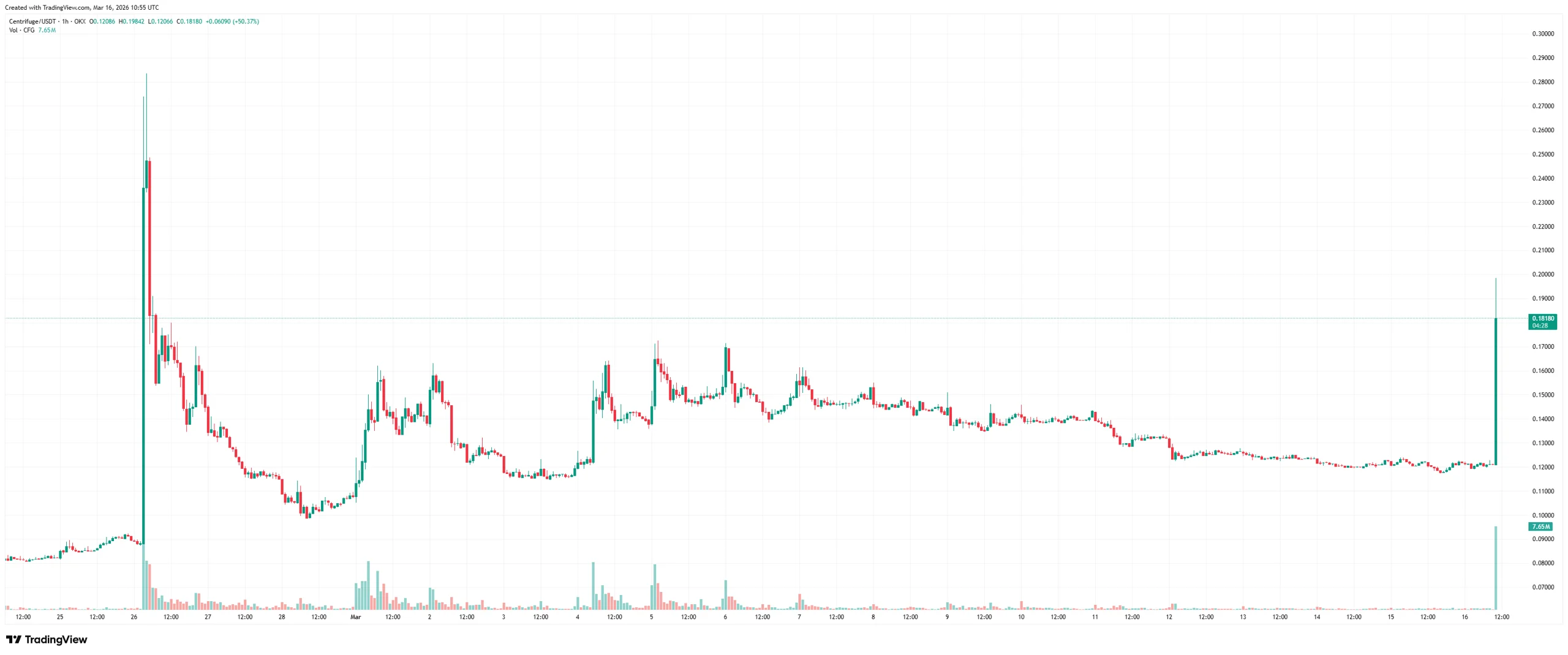
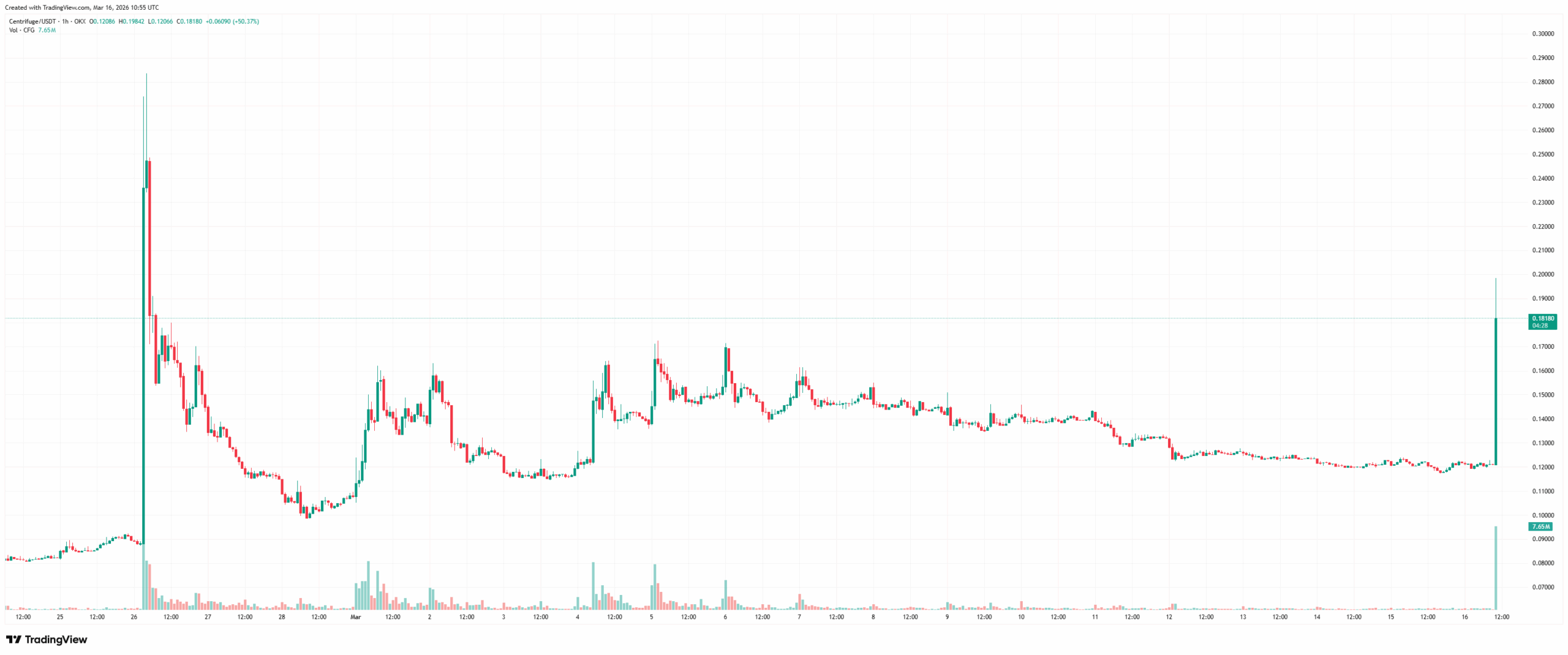
CFG exploded by more than 60% in minutes after Binance announced that it will list the cryptocurrency on its exchange.
Centrifuge’s native cryptocurrency, CFG, has exploded by more than 60% in a matter of moments. This happened after Binance announced it would list the token for spot trading across three pairs. Namely, these are CFG/USDT, CFG/USDC, and CFG/TRY.
According to the official announcement, the trading will open today at 13:00 UTC. Users won’t be able to deposit CFG until one hour after the trading begins.
The price reacted immediately, soaring from around $0.12 to almost $0.2 before retracing to its current price of $0.181.
Moves like these are very typical of exchange listings, especially when it’s a leading name like Binance or Coinbase.
Binance Free $600 (CryptoPotato Exclusive): Use this link to register a new account and receive $600 exclusive welcome offer on Binance (full details).
LIMITED OFFER for CryptoPotato readers at Bybit: Use this link to register and open a $500 FREE position on any coin!
The frog-themed meme coin is today’s biggest gainer, followed by TAO, DOT, and BONK.
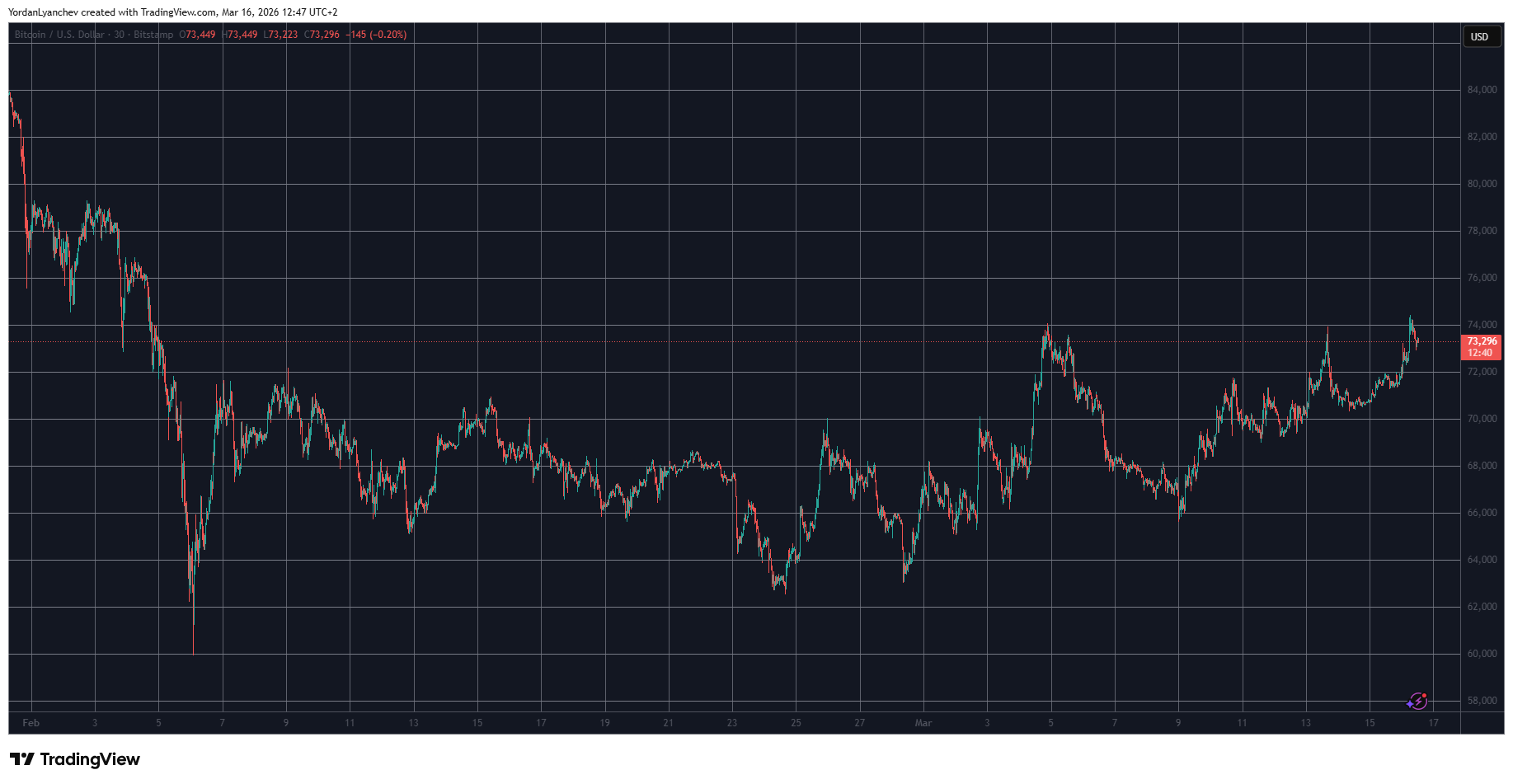
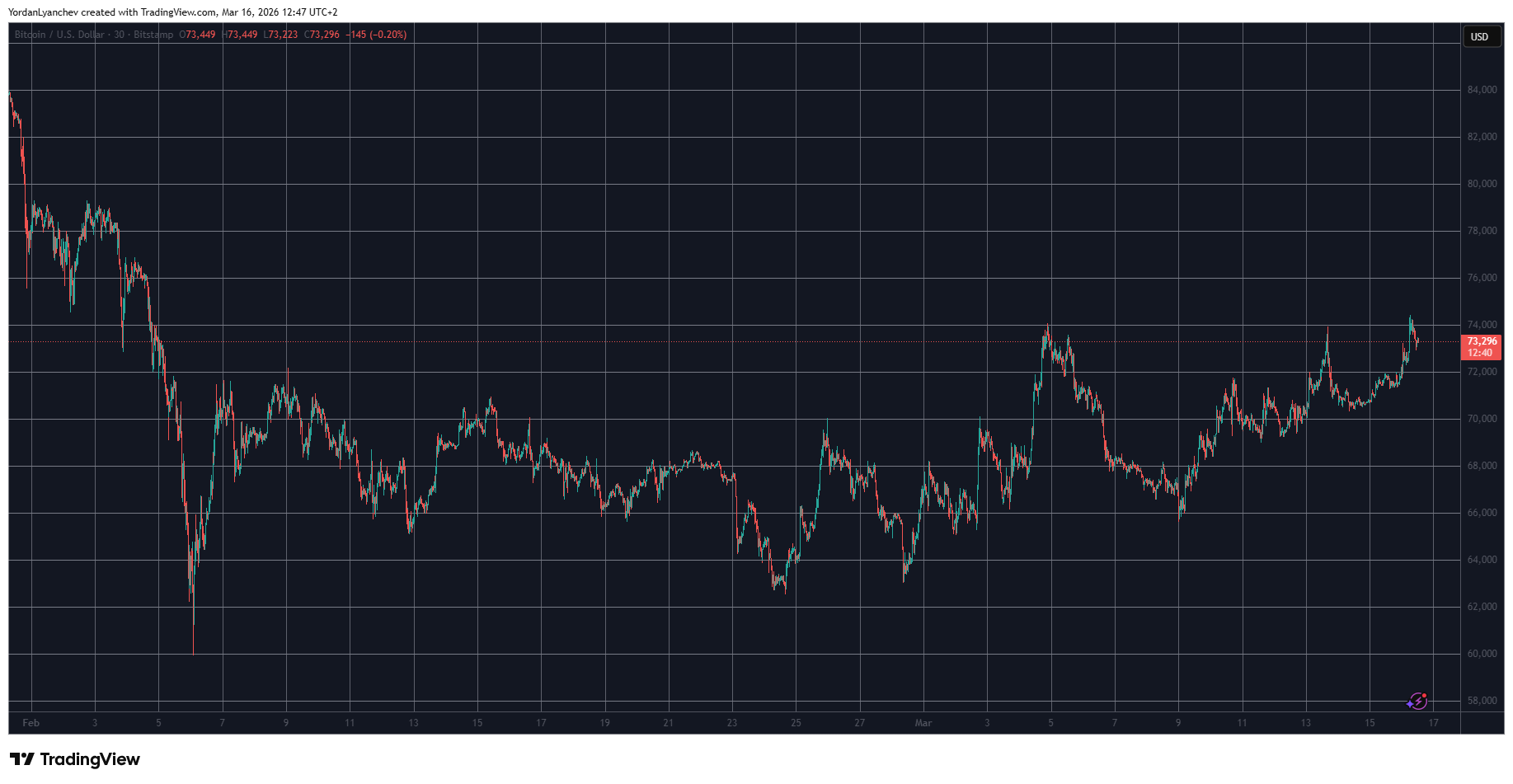
After a relatively quiet weekend despite the latest developments in the Middle East, bitcoin’s price surged on Monday morning to a six-week peak of just over $74,000, where it was stopped.
Many altcoins have produced even more impressive gains, including ETH, which reclaimed the $2,200 level, and ADA, which jumped by 10% at one point.
BTC Saw New Local Peak
The previous business week began quite contrastingly to this one, as BTC’s reaction to the weekend developments on the war front pushed it south to $65,600. However, the bulls intercepted the move and helped the asset recover several grand by Wednesday when it jumped to $68,000 after the CPI numbers came out for February.
After a minor rejection at that point, bitcoin went on the attack once again on Friday. It skyrocketed to $74,000 for the second time in the past 10 days, only to be rejected once again. It dipped further to just over $70,000 during the weekend after the latest set of bombings in the Middle East, but managed to maintain that level.
More volatility was expected on Monday morning when most legacy financial markets opened, including oil. Indeed, fluctuations arrived, but they sent BTC higher to a multi-week peak of just over $74,000. Although it failed there and now sits a grand lower, BTC is still up by 8% weekly.
Its market cap has increased to $1.465 trillion on CG, while its dominance over the alts continues to sit below 57%.
PEPE Soars
Ethereum, Solana, and Cardano are the biggest beneficiaries of today’s market-wide rally. All three have added around 6-8% of value, pushing ETH to well over $2,250, SOL to above $90, and ADA close to $0.40. HYPE, LINK, DOGE, XMR, AVAX, LTC, and XRP are also in the green, albeit in a more modest manner.
There are some double-digit gainers as well. PEPE leads the pack with a notable 18% surge, followed by DOT and TAO. BONK, SHIB, and ZEC are next in line.
The total crypto market cap added almost $100 billion daily and is close to $2.6 trillion on CG as of now.

Binance Free $600 (CryptoPotato Exclusive): Use this link to register a new account and receive $600 exclusive welcome offer on Binance (full details).
LIMITED OFFER for CryptoPotato readers at Bybit: Use this link to register and open a $500 FREE position on any coin!
Disclaimer: Information found on CryptoPotato is those of writers quoted. It does not represent the opinions of CryptoPotato on whether to buy, sell, or hold any investments. You are advised to conduct your own research before making any investment decisions. Use provided information at your own risk. See Disclaimer for more information.
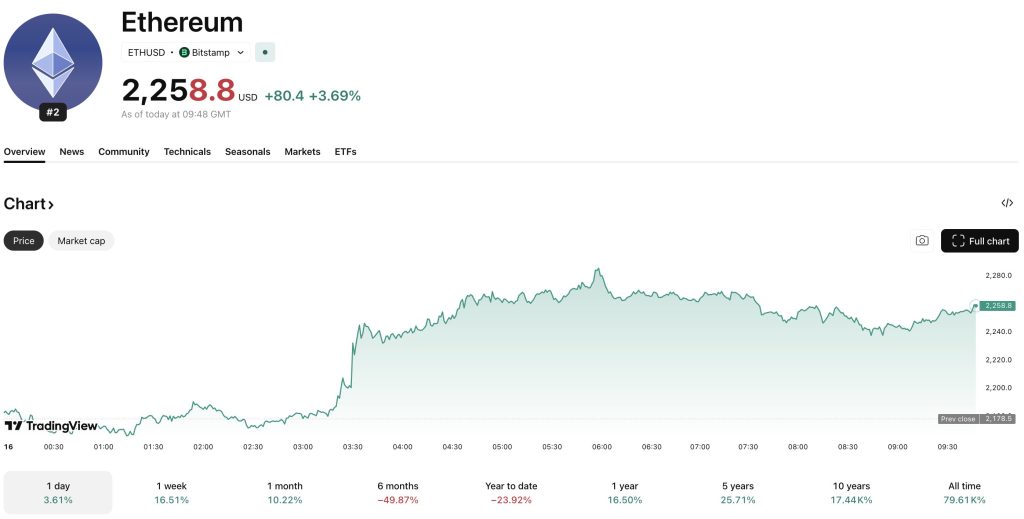
Ethereum USD has reclaimed the $2,200 level, surging from oversold lows near $1,840 in late February as buyers successfully defended the critical $2,000 psychological threshold following a +6% overnight pump into the Monday morning trading session.
This move marks a significant +19% rebound from the capitulation wick of $1,840 seen just weeks ago, validating the bullish thesis for traders watching the $2,050 defense line.
Institutional narratives are also beginning to align with the technical recovery. While price action remains the primary focus, BlackRock recently launched its iShares Staked Ethereum Trust, adding a layer of fundamental support that suggests smart money interest persists despite recent volatility.
This bullish move isn’t isolated to the ETH chart; while it is one of the strongest overnight performers, the total crypto market cap has surged by +2.4% as it closes in on $2.6 trillion.

RSI Bounce From 34 Zone Flags Oversold Exhaustion as Bulls Regroup
The recent market bounce is primarily driven by the RSI entering oversold territory, dropping to 34.19 in late February, signaling seller exhaustion and a potential mean reversion.
When the RSI nears 30, it often draws in value investors. The recovery toward neutral territory suggests a momentum shift towards bulls.
On-chain data supports this view, showing tightened exchange supply and re-establishing the 76.4% Fib retracement level, indicating a technical shakeout rather than a fundamental trend reversal. This combination led to the break above $2,150.
Additionally, the MACD is gaining momentum in the bullish zone on the hourly charts, aligning with the broader Ethereum USD analysis and suggesting the recent downtrend has been invalidated, opening opportunities for continuation if volume remains steady.
DISCOVER: The 16 Best Meme Coins to Buy in March 2025
Can the Ethereum Price Clear $2,320 and Set Sights on $2,500?
With the $2,200 level now acting as a potential support level, the path of least resistance appears to be higher. Immediate resistance sits near the $2,245 to $2,250 zone.
A clear daily close above $2,250 would likely trigger a rapid move toward the next major friction point at $2,280.
If bulls can clear that hurdle, the chart opens up significantly, with the $2,320 resistance region becoming the primary target for the week ahead.
Beyond the immediate technicals, broader market forecasts are becoming increasingly optimistic about a mid-term recovery.
For instance, China’s Alibaba AI recently predicted Ethereum price targets that align with a recovery toward the $2,500 range, contingent on macro stability.
Some analysts speculate that the launch of staked ETH ETFs could be the catalyst that drives Wall Street capital back into the asset, providing the liquidity needed to sustain a move above $2,400.
Downside Risk for Ethereum USD: Critical Support Levels to Watch
Despite optimism, failing to break the $2,300 resistance may lead to a retest of lower support levels, starting at $2,180 and followed by $2,150.
A fall below $2,150 would negate the bullish trend, potentially pushing prices toward the $2,100 pivot. The key support remains at $2,050 to $2,000; a break below this could expose recent lows around $1,840.
Traders should closely monitor the $2,180 level; a high-volume close below it would signal a weakening recovery.
The market is at a critical point, with traders watching the daily close relative to $2,300 for signals of a reversal or prolonged consolidation.
EXPLORE: Best Crypto Presales to Buy in 2026
The post Ethereum USD Reclaims $2,200 as the Crypto Market Booms appeared first on Cryptonews.
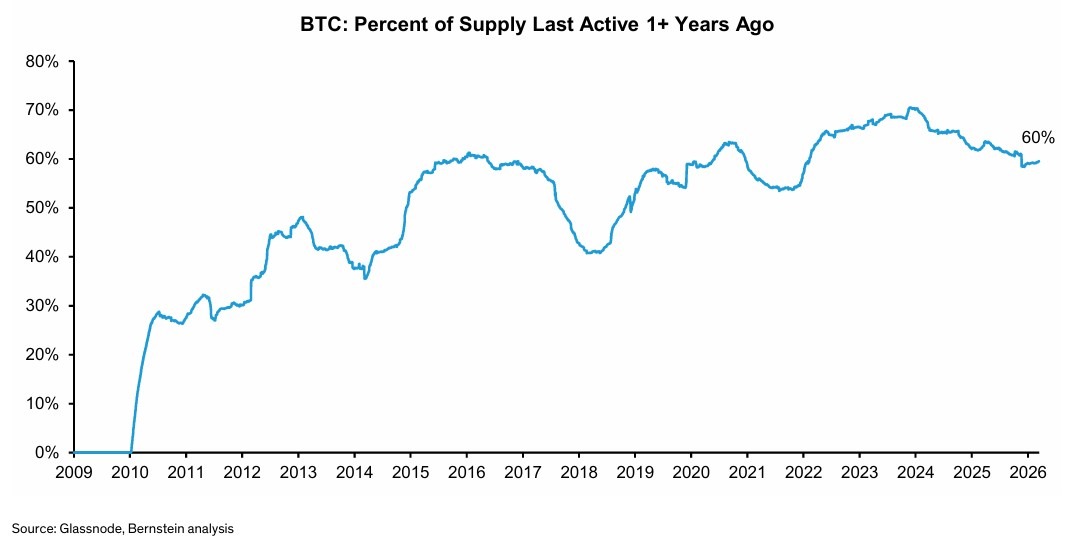
Bitcoin’s recent rebound reflects a strengthening base of long-term holders as ETF inflows and corporate treasury buying reshape the asset’s ownership structure, Bernstein said in a Monday research note shared with Cointelegraph.
Bernstein said Bitcoin outperformed gold and major equity indexes over the past week despite heightened conflict in the Middle East, with Bitcoin (BTC) up around 7% and Ether (ETH) up about 9% over the period.
Analysts attributed the shift partly to continued US spot Bitcoin exchange-traded fund (ETF) inflows and the steady accumulation of corporate buyers such as Strategy, which they say are gradually strengthening Bitcoin’s long-term holder base, contributing to a more stable market structure.
“Maybe it takes a physical conflict to realise Bitcoin remains the most portable (cross-border), digital and liquid asset with no counterparty risks,” Bernstein said.
Bernstein’s broader point is that ownership is changing. As roughly 60% of Bitcoin supply has been inactive for more than a year, the market is increasingly dominated by longer-term holders rather than fast-money flows. As more Bitcoin moves into ETFs, corporate treasuries and wallets that rarely transact, short-term sell pressure may matter less, potentially giving the market a more stable base during periods of stress.

ETFs, corporate treasuries fuel Bitcoin resilience
CoinGecko data shows that BTC traded at about $73,208 at the time of writing, up over 8% in the last seven days amid heightened geopolitical tensions in the Middle East.
SoSoValue data shows that US spot Bitcoin ETFs had three consecutive inflow weeks totalling over $2.1 billion. Bernstein attributed the inflows to rising long-term capital allocations through wealth managers, institutional funds, including pension and sovereign funds.
Bernstein said spot BTC ETFs have nearly reversed their year-to-date (YTD) capital outflows, with net withdrawals narrowing to about $460 million, compared with roughly $92 billion in total assets under management (AUM).
Related: Strategy records biggest STRC issuance day with estimated 1,420 BTC buy
Bernstein also pointed to Strategy’s continued Bitcoin accumulation this year.
Strategy added 66,231 BTC year-to-date for roughly $5.6 billion at an average purchase price of around $85,000, according to Bernstein.
On March 9, Strategy announced that it had acquired 17,994 Bitcoin for $1.28 billion between March 2 and 8, pushing its total reserves above 738,000 BTC, worth about $54 billion.
Bitcoin Treasuries data shows that ETFs and exchanges hold about 1.6 million BTC, worth over $117 billion, while public companies hold 1.15 million BTC, worth about $84 billion.
Related: Bybit doubles down on Middle East operations amid regional tensions
Magazine: All 21 million Bitcoin is at risk from quantum computers


The crypto market is on the cusp of a major breakout as bitcoin trades at $73,000 and ether (ETH) at $2,250, its highest level since Feb. 4.
If bitcoin, the largest cryptocurrency by market capitalization, can break above $74,000 on convincing volume, it will likely run back to $80,000, which was a level of support in November before an eventual breakdown in January.
A rejection, on the other hand, would lead to a reversion to a trading range between $62,000 and $72,000, which has persisted for more than a month.
But the main story on Monday is not among crypto majors, it is the altcoin market and memecoins in particular.
PEPE rose by around 20% in the past 24 hours, while BONK and PENGU are also up by double digits. However, “overbought” conditions on the average relative strength index (RSI) suggest a pullback may be in store before any breakout.
Oil remains inflated at above $106 per barrel despite the U.S. reportedly considering a coalition to escort ships through the Strait of Hormuz, a key trade route.
U.S. stock futures are up around 0.5% and crypto-related companies are advancing in pre-market trading. Crypto exchange Coinbase (COIN) was recently 3% higher and Circle Internet (CRCL) added 5%. Bitcoin treasury company Strategy (MSTR) gained 4%.
Precious metals fell and the dollar weakened, reflecting risk-on sentiment.
Derivatives positioning
- Industry-wide futures open interest has risen over 8% to $112.34 billion in 24 hours in a sign of increased risk-taking in the market.
- Open interest (OI) in ether (ETH) and futures increased by 16% and 19%, respectively, leading the growth among major cryptocurrencies. This indicates strong investor preference for smart contract tokens. OI in bitcoin rose more than 5%.
- In ether’s case, OI in coin terms climbed to 14.34 million ETH, the most since September 2025.
- There are signs of speculation in non-serious tokens such as : Open interest tied to the cryptocurrency has jumped over 11%.
- The growth in OI in most major tokens is accompanied by positive perpetual funding rates and cumulative volume deltas. This combination indicates a rising demand for bullish leveraged plays.
- On Deribit, however, puts tied to bitcoin and ether continue to trade pricier than calls across all time frames. That’s a sign of continued demand for downside hedging despite the market bounce. Overhead call selling could be another reason for the persistent put premium.
- In XRP’s case, the $1.40 strike call and put are the most popular, cumulatively boasting a notional open interest of $14 million. That’s nearly 25% of the total XRP options open interest on the exchange.
Token talk
- The altcoin market is in a jubilant mood with the “altcoin season” index hitting 48/100, the highest in just over two months.
- The total crypto market cap excluding bitcoin reached $1.1 trillion on Monday, adding around $40 billion in the past 24 hours and $10 billion since midnight UTC, according to TradingView.
- The best-performing CoinDesk benchmark over the past 24 hours has been the Smart Contract Platform Select Capped Index (SCPXC), which is made up of ETH, SOL, ADA and SUI among layer-1 networks. The SCPXC is up by 6.3%, closely followed by the Memecoin Index (CDMEME), which has risen by 5.2%.
- AI-focused token bittensor (TAO) lost 3.7% since midnight. This is a consolidation move rather than a decline after it surged by more than 69% from March 8 to March 15.
- It appears some of those profits are being rotated into another AI project, , which has benefitted from a 60% increase in daily trading volume to $195 million, with the token rising by 11% as a result.

Bitcoin Price Breaks Above 50-day SMA as Analysts See More Gains for BTC
Electric caddie company’s rangefinder makes lot of sense

How To Get Verified on Instagram in 2026: A Complete Step-by-Step Guide


-
 Tech5 days ago
A 1,300-Pound NASA Spacecraft To Re-Enter Earth’s Atmosphere
-
 Crypto World2 days ago
HYPE Token Enters Net Deflation as HyperCore Buybacks Outpace Staking Rewards
-

 News Videos7 days ago
10th Algebra | Financial Planning | Question Bank Solution | Board Exam 2026
-

 Business6 days ago
ExxonMobil seeks to move corporate registration from New Jersey to Texas
-

 Crypto World7 days ago
Paradigm, a16z, Winklevoss Capital, Balaji Srinivasan among investors in ZODL
-

 Fashion3 days ago
Weekend Open Thread: Addict Lip Glow
-

 Tech6 days ago
ChatGPT will now generate interactive visuals to help you with math and science concepts
-
Sports2 days ago
Why Duke and Michigan Are Dead Even Entering Selection Sunday
-

 NewsBeat5 days ago
Residents reaction as Shildon murder probe enters second day
-

 Business5 days ago
Search Enters Sixth Week With New Leads in Tucson Abduction Case
-
 NewsBeat6 days ago
Pagazzi Lighting enters administration as 70 jobs lost and 11 stores close across Scotland
-

 Business16 hours ago
Search for Savannah Guthrie’s Mother Enters Seventh Week with No Arrests
-

 Tech7 days ago
Despite challenges, Ireland sixth in EU for board gender diversity
-

 Business2 days ago
US Airports Launch Donation Drives for Unpaid TSA Workers as Partial Government Shutdown Enters Fifth Week
-
Crypto World2 days ago
Coinbase and Bybit in Investment Talks: Could Bybit Finally Enter the US Crypto Market?
-

 NewsBeat5 days ago
I Entered The Manosphere. Nothing Could Prepare Me For What I Found.
-

 Business7 days ago
Search Enters 39th Day with FBI Tip Line Developments and No Major Breakthroughs
-

 Business2 days ago
Country star Brantley Gilbert enters growing non-alcoholic beer market
-
 Crypto World6 days ago
Will Chainlink price reclaim $10 amid volatility squeeze?
-

 Business58 minutes ago
Australian shares drop as Iran war enters third week

