
Crypto World
CFTC probes mention markets as Kalshi pulls sports bets



The Commodity Futures Trading Commission is reviewing prediction market “mention markets” over concerns that contracts tied to specific spoken words may be unusually easy to manipulate, NPR reported late Aug. 13, citing two people with direct knowledge of the inquiry.
Summary
- CFTC is reviewing mention markets over manipulation risks, according to two people familiar with probe.
- Kalshi removed sports mention markets until further notice while keeping political and earnings markets live.
- CFTC rules require designated contract markets to list only contracts not readily susceptible to manipulation.
- Kalshi previously flagged Trump teleprompter operator Gabriel Perez after suspicious mention-market trades produced over $90,000.
- The CFTC has not announced the inquiry, and both the agency and Kalshi declined comment.
Kalshi has responded by removing sports mention markets “until further notice,” according to the report. The inquiry has not been publicly confirmed by the CFTC. Both the regulator and Kalshi declined to comment to NPR, and the CFTC had not published an enforcement action or announcement describing the review as of publication.
Kalshi removes sports mentions while other word bets remain
Mention markets let traders buy contracts based on whether a person says a particular word or phrase. Sports versions have included wagers on whether broadcasters utter terms such as “MVP,” “ankle” or “redshirt.” NPR reported that Kalshi removed all such sports contracts as the regulator examines the category.
The suspension does not cover every mention market. Kalshi’s current page still shows active contracts tied to President Donald Trump, political appearances and corporate earnings calls. One Klarna earnings market, for example, has contracts tied to whether executives mention specific companies or business topics.
Polymarket also offers mention markets on its offshore platform, NPR reported, but its smaller CFTC-regulated U.S. exchange does not currently list them.
CFTC rules put manipulation at the center of the review
The regulatory question goes directly to one of the Commodity Exchange Act’s core requirements. Designated contract markets may list only contracts that are not “readily susceptible to manipulation.” They must also maintain surveillance and enforcement systems capable of preventing manipulation and distorted settlement outcomes, according to the CFTC’s current proposal.
That framework helps explain the concern around word bets. The CFTC has said in its broader prediction-market rulemaking that sports contracts based on aggregate performance can present lower manipulation risk when no single participant can determine the outcome through one action. A mention contract can work differently because one broadcaster, executive or politician may effectively determine settlement simply by saying a particular word. This comparison is an inference from the regulator’s published manipulation framework.
As previously reported, the CFTC has also warned prediction markets against broad template self-certifications, telling exchanges that each product needs enough detail for regulators to assess settlement methods, data sources and compliance controls.
Trump teleprompter case exposed the insider risk
The latest review follows a case involving Gabriel Perez, Trump’s longtime teleprompter operator. Kalshi identified suspicious trades tied to words in presidential appearances and referred the activity to the CFTC. Sources told Reuters that more than $90,000 in potential profits were frozen before they could be withdrawn.
As previously reported, Kalshi flagged the Trump teleprompter trades and referred them to federal regulators. Perez allegedly had advance access to prepared remarks for more than a dozen presidential appearances. The White House later removed him from his role.
The case was not the CFTC’s first encounter with event-contract manipulation. Former Rep. George Santos recently agreed to penalties over manipulative Kalshi trades tied to whether he would attend Trump’s State of the Union address.
What happens next for Kalshi mention markets
The immediate question is whether the CFTC seeks changes only to sports mention markets or concludes that some word-based contracts cannot satisfy its anti-manipulation standards regardless of subject matter. An anonymous person familiar with the inquiry told NPR the products are “potentially very easy to manipulate,” but that remains the source’s assessment rather than a formal Commission finding.
Kalshi could also modify contract structures, eligibility requirements or surveillance controls instead of abandoning the category. The company has already introduced employer disclosures for higher-risk markets and said it blocked more than 100 potential insider trades during the first quarter.
For now, sports mention markets remain suspended with no announced return date, while other mention contracts continue trading. A formal CFTC statement, additional Kalshi restrictions or changes to future self-certifications would provide the next clear indication of how broad the review becomes.



Fund flows aren’t helping either. Spot bitcoin ETFs are bleeding again, with U.S.-listed funds shedding $333 million in net outflows so far this week. That reverses course from last week’s $853 million of inflows, which had hinted at returning institutional demand. On a year-to-date basis, investors have yanked over $4 billion from these funds.
Meanwhile, adding to the pressure are Treasury notes, which underpin global finance. On Thursday, a $25 billion auction of the U.S. 30-year note drew yields as high as 5.22%, according to the Treasury Department, a level some dealers called the highest since 2001. Rising long-term yields make capital costlier and raise the opportunity cost of holding non-yielding assets like bitcoin, a dynamic that compounds an already shaky backdrop.
Taken together, stalled legislation, weak ETF demand and climbing yields suggest little room for an outright rally in cryptocurrencies, leaving majors such as XRP fragile.
The payments-focused cryptocurrency has somehow managed to hold on to the $1 support, which, if breached, could prompt holders to sell their coins. A large number of traders likely accumulated coins below this level in late 2024, anticipating a
That combination helps explain why XRP’s grip on $1 and bitcoin’s hold on its multi-week range both look increasingly fragile heading into the next session.

Chainlink has surged by almost 8% over the past week despite choppy price action across the broader crypto market. The crypto asset may be setting up for a major move, according to crypto analyst Ali Martinez.
What makes the setup particularly interesting is that some of the signals now appearing on LINK’s chart have historically emerged ahead of sharp rallies.
Whale Activity and Network Usage Jump
For the first time in more than a year, the MVRV Ratio has formed a golden cross with its 200-day SMA, a historically significant bullish signal. Interestingly, the same setup preceded a 155% rally in November 2024 and an 85% rise in July 2025. If the pattern repeats, the latest crossover could support another significant move.
To top that, whale activity is also increasing. Over the past 96 hours, transactions worth more than $1 million on the Chainlink network rose from roughly one to around 15. This indicates a sharp rise in large-holder activity.
Network activity has strengthened as well. Active addresses nearly doubled during the same period after climbing from about 2,450 to 4,800. Martinez also flagged a buy signal from the TD Sequential on the crypto asset’s monthly chart. According to the analyst, it could be a macro reversal signal that switches the trend from bearish to bullish.
On the daily chart, LINK is testing the mid-range of a parallel channel at $8.80. A daily close above that level may pave the way for a 30% rally toward the channel’s upper boundary near $11.
A fresh and much bolder outlook was recently put forward by another market watcher, CryptoPatel, who said that LINK is sitting in a strong long-term accumulation zone, with a higher-timeframe close above $10.87 potentially opening the door to $25, $50, and even $100.
Another trader, TheBoss, identified a similar setup, while pointing to months of consolidation above major support and a descending trendline that could soon be tested. Momentum indicators such as RSI, MACD, and ADX may become increasingly important if the token breaks that trendline.
Meanwhile, Standard Chartered’s outlook stretches even further. Its forecast calls for roughly $13 in 2026, $41 in 2027, $82 in 2028, and $133 in 2029 before the token reaches $200 in 2030. The bank also expects growing blockchain-based tokenization to play a major role in that climb.
Institutional Footprint
Zooming out, the oracle network has secured over $33 trillion in total transaction value. The figure has climbed sharply in just a few months. Back in April 2026, the transaction value stood at around $30.06 trillion. This means that the network has added more than $3 trillion since then.
Its institutional footprint is also expanding across financial markets and crypto. DTCC has processed live production transactions involving tokenized securities that were powered by Chainlink for secure data orchestration. Major institutions, including J.P. Morgan and CME Group, have participated in the initiative.
Project Pangea, meanwhile, has brought together more than 50 banks to explore T+0 cross-border FX settlement using stablecoins, SWIFT, and Chainlink infrastructure.
Adoption is also spreading across the crypto industry as platforms including BitGo, Robinhood, Aave, and OKX are using its technology. Mantle has migrated its Super Portal from LayerZero to CCIP. Lombard also uses the protocol to facilitate cross-chain deposits into its Bitcoin Onchain Credit Strategy. Circle’s Arc has also joined Chainlink Scale.
The post Chainlink (LINK) Flashes a Rare Signal Linked to Triple-Digit Rallies appeared first on CryptoPotato.
Stock perpetual futures are expanding fast on both centralized and decentralized crypto exchanges. Monthly equity perpetual volume on centralized venues jumped roughly 17 times between April and July 2026, according to CryptoQuant.
Semiconductor and memory names drive the centralized boom. Decentralized exchanges (DEXs) show a wider mix, with stocks, commodities, and equity indexes among their largest markets.
Memory Chip Names Now Lead Crypto Equity Volume
In its latest market report, CryptoQuant noted that monthly volume climbed from about $15 billion in April to nearly $250 billion in July. Growth between June and July alone reached 56%.
Binance handled close to $193 billion of the July total, or 76% of all activity. Gate posted the fastest monthly expansion at 308% and has grown every month since May.
Follow us on X to get the latest news as it happens
Notably, much of this activity is concentrated in semiconductor and memory-chip stocks. SanDisk (SNDK) was the most-traded equity across the venues tracked by CryptoQuant.
It accounted for roughly 57% of equity perpetual volume on HTX, 29% on Gate, and 27% on Binance. Volume also clustered in SOXL, a triple-leveraged semiconductor fund, SK Hynix, Micron, and memory names.
Perp DEXs Widen Beyond Crypto Assets
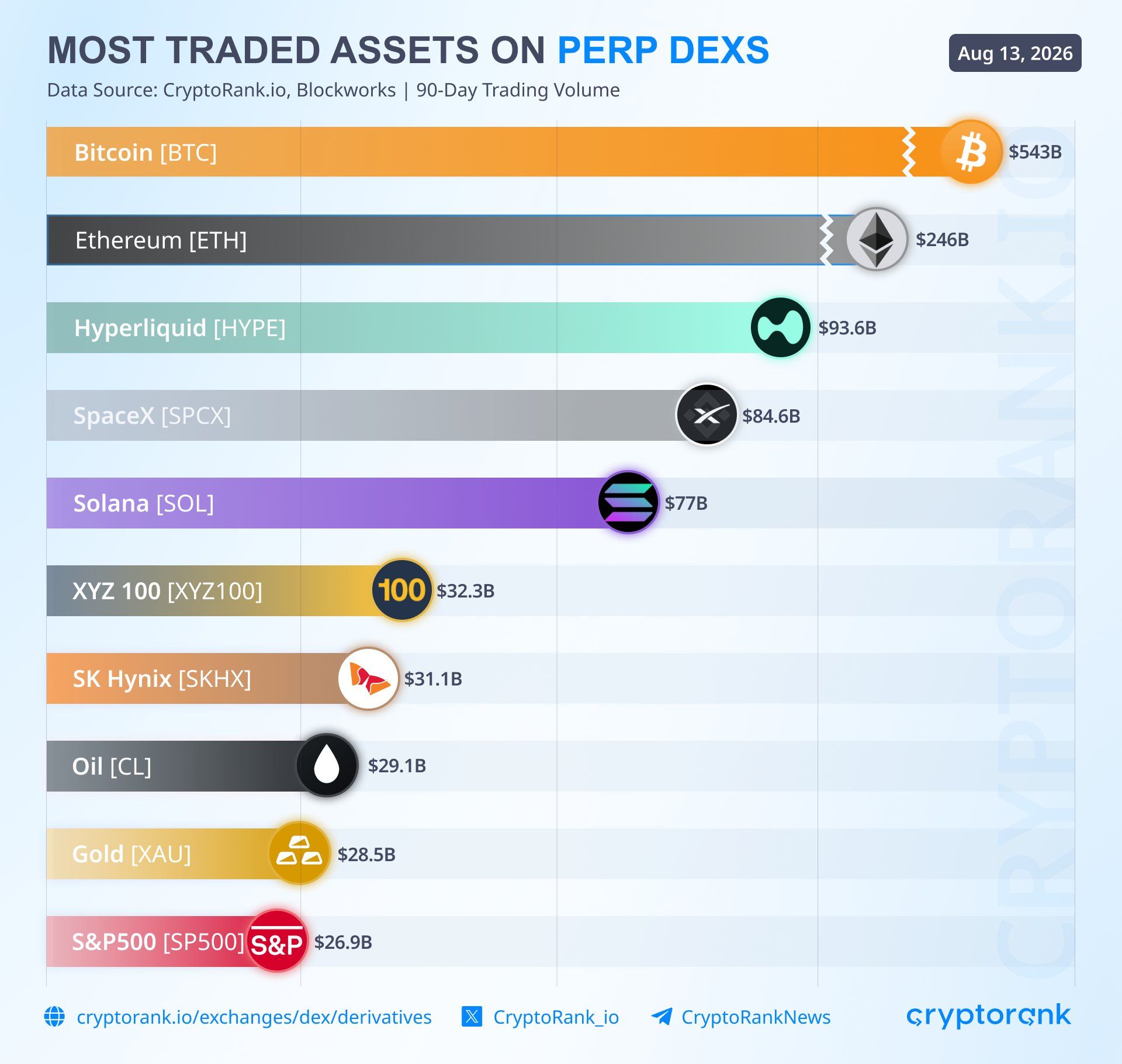
Decentralized venues spread activity more widely. Equities, commodities, and index contracts all rank in the top ten by 90-day volume.
“Perp DEXs are gradually evolving from crypto-only venues into a universal trading layer for a much broader range of liquid assets,” CryptoRank said.
SpaceX (SPCX) was the most-traded non-crypto asset, trailing only Bitcoin (BTC), Ethereum (ETH), and Hyperliquid (HYPE) in trading volume. It drew $84.6 billion over 90 days, ahead of Solana (SOL) at $77 billion, according to CryptoRank data.
SK Hynix recorded $31.1 billion over the period. Oil followed at $29.1 billion, gold at $28.5 billion, and the S&P 500 at $26.9 billion.

Bitcoin still led with $543 billion in volume, ahead of Ethereum at $246 billion and Hyperliquid at $93.6 billion. Non-crypto markets accounted for roughly 17% of the volume across the ten largest contracts.
The shift builds on earlier growth in pre-IPO perpetuals, which reached about $12 billion in June.
Subscribe to our YouTube channel to watch leaders and journalists provide expert insights
The post Equity Perp Volume Surges 17x as Chip Stocks Draw Crypto Traders appeared first on BeInCrypto.
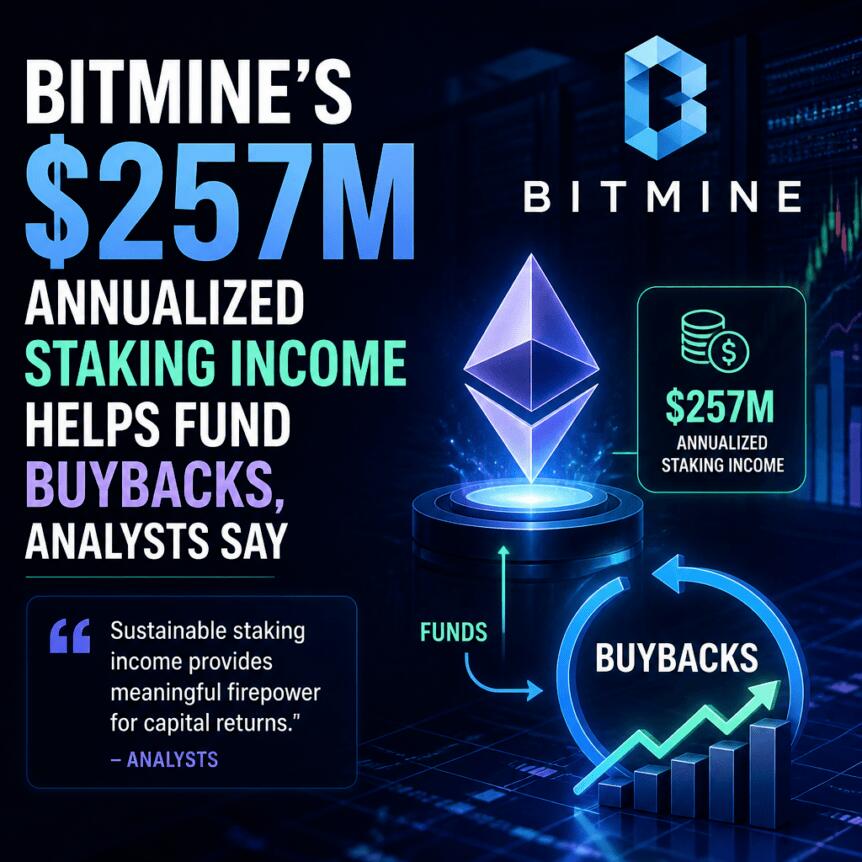
Bitmine Immersion Technologies, currently the largest corporate holder of Ether, says its staked ETH has crossed the 5 million mark—an upgrade that could translate into significant recurring income. In a Monday announcement, the company reported that its ETH holdings reached 5.81 million tokens, with more than 5 million of them staked, estimating roughly $257 million in annualized revenue from staking.
The development adds to a wider shift among crypto companies that are exploring Ether as a treasury asset that can generate “native yield,” even as markets remain sensitive to ETH price swings and staking economics.
Key takeaways
- Bitmine says it has staked over 5 million ETH, estimating about $257 million in annualized staking revenue.
- According to Bitfinex exchange analysts cited by Cointelegraph, staking was the dominant source of Bitmine’s revenue in the quarter ended May 31.
- Staking income is not guaranteed: it depends on staking yield, ETH price assumptions, and operational and regulatory factors.
- Ether treasury firms face pressure when ETH’s spot price falls, with SharpLink reporting a large Q2 net loss tied to unrealized crypto losses.
- Despite risks, staking can provide a recurring “buffer” that may help smooth treasury planning and reduce reliance on selling ETH.
Bitmine’s 5 million staked-ETH milestone
Bitmine’s Monday update frames staking as a measurable cash-flow engine for corporate balance sheets. The company stated that its ETH holdings reached 5.81 million tokens, with staked tokens surpassing 5 million. The announcement also pointed to an estimated $257 million in annualized revenue tied to staking.
Analysts from Bitfinex, quoted by Cointelegraph, described staking as the foundation of Bitmine’s earnings. For the fiscal quarter ending May 31, they said Ether staking accounted for about 98% of the company’s revenue—$45.7 million out of $46.5 million.
“It funds operations and its share buyback program: 19.1 million shares repurchased since July against a $4 billion authorisation, without Bitmine having to sell any Ether.”
That distinction matters for treasury strategy. When a company can fund buybacks and operating costs without liquidating its crypto exposure, it reduces the need to sell during potentially unfavorable market conditions.
Why staking is attracting treasury managers
Ether’s role as a treasury asset is increasingly discussed as a complement to traditional capital management. Alvin Kan, chief operating officer at Bitget Wallet, told Cointelegraph that Bitmine’s milestone illustrates how ETH can produce native yield at the treasury level.
Kan contrasted this with the more common framing of Bitcoin (BTC) in corporate treasuries. In many cases, BTC is treated primarily as a balance-sheet appreciation asset. Ether staking, by comparison, can create recurring inflows, which can change how companies think about risk and returns.
At the same time, Kan emphasized that staking revenue is not simply “fixed income.”
“The revenue is annualized, depends on ETH price and staking yield, and comes with operational, liquidity, validator and regulatory considerations.”
In other words, Ether staking behaves less like a guaranteed coupon and more like a yield-bearing overlay on a larger treasury position. The key uncertainty is whether the assumed yield holds up over time—while operational and regulatory complexities can affect execution, and liquidity needs can influence whether staked ETH remains locked for periods that may not align with corporate cash-flow requirements.
ETH price weakness tests corporate staking strategies
The case for staking looks stronger when ETH yields are stable and liquid capital is not required. But the economics can worsen when ETH spot prices decline, because treasury value and reported results can diverge sharply from staking inflows.
Cointelegraph notes that Ether treasury companies are facing growing unrealized losses as margins come under pressure. It cited that ETH’s spot price fell about 23% during the second quarter of 2026, a backdrop that can magnify mark-to-market losses even if staking continues.
SharpLink, described as the second-largest Ether treasury company, reported a net loss of $394 million for the second quarter of 2026. Cointelegraph linked the loss largely to $391 million in unrealized crypto losses, highlighting the asymmetry investors often face: staking can add cash yield, but declines in asset prices can still overwhelm reported profitability depending on accounting and measurement.
In terms of scale, Bitmine was cited as holding 5.54 million ETH (valued at about $9.4 billion at the time of reporting), while SharpLink held 863,000 ETH (about $1.46 billion), according to data compiled by StrategicEthReserve.
This comparison underscores a practical tension in the category: staking revenue may provide operational funding and some smoothing effect, but it does not remove exposure to ETH price volatility—especially when balance sheets are measured on prevailing market prices.
Current staking yield and what investors should watch
Ether staking can be evaluated in two layers: the on-chain yield and the market value of the underlying ETH. Cointelegraph reported that ETH staking currently pays an annual percentage rate (APR) of 2.61%. It also cited Validatorqueue data indicating that over 34% of the total Ether supply is staked across 897,064 validators.
Those figures help explain why corporate staking can become a meaningful line item for large holders. But they also point to the variables that could change over time. If total staked supply rises faster than network rewards adjust, yields can compress. If validator performance or operational constraints occur, effective yields can differ from headline APR.
Meanwhile, the market can continue to test treasury strategies via ETH spot movements. In that context, recurring staking income may act as a “buffer” to fluctuations, as argued by a Seeking Alpha contributor in a July 28 report that Cointelegraph referenced. The core idea is that recurring staking revenue can support planning even when spot valuation is under pressure—but investors should interpret that as financial resilience rather than immunity from downside.
For readers tracking Ether treasuries, the next signals to watch are whether staking revenues translate into sustained operating cash flow across market cycles, how companies manage liquidity given validator and regulatory constraints, and whether APR/yield conditions remain favorable as more corporate holders consider staking as a strategic component of their balance sheets.

A pro-crypto industry group has asked the U.S. Supreme Court to take up Custodia Bank’s challenge to how the Federal Reserve handled its request for direct access to the central bank’s payment system. In an amicus brief filed Wednesday, the Blockchain Association argued that federal law obliges the Fed to provide payment services to eligible nonmember banks and that the central bank should not be allowed to effectively block access through broad discretion.
The dispute centers on whether the Federal Reserve can deny a “master account” application for a state-chartered bank that wants direct connectivity to Fed payment rails, without routing transactions through an intermediary institution. Custodia, a Wyoming-chartered bank focused on digital assets, has maintained that the Fed’s refusal prevented it from operating as independently as other eligible banks.
Key takeaways
- The Blockchain Association urged the U.S. Supreme Court to review Custodia Bank’s bid for a Fed master account after lower-court decisions left the bank with few options.
- In its amicus brief, the group argued federal law requires the Fed to offer payment services to eligible nonmember banks and limits the Fed’s ability to deny access.
- The brief also linked Custodia’s fight to broader concerns about regulators discouraging banking relationships with crypto firms, referencing “Operation Choke Point 2.0.”
- The case lands amid a wider trend of some crypto-related firms obtaining varying levels of U.S. banking access, including limited-purpose Fedwire access for Kraken Financial.
- Traditional banking groups have pushed back on these developments, warning that crypto firms may be seeking bank benefits without full obligations.
Supreme Court petition takes aim at Fed discretion
According to the Blockchain Association’s amicus brief, the Federal Reserve’s approach—and the way the Tenth Circuit interpreted it—creates a practical “veto” over whether state-chartered banks can access essential payment-system services. The association’s core argument is that the law governing the Fed’s obligations does not contemplate an open-ended power to refuse services to eligible nonmember institutions.
The industry group said the appellate decision effectively expands the Fed’s discretion beyond what Congress intended, allowing the central bank to withhold the infrastructure needed for a bank to function independently. Custodia’s lawsuit has been framed around the idea that direct access to Fed systems is a prerequisite for operational independence, rather than a discretionary privilege.
The Blockchain Association also tied the matter to concerns about alleged “crypto debanking.” In doing so, it pointed to regulator behavior it characterized as part of “Operation Choke Point 2.0,” an issue that has been discussed in U.S. policy debates around whether financial regulators have pushed banks away from serving the digital asset industry. Earlier coverage from Cointelegraph noted the broader “Operation Choke Point 2.0” narrative in the context of how federal regulators may influence banking relationships (see this Cointelegraph report).
Custodia’s path through the courts
Custodia applied for a Fed master account in 2020, seeking direct access to the central bank’s payment services rather than depending on an intermediary bank. The Federal Reserve Bank of Kansas City denied the request in 2023. A subsequent ruling by the Tenth Circuit held that the regional Fed bank had discretion to reject Custodia’s application.
In March, the appeals court voted 7-3 against rehearing the case, leaving the U.S. Supreme Court as Custodia’s remaining avenue for potential review. The Blockchain Association’s filing argues that the Tenth Circuit’s reading of the Fed’s authority is too expansive—particularly as it relates to eligible state-chartered institutions seeking to access payment rails directly.
For investors and industry participants, the practical stakes of the dispute go beyond one bank. If the Supreme Court were to narrow how the Fed can interpret its obligations to eligible nonmember banks, it could reshape the legal boundaries for future master account requests—potentially altering how crypto-focused and other specialized banks plan for payments connectivity.
Why the timing matters: more crypto banking access, but not uniform
Custodia’s legal challenge is unfolding as some crypto firms have improved their access to parts of the U.S. banking system. The Blockchain Association’s filing arrives during a period when regulators have approved various structures—federal charters, limited-purpose arrangements, and trust or custody-focused banking entities—each with different capabilities and constraints.
In March, Kraken Financial became the first crypto banking unit to receive a limited-purpose master account from the Federal Reserve Bank of Kansas City, according to Cointelegraph’s reporting. That approval granted direct access to Fedwire for Kraken Financial (see Cointelegraph’s coverage). The approval contrasts with Custodia’s denial by the same regional Fed bank in 2023, highlighting how access outcomes may differ even within the same regional Fed framework.
Beyond Fedwire connectivity, the sector has also seen changes in federal oversight of custody and related services. In April, Coinbase received conditional approval from the Office of the Comptroller of the Currency (OCC) to establish a national trust company, bringing its custody business under federal oversight without retail deposit-taking or full commercial banking operations (see this Cointelegraph report). Circle later received final OCC approval for a national trust bank in July, while Kraken parent Payward applied for a national trust company charter the following month.
Cointelegraph’s reporting also notes that the OCC conditionally approved national trust bank applications from Ripple, BitGo, Fidelity Digital Assets and Paxos in December (see the related Cointelegraph coverage embedded in the original article text). While these developments do not automatically resolve master account disputes, they underscore that parts of the banking system have been opening to crypto firms—at least for certain regulated structures.
Backlash from community banks underscores policy tension
Resistance from traditional banking organizations has accompanied these approvals. The Independent Community Bankers of America opposed Coinbase’s national trust charter approval in April, arguing that crypto companies are seeking the benefits associated with bank charters while avoiding the full regulatory framework applied to traditional banks (see Cointelegraph’s report).
This tension matters for Custodia’s case because it reflects a wider debate over how to classify and regulate crypto-related banking activities. The Blockchain Association’s brief frames the master account issue as one about legal eligibility and regulatory consistency. Opponents, meanwhile, have raised concerns about regulatory asymmetry—where crypto institutions may access certain permissions while not facing the same obligations as conventional banks.
With the Supreme Court as the next potential forum, the central question will likely be less about crypto policy in the abstract and more about statutory interpretation: what the Fed must do for eligible nonmember banks, and what discretion it actually retains when granting or denying access to payment rails.
Readers should watch for whether the Supreme Court agrees to hear Custodia’s petition and, if it does, how the justices approach the scope of the Fed’s discretion over payment-system access. The outcome could set a clearer rule for future master account requests—potentially affecting how quickly other specialized banks, including crypto-focused institutions, can plan for direct participation in U.S. payment infrastructure.
DeFi protocol Neutrl has halted minting and redemptions for its NUSD synthetic dollar after “unspecified circumstances” affected the protocol’s reserves, leaving the extent of any potential impairment unclear. The suspension blocks approved counterparties from exchanging NUSD for its backing assets while Neutrl evaluates the situation.
In a separate development, structured-yield protocol Strata said it also paused minting, redemptions and related functions for contracts tied to the Neutrl market it uses to support several NUSD-linked products. Strata indicated its other markets continued operating.
Key takeaways
- Neutrl suspended NUSD minting and redemptions after reserves were impacted, citing unspecified circumstances and no confirmed timeline for resuming operations.
- Strata paused NUSD-related contracts within its Neutrl market, while keeping other markets running.
- NUSD supply is roughly $53.6 million, with recent data showing an 18.4% decline in market capitalization over 30 days—though that does not prove a direct link to the reserve issue.
- Prior disclosures and third-party assessments point to heavy reliance on specific infrastructure for reserves and to higher-risk factors around counterparty, operational and liquidity exposure.
Neutrl pauses NUSD after reserve disruption
Neutrl announced that it has suspended minting and redemptions for NUSD, its token designed to track the U.S. dollar. It also said it paused other protocol functions on legal advice while it assesses how the reserve situation has changed, if at all.
The protocol did not specify which asset or counterparty was involved, whether reserves suffered a realized loss, or when normal operations might restart. It said it would share timing and next steps when it can.
For users and counterparties, the practical effect is straightforward: until Neutrl determines that reserves are intact (or addresses any impairment), approved parties cannot exchange NUSD against its backing assets. That means the main redemption and issuance pathway for the synthetic dollar is currently unavailable.
Strata extends the pause to NUSD-linked contracts
Strata later confirmed it paused minting, redemptions and related functions for contracts that depend on the Neutrl market supporting NUSD. The move matters because Strata’s Neutrl-linked exposure is used to underpin multiple NUSD-linked products.
Crucially, Strata stated that its other markets remained operational. That separation suggests the risk event is localized to the Neutrl market integration rather than affecting Strata’s entire product suite.
What recent NUSD data shows—and what it doesn’t
Data from RWA.xyz indicates NUSD had a market capitalization of about $53.6 million on Friday, down 18.4% over the previous 30 days. RWA.xyz also reported monthly transfer volume declining 72.4% to $71.4 million. The same dataset showed NUSD trading around $0.9984, with 615 holders and 347 active addresses over the past 30 days.
Even with those declines, the RWA.xyz data does not establish that the earlier contraction in supply or activity was caused by the reserve issue now prompting Neutrl’s suspension. The new halt could be the result of a discrete event discovered during ongoing operations, or it could reflect a problem that emerged earlier and only recently required a pause.
Prior reserve verification and earlier risk assessments
Although the current suspension leaves “cause and scale” unclear, the background around NUSD’s reserve monitoring helps explain what stakeholders will likely look for when operations resume.
On May 25, verification platform Accountable said Neutrl’s dashboard provided continuous cryptographic proof that NUSD reserves matched protocol liabilities. That claim points to an ongoing monitoring mechanism, but it does not, by itself, confirm that reserves remained unaffected during the circumstances Neutrl references now.
Separately, a February assessment by risk-advisory team BA Labs classified a proposed Neutrl integration as higher risk due to counterparty, operational and liquidity exposure. BA Labs also described direct redemptions as limited to KYC or KYB-approved counterparties, with larger-than-liquid-buffer requests potentially entering a queue targeted for completion within 48 hours but without a guarantee.
In that same assessment, BA Labs estimated NUSD supply at $226 million and reserves at $233.7 million, implying a 103.6% collateralization ratio at the time of their review. It also estimated that more than 87% of reserves were held via Fireblocks, with smaller amounts on centralized exchanges. Those details highlight why a reserve disruption—if it involves counterparties, custody, liquidity, or operational controls—can quickly translate into restrictions on minting and redemptions.
With Neutrl now pausing core NUSD functions, investors and users will likely focus on whether any impairment is temporary (e.g., operational delays or custody-related settlement issues) or structural (e.g., realized losses, inability to access reserves, or a deterioration in collateral adequacy). The protocol has not yet provided those specifics.
For now, the key question is what Neutrl will report next: whether reserves are demonstrably still aligned with liabilities, whether redemptions will be re-enabled under the same parameters, and whether Strata will reopen Neutrl-dependent contracts in step with any revised risk controls. Until the protocol discloses the nature of the reserve disruption and its impact, market participants should treat NUSD minting/redemption availability as the primary signal to watch.
DeFi protocol Neutrl has halted minting and redemptions of its synthetic dollar, NUSD, after “unspecified circumstances” affected the protocol’s reserves. The suspension also includes paused protocol functions as Neutrl evaluates the scope of any potential impairment, but it has not yet disclosed what went wrong, which asset or counterparty is involved, or whether any realized losses occurred.
The pause matters beyond Neutrl itself: other market participants that rely on NUSD-linked positions have also stopped minting and redemption-related activity for Neutrl-based contracts. Until Neutrl provides more clarity, approved counterparties cannot exchange NUSD for its backing assets, leaving holders with fewer routes to exit through the protocol.
Key takeaways
- Neutrl suspended NUSD minting and redemptions after reserves were reportedly affected, without naming the underlying cause, asset, or counterparty.
- Neutrl also paused other protocol functions on legal advice while it assesses impact; no restart date has been provided.
- Structured-yield protocol Strata said it paused minting/redemptions for contracts in its Neutrl market, while keeping other markets running.
- On-chain tracking from RWA.xyz shows NUSD market cap around $53.6M and a sharp decline over 30 days, though the data does not prove the drop is tied to the reserve issue.
NUSD halted as Neutrl reviews reserve impact
Neutrl announced that it had suspended minting and redemptions for NUSD, citing unspecified circumstances that affected protocol reserves. In a separate update, the team said it paused additional protocol functions “on legal advice” while it evaluates how the situation impacts reserves and liabilities.
Crucially, Neutrl has not yet provided details that would help counterparties and token holders assess risk: the protocol did not specify the affected asset or any counterparty, did not confirm whether reserves suffered a realized loss, and did not offer a timeline for resuming operations. Neutrl said it would share timing and next steps when information becomes available.
While the protocol evaluates its position, the direct effect is straightforward: the suspension prevents approved counterparties from exchanging NUSD for backing assets, potentially increasing uncertainty for anyone holding NUSD and for DeFi products that depend on its redemption path.
Ripple effects: Strata freezes Neutrl-linked contracts
The operational pause is also showing up across DeFi infrastructure that builds on NUSD. Structured-yield protocol Strata stated that it paused minting, redemptions, and related functions for contracts in its Neutrl market—an area that supports several NUSD-linked products—while indicating that its other markets remain operational.
That distinction is important for users trying to isolate exposure. If Strata’s Neutrl market is paused but other markets continue, users with positions not tied to NUSD may still be able to transact normally on those venues. For NUSD-linked strategies, however, the liquidity and workflow disruption could extend until Neutrl unfreezes minting and redemptions or clarifies how the reserve issue is being handled.
Supply contraction already underway—but the link remains unproven
Prior to Neutrl’s announcement, NUSD’s footprint appears to have been shrinking. According to RWA.xyz data, NUSD had a market capitalization of about $53.6 million on Friday, down 18.4% over 30 days. RWA.xyz also reported monthly transfer volume fell 72.4% to $71.4 million.
However, RWA.xyz’s figures alone do not establish causation between the earlier contraction and the reserve problem. The protocol’s current suspension raises concern, but investors should avoid assuming the reserve impairment drove the 30-day decline without more evidence.
RWA.xyz also showed NUSD trading at roughly $0.9984, along with 615 holders and 347 active addresses over the preceding 30 days. As with the supply and volume changes, these metrics can help frame usage and distribution trends, but they cannot confirm whether the reserve disruption has already translated into a realized loss.
How NUSD is supposed to work—and what past risk reviews flagged
NUSD is designed to track the US dollar using yield-bearing crypto assets and market-neutral strategies rather than traditional bank deposits. That design aims to avoid simple custodial deposit risk, but it introduces other forms of exposure—particularly around counterparty performance, operational execution, and liquidity conditions.
Earlier, verification platform Accountable said its Neutrl dashboard provided continuous cryptographic proof that NUSD reserves matched the protocol’s liabilities. According to a May 25 Accountable post referenced in earlier reporting, the dashboard was designed to show ongoing correspondence between reserves and liabilities, which is directly relevant when users ask whether backing remains intact.
At the same time, a February assessment by risk-advisory team BA Labs flagged that a proposed Neutrl integration carried higher risk. BA Labs pointed to counterparty, operational, and liquidity exposure, noting that direct redemptions were limited to KYC or KYB-approved counterparties and that redemption requests exceeding a liquid buffer could enter a queue targeted for completion within 48 hours without a guaranteed outcome.
In that February review, BA Labs estimated NUSD supply at $226 million and reserves at $233.7 million, implying a collateralization ratio of 103.6%. The team also estimated that more than 87% of reserves were held via Fireblocks, with smaller amounts on centralized exchanges. While those figures are historical, they outline the kind of reserve structure that can become relevant during a disruption—especially when access, settlement timing, or counterparty availability comes into question.
Importantly, Neutrl has not said whether the current event affects realized value, whether the issue relates to custody/settlement, or whether the mismatch is only operational. Until Neutrl clarifies, the combination of a reserve-impact claim and incomplete transparency means market participants should treat the pause as an unresolved risk event rather than a closed “technical issue.”
For now, the key thing to watch is what Neutrl reveals next: whether reserves are still intact relative to liabilities, what caused the reserve impact, and how and when NUSD minting and redemptions will be restarted. As Strata keeps its Neutrl-linked market paused, the timing of Neutrl’s next steps will likely determine how quickly NUSD-dependent products can resume their normal redemption and minting mechanics.
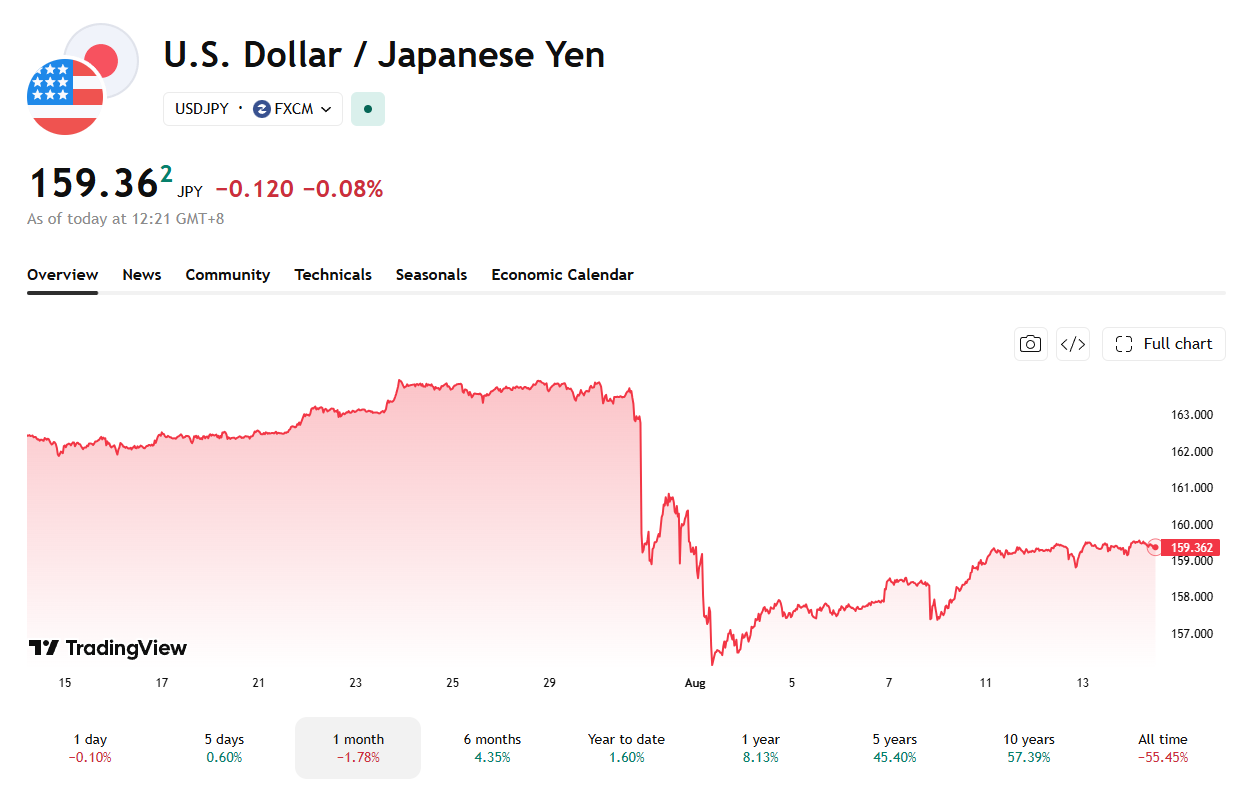
Bettors on Polymarket now put 81% odds on a Bank of Japan rate hike in September. Two weeks ago, that same bet sat at just 22%.
The shift comes as Japan’s currency intervention loses its grip on the yen. The currency is on track for its biggest weekly loss in three months, unwinding much of its recent rebound.
Intervention’s Fading Boost
The yen fell about 1% this week to 159.43 per dollar. That puts it on track for its worst week since May.

The currency has given back roughly half the gains from Japan’s coordinated yen intervention in late July and early August. It was trading near 164 per dollar before that support began.
This is not the first time the boost has faded. Japan’s April intervention followed a similar path, and the yen drifted back toward 40-year lows over the following months.
Tokyo’s former top currency diplomat, Mitsuhiro Furusawa, told Reuters Japan could tap its yen war chest again at any time. He said officials could also signal faster rate hikes to defend the currency.
Bettors Pivot to a BOJ Hike
That link between intervention and rate hikes is why traders are shifting their bets. A quarter-point Bank of Japan hike is now priced at over 80% on Polymarket.
OCBC strategist Sim Moh Siong said intervention alone cannot shift the yen’s trend.
“It’s not much of a surprise that the yen has retraced.”
He said the currency needs a genuinely hawkish Bank of Japan behind it. That lines up with growing talk of faster BOJ rate hikes as inflation nears its target.
The bet carries risk. A hold instead of a hike could disappoint traders quickly. That kind of surprise has previously sent the yen sliding back toward 160. For now, markets are betting on the Bank of Japan, not further intervention, to hold the line.
The post Bank of Japan Hike Odds Triple on Polymarket as Yen Intervention Fades appeared first on BeInCrypto.
Crypto World
Bitcoin (BTC) holding firms Strategy and Metaplanet face stock-index exclusion under MSCI’s new proposal
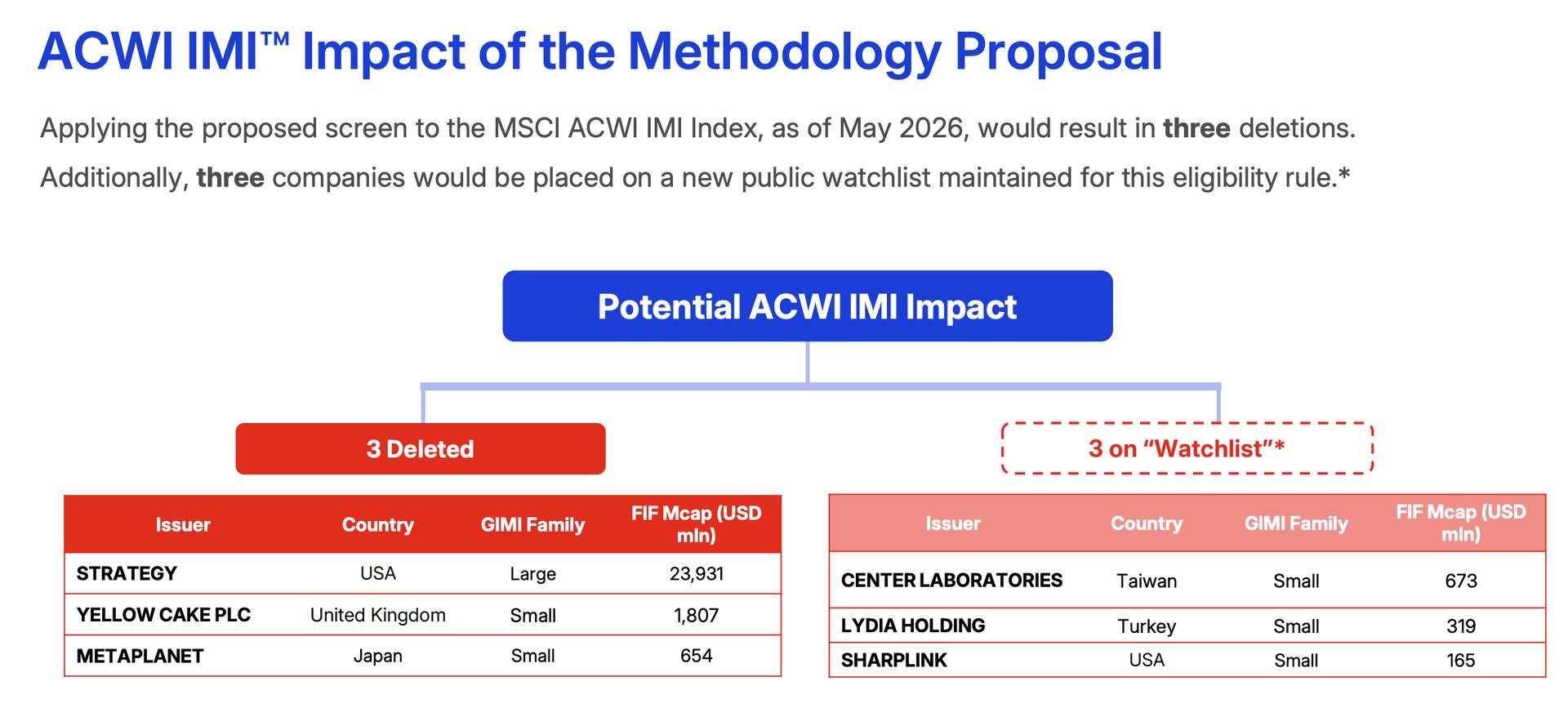
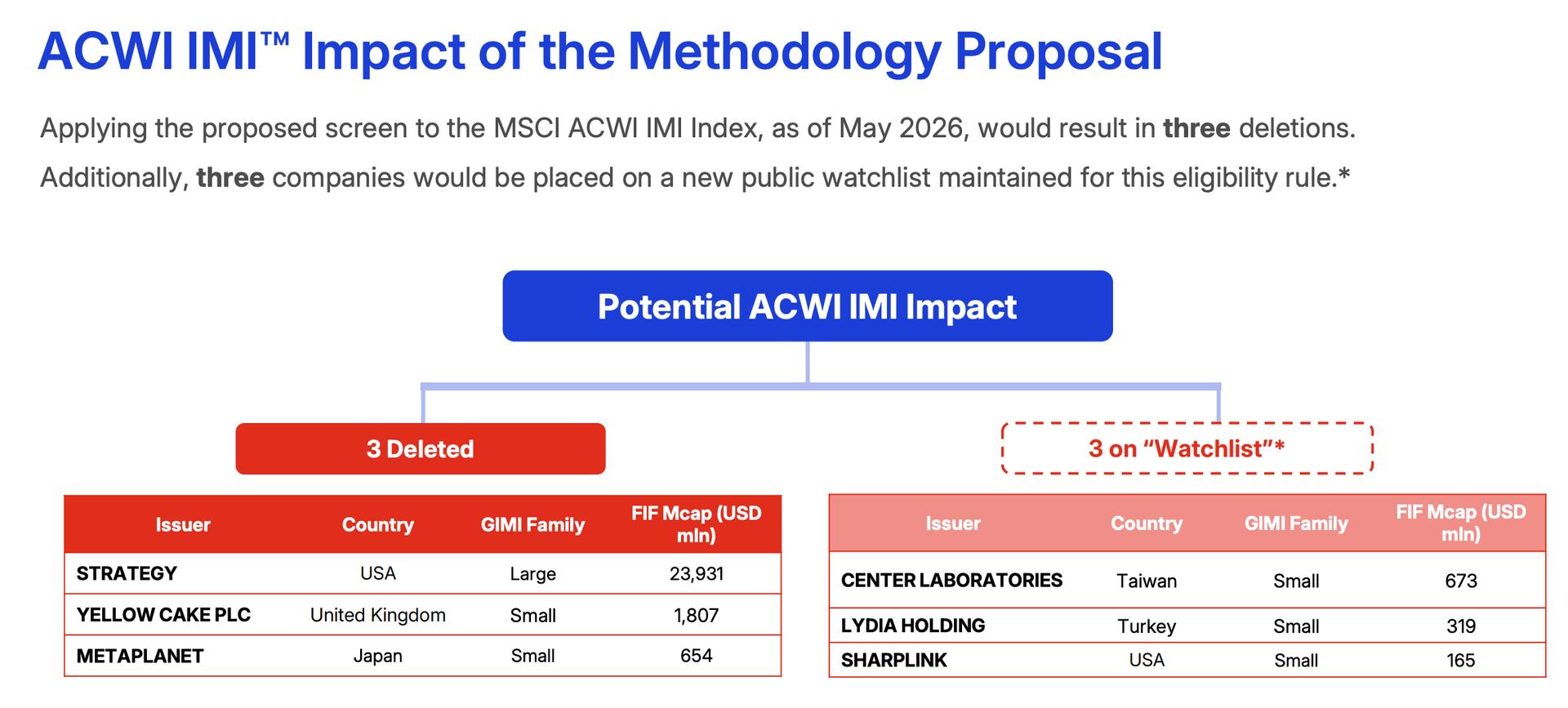
If it fails that, it moves to an exclusion screen that uses five ratios – operating asset intensity, expense intensity, cash flow, fair value intensity, and capital dependence – to make the final call.
A company becomes ineligible for index inclusion if it fails four out of the five test ratios.
MSCI’s description of the so-called non-operating companies not fit for index inclusion reads like a checklist of bitcoin treasury firms without naming one.
Companies that “create value by accumulating and holding non-operating assets,” generate little cash from actual operations, and depend on outside capital rather than their own business to grow, MSCI explained. Companies not currently in the index face the stricter thresholds based on their latest single filing.
An earlier consultation, opened in October 2025, targeted “digital asset treasury” firms, specifically those holding 50% or more of assets in bitcoin or other cryptocurrencies. That proposal named 39 companies, triggering crypto market volatility and industry backlash. The proposal was ultimately deferred.
Nothing is decided yet
MSCI has invited feedback from market participants through Sept. 30, and the results will be announced roughly two weeks later, on Oct. 16.
It has said that any resulting changes would be folded into the November 2026 index review, if the proposal is adopted at all.
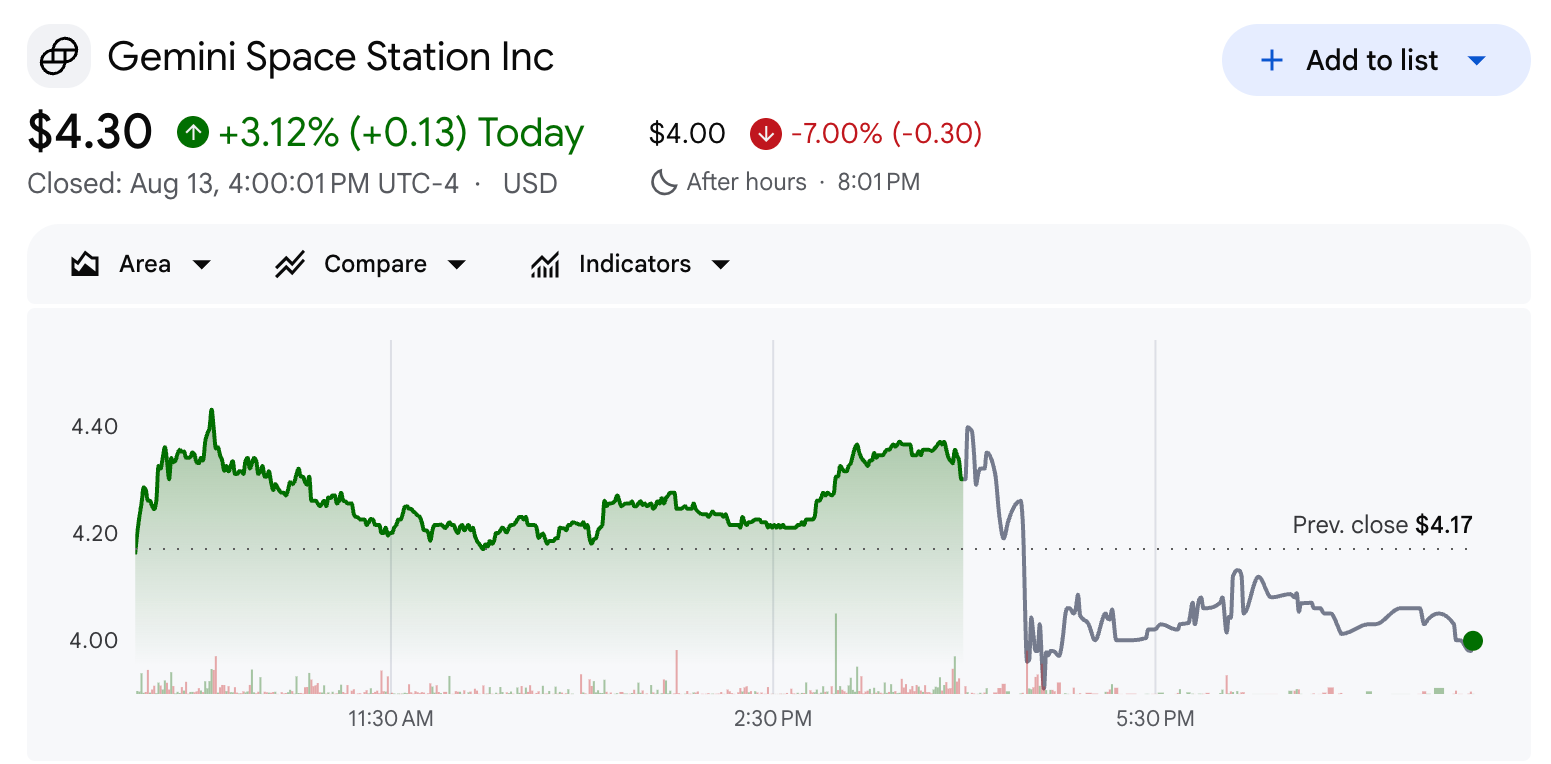
Gemini Space Station (GEMI) stock slid 7% to $4.00 in after-hours trading Thursday after the crypto exchange reported a second-quarter net loss of $107.7 million.
The loss came in 19% smaller than a year earlier, and revenue climbed 37% to $45.5 million. Even so, a fraud charge and thinner trading volumes overshadowed the company’s progress.
Services Revenue Doubles as Crypto Trading Dries Up
The stock closed the regular session 3.12% higher at $4.30 before the company released earnings after the bell, which reversed the gains.
Follow us on X to get the latest news as it happens

According to the press release, net loss per share came in at $0.89, against $27.08 a year earlier. Services revenue and interest income climbed 117% to $26.0 million. Credit card revenue supplied most of that gain, rising 231% to $16.2 million, while staking added $4 million.
OTC revenue jumped to $4.7 million from $0.6 million on heavier institutional trading. In addition, prediction markets added $0.5 million.
Exchange revenue moved the other way. It fell 38% to $12.5 million as crypto trading volume shrank to $3.8 billion from $11.3 billion a year earlier.
“While we still have work to do as a company, this quarter’s results reflect our ongoing efforts to reduce operating expenses while diversifying revenue,” Gemini CEO, Tyler Winklevoss, said.
Fraud Charge Undercuts the Cost Cuts
Meanwhile, transaction losses tell a harsher story. They surged to $20.1 million from $3.6 million. This was driven mainly by a $16.1 million provision for credit losses on the credit card portfolio.
“The higher provision was impacted by an identity fraud event identified earlier in 2026,” the firm noted.
Operating expenses dropped 15% sequentially to $122.4 million from $144.5 million. February’s 30% staff cut and withdrawals from international markets drove the decline. Operating loss came to $76.9 million.
Investors treated the prior quarter differently. Shares rallied after Q1 2026 earnings showed $50.3 million in revenue and a $109 million loss.
Subscribe to our YouTube channel to watch leaders and journalists provide expert insights
The post Gemini Shares Drop 7% Even as Net Loss Narrows to $107 Million appeared first on BeInCrypto.

JGR vs Chris Gabehart, Spire lawsuit takes another turn as court date is set for counterclaims

Silver Lake in talks to acquire Workday

The street burned down by record heat: Charred remains of six houses consumed by ‘apocalyptic’ wildfire that started near golf course


-

 Fashion7 days ago
Weekend Open Thread: Mattifying Sunscreen
-

 Fashion7 days ago
Frugal Friday’s Workwear Report: Cap-Sleeve Pointelle Crewneck Sweater
-

 News Videos6 days ago
Can Astrology Help Find Gold and Silver Trends? A Financial Astrology Guide
-

 Tech6 days ago
Rinn Pharma & Biopharma to join NordicPharmaTrain network
-

 Business5 days ago
How to Start a Cleaning Business: A Step-by-Step Guide
-

 Business5 days ago
Datadog: Best Of Breed For Multiple Reasons
-

 Business5 days ago
BDC Weekly Review: Private BDC Q2 Numbers Are Strong
-
 NewsBeat2 days ago
Communication cards help banking customers access services or report scams
-
 Business3 days ago
Oil Price Today (August 11): Crude oil rises to $88 after Trump’s compensation demand dents Hormuz opening. Here’s why
-

 Business7 days ago
Aussie shares lose steam to close record-breaking week
-

 Fashion7 days ago
Weekly News Update, 8.6.26 – Corporette.com
-

 Fashion7 days ago
Irina Shayk Wows in REVOLVE Los Angeles’ Summer Styles
-

 Fashion7 days ago
Burberry Fall 2026 Takes On Commuter Style
-

 Fashion5 days ago
Amazon Sundays: Closet Care Before Fall
-

 Politics6 days ago
Be quiet, Miriam! – spiked
-

 Business7 days ago
CXMT Shares Drop 4.3% as Post-IPO Rally Cools Amid Global Memory Chip Pressures
-

 Business6 days ago
Mutual Fund Manager Scoops Up Beaten-Down Stocks
-

 Sports7 days ago
Report: Kawhi Leonard had undisclosed deal with Clippers’ scoreboard maker
-

 Politics4 days ago
Ben-Gvir’s crocodile project halted but abuses at Ketziot Prison continue
-

 Crypto World7 days ago
How XRP holders can earn $4,600 daily
You must be logged in to post a comment Login