
Crypto World
Chiliz expands to Solana and Base to supercharge fan token trading



Sports-focused blockchain Chiliz is expanding its roster of over 70 fan tokens to Solana and Base, the Ethereum layer-2 network developed by Coinbase (COIN).
Chiliz rolled out its own layer-1 network in 2023 to host the trading of its tokens, but is transitioning to what it calls “omnichain distribution,” according to an announcement on X on Tuesday.
“By using an Omnichain Fungible Token (OFT) standard, fan tokens will exist on each supported chain with a unified supply, eliminating the need for wrapped tokens or fragmented liquidity pools,” Chiliz said.
Fan tokens are digital assets that represent membership of a community such as a sports team’s fan base. Chiliz has developed over 70 such tokens, including tokens for some of Europe’s soccer giants like Paris Saint-Germain, Barcelona, Manchester City and Juventus. These teams use tokens to farm engagement from fans who are not in the stadium, by giving holders the chance to win exclusive rewards and voting rights on minor issues such as the colour of the players’ warm-up kit.
Chiliz said it hopes that expansion to Solana and Base will give these tokens a major trading volume boost ahead of this summer’s FIFA World Cup. Chiliz already offers tokens representing the Argentina and Portugal teams with more expected to be unveiled in June.
Read More: SportFi’s next act: onchain markets built around match-day results



Wisconsin has joined the growing number of U.S. states being sued by the Commodity Futures Trading Commission as that agency insists on its jurisdiction over prediction markets trading at firms such as Kalshi and Crypto.com.
Several states have gone after those businesses, accusing them of violating state gaming laws via the betting taking place on the growing platforms, but CFTC Chairman Mike Selig has led a legal pushback against states including New York, Arizona, Illinois and Connecticut. He’s argued that the derivatives regulator, which he leads as the sole member of what’s meant to be a five-member commission, has “exclusive jurisdiction” over the trading of event contracts that he argues are an emerging form of the same kinds of derivatives activity long handled by the CFTC.
Last week, Wisconsin sued Kalshi, Coinbase, Polymarket, Robinhood and Crypto.com for running unlicensed gambling operations in the state — echoing the claims made against the industry elsewhere.
Selig has now responded in the U.S. District Court for the Eastern District of Wisconsin, said he’s trying to send a message: “If you interfere with the operation of federal law in regulating financial markets, we will sue you.”
Also last week, New York sued Coinbase and Gemini over their prediction markets businesses, and days later, the CFTC responded with its own lawsuit against the state.
Arizona has been pursuing a criminal case against Kalshi, but a court there paused the prosecution earlier this month, with the judge arguing that the federal agency is likely to be successful making its case that the U.S. law will preempt state gambling laws.
Read More: U.S. CFTC adds New York to string of states its suing to stop prediction market pushback


The open-source standard, developed by The Open Platform, lets AI agents manage dedicated on-chain wallets without requiring user sign-off on every transaction
TON Tech, the infrastructure arm of The Open Platform (TOP), has introduced Agentic Wallets on TON — an open-source, non-custodial standard that gives AI agents the ability to hold and spend funds on the TON blockchain autonomously.
Per a press release shared with The Defiant, under the new system, users fund a dedicated wallet for each agent, set a spending budget, and retain the ability to revoke access at any time. The agent operates within those parameters independently, with no intermediary involved.
Telegram designated TON as the sole blockchain infrastructure for its mini-app platform earlier last year, giving TON exclusive access to a user base now exceeding one billion.
As a major developer of apps and tools for Telegram, TOP is positioned as a key infrastructure player in that ecosystem. The company reached a $1 billion valuation after raising $28.5 million led by Ribbit Capital and is the developer of Telegram’s Crypto Wallet — the official custodial wallet app embedded in the messaging platform. As The Defiant reported previously, Crypto Wallet recently expanded to offer perpetual futures trading across more than 50 assets, via an integration with Lighter.
For developers, Agentic Wallets are designed to support trading bots with predefined budgets, DeFi agents automating staking or portfolio management, and subscription payment automation, per the release.
“Agentic Wallets turn AI agents from assistants to actors,” said Andrew Grekov, Head of TON Tech, continuing:
“Agents on Telegram can not only communicate, but transact — making payments and interacting with on-chain services on behalf of users, without ever touching their keys.”
The launch arrives as the broader industry races to build financial rails for autonomous agents. Biconomy and the Ethereum Foundation recently unveiled ERC-8211, an execution standard for on-chain AI agents designed to let them carry out complex, multi-step DeFi strategies without pre-encoding every parameter at signing time.
This article was written with the assistance of AI workflows. All our stories are curated, edited and fact-checked by a human.


A former Argentine senator with amyotrophic lateral sclerosis (ALS) says Binance’s facial ID system stopped recognizing him after the disease changed his appearance.
Esteban Bullrich, who served as Argentina’s Minister of Education from 2015 to 2017 under former president Mauricio Macri, claimed the exchange froze his crypto holdings for five months while bitcoin (BTC) declined from the $90,000s to the $70,000s.
Eventually, Binance co-CEO Richard Teng personally intervened after his complaint went viral on social media. .
The 56-year-old, who revealed his diagnosis in April 2021, wrote that Binance’s Face ID had stopped recognizing him five months ago.
He said the company offered no accessible alternative for users with his type of disability.
Fortunately, his post, tagged to founder Changpeng Zhao and Teng, gained their attention.
Read more: US Senator asks if Binance lied to Congress about Iran
300 million users before a Binance ID fix for ALS
Binance crossed 300 million registered users in December 2025 three years after it rolled out biometric authentication on its mobile app in 2022, according to Clarín, the Argentine outlet that broke the story.
Bullrich’s lockout, however, exposed a basic engineering oversight. ALS is a progressive neurodegenerative disease that paralyzes muscles, including those in the face.
Anyone designing a biometric identity stack should have anticipated that faces sometimes morph due to muscular changes.
This oversight cost Bullrich dearly. BTC was trading above $90,000 in December 2025 when his lockout began, and has since slid into the $70,000s. Other digital assets have performed even worse.
Binance Argentina replied on the same day Bullrich’s post went viral, saying its team was reaching out directly.
It said it was escalating the matter as an accessibility failure that needed correcting and thanked him for speaking up.
That admission somewhat undercuts the apology. A viral social post forces a public statement that the ordinary support queue couldn’t fix in 150 days.
Got a tip? Send us an email securely via Protos Leaks. For more informed news, follow us on X, Bluesky, and Google News, or subscribe to our YouTube channel.
Canaan (CAN) has secured an additional order from Tether for custom Bitcoin mining hardware, extending their collaboration beyond an earlier research and development effort that tested new system designs for large-scale mining.
Under the new order, Canaan will supply high-density hash board modules designed for immersion-cooled systems, with usage planned at a Tether-linked facility in South America, the crypto mining tech maker announced on Tuesday.
Canaan is supplying these systems to deepen its role as a custom hardware provider for large-scale operators such as Tether. The agreement follows a 2025 R&D partnership with ACME Swisstech, which resulted in a proof-of-concept platform to improve efficiency and scalability in mining operations.
Tether, the issuer of the biggest stablecoin (USDT), is also developing its own control boards and management software, signaling a move toward tighter integration between hardware and software within its mining operations.
The agreement includes an option for additional purchases, giving Tether flexibility to scale its infrastructure if the new system design performs as expected. This is seen as a potential step toward more customized, data center–style Bitcoin (BTC) mining.
Canaan Inc. is a Singapore-based technology company focused on ASIC microprocessors and Bitcoin mining hardware. It holds 1,808 BTC on its balance sheet, valued at roughly $137 million, its highest level of retained Bitcoin to date.
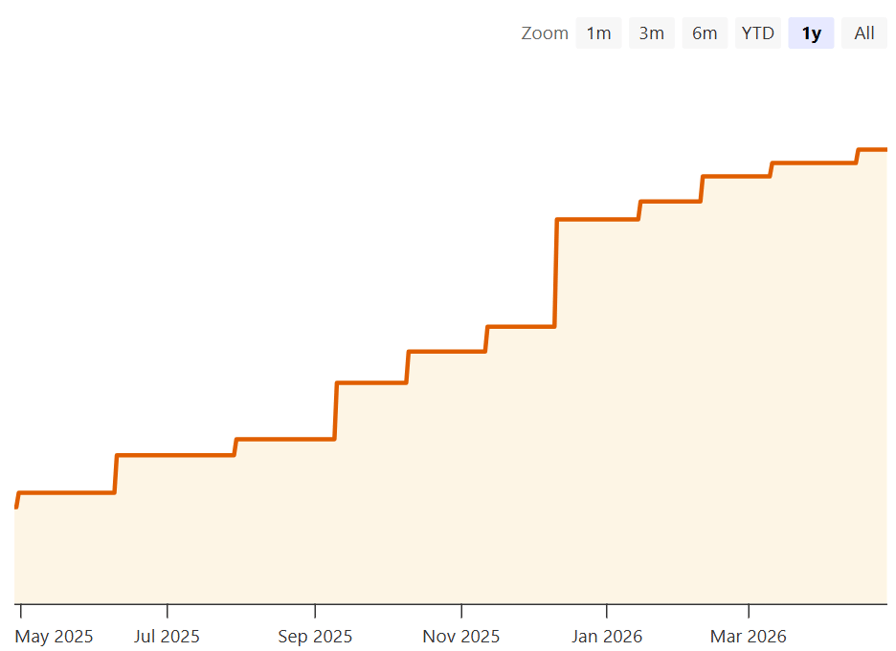
Canaan’s Bitcoin holdings over time. Source: BitcoinTreasuries.NET
Related: Crypto miner Canaan sinks 7% despite strongest quarter in 3 years
Tether expands mining push as industry pivots toward AI infrastructure
The announcement came a day after Tether said it was expanding into Bitcoin mining infrastructure by releasing an open-source framework that lets operators manage their mining hardware and software through a single system.
BTC miners are in the midst of a broad industry shift that’s seen several established miners, including HIVE Digital, TeraWulf and MARA Holdings, diversifying into data centers and artificial intelligence workloads to offset pressure on mining revenues.
Analysts at Bernstein recently said IREN could eventually phase out much of its mining business to focus on AI cloud infrastructure, citing a challenging operating environment for Bitcoin miners.
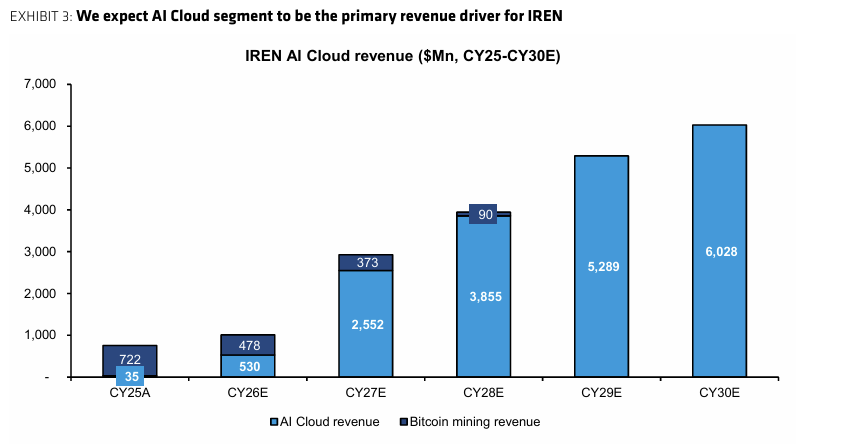
AI cloud services are expected to become IREN’s primary source of revenue in the coming years. Source: Bernstein
Canaan’s Nasdaq-traded shares were down about 1% mid-day on Tuesday in light trading. CoinShares Bitcoin Mining ETF (WGMI) was down about 5.7%. That industry-tracking exchange-traded fund’s holdings include CAN shares, at less than 0.6% weight.
Related: Bitcoin mining difficulty falls, but is projected to rise in next adjustment

A $77 million dispute on Polymarket is testing one of the central promises of prediction markets: that public facts can be translated into clear financial outcomes.
The market in question asks whether the “US x Iran ceasefire” was extended by April 22, 2026. On paper, the question appears straightforward. A two-week ceasefire was announced on April 7. Before it expired, US President Donald Trump stated that the ceasefire would be extended indefinitely. Pakistan’s Prime Minister Shehbaz Sharif, whose country had acted as mediator, publicly welcomed the extension. The UN Secretary-General issued a Note to Correspondents referring to the extension as a step toward de-escalation. Major international media outlets also reported the development.
Yet on Polymarket, Yes shares have traded at roughly 0.1–0.3 cents, implying a probability of less than 1% that the market will resolve positively. For investors holding Yes positions, this is not simply a pricing anomaly. It is a dispute over whether Polymarket’s own rules are being applied consistently.
According to the investors’ argument, the market should resolve Yes if there was an official ceasefire extension confirmed by both sides, or alternatively if there was an overwhelming consensus of credible media reporting. They point to four pieces of evidence: Trump’s public statement, Pakistan’s confirmation as mediator, the UN note, and broad media coverage from outlets such as Reuters, AP, BBC, Al Jazeera, Axios, CNBC and The Wall Street Journal.
The financial stakes are unusually high.
The market’s trading volume is reported at about $77.2 million. In a Yes resolution, shares pay out $1 each. That means one of the largest holders could receive more than $20 million, according to the investor-side media package.
But the case is not airtight. The central weakness is the absence of a direct public communiqué from the Iranian government explicitly confirming the extension in its own voice. Critics may argue that a statement by Pakistan, even as mediator, is not legally identical to a statement by Iran. They may also argue that Trump’s statement reflected a US decision rather than a fully confirmed bilateral agreement.
This is where the case moves beyond geopolitics and into the infrastructure of prediction markets. Polymarket uses UMA’s oracle system to resolve disputed outcomes. If the result is challenged, UMA token holders may ultimately vote on the correct interpretation. In theory, this mechanism is designed to determine factual outcomes. In practice, this case shows how difficult that becomes when facts depend on diplomacy, legal interpretation and source hierarchy.
The broader issue is not whether one group of traders wins or loses.
It is whether a prediction market can handle ambiguous political events without appearing to disregard public evidence. If the market resolves No despite official US statements, mediator confirmation, a UN note and broad media reporting, critics will say the platform ignored the substance of its own rules. If it resolves Yes without direct Iranian confirmation, others will argue the oracle accepted inference over formal proof.
Either way, the dispute is likely to become a precedent. For Polymarket and UMA, the question is no longer only whether the ceasefire was extended. It is whether decentralized markets can produce resolutions that users view as fair, consistent and grounded in the same public facts they were invited to trade on.

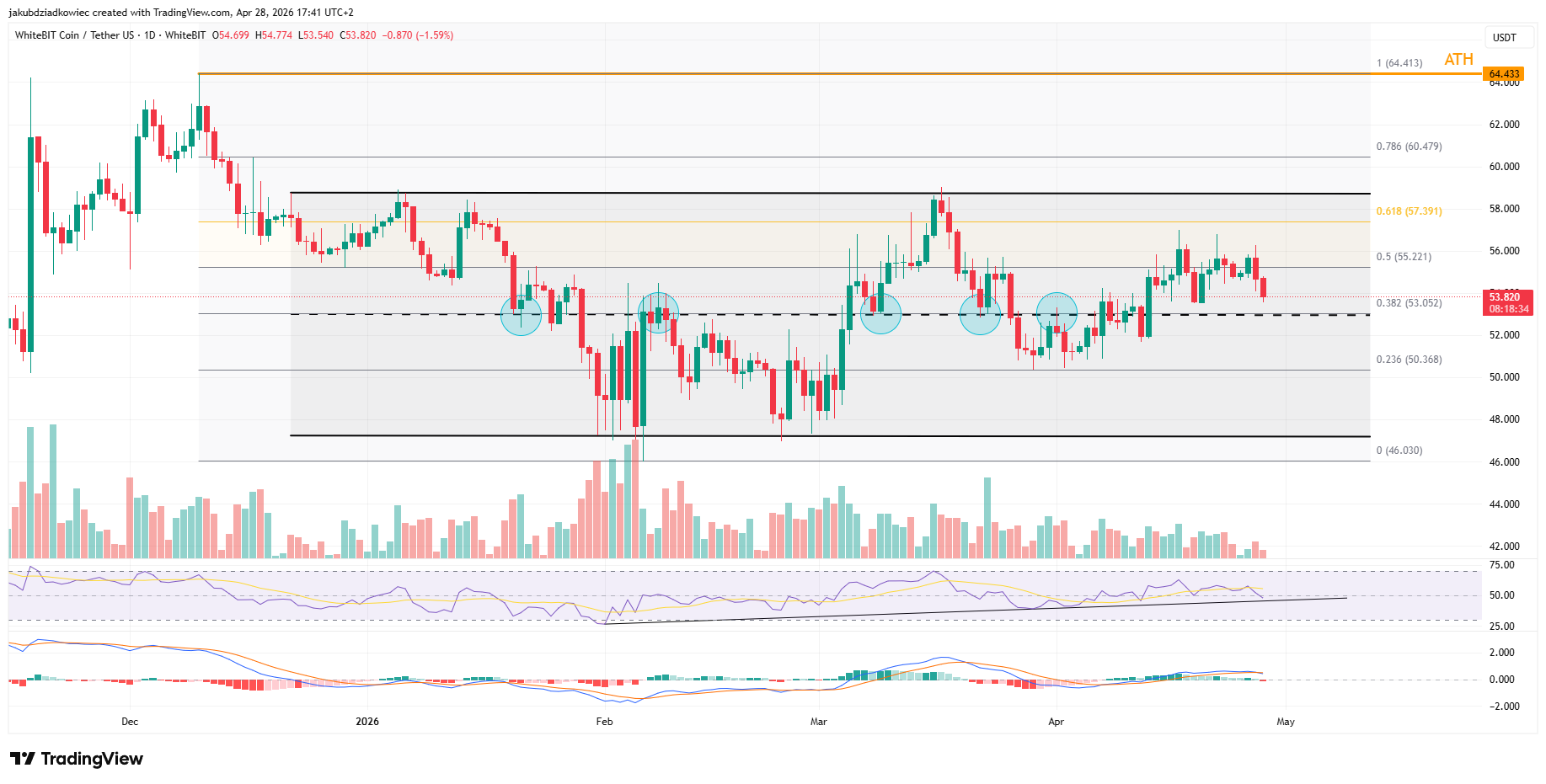
Three altcoins sit within striking distance of fresh all-time highs as May 2026 approaches. WhiteBIT Coin (WBT), Tron (TRX), and Hyperliquid (HYPE) each trade closer to their peaks than most major altcoins on the market.
WBT trades around 16% below its all-time high, TRX roughly 25% below, and HYPE about 33% below. That proximity to ATH levels positions all three as stronger short-term candidates for new highs than altcoins still deeply underwater.
WhiteBIT Coin Tightens in a Range Below $57 Resistance
WBT currently trades around $53.82 inside a horizontal parallel channel. The midline at $53 aligns with the 0.382 Fibonacci retracement and has repeatedly acted as both support and resistance throughout 2026 (blue circles).
A breakout above the 0.618 Fibonacci retracement near $57 would open the path toward $60.50. The all-time high at $64.41 then sits less than 20% away. If a deeper correction unfolds, the 0.236 Fibonacci level near $50 should provide support.
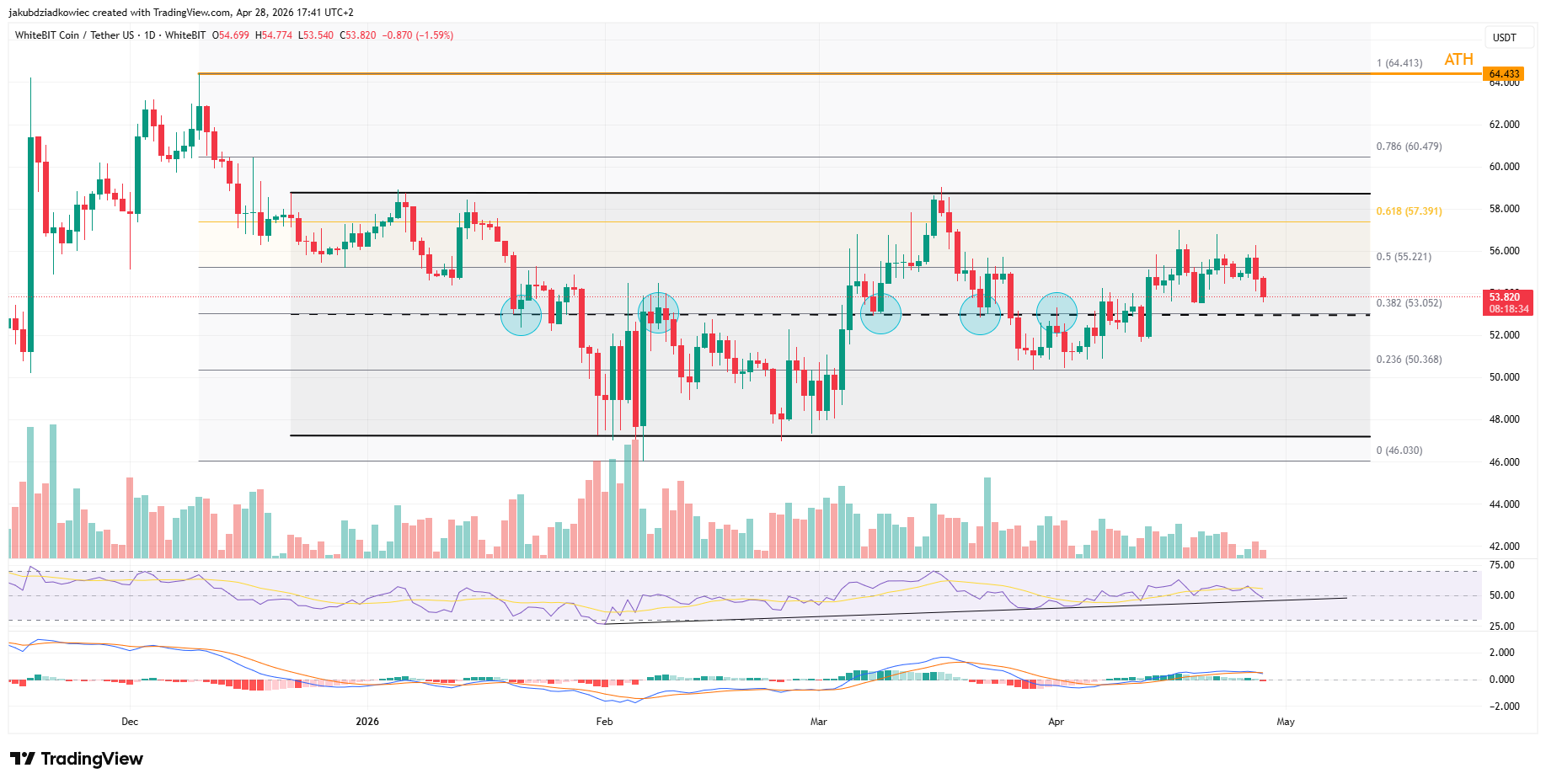
Daily RSI continues to hold its ascending support trendline within the neutral zone. MACD has turned slightly bearish but remains healthy overall. Volume is contracting, which suggests consolidation rather than distribution.
Quarterly token burns, tightening exchange liquidity, and ecosystem growth tied to the Juventus partnership form the fundamental backdrop. These catalysts could accelerate any breakout attempt above $57 during May.
Tron Bounces Off Channel Midline Around $0.32
TRX currently trades near $0.3233 inside an ascending parallel channel. The midline near $0.32 has alternated between support and resistance for months, and the price is now bouncing off this level. The zone also aligns with the 0.5 Fibonacci retracement.
This area offers layered support, including a former resistance level that is now flipping into support. A continuation higher could target the 0.786 Fibonacci retracement at $0.35. TRX recently swept the January 18 high and printed its first higher high in several months.
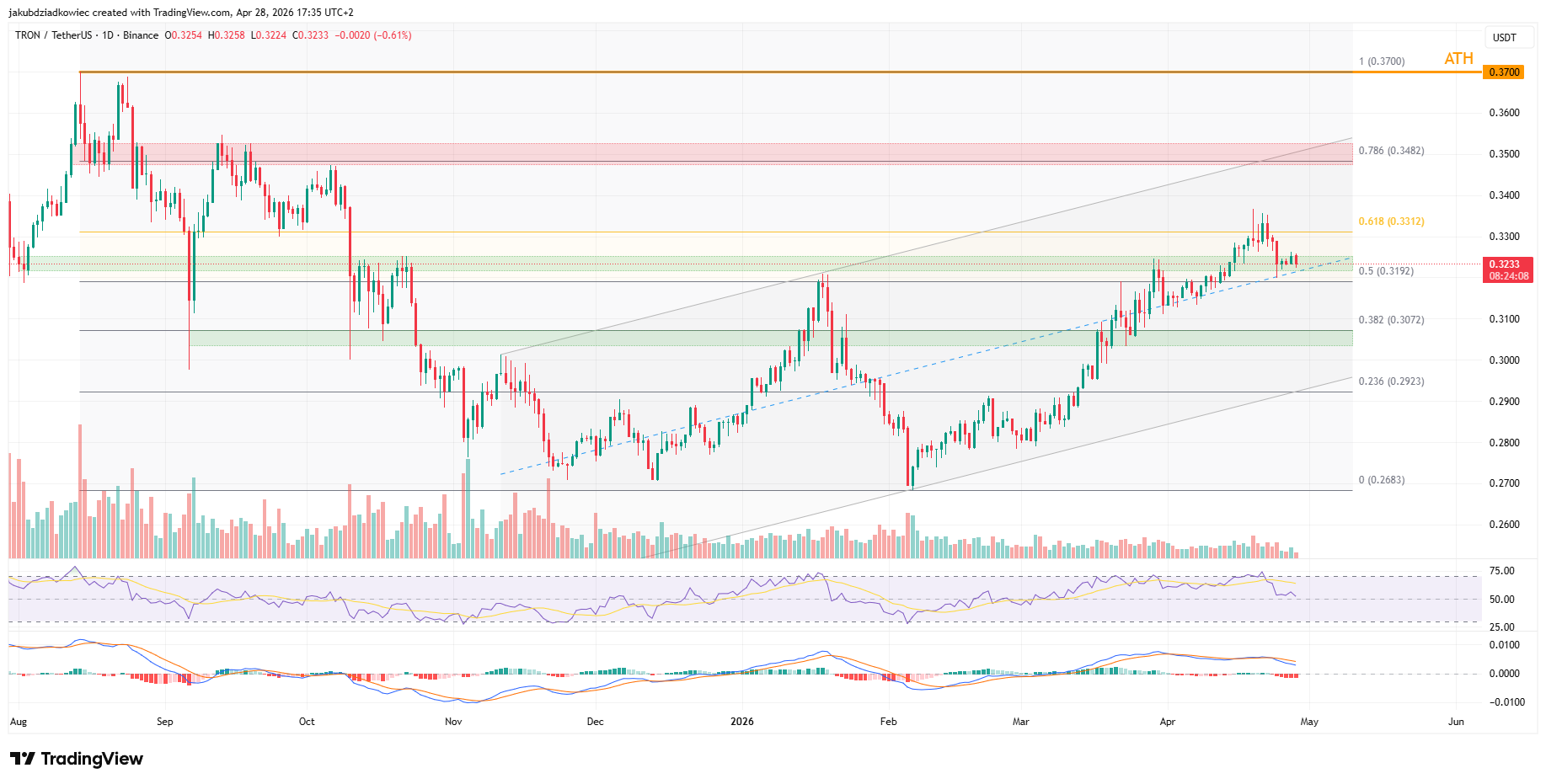
The daily RSI is trending down but remains in neutral territory. MACD has also turned downward, though declining volume points to limited conviction behind the pullback.
Record stablecoin supply on the Tron network and a low-volatility uptrend support the bullish structure. Continued USDT growth could fuel a push toward a fresh all-time high during May.
Hyperliquid Defends Ascending Trendline at $40
HYPE trades around $39.62 after a 4.90% daily drop. Price is testing its ascending trendline from the January low, which intersects with the 0.5 Fibonacci retracement near $40. Holding this confluence remains the primary bullish requirement.
Reclaiming the 0.618 Fibonacci retracement at $44.54 would be the first key signal. The next resistance sits just below the 0.786 Fibonacci level near $50. A break above that range would open the path toward the all-time high at $59.41.
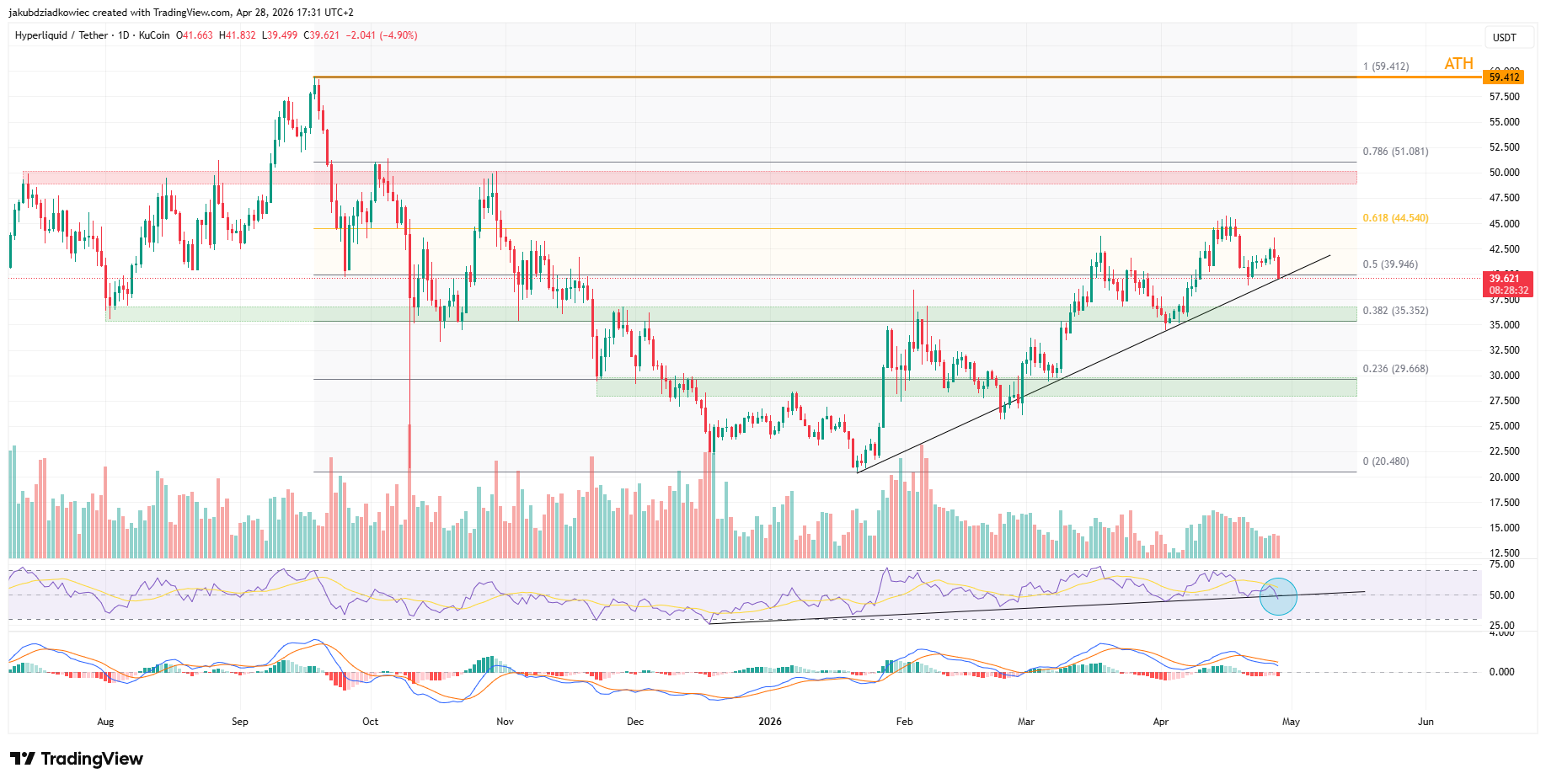
Indicators flash short-term weakness. Daily RSI is breaking below its ascending support trendline (blue circle), and MACD continues to print red histogram bars. However, volume is contracting alongside the move, which indicates limited conviction behind the pullback.
Hyperliquid’s buyback-and-burn flows and dominant share of perpetual DEX volumes provide a strong fundamental backbone. A successful defense of the $40 trendline could set up a fresh ATH attempt in May.
The post 3 Altcoins Could Hit New All-Time Highs in May 2026 appeared first on BeInCrypto.


A Matrixport‑linked whale has opened a fresh 30,000 ETH long at 15x, lifting total leveraged exposure to 58,000 ETH (~$132M) after banking over $59M on prior longs.
Summary
- Onchain Lens data shows a Matrixport‑associated whale opened a new 30,000 ETH long position at 15x leverage worth about 68 million dollars, bringing total exposure across three wallets to 58,000 ETH with 15x–20x leverage.
- The same entity previously closed 120,000 ETH and 1,500 BTC longs for more than 59 million dollars in profit, fully exiting in mid‑April before re‑entering with a 44,000 ETH, then 30,000 ETH, stack as ETH trades near 2,287 dollars.
- At 15x–20x leverage, a 5–7% drawdown risks liquidation, making this one of the most aggressive single‑whale ETH bets in weeks and a bellwether for leveraged sentiment around upcoming Ethereum upgrades.
A cryptocurrency whale associated with Matrixport opened a fresh 30,000 ETH long position with 15x leverage in the past hour, valued at approximately $68 million, according to onchain analytics platform Onchain Lens. The aggressive bet extends the trader’s total exposure to 58,000 ETH across three distinct wallet addresses, with combined position value reaching $131.82 million and leverage ranging from 15x to 20x.
This Matrixport-linked whale previously banked over $59 million in profits after closing 120,000 ETH and 1,500 BTC long positions earlier in April, demonstrating precision timing and conviction in volatile market conditions. The trader’s return to leveraged ETH longs signals renewed bullish sentiment despite Ethereum (ETH) trading near $2,287, down approximately 2.1% over the past 24 hours.
High-Risk Strategy Amplifies Both Gains and Exposure
Leveraged trading magnifies potential profits but introduces severe liquidation risk, particularly at 15x to 20x multiples. At 15x leverage, a mere 6.67% adverse price movement would trigger automatic position closure, wiping out the whale’s collateral entirely. The three wallet addresses—0xa5B0…1D41, 0xfd42…3d97, and 0x6c85…84f6—collectively hold positions worth $131.82 million, representing one of the largest single-entity ETH leveraged bets tracked in recent weeks.
Data from earlier in April shows this same whale opened a $100 million ETH long position with 44,000 ETH at an average entry price of $2,289, with liquidation set near $1,392, reflecting controlled leverage management despite the aggressive sizing. The trader’s track record includes generating approximately $50 million in profit across four wallets before re-entering markets following full profit-taking in mid-April.
Whale Activity Signals Market Conviction
The renewed accumulation aligns with broader institutional interest in Ethereum ahead of potential Layer 2 scaling upgrades and protocol improvements expected later in 2026. However, the tight liquidation margins underscore the precarious nature of highly leveraged positions in crypto markets, where Bitcoin (BTC) daily fluctuations routinely exceed 10%.
Ethereum is currently trading around $2,287, with 24-hour highs near $2,322 and lows touching $2,278. Bitcoin sits near $78,194, consolidating after failing to break through the $80,000 resistance level earlier this week. The whale’s aggressive positioning suggests expectations for an imminent breakout, though the 15x to 20x leverage leaves minimal room for error if markets trend lower.
TLDR
- Bitcoin fell below $76,000 after $342 million in leveraged positions were liquidated within 24 hours.
- Most of the liquidations came from long positions as traders lost $270.3 million during the sudden decline.
- CryptoQuant linked the Bitcoin price drop to derivatives market pressure rather than spot demand weakness.
- Open interest rose to $25.1 billion, which increased the risk of volatility during the pullback.
- Bitcoin held above the $73,000 support level despite the rapid market sell-off.
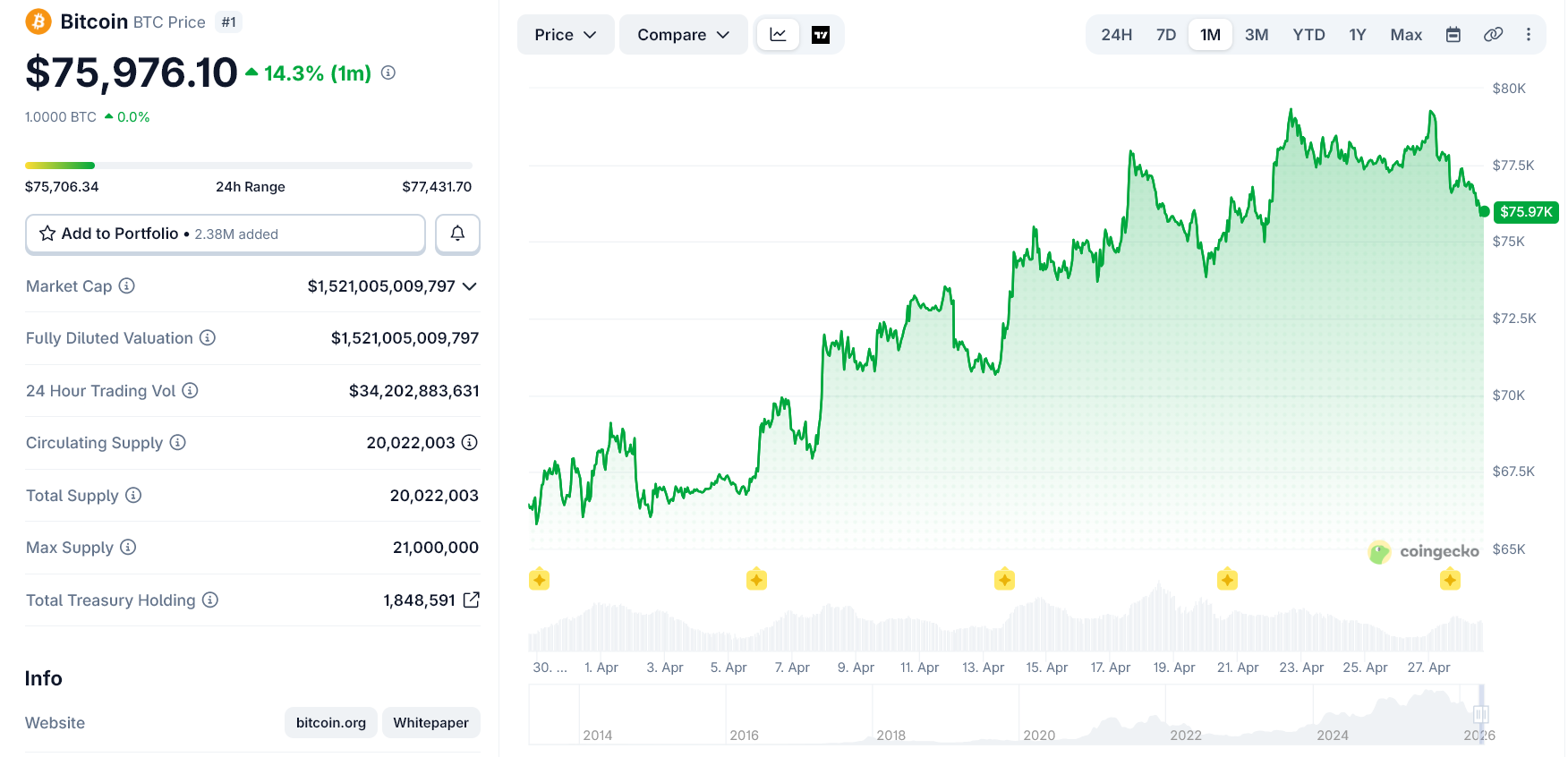
Bitcoin fell sharply below $76,000 after days of steady gains and erased recent upward momentum. The asset traded near $75,800 at press time and recorded a 2.5% daily loss. CryptoQuant attributed the sudden reversal to forced liquidations across derivatives markets rather than spot demand shifts.
Bitcoin Price Drop Tied to Derivatives Liquidations
Bitcoin slid nearly 4% from its weekly high of $79,500 within two days and extended losses through Monday. Data showed that traders liquidated $342 million in positions over 24 hours, including $270.3 million in long bets and $71.7 million in short bets.
CryptoQuant cited research from XWIN Japan to explain the rapid decline. The firm stated that “a sudden unwind of leveraged positions” drove the move instead of traditional supply-demand pressure. The report added that forced closures accelerated selling as exchanges hit margin thresholds.
The liquidation wave started over the weekend when liquidity thinned across major platforms. During that period, institutional desks reduced activity, and order books showed less depth. As a result, even limited selling pressure pushed prices lower and triggered automated liquidations.
Exchanges closed overleveraged long positions once prices breached key levels. This process added fresh sell orders and intensified downward pressure. The Bitcoin price failed to recover quickly because buying interest did not offset the forced selling.
CryptoQuant CEO Ki Young Ju earlier warned about derivative-led growth. He said the recent rebound relied more on futures markets than on real spot demand. He pointed to a 30-day spot and perpetual futures demand chart that remained in negative territory.
Rising Open Interest Raises Bitcoin Price Volatility Risk
CryptoQuant data showed Bitcoin open interest climbed to $25.1 billion as prices recovered earlier in April. This rise indicated that traders increased their exposure through leveraged derivatives positions. Higher leverage created conditions that could trigger sharp volatility once momentum weakened.
XWIN Japan explained how larger players track liquidation clusters in derivatives markets. The firm stated that professionals often identify dense liquidation zones and “push prices into these areas.” This action can activate cascading sell-offs and release trapped liquidity.
The report noted that such events unfold quickly in thin market conditions. When prices fall into liquidation clusters, exchanges automatically close positions. Each closure adds new sell pressure and deepens short-term losses.
Bitcoin maintained support above $73,000 despite the pullback. Analysts stated that holding this level keeps near-term structure intact. At press time, Bitcoin traded around $75,800 and remained down over 2.5% in the past 24 hours.
The broader crypto market also recorded losses during the same period. Liquidations spread across major digital assets as leverage unwound. Data showed that long positions accounted for most of the forced closures.
CryptoQuant maintained that derivative activity shaped the recent price action. The firm reiterated that liquidity events can override gradual sentiment shifts. Current data showed open interest elevated while spot demand growth stayed negative.
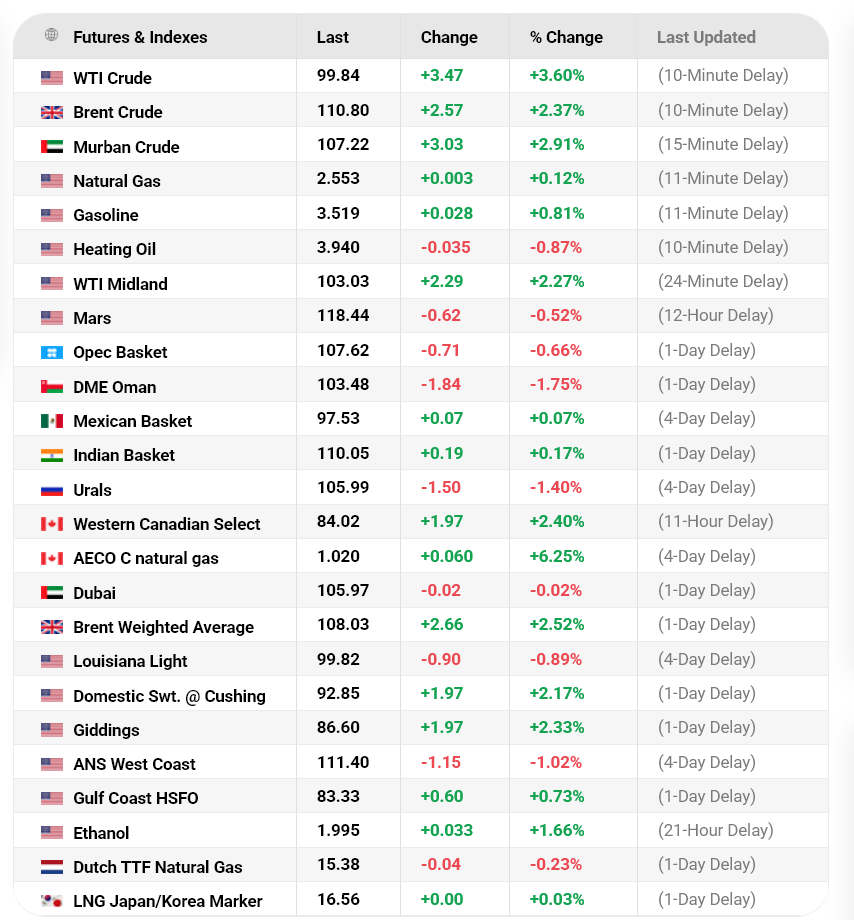
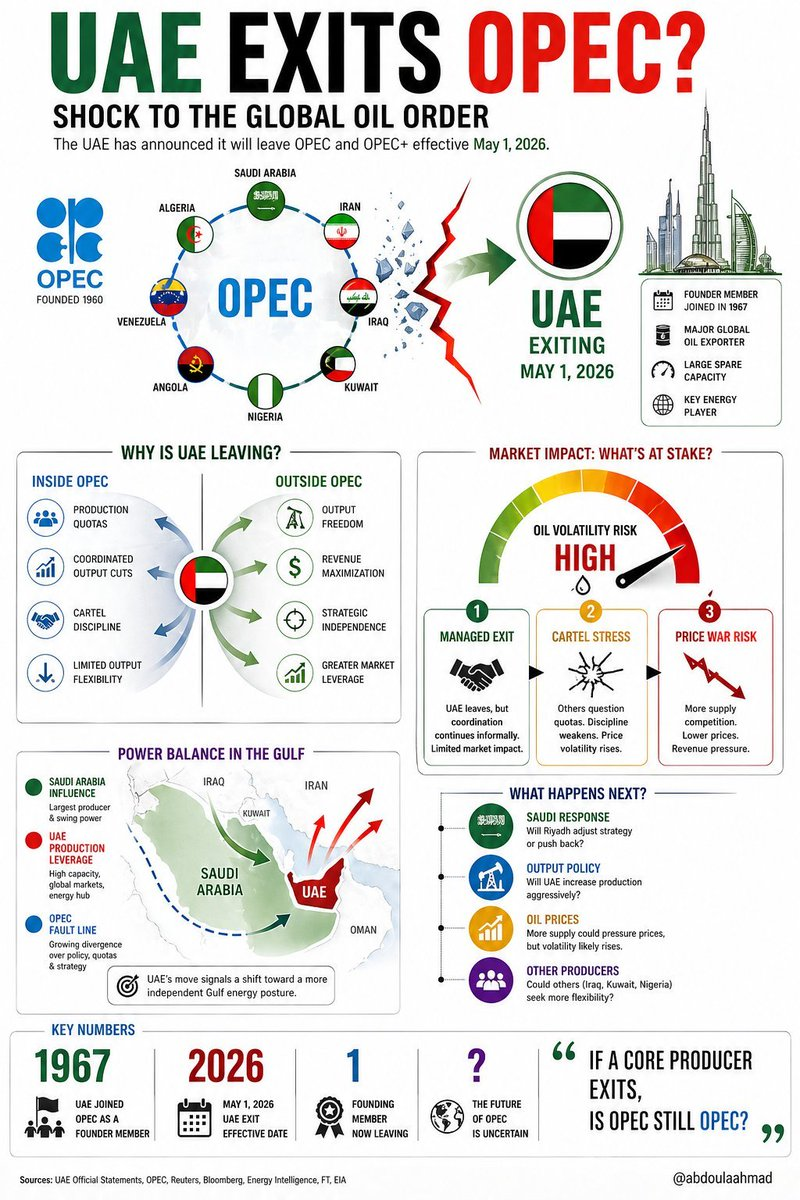
The United Arab Emirates’ reported decision to leave OPEC would mark a major break inside the global oil system.
OPEC is a group of oil-producing countries that coordinates output to influence oil prices. In simple terms, members agree on how much oil to pump. Lower supply usually supports prices. Higher supply usually pressures prices lower.
For the UAE, leaving means more freedom. It can produce more oil without following OPEC quotas. That matters because Abu Dhabi has invested heavily to expand production capacity, reportedly toward about 5 million barrels per day.
1. Oil Prices May Become More Volatile
The immediate impact is uncertainty. Traders will focus on whether the UAE increases production quickly or slowly.
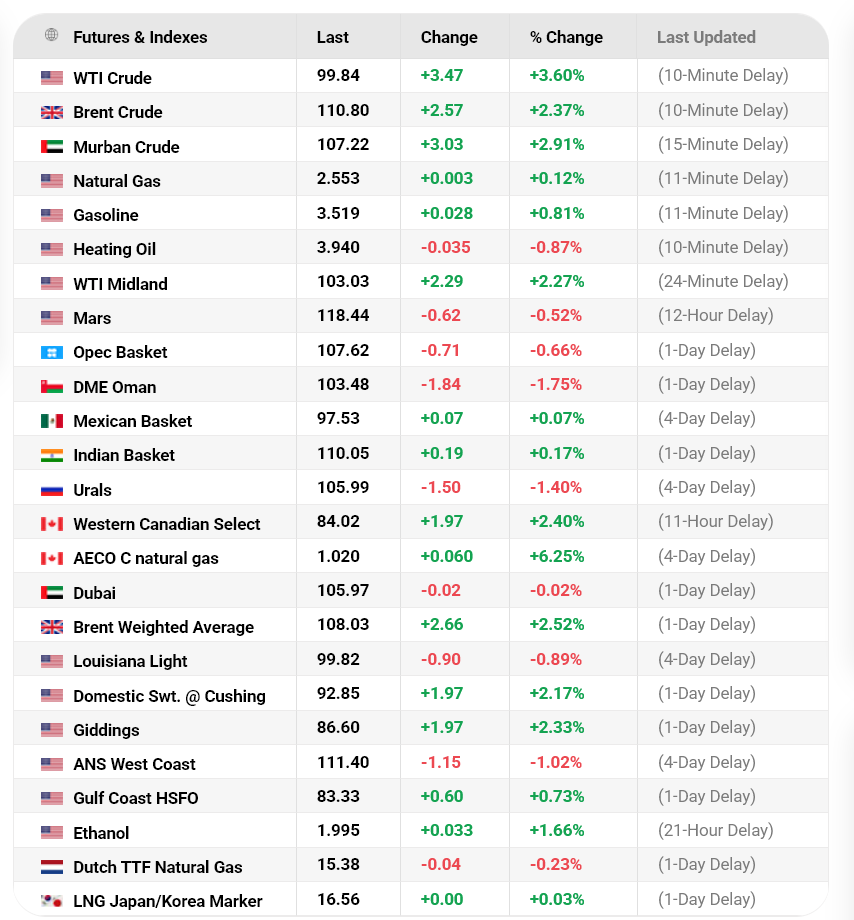
In the short term, oil prices may stay high if markets remain nervous about the ongoing Iran conflict and regional supply risks. Conflict near the Strait of Hormuz matters because a large share of global oil trade passes through that route.
Over time, the move leans bearish for oil. If the UAE pumps more, global supply rises. That can push prices lower, especially if demand weakens in China, Europe, or the US.
2. OPEC Loses Control Over the Market
The bigger story is the weakening of OPEC discipline. The group works because members accept shared limits. If a major Gulf producer walks away, the cartel’s pricing power declines.
This creates a more competitive oil market. Saudi Arabia may have to decide whether to cut output to defend prices or produce more to protect market share.
Either path creates pressure. Lower prices hurt oil exporters. Higher output can weaken OPEC’s long-term influence.
3. The US Economy Could Benefit, With One Clear Trade-Off
For the US economy, lower oil prices are usually positive. Cheaper crude can reduce gasoline prices, transport costs, and inflation pressure.
That helps consumers and businesses. It can also give the Federal Reserve more room to cut rates if inflation keeps cooling.
The trade-off is the US energy sector. American shale producers benefit from higher oil prices. If prices fall too much, drilling activity and energy investment may slow.
Still, for the broader US economy, cheaper energy is usually a net positive.
4. Crypto and Risk Assets Could Get Support Later
Crypto markets will not move because of UAE policy alone. The impact runs through inflation and interest rates.
If extra oil supply lowers inflation pressure, markets may price in easier Fed policy. That is usually supportive for Bitcoin, crypto, tech stocks, and other risk assets.
But the short-term effect can be messy. If the move signals deeper Middle East instability, traders may reduce risk first and ask questions later.
5. Middle East Economies Face a New Competitive Phase
The Middle East faces the most direct impact. UAE’s move signals a shift from Gulf coordination toward national strategy.
For the UAE, this could mean higher oil revenue if it sells more barrels while prices remain strong. For oil-dependent neighbors, it creates risk. More competition can pressure prices and reduce fiscal breathing room.
The long-term message is clear. Gulf economies need diversification faster. Oil revenue remains powerful, but it is becoming less predictable.
The post 5 Major Economic Implications of UAE Leaving the OPEC Oil Pact appeared first on BeInCrypto.
TLDR
- Amboss has activated RailsX to enable self-custody stablecoin trading on the Bitcoin Lightning Network.
- RailsX allows users to trade Bitcoin against USDT-L and USDC-L through existing Lightning channels.
- The platform settles trades atomically within seconds without using a centralized order book.
- Speed Wallet issues and fully backs USDT-L and USDC-L for use on Lightning.
- RailsX integrates with Thunderhub to let node operators execute swaps directly from their own infrastructure.
Amboss has activated RailsX, a Lightning-native exchange layer for trading bitcoin against stablecoins. The system allows users to trade without surrendering custody of funds. The launch introduces USDT-L and USDC-L pairs that settle through Lightning channels within seconds.
RailsX Connects Lightning Liquidity With Self-Custody Trading
Amboss launched RailsX as an extension of its Rails liquidity product, and it embedded trading into existing Lightning infrastructure. The platform enables peer-to-peer swaps of bitcoin with USDT-L and USDC-L, and it routes trades through active channels. Users keep control of private keys, and trades settle atomically without intermediaries.
Amboss confirmed that RailsX does not rely on a centralized order book, and it executes trades through routed liquidity paths.
The company stated, “RailsX extends Lightning’s payment design to asset exchange without custody transfer.” Settlement occurs in seconds, and the system uses existing payment rails instead of bridges or sidechains.
USDT-L and USDC-L Enter Open Lightning Markets
Speed Wallet issues USDT-L and USDC-L, and it backs both assets with full reserves. The company has operated these wrapped stablecoins within its ecosystem for about 18 months. That closed-loop model provided operational data before the broader Lightning release.
RailsX now opens those assets to compatible nodes across the network, and it allows direct peer-to-peer access. Traders can swap bitcoin against dollar-pegged tokens while retaining custody at every stage. Speed Wallet said it maintains full backing for both assets, and it manages issuance centrally.
Amboss confirmed integration plans with Thunderhub, and it positioned the interface as the routing layer for swaps. Thunderhub enables node operators to execute trades directly from their infrastructure. The system processes swaps using standard Lightning channel mechanics.
Users allocate capital to channels through Rails, and they can earn yield from liquidity provisioning. RailsX then allows trading against that same liquidity without moving funds to exchanges. This structure combines capital deployment and exchange functions within one environment.
Price discovery occurs through routed liquidity instead of centralized matching engines. Trades follow Lightning payment paths, and nodes provide available liquidity for execution. Early activity will test pricing consistency and volume across decentralized routes.
Amboss stated that RailsX supports dollar-denominated liquidity within Bitcoin’s second layer. The company said the launch expands stablecoin functionality beyond limited pilots. Trading pairs USDT-L and USDC-L became available to compatible nodes at activation.

These are the best looks at the DJI Osmo Pocket 4P yet

money money green green #shorts #ibispaintx #capcut #kinitopet #trend #moneymoneygreengreen #art

Keir Starmer dodges sleaze probe as MPs reject investigation into whether he misled Commons over Mandelson

Manchester United reach agreement with Casemiro over contract clause amid transfer speculation

US brings back mandatory military draft registration

Steven Gerrard disagrees with Gary Neville over ‘shock’ Chelsea and Arsenal claim | Football
money money green green #shorts #ibispaintx #capcut #kinitopet #trend #moneymoneygreengreen #art

Das war’s noch nicht – meine Meinung zum Bitcoin Preis

What is the right amount of money to put in the red envelope, and common mistakes to avoid
-

 Tech1 day ago
Register Renaming | Hackaday
-

 Fashion4 days ago
Weekend Open Thread – Corporette.com
-
Crypto World3 days ago
Hyperliquid $HYPE Rally Builds Momentum as AI Sector Enters Prove-It Phase
-

 Politics6 days ago
Making troops accountable for war crimes threatens US alliance, ex-SAS colonel warns
-

 Politics6 days ago
Disabled people challenge government SEND proposals over segregation concerns
-

 Business5 days ago
Patterson-UTI Energy, Inc. (PTEN) Q1 2026 Earnings Call Transcript
-

 Business6 days ago
Rolls-Royce Voted UK’s Most Iconic Trade Mark as IPO Register Hits 150
-
 Sports2 days ago
IPL 2026: Ruturaj Gaikwad registers slowest fifty of the season, enters all-time unwanted list | Cricket News
-

 Politics21 hours ago
Drax board avoid their own AGM, accused of greenwashing & environmental racism
-

 Crypto World7 days ago
New York sues Coinbase, Gemini over prediction market offerings
-

 Politics6 days ago
Starmer handler McSweeney to be dragged from shadows by Foreign Affairs Committee
-
Politics6 days ago
Wings Over Scotland | How To Get Away With Crimes
-

 Politics6 days ago
Zack Polanski responds to home secretary’s taser threat
-
 Business7 days ago
HCL Tech share price tank over 9% after weak Q4. JPMorgan, HSBC & 3 others cut target price
-

 Politics6 days ago
‘Iran is still a nuclear threat’
-

 Crypto World7 days ago
Crypto’s great hope in Senate’s Clarity Act still has a path to survive tight calendar
-

 NewsBeat2 days ago
LK Bennett closes all stores after entering administration
-
 Sports6 days ago
Tim Bradley names the current best in the world: “Better than Inoue and Usyk”
-

 Crypto World4 days ago
Michael Saylor says BTC winter is over. Market analyst disagrees, says bitcoin was in a pullback
-
 Crypto World7 days ago
Ethereum Price News: ETH Flashes a Bullish Setup No Holder Should Miss While Pepeto Nears Its Binance Listing
You must be logged in to post a comment Login