

Crypto World
Circle Internet, crypto miners report earnings: Crypto Week Ahead



The week will be dominated by earnings reports from crypto-related companies, though the repercussions of the U.S. Supreme Court’s decision on tariffs on Friday are also likely to ripple through markets.
Miners including MARA Holdings (MARA) and Hut 8 (HUT) are on the roster, and will fuel the conversation over diversification into high-performance computing centers and support for AI. Also on the AI front, Nvidia (NVDA), a maker of chips for the AI industry and the world’s largest publicly traded company by market capitalization, reports earnings on Wednesday.
Circle Internet (CRCL), issuer of the second-largest stablecoin, USDC, is also on Wednesday’s list.
In the wider economy, a number of U.S. Federal Reserve policymakers are set to make speeches in the coming days. And don’t forget the U.S.-Iran talks, which resume on Geneva on Thursday even as both sides build up their military preparations.
What to Watch
(All times ET)
- Crypto
- Macro
- Feb. 23, 8:00 a.m.: Fed Governor Christopher Waller gives a speech on the economic outlook at the National Association for Business Economics.
- Feb. 23, 10:00 a.m.: U.S. Dallas Fed Manufacturing Index for February (Prev. -1.2)
- Feb. 24, 8:15 a.m.: U.S. ADP employment change weekly (Prev. 10.25K)
- Feb. 24, 9 a.m.: S&P Case-Shiller home price YoY (Prv. 1.4%)
- Feb. 24, 10:00 a.m.: U.S. CB consumer confidence est. 86 (Prev. 84.5)
- Feb. 24, 1:00 p.m.: U.S. money supply for January (M2) (Prev. $22.4T)
- Feb. 25, 5:00 a.m.: Eurozone core inflation rate YoY final est. 2.2% (Prev. 2.3%)
- Feb. 25, 4:30 p.m.: U.S. Fed balance sheet for week ending Feb. 25 (Prev. $6.61T)
- Feb. 25, 8:30 p.m.: Bank of Japan Board Member Hajime Takata gives a speech at a meeting with local leaders in Kyoto
- Feb. 26, 8:30 a.m.: U.S. initial jobless claims for week ending Feb. 21 (Prev. 206K)
- Feb. 26, 10:00 a.m.: U.S. Fed Vice Chair for Supervision Michelle Bowman to testify before the U.S. Senate Committee on Banking, Housing and Urban Affairs.
- Feb. 26, 6:50 p.m.: Japan Tokyo core CPI YoY for February est. 2% (Prev. 2%)
- Feb. 27, 8:00 a.m.: German inflation rate YoY prelim. for February (Prev. 2.1%)
- Feb. 27, 8:30 a.m.: U.S. PPI MoM for January est. 0.3% (Prev. 0.5%); Core PPI MoM est. 0.3% (Prev. 0.7%)
- Feb. 27, 8:30 a.m.: U.S. PPI YoY for January est. 2.9% (Prev. 3%)
- Feb. 27, 8:30 a.m.: Canada GDP growth rate annualized for Q4 (Prev. 2.6%); QoQ (Prev. 0.6%)
- Earnings (Estimates based on FactSet data)
- Feb. 24: Cipher Mining (CIFR), pre-market, $0.03
- Feb. 25: Circle Internet (CRCL), pre-market, $0.16
- Feb. 25: Core Scientific (CORZ), post-market, -$0.18
- Feb. 25: Hut 8 (HUT), pre-market, -$0.13
- Feb. 25: Nvidia (NVDA), post-market, $1.50
- Feb. 26: MARA Holdings (MARA), post-market, -$0.11
- Feb 26: TeraWulf (WULF), post-market, -$0.15
- Feb. 26: American Bitcoin (ABTC), pre-market, $0.01
- Feb. 26: Figure Technologies (FIGR), post-market,$0.20
- Feb. 26: Sui Group (SUIG), post-market, $0.01
- Feb. 26: Block (XYZ), post-market, $0.49
Token Events
- Governance votes & calls
- Feb. 23: DYdX Foundation to host its February analyst call.
- Feb. 26: Lido DAO to host a tokenholder update call.
- Feb. 26: Maple Finance to host an investor call.
- Uniswap DAO is voting to enable protocol fees across all V3 pools and eight layer-2 networks. Voting ends Feb. 23.
- ZKsync DAO is voting to allocate $4.1 million in ZK tokens for the 2026 audit reimbursement program (ZARP v2) to fund forward-looking protocol security audits and retroactively reimburse eligible 2025 costs. Voting ends Feb. 23.
- GMX DAO is voting to neutralize CEX supply overhang by restructuring liquidity, setting a temporary $5 buy-wall, and pausing staking rewards until the token price reaches $90. Voting ends Feb. 24.
- The Sandbox DAO is voting to pause operations and transfer control to the project team to realign with “The Sandbox 3.0”. The proposal is currently facing ~98% opposition from voters. Voting ends Feb. 25.
- Decentraland DAO is voting to create a customizable “Windfall Lotto Scene” template for land owners. Voting ends Feb. 25.
- Unlock DAO is voting to delegate 2 million UP from the treasury to seven active community members to reliably secure a quorum on future proposals. Voting ends Feb. 26.
- Unlocks
- Feb. 25: Humanity (H) to unlock 4.37% of its circulating supply worth $17.71 million.
- Feb. 28: Grass (GRASS) to unlock 13.15% of its circulating supply worth $10.09 million.
- Feb. 28: Jupiter (JUP) to unlock 7.94% of its circulating supply worth $39.34 million.
- March 1: to unock 1.13% of its circulating supply worth $40.97 million.
- Token Launches
Conferences

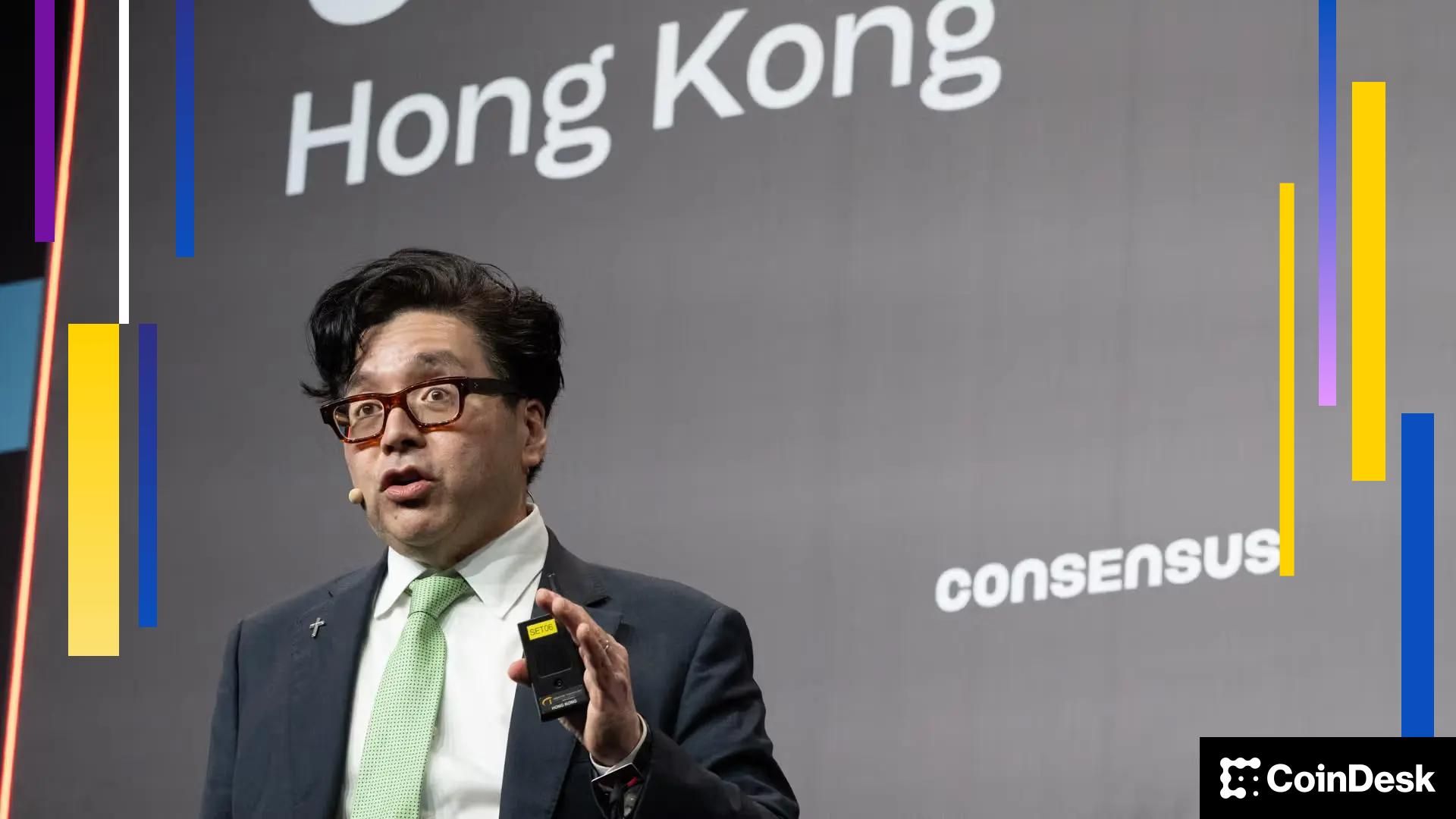
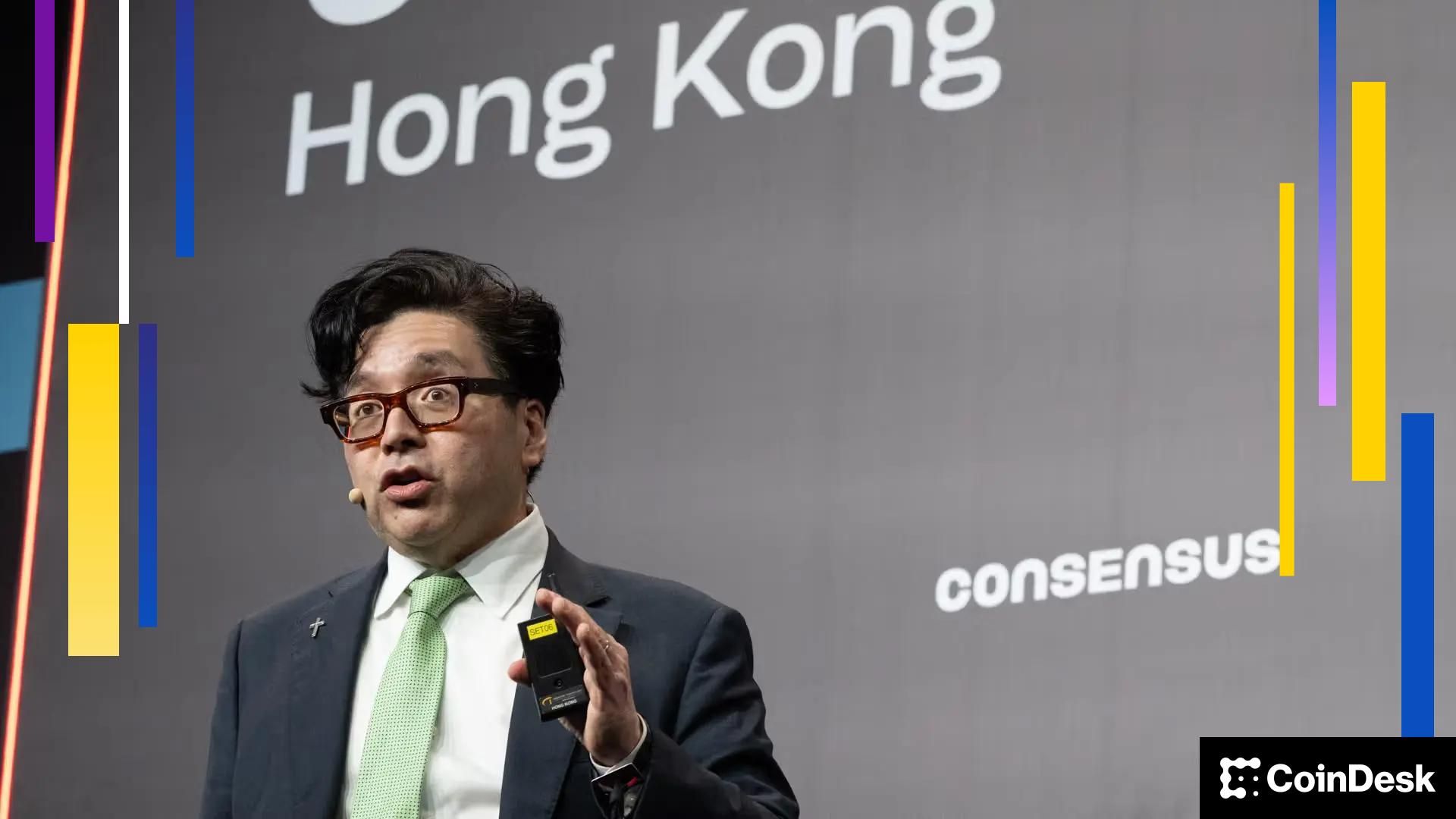
BitMine Immersion Technologies (BMNR) purchased 51,162 ether (ETH) last week, or roughly $98 million at current prices.
The latest purchase lifted the firm’s total holdings over 4.42 million tokens as of February 22, cornering 3.66% of the token’s total supply, the company said in its latest Monday update. It also holds 193 bitcoin, 691 million in cash, and equity stakes, including a $200 million investment in Beast Industries and a smaller investment in Eightco Holdings.
The company said it is generating $171 million in annualized revenue via staking over 3 million of its ETH holdings.
BMNR is down 2% in pre-market trading and lower by about 60% over the past six months.
With the price of ETH continuing to fall — down another 3% over the past 24 hours to $1,918 — the firm’s losses on its $16.4 billion in purchases now exceed $8 billion, according to DropsTab.
“In the midst of this ‘mini crypto winter,’ our focus continues to be on methodically executing our treasury strategy and steadily acquiring ETH and in turn, optimizing the yield on our ETH holdings,” BitMine chairman Thomas Lee said.
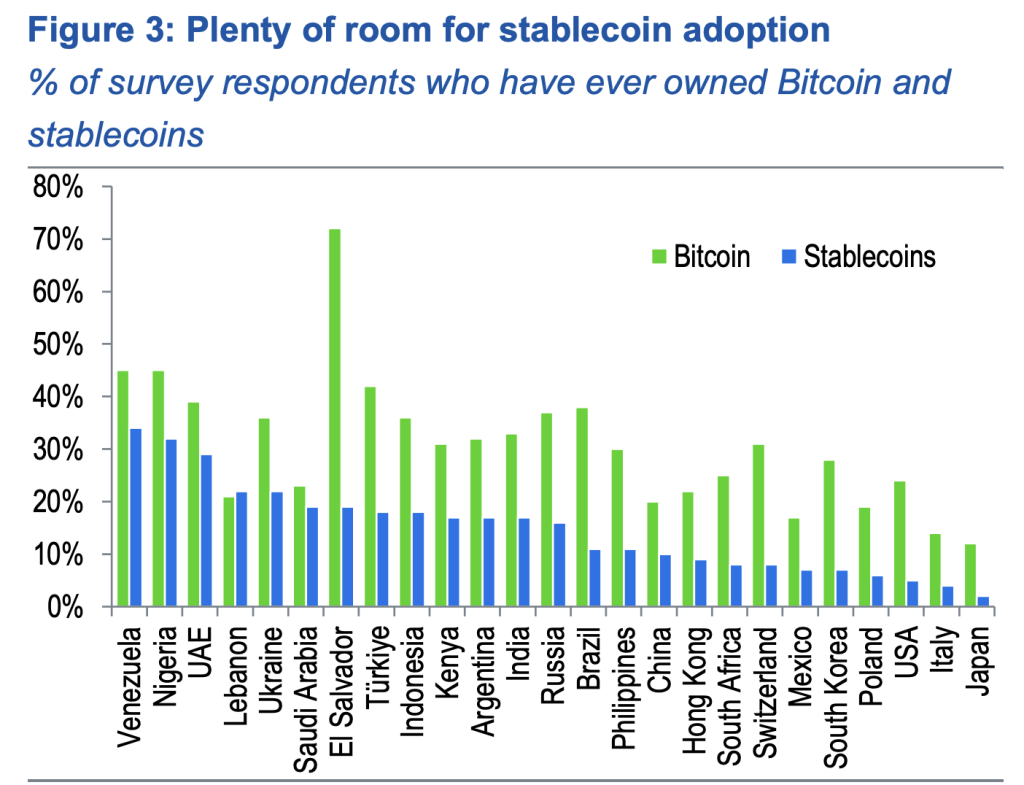
Crypto Stablecoins might be about to rewrite part of the US debt story. New research from Standard Chartered says the sector could drive up to $1T in fresh demand for US Treasury bills by 2028.
As stablecoin issuers grow, they are expected to become major buyers of government debt, turning digital dollars into a serious force in traditional finance.
Key Takeaways
- $2 Trillion Trajectory: Analysts project the total stablecoin market capitalization will surge to $2 trillion by the end of 2028, up from roughly $300 billion today.
- Treasury Scarcity: Issuers are expected to absorb approximately $1 trillion in short-term T-bills, creating a potential supply shortfall without Treasury adjustments.
- Regulatory Drivers: The GENIUS Act framework mandates high-quality liquid assets for reserves, forcing issuers to concentrate holdings in the 0-3 month debt sector.
Why Are Stablecoins Becoming a Financing Powerhouse?
Stablecoins are no longer just trading tools. They are turning into steady buyers of US government debt. After the GENIUS Act passed in July 2025, regulated issuers are required to hold reserves in high quality liquid assets, mainly short dated Treasuries.
Supply is sitting near $300B today. Standard Chartered sees the recent slowdown as temporary and expects strong growth ahead, especially from emerging markets.
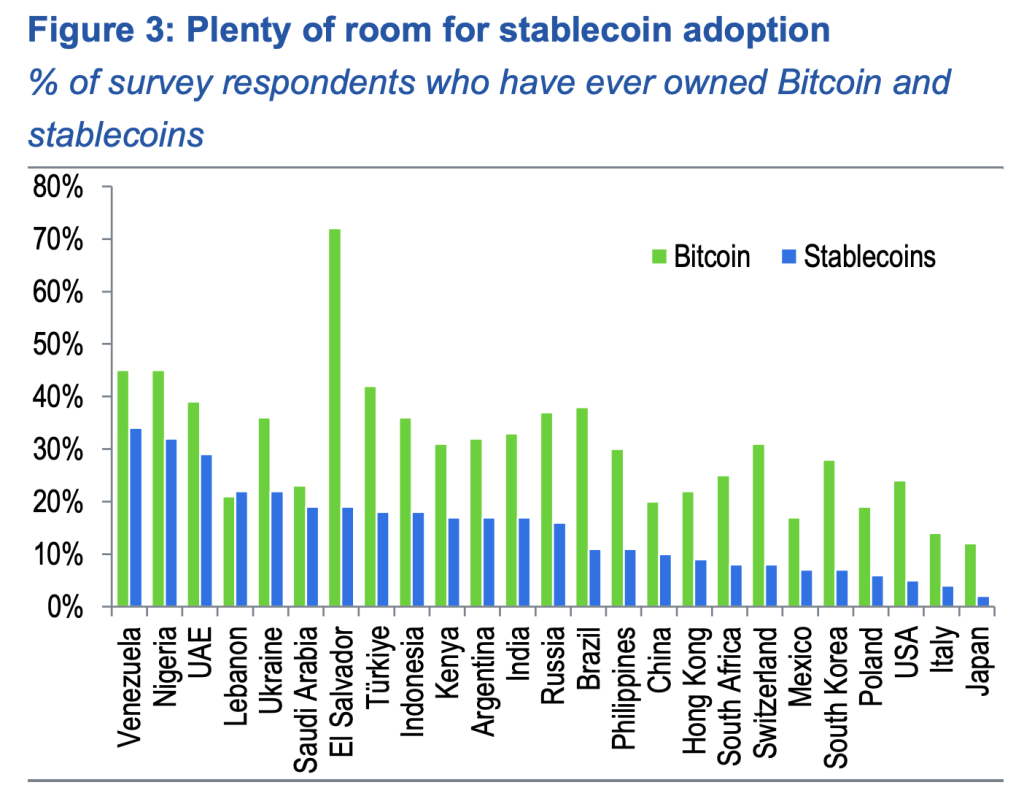
As people in high inflation countries move into dollar stablecoins, the backing reserves flow straight into US debt. Crypto demand supports Treasury markets in the background.
Breaking Down the $1 Trillion Projection
Standard Chartered analysts Geoffrey Kendrick and John Davies broke down the mechanics.
They expect stablecoins to grow toward a $2T market cap by 2028. That expansion alone could create $0.8T to $1T in new demand for short dated Treasury bills, mainly at the front end of the yield curve.
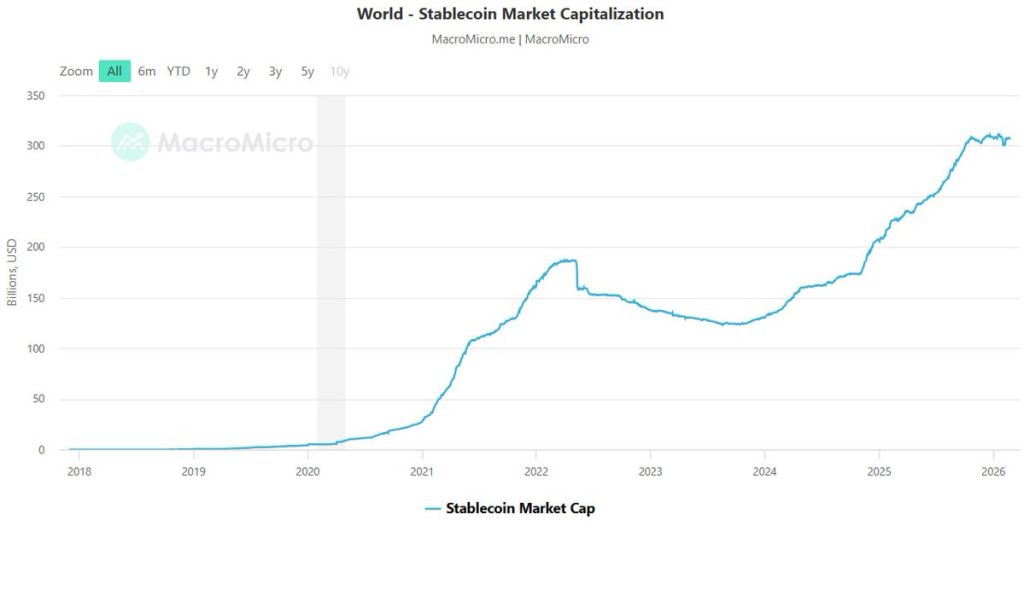
In simple terms, stablecoin issuers may become some of the biggest buyers of T-bills. If issuance patterns stay the same, the report suggests around $0.9T in excess demand over the next three years.
About two thirds of that growth is projected to come from emerging markets. And most of it would be net new demand, not just a reshuffling of existing Treasury allocations.
That is a serious structural bid forming under US debt.
Implications for U.S. Debt Issuance
The scale is big enough that the US Treasury cannot ignore it.
If issuance does not adjust, short dated T bills could become tight. Treasury Secretary Scott Bessent has already hinted that stablecoins may become an important part of financing the US government.
It creates a two way benefit. The dollar strengthens its role in digital markets, and the government gains a steady buyer for its debt.
But tighter integration means tighter oversight. As new stablecoin rules advance, coordination between private issuers and public debt management will only grow.
Innovation is happening around different collateral models, yet Treasuries still sit at the center for regulatory approval.
Discover: Here are the crypto likely to explode!
The post Could Stablecoins Fix U.S Debt? Standard Chartered Sees $1T in Treasury Demand appeared first on Cryptonews.


The global momentum behind RWA tokenization has shifted from theoretical pilots to institutional-grade execution. As capital markets seek greater efficiency, transparency, and global reach, Brazil has emerged as a primary laboratory for this transformation.
This shift is driven by a unique combination of progressive regulation, a tech-savvy financial sector, and the search for lower operational costs. At the heart of this movement is the XDC Network, providing the neutral, public infrastructure necessary to bridge the gap between local debt markets and global liquidity.
The Dawn of the RWA Era in Latin America
Tokenization is no longer a buzzword for the distant future; it is a live, operational reality in Brazil. While many jurisdictions are still debating the legal frameworks for digital assets, Brazil’s Central Bank and Securities Commission (CVM) have fostered an environment where innovation can thrive.
The tokenization of fixed income instruments, specifically debentures, represents a significant step forward. By digitizing these traditional assets, issuers can offer enhanced traceability and a higher degree of transparency, which are essential for attracting international institutional capital.
The XDC Network has positioned itself as the one of the leaders in this evolution. Unlike early blockchain experiments that focused on speculative assets, XDC was designed with international trade and finance in mind. Its ability to handle frequent transactions with minimal fees makes it the ideal candidate for scaling RWA projects that require high performance and reliability.
USD One Billion Roadmap in Sight
VERT Capital, a leader in the Brazilian structured finance space, has recently announced the successful tokenization of two major Brazilian debentures on the XDC Network. This announcement marks a significant milestone not just for the companies involved but for the entire blockchain ecosystem.
This move effectively bridges the gap between different sectors of the economy, starting with Mottu, a growth leader in Latin American urban mobility and last-mile logistics. As a fast-moving, data-driven representative of Brazil’s new economy, Mottu has already tokenized approximately USD 60 million, with a total target of USD 93 million.
Complementing this innovation is the involvement of Banco Pine, a powerhouse in corporate and structured credit with a deep history of serving mid-market and large corporate clients. With their current tokenized volume reaching approximately USD 268 million, Banco Pine’s participation serves as a powerful signal that even the most established traditional financial institutions now recognize the tangible value and efficiency of moving complex debt instruments onto a public blockchain.
Together, these transactions bring the total volume tokenized on XDC via VERT to roughly USD 375 million. This volume is substantial even by global standards. More importantly, it demonstrates the network’s capacity to handle institutional-grade volume and complexity.
The partnership is now firmly on track to hit a targeted USD 1 billion in assets on the XDC Network by the end of 2026, a goal that would solidify XDC’s position as a global leader in the RWA space.
Public Blockchain: The Neutral Alternative to Private DLT
A critical differentiator in these issuances is the choice of XDC Network as a public blockchain over domain-specific, private Distributed Ledger Technology (DLT) networks. For years, the prevailing wisdom in banking was that private is safer. However, the industry is beginning to realize that private ledgers often recreate the very silos they were intended to break.
Private DLTs often attempt to emulate centralized systems. In doing so, they frequently fail to capture the true efficiencies of decentralization, such as global interoperability and 24/7 availability, while also forfeiting the mature, optimized performance of the centralized architectures they seek to replicate.
They create walled gardens that require complex, expensive integrations to talk to one another.
XDC Network, by contrast, serves as a neutral financial market infrastructure. It offers the best of both worlds:
- Public Accessibility: Anyone can verify the state of the ledger, enhancing trust and auditability.
- Institutional Governance: By utilizing smart-contract-level permissioning, XDC ensures full regulatory alignment. Access to specific functions or assets can be restricted to verified, KYC-compliant participants.
- Connectivity Layer: This approach positions tokenization not as a replacement for existing capital market systems, but as a layer of open infrastructure that connects local markets to a global pool of investors.
By embedding governance directly into the code, XDC allows for regulated decentralization, where the rules of the regulator are enforced automatically by the network protocol.
Surfing the Wave of Innovation
The leadership driving this initiative views the current landscape not as a temporary trend, but as a fundamental shift in the plumbing of global finance.
“These issuances demonstrate how public blockchain infrastructure can add real value to traditional fixed-income markets. By bringing debentures from companies like Mottu and Banco Pine onto the XDC Network, VERT is enhancing transparency, traceability, and global visibility for Brazilian assets, while maintaining full regulatory alignment.”
— Diego Consimo, Head of LATAM, XDC Network.
“This is exactly how we see tokenization evolving: not as a replacement of existing systems, but as a layer of open, neutral infrastructure that connects local capital markets to global investors.”
This vision of connectivity over replacement is key to institutional adoption. It allows legacy systems to integrate with blockchain at their own pace, slowly migrating functions to the chain as confidence grows.
Gabriel Braga, Director of Digital Assets at VERT Capital, views the technological shift through a more visceral lens. He notes that many traditional institutions are reacting to blockchain with fear, attempting to build lifeboats to survive what they perceive as a disruptive storm.
“Everyone sees this huge swell of tokenization already arriving on capital-markets shores. A common reaction is to see it as a threat and build one-size-fits-all lifeboats, hoping the next wave won’t grow even bigger. It will grow bigger. We should see it as an opportunity and learn how to surf it.”
Braga’s analogy highlights the difference between defensive innovation (private DLTs) and offensive innovation (public blockchain). Those who learn to surf use the power of the wave, the liquidity and openness of public networks, to move faster and further than those huddled in lifeboats.
Brazil as a Global RWA Leader
As these issuances demonstrate, Brazil is no longer just a participant in the digital asset space, it is a global frontrunner. The combination of high interest rates, a sophisticated banking system, and a clear regulatory path has made it the perfect environment for RWA tokenization to scale.
By leveraging XDC infrastructure, Brazilian companies are achieving a level of global visibility that was previously reserved for the largest multinational corporations. This democratizes access to capital, allowing companies like Mottu to tap into international markets with the same ease as a blue-chip bank.
Looking forward, the success of the Mottu and Banco Pine issuances serves as a blueprint for the next phase of financial evolution. As the XDC Network continues to grow, it reinforces its position as the preferred infrastructure for institutions that demand the benefits of a public, neutral ledger while operating within the rigorous boundaries of global financial regulation.
The path to USD 1 billion is more than just a target, it is a testament to the fact that the future of finance is open, transparent, and built on XDC.

Base will transition to a unified, internally maintained stack, expected to be its biggest architectural shift since launch.
After debuting in 2023 as a rollup built on Optimism’s OP Stack, Coinbase’s Ethereum layer 2 is now consolidating its software into an in-house distribution, which can unlock faster upgrades and greater autonomy over its technical roadmap.
It has been exactly three years since Base launched its testnet. The network has experienced SocialFi explosions and ridden its own memecoin wave. It even went through a phase that both fascinated and unnerved Crypto Twitter as AI agents began transacting on its chain.
Here’s how it got here.

Friend.tech headlines Base’s “Onchain Summer” fest
Base’s mainnet opened to builders in July 2023, and users followed in August. The period after Coinbase cut the ribbon was promoted as “Onchain Summer.” In the first week, Base attracted 700,000 new users, who brought with them about $242 million in inflows.
Friend.tech was the headline act of Coinbase’s summer festival. It was a social app that allowed users to buy and sell access to their connections. The loudest voices on Crypto Twitter tested the industry’s newest toy, which also attracted the rich and famous outside the community. In less than two weeks after launching, it generated over $1 million in daily fees, surpassing Bitcoin at the time.
It didn’t last long.

By the end of August, fees and transaction volume had tanked, and the platform was declared “dead.”
A little over a year later, the team relinquished control of the project by ditching the admin rights of its smart contracts.
Base rides its own memecoin wave
The memecoin frenzy became one of the defining crypto stories in recent years, drawing in political figures and public personalities. Eventually, it prompted the US Securities and Exchange Commission to state that such tokens fall outside the scope of securities laws.
Solana is the go-to blockchain for memecoins. Its data shows the memecoin boom gaining momentum in late 2023, when its daily active addresses began climbing toward Ethereum’s levels. In March 2024, Solana decisively surpassed Ethereum on that metric when Base users started showing some post-Friend.tech signs of life.

From March 19 to 25, Cointelegraph Magazine found more than 380,000 ERC-20 tokens deployed on Base. That activity brought in fresh liquidity into Base’s DeFi ecosystem, and by June 2024, the layer 2 had flipped Ethereum in active addresses. It held on to that lead until December 2025.

AI agents begin transacting on Base
In the latter half of 2024, AI agents claimed the driver’s seat in crypto. As with memecoins, early experiments took off on Solana, such as Goatseus Maximus, ai16z and Truth Terminal.
Developers launched agent-linked tokens, autonomous trading bots and social accounts that presented themselves as autonomous onchain actors.
Related: Can Solana shed its memecoin image in 2026?
Coinbase CEO Brian Armstrong argued that crypto provides a natural financial rail for AI systems, as agents lack the legal identity required to open traditional bank accounts.
On Base, focus shifted to AI agents capable of holding balances, tipping users and interacting directly with smart contracts. In October 2024, Coinbase introduced “Based Agents,” a toolkit that allowed users to build AI agents equipped with crypto wallets.

The most visible Base-native experiment was Virtuals Protocol, which enabled users to create agents tied to tokens and onchain addresses.
One such Virtuals agent, Luna (not related to Terra), became the first on Base to autonomously execute onchain tips.
Virtuals later expanded to Solana in January 2025 to tap into its larger retail base. However, activity across AI-agent tokens soon slowed, and Virtuals cooled with it.
The second coming of SocialFi on Base
Base’s 2023 debut was followed by the breakout of Friend.tech. In 2025, SocialFi returned to Base in a different form, sparked by deeper integration with Coinbase’s consumer ecosystem.
That push was tied to Coinbase’s “super app” ambitions. Super apps are platforms that support a variety of 21st-century necessities, such as messaging, digital banking, ride sharing or even food delivery.
Related: Banks can’t seem to service crypto, even as it goes mainstream
Such platforms already exist in Asia. WeChat in China is used in the everyday lives of more than 1 billion users, combining messaging, payments and commerce. South Korea’s KakaoTalk and Japan’s Line serve similar functions in their respective markets. Social media giants like X and Meta have said they are exploring similar models.
In July 2025, Coinbase rebranded its wallet as the Base App, making its Ethereum layer 2 the default execution layer within its wallet ecosystem.
At the center of this phase was Farcaster, a decentralized social network where accounts are linked to crypto addresses. Posts, tips and token launches connected directly to onchain activity.
At the same time, Zora, which enables creators to mint and distribute tokenized content, saw bursts of activity in mid-2025 that contributed to measurable spikes in Base transactions and token launches. Tokens were often promoted on Farcaster.

The second coming of SocialFi on Base lasted longer than Friend.tech, but interest faded after the initial hype period. On Feb. 9, 2026, Coinbase announced it would sunset its Creator Rewards program and Farcaster-powered social feeds. The change does not directly affect Zora users, though activity there has also cooled from its peak.
Base becomes Ethereum’s most active layer 2
Throughout the first three years, Base showcased the distribution power of the largest US exchange, similar to how BNB Chain’s user activity is influenced by Binance.
Aside from their technical differences, Binance has attempted to distance itself from the blockchain it founded by attempting to give it its own brand, while Coinbase has kept Base close to its orbit.
Coinbase and its blockchain have ridden the tides of emerging trends such as memecoins and AI agents while becoming the center of creator economies and SocialFi applications.
Those trends came and went, but they did push Base to the top of the Ethereum layer-2 ladder. It now leads in users, transactions, fees and total value locked, according to data from Nansen and DefiLlama.

Trends onboarded users and distribution brought scale. Now, Base is consolidating its foundation. Whether the unified stack cements its lead or merely bookends its first growth era will define its next three years, as Ethereum’s focus shifts from L2s back to scaling the main chain.
Magazine: Bitcoin may take 7 years to upgrade to post-quantum: BIP-360 co-author
Cointelegraph Features and Cointelegraph Magazine publish long-form journalism, analysis and narrative reporting produced by Cointelegraph’s in-house editorial team and selected external contributors with subject-matter expertise. All articles are edited and reviewed by Cointelegraph editors in line with our editorial standards. Contributions from external writers are commissioned for their experience, research or perspective and do not reflect the views of Cointelegraph as a company unless explicitly stated. Content published in Features and Magazine does not constitute financial, legal or investment advice. Readers should conduct their own research and consult qualified professionals where appropriate. Cointelegraph maintains full editorial independence. The selection, commissioning and publication of Features and Magazine content are not influenced by advertisers, partners or commercial relationships.


The new details were published with the Core Team’s anniversary post. Here’s what Pioneers need to know.
Amid the growing wave of criticism against the lack of actual progress on many sensitive topics, the Core Team celebrated the first anniversary of the launch of the Open Network last week.
In a lengthy post, they outlined some of the key achievements, developments, and what’s ahead for the protocol. One of those was the introduction of Ecosystem Token Design, aimed at driving real utility to the Mainnet.
Pi has released specific details on the Ecosystem Token Design on Pi Network as a Pi Request for Comment (PRC) to the community. Learn more about ecosystem token design here, and read the GitHub page for further details. https://t.co/aBURnSxtQa
Feedback is welcome, and Pioneers…
— Pi Network (@PiCoreTeam) February 23, 2026
Ecosystem Token Design
The new framework unveiled by the team for ecosystem tokens on its Mainnet wants to address one of Web3’s most persistent challenges: the disconnect between token issuance and real-world utility.
The initiative focuses on enabling community-created tokens that support functional products and services rather than speculative fundraising, as Pi Network’s Core Team alleged is the case with many blockchain projects. This would be a structural shift they believe is essential for sustainable ecosystem growth.
They admitted that tokens remain one of the most powerful tools in Web3, but many projects fail to deliver meaningful utilization and products, creating a structural misalignment between token issuance and innovation.
In contrast, Pi Network argues that its ecosystem is uniquely positioned to take a different approach. Given its large and active user base and expanding app ecosystem, the team plans to integrate tokens directly into product development and adoption rather than speculative financing.
You may also like:
Tokens Designed for User Acquisition
The current launch programs promote a new token model centered on utility and user growth, the team said. Instead of issuing such assets simply to raise funds, projects distribute tokens to support user acquisition and embed them directly into product functionality. This structure allows:
- Users to hold projects accountable for product quality
- Continuous feedback and iteration for improvements
- Transparent and merit-based access to tokens
- Token use within real applications
This process enables Pioneers to stake the native token and utilize it to facilitate participation and coordination. The team wants to enhance sustainability and transparency through a few key design features – liquidity-first structure, working product requirement, and user engagement incentives.
They also asked the vast Pi Network community for their feedback and reviews. They will be able to provide their input before the final implementation. It’s worth noting, though, that some of the most recent feedback from Pioneers has been anything but positive, with countless users questioning the overall state of the Pi Network ecosystem.
Binance Free $600 (CryptoPotato Exclusive): Use this link to register a new account and receive $600 exclusive welcome offer on Binance (full details).
LIMITED OFFER for CryptoPotato readers at Bybit: Use this link to register and open a $500 FREE position on any coin!
Disclaimer: Information found on CryptoPotato is those of writers quoted. It does not represent the opinions of CryptoPotato on whether to buy, sell, or hold any investments. You are advised to conduct your own research before making any investment decisions. Use provided information at your own risk. See Disclaimer for more information.
The company’s total holdings were bought for over $54.5 billion – the current valuation is a lot less.
The ongoing cryptocurrency market correction, which many analysts have decisively called a full-on bear market, has not deterred the world’s largest corporate holder of bitcoin.
Michael Saylor’s BTC-focused brainchild just announced its latest acquisition, which was relatively modest given the company’s history of billion-dollar purchases in the past.
Strategy spent just under $40 million to acquire 592 BTC at an average price of $67,286 per unit. This puts its entire cryptocurrency portfolio at a whopping 717,722 BTC, purchased for approximately $54.56 billion at an average price of $76,020.
An update shared by Walter Bloomberg informed that Strategy sold 297,940 Class A shares via its at-the-market program in the past week to raise the funds for the BTC purchase. As of yesterday, the firm had $37.4 billion in securities available for future ATM sales, including $7.8 billion in MSTR stock and $20.3 billion in STRK stock.
Strategy has acquired 592 BTC for ~$39.8 million at ~$67,286 per bitcoin. As of 2/22/2026, we hodl 717,722 $BTC acquired for ~$54.56 billion at ~$76,020 per bitcoin. $MSTR $STRC https://t.co/jSQroB4LnE
— Michael Saylor (@saylor) February 23, 2026
Given the asset’s most recent crash to $66,200 as of press time, this means that the Wall Street-listed firm now sits on a growing unrealized loss of around $7 billion.
Recall that Strategy’s behavior was very different just over a month ago, when it splashed more than a billion dollars to accumulate 13,627 BTC. At the time, its portfolio was well in the green, with an unrealized profit of over $10 billion.
You may also like:
The landscape has changed substantially since then, with BTC currently trading around 50% away from its all-time high, which led to speculation that the bear market is raging on.
Binance Free $600 (CryptoPotato Exclusive): Use this link to register a new account and receive $600 exclusive welcome offer on Binance (full details).
LIMITED OFFER for CryptoPotato readers at Bybit: Use this link to register and open a $500 FREE position on any coin!
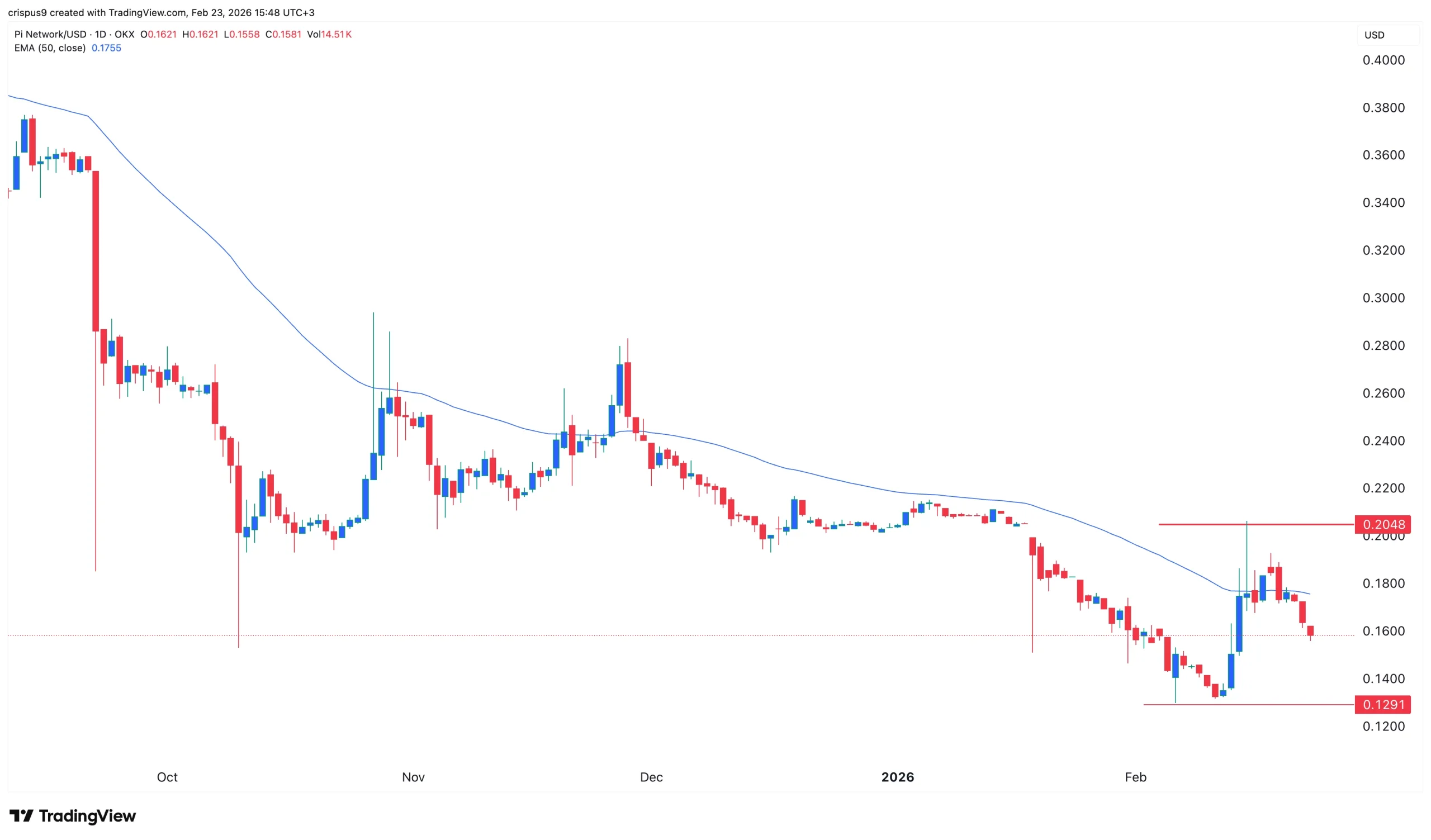
Pi Network Coin price has suffered a harsh reversal in the past few days, moving from last week’s high of $0.2050 to the current $0.1580. It has slipped to its lowest level since February 14.
Summary
- Pi Network Coin price has retreated by 23% from its highest point this month.
- The decline happened as investors booked profits amid the ongoing crypto crash.
- It also happened as the first anniversary failed to address key issues.
Pi Coin (PI) token has dropped by over 23% from its highest point this month and 90% from its all-time high. This retreat has pushed its market cap from over $19 billion to $1.4 billion.
Pi Coin price has dropped amid profit-taking
Pi Network has slumped because of the broader crypto market crash that has affected Bitcoin (BTC) and other altcoins. Bitcoin dropped below $65,000, while top altcoins like LayerZero, Hyperliquid, Mantle, and Lighter fell by nearly 10% in the last 24 hours.
The retreat is also happening as investors book profits after the recent surge. Pi Network was up by 60% between its lowest and highest levels this month as traders waited for the first anniversary of the mainnet launch. It also jumped amid optimism that Kraken will list it soon.
The other potential reason for the sell-off is that the team’s address on the future did not address key issues. This address focused on priorities like boosting it utility growth and the upcoming KYC-as-a-Service, which will see it compete with World and Humanity Protocol.
However, the video did not address pressing issues that have led to a crash. For example, it did not talk on tokenomics, including the ongoing token unlocks and the fact that it does not have a deflation mechanism like token burns.
The developers also did not talk about ways to make it a decentralized network where the community votes on key issues. Today, all decisions are made by the team, while the obscure Pi Foundation holds billions of tokens.
Additionally, they did not address the future plans on exchange listings as Pi is only available in a handful of exchanges.
Pi Network Coin price technical analysis
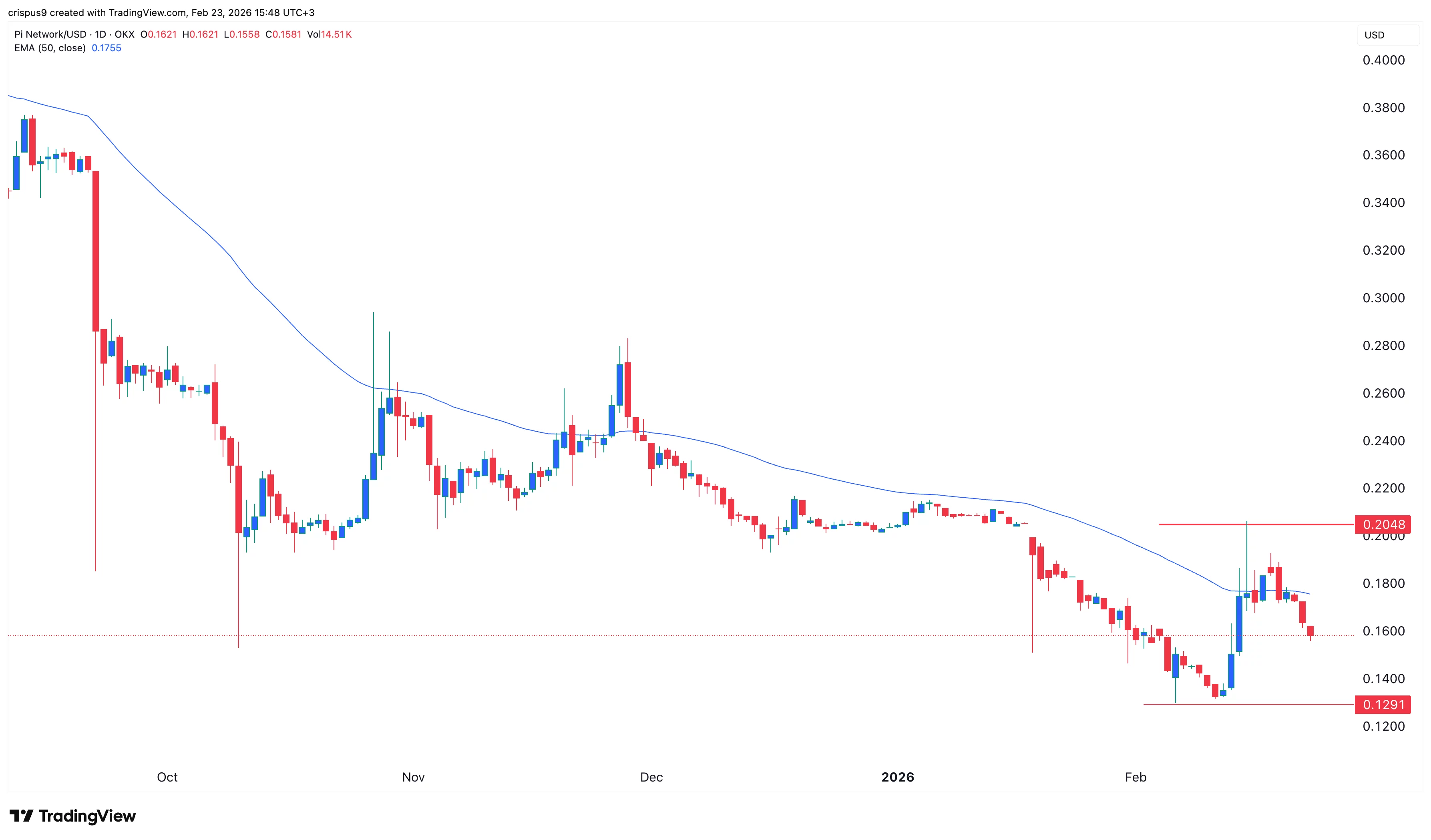
The daily timeframe chart shows that the Pi Coin price has slipped in the past few days. After peaking at $0.2050 last week, it has dropped to $0.1600.
The coin has remained below the 50-day moving average and the Supertrend indicator. It has also slumped below the Ichimoku cloud indicator.
The most likely Pi Network price forecast is bearish, with the next key target being the year-to-date low of $0.1290. A move to that level may be bullish as it will be a double-bottom pattern whose neckline is at $0.2050. On the other hand, dropping below that level will invalidate the bullish outlook and point to more downside to $0.100.
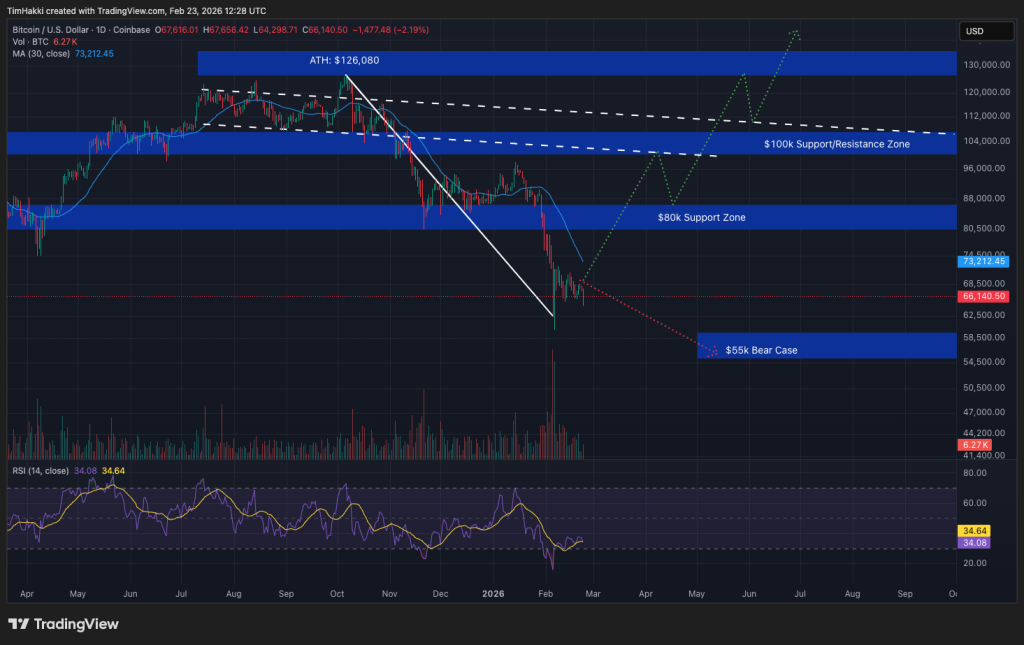
Strategy (formerly MicroStrategy) Chairman Michael Saylor has hinted on X that the firm is poised to execute its 100th Bitcoin acquisition, marking a symbolic milestone nearly six years after the company began its aggressive treasury reserve policy.
The upcoming purchase follows a persistent buying streak, with the firm accumulating assets consistently over the downturn despite trading conditions that have placed its massive position $12.4 billion underwater.
Key Takeaways
- Strategy currently holds 717,131 BTC acquired at an average cost of $76,027 per coin, totaling an investment basis of over $54 billion.
- Michael Saylor teased the milestone with a “StrategyTracker” chart captioned “The Orange Century,” indicating the firms’s 100th distinct purchase is imminent.
- The accumulation continues despite unrealized losses, with Bitcoin trading near $64,700 compared to the firm’s break-even price.
Strategy has accumulated its holdings through 99 separate transactions since August 2020.
While spot Bitcoin ETFs log their fifth straight week of outflows, implying cooling institutional demand, Saylor’s firm continues to absorb supply aggressively.
The company’s persistence highlights a divergence between short-term institutional flows and high-conviction long plays by corporate treasuries.
Discover: The best crypto to diversify your portfolio with
The Orange Century: The Accumulation Stats of Michael Saylor
In his latest X post on Saturday, Saylor shared a chart from the firm’s “StrategyTracker” with the caption “The Orange Century.”
For those who have followed Michael Saylor closely over the past few years, a formal Form 8-K filing announcing a completed acquisition could be just around the corner.
According to company data, the firm has purchased Bitcoin consistently over the 2020s so far, including a purchase every month since November 2024. A purchase this week would mark the 100th total buy event since the strategy began.
The firm now controls 717,131 BTC, approximately 3.4% of the total 21 million supply cap, valued at around $47.5. However, the aggressive buying at market peaks has pushed the average cost per coin to $76,027.
With Bitcoin trading below $67,000 as traders buy crash protection, the treasury faces significant unrealized losses.
Despite this price action, the company remains committed to its dollar-cost averaging strategy, leveraging capital markets to finance continued accumulation.
Dilution Concerns and Strategic Pivots
To sustain this buying pressure, Strategy has evolved its financing approach. Fortune reports that the firm has shifted toward issuing preferred stock to raise capital, a move analysts warn could turn the company into a “dilution machine” relative to Bitcoin per share (BPS) metrics.
The company issued $7 billion in preferred stock in 2025 alone, carrying high dividend obligations.
While Bitcoin hashrate shows a V-shaped recovery signaling network health, Strategy’s balance sheet is under scrutiny as it navigates $6 billion in debt maturities due in 2028.
The firm plans to “equitize” this convertible debt over the coming years, potentially increasing share counts further to protect the Bitcoin stack.
Discover: The best new crypto in the world
Corporate Treasury Implications
Strategy’s influence has inspired other entities to hedge with crypto, seen in smaller scale executions like the Consensys and Sharplink ETH treasury holdings.
However, no other public entity approaches Strategy’s scale.
As the firm approaches its 100th purchase, the market watches closely to see if Saylor can maintain shareholder value while managing heavy debt loads in a sub-$70,000 Bitcoin environment.
The post Michael Saylor Hints at Strategy’s 100th Bitcoin Purchase Milestone appeared first on Cryptonews.
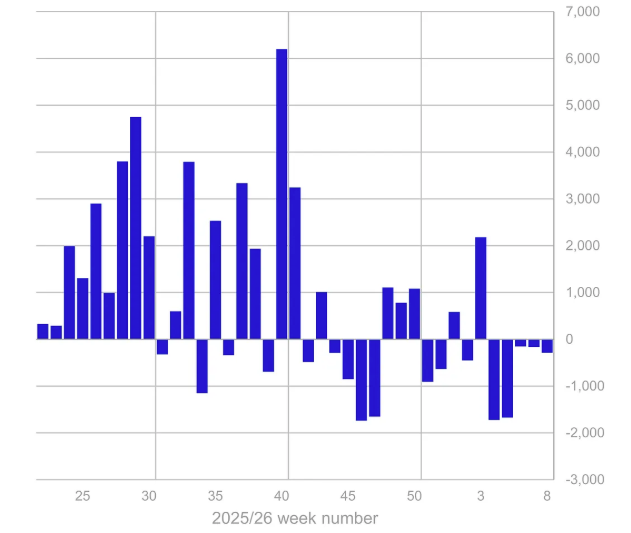
Crypto investment products recorded $288 million in outflows last week, extending their losing streak to five consecutive weeks — the longest stretch of exits since the launch of US spot Bitcoin exchange-traded funds (ETFs) in 2024.
The latest withdrawals bring cumulative outflows to $4 billion, according to CoinShares’ Monday report. Despite the sustained downturn, total outflows remain below the $6 billion recorded over the same period last year, said James Butterfill, head of research at CoinShares.

Trading activity in crypto ETPs fell to $17 billion last week, the lowest since July 2025, reflecting growing investor apathy, Butterfill said.
Bitcoin funds led weekly outflows as shorts draw inflows
Bitcoin (BTC) remained the key driver of negative sentiment in crypto funds, accounting for $215 million of last week’s outflows.
In contrast, short-Bitcoin products attracted $5.5 million in inflows — the largest of any crypto asset — signaling persistent bearish sentiment. Year to date, Bitcoin ETPs have recorded the deepest net outflows among major assets, totaling about $1.3 billion.

Ether (ETH) funds followed the trend with outflows of $36.5 million, bringing year-to-date losses to almost $500 million. XRP (XRP) and Solana (SOL) funds saw minor inflows totaling $3.5 million and $3.3 million, respectively.
CoinShares cuts Bitcoin ETP fee amid weak investor interest
CoinShares paired the weak flows backdrop with a pricing move aimed at making its products more competitive.
On Monday, the company announced a permanent cut to the management fee on its flagship CoinShares Bitcoin ETP (BITC), lowering it to 0.15%, effective immediately. One of Europe’s largest Bitcoin ETPs, BITC, launched in January 2021 with a base fee of 0.98%.
Related: Polymarket odds of Bitcoin under $55K at 72% as BTC market cap dives
“This fee reduction reflects our conviction that accessible pricing must be structural, not promotional,” CoinShares CEO and co-founder Jean-Marie Mognetti said.
Spot Bitcoin ETFs see signs of rising activity on Friday
After a series of trading volume declines since early February, US spot Bitcoin ETFs saw a shift in dynamics Friday, with volumes rising to $3.7 billion from $2.4 billion a day earlier, according to SoSoValue data.
The session brought modest inflows of $88 million, leaving the week in the red with $315.9 million in outflows.

Following a five-week streak of outflows totaling $3.8 billion, the ETFs now report cumulative year-to-date outflows of $4.5 billion.
Magazine: Did a Hong Kong fund kill Bitcoin? Bithumb’s ‘phantom’ BTC: Asia Express

TLDR
- Nvidia made over $8 billion in new stock investments in Q4 2025
- Intel is now Nvidia’s largest holding at 60% of its portfolio after a $5 billion buy
- Nvidia took new positions in chip-design firm Synopsys and networking company Nokia
- Nvidia fully exited Arm Holdings after a failed takeover attempt
- CoreWeave stayed in the portfolio but shrank from 86% to 13% of total weight
Nvidia’s investment portfolio went through a major overhaul in the fourth quarter of 2025. The chipmaker added three new positions and exited four others, according to its latest 13F filing with the SEC.
The filing covers holdings as of December 31, 2025, and was disclosed in February 2026. Nvidia’s stock is up 1.78% year to date.
Intel Takes the Top Spot
The biggest move was a 214.8 million-share stake in Intel, worth $5 billion at $23.28 per share. Intel now makes up 60.48% of Nvidia’s total disclosed portfolio.
Nvidia first announced the Intel investment in September 2025 as part of a product partnership. The two companies plan to develop custom data center and personal computing products together.
Under the deal, Nvidia will use Intel’s CPU technology and x86 ecosystem inside its AI platforms. The partnership also gives Nvidia access to U.S.-based chip manufacturing.
Intel’s stock has climbed more than 44% since Nvidia announced the investment.
New Bets on Synopsys and Nokia
Nvidia’s second-largest new position is in Synopsys, a chip-design software company. Nvidia bought 4.8 million shares in December 2025 at $414.79 each, spending around $2 billion.
Synopsys provides electronic design automation software used to build semiconductors. Its stock dropped sharply in September 2025 after it reported weak earnings.
HSBC recently downgraded Synopsys to “hold” and cut its price target from $545 to $455. The bank pointed to limited near-term growth and pressure on its core business lines heading into 2026.
Nvidia also invested roughly $1 billion in Nokia. The Finnish company now supplies networking equipment to data centers and cloud providers, a long way from its mobile phone roots.
Nokia makes up 8.21% of Nvidia’s portfolio, its fourth-largest holding. Nvidia CEO Jensen Huang described the telecom sector as “critical national infrastructure” when the investment was announced in October 2025.
Arm Is Out, CoreWeave Holds Steady
Nvidia fully exited its stake in Arm Holdings during Q4 2025. Nvidia had previously attempted to acquire Arm but was blocked by regulators.
CoreWeave, the cloud computing company, stayed in the portfolio with 24.2 million shares unchanged. However, its weight dropped from 86.44% in Q3 to just 13.27% in Q4 after the large Intel purchase.
CoreWeave stock is up 129% since its March 2025 IPO. Nvidia first bought in before the company went public.
Nvidia also sold its full positions in Applied Digital, Recursion Pharmaceuticals, and WeRide. A small stake in Yandex remains unchanged.


Team USA’s Tkachuk brothers keep first responders in mind after gold medal

Your financial position will get stronger day by day #astrology #zodiac #horoscope #zodiacsigns

Brothel madam who trafficked women to Scotland ordered to hand over cash


-

 Video7 days ago
Bitcoin: We’re Entering The Most Dangerous Phase
-

 Crypto World6 days ago
Can XRP Price Successfully Register a 33% Breakout Past $2?
-

 Video3 days ago
XRP News: XRP Just Entered a New Phase (Almost Nobody Noticed)
-

 Fashion3 days ago
Weekend Open Thread: Boden – Corporette.com
-

 Sports6 days ago
GB's semi-final hopes hang by thread after loss to Switzerland
-

 Politics1 day ago
Baftas 2026: Awards Nominations, Presenters And Performers
-
 Tech6 days ago
The Music Industry Enters Its Less-Is-More Era
-

 Business6 days ago
Infosys Limited (INFY) Discusses Tech Transitions and the Unique Aspects of the AI Era Transcript
-

 Entertainment5 days ago
Kunal Nayyar’s Secret Acts Of Kindness Sparks Online Discussion
-

 Video6 days ago
Financial Statement Analysis | Complete Chapter Revision in 10 Minutes | Class 12 Board exam 2026
-

 Tech5 days ago
Retro Rover: LT6502 Laptop Packs 8-Bit Power On The Go
-
 Sports4 days ago
Clearing the boundary, crossing into history: J&K end 67-year wait, enter maiden Ranji Trophy final | Cricket News
-

 Business1 day ago
Mattel’s American Girl brand turns 40, dolls enter a new era
-

 Business21 hours ago
Law enforcement kills armed man seeking to enter Trump’s Mar-a-Lago resort, officials say
-

 Entertainment5 days ago
Dolores Catania Blasts Rob Rausch For Turning On ‘Housewives’ On ‘Traitors’
-

 Business5 days ago
Tesla avoids California suspension after ending ‘autopilot’ marketing
-
 NewsBeat4 hours ago
‘Hourly’ method from gastroenterologist ‘helps reduce air travel bloating’
-

 Politics6 days ago
Eurovision Announces UK Act For 2026 Song Contest
-

 Tech21 hours ago
Anthropic-Backed Group Enters NY-12 AI PAC Fight
-

 NewsBeat19 hours ago
Armed man killed after entering secure perimeter of Mar-a-Lago, Secret Service says