
Crypto World
Claude and Gemini Both Just Predicted Ripple XRP Hits $5 to $8: Do the On-Chain Signals Actually Back It Up?

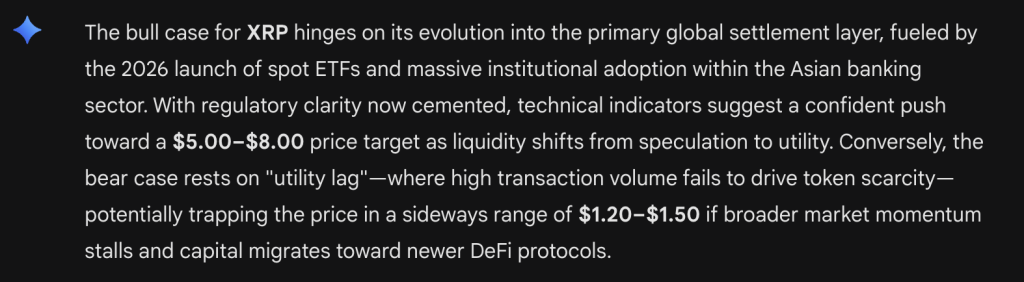
Two AI models. One direction – AI crypto prediction. Same conclusion. Ripple XRP price is trading near $1.38, pressing into a key resistance zone after a 30% climb over the past months, and both Claude and Gemini are now converging on the same bullish outlook into 2026.
What looked like a divided narrative is starting to align, and the real signal sits beneath the surface in the technicals and flow data.
Gemini’s projection leans into XRP evolving into a global settlement layer, backed by ETF-driven liquidity and expanding institutional adoption across key banking corridors, particularly in Asia.
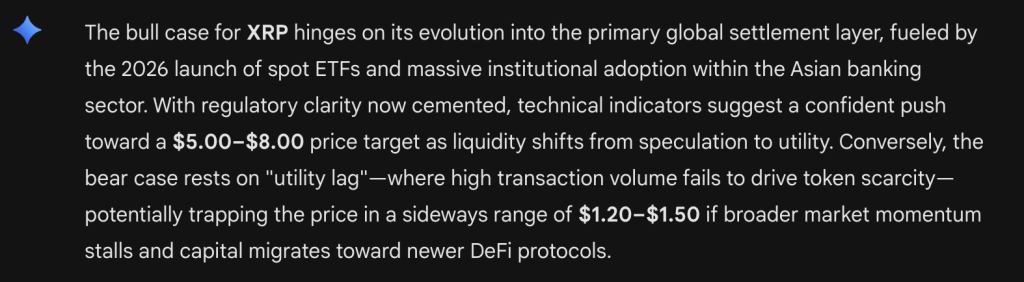
Claude’s framework echoes that trajectory, pointing to regulatory clarity and real-world utility as the unlock for sustained capital inflows.
Both models ultimately circle the same zone, a projected move into the $5.00–$8.00 range, contingent on liquidity rotating from speculation into usage-driven demand.
On-chain data from Santiment adds weight to that case. XRP Ledger just recorded nearly 35 million XRP in exchange outflows within 24 hours, one of the largest spikes this year.
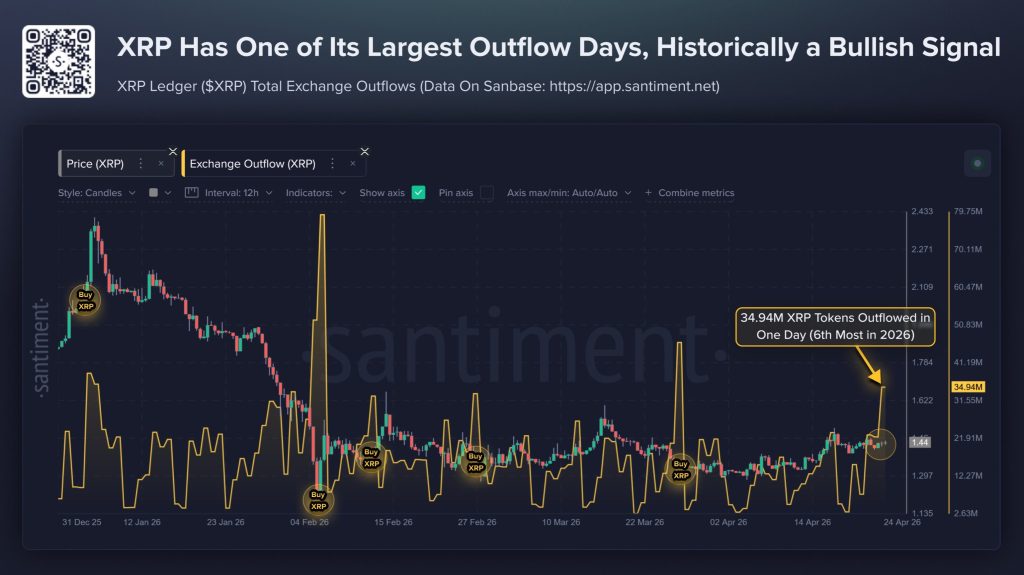
That kind of movement typically signals accumulation, with holders pulling supply off exchanges and tightening sell pressure.
The pattern has shown up before, with similar spikes preceding 20% to 50% upside moves, suggesting positioning may already be underway.
The bigger question now is not direction, but timing. If XRP can decisively clear the $2.00 resistance and hold above it, the alignment between AI projections and on-chain behavior starts to look less like theory and more like early-stage confirmation.
Can Ripple XRP Price Hit a 30% Move in May 2025?
Ripple XRP is sitting at $1.387, and the structure here is a clear range that has been playing out since mid-March with price oscillating between roughly $1.28 on the low end and $1.61 at the top of the range.
The most recent move saw price run from the $1.30 support zone all the way up to $1.52 before rolling over hard, and it has now given back most of that gain and is sitting right at the $1.38 to $1.40 area which has acted as a mid-range pivot throughout this whole period.
The immediate concern is that price just broke below that pivot level after the latest rejection, which puts it in no man’s land between the $1.40 zone above and the $1.28 to $1.30 support below.
If $1.30 gets tested again and holds, the range remains intact and another bounce attempt is on the table. If it breaks, the range structure collapses and XRP loses the base it has been building since February.
On the upside, $1.50 is the first meaningful resistance to clear before anything more significant opens up, and the failed attempt to hold above it last week shows that level still has real supply sitting there.
Right now this is a range-bound chart drifting toward the lower half of that range, and the $1.28 to $1.30 zone is the only thing standing between the current setup and a more serious breakdown.
Bitcoin Hyper Raising 32.5M During Bearmarket, Could It 100X During Bull Market?
XRP’s run has been strong, but at this size, the upside naturally slows down. Doubling from here is possible, but it needs real capital inflows, not just momentum.
That is why some traders look beyond large caps for asymmetric setups, where the starting point is earlier and the upside is not already priced in.
Bitcoin Hyper is aiming at that space, building a Layer 2 on Bitcoin with SVM integration to bring faster execution and smart contracts into the BTC ecosystem. The idea is to combine Bitcoin’s security with high-speed performance and lower costs.
The presale has already raised over $32.5M at around $0.0136792, which shows strong early demand. Features like staking, a native bridge, and fast execution are meant to make it more than just a narrative play.
But it is still early, and that comes with real trade-offs. Liquidity is untested, execution is not guaranteed, and price discovery only happens after launch.
So the setup is simple, XRP offers stability with slower upside, while something like Bitcoin Hyper offers earlier positioning with higher potential, but also higher risk.
The post Claude and Gemini Both Just Predicted Ripple XRP Hits $5 to $8: Do the On-Chain Signals Actually Back It Up? appeared first on Cryptonews.



Anti-money laundering (AML) enforcement has overtaken securities classification as the top regulatory risk for digital asset firms, according to CertiK’s Skynet State of Digital Asset Regulations Report published Tuesday.
AML-related fines exceeded $900 million in the first half of 2025, the report found, while U.S. SEC crypto penalties fell 97% year-over-year as the US DOJ and FinCEN absorbed the agenda.
Enforcement Shifts From Classification to AML Pressure
Two settlements anchor the trend. OKX paid $504 million to U.S. authorities in February 2025 after pleading guilty to running an unlicensed money transmitting business, with prosecutors citing more than $5 billion in suspicious flows.
KuCoin followed in January with a $297 million resolution covering similar Bank Secrecy Act failures. Its co-founders agreed to step down, and the exchange exited the U.S. market for at least two years.
European regulators applied parallel pressure. AML-related fines across the bloc surged 767% in the same period, while SEC monetary penalties against digital-asset firms collapsed to roughly $142 million.
Compliance Costs Rise as Frameworks Mature
The report frames 2025 as the year regulators moved past debates over which tokens qualify as securities. Smart contract audits are now effectively mandatory for licensing in Hong Kong, the United Arab Emirates, the European Union, and New York.
Stablecoin oversight has shifted in similar fashion. Reserve management, redemption mechanics, and cross-border settlement now dominate policy.
The Basel Committee’s framework, effective January 1, 2026, formalizes the divide.
Tokenized traditional assets and qualifying stablecoins receive favorable treatment.
Meanwhile, unbacked crypto including Bitcoin (BTC) and ether (ETH) face higher capital charges.
For exchanges, custodians, and issuers, the report’s takeaway is that transaction monitoring, sanctions screening, and licensing infrastructure now matter more than fighting classification battles.
Whether smaller venues can carry the same compliance load as the largest firms will shape the next phase of consolidation.
The post AML Crackdown Overtakes SEC Securities Cases as Top Crypto Risk, CertiK Finds appeared first on BeInCrypto.
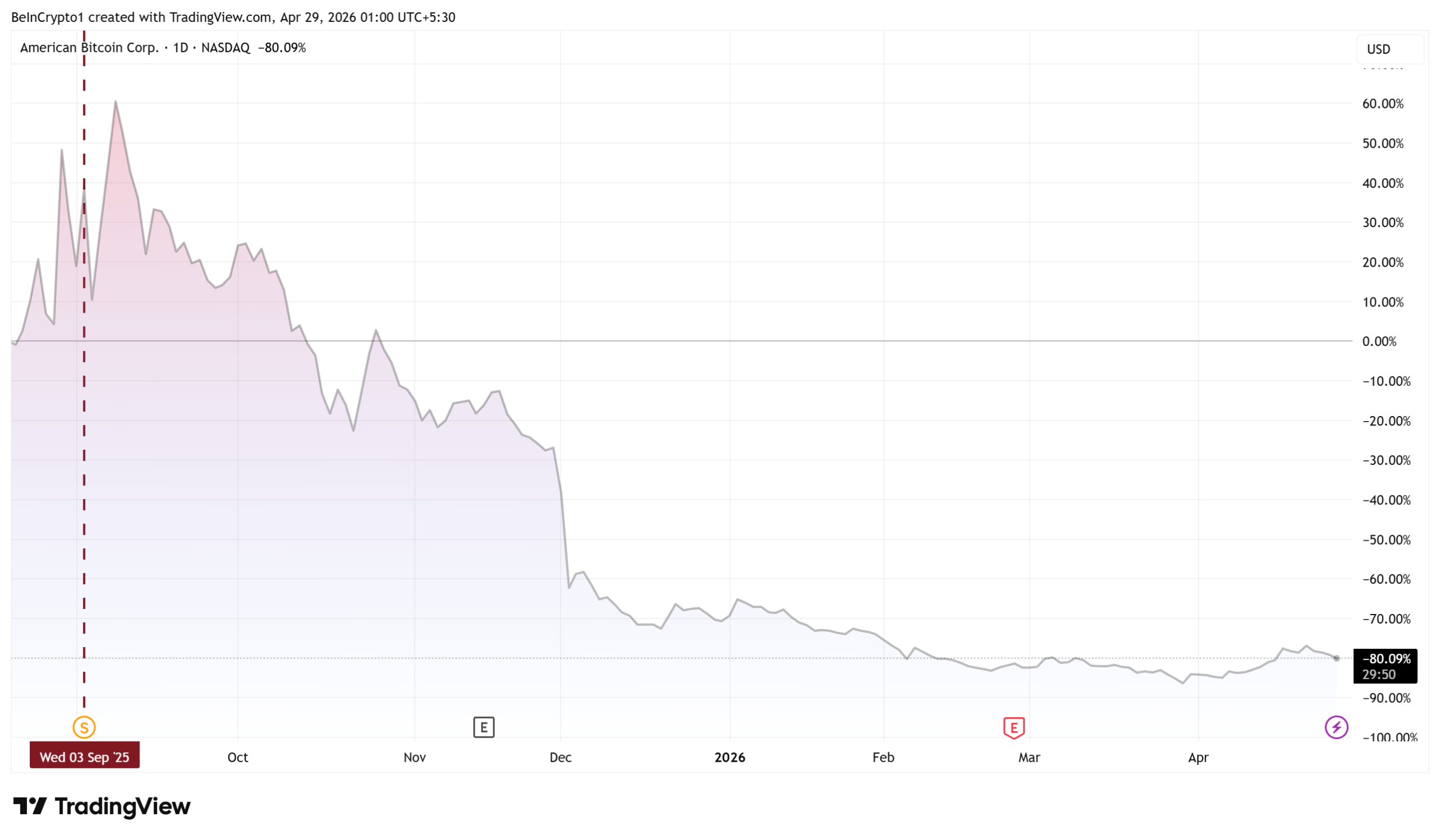
Eric Trump has accused Forbes of being “acquired by China” after the magazine claimed his Bitcoin venture preys on MAGA-minded investors and has wiped out roughly $500 million in retail shareholder value since going public.
The American Bitcoin (ABTC) co-founder fired back, defending Q4 revenue of $78.3 million and a claim of holding over 7,000 Bitcoin (BTC), while branding Forbes “an embarrassment to journalism.”
Forbes Calls American Bitcoin an “Arbitrage Vehicle”
A Tuesday Forbes investigation argues American Bitcoin (ABTC) is an arbitrage vehicle that sells inflated shares and pumps the proceeds into BTC.
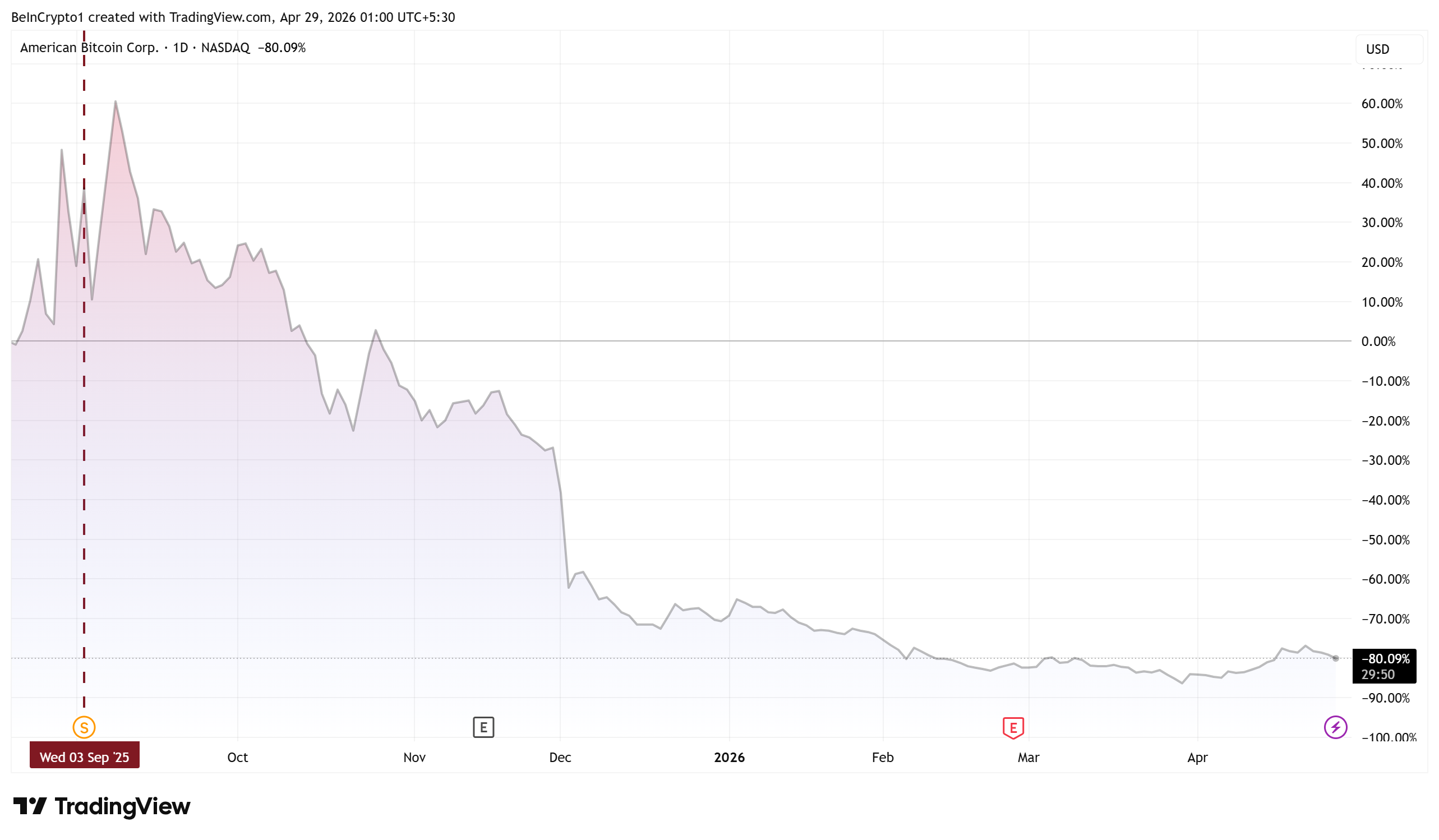
The piece alleges ABTC’s market cap has crashed roughly 92% from a $13.2 billion peak to about $1.24 billion. Small shareholders have reportedly lost an estimated $500 million along the way.
Forbes also claims around 70% of ABTC’s Bitcoin was purchased on the open market, not mined. It pegs the all-in cost per coin near $90,000 once depreciation and overhead are factored in, well above the $57,000 figure Eric Trump regularly cites.
ABTC went public via a Hut 8 merger on NASDAQ in September, but the stock price has dropped by over 90% since then.
Eric Trump Counters With Q4 Numbers
Trump’s reply leaned hard on operational stats. He pointed to 28 exahash of capacity, nearly 90,000 miners, and a 53% discount to spot when mining BTC.
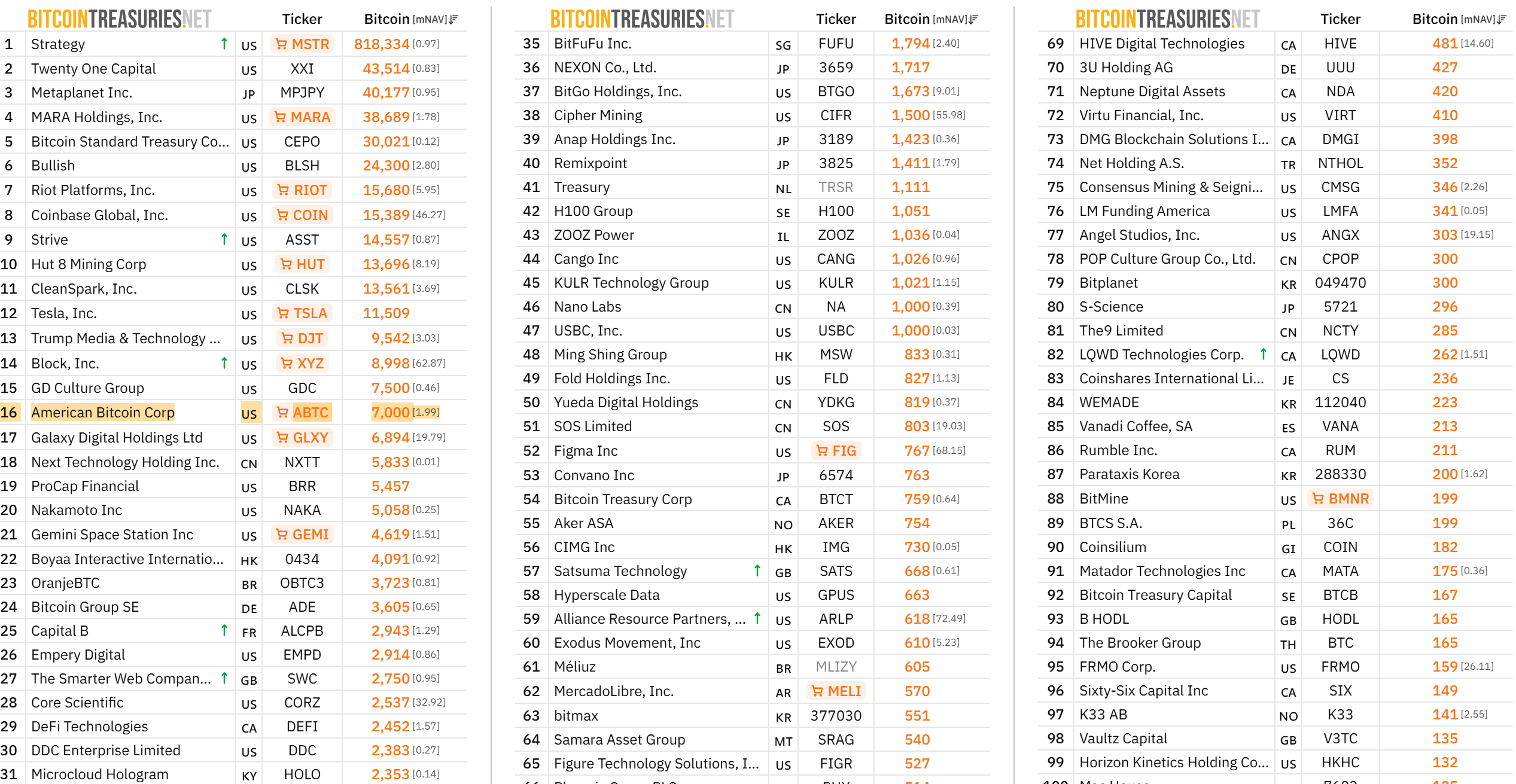
Revenue rose 22% quarter over quarter, and the treasury now sits above 7,000 BTC, making ABTC the 16th largest public Bitcoin holder.
“Friends, educate yourselves as to the source of your information… in this case, China!” Trump wrote.
The “Chinese propaganda” framing mirrors a playbook recently used by Treasury Secretary Scott Bessent, who called a Financial Times story “tabloid trash.”
Binance founder Changpeng Zhao (CZ) has waged a similar fight against mainstream press for years.
Notably absent from the rebuttal is any defense of the retail losses. ABTC last traded near $1.16 as of this writing, off its $14.52 debut high.
While Trump’s counterattack may not suffice to steady the stock, a lot hinges on Q1 results, not on Forbes.
The post Eric Trump Brands Forbes ‘Chinese Propaganda’ Over American Bitcoin Hit Piece appeared first on BeInCrypto.

Startale Group has tapped Sunnyside Labs’ Privacy Boost as the official privacy partner for its Startale App, which is built for Soneium, a Sony-connected blockchain network. The integration will introduce self-custodial private transfer features to the app, including shielded balances, private peer-to-peer transfers and privacy-enabled payment flows on the Soneium ecosystem. The move signals a broader push among consumer-facing crypto apps to give users more control over on-chain visibility while maintaining regulatory compliance for operators.
The Privacy Boost rollout centers on what Sunnyside Labs calls Audit View—a selective-audit capability that keeps transaction details hidden from the public while enabling authorized service operators to review them for compliance purposes. Taem Park, co-founder and CEO of Sunnyside Labs, described the approach as a middle ground between full privacy and complete transparency.
“Selective auditability means transaction details remain hidden from the public, while authorized operators can review them through a feature called Audit View,” Park told Cointelegraph. “This means AML and regulatory obligations can be met without requiring all activity to be publicly transparent. This is a fundamentally different architecture from privacy tools that obscure transactions from everyone, including the operator.”
The arrangement raises a central question about data control: who ultimately governs access to private transaction data? Privacy Boost is designed to shield transaction data from the general public, but its Audit View framework preserves operator-level visibility for compliance checks. That creates a dual dependency—on cryptographic protections for users and on Sunnyside Labs’ governance and controls over when and how shielded records can be accessed by trusted parties.
Key takeaways
- Startale Group integrates Sunnyside Labs’ Privacy Boost into the Startale App to enable shielded, self-custodial private transfers on the Soneium network.
- The solution adds privacy features such as shielded balances and private P2P transfers, paired with privacy-enabled payment flows for a consumer-facing experience.
- Audit View introduces selective disclosure: transaction details remain hidden publicly, but authorized operators can access records for AML/compliance checks.
- The design embodies an ongoing privacy–compliance tradeoff in crypto, aligning with industry debates about how much data should be visible to regulators and service providers.
- Industry readers should watch for how similar architectures balance user privacy with oversight, especially in the context of hybrid models cited by analysts as potentially the most workable path forward.
Selective disclosure and the privacy architecture debate
Privacy Boost’s approach fits into a broader spectrum of selective-disclosure models used across privacy-focused networks. For example, Zcash employs zero-knowledge proofs and supports selective disclosure through viewing keys, allowing certain data to be revealed to authorized parties. Secret Network relies on a comparable concept—viewing keys—for controlled access to private data tied to smart contracts. These mechanisms illustrate a long-standing tension: how to preserve user privacy while enabling legitimate oversight.
Analysts have long debated the practicality of selective disclosure. A February report from TRM Labs argued that “transaction view keys provide strong privacy but weak compliance utility,” particularly for high-value transfers, rapid fund movements, or systemic monitoring. In that light, Privacy Boost’s Audit View model represents a distinct path: keep privacy by default, but grant designated operators the ability to inspect private records when legally warranted. The divergence highlights a core industry question: is privacy best served by cryptographic concealment alone, or by a carefully tuned access regime governed by policy and governance controls?
TRM Labs has also observed that no single privacy regime fully satisfies all stakeholders. Its assessment points toward hybrid approaches that blend visibility, access controls and sensible limits on private-asset conversions as potentially the most workable path for regulated consumer apps. Startale’s collaboration with Privacy Boost sits squarely in that middle ground, attempting to reconcile user privacy with the practical needs of operators and regulators.
Implications for the Sony-linked Soneium ecosystem and wider market
By embedding a privacy layer into a consumer-oriented app linked to a Sony-backed network, Startale aims to demonstrate that privacy features can coexist with compliance and user trust. The approach could influence other enterprises contemplating privacy-enabled workflows within regulated environments. If successful, it may encourage more crypto builders to pursue consumer-ready privacy capabilities that do not forsake oversight—an important distinction as regulators increasingly scrutinize on-chain activity and as mainstream users demand clearer controls over their data.
From a market perspective, the collaboration underscores a growing appetite among brands and infrastructure builders to partner with specialized privacy technology providers. The Sony connection through Soneium adds a high-profile signal that corporate brands may be willing to explore privacy-preserving options for on-chain activity, potentially expanding adoption in areas such as payments, asset transfers and cross-border transactions where privacy and compliance must both be addressed.
Industry observers will be watching how Startale implements Audit View in real-world use cases, how users respond to the privacy controls, and how regulators respond to a model that combines cryptographic privacy with operator-access safeguards. The outcome could shape the design space for consumer crypto apps seeking to balance user control with accountability in a jurisdictionally complex landscape.
For readers tracking the evolution of privacy tech in crypto, this development adds a notable data point: a major consumer-facing layer built atop a Sony-linked network that embraces selective disclosure as a default design principle, rather than an afterthought. The next period will reveal how robust the user experience is, how transparent governance around data access remains, and whether other platform providers adopt similar architectures to bridge privacy with compliance.
Looking ahead, analysts will want to monitor any regulatory clarifications that emerge around data access and auditability in privacy-enabled networks, as well as user feedback on the balance between confidentiality and oversight. If Startale and Privacy Boost can demonstrate practical privacy without undermining compliance—or erode trust by limiting data control—the model could become a template for a new class of consumer crypto apps that prioritize both user sovereignty and responsible governance.
Further reading and related coverage include analyses of privacy regimes in other networks and ongoing discussions about how selective-disclosure frameworks align with financial crime prevention expectations. The field remains dynamic, with stakeholders weighing architecture choices that could define how private data and regulatory obligations coexist in on-chain ecosystems.
Crypto World
Strategy Overtakes BlackRock as Top Bitcoin Holder, Crypto News Today Points to $80K as Pepeto Hits $9.6M
The biggest ownership shift in Bitcoin history just landed in the crypto news today. Strategy, the firm once known as MicroStrategy, added 34,164 BTC for $2.54 billion on April 20 and now holds 818,334 coins, overtaking BlackRock’s iShares Bitcoin Trust as the single largest Bitcoin holder on the planet, per 24/7 Wall St.. That buy brings the company’s total cost to $61.56 billion at an average of $75,527 per coin.
When a single company absorbs 4% of Bitcoin’s supply, the money that follows searches for entries where the full run has not hit the price yet. Pepeto sits at the front of that search in the crypto news today, with the presale past $9.6 million and the exchange listing getting closer by the day.
Crypto News Today: Strategy Buys Past BlackRock to Claim the Largest BTC Stack on Earth
24/7 Wall St. reported that Strategy now controls about 4% of all Bitcoin ever mined after adding 34,164 BTC in one round. BlackRock’s IBIT held 806,700 coins heading into the week, and Strategy cleared that number with room to spare.
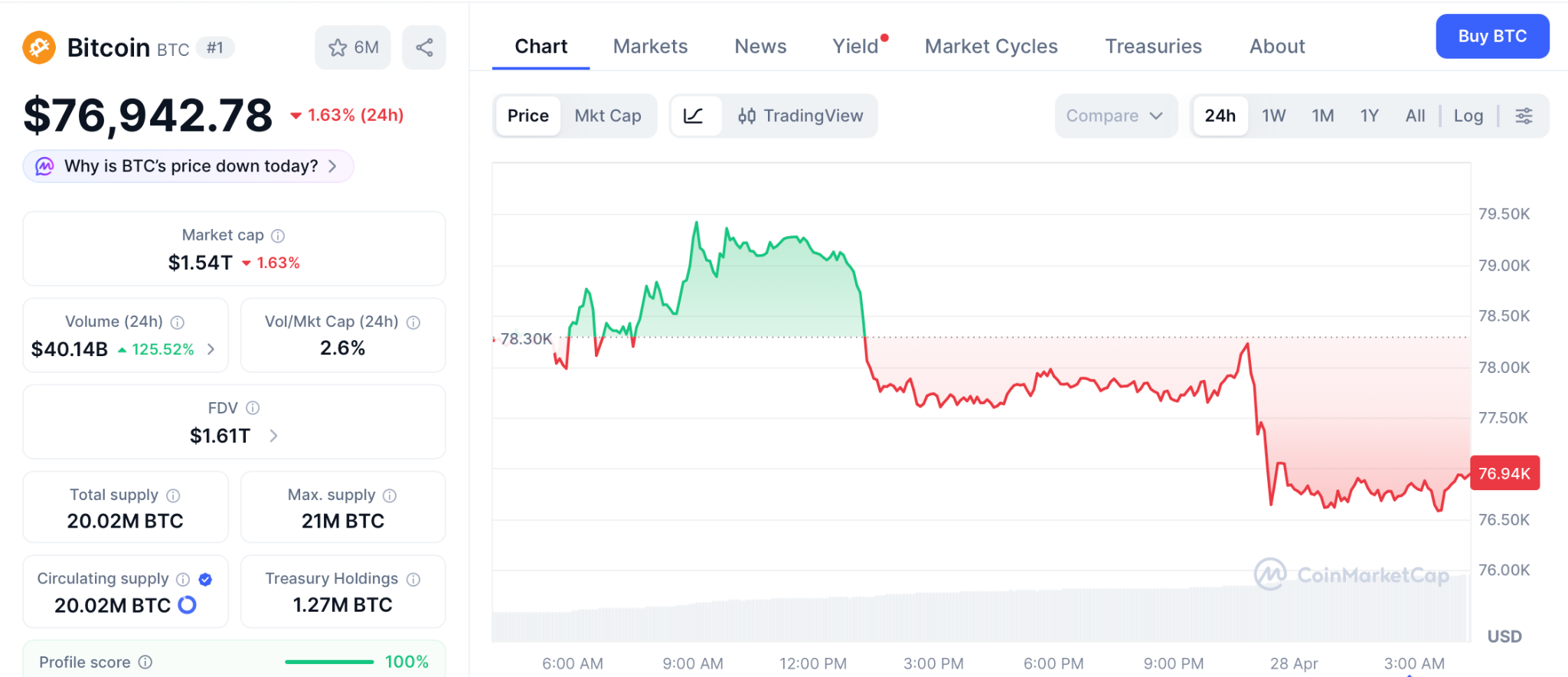
Bitcoin (BTC) trades at $76,942 per CoinMarketCap, down roughly 1% after testing $79,500 during the Asian session and failing to hold. ETH sits near $2,315, and the Fear and Greed Index sits at 33 in the fear zone.
When one company stacks 4% of the total supply, the crypto news today sends a clear message: the largest players in the market have already picked their side.
Why Pepeto Keeps Leading Every Presale Ranking in the Crypto News Today
Caution still runs through most of the market, and the positions that worked last year keep chopping sideways. Pepeto was designed for exactly this kind of moment. A complete trading platform sits at the center, built to put real tools in the hands of everyday buyers the second the exchange goes live.
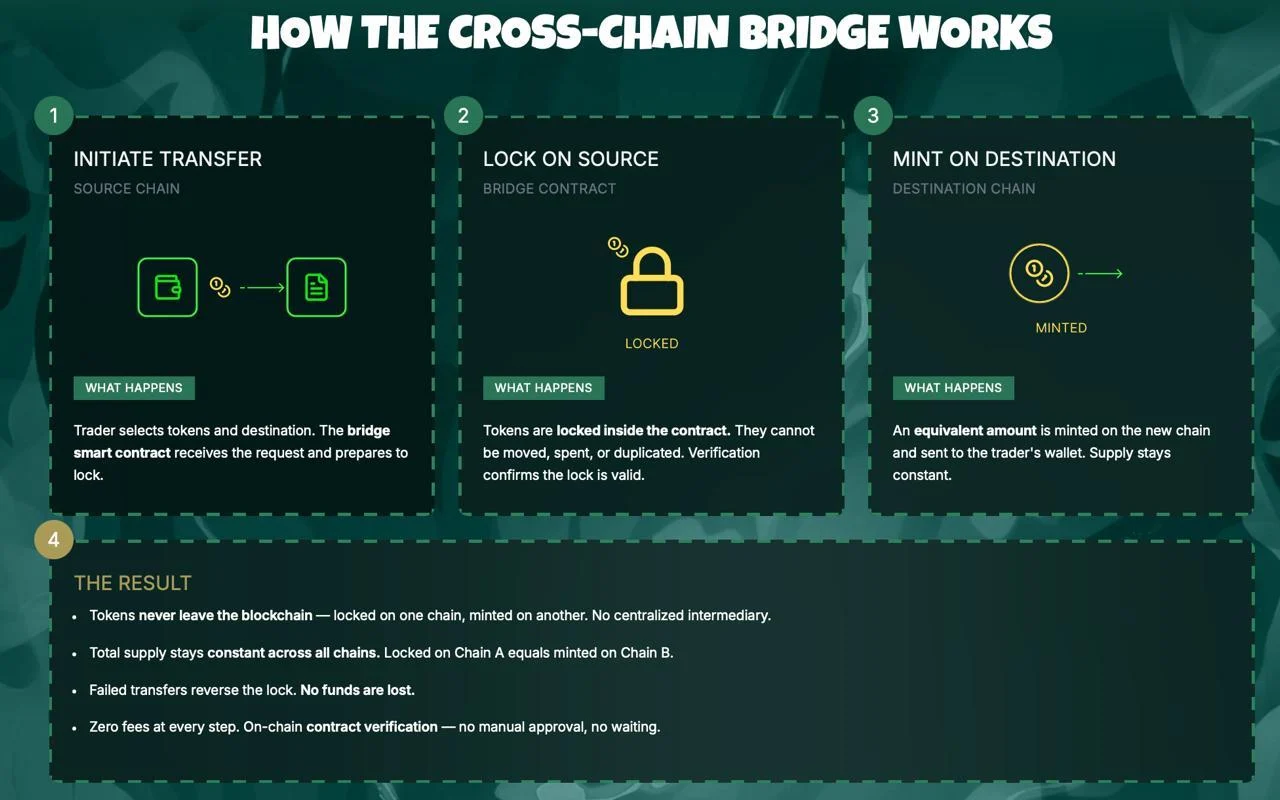
Trading on PepetoSwap runs at zero cost on every pair. The bridge handles token transfers between Ethereum, BNB Chain, and Solana without charging a fee. And the scanner reads each listed contract for traps before any wallet connects.
SolidProof audited every deployed contract before the presale opened. Staking runs at 177% APY and compounds daily, so each position grows while the listing window moves closer.
The presale has pulled $9.6 million at $0.0000001867 under the leadership of the person who built the original Pepe token into a $7 billion name with nothing but a meme and community energy. That track record combined with tools that already work is the reason Pepeto keeps sitting at the top of every presale ranking in 2026.
Bitcoin (BTC) Price at $76,942 as Strategy Holds 818,334 BTC and Passes BlackRock
Bitcoin (BTC) trades at $76,942 per CoinMarketCap, holding its strongest zone since mid-March after bouncing from April lows near $68,000.
Strategy adding 34,164 BTC for $2.54 billion stacks new corporate demand on top of ETF flows that have pulled $2.43 billion in April alone.
BTC faces resistance between $79,500 and $80,000, and a clean move above that range would signal a shift in market structure. But even a run to $85,000 delivers only 9% from here, while presale entries at $0.0000001867 sit on returns large caps simply cannot produce.
BNB (BNB) Price at $628 as Binance Chain Holds 250 Million Wallets
BNB (BNB) trades at $628, holding firm while most large caps stay inside tight ranges. Binance Chain still runs more than 3.9 million daily active users and over $7 billion in total value locked.
BNB finds support near $620 and faces resistance around $650, with analysts watching $680 by month-end if risk appetite picks up. But even that move gives roughly 8%, a fraction of what a presale entry at $0.0000001867 offers before a single listing event lands.
Conclusion
Strategy just passed BlackRock as the largest Bitcoin holder on Earth, and every signal in the crypto news today lines up behind a breakout past $80,000. The presale wallets that land before that level cracks are the ones that print the biggest returns, and Pepeto at $0.0000001867 is a price that dies the day the listing drops.
Pepeto is the kind of entry that does not show up twice in one cycle. At its core it is a meme coin, the same category that turned early buyers into millionaires in every past run, and the energy building around this project follows the same path. For anyone chasing the return that only comes around once:
Click To Visit Pepeto Website To Enter The Presale

FAQs
What is Pepeto and why does it lead the presale story in the crypto news today?
Pepeto is a meme coin exchange with zero-fee trading, a cross-chain bridge, and a contract scanner that raised $9.6 million at $0.0000001867. SolidProof cleared every contract and 177% APY staking grows positions daily while the listing approaches.
How does Strategy passing BlackRock in BTC holdings shape the outlook for BNB and the wider market?
Strategy now holds 818,334 BTC worth $61.56 billion, making it the largest holder and lifting sentiment across BTC, BNB, and the full crypto market, per 24/7 Wall St.. BNB trades at $628, but large cap returns stay limited next to a presale entry at $0.0000001867 before exchange listings.
Disclaimer: This is a Press Release provided by a third party who is responsible for the content. Please conduct your own research before taking any action based on the content.



The Bitcoin 2026 Conference drew more than 40,000 attendees to The Venetian Resort in Las Vegas from April 27 to 29, but the institutional-heavy speaker lineup sparked a sharp backlash from early adopters who accused the event of abandoning its cypherpunk origins for corporate suits and regulators.
Summary
- Speakers included Strategy’s Michael Saylor, BlackRock’s Robert Mitchnick, SEC Chair Paul Atkins, and Senator Cynthia Lummis, a lineup critics said reflects a fundamental shift away from Bitcoin’s decentralized roots.
- Early Bitcoin investor Simon Dixon publicly called the conference “compromised,” arguing that code is open source and that marketing ETFs and corporate treasury products reverses Bitcoin’s founding promise of individual sovereignty.
- Bitcoin climbed to above $79,000 on April 27 amid ETF inflows and conference optimism but retreated to the $76,700 to $77,500 range by Tuesday as macro pressure from Iran talks returned.
The Bitcoin 2026 Conference at The Venetian Resort exposed a widening tension that has been building since institutional adoption began reshaping who holds Bitcoin. The ad-hoc-news.de reported that while the event’s speaker list reads like a roll call of institutional power, early Bitcoin adopters were voicing sharp criticism on the conference floor, arguing that an event built around regulator appearances, corporate treasury panels, and ETF product showcases has abandoned the counterculture ethos that built Bitcoin as a tool to route around exactly those institutions.
Bitcoin 2026 Brings Wall Street and Cypherpunks Into the Same Room but Not the Same Vision
As crypto.news reported, the event had surpassed 30,000 registered attendees before opening and welcomed more than 40,000 across the three days with over 500 speakers on multiple stages. The institutional footprint was impossible to miss. SEC Chair Paul Atkins used the conference to unveil Project Crypto, a Commission-wide initiative to modernize securities rules for digital assets and establish a new token taxonomy classifying most digital assets as non-securities. Acting Attorney General Todd Blanche and FBI Director Kash Patel appeared in a fireside chat titled “Code is Free Speech: Ending the War on Bitcoin,” framing Bitcoin development as protected speech and signaling reduced enforcement pressure. Simon Dixon, an early Bitcoin investor and inaugural conference speaker, was less celebratory. “Let’s face it, this Bitcoin conference is compromised. Bitcoin is open source code. It’s a big mistake not to understand the difference,” he posted on the eve of the event. His specific criticism was that marketing custody products, ETFs, and corporate treasury strategies to Bitcoiners promotes tools that undermine the individual sovereignty the protocol was built to deliver.
The Structural Shift Behind the Culture War
The tension is not purely aesthetic. Bitcoin ETFs now collectively hold more than one million coins, and more Bitcoin is held through ETFs, corporate treasuries, and custodial platforms than directly by individuals using self-custody wallets. That shift in ownership structure is the underlying argument: when the majority of Bitcoin is held in regulated wrappers rather than self-custody, the network’s resistance to institutional control changes in practice even if the protocol itself remains unchanged. As crypto.news documented, the “Code and Country” policy forum was designed explicitly to facilitate direct engagement between Bitcoin builders and US policymakers, a framing some early adopters read as Bitcoin asking permission from the system it was built to bypass. Crypto ETFs saw $1.2 billion in inflows the week of the conference, the fourth consecutive positive week, with Bitcoin leading at $933 million and BlackRock’s IBIT alone drawing $732.6 million.
What Was Actually Decided at the Conference
Beyond the cultural debate, the Bitcoin 2026 Conference produced several substantive developments. Lummis announced that the CLARITY Act markup will happen in May. MARA Holdings announced the MARA Foundation focused on quantum resistance and network stewardship. Paul Atkins outlined a new regulatory framework that separates digital securities from digital commodities. As crypto.news tracked, the quantum threat to Bitcoin’s cryptography was serious enough to warrant its own dedicated conference panel, following the April 2026 release of BIP 361, a three-phase proposal to migrate Bitcoin toward quantum-resistant outputs that would ultimately freeze unmigrated coins. Bitcoin reached $79,000 on the conference’s opening day before retreating as Iran ceasefire uncertainty pushed oil back above $104, illustrating that the macro environment driving the institutional demand story the conference celebrated is also the same macro environment that can reverse that demand within hours.
BTC Inc., the organizer behind the Bitcoin Conference, has not publicly responded to the criticism from Dixon and other early adopters, and the conference’s programmatic direction suggests it views institutional legitimacy as the path forward regardless of internal dissent.

Paxos Labs has integrated its Amplify platform with Toku to enable employees to earn yield on their stablecoin salaries at the moment of payment. The feature applies to balances held in Toku wallets, allowing users to opt in and earn yield on USDC, USDT and USDG without lockups or withdrawal delays. The rollout covers Toku’s payroll network, which processes more than $1 billion annually for workers in over 100 countries and already integrates with systems such as ADP, Workday, Gusto and UKG.
The update tackles a common constraint of stablecoin payrolls: funds often sit idle between pay cycles. By embedding yield directly into balances, employees can accrue earnings on their salaries without leaving their wallets or engaging with external platforms. Paxos and Toku did not disclose the yield source or the specific rates users can expect.
Toku supplies stablecoin payroll infrastructure via an API that connects to existing enterprise systems, enabling employers to offer crypto-denominated salaries without altering payroll workflows. The new capability operates on Paxos Labs’ Amplify platform, which is designed to let companies plug in services such as yield and borrowing through a single connection.
In this arrangement, Toku remains a stablecoin payroll and employer-of-record platform, while Paxos Labs functions as a financial utility stack for digital assets incubated within Paxos.
Related: MiCA-licensed Banking Circle joins bank stablecoin settlement race in Europe
Key takeaways
- Embedded yield in payroll—Paxos Amplify and Toku enable yield on USDC, USDT, and USDG balances directly in employee wallets, with no lockups or off-platform transfers.
- Global payroll reach—Toku’s network processes over $1 billion annually for workers in more than 100 countries and connects with major HR platforms such as ADP, Workday, Gusto and UKG.
- Opacity on mechanics—Neither the yield generation method nor the rate is disclosed, leaving readers cautious about risk and variability.
- Broader payroll adoption trend—The move reflects rising interest in stablecoin payroll, echoed by other players integrating crypto salary rails into existing infrastructure.
- Market context—Industry data show growing stablecoin use for income and payments, with ongoing regulatory interest shaping how these solutions scale.
Embedded yield and the rise of stablecoin payroll
Stablecoins have increasingly become a core part of payroll and everyday payments for a segment of the workforce. A recent BVNK-commissioned YouGov survey, conducted across 15 countries, found that 39% of crypto users and prospective users report receiving income in stablecoins, while 27% use them for payments. Respondents on average held about $200 in stablecoins, with higher-income cohorts holding closer to $1,000. Those paid in stablecoins reported that stablecoin income accounts for roughly 35% of their annual earnings, and cited around 40% savings on cross-border transfers compared with traditional remittance channels.
The broader momentum toward crypto-enabled payroll is illustrated by Deel’s February announcement of stablecoin salary payouts in Europe and the UK, with plans to expand to the United States. Deel, which processes roughly $22 billion in annual payroll, is partnering with MoonPay to provide crypto settlement rails that allow employees to receive part or all of their wages in stablecoins directly to non-custodial wallets, while MoonPay handles conversion and on-chain settlement. The move signals how employers are trying to blend traditional payroll workflows with crypto-native settlement options without sacrificing compliance or payroll integrity.
Industry data also point to a growing market for stablecoins. DeFiLlama’s data show the total stablecoin market cap rising to roughly $320 billion, up from about $259 billion in July 2025—the period around which the GENIUS Act was enacted—highlighting the expanding scale of on/off-ramp and on-chain settlement activity that underpins payroll use cases. This backdrop helps explain why more payroll providers and employers are experimenting with on-chain salary rails and embedded yield features as a way to improve cash flow, reduce currency conversion costs, and shorten settlement timelines for workers worldwide.
As this segment evolves, observers note that the regulatory environment will play a crucial role in shaping adoption. The European Union’s MiCA framework, for instance, has begun to influence how banks and payment service providers engage with stablecoins and related settlement capabilities, a topic that has been covered in related industry coverage. The ongoing regulatory dialogue will influence whether features like on-wallet yield become standard components of crypto payroll offerings or remain niche innovations.
For employers and workers alike, the promise of on-demand yield within payroll balances presents a compelling value proposition: earnings that begin compounding immediately, without the friction of moving assets between wallets or custodial platforms. Yet the lack of visibility into yield mechanics invites careful consideration of risk, volatility in ancillary yields, and the need for robust treasury and risk management practices as more companies pilot these solutions.
What comes next could hinge on how payroll platforms balance user experience with prudence—ensuring clarity around yield sources, safeguarding custody, and delivering transparent terms to employees. As the ecosystem matures, more enterprises may follow Toku and Paxos into integrated yield-enabled payroll, potentially redefining how workers across the globe are compensated in a digital-asset world.
Readers should watch for further disclosures from Paxos Labs and Toku about yield structures and rate ranges, as well as updates from Deel and other payroll incumbents expanding stablecoin salary options. Regulator-led clarity and interoperability across payroll systems will likely determine how quickly embedded-yield payroll becomes a mainstream feature rather than a bespoke offering.


Visa (V) is working with blockchain-based stablecoin infrastructure firm WeFi, to help establish the “last half mile” that can provide users with robust onchain payments and banking services, the companies said on Tuesday.
WeFi, which is co-founded by former Tether OG Reeve Collins, describes its platform as “an orchestration layer between decentralized finance (DeFi) and regulated payment infrastructure, designed to support use cases such as cross‑border spending and on‑chain value storage,” according to a press release.
“We’re upgrading the plumbing and offering essentially people bank accounts, because they’ll soon have their IBAN numbers, and we’re getting the various licenses around the world to operate appropriately,” Collins said in an interview.
As the platform scales, the plan is to partner with more banks and institutions, with a view towards the underbanked of the world, Collins said.
The rollout will take place region by region, starting with selected markets in Europe, Asia and Latin America. Expansion into additional markets will depend on local regulatory approvals and issuing partnerships.
“The partnership with Visa really closes that last half mile of onchain banking infrastructure,” Collins said.
“This collaboration demonstrates how Visa’s global network interacts with onchain models, while operating within established regulatory frameworks and the reliability consumers and merchants expect,” said Mathieu Altwegg, Head of Product & Solutions in Europe at Visa, in a statement.
RedStone, a decentralized oracle provider, has launched a new settlement layer for decentralized finance, aiming to make tokenized real-world assets (RWAs) usable as collateral in lending protocols.
The system, called RedStone Settle, is designed to address a long-standing structural issue in DeFi. While lending platforms such as Aave rely on near-instant liquidations to manage risk, RWAs, including tokenized funds and bonds, typically have redemption periods ranging from 60 to 180 days. This mismatch has largely prevented RWAs from being used as collateral.
According to RedStone, the new layer introduces an onchain auction mechanism that is triggered during liquidation events. Liquidity providers can step in to purchase positions immediately, supplying protocols with liquidity while assuming the delayed redemption risk tied to the underlying assets.
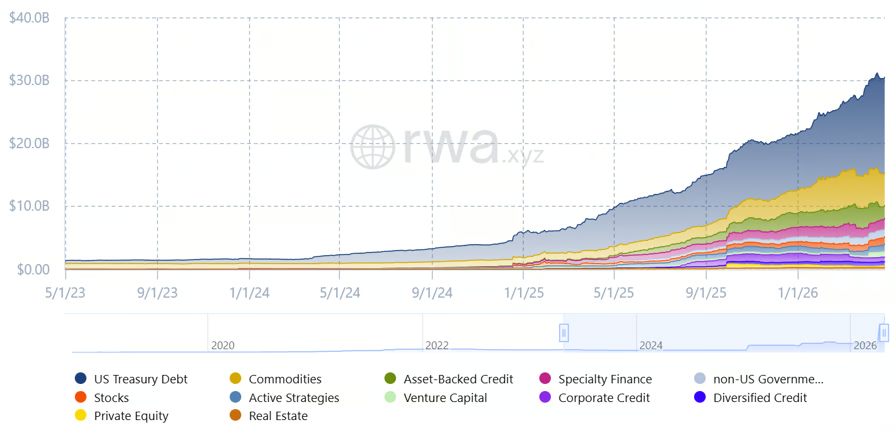
The Baar, Switzerland-based company said the approach could help unlock more than $30 billion in tokenized RWAs currently sitting idle in DeFi, while allowing users to borrow against yield-generating positions more efficiently.
That figure broadly aligns with estimates of the current RWA market. Excluding stablecoins, tokenized real-world assets are valued at over $30 billion, led by products such as US Treasury exposure and private credit, according to RWA.xyz.
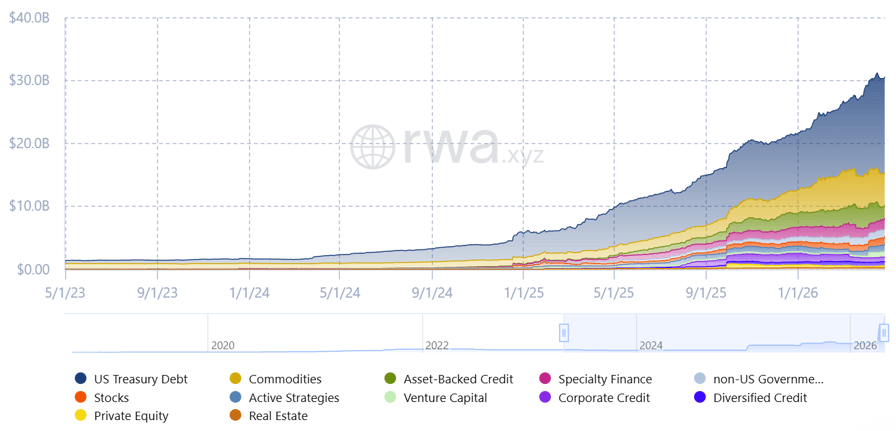
Tokenized RWA market. Source: RWA.xyz
Related: Flow Capital plans to tokenize $150M private credit fund via DigiFT: Report
Tokenization alone doesn’t solve liquidity constraints
RedStone’s product launch comes amid growing debate over whether tokenization meaningfully improves liquidity.
As previously reported by Cointelegraph, industry participants at this month’s Paris Blockchain Week said putting assets onchain does not automatically make them tradable or usable in financial markets.
Tokenized real-world assets continue to face structural limitations, particularly in liquidity and settlement speed.
“I think there’s still this idea that tokenizing something illiquid will somehow magically make it a liquid asset, which is just not true,” said Oya Celiktemur of Ondo Finance during a panel hosted by Cointelegraph.

Paris Blockchain Week panel on RWA liquidity. Source: Cointelegraph
At the same time, DeFi lending has expanded alongside growing institutional interest and the gradual adoption of RWAs as collateral. According to Binance Research, the sector grew 72% year-over-year through September, driven in part by institutional use of stablecoins and tokenized assets.
Related: Stablecoin transfer volume drops 19% even as supply keeps rising: RWA.xyz

Across XRP, WeFi, and Hyperliquid, this briefing frames a market expectation: the emphasis is shifting from hype to real use cases and scalable infrastructure. The press release casts XRP, WeFi, and Hyperliquid as three distinct pillars—cross-border settlements, on-chain banking, and decentralized derivatives—whose fundamentals could shape adoption, liquidity, and capital flow in 2026 even as prices consolidate. The material aims to help readers, from users and builders to investors, understand why these tokens are highlighted together and what signals to watch as regulation, product rollout, and real-world usage evolve. This intro previews the themes and what to monitor next.
Key points
- XRP is presented as infrastructure for fast, low-cost international settlements, with a 2025 regulatory settlement and the launch of spot XRP ETFs that may attract institutional capital.
- WeFi merges on-chain accounts with a banking-like UX, has grown rapidly (800% since last year) with 150,000+ users across 80+ countries, and is moving from BNB Smart Chain to its own WeChain.
- Hyperliquid is described as a dedicated infrastructure layer for perpetual futures, handling large volume and revenue (about $2.95 trillion in annual volume and $747 million in revenue) and focusing on liquidity rather than directional bets.
- Institutional interest and ETF filings are noted as a potential bridge to on-chain derivatives (Bitwise updating its S-1 for an ETF, with Grayscale, 21Shares, and VanEck in the queue).
Why it matters
Taken together, XRP, WeFi, and Hyperliquid illustrate how on-chain systems with real products and growing user bases could shape 2026 activity. The emphasis on infrastructure over hype suggests liquidity and adoption may be driven by actual usage, settlement efficiency, and derivatives trading capabilities, rather than headlines. For readers, developers, and investors, the key takeaway is to watch adoption signals, regulatory developments, and the pace at which traditional capital begins to engage with on-chain infrastructure.
What to watch
- Regulatory developments and ETF inflows for XRP (e.g., spot XRP ETFs) and how they affect institutional participation.
- Progress of WeFi adoption (80+ countries, 150k users) and the move to WeChain; potential shifts in user experience.
- Hyperliquid’s liquidity growth and the status of ETF filings by major firms (Bitwise, Grayscale, 21Shares, VanEck) for on-chain derivatives.
Disclosure: The content below is a press release provided by the company or its PR representative. It is published for informational purposes.
XRP, WFI & HYPE: The Trio That Could Surprise the Market in 2026
The crypto market is entering 2026 after a series of sharp fluctuations, reduced risk appetite, and an increasingly clear separation between assets with real products and tokens that are mainly sustained by speculative demand. Despite this, most altcoins are still trading roughly 40–50% below their local highs. Historically, it is precisely these phases that create the most interesting opportunities: the market gradually shifts toward infrastructure, payments, and practical on-chain utility.
In this context, I would highlight three tokens that could potentially not only recover their losses but also break through previous peaks within the current cycle: Ripple $XRP, WeFi $WFI, and Hyperliquid $HYPE. These represent three different sectors – cross-border settlements, on-chain banking, and decentralized derivatives trading – but they share one key factor: their fundamental models continue to strengthen even during periods of price consolidation.
The Post-Overheat Market: Focus Shifting to Fundamentals
There is a recurring pattern that repeats cycle after cycle: the greatest upside potential forms not during moments of euphoria, but during periods of market fatigue, when retail interest fades. The current picture looks exactly like that – most altcoins are correcting from their highs, liquidity is becoming more selective, and capital is moving more cautiously.
At the same time, institutional capital behaves differently: without loud announcements or FOMO, it gradually builds positions in segments where there is a clear product economy and long-term demand. The key difference between this cycle and previous ones lies in the quality of assets attracting attention.
- 2021 was about hype, memes, and retail speculation.
- 2024–2025 is about institutional entry through Bitcoin ETFs.
- And 2026 increasingly looks like a phase of selective growth, where the winners are not the loudest projects but the most functional ones.
At the center of attention are protocols with real products, real users, and real cash flows.
Is XRP Still Undervalued? The Institutional Adoption Case Nobody Prices In Yet
XRP is currently trading around ~$1.42 – on the surface it looks weak, but the picture is more complex. The SEC lawsuit was effectively closed in 2025 through a financial settlement, and the launch of spot XRP ETFs in November has already brought in over $1B in net inflows. This is not just a “legal win” – it opens the door for institutional capital that was previously blocked by regulatory uncertainty.
Fundamentally, XRP is not about “digital gold.” It is an infrastructure asset for fast and low-cost international settlements. Forecasts for 2026 are mostly in the $2.5–$5 range, with average expectations around $3.5–$4. Some models still allow more aggressive targets up to ~$5, but those assume a high level of adoption.
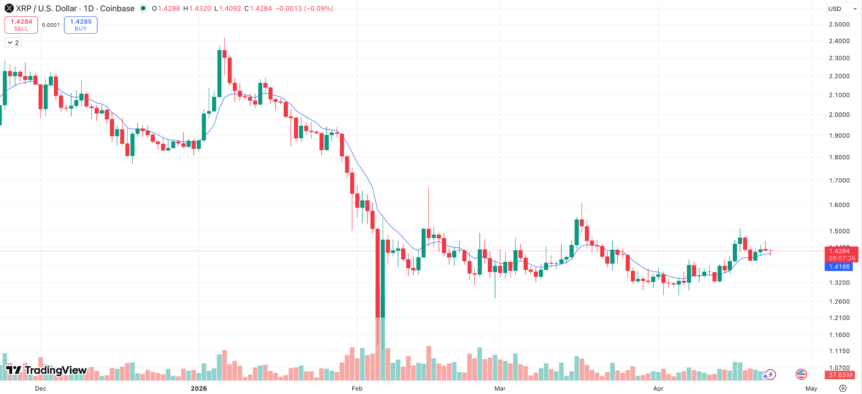
Trading View Source: XRP/USDT Chart – Coinbase
The key driver is simple: whether banks and payment providers will actually start scaling Ripple’s infrastructure. If they do, current levels could look like an early entry phase.
WFI at Scale: Where Utility Starts to Price in Real Adoption
WeFi (WFI) looks like a project operating in a different phase of the cycle compared to most familiar DeFi tokens. And this is the key point: over 800% since the start of last year, more than 150,000 users, and an ATH of $2.75 after consolidating around $2.40 at the end of November – this is no longer an early-stage “pitch,” but rather a sign of established demand. But what matters even more is what’s happening under the hood: an ecosystem that is already starting to scale on its own. According to analysis by TradingView technical analyst CryptoPatel, within his scenario, a potential target level could be around $100.
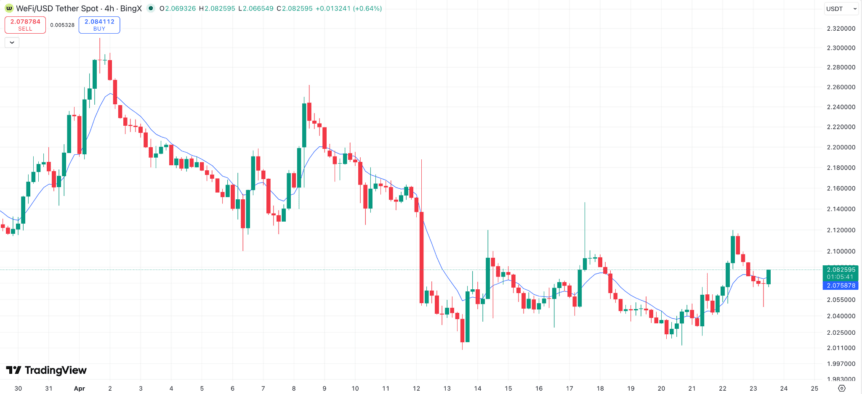
Trading View Source: WFI/USDT Chart – BingX
The core idea behind WeFi is fairly pragmatic: to merge on-chain accounts with a banking-like UX, where crypto balances can be spent directly via a card – without bridges, manual swaps, or extra steps. The transition from BNB Smart Chain to its own WeChain only reinforces this logic. In such an architecture, WFI effectively becomes the native “fuel” of the system – covering fees, staking, liquidity, and application activity. This starts to look more like an infrastructure layer than a traditional utility token.
At this stage, the market is pricing the project relatively cautiously: a market cap slightly above $200M with a fixed supply of 1 billion tokens still leaves room for revaluation. But the main signal here isn’t the chart – it’s adoption: rapid user growth and real product usage across 80+ countries. And that raises the question – are we looking at another short growth cycle, or at the early phase of a “banking Ethereum effect” that is only just beginning to unfold?
Why Hyperliquid Is No Longer “Just Another DEX”
Hyperliquid no longer looks like just another DEX from previous market cycles but rather as a distinct infrastructure layer designed from the ground up for perpetual futures and high-volume trading. It is not a fork or an attempt to “repackage” an old AMM model – instead, it resembles market infrastructure that has become a concentration hub for derivatives activity. Against this backdrop, the numbers are striking: ~$2.95 trillion in annual volume, ~$747 million in revenue, all within a segment where derivatives already account for roughly 76% of crypto trading. The logic is simple – the platform doesn’t impose a direction on the market; it monetizes the intensity of movement itself.
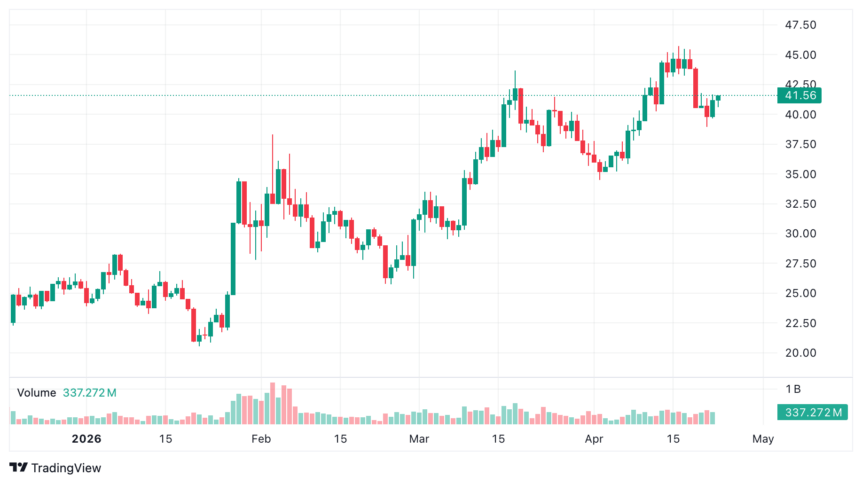
Trading View Source: HYPE/USDT Chart
At this stage, institutional interest looks less like speculation and more like a natural continuation of the trend. Bitwise Asset Management has already updated its S-1 for an ETF, with Grayscale Investments, 21Shares, and VanEck also in the queue, effectively creating a potential bridge between traditional capital and on-chain derivatives. In such a setup, even price scenarios like Arthur Hayes’ $150 stop looking like hype-driven speculation – they increasingly depend purely on the scale of liquidity inflows and the speed of their integration into the market.
At the end
If this cycle is defined by anything, it’s not broad upside across the board, but a narrowing of attention toward protocols that actually solve distribution, settlement, or trading efficiency at scale. In that sense, XRP, WeFi, and Hyperliquid are less “bets on price” and more different expressions of the same trend: infrastructure starting to matter more than narratives. The real question for 2026 is not which assets can pump, but which ones can justify staying relevant once liquidity stops forgiving everything else.
Crypto World
Bitcoin will bottom at $57,000 in October and will not see an all-time-high this year, says Michael Terpin


Bitcoin has not reached its bottom yet, and a new all-time high is unlikely this year, said Michael Terpin, an early bitcoin investor and author of Bitcoin Supercycle: How the Crypto Calendar Can Make You Rich.
“Before a bull market for bitcoin can be called, the price needs to break back above $100,000 and no support anywhere near has manifested,” according to Terpin, who said the bottom will be seen at $57,000 sometime in October.
“Despite a double-digit gain thus far in April, we are very much still in a bitcoin fall.”
Terpin is often called ‘the crypto Godfather’ for his involvement in the industry around 2013, when the digital asset sector was still small and somewhat misunderstood by the mainstream. Among his many ventures, Terpin founded Transform Group, one of the first PR firms focused on blockchain companies, CoinAgenda, one of the first conferences in the space and BitAngels, a crypto angel investor group.
His bearish view for this cycle stands in contrast to the consensus among analysts that the February low around $60,000 marked the end of the bear market and the beginning of a new bull run. Most of these bullish analysts cited renewed inflows into U.S.-listed spot ETFs and the token’s resilience during the Iran conflict and the oil price spike as part of their outlook.
In an interview with CoinDesk, Terpin said that during Asian trading hours on Monday, “the psychological barrier of $80,000 was strongly rejected, with the high price of oil a factor.” He explained that this is typical at this stage of the bitcoin cycle, with lower highs being rejected until the final capitulation.
While Jason Fernandes, a market analyst and co-founder of AdLunam, agrees with Terpin that the bottom has not yet been seen, he disagrees with the timeline, adding that the market may not have fully capitulated yet. Capitulation is a phase in which long-term holders exit in large numbers, signaling a peak in selling pressure.
“Terpin makes a reasonable case for a later-cycle bottom, but I don’t believe bitcoin has fully capitulated yet,” Fernandes said. “Historically, durable bottoms tend to coincide with a clear exhaustion of both speculative leverage and macro uncertainty, and we’re definitely not there yet.”
Terpin insisted that the fundamentals point more toward a bottom that includes the historical average of the one-year period from each cycle’s bottom.
“That indicates somewhere around $57,000,” he said, predicting that it will happen sometime in October, about the same timeline from last year when BTC first dipped below $100,000, followed by the October 10 crash, when $19 billion in leveraged positions were wiped out in the largest single-day event on record.
Fernandes added that broader macro conditions could continue to weigh on risk assets, including bitcoin.
“Liquidity conditions remain tight, and risk assets broadly are still adjusting to a higher-for-longer rate environment,” he said. “Until we see a more decisive shift in monetary policy or a true washout event in crypto markets, downside volatility remains likely.”
‘Overly bearish’
The author and entrepreneur also said bitcoin will not see an all-time high (ATH) this year.
However, Mati Greenspan, a crypto market analyst and founder of Quantum Economics, disagrees.
“While I’m hesitant to ever disagree with the ‘Crypto Godfather,’ his take seems overly bearish to me,” Greenspan said. “We still have lots of room to run this year, given the level of institutional adoption and growing interest a new all-time-high (ATH) certainly seems plausible.”
AdLunam’s Fernandes also said market sentiment has not yet reached the levels typically associated with cycle bottoms.
“Sentiment hasn’t reached the kind of extreme pessimism that typically marks cycle lows,” he said. “To me, that says we may still need one more leg down – whether or not it aligns exactly with the $57,000 to $59,000 range – before a sustainable base is formed.”
Regarding Terpin’s $100,000 level, Fernandes said it serves more as a psychological signal than a strict technical threshold.
“A true bull market is defined by structural higher highs and strong capital inflows, not just a single price level,” he said. “That said, the psychological effects of hitting $100,000 could trigger exactly that behavior,” Fernandes added.

AML Crackdown Overtakes SEC Securities Cases as Top Crypto Risk, CertiK Finds

I Bought a SHEET of Real Money

King Charles urges Trump to drop America First for UK-US special relationship

Manchester United reach agreement with Casemiro over contract clause amid transfer speculation

US brings back mandatory military draft registration

Steven Gerrard disagrees with Gary Neville over ‘shock’ Chelsea and Arsenal claim | Football


-

 Tech1 day ago
Register Renaming | Hackaday
-

 Fashion4 days ago
Weekend Open Thread – Corporette.com
-
 Crypto World3 days ago
Hyperliquid $HYPE Rally Builds Momentum as AI Sector Enters Prove-It Phase
-

 Politics6 days ago
Making troops accountable for war crimes threatens US alliance, ex-SAS colonel warns
-

 Politics6 days ago
Disabled people challenge government SEND proposals over segregation concerns
-

 Business5 days ago
Patterson-UTI Energy, Inc. (PTEN) Q1 2026 Earnings Call Transcript
-

 Business7 days ago
Rolls-Royce Voted UK’s Most Iconic Trade Mark as IPO Register Hits 150
-
 Sports2 days ago
IPL 2026: Ruturaj Gaikwad registers slowest fifty of the season, enters all-time unwanted list | Cricket News
-

 Politics1 day ago
Drax board avoid their own AGM, accused of greenwashing & environmental racism
-

 Politics6 days ago
Starmer handler McSweeney to be dragged from shadows by Foreign Affairs Committee
-

 Politics6 days ago
Zack Polanski responds to home secretary’s taser threat
-
Politics6 days ago
Wings Over Scotland | How To Get Away With Crimes
-

 Politics6 days ago
‘Iran is still a nuclear threat’
-
 Business7 days ago
HCL Tech share price tank over 9% after weak Q4. JPMorgan, HSBC & 3 others cut target price
-

 NewsBeat3 days ago
LK Bennett closes all stores after entering administration
-
 Sports6 days ago
Tim Bradley names the current best in the world: “Better than Inoue and Usyk”
-

 Crypto World5 days ago
Michael Saylor says BTC winter is over. Market analyst disagrees, says bitcoin was in a pullback
-
 Crypto World7 days ago
Ethereum Price News: ETH Flashes a Bullish Setup No Holder Should Miss While Pepeto Nears Its Binance Listing
-

 Business7 days ago
The Job Benefits Most Men Don’t Know to Negotiate
-
Business6 days ago
Altimmune prices $225 million public offering at $3 per share
You must be logged in to post a comment Login