
Crypto World
Constellation Energy (CEG) Stock Surges 4% on Morgan Stanley’s Bullish Upgrade


Key Takeaways
- Morgan Stanley initiated Overweight coverage on Constellation Energy (CEG) with a $385 price target, suggesting approximately 30.6% potential upside from Tuesday’s $294.85 close.
- Shares jumped 4.2% to $307.04 on Wednesday, despite trading down 16.5% year-to-date and suffering a 10.6% decline since Iran conflict escalation.
- Analysts view the current valuation as an “attractive entry point,” estimating data center contracting opportunities alone contribute $70 per share in value.
- The company operates America’s largest nuclear generation fleet at approximately 22 gigawatts, with established power agreements serving Meta and Microsoft.
- Analysts anticipate Q1 earnings will climb 17% to $2.51 per share, while annual revenue projections show 17% growth to $29.88 billion.
Constellation Energy (CEG) shares finished Tuesday’s session at $294.85, then surged 4.2% to reach $307.04 during Wednesday trading.
Constellation Energy Corporation, CEG
Morgan Stanley launched coverage of Constellation Energy (CEG) on Wednesday with an Overweight recommendation and established a $385 price objective. This target suggests potential gains of roughly 30.6% above Tuesday’s closing level.
The bullish stance arrives during a challenging period for shareholders. Year-to-date performance shows CEG declining 16.5%, with a notable 10.6% selloff following the onset of Iran military tensions. Analyst David Arcaro and his team interpret this weakness as a buying opportunity.
“We estimate CEG is priced at a level that values the existing assets ($255/share on our math) with modest value for incremental growth and value upside opportunities,” the research note stated.
The $385 price objective from [[LINK_START_2]]Morgan Stanley[[LINK_END_2]] incorporates multiple value components: $70 per share attributed to data center contracts, $40 from anticipated power price appreciation, and $22 stemming from clean energy credit programs. These elements combine to create substantial upside for shares currently trading around $290.
Nuclear Portfolio Advantage
Constellation commands the nation’s most extensive nuclear generation portfolio, boasting approximately 22 gigawatts of installed capacity. Morgan Stanley emphasized several competitive advantages: continuous 24/7 carbon-free baseload generation, extended operational lifespans, readily available land with existing grid connections suitable for data center development, and opportunities for deploying small modular reactor technology on existing sites.
The AI-nuclear investment thesis surrounding CEG isn’t fresh territory. Shares soared 91% throughout 2024 and posted an additional 58% gain in 2025 before experiencing recent headwinds.
The company has already secured two significant long-duration power supply agreements. During 2024, Microsoft signed a 20-year arrangement to procure nuclear-generated electricity for its data center infrastructure. Following nine months later in June 2025, Meta finalized another 20-year commitment — securing more than 1,100 megawatts from Constellation’s Clinton Clean Energy Center located in Illinois.
Morgan Stanley analysts indicated they anticipate “further data center contracting opportunities this year.”
Upcoming Catalysts
Constellation plans to unveil its 2026 financial projections and strategic roadmap on March 31. Management withheld providing forward guidance during February’s Q4 earnings announcement, amplifying investor attention toward the forthcoming update.
Morgan Stanley identified the March 31 presentation as the “next catalyst for a potential contract announcement.”
Regarding earnings expectations, Wall Street consensus calls for first-quarter earnings per share to advance 17% to $2.51, accompanied by revenue growth of 30% reaching $8.84 billion. Full-year projections anticipate earnings of $11.69 per share alongside revenue of $29.88 billion — reflecting year-over-year expansion of 24.5% and 17%, respectively.
Broader analyst consensus compiled by InvestingPro indicates 38% potential appreciation, marginally exceeding Morgan Stanley’s 30.6% projection.
During the fourth quarter, Constellation delivered adjusted earnings of $2.30 per share, narrowly missing the $2.31 consensus estimate, while revenue of $6.07 billion substantially exceeded projections of $4.95 billion.
The company also recently finalized an agreement to divest approximately 4.4 gigawatts of natural gas generation facilities within the PJM territory to LS Power Equity Advisors for $5 billion — a mandatory sale stemming from its Calpine acquisition.




Elon Musk’s social media platform X has hired a new head of design with deep roots in crypto product development, as the platform continues to expand into payments and financial services.
Benji Taylor said in Wednesday post that he now leads design for X under its ties to xAI and SpaceX.
Taylor founded Los Feliz Engineering, the team behind self-custody crypto wallet Family. Aave Labs, the development firm behind $42 billion decentralized lender Aave, acquired the company in 2023, after which Taylor served as chief product officer until October 2025. Most recently, he was head of design at Base, the Ethereum-based blockchain network built by crypto exchange Coinbase (COIN).
X product lead Nikita Bier said he had tracked Taylor’s work for years and pushed to bring him on, calling one of his past products among the best designed he had seen.
The hire adds a designer with hands-on crypto experience at a time when X telegraphed its plans to roll out features to support payments and broader financial features on the platform.
Earlier this month, Musk said that X Money is set to launch in April, offering peer-to-peer transactions, bank deposits, a debit card and cashback rewards in more than 40 U.S. states. It was also proposed to pay a 6% yield on balances.
However, there wasn’t any mention of blockchain or crypto element in X Money at the time.
Crypto World
Utila Integrates TRON Resource Management, Offering Fintechs Up to 80% Reduction in Transaction Costs

TLDR:
- Utila now supports native TRX staking, wallet delegation, and energy rental within a single enterprise platform.
- TRON processes over $20 billion in daily transfers, making cost-efficient resource management critical for operators.
- Energy rental through JustLend and TronScan providers can cut single USDT transfer costs by up to 80%.
- The integration eliminates third-party signing systems, keeping compliance, visibility, and policy controls fully intact.
Utila, an institutional-grade digital asset infrastructure platform, has launched native TRON resource management capabilities.
The new integration allows users to stake TRX, delegate resources across wallets, and rent energy programmatically.
It targets fintechs, payment companies, and exchanges on the TRON network. The solution reduces transaction costs while keeping security, policy controls, and transaction visibility intact.
Streamlining TRON Resource Management for Enterprise Operations
TRON serves as the dominant settlement layer for USDT, with a circulating supply of roughly $85 billion. Daily transfer volumes on the network regularly exceed $20 billion.
For businesses where TRC-20 USDT forms a core payment flow, managing network resources efficiently is a direct operational priority.
Every TRC-20 transfer on TRON requires energy and bandwidth to process. At high volumes, the cost of acquiring and allocating these resources adds up quickly. Utila’s new capabilities bring staking, delegation, and energy rental into one unified platform.
Previously, managing these resources at scale often meant routing transactions through third-party signing systems.
Those systems frequently sat outside existing wallet infrastructure, policy controls, and audit processes. Utila’s integration removes that gap entirely.
Bentzi Rabi, Co-Founder and CEO at Utila, spoke to the core problem the integration solves. “The scale of TRON’s blockchain infrastructure as the backbone of global stablecoin payments creates a clear need for enterprise-grade tooling that reduces costs without introducing operational risk,” he said.
He added that organizations can now optimize transaction economics directly within their existing infrastructure, with no external providers, no separate signing flows, and no compliance gaps.
Multiple Resource Mechanisms Available for High-Volume Operators
Teams using Utila can stake TRX to a super representative of their choice. This generates energy and bandwidth that cover transaction fees while also earning staking rewards through delegated voting rights. Once a wallet’s transactions are fully covered by staked energy, no TRX is burned on those transactions.
After obtaining resources through protocol staking, teams can delegate them across wallets within their organization via the API.
This gives operators flexible control over how resources are distributed without relying on external processes. The approach suits payment aggregators, remittance services, and payout platforms operating at scale.
For teams that prefer not to commit capital to long-term staking, Utila also supports energy rental. Platforms such as JustLend and TronScan-integrated providers are supported for this purpose.
This rental approach can reduce the cost of a single USDT transfer by up to 80%, depending on baseline fees.
Sam Elfarra, Community Spokesperson for TRON DAO, pointed to the broader need for this kind of tooling. “As a leading settlement layer for stablecoin transactions, the efficient management of TRON’s resource model, alongside strong security and compliance standards, is essential,” he said.
Elfarra noted that Utila’s native integration consolidates these capabilities into a single platform, giving payment companies and fintechs the tools needed to scale with greater efficiency and confidence.
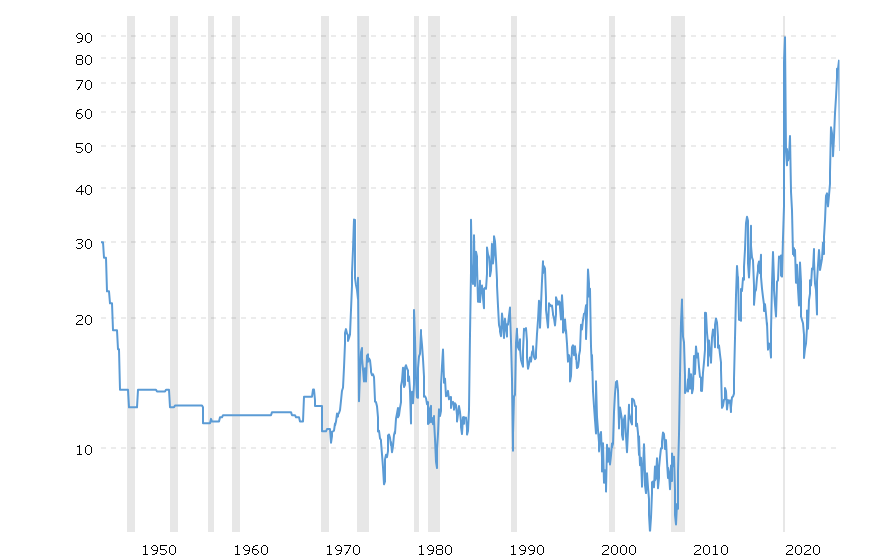
Brent crude has slid toward $116 per barrel, while Today gold rebounds toward $4,550, a divergence that has historically served as one of the clearest diagnostic signals of stagflation. Top analysts framing this as a revived safe-haven bid capture the mechanics: energy falls on demand destruction, bullion rises on inflation fear, and the combination compresses every asset class that depends on either growth or purchasing power stability.
Bitcoin is trading at $71,043 at the time of this analysis, recovering from a test of $70,000 support after ETF outflows hit $708 million in a single week on hawkish Fed positioning at 3.50%–3.75%. The stagflation crypto thesis is no longer speculative; it is playing out in real time across commodity and digital asset markets.
Discover: The best pre-launch token sales
Today Gold Surges as Oil Slips: Is This the Stagflation Tell Markets Feared?

(Source – Gold Vs Oil Ration, Macro Trends)
The Gold vs Oil ratio has spiked sharply, a move that historically coincides with regime shifts rather than routine corrections. When oil falls due to recession fear, while gold rises due to currency debasement anxiety, markets are not pricing two independent events. They are pricing a single macro condition: slowing output, sticky inflation, and collapsing confidence in central bank credibility.
The 1970s episode remains the reference point. During that decade’s stagflation cycle, gold appreciated by more than 2,000%, while oil-linked equities eventually cratered amid a demand collapse. Bloomberg analysts note a similar pattern of divergence is re-emerging, with gold’s current trajectory reflecting what they describe as structural safe-haven rotation rather than a tactical trade. The Brent decline of roughly 8% over recent weeks against gold’s concurrent push toward all-time highs near $4,550 reinforces that framing.
What makes the current setup more acute is the Fed’s position. Rates held at 3.50%–3.75% signal the central bank is not prepared to sacrifice inflation control to defend growth, the textbook stagflation trap. Fiat-denominated assets absorb both sides of that squeeze. Hard-capped assets do not. That distinction is driving the capital rotation visible in both gold’s sustained climb and the crypto market’s underlying accumulation data.
Does Bitcoin Decouple From Oil and Track Gold in a Stagflation Regime?

(Source – Zerocap)
On-chain accumulation data from Zerocap’s weekly market wrap shows massive underlying BTC buying even as ETF outflows registered surface-level bearish sentiment. That divergence — institutional paper selling while spot wallets accumulate — is a structural tell. Bitcoin is beginning to mirror gold’s behavior rather than oil’s, consolidating its Digital Gold narrative in real time.
The BTC/Gold ratio has remained remarkably stable amid recent volatility, a stark divergence from the correlation patterns that dominated 2022, when BTC tracked risk assets lower alongside equities. Fortune data confirms Bitcoin’s recovery to $71,043 is occurring in an environment where traditional risk-on assets remain under pressure, suggesting the decoupling thesis is gaining structural support rather than just narrative momentum.
Strategy, Metaplanet, and American Bitcoin Corp have all deepened BTC treasury positions through this cycle. Smart money is not treating Bitcoin as a risk-on speculative asset, it is treating it as a fixed-supply hedge against the exact macro regime now unfolding. As capital rotates toward digital scarcity, the next wave of appreciation may not stop at Bitcoin mainnet.
Discover: The best crypto to diversify your portfolio with
Bitcoin Hyper Targets Digital Gold Upside as Stagflation Pressure Mounts
As Bitcoin cements its role as a stagflation hedge, capital is beginning to flow into infrastructure plays designed to unlock its programmable potential. Enter Bitcoin Hyper, the first Bitcoin Layer 2 integrating the Solana Virtual Machine (SVM), built to deliver near-zero-cost microtransactions, DeFi applications, and tokenized real-world assets with seconds-level finality, all settled on Bitcoin L1 security.
The Bitcoin Hyper presale has raised over $28 million with daily inflows averaging approximately $50,000, placing the current token price at $0.01367750 against a total supply of 1,000,000,000 HYPER. Staking is live during the presale with an APY of approximately 41%, designed to bootstrap network security and reward early liquidity providers before exchange listings trigger Phase 2.
The BTCHyper investment case aligns closely with the stagflation thesis. Bitcoin’s fixed supply is the macro argument. Bitcoin Hyper’s SVM execution layer, using a Bitcoin Canonical Bridge for cross-chain wrapped BTC, is the infrastructure that makes that argument programmable. Analysts projecting 2026 highs between $0.10 and $0.50 are pricing in Layer-2 adoption, DeFi integrations, and the same institutional BTC tailwind that is driving mainnet accumulation right now.
Investors tired of commodity whiplash are increasingly researching the Bitcoin Hyper presale as the next growth frontier. With stagflation crypto positioning accelerating and the Digital Gold narrative finding fresh macro confirmation, the window at $0.01367750 is priced for early movers, not latecomers.
Join the Bitcoin Hyper Presale Now
Crypto is a high-risk asset class. This article is provided for informational purposes only and does not constitute investment advice. Always DYOR.
The post Stagflation 2.0: Today Gold Surges, Oil Slips, Bitcoin Hyper Fills the Gap appeared first on Cryptonews.
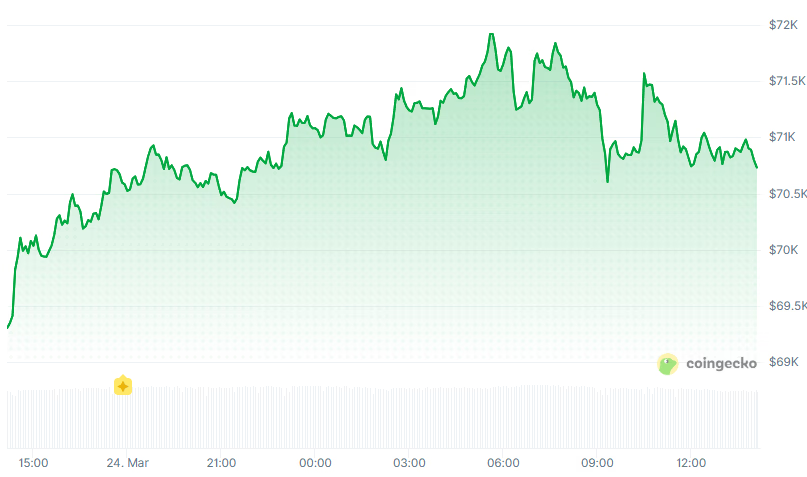
Spot BTC ETFs had $74 million in outflows on Tuesday as traders await Friday’s PCE data.
Crypto markets drifted sideways on Wednesday as spot ETF flows whipsawed between inflows and outflows, and lawmakers grilled witnesses at a hearing on tokenized securities.
Bitcoin (BTC) is trading at around $71,000, up 2% over the past 24 hours. ETH and SOL gained 3% to $2,175 and $91.5, respectively. Meanwhile, Ripple (XRP) climbed 1.5%.

Total crypto market capitalization incresed 2% to $2.51 trillion, according to Coingecko.
ETF Flows Flip Negative
Spot Bitcoin ETFs posted net outflows of $74.5 million on March 24, with Fidelity’s FBTC leading the selling at $45.3 million, followed by Bitwise’s BITB at $16.6 million. The reversal came just one day after the products attracted $167 million in net inflows, led by IBIT’s $160.8 million contribution, according to SoSoValue.
Ethereum ETFs continued to underperform, recording net outflows of $40.8 million on March 24, led by BlackRock’s ETHA with $25 million.
Despite the daily volatility, Bitcoin ETFs have logged roughly $2.5 billion in gross inflows in March, translating to about $1.6 billion in net flows, according to Bloomberg analyst Eric Balchunas.
House Holds Tokenization Hearing
The House Financial Services Committee convened on Wednesday to examine how tokenization is reshaping capital markets. Lawmakers broadly agreed that tokenized securities need the same regulatory guardrails as traditional instruments, though committee Democrats raised concerns about anonymous wallets masking foreign ownership and the “gamification” of trading, according to CoinDesk.
Big Movers
Nearly all of the Top 100 digital assets posted gains over the last 24 hours.
Today’s top gainers are SIREN and MemeCore (M), which surged 114% and 40%, respectively.
Monero (XMR) and Near Protocol (NEAR) are the biggest losers.
Around 81,000 leveraged traders were liquidated for $222 million in the past 24 hours, according to CoinGlass. Bitcoin accounted for $73 million, while ETH made up $63 million.
Friday’s PCE inflation reading is the next major macro catalyst — a print above 3% could pressure Bitcoin as rate-cut expectations evaporate, while a reading below 2.8% could spark a rally.


Franklin Templeton and Ondo are launching tokenized ETFs that trade 24/7 directly in crypto wallets, giving non-U.S. investors round-the-clock access to U.S. stocks, bonds and gold.
Summary
- Franklin Templeton and Ondo Finance announced tokenized ETFs on March 25 that can be traded directly inside crypto wallets around the clock, bypassing traditional brokerage accounts.
- The product suite spans U.S. equities, fixed income, and gold, with an initial rollout across Europe, Asia-Pacific, the Middle East, and Latin America.
- A U.S. launch remains contingent on regulatory clarity around on-chain distribution of registered funds.
Franklin Templeton is partnering with Ondo Finance to offer tokenized versions of its ETFs tradeable 24/7 directly from crypto wallets, the firm announced on Wednesday in a move that sidesteps the brokerage accounts and fixed trading hours that have defined fund investing for decades. According to Bloomberg, the products span U.S. equities, fixed income, and gold, with an initial rollout targeted at investors in Europe, Asia-Pacific, the Middle East, and Latin America.
Franklin Templeton, which manages more than $1.6 trillion in assets, said the U.S. market launch will depend on further regulatory clarity around how third parties can distribute registered funds on-chain. The asset manager has been steadily building its on-chain infrastructure since 2021, when it launched the world’s first blockchain-integrated U.S.-registered mutual fund, and has since expanded to networks including Stellar, Polygon, and Arbitrum. In a previous crypto.news story, Sandy Kaul, Head of Innovation at Franklin Templeton, stated that tokenized digital wallets will eventually hold the “totality” of an individual’s financial life — a thesis this latest product launch moves materially closer to reality.
Ondo Finance, for its part, brings a distribution network that has scaled rapidly. The platform crossed $2.5 billion in total value locked and surpassed $12 billion in cumulative trading volume since launching in September 2025, listing more than 250 tokenized stocks and ETFs across Ethereum, Solana, and BNB Chain. A previous crypto.news story detailed how Ondo’s Nexus initiative already expanded tokenized Treasury backing to include Franklin Templeton alongside BlackRock and PayPal.
The choice to prioritize non-U.S. markets first reflects both the regulatory landscape and existing infrastructure. Ondo secured regulatory passporting from Liechtenstein authorities, giving it access to over 30 European Economic Area countries. That framework is already active — in February 2026, Ondo partnered with Blockchain.com to make 200+ tokenized U.S. stocks and ETFs available via the Blockchain.com DeFi wallet to eligible EEA users. Binance and MetaMask have also integrated Ondo’s tokenized offerings, with Binance reviving tokenized stock trading through its Alpha program and MetaMask enabling eligible non-U.S. users to access Ondo assets from mobile wallets.
Franklin Templeton’s latest move lands against a backdrop of accelerating institutional tokenization. The tokenized real-world asset market has exceeded $22 billion globally, with tokenized Treasuries alone surpassing $3 billion in total value locked by 2024. CEO Jenny Johnson has stated that 2026 would see increased institutional investment flowing into tokenized vehicles beyond simple Bitcoin holdings.
The products are designed to give investors outside traditional brokerage ecosystems — particularly in emerging markets — fractional, around-the-clock access to U.S. asset classes that have historically required intermediaries and banking infrastructure. In a previous crypto.news story, Franklin Templeton’s on-chain money market fund on Arbitrum was already laying the groundwork for this kind of multi-chain distribution. Wednesday’s announcement represents the clearest step yet toward making that vision a commercial reality.
Crypto World
Monument Bank and Midnight Foundation Launch UK’s First Retail Deposit Tokenization Program
TLDR:
- Monument Bank targets £250M in tokenized deposits on Midnight’s privacy-enhancing public blockchain network.
- Deposits remain fully backed, redeemable in GBP, and protected under the UK’s Financial Services Compensation Scheme.
- Phase two opens retail access to private equity, commodity funds, and structured products via the Monument app.
- Phase three introduces Lombard-style lending, letting customers borrow against investments without liquidating their assets.
Monument Bank is set to become the first UK-regulated bank to tokenize retail customer deposits on a public blockchain. The bank, regulated by the Bank of England, manages roughly £7 billion in deposits.
Working with the Midnight Foundation, Monument plans to bring up to £250 million in deposits onto the Midnight network.
The program targets mass-affluent customers seeking access to modern financial tools while retaining full regulatory protection under existing UK frameworks.
Tokenized Deposits Open New Doors for Retail Banking Customers
Monument’s approach centers on representing customer savings as digital tokens on Midnight’s privacy-enhancing blockchain.
Each token corresponds one-to-one with funds held at the bank, functioning as a digital mirror of a traditional deposit. Customers will earn interest just as they would with a standard savings account.
The deposits remain fully backed by Monument and redeemable in pounds sterling. They also stay protected under the Financial Services Compensation Scheme, preserving the same safeguards customers already rely on.
Blockchain infrastructure operates behind the scenes, requiring no direct handling of digital assets by the customer.
Midnight’s architecture ensures that transaction data stays shielded and accessible only to Monument Bank and its customers.
This privacy-focused design addresses one of the central challenges facing blockchain adoption in regulated finance. It allows the bank to operate on a permissionless network without exposing sensitive financial information.
Fahmi Syed, President of the Midnight Foundation, addressed this directly. “Financial institutions around the world are exploring how blockchain infrastructure can support regulated financial products, but one of the persistent challenges has been balancing transparency with the privacy requirements of modern banking,” he said.
Monument’s model demonstrates how a regulated bank can bring traditional products on-chain while staying within compliance and consumer protection frameworks.
Monument’s Founder, Mintoo Bhandari, framed the move as a continuation of the bank’s core mission. “Monument was founded on the promise of bringing the most innovative and valuable financial offerings, safely and securely, to the often overlooked and underserved mass-affluent community in the UK and beyond,” he said.
With over 100,000 customers, the bank is embedding these capabilities directly into the consumer experience, setting this initiative apart from institutional-only tokenization efforts seen elsewhere.
Three-Phase Rollout Targets Investments and Lending Access
Beyond deposits, Monument has outlined a broader three-phase roadmap to expand what customers can do within its platform.
The second phase will introduce tokenized real-world asset products managed by global asset managers, accessible directly through the Monument app.
Customers will gain exposure to private equity, commodity funds, and structured products without buying or managing digital assets themselves.
These asset classes have historically been available only to ultra-high-net-worth individuals and institutional investors.
Monument’s structure is designed to change that by delivering institutional-grade products through a retail banking interface. The blockchain infrastructure running underneath remains invisible to the end user.
The third phase will introduce Lombard-style lending, allowing customers to borrow against their investments without selling them. Monument CEO Ian Rand noted the broader ambition behind this rollout.
“By combining these innovative capabilities with our exceptional client-centric service model, and the protections provided by the regulated banking framework of the UK, we are excited to deliver services that help our clients manage, and build, their prosperity,” he said.
This model has long been a feature of private banking services, offering more cost-effective credit access than standard borrowing. Bringing it to mass-affluent customers marks a notable shift in how consumer lending could work.
Daniel Fozzati, Founding Partner of The Building Blocks, called it “a world first by leveraging the UK’s innovation ecosystem.”
Research from Boston Consulting Group estimates tokenized financial assets could reach between $4 trillion and $16 trillion by 2030, and Monument’s initiative positions it early in that market.
Key takeaways
-
Argentina’s nationwide ban on Polymarket shows that rapid global growth does not shield platforms from local regulation, especially when their core activity resembles unlicensed gambling.
-
Authorities applied an “economic reality” approach, focusing on user behavior rather than the technology, and concluded that staking money on uncertain outcomes aligns with traditional definitions of gambling.
-
Weak identity and age verification measures were a major concern, with regulators highlighting the risks of underage participation and inadequate user safeguards as justification for enforcement.
-
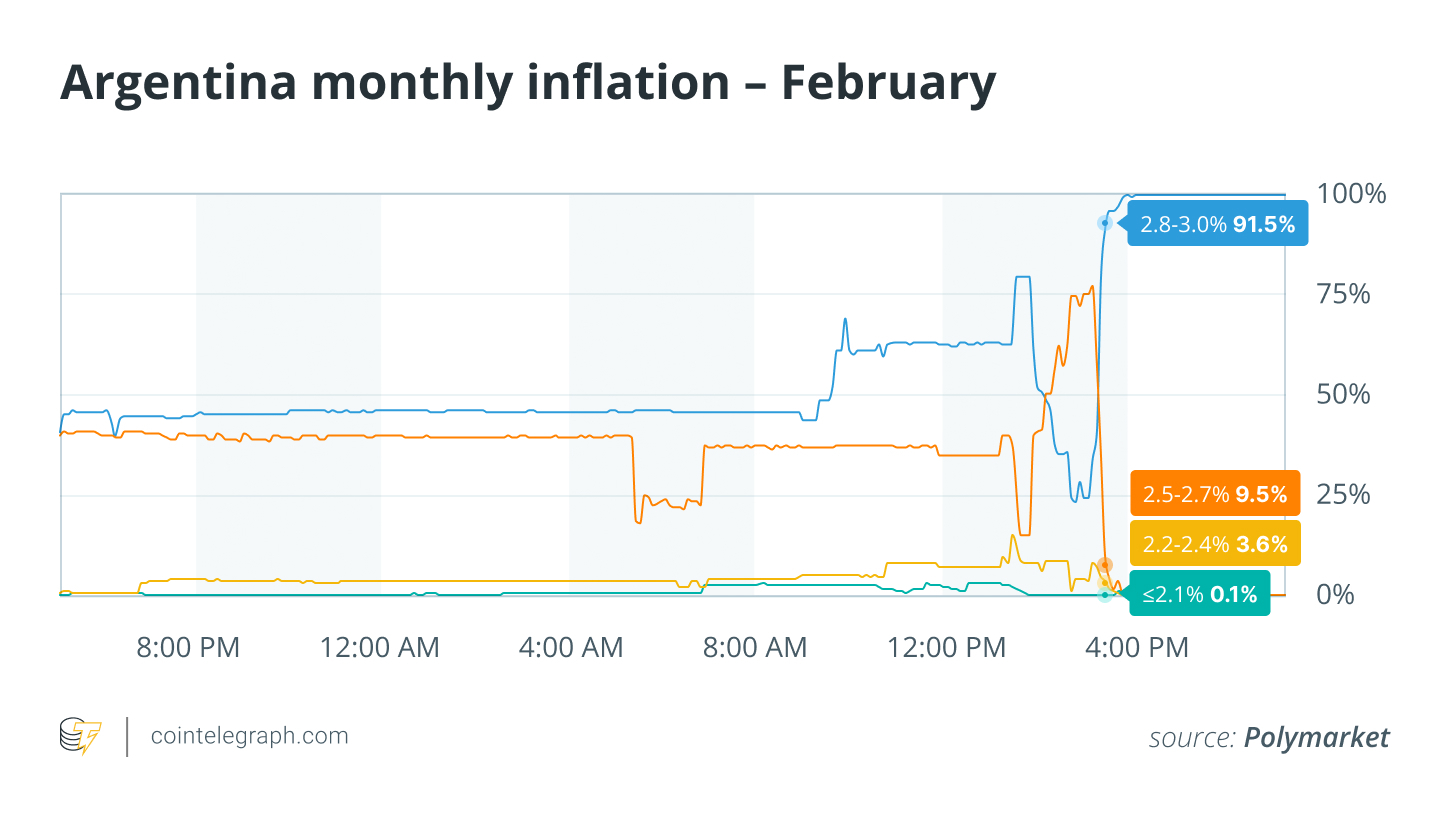
Polymarket’s inflation-related markets intensified scrutiny in Argentina, raising fears about insider information, the monetization of sensitive economic data and potential influence on public perception.
Prediction markets are gaining popularity worldwide. People are increasingly using them as high-stakes forecasting tools for topics ranging from politics to the economy.
But in Argentina, that growth has hit a wall. A Buenos Aires court has mandated a countrywide block on Polymarket, arguing that the platform operates as an unlicensed gambling site with insufficient safeguards for its users.
This crackdown underscores a broader global debate over whether prediction markets should be treated as information tools, financial instruments or forms of digital betting.
This article explores why Argentina has blocked Polymarket despite its global growth, examining concerns over unauthorized gambling, weak user protections and inflation-linked bets. It discusses how regulators are increasingly treating prediction markets based on their real-world economic activity rather than their crypto-based structure.
A rapidly expanding platform meets firm legal resistance
Polymarket has established itself as one of the leading crypto-powered prediction markets globally. Participants wager on a wide range of future events, from political elections to macroeconomic indicators, using stablecoins as the medium.
Its swift rise stems from several key drivers:
-
Growing fascination with instantaneous, market-driven forecasting
-
Heightened engagement during high-profile international events
-
The unique appeal of turning knowledge and insights into tradable financial stakes
Nevertheless, this momentum has drawn increased regulatory scrutiny. In Argentina, that scrutiny has escalated into decisive action.
Did you know? Prediction markets date back centuries. In the 1500s, Europeans placed bets on papal elections, showing that wagering on future events long predates modern crypto-based platforms.
Enforcement measures taken by Argentina
A court in Buenos Aires mandated that the national communications authority, Ente Nacional de Comunicaciones (ENACOM), enforce a ban on Polymarket and related domains throughout the country. The directive includes:
-
Removing or restricting the platform’s applications in the Google and Apple app stores for users in Argentina
-
Implementing blocks through internet service providers nationwide
The proceedings originated from a formal complaint lodged by Lotería de la Ciudad de Buenos Aires (LOTBA), the Buenos Aires City Lottery authority, with prosecution led by a dedicated gambling crimes office.
Although the ruling came from a municipal court, its enforcement effectively spans the nation, prompting debate over how localized decisions can impose sweeping digital barriers.
Regulators’ rationale for deeming Polymarket unlawful
The core contention is straightforward. When individuals stake real money on uncertain future outcomes, the activity constitutes gambling.
Argentine officials have largely disregarded the underlying blockchain and cryptocurrency elements, instead adopting a practical “economic substance” approach that examines actual user behavior.
Under this view:
-
Participants commit funds as stakes
-
Outcomes remain uncertain
-
Payouts depend directly on event resolution
This framework closely matches conventional legal definitions of gambling. Since Polymarket allegedly operates without the required local licensing or approval, authorities contend that it violates national gambling regulations.
Concerns about identity verification and age controls
A primary focus of the authorities’ critique centers on deficiencies in user safeguards. Regulators argued that Polymarket did not enforce adequate:
Such shortcomings create risks that:
In regulatory environments, these protective gaps are enough to justify intervention, regardless of any cryptocurrency involvement.
Did you know? The US once experimented with political futures markets at the University of Iowa, where participants traded real-money contracts on election outcomes as part of a university-run academic research project.
Heightened scrutiny over inflation-related markets

Argentina’s persistent economic challenges, particularly high inflation, make economic indicators politically and socially sensitive. Polymarket featured active markets predicting the country’s official inflation statistics. At times, these market prices aligned remarkably closely with the eventual official releases.
This alignment sparked concerns, including:
-
Possible access to nonpublic or insider information among participants
-
The commercialization of sensitive national economic data
-
The potential for market-driven distortions
Given the significance of inflation in Argentina, this further intensified regulatory alarm.
How global expansion fuels local regulatory pushback
Polymarket’s international prominence is precisely what makes it impossible for regulators to ignore. As the platform expands:
-
User participation surges
-
Transaction volumes and capital inflows increase
-
Public visibility and political attention intensify
An initiative once seen as an innovative venture now appears to be an unregulated betting system that operates outside oversight. In this dynamic, the platform’s rapid growth brought it into the regulatory spotlight.
A growing pattern of global restrictions
Argentina’s measures do not stand alone. Comparable regulatory actions have taken shape in various regions:
-
Warnings, limitations or outright bans in select European markets
-
Regulatory interventions across parts of Latin America
-
Ongoing legal and compliance discussions in the US
This pattern signals a clear regulatory shift. Scrutiny is moving away from technical architecture and toward functional reality. When platform activities resemble gambling or unregulated financial speculation, authorities are more likely to apply corresponding controls.
The enduring dilemma: Gambling versus financial innovation
Prediction markets inhabit a persistent regulatory gray area. Advocates maintain that they deliver substantial value by:
-
Enhancing the discovery and aggregation of dispersed information
-
Offering immediate, market-based reflections of collective expectations
-
Frequently surpassing the accuracy of conventional polling
Opponents counter that they promote:
-
Purely speculative wagering
-
Inadequate protections for participants
-
Vulnerability to insider advantages or market manipulation
This inherent uncertainty complicates classification and makes it easier for authorities to apply preexisting gambling statutes.
Factors driving greater caution in Latin America
Regions such as Latin America exhibit particular regulatory vigilance due to:
-
Pronounced economic instability and volatility
-
Acute sensitivity to financial and macroeconomic data
-
A strong focus on consumer safeguards
-
Lower tolerance for unlicensed financial operations
In such contexts, platforms involving real-money stakes, even when presented as predictive “markets,” are more likely to face restrictions.
Did you know? Decentralized prediction platforms often use stablecoins instead of more volatile cryptocurrencies to make outcomes easier to calculate and reduce exposure to price fluctuations during trades.
The striking paradox: a municipal ruling with nationwide effect
Issued by a Buenos Aires city court, the order nonetheless resulted in a nationwide block on Polymarket. This illustrates the realities of digital platforms:
-
Their services transcend borders
-
Enforcement occurs locally
-
Consequences extend nationally
It also explains why users quickly turned to tools like virtual private networks (VPNs), highlighting the practical limits of territorial jurisdiction on an interconnected internet.
Implications for prediction markets going forward
The Polymarket episode in Argentina highlights a critical lesson: Expansion alone does not ensure legitimacy or regulatory tolerance. As these platforms continue to scale, they will face:
-
Increasing regulatory scrutiny
-
Growing demands for jurisdictional compliance
-
Stronger requirements for participant protections
Platforms operating in legal gray areas may ultimately have to choose between formal regulation and persistent barriers.
Cointelegraph maintains full editorial independence. The selection, commissioning and publication of Features and Magazine content are not influenced by advertisers, partners or commercial relationships.
BitGo and ZKsync are teaming up to offer banks a full-stack infrastructure for tokenized deposits, as financial institutions look to bring traditional money onto blockchain rails without stepping outside regulatory boundaries.
The effort combines BitGo’s institutional custody and wallet services with ZKsync’s Prividium, a permissioned, privacy-preserving blockchain designed for regulated entities. The joint offering aims to enable banks to issue, transfer, and settle tokenized deposits while maintaining compliance and control.
The move reflects a growing trend among crypto infrastructure firms to court banks by packaging blockchain capabilities into compliance-friendly systems—sidestepping the need for institutions to build and manage complex onchain architecture themselves.
Tokenized deposits have emerged as a new trend for banks experimenting with blockchain-based payments. Unlike stablecoins, which typically sit outside the traditional banking system, tokenized deposits keep funds within it, potentially enabling programmable transactions without altering existing regulatory frameworks.
ZKsync creator Matter Labs is positioning its Prividium network as a bridge between public blockchain innovation and institutional requirements such as privacy and permissioning. Matter Labs CEO Alex Gluchowski said in a press release that tokenized deposits represent “how banks bring money onchain without leaving the regulatory system.”
The companies said the combined stack is already being tested with regulated financial institutions, with broader production rollout targeted for later this year.
Read more: BitGo, Susquehanna Crypto offering institutional OTC access to prediction markets
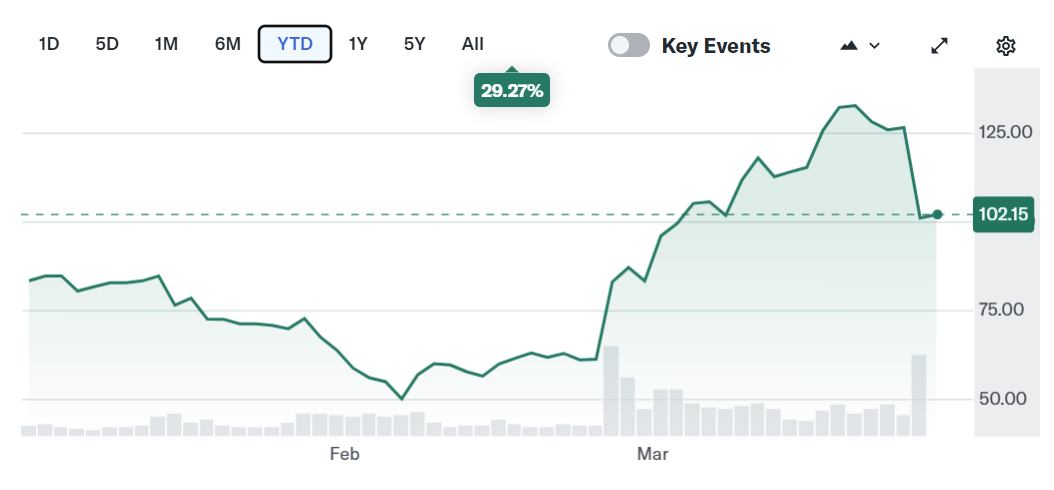
Circle’s shares sell-off on Tuesday may have been overdone as investors failed to see that the stablecoin issuer’s core business model remains unaffected by the proposed CLARITY Act, analysts at Bernstein said on Wednesday.
In a note to clients, Bernstein analysts Gautam Chhugani, Mahika Sapra, Sanskar Chindalia and Harsh Misra said markets are conflating “who earns yield” with “who distributes yield.”
“Circle earns. Coinbase distributes,” the analysts wrote, noting that the draft legislation primarily targets the distribution of yield to users — not the underlying reserve income earned by issuers like Circle.
According to the latest draft, the CLARITY Act would prohibit platforms from offering yield on passive stablecoin balances or products deemed “economically equivalent” to interest. However, the proposal leaves room for activity-based rewards tied to user engagement, such as trading or payments.
“The stablecoin reward carve-outs could still allow distribution of rewards linked to user activity tiering,” the analysts said, adding that “the market knee-jerk reaction may not be calibrated.”
Circle’s business model relies on earning income from reserves backing USDC (USDC), which are primarily invested in short-term US Treasurys. Bernstein estimates this reserve income reached about $2.6 billion in 2025.
Circle shares fell roughly 20% on Tuesday following the legislative update, despite having gained more than 160% from their February lows. In mid-day trading on Wednesday, CRCL shares had clawed back some of the previous day’s decline, trading up more than 3.5% at last look.

Related: Crypto investor sentiment will rise once CLARITY Act is passed: Bessent
Bernstein reiterates bullish outlook on Circle as USDC adoption accelerates
This isn’t Bernstein’s first bullish call on Circle this month. Earlier in March, analysts reiterated their “Outperform” rating on the stock, setting a $190 price target, nearly double current levels.
The latest note reinforces that view, highlighting strong momentum in USD Coin (USDC). Its circulating supply has grown to $80 billion from roughly $30 billion over the past two years, driven by demand for trading, collateral, payments and global access to US dollars.
Bernstein also pointed to rising onchain transaction volumes as evidence of USDC’s expanding role across crypto markets and cross-border finance.
USDC is currently the second-largest US dollar-denominated stablecoin, behind Tether’s USDt (USDT).

Related: Deloitte, Stablecorp plan stablecoin infrastructure for Canadian institutions
Bitcoin has again pressed up against a formidable wall near the $72,000 level, with bulls showing persistent demand despite ongoing macro and geopolitical uncertainty. Analysts say a sustained move above that resistance is required to renew a broader up leg toward the $80,000s, while traders watch for on‑chain signals that could confirm genuine accumulation rather than a mere short-term bounce. Notably, market participants have faced a backdrop of mixed sentiment as growth and risk assets digest recent shocks.
Market activity in March showed notable exchange outflows for BTC, a sign some observers interpret as cautious accumulation rather than immediate selling pressure. Analysts highlighted that while this flow does not yet establish a definitive uptrend, it underscores a shift in demand from sellers at lower price levels. That dynamic, combined with a valuation argument some investors are making, suggests a potential foundation for a longer-term rally if key levels are cleared. In that context, some observers point to the Yardstick metric as a narrative thread worth watching: in February, Yardstick readings dipped below the bear-market low seen in 2022, prompting discussions about whether BTC is entering a deep-value phase despite the ongoing price action.
Against that backdrop, traders and researchers are looking at the top few coins for clues about broader market health. The emphasis remains on whether risk appetite can reassert itself after recent volatility and whether the cryptocurrency complex can sustain a constructive bid at resistance levels that have repeatedly resisted breakthrough.
Key takeaways
- Bitcoin (BTC): The price action is forming an bullish ascending triangle, but a decisive move above $74,508 is needed to signal a fresh leg higher toward $84,000. A break below the current support line could expose BTC to a slide toward a $60,000–$62,500 zone.
- Ether (ETH): ETH bounced from the 50-day simple moving average and sits near a balance point. A sustained move above $2,400 would indicate the start of a new uptrend, with potential targets near $2,600 and then $3,050. Conversely, slipping back below the 50-day SMA would tilt the outlook toward $1,900–$1,750 in a deeper pullback.
- BNB (BNB): The pair remains range-bound roughly between $570 and $687 as buyers test higher levels. A breakout above $687 could target $730 and then $790, while a break below $600 risks a drop toward $570.
- XRP (XRP): Bears are defending the moving averages, but a sustained breakout above them could open a path to $1.61 and the downtrend line. A breakdown below $1.27 would reframe the setup toward the lower end of its channel.
- Solana (SOL): SOL has been confined between the 50-day moving average near $86 and resistance near $95. A breakout above $95 could lift prices toward $117, while a move below the 50-day SMA could drag the pair back into a $76–$95 range.
Bitcoin price outlook: a pivotal test above resistance
BTC is tracing an ascending triangle pattern on the daily chart, a classic setup that traders watch for a bullish breakout. The 20-day exponential moving average sits around $70,303, with the RSI hovering near midpoint, signaling a lack of a clear cross‑currents favoring either side in the near term. For the bulls to reclaim upside momentum, a sustained push above the $74,508 barrier would be a strong signal, potentially paving the way for a run toward the $84,000 mark as early as the next few sessions.
On the flip side, a break below the defining support line could tilt sentiment toward a deeper retracement, potentially drawing BTC down to the $60,000s. The balance between risk and opportunity remains delicate, as fundamental concerns mingle with price action in a market still digesting shocks from global tensions and evolving regulatory narratives.
Ether price compass: eyes on the $2,400 level
ETH has managed a modest rebound after testing lower levels, with the price turning higher after testing the 50-day SMA. The current setup suggests a wavering balance between supply and demand. A clear move above $2,400 would be a meaningful bullish cue, opening the door to a faster ascent toward $2,600 and ultimately toward $3,050 if momentum builds.
However, if selling pressure intensifies and ETH fails to sustain above the midline, the market could re-enter a softer phase. A drop through the $2,000–$1,900 zone would likely recalibrate expectations toward deeper support near $1,750, challenging any near-term upside.
BNB in a price‑range limbo: will it break out?
BNB has been clinging to a narrow corridor between roughly $570 and $687. The chart suggests a tepid, consolidative tone with the 20-day EMA flattening and the RSI hovering around the midpoint. A sustained climb above $687 would be a bullish signal, potentially targeting $730 and then $790 as the next milestones. Conversely, a breakdown below $600 would shift the balance toward the $570 level and could invite a further retreat toward the $500s if selling accelerates.
XRP: near-term path depends on how it handles moving averages
The XRP setup resembles a tug-of-war around the moving averages, with bulls pressing to extend gains beyond those technical levels. A sustained advance above these averages could push the price toward the $1.61 resistance level and the associated downtrend line, a zone that would likely attract fresh selling pressure from bears. If the price slips below $1.27, the downside could extend toward the channel’s lower boundary, where buyers are expected to re-enter.
Solana: a cautious bounce within a defined band
SOL has traded within a modest corridor, with the 50-day SMA near $86 acting as a critical line in the sand. A move past $95 could unleash a faster ascent toward $117, while failure to sustain the breakout would renew the range-bound dynamic between $76 and $95. The pattern suggests buyers remain tentative but capable of seizing control if they push through the overhead resistance.
Other notable coins in focus
Beyond the big three, several marquee tokens are reflecting similar themes of consolidation and selective breakouts. Cardano remains confined within a descending channel but shows attempts to stabilize near $0.25, while Cardano’s recovery would hinge on a decisive close above the moving averages to target the downtrend line and potential bullish extensions toward $0.39 and $0.44. Bitcoin Cash has inched above the 20-day EMA but faces a challenge to sustain momentum above the 50-day moving average; a move above that level could spark a relief rally toward $520, while a breakdown could bring the bears back into the frame. Chainlink has been tracing an ascending channel, with a potential breakout signaling a broader recovery toward the $11.61 hurdle and the $14.98 target if buyers gain the upper hand.
In aggregate, the market is balancing on a knife-edge: sentiment remains reactive to macro headlines while on-chain signals hint at underlying demand that could underpin a broader recovery if key resistance levels give way. The coming sessions will be telling as traders weigh whether this is a temporary pause within a longer ascent or a setup for a renewed phase of range-bound churn before the next decisive move.
For investors, the critical takeaway is to monitor the reaction at the major inflection points: $72,000 for BTC, $2,400 for ETH, and the nearby resistance bands across the top altcoins. Breakouts above those levels could reframe the risk/reward, while sustained closures below critical supports may extend the current consolidation. In a market that has proven prone to sudden shifts, preparation and disciplined risk management remain essential as the narrative around price discovery continues to evolve.
What to watch next: as on-chain signals, exchange flow data, and macro cues continue to evolve, traders will be watching for clear confirmation of breakouts or breakdowns at the levels highlighted above. The next few weeks could help determine whether this period is a temporary pause within a larger bull phase or a precursor to deeper consolidation across the market.

FIFA facing legal action over extortionate ticket prices

Miami Open: Elena Rybakina battles past Jessica Pegula to move into semis

Apple Can Create Smaller On-Device AI Models From Google’s Gemini


-
 Crypto World5 days ago
NIO (NIO) Stock Plunges 6.5% as Shelf Registration Sparks Dilution Worries
-

 Fashion5 days ago
Weekend Open Thread: Adidas – Corporette.com
-

 Politics5 days ago
Jenni Murray, Long-Serving Woman’s Hour Presenter, Dies Aged 75
-
 NewsBeat11 hours ago
Manchester United reach agreement with Casemiro over contract clause amid transfer speculation
-

 Crypto World4 days ago
Best Crypto to Buy Now: Strategy Just Spent $1.57 Billion on Bitcoin During Fear While Early Investors Quietly Enter Pepeto for 150x Potential
-

 Crypto World4 days ago
Bitcoin Price News: Bhutan Sells $72 Million in BTC Under Fiscal Pressure, but the Smart Money Entering Pepeto Sees What the Market Does Not
-

 Tech6 days ago
inKONBINI Lets You Spend Summer Days Behind the Register
-

 Sports2 days ago
Remo Stars and Kano Pillars Strengthen Survival Hopes in NPFL
-

 Politics6 days ago
Gender equality discussions at UN face pushbacks and US resistance
-

 Business3 days ago
No Winner in March 21 Drawing as Prize Rolls to $133 Million for Next
-

 Sports2 days ago
Gary Kirsten Accuses Pakistan Cricket Board Of ‘Interference’, Mohsin Naqvi Responds
-

 Tech3 days ago
Give Your Phone a Huge (and Free) Upgrade by Switching to Another Keyboard
-

 Sports5 days ago
2026 Kentucky Derby horses, odds, futures, preview, date: Expert who nailed 12 Derby-Oaks Doubles enters picks
-
Sports7 days ago
Vikings Free Agency Enters Phase 2 with Key Questions
-

 Tech3 days ago
AI enters the chat: New Seattle dating app relies on tech to facilitate meaningful human connections
-

 News Videos7 days ago
Amazing Cardboard Gadget That Turns Paper Into Money #techgadgets #ytshorts
-

 Politics6 days ago
Scotland’s rejection of assisted dying is a victory for humanity
-

 Tech7 days ago
Corsair K100 Air Wireless Mechanical RGB Keyboard Packs Full Power Into a Slim Frame
-

 Business6 days ago
DLocal: Entering 2026 At Escape Velocity
-
Business5 days ago
Columbia Sportswear enters $500 million credit agreement with JPMorgan Chase
You must be logged in to post a comment Login