
Crypto World
Could Bitcoin Ever Break the 21 Million Cap? Adam Back Says It’s a Trap

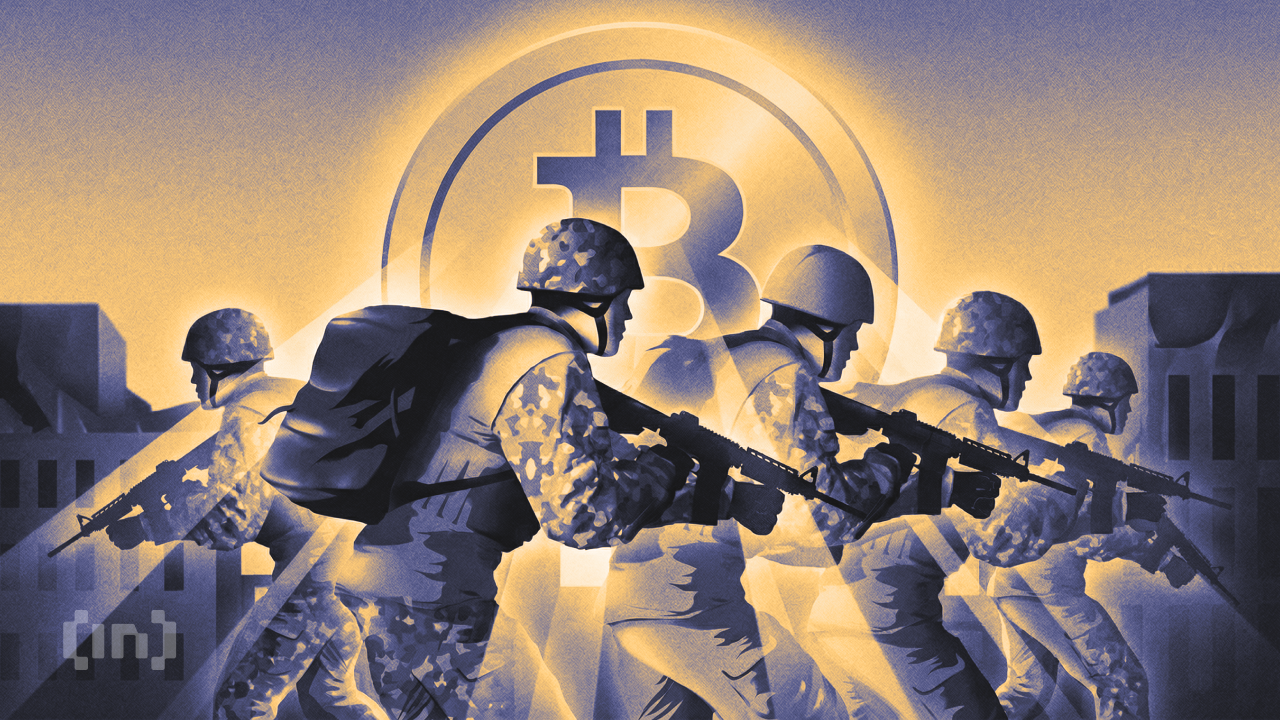

A fresh fight over Bitcoin’s 21 million supply cap has pulled Adam Back and Peter Todd onto opposite sides, after Todd’s case for a permanent block reward resurfaced this week.
Todd wants a small, never-ending issuance to keep paying miners once the last new Bitcoin arrives around 2140. Back reads the argument as a trap dressed up as engineering.
Why Peter Todd Says Bitcoin Needs a Permanent Block Reward
Bitcoin pays miners in two ways. Block subsidies mint new coins, and transaction fees ride along with each block. However, the subsidy is roughly halved every four years, and it hits zero around 2140. Fees alone must carry security after that.
Todd argues fee revenue swings too wildly to hold the chain together. Miners would be incentivized to reorganize the chain and re-mine fat-fee blocks rather than build forward. A fixed reward, he says, kills that pull.
His case leans on lost coins. Todd models supply against a loss rate and finds it settles at a ceiling, because coins vanish as fast as fresh ones appear. Therefore, he frames tail emission as a stabilizer, not inflation.
He has pointed to Monero, which already runs a small permanent reward. Its apparent inflation rate keeps sliding toward zero. The Bitcoin++ conference account resurfaced his talk on the topic this week, which reopened the argument.
The timing matters less than the mechanism. Miners currently earn 3.125 bitcoin per block, and close to 30 more halvings sit ahead. Each one thins the subsidy further while fees stay lumpy and unpredictable.
Adam Back Warns of False Narratives
Back rejects the framing outright. Meanwhile, he points to BIP-110, the contentious 2026 soft fork that tried to filter non-payment data out of blocks, as the model for how these campaigns get sold.
That pattern has a recent scoreboard. The failed BIP-110 fork died after two blocks this month, with miner support near 2.53% against a 55% bar. Back had predicted the stall weeks earlier, and backers now chase a breakaway coin instead.
Bitcoin commentator Trey Sellers made the parallel explicit, writing that a supply-schedule fork would fail as hard as BIP-110, if not harder. Michael Saylor had raised a related worry, warning about protocol neutrality whenever consensus rules bend to one camp.
Still, the security question survives the politics. Bitcoin Knots developers spent August claiming the network faces attack, while miner incentive disputes drew in former Ripple CTO David Schwartz. In contrast to those fights, this one carries no deadline.
One difference cuts against Todd. BIP-110 asked for a soft fork, which needs only miner cooperation. Raising the cap demands a hard fork, and every holder would have to accept it.
Fees may yet fund the chain on their own. Nobody alive today will see that test settled.
The post Could Bitcoin Ever Break the 21 Million Cap? Adam Back Says It’s a Trap appeared first on BeInCrypto.


Bank Leumi will offer Bitcoin (BTC), Ethereum (ETH), and Solana (SOL) trading to roughly 2.5 million retail customers from early 2027 through a partnership with Galaxy Digital (GLXY), the two companies said on August 14, in what they describe as the first digital asset trading service offered by a bank in Israel.
Customers of Leumi and PEPPER (its mobile digital banking arm) will trade inside a dedicated, secured section of Leumi Trade, the bank’s capital markets application.
GalaxyOne Institutional supplies the trading platform, and custody runs on Galaxy’s custody infrastructure platform, formerly known as GK8.
“This initiative represents a significant pillar of the bank’s innovation strategy and enables us to provide customers with simple, secure, and regulated access to trading digital assets,” said Maya Ravia, Head of Strategy at Bank Leumi.
Regulator Blocked the 2022 Attempt
The plan is subject to approval by the Bank of Israel. Leumi and PEPPER announced a partnership with Paxos to offer BTC and ETH trading back in 2022, and that service never reached customers after the Bank of Israel declined to approve it.
Israeli rules have shifted since. The Bank of Israel’s Banking Supervision Department removed the automatic delay on deposits originating from crypto transactions above NIS 100,000 in mid-July.
Moreover, according to Chainalysis, Israel received roughly $22 billion in on-chain value in the 12 months to June 2025.
The Capital Market Authority has separately circulated a draft that would let licensed companies offer trading in the 50 leading digital assets, subject to a $500 million minimum market capitalization, limits on holder concentration, and registration in recognized jurisdictions, including the European Union and New York State.
Custody Traces Back to Celsius
Galaxy’s custody technology reached it through a bankruptcy. Celsius paid $115 million for GK8, a Tel Aviv custody firm, and Galaxy won the platform in the insolvency proceedings, adding about 40 staff and a Tel Aviv office. GK8 co-founder Lior Lamesh now runs Galaxy Israel.
“The future of finance will run on open, programmable rails, and we believe the banks that move first will define the era that follows,” stated Lior Lamesh, Chief Executive Officer of Galaxy Israel.
The post Bank Leumi Taps Galaxy to Launch Israel’s First Bank Crypto Trading in Early 2027 appeared first on CryptoPotato.
The additions come as Bybit’s TradFi perpetuals lineup grows to more than 200 products spanning equities, ETFs, commodities, indices and private companies.
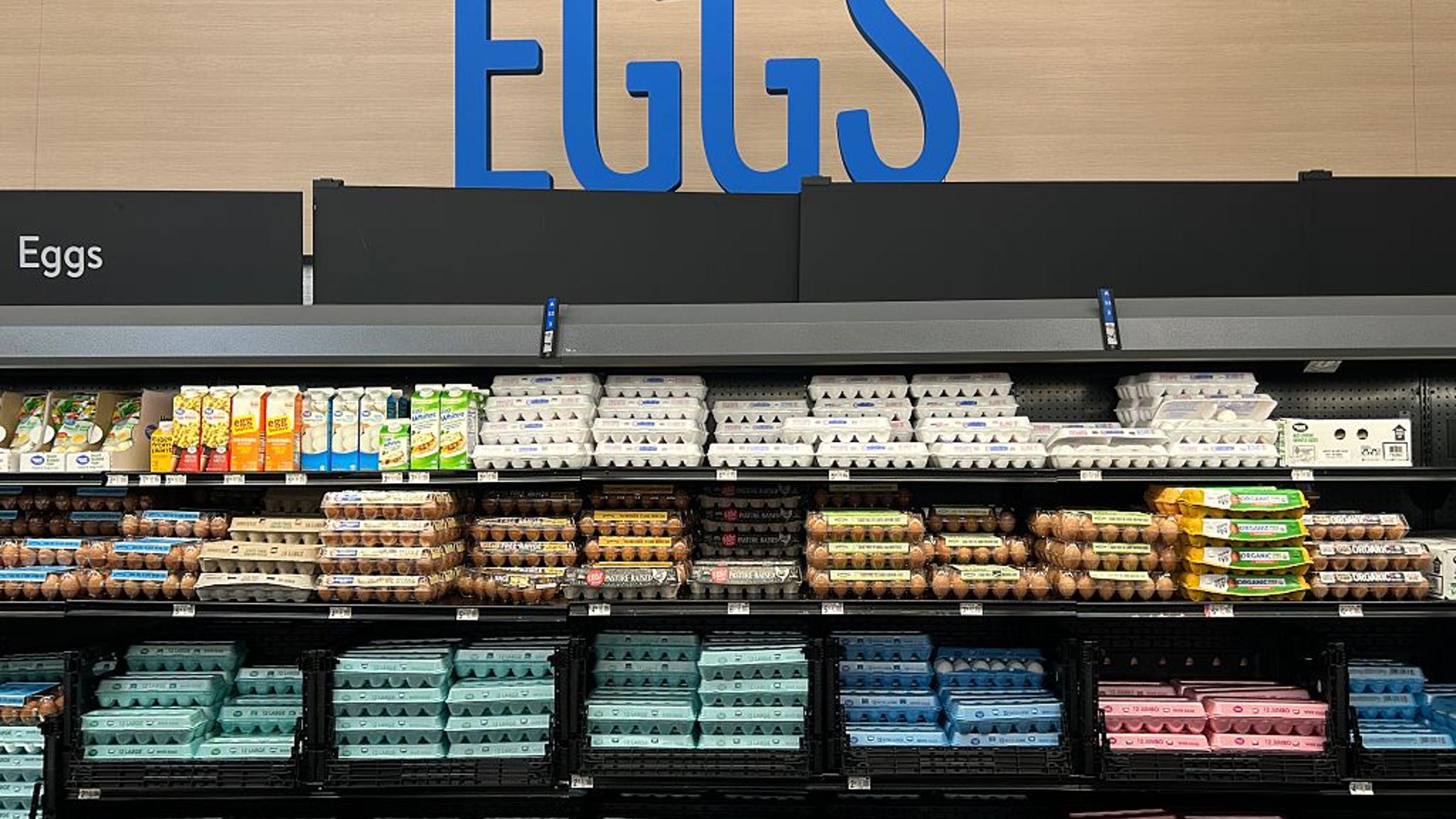
“Illness usually occurs within 12 to 72 hours after eating food that is contaminated with Salmonella, and the symptoms usually last four to seven days,” its website said, noting that children under 5, the elderly, and the immunocompromised were more likely to have severe reactions.
The U.S. Centers for Disease Control and Prevention (CDC) said that eggs contaminated with Salmonella Enteritidis had infected at least 98 people across 17 states. No deaths have been reported, but 26 people have been hospitalized.
What to know about the salmonella egg recall and how to stay safe
The FDA’s upgraded risk classification comes three weeks after Midwest Poultry Services initiated a recall of the approximately 19 million affected eggs, according to a company announcement shared on the FDA website July 22.
The eggs were produced at farms in Texas between June 6 and July 3, and the cartons show sell-by or best-by dates between July 20, 2026, and Aug. 17, 2026. They were distributed to Arkansas, Louisiana, Mississippi, New Mexico, Oklahoma, and Texas.
Ethereum remains trapped in a difficult consolidation phase, with weak liquidity and subdued trading activity preventing either side from establishing control. While ETH is holding near $1.88K, the latest short-term structural break introduces additional downside risk.
Ethereum Price Analysis: The Daily Chart
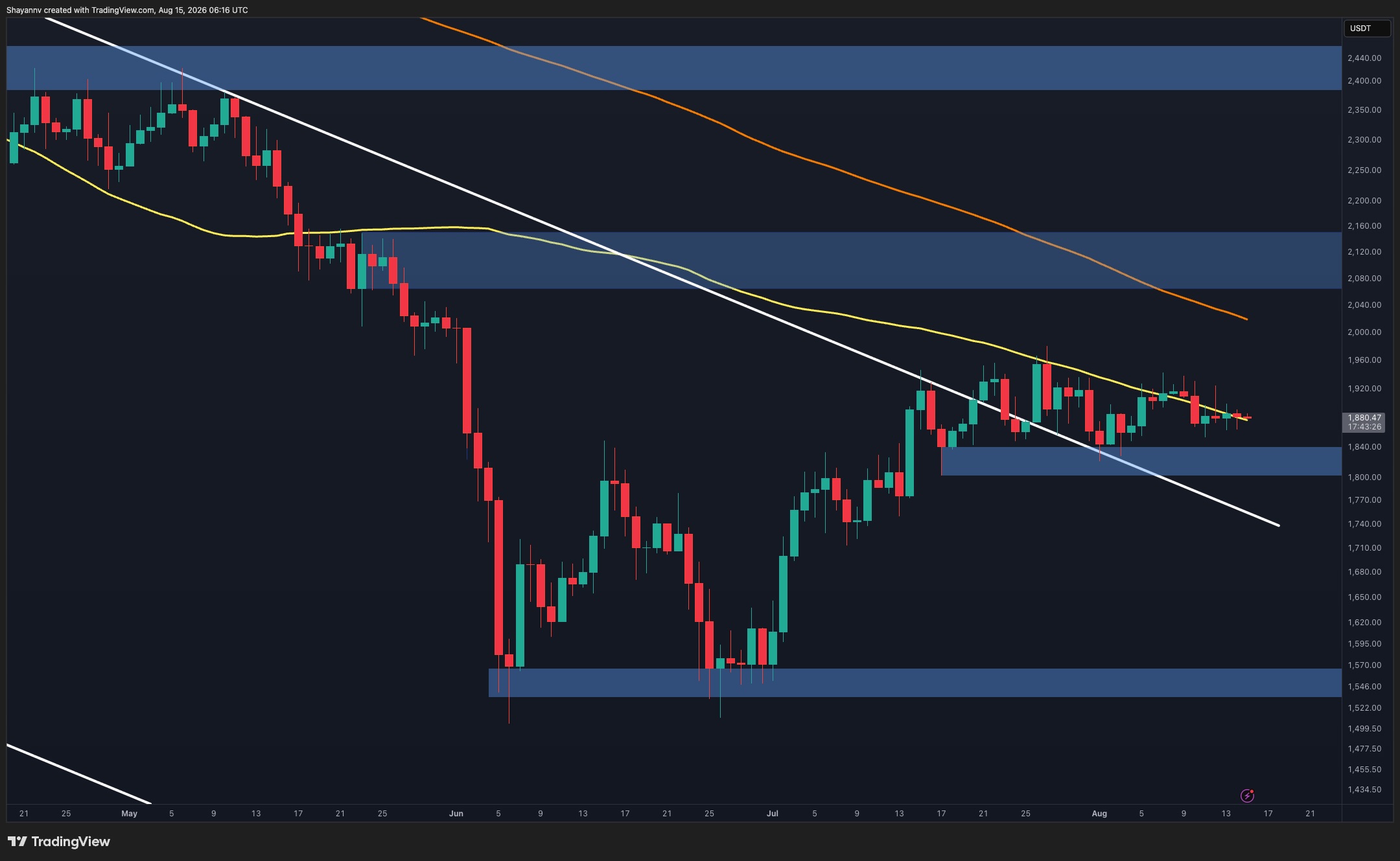
The daily chart continues to show a market suffering from a clear lack of momentum. ETH is trading around $1.88K, with the price action becoming increasingly choppy and compressed after the recovery from the $1.53K-$1.57K support zone.
A major factor behind this behavior appears to be the lack of liquidity and volume in the market. Neither buyers nor sellers have been able to generate enough sustained pressure to establish a directional move, resulting in sideways fluctuations around the 100-day moving average.
This moving average, currently near the $1.9K region, remains an important threshold. ETH has repeatedly traded around it but has failed to establish a convincing breakout and continuation above it. Meanwhile, the broader descending trendline is still nearby, adding another layer of technical resistance.
As a result, the market remains vulnerable despite the recovery from June’s lows. The immediate support zone is located around $1.80K-$1.84K. A decisive breakdown below this region could shift attention back toward the major $1.53K-$1.57K demand zone. Until volume and liquidity return, however, choppy sideways price action could remain dominant.
ETH/USDT 4-Hour Chart
The short-term picture has deteriorated compared with the previous structure. ETH had been respecting an ascending trendline from the early-July lows, but the latest price action has now broken below this trendline.
This breakdown is an early bearish signal, particularly because the market has subsequently remained beneath the former trendline rather than immediately reclaiming it. ETH is currently consolidating around $1.88K, while repeated attempts to generate upside momentum have remained limited.
The $1.80K-$1.84K blue demand zone is therefore the most important nearby support. If selling pressure increases and this area fails, the breakdown from the ascending structure could develop into a larger correction, potentially exposing the next major support around $1.71K-$1.75K.
Conversely, the bearish scenario would begin to weaken if ETH reclaims the broken trendline and pushes back toward the $1.95K-$1.98K resistance zone. A breakout above that region would be needed to restore a more convincing bullish continuation setup.

Sentiment Analysis
The Spot Average Order Size metric provides another indication that conviction may be fading. The chart categorizes spot activity according to the average size of executed orders, with the green observations representing larger whale orders and the gray observations reflecting more normal-sized activity.
During much of July and early August, green dots remained prevalent as ETH recovered from approximately $1.6K toward the $1.9K region, suggesting that larger orders were actively participating in the move. More recently, however, these green observations have disappeared and been replaced by gray dots around the current $1.9K price area.
This transition suggests a lack of clear directional conviction and an absence of the heavier orders that had previously supported the recovery. Notably, a similar shift is visible on the left side of the chart around early May. Green dots disappeared, and gray observations became dominant before ETH subsequently experienced a significant decline.
That historical similarity does not guarantee another selloff, but it adds weight to the cautious technical picture. With whale-sized spot orders currently absent, ETH may struggle to generate a sustainable breakout unless stronger participation returns. Combined with the 4-hour trendline breakdown and weak daily momentum, the latest on-chain behavior suggests downside risk should remain firmly on the radar.

The post Ethereum Price Analysis: Is $2K Still Possible After ETH Drops Below $1.9K? appeared first on CryptoPotato.
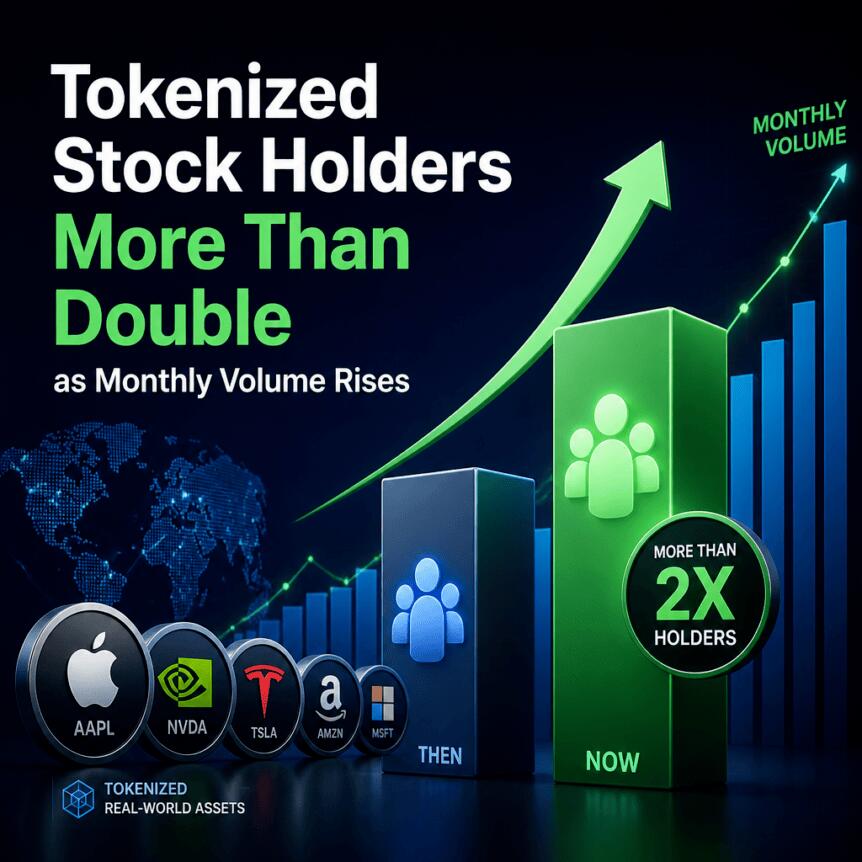
Tokenized stocks are seeing a rapid rise in participation and liquidity, according to new on-chain market tracking from RWA.xyz. The number of tokenized stock holders has more than doubled over the past month to 1.31 million.
RWA.xyz also reports that monthly transfer volume climbed nearly 180% to $23.13 billion, while monthly active addresses increased 34.62% to just under 572,000. The total distributed value of tokenized stocks rose 5.9% to $2.38 billion.
Key takeaways
- Tokenized stock holders grew to 1.31 million—more than double month-over-month, per RWA.xyz.
- Monthly transfer volume surged to $23.13 billion (+~180%), suggesting stronger usage beyond just new wallets.
- Total distributed value increased to $2.38 billion (+5.9%), even as the sector remains competitive.
- Ondo leads by distributed value at about $872 million, followed by Kraken’s xStocks and Binance’s bStocks.
- SpaceX tokenization saw heightened activity around its June 12 public listing, despite earlier campaign issues.
Growth metrics: more holders, higher activity, rising value
The latest RWA.xyz figures point to broad-based momentum rather than a narrow spike in one product. Alongside the sharp jump in holders, the increase in monthly active addresses indicates that more participants are actively transacting during the period, not merely registering.
Liquidity also appears to be strengthening. With monthly transfer volume up by nearly 180% to $23.13 billion, tokenized equities are generating materially more on-chain movement than they did just a month prior. At the same time, total distributed value rose 5.9% to $2.38 billion, reflecting a net expansion in the value of tokenized stock instruments distributed through the ecosystem tracked by RWA.xyz.
In terms of market leadership, Ondo remains the largest issuer by distributed value, sitting at roughly $872 million. Kraken’s xStocks follows with about $557.8 million, and Binance’s bStocks is close behind at $521.8 million.
Who’s leading: Ondo, xStocks, and bStocks close the gap
RWA.xyz’s distribution rankings show a fairly tight race among the largest tokenized stock programs. While Ondo holds a clear lead, Binance’s bStocks has moved into the same competitive tier as Kraken’s xStocks.
bStocks launched in June and is already within approximately $36 million of xStocks in distributed value, according to RWA.xyz. That proximity matters for investors and market participants because it suggests the category’s growth is not confined to one dominant issuer; multiple providers are attracting demand quickly enough to reduce relative gaps.
RWA.xyz also lists several of the largest underlying tokenized assets by distributed value. Among them are Securitize at $145.2 million, Strategy PP Variable xStock at $135.6 million, and Ondo’s tokenized Circle shares at $99.7 million.
Private-market demand and the SpaceX test
The current expansion in tokenized equities aligns with a broader push by crypto platforms into private-market and pre-IPO products earlier this year, with attention particularly focused on SpaceX. In the months leading up to SpaceX’s June 12 public-market debut, multiple platforms—including Binance, Coinbase, Kraken, Bybit, Bitget, and Blockchain.com—rolled out products tied to SpaceX. These ranged from tokenized pre-IPO exposure to perpetual futures and proxy-style tokens.
Some of the activity was clearly driven by substantial investor interest. Earlier coverage from Cointelegraph noted that a Binance campaign drew about $557 million ahead of the listing, highlighting strong demand for exposure to the pre-IPO and transition period.
However, not all parts of these efforts worked smoothly. Cointelegraph previously reported that Binance, Bybit, and Bitget Wallet canceled their tokenized SpaceX IPO campaigns after xStocks failed to secure enough underlying shares to satisfy demand. Refunds were issued to subscribers, underscoring how tokenization outcomes can be constrained by real-world share availability and allocation mechanics—despite high on-chain interest.
Still, even after the campaign cancellations, tokenized SpaceX exposure persisted. RWA.xyz data shows that tokenized SpaceX exposure via Binance’s bStocks has grown to $67.9 million in distributed value since the June 12 listing, placing it seventh among individual tokenized assets tracked by RWA.xyz.
What it may mean for the real-world assets market
The rapid increase in holders, activity, and distributed value suggests tokenized stocks are becoming a more established on-ramp into real-world assets for crypto users—especially when packaged as liquid, transferable tokens.
This momentum also fits into larger industry forecasts. Standard Chartered has projected that tokenization could reach a $4 trillion market by the end of 2028, as highlighted in earlier Cointelegraph reporting. While forecasts don’t guarantee outcomes, the recent performance tracked by RWA.xyz indicates that at least one segment of real-world assets—tokenized equities—is gaining measurable traction.
For market watchers, the key question is whether the growth is durable beyond short-term thematic surges. SpaceX-related campaigns illustrate both the appetite for tokenized exposure and the operational friction that can occur when real-world supply (like underlying shares) doesn’t match token demand. Going forward, investors may want to monitor whether issuers improve allocation reliability and whether new launches can sustain user activity once the initial hype around major corporate events fades.
Next, readers should watch how quickly distributed value and active address growth sustain over subsequent months, and whether new tokenized stock launches narrow the gap between the top issuers—or trigger renewed allocation challenges when demand spikes around real-world listings.
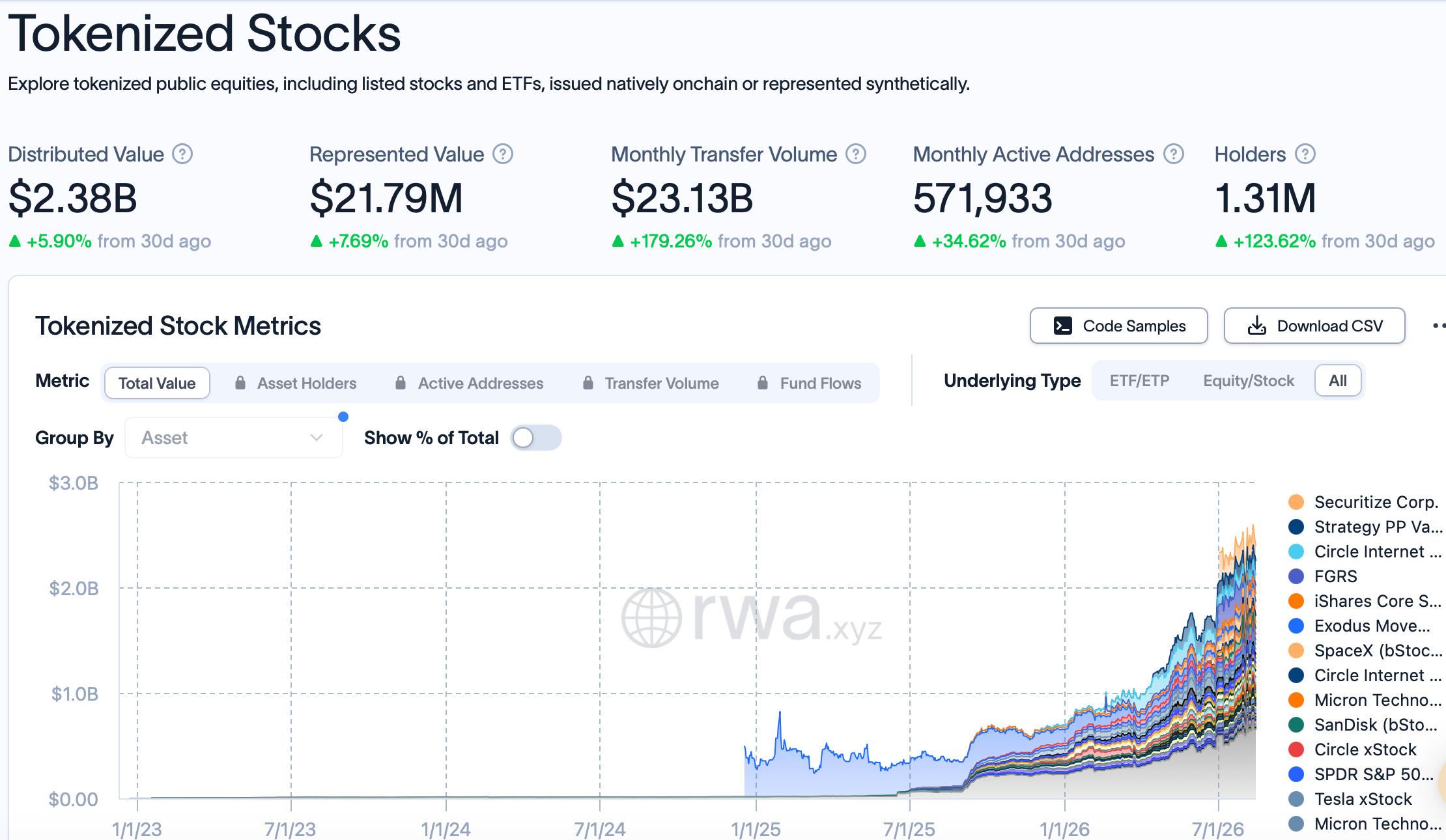
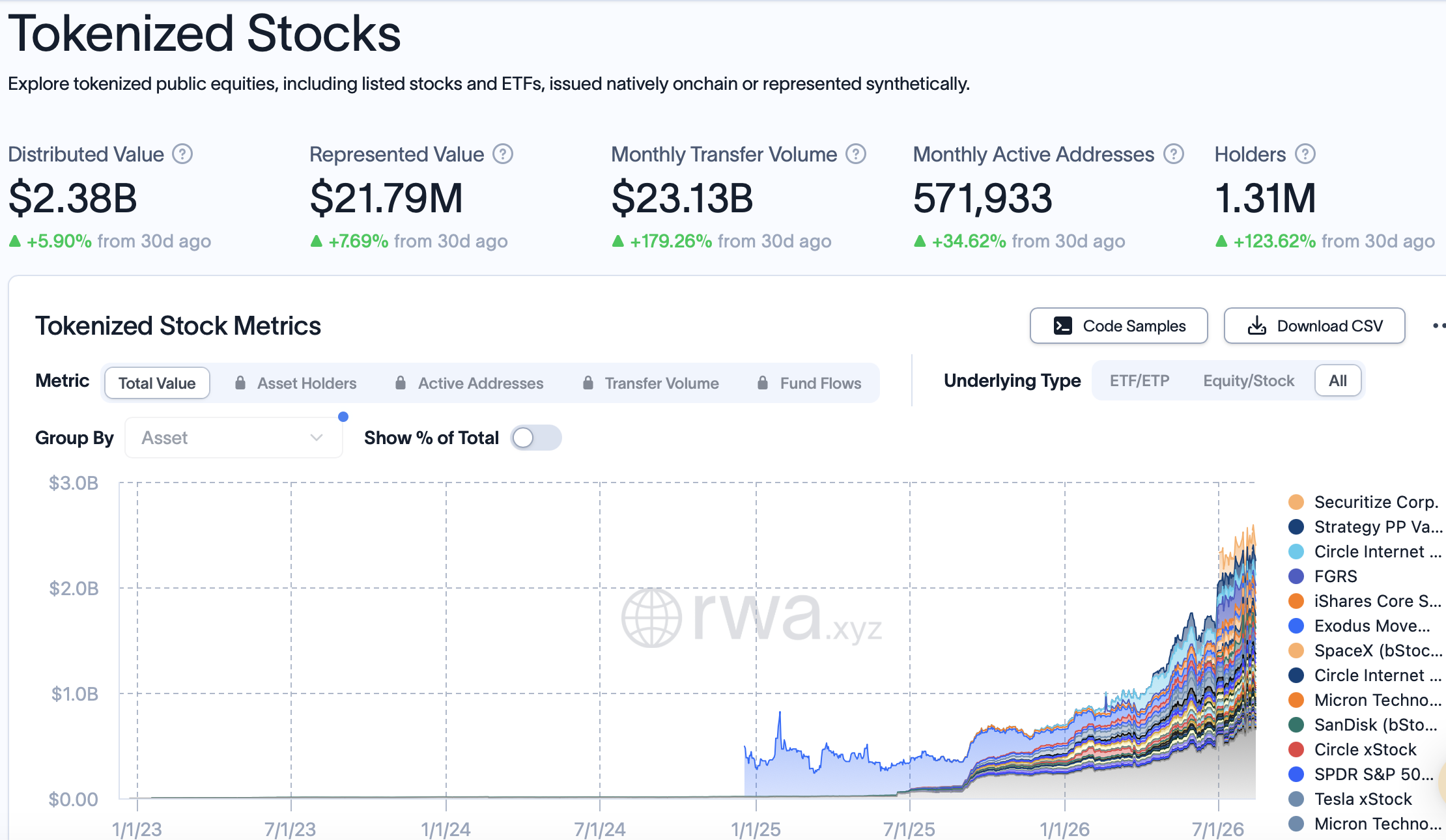
The number of tokenized stock holders has more than doubled over the past month to 1.31 million, according to RWA.xyz data.
Monthly transfer volume surged nearly 180% over the same period to $23.13 billion, while monthly active addresses increased 34.62% to nearly 572,000. The total distributed value of tokenized stocks also rose 5.9% to $2.38 billion.
At the time of writing, Ondo leads the market with about $872 million in distributed value, followed by Kraken’s xStocks at $557.8 million and Binance’s bStocks at $521.8 million. BStocks launched in June and is already within roughly $36 million of xStocks in distributed value.
According to RWA.xyz, the largest individual tokenized assets by distributed value include Securitize at $145.2 million, Strategy PP Variable xStock at $135.6 million and Ondo’s tokenized Circle shares at $99.7 million.
Source: RWA.xyz
Related: Hyperliquid RWA contracts grow to 32% of trading activity in Q2
Tokenized stocks push into private markets
The recent growth in tokenized equities follows a wave of crypto platforms pushing into private-market and pre-IPO products earlier this year, particularly around SpaceX ahead of its June 12 public-market debut.
In the months leading up to the listing, Binance, Coinbase, Kraken, Bybit, Bitget and Blockchain.com rolled out products tied to SpaceX, ranging from tokenized pre-IPO exposure to perpetual futures and proxy tokens.
Despite substantial demand, including $557 million drawn by a Binance campaign ahead of the listing, the push did not go entirely to plan. Binance, Bybit and Bitget Wallet canceled their tokenized SpaceX IPO campaigns after xStocks failed to secure enough underlying shares to meet demand, triggering refunds for subscribers.
Despite the failed pre-IPO allocations, tokenized SpaceX exposure through Binance’s bStocks has grown to $67.9 million in distributed value since the company’s June 12 listing, ranking seventh among individual tokenized assets tracked by RWA.xyz data.
The growth in tokenized equities comes amid a broader expansion in real-world asset tokenization, which Standard Chartered forecasts could become a $4 trillion market by the end of 2028.
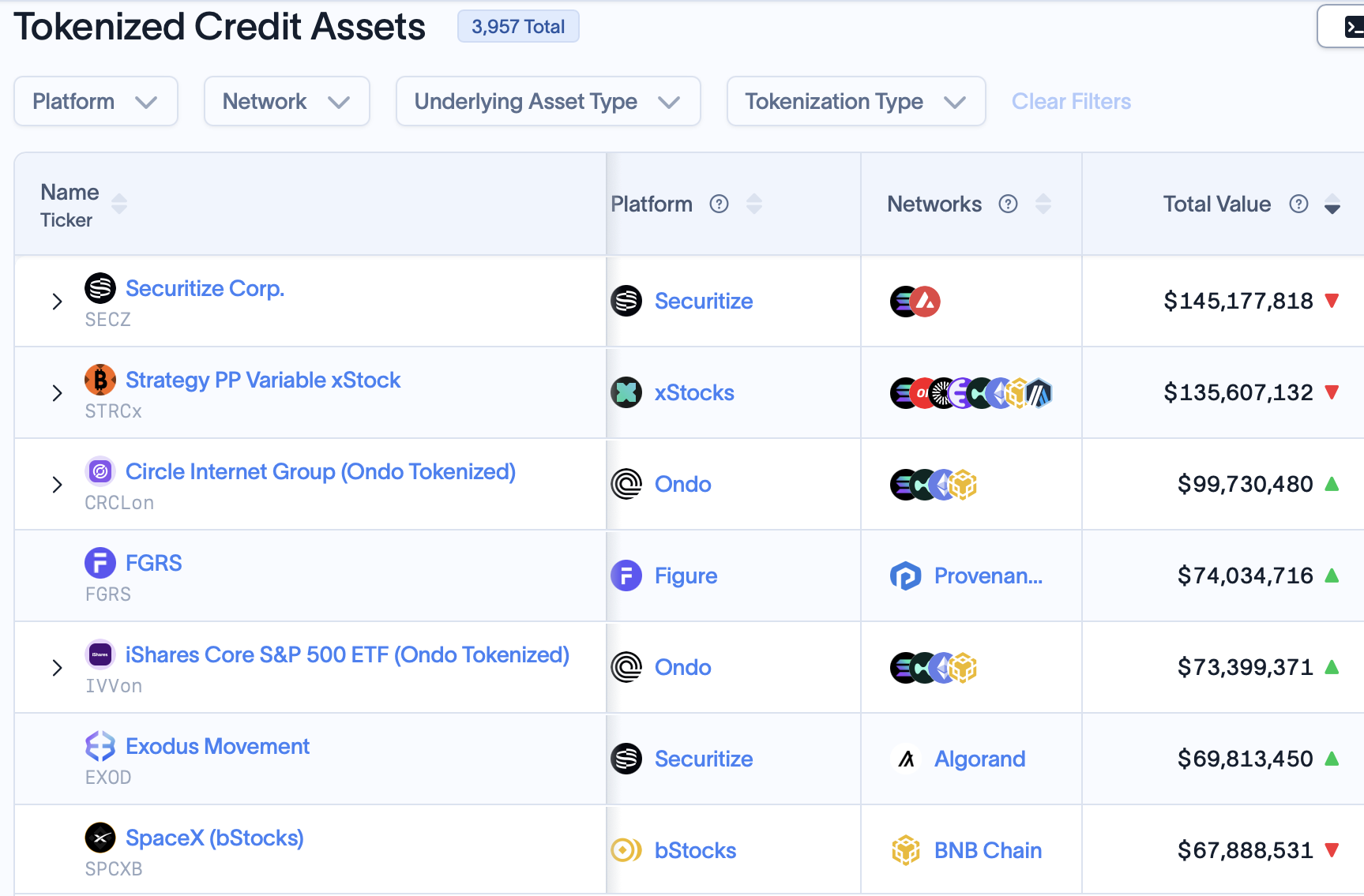
Top tokenized stocks by distributed value. Source: RWA.xyz
Magazine: Bitcoin to $1M by 2030 is ‘mathematically impossible’ says Markus Thielen
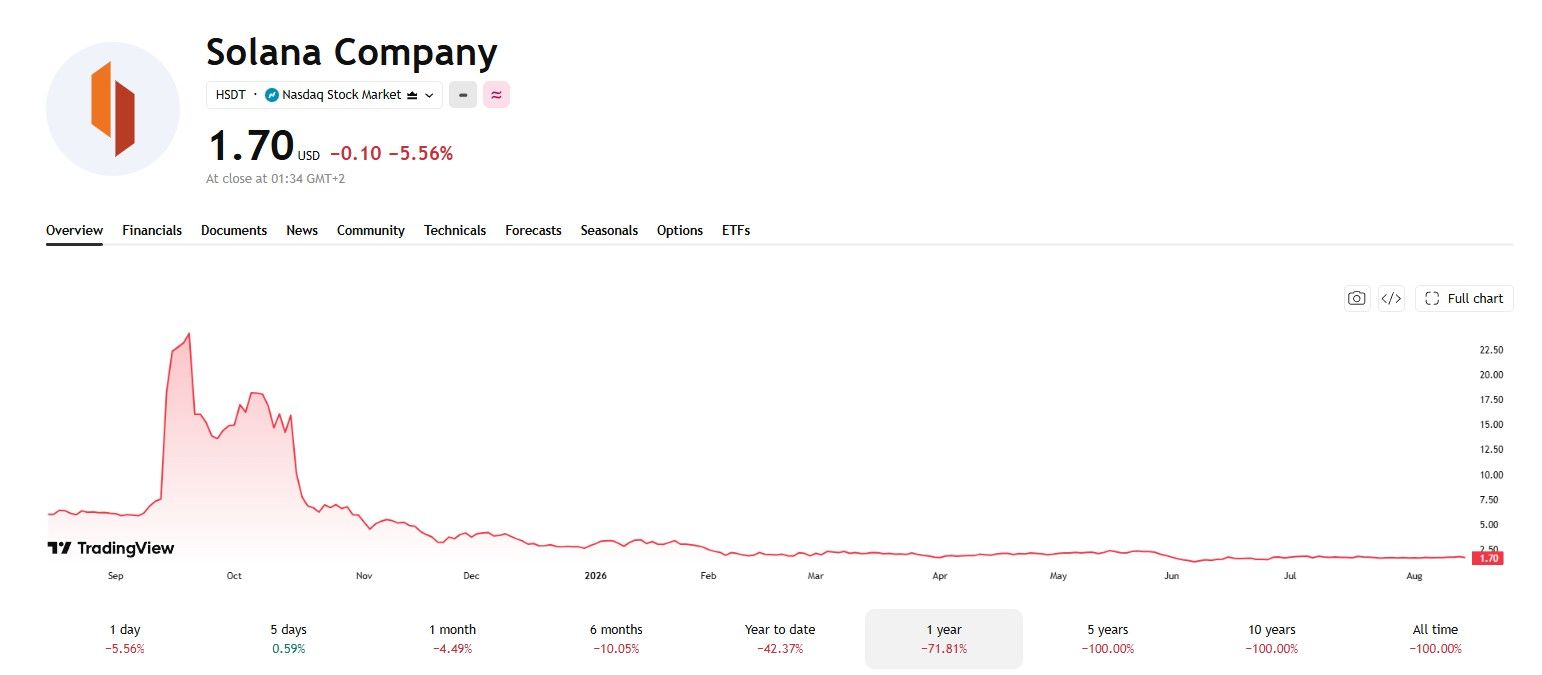
The Solana Company’s Q2 loss reached $30.3 million, as write-downs on the firm’s crypto holdings swamped a quarter that produced only $2.5 million in revenue.
Investors punished the print. Shares of the Nasdaq-listed digital asset treasury firm that holds SOL on its balance sheet and trades under the ticker HSDT fell 5.56% and closed Friday at $1.70.
Solana Company Q2 Loss Came From Write-downs, Not Operations
The operating business actually worked. Staking generated nearly all of the $2.5 million in revenue. Gross margin landed close to 97%.
Validators earned 31,200 SOL for the company during the quarter. The protocol then restaked those tokens automatically.
However, accounting rules force treasury firms to mark holdings down when token prices drop. Solana (SOL) slid hard through the spring, so the paper value of the stack shrank.
By June 30, total assets stood at $176.1 million. Long-term digital asset positions made up $147.3 million of that figure. Cash, meanwhile, sat at just $3.6 million.
Liabilities stayed light at $6.4 million. Stockholders’ equity therefore held near $165.6 million across 57.4 million shares outstanding.
Chairman and CEO Joseph Chee pointed to strategy rather than the headline number.
“This quarter was defined by execution of our integrated flywheel strategy, expanding operations across advisory, validator infrastructure, staking and treasury.”
The first half tells a harsher story. Revenue reached $6.1 million, yet the company still reported a net loss of $130.1 million, or $1.66 per share.

SOL Weakness Drags Down Every Treasury Stock
SOL changes hands near $75, down roughly 62% over the past year. The token still ranks seventh by market value at about $43.8 billion. Traders have watched on-chain SOL warning signs build for weeks.

Rivals report the same pattern. Forward Industries absorbed $69 million in Solana treasury writedowns last quarter. Bit Digital, meanwhile, posted a $107.2 million quarterly loss on its Ethereum stack.
Board director Cosmo Jiang of Pantera Capital argued that capital now favors firms with disciplined reporting. Not every treasury bled, though. Hyperion DeFi booked a record profit of $31 million on Hyperliquid, highlighting how much the model depends on the direction of a single token.
Capital keeps arriving regardless. Solana Company raised $7.9 million through a direct offering led by Mirae Asset, the South Korean fund manager, with HashKey Capital joining the round. Management also retired 1.3 million shares for $2.3 million during the quarter, and $5.9 million so far this year.
That buyback signals confidence in a stock trading at $1.70. Yet the treasury thesis still hinges entirely on SOL, and this crypto earnings season keeps proving the point.
So the next print matters less than the chart. Should SOL rebound, the same accounting rules that created a $30.3 million loss would swing the figure back the other way.
The post Solana Company Q2 Loss Hits $30.3 Million as SOL Treasury Suffers appeared first on BeInCrypto.

The stock market rally is in full swing as the S&P 500 and small caps closed at record highs this week. However, pickings are getting difficult to come by, with several leaders extended from buy points. A few exceptions are worth watching as these stocks near buy points while hitting new highs. Among them is Teekay Tankers (TNK). It’s in…
Copyright ©2026 Investor’s Business Daily, LLC. All rights reserved. 87990cbe856818d5eddac44c7b1cdeb8

The past few weeks (and months, and almost a year) haven’t been kind to the popular cross-border token, which dipped below the coveted psychological level of $1.00 at least twice for the first time in nearly two years.
Naturally, this has deteriorated investors’ sentiment, but two sets of data paint a particularly interesting picture of what might come next.
Nervous XRP Traders
Data provided by Santiment Intelligence indicated that the negative commentaries online surrounding XRP have skyrocketed in the past week as the asset failed to recover from its drop to and slightly below $1.00. In fact, crowd mood across the most popular social media platforms has reached its lowest level in three months.
Meanwhile, XRP Ledger developer Bird highlighted another potentially concerning development. XRP’s open interest is approaching levels seen around the infamous October 10 liquidation event in which over $19 billion worth of leveraged positions were wiped out in less than a day.
Open interest represents the total value of outstanding derivatives positions. In general, rising figures indicate traders are deploying more capital and leverage into the market. This could be particularly threatening if the underlying asset is already quite volatile, which hasn’t been the case lately, unlike the October 10 massacre.
However, Bird warned that if that changes, the elevated open interest could lead to another sharp price move and even more substantial liquidations. It’s worth noting, though, that high open interest doesn’t determine the direction of the move. Overleveraged longs can amplify a crash and vice versa.
Another warning shot came from CryptoQuant recently, as the analysts noted that the XRP selling pressure on Binance has risen significantly in the past few weeks.
The Good Indicators
Although all of the above hints at a major correction, the story is not that simple. For instance, while traders have become increasingly pessimistic, activity on the underlying network is moving in the opposite direction. The same Santiment report showed that the XRP Ledger had recorded almost 50,000 active addresses within a single 24-hour period, which marked a two-month high.
This was a significant turnaround from the July numbers, when activity slumped to near-year lows. A similar surge in the network activity in May preceded a major XRP rally that drove the token to $1.55 at the time.
Although the circumstances are different now, the combination of rising network activity and XRP traders turning highly pessimistic could lead to intense volatility soon, especially when we factor in the skyrocketing OI.
The post XRP Is Flashing Two Contradictory Signals: Which One Should Ripple Traders Trust? appeared first on CryptoPotato.
Crypto World
Swiss mega-bank UBS ramps up its Bitcoin exposure with a massive 24-fold surge in ETF call options
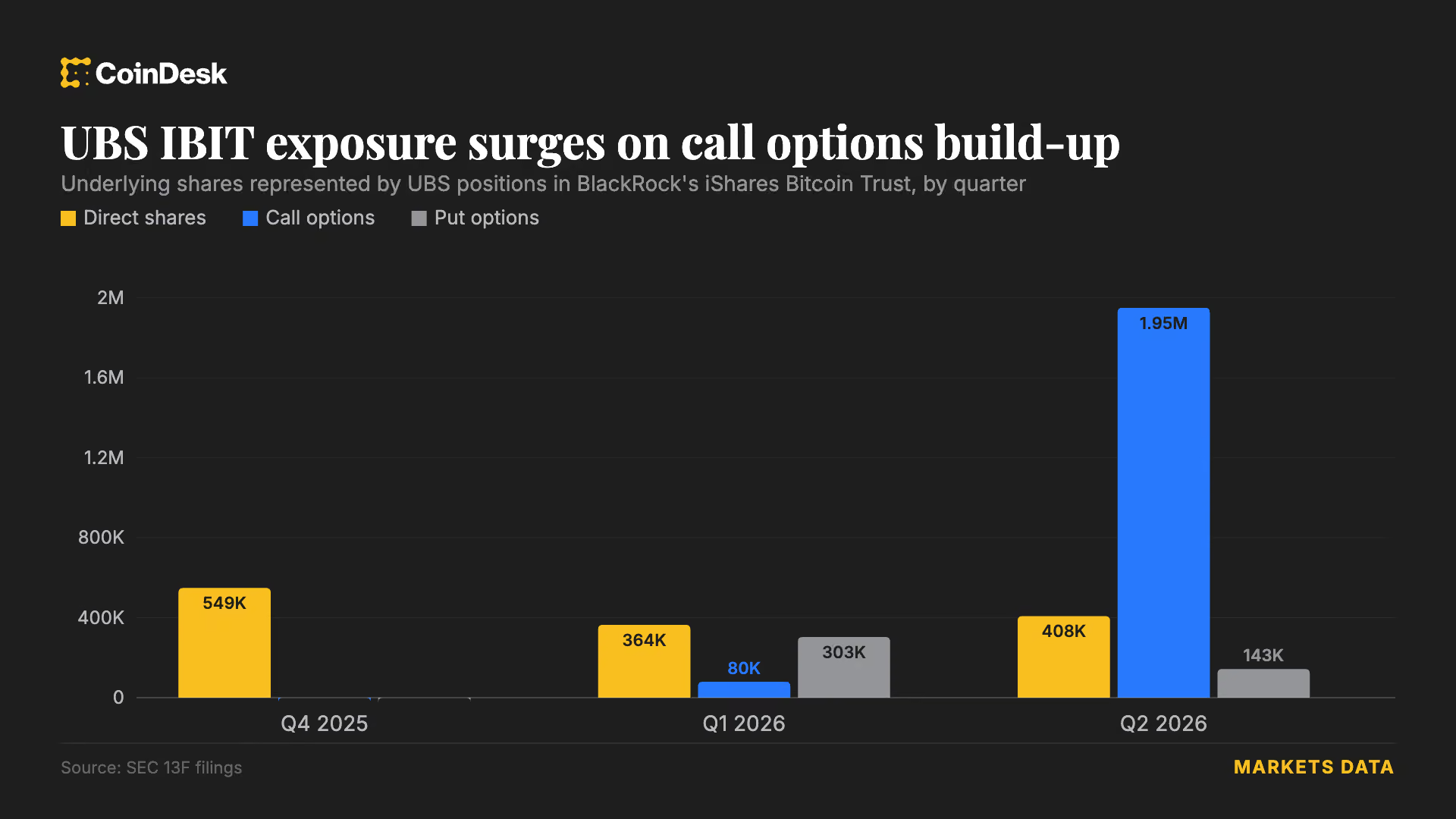
Banking giant UBS, with over $7 trillion in assets under management, has reported a more than 24-fold quarterly increase in call option exposure tied to BlackRock’s iShares Bitcoin Trust (IBIT) in the second quarter.
That increase, which gives it the right to acquire IBIT shares at a later date at a set price, came as its outright IBIT holdings rose about 12%, according to a regulatory filing this week.
The Swiss banking group reported calls representing 1.95 million underlying IBIT shares as of June 30, up from 80,000 three months earlier. UBS separately held 407,890 IBIT shares worth about $13.6 million, compared with 364,371 shares at the end of the first quarter, according to its Q1 filing.
Put option exposure, giving UBS the right but not the obligation to sell IBIT at a set date and price, moved in the opposite direction. UBS reported puts representing 143,300 underlying shares, down about 53% from 303,300 at the end of March.
Its direct IBIT position also remained below the 548,614 shares reported at the end of 2025, according to its fourth-quarter filing.

The disclosure also does not include strike prices or expirations, making it difficult to determine UBS’s net directional exposure from the filing alone.
Nvidia weighs $3 bln in SB Energy for Ohio AI data center – The Information

Every Batman Movie of the ’80s and ’90s, Ranked

Riot police arrest nearly 300 migrants after thwarting second Ceuta ‘invasion’ as hundreds who gathered on hilltops were sprayed with tear gas


-

 Fashion1 day ago
Weekend Open Thread: Ann Taylor
-

 Business6 days ago
Datadog: Best Of Breed For Multiple Reasons
-

 Business7 days ago
How to Start a Cleaning Business: A Step-by-Step Guide
-

 Business7 days ago
BDC Weekly Review: Private BDC Q2 Numbers Are Strong
-
 NewsBeat4 days ago
Communication cards help banking customers access services or report scams
-
 Business5 days ago
Oil Price Today (August 11): Crude oil rises to $88 after Trump’s compensation demand dents Hormuz opening. Here’s why
-

 Fashion6 days ago
Amazon Sundays: Closet Care Before Fall
-
 Crypto World5 days ago
Why Did Nvidia Stock Fall on Monday Despite a $500 Billion Wall Street AI Deal?
-
 Entertainment7 days ago
Will Ferrell’s New Netflix Series Just Became One of the Streamer’s Biggest Hits of 2026
-

 Business6 days ago
5 Things You Must Know About Jorge Messi, the Father and Longtime Agent Who Shaped Lionel Messi’s Career
-

 Politics6 days ago
Ben-Gvir’s crocodile project halted but abuses at Ketziot Prison continue
-

 Crypto World5 days ago
Revolut wins French banking licence, creates second EU banking hub
-

 Politics6 days ago
The Church of England’s ruinous reparations racket
-

 Politics6 days ago
Saudi Arabia used 86% of missile stockpile defending Iran attacks
-

 Politics6 days ago
What’s An EDT? The Rise Of ‘Extreme Day Trips’ As A Travel Trend
-
 Entertainment7 days ago
Shania Twain Suffers Rare Career Setback Amid Ongoing Backlash
-

 Politics7 days ago
The House Article | Burnham still needs to sell devolution to the public
-
 Crypto World6 days ago
USDC and USDT Now Own 84% of Crypto Card Spend as the Euro Retreats
-

 Fashion5 days ago
Can You Wear Double Cloth Gauze Clothing To Your Office?
-
 NewsBeat14 hours ago
Myanmar says over 300,000 Rohingya refugees verified for repatriation as exodus enters ninth year
You must be logged in to post a comment Login