
Crypto World
Could DOGEBALL become the next popular crypto as SUI price prediction searches rise


Disclosure: This content is provided by a third party. Neither crypto.news nor the author of this article endorses any product mentioned on this page. Users should conduct their own research before taking any action related to the company.
Can DOGEBALL reach its stated $0.015 launch price? The target is possible, but not assured.
Summary
- DOGEBALL is priced at $0.0077 in Stage 20, with more than $315,000 raised from over 1,080 participants.
- The project has set a $0.015 exchange launch price, nearly 95% above its current presale price.
- DOGEBALL plans to build token demand through DOGEPAY, gaming and its EVM compatible Layer 2 network.
- The team says 4 billion DOGEBALL tokens, equal to 20% of the original presale allocation, were burned in May.
- SUI has gained about 13% over seven days as interest in its price outlook and other crypto opportunities picks up.
Crypto news today shows Bitcoin near $80,000 and Sui near $0.82, making Sui (SUI) price prediction and next popular crypto searches more active. DOGEBALL enters that conversation.

DOGEBALL launched as a presale ecosystem linking gaming, payments, and a custom Ethereum Layer 2. SUI has gained about 13% in seven days, while DOGEBALL reports Stage 20 progress. This report reviews price outlooks, market momentum, utility, risks, and upcoming product releases.
What is the SUI price forecast for 2026, 2027-2030?
The SUI coin price is near $0.82, up about 3% over 24 hours and 13% over seven days. Recent SUI news shows stronger trading activity, but price still faces a key test near $1.05. Holding $0.66 matters. A break above $1.05 could improve the near-term SUI price forecast.
For SUI price prediction 2026, 2027-2030, one recent model puts 2026 between $0.563 and $3.51, then gives a 2030 range of $8.88 to $36. Those estimates are highly uncertain. Network growth may help, while higher token supply and broad market weakness could pressure price. It remains a high-risk asset.

DOGEBALL price prediction: Could Sui (SUI) price prediction interest help DOGEBALL become the next popular crypto?
DOGEBALL targets two real problems: slow crypto cash-outs and costly global payouts. DOGEPAY is designed so a sender uses crypto while the receiver gets fiat in a bank account. The project says it will support 30+ currencies, zero FX fees, and same-day or near-instant settlement. DOGEPAY is still marked “Coming Soon,” so delivery matters.
The $DOGEBALL token is meant to pay network fees across payments and gaming. If DOGEPAY and the game gain real users, repeated transactions could create token demand. That is why Sui (SUI) price prediction interest and the search for the next popular crypto may bring attention to DOGEBALL, but attention alone cannot support price.
DOGEBALL’s latest project figures put the presale at Stage 20, priced at $0.0077, with more than $315,000 raised and over 1,080 participants. The stated exchange launch price is $0.015. That sits about 95% above the presale price, but liquidity, selling pressure, and demand will decide whether the market holds it.
DOGEBALL Metric
Reported Figure
Presale stage
20
Current price
$0.0077
Raised
$315K+
Participants
1,080+
Stated launch price
$0.015
Bonus
DB75 for 75% bonus tokens
Supply changes matter too. The team says it burned 4 billion DOGEBALL tokens on May 11, 2026, equal to 20% of the original 20 billion presale allocation. Timed stages last up to seven days, and unsold tokens are set to be burned. Lower supply may help scarcity, but demand is still essential.
Key catalysts now include:
- DOGEBALL V2 is planned for release on the website, with DB75 running until release.
- The game has a reported $1 million prize pool, including up to $500,000 for the top player.
- DOGEPAY is planned after exchange trading begins, with a specialist Web3 company expected to support exchange launches.
DOGECHAIN also supports the price case. The project describes it as an EVM-compatible Ethereum Layer 2 built for fast, low-cost transactions. Its test network can already be added to wallets. The project also says Coinsult gave its smart contract a 100% audit score. An audit can reduce some code risk, but it never removes market or execution risk.
What is the DOGEBALL price prediction for 2026?
A cautious DOGEBALL price prediction works best in scenarios. A weak launch could send price toward $0.004 to $0.008 if sellers dominate. A balanced case sits near $0.010 to $0.018 if liquidity stays stable. Strong game use, DOGEPAY delivery, and exchange demand could support $0.02 to $0.05. These are estimates, not promised outcomes.

Could Sui (SUI) price prediction trends and the next popular crypto search favor DOGEBALL?
SUI has deeper liquidity and live trading history, while DOGEBALL is still in presale. SUI’s outlook depends on holding support and expanding network use. DOGEBALL’s outlook depends on product delivery, exchange liquidity, DOGEPAY adoption, and whether gaming activity turns into steady token use.
DOGEBALL has a clear utility plan, a reported token burn, and a busy product calendar. SUI has stronger market depth but faces price risk too. Both remain volatile. Community Members should verify contracts, audits, token terms, and launch details before making any financial decision.

Find out more information here
Website: https://dogeballtoken.com/
X: https://x.com/dogeballtoken
Telegram Chat: https://t.me/dogeballtoken
Disclosure: This content is provided by a third party. Neither crypto.news nor the author of this article endorses any product mentioned on this page. Users should conduct their own research before taking any action related to the company.



Alexander Blume said subdued funding rates and continued call selling suggest the rebound is not yet being driven by excessive speculation.


The Foundation wants the network protected before a quantum computer capable of breaking today’s cryptography could plausibly arrive, and says upcoming upgrades will be judged against that clock.
Circle has reached an agreement to acquire Singapore-based cross-border payments platform Tazapay in a deal expected to close in 2027, the company announced Tuesday. The transaction is subject to customary closing conditions and requires approval from the Monetary Authority of Singapore.
The proposed acquisition would deepen Circle’s payments infrastructure reach across Asia-Pacific and emerging markets, while extending the role stablecoins play in Tazapay’s rail-based payment workflows. Circle said Tazapay’s customers should not experience disruption to services, APIs, pricing, or support as a result of the deal.
Key takeaways
- Circle plans to acquire Tazapay, a Singapore cross-border payments provider, with an expected closing in 2027 pending regulatory approval in Singapore.
- Tazapay processes significant volumes, with Circle citing stablecoins as roughly 60% of transaction volume.
- The acquisition is designed to strengthen Circle’s ability to originate and terminate payments globally, 24/7, with Circle pointing to USDC as a default rail for cross-border commerce.
- Circle says Tazapay customers should see no disruption to APIs, pricing, or support.
Why Circle wants Tazapay now
Circle framed the acquisition as a capability upgrade for cross-border payments—particularly the ability to route payments to and from Asia-Pacific and emerging markets more effectively. In its Tuesday announcement, Circle linked the deal to expanding its operational footprint for payment origination and termination “near-instant and 24/7,” a recurring theme in the company’s push to make stablecoins more practical for global transfers.
Circle is also positioning the move as an incremental step toward its longer-term aim of using USDC as a baseline payment rail for cross-border commerce. Irfan Ganchi, Circle’s senior vice president of payments, said the deal would “increase Circle’s capability to originate and terminate payments globally” and described it as a meaningful step toward making USDC the default payment rail for cross-border activity.
Scale and stablecoin reliance in Tazapay’s payments network
Circle said Tazapay has more than $25 billion in annualized payment volume. The platform supports more than 60 banking and fintech partners and provides local payout rails covering more than 100 markets—an area that matters because cross-border payments often hinge on distribution and settlement access in the destination countries.
Circle also emphasized that stablecoins make up about 60% of Tazapay’s transaction volume. That data point reinforces the strategic fit for Circle: it’s buying into a business where stablecoin settlement is already a core component of how payments move, rather than an experimental or negligible portion of activity.
Tazapay previously stated that its annualized payment volume was $10 billion, according to reporting in August 2025. As part of Circle’s broader messaging, the acquisition proposal effectively updates the public narrative toward a higher run-rate figure, suggesting growth in how the platform is being used in stablecoin-enabled flows.
Investment history and network integration
Circle has not been a newcomer to Tazapay. The company previously invested in the platform, including participation in Tazapay’s August 2025 Series B funding round, which—according to Traxcn data cited in the announcement—took the total amount raised to $57.9 million. Ripple, the XRP issuer, also invested in that round.
Separately, Circle said Tazapay has served as a design partner for the Circle Payments Network since 2025. That matters because it implies the integration work needed for Circle’s stablecoin-based payment ecosystem has already had time to mature prior to the proposed acquisition.
Circle added that Tazapay customers should experience no disruption to their services, APIs, pricing, or support, indicating the company plans to maintain operational continuity while consolidating its infrastructure capabilities.
Deal terms, timing, and what to monitor
The financial terms of the acquisition were not disclosed. The closing timeline also remains conditional: Circle said the deal is expected to close in 2027, subject to customary closing conditions and approval from Singapore’s monetary regulator.
For investors and market participants, the key question is how Circle will convert Tazapay’s existing network access—local payout rails across more than 100 markets—into broader stablecoin-based payment flows. The most immediate signal to watch will be whether Circle expands the Circle Payments Network’s coverage using Tazapay’s rails after the deal closes and whether stablecoin share in transaction volume persists or changes as integration progresses.
Circle’s announcement also indicates it intends to keep the platform’s customer-facing experience stable during the transition. Beyond that, the main uncertainty is regulatory and execution risk: the transaction cannot close until customary conditions are met and Monetary Authority of Singapore approval is granted.

Pump Fun and Kraken have deleted posts promoting the upcoming release of Hunter Biden’s laptop-themed memecoin on Base.
On Monday, both crypto firms promoted “$LAPTOP,” due to launch on Wednesday, and trumpeted how it would be tradable on both platforms.
However, the token’s release drew intense backlash from the crypto community, likely leading to the deletion of the posts.


Read more: CHART: Which US president was best for bitcoin?
Crypto influencers hate Biden memecoin
Numerous prominent crypto influencers have also denounced the memecoin.
Ansem, real name Zion Thomas, compared it to previous celebrity launches that went poorly while Threadguy called the pre-announced token a “scam” that is going to dump “my low cap gems.”
Rasmr went even harder, comparing the launch to 9/11.
Threadguy said, “The problem is everybody knowing about it pre launch completely ruins any chance of success. malicious or not.”
The show Market Bubble, hosted by Thomas and Faze Banks, also cancelled its upcoming Thursday interview with Biden.
Other onlookers criticised this crypto influencer narrative as hypocritical thanks to their previous support for various celebrity coins, such as Donald Trump’s.
Read more: Iggy Azalea allegedly mis-sold MOTHER, leading to investor losses
Base staff distance company from laptop memecoin
$LAPTOP is being launched on Base. The platform’s creator Jesse Pollak and prominent crypto investor Cobie have been on damage control since the launch was announced by the Wall Street Journal (WSJ).
Pollak said they were approached by Biden’s team, but that they chose “to be hands off” due to politics. Cobie was busy dispelling rumours that Base itself was launching the token.
WSJ reported that 30% of the memecoin’s supply will go to Biden and other co-founders, while 20% will go to Biden’s substack subscribers, subscribers of YouTube journalist Andrew Callahan’s mailing list, and traders who lost funds on Trump’s memecoin.
The token would reportedly be tradable on Pump Fun at 8 am EST, and will launch on September 9.
Channel 5 also distances itself from laptop
Channel 5, Callahan’s YouTube-based news channel that’s frequently interviewed Joe Biden’s son, claimed it has no connection to his coin and that it will never “advertise crypto.”
Read more: TRUMP memecoin may be doing poorly, but MELANIA is an atrocity
Channel 5 added that it was able to pull its subscriber list from Hunter’s team before any emails were sent. The channel received backlash for giving up the email list in the first place.
What’s the deal with the laptop?
Biden’s laptop became the center of a political debate as to whether or not his father was involved in helping his Ukraine business interests.
The New York Post published a story three weeks before the 2020 presidential election that claimed the laptop’s contents proved there was corruption here.
However, years later, a Republican inquiry found that there had been no wrongdoing from Joe Biden in regards to the Ukraine business dealings.
Hunter Biden has claimed to be facing millions of dollars worth of debt, and has struggled to pay the legal costs for various criminal cases.
In 2024 Biden pleaded guilty to tax charges and was found guilty of an illegal drug user in possession of a gun. His dad was able to pardon him before his sentencing.
Got a tip? Send us an email securely via Protos Leaks. For more informed news and investigations, follow us on X, Bluesky, and Google News, or subscribe to our YouTube channel.
You stack sats. You farm yield, and you’d rather sell your car than part with your BTC. But does that mean you should bank your golden years on Bitcoin?
Many retirement industry professional such as MIT finance professor Jonathan Parker say there is a sweet spot level for crypto exposure in a diversified retirement portfolio:
“Yes, zero.”
Parker, whose research spans portfolio choice, personal finance, retirement finance and Bitcoin, is unusually blunt about where the cryptocurrency belongs. But it’s a view shared by the average citizen.
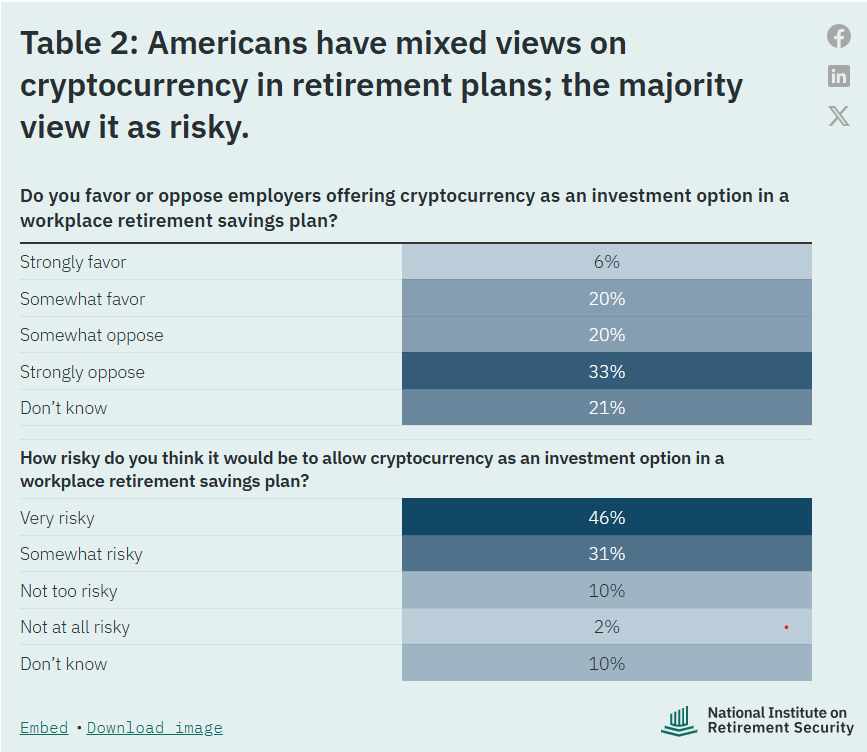
A recent survey by the National Institute on Retirement Security found that 77% of Americans consider cryptocurrency in workplace retirement plans as risky.
But regulators and investment firms alike have been steadily opening the door to greater crypto exposure in retirement savings in recent years.
BlackRock, for example, says a 1%-2% Bitcoin allocation can be reasonable for a diversified portfolio, where investors can tolerate the risk, while Fidelity says allocations of 2%-5% could improve retirement outcomes. A smaller position allows investors to benefit from Bitcoin’s volatility while limiting the downside.
But there’s a more interesting question than whether crypto is too risky in the abstract.
Can you be a passionate believer that Bitcoin is the ultimate in sound money, or that Ether will be the future of finance — and still decide your retirement savings are better off without it?
Bitcoin is already creeping into retirement portfolios
Ryan Firth is the founder of Mercer Street Personal Financial Services, a financial planner who specializes in digital assets. He views Bitcoin as something that can sit within a conventional portfolio rather than a stand-alone retirement bet. He says BTC can potentially replace some stock exposure rather than simply being piled on top of it. He tells Magazine:
“Bitcoin offers higher return potential than stocks but with more volatility.”
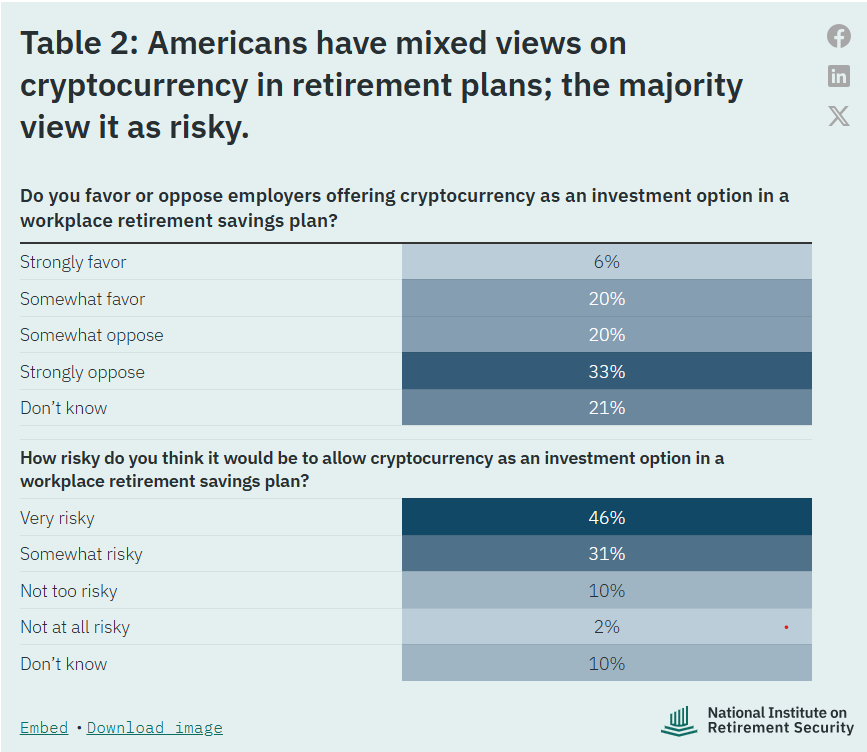
Americans have mixed views on cryptocurrency in retirement plans. Source: National Institute on Retirement Security
He says his general rule of thumb is that crypto assets shouldn’t make up more than 5% of your investable assets, adding:
“The conservative approach is to invest only what you are willing to potentially lose.”
Related: US lawmakers push back on Labor Department plans to include crypto in 401(k)s
Retirement funds are taking positions themselves
The average person might think the crypto industry is too risky, but institutional investors see it as an opportunity.
Public filings show pension funds and other large investors holding regulated spot Bitcoin exchange-traded funds (ETFs), while others have gained exposure through publicly traded companies closely tied to the sector.
CalPERS, for example, the largest public pension fund in the United States, has disclosed an investment in Strategy, the largest corporate Bitcoin treasury holder, as part of its index-oriented public equity portfolio.
CalSTRS, is the largest educator-only pension fund. While it tells Magazine it has not made direct investments in cryptocurrency it has invested in firms that “some might consider crypto companies,” such as Coinbase, “a publicly traded company that operates a cryptocurrency exchange platform.”
That difference here is that institutional investors are trying to gain exposure to the growth of the crypto industry, rather than just making Bitcoin a core retirement asset.
Your retirement portfolio has one job Bitcoin doesn’t
Bitcoin’s frequent drawdowns and year long bear markets make it a tricky asset to hold for those nearing or in their retirement years.
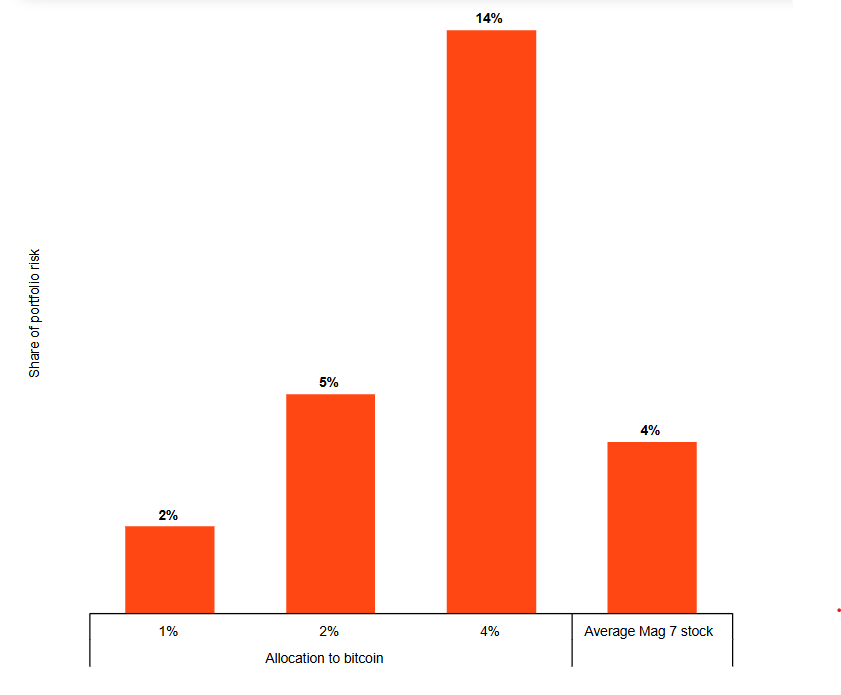
BlackRock recommends up to a 2% Bitcoin allocation, where investors can tolerate risk. Source: BlackRock
When you’re young a drawdown is just a blip among a wider uptrend. When you are retired, spending retirement savings that have fallen significantly in value magnifies the damage considerably.
Related: Coinbase launches crypto service for Australian retirement funds
Bill Bengen, the financial planner and researcher whose work gave rise to the widely cited 4% retirement withdrawal rule, says capital preservation should be the “primary priority” for retirement portfolios.
He tells Magazine that although volatile assets like Bitcoin “can be useful,” he recommends limiting them to no more than 5% of a retirement portfolio to “help prevent a disaster.”
Firth says the question is not simply whether Bitcoin will recover, but if investors can afford to wait that long:
“Will they stay invested and avoid a knee-jerk reaction when prices inevitably fall? […] What if crypto goes to zero? How would that disrupt their plans and what’s their backup plan?”
What if your investment thesis is wrong?
This question has crossed the mind of even the staunchest Bitcoin HODLer: how much of your future should depend on one investment thesis being right?
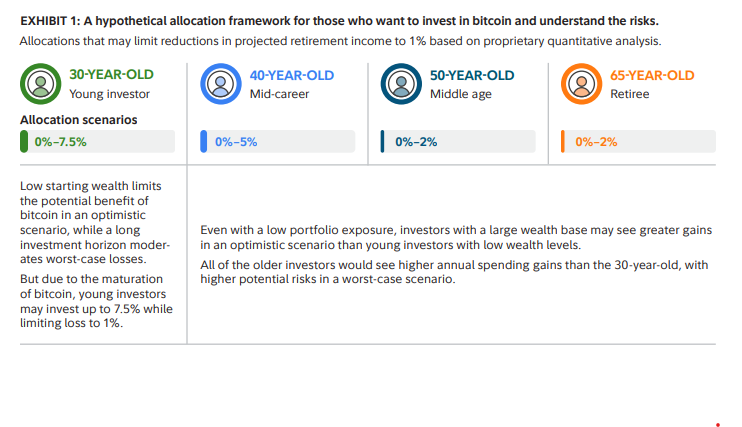
A hypothetical allocation framework for those who want to invest in Bitcoin. Source: Fidelity
What happens if you haven’t just wasted your life’s work but your retirement fund, if Bitcoin falls victim to quantum attackers, or if something better than Bitcoin is invented.
Bengen says many people believe AI is in a bubble.
“Bubbles eventually pop. The same could be said for Bitcoin.”
That problem rings true for anyone building a retirement portfolio around a high-conviction investment, since conviction does not eliminate the possibility of being wrong.
Parker says investors shouldn’t hold cash in retirement accounts and shouldn’t hold peer-to-peer digital cash either.
“Currencies are for transacting, not investing. Bitcoin is no different. People should invest in real assets that pay interest, coupon payments, or dividends.”
He says investors who want exposure to the success or failure of the crypto industry should own the equity or debt of companies that generate revenue from it, rather than holding Bitcoin itself.
You can believe in crypto without betting your retirement on it
If your retirement savings aren’t in Bitcoin, that doesn’t make you any less committed to its long-term growth.
You don’t have to choose between believing crypto is the future and casting it as a speculative gamble with no place in a serious portfolio, as Firth advises:
“It doesn’t have to be an all-or-nothing proposition.”
You can still believe crypto will change the world — without making your retirement depend on being right.
Magazine: Recovery specialists crack $1B crypto wallet… but find just $10
Cointelegraph publishes long-form journalism, analysis and narrative reporting produced by Cointelegraph’s in-house editorial team with subject-matter expertise. All articles are edited and reviewed by Cointelegraph editors in line with our editorial standards. Some articles contain affiliate links, from which Cointelegraph may earn a commission. These relationships do not influence which products we review or our editorial conclusions. Content published in here does not constitute financial, legal or investment advice. Readers should conduct their own research and consult qualified professionals where appropriate. Cointelegraph maintains full editorial independence.
Robinhood is expanding its push into prediction markets through a new multi-year partnership with OG-com, the recently spun-off trading platform from Crypto.com.
Under the agreement, announced minutes ago, Vlad Tenev’s company will route retail event-contract volume through OG.com’s CFTC-regulated derivatives exchange and clearing infrastructure. The rollout begins on September 8 for eligible US customers.
The joint statement reads that this will be OG.com’s largest business-to-business prediction-markets partnership by transaction volume.
Additionally, Robinhood will receive equity stakes in both OG.com and Crypto.com as part of the deal. The stakes will be priced in line with Citadel Securities’ recent investment in Crypto.com Group, which valued the broader entity at $20 billion. OG.com’s valuation was set at $5 billion following the spin-off.
“This is the beginning of a strategic partnership between both companies,” said Kris Marszalek, Founder and CEO of Crypto.com and OG.com. “We’re looking forward to making OG.com the most liquid venue globally for innovative derivative instruments, starting with prediction markets and quickly expanding into futures and perpetuals.”
In reaction to the news going live, the native token of the broader Crypto.com ecosystem, CRO, rocketed from $0.057 to a weekly peak at $0.063. Although it was stopped there, it still sits well above $0.06.
The asset took a major hit a month ago when Trump Media Group, the entity behind Truth Social, canceled two of its deals with Crypto.com, including establishing a company accumulating CRO as a strategic asset. At the time, the token slumped to a three-year low of under $0.045.
The post CRO Rockets as Robinhood Takes Stakes in Crypto.com and OG.com appeared first on CryptoPotato.


Key takeaways
- XRP is approaching $1.40 after defending short-term support at $1.38.
- Futures open interest edged up to 2.24 billion XRP, indicating a modest increase in derivatives exposure.
- The open-interest-weighted funding rate remains positive at 0.01%, showing that bullish traders are paying to maintain long positions.
- A daily close above $1.42 could open the path toward $1.50 and $1.70.
Ripple’s XRP is down 1% on Tuesday, approaching the psychologically important $1.40 level after buyers defended support at $1.38.
The recovery follows an unsuccessful attempt to break through selling pressure around $1.50 last week.
Holding above $1.40 would strengthen XRP’s short-term outlook, while another rejection could increase the risk of profit-taking and investor exhaustion.
Derivatives metrics remain broadly constructive, with futures open interest edging higher and funding rates staying positive.
However, technical indicators show that bullish momentum has moderated, making the $1.42 resistance level critical to XRP’s next move.
XRP futures Open Interest edges higher
XRP’s derivatives market showed signs of stabilizing on Tuesday. Perpetual futures open interest increased marginally to 2.24 billion XRP, up from 2.23 billion XRP the previous day and 2.2 billion XRP on Sunday, according to CoinGlass.
Open interest measures the total number of unsettled futures contracts. A sustained increase alongside rising prices can indicate that traders are committing fresh capital to bullish positions.
However, current exposure remains below the 2.78 billion XRP recorded on August 15. This suggests that leverage has not fully recovered from its recent decline.
If retail traders continue increasing their exposure, the additional demand could support a sustained move above $1.40. Conversely, a decline in open interest would indicate weakening conviction and could leave XRP vulnerable to another pullback.
The open-interest-weighted funding rate held in positive territory at approximately 0.01%.
CoinGlass data shows that the rate has remained near this level since August 28. Positive funding means long-position holders are paying traders with short exposure, typically reflecting stronger demand for bullish bets.
The reading indicates that traders remain willing to pay a premium to maintain long positions despite XRP’s recent consolidation.
Nevertheless, positive funding does not guarantee further gains. If bullish positioning becomes overcrowded while XRP struggles to clear resistance, a sudden decline could trigger long liquidations and accelerate selling pressure.
Risk appetite across the broader cryptocurrency market also remains supportive. The Crypto Fear and Greed Index registered 69 on Tuesday, placing market sentiment within the “Greed” category. The reading was slightly below Monday’s level of 71.
Elevated optimism can encourage traders to increase exposure to assets such as XRP. However, a high reading may also indicate that the market is becoming vulnerable to profit-taking, particularly if prices fail to extend their gains.
Maintaining the current sentiment would support bullish positioning, while a sharp decline in the index could weaken demand for XRP and other major altcoins.
XRP must break $1.42 to target $1.50
XRP traded near $1.40 after rebounding from $1.38 support. The token remains above its major exponential moving averages, preserving its broader bullish structure.
Initial resistance sits near $1.42, where a descending trendline is limiting the recovery. A daily close above this barrier would confirm a short-term breakout and bring the recent high around $1.50 back into focus.
Clearing $1.50 could allow bulls to target the next major resistance level at $1.70.
The Relative Strength Index stands near 59, above its neutral midpoint of 50. This shows that buyers retain an advantage, although momentum is no longer as strong as it was during the earlier rally.
The Moving Average Convergence Divergence indicator has slipped modestly into negative territory. The signal points to fading upside momentum but does not yet indicate a decisive bearish reversal.
If XRP fails to break $1.42, the 200-day EMA near $1.36 represents the first major line of support.

A daily close below that level could increase selling pressure and expose the 50-day EMA around $1.26. The 100-day EMA provides deeper support near $1.24.
These moving averages form a broad demand zone that could attract buyers during a more significant correction. As long as XRP remains above the cluster, its wider bullish structure should remain intact.
The immediate outlook rests on whether buyers can convert $1.40 into support and secure a daily close above $1.42. Success would favor a renewed advance toward $1.50 and potentially $1.70, while another rejection could send XRP back toward $1.38 and the 200-day EMA.
Crypto World
Bitmine purchased another $69 million of ETH, with Tom DeMark expecting price uptrend to soon resume

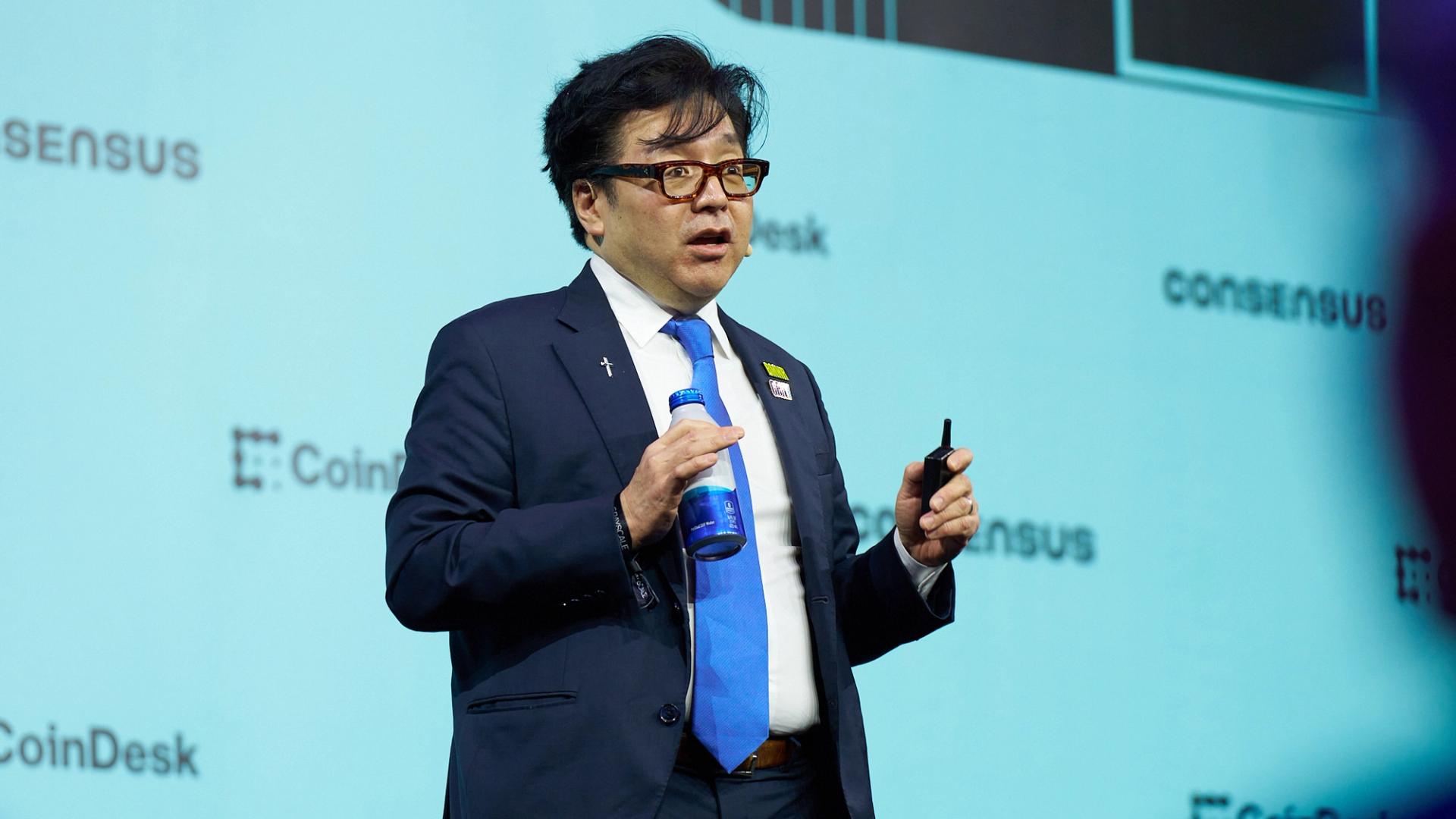
At the latest purchase pace, Tom Lee’s Ethereum treasury firm could reach its crypto accumulation goal in another seven weeks.
What do we know about the content of the documents?
The documents the Times obtained reportedly included records related to 15 John Street, near the collapsed World Trade Center, which purportedly detected asbestos—at times exceeding acceptable limits—about a year after the attack.
Among the pages was also an audit from November 2001, submitted to the federal Environmental Protection Agency, which reportedly showed high concentrations of benzene, a cancer-causing substance, in the air near the towers.
The Centers for Disease Control and Prevention (CDC) has said that exposure to these contaminants increases the risk of developing health conditions, such as illnesses concerning the airways and digestive systems. The CDC added that after the attacks, around 400,000 people were exposed to these contaminants and other factors that increased their risk for such conditions.
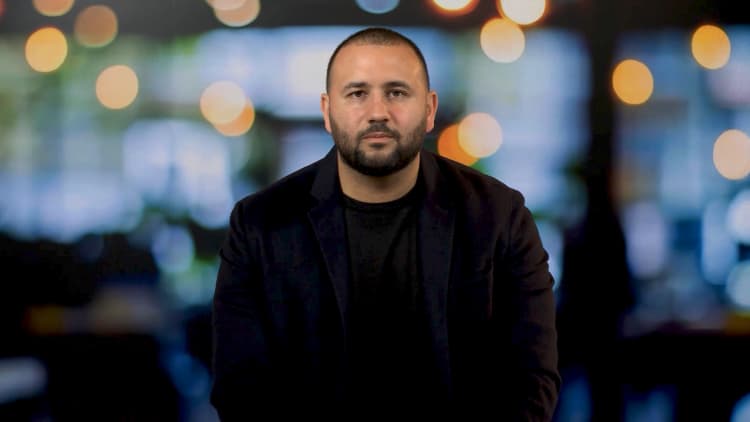
Why Mamdani is under pressure

Visa said Tuesday morning it will make more data available to companies lending on the blockchain as stablecoin-linked cards are met with strong demand.
The payments giant will pair its settlement data with onchain lending infrastructure, giving lenders greater insight into the financial performance of digital asset-focused fintech firms and card issuers. The program aims to speed up borrowing for these businesses as they grow rapidly.
Visa currently operates more than 160 stablecoin-linked card programs for issuers and program managers, a nearly 200% increase year over year as more crypto businesses launch cards for customers.
“Stablecoin-linked cards are in hypergrowth mode,” Cuy Sheffield, head of crypto at Visa, told CNBC in an exclusive interview. He said there are new issuers, including stablecoin neobanks and fintech firms, joining the network and launching cards every week.
To meet the demand surge and need for capital, the company is establishing partnerships to allow new issuers access to financing programs through smart contracts and onchain credit, Sheffield said.
“We’ve been running a pilot with a company called Credit Coop that is enabling a credit facility for stablecoin-linked card providers, which we think is a positive step forward for how onchain credit can start to come into our network,” Sheffield said.

V year to date
Credit Coop says it has processed $2.7 billion in total volume on its platform through smart contracts and no borrower has ever defaulted.
Over the past six years, nearly $700 billion in stablecoin-denominated loans have been sent through onchain lending protocols, according to Visa. The company said much of that activity remains concentrated within crypto markets, but this new offering can help lenders better understand how a business is operating, which could simplify the process of evaluating financing opportunities.
Last year’s passage of the GENIUS Act established U.S. stablecoin regulation and turbocharged adoption of the technology. Sheffield called the legislation a “huge” turning point.
“We’re seeing banks, we’re seeing some of the largest payment companies in the world that are coming to us that want to be able to engage and work with Visa, leveraging stablecoins within our existing products or build new products together with them,” he said.
Visa in July launched its stablecoin platform, which allows for settlements, expands stablecoin-linked card programs and aims to help financial institutions access new digital asset capabilities. With that, the payments giant joined traditional competitors like Mastercard, which is also investing heavily in stablecoins and has its own platform. PayPal and Circle also operate their own stablecoin platforms.
Visa shares have gained roughly 7% this year.

Savdie / Soutine exhibition at 48 Walker Street

A national soccer team without a home

Sony Bravia 7 II Review


-

 Business4 hours ago
Egyptian TV Presenter Sarah Khalifa, 11 Others Sentenced To Death In Major Drug Trafficking Case In Cairo
-
 Tech2 hours ago
Memory prices are slowing because buyers ran out of money
-
 Tech4 hours ago
Strong Password Policy and Password Manager Guide
-
 Entertainment4 hours ago
The 10 Most Influential Books of the 20th Century, Ranked
-

 Crypto World3 hours ago
Arm Stock: Arm Extends Reach To Physical AI
-

 Crypto World4 hours ago
Stablecoins could save South Korean merchants up to $3.8 billion a year, budget office says
-

 Sports4 hours ago
Rob Baxter: Exeter boss says England should pick English-based players
-

 Politics3 hours ago
Susan Sarandon Claims She Lost Film Work Due To Her Support For Palestine
-

 Crypto World3 hours ago
Ethereum Foundation Sets a December 2029 Deadline to Beat the Quantum Clock
-
Business3 hours ago
Uber president & COO Andrew Macdonald buys $5.3m in company stock
-
 Crypto World4 hours ago
Hyperliquid Season 3 Airdrop Wait Fuels a Meme Coin Machi Big Brother Promotes
-

 Crypto World4 hours ago
How Democrats Plan to Investigate Trump’s Ballroom
-
Business4 hours ago
Goldman Sachs maintains neutral stance amid market shifts
-

 Sports4 hours ago
My Gladiola secures emotional Moir Stakes win in 2026
-

 News Videos4 hours ago
The Man Who Cracked The Crypto Algorithm Reveals Next Great 10x Opportunity | Crypto Banter
-
Business3 hours ago
Old Mutual H1 2026 slides: returns top cost of capital as bank scales
-

 Tech3 hours ago
Apple TV may be planning a ‘Silo’ spinoff
-
 Politics3 hours ago
Splits Emerge In Reform Over Masked Anti-Migration Protesters
-

 NewsBeat3 hours ago
Paul Scholes urges Michael Carrick to drop Man Utd star against Man City | Football
-

 Tech3 hours ago
New Irish dispute body to tackle illegal online content launched
You must be logged in to post a comment Login