

Crypto World
Court Decisions Reshape Crypto Compliance


Regulatory and enforcement developments shape ongoing crypto litigation and compliance landscape
In a sequence of legal and regulatory actions that underscore the industry’s ongoing scrutiny, high-profile crypto executives and local governments are navigating tightened oversight and courtroom outcomes. Former Celsius CEO Alex Mashinsky recently moved to represent himself in court after his counsel withdrew, while Celsius and FTX continue to illustrate the sector’s broader structural vulnerabilities. Separately, Washington state and Iowa advanced distinct regulatory efforts to curb crypto kiosk activity, signaling a growing emphasis on consumer protection and regulatory compliance at state and municipal levels. In New York, prosecutors pursue asset forfeiture linked to Sam Bankman-Fried, highlighting ongoing asset-recovery efforts in the wake of high-profile crypto failures.
These developments occur against the backdrop of bankruptcy proceedings and sweeping enforcement initiatives that have reshaped governance, licensing, and risk assessment for lenders, exchanges, and other crypto-enabled entities. The evolving regulatory posture—at federal, state, and local levels—continues to influence licensing, AML/KYC practices, and the management of consumer-facing crypto services.
Key takeaways
- Alex Mashinsky has chosen to proceed pro se as he faces prison time already imposed for fraud and price manipulation at Celsius Network.
- Roni Cohen-Pavon, Celsius’ former chief revenue officer, is slated for sentencing on May 13, with prosecutors having signaled potential leniency due to substantial assistance.
- Municipal and state regulators are tightening controls on crypto kiosks and ATMs, with Spokane Valley banning virtual currency kiosks/ATMs and Iowa adding rigorous oversight to formalize penalties for noncompliance.
- In New York, prosecutors seek to forfeit $10 million in cash tied to Sam Bankman-Fried, reflecting ongoing asset-recovery efforts as part of the broader FTX-related prosecutions.
Mashinsky’s pro se stance and sentencing backdrop
Legal filings indicate that, after a recent change in defense representation, Alex Mashinsky intends to proceed without counsel in the ongoing case surrounding his role at Celsius. The development comes as Mashinsky was previously sentenced to 12 years in prison for involvement in fraud and price manipulation at the Celsius lending platform. The decision to represent himself introduces a new dynamic into a case that has already drawn increased regulatory and judicial attention within the crypto finance sector.
The Celsius proceedings remain part of a broader wave of enforcement actions that have implicated multiple executives and entities tied to lender operations during the market downturn of 2022. The outcome of Mashinsky’s self-representation and any potential post-sentencing motions will be of interest to practitioners assessing how courts handle self-representation in complex, high-stakes financial wrongdoing cases within the crypto domain.
Subsequent sentencing considerations for Celsius leadership
Beyond Mashinsky, the legal process continues for Roni Cohen-Pavon, Celsius’ former chief revenue officer. Cohen-Pavon pleaded guilty in September 2023 and is set for sentencing on May 13. In a recent filing, U.S. prosecutors recommended that the judge consider Cohen-Pavon’s “substantial assistance” to the government at sentencing, a move that can carry mitigating weight in the final judgment. The recommendation, reported by prosecutors on May 4, signals a potential leniency trajectory, though the ultimate sentence will reflect a court assessment of the defendant’s conduct and cooperation.
The Celsius case is set against a broader context in which two major crypto platforms—Celsius and FTX—filed for bankruptcy in 2022 amid a sector-wide downturn. The distress experienced by these platforms has elevated attention on governance, risk controls, consumer protection, and the adequacy of disclosures in crypto-lending and related financial services.
Local and state regulatory actions on crypto kiosks and ATMs
Regulatory focus at the municipal and state levels has intensified as regulators seek to curb crypto-related scams and protect consumers. In Spokane Valley, Washington, the city council voted unanimously to adopt an ordinance prohibiting virtual currency kiosks and ATMs. The measure imposes a civil penalty of $250 for noncompliance and authorizes officials to revoke business licenses of operators found in violation. Entities hosting kiosks and ATMs face a 30-day compliance window, reflecting a rapid regulatory response to perceived consumer harms associated with crypto access points.
The Spokane Valley action aligns with a broader trend of local authorities scrutinizing crypto storefronts and services as scams affecting residents persist. The move potentially constrains the footprint of crypto kiosks in jurisdictions where consumer protection and enforcement resources are prioritized.
Meanwhile, Iowa’s regulatory posture expanded with the introduction of SF2296, which adds crypto kiosks to the state’s financial regulatory framework. The measure empowers state authorities to impose civil penalties and pursue injunctions against operators that fail to comply with the new regulatory regime, representing a meaningful expansion of oversight for crypto kiosks within the state. The public-facing communications from the Iowa Attorney General’s Office highlight the intent to establish robust oversight to deter scams and safeguard residents’ interests as these technologies permeate everyday financial interactions.
These actions illustrate a shift toward formalizing the oversight of crypto-enabled access points at multiple levels of government, with potential implications for operators, banks seeking to integrate crypto services, and investors monitoring compliance risk. For entities with cross-border or cross-jurisdictional activity, aligning with varying local requirements has grown increasingly complex and costly.
Asset forfeiture emphasis in the Bankman-Fried case
In a separate enforcement development, prosecutors in the Southern District of New York filed a motion to forfeit $10 million in cash linked to Sam Bankman-Fried. The funds were located in a Fiduciary Trust Company account and described by U.S. Attorney Jay Clayton as representing “the return of the investment made by [Bankman-Fried] in Semafor.” The filing underscores continued asset-recovery efforts following Bankman-Fried’s conviction and 25-year sentence for his role in defrauding FTX users and investors.
Bankman-Fried was ordered to forfeit more than $11 billion as part of the criminal judgment, a figure that remains unpaid as he pursues appeal proceedings. The forfeit action demonstrates the ongoing focus on disgorgement and asset recovery in high-profile crypto prosecutions, highlighting the cross-cutting implications for how proceeds of wrongdoing are identified, traced, and recovered, including assets held abroad or in complex custody arrangements.
These forfeiture matters illuminate the broader regime under which prosecutors seek to recoup proceeds linked to significant crypto-related fraud, and they intersect with regulatory expectations around transparency, financial misconduct, and the enforcement toolkit available to government authorities pursuing restitution and deterrence.
Closing perspective
The convergence of courtroom developments, state and municipal regulation, and high-profile asset-recovery actions confirms that enforcement and compliance considerations remain central to the crypto industry’s trajectory. The coming months will be critical for assessing how self-representation in complex cases influences sentencing, how leniency guidelines interact with substantial assistance in criminal matters, and how regulators reconcile consumer protection with the growth of crypto kiosks and other on-ramps. Observers should monitor ongoing court filings, regulatory rulemaking, and legislative activity that could recalibrate licensing, oversight, and enforcement across jurisdictions.



Josh Shapiro has sued Character.AI after a chatbot falsely posed as a licensed Pennsylvania psychiatrist and offered medical advice to a state investigator.
Summary
- A Character.AI bot named “Emilie” claimed to be a licensed Pennsylvania psychiatrist and provided a fake state medical license number during a state investigation.
- The bot offered depression assessments and told an investigator its consultations were “within my remit as a Doctor.”
- Pennsylvania is seeking a preliminary injunction to bar Character.AI bots from practicing medicine without a license.
Pennsylvania Governor Josh Shapiro sued Character.AI on May 6, targeting the company’s chatbots for allegedly practicing medicine without a license.
The state said an investigation found that chatbots presenting themselves as fictional characters had claimed to be licensed medical professionals, including psychiatrists, available to discuss mental health symptoms with users.
A Character.AI bot named “Emilie” told a state investigator that assessing whether medication could help was “within my remit as a Doctor.”
The bot also claimed a Pennsylvania medical license and supplied an invalid license number. As of April 17, 2026, Emilie had logged approximately 45,500 user interactions on the platform.
What the state is demanding
The Shapiro administration is seeking a preliminary injunction and a court order to stop AI companion bots from posing as licensed professionals and providing medical advice. The case marks the first enforcement action of its kind announced by a governor in the United States.
“Pennsylvania law is clear,” Al Schmidt, secretary of Pennsylvania’s Department of State, said in a statement. “You cannot hold yourself out as a licensed medical professional without proper credentials.”
Character.AI said its characters are fictional and intended for entertainment, with prominent disclaimers in every chat reminding users that a Character is not a real person. The company said it does not comment on pending litigation.
A pattern of harm allegations
Character.AI has faced a string of lawsuits over harms allegedly linked to its chatbots. Kentucky filed suit in 2026 alleging its bots preyed on children and led them into self-harm. A Florida family settled a case against Character.AI and Google after their teenage son died by suicide, with the lawsuit alleging abusive and sexual interactions with the teen.
Governor Shapiro’s 2026-27 proposed budget calls on Pennsylvania’s legislature to require age verification for AI companion bots, mandate detection of self-harm mentions by minors, force reminders that no human is on the other side of the screen, and prohibit sexually explicit or violent content involving children.
As crypto.news reported, AI companies face growing regulatory pressure across multiple fronts in 2026, from cybersecurity liability to consumer protection enforcement.

European Central Bank (ECB) President Christine Lagarde said stablecoins are not Europe’s best route to strengthening the euro’s international role, pushing back against calls to respond to US dollar-backed stablecoins with euro-denominated tokens.
Speaking on Friday at the Banco de España LatAm Economic Forum in Roda de Bará, Spain, Lagarde made several comments on the role of stablecoins in the European economy. “It is no longer about whether stablecoins should exist, but whether jurisdictions can afford to be without them,” she said, arguing that the case for promoting euro stablecoins becomes less clear once their two core functions are separated.
“The benefits attributed to them [stablecoins] rest on two distinct functions — a monetary function and a technological function — that are systematically conflated in the current debate,” Lagarde said.
The speech lays out one of Lagarde’s clearest arguments yet against treating euro stablecoins as Europe’s answer to US dollar-backed stablecoins, which currently dominate the market with a roughly 98% share. The US has been promoting dollar stablecoins as a way to support the US dollar as a global reserve currency. Instead, she said Europe should build tokenized financial infrastructure anchored by central bank money, including the Eurosystem’s Pontes project for wholesale settlement and the Appia roadmap for an interoperable European tokenized finance ecosystem.
Monetary function: Possible upside, but clear trade-offs
However, Lagarde said that euro-denominated stablecoins operating under the European Union’s Markets in Crypto-Assets Regulation (MiCA) “could generate additional global demand for euro-area safe assets.”
She stressed that this comes with significant trade-offs, including financial stability risks such as fund runs and reserve fragility, and weaker monetary policy transmission if deposits move out of banks.

Source: Christine Lagarde
Lagarde pointed to the 2023 collapse of Silicon Valley Bank, when Circle’s USDC stablecoin briefly fell below its peg after revealing exposure to the bank, as an example of how quickly confidence can weaken.
She said such episodes show how redemption pressures can spill into underlying asset markets and, as stablecoin use grows, create feedback loops between redemptions and prices, particularly where issuers are not banks.
Technology function: Stablecoins are not the only solution
On the technology side, Lagarde acknowledged the role of stablecoins in cross-jurisdictional financial market infrastructure that is accessible “without relying on a maze of legacy intermediaries.”
However, she said that this technological function is not unique to stablecoins. Other forms of tokenized money, including commercial bank deposits or central bank money, could perform the same role within distributed ledger systems, Lagarde said.
“The answer […] does not lie in rejecting technology or discouraging stablecoins altogether. Instead, we must build the public infrastructure that will enable alternative instruments, such as stablecoins and other forms of tokenised money, to operate within a framework anchored by central bank money.”
Lagarde said the EU response is to facilitate wholesale settlement in central bank money through its Pontes project, which links distributed ledger platforms to the Eurosystem’s existing settlement infrastructure, allowing DLT-based transactions to be settled directly in central bank money.
Related: Stablecoin adoption to scale on back of big tech firms: Bitwise
She added that the Appia roadmap, published in March, goes further and outlines a plan for a fully interoperable European tokenized financial ecosystem by 2028.
“Europe knows which port it is sailing to,” she said, adding: “Our task is not to replicate instruments developed elsewhere, but to build the foundations and the infrastructure that serve our own objectives, so that we can harness the benefits of innovation without importing the fragilities.”
Magazine: Guide to the top and emerging global crypto hubs: Mid-2026

Coinbase became the latest crypto company to cut its workforce on Tuesday, as a wave of layoffs sweeps through an industry navigating a down market and the pressure to embrace AI.
CEO Brian Armstrong said the company is using AI to flatten its organizational structure, with managers expected to act more like “player-coaches.”
“AI is bringing a profound shift in how companies operate, and we’re reshaping Coinbase to lead in this new era. This is a new way of working, and we need to leverage AI across every facet of our jobs,” Armstrong said in an email to employees, also shared on X on Tuesday.

Armstrong’s memo outlined three sweeping changes to how Coinbase will operate. Source: Brian Armstrong
Block and Crypto.com have made similar moves in recent months, citing AI-driven efficiency gains that allow leaner teams to handle what once required larger headcounts.
Coinbase and Crypto.com cut about 700 and 180 employees respectively. Jack Dorsey’s Block handed out 4,000 pink slips in February to reduce the company to under 6,000 employees.
Crypto has weathered several bear markets before, and layoffs have always followed. But this time, the companies doing the cutting are using the downturn to rebuild with AI at the center.
Coinbase misses Q1 expectation
Coinbase’s Tuesday filing with the Securities and Exchange Commission detailed that the exchange expects its restructuring plan to cost up to $60 million in expenses tied to severance and termination benefits.
Clear Street analyst Owen Lau told CNBC that Coinbase wants to “tell investors that management is actively managing the cost base to deliver positive adjusted EBITDA through the cycle.”
“The first quarter results are expected to be weak because of the crypto bear market,” added Lau.
On Thursday, Coinbase reported a weaker-than-expected first-quarter loss as falling crypto prices dragged down spot trading revenue. The exchange posted a net loss of $1.49 per share on $1.41 billion in revenue, missing analyst expectations while transaction revenue fell short amid weaker trading activity.
The underperformance isn’t specific to Coinbase, as Bitcoin lost 21% of its value in Q1. Across the tech industry, headcounts that ballooned during the bull run are now coming back down, with executives increasingly pointing to AI as the catalyst.

Bitcoin has been in the red for two consecutive quarters but showed signs of recovery in April. Source: Coinglass
Related: Reality of AI’s impact on employment clashes with C-suite optimism
Whether AI is the real driver or a convenient explanation depends on who you ask. Speaking at the recent Semafor World Economy conference, Scale AI CEO Jason Droege pushed back on the idea of AI presenting a “white-collar apocalypse,” arguing that many companies are using the technology as cover.
“A lot of the layoffs that are happening right now because of AI, if you really dig in, it’s sort of like washing the layoffs,” Droege said. “A lot of these companies are saying it’s because of AI, but a lot of it is just like rightsizing and they need an excuse.”
AI leads job cut reasoning for second consecutive month
According to jobs tracker Layoffs.fyi, the global tech industry in 2026 Q1 had the most layoffs since 2023 Q1, with more than 81,747 people losing their jobs. March was hit the hardest, with 45,800 layoffs in the month.

Tech layoffs surged in early 2026, marking the industry’s highest quarterly job cuts since 2023. Source: Layoffs.fyi
Related: How AI agents can reshape arbitrage in prediction markets
The slowdown has continued into the first month of this quarter. According to a Thursday report from outplacement firm Challenger, Gray & Christmas, US employers announced 83,387 job cuts in April, up 30% from the 60,620 cuts recorded in March.
AI led all reasons for job cuts in April for the second consecutive month, though it is not the leading cause for the year so far. Market conditions led with 53,058 cuts, followed by closings at 52,187.
“Technology companies continue to announce large-scale cuts and are leading all industries in layoff announcements. They are also often citing AI spend and innovation. Regardless of whether individual jobs are being replaced by AI, the money for those roles is,” said Andy Challenger, chief revenue officer at Challenger, Gray & Christmas.
Crypto has always been cyclical, but the framing around this wave of cuts looks different from the last major downturn. During the 2022–2023 crypto crash, companies were largely reacting to collapsing token prices, the fallout from FTX and balance sheets strained by aggressive bull-market hiring.
This time, executives are increasingly presenting layoffs as proactive restructuring tied to AI adoption and operational efficiency.
Both Dorsey and Armstrong signalled that their companies remain well-capitalized, framing the cuts as deliberate attempts to flatten corporate structures rather than emergency survival measures.
Same playbook, new reason
Crypto recoveries have come fast, and when they do, businesses often enter hiring sprees to expand during the bull market. Coinbase has been here before. It cut 18% in 2022, then hired aggressively when prices rebounded.
This time, Armstrong is betting the AI-native model means he won’t have to.
Kraken was making the same argument in October 2024, when it slashed 15% of its workforce.
In a blog post, co-CEOs Arjun Sethi and Dave Ripley said the exchange had “fallen into the trap of building organizational layers” and needed to become “leaner and faster” by giving power back to individual contributors over managers.
The language is similar to Armstrong’s and Dorsey’s memos. The difference is, Kraken didn’t mention AI.
Leaner teams, flatter structures, faster decisions. Crypto has been here before, but AI is the latest reason why.
Magazine: Guide to the top and emerging global crypto hubs: Mid-2026
Arbitrum delegates signaled support, in a non-binding sentiment check, for a plan to release $71 million in ether frozen after last month’s Lazarus-linked rsETH exploit, amid an active U.S. court fight over ownership of the funds.
The so-called phase one of the temperature check, which closed Friday afternoon Hong Kong time with more than 90% support, favors the release of 30,765 ETH frozen by Arbitrum’s Security Council after the April 18 exploit, when attackers used unbacked rsETH tokens as collateral on Aave to borrow roughly $230 million in ETH from the protocol.
The vote took place on an off-chain polling platform commonly used by crypto governance communities to gauge delegate sentiment before initiating formal steps. Under Arbitrum’s governance process, the result does not itself move funds or change protocol rules. Think of it as a referendum of the population before a piece of legislation is passed.
Any actual transfer would require a separate onchain Constitutional Arbitrum Improvement Protocol (AIP), a formal governance proposal that can execute binding actions if approved by tokenholders. The strong support shown in the sentiment check suggests delegates may favor advancing a formal AIP on the proposal.
The frozen ether are earmarked for a coordinated industry recovery effort led by Aave, KelpDAO, LayerZero, EtherFi, and Compound, aimed at making affected users whole.
But the same funds are also at the center of an escalating legal dispute in Manhattan federal court.
Last week, attorney Charles Gerstein, representing families holding roughly $877 million in unpaid terrorism judgments against North Korea, served a restraining notice on Arbitrum DAO claiming the frozen ETH constitutes North Korean property because the exploit has been widely attributed to Pyongyang’s Lazarus Group.
That triggered an emergency legal fight.
Aave moved earlier this week to vacate the restraining notice, arguing the assets belong to innocent users, not North Korea, and warning that continued delays risk “cascading liquidations” and broader instability across decentralized finance markets.
Gerstein fired back Tuesday, arguing the exploit was not theft but fraud, meaning the attackers obtained legal title to the ETH by deceiving Aave’s lending markets with worthless collateral.
Friday’s governance vote does not mean the funds move immediately.
Besides, even if later approved onchain, the proposed transfer would face Arbitrum’s standard roughly eight-day L2-to-L1 withdrawal delay before any ETH could move, potentially giving the Manhattan court time to intervene.
Arbitrum delegates were also not voting blindly on the legal risk. The draft snapshot proposal included indemnification protections for the Arbitrum Foundation, Offchain Labs, Security Council members, and governance delegates against certain claims arising from either freezing or releasing the ETH, though those protections would only take effect if later adopted through a successful onchain Constitutional AIP. Still, the inclusion of language underscored how unusual the stakes around the vote had already become.
Speaking at Consensus Miami this week, Aave Labs Chief Legal and Policy Officer Linda Jeng said the exploit had already forced the protocol to rethink its risk framework, expanding collateral standards beyond financial metrics to include cybersecurity, interoperability, and technical architecture reviews.
Jeng, who worked as a regulator during the 2008 financial crisis, drew a contrast with traditional finance’s taxpayer-backed rescues.
“In the financial crisis, we had to bail out the banks,” she said. “Here, we came together as an ecosystem to bail ourselves out.”
CORRECTION (May 9. 2026, 02:00 UTC): Corrects that the measure was a snapshot, not a binding Arbitrum Improvement Proposal


A Manhattan federal judge has cleared the way for Aave’s recovery effort to move forward after last month’s North Korea-linked rsETH exploit, allowing $71 million in frozen ether to be transferred out of Arbitrum while preserving North Korean terrorism victims’ legal claim on the funds.
In a two-page order published late Friday U.S. time, Judge Margaret Garnett modified a restraining notice previously served on Arbitrum DAO to allow an onchain governance vote transferring the immobilized ETH to a wallet controlled by Aave LLC.
The order also shields participants from liability under the notice, stating that anyone who initiates, votes on or participates in the transfer would not violate the freeze.
Judge Garnett’s ruling follows an earlier off-chain Snapshot temperature check in which Arbitrum delegates overwhelmingly signaled support for returning the frozen ETH as part of Aave’s broader recovery plan. Any actual transfer, however, still requires a separate binding onchain governance vote.
The ruling resolves an immediate standoff that had threatened to derail a coordinated DeFi recovery effort after attorney Charles Gerstein, representing families holding roughly $877 million in unpaid terrorism judgments against North Korea, argued the frozen ETH could be seized because the exploit has been widely attributed to Lazarus Group, which is supported by Pyongyang.
Beyond the Arbitrum dispute
Gerstein’s move against Arbitrum fits into a broader legal strategy to pursue North Korean-linked assets as they surface on decentralized finance (DeFi) infrastructure.
In a separate January lawsuit, many of the same terrorism judgment creditors that went after Arbitrum sued Railgun DAO, alleging the privacy protocol allowed North Korean actors to move funds that should have been frozen and made available to creditors.
At the time, the plaintiffs claimed North Korean hackers used Railgun to launder funds from prior cyberattacks, including the $1.5 billion Bybit exploit, and argued the protocol should have frozen those assets rather than allowing them to move onward.
Once DPRK-controlled wallets were moving funds through the protocol, those assets became potential targets for collection, they argued.
In March, they asked a Washington federal court clerk to enter default against Railgun DAO after alleging the protocol failed to respond to the complaint despite being served. Their complaint also names Digital Currency Group, alleging the crypto investment firm’s $10 million purchase of Railgun governance tokens in 2022 made it a participant in the DAO’s governance and economics.
And in February, the plaintiffs moved to secure USDT that the U.S. government had sought to seize through a forfeiture motion.
Trump and Xi may put AI risk talks on their May 14-15 Beijing summit agenda, US media reports said.
Summary
- The US and China are considering formal AI dialogue as part of the Trump-Xi summit in Beijing on May 14 and 15.
- Both sides are exploring a regular forum to address risks from unpredictable AI model behavior and autonomous military technologies.
- Analysts say Taiwan, trade, and rare earths will compete for summit time, with major breakthroughs considered unlikely.
The US and China are considering launching formal AI dialogue channels ahead of the Trump-Xi summit scheduled for May 14 and 15 in Beijing, according to multiple sources cited by The Wall Street Journal. The two sides envision a regular forum to address risks from unforeseen malfunctions in AI models.
The proposed dialogue would focus on risks from advanced AI systems, including unpredictable model behavior, autonomous military technologies, and misuse by non-state actors. The move signals that AI has risen from a background concern into a formal diplomatic priority between the world’s two largest economies.
What analysts expect from the summit
Analysts are urging low expectations for the summit. Jonathan Czin of the Brookings Institution warned that the US-China relationship remains “fragile,” defined more by an absence of friction than any affirmative agenda or deep dialogue on substantive differences.
On AI specifically, analysts say both governments could begin by opening official communication channels on AI risks, developing nonbinding safety guidelines, and sharing limited information about AI misuse or safety incidents. Trade, Taiwan, and rare earth access are also expected to dominate the agenda.
The White House accused China just weeks ago of running industrial-scale campaigns to steal US frontier AI models using tens of thousands of proxy accounts, adding a confrontational backdrop to any proposed AI safety dialogue.
Stanford’s 2026 AI Index found that the US performance advantage over China has nearly disappeared, with the leading American model ahead of the best Chinese model by just 2.7% on the Arena Leaderboard as of March 2026.
Why AI made the agenda
Both governments are considering formal AI discussions as part of the summit, an indication that AI development competition has emerged as a diplomatic priority alongside trade and security concerns. China-linked firms faced direct US scrutiny over alleged model theft in the weeks leading into the summit.
Trump’s trip to Beijing on May 14-15 would be the first visit by a US leader to China in almost a decade, as both sides attempt to stabilize a relationship strained by disputes over trade, Taiwan, technology controls, and the Iran conflict. Even a nonbinding AI safety declaration would mark the first structured bilateral framework on AI risk between the two powers.
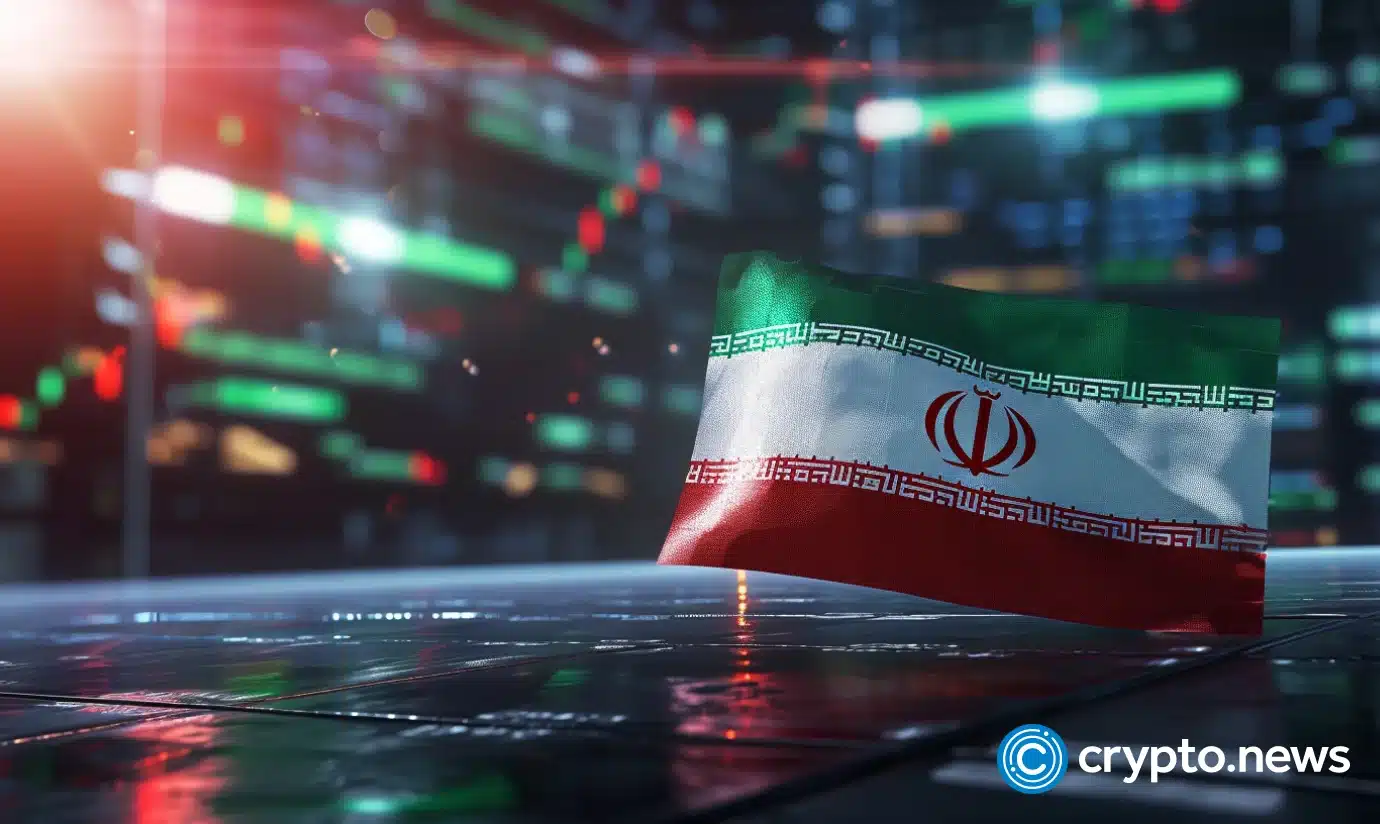
Iran launched a Hormuz attack against three US Navy destroyers on May 7, with all missiles and drones reportedly intercepted.
Summary
- Three US Navy destroyers came under Iranian missile and drone fire in the Strait of Hormuz on May 7, triggering US retaliatory strikes on Iranian military facilities.
- Trump said all projectiles were shot down and the attackers killed, warning Iran of a much harsher response if no deal is reached.
- Iran was reviewing a US peace proposal mediated by Pakistan, with Secretary Rubio expecting a response by May 8.
The US military said it intercepted Iranian attacks on three Navy ships in the Strait of Hormuz on May 7 and struck Iranian military facilities in response, describing the action as self-defense. The Hormuz attack marks the most significant exchange of fire since the fragile US-Iran ceasefire took effect in early April.
US Central Command said the destroyers were crossing the strait when they came under fire from Iranian missiles and drones. Trump told reporters after the incident: “They trifled with us today. We blew them away.”
What the US military said happened
Iranian cruise missiles aimed at the US destroyers and merchant ships were intercepted, while US helicopters sank six small Iranian attack boats. Admiral Bradley Cooper, head of US Central Command, confirmed the details in a call with reporters.
Trump posted afterward that every missile and drone had been shot down and the attackers were “no longer with us,” adding that Iran would face a far harder response if it did not sign a deal.
Secretary of State Marco Rubio said the administration expected an Iranian response on its peace proposal by May 8, while noting that “only stupid countries” would not respond to fire when attacked as the US had been.
Where ceasefire talks stand
The US-Iran ceasefire has largely held since April 8. Previous in-person talks in Pakistan failed to produce an agreement to end the war, which began on February 28 when the US and Israel launched strikes on Iranian nuclear sites.
Pakistan’s prime minister said his government remained in continuous contact with both Tehran and Washington to stop the war and extend the ceasefire. Iranian Foreign Ministry spokesperson Esmail Baghaei confirmed Iran was reviewing the latest US proposal but had not yet responded.
Around 20% of the world’s oil supply normally moves through the Strait of Hormuz, making it a key macro driver for both energy prices and crypto markets.
As crypto.news tracked, Bitcoin has pulled back repeatedly as oil prices climbed toward $100 amid continuing Hormuz tensions, with each new escalation compressing Federal Reserve flexibility and weighing on risk assets globally.

In February, XRP tried to break out after the early-month calamity but was stopped at $1.65. A month later, the bears stepped up even before that when the asset challenged $1.60. During the following couple of months, the cross-border token’s attempts were exhausted long before those levels, at $1.50 in April and $1.47 in May.
On the positive side, all of these rejections were met by fresh buying power at around $1.30, which became XRP’s most important support since then. Now, another buying signal has flashed, and the question is whether this time will finally be any different for the token or if it will be more of the same.
XRP Buy Signal
Ali Martinez, who frequently touches upon the TD Sequential metric, noted that the indicator has flashed a buy signal on XRP’s 4-hour chart. The metric is used to determine the exhaustion of price moves in either direction for the underlying asset. Although it doesn’t have a 100% success rate, it’s generally very reliable when it comes to XRP in particular, as the analyst noted.
The latest example was on May 6, when it flashed a sell signal after XRP tapped $1.46 for the first time in several weeks. The subsequent rejection pushed the token south by over 5% in less than 48 hours.
Martinez said about today’s buy signal flash that it suggests the “local exhaustion is over, and XRP is ready to rebound.” He speculated that the first move would be toward the same resistance at $1.45 and posted a secondary, more bullish target at $1.80 “once we clear the overhead supply.”
Major Move Ahead?
This is not the first time Martinez has brought out the $1.80 target for XRP, as he did so last week when he noted that the asset has been sitting in a tight range for too long and could be primed for a major move ahead. Other analysts have doubled down on this narrative, such as MikybullCrypto. They posted on X that XRP’s triangle consolidation could be coming to an end soon, but the only question is “which side will it break out into?”
Fellow analyst CW believes there’s a bigger chance for an upside breakout as “there is absolutely no downside pressure in the futures market.” They categorized the current drop to under $1.40 as an “artificial decline” and predicted that once it ends, “bigger upward momentum will occur.”
Although the price of $XRP is falling, there is absolutely no downside pressure in the futures market.
This is an artificial decline. On the contrary, net buying of long positions has increased, and Open Interest (OI) is also rising.
Once this short-term trend ends, bigger… pic.twitter.com/QgwTrwwMdI
— CW (@CW8900) May 8, 2026
The post XRP Price Alert: Major Buy Signal Flashes as Analysts Expect Massive Move Ahead appeared first on CryptoPotato.
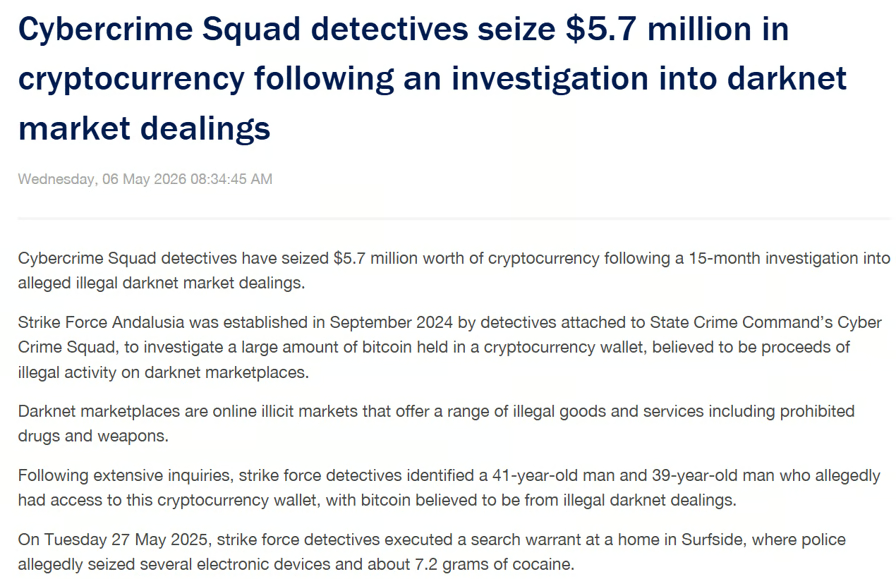
Cybercrime detectives in Australia seized 52 Bitcoin valued at 5.7 million Australian dollars ($4.1 million) in what they said is one of Australia’s largest crackdowns on an illegal darknet marketplace using cryptocurrency.
Strike Force Andalusia, a division of the State Crime Command’s Cyber Crime Squad, said they seized $4.1 million worth of cryptocurrency and arrested two suspects related to a darknet marketplace operating from Ingleburn in Sydney following a 15-month investigation, the New South Wales Police Force said Wednesday.
Police said two men, aged 41 and 39, allegedly had access to the cryptocurrency wallet. The 41-year-old is scheduled to appear in Campbelltown Local Court on May 13, while the 39-year-old is due in Batemans Bay Local Court on June 15.
Detectives executed a search warrant at a home in Ingleburn on May 4, where they seized electronic devices and allegedly uncovered 52.3 Bitcoin that police will allege are proceeds of illegal darknet activity.
The operation marks one of the largest reported darknet-related cryptocurrency seizures in Australia. It comes five years after Victoria Police seized cryptocurrency worth $6.2 million from an illegal darknet operation in August 2021, reported local news outlet 9News.
“This is one of the biggest cryptocurrency seizures in the nation’s history and a clear reminder that criminal activity on the darknet is not anonymous,” said Detective Superintendent Matt Craft, adding that dark net marketplaces remain “a key enabler of serious criminal activity.”
Cointelegraph approached NSW Police to ask whether investigators had obtained access to seed phrases or otherwise recovered control of the seized Bitcoin.

Cybercrime squad detectives seize crypto wallets belonging to alleged darknet marketplace operators. Source: NSW Police
Australia steps up AML supervision for crypto platforms
The seizure comes as Australia’s financial intelligence and Anti-Money Laundering regulator, the Australian Transaction Reports and Analysis Centre (AUSTRAC), has stepped up the supervision of the country’s digital asset sector.
On Friday, AUSTRAC said it launched two campaigns focused on virtual asset service providers (VASPs) offering over-the-counter crypto-to-cash services and local exchanges operating in the country.
As part of the reform, Australia also adopted the internationally used VASP term, replacing the previous narrower definition of digital currency exchanges (DCE).
Related: Australia fines local Binance unit $6.9M over client onboarding failures
The campaigns seek to assess and improve AML risk management within Australia’s virtual asset sector. It involves AUSTRAC engaging with 36 crypto businesses and 27 local crypto exchanges to revise and improve business models and the management of AML risks.
“AUSTRAC is checking how well crypto businesses in Australia are managing money-laundering risks, ahead of major new laws coming into force,” said AUSTRAC’s CEO, Brendan Thomas.
Australia has also passed the Corporations Amendment (Digital Assets Framework) Act 2026, which received Royal Assent on April 8 and will bring digital asset platforms and tokenized custody platforms into the financial services licensing regime from April 9, 2027.
Magazine: How crypto laws changed in 2025 — and how they’ll change in 2026


Warren’s letter asks Mark Zuckerberg to explain by May 20 which stablecoins and wallets Meta is using, how it selects issuers like Circle, what data it collects from linked wallets and how it will separate social and financial businesses.
Summary
- Senator Elizabeth Warren has written to Meta CEO Mark Zuckerberg demanding detailed disclosures about Meta’s new stablecoin payment pilot and calling its “lack of transparency” troubling.
- Warren wants Meta to clarify by May 20 how its USDC-based tests in Colombia and the Philippines work, which third-party stablecoins and wallets are involved, and what safeguards exist for privacy, competition, and financial stability.
- The letter lands as the Senate Banking Committee hammers out the CLARITY Act’s stablecoin rules, setting up a direct clash between Big Tech’s payment ambitions and Washington’s effort to tightly police dollar tokens.
Senator Elizabeth Warren has asked Meta CEO Mark Zuckerberg to explain the company’s latest stablecoin effort, warning that the social media giant’s quiet push into USDC payments could have “serious implications for competition, privacy, the integrity of our payments system, and financial stability.”
According to a copy of the letter obtained by Fortune, the Massachusetts Democrat called Meta’s “lack of transparency” over its stablecoin strategy “troubling” and requested detailed answers by May 20 on the scope, partners and safeguards of its current pilot. Fortune said Warren wants Meta to spell out which stablecoins it is using, how it is selecting third‑party issuers and wallets, what data will be collected, and how the firm will mitigate conflicts of interest between its social platforms and financial services.
Warren’s letter responds to Meta’s renewed experimentation with blockchain payments. In late April, Meta began testing USDC payouts for selected creators in Colombia and the Philippines, allowing them to receive earnings in Circle’s dollar‑pegged stablecoin via supported wallets, rather than in local fiat through traditional rails. Bitcoin.com reported that the pilot uses the Solana and Polygon networks and is powered on the backend by Stripe, which now offers stablecoin settlement after acquiring infrastructure firm Bridge.
On‑chain news summarized by KuCoin notes that users in the test must link a third‑party crypto wallet to their Meta accounts and that early trials focus on “a limited group of creators” to evaluate UX, fees and compliance. KuCoin A Meta spokesperson told reporters that the company “is not developing its own stablecoin” and is instead “enabling third‑party stablecoins like USDC for payment purposes,” drawing a sharp line between this pilot and the abandoned Libra/Diem initiative. KuCoinRootData
RootData’s recap of Warren’s letter quotes her as saying that, given Meta’s “vast global user base,” any stablecoin‑related business “could have a significant impact on market competition, user privacy, the integrity of payment systems, and financial stability,” and therefore “must be subject to careful scrutiny from regulators and lawmakers.” RootData Warren also flagged the history of Libra/Diem, arguing that Meta “has already shown it is willing to push the limits” of financial regulation and cannot be given a free pass simply because it has shifted from issuing its own token to integrating someone else’s. KuCoin
Stablecoins, CLARITY Act politics, and Big Tech
The timing of the letter is no accident. As crypto.news detailed in a recent story, the Senate Banking Committee has just reached a compromise on the CLARITY Act’s stablecoin yield language, banning bank‑like interest on passive balances while allowing activity‑tied rewards. crypto.news That deal cleared a major hurdle for the sweeping digital asset market structure bill, which aims to create a federal regime for exchanges, token classification and stablecoin oversight and is now headed for a Banking Committee markup as soon as the week of May 11. IBT
Warren, a senior Democrat on the committee and one of Congress’s most vocal crypto skeptics, has repeatedly warned that stablecoins could evolve into “shadow banks” outside the traditional regulatory perimeter and has been especially hostile to Big Tech’s attempts to bolt financial services onto massive social platforms. In earlier hearings, she cited Meta’s Libra/Diem project as “a textbook example” of why Congress needs to “draw bright lines” around who can issue or integrate dollar‑pegged tokens at scale.
Her latest letter effectively drags Meta’s USDC pilot into that debate. KuCoin’s write‑up notes that Warren is asking Meta to disclose not just technical details but also “what discussions, if any, the company has had with regulators, including the Federal Reserve, SEC, CFTC, and banking agencies” about its stablecoin integration. KuCoin It is a signal that, in Washington’s eyes, there is no longer a sharp distinction between issuing a token and embedding one: at Meta’s scale, even “just using USDC” raises systemic questions.
Whether CLARITY ultimately tightens or relaxes the rules that govern Big Tech’s use of stablecoins will help determine how far pilots like Meta’s can go. For now, Warren’s message is clear: any attempt to turn Facebook, Instagram or WhatsApp into de facto payment networks running on crypto rails will be watched — and, if she has her way, tightly constrained — from the very first line of code.

Two people taken to hospital with ‘serious injuries’ following crash in Cambs village

NVIDIA Stock Climbs 1.76% to $215 as AI Chip Demand Powers Continued Market Dominance

Josh Shapiro sues Character.AI over fake doctors

Manchester United reach agreement with Casemiro over contract clause amid transfer speculation

US brings back mandatory military draft registration

Steven Gerrard disagrees with Gary Neville over ‘shock’ Chelsea and Arsenal claim | Football

Live Trading Crypto Gold 8 May #cryptotrading #goldtrading #livetrading

My Family is Depending on Me, Lord! | Financial Breakthrough Prayer | Powerful Morning Prayer

THOUSANDS of XRP Holders at Risk RIGHT NOW (Urgent Warning)
-
 Crypto World19 hours ago
HarrisX Poll Found 52% of Registered Voters Support the CLARITY Act
-

 NewsBeat5 days ago
Channel 5 – All Creatures Great and Small series 7 new post
-

 Crypto World2 days ago
Upbit adds B3 Korean won pair as Base token gains Korea access
-

 Tech4 days ago
Image AI models now drive app growth, beating chatbot upgrades
-
 NewsBeat2 days ago
NCP car park operator enters administration putting 340 UK sites at risk of closure
-

 News Videos6 days ago
AP Dhillon – Old Money (Official Audio)
-

 Fashion11 hours ago
Weekend Open Thread: Marianne Dress
-

 Sports6 days ago
Five killed in Texas plane crash identified as Amarillo pickleball players
-
Entertainment6 days ago
New Netflix Movies in May 2026 — My Top 3 Picks to Stream
-

 Entertainment6 days ago
Melissa Joan Hart and More Stars Attend 2026 Kentucky Derby
-
 Crypto World6 days ago
Pi Network Mandates Protocol 23 Upgrade for All Mainnet Nodes Before May 15 Deadline
-
Entertainment6 days ago
Anna Nicole Smith’s Daughter Attends 2026 Kentucky Derby
-

 Crypto World6 days ago
Bitcoin mining equities rise in 2026 as BTC lags behind
-

 Business6 days ago
Luka Doncic Injury Update: Doncic’s Hamstring Recovery Slows Lakers’ Hopes Against Thunder: Can He Run Yet?
-
Entertainment6 days ago
Venus Williams’ Best Met Gala Looks Over the Years
-
 Entertainment6 days ago
After 2 Years, This Taylor Sheridan Neo-Western Doesn’t Have a Single Bad Episode
-
 Entertainment6 days ago
Netflix’s 10-Part Miniseries Based on a True Story Is a Perfect Weekend Binge
-

 Sports6 days ago
Is Man United v Liverpool on TV? Channel, streaming and how to watch Premier League fixture
-
Crypto World6 days ago
Q1 2026 Tech Layoffs AI Wave Hits 81,747 as Firms Shift to AI Infrastructure
-

 Business6 days ago
Kuwait International Airport Resumes Operations After Closure as Regional Tensions Ease in 2026
You must be logged in to post a comment Login