
Crypto World
Crypto Funds Pull In $1B as 3-Week Inflow Streak Persists

Momentum in crypto investment products persisted last week, underscoring resilience amid geopolitical stress and reinforcing Bitcoin’s role as a potential safe-haven asset. Data from CoinShares show a total of $1.06 billion flowing into crypto exchange-traded products (ETPs), led by $793 million into Bitcoin. The three-week inflow streak now totals roughly $2.7 billion, lifting year-to-date inflows to about $1.2 billion. Industry observers frame this as evidence of continued demand for digital assets, particularly Bitcoin, in a risk-off environment where traditional markets are sensitive to global tensions. Since the Iran crisis began, assets under management in digital-asset ETPs have risen about 9.4% to nearly $140 billion, marking a significant shift in scale and investor confidence.
Key takeaways
- Bitcoin ETP inflows dominated, with about $793 million of the $1.06 billion weekly total, driving three consecutive weeks of positive flows and helping to push year-to-date gains toward the $1.2 billion mark.
- Ether funds posted inflows of roughly $315.3 million last week, yet year-to-date remain in the red by around $23 million; the improved momentum partly stems from the US launch of new staking ETF listings, moving Ether exposure closer to a net-neutral position.
- XRP faced outflows totaling about $76 million for the week, while Solana attracted roughly $9.1 million of inflows, signaling divergent sentiment across major detractors and beneficiaries within the market.
- US spot Bitcoin ETFs kicked off their first five-day inflow streak of 2026, pulling in about $767.3 million, though year-to-date figures still show net outflows near $493 million, indicating a mixed near-term trajectory for spot exposure.
- Short-Bitcoin products drew inflows of around $8.1 million, suggesting a nuanced, somewhat polarized market view on near-term Bitcoin direction.
Tickers mentioned: $BTC, $ETH, $XRP, $SOL
Sentiment: Bullish
Price impact: Positive. The sustained inflows into BTC-focused ETPs and broader digital-asset products point to renewed demand and a potential shift in risk-off capital toward Bitcoin as a hedge.
Market context: The ongoing ETF activity reflects a broader liquidity backdrop and evolving regulatory acceptance of crypto products in major markets. With ETH-related staking products contributing to momentum, investors are watching whether US-listed offerings can sustain inflows in an environment shaped by macro concerns and policy developments around digital assets.
Why it matters
The persistence of inflows into crypto ETPs—especially Bitcoin—thematically reinforces a narrative that has gained traction among institutional participants: digital assets can complement traditional portfolios during periods of macro stress. The fact that Bitcoin-led products drew the lion’s share of inflows while other assets lag or reverse direction highlights the evolving core-periphery dynamics within the crypto sector, where Bitcoin remains the anchors of liquidity and perceived safety. This dynamic matters not only for traders but for asset managers seeking regulated vehicles to provide crypto exposure to a wider audience.
Ethereum’s trajectory reveals a more nuanced story. While Ether funds are still in the red year-to-date, the recent inflows coincide with the launch of new staking ETF listings in the US, which are shaping liquidity and expectations for yield-oriented crypto products. The ability of these products to move flows toward neutral parity signals that institutional appetite for Ether exposure is stabilizing, even as the broader market contends with competing narratives around yield, staking, and regulatory clarity. The reaction to staking ETFs underscores a broader trend: regulated structures can translate macro- and policy-driven developments into measurable capital movement, influencing market liquidity and price discovery across ETH-related instruments.
On the altcoin side, XRP’s outflows contrasted with modest Solana inflows, painting a picture of selective risk sentiment within the broader ecosystem. While XRP has faced persistent selling pressure, Solana’s inflows hint at continued interest in alternative layer-1 ecosystems, albeit at a smaller scale than Bitcoin. The mixed signals among major assets illustrate a market still negotiating the balance between risk, opportunity, and regulatory visibility in a rapidly evolving sector.
Finally, the unfolding story of US spot Bitcoin ETFs—tied to the first five-day inflow streak of the year—offers a useful barometer for the sector’s maturity. Despite three consecutive weeks of inflows totaling around $2.1 billion, the year-to-date tally remains negative, underscoring the volatility inherent in crypto markets and the sensitivity of flows to macro headlines and policy shifts. Investors continue to monitor whether this inflow momentum can translate into sustained positive drift, particularly as other regions contemplate or expand their own regulated crypto products.
What to watch next
- Upcoming weekly flow data to see if Bitcoin-led inflows sustain their momentum into consecutive weeks.
- Status and performance of US staking ETFs and their impact on Ether-related fund flows and pricing dynamics.
- Regulatory developments around crypto ETFs and related products, especially in the US and Europe, that could alter institutional appetite.
- Market reaction to XRP and other major altcoins as wallets and funds re-balance in response to outflows or new product launches.
- Continued monitoring of total assets under management in digital-asset ETPs to gauge whether the 9.4% rise since the Iran crisis translates into a longer-term structural shift.
Sources & verification
- CoinShares Digital Asset Fund Flows Weekly report (volume-277) detailing weekly inflows and annual totals.
- SoSoValue chart documenting weekly flows into US spot Bitcoin ETFs and the five-day inflow streak.
- Cointelegraph article: Bitcoin ETFs add $251M as Goldman Sachs tops XRP ETF holders.
- Cointelegraph article: Spot Bitcoin ETFs five-day inflow streak 2026.
Market reaction and key details
Crypto investment products continued to show resilience as investor demand reinforced Bitcoin’s standing within regulated markets. Bitcoin (CRYPTO: BTC) led the charge, drawing about $793 million of the total inflows of $1.06 billion for the week, sustaining a three-week run that has injected roughly $2.7 billion into digital-asset ETPs. This momentum helped lift year-to-date inflows to approximately $1.2 billion, while total assets under management across digital-asset ETPs rose by about 9.4% since the onset of the Iran crisis, nearing $140 billion. The data suggests a growing willingness among institutional buyers to allocate to regulated crypto products even amid geopolitical tensions that typically heighten risk aversion in traditional markets.
The performance split between assets underscores a nuanced market: Ether (CRYPTO: ETH) funds posted inflows of around $315.3 million, yet year-to-date figures remain negative by roughly $23 million as demand for ETH exposure encounters the broader macro headwinds. The late-week uplift in ETH-related flows was linked to the US’s introduction of new staking ETF listings, a development that appears to be nudging Ether exposure toward net neutrality as product availability expands. The Ethereum narrative reflects how regulated products—especially those tied to staking mechanisms—can shape price dynamics and investor appetite even when asset-specific momentum is uneven.
In contrast, XRP faced outflows of about $76 million, signaling continued selective selling pressure on the asset, while Solana drew about $9.1 million in inflows, illustrating a more modest, but positive, tilt toward SOL among market participants looking for exposure beyond Bitcoin and Ethereum. Short-Bitcoin products also attracted inflows of roughly $8.1 million, a signal that market sentiment remains polarized on near-term direction, with some participants seeking hedges or tactical bets as macro catalysts unfold.
The week’s broader narrative centered on US spot Bitcoin ETFs, which marked their first five-day inflow streak of 2026 by pulling in nearly $767.3 million. Yet, despite these fresh inflows, year-to-date performance for spot BTC funds remains negative—around $493 million—highlighting that the broader bleed from earlier months has yet to be fully offset. The juxtaposition of robust weekly inflows against a still-negative YTD tally underscores the complexity of the environment: liquidity is returning in fits and starts, but the trajectory for the year remains uncertain as stakeholders weigh macro factors and regulatory signals.
Looking ahead, observers expect this week to reveal whether US spot Bitcoin ETFs can sustain positive momentum into the March and April period, following a challenging start to the year characterized by substantial outflows in January and February that were partially offset by inflows in March. The dynamic between spot BTC demand and the evolving landscape of staking and regulated products will likely shape not only fund flows but also price formation across the crypto market as investors reassess risk and return in a shifting regulatory backdrop.
What to watch next
- Follow weekly asset flows to determine if Bitcoin-led inflows become a longer-term pattern rather than a temporary rebound.
- Monitor the performance and uptake of US staking ETFs and any regulatory clarifications that impact Ether exposure through regulated vehicles.
- Track XRP and SOL demand as new product launches and ecosystem developments unfold, potentially reshaping allocations among major altcoins.

The Ethereum Foundation’s new mandate — a sweeping document released Friday to clarify the organization’s role and principles — sparked a torrent of reactions, with supporters praising it as a long-overdue articulation of the blockchain’s ethos and critics saying it reinforces the foundation’s hands-off approach at a time when Ethereum needs stronger leadership to meet the growing needs of institutions.
The 38-page document lays out what the foundation described as a constitutional guide to its mission, emphasizing its role as a neutral steward rather than a centralized authority. The mandate frames the foundation’s job as maintaining Ethereum as a decentralized and resilient infrastructure while supporting the protocol layer and public goods across the ecosystem.
The document arrived at a pivotal moment for Ethereum. The network has matured into one of the world’s largest crypto ecosystems, and the foundation itself has gone through leadership changes and debates over how actively it should steer development.
Over the weekend, reactions on X quickly divided into two camps.
Critics: Not focused on products and institutions
Critics were quick to argue the mandate was overly philosophical and failed to address Ethereum’s need to compete for real-world adoption — particularly as institutional interest in blockchain grows.
Dankrad Feist, a former Ethereum Foundation researcher and key contributor to Ethereum’s scaling roadmap, said the document does little to address practical business development concerns about how the ecosystem serves real users.
“The fundamental problems remain: there are very few voices in ACD caring about real world Ethereum usage. There is nobody doing Ethereum BD (everyone else who is doing this also has their own separate interests),” he wrote in a post on X, referring to the two-weekly “all core developers” call.
Others suggested the mandate risks reinforcing a status quo in which the foundation holds significant soft influence without clearly defined responsibilities.
Yuga Cohler, an engineer at Coinbase, raised concerns the foundation may be focusing too heavily on ideological principles at a time when Ethereum faces increasing competition for institutional capital.
“Just as Netscape wasted time on a rewrite from version 4 to 6 at a time when Microsoft was absolutely killing them, the EF insists on focusing on cypherpunk values at a pivotal time when the institutions are finally coming onchain – often to other networks,” he wrote. “An EF determined to win would focus on how to make Ethereum the best chain for finance. That’s not what it’s doing today.”
Supporters: A clear statement of values
Others in the community welcomed the mandate as a reaffirmation of the network’s foundational principles.
Chris Perkins, president and managing partner at crypto investment firm CoinFund, said the document helps clarify the foundation’s purpose as a nonprofit steward of the ecosystem.
“The @ethereumfndn is a non-profit. Remember this. It makes sense for it to focus on vision, values and stewardship. I think its goals (censorship resistant, open source, private, and secure–CROPS) make sense,” he said in a post on X.
Taylor Monahan, a former Metamask employee and longtime Ethereum contributor, similarly described the mandate as a needed reminder of the foundation’s role, pushing back on critics who said the organization needs to operate like a product company.
“Users do not use blockchains. They use products. The EF is not building a product. They are building a blockchain. A platform. That allows anyone to permissionlessly build whatever the f** they want,” she wrote in her post. “I know it’s confusing bc there are a lot of shallow, single-purpose blockchains out there.”
Infrastructure firms in the Ethereum ecosystem also voiced support for the mandate.
Nethermind, a company that develops one of blockchain’s core client software implementations, said the document reflects many of the properties institutional buyers already look for when evaluating blockchain infrastructure.
“The EF Mandate codifies the properties institutional procurement already evaluates: operational resilience (security), data protection (privacy), no vendor lock-in (open source), and platform neutrality (censorship resistance),” the firm wrote in a post. “The @ethereumfndn protects the protocol. @Nethermind builds what institutions deploy on it.”
Supporters largely framed the mandate as a reaffirmation of Ethereum’s long-standing philosophy: maintaining a minimal base layer while enabling innovation at the application and infrastructure levels.
The broader debate
The debate surrounding the mandate reflects a deeper question about Ethereum’s identity as it grows.
The Ethereum Foundation has historically positioned itself as a coordinator of research, funding and ecosystem development, not a central governing authority. The new mandate appears designed to reinforce that philosophy, emphasizing principles such as censorship resistance, open-source development, privacy and security.
But as Ethereum becomes increasingly significant to global finance and digital infrastructure, questions about who — if anyone — speaks for the network, and how decisions are made, have become harder to avoid.
Read more: Ethereum Foundation publishes new mandate defining its role, core principles


Why Privacy Coins Matter More Than Ever in 2026
And why DAPA is building the privacy layer the world actually needs
You might think privacy in crypto and other finacial transactions is a niche concern — the territory of paranoid technologists and whistleblowers. You would be wrong. In 2026, financial privacy is one of the most pressing issues facing ordinary people, businesses, and entire economies.
Blockchain technology promised freedom and transparency. But transparency cuts both ways. When every transaction you ever make is permanently recorded on a public ledger — visible to anyone with an internet connection — you have traded one kind of surveillance for another.
This is the problem that privacy coins exist to solve. And DAPA is solving it in a way that no other project has managed before.
The Transparency Trap
Bitcoin and Ethereum are often described as anonymous. They are not. They are pseudonymous — your real name is not attached to your wallet address, but everything else is.
Every transaction you make, every wallet you interact with, every balance you hold — it is all there, permanently, on a public blockchain. Sophisticated chain analysis tools used by exchanges, governments, and data brokers can often trace pseudonymous wallets back to real people with alarming accuracy.
Consider what this means in practice:
- A business rival can monitor your company’s payment flows in real time
- An employer can see exactly how much you were paid by previous clients
- A vendor you pay once can see your entire transaction history
- Governments can freeze assets based on wallet associations, not individual actions
- Data brokers can build detailed financial profiles and sell them
This is not hypothetical. It is happening right now, at scale. The open ledger that makes blockchain trustworthy is the same feature that makes it a surveillance tool.
What Privacy Coins Actually Do
Privacy coins are cryptocurrencies built from the ground up to shield transaction details from public view. The goal is simple: allow two parties to transact without broadcasting the details to the entire world.
But not all privacy coins are built equally. The approaches vary enormously in both technique and strength:
Mixing and tumbling
Early privacy approaches tried to obscure transactions by mixing coins from many users together, making it harder to trace the origin. This is relatively weak — determined analysis can often unpick the mix, and it provides no protection for balances.
Ring signatures and stealth addresses
Coins like Monero use ring signatures to blur which input actually signed a transaction, combined with stealth addresses to hide the receiver. This is significantly stronger, but the cryptographic approach has known theoretical weaknesses under certain conditions.
Zero-knowledge proofs
Zcash pioneered the use of zk-SNARKs — a form of zero-knowledge proof — to allow transactions to be verified as valid without revealing any of their contents. This is mathematically powerful but computationally expensive and complex to implement correctly.
Homomorphic encryption
This is where DAPA sits. Homomorphic encryption allows computation to be performed directly on encrypted data — without ever decrypting it. In the context of a blockchain, this means transaction amounts can be verified as mathematically correct while remaining completely hidden. It is arguably the most cryptographically sound approach available.
Why 2026 Is the Tipping Point
Privacy concerns in crypto are not new. But several converging forces have made 2026 a critical year for the sector:
Regulatory pressure is intensifying
Across Europe, North America, and Asia, regulators are pushing for greater blockchain surveillance capabilities. Know-Your-Customer requirements, travel rules for crypto transfers, and outright bans on privacy coins in certain jurisdictions are becoming more common. For ordinary users, this creates a genuine risk that financial privacy will simply be legislated away.
On-chain analytics has matured
The tools available to trace blockchain transactions have become extraordinarily sophisticated. Companies like Chainalysis and Elliptic can now attribute a high percentage of pseudonymous transactions to real identities. For most mainstream blockchains, meaningful anonymity no longer exists in practice.
Digital currencies are expanding
Central Bank Digital Currencies are being rolled out or piloted in dozens of countries. These government-issued digital currencies are, by design, fully traceable. As more transactions move onto these rails, the value of genuinely private alternatives increases dramatically.
Data breaches are normalised
Exchange hacks, data leaks, and insider threats mean that even data you intend to keep private can be exposed. Building privacy at the protocol level — rather than relying on a centralised party to keep your data safe — is the only robust approach.
What Makes DAPA Different
DAPA is not simply another privacy coin. It is a ground-up reconstruction of what a privacy-first blockchain should look like, built with modern cryptography and a modern consensus architecture.
ElGamal homomorphic encryption
DAPA uses the ElGamal encryption — a well-studied, battle-tested cryptographic scheme — to encrypt all transaction amounts on-chain. The blockchain can verify that inputs equal outputs (no coins are created) without ever learning the actual values involved. Your balance is encrypted. Your transfer amounts are encrypted. The network validates mathematically, not by reading your data.
BlockDAG architecture
Rather than a traditional linear blockchain, DAPA uses a Directed Acyclic Graph structure. This allows multiple blocks to be produced in parallel and referenced simultaneously, dramatically increasing throughput without sacrificing security. The result is a network that is faster, more resilient to forks, and better suited to high-volume payment usage.
Built in Rust
The entire DAPA daemon is written in Rust — a systems programming language chosen for its memory safety guarantees and performance characteristics. Rust eliminates entire classes of security vulnerabilities that plague C and C++ codebases, making DAPA’s core infrastructure significantly more robust.
Built for Total privacy
DAPA codebase provides a solid technical foundation, modified to implement full homomorphic encryption across the transaction model. This is not a rebrand — it is a genuine technical departure from the standard privacy blochain model.
The DAPA Ecosystem
DAPA is not just a coin — it is a growing ecosystem of tools designed to make private transactions genuinely accessible to everyone with a minimal cost:
- DAPA Coin — the core privacy currency, running on the live mainnet
- Web Wallet — a browser-based wallet at webwallet.dapahe.com for easy access from any device
- Zodiac Wallet — a desktop GUI wallet for Windows and Linux, available at dapahe.com
- DapaPay — a brand new payment platform at dapapay.com, bringing DAPA transactions to merchants and everyday use
- Block Explorer — full transaction and network visibility at dapaexplorer.cc
The combination of strong privacy cryptography with a practical, usable ecosystem is exactly what the sector has been missing.
The Genesis Sale: Getting In Early
DAPA is currently in its Genesis Sale — the earliest and most advantageous opportunity to acquire DAPA coins before wider exchange listings.
⚡ Genesis Sale — Tier 1 Details
- Price: $0.12 per DAPA
- Bonus: +50% coins on every purchase
- Supply: 2.5 million coins available in Tier 1
- Payment: PayPal, Stripe, Payoneer
- Buy now: dapacurrency.com
Early participants in projects with genuine technical differentiation have historically seen significant returns as the project matures and gains wider adoption. DAPA’s combination of homomorphic encryption, blockDAG architecture, and a live working ecosystem places it in a small category of projects with real substance behind the token.
The Bottom Line
Financial privacy is not a fringe concern. It is a fundamental right that the original promise of cryptocurrency implied but rarely delivered. The tools to build genuinely private money exist — ElGamal encryption, homomorphic computation, blockDAG consensus — and DAPA has assembled them into a working system.
Whether you are a privacy advocate, a developer interested in the cryptography, or simply someone who believes your financial data should belong to you, DAPA represents one of the most technically credible privacy projects currently in active development.
The Genesis Sale is live. The wallets are ready. The network is running.
It is time to take privacy seriously.
Crypto World
Bitcoin Price Soars to $74K, but Investors Are Already Eyeing New Altcoin GCoin This Week


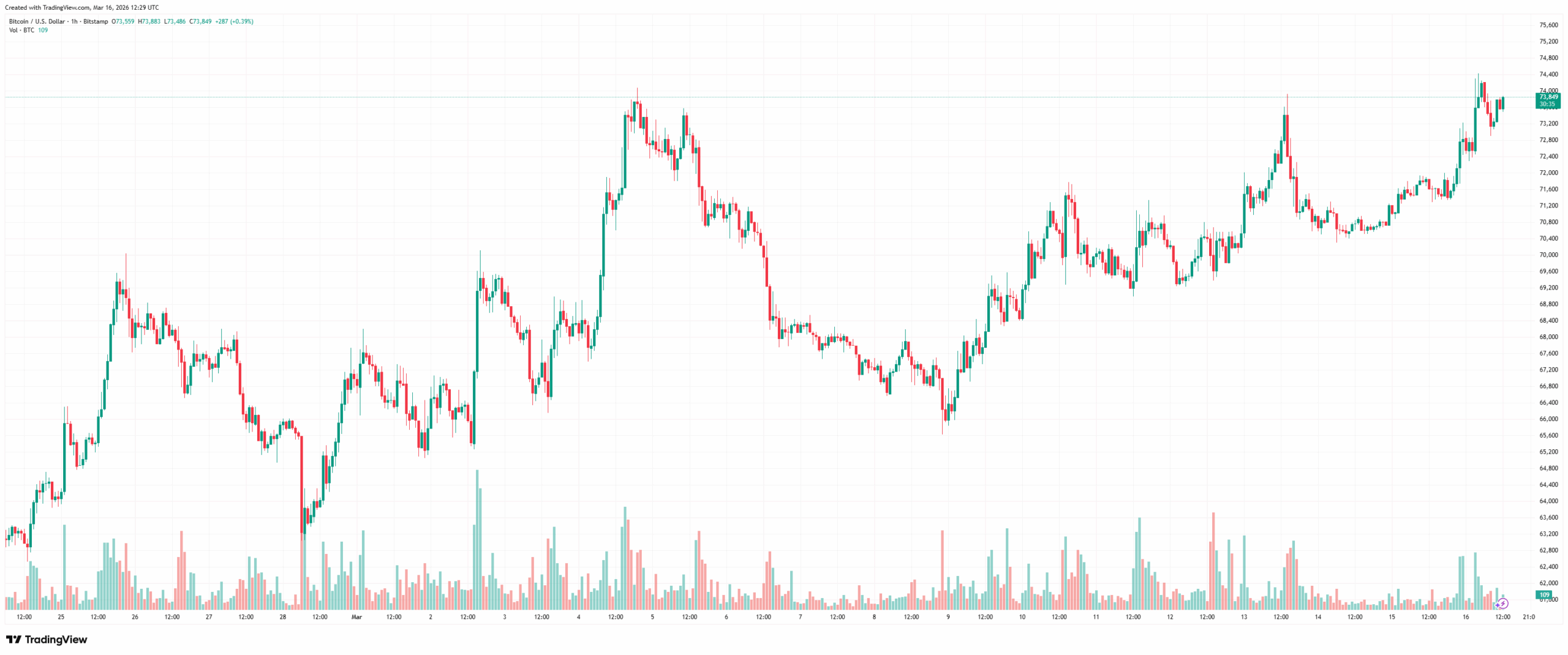
Bitcoin’s price surged above $74,400 today, marking a multi-week high and reigniting optimism across the broader cryptocurrency market, as evidenced by the rise in altcoins.
The rally came amid renewed buying pressure, a wave of institutional demand, and yet another behemoth purchase by Michael Saylor’s Strategy.
Bitcoin Climbs to $74K as Market Momentum Builds
BTC rose to around $74,400 earlier today, then dipped slightly to its current price of about $73,700. The bulls regained control amid anticipation of macroeconomic developments, including inflation data releases, PPI, and more.
The move comes on the back of considerable institutional involvement last week. Data shows that investors in BlackRock’s IBIT BTC ETF bought a total of $600 million last week, marking five consecutive days of positive inflows.
Moreover, news just broke out that Strategy (formerly MicroStrategy) has bought another $1.57 billion worth of BTC during the same week, at an average price of around $70,194 per bitcoin. The largest corporate holder now owns a whopping 761,068 BTC worth $57.61 billion.
Today’s increase led to more than $300 million in liquidated short positions, which indicates the prevalent dominance of the bulls, at least for the time being. The good news is that this Bitcoin momentum is also transitioning through the rest of the market, and many altcoins are also charting considerable increases, painting the entire heatmap green.

With Bitcoin already testing major resistance near $74K, some analysts say the next phase of the market could be consolidation or a breakout. These are market conditions that generally favor altcoins.
GCoin Shines as Investor Focus Amid Favorable Market Conditions
As Bitcoin captures headlines with its latest rally, the attention is also shifting toward emerging altcoins that promise real-world utility in revenue-generating sectors. One of the projects gaining traction among early adopters is GCoin, the native utility token of the PlayNance ecosystem.
GCoin is designed to power a fully-fledged Web3 gaming and entertainment infrastructure, enabling real-time on-chain interactions through multiple platforms and digital experiences. Within its ecosystem, the token serves as a powerful economic engine, facilitating transactions, gameplay mechanics, and rewards.
According to the official website, the token is already actively used across the PlayNance ecosystem, powering:
- 10,000 on-chain games across many platforms
- 2.5M live sports events annually
- Millions of ongoing predictions and crash market interactions
The ecosystem itself processes an average of 1.5 million on-chain transactions every day, all executed using G Coin as the settlement and utility layer. PlayNance itself was founded in 2020 and specializes in non-custodial financial games and entertainment. Key products within the ecosystem include PlayW3’s social gaming aspect, PlayBlock, designed for high-frequency, real-time gasless transactions, and more.
G Coin is having its token generation event (TGE) in less than 36 hours, but interested parties can already buy the altcoin on its official sales page.
So far, almost 14 billion tokens have been sold, and the price is structurally increasing. This means that users have to participate quickly to lock in more favorable conditions. The project’s current market cap is around $40 million, and there are more than 200,000 holders, underscoring strong interest in what the project has to offer.
The smart contract has been audited by the market leader, CertiK.
Disclaimer: The above article is sponsored content. CryptoPotato doesn’t endorse or assume responsibility for the content, advertising, products, quality, accuracy, or other materials on this page. Nothing in it should be construed as financial advice. Readers are strongly advised to verify the information independently and carefully before engaging with any company or project mentioned and to do their own research. Investing in cryptocurrencies carries a risk of capital loss, and readers are also advised to consult a professional before making any decisions that may or may not be based on the above-sponsored content.
Readers are also advised to read CryptoPotato’s full disclaimer.
Binance Free $600 (CryptoPotato Exclusive): Use this link to register a new account and receive $600 exclusive welcome offer on Binance (full details).
LIMITED OFFER for CryptoPotato readers at Bybit: Use this link to register and open a $500 FREE position on any coin!
DOGE might explode to $0.50 if it breaks above a certain level, one analyst claimed.
The biggest meme coin has caught the recent green wave sweeping through the cryptocurrency market, with its price rising to a 10-day high.
Whales are waking up, too, hinting that the real rally might only be starting.
Further Gains Ahead?
The cryptocurrency sector, especially the meme coin niche, has registered a substantial uptick over the past 24 hours. The undisturbed leader, Dogecoin (DOGE), soared by 6% daily, while its market capitalization once again surpassed $15 billion.
Given the whales’ recent accumulation, the OG meme coin could be poised for an additional increase. The renowned analyst Ali Martinez revealed that this cohort of investors has acquired 470 million DOGE in the past 72 hours. The stash is worth roughly $47 million (calculated at current rates).
Following the latest buying spree, the whales boosted their total possessions to almost 36 billion coins, representing 23.5% of Dogecoin’s circulating supply.
Such accumulation is typically considered bullish for the price as it reduces the amount of tokens available on the open market and signals growing confidence among major holders. Whales are known as experienced investors who rarely jump on the bandwagon without proper knowledge or research, leaving unanswered questions about whether they know something we don’t. In the aftermath, smaller players might be encouraged to join the ecosystem as well, thereby injecting fresh capital.
Some industry participants support the bullish outlook. X user Trader Tardigrade claimed that DOGE “is breaking out” from a certain setup that has historically preceded “a massive pump.” For their part, CoinQTS described $0.125 as a “key level to watch,” predicting a rally to as high as $0.50 should the price break above $0.13.
You may also like:
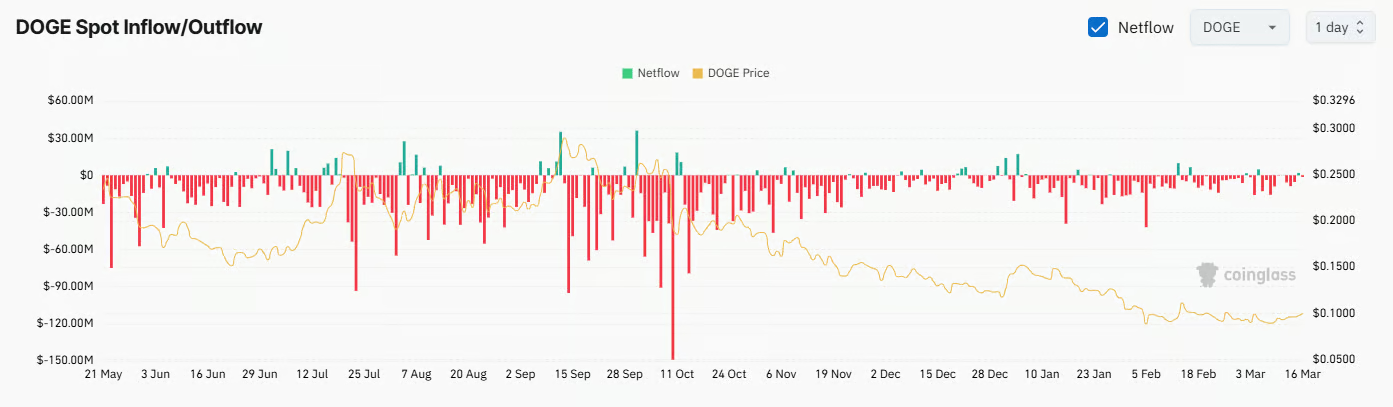
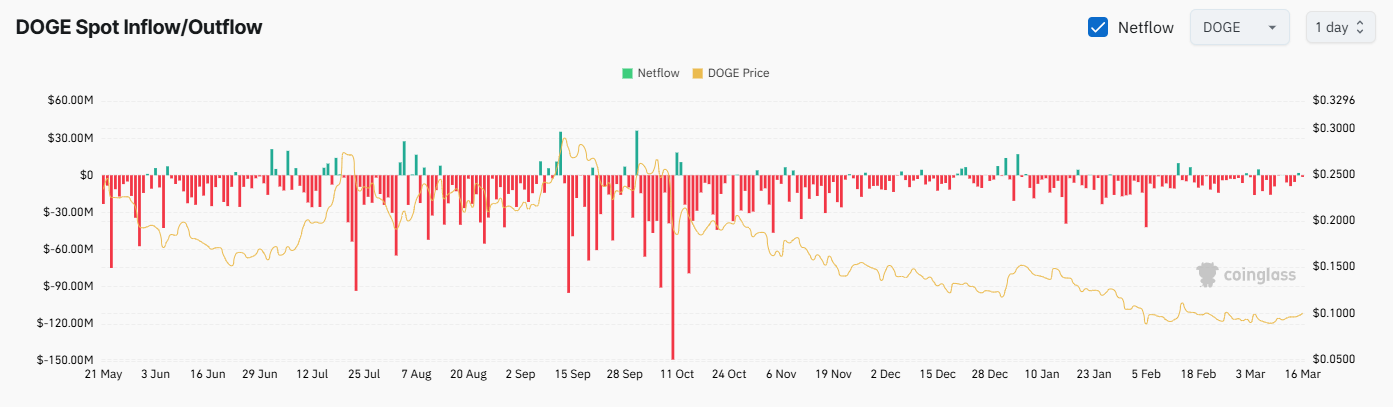
The recent DOGE exchange netflow may also sit well with bulls. Data show that outflows have consistently outweighed inflows over the past weeks, indicating that investors have shifted from centralized platforms to self-custody methods, thereby reducing immediate selling pressure.
On the contrary, Dogecoin’s Relative Strength Index (RSI) should serve as a warning that a short-term correction may also be on the horizon. The technical analysis tool measures the speed and magnitude of price changes to assess potential reversal points. It runs from 0 to 100, with ratios above 70 considered bearish territory, while anything below 30 is considered a buying opportunity. Currently, the RSI stands at around 76.

The Potential Elon Musk Effect
It is no secret that the world’s wealthiest person is keen on Dogecoin and has, over the years, endorsed it publicly, which has led to substantial price gains. Not long ago, Musk confirmed that X Money, the platform’s upcoming payments feature, will go live next month. It is expected to allow users to send and receive funds directly through X, with a strong emphasis on integrating digital assets into the effort.
X user Fuel wondered what would happen if Musk made DOGE the default currency for the new feature, suggesting such a move could push the price to $0.50 or even $1.
Many commentators on the post believe that Dogecoin will not play such a central role in X Money, with some describing the token as a “joke just like all meme coins.”
Binance Free $600 (CryptoPotato Exclusive): Use this link to register a new account and receive $600 exclusive welcome offer on Binance (full details).
LIMITED OFFER for CryptoPotato readers at Bybit: Use this link to register and open a $500 FREE position on any coin!
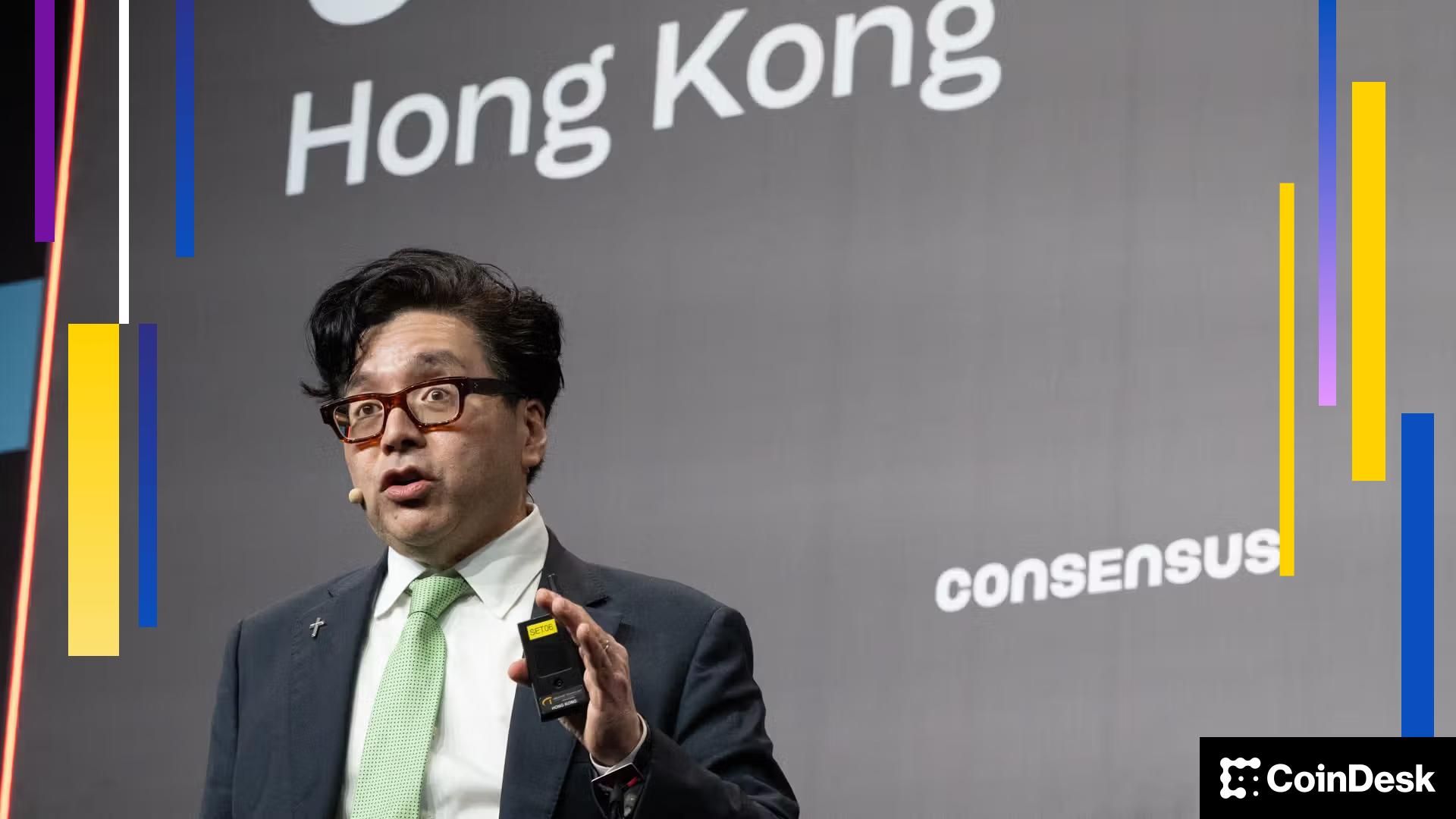
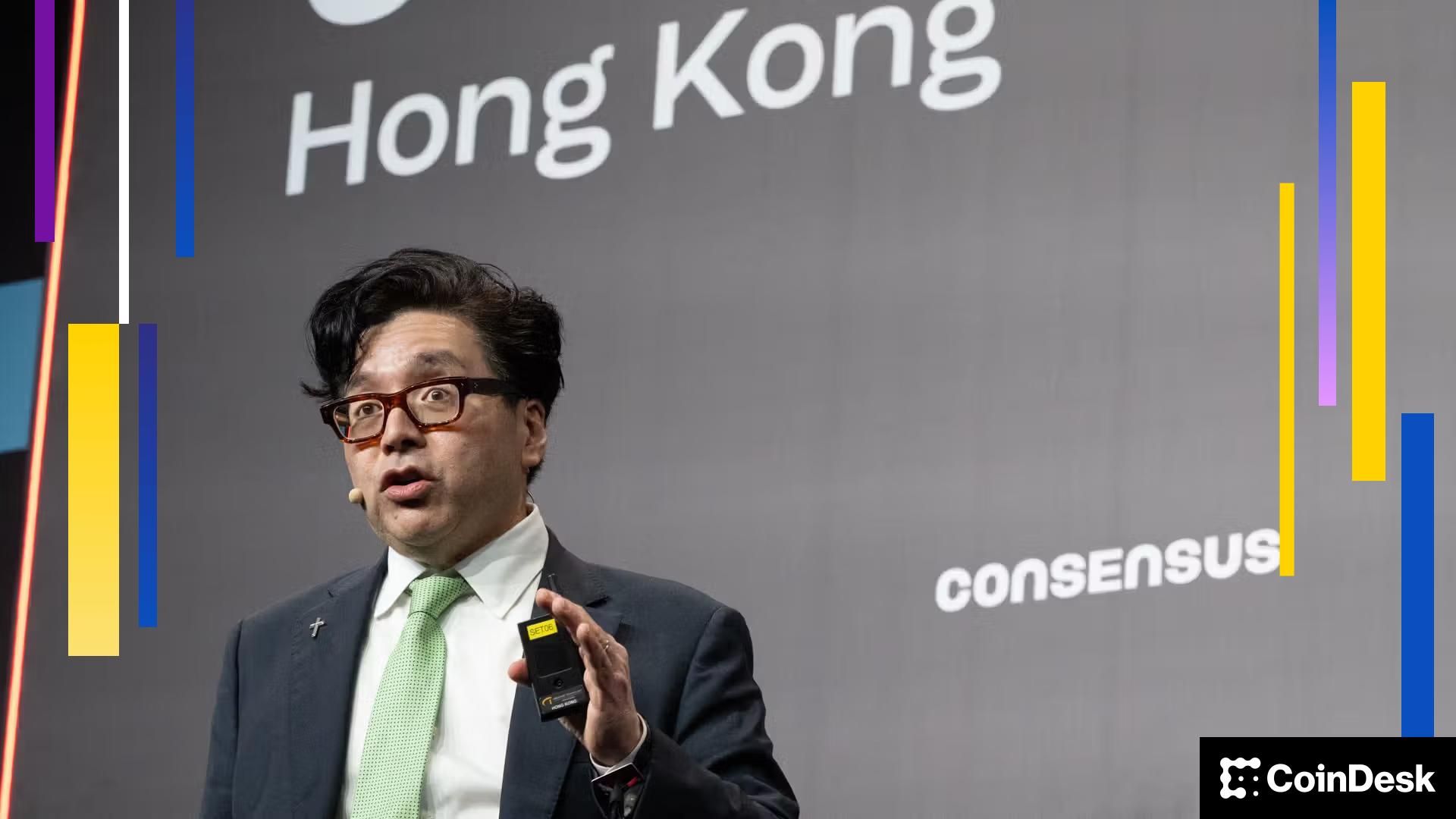
Bitmine Immersion Technologies (BMNR), the largest ether-focused treasury firm, bought 60,999 ether (ETH) last week as it continues to build up its holdings of the second-largest cryptocurrency by market capitalization.
In token terms, the purchase was the company’s biggest this year, though only a small increase from the previous week’s 60,976 ETH haul.
The latest purchase, worth nearly $140 million at current prices, lifted Bitmine’s ETH holdings to 4,595,562 tokens, valued at more than $10 billion, according to a Monday update from the company.
The firm maintained a $1.2 billion cash holding, even though it increased its stake in Worldcoin-focused (WLD) treasury firm Eightco (ORBS) last week alongside its ETH purchase.
Bitmine’s stock was nearly 9% higher pre-market as crypto prices rebounded over the weekend. ETH has advanced 8.4% over the past 24 hours.
The firm has steadily added to its treasury throughout the recent market downturn, even as unrealized losses on its position are estimated at around $6.5 billion, according to data from DropsTab.
Chairman Thomas “Tom” Lee said recent geopolitical tensions have not weighed on crypto prices as much as other assets.
“Since the start of the Iran war, crypto prices have outperformed and Ethereum has outperformed the S&P 500 by 2,450 basis points,” Lee said in a statement. “In our view, higher oil is triggering concerns of slowing growth for the global economy. And when investors worry about growth, they buy ‘growth stocks’ including MAG7, software and crypto.”
Bitmine continues to generate income from staking a large share of its ether holdings. The firm said it now earns about $180 million in annualized revenue from staking 3.04 million ETH, with potential staking revenue reaching $272 million once more of its tokens are locked to earn yield.
Read more: Ethereum Foundation sells 5,000 ether to Tom Lee’s BitMine in $10.2 million deal


Crypto wealth platform Abra said it plans to go public through a merger with special purpose acquisition company New Providence Acquisition Corp. III in a deal that values the firm at $750 million.
The combined company will be renamed Abra Financial Inc. and is expected to list on Nasdaq under the ticker ABRX, according to an announcement.
The transaction could deliver as much as $300 million in cash from the SPAC’s trust account, though the final amount depends on shareholder redemptions and deal expenses.
Founded in 2014 and based in San Francisco, Abra provides a range of services for crypto investors. Its platform allows institutions, registered investment advisers, family offices and wealthy individuals to store crypto, trade hundreds of tokens, earn yield and borrow against holdings.
Assets sit in segregated accounts called vaults rather than on the company’s balance sheet. The firm operates an SEC-registered investment adviser and frames its services as a bridge between traditional wealth management and crypto markets.
Abra said proceeds from the transaction will support product development, hiring and expansion into areas such as tokenized real-world assets and decentralized finance.
The company reported “hundreds of millions of dollars in assets” under management and aims to exceed $10 billion by 2027.
Abra was founded by CEO Bill Barhydt as a mobile crypto wallet and remittance app aimed at retail users. During the last crypto bull cycle, the company expanded into lending and yield products through its Abra Earn program and raised $55 million in 2021 from investors including Blockchain Capital, Pantera Capital and RRE Ventures.
The company shifted strategy after regulators challenged parts of its lending business. In 2023 and 2024, Abra reached settlements with U.S. state regulators and the Securities and Exchange Commission tied to unregistered lending and securities offerings.
The firm shut its U.S. retail operations and returned funds to customers before rebuilding the business around institutional and high-net-worth clients through its SEC-registered investment arm, Abra Capital Management.
The proposed merger is pending approval from shareholders and regulators before closing.

Regulators in South Korea have intensified their crackdown on crypto exchanges, delivering a record 36.8 billion won fine and a six-month partial suspension to Bithumb after a comprehensive AML audit. The Financial Intelligence Unit (FIU) under the Financial Services Commission (FSC) disclosed findings of about 6.65 million AML violations during the inspection, spanning gaps in customer identity verification, transaction restrictions, and record-keeping. In addition, authorities flagged 45,772 crypto transfers tied to 18 unregistered overseas virtual asset service providers (VASPs), underscoring regulatory concerns about cross-border activity in the sector. The penalties were issued following a sanctions deliberation committee’s review of Bithumb’s compliance with the Act on Reporting and Use of Specific Financial Transaction Information, marking the largest fine to date imposed on a South Korean crypto exchange and signaling a broader, ongoing regulatory push across the domestic market.
Key takeaways
- Bithumb received a 36.8 billion won penalty and a six-month partial ban on processing external transfers for new customers.
- The six-month ban runs from March 27 to September 26; existing users are not restricted, and new customers can still trade, deposit, or withdraw won.
- The FIU had repeatedly warned Bithumb to halt dealings with unregistered overseas VASPs, but the exchange did not implement effective blocking measures.
- The enforcement wave extends beyond Bithumb, with Upbit previously hit by a three-month ban for new clients and a 35.2 billion won penalty in February 2025.
- Korbit later faced AML-related penalties, including a 2.73 billion won fine and an institutional warning in December 2025, illustrating a widening crackdown across major Korean exchanges.
Market context: The Bithumb action sits within a broader Korean initiative to curb AML/CTF risks in digital assets, a trend that has pressed exchanges to tighten know-your-customer and transaction-monitoring controls. The crackdown aligns with ongoing regulatory discussions and enforcement that signal higher compliance costs and operational adjustments for venue operators. In parallel coverage, reports have highlighted government plans to leverage artificial intelligence for crypto tax enforcement, underscoring a shift toward tech-enabled oversight in Korea’s crypto markets. See coverage noting AI-driven tax tracking for crypto gains: South Korea plans to use AI for crypto tax enforcement.
Why it matters
The immediate impact is a clearer demonstration that South Korea intends to enforce AML rules aggressively across its crypto ecosystem. For Bithumb, the sanction will not only affect its balance sheet but could also influence user trust and future licensing discussions as the exchange seeks to restore regulatory alignment. The six-month partial ban specifically restricts a key channel for onboarding new users—external transfers—while allowing ongoing operations for existing customers, a nuance that highlights how regulators tailor penalties to minimize disruption for current users while signaling deterrence for non-compliant practices.
The broader significance lies in the regulatory signal it sends to the global crypto community. As the Korean authorities pursue cross-border compliance more assertively, exchanges operating in the region are compelled to tighten their AML programs, KYC checks, and monitoring systems. The penalties levied on Upbit and Korbit in the preceding months reinforce that this is not a single case but part of a systematic crackdown. The evolving landscape may influence liquidity dynamics, compliance costs, and the strategic decisions of exchanges seeking to balance growth with robust risk controls.
What to watch next
- Monitor whether Bithumb completes the required AML remediation steps by the end of the six-month period (March 27 to September 26) and how the regulator assesses ongoing compliance.
- Assess subsequent regulatory updates or clarifications from the FIU or FSC regarding procedures to block transactions with unregistered overseas VASPs.
- Observe whether other exchange operators adjust their customer onboarding and cross-border transaction policies in response to the Upbit and Korbit penalties.
- Track any additional enforcement actions or penalties announced in 2025 and beyond as part of Korea’s broader AML drive against crypto firms.
Sources & verification
- Yonhap News Agency reporting on the 6.65 million AML violations and 45,772 transfers involving 18 unregistered overseas VASPs.
- Financial Intelligence Unit (FIU) sanctions deliberation committee decisions and related proceedings.
- FIU preliminary notice dated March 9, 2025, regarding a six-month partial suspension for Bithumb.
- February 2025 reporting on Upbit’s three-month ban for new clients and a 35.2 billion won penalty.
- December 2025 updates on Korbit penalties, including a 2.73 billion won fine and an institutional warning.
South Korea’s AML crackdown hits Bithumb: details and implications
The episode surrounding Bithumb reflects a methodical tightening of South Korea’s regulatory grip on crypto exchanges. The FIU’s findings paint a picture of a system grappling with the scale and speed of crypto-enabled activity, particularly when transactions cross national borders. The identified 6.65 million AML violations covered multiple facets of compliance, including know-your-customer verifications that failed to meet standards and gaps in preserving the transactional trails that regulators rely on to detect suspicious activity. In parallel, the revelation of 45,772 transfers involving 18 unregistered overseas VASPs highlights a specific risk area: cross-border liquidity channels that may escape standard domestic oversight without robust cross-border collaboration and verification mechanisms.
From a regulatory design perspective, the sanctions were anchored in the Act on Reporting and Use of Specific Financial Transaction Information, signaling that enforcement will continue to be anchored in established financial-transaction reporting frameworks. The six-month ban on processing external transfers for new Bithumb customers is a staged approach: it curtails onboarding pathways that regulators are most concerned about while allowing ongoing operations to avoid a complete shutdown that could destabilize market access for existing users. The precise window—March 27 through September 26—offers a finite period for Bithumb to demonstrate that its controls have improved to prevent new client onboarding through unregistered cross-border channels.
These measures are not isolated. They sit within a broader pattern of penalties that the FIU has directed at other major Korean exchanges in recent years, including Upbit and Korbit, each facing penalties tied to deficiencies in AML and customer verification. This pattern suggests regulators are signaling that non-compliance will carry meaningful consequences, regardless of exchange size or market share. The resulting regulatory friction could drive consolidation toward platforms that demonstrate stronger AML capabilities, while heightening operational costs for participants who must upgrade KYC systems, transaction monitoring, and regulatory reporting to align with evolving standards.
Crypto World
Rain, Pippin, and Pepeto Could Go Parabolic in 2026 as Pepeto’s Presale Return Math Points to 269x While Ethereum Sits Undervalued
A recent review from CryptoQuant CEO Ki Young Ju reveals that according to 9 out of 12 major valuation models, Ethereum is still trading below fair value. The average fair value comes out to about $4,836, meaning ETH has roughly 58% room to run from where it is now, according to CoinDesk.
That sounds solid on paper, but traders hunting for the next crypto to explode know that 58% upside does not change financial trajectories. That is exactly why the presale return math on Pepeto keeps attracting capital at $0.000000186, where the PEPE cofounder’s $7 billion track record backs arithmetic that ETH’s market cap cannot deliver.
The CryptoQuant analysis breaks down multiple models. Some projections put ETH as high as $9,887, but even at that extreme, you are looking at around 3x to 4x from here. For traders seeking the next crypto to explode, Ethereum’s massive market cap does not allow for moonshot returns anymore.
Institutional interest and ETF momentum are real but provide stability, not the explosive multiples early stage investors chase, per Bloomberg.
Undervalued tokens ready to surge in 2026
Pepeto: Presale return math makes this the next crypto to explode
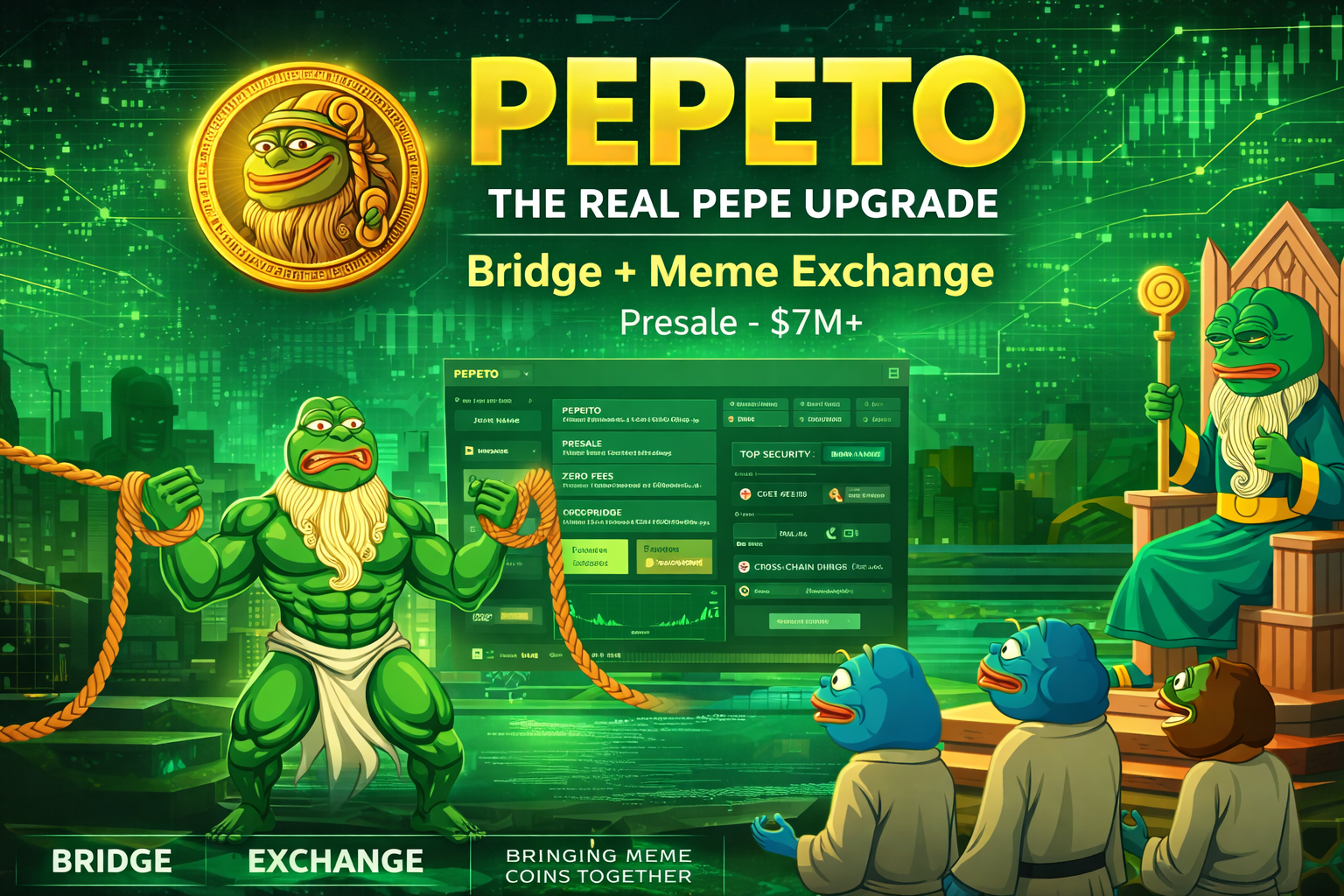
If you are hunting for the earliest possible entry where the presale return math produces life changing numbers, Pepeto is still in presale with the PEPE cofounder directing the build. The project aims to give the $45 billion meme economy the dedicated infrastructure it has never had, with PepetoSwap, Pepeto Bridge, and Pepeto Exchange all announced and close to being ready.
At $0.000000186 per token, a $1,000 entry positions you for $269,000 at $0.00005. A $3,000 commitment targets $807,000. A $5,000 position crosses $1,345,000 at 269x, and the math doubles to 537x at $0.0001. SolidProof has verified every contract. Over 4 billion tokens have been permanently burned. 200% APY staking compounds positions daily.
The presale has crossed $7.99 million at $0.000000186, confirming that the arithmetic is attracting investors who calculate numbers before committing capital. Exchange listings are approaching. Every day you wait is another day closer to the moment when the open market reprices everything the PEPE cofounder has built.
SolidProof has provided the security assurance that positions Pepeto as one of the most verified presales in the market. The 269x projection is grounded in founder credibility, verified contracts, and infrastructure the $45 billion meme economy demands, but the window to capture that arithmetic is closing fast.
Rain: The prediction market play
Rain is trading at $0.009 on March 16 after institutional backing sent the token surging. The prediction market sector did over $3 billion in trading volume last quarter.
With constant buy pressure from token burns baked into the tokenomics, Rain remains a narrative play for investors who believe prediction markets keep growing.
Pippin: AI meme coin with strong backing
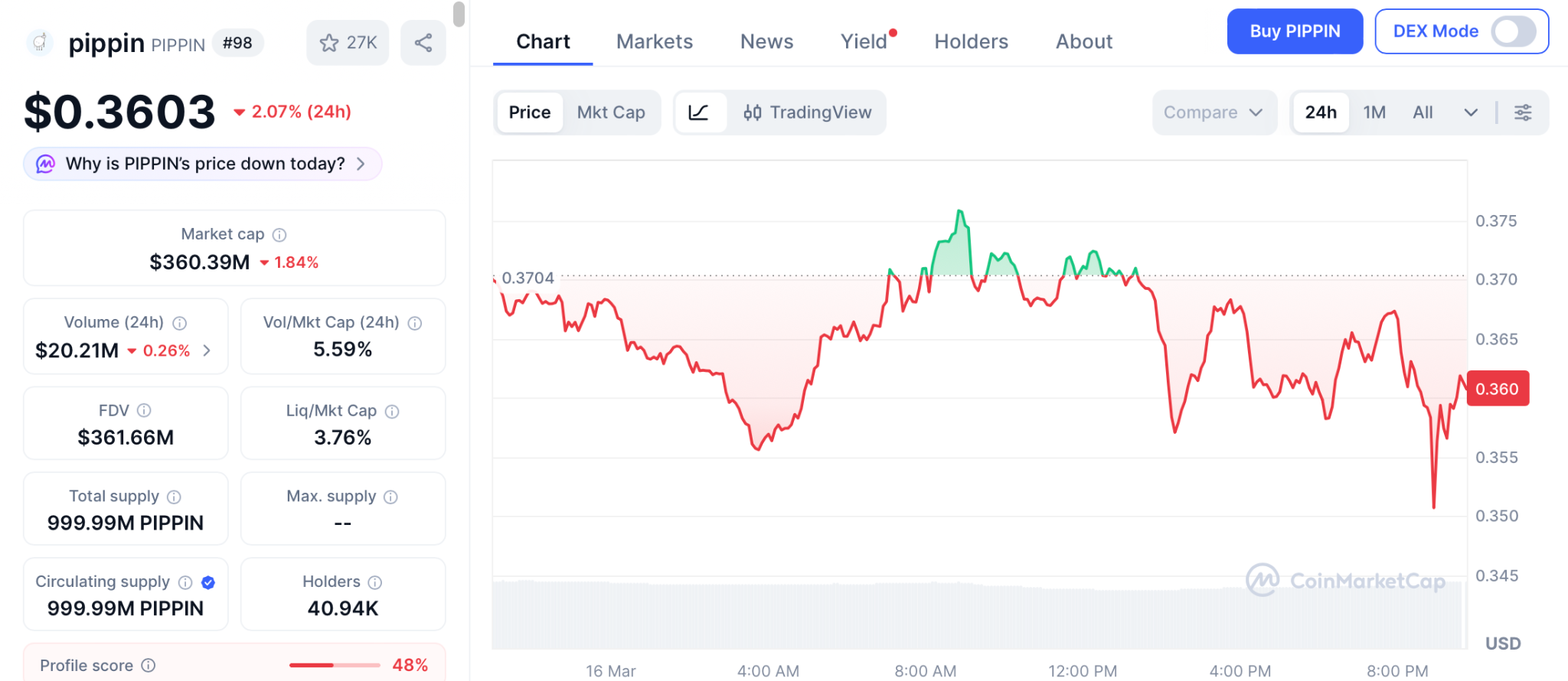
PIPPIN trades at $0.36 according to CoinMarketCap on March 16 with a market cap near $360 million. Created by the mind behind BabyAGI, the project gained over 150% in a recent rally.
If AI agent tokens dominate the next cycle, Pippin could surge further from current levels.
Conclusion
Ethereum being undervalued according to multiple models is solid news for portfolio stability. But the next crypto to explode is not coming from a $200 billion market cap asset where even optimistic targets produce single digit multiples. You missed PEPE when the cofounder launched it from nothing into $7 billion. You missed DOGE before it became a household name. You missed SHIB before it minted millionaires.
Pepeto at $0.000000186 with $7.99 million raised, SolidProof verification, and three infrastructure products approaching launch is that same entry point. The presale is still open, and the only question is whether you commit now or let another opportunity pass.
Click To Visit Pepeto Website To Enter The Presale

FAQs
Why is Ethereum unlikely to deliver massive returns?
ETH sits at a $200 billion market cap. Even hitting the most bullish targets produces 3x to 4x. The next crypto to explode with 269x potential requires presale positioning like Pepeto with the PEPE cofounder.
What is the next big cryptocurrency for 2026?
Many traders are betting on Pepeto because the PEPE cofounder has already built $7 billion in value, SolidProof has verified every contract, and three meme economy products are approaching exchange listings.
What counts as a crypto with 269x potential in this market?
Low presale pricing, a proven founder, verified contracts, and real infrastructure. Pepeto at $0.000000186 with the PEPE cofounder and three products fits every criterion for the next crypto to explode.
Disclaimer: This is a Press Release provided by a third party who is responsible for the content. Please conduct your own research before taking any action based on the content.



Summary
- Coinglass data show about $2.056b in BTC longs at risk if price slips below roughly $70,346, versus $1.514b in shorts facing liquidation above $77,312.
- Over the last 24 hours, crypto liquidations hit $402m, with $80.7m in longs and $322m in shorts wiped out; Bitcoin alone saw $131m in positions forced out.
- BTC trades around $73,778 and ETH near $2,201, with crowded leverage and tight liquidation bands signaling that the next break could trigger a sharp, forced move.
Coinglass liquidation data is sketching out a brutal risk corridor for Bitcoin (BTC), with billions in leveraged positions sitting just above and below spot. According to figures summarized by Jinshi Finance, if BTC drops below roughly $70,346, cumulative long liquidations on major centralized exchanges would climb to around $2.056 billion. On the flip side, a squeeze above about $77,312 would put some $1.514 billion worth of short positions at risk of being wiped out.
That overhang comes after an already heavy flush in the last 24 hours. Across the crypto market, total liquidations reached about $402 million over the period, with roughly $80.6751 million in longs and $322 million in shorts forced out of their positions. For Bitcoin alone, longs lost around $20.3203 million versus approximately $111 million in short liquidations, while Ethereum traders saw about $16.483 million in long positions and $142 million in shorts liquidated. In total, 94,026 traders were liquidated, with the largest single order — on Bitfinex’s tBTCF0:USTF0 pair — clocking in near $6.9442 million.
Despite that, spot prices in majors remain elevated. Bitcoin is currently trading around $73,778, up about 5.8% over the last 24 hours, after ranging between roughly $69,460 and $73,770 on more than $55.4 billion in volume. Ethereum is changing hands near $2,201, higher by around 6.8% on the day, with a 24‑hour low of about $2,041.70 and high of $2,200.03, and turnover close to $27.76 billion. This combination — strong spot, heavy leverage, and tightly clustered liquidation bands — is exactly the kind of setup that tends to produce sharp, directional moves when one side finally loses its grip.
For now, the message from the derivatives tape is simple: positioning is crowded, and the next impulsive move will likely be amplified by forced deleveraging. Traders running size around these levels need to respect the liquidation heatmap as much as the chart. Real‑time stats for majors are available via crypto.news dashboards for Bitcoin and Ethereum. For more on how leverage has shaped recent swings, see earlier reporting on why Bitcoin briefly slid under $66K, the latest ETF‑driven flows into BTC, and Michael Saylor’s continued treasury‑backed accumulation of Bitcoin.
Crypto World
Institutional investors held firm through bitcoin’s downturn, Bitwise CIO Matt Hougan says


Institutional investors may be proving more resilient bitcoin holders than critics expected, according to Bitwise CIO Matt Hougan, who says ETF flow data suggests professional investors have largely held onto their positions during the crypto market’s steep decline.
“The best evidence we have is in the ETF market,” Hougan said. “Bitcoin ETFs accumulated roughly $60 billion in net flows from their launch in January 2024 through October 2025. Since October 2025, prices are down 50%, but we’ve seen less than $10 billion in outflows from ETFs.”
Bitcoin exchange-traded funds attracted roughly $60 billion in net inflows between their launch in January 2024 and October 2025, Hougan told CoinDesk. Since then, the cryptocurrency’s price has fallen about 50%, yet ETFs have seen less than $10 billion in outflows.
“In other words, despite a punishing bear market, professional investors have proven to be ‘diamond hands’ in bitcoin,” he said.Hougan’s Bitwise offers a suite of digital asset investment products, including the Bitwise Bitcoin ETF (BITB). BITB has just under $3 billion in assets under management. The leading spot bitcoin ETF, BlackRock’s iShares Bitcoin Trust (IBIT) has more than $55 billion in AUM.
Bitcoin remains a ‘non-consensus asset’
Hougan said the data challenge a common criticism that institutional investors, often considered more sensitive to macroeconomic shocks and liquidity cycles, could sell their bitcoin exposure quickly during periods of market stress. However, he added, the opposite dynamic may be at play currently.
“Despite its progress in recent years, bitcoin remains a non-consensus asset,” he said. “Institutional investors who buy bitcoin today are still sticking their neck out and standing out from their peers.”
That career risk means institutions allocating to bitcoin today tend to have unusually strong conviction in the asset, said the CIO at Bitwise, a San Francisco-based company with over $15 billion in client assets under management.
That career risk means institutions allocating to bitcoin today tend to have unusually strong conviction in the asset, said the CIO at Bitwise, a San Francisco-based company with over $15 billion in client assets under management.
“As a result, the institutional investors who decide to allocate have very high conviction,” Hougan said. “They are not 51% convinced bitcoin is a good idea; they are 80% or 90% convinced. Otherwise, they wouldn’t take the risk.”
Because of that dynamic, he said he believes institutional capital could remain “very sticky” even during volatile market cycles “for the foreseeable future.”
The $1 million BTC question
Hougan said the behavior of institutional investors during downturns strengthens his long-term $1 million bitcoin outlook, on which he doubled down in the interview.
“The wildest thing about my $1 million prediction is that it’s not wild at all,” Hougan said. “All you need for bitcoin to get to $1 million is for the global store of value market to continue to grow as it has for the past 20 years and for bitcoin to become a minor but material part of that market.”
For Hougan, the resilience of institutional investors through volatile market cycles is part of that broader maturation process.
“It just needs what’s been happening for the past 10-20 years to keep happening for the next 10 years, and we’ll get there,” he said.

NCP set to enter administration putting more than 1,000 jobs at risk

Foundation’s new mandate sparks debate about its role, priorities

Who Do They Play in Taylor Sheridan’s Show?


-
 Tech5 days ago
A 1,300-Pound NASA Spacecraft To Re-Enter Earth’s Atmosphere
-
 Crypto World2 days ago
HYPE Token Enters Net Deflation as HyperCore Buybacks Outpace Staking Rewards
-

 Business6 days ago
ExxonMobil seeks to move corporate registration from New Jersey to Texas
-

 Fashion3 days ago
Weekend Open Thread: Addict Lip Glow
-

 Tech6 days ago
ChatGPT will now generate interactive visuals to help you with math and science concepts
-
Sports2 days ago
Why Duke and Michigan Are Dead Even Entering Selection Sunday
-

 NewsBeat5 days ago
Residents reaction as Shildon murder probe enters second day
-
 NewsBeat7 days ago
Pagazzi Lighting enters administration as 70 jobs lost and 11 stores close across Scotland
-

 Business5 days ago
Search Enters Sixth Week With New Leads in Tucson Abduction Case
-

 Business21 hours ago
Search for Savannah Guthrie’s Mother Enters Seventh Week with No Arrests
-

 Business2 days ago
US Airports Launch Donation Drives for Unpaid TSA Workers as Partial Government Shutdown Enters Fifth Week
-
Crypto World2 days ago
Coinbase and Bybit in Investment Talks: Could Bybit Finally Enter the US Crypto Market?
-

 NewsBeat5 days ago
I Entered The Manosphere. Nothing Could Prepare Me For What I Found.
-

 Business7 days ago
Search Enters 39th Day with FBI Tip Line Developments and No Major Breakthroughs
-

 Business2 days ago
Country star Brantley Gilbert enters growing non-alcoholic beer market
-

 Business6 hours ago
Australian shares drop as Iran war enters third week
-
 Crypto World6 days ago
Will Chainlink price reclaim $10 amid volatility squeeze?
-

 Sports5 days ago
PWHL, Senators discussing plan to keep Charge in Ottawa
-

 Crypto World6 hours ago
Crypto Lender BlockFills Enters Chapter 11 with Up to $500M in Liabilities
-

 Sports3 days ago
College Basketball Best Bets: Conference Tournament Semifinal Picks


You must be logged in to post a comment Login