
Crypto World
Crypto Long & Short: Asia’s digital asset crackdown: accountability gets personal

Welcome to our institutional newsletter, Crypto Long & Short. This week:
- Bob Williams on how stricter crypto regulations in Asia are putting more personal responsibility on senior leaders, making strong governance and D&O insurance essential.
- The FBI’s Haidy Grigsby on how crypto scams are increasingly targeting experienced investors by building trust and tricking them into making larger deposits until their money is gone.
- Top headlines institutions should pay attention to by Francisco Rodrigues.
- Hyperliquid’s TradFi bet is now 40% of its own volume in Chart of the Week.
Expert Insights
Asia’s digital asset crackdown: accountability gets personal
By Bob Williams, FinTech, digital assets, & blockchain advisory leader (Asia/Pacific), Lockton Companies
A new wave of digital asset regulations across Asia is increasing pressure on trading platforms and asset managers to strengthen governance — and to reassess their Directors’ and Officers’ (D&O) liability insurance arrangements.
In recent months, three leading digital asset hubs — Hong Kong, Singapore and South Korea — have announced plans to refine their respective regulatory frameworks. As regulatory expectations rise and senior management’s personal accountability becomes clearer, platform operators must stay informed of these developments and evaluate whether their existing risk transfer strategies remain fit for purpose.
Hong Kong: expanding accountability beyond governance
In August 2025, Hong Kong’s Securities and Futures Commission (SFC) issued a circular to licensed virtual asset trading platform operators clarifying senior management’s responsibilities regarding the custody of clients’ virtual assets. The circular reinforces expectations around governance, internal controls and effective oversight, signaling a continual shift toward personal accountability for directors and senior management.
An emerging consideration from the SFC’s consultation process is whether virtual asset management service providers should be permitted to rely on non‑SFC‑regulated or offshore custodians. From an insurance perspective, the availability of coverage for virtual asset risks is closely tied to the robustness of custody arrangements, including security controls, operational resilience and asset protection standards. To date, insurance capacity has largely been supported by the prescriptive requirements imposed on SFC‑regulated custodians and platforms.
If alternative custody models are permitted, ensuring that non‑regulated or offshore custodians are held to equivalent standards, including appropriate insurance coverage will be critical. Without alignment, firms that have invested heavily to meet Hong Kong’s regulatory and insurance expectations may face a competitive disadvantage, while the objective of enhancing investor protection and market integrity could be undermined.
Singapore: reinforcing senior management competency
In 2025, Singapore introduced licensing requirements for digital token service providers serving only overseas customers, bringing a broader range of firms within the Monetary Authority of Singapore’s regulatory perimeter.
Under the licensing guidelines, the competency and fitness of key individuals are core admission criteria. Senior management is expected to demonstrate a clear understanding of the regulatory framework and to exercise effective oversight and control over business activities and staff.
As regulatory expectations rise, so too does the personal exposure of directors and officers. In this context, D&O insurance remains a critical component of a firm’s overall risk management framework, helping to protect personal assets in the event of claims or regulatory actions arising from alleged governance or oversight failures.
South Korea: gearing up for Digital Asset Basic Act
South Korea is pursuing a more expansive regulatory overhaul through the proposed Digital Asset Basic Act, introduced to the National Assembly in June 2025. The bill seeks to formalize the digital asset market by regulating issuance, trading practices and distributions, while introducing new governance structures around asset listing and delisting decisions.
These imminent changes would significantly increase compliance obligations for trading platforms and related service providers. In this environment, D&O insurance plays an important role in protecting directors and officers from the financial consequences of legal actions, investigations or claims arising from alleged regulatory breaches.
Navigating regulatory complexity with D&O insurance
Across Hong Kong, Singapore and South Korea, regulators are refining already sophisticated frameworks to address the evolving risks of digital assets. These developments reflect a broader global trend toward intensified regulatory scrutiny and heightened expectations of senior management accountability.
For firms operating in the region, this means proactively reviewing governance structures, custody arrangements and insurance programs to ensure leadership is appropriately protected against emerging liabilities. D&O insurance is no longer a secondary consideration — it is a core element of responsible risk management in an increasingly regulated digital asset landscape.
Informed Perspectives
Crypto scams are not just targeting the uninformed
By Haidy Grigsby, special agent, cybercrime and digital evidence unit, Tennessee Bureau of Investigation
A common assumption is that crypto scams prey on the uninformed. While this is often true in financial fraud, crypto-related frauds are increasingly catching experienced investors, retired professionals and former market participants off guard with increasing frequency.
In my work at the FBI, I recently met with a retired trader who fit that profile exactly. He met a young woman online who claimed to know someone involved in crypto trading. He was told he had been selected as a consultant because of his experience. His case illustrates a strategy that we now see often.
Initial contact often begins with a wrong-number text, LinkedIn message or social media outreach. What starts as professional often turns personal or romantic, a tactic known as “pig butchering.” Scammers flatter expertise, create exclusivity and get the target to move the conversation to encrypted apps. In this case, “she” said WhatsApp was easier for her.
Exploiting familiarity with legitimate infrastructure, victims are instructed to open accounts on real exchanges, then use self-custody wallets to access external sites through built-in Web3 browsers. Because they click within a trusted app, they often don’t realize that they have left it.
These fraudulent markets mimic real ones with a twist: unlike real markets, these platforms allow one daily trade at a set time, ostensibly to capture optimal volatility. Victims choose long or short, allocate funds and confirm a brief trade lasting seconds or minutes. The scammer will often claim to contribute their own funds, reinforcing trust and the illusion of shared risk.
Balances grow and profits appear real. In truth, no trading occurs — the website is controlled by the operation, and the returns aresimply numbers entered by the scammer on their end.
To build credibility, victims are encouraged to withdraw a small amount after a “winning” trade. The withdrawal appears processed successfully, but is funded with cryptocurrency stolen from other victims and is meant to encourage larger future deposits. “I took profits. It had to be real,” the retired trader told me in frustration.
The websites change domains and branding frequently, with victims being told the company is merging, upgrading or rebranding. In reality these changes occur because of law enforcement takedowns, and victims are simply redirected to “new trading platforms.”
When victims attempt larger withdrawals, the narrative shifts: regulatory holds, tax prepayments, liquidity verification thresholds or tier upgrades. Each explanation is paired with urgent demands for more funds.
Convincing victims of the truth remains one of the greatest challenges. When I spoke with the retired trader, it was difficult to convince him I was law enforcement and that he had been dealing with a criminal organization, not one individual. No one wants to believe the person they built trust with and gave substantial sums of money to never existed. This retired trader was left to face his family, admit he had been defrauded and ask for help with basic living expenses. By the time he accepted reality, his retirement savings were already gone: assets had been transferred overseas, laundered and liquidated.

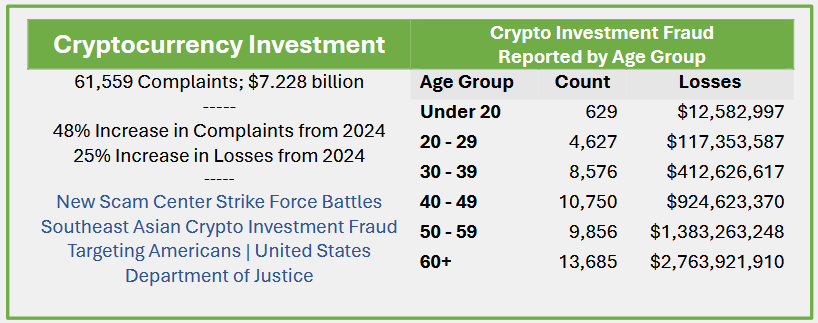
Source: FBI Internet Crime Complaint Center (IC3), 2025 Internet Crime Report, p. 53, https://www.ic3.gov/AnnualReport/Reports/2025_IC3Report.pdf
The FBI’s 2024 data show losses rising with age, likely reflecting the fact that older individuals have more accumulated wealth than those in their 20s.
Victims gather evidence: phone numbers, accounts, photos and websites — most of it turns out to be stolen, fake or AI-generated. Despite the difficulties in apprehending the perpetrators of these sophisticated schemes, law enforcement continues to pursue these cases. Anyone affected should cease all communication and report the incident to local law enforcement, IC3.gov and Chainabuse.com.
Headlines of the Week
– By Francisco Rodrigues
This week’s headlines show institutional adoption has kept on growing in the cryptocurrency space, yet old dangers remain. Protocol exploits, state-sponsored attacks, and technology disruption remain active threats.
Chart of the Week
Hyperliquid’s TradFi bet is now 40% of its own volume
Hyperliquid’s HIP-3 has scaled from ~$115 million in its first week (Oct 2025) to a peak of $17.8 billion/week, now consistently representing 35–40% of total protocol volume. Despite launching as a crypto-adjacent product, HIP-3 is overwhelmingly a TradFi venue, with Commodities alone driving ~60% of volume and pure crypto categories accounting for just ~12%. The aggregate (core + HIP 3) volume continues to decline since the early March 2026 peak with the HYPE price now following the same trend.

Listen. Read. Watch. Engage.
- Listen: Jennifer Sanasie is joined by Bloomberg Intelligence Senior Analyst James Seyffart to break down what Morgan Stanley’s bitcoin ETF could mean for institutional flows, fee competition, and the next phase of crypto adoption.
- Read: In Crypto for Advisors, Paul Frost-Smith, CEO of Komainu, covers how institutional crypto is converging with traditional finance, but speed can introduce risk if legal and compliance layers aren’t aligned. Then, in “Ask an Expert,” Sam Boboev from the “Fintech Wrap Up,” details the key coordination risks institutions must solve for.
- Watch: Jennifer Sanasie hosts Public Keys from the NYSE. Christopher Perkins discusses the recent acquisition by Franklin Templeton and the new “Franklin Crypto,” Superstate CEO Robert Leshner and Invesco’s Kathleen Wrynn break down their partnership, and NYSE Senior Market Strategist Michael Reinking, CFA unpacks the macro environment.
- Engage: Have you bought tickets to Consensus Miami yet? More speakers have been added to the agenda! Surrounding Consensus is an institutional summit, an advisor-focused “Wealth Management Day,” 100+ ancillary events and much, much more.
Looking for more? Receive the latest crypto news from coindesk.com and market updates from coindesk.com/institutions.
Note: The views expressed in this column are those of the author and do not necessarily reflect those of CoinDesk, Inc., CoinDesk Indices or its owners and affiliates.

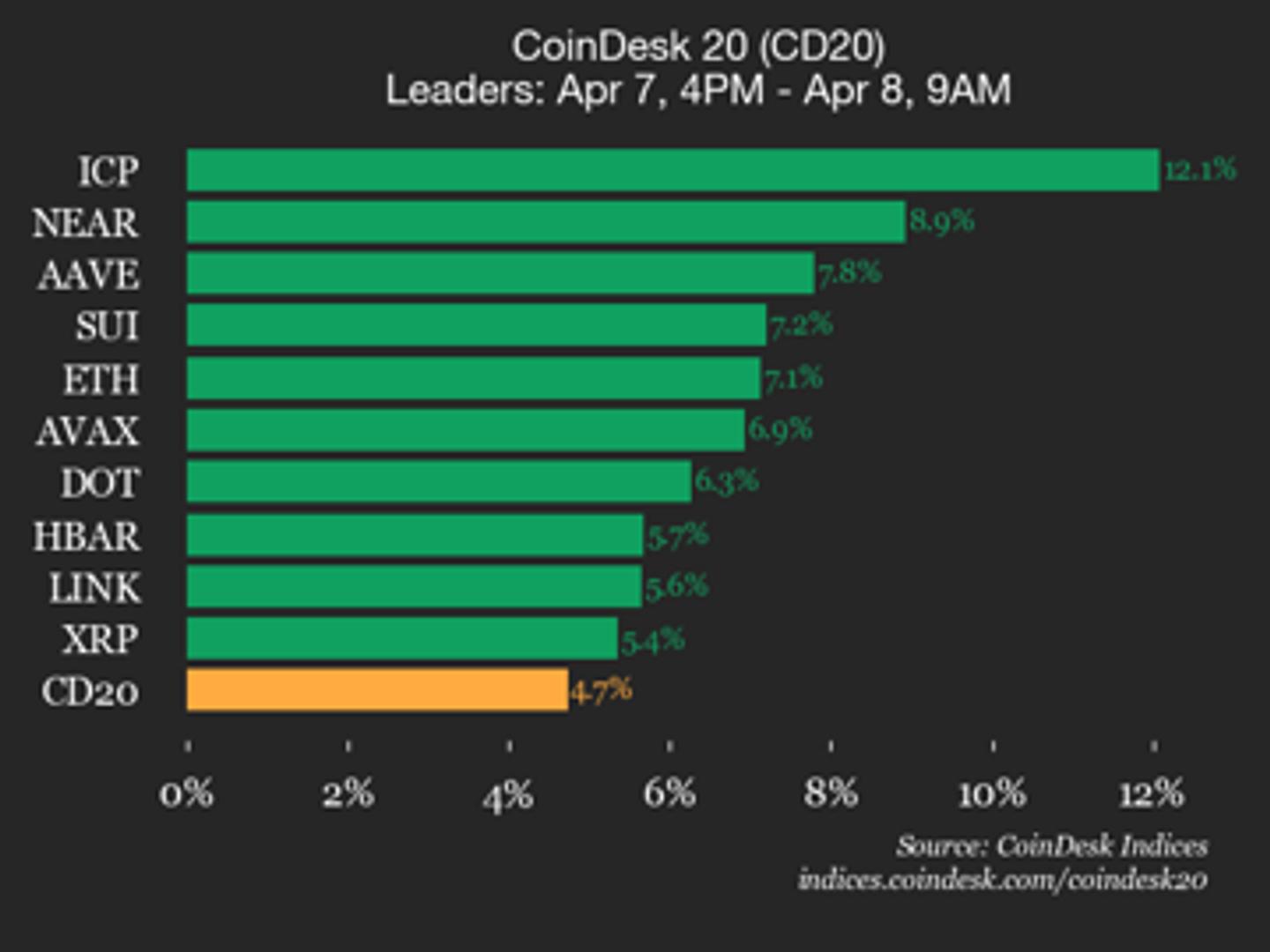
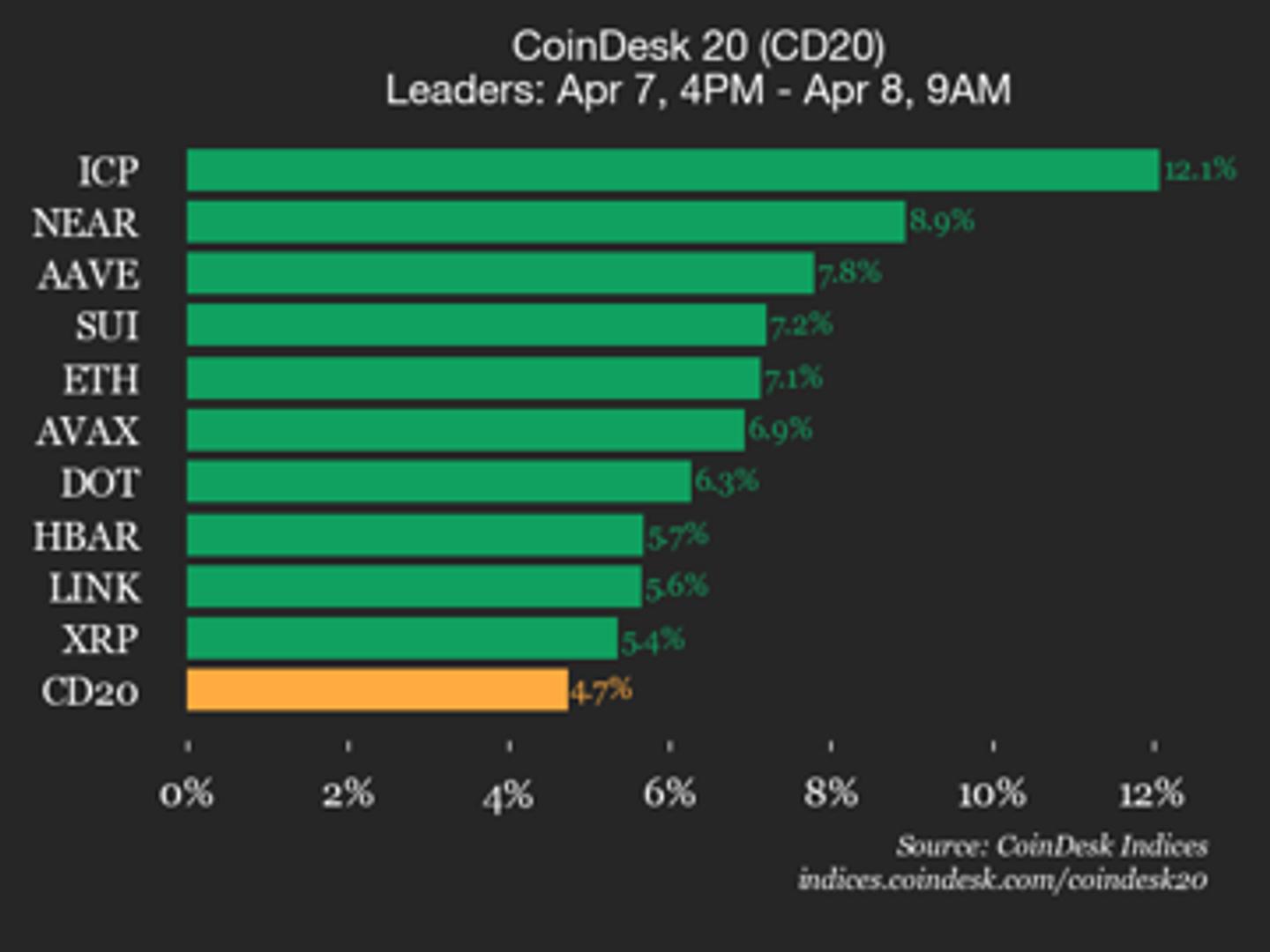
NEAR Protocol (NEAR) joined Internet Computer (ICP) as a top performer, climbing 8.9% from Tuesday.
Strategy Executive Chairman Michael Saylor rejected the New York Times investigation identifying Adam Back as Bitcoin’s (BTC) pseudonymous creator, Satoshi Nakamoto.
Saylor said stylometry is “interesting, but not proof.”
Why Saylor Demands Cryptographic Evidence
Saylor pointed to contemporaneous 2008 emails between Satoshi and Back as evidence that the two were separate people.
Back first received a message from Satoshi in August 2008 confirming the Hashcash citation in the upcoming white paper.
“Stylometry is interesting, but not proof. The contemporaneous emails between Satoshi and Adam Back suggest they were distinct individuals. Until someone signs with Satoshi’s keys, every theory is just narrative,” said Saylor.
That position aligns with his broader philosophy. Saylor has repeatedly described Satoshi’s disappearance as a deliberate act that strengthened BTC by removing any central authority figure.
He once wrote that Satoshi “created a way, gave it away, and walked away.”
What MicroStrategy Has at Stake
Strategy holds 766,970 BTC acquired for roughly $54.57 billion, making it the largest corporate holder globally.
That position depends on BTC functioning as a decentralized, leaderless monetary network, not on who designed it.
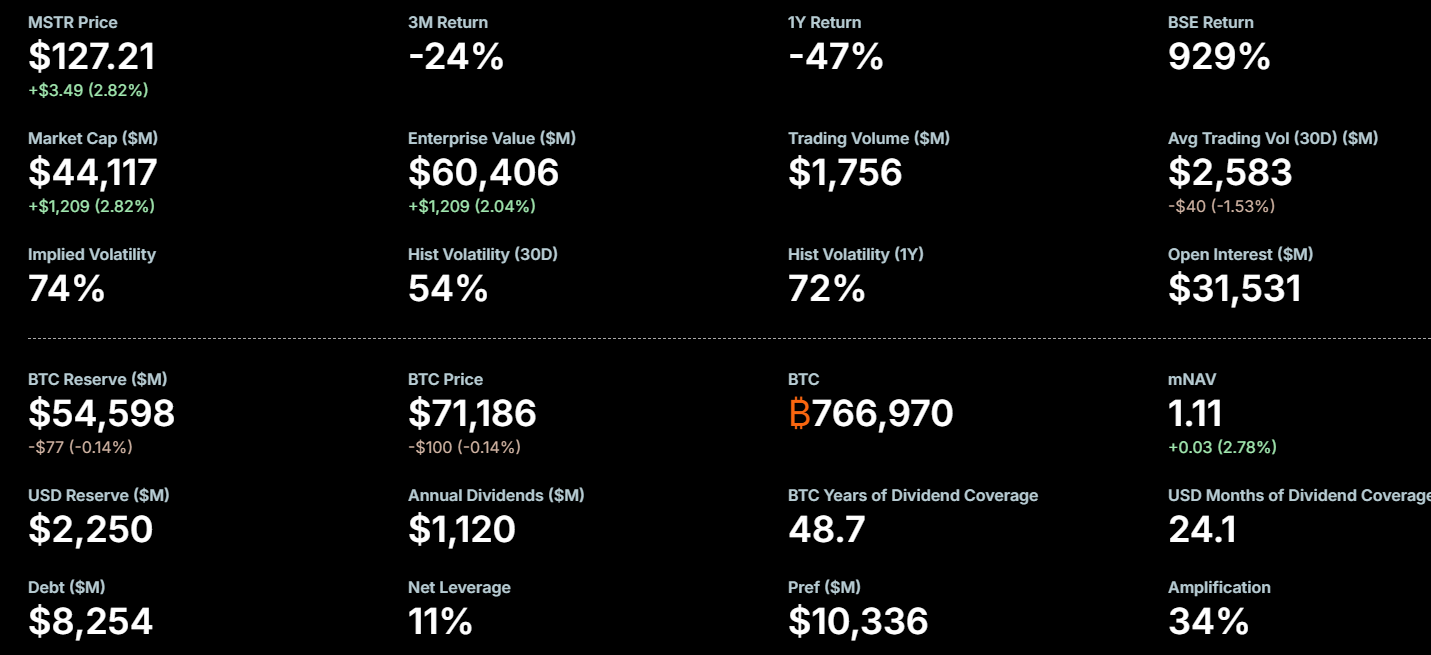
BTC dipped roughly 2.4% after the NYT article dropped, falling from $68,269 to $66,634. Saylor has previously dismissed such moves as temporary noise, calling volatility “Satoshi’s gift to the faithful.”
Back himself firmly denied being Satoshi, attributing writing overlaps to shared cypherpunk interests and confirmation bias.
The stylometric analysis, led by computational linguist Florian Cafiero, found Back as the closest match among 12 suspects but described the results as inconclusive.
For Saylor, the answer remains simple. Without a signature from Satoshi’s private keys, no investigation settles the question.
The post MicroStrategy’s Michael Saylor Doesn’t Buy The Adam Back Is Satoshi Story appeared first on BeInCrypto.

Standard Chartered is planning to reabsorb the client-facing custody operations of Zodia Custody into the digital assets division of its Corporate and Investment Bank (CIB).
The restructuring, which could be announced as early as this month, would leave Zodia operating only as a standalone Software-as-a-Service (SaaS) platform for custody technology, according to Bloomberg sources familiar with the matter.
From Incubation to Independence to Reabsorption
Standard Chartered established Zodia Custody in late 2020 through its innovation arm SC Ventures, alongside Northern Trust.
The custodian later attracted minority investors, including SBI Holdings, National Australia Bank, and Emirates NBD. It now employs around 150 people across seven offices globally.
Zodia had been gaining traction. In January 2026, it became the first custodian to support AUDM, an Australian dollar stablecoin.
The following month, it launched Zodia Switch, enabling clients to swap assets directly within the custody platform without external pre-funding.
However, Standard Chartered launched its own Luxembourg-based digital asset custody last year and rolled out institutional crypto trading separately.
The overlap between parent and subsidiary made a restructuring likely.
It remains unclear whether Standard Chartered has consulted Zodia’s minority shareholders.
Banks Are Pulling Custody In-House
The digital asset custody market currently exceeds $1 trillion and is projected to reach $7 trillion by 2035 at a compound annual growth rate of roughly 23.7%.
According to the 2026 EY-Parthenon survey, 73% of institutional investors plan to increase digital asset allocations this year.
That growing demand is pulling banks deeper into direct custody. State Street and BNY Mellon have scaled internal digital custody divisions.
Morgan Stanley filed for a dedicated national trust bank charter in February to custody and stake crypto assets under federal supervision.
Analysts see the restructuring as a turning point, with some arguing that when a Tier-1 global bank moves crypto custody into its investment bank, it stops being a contest between crypto and TradFi and becomes crypto embedded inside TradFi.
Zodia was originally built as a standalone vehicle to test the waters safely, and its reabsorption only happens when the parent sees digital assets as real, fee-generating capital markets business.
Meanwhile, others suggest a wider pattern of traditional banks pulling digital asset functions from experimental ventures into core regulated operations, noting that running parallel services was simply inefficient.
“…The suits finally realized running the same thing twice is inefficient. Revolutionary,” one user stated.
What This Says About Crypto Custody Independence
The answer appears increasingly clear. Independence for bank-backed custodians served a specific purpose during the experimental phase of 2020-2023, when regulatory uncertainty made arm’s-length structures necessary.
Now that frameworks like MiCA in Europe and the GENIUS Act in the US have reduced that friction, banks no longer need buffer entities to engage with digital assets.
“This mirrors a wider trend of traditional banks pulling digital asset functions from experimental ventures into core regulated ops – driven by frameworks like MiCA and VARA,” the user added.
Zodia’s hybrid outcome is telling. The technology retains standalone value as SaaS, but the actual safekeeping of client assets, the highest-trust and highest-margin piece of the value chain, moves back onto the parent bank’s books.
That distinction reveals what banks truly want to own versus what they are willing to license out.
Crypto-native custodians like Coinbase Custody, BitGo, and Fireblocks still hold nearly half the global market.
Can they defend that share against a banking sector now determined to bring custody in-house?
The post Standard Chartered is Taking Over Full Crypto Custody Platform Zodia appeared first on BeInCrypto.
The Federal Deposit Insurance Corporation a proposed rule that would establish a framework for stablecoin issuers supervised by the FDIC.
The Federal Deposit Insurance Corporation proposed new rules on Tuesday to oversee stablecoins issued through the banking system under the GENIUS Act. The FDIC board of directors voted to advance the proposal, which sets parameters for how stablecoins may be issued and managed by regulated depository institutions.
The proposal represents the FDIC’s formal regulatory framework for stablecoin operations within the traditional banking sector. Details on specific requirements and implementation timelines were included in the Tuesday statement.
Sources: FDIC
This article was generated automatically by The Defiant’s AI news system from publicly available sources.


Polymarket has acquired Brahma to enhance its DeFi infrastructure and trading performance capabilities.
Polymarket has acquired Brahma, a DeFi infrastructure provider, to strengthen its platform’s trading performance and underlying infrastructure. The acquisition was announced on April 8, 2026, and aims to bolster Polymarket’s capabilities in the decentralized finance ecosystem.
Brahma’s integration into Polymarket is expected to enhance the prediction market platform’s technical infrastructure and user experience. The deal represents continued consolidation in the DeFi sector as platforms seek to improve their competitive positioning.
Source: Polymarket
This article was generated automatically by The Defiant’s AI news system from publicly available sources.
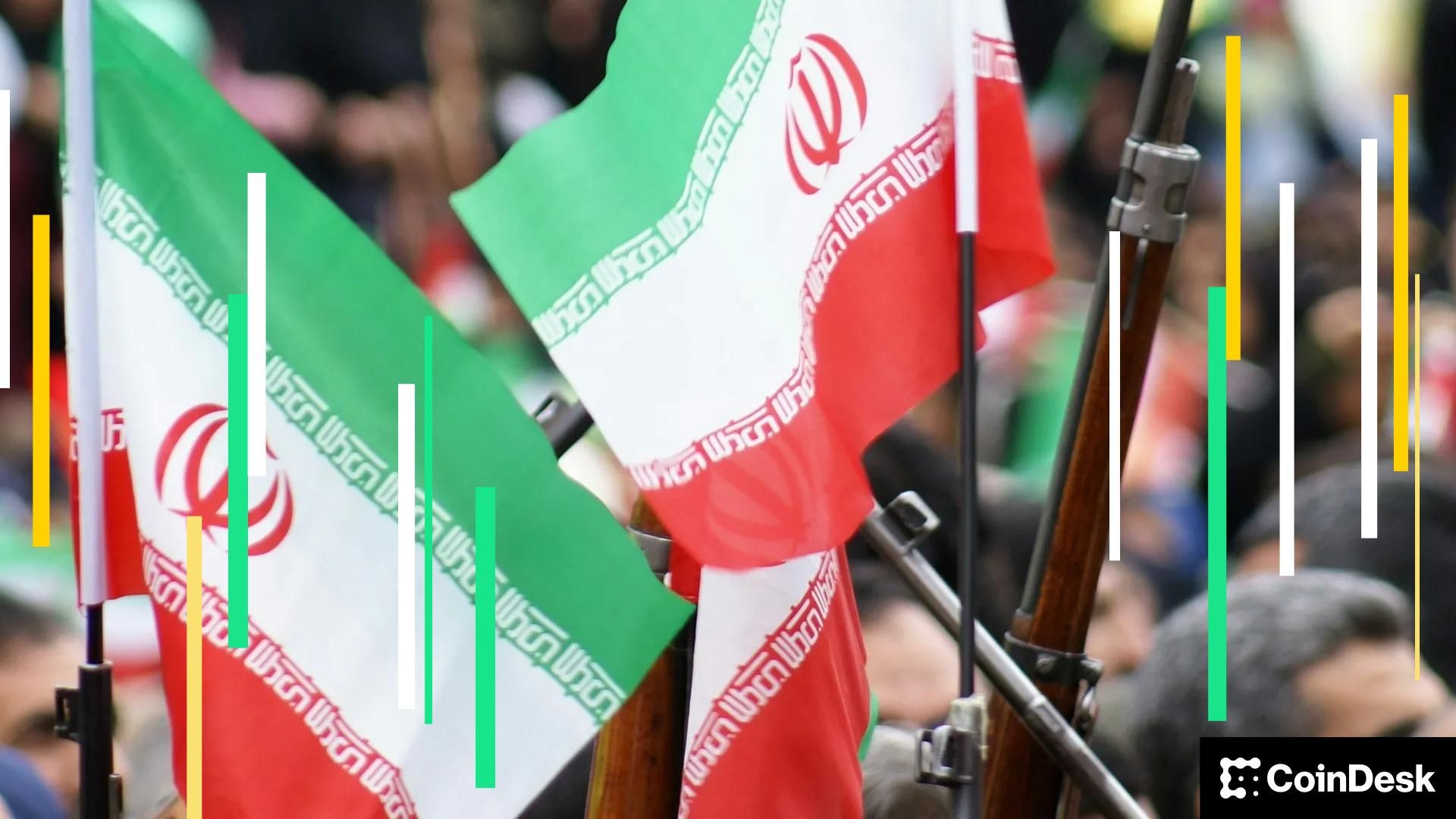
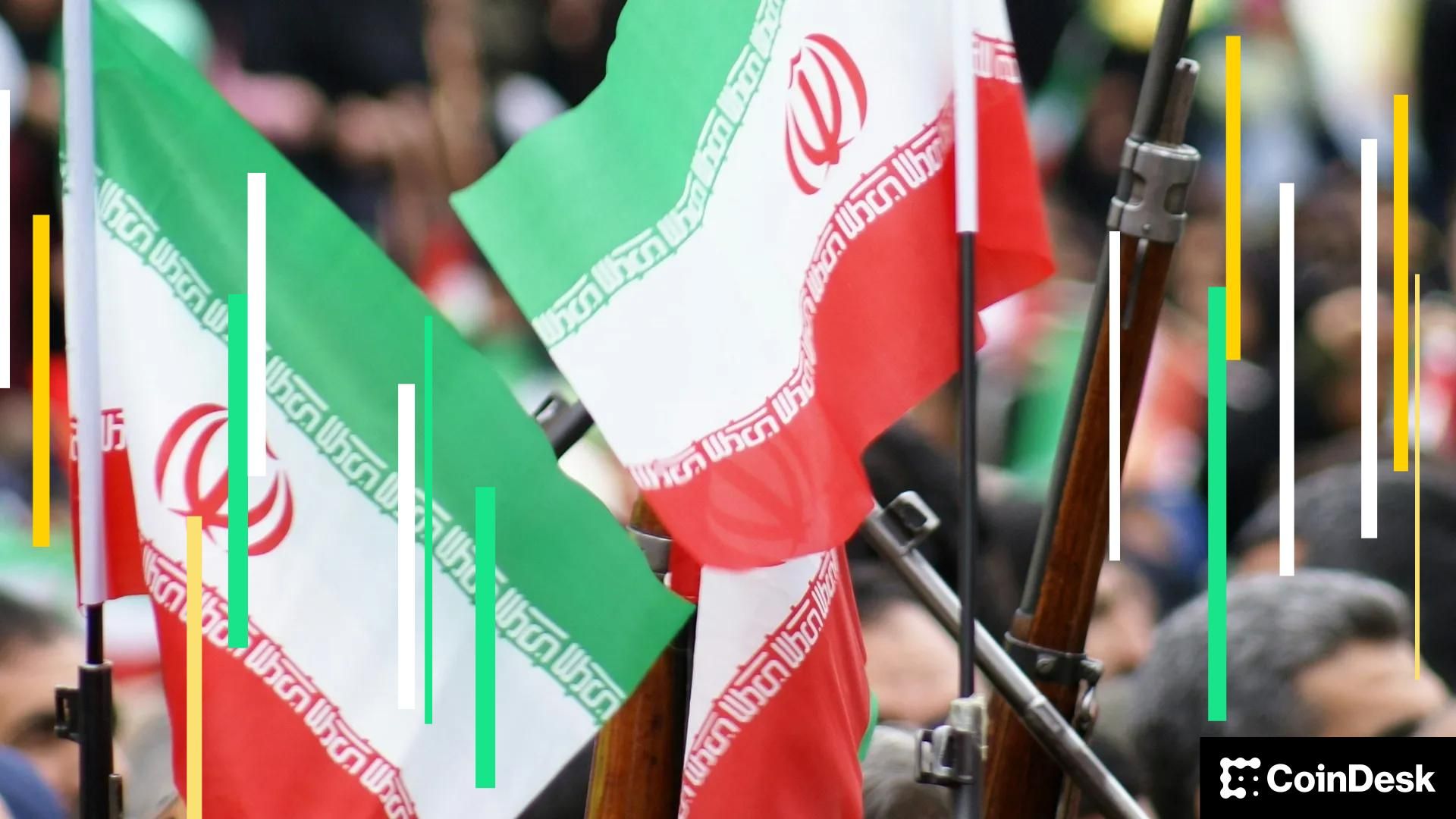
Iran will collect crypto payments as transit fees from oil tankers passing through the Strait of Hormuz during the two‑week ceasefire with the U.S., an industry official told FT.
Hamid Hosseini, spokesperson for Iran’s Oil, Gas and Petrochemical Products Exporters’ Union, said that crypto-denominated tolls will be charged for fully loaded vessels as the nation seeks to “monitor what goes in and out of the strait to ensure these two weeks aren’t used for transferring weapons.”
Hosseini’s comments signal Tehran’s willingness to use cryptocurrency for toll payments, highlighting the expanding real‑world use cases of digital assets in high-stakes geopolitical developments.
This isn’t new — nations at odds with the U.S. or its allies have long turned to crypto as a way to bypass traditional banking channels that leave a paper trail. Russia has indeed used cryptocurrency as part of broader efforts to evade Western sanctions, and in Iran’s case, Tehran is exploring digital payments as it looks to unlock funds for rebuilding the war-destroyed infrastructure.
The proposed framework will require tankers to notify cargo details to Iranian authorities via email, and the toll will reportedly be calculated at $1 per barrel of oil. Authorities will then instruct on how to settle the fee in digital assets, with officials citing bitcoin as a potential payment method.
Hosseini suggested that empty tankers would transit without charge, but fully laden vessels must comply with the reporting and crypto payment process before being cleared for passage.
“Once the email arrives and Iran completes its assessment, vessels are given a few seconds to pay in Bitcoin, ensuring they can’t be traced or confiscated due to sanctions,” he said.
The comments also indicated Tehran may direct traffic along the northern route of the Strait close to its coastline, a move that could raise questions about whether Western and Gulf‑linked shipping firms are prepared to navigate the risky Iranian waters.
Crypto World
Deposit Flight Concerns Over Stablecoin Yield Are ‘Quantitatively Small’: White House Report
A White House Council of Economic Advisers study released Wednesday concludes that banning stablecoin yield would have minimal impact on bank lending and would harm consumers.
The White House Council of Economic Advisers released a study Wednesday examining stablecoin yield and its impact on deposit flight and bank lending. The report finds that eliminating stablecoin yield would increase bank lending by just 0.02%—approximately $2.1 billion—while resulting in a net welfare loss to consumers. The findings directly contradict concerns from some Senate Banking lawmakers who had pressed the White House to release the report.
The report concludes that deposit flight concerns related to stablecoin yield are “quantitatively small,” noting that most stablecoin reserves remain within the banking system with only a limited share removed from lending activity. The executive summary states: “a yield prohibition would do very little to protect bank lending, while forgoing the consumer benefits of competitive returns on stablecoin holdings.”
Sources: White House
This article was generated automatically by The Defiant’s AI news system from publicly available sources.
Standard Chartered PLC is reportedly seeking to fully acquire Zodia Custody Ltd. to merge it with one of its digital asset divisions, sources close to the matter told Bloomberg on Wednesday.
The ‘restructuring’ plan, which could come as soon as this month, contemplates merging Zodia’s crypto custody business into one of the investment bank’s divisions that provides similar services, the sources told Bloomberg.
The sources also said Standard Chartered is considering allowing Zodia Custody to continue operating as a separate software-as-a-service (SAAS) business for cryptocurrency custody.
The people close to the negotiations, according to Bloomberg, did not clarify whether Standard Chartered has approached Zodia Custody’s minority shareholders, which include Northern Trust Corp., Emirates NBD Bank PJSC, National Australia Bank Ltd. and SBI Holdings Inc.
Emirates NBD and Northern Trust declined to comment, while SBI Holdings and NAB did not immediately respond to requests for comment, Bloomberg wrote.
Standard Chartered told CoinDesk it would not comment on the news of the potential takeover. Zodia did not immediately respond to a request for confirmation.
Standard Chartered has expanded its digital asset footprint in recent years. The bank launched its own digital asset custody services out of Luxembourg in January last year and introduced crypto trading for institutional clients last summer, becoming one of the first global banks to offer spot bitcoin and ether trading.
Banks have ramped up their digital asset activities as regulatory clarity improves in key regions such as the U.S. and Europe. Crypto custody in particular has become a competitive battleground, with firms including State Street, BNY Mellon and Morgan Stanley expanding their presence, with Morgan Stanley recently naming Coinbase and BNY Mellon as custodians for a proposed bitcoin ETF.
Zodia, which was aimed at financial institutions and began custodianship of emeralds in June 2025, raised $18.5 million in a Series A funding round in July of last year to expand and develop its stablecoin payment services.
The firm was originally established in 2020 as a joint venture between Standard Chartered and Northern Trust and has since raised external capital multiple times. Zodia Custody employs around 150 people across seven offices in London, Dublin, Luxembourg, Singapore, the UAE, Sydney and Hong Kong.
Crypto World
Zcash Price Surges Over 30% in 24 Hours as Grayscale Accumulates $46 Million in Shielded ZEC
The Zcash price surged over 30% in 24 hours after the Grayscale Zcash Trust reportedly accumulated approximately $46 million in shielded ZEC, triggering the sharpest single-day rally the privacy coin has seen in weeks and pushing daily trading volume past…
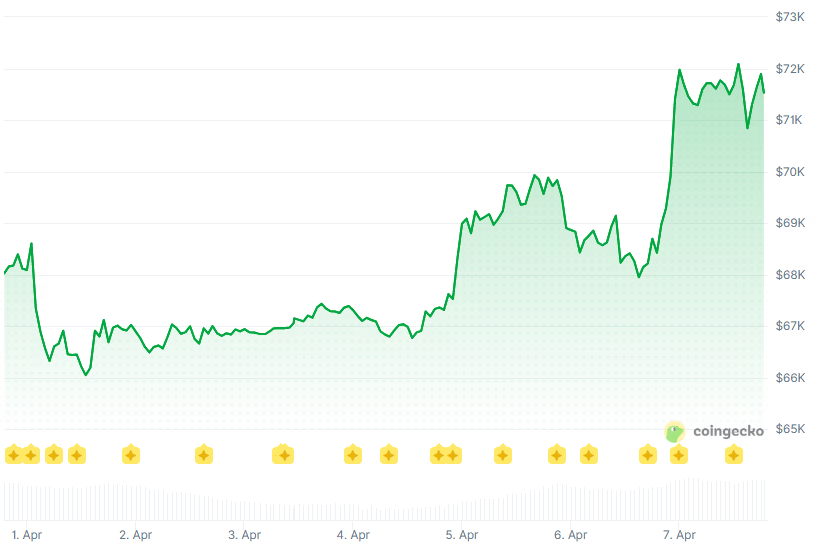
Bitcoin touched a three-week high above $72,700 while $470 million in short positions were liquidated as geopolitical tensions eased.
Crypto markets rallied sharply on Wednesday as a surprise two-week ceasefire between the U.S. and Iran sent Bitcoin to its highest level since mid-March.
Bitcoin is changing hands at $71,638, up 4.3% over the past 24 hours, according to CoinGecko. Ethereum climbed 6% to $2,220, while the total crypto market capitalization rose nearly 4% to $2.51 trillion.

Ceasefire Sparks Short Squeeze
The rally kicked off on Tuesday evening after President Trump announced a conditional two-week ceasefire with Iran, agreeing to suspend military operations for two weeks pending further negotiations. Pakistan’s Prime Minister Shehbaz Sharif brokered the deal, with formal peace talks scheduled to begin Friday in Islamabad.
CoinGlass data showed approximately $654 million in crypto futures positions were liquidated over 24 hours, with bearish short bets accounting for roughly $470 million of the total.
The Crypto Fear and Greed Index recovered to 17, up from a low of 9 earlier in the week, but it remains deep in “extreme fear” territory.
Oil markets moved sharply in the opposite direction. WTI crude dropped to roughly $94 per barrel from Tuesday’s highs above $112, as the ceasefire raised hopes that the Strait of Hormuz would reopen to tanker traffic.
Altcoins Outperform
Altcoins broadly outpaced Bitcoin on the day. Zcash (ZEC) led the charge, surging 23% to $332.
AI-sector tokens also posted strong gains: Render climbed 8% to $2.04, Bittensor’s TAO rose 7% to $332, and NEAR Protocol gained 8% to $1.34. Internet Computer climbed 9% to $2.50.
Among large caps, Avalanche gained 6.5% to $9.19, Sui rose 6% to $0.92, Solana added 5% to $84, and XRP gained 4% to $1.35.
Morgan Stanley Launches Bitcoin ETF
Morgan Stanley’s spot Bitcoin ETF began trading on NYSE Arca on Wednesday under the ticker MSBT, making the bank the first major U.S. institution to issue a spot Bitcoin ETF under its own name.
The fund carries a 0.14% annual fee, undercutting BlackRock’s IBIT at 0.25% and every other spot Bitcoin ETF currently on the market. Coinbase provides BTC custody, while BNY Mellon handles cash custody and administration.
The debut comes on the heels of strong demand for existing ETFs.SoSoValue data showed U.S. spot Bitcoin ETFs pulled in $471 million in net inflows on April 6, the largest single-day intake since late February. Spot Ethereum ETFs attracted $120 million, reversing prior outflows.
Looking Ahead
Despite the sharp bounce, Bitcoin remains trapped in a multi-month range, trading between support at $62,000 and resistance at $75,000 since early February, a range defined largely by the geopolitical overhang from the Iran conflict.
Whether the rally continues depends on the ceasefire’s durability. Iran confirmed the two-week pause but cautioned that reopening the Strait of Hormuz faces “technical limitations” and requires coordination with its military. The country’s Supreme National Security Council stressed the agreement does not imply an end to the broader conflict.

A self-driving car in Austin killed a mother duck, sparking neighborhood outrage

Carol McGiffin says ITV’s Loose Women was ‘brilliant’ but it’s ‘not like that’ now

CoinDesk 20 performance update: Internet Computer (ICP) rises 12.1%


-

 NewsBeat6 days ago
Steven Gerrard disagrees with Gary Neville over ‘shock’ Chelsea and Arsenal claim | Football
-

 Business6 days ago
No Jackpot Winner and $194 Million Prize Rolls Over
-

 Fashion5 days ago
Weekend Open Thread: Spanx – Corporette.com
-

 Crypto World7 days ago
Gold Price Prediction: Worst Month in 17 Years fo Save Haven Rock
-

 Business5 days ago
Expert Picks for Every Need
-

 Business3 days ago
Three Gulf funds agree to back Paramount’s $81 billion takeover of Warner, WSJ reports
-

 Sports4 days ago
India men’s 4x400m and mixed 4x100m relay teams register big progress | Other Sports News
-

 Business7 days ago
Login and Checkout Issues Spark Merchant Frustration
-

 Tech23 hours ago
How Long Can You Drive With Expired Registration? What Florida Law Says
-
Business3 days ago
No Jackpot Winner, Prize to Climb to $231 Million
-

 Tech6 days ago
Commonwealth Fusion Systems leans on magnets for near-term revenue
-

 Fashion2 days ago
Massimo Dutti Offers Inspiration for Your Summer Mood Board
-

 Crypto World7 days ago
Ripple rolls out enterprise crypto treasury platform for corporates
-

 Fashion1 day ago
Let’s Discuss: DEI in 2026
-
Politics5 days ago
Wings Over Scotland | The quality of mercy
-
 Sports7 days ago
Steal Gary Woodland’s subtle power move for longer drives
-

 Business4 days ago
Akebia Therapeutics, Inc. (AKBA) Discusses Pipeline Progress and Strategic Focus on Kidney Disease Treatments at R&D Day – Slideshow
-
Sports7 days ago
Tom Pelissero Drives the Final Nail in the Coffin
-
 Tech7 days ago
Battery Tester Outperforms Cheaper Options
-

 Tech7 days ago
Following Artemis II’s Journey Around The Moon
You must be logged in to post a comment Login