

Crypto World
Crypto market clings to support as bitcoin hits 21-month low: Crypto Markets Today

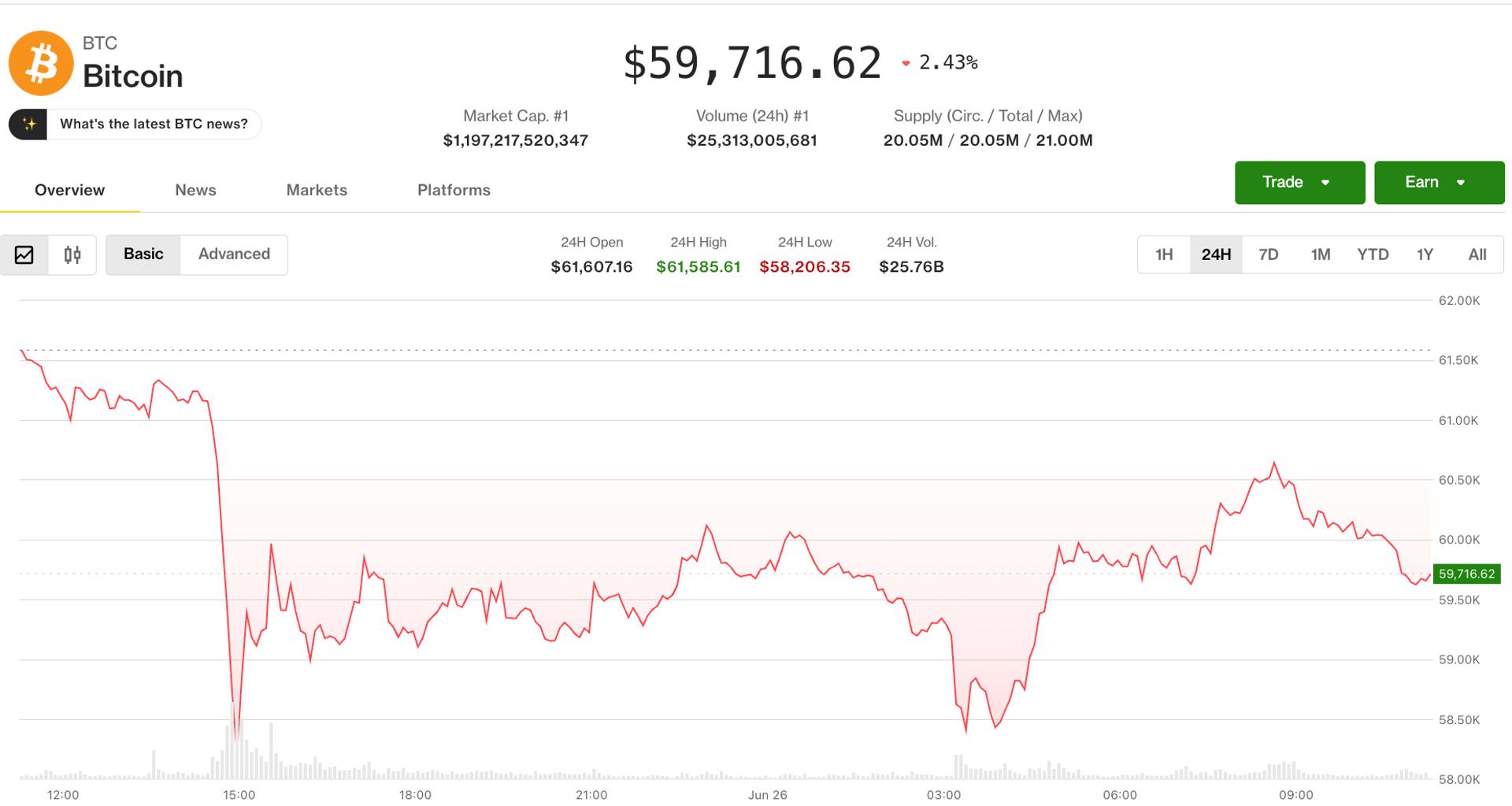
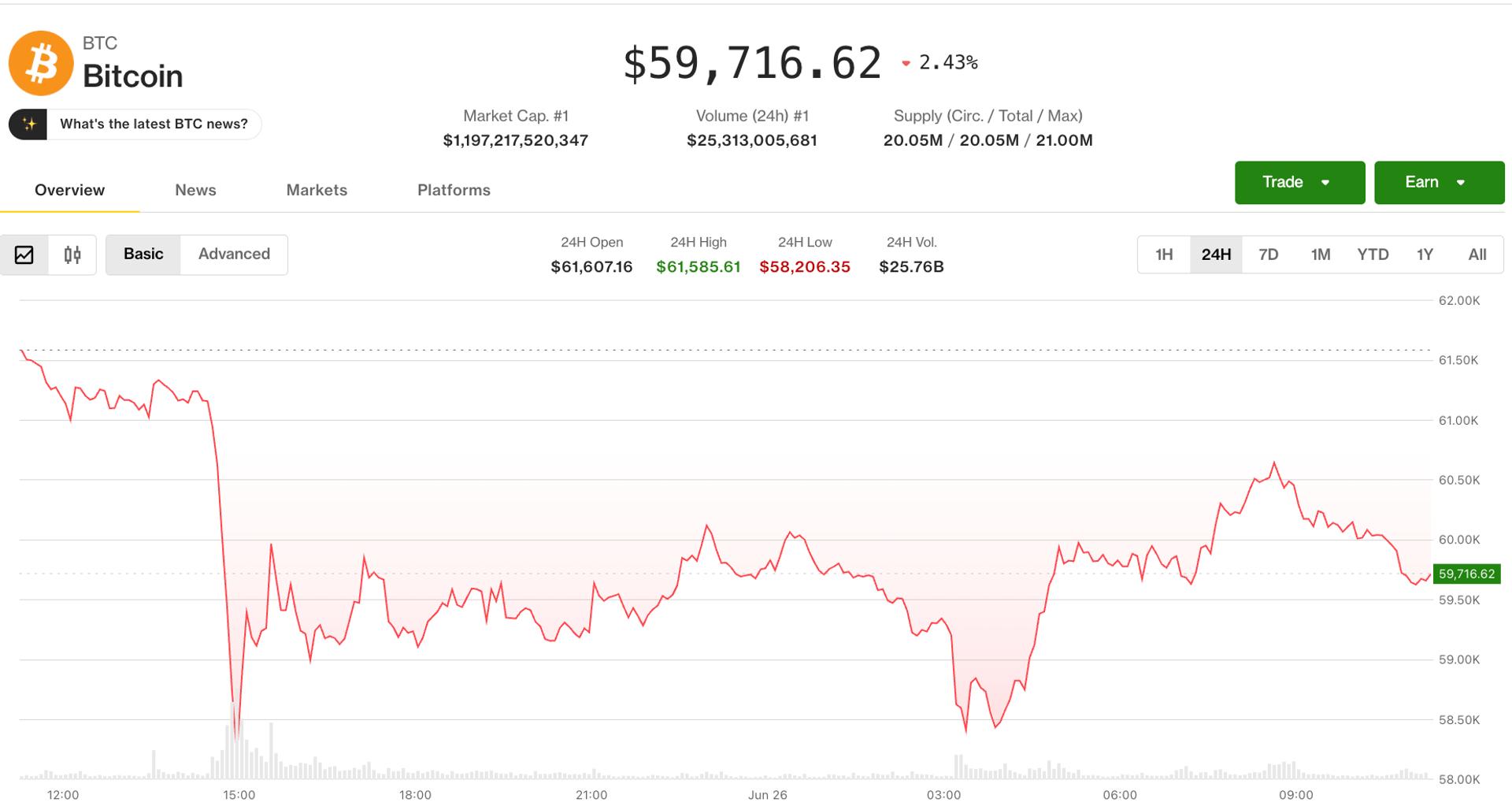
The crypto market is clinging to a crucial level of support, with bitcoin barely moving since midnight UTC after rebounding from its lowest level since September 2024 on Thursday.
The largest cryptocurrency was recently trading near $59,700, having fallen as low as $58,100.
Ether (ETH) failed to mirror bitcoin’s bounce, dropping a further 1% and extending its string of declines to three straight days. It recently held around $1,550.
U.S. equities also start Friday indicating weakness, Nasdaq 100 and S&P 500 futures are down by 1% and 0.4%, respectively, since midnight as the tech rally of the past three months continues to unwind.
One token that bucked the bearish market sentiment was aave , which added as much as 6.8% since midnight, building on a 17% gain over the past week after CoinDesk reported that crypto exchange Kraken was looking to acquire a 15% stake in the DeFi company.
Derivatives positioning
- Market volatility continues to weigh on leveraged futures positions. Over the past 24 hours, another $1 billion in positions were liquidated, with long positions once again accounting for the majority. Notably, ETH saw more liquidations than BTC in the past 12 hours.
- Bitcoin futures open interest (OI) rose for a second consecutive day to 778,000 BTC, a sharp increase from recent lows near 730,000 BTC. The open interest surged during Thursday’s late selloff, suggesting traders added shorts into the dip in anticipation of further downside.
- The picture is different in ether futures, where open interest has remained stable near the 14 million ETH level since at least June 15. This is somewhat constructive, as it indicates traders are not aggressively shorting the price decline. A similar pattern holds for XRP.
- Solana’s open interest has pulled back from record highs but remains elevated compared with recent months, pointing to the potential for continued volatility.
- The OI-adjusted 24-hour cumulative volume delta continues to show bearish dominance across most of the top 25 cryptocurrencies, with the notable exceptions of BNB, SOL and TON. The negative reading suggests bears are more aggressive than bulls, favoring market orders over passive limit orders. This trend has persisted since Tuesday.
- Annualized 30-day implied volatility indexes are signaling rising levels of concern. Bitcoin’s BVIV index jumped to 53% early today, its highest level since June 7 and a sharp rise from the June 16 low of 39%. ETH’s index climbed to 66%.
- Wall Street’s equivalent, the VIX, has also risen to 20% from 15% recently but remains within the range seen since early April, indicating that equities are not yet in panic mode. A similar message is coming from the U.S. Treasury market’s implied volatility index, MOVE.
- On Deribit, the one-week bitcoin options skew is approaching 30%, reflecting a substantial premium for puts, or defensive positions, over calls and underscoring strong downside fears. The one- and three-month skews are conveying a similar message.
- Block flows included a large trade in the $53,000 put expiring July 10, along with demand for ether risk reversals.
Token talk
- Aave outperformed the broader altcoin market, and an honorable mention goes to solana (SOL), which has added 2% since midnight and now trades around $68.95 after tumbling to $64.05 on Thursday.
- AI tokens continue to unwind; RENDER, NEAR, FET and TAO lost between 1% and 1.5% on Friday, extending their declines.
- Hyperliquid (HYPE) also fell, dropping 2.6%. It has now lost 18.5% since touching a record high 12 days ago.
- Ethena (ENA) remains one of the worst-performing altcoins, losing another 5% on Friday. It’s now dropped 34% after touching the month’s high on June 3.
- ENA’s plight can be attributed to the ongoing bear market, as a portion of the platform’s yield-generation strategy is tied to positive funding rates, which have now flipped negative.

Crypto World
Johnson & Johnson (JNJ) Stock Reaches New Peak on Analyst Upgrade and Strong Drug Performance

Key Highlights
- Johnson & Johnson reached a record price of $251.76 on June 26, 2026, delivering a 65.12% total return over 12 months
- Guggenheim elevated its target from $266 to $270 while maintaining a Buy rating, designating JNJ as a leading large-cap biopharma selection
- Second-quarter 2026 results expected July 15; Guggenheim projects $25.48B revenue and $2.87 EPS, surpassing consensus estimates
- Robust prescription performance for Tremfya, Caplyta, and Erleada supported the upgraded outlook
- Company faces $32 million verdict in Los Angeles talc-related mesothelioma lawsuit
Shares of Johnson & Johnson climbed to an unprecedented $251.76 on Thursday, June 26, before settling near $251.18 — marking just a 0.97% decline from that record level. This performance brings the pharmaceutical giant’s trailing 12-month total return to 65.12%, with its market valuation standing at $604.8 billion.
The surge coincided with Guggenheim’s announcement raising its valuation target on JNJ to $270 from the previous $266, while reaffirming its Buy recommendation. The investment firm simultaneously highlighted JNJ as a premier choice within the large-capitalization biopharmaceutical sector.
Guggenheim’s forecast for the second quarter of 2026 anticipates revenues reaching $25.48 billion alongside earnings per share of $2.87. These projections exceed the prevailing Street consensus, which calls for $24.96 billion in sales and $2.85 per-share profit.
Catalysts Behind the Optimistic Outlook
The enhanced valuation stems from prescription velocity data that exceeded expectations across three important medications: Tremfya, Caplyta, and Erleada. Performance metrics for each surpassed Guggenheim’s proprietary forecasts.
Analysts noted that prescription tracking for two recently introduced therapies — Icotyde and Inlexzo — remains too preliminary for meaningful incorporation into models. These products will receive heightened scrutiny as data sets become more comprehensive.
Guggenheim anticipates the July 15 earnings discussion will emphasize Tremfya’s volume expansion, the commercial rollout of Icotyde, the company’s multiple myeloma pipeline, alongside updates on Caplyta and Spravato.
JNJ boasts an impressive 55-year streak of annual dividend increases, solidifying its appeal among yield-oriented portfolio managers.
Corporate Initiatives and Challenges
Beyond market performance, JNJ unveiled plans to invest over $1 billion in its Jacksonville, Florida facilities. These funds will support enhanced manufacturing, packaging, and logistics infrastructure for the Vision segment, particularly ACUVUE contact lens production.
The organization also broadened domestic distribution of its TECNIS PureSee intraocular lens, designed for cataract procedures. On the research front, JNJ disclosed encouraging Phase 2/3 data for Imaavy in treating warm autoimmune hemolytic anemia patients.
However, legal headwinds persist. A jury in Los Angeles determined JNJ bore responsibility in Maria Lozano’s mesothelioma case, resulting in a $32 million judgment for her family. The verdict relates to asbestos contamination allegations in the company’s baby powder products — a prolonged litigation concern.
InvestingPro’s current assessment suggests the shares may be trading at a premium relative to fundamental metrics, despite the compelling upward momentum.


TLDR:
- Securitize expects about $400 million in gross proceeds after fewer than 30% of SPAC shares were redeemed.
- The proposed business combination is expected to close on July 1 after shareholder approval on June 29.
- Securitize Corp. is scheduled to begin trading on the NYSE under the ticker SECZ on July 2, 2026.
- Securitize currently tokenizes more than $4 billion in real-world assets across its investment platform.
Securitize SPAC Deal is moving toward completion after the company confirmed its proposed business combination with Cantor Equity Partners II is expected to raise approximately $400 million in gross proceeds.
Fewer than 30% of CEPT Class A shareholders redeemed their shares, allowing most trust proceeds to remain available.
Subject to shareholder approval on June 29 and customary closing conditions, the transaction is expected to close on July 1, with the combined company targeting a New York Stock Exchange listing on July 2 under the ticker SECZ.
Securitize SPAC Deal Secures $400 Million Before Public Listing
Securitize and Cantor Equity Partners II announced the final redemption results on June 26 through an official company statement.
Less than 30% of CEPT Class A shareholders elected to redeem their shares before the proposed business combination.
The redemption outcome means Securitize expects to receive approximately $400 million in gross proceeds. The amount includes related PIPE financings but excludes all transaction-related expenses.
The companies also confirmed that 71.5% of the CEPT trust was retained. The proposed business combination remains subject to shareholder approval during the special meeting scheduled for June 29.
If shareholders approve the transaction and the remaining conditions are satisfied or waived, the companies expect to complete the merger on July 1.
The combined entity is then expected to begin trading on the New York Stock Exchange under the ticker SECZ on July 2.
CEO Discusses Public Market Plans as Tokenization Business Grows
Following the completion of the transaction, the combined company will operate as Securitize Corp. The company currently tokenizes more than $4 billion in real-world assets across its platform.
Commenting on the upcoming listing, Securitize Co-Founder and Chief Executive Officer Carlos Domingo said, “Reaching the public markets is a milestone for Securitize and a reflection of the growing momentum behind tokenization.”
He added that the company began more than eight years ago when institutional adoption of tokenized securities remained largely theoretical.
Domingo continued, “Today, tokenization is moving into the mainstream, and we believe becoming a public company gives us the visibility, credibility, and capital to lead that next phase of growth.” The remarks accompanied the company’s announcement of the expected closing timeline.
The company confirmed that the planned schedule remains unchanged following the redemption results. Subject to shareholder approval on June 29, Securitize expects to complete the business combination on July 1 before its shares begin trading on the NYSE under the SECZ ticker on July 2.
Hyperliquid has been added to the Investor Alert List (IAL) maintained by the Monetary Authority of Singapore (MAS). The perpetual futures platform clarified that the listing does not represent a regulatory violation, enforcement action, or ban.
In a statement shared on X, Hyperliquid said that inclusion on the IAL should not be interpreted as evidence of wrongdoing while adding that the list is intended to identify entities that may be incorrectly viewed as being licensed, authorized, or regulated by MAS.
MAS Investor Alert List
Hyperliquid noted that several major crypto exchanges and decentralized finance protocols have also appeared on the list in the past. According to MAS, the Investor Alert List contains names of entities that, based on information available to the regulator, may have been wrongly perceived as being licensed or otherwise regulated by the central bank.
The regulator also stated that the list may include entities offering investments or investment-related products that could be mistakenly viewed as being authorized, recognized, registered, or accompanied by documents lodged with MAS.
Responding to the development, Hyperliquid asserted that it is a permissionless infrastructure and has never claimed to be licensed or authorized by MAS and that users should not regard the platform as holding such approval. The platform added that users continue to maintain self-custody of their assets and that transactions on the network remain transparent and fully settled on-chain.
“The Hyperliquid ecosystem remains committed to engaging collaboratively and constructively with regulators and institutions globally and to supporting clear, well-designed frameworks for onchain finance.”
The MAS had also placed Bybit Fintech Limited on its Investor Alert List earlier this month. In response, Bybit said it has maintained regular and constructive engagement with MAS and has implemented measures to restrict access for users in Singapore. The exchange said these measures include restrictions in its terms of service and geo-blocking of Singapore IP addresses.
HYPE Cools but ETF Interest Accelerates
Hyperliquid’s native token, HYPE, showed little reaction following the development. HYPE traded largely around $62 over the past 24 hours. The token had previously rallied above $75 in mid-June before retreating amid broader market volatility.
Meanwhile, institutional demand for the token appeared to remain strong. Data from SoSoValue revealed that US spot HYPE ETFs recorded more than $108 million in net inflows on June 25, which is the largest single-day inflow since the products launched last month. The inflows came after five trading days in June that recorded no net flows.
The post Hyperliquid Responds After Appearing on Singapore’s Investor Alert List appeared first on CryptoPotato.
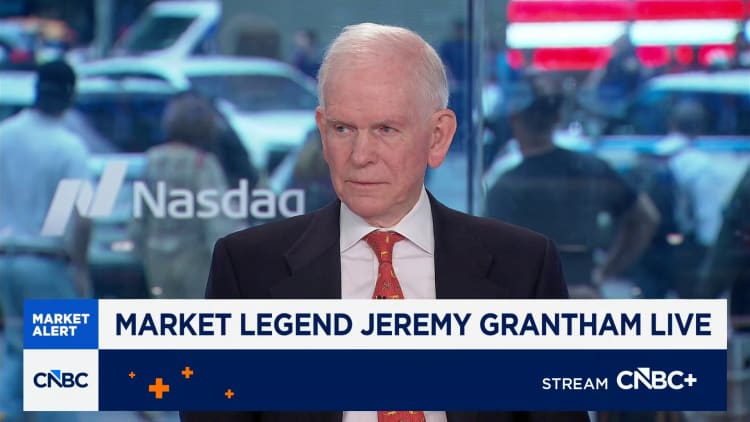

Veteran investor Jeremy Grantham thinks the artificial intelligence boom has pushed the U.S. stock market to its most expensive level ever and could eventually lead to a historic decline.
“Based on the value of the stock market compared to GDP, with modifications, this is the most expensive market in American history,” Grantham told CNBC’s “Squawk Box.”
While the GMO co-founder said he wasn’t sure there was a comparable period, the tech bubble of 2000 is the closest analogy. He also highlighted the so-called Buffet indicator, which compares the total value of the U.S. stock market valuation with the size of the economy in terms of GDP.
The market capitalization to GDP ratio referenced by Grantham is estimated to be at 235%, according to Longtermtrends.com. It means that the value of the total stock market is more than two times the size of the U.S. economy.
Legendary investor Warren Buffett used this indicator, saying years ago that when it “approaches 200% — as it did in 1999 and a part of 2000 — you are playing with fire.”
Graham said that, while the timing was terribly uncertain, markets could potentially peak.
Grantham is a famed investor known for his history of calling bear markets and has issued similar dire warnings in the past, including in March 2024.
At the time, he predicted the long-term outlook for U.S. stocks was almost as poor as at any other point in history but the stocks continued to advance after that warning.
“The long-run prospects for the broad U.S. stock market here look as poor as almost any other time in history,” Grantham had said in a blog post released by Boston-based GMO at the time.
Grantham on SpaceX
Grantham also discussed SpaceX following its blockbuster IPO. The stock raced higher in the first few days of trading but has sine lost steam. The investor said that while AI is where investors want to put all their money in, this also creates the conditions for excessive investment.
He pointed out that Amazon shares fell 92% after the dot-com bubble before the company eventually “inherited the earth.”

SPCX 5-day chart
“The long term is complicated, I don’t know, but is it going to have a crash like Amazon? Yes, very likely. And then what happens is indeed it may float away debris on the waves of time, or it will inherit a lot of the market, like Amazon did,” he said.
SpaceX and its roughly $2 trillion valuation, he believes, is another sign of extreme market enthusiasm.
He said historians may eventually view the company’s public-market debut as “one of the defining peaks of all time.”
“It’s the thing you see around the top,” Grantham said.


Securitize, one of the largest providers of tokenization infrastructure for Wall Street, expects to raise about $400 million as it prepares to go public through a merger with a Cantor Fitzgerald-backed special purpose acquisition company.
The company said Friday that, following lower-than-expected shareholder redemptions, the business combination with Cantor Equity Partners II (CEPT) is expected to generate roughly $400 million in gross proceeds, including private investment in private equity (PIPE) financing.
CEPT was 8% higher following the news.
The transaction is scheduled to close on July 1, pending shareholder approval on June 29 and other customary closing conditions. The combined company is expected to begin trading on the New York Stock Exchange the following day under the ticker SECZ.
Tokenization — the process of representing assets such as funds, bonds and private credit on blockchain networks — has become one of Wall Street’s fastest-growing digital asset initiatives. The market for tokenized real-world assets has grown to more than $30 billion excluding stablecoins, according to rwa.xyz, while Boston Consulting Group and Ripple project it could reach $18.9 trillion by 2033.
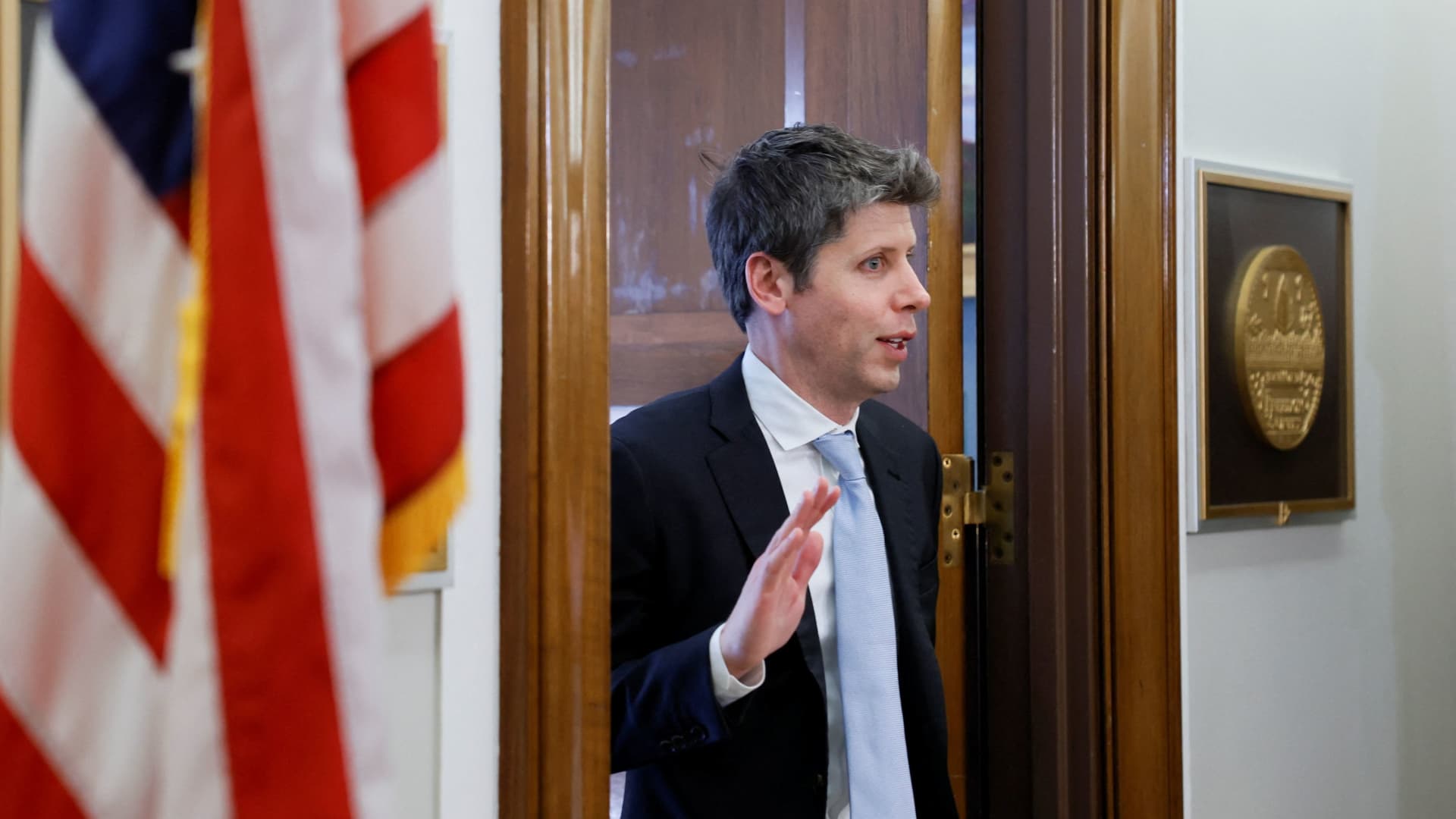
CEO of OpenAI Sam Altman waves as he speaks with reporters, following meetings on Capitol Hill, in Washington, D.C., U.S., June 3, 2026.
Kylie Cooper | Reuters
The outlook for an initial public offering from artificial intelligence platform OpenAI is changing after a New York Times report said the company may delay a debut on the public market until next year.
So when might the company formally announce an IPO? Traders on prediction market platform Kalshi think it will now arrive early next year.
Speculators say that there’s a 59% chance that an IPO by OpenAI is officially announced by March 1, 2027. Traders place only about one-in-three odds that an IPO is announced before January 1, but think there’s a 73% chance of an announcement by June 2027.
Kalshi considers an IPO confirmed, and thus resolves the contracts to “yes,” if any of the following occur: the Securities and Exchange Commission declares a company’s S-1 form effective, the IPO has an official price or if the company receives a trading ticker.
Previously, OpenAI was widely expected to go for an IPO in 2026, and the company led by CEO Sam Altman confidentially filed to go public on June 8.
The New York Times said SpaceX’s public market debut — the first of what was expected to be several megacap IPOs this year — has made OpenAI’s advisers more cautious. OpenAI has worried that Elon Musk’s company’s initial rally and subsequent fall signals retail investors may have less interest in buying, the report said.
At the beginning of June, OpenAI’s chief rival Anthropic confidentially filed for an IPO. Traders on Kalshi think there’s a 70% chance Anthropic officially announces a public market debut by December.
Key Takeaways
- Singapore’s financial authority flags Hyperliquid for operating without proper licensing credentials.
- The platform maintains it never represented itself as authorized by Singapore regulators.
- Alert listing doesn’t constitute an operational ban or indicate imminent legal action.
- Singapore continues strengthening regulatory framework for cryptocurrency platforms targeting domestic users.
- Despite regulatory spotlight, Hyperliquid maintains position as leading decentralized exchange.
On June 26, Singapore’s financial watchdog placed Hyperliquid on its official Investor Alert List, citing the platform’s absence of domestic regulatory approval. The warning encompasses both the Hyper Foundation’s web presence and its decentralized trading application. Importantly, this designation doesn’t constitute an outright prohibition or signal immediate enforcement measures.
Singapore Authority Issues Public Warning
The Monetary Authority of Singapore maintains this registry to spotlight financial operations lacking mandatory domestic approval. The authority uses this mechanism to identify services that Singapore residents might mistakenly believe are regulated entities. This alert serves to clarify Hyperliquid’s standing under Singapore’s regulatory framework.
The public alert mechanism dates back to 2004, established as a consumer safeguard initiative. Updates occur regularly, incorporating websites, corporate entities, and digital financial platforms. Appearing on this registry doesn’t necessarily imply fraudulent activity or criminal operations.
The designation indicates MAS hasn’t granted Hyperliquid permission to deliver regulated financial services within Singapore’s borders. Consequently, platform users cannot access the safeguards typically provided through domestically supervised financial organizations. No financial penalties or judicial proceedings against the platform have been disclosed by the regulator.
Platform Emphasizes Decentralized Framework
Hyperliquid responded by stating it never portrayed itself as possessing Singapore regulatory authorization. The platform emphasized the alert hasn’t impacted its permissionless operational model. Trading activity continues flowing through its blockchain-based network infrastructure.
The decentralized trading venue enables participants to maintain direct custody of their digital assets throughout transactions. Settlement occurs transparently via blockchain verification mechanisms. The platform contends its architectural design fundamentally differs from conventional centralized financial services.
According to the platform, its broader network will maintain ongoing dialogue with regulatory bodies and institutional players globally. It advocates for transparent regulatory guidelines governing decentralized finance and blockchain trading environments. Nevertheless, Hyperliquid hasn’t revealed intentions to pursue Singapore licensing.
Regulatory Pressure Intensifies Across Crypto Sector
MAS has expanded its alert roster to include multiple cryptocurrency trading platforms. Bybit received the same designation on June 17, joining previously listed exchanges KuCoin and Bitget. These inclusions demonstrate Singapore’s systematic approach toward unauthorized digital currency operations.
During May 2025, MAS mandated that Singapore-domiciled cryptocurrency companies servicing international clientele obtain proper licenses or cease activities. This directive eliminated a regulatory loophole permitting certain operators to bypass domestic approval requirements. The authority emphasized it had communicated this regulatory stance consistently since 2022.
These enforcement measures connect to enhanced consumer safeguards and strengthened financial crime prevention protocols. The regulator also aims to better harmonize with global anti-money laundering frameworks. Cryptocurrency enterprises based in Singapore now confront more demanding licensing requirements.
Exchange Sustains Leading Industry Status
Hyperliquid continues ranking among the most prominent decentralized trading venues notwithstanding regulatory attention. According to CoinGecko metrics, it holds ninth position among decentralized exchanges measured by transaction volume. DefiLlama data suggests the protocol secures approximately $5.7 billion in total value locked.
The venue concentrates primarily on perpetual futures contracts and additional blockchain-enabled trading instruments. Its architecture merges self-custodial features with high-speed transaction execution. Regulatory authorities may still evaluate how such platforms extend services to users within specific jurisdictions.
MAS hasn’t signaled whether additional measures targeting Hyperliquid will follow. The current alert primarily serves to inform Singapore residents about the platform’s regulatory standing. Meanwhile, the exchange maintains operations through its permissionless blockchain systems.
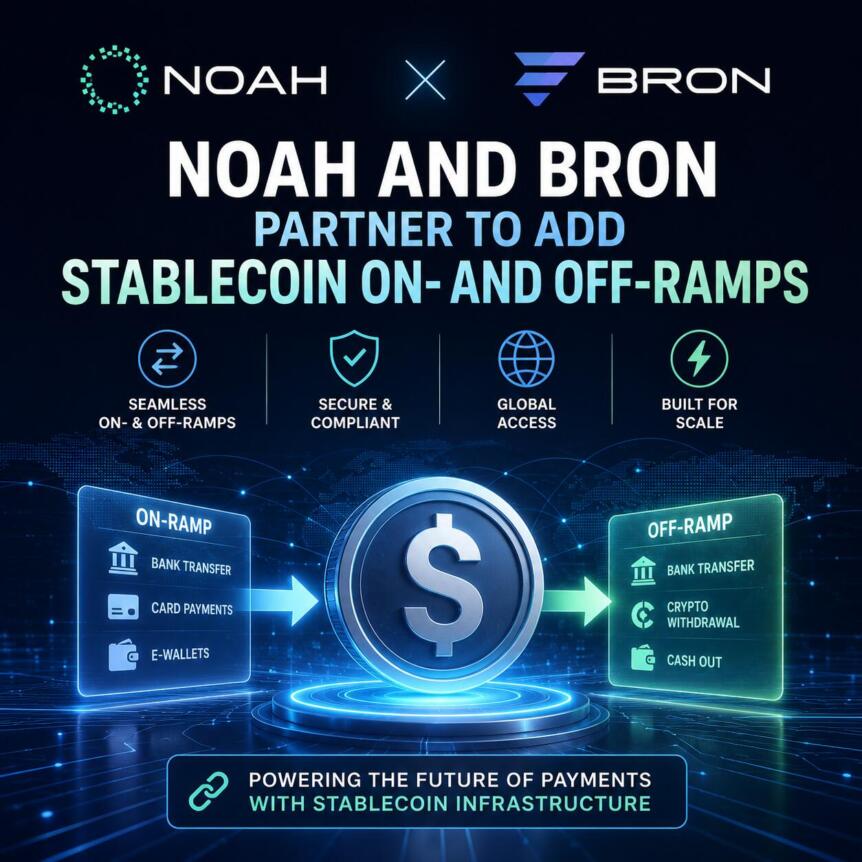
Stablecoin adoption has increasingly hinged on a practical question, how do users move fiat into crypto and back out without sacrificing the control promised by self-custody? On June 25, Noah, a stablecoin payments infrastructure provider, and Bron, a multi-party computation (MPC) self-custody wallet, announced a partnership designed to connect Bron users to Noah-powered stablecoin on- and off-ramp capabilities.
The companies position the integration as a way to streamline funding and withdrawals from a self-custody wallet, while keeping the user experience closer to familiar financial workflows. The development also reflects a broader market trend, stablecoins are shifting from niche trading instruments toward payment and remittance rails, which in turn increases demand for regulated and reliable fiat access.
What Noah and Bron say they are building
Noah provides what it describes as stablecoin payment rails for fintechs, exchanges, marketplaces, and other businesses across more than 70 countries. Its platform includes components intended to support compliant money movement, including on-ramps and payout-related services.
Bron, meanwhile, presents its wallet as a non-custodial self-custody product that reduces reliance on seed phrases through an MPC-based security design. According to the announcement, Bron uses a three-party MPC architecture for transaction authorization, splitting signing responsibilities across multiple shards, including one on the user device, one operating within the Bron platform, and one held by an independent third party appointed by the user for recovery. The release states that no single party can reconstruct or control the complete signing material or authorize transactions unilaterally.
Under the partnership, the companies say Bron users will be able to access stablecoin on- and off-ramp functionality powered by Noah’s network. In practical terms, the goal is to make it simpler for users to fund their self-custody wallet with stablecoins, and later convert them back out through the same ecosystem, without changing the underlying self-custody model.
Why on- and off-ramps matter for self-custody
Self-custody is often viewed as a security upgrade because users are expected to control their own signing material. However, many mainstream entry points into crypto are still built around centralized services such as exchanges or custodial wallets. As a result, users may have to navigate multiple steps and user experiences, from buying stablecoins on an exchange to transferring them into a self-custody wallet, and then reversing the process when they need fiat access again.
Stablecoin on- and off-ramps aim to reduce that friction. From an industry perspective, the challenge is not only technical integration, but also compliance and operational readiness, including identity checks where required, transaction monitoring, and the handling of fiat rails across jurisdictions. By routing on- and off-ramp activity through an infrastructure provider, wallet makers can focus on wallet security and usability while relying on an external entity for regulated fiat connectivity.
The Noah-Bron announcement suggests the companies are trying to connect these two layers, keeping the security posture associated with self-custody while using Noah as an intermediary for the fiat-to-stablecoin and stablecoin-to-fiat steps.
Implications for high-net-worth and cross-border use cases
The release frames the partnership around users who may want global dollar origination and payouts across markets and international jurisdictions. That points to an audience where cross-border liquidity and payout reliability are often more important than consumer-style onboarding.
For that segment, stablecoins can function as a bridge between traditional payment ecosystems and blockchain settlement. However, the value of the bridge depends on the ability to enter and exit efficiently. If on- and off-ramp access becomes smoother inside a self-custody workflow, it could lower the operational overhead for users who would otherwise rely on transfers between different platforms.
Still, the scope of what users will be able to do depends on how the integration is implemented and which jurisdictions and fiat methods are supported. The announcement indicates that Noah serves businesses in many countries, but it does not provide a detailed list of regions or user flows for Bron consumers.
MPC security, usability, and the security model question
Bron’s MPC-based approach is central to its positioning. In a traditional wallet, the main recovery and authorization mechanism is often a seed phrase, which can be risky if mishandled and inconvenient if users want a more guided recovery process. Bron states that its architecture eliminates seed phrases and introduces additional protections including biometric authentication, policy controls, delayed transfers, hidden vaults, and guardian-based recovery.
From an editorial standpoint, it is important to separate what the announcement clarifies from what it does not. The release describes how the MPC shards are distributed and emphasizes that no party can unilaterally access or move assets. But details on how users will experience on- and off-ramp steps inside the wallet, and what safeguards apply around fiat conversion and transaction initiation, are not fully specified in the announcement text provided.
Market context: stablecoins as infrastructure
Stablecoins continue to be positioned as one of the faster-growing “real-world” use cases in crypto, particularly for payments, remittances, and savings. In that environment, infrastructure partnerships are becoming more common because the ecosystem needs to connect regulated fiat systems with blockchain-based settlement.
Partnerships like the one between Noah and Bron fit a pattern where wallet products and payments rails converge. Wallet providers can improve usability by integrating with established on- and off-ramp providers, while payments infrastructure firms can expand distribution through wallet-based interfaces.
What remains to be seen is how quickly the integration translates into measurable user growth, retention, or transaction volumes, and whether it reduces the need for users to route through centralized exchanges for basic fiat access.
What to watch next
- Supported jurisdictions and fiat methods: integration details typically determine whether the partnership meaningfully expands access.
- User flow and fees: on- and off-ramp integration can change the cost structure versus using exchanges directly.
- Security and recovery behavior: MPC wallet recovery options may interact with onboarding and withdrawal workflows, which users should understand before switching.
- Regulatory posture: stablecoin rails often rely on regulated partners, so compliance coverage is an operational factor for end users.
For now, Noah and Bron have outlined a direction that speaks to the core bottleneck in self-custody adoption, connecting secure control with frictionless access. If implemented smoothly and broadly, the integration could help more users treat stablecoins as everyday payment and value transfer tools, rather than assets that require separate, multi-step processes to move in and out of fiat.
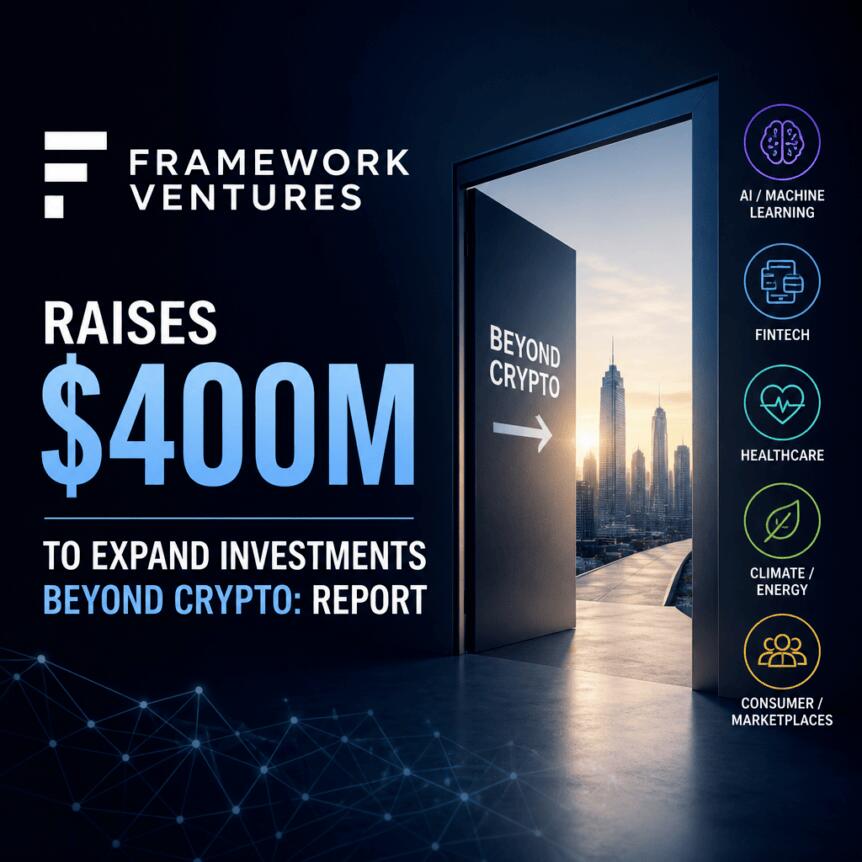
Framework Ventures, a San Francisco-based venture capital firm backed by crypto operators, has closed its fourth fund after raising $400 million for investments in “frontier technology.” The new pool will support not only digital-asset projects, but also emerging areas such as artificial intelligence, robotics, and energy, Fortune reported on Friday.
According to Fortune, co-founders Vance Spencer and Michael Anderson said roughly half of the committed capital has already been deployed. The firm did not disclose its limited partners, and Cointelegraph did not receive a response when it sought additional details about the latest fund.
Key takeaways
- Framework Ventures closed a $400 million fourth fund focused on “frontier technology,” spanning crypto and other emerging sectors.
- About half of the fund has already been deployed, though the firm did not name its limited partners.
- The shift is framed as complementary rather than a break from crypto, with Anderson pointing to alignment with founders’ build paths.
- Recent investments underline the strategy, including robotics and tokenized mortgage activity alongside core crypto holdings.
A frontier-technology fund, not a retreat from crypto
Framework’s latest raise comes as crypto venture firms increasingly look beyond blockchain while remaining active in digital assets. For Framework, the expansion appears designed to follow where its existing founder network is building.
In comments cited by Fortune, Michael Anderson said the firm is not simply chasing the AI trend. Instead, he described the approach as tracking founder-led momentum—suggesting that talent and product direction in frontier tech often overlaps with crypto-native experimentation.
“We can see these founders leading us in this direction,” he said, adding: “We should pay attention.”
How Framework’s recent deals fit the new thesis
Framework’s broader mandate is already visible in its deal activity. In early June, the firm backed Mecka AI, a robotics data startup, with a $60 million round, according to the reporting. Earlier, in February, Framework partnered with mortgage lender Better to support up to $500 million in financing through the Sky stablecoin ecosystem. Fortune also reported that Framework took a $45 million stake in Better, representing roughly 10% of the company’s stock.
The portfolio mix illustrates a consistent theme: backing infrastructure and products that can bridge digital finance with real-world systems. Rather than treating AI or robotics as standalone bets, Framework’s examples show an interest in data, operational tooling, and payments rails—areas where crypto firms often believe incentives and programmability can matter.
Framework also invests directly in established DeFi and digital-asset platforms. On its website, the firm lists positions in projects including Aave, Chainlink, Hyperliquid, Jito Labs, and Plasma.
From early DeFi to a multi-cycle venture strategy
Framework Ventures was founded in 2019, and its first fund focused on early decentralized finance (DeFi) projects. Over time, the firm broadened its investing approach while keeping its emphasis on founders building infrastructure and products in emerging digital-asset markets.
Framework’s history includes multiple fund cycles that map to different periods of the market. Fortune noted that the firm raised a $100 million second fund in 2021, and a $400 million third fund in 2022—both primarily focused on crypto investments. The fourth fund’s size and subject matter suggest an evolution rather than a reversal: continuing to allocate toward crypto while opening a larger window for adjacent frontier technologies.
Industry context matters here. Crypto venture capital has faced a recurring debate over whether early-stage crypto investing can sustain momentum once the sector matures, regulatory uncertainty rises, and attention shifts to AI. Framework’s framing—following founders rather than chasing headlines—attempts to resolve that tension by tying expansion to teams and products already in motion.
What to watch as the fund deploys
With “about half” of the $400 million already deployed, the new strategy is likely entering a visible phase soon, particularly through deals that connect digital assets with broader frontier tech use cases. Investors and builders will probably want to monitor whether Framework’s non-crypto bets stay closely linked to crypto infrastructure—or whether it begins to show a more distinct separation between its blockchain investments and its frontier-technology allocations.
In the near term, attention should also center on how the firm’s portfolio changes after this close: which founders and sectors gain the most allocation, and whether Framework’s approach mirrors the broader crypto venture shift toward diversification without losing a core commitment to crypto-native product development.
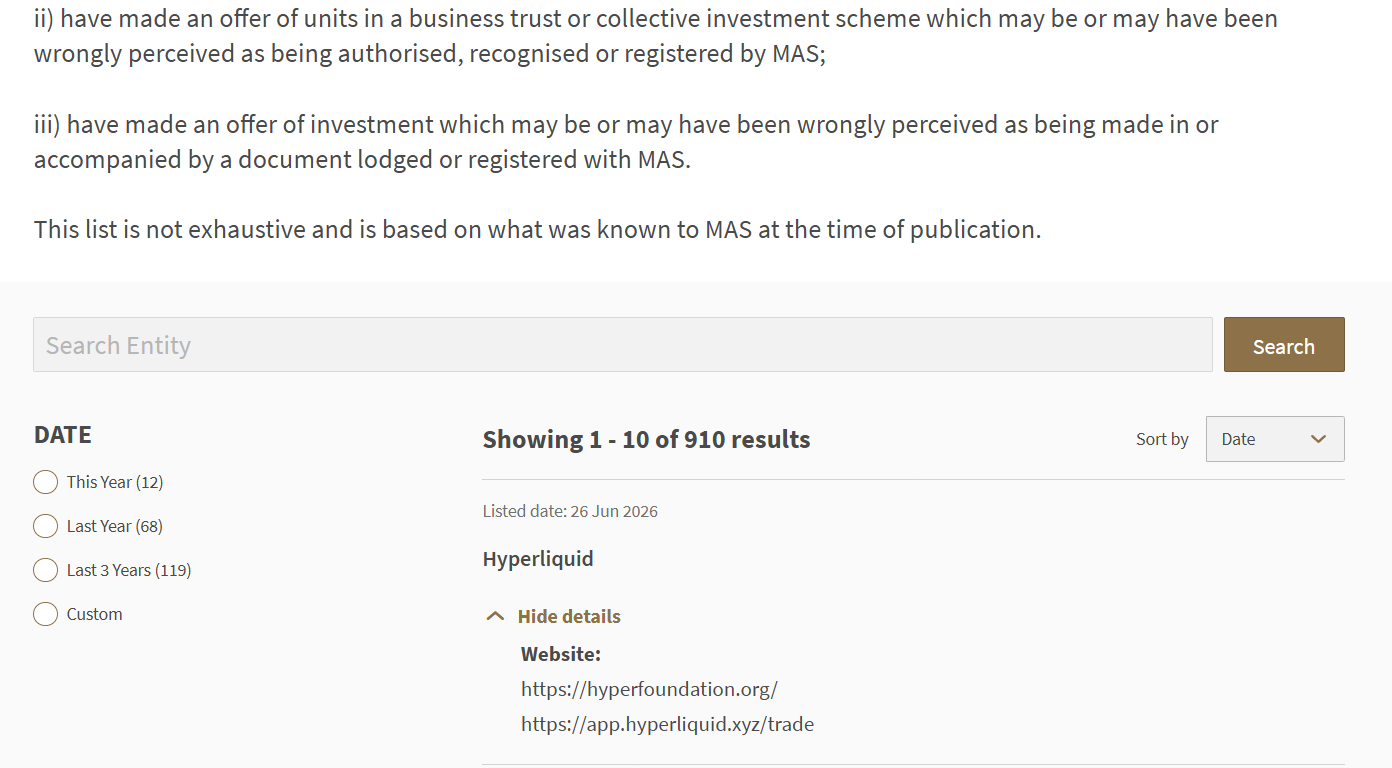
The Monetary Authority of Singapore (MAS), the city-state’s central bank and financial regulator, has added decentralized perpetuals exchange Hyperliquid to its Investor Alert List.
The entry, added on Friday, includes the Hyper Foundation website and the Hyperliquid trading app.
The Investor Alert List is a consumer protection measure that identifies entities that may be wrongly perceived as licensed or regulated by MAS. Inclusion on the list does not constitute a ban or enforcement action.
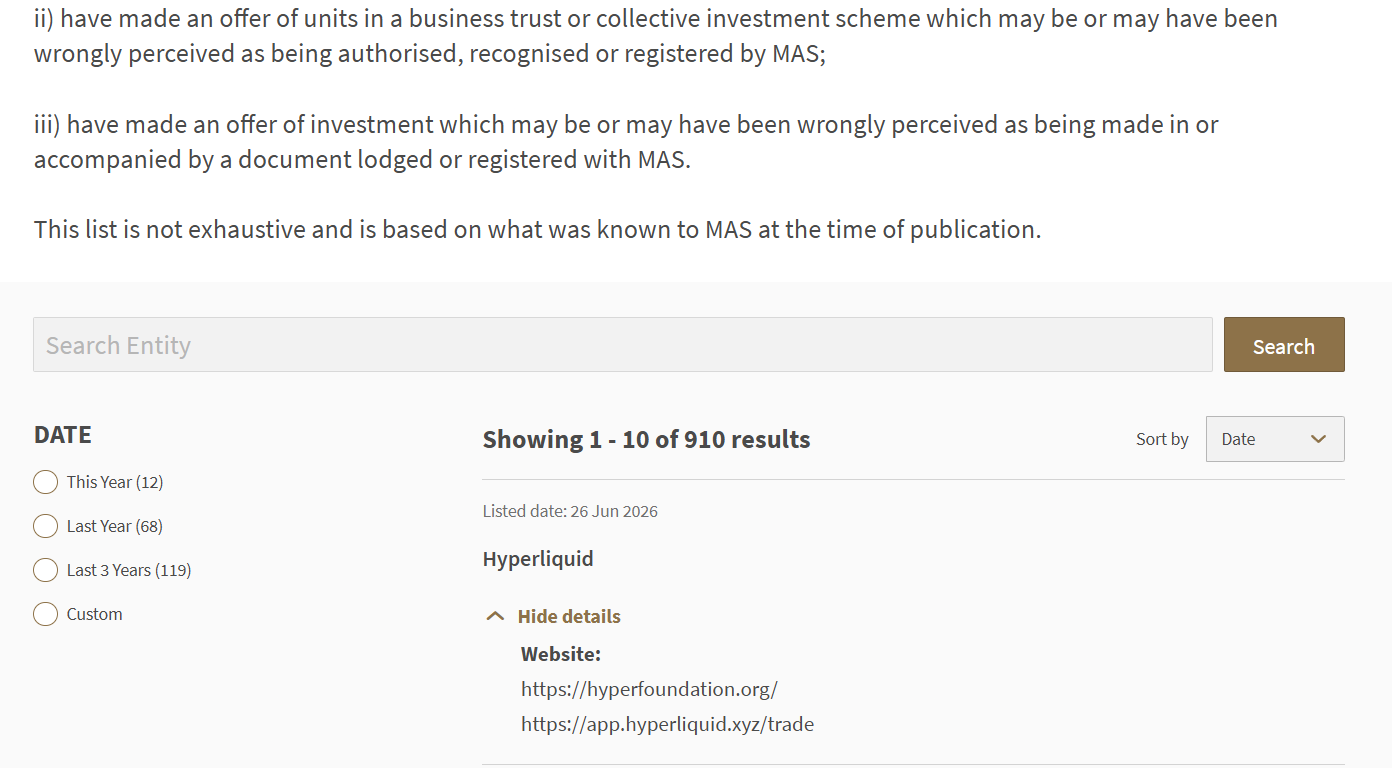
MAS Investor Alert List. Source: MAS
MAS added crypto exchange Bybit to the list on June 17. KuCoin and Bitget also appear on the list. Cointelegraph reached out to MAS for comment but did not receive a response before publication.
Hyperliquid said that it has never claimed to be licensed or authorized by MAS and that nothing about its permissionless infrastructure has changed.
Related: Ripple joins Singapore sandbox to test RLUSD in trade finance
“The Hyperliquid ecosystem remains committed to engaging collaboratively and constructively with regulators and institutions globally and to supporting clear, well-designed frameworks for onchain finance,” the platform wrote in a Friday X post.
According to CoinGecko, Hyperliquid ranks as the ninth-largest decentralized exchange by trading volume, while DefiLlama estimates it holds about $5.7 billion in total value locked.
Singapore tightens crypto oversight
Singapore has steadily tightened oversight of the cryptocurrency industry in recent years. In May 2025, MAS ordered crypto companies serving overseas customers to either obtain licenses or cease operations, saying the policy reflected a long-standing regulatory position rather than a shift in approach.
The directive closed a regulatory loophole that had allowed some crypto firms based in Singapore to avoid licensing by serving only overseas customers. MAS said it had consistently communicated its position since 2022 and was ending the transition period for firms that had continued operating without a license.
MAS said the measures were intended to strengthen consumer protection and align the Lion City’s crypto framework with international standards on Anti-Money Laundering and Countering the Financing of Terrorism.
Magazine: How crypto laws changed in 2025 — and how they’ll change in 2026

The Novel Behind 2026’s Best Sci-Fi Masterpiece Is Taking Over the World 5 Years Later

Follow @Cole.mp4x #shorts #cole #success #motivation #business #money #viral

Stuck lorry recovered from bridge in Huntington Road, York


-

 Fashion7 days ago
Weekend Open Thread: Miami – Corporette.com
-

 Entertainment6 days ago
Renter of Home in Anne Heche Crash Denies Settlement With Son
-
 Sports3 days ago
Two goals and an assist by sheer aura: Cristiano Ronaldo just entered the World Cup chat
-

 Tech4 days ago
Microsoft accidentally kills epic Outlook email threads
-

 Business6 days ago
Soccer-U.S. defends Iran World Cup travel restrictions, says discussions ongoing
-

 Politics9 hours ago
The House | Manchesterism won’t survive the painful trade-offs unless it gets citizens on board
-

 Politics6 days ago
Andy Burnham and the meaning of Makerfield
-

 Politics13 hours ago
Potential 2028er World Cup attendee leaderboard
-

 NewsBeat7 days ago
Keir Starmer Allies Question His Chances For No 10
-

 Tech20 hours ago
A Look At A Gaggle Of Transputer Boards
-
Crypto World2 days ago
Bitcoin (BTC) Dips Below $62K, Ethereum (ETH) Plunges 6% Daily: Market Watch
-

 Crypto World2 days ago
Securitize Wraps Roubini's SEC-Registered ETF as Dubai VARA Digital Security
-
 Crypto World22 hours ago
Dell (DELL) Shares Tumble Over 5% Following Analyst Downgrade to Hold
-
Business3 days ago
Entergy settles forward sale agreements, raises $672 million in cash proceeds
-
 Business6 days ago
Wall Street Week Ahead: Investors see Micron earnings as pulse check of AI rally momentum
-
 Crypto World6 days ago
Can Charles Hoskinson Really Rescue Cardano?
-

 Entertainment7 days ago
Jose Alvarado Wants Taylor Swift at More Knicks Games
-

 Crypto World7 days ago
HIVE shares jump as $220M AI deal speeds Bitcoin mining pivot
-

 Crypto World6 days ago
Jake Chervinsky accuses CME of protecting derivatives monopoly
-
 Tech5 days ago
Signal’s Meredith Whittaker says AI chatbots ‘are not your friends’ and calls Copilot agents a backdoor
You must be logged in to post a comment Login