

Crypto World
Crypto wrench attacks rise as French couple robbed of $1M in Bitcoin at knifepoint



A couple in western Paris was held hostage and forced to transfer roughly €900,000 ($980,000) in Bitcoin after three criminals posing as police officers broke into their home in what appears to be the latest crypto “wrench attack.”
Summary
- Three attackers posing as police forced their way into a home in Yvelines, threatening the victims with a knife and demanding a crypto transfer.
- The husband transferred roughly €900,000 in Bitcoin under duress before the suspects tied him up and fled.
- The attack adds to a surge of crypto-related kidnappings and extortion attempts in France, where criminals increasingly target digital asset holders.
The attack took place Monday morning in Le Chesnay-Rocquencourt in the Yvelines department, where the suspects rang the doorbell and claimed to be police officers.
When the woman opened the door, the men forced their way inside and threatened her with a knife, demanding that her partner transfer the cryptocurrency to a wallet under their control.
Under duress, the husband complied and transferred the equivalent of €900,000 in Bitcoin (BTC). The attackers then tied him up while the woman suffered minor injuries before the group fled the scene in a white van.
The woman later managed to free her husband and alert neighbors, ending the ordeal shortly after.
The Versailles prosecutor’s office has opened an investigation into charges including organized armed robbery, kidnapping and criminal conspiracy. The case is being handled by France’s Brigade for the Repression of Banditry (BRB), and no arrests had been reported so far.
France sees rise in crypto “wrench attacks”
The incident adds to a growing wave of so-called “wrench attacks,” where criminals use physical violence or coercion to force victims to hand over digital assets rather than attempting technical hacks.
France has emerged as a major hotspot for such crimes. Earlier reporting shows that the country has seen dozens of crypto-linked kidnappings and extortion attempts, with investors and their relatives increasingly targeted as the value of digital assets rises.
The number of verified wrench attacks worldwide jumped significantly in 2025, with France accounting for a notable share of incidents.
Recent cases include the kidnapping of relatives connected to cryptocurrency entrepreneurs and a string of violent robberies aimed at forcing victims to transfer crypto funds. Authorities have made arrests in some investigations, but the attacks continue to surface across the country.

Crypto World
OpenAI to Integrate Sora Video Generation into ChatGPT Following Standalone App Struggles

TLDR
- OpenAI intends to integrate Sora AI video generation directly into ChatGPT, according to The Information’s sources
- The standalone Sora mobile application debuted in September 2025 with a TikTok-inspired interface
- January 2026 saw installation numbers plummet 45% compared to the previous month, based on Appfigures analytics
- By early 2026, Sora had disappeared from Apple’s top 100 applications in the U.S. App Store
- Even a collaboration with Disney couldn’t reverse declining user engagement
According to sources familiar with the situation, OpenAI is developing plans to incorporate its Sora AI video generation technology directly into ChatGPT. The Information broke this story on March 11, 2026, citing insiders with direct knowledge of the initiative.
OpenAI is planning to bring its AI video generator Sora directly into ChatGPT, allowing users to create and share AI-generated videos from simple prompts. The company is also expected to continue running Sora as a standalone app.
Source: Reuters pic.twitter.com/ff402CtMab
— Tech Crypto Cricket Hub (@Anurag9793) March 11, 2026
Official confirmation from OpenAI remains pending. The company failed to provide a statement when contacted during non-business hours.
Initially, Sora debuted as an independent mobile application in September 2025. The platform enabled users to produce and distribute AI-created video content through an interface that closely resembled TikTok’s design.
Users could input text descriptions to generate corresponding videos. The platform also permitted creation of content based on copyrighted intellectual property, which users could then post to social media-inspired feeds within the application.
While the launch generated initial buzz, the application encountered significant challenges entering 2026. Both installation rates and revenue from users experienced dramatic declines.
TechCrunch reported in January 2026, citing Appfigures analytics, that Sora experienced a 45% month-over-month decrease in installations during January. Revenue from users simultaneously declined.
The application slipped out of the top 100 rankings on Apple’s U.S. App Store. Google’s Play Store reflected similarly disappointing performance metrics.
OpenAI had established an agreement with Walt Disney to enable video generation featuring Disney intellectual property within Sora. However, this high-profile partnership failed to generate sustained user growth.
ChatGPT Integration Strategy
Incorporating Sora directly into ChatGPT would provide the video generation technology with exposure to a substantially larger audience. With hundreds of millions of active users, ChatGPT’s reach dwarfs the user base Sora achieved independently.
According to The Information’s reporting, OpenAI intends to maintain the standalone Sora application even after completing the ChatGPT integration. Specific timing for the rollout has not been disclosed.
Integrating video generation capabilities into ChatGPT will likely increase OpenAI’s infrastructure expenses. Video-based AI models require significantly more computational resources than text-focused applications.
The AI Video Generation Landscape
Sora faces competition from video generation platforms developed by Meta and Alphabet’s Google. Both technology giants have committed substantial resources to advancing text-to-video artificial intelligence capabilities.
This decision to embed Sora within ChatGPT represents part of OpenAI’s larger initiative to move beyond text-only functionality. Industry observers view multimodal platforms capable of processing video, images, and audio as the inevitable evolution of AI applications.
Microsoft maintains a significant investment position in OpenAI and has incorporated OpenAI’s technologies throughout its product ecosystem, including Bing search and Microsoft 365 productivity software.
OpenAI’s current approach suggests a strategic emphasis on unifying its various offerings under the ChatGPT umbrella, which continues to be the company’s most successful and widely adopted platform.



Oracle (ORCL) shares jumped 11% in premarket trading on Wednesday after the company delivered stronger than expected results and pushed back against fears of a looming “SaaS apocalypse,” easing investor concerns about both AI disruption and its recent debt raise.
Revenue climbed 18% to $17.19 billion, beating the $16.92 billion analysts, according to Wall Street Journal. Cloud revenue rose 41%, while cloud infrastructure sales increased by 81%, highlighting strong demand tied to artificial intelligence.
Management used the earnings call to directly address concerns that generative AI could undermine traditional software vendors. Executives argued the opposite, saying customers want AI embedded directly into mission critical systems rather than replacing them with standalone tools.
The results also helped calm worries about Oracle’s balance sheet after the company said it planned to raise up to $50 billion in debt and equity to fund AI infrastructure. Oracle said $30 billion has already been raised through investment-grade bonds and mandatory convertible preferred stock, with demand heavily oversubscribed.
Oracle’s gains also lifted the iShares Expanded Tech-Software Sector ETF (IGV) about 1% in premarket trading, where Oracle is the fourth-largest holding. The move contrasted with bitcoin, which is down roughly 0.5% ahead of U.S. CPI data, suggesting the tight correlation between software stocks and bitcoin may be easing.
Earlier this year the two had moved closely together. IGV fell about 34% from its October high, a decline that coincided with bitcoin’s roughly 50% correction as both software stocks and crypto sold off in tandem.

AI Summary
- The healthcare industry is embracing a digital revolution, with AI chatbots transforming patient care and operational efficiency.
- These intelligent assistants use AI, NLP, and machine learning to provide real-time healthcare support, appointment scheduling, and symptom assessment.
- By automating tasks and bridging gaps in patient access to care, AI chatbots are essential tools for modern healthcare organizations.
- They reduce administrative burden, improve patient engagement, and enhance healthcare accessibility, especially in mental health support and chronic disease management.
- As healthcare providers partner with AI Chatbot Development Companies to implement customized solutions, the future of healthcare AI looks promising.
The healthcare industry is entering a new era of digital transformation where technology is redefining how patients access care and how medical organizations deliver services. Rising patient expectations, increasing operational complexity, and a global shortage of healthcare professionals are pushing providers to adopt smarter and more scalable solutions. Today’s patients expect instant responses, seamless appointment scheduling, and easy access to reliable medical guidance.
To meet these growing demands, many organizations are adopting AI chatbots for healthcare as intelligent digital assistants that enhance patient engagement and streamline healthcare operations. A medical AI chatbot, powered by artificial intelligence, natural language processing (NLP), and machine learning, can simulate human-like conversations and provide real-time healthcare support. These systems can answer medical queries, schedule appointments, assist with symptom assessment, and send medication reminders.
As a result, AI chatbots in the healthcare industry are becoming essential tools for delivering AI-powered healthcare support and improving healthcare accessibility. Increasingly, healthcare organizations are partnering with an experienced AI Chatbot Development Company to implement scalable AI healthcare assistant solutions and advanced AI Chatbot Development Services that improve patient care while optimizing operational efficiency.
Understanding AI Chatbots in the Healthcare Industry
An AI chatbot in the healthcare industry is a software-based virtual assistant designed to communicate with patients and healthcare professionals through natural language interactions. These chatbots use technologies such as Natural Language Processing (NLP), machine learning algorithms, and clinical knowledge databases to interpret user queries and provide relevant responses.
Unlike traditional rule-based chat systems, modern Medical AI chatbots are capable of understanding context, analyzing patient symptoms, and guiding users toward appropriate healthcare resources. They can operate across multiple platforms, including hospital websites, mobile apps, messaging platforms, and telehealth portals.
According to research from IBM, conversational AI technologies can significantly reduce administrative workload in healthcare by automating routine patient interactions such as appointment scheduling and information requests. Similarly, healthcare solutions developed by Microsoft demonstrate how integrating AI assistants with electronic health records can improve care coordination and streamline communication between patients and providers.
For healthcare providers seeking digital transformation, implementing AI Chatbot Development Services enables the creation of customized conversational AI platforms tailored to hospital workflows, patient engagement needs, and regulatory compliance requirements.
Why Healthcare Organizations Are Adopting AI Chatbots
Healthcare providers across the world are increasingly adopting AI healthcare assistants to address several operational and clinical challenges.
1. Rising Patient Demand
Modern healthcare systems must handle millions of patient inquiries daily. Patients expect immediate responses to their health concerns, but healthcare professionals cannot always provide instant support due to limited availability. AI chatbots help bridge this gap by offering 24/7 digital healthcare assistance, ensuring patients receive timely guidance even outside regular hospital hours.
2. Administrative Burden
Administrative processes consume a large portion of healthcare resources. Tasks such as appointment scheduling, billing inquiries, and patient follow-ups can overwhelm medical staff. By deploying healthcare conversational AI, hospitals can automate these repetitive interactions, allowing doctors and nurses to focus more on patient care.
3. Limited Access to Healthcare
In many regions, access to healthcare professionals remains limited. Patients living in rural or underserved areas may struggle to obtain medical guidance quickly. AI-powered healthcare support systems can provide initial assistance, symptom assessment, and referral guidance, helping improve healthcare accessibility.
4. Rising Healthcare Costs
Healthcare costs continue to increase globally. Reports from Gartner suggest that automation technologies such as conversational AI can significantly reduce operational expenses by streamlining service interactions and reducing administrative overhead.
Major Use Cases of AI Chatbots for Healthcare
1. AI-Driven Symptom Assessment and Medical Triage
One of the most impactful applications of AI chatbots for healthcare is automated symptom assessment and medical triage. Patients can describe their symptoms through a medical AI chatbot, which uses artificial intelligence, natural language processing, and clinical data models to analyze patient inputs.
These systems compare symptoms with large medical knowledge bases and evidence-based clinical frameworks to provide preliminary health guidance. Based on the evaluation, the chatbot may recommend self-care instructions, suggest booking a consultation with a healthcare professional, or advise urgent medical attention when necessary.
This capability significantly improves healthcare accessibility, particularly for patients seeking quick medical guidance outside of regular clinic hours. By acting as a first line of digital support, AI chatbot in healthcare industry solutions help reduce unnecessary hospital visits while ensuring that critical cases are prioritized. As healthcare organizations increasingly adopt AI-powered healthcare support, automated triage systems are becoming an essential component of modern digital health platforms.
2. Appointment Scheduling and Patient Communication
Administrative workflows remain one of the biggest operational challenges in healthcare systems. Hospitals and clinics handle thousands of appointment requests, patient inquiries, and service interactions every day. Managing these processes manually often leads to long response times, scheduling errors, and increased administrative workload.
This is where AI healthcare assistants play a transformative role. Intelligent chatbots can automate tasks such as appointment booking, rescheduling, reminders, insurance information requests, and patient communication. Through simple conversational interactions, patients can check available time slots, confirm bookings, receive appointment notifications, or ask questions about clinic services.
By implementing healthcare conversational AI, medical organizations can streamline patient communication while improving service efficiency and reducing administrative overhead. Many healthcare providers now collaborate with an experienced AI Chatbot Development Company to design tailored AI Chatbot Development Services that integrate seamlessly with hospital management systems, patient portals, and electronic health record platforms.
3. AI Chatbots for Mental Health Support
Mental health services remain one of the most under-resourced areas in global healthcare. Millions of individuals struggle with stress, anxiety, and depression but often delay seeking professional support due to stigma, limited access to therapists, or high treatment costs.
In response to this growing challenge, AI chatbots for healthcare are increasingly being used to provide digital mental wellness support. A medical AI chatbot designed for mental health can engage users in conversational interactions, offer stress management strategies, provide mindfulness exercises, and guide individuals through evidence-based techniques such as cognitive behavioral therapy (CBT).
Research and media reports indicate that younger generations are increasingly comfortable using AI-based digital tools for emotional support and mental health awareness. While these systems cannot replace licensed therapists, they play an important role in early intervention, emotional check-ins, and directing users toward professional care when needed. As a result, AI-powered healthcare support platforms are becoming valuable companions in modern mental health ecosystems.
4. Chronic Disease Monitoring and Long-Term Care
Chronic diseases such as diabetes, cardiovascular conditions, asthma, and hypertension require consistent monitoring and long-term care management. Healthcare providers often face challenges in maintaining continuous engagement with patients between clinic visits.
This is where AI healthcare assistants offer significant value. Chatbots can help patients manage chronic conditions by sending medication reminders, tracking symptoms, collecting daily health updates, and encouraging lifestyle improvements. Patients can report key health indicators such as blood sugar levels, blood pressure readings, or physical activity data directly through chatbot conversations.
These insights allow healthcare professionals to monitor patient health remotely and identify potential risks early. By supporting continuous patient engagement, AI chatbot in healthcare industry solutions improve treatment adherence and enable proactive healthcare interventions. Healthcare providers working with an AI Chatbot Development Company can implement customized monitoring systems that deliver scalable AI-powered healthcare support for chronic disease management.
5. Post-Treatment Support and Recovery Monitoring
Patient care does not end when a treatment or surgical procedure is completed. Recovery periods often require ongoing communication between patients and healthcare providers to ensure proper healing and prevent complications.
A medical AI chatbot can serve as a reliable digital companion during the recovery phase. Patients can receive medication reminders, follow-up appointment notifications, and guidance on post-treatment care instructions. They can also ask questions related to recovery timelines, diet restrictions, or expected symptoms during the healing process.
If patients report unusual symptoms or complications, the chatbot can alert healthcare professionals or recommend immediate medical attention. By delivering continuous AI-powered healthcare support, these systems help healthcare providers maintain patient engagement even after discharge.
As digital healthcare ecosystems continue to evolve, healthcare conversational AI solutions are becoming essential tools for improving recovery outcomes and enhancing long-term patient satisfaction.
Build Your Healthcare AI Chatbot Today!
Benefits of AI Chatbots in Healthcare
Healthcare organizations implementing AI chatbots for healthcare gain several strategic advantages.
1. Continuous Patient Support
AI chatbots operate around the clock, ensuring patients receive healthcare guidance whenever they need it. This improves accessibility and reduces patient frustration caused by long waiting times.
2. Improved Operational Efficiency
By automating routine interactions, AI-powered healthcare support systems reduce administrative workload and allow healthcare professionals to focus on complex clinical tasks.
3. Enhanced Patient Engagement
Personalized reminders, educational content, and health tracking features help patients stay engaged with their treatment plans and healthcare journeys.
4. Scalable Healthcare Services
Healthcare providers can use healthcare conversational AI to manage large volumes of patient interactions simultaneously, making it easier to scale services without expanding workforce resources.
Future Trends in Healthcare Conversational AI
The evolution of AI chatbots in the healthcare industry is accelerating as new technologies emerge. Future healthcare chatbots are expected to integrate with electronic health records, wearable devices, and remote monitoring tools. This will enable AI systems to provide highly personalized healthcare insights based on real-time patient data. Another emerging trend is the development of AI virtual health assistants capable of supporting both patients and healthcare professionals. These assistants can analyze clinical documentation, summarize patient histories, and assist doctors in decision-making processes. Technology companies such as Microsoft and IBM are already investing heavily in these innovations, which are expected to transform healthcare delivery in the coming years.
Building Smarter Healthcare Systems with Healthcare Conversational AI
Artificial intelligence is transforming the healthcare ecosystem by enabling faster, more accessible, and patient-centric medical services. One of the most impactful technologies driving this change is AI chatbots for healthcare, which streamline communication between patients and healthcare providers while supporting essential operational tasks. From automated symptom assessment and appointment scheduling to medication reminders and mental health support, AI chatbots in the healthcare industry are improving care delivery and operational efficiency.
By providing real-time responses and continuous digital assistance, these intelligent systems enhance patient engagement while reducing administrative workloads. As healthcare organizations continue to adopt digital technologies, AI healthcare assistants and conversational AI platforms will play a key role in building smarter, more efficient healthcare environments. Antier offers advanced AI Chatbot Development Services to help healthcare organizations deploy secure and scalable conversational AI solutions.


Bitcoin traded at $69,500 mid-morning in Europe after giving up Tuesday’s gains following a rejection at $71,750.
The largest cryptocurrency dropped 0.55% since midnight UTC, a loss dwarfed by several altcoins, with zcash (ZEC) and aave falling by 4.5% and 2.1%, respectively.
Gold and the dollar are little changed, while U.S. stock index futures added 0.15%.
The price action is still being dictated by the U.S.-Israel war with Iran, which continues to rage even after conflicting comments from U.S. President Donald Trump on Tuesday.
Oil remained volatile as a result, falling to as low as $81 per barrel on Tuesday before bouncing back to $89 during the European session on Wednesday.
Derivatives positioning
- Bitcoin’s failure to build momentum above $70,000 has proved costly for bulls holding leveraged long bets. In the past 24 hours, over $220 million worth of crypto futures bets have been liquidated, with longs accounting for most of the tally.
- Open interest (OI) in dollar-denominated bitcoin futures on major exchanges has declined to 226,000 BTC from 233,000 BTC. This indicates that the overnight price drop hasn’t really seen traders short the falling market. The same dynamic is seen in solana (SOL) and ether (ETH) futures.
- Activity in XRP futures continues to grow, with open interest rising to 1.74 billion tokens, the highest since Feb. 23.
- Broadly speaking, OI has decreased in most alternative tokens over the past 24 hours, a sign of renewed capital outflows.
- TRX, CC and XMR stand out with a bullish combination of positive annualized funding rates and cumulative volume delta (CVD), pointing to active buying in the futures market. Most other coins have flat to negative funding rates and CVDs.
- Bitcoin’s 30-day implied volatility index, BVIV, fell for a third straight day, but its major averages — the 50-, 100- and 200-day measures — are now stacked one above the other. That’s a bullish signal, meaning volatility could pick up.
- The same is true for the ether volatility index. Moreover, Wall Street’s VIX index is up 4% at 26%, pointing to elevated volatility in stocks that could spill over into cryptocurrencies.
- On the CME, open interest in BTC futures has dropped to $7.39 billion, the lowest since September 2024, alongside an equally sharp drop in ETH futures. Clearly, institutional appetite for the two tokens remains weak.
- On Deribit, BTC and ETH protective puts continue to trade pricier than calls, although demand for downside protection has weakened notably since early last month. On decentralized exchange Derive, traders are increasingly betting on a rally above $80,000, alongside put selling on Deribit, Derive told CoinDesk.
Token talk
- AI token internet computer (ICP) led a mixed altcoin sector on Wednesday, rising by more than 8% after it was listed on Korean exchange Upbit. Daily trading volume jumped from $65 million to $267 million after the listing as retail investors poured in.
- Continuing the AI theme, jumped, notching a 6% gain over the past 24 hours.
- AI’s positive performance can be attributed in part to a rare blog post from Nvidia CEO Jensen Huang, who claimed that AI is an industrial buildout comparable to electrification.
- The rest of the altcoin market receded on Wednesday, with decentralized finance (DeFi) tokens curve (CRV) and jupiter (JUP) losing 6.5% apiece in the past 24 hours.
- Crypto sentiment is slowly improving as the Fear and Greed index is at 25/100, moving into “fear” territory after more than a month stuck in the “extreme fear” zone.
- The uptick comes as a result of the crypto market’s relative strength since the start of the war in Iran, with bitcoin and the broader market outperforming precious metals and U.S. equities since March 1.

Ethereum USD perpetual futures funding rates dipped into negative territory on Tuesday, signaling a decisive shift in dominance to bearish traders. This metric confirms that active short sellers are currently paying longs to keep positions open.
The slide into negative funding coincides with renewed institutional skepticism, evidenced by -$210M in net outflows from Ethereum ETFs between March 5 and 10 and growing global macroeconomic tensions.
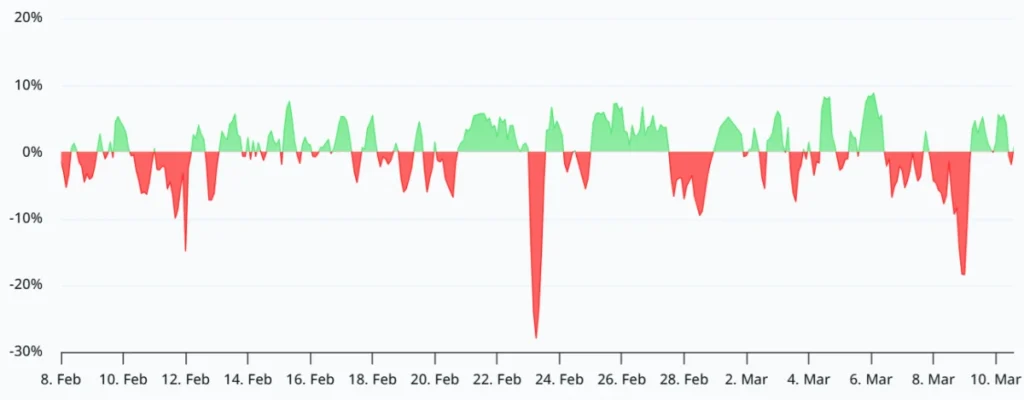
ETH is currently struggling to hold the psychological $2,000 level, weighed down by a near -60% price correction over the last six months as it slid 1.9% overnight following a positive start to the week.
Traders view negative funding as a capitulation signal. Historically, prolonged negative rates have often preceded a squeeze, but the current macro setup suggests that legitimate spot selling pressure is driving the current price action.
What Negative Funding Rates Actually Signal for ETH
The flip to negative funding is more than just a momentary dip; it highlights a structural weakness in the market structure. When funding is negative, shorts pay longs, meaning the market is heavily skewed toward betting on lower prices.
CoinGlass data shows that while the aggregate funding rate is negative, the options market paints a slightly more nuanced picture.
The options risk gauge remains near the neutral -6% to +6% range, yet put options are trading at a 7% premium relative to calls.
This suggests that while futures traders are aggressively shorting, smart money is hedging against further downside rather than betting on a catastrophic collapse.
Additionally, as on-chain derivatives activity migrates to other networks such as Hyperliquid, demand for mainnet Ethereum protocols has softened, leaving price action dependent on speculative flows rather than utility.
DISCOVER: Next Crypto to Explode in 2026
The Levels That Change Everything for Ethereum USD
Technical structures define the next major move. Ether is currently testing a precarious zone. Bulls are attempting to defend the $2,000 support, but repeated tests suggest weakening buyer resolve.
If bears force a daily close below $1,980, the next major liquidity pocket sits at $1,840. A breakdown of that level leaves little structural support until $1,760, a zone that could trigger a cascade of long liquidations.
Conversely, for the bearish thesis to be invalidated, ETH needs to reclaim $2,120 on a high-volume breakout. A sustained move above this level would squeeze the aggressive late shorts currently paying funding.
This could potentially spark a rapid surge toward $2,300. However, until the $2,120 resistance is cleared, the path of least resistance remains lower.
What Traders Are Watching Next

The immediate trigger for a reversal lies in institutional flows. The -$210M ETF exit needs to stabilize; continued outflows will likely force the price through support regardless of derivatives positioning.
Traders are also monitoring the yield spread. With native ETH staking offering 2.8% versus stablecoin yields closer to 3.75% on platforms like Aave, capital efficiency currently favors stablecoins.
Unlike the broader market optimism, the data suggests ETH needs a specific catalyst, either a spike in spot buying or a capitulation wick to flush the remaining leverage, to reset the trend.
EXPLORE: Best Crypto Presales to Buy in 2026
The post Ethereum USD Funding Rate Turns Negative as Bears Regain Control appeared first on Cryptonews.


Nasdaq-listed Solmate Infrastructure has announced plans to build a Solana infrastructure hub in the United Arab Emirates alongside a corporate restructuring and capital overhaul.
Summary
- Nasdaq-listed Solmate Infrastructure plans to build a Solana infrastructure hub in Abu Dhabi as part of a broader restructuring to focus on digital asset infrastructure.
- The company will change its legal name from Brera Holdings PLC to Solmate Infrastructure PLC while retaining the Nasdaq ticker SLMT.
According to a March 10 press release, the company will reposition itself as an institutional-grade provider of Solana infrastructure in Abu Dhabi following a board-approved proposal to realign the company’s legal structure and corporate identity with its blockchain-focused strategy.
Currently operating under the legal entity Brera Holdings PLC, the company will change its legal entity name to Solmate Infrastructure PLC as part of this transition. However, its Nasdaq ticker SLMT will remain the same.
“This transformation is the culmination of Brera’s strategic shift toward infrastructure opportunities we see in Abu Dhabi. By focusing our capital and corporate identity on Solana, we are positioning ourselves to be a central player in the region’s rapidly expanding digital economy,” Solmate CEO Marco Santori said in a statement.
As previously reported by crypto.news, the company first transitioned its strategy last September when it added a Solana-focused digital asset treasury and infrastructure business alongside its soccer ownership operations following a $300 million private investment backed by ARK Invest, RockawayX, and the Solana Foundation.
At the time, the company’s leadership said the move reflected a long-term conviction in the Solana ecosystem and outlined plans to accumulate SOL while building validator infrastructure and staking operations in Abu Dhabi.
In the latest announcement, the company said it will streamline its non-core assets by winding down two underperforming soccer teams while only retaining its flagship Italian club Juve Stabia. It will use the “liberated capital to accelerate its UAE based Solana infrastructure expansion.”
The company has also proposed a 10-for-1 reverse stock split, which is “subject to shareholder approval.” The stock split would consolidate every 10 Class A and Class B shares into one share and increase the nominal value from $0.05 to $0.50 without issuing fractional shares.
This will allow the company to position its shares within a more conventional trading range preferred by institutional investors, it said.


Bitcoin exchange supply has fallen to a record low, highlighting tightening supply even as high-profile investors move large sums of the asset onto trading platforms. On-chain analytics firm Arkham Intelligence reported that the Winklevoss twins transferred roughly $130 million in…

As the S&P 500 chart (US SPX 500 mini on FXOpen) shows, the index is trading near the 6,800 level this morning. However, the balance between supply and demand could change significantly after the release of the Consumer Price Index (CPI) report scheduled for 15:30 GMT+3.
Against the backdrop of military developments in the Middle East and sharp movements in oil prices (as we previously noted, the WTI market remains volatile), today’s data will be an important factor for traders assessing the future policy path of the Federal Reserve. According to Forex Factory, analysts expect headline inflation to remain at 2.4%.

Technical Analysis of the S&P 500 Chart
The chart shows that the 7,000-point psychological level acted as an important threshold at the beginning of 2026 — the price attempted to move above it but failed. It is worth recalling that we highlighted early bearish signals in the article “S&P 500 Hits a Record – But Is Everything Really So Positive?” as early as 13 January.
Since then, bearish pressure has led to:
→ the formation of the descending trend line R;
→ the trading channel (originating in late 2025) being extended downward twofold in early March.
In the context of recent S&P 500 price action, it is important to note that:
→ the lower boundary of the expanded channel has acted as support;
→ the median line is currently showing signs of resistance.
Also note the increasing importance of the 6,700 area:
→ a bearish gap formed there at the beginning of this week;
→ however, the price later moved sharply above this gap, meaning it could potentially act as support in the future.
In the near term, it is reasonable to expect that the release of the data may trigger a spike in S&P 500 volatility. It is possible that the price will test either the red trend line R or the highlighted support area.
Trade global index CFDs with zero commission and tight spreads (additional fees may apply). Open your FXOpen account now or learn more about trading index CFDs with FXOpen.
This article represents the opinion of the Companies operating under the FXOpen brand only. It is not to be construed as an offer, solicitation, or recommendation with respect to products and services provided by the Companies operating under the FXOpen brand, nor is it to be considered financial advice.

Decentralized finance (DeFi) has revolutionized the way users interact with financial services, removing intermediaries and enabling permissionless access to lending, trading, and asset management. Yet, as the ecosystem has grown, so have the risks: market volatility, liquidity crises, and exploits can cause sudden, severe disruptions. Enter Self-Healing Protocols, a class of smart contracts designed to anticipate, react, and adapt to adverse conditions automatically.
What Are Self-Healing Protocols?
A self-healing protocol is a smart contract system engineered to respond dynamically to stress events. Rather than relying solely on governance intervention or manual adjustments, these protocols can automatically:
-
Adjust incentives: For example, increasing yield rewards to encourage liquidity provision when a pool is undercapitalized.
-
Rebalance pools: Automatically shift liquidity between pools or adjust token weights to maintain stability and minimize slippage.
-
Redistribute risk: Move exposure away from highly leveraged positions or risky assets to protect the system during market crashes.
These mechanisms essentially allow a protocol to “heal itself” in response to abnormal conditions, reducing systemic risk and enhancing user confidence.
How They Work
Self-healing protocols leverage a combination of on-chain oracles, algorithmic rules, and dynamic parameters. Key components include:
-
Real-Time Data Monitoring: Oracles feed the protocol with market prices, liquidity metrics, and on-chain activity.
-
Automated Trigger Mechanisms: Smart contracts detect stress conditions—like a sudden liquidity drop or extreme volatility—and trigger corrective actions.
-
Dynamic Incentive Adjustments: Rewards and penalties are algorithmically recalibrated to encourage stabilizing behavior among participants.
-
Risk Redistribution Algorithms: Funds can be automatically reallocated across pools, vaults, or derivatives to minimize the impact of defaults or liquidations.
Some protocols also integrate simulation engines that run stress-test scenarios on-chain to anticipate potential crises before they escalate.
Benefits of Self-Healing Protocols
-
Reduced Governance Lag: Human intervention is often slow and reactionary. Self-healing protocols act instantly.
-
Resilience Against Market Shocks: Liquidity imbalances and sudden withdrawals are mitigated before they snowball.
-
Improved User Trust: Knowing that a protocol can adapt autonomously increases confidence among liquidity providers and traders.
-
Enhanced Composability: Other DeFi products can safely integrate with self-healing protocols without inheriting all the risk.
Challenges and Considerations
Despite their promise, self-healing protocols are not without challenges:
-
Complexity and Audit Risk: More logic means more potential for bugs. Thorough audits are critical.
-
Oracle Dependence: Reliance on external data sources can introduce new points of failure.
-
Economic Exploits: Sophisticated actors may attempt to game dynamic incentive mechanisms.
-
Transparency vs. Flexibility: Too much automatic adjustment can be hard for users to understand, possibly reducing adoption.
Looking Ahead
Self-healing protocols represent a frontier where algorithmic finance meets resilience engineering. Projects exploring this concept could redefine how DeFi handles risk, moving the ecosystem closer to fully autonomous, self-stabilizing financial networks.
As DeFi matures, these protocols may become a standard layer of protection, much like insurance or circuit breakers in traditional finance—but fully automated and embedded in code.
REQUEST AN ARTICLE
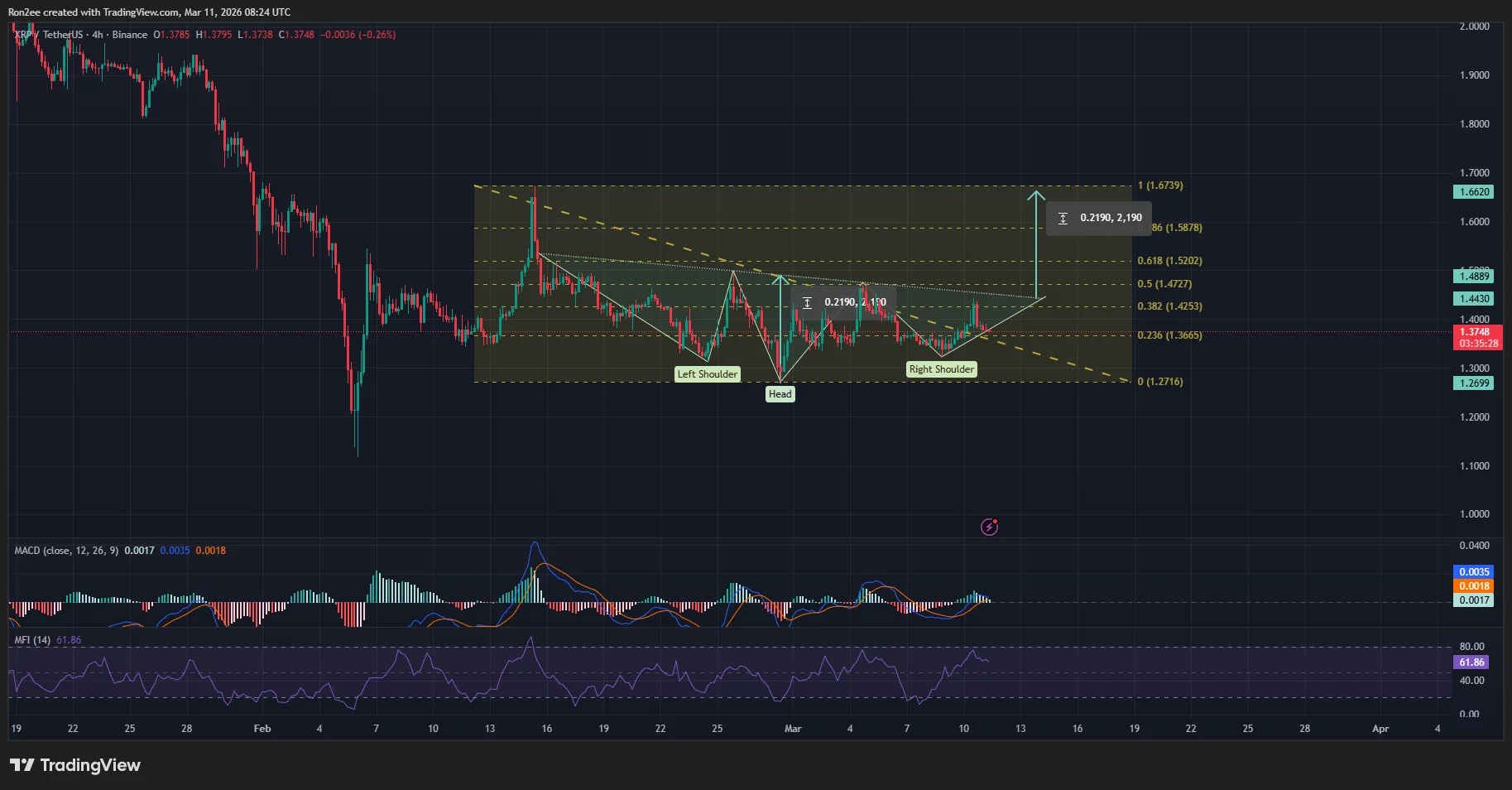
XRP price has been forming a major bullish reversal pattern over the past three weeks. If confirmed, it could lead to a sharp rebound in the token’s price.
Summary
- XRP price fell 4% on Wednesday as markets braced for the release of U.S. CPI data.
- XRP is close to confirming an inverse head and shoulders pattern on the 4-hour chart.
According to data from crypto.news, XRP (XRP) price fell 4% to $1.38 last check on Wednesday, March 11. The fifth-largest crypto asset, with a market cap of $84.5 billion, has dropped nearly 16% from its February high and over 40% from its highest point this year.
XRP price fell as investors remained cautious ahead of the release of U.S. CPI data, set to be released later today. A hotter-than-expected print could force the Fed to maintain its restrictive policy stance, while a cooler reading could alleviate pressure and potentially trigger a pivot, boosting investor demand for risk assets.
While investors remain in the wait-and-watch mode over signs of persistent inflation, a look at XRP charts provides an interesting technical outlook.
On the 4-hour XRP/USDT chart, XRP price action has been shaping an inverse head and shoulders pattern over the past three weeks.

The pattern is formed when an asset creates three distinct troughs called shoulders with a deeper middle trough that forms the head of the pattern. Once confirmed, it has typically been followed by sustained rallies over subsequent sessions.
For now, the next key resistance level lies at $1.42, which aligns with the 38.2% Fibonacci retracement level.
A decisive breakout from it could confirm the pattern. Once confirmed, XRP price could springboard to $1.67, a target calculated by adding the height of the inverse head and shoulders pattern formed to the point at which it would break above the neckline of the pattern.
Momentum indicators suggested that bulls were at an advantage at press time. The MACD lines, which measure the strength of price trends, were pointing upwards while the Money Flow Index showed a reading of 62, signaling healthy buying pressure.
One major catalyst that could serve as a tailwind for XRP price is demand across the derivatives market. Notably, XRP’s weighted funding rate has turned negative. When funding rates turn negative, it signals that the market has become heavily one-sided, with short sellers effectively paying long holders to maintain their bearish bets.
If XRP price experiences a potential short squeeze, it could be the primary engine that drives the price through the $1.42 neckline to confirm the inverse head and shoulders pattern.
Disclosure: This article does not represent investment advice. The content and materials featured on this page are for educational purposes only.

United Therapeutics: Ralinepag Is The Ultimate Defense Against Yutrepia (Rating Upgrade)
OpenAI to Integrate Sora Video Generation into ChatGPT Following Standalone App Struggles

This 10/10 Horror Cult Classic Just Gets Better With Age


-
Business5 days ago
Form 8K Entergy Mississippi LLC For: 6 March
-

 Tech6 days ago
Bitwarden adds support for passkey login on Windows 11
-

 News Videos2 days ago
10th Algebra | Financial Planning | Question Bank Solution | Board Exam 2026
-

 Fashion5 days ago
Weekend Open Thread: Ann Taylor
-

 Crypto World2 days ago
Paradigm, a16z, Winklevoss Capital, Balaji Srinivasan among investors in ZODL
-
 Tech3 hours ago
A 1,300-Pound NASA Spacecraft To Re-Enter Earth’s Atmosphere
-
 Sports6 days ago
499 runs and 34 sixes later, India beat England to enter T20 World Cup final | Cricket News
-

 Sports4 days ago
Three share 2-shot lead entering final round in Hong Kong
-

 Politics5 days ago
Top Mamdani aide takes progressive project to the UK
-

 Sports3 days ago
Braveheart Lakshya downs Lai in epic battle to enter All England Open final | Other Sports News
-

 Business19 hours ago
ExxonMobil seeks to move corporate registration from New Jersey to Texas
-

 NewsBeat6 days ago
Piccadilly Circus just unveiled ‘London’s newest tourist attraction’ and it only costs 80p to enter
-

 Entertainment4 days ago
Hailey Bieber Poses For Sexy Selfies In New Luscious Lip Thirst Traps
-

 Business3 days ago
Search for Nancy Guthrie Enters 37th Day as FBI Probes Wi-Fi Jammer Theory
-

 Business3 hours ago
Search Enters Sixth Week With New Leads in Tucson Abduction Case
-
 NewsBeat1 day ago
Pagazzi Lighting enters administration as 70 jobs lost and 11 stores close across Scotland
-

 Tech2 days ago
Despite challenges, Ireland sixth in EU for board gender diversity
-
Entertainment6 days ago
Harry Styles Has ‘Struggled’ to Discuss Liam Payne’s Death
-

 Crypto World6 days ago
New Crypto Mutuum Finance (MUTM) Reports V1 Protocol Progress as Roadmap Enters Phase 3
-

 Tech6 days ago
ACIP To Discuss COVID ‘Vaccine Injuries’ Next Month, Despite That Not Being In Its Purview