
Crypto World
Dogecoin price analysis: profit-taking stalls rally attempts as breakout setup forms



- Dogecoin (DOGE) stalls near $0.095 as profit-taking caps upside.
- DOGE price is currently compressing between the $0.089 and $0.095 range.
- A breakout is likely as volatility builds ahead of April 20.
The price action around Dogecoin continues to sit in a tight and indecisive range, with recent trading showing very little directional strength.
At the time of writing, DOGE was trading around $0.092, moving inside a narrow 24-hour band between $0.091 and $0.0947.
Each attempt to push higher has been met with immediate resistance at $0.0947, while pullbacks continue to find support around $0.091, creating a balanced but fragile structure, where price remains stable on the surface but increasingly tense underneath.
Profit-taking pressure keeps bulls in check
A key factor limiting DOGE’s upside momentum is consistent profit-taking near local highs.
Over the past trading sessions, price has repeatedly failed to hold above $0.094–$0.095, with every move into this zone triggering selling and pushing price back toward the mid-range near $0.092.
This behaviour is reinforced by the broader weekly structure.
Despite minor gains of around 1% over the past 7 days, DOGE remains largely unchanged across longer timeframes, with only +0.8% over 30 days.
This lack of trend continuation suggests that buyers are not committing beyond short-term trades.
On top of that, derivatives positioning has added scepticism to the upside.
The presence of notable short positions in the market shows that some traders are actively betting against sustained rallies.
This does not guarantee downside movement, but it does explain why upward pushes struggle to build momentum.
Compression builds as technical structure tightens
From a technical perspective, DOGE is clearly in a compression phase.
The 24-hour range of roughly $0.091 to $0.0947, combined with a 7-day range of just over $0.089 to $0.095, highlights how tightly the price is coiling.
This structure aligns with a descending triangle pattern, where lower highs continue to form while support remains anchored near the $0.089–$0.090 zone.

At the same time, price is also trading inside a broader Ichimoku cloud on the 4-hour chart, which typically signals indecision and equilibrium rather than a trending market.
These overlapping structures matter because they all point to the same conclusion: volatility is being compressed.
When multiple technical signals converge like this, the market often prepares for a sharp expansion move.
However, direction remains undefined until either support or resistance breaks convincingly.
Liquidity positioning and the “Doge Day” factor
Beyond chart structure, short-term market dynamics are also shaping sentiment.
Robinhood transferred 327 million DOGE (valued at about $30 million) from cold storage to hot wallets on April 9.
While this is not direct buying pressure, it is widely interpreted as preparation for increased trading activity.
This timing is notable as it coincides with growing attention toward the upcoming “Doge Day” period around April 20.
Historically, these events tend to increase retail participation and short-term volatility, even if they do not always produce sustained trends.
At the same time, broader crypto conditions have provided only mild support.
Bitcoin’s modest gains have helped stabilise sentiment across the market, but DOGE has not shown strong independent momentum. Instead, it continues to trade within its own compressed structure.
Key Dogecoin price levels that will define the next move
For now, DOGE remains in a consolidation phase where patience matters more than prediction.
Once price finally breaks out of the current range, the move is likely to be fast, sharp, and decisive, simply because the market has already spent days building pressure without releasing it.
As the market awaits the next move, the most important DOGE price level for traders remains the $0.09 psychological support zone.
Dogecoin price has held above this level consistently, and any sustained breakdown below $0.089 would mark a clear shift in structure.
Below that, the next area of interest sits near $0.088, where previous accumulation has occurred.
On the upside, resistance remains firmly in place between $0.094 and $0.095.
A daily close above $0.095 would be an important technical signal, suggesting that buyers are finally absorbing overhead supply.
If that happens, the next potential target would be the $0.104 region, which marks a previous local high.



Mixero’s latest privacy feature, Ricochet, is designed to make Bitcoin transaction trails far harder to track.
This comes as state-of-the-art blockchain analytics tools are pushing many users into a corner, with privacy becoming a major concern.
For context, Bitcoin gives users control over their funds, but privacy remains limited by design. Every transaction is recorded on a public ledger, where wallet activity can be traced, linked, and analyzed over time.
That becomes a serious issue once a wallet is connected to a real-world identity. A single withdrawal from a KYC exchange can tie a person’s name to an address, and from there, the rest of their on-chain activity can become much easier to follow.
Ricochet creates a longer and less readable transaction path
Ricochet routes Bitcoin through a chain of intermediary addresses before the funds reach their final destination.
Instead of moving BTC directly from one wallet to another, the transaction passes through multiple hops.
Each hop uses a newly generated wallet address that is never reused. This creates a more complex path between sender and recipient, making it much more difficult to reconstruct the full route through standard blockchain analysis.
In short, Mixero is making the trail less direct, clean, and much harder to interpret.
Randomized hops make tracing more difficult
Ricochet also introduces randomness into the timing and structure of the route.
Each transfer step can be separated by randomized delays, which removes the fixed timing patterns that often make blockchain activity easier to analyze. Users can also choose how many hops to include and how many confirmations should be required along the way.
For those who want deeper protection, full randomization adds even more variation to the route. That makes each transaction path less predictable and harder to model.
This gives users room to adjust privacy settings based on their own priorities. Some may want a faster process with fewer steps. Others may prefer a more layered route that puts greater distance between the source of funds and the final receiving address.
Ricochet works differently from CoinJoin
Mixero is already known for privacy tools built around CoinJoin, but Ricochet follows a slightly different logic.
CoinJoin mixes multiple users’ transactions together in a shared structure, making it difficult to determine which inputs and outputs belong to whom. Instead of merging transactions, Ricochet extends the route. It’s a key difference. CoinJoin disrupts transaction matching. Ricochet obscures the path itself by multiplying the number of steps between origin and destination.
For users who want stronger privacy without relying on pooled transaction structures, Ricochet offers another way to reduce traceability on Bitcoin.
Public blockchains expose a lot
On a public blockchain, transaction history can expose wallet balances, behavior patterns, recurring counterparties, and long-term financial activity.
Once an address is identified, the rest of that history can become easier to map. For users who value discretion, that creates obvious risks.
Privacy in crypto is often dismissed as an edge case, largely because it is associated with anonymity. In reality, it is a normal financial concern. Not every user wants their transaction history open to exchanges, analytics firms, investigators, or anyone else watching the chain.
Tools like Ricochet exist because transparency on public ledgers has consequences.
No logs
Ricochet is paired with Mixero’s no-logs policy, which reduces the amount of user activity data retained during the process.
That adds another layer of privacy beyond the transaction route itself. The combination of fresh addresses, randomized delays, customizable hops, and limited data retention creates a stronger privacy model for Bitcoin transactions on a public network.
For users trying to reduce the visibility of their BTC activity, Ricochet offers a direct way to make transaction tracing much more difficult.
About Mixero
Mixero is a privacy-focused crypto service for users who want stronger transaction privacy on public blockchains. The platform offers CoinJoin-based Bitcoin mixing, Tor access, signed Letters of Guarantee, and Ricochet, a feature that routes BTC through multiple randomized hops before it reaches its destination. The service is built for users who want more discretion in an on-chain environment where transaction histories are otherwise easy to inspect.
The post Mixero Crypto Mixer Adds Ricochet to Strengthen Bitcoin Transaction Privacy appeared first on BeInCrypto.
Crypto World
Advanced Micro Devices (AMD) Stock Surges 6% Following TSMC’s Impressive Q1 Revenue Report

Key Takeaways
- Taiwan Semiconductor Manufacturing Company posted first-quarter 2026 revenue of $35.6 billion, marking a 35% year-over-year increase
- Shares of AMD climbed as high as 6.4% during Friday’s session before moderating to gains of approximately 3.6–3.8%
- Market participants interpreted TSMC’s robust fabrication orders as a bullish indicator for AMD’s forthcoming quarterly performance
- Advanced Micro Devices will announce its Q1 2026 financial results on May 5, with company leadership projecting $9.8 billion in quarterly revenue
- Equity research analysts maintain a Moderate Buy rating on AMD shares with a consensus price target of $284.68
Shares of Advanced Micro Devices (AMD) experienced substantial upward movement Friday following Taiwan Semiconductor Manufacturing Company’s announcement of exceptional first-quarter financial performance, providing a tailwind across the semiconductor industry.
Advanced Micro Devices, Inc., AMD
Taiwan Semiconductor disclosed that its first-quarter 2026 revenue soared 35% to reach $35.6 billion. The figure immediately resonated throughout financial markets.
Market participants interpreted this disclosure as compelling evidence that artificial intelligence processor demand remains resilient. AMD, a major producer of central processing units and graphics processing units deployed in AI-focused data infrastructure, was viewed as a prime beneficiary of this trend.
AMD stock registered intraday gains reaching 6.4% before moderating to approximately 3.6–3.8% appreciation by late-afternoon trading. Daily transaction volume totaled roughly 20 million shares, falling short of the stock’s three-month average daily volume of 33.17 million.
The semiconductor company’s shares have now appreciated nearly 15% since the beginning of the year and have surged approximately 153% during the trailing twelve-month period.
Upcoming Quarterly Report for AMD
Advanced Micro Devices is scheduled to release its first-quarter 2026 financial results on May 5. Company executives have provided guidance calling for revenue of $9.8 billion at the midpoint, representing a 32% year-over-year expansion.
During the fourth quarter of 2025, AMD’s data center division generated $5.4 billion in revenue, reflecting 39% annual growth — establishing a new company record. Market observers are anticipating that the first quarter will maintain this positive trajectory.
TSMC’s healthy order backlog suggests that demand for processors and graphics chips remained firm throughout the opening quarter. This development bodes well for AMD, which depends extensively on TSMC’s fabrication capabilities for its semiconductor production.
A broader geopolitical context is also influencing market sentiment. A ceasefire agreement between Iran and the United States has improved investor confidence. Vice President Vance is scheduled to visit Pakistan this weekend for continued diplomatic discussions, with markets seemingly pricing in optimism regarding further tension reduction.
Analyst Sentiment and Price Projections
Wall Street equity analysts collectively assign a Moderate Buy consensus recommendation to AMD shares. This assessment reflects 21 Buy recommendations and eight Hold recommendations issued during the most recent three-month period.
The consensus price target stands at $284.68, suggesting approximately 16% appreciation potential from present valuation levels.
AMD currently trades at $245.17, within a 52-week trading range spanning from $83.75 to $267.08, while maintaining a market capitalization approaching $386 billion.
Friday’s intraday trading range extended from $238.98 to $249.56.
The upcoming May 5 earnings announcement represents the next significant event for AMD shareholders, who will scrutinize data center segment revenue performance and any modifications to full-year financial projections.


CZ’s autobiography has sparked fierce debate, while Hong Kong has issued its first stablecoin issuer licenses. At the same time, Iran has begun collecting cryptocurrency toll payments from oil tankers in the Strait of Hormuz. These events, along with new US policy moves, have added fresh pressure and attention across the digital asset market.
Hong Kong Opens Stablecoin Licensing as Regulation Moves Forward
The Hong Kong Monetary Authority announced the first batch of stablecoin issuer licenses. Two licenses were issued in the first round. They included HSBC and Anchor Fintech Limited. Anchor Fintech is a joint venture tied to Standard Chartered Bank, Animoca Brands, and Hong Kong Telecom.
The authority said applicants were reviewed on several factors. These included business plans, issuer functions, risk controls, and compliance capacity. It also reviewed whether the proposed use cases could add value to the wider market. The process covered compliance in Hong Kong and other jurisdictions.
In the United States, crypto regulation is also moving ahead. SEC Chair Paul Atkins said the proposed crypto safe harbor framework has entered White House review. The review is being handled by OIRA, and release is expected soon.
The plan includes a startup exemption program. It may allow crypto projects to raise funds for about four years under disclosure rules. It also includes an investment contract safe harbor and guidance on token classification. The SEC is also working on an innovation exemption for on-chain assets.
Iran Toll Plan and Market Shifts Add New Pressure
Iran has started charging tolls on fully loaded oil tankers passing through the Strait of Hormuz. The reported rate is about $1 per barrel. Payments are being requested in cryptocurrencies and other digital assets during a two-week ceasefire period with the United States.
Under the plan, vessels must send cargo details to Iran by email. After review, payment instructions are issued. Empty tankers may be exempt. Hamid Hosseini said the policy aims to track traffic and prevent weapons movement during the ceasefire period.
Elsewhere, industry operations are also shifting. Binance employees in the UAE were reportedly offered relocation options to Hong Kong, Tokyo, Kuala Lumpur, and Bangkok. The move followed security concerns after the US-Iran war affected the UAE and Dubai.
At the same time, returns on major DeFi platforms continued to decline. Aave, Lido, and other large protocols now offer yields below some traditional finance platforms. This has increased focus on products supported by US Treasuries and institutional credit.
CZ Memoir Draws Attention as Firms Face Volatility
Binance founder CZ said his autobiography Freedom of Money was fully released on April 8. English and traditional Chinese editions are now available. He said all personal proceeds and royalties will be donated to charity.
The book drew attention for its prison writing conditions and its claims about industry figures. CZ described harsh limits on communication tools in prison. He also wrote about SBF, the failed FTX rescue talks, and a dispute involving Star Xu. Those remarks have fueled broad discussion across the crypto sector.
Corporate volatility also remained in focus. Strategy reported a $14.5 billion unrealized Bitcoin loss in the first quarter. The company said fair value accounting amplified the quarter’s swings. It still added 4,871 BTC between April 1 and April 5.
BitMine also announced a NYSE listing transfer and expanded its share repurchase plan to $4 billion. The company said it had accumulated about 4.803 million ETH over nine months. That total represents about 3.98% of ETH supply.
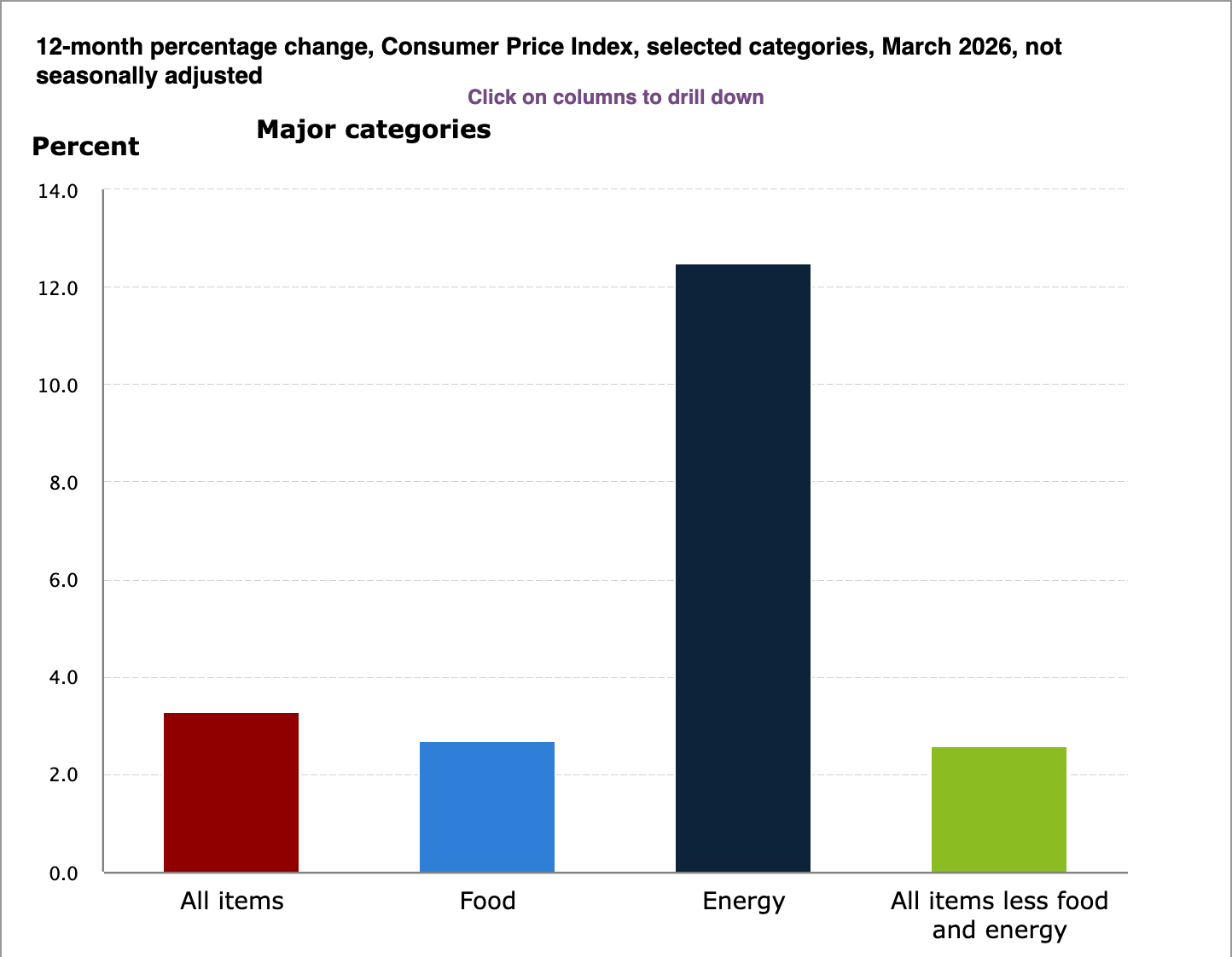
The United States Bureau of Labor Statistics (BLS) published the Consumer Price Index (CPI) data for March, showing a 0.9% month-over-month rise in headline CPI inflation.
CPI inflation is up 3.3% year-over-year, according to the BLS report published Friday. Although inflation came in slightly lower than analyst expectations, inflation remains elevated above the Federal Reserve’s 2% target.
A surge in energy prices from the Iran war drove March’s inflation figures, with the energy index rising by nearly 11%, led by a 21.2% rise in gasoline prices, the BLS report said.

Managing inflation is part of the Federal Reserve’s dual mandate of price stability and maximum employment, which influences its decision-making on interest rates and broader monetary policy.
Bitcoin (BTC) and cryptocurrency prices are significantly impacted by interest rate policy, with lower interest rates stimulating asset prices by expanding credit that flows into financial markets and higher rates restricting capital flows and asset prices.
Related: Bitcoin steadies after PCE inflation data, $80K target remains
Traders see no chance of interest rate cuts at April Fed meeting
Investors forecast a 0% chance of an interest rate cut at the April Federal Open Market Committee (FOMC) meeting, according to CME Group’s FedWatch tool.
The odds that the FOMC will keep rates on hold are 98.4%. Rate cut odds increase only incrementally throughout the year.

FOMC members are divided on further rate cuts in 2026, due to inflationary pressures from the ongoing war, and rate hikes have not been ruled out.
Bitcoin rises on latest CPI print
The price of Bitcoin (BTC) rose by over 1.5% on Friday, briefly tapping the $73,000 level following the latest CPI print.
“The $73,000–$75,000 zone is our next major target,” said Matt Mena, senior crypto research strategist at crypto exchange-traded product provider 21shares.
“If BTC clears this, expect a brief period of sideways consolidation before a test of $80,000. Should the Clarity Act pass, the stage is set for $100,000 BTC and a $3 trillion–$3.2 trillion total crypto market cap by the end of Q2,” he added.
Magazine: Big Questions: Can Bitcoin save you from the dreaded Cantillon Effect?
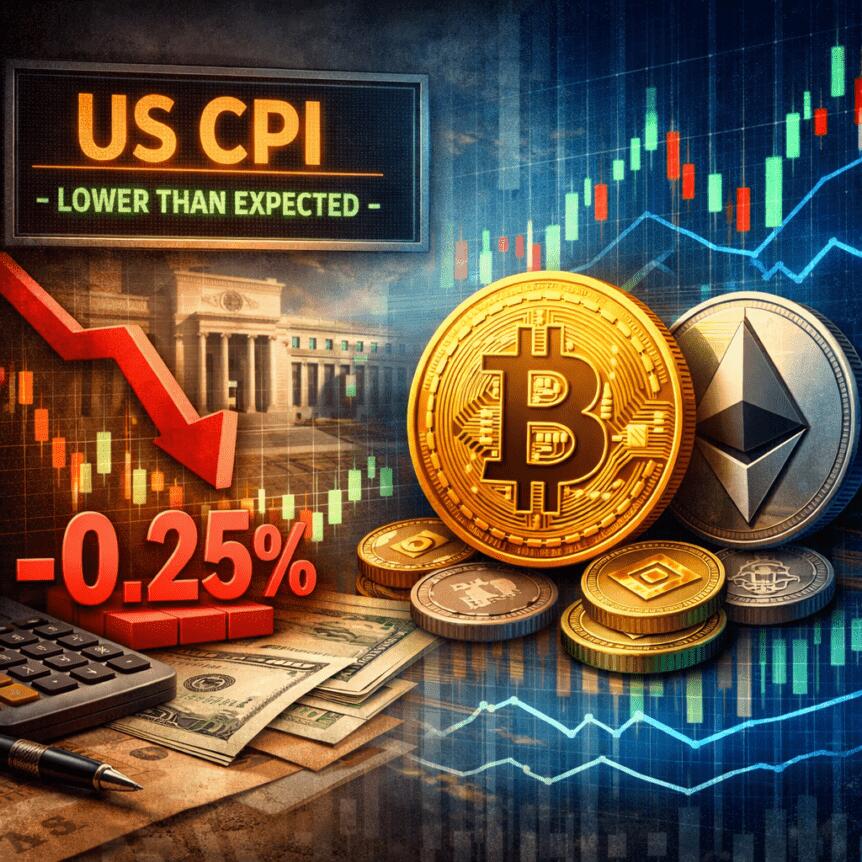
The March Consumer Price Index (CPI) release from the U.S. Bureau of Labor Statistics shows a 0.9% month-over-month rise in headline inflation, with a 3.3% year-over-year increase. While the monthly gain trailed some early expectations, inflation remains above the Federal Reserve’s 2% target and continues to shape policy risk and financial markets alike. The BLS data highlight a sharp upturn in energy prices, contributing to overall inflationary pressure, with the energy index rising nearly 11% for the month and gasoline prices climbing by a substantial margin.
The report underscores how energy price dynamics are feeding into the broader inflation picture, complicating the Fed’s balancing act between taming inflation and supporting economic growth. As the central bank weighs its next moves, financial markets are parsing the CPI print for hints about the trajectory of interest rates and the path of liquidity that could influence asset prices across riskier markets, including cryptocurrency.
Key takeaways
- Headline CPI rose 0.9% in March, with a 3.3% increase from a year earlier, signaling persistent inflation despite some cooling signs elsewhere.
- Energy prices were a major driver, with the energy index up roughly 11% for the month and gasoline up 21.2%, according to the BLS.
- Fed policy expectations remained highly skewed toward holding rates in the near term; CME Group’s FedWatch tool prices about a 98.4% chance of no rate cut at the April FOMC meeting.
- Bitcoin and broader crypto markets moved on the CPI data, with BTC rising more than 1.5% and briefly touching the $73,000 level as traders reassessed risk and policy signals.
- In market commentary, analysts note the potential for further upside if key resistance around $73,000–$75,000 is cleared, with some tying macro policy developments to longer-term crypto targets.
Inflation signals and policy expectations
March’s CPI data reaffirm that inflation remains a central concern for U.S. monetary policy, even as some components show resilience. The energy component’s outsized contribution—driven by stronger gasoline prices—illustrates how commodity markets can amplify price pressures during geopolitical or supply-disruption episodes. This dynamic matters for investors because it shapes expectations about how quickly the Fed will adjust policy and how the resulting rate environment could influence asset valuations throughout the crypto ecosystem.
Looking ahead, market participants continue to price in a low probability of immediate policy easing. The CME FedWatch tool shows a circa 98.4% probability that the Federal Open Market Committee (FOMC) will keep the target range unchanged at its April meeting. While rate cuts are not priced in for the near term, traders remain attentive to evolving inflation readings, wage data, and other macro signals that could shift expectations as the year unfolds.
Federal Reserve communications have historically emphasized a gradual approach to tightening or pausing, balancing the twin aims of price stability and maximum employment. In practice, the path for 2026 remains uncertain, with several policymakers reportedly divided on whether further rate cuts will come amid inflation pressures tied to ongoing geopolitical tensions. Although the near-term stance points to stability, the broader policy trajectory could still be adjusted if inflation persists or if growth slows in unexpected ways.
Bitcoin and crypto response to the CPI update
Bitcoin’s price action in the wake of the CPI release reflected a broader risk-on tilt that often follows softer-than-feared inflation prints or the prospect of a slower policy tightening cycle. BTC rose by more than 1.5% on the session, briefly advancing toward the $73,000 level. Market observers highlighted this as a potential springboard for a run toward the $75,000 mark as traders reassess macro risk premia and liquidity conditions.
Matt Mena, senior crypto research strategist at 21Shares, framed the near-term technical picture in terms of established ranges: “The $73,000–$75,000 zone is our next major target.” He suggested that clearing this zone could lead to a period of consolidation before a push toward higher levels, with a possible move to $80,000 if momentum holds. Beyond the technicals, he connected the macro backdrop to a longer-term bull case for the sector, noting that policy developments—such as potential legislative clarity for crypto—could unlock a broader ecosystem expansion. “Should the Clarity Act pass, the stage is set for $100,000 BTC and a $3 trillion–$3.2 trillion total crypto market cap by the end of Q2,” he said, signaling how policy signals can compound price drivers alongside technical breakouts.
These views align with a broader sense among traders that macro conditions, liquidity flows, and regulatory clarity collectively shape crypto’s risk-reward calculus. While the CPI data reinforced the value of monitoring energy price dynamics and policy signals, the immediate takeaway for investors is a continued emphasis on discipline in risk management and clear watchpoints for key resistance levels that could redefine short-term momentum.
What to watch next for markets and crypto
The March CPI release adds another data point into a complex mosaic of inflation, policy, and market sentiment. For crypto, the near-term focus remains on price levels around $73,000–$75,000 as a potential inflection zone. A sustained breakout beyond that corridor could redraw near-term trajectories toward $80,000 and beyond, depending on how the macro backdrop evolves from here.
On the policy front, investors will be watching for new guidance from the Fed in upcoming communications, as well as any fresh developments around crypto legislation and regulatory clarity. The interplay between rate expectations, energy price trends, and macro risk appetite will continue to shape both traditional markets and digital assets in the weeks ahead.
In the broader market context, the CPI release underscores the sensitivity of crypto prices to macro data and policy signals. As the economy navigates renewed inflation dynamics, market participants should balance technical levels with an eye on policy shifts and potential legislative milestones that could alter the risk calculus for crypto exposure.
Readers should stay tuned for any new inflation readings, Fed commentary, and regulatory updates, which together will influence the velocity of capital into crypto markets and the momentum of institutional participation in the sector.
Crypto World
Newly Launched Outset Media Index Gives Early Users Special Access Benefits in Exchange for Feedback

Outset Media Index (OMI), a newly soft-launched platform for standardizing media benchmarking, is running an early feedback round. The program is designed to turn the first wave of users into active contributors, helping refine how the index works in real-world media, PR, marketing, and research workflows. All participants will receive a level-up upgrade to their current plans in exchange for input.
The feedback round is expected to run for roughly one month ahead of OMI’s full launch. To participate, users must be registered on the platform on any plan, including Free, and complete a dedicated form covering their first experience with the index, which signals they find most useful in practice, and what would make the product more valuable in their day-to-day tasks. The form also includes an option for those who want to proceed with deeper in-person interviews.
The OMI team will reward submitted feedback with expanded platform entry. Users on the Free plan will receive two weeks of bonus access to the Starter plan. Paid subscribers will get a one-month upgrade to the next tier of their current plan.
The early feedback round is a key part of OMI’s soft launch. Rather than treating it as a closed testing period, the company is using it as an open customer development stage focused on learning how different professionals interpret media signals, compare outlets, and apply benchmark data to live decisions. This matters because the same metric can mean different things depending on whether the user is an advertiser, an agency, a publisher, an in-house communications team, or a researcher.
Outset Media Index, designed to provide better structure and comparability across the media landscape, entered soft launch on March 12. The platform currently indexes more than 340 publications with regular crypto coverage, including niche crypto titles as well as finance, technology, and general news outlets with digital asset sections. Its framework includes 37 performance and workflow metrics across reach, engagement, SEO, and practical collaboration factors.
OMI leverages partner data from sources such as Similarweb and Moz, with proprietary metrics and scores that add context to traffic and search behavior data.
For example, Unique Score tracks how consistent unique readership is across several months; Reading Behavior combines time on page, pages per visit, and bounce rate into one easily readable number to show how actively readers interact with the content; and Reprints measures how often coverage is picked up by aggregators or secondary outlets.
Taken together, these metrics feed into broader General and Convenience ratings intended to support strategic analysis and day-to-day execution.
“The goal of OMI is to provide teams with a unified way to analyze media quality and fit,” said Mike Ermolaev, founder and CEO of Outset Media Index. “The media landscape has evolved over recent years to the point where surface traffic numbers alone fail to explain how an outlet actually performs.”
“All inputs that contribute to final rankings are reviewed and normalized under the same methodology,“ added Sofia Belotskaia, product lead at Outset Media Index. “There is no option for media site owners to pay for higher positions or better visibility.”
Inside the platform, users can compare outlets, filter them by business-relevant parameters, and examine detailed profiles with historical context.
Outset Media Index, or OMI, is the first standardized benchmark for media outlets developed by Outset PR. It brings data-driven clarity and structured analysis to how media markets are understood across niches. The platform is used by teams who need meaningful context when planning media activity, allocating budgets, or interpreting how visibility behaves after publication.
By organizing traffic, engagement, SEO, and operational signals within a single analytical framework, it provides a reliable picture of how outlets actually perform beyond surface traffic indicators. Alongside familiar metrics, OMI introduces exclusive decision-ready parameters around audience quality, distribution patterns, and collaboration dynamics – built on years of team’s experience in media analytics.
The methodology is transparent, consistent, and non-negotiable, with no paid rankings or visibility boosts.
Contacts
Business inquiries: sales@omindex.io
Media inquiries: media@omindex.io
Telegram: t.me/omindex
Substack: omindex.substack.com
Disclaimer: This is a Press Release provided by a third party who is responsible for the content. Please conduct your own research before taking any action based on the content.
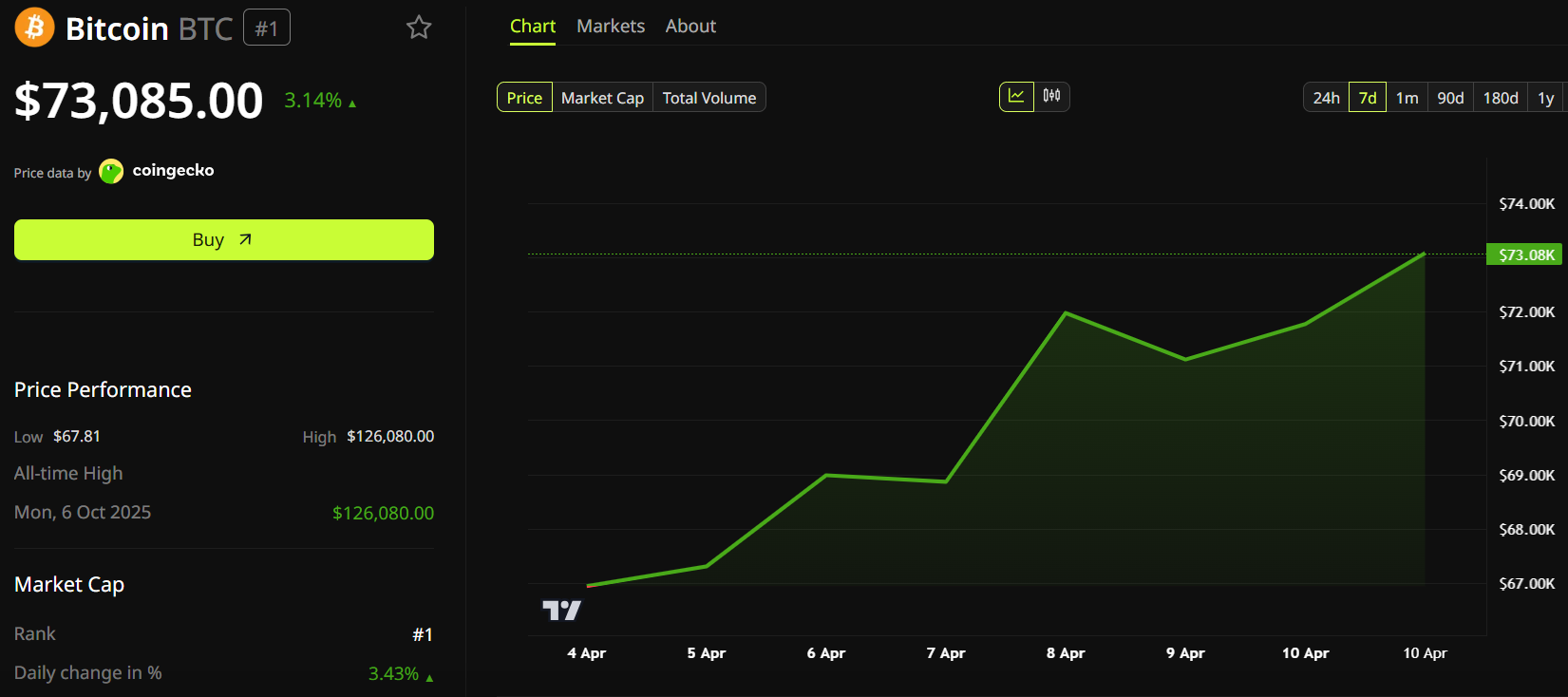
Coinbase Global Head of Investment Research David Duong said the US-Iran ceasefire provided markets with a relief valve, not a full reset, as Bitcoin price tops $73,000.
The two-week truce sent oil back into the low $90s and triggered a broad risk rally. However, Duong argued that underlying constraints from the war have not disappeared.
Why the Ceasefire Rally May Not Last
BTC was trading for $73,085 as of this writing, up by over 3% in the last 24 hours amid risk-on sentiment following the temporary US-Iran ceasefire.
Yet core disputes between the US and Iran remain unresolved. Shipping firms still want security assurances. The Strait of Hormuz may reopen only partially at first.
Meanwhile, the CPI report released Friday showed gasoline prices rose 21.2% in March. The Bureau of Labor Statistics confirmed this was the largest monthly increase since it began tracking the data in 1967.
Headline CPI climbed to 3.3% year over year, up from 2.4% in February.
Labor Data Adds Pressure on the Fed
Nonfarm payrolls rose by 178,000 in March, nearly triple the 65,000 consensus. On the surface, that supports the Federal Reserve keeping rates elevated.
However, Duong noted labor force participation stayed low at 61.9%. Wage growth slowed to 3.5% year over year. Prior payroll prints have also been consistently revised downward.
This leaves the Fed in an uncomfortable middle ground, according to Duong. Growth is softer than headline numbers suggest, but not weak enough to justify imminent rate cuts while war-driven inflation risks persist.
Duong identified $84 as the key oil level to watch. A sustained break below that threshold would signal fading inflation pressure and raise the odds of a quicker resolution.
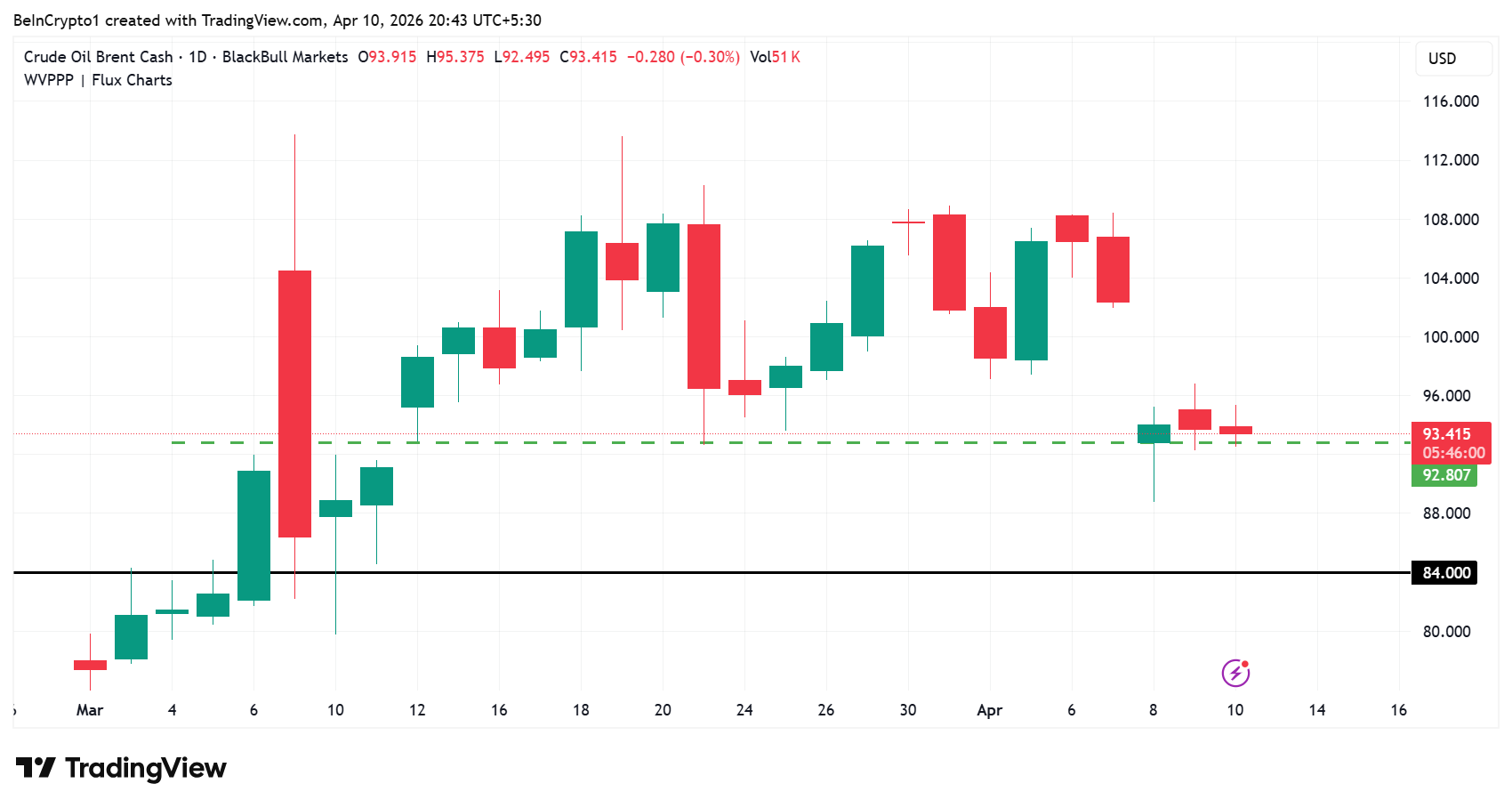
If oil reclaims and holds above $100, markets will likely begin pricing a longer conflict and renewed pressure on risk assets, including BTC.
Friday’s peace talks between the U.S. and Iran could determine whether this relief rally extends or reverses.
The post Bitcoin Hits $73,000 Amid Ceasefire Rally, But Coinbase Chief Gives Caution appeared first on BeInCrypto.


Justin Sun is an adviser to World Liberty Financial, a cryptocurrency project co-founded by President Donald Trump; however, his WLFI tokens have been losing value since the project decided to blacklist them.
In September of last year, the World Liberty team blacklisted 0x5AB26169051d0D96217949ADb91E86e51a5FDA74, a Sun-affiliated address that was labeled as “TRON DAO” on Etherscan.
World Liberty claimed it was blacklisting one address, believed to be Sun’s, because it was “suspected of misappropriation of other holders’ funds.”
Read more: Justin Sun clashes with World Liberty Financial over frozen WLFI
Sun, at the time, took to X to claim that his “address only carried out a few general exchange deposit tests with very small amounts, followed by an address dispersion. No buying or selling was involved” and called on World Liberty to “unlock my tokens.”
In total, Sun had approximately 544 million tokens frozen by this action.
At the time, the WLFI token was trading for $0.22 per token, making Sun’s stake worth approximately $119 million.
Now, the WLFI token trades for approximately $0.09, a fall of approximately 59%.
Sun’s blacklisted stake is currently worth approximately $49 million, a loss of $70 million.
Despite the fact that World Liberty has frozen millions of dollars’ worth of Sun’s wealth, it hasn’t soured his overall relationship with the greater Trump cryptocurrency ecosystem.
The $TRUMP memecoin team recently posted an image that showed that Sun was still at the top of the leaderboard for the upcoming memecoin conference that Trump is planning on hosting/attending/endorsing/profiting from.
This is despite the fact that those tokens aren’t held in a personal account of Sun’s but in an HTX exchange address.
Got a tip? Send us an email securely via Protos Leaks. For more informed news, follow us on X, Bluesky, and Google News, or subscribe to our YouTube channel.

Michael Burry attends “The Big Short” New York premiere at the Ziegfeld Theater in New York, Nov. 23, 2015.
Andrew Toth | Filmmagic | Getty Images
Michael Burry is sticking with his bearish wager against Palantir Technologies, even after a public endorsement from President Donald Trump helped lift the stock.
The investor of the “Big Short” fame said in a Substack post Friday that he continues to hold long-dated put options on the artificial intelligence software firm. Burry said he started betting against the company in the fall of 2025 and has repeatedly rolled the position.
“I now own the June 17 2027 Strike Price 50 Puts and the Decembers 19, 2026 Strike Price 100 Puts. I am not selling these today,” Burry wrote.
Burry’s comments came after Trump praised Palantir in a Truth Social post on Friday, boosting the stock off its intraday lows. Still, the shares were on track for a roughly 13% weekly drop, bringing their 2026 losses to about 28%.
“Palantir Technologies (PLTR) has proven to have great warfighting capabilities and equipment,” Trump wrote. “Just ask our enemies!!!”
The famed investor said the stock has weakened since reaching a peak near $200 last year and remains “wildly overvalued.” While acknowledging the possibility of a near-term rally, Burry argued that the company’s fundamental value is less than half of what it’s worth now.
“Trump’s post rallied the stock after the stock had fallen 18% the last three days. The stock may catch a wind here. It has been selling off with software stocks. As mentioned, I continue to hold the puts, as I believe the fundamental value of this company is well under $50/share,” he said. Palantir traded around $127 per share on Friday.
Some view Palantir as a beneficiary of the Iran war due to the amount of business the software and services vendor has with the U.S. military and intelligence agencies.
During Trump’s second administration, the company has been securing new government contracts and deepening its work with the Pentagon, while CEO Alex Karp has maintained regular engagement with the administration despite earlier tensions.
Last year, Burry’s former hedge fund, Scion Asset Management, disclosed bearish positions against Palantir and AI darling Nvidia, which prompted a sharp reaction from Karp, who called Burry’s wagers “super weird” and “batsh– crazy.”
Key Highlights
- French authorities advocate for enhanced MiCA regulations focusing on dollar-pegged stablecoins
- Enhanced MiCA enforcement introduces mandatory disclosure requirements for non-custodial wallets
- France challenges stablecoin market concentration through reinforced MiCA provisions
- MiCA regulatory expansion accelerates as France intensifies digital asset supervision
- France implements broader crypto transparency measures and stablecoin restrictions via MiCA
French financial authorities advance comprehensive cryptocurrency regulation within the MiCA framework, implementing enhanced surveillance on stablecoins and privately-held digital assets. This initiative demonstrates growing apprehension regarding dollar-denominated tokens and unmonitored wallet transactions. Additionally, regulatory officials coordinate their enforcement strategy with continental initiatives to restructure digital currency governance.
French Central Bank Advocates for Enhanced Stablecoin Restrictions
The Bank of France amplifies demands for reinforced stablecoin oversight within the European Union’s MiCA regulatory structure. Denis Beau advocated for limiting non-euro stablecoin transaction capabilities throughout the bloc. Subsequently, French financial authorities advance comprehensive cryptocurrency regulation within the MiCA framework to diminish foreign currency dominance.
He emphasized that stablecoins pegged to the U.S. dollar command significant global market presence and pose risks to European monetary sovereignty. Accordingly, supervisory bodies seek to decrease dependency on international digital currencies within payment infrastructure. French financial authorities advance comprehensive cryptocurrency regulation within the MiCA framework to bolster euro-denominated options.
Furthermore, policymakers champion central bank digital currency initiatives and tokenized transaction platforms to counterbalance external market control. Developments including Pontes and Appia demonstrate advancement in financial system modernization. French financial authorities advance comprehensive cryptocurrency regulation within the MiCA framework to reinforce domestic payment networks.
France Implements Disclosure Requirements for Private Crypto Wallets
France’s National Assembly enacted legislation addressing privately-controlled crypto wallets through anti-fraud legislation. The regulation mandates yearly disclosure for balances surpassing 5,000 euros. Consequently, French financial authorities advance comprehensive cryptocurrency regulation within the MiCA framework to enhance fiscal transparency.
Regulatory bodies intend to monitor decentralized holdings that function beyond supervised exchanges and institutional custodians. This provision extends surveillance from centralized services to self-managed asset repositories. French financial authorities advance comprehensive cryptocurrency regulation within the MiCA framework to eliminate existing oversight deficiencies.
Legislators and regulatory agencies expressed reservations regarding implementation feasibility and possible information security vulnerabilities. Certain policymakers questioned whether supervisors possess adequate capability to effectively track private wallet transactions. Nevertheless, French financial authorities advance comprehensive cryptocurrency regulation within the MiCA framework notwithstanding practical obstacles.
Europe Harmonizes Regulations With Digital Euro Initiative
European regulatory bodies persist in synchronizing cryptocurrency frameworks with comprehensive monetary and financial security objectives. The proliferation of dollar-collateralized stablecoins continues as a principal regulatory priority across the continent. French financial authorities advance comprehensive cryptocurrency regulation within the MiCA framework to advance strategic independence.
Previously, Italy’s central banking institution observed minimal uptake of MiCA-authorized stablecoins throughout Europe. This pattern underscores the necessity for more robust regulatory mechanisms and promotional measures for euro-based digital assets. French financial authorities advance comprehensive cryptocurrency regulation within the MiCA framework concurrent with digital euro progression.
Forthcoming sector gatherings such as Paris Blockchain Week will convene regulators and business executives. President Emmanuel Macron anticipates delivering remarks on transformations influencing the digital currency landscape. Ultimately, French financial authorities advance comprehensive cryptocurrency regulation within the MiCA framework as Europe consolidates its supervisory position.

Shocking Financial Stats About the Typical American in 2026

Which? names Co Fermanagh resort as the UK’s ‘best hotel for 2026’

Omega Plastics sold to former members of senior team as founder retires


-

 Business5 days ago
Three Gulf funds agree to back Paramount’s $81 billion takeover of Warner, WSJ reports
-

 Fashion7 days ago
Weekend Open Thread: Spanx – Corporette.com
-

 Sports6 days ago
India men’s 4x400m and mixed 4x100m relay teams register big progress | Other Sports News
-

 Business6 days ago
Expert Picks for Every Need
-

 Tech3 days ago
How Long Can You Drive With Expired Registration? What Florida Law Says
-

 Business5 days ago
No Jackpot Winner, Prize to Climb to $231 Million
-

 Fashion4 days ago
Massimo Dutti Offers Inspiration for Your Summer Mood Board
-

 Fashion3 days ago
Let’s Discuss: DEI in 2026
-

 Crypto World2 days ago
Bitcoin recovers as US and Iran Agree a Ceasefire Deal
-

 Business6 days ago
Akebia Therapeutics, Inc. (AKBA) Discusses Pipeline Progress and Strategic Focus on Kidney Disease Treatments at R&D Day – Slideshow
-

 Crypto World1 day ago
Canary Capital Files SEC Registration for PEPE ETF
-

 Politics7 days ago
The UK should not pay a penny in slavery reparations
-

 NewsBeat7 days ago
Kemi Badenoch talks ‘spring cleaning’ Reform defections
-

 Tech4 days ago
Samsung just gave up on its own Messages app
-

 Tech4 days ago
Haier is betting big that your next TV purchase will be one of these
-

 Business6 hours ago
OpenAI Halts Stargate UK Data Centre Project Over Energy Costs and Copyright Row
-
Sports7 days ago
A Kevin O’Connell Theory Can Now Be Retired
-

 Tech4 days ago
Gamer Restores the Original PlayStation Portal From Two Decades Ago
-

 Tech4 days ago
The Xiaomi 17 Ultra has some impressive add-ons that make snapping photos really fun
-

 Tech4 days ago
Italian court says Netflix must refund customers up to $576 over price hikes
You must be logged in to post a comment Login