Crypto World
Dolly Parton Hated Working Out. But She Loved 'Rejoicing Exercises'


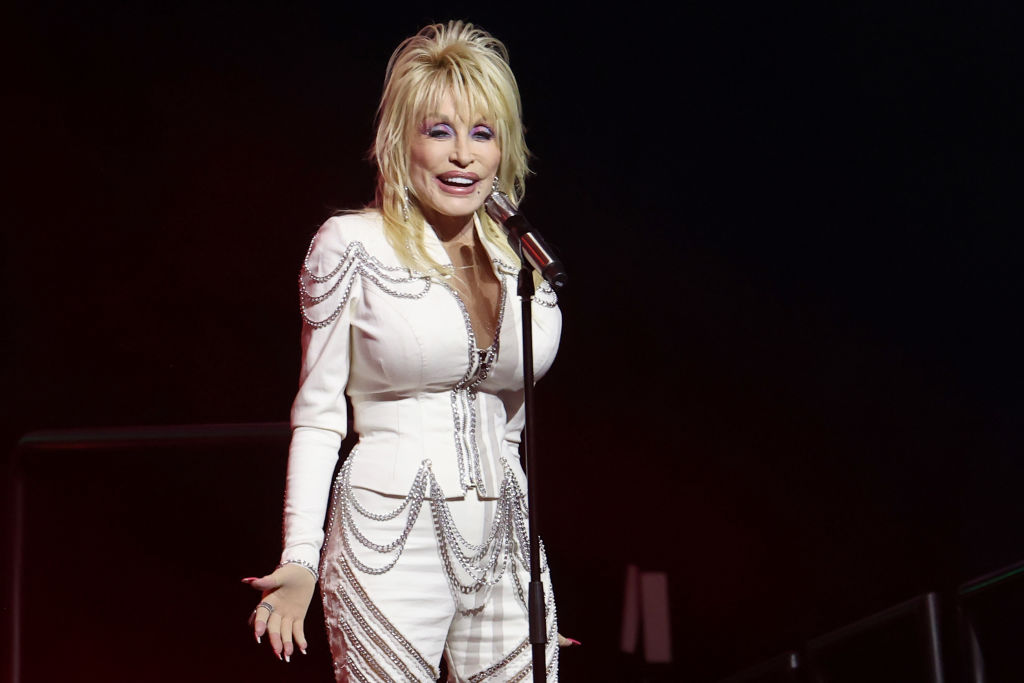
Dolly Parton knew a thing or two about working 9 to 5. Working out was another matter.
“If you tell me I’ve got to do an exercise routine…I dread it so bad,” she told Allure in 2021. Her workaround was “rejoicing exercises”: a freewheeling combination of gospel music, singing, stretching, shouting, and praising. “I do more ‘rejoicing’ than I do ‘working out,’” she said. She occasionally added a few floor exercises and squats—especially, as she put it, “diddly-squats.”
In doing so, she stumbled upon an important truth: Movement doesn’t have to feel like punishment to count.
“Dolly honored herself through movement,” says Michelle Segar, a lifestyle-change sustainability scientist at the University of Michigan and author of The Joy Choice: How to Finally Achieve Lasting Changes in Eating and Exercise. Parton tossed out the rules about what exercise was supposed to look like and designed something that reflected what she needed. “She knew this was for her,” Segar says. “And because it was for her, she had to design it for herself.”
That instinct—to stop chasing the supposedly perfect workout and start with movement that feels good, meaningful, or restorative—could make it easier to keep moving over time. Here’s what we all can learn from Parton’s views on exercise and movement.
“Rejoicing exercises” were quintessentially Dolly
Parton’s routine combined the forces that shaped so much of her life: faith, music, and creative self-expression. She began singing in her maternal grandfather Jake Owens’ church at age 6, and later described feeling divinely inspired as a songwriter, says Leigh H. Edwards, a professor of English at Florida State University and author of Dolly Parton, Gender, and Country Music.
“She often approached her expression on her own terms,” Edwards says, “just as she did when she created her own Dolly image and charted her own trailblazing path for her career.” Exercise was no exception.
Judy Eaton, a professor of psychology at Wilfrid Laurier University in Ontario, teaches positive psychology—the study of how people flourish, rather than only how they struggle. She calls Parton “the poster child for positive psychology.”
Many of Eaton’s students arrive knowing Parton only from Hannah Montana. Eaton introduces them to her as an example of gratitude, optimism, and authenticity; after Parton passed away, former students emailed to say they were grateful her class had helped them understand who she was as a person.
Stop looking for the “right” way to exercise
Many people have absorbed the idea that there’s one correct way to exercise. “We as a society have been taught you’re supposed to exercise in this way for this long, and your body has to feel this way,” Segar says. “You have to breathe hard.” If you can’t—or simply don’t like it—“you don’t do it.”
Public-health guidelines are useful for describing how much activity is associated with certain health benefits. But they don’t necessarily tell people how to fit movement into hectic, unpredictable lives. Fitness marketing has strengthened the idea that a workout only counts when it meets a particular standard, Segar says, creating an all-or-nothing trap: Do the “right” workout, or do nothing.
Parton built her routine around what she would actually do. Instead of deciding exercise wasn’t for her, she decided the gym-and-sweat version wasn’t for her. “We don’t start with the right way,” Segar says. “We start with our way.”
Dr. George Hennawi, physician executive director of geriatrics and senior services at MedStar Health, sees particular value in that approach as people age. When he asks his patients what it means to age successfully, their answers usually involve continuing to do what they already love—whether that’s traveling, gardening, singing, or spending time with their grandchildren.
“She flipped the equation,” Hennawi says of Parton. “What makes me happy? How do I define living successfully, living happily, aging well?” Her answer, as he sees it: “I don’t love exercise—let me bring exercise to the stuff that I love to do.”
That also means reconsidering why you’re moving. Goals like losing weight or preventing a disease years from now can be “abstract, future, often even shame-producing reasons for exercise,” Segar says. Parton’s reason was immediate and personal: She wanted to rejoice. “She’s using movement to fuel herself and live her life,” Segar says, “not to comply with doctor’s orders or to meet some standard of beauty.”
Ask how you want movement to make you feel
“Joyful movement” is a useful phrase, but Segar encourages people to expand their vocabulary. Not every worthwhile walk will make you giddy. It might instead make you feel grounded, energized, connected, or less stressed. It could help you shift out of work mode before walking through your front door—or give you five quiet minutes before the rest of the day begins.
Start by asking: “What do you want to feel while you’re moving?” Segar suggests. Then choose an activity likely to deliver that feeling.
The answer will look different for everyone. “For one person, it could be, ‘I’m going to close my door and put on headphones and dance for five minutes,’” Segar says. Someone else might grab a colleague and walk the stairs at lunch, or chase their kids around the backyard. A walk might serve an entirely different purpose: “I want to transition from my work brain to my family brain,” someone might decide, and head around the block before going home.
Think of movement as a menu rather than a prescription. “You choose what you want based on what you feel like,” Segar says—and that might change daily. “When we toss out the rules, physical movement can be the mechanism for achieving those things.”
Connecting movement to something personally meaningful can also make it more motivating. “Doing things because we have to is never the right way to get us to engage in them more,” Eaton says. “If tying it to something that’s really meaningful to you gets you doing it, then all the better.” For Parton, that meant singing gospel songs and praising—a routine she traced to her Pentecostal upbringing.
Positive emotions can create momentum, too. Eaton points to psychologist Barbara Fredrickson’s broaden-and-build theory: “If you can make yourself experience positive emotions, it makes you more willing to try new things,” she says. A favorite song might put you in the mood to start moving; movement can lift your mood further, making it easier to come back for more.
Rejoicing exercises could engage the mind along with the body, Hennawi adds. “When you’re dancing and singing, you’re stimulating your brain,” he says. “You’re stimulating your body, and you’re connecting all those dots.”
Create your own rejoicing exercises
There’s no official choreography—and prescribing one would miss the point. Choose music you love, if that helps. Dance, stretch, sway, walk, garden, or wave your arms around your living room. Try it for five minutes instead of waiting until you have time for 30. The goal is to finish feeling better than when you started.
Here’s one very Baltimore example from Hennawi: Suppose an older adult’s idea of joy is watching the Ravens and eating ice cream. Without missing a play, they could add arm raises or gentle knee and hip movements while watching on the couch. “Can you add a tiny little bit of exercise?” he asks. “We can do it incrementally, step by step.”
Eaton suspects Parton wouldn’t have issued instructions for copying her routine. The point isn’t to move exactly like Dolly. It’s to move more like yourself. “I think she’d just say, ‘Do what feels good to you,’” she says.
You must be logged in to post a comment Login