
Crypto World
Enterprise AI Infrastructure India: Opportunities, Costs & Outlook


AI Summary
- In the evolving landscape of artificial intelligence, India is emerging as a key player in the global AI infrastructure race, with significant investments in computing power, data centers, and specialized chips.
- This blog post delves into the technical foundations, investment dynamics, and future outlook of India’s AI infrastructure ecosystem.
- With explosive data generation and massive global investments, India is witnessing a surge in GPU-powered data centers and AI infrastructure services.
- The rise of AI infrastructure as a service model allows enterprises to access compute resources and AI tools on demand, reducing barriers to AI adoption.
- Despite the capital-intensive nature of building AI infrastructure, strategic opportunities abound for enterprises across sectors.
Artificial Intelligence is no longer just an algorithmic breakthrough; it is an infrastructure race. Around the world, governments and technology companies are investing billions into computing power, data centers, and specialized chips. India is rapidly positioning itself as one of the most strategic locations in this new AI economy.
From hyperscale data centers and GPU clusters to sovereign cloud environments and enterprise-ready AI platforms, the country is building the digital backbone required to support large-scale AI deployments. But behind the headlines lies a deeper story: massive capital investments, infrastructure gaps, and an evolving ecosystem where enterprises increasingly rely on specialized AI infrastructure services to operationalize AI at scale. This article explores the technical foundations, investment dynamics, costs, and long-term outlook of India’s evolving AI infrastructure ecosystem.
The Infrastructure Layer Behind AI Innovation
Most conversations about artificial intelligence revolve around models like GPT, multimodal AI, or generative systems. However, these systems depend heavily on large-scale compute environments. Training a modern large language model requires thousands of GPUs operating simultaneously, high-bandwidth networking, and distributed storage systems capable of processing petabytes of data.
These components collectively form what is now referred to as enterprise AI infrastructure. This infrastructure stack typically includes:
- GPU clusters for training and inference
- High-speed networking such as InfiniBand
- Distributed data pipelines
- Model training frameworks
- Scalable orchestration systems
Companies deploying AI at scale rely on an AI infrastructure platform that integrates these components into a unified environment capable of handling model development, training, deployment, and monitoring. In many cases, enterprises no longer build this stack from scratch. Instead, they partner with an AI Development company that provides end-to-end AI development infrastructure tailored to enterprise workloads.
Why India is Emerging as a Global AI Infrastructure Hub
India’s emergence as an AI infrastructure destination is driven by several macroeconomic and technological factors.
1. Explosive Data Generation
India generates nearly 20% of the world’s data, yet it currently accounts for only about 3% of global data center capacity. This imbalance is rapidly driving infrastructure expansion across the country.
As AI adoption increases across industries like banking, healthcare, telecom, and logistics, demand for computing infrastructure is accelerating.
To meet future demand, experts estimate India will require 45–50 million square feet of additional data center space and roughly 40-45 terawatt hours of power by 2030. This scale of expansion signals a massive opportunity for companies delivering AI infrastructure services.
2. Massive Global Investments
Global technology companies are pouring capital into India’s AI ecosystem.
For example, Microsoft recently announced a $17.5 billion investment to expand cloud and AI infrastructure in India between 2026 and 2029, including hyperscale data centers and sovereign cloud capabilities.
The initiative includes:
- New hyperscale cloud regions
- AI compute clusters powered by GPUs
- Sovereign cloud architecture for regulated industries
- National AI skilling initiatives
This type of investment is transforming India into a strategic node in the global AI cloud infrastructure landscape.
3. Data Center Expansion and GPU Clusters
India’s AI boom is strongly tied to the rapid development of GPU-powered data centers.
Specialized AI facilities now deploy thousands of GPUs connected through high-bandwidth networking to support large-scale model training.
Recent industry deployments indicate:
- AI data centers hosting 8,000-10,000 cloud GPUs per facility
- High-speed networking reaching 3.2 Tbps interconnect speeds
- Rack densities exceeding 200 kW per rack for AI workloads
Such environments form the backbone of modern AI infrastructure platforms used by enterprises building generative AI and predictive models.
The Rise of AI Infrastructure as a Service (AIaaS)
While hyperscalers build massive infrastructure environments, enterprises increasingly prefer consuming these capabilities as managed services.
This shift has led to the rise of AI infrastructure as a service, a model where organizations access compute resources, GPU clusters, and AI development tools on demand. Instead of investing millions into physical infrastructure, companies can deploy AI workloads through scalable cloud environments. Typical AIaaS offerings include:
- GPU-based compute clusters
- Model training pipelines
- Automated ML infrastructure
- Data engineering frameworks
- AI model hosting and inference services
This model drastically reduces the barrier to entry for enterprises adopting artificial intelligence. Organizations can focus on building AI applications rather than managing the underlying AI development infrastructure.
The Cost of Building AI Infrastructure in India
Despite the rapid expansion, building AI infrastructure is an extremely capital-intensive process. A typical hyperscale AI data center includes several cost layers:
AI compute hardware is the most expensive component. Advanced GPUs used for AI workloads can cost between $25,000 and $40,000 per unit, depending on the architecture and memory configuration. Large training clusters often require thousands of GPUs operating in parallel.
AI data centers are highly energy intensive. High-performance compute environments require an enormous electricity supply for both compute and cooling. In many facilities, electricity consumption per rack can exceed 100-200 kW, far higher than traditional data centers. Power costs, therefore, become a critical factor when designing enterprise AI infrastructure.
Training large models requires an extremely fast networking infrastructure. Technologies such as RDMA networking and InfiniBand enable GPU clusters to communicate with minimal latency. At the same time, distributed storage systems must handle massive training datasets efficiently. These layers form the core of a scalable AI infrastructure platform.
- Talent and Operational Costs
Infrastructure alone does not guarantee AI success. Organizations must also invest in:
- ML engineers
- Data scientists
- Infrastructure specialists
- AI operations teams
This talent layer is often delivered through specialized AI infrastructure services offered by advanced AI Development companies.
Strategic Opportunities for Enterprises
India’s AI infrastructure expansion is creating a wide range of opportunities across sectors.
Banks, insurance companies, and healthcare providers are increasingly deploying AI to automate operations, detect fraud, and deliver predictive insights. Access to scalable AI cloud infrastructure enables these organizations to build enterprise AI capabilities without building data centers internally.
India’s startup ecosystem is rapidly embracing AI. Access to GPU clusters and AI infrastructure as a service allows startups to experiment with large models and generative AI applications that were previously accessible only to major technology companies.
- Sovereign AI and National AI Platforms
Governments and enterprises are also exploring sovereign AI strategies. These initiatives focus on building national AI models trained on local data and hosted on domestic infrastructure. This approach strengthens regulatory compliance, data privacy, and technological independence.
Challenges India Must Overcome
Despite strong momentum, India’s AI infrastructure journey faces several challenges.
AI workloads require massive GPU availability. However, global supply chains remain constrained, creating bottlenecks in infrastructure deployment.
AI data centers consume large amounts of electricity. Scaling AI infrastructure while maintaining sustainable energy usage will become a critical challenge.
While India produces a large number of engineers annually, the number of professionals with deep AI infrastructure expertise remains limited. Bridging this gap will require continued investment in AI education and skill development.
Now is the time to Build the Foundation for India’s AI Revolution
The Future Outlook: India’s AI Infrastructure in the Next Decade
India’s AI infrastructure expansion is still in its early stages. Over the next decade, several major trends will shape the ecosystem.
- Hyperscale AI Data Centers
Large-scale AI compute facilities capable of hosting tens of thousands of GPUs will become more common. These data centers will serve as regional AI hubs supporting enterprises, governments, and startups.
Businesses will increasingly rely on integrated AI infrastructure platforms that combine compute, data pipelines, model management, and deployment tools. These platforms will simplify AI adoption across industries.
- AI Infrastructure as a Strategic Industry
Infrastructure providers, cloud companies, and specialized AI Development companies will play a central role in enabling enterprise AI transformation. Companies that deliver scalable AI infrastructure services will become essential partners for enterprises navigating the AI economy.
The Road Ahead for AI Infrastructure
India is entering a decisive phase in the global AI economy where infrastructure capacity will determine how quickly innovation moves from research labs to real-world deployment. As enterprises adopt large language models, real-time analytics, and autonomous systems, the demand for scalable enterprise AI infrastructure will continue to accelerate. Organizations must therefore prioritize resilient compute environments, secure data pipelines, and high-performance deployment frameworks that support long-term AI initiatives. Building this capability often requires collaboration with a specialized AI Development company experienced in designing production-grade AI infrastructure platforms.
Antier enables enterprises to establish scalable AI development infrastructure, helping organizations deploy advanced AI systems with robust AI infrastructure services tailored for enterprise-scale innovation and operational efficiency.



Bitcoin (BTC) traded near $67,000 over the weekend after a week of sharp swings. The broader crypto market also stayed steady, while Pi Network’s PI token held above $0.17 after days of losses.
Summary
- Bitcoin traded around $67,000 as weekend volatility faded and the broader crypto market stayed subdued.
- Pi Network’s PI token stabilized above $0.17 after recent losses, ending its sharp downward trend.
- VeChain climbed 9% daily while HASH dropped 10%, marking the strongest altcoin moves reported today.
Bitcoin showed limited movement over the past 24 hours and remained close to the $67,000 level. Its price action followed a volatile week in which the asset moved between $66,000 and $68,000 before rising to $69,200 on Wednesday.
That move reversed after fresh market pressure, sending Bitcoin down to $65,700 later the same day. Since then, the asset has traded in a narrow range. At press time, Bitcoin’s market capitalization stood at about $1.34 trillion, while its market dominance remained near 56.2%.
Most large-cap altcoins posted small changes during the same period. Ethereum held near $2,050 after a slight daily loss, while XRP remained above $1.30. BNB, Solana, TRX, and Cardano all recorded gains of less than 1%.
The biggest moves among larger altcoins came from a smaller group of assets. RAIN fell more than 6% and dropped below $0.0075. HBAR, PEPE, UNI, and SHIB also traded lower. In contrast, Ethereum Classic rose 3.5% to $8.30 and stood out from the broader market.
PI token steadies after recent drop
Pi Network’s PI token showed signs of stability after a recent downward move. The token traded above $0.17, marking a pause in the decline that had drawn attention across the altcoin market.
Elsewhere, HASH posted the sharpest daily loss among the mentioned tokens, falling 10% over the past 24 hours. VeChain moved in the opposite direction and gained 9% on the day, helping it return to the top 100 altcoins by market value.
Meanwhile, the total crypto market value changed little over the day and remained just below $2.4 trillion. That flat reading matched the quiet performance seen across Bitcoin and most major altcoins during the weekend session.
Market activity also stayed muted despite recent macro and geopolitical headlines that had raised expectations of stronger price swings earlier in the week.
Disclosure: This article does not represent investment advice. The content and materials featured on this page are for educational purposes only.


HypurrFi has warned users not to interact with its website or lending app after reporting a possible domain hijacking.
Summary
- HypurrFi warned users to avoid its app after reporting a possible domain compromise Friday.
- The team said user funds remain safe while it investigates the suspected hijacking incident.
- Frontend attacks remain a crypto risk because compromised domains can trick users into signing transactions.
The incident has raised fresh concern over frontend attacks in decentralized finance, even when onchain systems remain intact.
HypurrFi said it is investigating a possible compromise involving its domain. The team asked users to avoid the website and the lending protocol until it shares a new update.
Founder androolloyd posted on X, “Do NOT USE THE HYPURR .FI domain, it is compromised.” The team later repeated that warning and told users not to interact with the app until further notice.
HypurrFi also said there is no current sign of risk to user funds. It added that its social media accounts remain under team control during the investigation.
The warning focused on the website and user access point rather than the protocol’s core contracts. That distinction is common in cases where attackers target frontend systems instead of onchain code.
HypurrFi operates as a DeFi lending and borrowing protocol on HyperEVM. HyperEVM is the EVM-compatible network linked to Hyperliquid’s trading ecosystem.
The protocol has about $30 million in total value locked, based on DefiLlama data. That made the warning more urgent for users who may still try to access the platform through the compromised domain.
The team did not provide details on how the hijacking may have happened. It also did not say when the site would return to normal use.
For now, the main message from the project remains clear. Users should avoid the domain and wait for an official notice before reconnecting wallets or signing any transaction requests.
Domain hijacking remains a known crypto risk
Domain hijacking has become a recurring issue across the crypto sector. These attacks often target a project’s website and user interface instead of its smart contracts.
Once attackers control a domain, they can place wallet drainers or other malicious prompts on the site. This method can affect users even when the underlying protocol has passed security reviews.
A similar case affected the BONKfun domain last month. That incident added to a growing list of attacks that use fake or compromised frontends to reach users.


Bitcoin (BTC) stayed near $67,000 on April 4 as two CryptoQuant analysts pointed to a split market structure.
Summary
- Bitcoin spot volume dropped faster than open interest, showing derivatives still carried more market weight.
- Exchange reserves fell by 66,300 BTC as OTC flows pointed to continued institutional accumulation recently.
- Negative funding and nearby downside liquidity kept short-term liquidation risk elevated for Bitcoin traders.
CryptoQuant analyst Carmelo_Alemán said Bitcoin daily spot volume fell from 42,026 BTC on March 17 to 35,590 BTC on April 2. That marked a 15.31% drop in spot activity over the period. At the same time, open interest fell from $23.33 billion to $21.26 billion, a smaller 8.87% decline.
He also said the estimated leverage ratio rose from 0.2207 to about 0.225. In his view, Bitcoin is becoming “less dependent on real buying and selling” and more tied to leveraged positions. The same note said funding rates stayed mostly negative, showing stronger short positioning in perpetual futures.
Carmelo_Alemán said liquidity below the market sits closer than the larger liquidity zones above. That setup, according to his note, leaves Bitcoin open to a short-term move driven by long liquidations before any stronger recovery attempt.
CryptoQuant research published this week also said Bitcoin spot demand remains in deep contraction even as institutional buying continues through ETFs and Strategy purchases. That supports the view that price action has relied more on derivatives and large buyers than on broad spot demand.
Exchange reserves fall as institutions absorb supply
In a separate note, CryptoQuant analyst GugaOnChain said Bitcoin exchange reserves dropped by 66.3K BTC over the past 30 days. The post added that OTC absorption made up 92.1% of recent flow, compared with 7.9% on regular 24-hour market volume.
GugaOnChain said that pattern points to ongoing institutional accumulation. However, the analyst also warned that on-chain scarcity is facing a “cloudy macroeconomic scenario,” with geopolitical shocks still able to force fast moves back to exchange liquidity.
According to crypto.news data, Bitcoin traded around $67,150 at press time, with a market cap near $1.34 trillion.
Disclosure: This article does not represent investment advice. The content and materials featured on this page are for educational purposes only.


The Digital Asset Market Clarity Act’s compromise language on stablecoin yield has circulated among crypto and banking industry stakeholders in closed-door Capitol Hill sessions, with a Senate Banking Committee markup now targeted for the second half of April — though the text has drawn a mixed, and in some corners hostile, reception.
Summary
- Senators Thom Tillis and Angela Alsobrooks reached an agreement in principle on stablecoin yield on March 20; formal draft language was reviewed by crypto industry leaders on March 24 and banks on March 25
- The compromise bans passive yield on stablecoin balances but permits activity-based rewards tied to payments, transfers, or platform use
- Polymarket had the CLARITY Act priced at a 66% probability of becoming law in 2026 as of April 2
The Tillis-Alsobrooks deal draws a firm line: platforms cannot offer yield — directly or indirectly — for simply holding a stablecoin. Rewards remain permissible only when tied to user activity, not passive balances. The framework gives the SEC, CFTC, and Treasury twelve months to define what specific rewards programs are permissible.
“The compromise that myself and Senator Tillis have been working on is one that we believe will allow us to have the guardrails in place that will help us prevent deposit flight,” Senator Alsobrooks told an American Bankers Association summit.
The banking industry’s position reflects existential concern. Standard Chartered analysts estimated that an open-ended yield provision could redirect up to $500 billion in deposits from traditional banks into stablecoin products by 2028. Banks won the core argument they sought: passive yield is off the table.
Industry Reaction
The industry reception has been far from unified. As the deal first emerged, the market structure bill was framed as potentially unblocking one of the most consequential crypto legislative events of the cycle. But the actual text has landed closer to the bank position than the White House’s earlier compromise framing. Coinbase privately told Senate staff it could not accept the March 23 draft. Stripe has also objected. Broader institutional appetite for regulated crypto products — from ETFs to structured tokens — makes the CLARITY Act’s outcome a critical variable for the entire institutional crypto pipeline in 2026.
The stablecoin yield text is not the only outstanding issue. Senate Democrats are focused on ethics language barring government officials and their families from personally benefiting from crypto holdings. DeFi provisions and the potential attachment of community bank deregulation to the bill also remain unresolved.
The Calendar
The Senate was in pro forma session only through April 9 and returns to full session April 13. Senator Bernie Moreno has stated explicitly that if the bill does not reach the full Senate floor by May, digital asset legislation may not advance before the midterm election cycle. The CLARITY Act passed the House 294–134 in July 2025 and cleared the Senate Agriculture Committee in January 2026. It enters the banking panel with broad support — but a narrowing clock that leaves almost no room for further substantive revision.

The Ethereum Foundation (EF), the non-profit organization at the heart of the world’s most-used blockchain, has staked nearly $100 million in ETH during the last 24 hours.
The move signals a departure from the organization’s long-standing and often controversial practice of selling its native tokens to fund operations.
Ethereum Foundation Could Earn Up to $4 Million in Annual Yield
On-chain data confirms that on April 3, the Foundation deposited approximately 45,034 ETH—valued at roughly $93 million—into the Ethereum Beacon Deposit Contract.
The move, tracked via Arkham Intelligence, saw funds moved from the EF’s Treasury Multisig wallet in systematic batches of 2,047 ETH.
This follows a smaller deposit of 22,500 ETH earlier in the week. It brings the Foundation’s total staked balance to 69,500 ETH, or approximately $143 million.
For much of the last decade, the Foundation’s treasury management has been a flashpoint for market speculation. The organization historically relied on periodic ETH liquidations to cover its annual budget, research grants, and ecosystem development.
These ETH sales frequently occurred near market highs, leading some traders to view Foundation “dumps” as a reliable signal of a local price ceiling. Consequently, the practice fueled accusations that the protocol’s leaders lacked long-term conviction.
This pivot toward staking transforms the Foundation into a primary participant in its own economic system. By acting as a validator rather than a liquidator, the organization is converting its $430 million Ether treasury into a productive, yield-bearing endowment.
At current institutional staking yields of roughly 2.7%, the Foundation’s current staked holdings are projected to generate approximately $4 million in recurring annual revenue.
However, this move forces the Foundation to navigate the same operational risks and “slashing” frictions faced by ordinary network participants.
Meanwhile, the Foundation’s new strategy mirrors a broader trend among institutional holders.
Firms such as BitMine have staked millions of tokens over the last year, contributing to a global total of 38.5 million Ether—roughly 30% of the circulating supply—now committed to securing the network.
The post Ethereum Foundation is Staking Nearly $100 Million in ETH Again appeared first on BeInCrypto.
Chainlink (LINK) moved back into focus after a large amount of LINK reached Binance during weekend trading.
Summary
- Chainlink moved 19 million LINK, with most tokens sent to Binance during weekend trading hours.
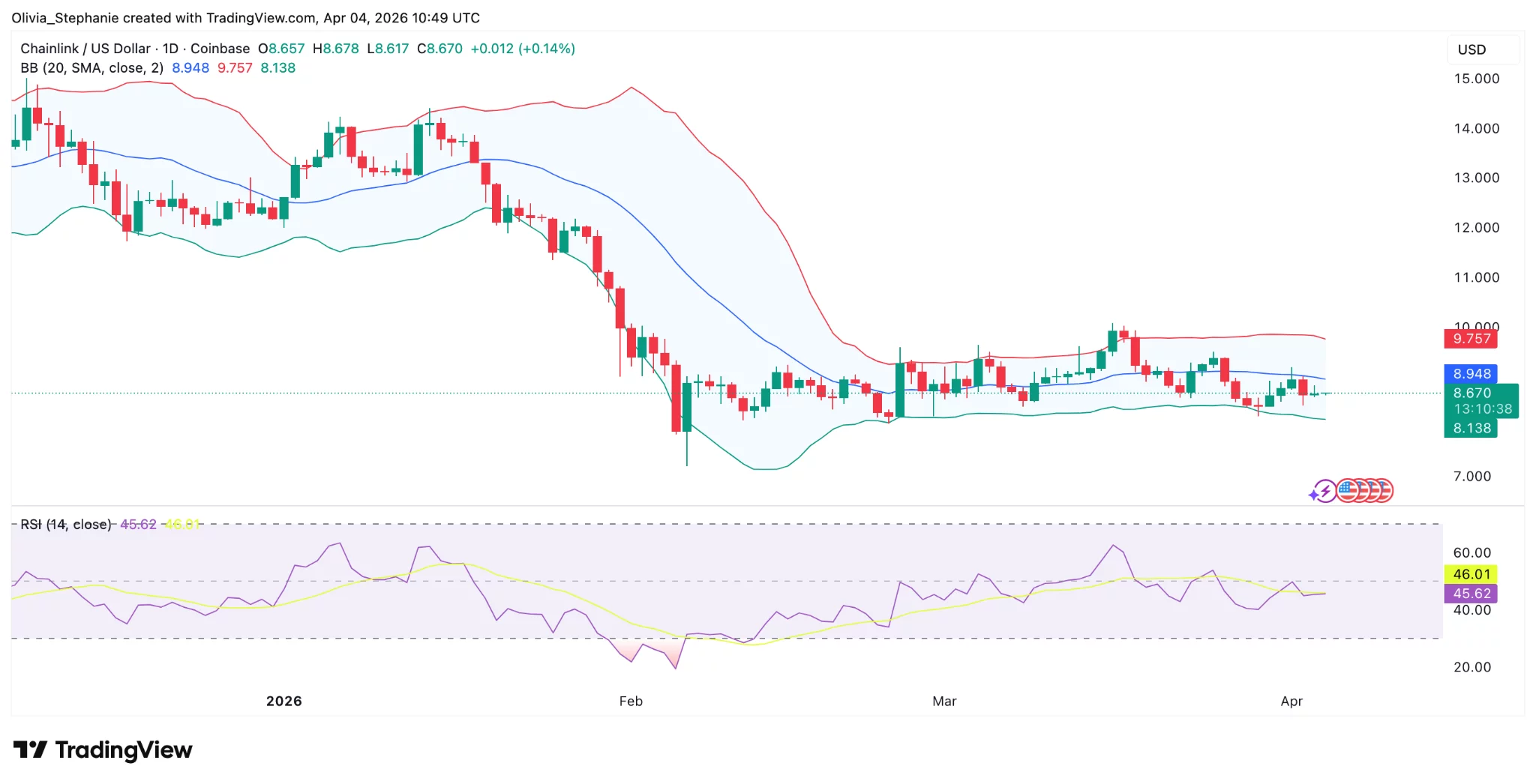
- LINK traded near $8.63 as RSI stayed below 50 and momentum remained weak overall today.
- The quarterly unlock renewed focus on Binance inflows, exchange supply, and possible selling pressure.
CryptoQuant analyst Darkfost pointed to a large LINK transfer during what he described as a “low-liquidity weekend.” Separate onchain reports later said Chainlink completed its regular quarterly unlock, moving 19 million LINK worth about $165 million from three non-circulating supply addresses.
Of that total, about 14.375 million LINK, valued near $125 million, went to Binance. Another 4.625 million LINK, worth about $40.1 million, moved to multisig address 0xD50…8Af. Reports said Chainlink has followed a similar pattern about every three months, with most tokens going to exchanges and a smaller share set aside for staking rewards.
Large exchange inflows often draw attention because they can increase tradable supply. In this case, the Binance transfer arrived during a period when weekend liquidity was thinner than usual, which can make large token movements stand out more in market activity.
Even so, the purpose of the transfer remains unclear. Market observers said the movement could reflect routine treasury management, custody changes, or preparation for distribution, but none of those explanations had been confirmed at the time of reporting.
LINK price and chart stay cautious
According to Crypto.News data, LINK traded at about $8.63 on April 4, with a market cap near $6.28 billion and 24-hour volume around $145.1 million, according to market data. That left the token little changed on the day and only modestly higher over the past week.
On the daily chart shared by the user, Bollinger Bands showed an upper band at 9.757, a middle band at 8.948, and a lower band at 8.138.
LINK traded below the 20-day average but above lower support, while the RSI sat near 45.48. That setup pointed to weak but stable momentum, with resistance near 8.95 and support around 8.14.
Disclosure: This article does not represent investment advice. The content and materials featured on this page are for educational purposes only.

Financial services giant Charles Schwab plans to launch direct trading for Bitcoin and Ethereum before the end of June.
This is a move that threatens to disrupt the dominance of crypto-native exchanges by leveraging the firm’s $12 trillion in client assets.
Schwab’s Crypto Launch Could Pull New Money Into Bitcoin and Ethereum
The firm is preparing to offer clients direct access to cryptocurrencies through a new platform called ‘Schwab Crypto.’
“Gain early access to the Schwab Crypto account, offered by Charles Schwab Premier Bank, SSB—your new gateway to buy and sell Bitcoin and Ethereum cryptocurrencies,” the firm’s website stated.
Notably, Schwab is structuring the service through Charles Schwab Premier Bank, SSB. This state savings bank charter indicates a conservative, compliance-driven approach to the new product.
The firm will also exclude residents of states with stringent crypto regulations, such as New York and Louisiana, during the initial rollout. This underscores its focus on regulatory safety over immediate national expansion.
Additionally, the firm’s deliberate choice to limit initial offerings to Bitcoin and Ethereum further highlights Schwab’s cautious strategy.
By excluding smaller, more volatile cryptocurrencies, the firm is validating the two largest digital assets while protecting its mainstream retail client base from the highly speculative fringes of the market.
Market observers anticipate that Schwab’s entry will inject significant capital into the cryptocurrency ecosystem and further legitimize the asset class.
Tome Dunleavy, the Head of Venture at Varys Capital, pointed out that the bank would be introducing “net new buyers” Into the market.
However, this move also signals a new era of intense competition against established cryptocurrency exchanges like Coinbase and Robinhood.
Meanwhile, the initiative marks a strategic pivot for the Westlake, Texas-based brokerage. Previously, Schwab offered clients exposure to digital assets indirectly through crypto-linked stocks, futures, and spot exchange-traded products.
By facilitating direct trading, Schwab aims to capture transaction spreads and fees currently lost to third-party ETF issuers. This move keeps lucrative revenue within its own ecosystem.
Schwab has a history of aggressive pricing, famously driving stock trading commissions to zero in 2019. If the firm applies a similar low-fee strategy to digital assets, it could force severe margin compression across the crypto exchange sector.
Furthermore, Schwab offers clients the convenience of managing traditional retirement accounts, equities, and digital assets on a single platform, eliminating the need for multiple financial applications.
The post Charles Schwab to Enter the Crypto Trading Space By June 2026 appeared first on BeInCrypto.
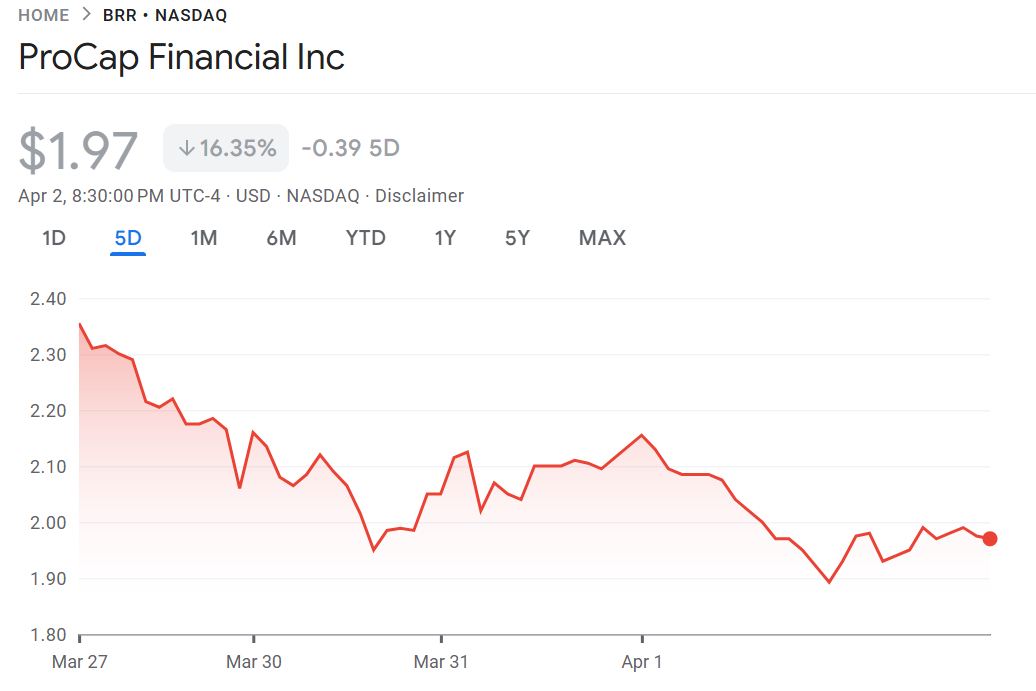
Jeff Park voluntarily resigned as Chief Investment Officer of ProCap Financial (BRR), effective April 3, 2026, according to an SEC filing.
The departure ends an eight-month stint at the Bitcoin treasury company founded by Anthony Pompliano. ProCap has not named a successor.
What the SEC Filing Reveals
The 8-K filing states Park’s exit was voluntary and not tied to any disagreement with ProCap’s board over operations, policies, or practices. Park also resigned from all subsidiary positions.
His separation agreement, dated April 3, includes salary continuation through May 8, 2026, and continued vesting of restricted stock units through August 2026.
ProCap will also cover up to six months of group health insurance.
However, one detail stands out. The company waived Park’s non-compete covenant entirely.
He remains bound by confidentiality, non-solicitation, and non-disparagement clauses.
Park’s Role at ProCap
Park joined ProCap in mid-2025 after serving as Head of Alpha Strategies at Bitwise Asset Management. Pompliano recruited him to lead investment strategy and portfolio construction for the Bitcoin-focused firm.
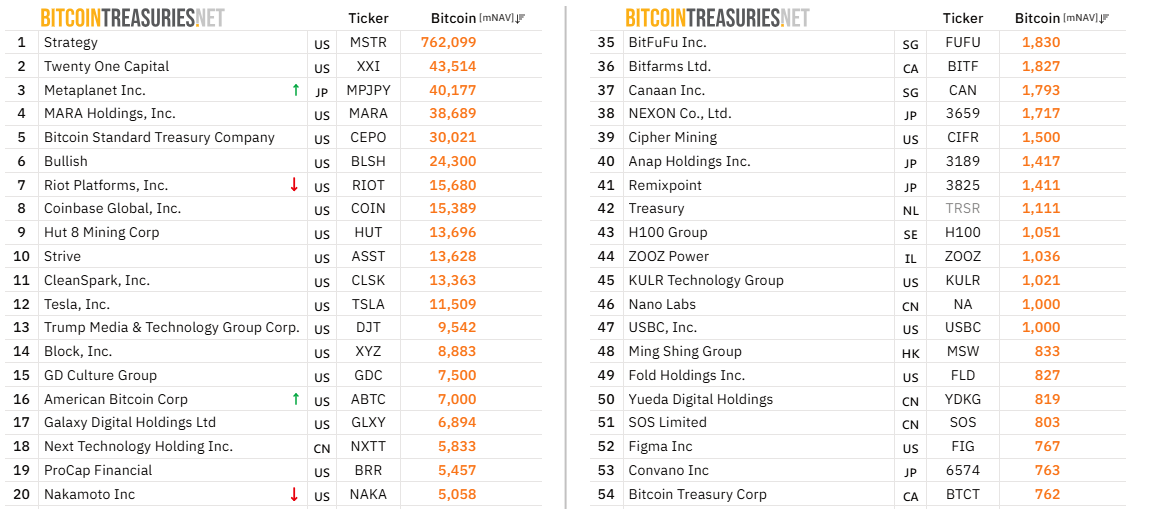
During his tenure, ProCap accumulated roughly 5,457 BTC and executed share buybacks to narrow a persistent discount to net asset value. The firm ranks 19th among public companies holding Bitcoin.
Park also purchased BRR shares personally in December 2025.
He became a vocal advocate for what he called “Radical Portfolio Theory,” arguing that heavy Bitcoin allocations should replace traditional 60/40 portfolio models.
That framework shaped much of ProCap’s public-facing investment thesis.
What Comes Next
ProCap raised over $750 million through its SPAC merger and continues to pursue Bitcoin accumulation alongside financial services for retail investors.
Without a named CIO, the firm’s investment direction now rests more directly with Pompliano.
Park’s waived non-compete opens the door to a competing firm or a new venture. His next step remains unannounced.
The post CIO Resigns From Anthony Pompliano’s $750 Million Bitcoin Company appeared first on BeInCrypto.


President Donald Trump submitted a $1.5 trillion defense spending request for fiscal year 2027 on Friday — the largest military budget proposal in U.S. history, a roughly 40% increase over current funding levels, arriving in the fifth week of the U.S.-led war against Iran.
Summary
- Trump’s FY2027 budget seeks $1.5 trillion in defense spending, the proposed largest year-over-year increase in the post-WWII era, according to nonpartisan fiscal analysts
- The plan pairs the defense surge with $73 billion in domestic cuts targeting health research, education, renewable energy, and community development programs
- Non-defense discretionary spending would be cut by 10%; the proposal requires congressional approval and is expected to face significant pushback
According to Breaking Defense, the $1.5 trillion total is structured in two parts: a $1.15 trillion base budget — the first time the base Pentagon budget has crossed $1 trillion — and $350 billion to be passed through budget reconciliation.
The base budget requests approximately $260 billion for procurement and $220 billion for research, development, testing, and evaluation. The Golden Dome missile defense shield would receive $17.5 billion through reconciliation. The Air Force’s R&D account is slated to rise from $57 billion to $74.2 billion, funding programs including the F-47 stealth fighter scheduled for first flight in 2028. Shipbuilding capital reaches $65.8 billion for 34 vessels.
Budget Director Russell Vought said the plan “builds on the president’s vision by continuing to constrain non-defense spending and reform the federal government.”
Political Backdrop
NPR reports the request arrives as U.S. forces remain engaged in active combat with Iran, burning through Pentagon reserves at an estimated $1.2 billion per week. A separate emergency war supplemental is expected before Congress in late April or May. The Committee for a Responsible Federal Budget estimated the proposal would add $6.9 trillion to the national debt over 10 years, once interest costs are included. Federal Reserve Chair Jerome Powell warned separately that the debt trajectory “will not end well if we don’t do something fairly soon.”
Democratic Senator Patty Murray said she refuses “to provide a blank check to the Pentagon,” adding the department’s challenge is efficient spending, not funding volume. Republicans control both chambers but need to pass the reconciliation vehicle this year — with midterm elections approaching in November.
Market Implications
A budget of this scale, built on deficit spending during active military engagement, adds materially to inflation risk across global markets. As escalating military costs and oil supply disruption from the Iran conflict compress monetary policy options, investors in all asset classes — including digital assets — are recalibrating. The DeFiance CEO warned months ago that Middle East escalation would hit supply chains and financial markets in ways that would ripple broadly. Meanwhile, surveys show that 72% of financial institutions now classify digital assets as essential — a baseline that makes crypto markets increasingly sensitive to the macro signals this budget transmits.


Polymarket removed a market tied to a missing US service member after public criticism and political backlash.
Summary
- Polymarket removed a market tied to a missing US service member after public backlash mounted.
- The platform said the listing failed integrity standards and should not have gone live there.
- Lawmakers and users raised fresh questions about prediction markets, ethics, safeguards, and insider-trading risks.
The platform said the listing failed to meet its integrity standards, adding new pressure on how prediction markets handle sensitive real-world events.
The controversy began after a market appeared asking whether US authorities would confirm the rescue of a pilot reportedly shot down over Iran. Most traders had bet that the person would not be rescued until Saturday, turning the listing into a wider public issue.
Polymarket later said it removed the market immediately. The company said the listing should not have gone live and added that it is now reviewing how the market passed its internal checks. The platform did not explain which specific rule had been broken.
US Representative Seth Moulton criticized the listing and said it should never have been available for trading. In a post on X, he called the market “disgusting” and said people were placing bets on the fate of a potentially injured service member.
“They could be your neighbor, a friend, a family member. And people are betting on whether or not they’ll be saved,” Moulton added.
The criticism drew more attention to the case and placed Polymarket under fresh public scrutiny over how it reviews markets before launch.
Although Polymarket said the market failed its integrity standards, the company did not say which rule applied. That lack of detail led some users and observers to question how the platform defines prohibited markets.
Business Insider correspondent Jack Newsham said he reviewed the platform’s market integrity page and terms of service but could not identify the relevant restriction. He wrote, “I’m looking at the “Market Integrity” page, and I checked the TOS, and I don’t see which prohibition is relevant here.”
Wider pressure on prediction markets
The latest dispute comes as Polymarket faces more attention over its growth and market activity. Reports recently said the platform’s daily fees climbed sharply after a broader fee model took effect across areas such as finance, politics, and technology.
At the same time, concerns about insider trading on prediction markets have continued to grow. Last month, reports said a group of traders made about $1 million by correctly betting on the timing of US strikes on Iran.
That activity led at least 42 Democratic lawmakers to urge the Commodity Futures Trading Commission and the Office of Government Ethics to warn federal employees against using non-public information to trade on prediction markets.

Scott Mills faces another crushing blow after being fired from BBC
Five EU nations push for energy windfall tax amid 70% gas price spike – Reuters

Bitcoin cools at $67K as PI token stabilizes above $0.17

Smart energy pays enters the US market, targeting scalable financial infrastructure

Why Israel is blocking foreign journalists from entering

Bitcoin: We’re Entering The Most Dangerous Phase

Ripple XRP: “THE SHADOW ACCOUNTS LEAKED IT” Goldman Sachs $154M Secret Filing! (DECODING THE PLAN)

Everyday Motivation : Review your financial goals

3 Govt Schemes For Women Entrepreneurs? #finance #money #business #gkindia #basicgyaan
-

 NewsBeat2 days ago
Steven Gerrard disagrees with Gary Neville over ‘shock’ Chelsea and Arsenal claim | Football
-

 Business1 day ago
No Jackpot Winner and $194 Million Prize Rolls Over
-
Entertainment5 days ago
Fans slam 'heartbreaking' Barbie Dream Fest convention debacle with 'cardboard cutout' experience
-

 Fashion17 hours ago
Weekend Open Thread: Spanx – Corporette.com
-

 Crypto World3 days ago
Gold Price Prediction: Worst Month in 17 Years fo Save Haven Rock
-

 Tech5 days ago
The Pixel 10a doesn’t have a camera bump, and it’s great
-
Crypto World4 days ago
Dems press CFTC, ethics board on prediction-market insider trades
-
 Entertainment7 days ago
Lana Del Rey Celebrates Her Husband’s 51st Birthday In New Post
-

 Tech5 days ago
Avatar Legends: The Fighting Game comes out in July and it looks pretty slick
-

 Tech4 days ago
EE TV is using AI to help you find something to watch
-

 Sports4 days ago
Tallest college basketball player ever, standing at 7-foot-9, entering transfer portal
-

 Business2 days ago
Login and Checkout Issues Spark Merchant Frustration
-

 Fashion6 days ago
Amazon Sundays: Soft Spring Layers
-

 Tech6 days ago
Elon Musk’s last co-founder reportedly leaves xAI
-

 Fashion5 days ago
The Best Spring Trends of 2026
-

 Tech4 days ago
How to back up your iPhone & iPad to your Mac before something goes wrong
-

 Politics5 days ago
Should Trump Be Scared Strait?
-

 Tech5 days ago
Apple will hide your email address from apps and websites, but not cops
-

 Crypto World5 days ago
U.S. rule change may open trillions in 401(k) funds to crypto
-

 Tech4 days ago
Flipsnack and the shift toward motion-first business content with living visuals
You must be logged in to post a comment Login