Crypto World
Enterprise Stablecoin Development in Hong Kong: HKMA Licensing Guide

Hong Kong is not waiting for consensus. The Hong Kong Monetary Authority is shifting from rulemaking to licensing, which changes the game for anyone planning a regulated stablecoin.
If you are a bank, fintech leader, or institutional issuer considering a compliant launch, this guide explains exactly what the HKMA will test, what delays or blocks approval, and how to structure stablecoin development for long-term regulatory confidence. This is written for decision-makers who want clarity, not speculation.
Why Hong Kong’s Stablecoin Licensing Framework Changes Everything
Hong Kong is moving from regulatory intent to execution. According to a recent update reported by Yahoo Finance, the Hong Kong Monetary Authority is preparing to approve its first batch of stablecoin issuer licenses, with only a limited number of applicants expected to clear the initial review. This confirms that Hong Kong is not opening the market broadly. It intentionally selects issuers that demonstrate financial resilience, governance maturity, and operational readiness.
For enterprise and institutional issuers, this is a constructive shift. A selective licensing regime reduces uncertainty, limits regulatory arbitrage, and establishes a clear standard for what qualifies as a credible stablecoin issuer. Rather than competing in an overcrowded and loosely governed market, serious players now operate in an environment designed to reward discipline and long-term viability.
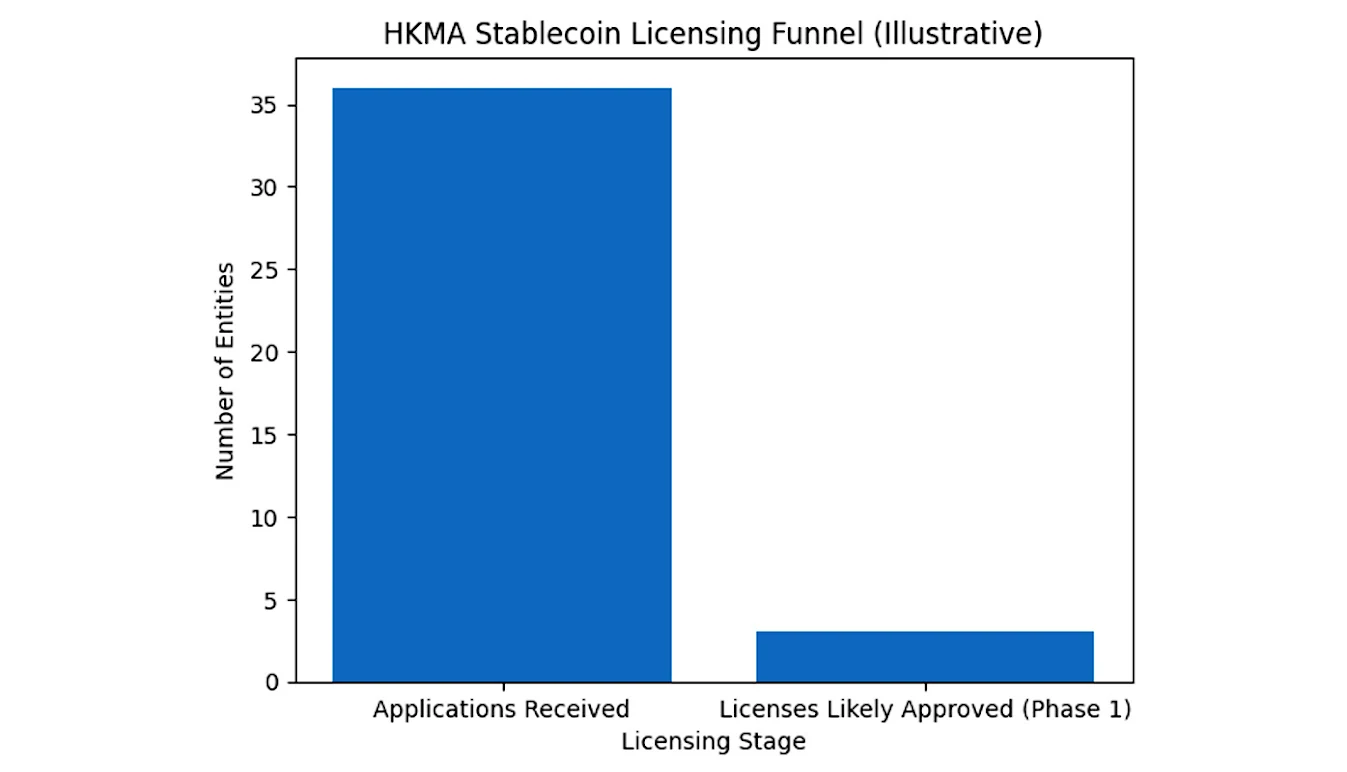

The illustrative licensing funnel above highlights how this framework reshapes competition. While interest in stablecoin issuance remains strong, only issuers with robust governance structures, compliant custody arrangements, and clearly defensible reserve models are likely to progress beyond the first regulatory filter. This changes how stablecoin development must be approached. Development is no longer a technical build followed by regulatory review. Licensing expectations now influence system architecture, reserve design, custody strategy, and operational controls from the earliest planning stages.
In practical terms, Hong Kong’s framework does not just regulate stablecoins. It determines who is qualified to participate in the market at all. Understanding what regulators evaluate next is therefore essential for any issuer aiming to move forward with confidence.
Not sure if your model meets HKMA standards? Get a regulatory alignment review before formal submission.
Understanding HKMA’s Expectations: What Regulators Actually Look For
HKMA’s licensing regime is more than a badge of approval. It defines how stablecoin development must be structured, governed, and operated within a regulated financial environment.
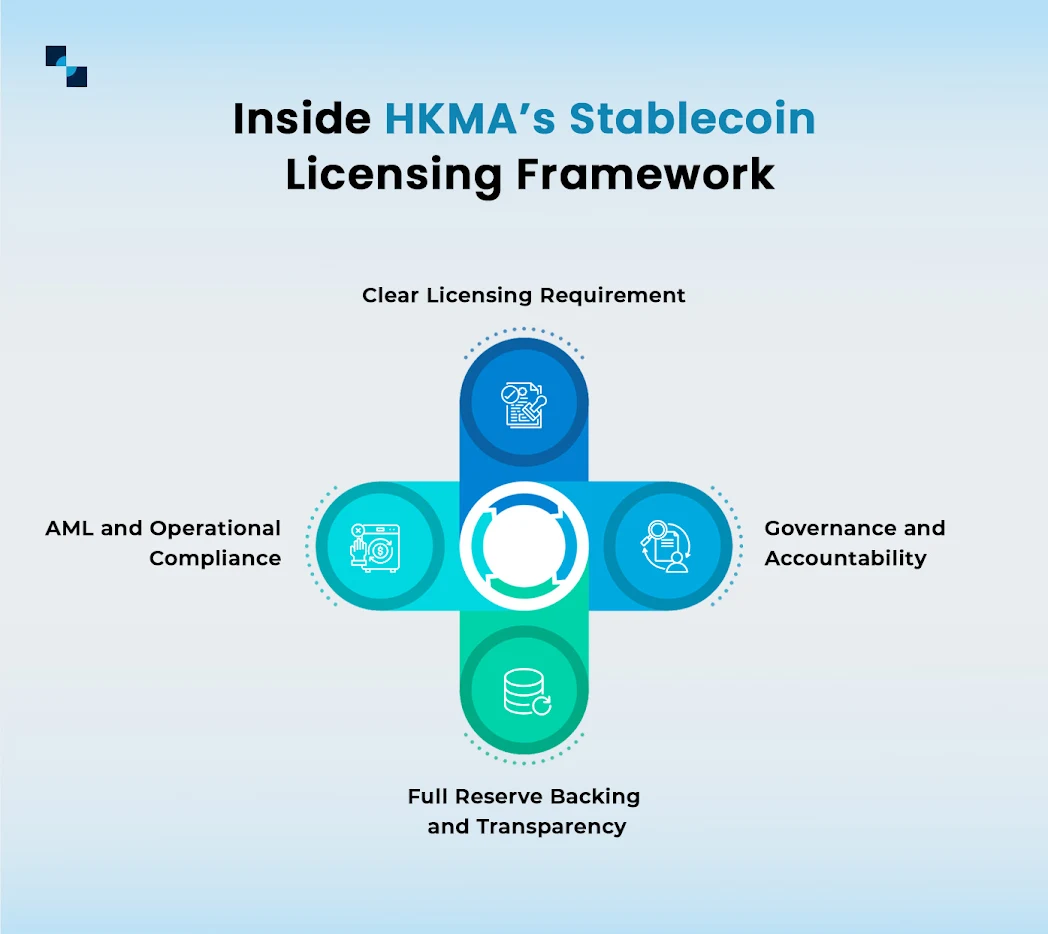

1. Clear Licensing Requirement
From 1 August 2025, the Stablecoins Ordinance took effect in Hong Kong. The regime requires authorization for parties carrying on regulated stablecoin activities in Hong Kong and, in certain cases, for issuers of Hong Kong dollar-referenced stablecoins issued offshore. A valid license from the HKMA is required to operate without enforcement risk.
2. Governance and Accountability
Issuers must demonstrate strong corporate governance with clearly defined accountability for financial, legal, and technology risk. Boards and senior management are expected to have direct responsibility for oversight and compliance. Anonymous or loosely coordinated governance structures do not meet HKMA expectations.
3. Full Reserve Backing and Transparency
Under the HKMA’s supervisory guidelines:
- Reserve assets must at all times equal or exceed the value of stablecoins in circulation.
- Reserve holdings must be disclosed and supported by regular independent attestations or audits.
- Custody arrangements must legally segregate reserve assets and protect them from creditor claims and misuse.
These requirements ensure that stablecoins operate as financial instruments with predictable backing and certainty of redemption.
4. AML and Operational Compliance
HKMA’s AML and counter-terrorist financing guidelines apply to licensed stablecoin issuers and include travel rule and operational AML controls. Issuers are expected to demonstrate compliance readiness before launch, not after issuance.
Taken together, these expectations place stablecoin development services firmly within institutional finance, where issuers must withstand detailed regulatory scrutiny across governance, reserves, custody, and operations.
Why Custody and Reserves Are the Real Differentiators
Custody and reserves determine whether a stablecoin is trusted or questioned. From a regulatory standpoint, the central concern is the protection of user funds. Reserve assets must be legally segregated, protected from issuer insolvency, and held in a manner that allows timely redemption under all conditions. Custody arrangements must clearly define who controls reserve assets, how access is governed, and how conflicts of interest are avoided. These structures are reviewed closely because they directly impact systemic risk. This is where an experienced stablecoin development company adds value beyond code delivery. Designing compliant custody and reserve frameworks requires coordination between legal, financial, and technical teams. Errors in this layer are costly and difficult to reverse once a licensing review begins.
Key Failure Points in HKMA Stablecoin Applications
Most stablecoin applications do not fail because of weak technology. They fail because regulators identify structural and operational risks that issuers underestimate.
The most common failure points include:
- Late Regulatory Alignment: Applications stall when licensing considerations are addressed after development. HKMA expects regulatory intent to be reflected in system architecture, governance, and operating models from the outset.
- Inadequate Custody and Reserve Controls: Weak reserve segregation, unclear custodian responsibilities, or redemption mechanisms that are not stress-tested raise immediate red flags during review.
- Unclear Issuer Accountability: Applications falter when decision-making authority, risk ownership, or compliance responsibility is diffused or insufficiently documented.
- Operational Immaturity: Lack of audit readiness, untested reporting workflows, and limited incident response planning signal that the issuer is not prepared for regulated operations.
These failure points are rarely isolated issues. They are symptoms of an unclear execution strategy. For issuers pursuing regulated stablecoin development in Hong Kong, success depends on following a clear, compliance-led roadmap that aligns regulatory expectations, technical design, and operational readiness from the very beginning.
Turn this framework into an actionable plan for your team.
A Roadmap: From Concept to HKMA-Ready Stablecoin Development
Issuers that succeed in regulated markets follow a structured and disciplined roadmap. Rather than treating licensing as a post-launch task, they align strategy, compliance, and execution from the outset, often in collaboration with an experienced stablecoin development company that understands regulatory expectations.
Phase 1: Regulatory Assessment: The first step is determining whether the proposed stablecoin activity falls within HKMA’s licensing scope. This includes analyzing the token’s reference currency, distribution model, and target users, as well as identifying any cross-border implications under the Stablecoins Ordinance.
Phase 2: Compliance-Aligned Architecture: Once licensing applicability is clear, development must align with regulatory expectations. This includes smart contract logic tied to reserve controls, audit-ready reporting systems, custody workflows, and AML compliance mechanisms designed to meet HKMA standards from day one.
Phase 3: Operational Validation: Before applying for a license, issuers should conduct internal stress testing, simulate redemption scenarios, and validate reporting processes. Operational readiness is as important as technical correctness, particularly under regulatory review.
Phase 4: Licensing and Ongoing Governance: Licensing is not the end of the process. Approved issuers are expected to maintain continuous compliance, governance oversight, and transparent communication with regulators as part of ongoing supervision.
Well-designed stablecoin development solutions reduce friction across every stage of this journey, helping issuers move from concept to regulated issuance with confidence and clarity.
Choosing the Right Development Partner Matters More Than Ever
- The development partner directly impacts HKMA licensing outcomes, not just technical delivery.
- HKMA reviews governance maturity, reserve design, custody controls, and operational discipline alongside code quality.
- Partners that treat compliance as a post-build task increase approval risk and rework costs.
- A capable stablecoin development company embeds regulatory alignment into its architecture from day one.
- Experienced firms reduce licensing friction by aligning technical execution with HKMA expectations.
- The right partner helps issuers remain license-ready throughout development, regulatory review, and post-approval operations.
This makes the final decision clear. In Hong Kong’s regulated market, choosing the right partner is not a technical choice. It is a licensing decision.
Final Thought: Regulation Is the Filter, Not the Finish Line
Hong Kong’s regulatory framework makes one thing clear. Stablecoin initiatives will succeed only if they are designed for licensing, governance, and operational resilience from the start. For serious issuers, stablecoin development is no longer about speed or experimentation. It is about execution that withstands regulatory scrutiny.
This is where partnering with Antier creates a clear advantage. As a trusted stablecoin development company, Antier delivers enterprise-grade Stablecoin Development Services and stablecoin development solutions aligned with HKMA requirements, helping issuers move from concept to compliant launch with confidence.
Ready to launch an HKMA-ready stablecoin? Talk to Antier and start with clarity, compliance, and control.
You must be logged in to post a comment Login