
Crypto World
Erayak Power (RAYA) Soars 71% on Strategic U.S. Expansion and Nexora Launch


Key Highlights
- Erayak Power (RAYA) shares climbed 71% Friday following a strategic transformation announcement targeting the U.S. market.
- The manufacturer is transitioning from China-centric operations to a U.S.-oriented research and development model via Nexora, its North American arm.
- A new lineup of Tri-Fuel Inverter Generators (9kW–13kW) capable of operating on gasoline, propane, and natural gas was introduced.
- The strategic transformation followed comprehensive market research spanning 5,000 miles across five American states and a product presentation at the 2026 National Hardware Show in Las Vegas.
- The company established fresh distribution agreements with North American retail chains and wholesale partners during the trade event.
Erayak Power (RAYA) experienced a 71% surge Friday following its announcement of a fundamental business restructuring focused on the American market through Nexora, its subsidiary, while introducing innovative Tri-Fuel power generators and securing retail distribution agreements at the 2026 National Hardware Show.
Erayak Power Solution Group Inc., RAYA
The significant stock movement followed Erayak’s disclosure of comprehensive operational changes. The enterprise, which historically accessed North American customers mainly through third-party export arrangements, is establishing a direct American footprint.
The transformation revolves around Nexora, Erayak’s North American division. According to the revised business structure, Nexora will manage research and development, customer relations, and market strategy for the United States, while production operations continue through the Ruike Electronics manufacturing plant.
Prior to implementing the new strategy, Erayak executives undertook an extensive 5,000-mile investigation across California, Arizona, Texas, Florida, and New York. This comprehensive tour focused on identifying specific regional power requirements throughout diverse American markets.
The organization presented its latest innovations at the 2026 National Hardware Show in Las Vegas. This platform simultaneously facilitated the establishment of strategic partnerships with premium retailers and industrial distribution networks throughout North America.
Innovative Product Portfolio
Erayak’s 2026 flagship offerings feature Tri-Fuel Inverter Generators spanning 9kW to 13kW capacity. These generators operate on multiple fuel sources—gasoline, propane, or natural gas—and incorporate Auto Transfer Switch capabilities.
These power units integrate with commercial-grade UPS Solar Inverters. According to Erayak, the integrated systems deliver consistent emergency power solutions, including support for AI-edge computing infrastructure and connected home technologies.
The organization identified Texas and Florida as priority markets, referencing persistent electrical grid stability challenges in these regions. The generators incorporate reduced total harmonic distortion technology, which Erayak indicates makes them appropriate for powering delicate electronic equipment.
Erayak characterizes its market penetration strategy as a “Twin-Track” framework. This approach merges Nexora’s direct consumer sales channel with a broadened wholesale distribution infrastructure.
Business Transformation
CEO Lingyi Kong positioned the initiative as an evolution beyond traditional manufacturing. “By establishing Nexora as our North American face, we are moving beyond manufacturing to become a vertically integrated power solutions provider,” Kong said.
Before this strategic announcement, Erayak’s North American operations functioned predominantly through indirect export mechanisms. The current organizational structure represents a significant departure from previous approaches.
The company indicated the Nexora framework aims to enhance operational clarity and deliver greater shareholder value.
RAYA commenced Friday trading with substantial volume following the strategic disclosure. The stock registered a 71% gain by market close, with peak intraday appreciation reaching 87%.
The 2026 National Hardware Show presentation combined with the Nexora strategy announcement emerged as the principal drivers behind Friday’s significant price movement.


Crypto World
TRON Powers 500% Surge in Crypto Card Spending as Stablecoin Payments Hit $600M Monthly

TLDR:
- Crypto card spending volume has surged 500% since September 2024, now reaching approximately $600M per month.
- TRON serves as the backend settlement layer for Visa-linked stablecoin cards due to its low cost and high throughput.
- Merchants receive fiat-equivalent value instantly while users pay in stablecoins, bridging crypto and traditional commerce.
- Sustained monthly growth signals a behavioral shift as consumers increasingly use crypto cards for everyday purchases.
Crypto card usage is accelerating sharply into 2026, with monthly spending volumes now approaching $600 million.
Since September 2024, transaction volume has climbed by 500%, reflecting a measurable shift in how consumers use digital assets daily. This growth is not driven by speculation.
Instead, it traces back to real merchant payments and everyday consumer transactions settling through Visa-linked stablecoin cards across global commerce.
TRON Emerges as a Core Settlement Layer for Consumer Payments
Visa-linked crypto cards are changing how stablecoin transactions move between consumers and merchants. Users pay with stablecoins such as USDT, and merchants receive the fiat-equivalent value almost instantly.
The backend settlement happens on TRON’s network, which handles high transaction throughput at low cost. This setup removes friction from crypto-to-fiat conversion at the point of sale.
TRON’s infrastructure is proving reliable enough to support this growing payment volume consistently. Its transaction speed and cost structure align well with what consumer-to-business, or C2B, payments demand at scale.
As Yaba (@yabarich) noted on X, “TRON provides high throughput, low transaction cost, and reliable settlement infrastructure,” making seamless crypto payments in everyday commerce possible.
The network’s role goes beyond processing speed. TRON already holds a strong position in stablecoin circulation, making it a natural fit for card-based payment flows.
As more consumers adopt crypto cards, the volume moving through TRON’s rails continues to grow steadily. This positions the chain at a functional intersection between decentralized finance and traditional payment networks.
What this reflects is a broader structural change in crypto utility. Digital assets are transitioning from being primarily held as stores of value toward active use as a medium of exchange. That shift is now showing up in monthly transaction data, not just in market commentary or forecasts.
Expanding Merchant Acceptance Drives Mainstream Payment Adoption
Growing merchant acceptance is one factor sustaining the 500% rise in crypto card spending volume. As more businesses accept stablecoin-settled payments, consumer confidence in using crypto cards for daily purchases also increases.
The two trends reinforce each other over time. This cycle is expanding the practical reach of crypto beyond exchanges and wallets.
The infrastructure alignment between stablecoin networks and global card payment systems is also supporting this momentum.
Visa’s involvement provides the connectivity layer that bridges crypto settlement with traditional point-of-sale systems.
This reduces the complexity for both merchants and cardholders. The result is a payment experience that functions similarly to conventional card transactions.
The data from the past 18 months shows that this is not a temporary spike. Sustained volume growth across consecutive months points to changing consumer behavior rather than short-term activity.
Users are returning repeatedly to crypto cards as a primary payment method. That behavioral pattern carries more weight than any single month’s figures.
As DeFi, payments, and real-world usage converge, the chains enabling that movement stand to gain lasting relevance.
TRON’s current positioning within stablecoin payments and card settlement infrastructure places it directly in that path. The next phase of crypto adoption may well be measured by where people spend, not just what they hold.
TLDR:
- 81,747 job cuts in Q1 2026 mark the highest quarterly total since Q1 2024
- March alone records 45,800 cuts, signaling accelerated workforce reduction across global tech companies
- Tech layoffs AI trend reflects shift from payroll spending toward AI chips, data centers, and infrastructure
- AI-linked restructuring rises as Meta and Microsoft adjust workforce to fund large-scale compute expansion
According to data in Q1 2026 alone, tech companies recorded 81,747 layoffs, the highest quarterly total since Q1 2024.
The figure more than doubled from the previous quarter, with March contributing 45,800 cuts as firms shifted budgets from payroll to AI infrastructure and data centers.
Big tech cuts accelerate as AI capital spending dominates strategy
Q1 2026 job cuts mark the highest quarterly reduction level recorded since early 2024, clearly signaling a rapid shift in workforce strategy.
The scale of cuts more than doubled compared to the previous quarter. It also surged significantly from late 2025 levels, reflecting coordinated restructuring across major technology players.
March alone accounted for 45,800 layoffs, making it the most aggressive month in over two years. The timing suggests synchronized decision-making across multiple corporate boards.
Meta emerged as a key driver of the adjustment cycle. The company confirmed roughly 8,000 job cuts while expanding its artificial intelligence investment strategy.
Its 2026 capital expenditure is projected between $125 billion and $145 billion. That figure nearly doubles prior-year spending and signals aggressive infrastructure expansion.
Alongside layoffs, Meta also canceled 6,000 open roles. This move indicates a long-term reset in hiring strategy rather than temporary cost control.
A market note circulating during the quarter stated: “Tech layoffs and AI reflects payroll conversion into AI infrastructure across global tech giants.”
Workforce restructuring signals a deep shift toward AI-driven operations
Tech layoffs and AI trends are increasingly tied to structural changes in how companies allocate capital. Payroll budgets are being redirected toward chips, servers, and data centers.
Microsoft followed a similar path with voluntary retirement offers impacting 8,750 employees. The program covers roughly 7% of its U.S. workforce base.
Company statements suggest that if participation falls short, additional layoffs could follow. This maintains flexibility while ensuring cost alignment with AI spending goals.
Across the sector, Tech layoffs and AI activity have been linked to 27,600 job cuts in 2026 alone. That represents about 13% of total layoffs reported so far this year.
This compares sharply with 2025, when AI-related cuts accounted for only about 5% of total reductions. The acceleration highlights growing automation influence.
Another industry update noted: “Tech layoffs AI shows firms shifting from human scale to compute scale as core growth model evolves.”
Nearly 96,000 workers have been impacted across 249 layoff events in 2026. The pace places the year close to prior major contraction cycles.
Unlike earlier downturns, current reductions appear structurally driven. Companies are reorganizing around AI infrastructure rather than responding to short-term demand shifts.
Crypto World
Privacy Tokens Q1 2026: Major Upgrades, Governance Wins, and Sharp Price Moves Across the Sector
TLDR:
- Privacy tokens posted strong Q1 2026 gains as Horizen completed its Base L2 migration and relaunched ZEN staking.
- Decred’s treasury governance proposal triggered a 75% weekly price surge, pushing DCR to $29 in Q1.
- Pirate Chain surged 168% in seven days following Orchard protocol progress and AnonBazaar integration plans.
- Dash launched its Evolution upgrade in Q1, adding smart contracts and IBC protocol to its payment network.
Privacy tokens recorded notable progress in the first quarter of 2026, with projects across the sector completing major upgrades.
From network migrations to governance overhauls, several tokens delivered on long-standing roadmap commitments.
The quarter also saw sharp price movements tied to specific developments. Taken together, the results paint a picture of a sector moving from planning to execution across multiple fronts.
Network Upgrades and Protocol Advancements Drive Sector Activity
Horizen ($ZEN) completed its migration to Base, Ethereum’s Layer 2 network, during Q1. The move gave users access to lower transaction fees and broader DeFi opportunities.
The project also relaunched ZEN staking and activated its first Confidential Compute Environment for private on-chain application execution.
Zcash ($ZEC) pushed ahead with its “Tachyon” upgrade, targeting sub-second private transactions on mobile. The Zcash Foundation also published its 2026 strategy, and a $25 million ZODL raise brought in institutional interest. Meanwhile, work on retiring legacy consensus software continued as part of the broader 2026 roadmap.
Monero ($XMR) advanced development of FCMP++, a cryptographic upgrade replacing ring signatures. The change expands the anonymity set from 16 decoys to nearly the full blockchain. This is among the most technically ambitious privacy changes proposed in the sector this cycle.
Dash ($DASH) launched its “Evolution” platform upgrade, introducing a Smart Contracts Virtual Machine and the Inter-Blockchain Communication Protocol. The rollout extended Dash beyond payments into a full smart contract layer while retaining speed and privacy features.
Governance Outcomes and Market Reactions Reflect Growing Community Confidence
Decred ($DCR) passed a governance proposal in Q1 that restructured treasury management and raised spending to 4% for long-term growth.
The announcement triggered a 75% weekly price surge, pushing DCR to $29. A mandatory v2.1.4 release with security patches followed shortly after.
Pirate Chain ($ARRR) made progress on its Orchard protocol upgrade and continued development of a Unified Light Wallet.
The project also launched a fundraiser to integrate with the AnonBazaar private marketplace. Its token rose 168% over a single seven-day period during the quarter.
Secret Network ($SCRT) released a 2026 roadmap covering privacy upgrades and AI workload support. It began work on SGX decoupling to reduce hardware dependencies and partnered with AntSeedAI to offer secure, open AI inference through its network.
Dusk Network ($DUSK) executed a mainnet upgrade that improved transaction speeds and throughput for high-frequency institutional trading.
It also reported over €300 million in assets moving through its NPEX partnership, reinforcing its position in Europe’s real-world asset market.
Crypto World
DOGE Mirrors Historical Accumulation Patterns: Is Dogecoin’s Third Macro Cycle Still Unfinished?
TLDR:
- The Dogecoin price cycle indicates that Cycle 3 remains active, with the price holding a structured range near the $0.11 level
- Market structure shows DOGE consolidating after prior expansions without a confirmed breakdown or breakout signal
- Cycle 3 development reflects controlled volatility as Dogecoin continues trading within long-term range formation
- Broader sentiment shows accumulation behavior forming while DOGE maintains stability around the key $0.11 zone
Dogecoin price cycle trends are drawing fresh market attention as technical charts indicate the memecoin may still be navigating its third macro phase.
Price stability after the 2021 rally has fueled debate around whether DOGE is preparing for another expansion or simply extending consolidation.
Dogecoin’s structure shows prolonged consolidation after the 2021 peak
Dogecoin has not yet completed its current macro structure. Historical chart patterns indicate DOGE often moves through long accumulation periods before major expansions begin.
Its first cycle, which developed between 2014 and 2017, featured a long, rounded bottom followed by a sharp rally. During that phase, Dogecoin gained roughly 5,800%, establishing its first large speculative breakout.
The second cycle repeated a similar pattern but on a larger scale. Between 2018 and 2021, DOGE remained compressed for years before surging by over 21,000% as retail demand accelerated.
This recurring setup has fueled speculation that the current cycle is still active. A circulating market chart on X shows Dogecoin trading inside a multi-year descending structure after the 2021 top.
Rather than experiencing a sudden collapse, DOGE entered an extended cooldown phase. This slow correction mirrors previous post-rally behavior, where price required significant time to stabilize.
Recent market action now shows Dogecoin gradually exiting that compression zone. Price has transitioned into a more neutral channel, where higher lows are beginning to form.
Although the memecoin has not yet reclaimed major resistance, the change in structure suggests selling pressure has moderated. This transition has strengthened the case for an unfinished Dogecoin price cycle.
The current trading range between $0.05 and $0.30 remains decisive. A move above the upper boundary could reinforce the view that expansion conditions are returning.
Weak social activity reflects meme coin rotation, not collapse
Beyond price structure, social activity presents a more mixed picture. Data shows Dogecoin interactions have softened even as the price recorded modest gains into April.
This divergence matters because meme assets often depend on attention-driven demand. Historically, rising social dominance has preceded large price expansions in the sector.
A shared chart showed Dogecoin social interactions trending lower while price climbed 13.5%. That pattern raised questions about whether momentum is losing strength.
At the same time, smaller meme tokens have outperformed significantly. SkyAI surged nearly 290%, while PENGU posted gains exceeding 50%.
This suggests speculative capital is rotating into higher-risk assets with stronger short-term upside. In fast-moving markets, traders often move away from larger meme coins during risk-seeking phases.
Still, weaker engagement does not automatically signal bearish conditions. Peak social spikes frequently align with local tops, as retail attention tends to arrive late.
Dogecoin also benefits from deeper liquidity than most meme tokens. Its broader market participation reduces dependence on constant hype-driven inflows.
For now, Dogecoin price cycle metrics suggest transition rather than trend confirmation. The memecoin remains structurally intact while broader market participants wait for clearer breakout conditions.
Crypto World
Sui Blockchain Is Rewriting the Rules of Transaction Speed, Security, and Institutional DeFi
TLDR:
- Sui object-based model allows transactions to run in parallel, removing the sequential bottleneck seen on Ethereum and Solana.
- Move, Sui’s native programming language, reduces smart contract vulnerabilities and offers a more secure environment for financial applications.
- Sui’s quantum-safe cryptographic architecture positions it ahead of older blockchains that would require significant updates to remain secure.
- The Hashi protocol allows Bitcoin holders to access Sui’s DeFi ecosystem without wrapping Bitcoin, reducing structural risk for conservative investors.
Sui blockchain is drawing renewed attention from developers and institutional players for its architecture, which rethinks how transactions are processed and secured.
Unlike conventional chains, Sui treats digital assets as independent objects rather than shared states, enabling parallel processing and faster finality.
As cryptographic threats evolve and AI reshapes data exposure risks, Sui’s technical foundation is being positioned as infrastructure for the cycles ahead.
Sui’s Object-Based Architecture Changes Transaction Processing
On networks like Ethereum and Solana, every transaction accesses a shared state, forcing sequential processing. Sui’s design removes that bottleneck entirely.
Kostas, co-founder and chief cryptographer of Mysten Labs, described the core shift plainly: “Sui turns assets into independent objects so transactions run in parallel with fast finality.”
This parallel processing model directly benefits decentralized finance. Larger and more complex transactions become feasible without congestion.
Combined with fast finality, Sui offers an execution environment suited for the performance demands of institutional-grade DeFi activity.
Sui also integrates native support for multi-signature wallets, zero-knowledge proofs, and large transaction sizes at the protocol level.
These features are not add-ons but are built into the chain’s core. This native support strengthens Sui’s case as a platform ready for privacy-focused and high-volume financial use.
The Move programming language, purpose-built for Sui, adds another layer of security. Its design reduces common smart contract vulnerabilities.
For developers building financial applications where security failure is costly, Move provides a more controlled and verifiable coding environment.
Quantum Safety, Privacy, and the Road to Institutional Adoption
Kostas highlighted Sui’s quantum-safe cryptographic architecture as a distinguishing feature. Post-quantum computing poses a real threat to older blockchain designs.
He pointed directly to the stakes: “quantum-safe cryptography would protect Satoshi’s addresses, unlike Bitcoin.” Sui has built flexibility for that transition into its protocol, positioning the chain ahead of networks that would need significant retrofitting.
Privacy is another area gaining urgency. As AI systems grow more capable of processing exposed data, the need for verifiable and private transactions increases.
Sui’s native zero-knowledge proof support provides the technical groundwork for private transaction systems that can scale. This matters both for individual users and for institutions managing sensitive financial data.
On the user experience front, Sui supports social logins through Google and Facebook, allowing new users to onboard without managing seed phrases.
This approach lowers the entry barrier for mainstream adoption considerably. It also signals that the platform is targeting a broader user base beyond existing crypto participants.
Kostas also pointed to the Hashi protocol as a path for Bitcoin holders to access Sui’s DeFi ecosystem without wrapping Bitcoin.
This preserves asset integrity while expanding utility. For conservative investors, it offers exposure to DeFi yields with reduced structural risk.
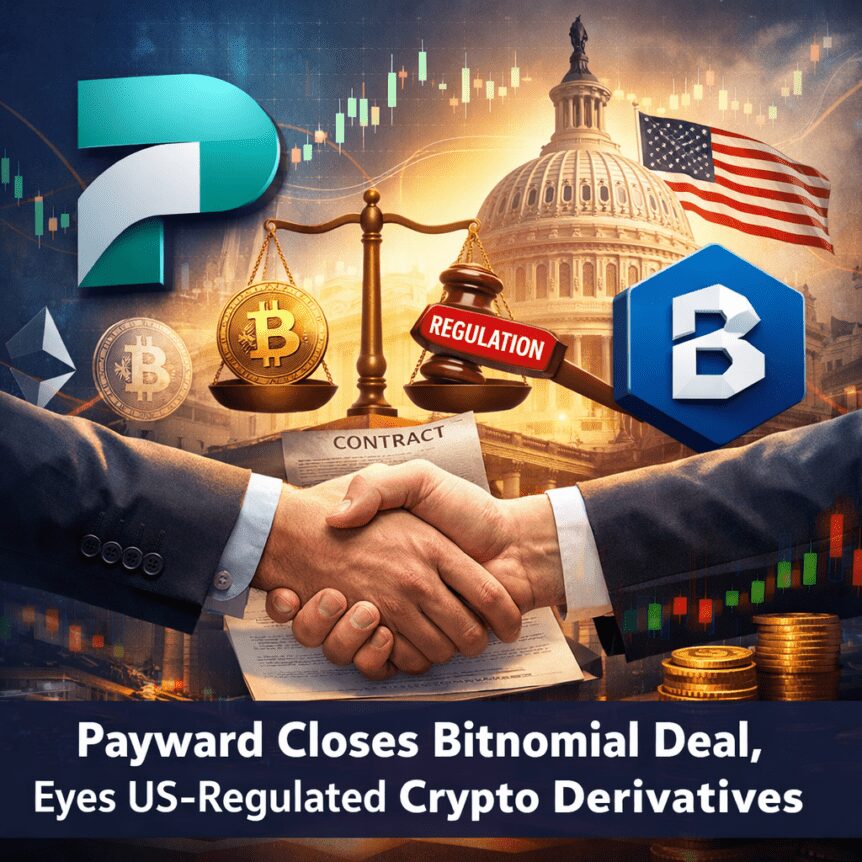
Payward, the parent company of Kraken, has completed its acquisition of Bitnomial, unlocking a fully CFTC-regulated derivatives stack in the United States. The deal gives Payward a complete onshore infrastructure for crypto derivatives, anchored by Bitnomial’s licenses for exchange, clearing, and brokerage services.
With the closing, Payward now controls a Futures Commission Merchant, a Designated Contract Market, and a Derivatives Clearing Organization. The plan is to leverage this stack to roll out CFTC-regulated products across Kraken and NinjaTrader, beginning with spot margin trading and followed by perpetual futures and options offerings.
Bitnomial will operate under its existing regulatory framework, but the acquisition enables Payward to connect fintechs, banks, and brokerages to US-regulated derivatives through its platform. The definitive agreement to acquire Bitnomial was announced on April 17, positioning Bitnomial as the first crypto-native company in the US to hold licenses across exchange, clearing, and brokerage functions under the CFTC.
Key takeaways
- Payward now holds a full US derivatives stack via Bitnomial—FCM, DCM, and DCO—paving the way for regulated crypto derivatives on Kraken and NinjaTrader.
- Initial product focus will be on spot margin, with perpetual futures and options expected to follow as the regulated framework expands.
- Bitnomial will continue operating within its regulatory structure, enabling partners such as fintechs, banks, and brokerages to access US-regulated derivatives through Payward’s platform.
- The move occurs amid growing momentum to bring crypto derivatives onshore in the US, where regulators have signaled an interest in aligning frameworks for perpetual futures and other products.
- Industry-wide developments include CME Group’s planned AVAX and SUI futures and broader push toward 24/7 crypto derivatives trading in the US, subject to regulatory approvals.
Regulatory momentum and US market dynamics
The acquisition lands Payward at a notable inflection point in US crypto regulation. Crypto derivatives—from futures to options—have long accounted for a substantial share of trading volumes, yet a sizable portion of activity has migrated to offshore venues. In a joint statement issued in September 2025, the Securities and Exchange Commission and the CFTC acknowledged that regulatory fragmentation has driven offshore activity and limited the US menu of perpetual futures. The agencies signaled an intent to explore onshore pathways using existing authorities, including potential perpetual futures frameworks and greater cross-market alignment.
Against this backdrop, US exchanges have begun expanding their derivatives offerings. CME Group, the country’s largest derivatives venue, signaled a stepped-up push into crypto futures, detailing plans to list contracts tied to assets such as Avalanche (AVAX) and Sui (SUI) after previously announcing products for Cardano (ADA), Chainlink (LINK), and Stellar (XLM). CME has also flagged a move toward 24/7 trading for crypto futures and options, contingent on regulatory approval.
These developments sit alongside broader offshore expansions aimed at non-US clients. For instance, Kraken rolled out tokenized equity perpetual futures for non-US traders in February, delivering 24/7 leveraged exposure to asset baskets that include US stock indices, gold, and equities. In Europe, Coinbase extended its derivatives footprint with new crypto and equity-index futures across 26 countries through its MiFID-regulated entity, while other venues such as One Trading, Gemini, and Backpack have launched regulated perpetual contracts for European traders.
Taken together, the regulatory conversation in the US and the competitive expansion abroad point to a converging dynamic: more crypto institutions seeking regulated onshore access while offshore venues continue to broaden their global reach. The Bitnomial acquisition fits within this broader trajectory, offering a regulated runway for traditional finance players and crypto-native firms to participate in US derivatives markets through Payward’s infrastructure.
What this means for traders and the ecosystem
For investors and institutions, a fully licensed US derivatives stack under one umbrella could lower barriers to risk management and custody of regulated crypto products. Connecting Kraken and NinjaTrader to a compliant framework could accelerate the availability of risk controls, clearing, and settlement under a familiar regulatory regime. It also positions Payward to partner with banks, brokerages, and fintechs seeking regulated access to crypto derivatives without navigating a mosaic of licenses and compliance regimes.
From a market structure perspective, the move reinforces the push toward standardization and oversight in a space that has historically been fragmented across jurisdictions. Regulators’ emphasis on onshore frameworks and cross-market alignment will continue to shape product design, trading hours, and margin treatment as new offerings roll out. Investors should watch how quickly spot-margin products launch, how perpetuals and options are structured, and how risk controls and capital requirements evolve under the Bitnomial-driven regime.
On the competitive front, the US landscape remains a mix of regulated incumbents and ambitious entrants. CME’s roadmap highlights one path for more formalized, institution-friendly crypto derivatives, while Payward’s Bitnomial-backed stack signals a credible onshore alternative rooted in crypto-native licensing. The next chapters will likely reveal timelines for product launches, regulatory approvals, and the degree to which these platforms harmonize with international offerings.
For readers tracking adoption, the key question is how quickly regulated products gain traction among traders who previously relied on offshore venues. If Payward can accelerate product readiness and maintain robust compliance, the combined Kraken/NinjaTrader pipeline could become a meaningful onramp for institutions seeking regulated exposure to crypto derivatives in the United States.
As the regulatory narrative evolves and product roadmaps unfold, market participants should monitor upcoming milestones: the integration timeline for Bitnomial’s licenses, the launch cadence for spot-margin and subsequent derivatives, and the regulatory decisions that will determine 24/7 trading feasibility and the scope of onshore perpetual futures in the near term.
In the meantime, the industry can expect continued emphasis on compliance-driven growth as more players push to normalize crypto derivatives within a US framework that regulators are actively refining. The Bitnomial acquisition marks a concrete step in that direction, with implications for traders, institutions, and the broader crypto economy.
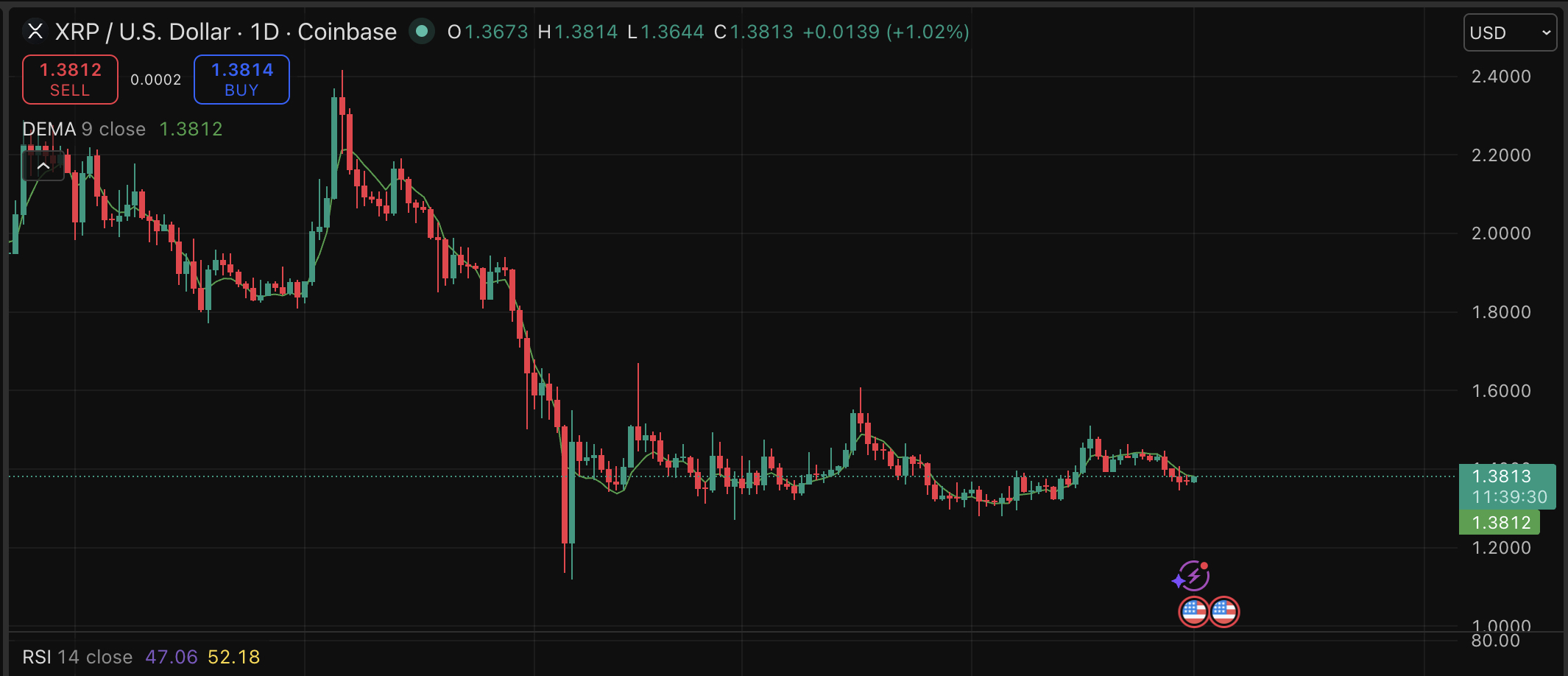
XRP is trading near $1.38, a level that looks increasingly precarious. Now, is the current level a dip worth buying or the beginning of something uglier? XRP price sits 62% below its July 2025 all-time high of $3.65, and our analysis suggests that the current price is at a make-or-break point.
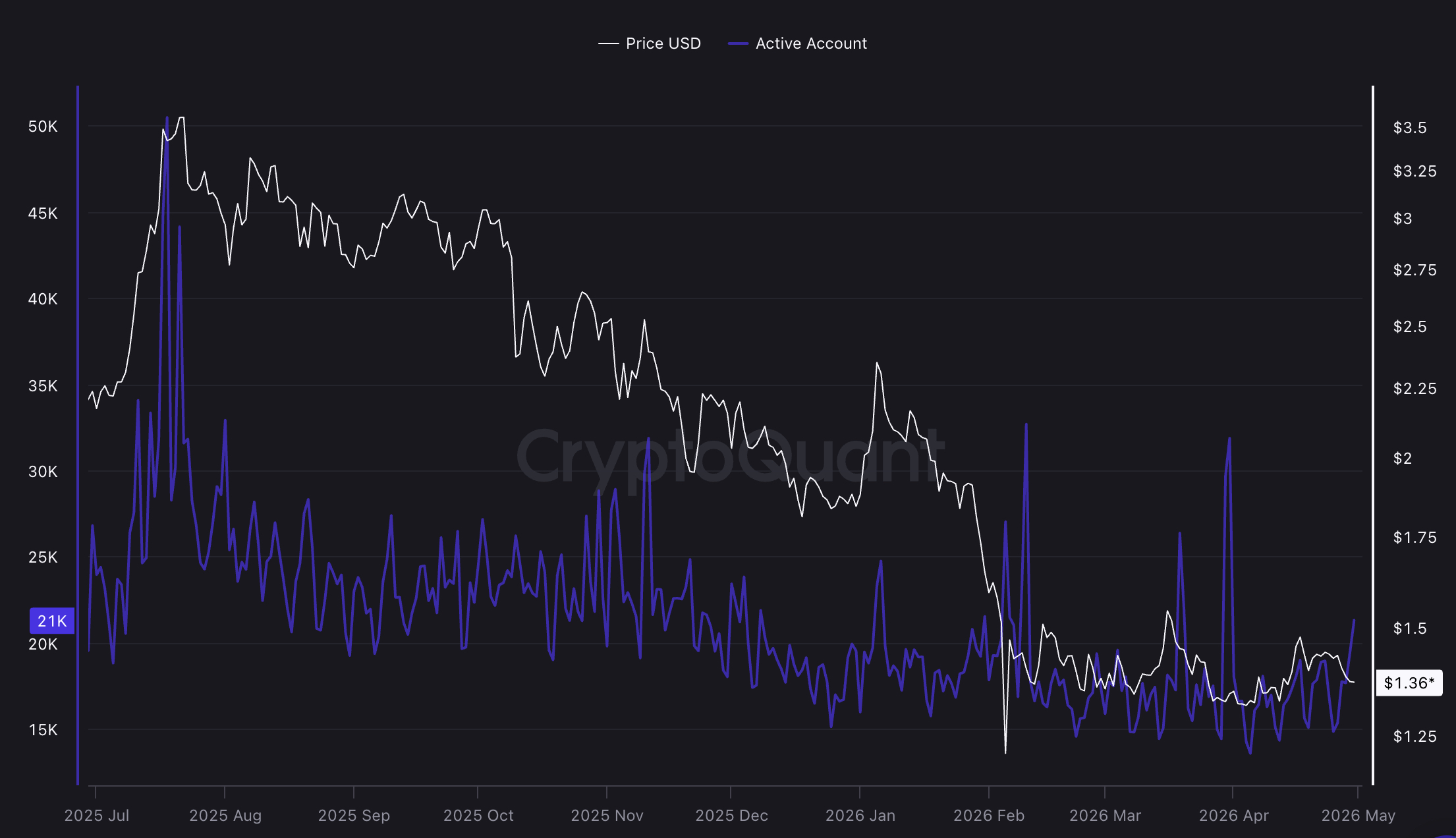
Daily active wallet addresses on the XRP Ledger have dropped sharply, from 22,054 twelve months ago to just 13,684 as of late April. A 38% decline in active participation, and new wallet creation is slowing alongside it.
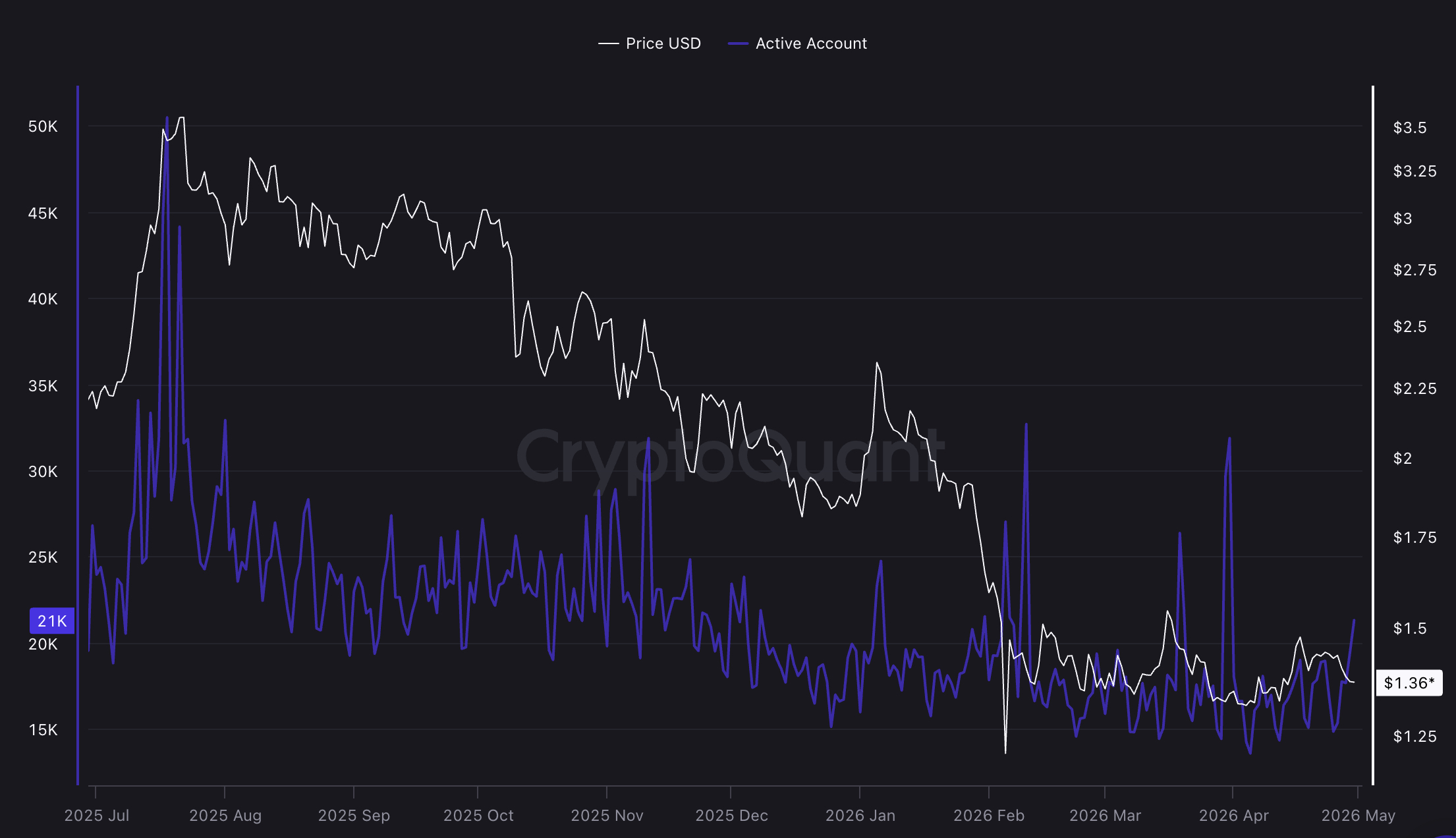
Trading volumes on XRPL have compressed in tandem, suggesting the network isn’t attracting fresh capital at anywhere near its previous pace. Decelerating adoption during a crypto downturn is precisely the condition that has preceded XRP’s worst historical corrections.
The broader market context makes the setup even more delicate. A prolonged risk-off environment has weighed on altcoins disproportionately, and XRP’s historical pattern of violent drawdowns warrants serious consideration.
Discover: The best pre-launch token sales
XRP Price Analysis: Is a Drop Below $1 Inevitable?
XRP is caught in a descending channel with key support identified at $1.20 with the next major support zone sits at $1.00. It’s a psychologically significant threshold that also aligns with where the coin spent the majority of its existence before 2021.
RSI conditions appear weak, consistent with a market lacking bullish conviction. Volume has not confirmed any meaningful recovery attempt, which typically indicates sellers remain in control of price discovery at these levels.
Ripple’s ongoing expansion efforts and institutional positioning provide a longer-term floor argument, but near-term momentum is not cooperating.
Some analysts project long-term targets of around $10 by 2030 under favorable conditions. That thesis may well prove correct. But entering at $1.38 into a descending channel with declining on-chain activity requires patience and a strong stomach.
Discover: The best crypto to diversify your portfolio with
Bitcoin Hyper Could Be The Next XRP
Watching XRP consolidate 62% off its highs while on-chain metrics deteriorate is a particular kind of frustration. The coin might recover strongly, but the opportunity cost of waiting through that bottom is real.
Bitcoin Hyper ($HYPER) is a project drawing attention. Positioned as the first-ever Bitcoin Layer 2 with Solana Virtual Machine (SVM) integration, it targets Bitcoin’s three core limitations simultaneously: slow transactions, high fees, and absent programmability.
In short, Hyper is delivering sub-second finality and low-cost smart contract execution while inheriting Bitcoin’s security model.
The presale has raised somewhere approaching $33 million at a current token price of $0.0136, with staking available for early participants. At that raised level, meaningful institutional and retail appetite is already present, but the price remains early-stage by any measure.
Research Bitcoin Hyper before the presale concludes.
The post XRP Price Analysis: Buy Now or Wait for Ripple to Fall Below $1? appeared first on Cryptonews.
TLDR:
- Stablecoin dominance remains above weekly support, signaling continued defensive market positioning.
- Bitcoin’s recent recovery was largely driven by derivatives instead of strong spot demand.
- Record stablecoin supply suggests large amounts of sidelined liquidity remain undeployed.
- Analysts say a break below 10% dominance could confirm stronger capital rotation into crypto.
Stablecoins are central to crypto market analysis, and traders are assessing whether recent gains can hold. Elevated levels show capital is still defensive, while Bitcoin’s recovery attempt faces scrutiny over weak spot participation and rising stablecoin reserves.
Stablecoin Dominance Trend Keeps Traders Cautious
Stablecoin Dominance continues to send mixed signals across the crypto market in early May 2026. Although the metric recently pulled back from highs above 12%, its broader weekly structure remains intact.
The chart still shows a clear pattern of higher lows stretching from late 2025. More importantly, the metric remains above a rising trendline and near its weekly Exponential Moving Average, which is currently acting as technical support.
This structure suggests capital has not fully rotated into higher-risk assets such as Bitcoin and Ethereum. Instead, investors appear to be holding funds in stablecoins while waiting for stronger confirmation from price action.
A decisive break below the 10% region is still missing. Without that move, the recent decline in Stablecoin Dominance looks more like a pullback within an uptrend rather than a confirmed reversal.
This market setup usually reflects a defensive environment. Traders are not aggressively deploying liquidity, which limits upside momentum in crypto assets.
At the same time, the recent drop from yearly highs suggests some capital is beginning to re-enter the market. This leaves the market in a transition phase, where neither bulls nor bears have secured full control.
Bitcoin Rally Questioned as Sidelined Liquidity Builds
Bitcoin’s recovery attempt toward $80,000 has revived optimism, but underlying capital flow data tells a more restrained story. Analysts noted the rally was largely supported by derivatives activity instead of aggressive spot accumulation.
Short covering and leveraged futures helped push prices higher. However, exchange data showed stablecoin balances continuing to rise, indicating traders are still sitting on liquidity.
This divergence is fueling concerns that the recent rally may be fragile. When price gains are not supported by strong spot demand, reversals can happen quickly once leverage unwinds.
Meanwhile, stablecoin market capitalization climbed above $311 billion, setting another all-time high. That figure reflects growing demand for digital dollars across exchanges and decentralized finance platforms.
Stablecoins now account for nearly 75% of crypto trading activity, reinforcing their growing role as market infrastructure.
Analysts describe this liquidity pool as dormant buying power. If stablecoin dominance breaks trend support, this capital could rotate rapidly into Bitcoin, Ethereum, and altcoins.
Until that shift happens, caution remains dominant. Stablecoin Dominance continues to act as the market’s preferred risk gauge, showing that confidence in a sustained crypto breakout is still incomplete.
Crypto World
ONDO Finance Leads RWA Space With Strong Q1 2026 Fundamentals and Institutional Partnerships
TLDR:
- ONDO Finance recorded $13.26M in Q1 2026 revenue as TVL grew from $2.6B to $3.53B.
- Fidelity, PayPal, Mastercard, and JPMorgan all integrated ONDO products during Q1 2026.
- ONDO holds over 60% market share in tokenized equities with $2B-plus in trading volume.
- Multi-chain expansion to Solana and new revenue-generating fees are planned for Q2 2026.
ONDO Finance closed Q1 2026 with steady price performance and growing institutional adoption. The token traded between $0.23 and $0.32 throughout the quarter.
Revenue reached $13.26 million, while total value locked climbed to $3.53 billion. These numbers place ONDO firmly at the top of the real-world asset tokenization sector, ahead of most competing protocols in both scale and institutional credibility.
Institutional Partnerships Drive ONDO’s Q1 Growth
Major financial institutions turned to ONDO this quarter for regulated tokenization infrastructure. Fidelity incorporated ONDO’s OUSG product into its tokenized fund strategies.
PayPal also secured a $25 million facility connecting PYUSD with ONDO yield products. These partnerships signal growing trust from traditional finance players.
Mastercard integrated ONDO into its Multi-Token Network for payments and real-world asset settlement. JPMorgan Chase, through its Kinexys division, partnered with Chainlink for cross-chain settlement of tokenized treasuries using ONDO infrastructure. These are not small-scale trials — they reflect serious institutional commitment.
Franklin Templeton, managing $1.7 trillion in assets, partnered with ONDO to tokenize exchange-traded funds. As @DamiDefi noted, “ONDO focused on positioning itself as a bridge between DeFi and TradFi this quarter, prioritizing institutional-grade integrations.” That strategy appears to be working.
Token unlocks caused short-term volatility during Q1, though a token burn helped offset some supply pressure. As of writing, ONDO trades at $0.2653, up 0.98%. Its $1.3 billion market cap reflects measured but sustained investor confidence.
Market Metrics and Catalysts Heading Into Q2
ONDO holds over 60% market share in tokenized equities, making it the clear leader in that segment. Trading volume for tokenized assets exceeded $2 billion during the quarter. TVL grew from $2.6 billion at the start of Q1 to $3.53 billion by the close.
On the product side, ONDO launched over 100 tokenized U.S. stocks and ETFs. The protocol also partnered with KuCoin Wallet to offer tokenized stocks to a broader user base. Broadridge joined as a partner to enable proxy voting on 250-plus tokenized stocks and ETFs.
Going into Q2, multi-chain expansion to Solana and additional networks is planned. ONDO is also set to introduce revenue-generating fees later this year, which could change the token’s utility narrative.
However, Pantera Capital moved 83.9 million ONDO tokens to exchanges, which may create near-term selling pressure.
Community sentiment around ONDO remains largely bullish, given the strong fundamentals. Some investors still question long-term token utility beyond governance.
Still, the protocol’s position in tokenized U.S. Treasuries and equities is well-established heading into the second quarter.
Crypto World
Berkshire Hathaway Hits Record $397.4 Billion Cash Reserve in First Earnings Report Without Buffett
TLDR:
- Berkshire Hathaway cash pile hit a record $397.4 billion, surpassing the GDP of several nations.
- At 5% Treasury rates, Berkshire earns an estimated $20 billion annually by holding cash reserves.
- Greg Abel’s first report showed operating earnings up 18% and net income doubling to $10.1 billion.
- Berkshire’s stock fell 11.19% over the past year despite strong earnings as investor uncertainty grows.
Berkshire Hathaway’s cash reserves reached a record $397.4 billion in its latest quarterly report. This marks the first earnings release without Warren Buffett at the helm in 60 years.
New CEO Greg Abel oversaw operating earnings rise 18% to $11.35 billion. Net income more than doubled to $10.1 billion from $4.6 billion a year ago. Investors are now watching closely to see how Abel deploys the massive cash pile.
Record Cash Reserves Generate Billions in Passive Income
Berkshire Hathaway’s $397.4 billion cash pile is larger than the GDP of Portugal, Finland, and New Zealand combined.
At current US Treasury rates of around 5%, the company earns roughly $20 billion annually by simply holding cash. That figure alone rivals the annual profits of many major global corporations.
To put the scale in perspective, the US Treasury’s operating cash balance regularly sits below $800 billion. Berkshire is therefore holding nearly half of what the US government keeps in its own account. This level of liquidity is unprecedented for a private conglomerate of any kind.
As noted by financial commentator Bull Theory on X, the company is “making $20 billion a year just by doing nothing.”
However, that passive income also reflects Buffett’s long-standing caution about overvalued markets. Abel has inherited both the strength and the pressure that comes with it.
Greg Abel’s First Report Shows Growth Amid Leadership Transition
Greg Abel’s first quarterly report as effective CEO showed strong financial results across the board. Operating earnings climbed 18% to $11.35 billion, while net income doubled year-over-year. These numbers confirm that Berkshire’s core business operations remain healthy under new leadership.
Moreover, Berkshire continued its pattern of being a net seller of equities. The company offloaded $24.1 billion in stock while purchasing only $16 billion during the same period. This suggests Abel is maintaining Buffett’s conservative approach to market conditions for now.
Despite the strong results, Berkshire’s stock has dropped 11.19% over the past year. In contrast, the S&P 500 gained 29.5% during the same period.
Buffett turned a failing textile company into a $1 trillion conglomerate over 60 years, with Berkshire’s stock gaining 6,100,000% against the S&P 500’s 39,000%. Investors appear to be waiting for a clearer signal on how Abel will eventually put the $397 billion to work.

Caitlin Clark cleared to play in Fever preseason finale after injury scare

Pushing As Many Pixels As Possible To A CRT: Interlaced 4K

UK Coins Song – Fun British Money Song for Kids. Learn about Currency in the United Kingdom.

Manchester United reach agreement with Casemiro over contract clause amid transfer speculation

US brings back mandatory military draft registration

Steven Gerrard disagrees with Gary Neville over ‘shock’ Chelsea and Arsenal claim | Football
UK Coins Song – Fun British Money Song for Kids. Learn about Currency in the United Kingdom.

How Michael Saylor Bet Billions on Bitcoin

$1000 XRP JUST GOOFY? – PACE ACT COULD DRIVE XRP PRICE! – HOLDING CRYPTO IS CRIMINAL – XRP PRICE GAP
-

 Tech5 days ago
Register Renaming | Hackaday
-

 Politics5 days ago
Drax board avoid their own AGM, accused of greenwashing & environmental racism
-

 Tech6 days ago
Why Blue Badges Disappeared From Toyota Hybrids
-

 Tech5 days ago
Images of Samsung’s rumored smart glasses have leaked
-
 Sports6 days ago
IPL 2026: Ruturaj Gaikwad registers slowest fifty of the season, enters all-time unwanted list | Cricket News
-
 Tech1 day ago
Trump’s 25% EU auto tariff breaches Turnberry Agreement that also covers semiconductors and digital trade
-

 NewsBeat7 days ago
LK Bennett closes all stores after entering administration
-

 Fashion4 days ago
Kylie Jenner’s KHY Enters a New Era with ‘Born in LA’
-

 Business4 days ago
Most Commercial Energy Audits Miss the Real Losses
-

 Crypto World4 days ago
CFTC’s AI will review U.S. crypto registration applications, chairman tells CoinDesk
-

 Business5 days ago
(VIDEO) Charlize Theron Climbs Times Square Billboard to Promote New Netflix Thriller ‘Apex’
-

 Business4 days ago
Barclay Brothers Avoid Bankruptcy: HSBC Drops High Court Petitions After IVA Deal
-
 Sports1 day ago
Paul Scholes issues Marcus Rashford reality check as agreement emerges over Man United star
-

 Tech7 days ago
Microsoft to roll out Entra passkeys on Windows in late April
-

 Tech7 days ago
OpenAI’s Sam Altman apologizes for not reporting ChatGPT account of Tumbler Ridge suspect to police
-
 Business3 days ago
Tesla Officially Registers Elon Musk’s Stock: What Investors Need to Know
-

 Tech7 days ago
OpenAI CEO apologizes to Tumbler Ridge community
-
 Entertainment5 days ago
Alicia Keys Calls Out Music Industry ‘Boys Club’
-

 Tech4 days ago
Get Ready for More Brain-Scanning Consumer Gadgets
-

 News Videos7 days ago
16 Cryptos Just Became LEGAL Commodities (Full List)
You must be logged in to post a comment Login