
Crypto World
ETF that feasts on carnage in MSTR hits record high



There’s always a bull market somewhere.
While bitcoin and shares of bitcoin holder Strategy are falling, an exchange-traded fund designed to move in the opposite direction of MSTR and double its daily change has hit a record high.
That exchange-traded fund is the GraniteShares 2x Short MSTR Daily ETF, trading under the ticker MSDD on Nasdaq. It is an actively managed fund designed to deliver -200% of the Strategy’s daily performance. In simple terms, if MSTR falls 2% in a day, the ETF targets a 4% gain that same day (before fees/decay).
The fund debuted on Jan. 10, 2025 and is seen as a high-risk short-term tactical tool for bears betting against MSTR. And it has lived up to its repute.
MSDD’s price hit a record high of $114 on Tuesday, up 13.5% on the year, extending the past year’s 275% surge, according to data source TradingView.
MSDD’s compatriot, the Defiance Daily Target 2x Short MSTR ETF (SMST), also clocked an 11-month high of $113 on Tuesday. This fund debuted on Nasdaq in August 2024.
In other words, MSTR bears out there who loaded up on these ETFs have made a killing.
Strategy fell to $126 on Tuesday, the lowest since September 2024, extending its multi-month bear market. The stock is now down a staggering 76% from its lifetime high of $543 in November last year.
Strategy is the world’s largest publicly listed bitcoin holder, stashing 713,502 BTC ($54.24 billion) at press time. Naturally, its share price tends to follow swings in bitcoin’s market value.
Bitcoin, the leading cryptocurrency by market value, has dropped 12% this year and traded as low as $73,000 on Tuesday. That was the weakest since late 2024. Since then, prices have bounced back to $76,000, thanks to narrowly approved funding package that alleviated near-term U.S. shutdown risk and stabilized risk sentiment in financial markets.

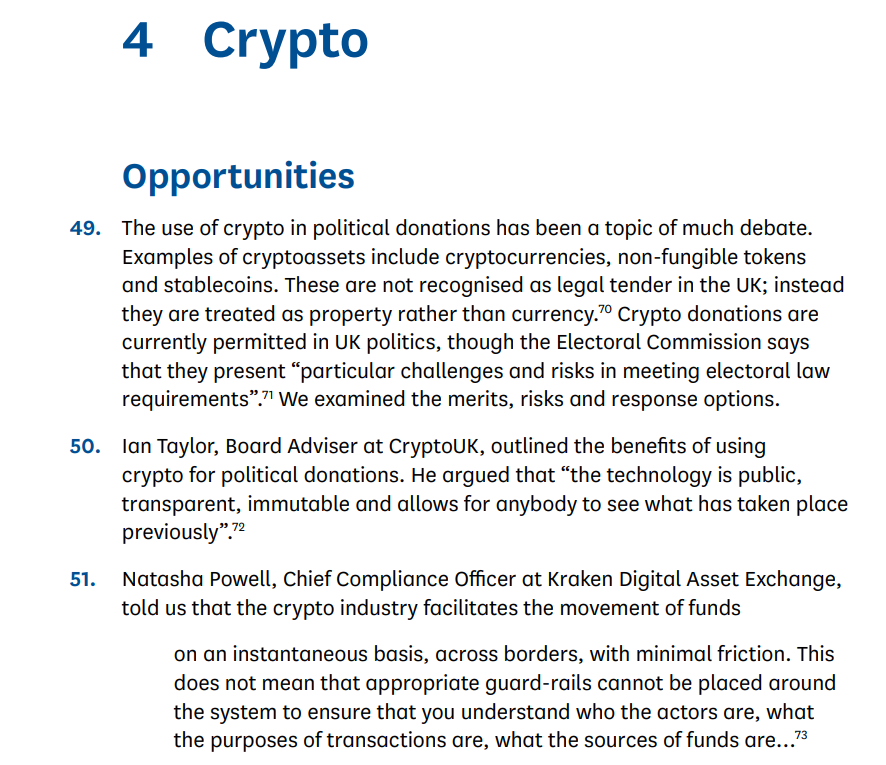
A cross-party parliamentary committee in the United Kingdom has urged the government to impose an immediate moratorium on cryptocurrency donations to political parties until stronger safeguards are in place.
In a report published on Wednesday, the Joint Committee on the National Security Strategy said the government should amend the Representation of the People Bill to impose an “immediate moratorium on crypto donations” until the Electoral Commission produces statutory guidance ahead of the next general election, due by August 2029.
The committee also called for the creation of a Political Finance Enforcement Unit to oversee these activities and reduce the minimum threshold for declaring gifts tied to political donations from 11,180 British pounds ($14,900) to 500 pounds ($668), and proposed increasing the maximum custodial sentences to three years for wrongdoing involving foreign financing.
The committee cited growing foreign state threats and efforts to influence the UK’s positions on critical issues, including its relations with the US, the European Union and Ukraine.
The recommendation comes amid rising scrutiny of crypto-linked money in British politics. Nigel Farage’s Reform UK became the first party to start accepting crypto donations in 2025. Reform UK recently disclosed a $4 million donation from crypto investor Christopher Harborne in the fourth quarter of 2025, after a record $12 million gift in the previous quarter.

Crypto donations pose “unnecessary” risk for UK politics
Crypto donations pose an “unnecessary and unacceptably high risk” to the integrity of the political finance system and public trust, barring robust regulator guardrails, the report states.
“We see no democratic imperative to permit the use of crypto in political finance until adequate safeguards are in place.”
The committee also cited jurisdictions, such as Ireland, that have banned party members from accepting political cryptocurrency donations due to foreign interference concerns.
The report comes shortly after Matt Western, chair of the committee, urged the government to put a temporary halt on crypto donations to political parties, citing foreign interference risks, Cointelegraph reported on Feb. 26.
Related: UK Lords launch stablecoin inquiry as Bank of England moves to finalize rules
Crypto donations raise concern in the UK
Political cryptocurrency donations are legal in the UK, subject to permissible rules under the Electoral Commission guidance. UK lawmakers reportedly started considering a ban on political cryptocurrency donations in December 2025.
Weeks later, seven senior UK Labour Party MPs have urged Prime Minister Keir Starmer to ban crypto for political donations, Cointelegraph reported on Jan. 12.
“Crypto can obscure the true source of funds, enable thousands of micro donations below disclosure thresholds, and expose UK politics to foreign interference,” wrote business and trade committee chair Liam Byrne, one of the seven signatories of the letter.
Magazine: How crypto laws changed in 2025 — and how they’ll change in 2026
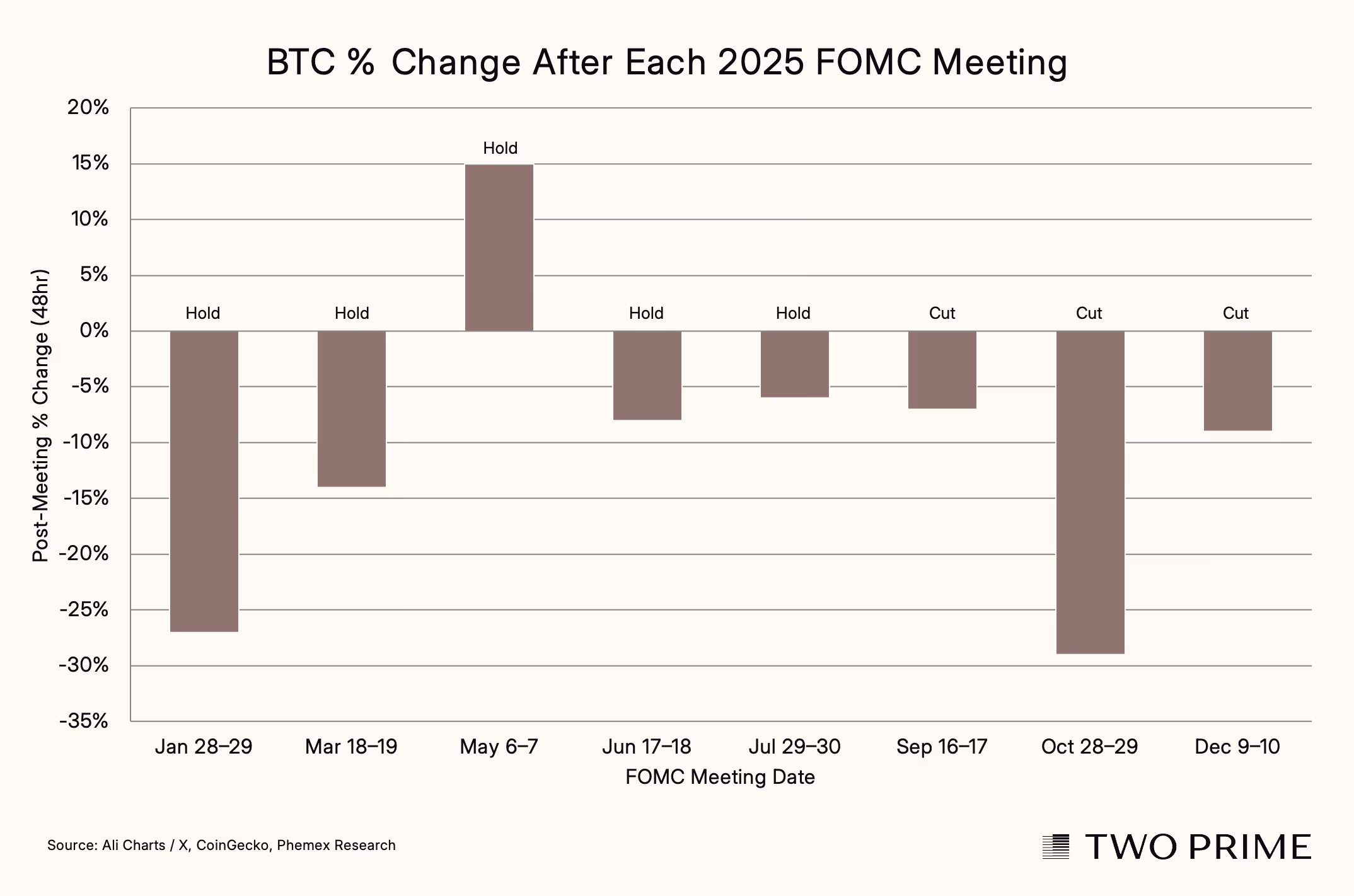
Bitcoin heads into the March Federal Open Market Committee (FOMC) meeting with strong momentum, trading above $74,000 after eight consecutive daily gains. However, data compiled by bitcoin lender Two Prime suggests this strength may mask a recurring pattern, FOMC meetings have historically acted as short term bearish catalysts for BTC.
Looking at 2025, bitcoin posted negative returns in the 48 hours following seven of eight FOMC meetings. Even in May, when BTC rallied sharply, the broader trend points to consistent post meeting weakness regardless of whether the Fed held rates or shifted policy direction. This reinforces the idea that the event itself, rather than the outcome, drives volatility.

The upcoming decision is unlikely to deliver surprises. Markets are pricing a near certainty, around 99%, that the Federal Reserve will hold rates steady in the 350 to 375 basis point range. Meanwhile, the futures market is only pricing in a single 25 basis point rate cut by the end of the year, reinforcing a higher for longer backdrop. Even with a new Federal Reserve chair, Kevin Warsh, expected to take over in June.
Macro risks further complicate the picture. Escalating conflict in the Middle East and oil prices hovering around $100 a barrel are likely to put upward pressure on CPI inflation numbers, limiting the Fed’s flexibility to ease policy on top of a weakening jobs market.
With bitcoin entering the meeting in a buoyant state, the risk shifts toward a classic sell the news reaction.
Spot Ethereum exchange-traded funds drew in $138.2 million in net inflows over the past day, their highest single-day inflows since Feb. 25.
Summary
- Spot Ethereum ETFs recorded $138.2 million in daily inflows, marking their highest since late February and extending a six-day inflow streak.
- Institutional demand strengthened amid Bitmine’s continued ETH accumulation, with Fundstrat’s Tom Lee calling a potential market bottom near $2,150.
- ETH price traded near $2,328, with price approaching a breakout above $2,400 as markets await the Federal Reserve rate decision.
According to data compiled by SoSoValue, BlackRock’s ETHA led the inflows of the day with $81.7 million entering the fund. The largest investment manager’s Staked ETH ETF (ETHB) followed with $67.2 million in net inflows.
More modest inflows came from Grayscale’s ETH and ETHE funds, which drew in $15.4 million and $9.4 million, respectively. Part of these gains were offset by Fidelity’s FETH, which experienced $35.4 million in withdrawals.
The latest inflows extend the investment products’ inflow streak to six straight days during which they managed to pull in over $385 million from investors. On a weekly basis, Ethereum ETFs have entered their fourth positive week, attracting nearly $440 million in total.
The surge in institutional interest comes as Bitmine, the leading Ethereum treasury company chaired by Fundstrat’s Tom Lee, continues its aggressive ETH accumulation strategy amid broader macroeconomic and geopolitical uncertainty rising from the Middle East.
Meanwhile, Lee has recently called a market bottom for Ethereum after it fell to a local low of $2,150 on Monday, suggesting that the recent pullback may have marked the end of the short-term downtrend and could pave the way for a recovery.
At press time, Ethereum (ETH) price was trading sideways at $2,328 after bulls failed to break past the $2,400 resistance on Tuesday.
Markets now appear to be awaiting the Federal Reserve interest rate cut decision scheduled to be revealed later today. It is largely expected that the Federal Open Market Committee (FOMC) will choose to hold interest rates steady in the current range of 3.5% to 3.75%, with CME FedWatch Tool data showing odds of over 98% for a pause.
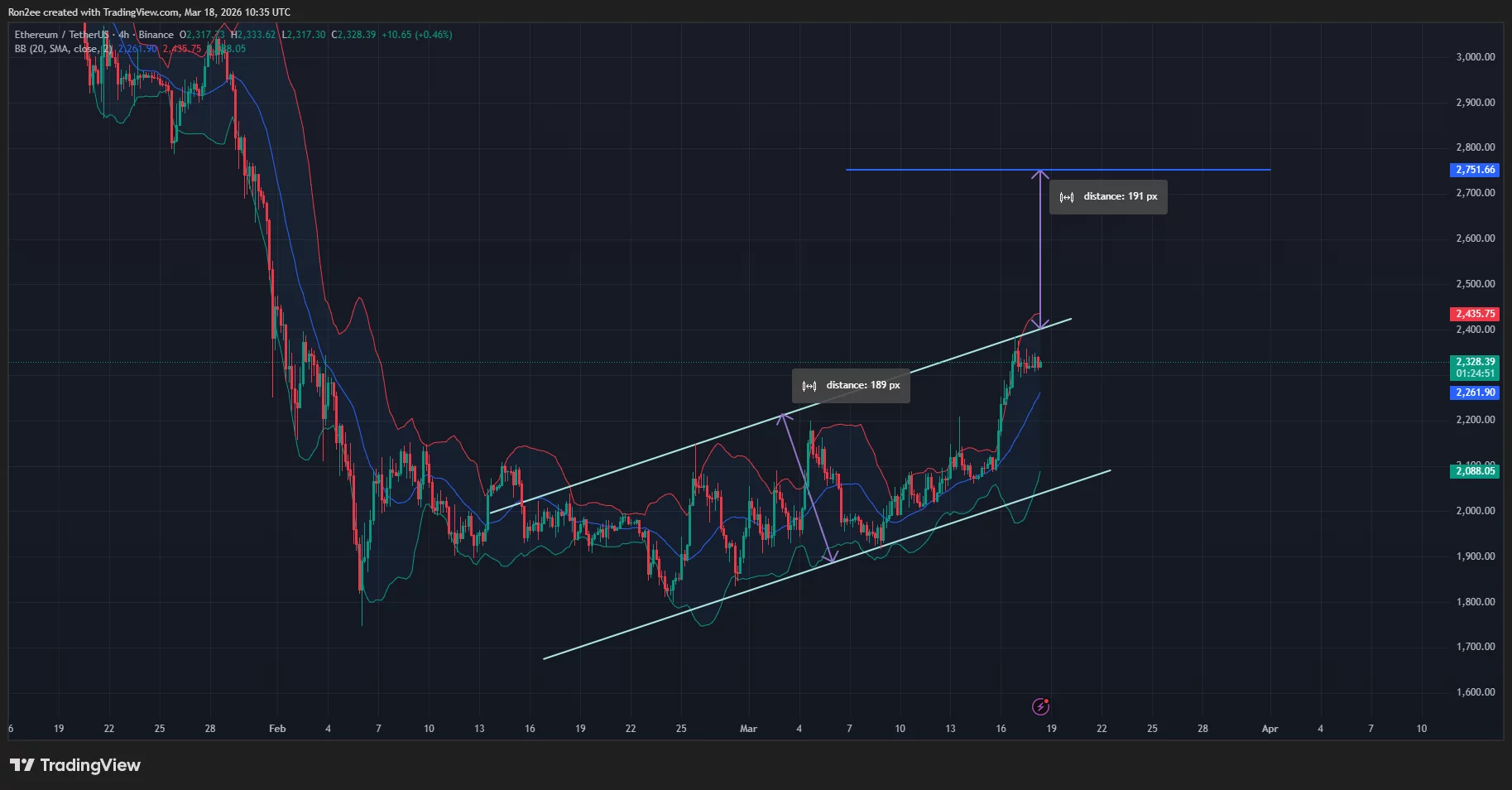
On the 4-hour chart, ETH price has been trading within an ascending parallel channel pattern that it has respected since mid-February this year. A breakout from the upper trendline of the pattern has historically signaled a positive reversal in momentum. At press time, the ETH price was close to breaking out from that upper side.
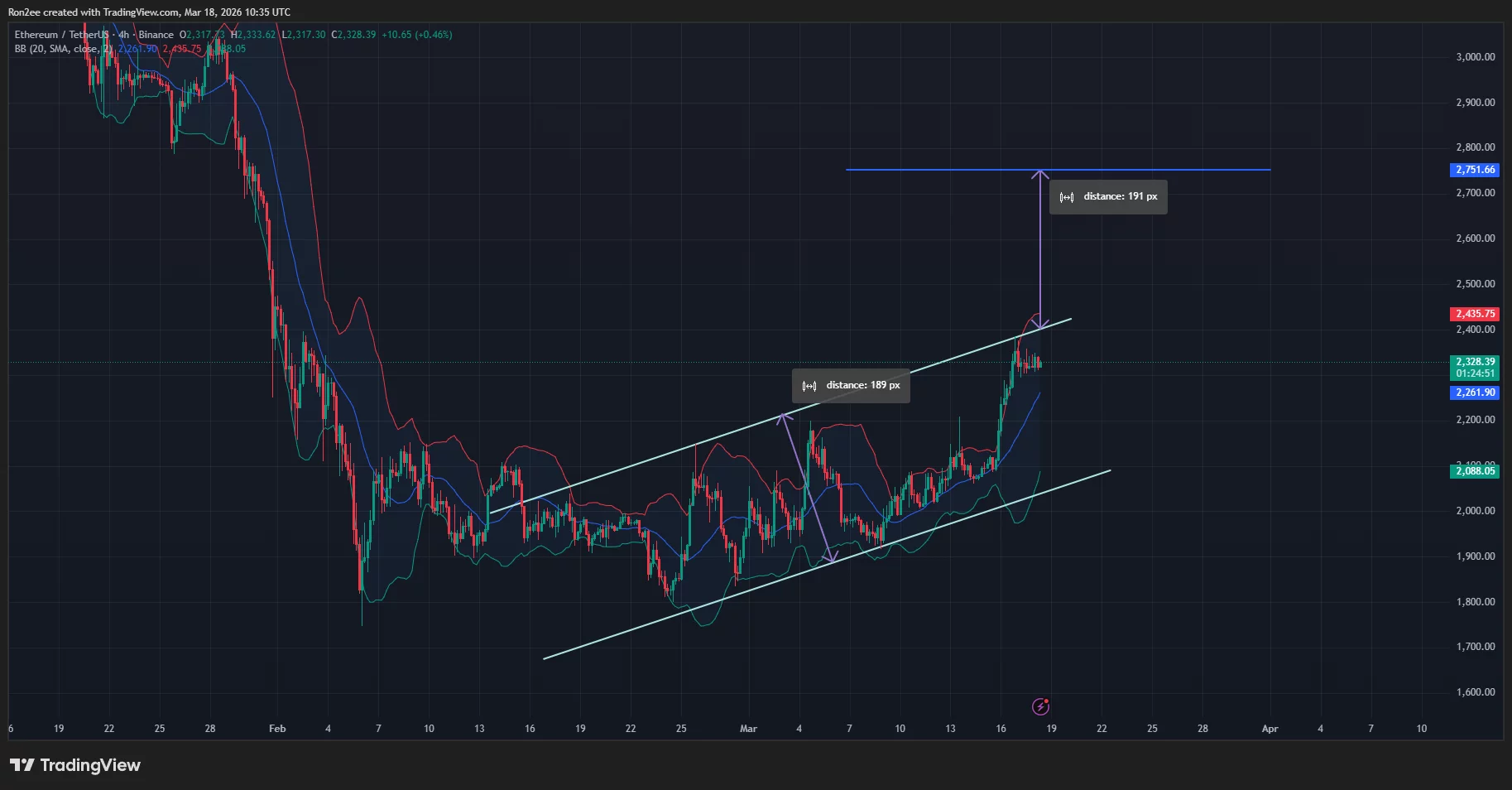
Ethereum price has crossed the middle band of the Bollinger Bands at $2,261 and was closing in towards the $2,435 level, which marks the upper band of the technical indicator.
Hence, ETH price eyes a break above the $2,400 psychological resistance, bound to $2,435 next. This rally could then extend to as high as $2,751 if bullish momentum lasts. That target is calculated by adding the height of the ascending channel formed to the point at which the breakout occurs.
Meanwhile, failure to hold the $2,262 support, which forms the middle band, will likely see the price retreat toward the lower trendline of the current channel.
Disclosure: This article does not represent investment advice. The content and materials featured on this page are for educational purposes only.
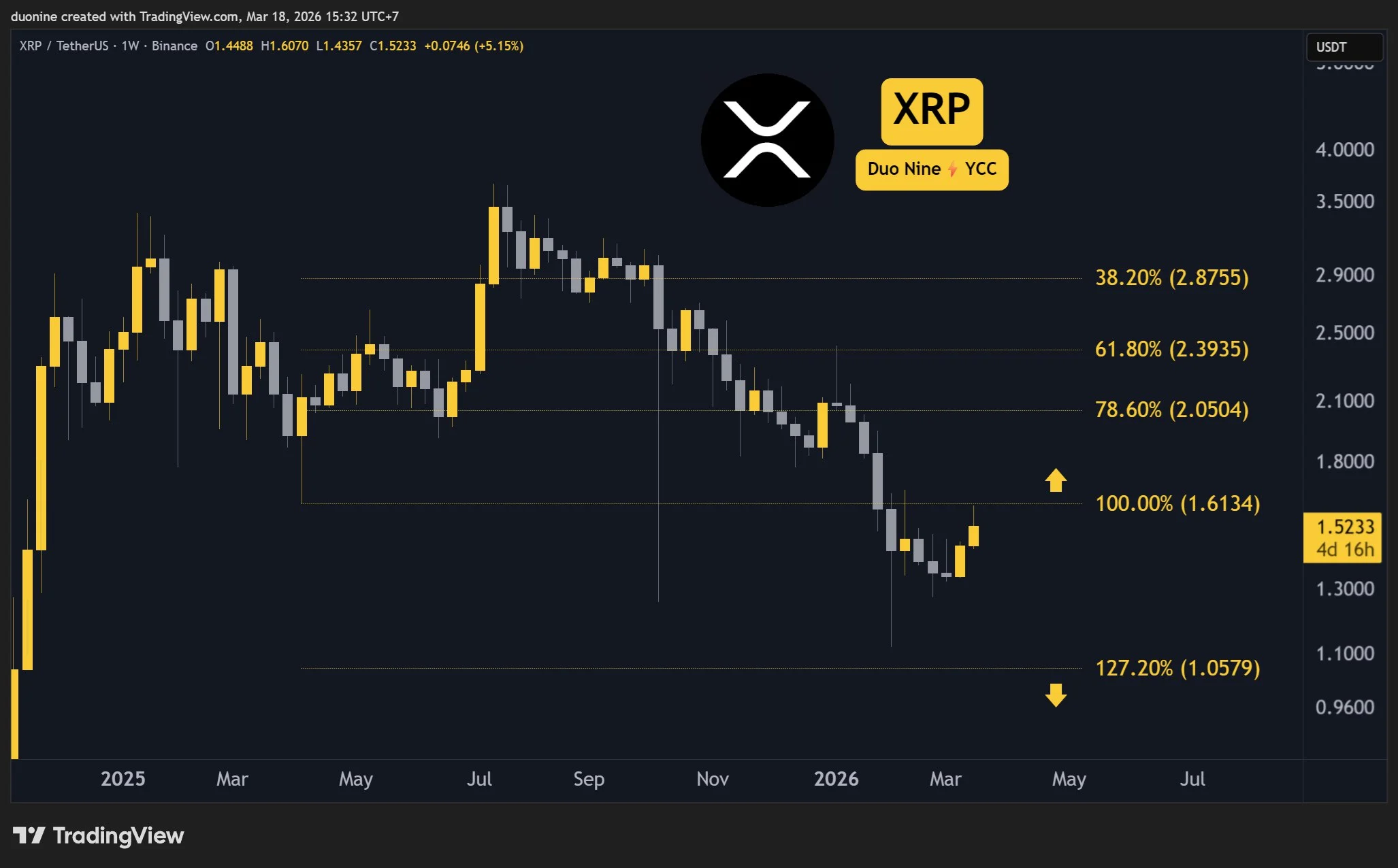
XRP just tested the key $1.6 resistance level. Can it break it?
Ripple (XRP) Price Predictions: Analysis
Key support levels: $1.4
Key resistance levels: $1.6
XRP is Challenging the Key Resistance
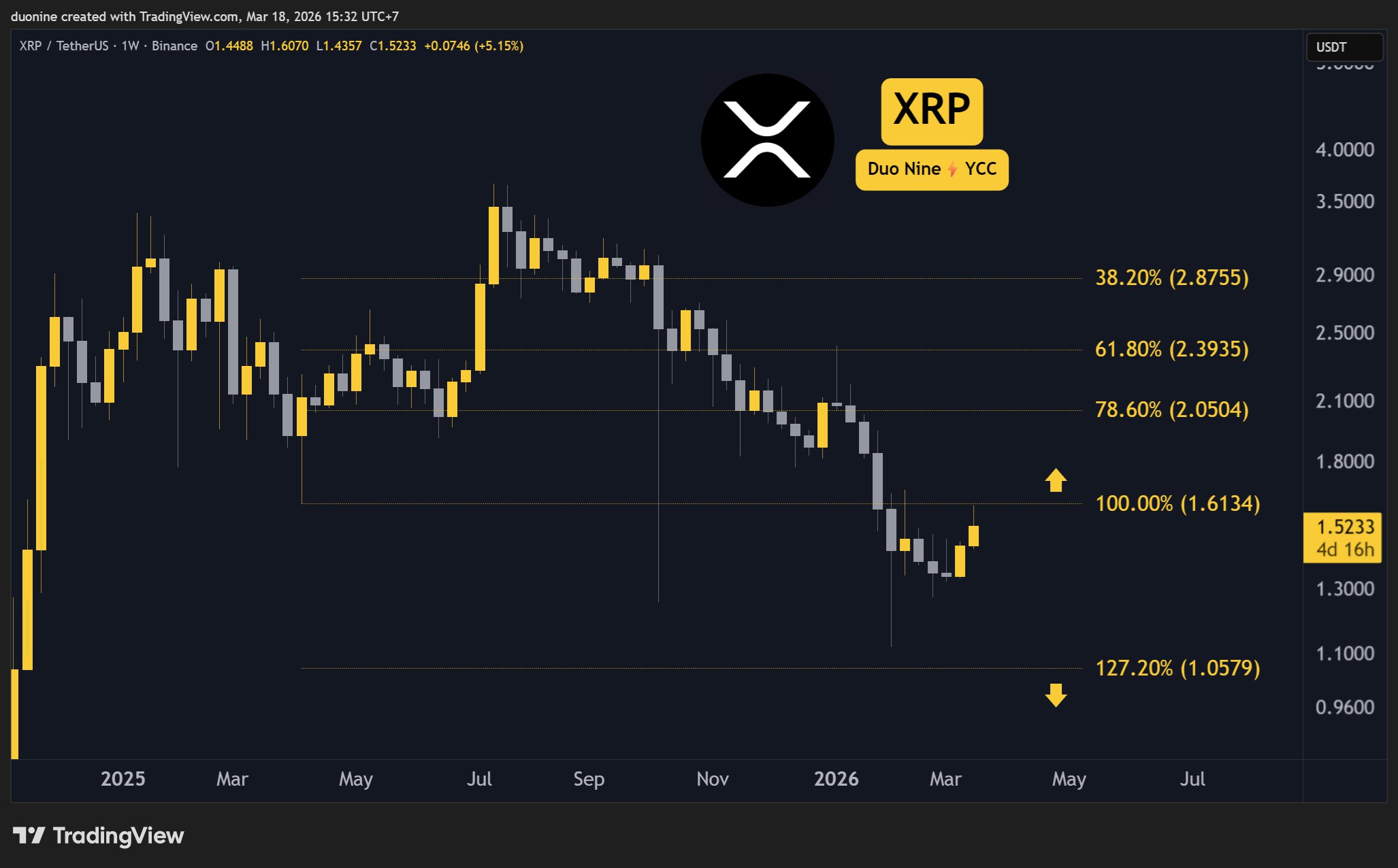
As expected, XRP has rallied all the way to the key resistance at $1.6. Buyers tried to break this level, but sellers returned to defend it. At the time of this post, the price is found in a pullback as it consolidates under this level.
Buyers will need more force and momentum if they want to break this resistance. That becomes possible if the volume increases, since so far, volume levels have been rather flat. This shows some hesitation here from market participants.
Is a Reversal Possible?
If bulls can turn $1.6 into key support, then this downtrend is likely over, and a sustained reversal will follow, sending XRP back to $2 and beyond. However, this price action remains too uncertain to be confident about such an outcome.
Should the overall market remain bullish with Bitcoin moving above $75k, then XRP has a good shot at higher levels. On the other hand, if the market remains flat, then XRP will also struggle to move above $1.6.
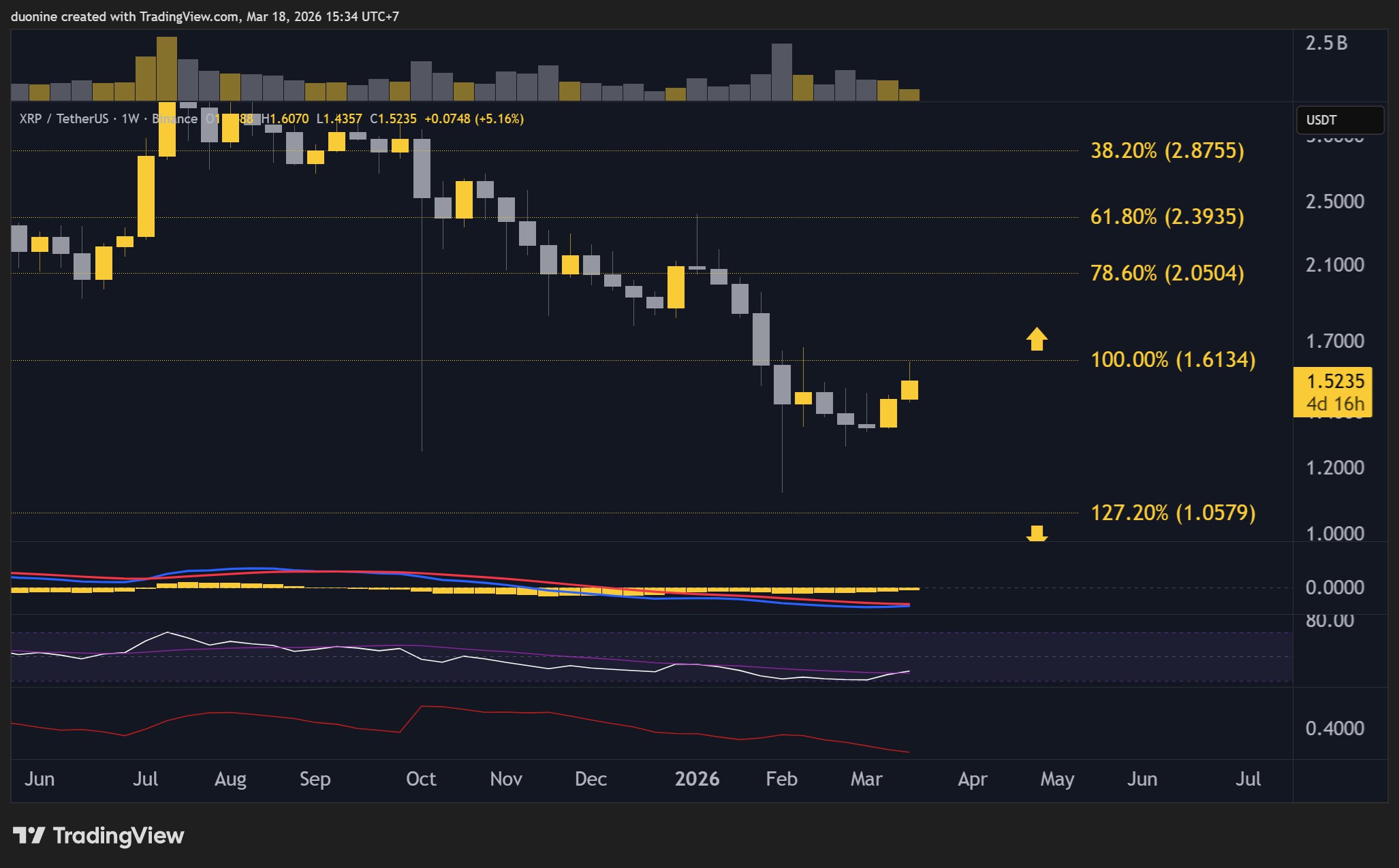
RSI Bullish Cross
On the weekly chart, the RSI just made a bullish cross, which is an early signal that a major reversal could be ahead of us. While this is still early, a price above $1.6 would confirm this breakout and see buyers return in force.
Best to be patient here and let the price develop to build confidence. Ideally, the RSI will continue to make higher highs, which would be a clear signal that sellers have lost control.

Binance Free $600 (CryptoPotato Exclusive): Use this link to register a new account and receive $600 exclusive welcome offer on Binance (full details).
LIMITED OFFER for CryptoPotato readers at Bybit: Use this link to register and open a $500 FREE position on any coin!
Disclaimer: Information found on CryptoPotato is those of writers quoted. It does not represent the opinions of CryptoPotato on whether to buy, sell, or hold any investments. You are advised to conduct your own research before making any investment decisions. Use provided information at your own risk. See Disclaimer for more information.
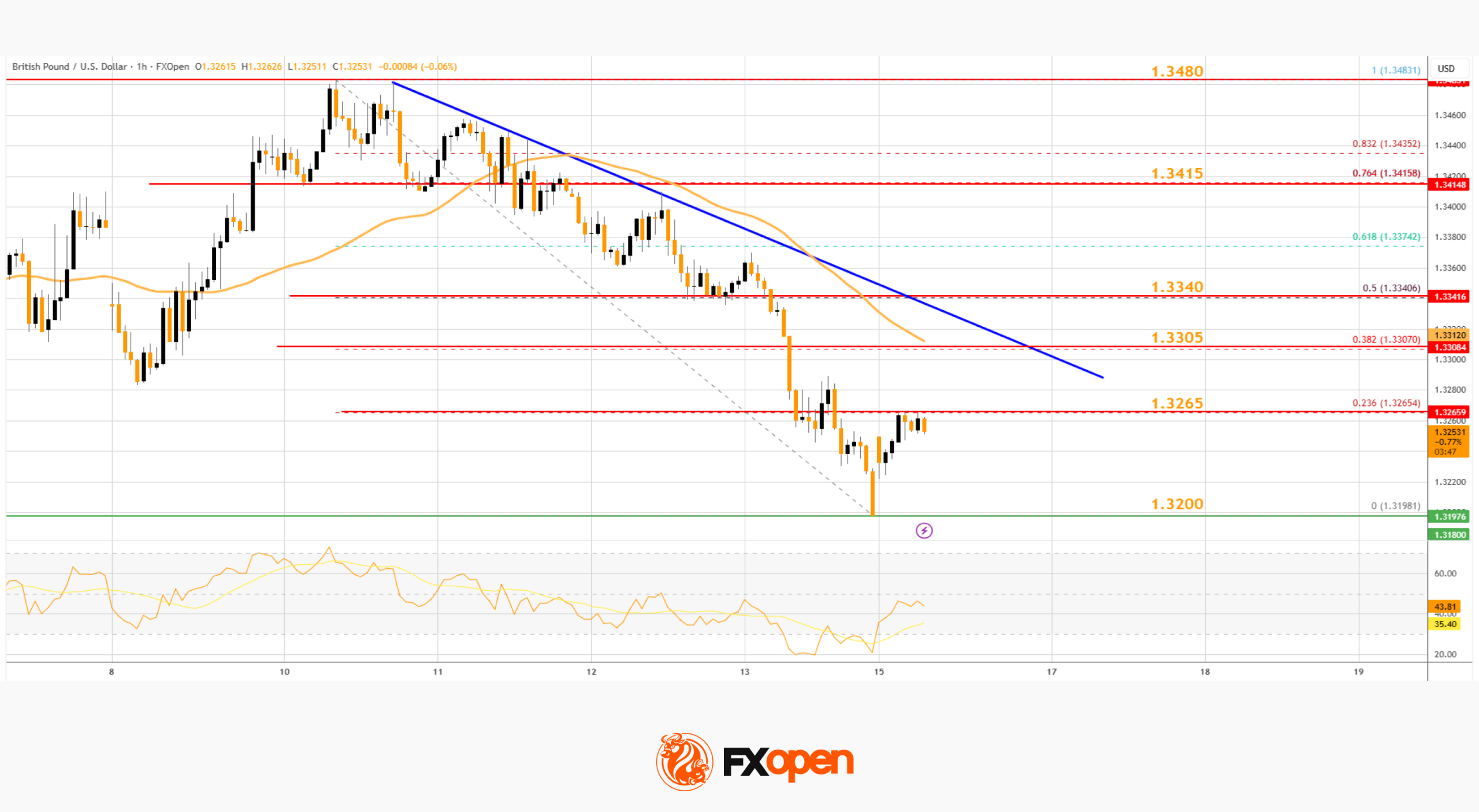
GBP/USD started a fresh decline below 1.3300. USD/CAD is consolidating gains and might aim for a fresh increase above 1.3750.
Important Takeaways for GBP/USD and USD/CAD Analysis Today
· The British Pound started another decline from 1.3500.
· There is a key bearish trend line forming with resistance at 1.3305 on the hourly chart of GBP/USD at FXOpen.
· USD/CAD is showing positive signs above the 1.3660 support zone.
· There is a key bullish trend line forming with support at 1.3610 on the hourly chart at FXOpen.
GBP/USD Technical Analysis
On the hourly chart of GBP/USD at FXOpen, the pair struggled to continue higher above 1.3500. The British Pound started a fresh decline and traded below 1.3400 against the US Dollar.
The pair even traded below 1.3300 and the 50-hour simple moving average. Finally, the bulls appeared near the 1.3200 level. The recent swing low was formed at 1.3198, and the pair is now consolidating losses.
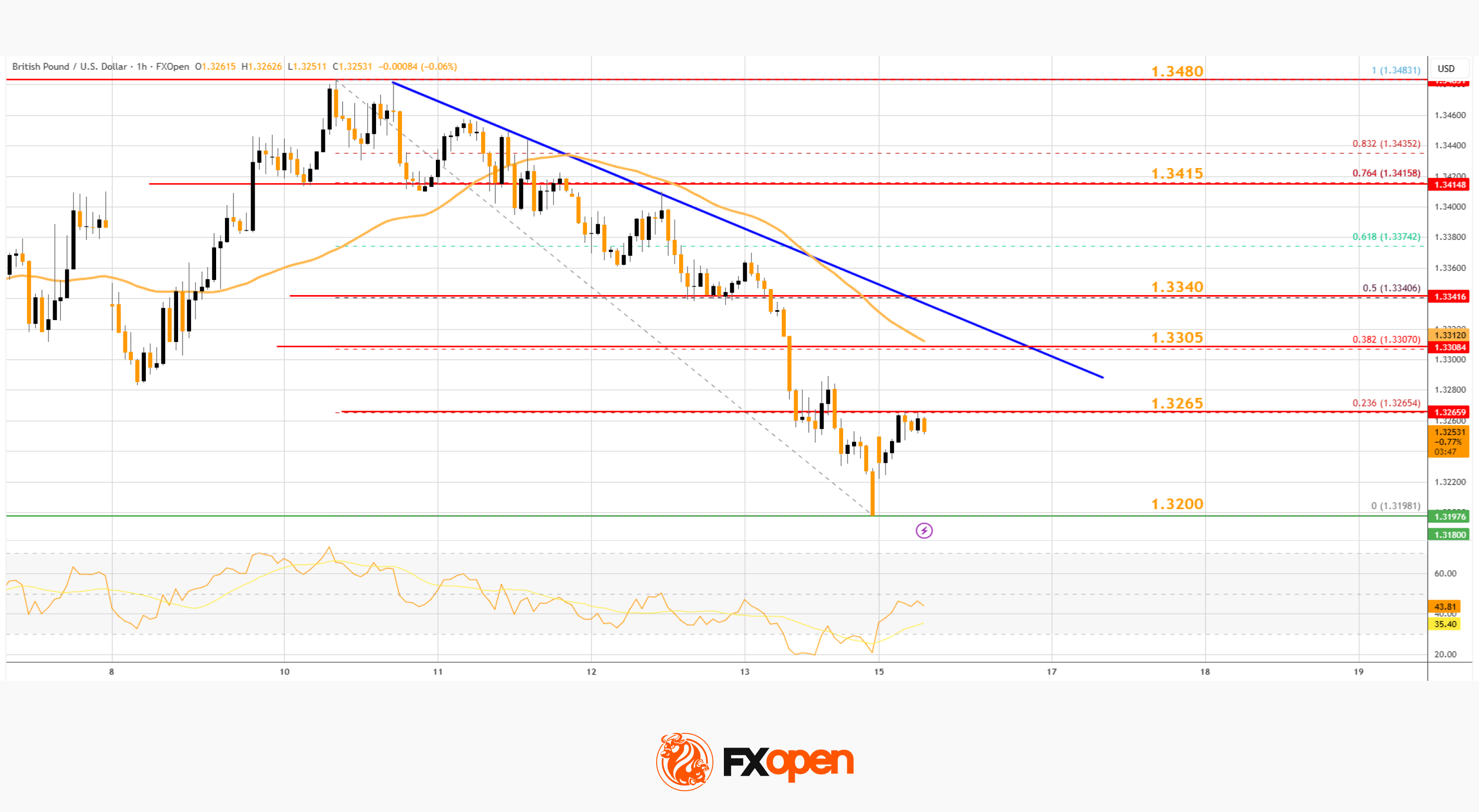
On the upside, the pair is now facing hurdles near the 23.6% Fib retracement level of the downward move from the 1.3483 swing high to the 1.3198 low at 1.3265.
The first major breakout zone for a recovery wave could be near a key bearish trend line at 1.3305 and the 50-hour simple moving average. The next key pivot zone sits near the 50% Fib retracement at 1.3340. A close above 1.3340 could open the doors for a move to 1.3415. Any more gains might send the pair toward 1.3500 in the coming days.
If there is a fresh decline, initial support on the GBP/USD chart sits at 1.3200. The next major area of interest could be 1.3165, below which there is a risk of another sharp decline. In the stated case, the pair could drop toward 1.3050.
USD/CAD Technical Analysis
On the hourly chart of USD/CAD at FXOpen, the pair formed a strong base above 1.3500. The US Dollar started a fresh increase above 1.3600 and 1.3650 against the Canadian Dollar.
The bulls pushed the pair above the 1.3680 and 1.3700 levels. The pair cleared the 50-hour simple moving average and settled above 1.3700. A high was formed at 1.3741, and the pair is now consolidating gains.
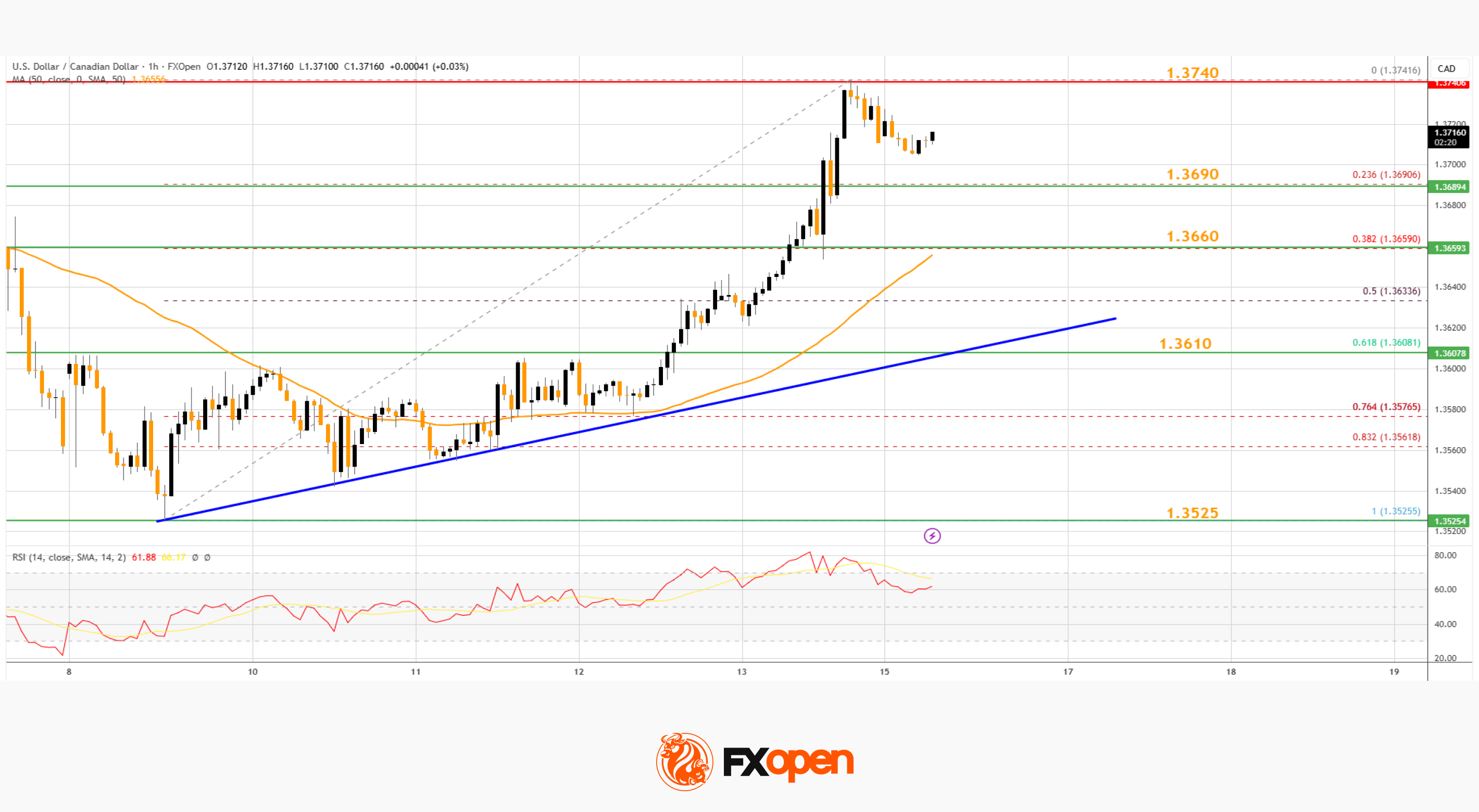
There was a minor pullback, but the pair remained stable above 1.3700 and the 23.6% Fib retracement level of the upward move from the 1.3525 swing low to the 1.3741 high.
The first key support is near the 50-hour simple moving average at 1.3660 and the 50% Fib retracement. The main breakdown zone seems to be forming near a key bullish trend line at 1.3610 on the same USD/CAD chart.
A downside break below the 1.3610 could push the pair further lower. The next key area of interest might be 1.3525, below which the pair might visit 1.3440.
If there is another increase, the pair might face hurdles near 1.3740. A clear upside break above 1.3740 could start another steady increase. In the stated case, the pair could test 1.3780. A close above 1.3780 might send the pair toward 1.3850. Any more gains could open the doors for a test of 1.4000.
Trade over 50 forex markets 24 hours a day with FXOpen. Take advantage of low commissions, deep liquidity, and spreads from 0.0 pips (additional fees may apply). Open your FXOpen account now or learn more about trading forex with FXOpen.
This article represents the opinion of the Companies operating under the FXOpen brand only. It is not to be construed as an offer, solicitation, or recommendation with respect to products and services provided by the Companies operating under the FXOpen brand, nor is it to be considered financial advice.
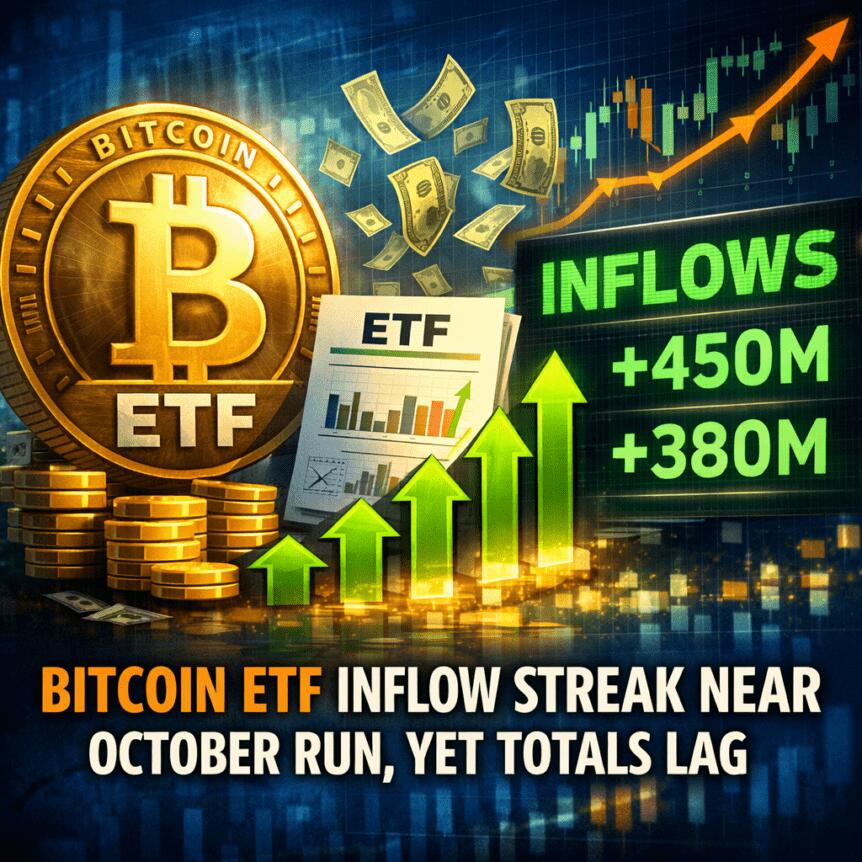
Bitcoin spot ETFs in the United States extended their inflow streak to seven consecutive days on Monday, marking the longest run of fresh capital since late 2025. Data compiled by SoSoValue show spot BTC ETFs adding $199.4 million, lifting the seven-day sum to roughly $1.2 billion. The persistence of inflows signals renewed institutional interest in regulated access to crypto exposure, even as total year-to-date (YTD) inflows remain negative when measured against earlier peaks. In parallel, the broader crypto ETF ecosystem posted mixed but resilient momentum across assets, underscoring a cautious but steady reallocation toward crypto-linked vehicles.
Within the same framework, total trading volumes for spot BTC ETFs slipped to about $2.6 billion, while assets under management (AUM) climbed to $96.7 billion. The dynamic suggests that new money is entering through regulated vehicles, but the macro cadence of inflows remains softer than the high-water marks seen in late 2025. The year-to-date balance continues to tilt negative, with roughly $1.8 billion in cumulative monthly outflows offset by about $1.7 billion in cumulative inflows. The divergence highlights that while the appetite for regulated crypto access persists, investors are weighing risk, regulatory clarity, and the path to profitability as markets evolve.
The rebound in Bitcoin ETFs coincides with broader strength in crypto investment products. Across the sector, crypto exchange-traded products (ETPs) accrued about $2.7 billion over the previous three weeks, lifting year-to-date inflows to around $1.2 billion, according to data cited in industry trackers. The pattern aligns with a gradual reset in risk sentiment as investors reassess the trajectory of mainstream crypto assets, seeking diversified exposure through regulated structures rather than direct custody. The momentum also underscores ongoing demand for bottom-line transparency and on-ramp infrastructure, amid shifts in macro liquidity and regulatory expectations.
Key takeaways
- Bitcoin spot ETFs added $199.4 million on Monday, extending a seven-day inflow streak to about $1.2 billion and signaling renewed institutional appetite for regulated access to BTC exposure.
- Ether ETFs drew $138.3 million—the strongest weekly print since March 4—while Solana ETFs brought in $17.8 million, marking the largest weekly inflows for SOL in the same period.
- XRP ETFs posted $4.64 million in inflows for the period, the first positive print after an eight-day losing streak, even as overall XRP ETF outflows totaled $56.8 million from March 5–16.
- Bitcoin ETFs remain the standout driver of the trend, with total assets under management near $96.7 billion and weekly volumes pacing at a subdued level relative to previous peaks.
- Ether ETFs continue to lag on a year-to-date basis, ceding $364.5 million in net outflows YTD after inflows of $358.5 million in March and earlier outflows in January and February.
Tickers mentioned: $BTC, $ETH, $XRP, $SOL
Sentiment: Neutral
Market context: The ETF rebound mirrors a broader, cautious reacceleration in crypto investment products, with multi-week inflows suggesting a measured return of interest from institutions and a willingness to diversify exposures through regulated vehicles as volumes trend modestly higher and risk sentiment improves.
Why it matters
The sustained inflows into spot BTC ETFs, and the broader uptick across Ether and Solana products, point to a disciplined market response to evolving regulatory clarity and infrastructure. Investors appear to be seeking regulated entry points to digital assets, balancing the desire for crypto exposure with risk controls, liquidity standards, and clear reporting. The seven-day BTC inflow run, coupled with an AUM near $97 billion, underscores that institutions remain willing to place capital into products that offer price discovery, custody guarantees, and transparent settlement frameworks.
At the same time, the divergence between Bitcoin’s robust ETF inflows and Ether’s persistent YTD outflows highlights a nuanced allocation dynamic among asset classes within crypto. While BTC remains the marquee entry for many institutions, Ether’s ongoing pressure may reflect a combination of concerns about network congestion, macro capital allocation, and regulatory posture around major ETH-related developments. The Solana narrative—its best weekly inflow in this cycle—adds a complementary vector, suggesting that select layer-1 ecosystems with active developer activity and practical use cases continue to attract capital through dedicated ETFs.
In a broader sense, the data point to a maturing market for regulated crypto exposure. As more assets gain ETF and ETP coverage, the space benefits from standardized liquidity, clearer valuation references, and the ability to participate in professional portfolios without direct custody. Yet the year-to-date performance gap—with Ether ETFs in negative territory and XRP experiencing mixed inflows—serves as a reminder that the sector remains sensitive to macro shifts, regulatory signals, and shifting risk appetites among sophisticated buyers and fund managers.
What to watch next
- Next week’s BTC ETF inflow data: Will the seven-day streak extend further, and how will AUM adjust in response to price volatility?
- Ether ETF performance: Will the YTD outflows abate, and can ETH-based products reclaim momentum as network fundamentals improve?
- Solana ETF flows: Monitor whether SOL continues to post outsized weekly inflows, signaling renewed appetite for ecosystem exposure.
- XRP ETF trajectory: Track subsequent inflows/outflows after the March period, as regulatory clarity and market sentiment evolve.
- Regulatory and product developments: Any new approvals or structural changes to US crypto ETFs that could alter investor demand.
Sources & verification
- SoSoValue data on US BTC spot ETF inflows and seven-day totals, including the $199.4 million print on Monday.
- SoSoValue asset page for US BTC spot ETFs: https://sosovalue.com/assets/etf/us-btc-spot
- Three-week crypto ETP inflow flow data referenced in market coverage: https://cointelegraph.com/news/crypto-etp-1-billion-inflows-three-straight-weeks-gains
- Past inflow reference for the October 2025 run and related context: https://cointelegraph.com/news/bitcoin-etfs-record-6-day-inflow-streak-longest-since-october
- Crypto ETF and asset mix commentary noting Ether ETF underperformance and SOL inflows: https://cointelegraph.com/news/bitcoin-rebound-bernstein-long-term-holder-base
ETF inflows persist as spot BTC ETFs extend seven-day streak
Bitcoin (CRYPTO: BTC) has continued to draw institutional interest as US spot BTC ETFs record their seventh straight day of inflows, lifting the weekly total to around $1.2 billion. The latest $199.4 million addition arrived on Monday, reinforcing a narrative of growing comfort with regulated exposure to digital assets within portfolio allocations. While the pace of fresh money remains well short of the lofty peaks seen during the October 2025 surge, the pattern matters for liquidity and price discovery in a market that has historically been driven by spot demand, futures hedging, and macro liquidity cycles.
Across altcoins, the appetite looks uneven but constructive. Ether (CRYPTO: ETH) led inflows among non-Bitcoin ETFs with about $138.3 million, the strongest weekly print since early March. Solana (CRYPTO: SOL) followed with approximately $17.8 million, marking the largest weekly inflow for SOL in the current cycle. XRP (CRYPTO: XRP) posted $4.64 million in fresh inflows after an eight-day stretch of outflows, signaling a potential re-engagement with regulatory-friendly exposure to ripple-linked assets. Despite the upticks, XRP ETFs still faced a net outflow of $56.8 million for the March 5–16 window, underscoring that investor sentiment remains split across the crypto spectrum.
Overall, Bitcoin ETFs have been the most durable source of capital, with total assets under management approaching $96.7 billion and trading volumes hovering around the $2.6 billion mark for the latest reporting period. In contrast, Ether ETFs are underwater for the year, with approximately $364.5 million in net outflows so far in 2026, following March inflows of $358.5 million and earlier sizeable movements in January and February. The broader market narrative—driven by ongoing institutional testing of regulated exposure, macro liquidity, and the evolving crypto regulatory landscape—remains a critical factor shaping flows across BTC, ETH, XRP, and SOL.
As the sector recalibrates, market participants are watching whether the flow environment remains constructive, particularly given the resilience seen in three straight weeks of positive crypto ETP inflows. The data points, while not guaranteeing sustained rallies, do suggest a continued willingness to explore crypto exposure through regulated vehicles, a trend that could influence pricing dynamics, risk management strategies, and the pace of product innovation in the months ahead. The coming weeks will be telling as new data illuminate the balance between cautious optimism and the persistent volatility that characterizes crypto markets.

Solana just set a new stablecoin liquidity record. Supply surged past $15.58 billion in February.
At the same time, Open Interest climbed from $4.9 billion to nearly $6 billion in a matter of weeks. That is $1 billion in fresh leverage entering the system while sideline capital sits at all-time highs.
Transaction volumes are up 300% year-over-year. This is real settlement activity, not just speculative rotation.
But the leverage building underneath is the real story. Massive dry powder plus rising derivative exposure is exactly how volatility squeezes get built.

Stablecoin Liquidity Signals Dry Powder: What the Data Shows
Solana’s stablecoin dominance is the foundation of this entire setup.
USDC transfer volume on the network jumped 300% year-over-year. And the median transaction fee stayed near $0.00047 throughout that volume spike.
Solana now holds roughly 36% of global stablecoin transaction volume. That is not a vanity metric. Stablecoins sitting on-chain represent potential buy pressure that does not need to bridge in from anywhere else.

The derivatives side is where it gets dangerous.
Open Interest climbed 22% in a short window, from $4.9 billion to nearly $6 billion. Fresh capital is entering, not just short covering. That validates the trend but also loads the gun for a liquidation cascade.
XRP flipped BNB in open interest right before a major volatility event. High OI is always a double-edged sword.
Watch funding rates closely. If OI pushes above $6 billion while price consolidates, a 5% move in either direction could trigger $500 million in liquidations.
The floor is strong. The ceiling is loaded. Something is going to give.
Can Solana Crypto Price Push Higher? Key Levels to Watch
SOL is printing higher highs and higher lows. Buyers are defending strength instead of fading it. The structure is constructive.
But $100 to $110 is the wall that matters.
If stablecoins rotate into risk assets and SOL clears $110 with volume, the path to $125 opens up. The stablecoin supply sitting on-chain provides the fuel to sustain that move.
The danger is the OI acting as a heavy anchor. A rejection at $105 could trigger a long squeeze and flush over-leveraged positions fast. First major support lands at $88. Lose that and the structure weakens significantly.
Watch $105 on the daily. Close above it and the squeeze resolves upward. Lose $92 and the bullish leverage thesis falls apart.
Discover: The best new crypto in the world
The post Solana Crypto Stablecoin Liquidity Hits Record Highs as Open Interest Climbs appeared first on Cryptonews.


Stablecoin payments infrastructure firm TransFi has raised $19.2 million to expand its operations.
Summary
- TransFi raised $19.2 million in a Series A round led by Turing Financial Group to expand its stablecoin-based cross-border payments infrastructure.
- The company plans to deploy the funds across emerging markets while strengthening regulatory licensing and scaling enterprise merchant adoption.
According to a recent announcement, the company raised $14.2 million in Series A equity along with a $5 million committed liquidity facility. The funding round was led by Turing Financial Group.
TransFi will use the capital to fund expansion across South-East Asia, South Asia, the Middle East, LatAm and Africa. It plans to pursue deeper regulatory licensing and scale its enterprise merchant acquisition.
A portion of the funds would also be used to strengthen AI-first operations and product development across B2B payments, checkout infrastructure and stablecoin orchestration.
“This Series A allows us to scale our infrastructure across high-friction markets and continue proving that stablecoin-enabled payments are not the future, they are already happening,” said Raj Kamal, Co-Founder and CEO of TransFi.
TransFi positions itself as an alternative to traditional correspondent banking and SWIFT-based systems and said it is on track to achieve roughly $5 billion in processed transaction volume by the end of fiscal year 2026. The company currently operates in over 70 countries and supports more than 40 fiat currencies and over 100 cryptocurrencies.
Stablecoin usage is rising
As previously reported by crypto.news, stablecoin supply has surpassed $315 billion, led by Tether, which continues to dominate the market by share. Other major players, such as Circle, have also expanded their presence across payments and financial applications.
A number of traditional financial firms, including Mastercard and Standard Chartered, have also taken an interest in the growing stablecoin sector.
Meanwhile, several jurisdictions across the globe have started introducing regulatory frameworks and legislation.


U.S. regulators’ first joint guidance on applying securities laws to different types of crypto tokens failed to provide enough impetus to lift bitcoin , the largest, above $75,000.
The interpretive guidance from the Securities and Exchange Commission (SEC) and the Commodity Futures Trading Commission (CFTC), which doesn’t carry the weight of a formal rule, classified crypto tokens into five distinct categories: digital commodities, digital collectibles, digital tools, stablecoins and digital securities, and removed a major source of market uncertainty.
The stance marks a shift from the existing case-by-case enforcement, making it clear which tokens are considered securities and which are not, and is expected to give issuers and exchanges much‑needed clarity on how different assets will be regulated under federal law.
“The practical effect is a more coherent and less burdensome regulatory environment. Legal uncertainty declines, the risk of retroactive enforcement is reduced, and compliance becomes more predictable,” Tagus Capital said.
“This supports institutional participation, exchange development, and product innovation, while improving market structure through lower compliance costs and better price discovery. Although the guidance stops short of binding law and still leaves room for case-by-case interpretation, it sets a strong template for future legislation and may accelerate global regulatory convergence.”
Even so, bitcoin was unable to build on this month’s bounce from $65,000, which at one point on Tuesday, saw the price approach $76,000. The cryptocurrency was largely unchanged over the past 24 hours.
Other major tokens such as XRP (XRP), ether (ETH) and solana (SOL) also saw choppy price action, with the CoinDesk 20 Index down 0.3%.
According to analysts, $75,000 is a key resistance level for bitcoin.
“On the upside, $75,400–$76,000 continues to act as resistance,” Vikram Subburaj, CEO of India-based crypto exchange Giottus said in an email. “Bitcoin needs to hold above this range to signal stronger momentum.”
One possible reason for the restraint could be the Federal Reserve’s interest-rate decision due later Wednesday. The U.S. central bank is widely expected to hold rates unchanged in the 3.5% to 3.75% range. This leaves traders focused less on the decision and more on the interest‑rate projections in the wake of the Iran war‑related energy price shock.
The rate decision, policy statement, and economic projections will hit the wires at 2 p.m. ET followed by Chairman Jerome Powell’s press conference a half hour later.
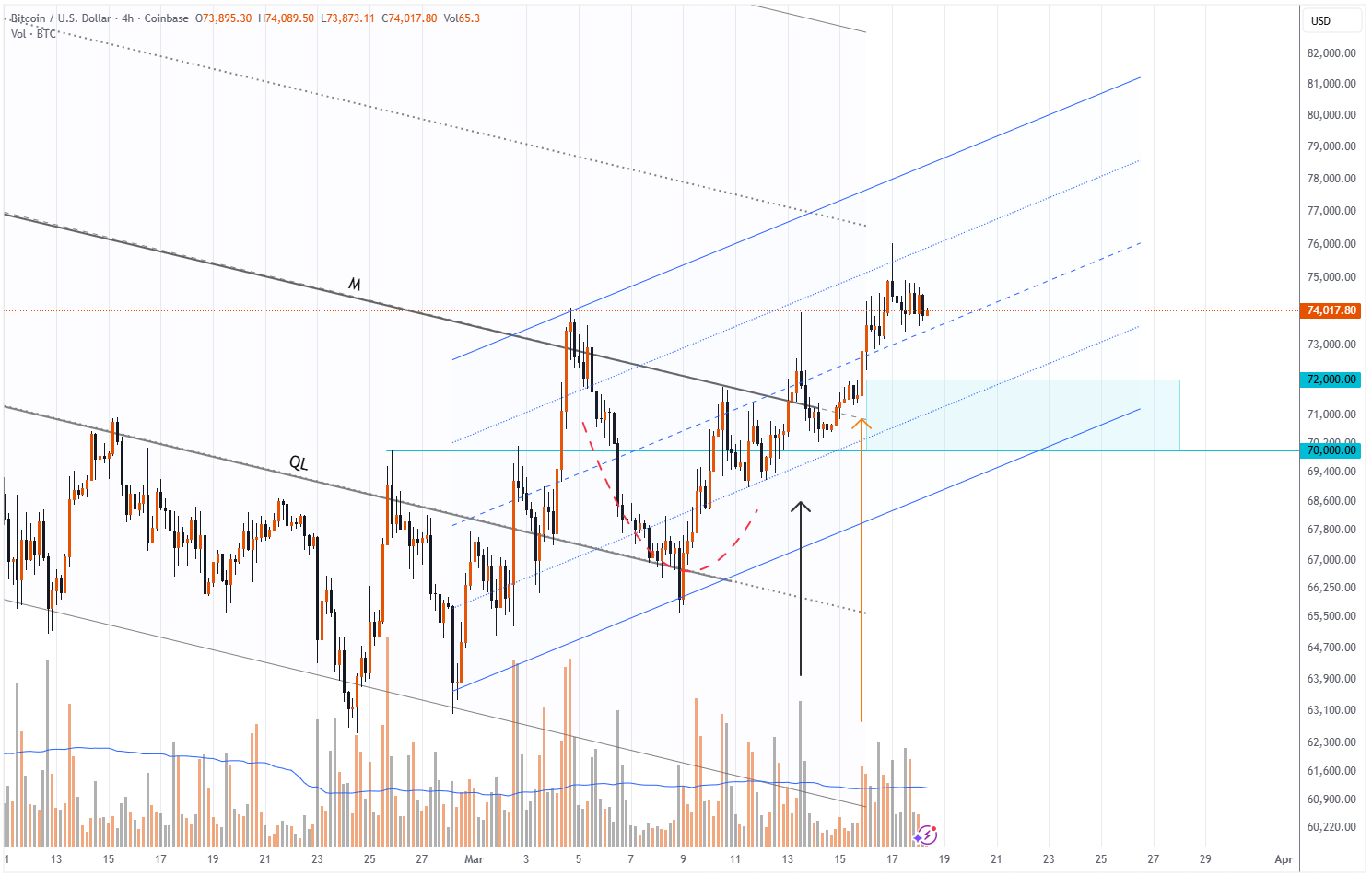
Yesterday, BTC/USD rose above the $75k level, thereby setting a new high for March. The last time Bitcoin traded at such levels was in early February.
Why is Bitcoin Rising?
Bitcoin’s appeal appears to be increasing due to a combination of factors, including:
→ ongoing military conflict in the Middle East;
→ expectations of rising inflation and upcoming Federal Reserve decisions on interest rates.
According to on-chain data, March has seen capital inflows into spot Bitcoin ETFs. At the same time, media reports indicate that major corporate players (notably MicroStrategy) have purchased approximately $1.57 billion worth of Bitcoin, creating strong organic demand.
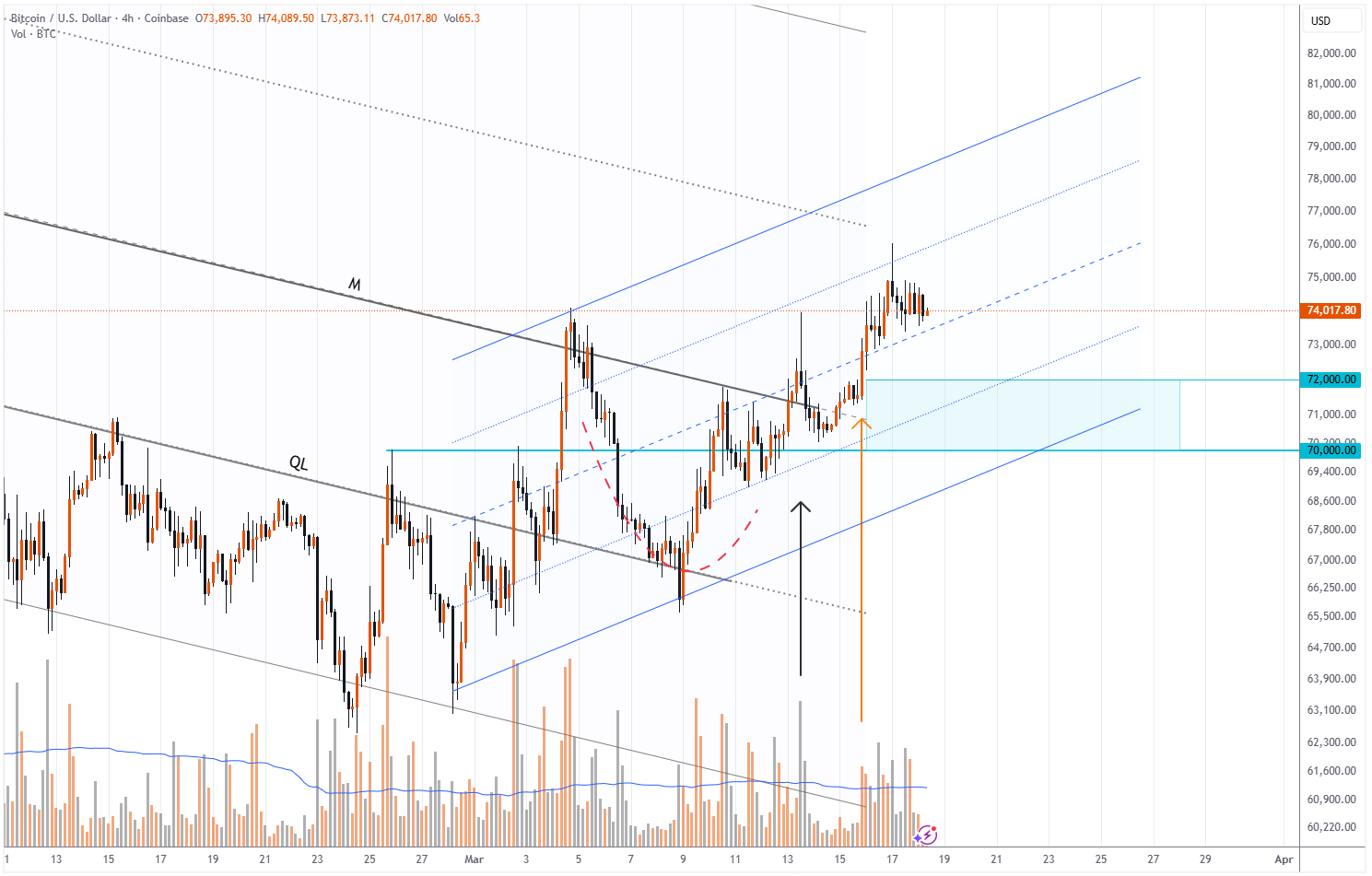
Technical Analysis of BTC/USD
On 5 March, when analysing Bitcoin’s price movements within a broad descending channel, we:
→ noted that the bullish impulse at the beginning of March led to a breakout above the QL resistance line, as well as the psychological $70k level;
→ highlighted that the median line M could act as a barrier to further gains;
→ suggested a potential pullback scenario.
Indeed, since then (as shown by the red trajectory), Bitcoin has undergone a fairly deep correction, reversing lower from the M line. Notably, the QL line subsequently acted as support.
Trading volume analysis (based on Coinbase data) shows that:
→ on 13 March, bearish activity intensified, resulting in a long upper wick on a high-volume candle;
→ on 15–16 March, the price advanced alongside rising volumes, with candles closing near their highs.
This can be interpreted as strengthening demand: buyers are pushing sellers out of the $70–72k zone, which may serve as support in the near term.
Given the above, a continued upside scenario cannot be ruled out, in which Bitcoin maintains an upward trajectory within the blue channel.
FXOpen offers the world’s most popular cryptocurrency CFDs*, including Bitcoin and Ethereum. Floating spreads, 1:2 leverage — at your service (additional fees may apply). Open your trading account now or learn more about crypto CFD trading with FXOpen.
*Important: At FXOpen UK, Cryptocurrency trading via CFDs is only available to our Professional clients. They are not available for trading by Retail clients. To find out more information about how this may affect you, please get in touch with our team.
This article represents the opinion of the Companies operating under the FXOpen brand only. It is not to be construed as an offer, solicitation, or recommendation with respect to products and services provided by the Companies operating under the FXOpen brand, nor is it to be considered financial advice.
Rebecca Gayheart Steps Out With Eric Dane’s Daughters

How to Build a Reusable Finance Workflow in Claude 2.0 (Full Tutorial)

What to know about Iran’s Bushehr nuclear power plant


-
 Crypto World4 days ago
HYPE Token Enters Net Deflation as HyperCore Buybacks Outpace Staking Rewards
-

 Fashion5 days ago
Weekend Open Thread: Addict Lip Glow
-

 Tech3 days ago
Your Legally Registered ‘Motorcycle’ Might Not Count Under Proposed US Law
-
Sports4 days ago
Why Duke and Michigan Are Dead Even Entering Selection Sunday
-

 NewsBeat7 days ago
Residents reaction as Shildon murder probe enters second day
-

 Sports7 days ago
PWHL, Senators discussing plan to keep Charge in Ottawa
-

 Business3 days ago
Search for Savannah Guthrie’s Mother Enters Seventh Week with No Arrests
-

 Business4 days ago
US Airports Launch Donation Drives for Unpaid TSA Workers as Partial Government Shutdown Enters Fifth Week
-
 Tech18 hours ago
Are Split Spacebars the Next Big Gaming Keyboard Trend?
-
Crypto World4 days ago
Coinbase and Bybit in Investment Talks: Could Bybit Finally Enter the US Crypto Market?
-

 NewsBeat7 days ago
I Entered The Manosphere. Nothing Could Prepare Me For What I Found.
-

 Business4 days ago
Country star Brantley Gilbert enters growing non-alcoholic beer market
-

 Business2 days ago
Australian shares drop as Iran war enters third week
-

 Crypto World2 days ago
Crypto Lender BlockFills Enters Chapter 11 with Up to $500M in Liabilities
-

 Sports5 days ago
College Basketball Best Bets: Conference Tournament Semifinal Picks
-
 Crypto World6 days ago
Three Binance Charts May Be Hinting at Bitcoin’s Next Move
-
 Business6 days ago
Trump demands Powell cut rates as Iran conflict raises energy prices
-

 Crypto World6 days ago
Senate Votes to Include CBDC Ban in Bipartisan Housing Bill
-

 Fashion2 days ago
25 Celebrities with Curly Hair That Are Naturally Beautiful
-

 NewsBeat7 days ago
What to know about Erika Kirk after her Air Force board appointment | News US


You must be logged in to post a comment Login