
Crypto World
Ethereum Breakout Incoming? $300M in ETH Leaves Exchanges as Analyst Eyes Next Big Target


Popular analyst Ali Martinez outlined that more than 116,000 ETH were withdrawn from crypto exchanges in just two days. The stash was worth roughly $300 million at current prices.
This has reduced the amount of ETH immediately available for trading, potentially easing sell-side pressure. Although exchange withdrawals alone do not necessarily indicate accumulation, as assets can also be moved for staking, custody, or other purposes, the timing is peculiar, as ETH is making another attempt to break above the $2,500 threshold.
What’s the Next Target?
In a separate analysis also dedicated to ETH’s performance, Martinez noted that the asset has traded between $2,370 and $2,530 since its breakout during the last week of August. Recall that Ethereum, alongside the rest of the market, exploded after August 19, surging from $1,900 to the aforementioned upper boundary.
However, it was unable to break through despite trying on several occasions, and each subsequent rejection drove it south toward $2,400 or slightly below. The analyst believes ETH is now gradually rebuilding momentum for its next move, and the direction should be confirmed by an hourly close outside that range. The current structure, he added, appears to favor buyers.
If the largest altcoin is indeed able to break through $2,530, Martinez noted that the next immediate target would be $2,700. The one after that would be at $2,822, where more than 10 million tokens were last transacted, making it a major supply zone that could trigger “a rejection or, at the very least, slow advance.”
Ethereum is sitting on a major support zone around $2,475, where roughly 2.86 million ETH have previously changed hands.
As long as this level holds, the path toward $2,722 remains relatively clear.
The real test comes between $2,723 and $2,822, where more than 10 million $ETH… https://t.co/kwLrVWl186 pic.twitter.com/ffwai9aOpn
— Ali Charts (@alicharts) September 7, 2026
ETF Still Green
The other piece of good news for ETH investors comes from the ETF net inflows. As reported yesterday, the past week was also quite beneficial for the funds tracking the altcoin, as they gained $218.41 million. In the past two weeks alone, the net inflows have skyrocketed to well over $1 billion.
Moreover, the Ethereum ETFs have been in the red only once weekly since the beginning of July, and even that streak-breaker was quite modest, with net outflows of just $2.26 million.
The post Ethereum Breakout Incoming? $300M in ETH Leaves Exchanges as Analyst Eyes Next Big Target appeared first on CryptoPotato.

Industry leaders debate whether digital dollar wallets will dismantle traditional bank accounts or simply modernize the underlying infrastructure.
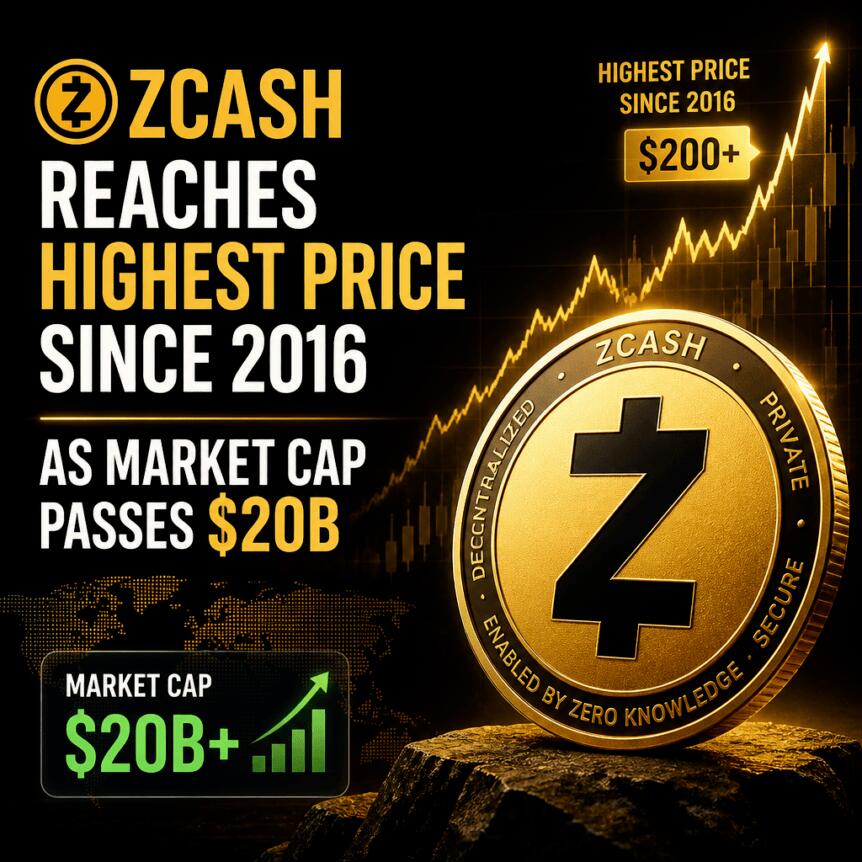
Zcash has surged to its highest level since 2016, pushing the privacy-focused token’s market capitalization past $20 billion as momentum continues into the new week. CoinGecko data shows ZEC briefly touched $1,249.28 before easing to around $1,195 on Monday.
The move has been rapid: ZEC is up roughly 45% over the past week and about 138% across the last 30 days, according to CoinGecko’s price charts. While the latest rally is impressive, it still sits below Zcash’s launch-era peak—CoinGecko lists an all-time high of $3,191.93 on Oct. 28, 2016, when only a small supply of tokens was available.
Key takeaways
- ZEC reached the highest price since 2016, with CoinGecko reporting a peak near $1,249.28 before a pullback to about $1,195.
- The token has gained approximately 45% in a week and 138% in 30 days, helping push Zcash’s market cap above $20 billion.
- Zcash’s privacy model relies on shielded transactions using zero-knowledge proofs to hide sender, recipient, and transfer amount.
- Grayscale’s Zcash ETF—trading on NYSE ARCA under the ticker ZCSH—has supported renewed attention since it began trading Aug. 25.
- Grayscale research argues privacy demand could rise as AI makes it easier to connect public blockchain activity to real-world identities.
A privacy asset resurfaces at multi-year highs
The latest rally has placed Zcash back in the spotlight for investors looking at how privacy features may translate into real market demand. CoinGecko’s figures show the token extending gains that have steadily built over the last month, rather than spiking and fading quickly.
Zcash’s “shielded” option is central to that narrative. Unlike fully public transfers on most traditional blockchains, Zcash allows users to choose between public and shielded transactions. Shielded payments use zero-knowledge proofs to verify that a transfer is valid without exposing key details such as the sender, recipient, or the amount.
That capability matters because it directly addresses a persistent concern in crypto adoption: transparency can be valuable, but it can also create traceability risks for individuals and businesses. If more market participants believe those risks are increasing, privacy-preserving assets may attract renewed capital.
Grayscale links the privacy thesis to AI-era tracing
In an Aug. 31 analysis, Grayscale’s head of research, Zach Pandl, highlighted Zcash’s privacy features as potentially becoming a “must have” for users who prioritize confidentiality. The argument is not limited to general privacy preferences; Pandl specifically pointed to the role AI could play in raising the difficulty threshold for anonymity.
Pandl said AI could increase demand for financial privacy by making it easier to link public blockchain transactions to user identities. The core idea is that even if transactions are technically pseudonymous, pattern recognition and entity linkage tools can reduce anonymity over time.
For Zcash, that framing aligns with what shielded transactions are designed to do: keep critical transaction data private while still maintaining verifiability through cryptographic proofs.
ETF-driven momentum after Grayscale’s Zcash Trust conversion
Grayscale’s product transition appears to be part of the catalyst behind the renewed interest. The firm converted its existing Zcash Trust into an exchange-traded fund, with the resulting ETF trading under the ticker ZCSH. The fund started trading on NYSE ARCA on Aug. 25, giving traditional brokerage investors a more straightforward way to gain exposure to ZEC.
According to the ETF’s website, the fund closed Friday at $83.77 per share and reported $463.2 million in assets under management. That combination—new access routes plus accumulating assets—often reinforces momentum, particularly when a token is already in a strong price trend.
At the same time, ZEC’s recent performance also underlines how investor narratives can accelerate quickly once a key access point changes. The ETF’s listing did not alter Zcash’s underlying protocol, but it did expand who can buy the exposure and how easily that exposure can be held within existing portfolio infrastructure.
What to watch next for ZEC and the privacy trade
With ZEC now at its highest level since 2016, the next question is whether the rally can hold as the market digests the ETF-driven demand narrative. Traders and long-term observers may want to monitor how liquidity and ETF inflows evolve after the initial momentum phase, and whether broader sentiment toward on-chain privacy continues to strengthen alongside the privacy-and-AI argument.
XRP is currently trading near one of the most crucial resistances after moving up from $1.10 to $1.41-$1.44 in August and September, respectively. XRP bulls have taken it up to its highest level for 12 months, but on-chain data is now posing some doubts regarding the strength of the rally.
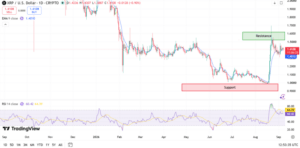
The daily chart provides more insight into what is going on. For over 12 months, XRP bulls have been able to contain XRP within the $1.00-$1.41 range, with $1.4108 representing its most recent yearly high. The current level sees the XRP price back near this ceiling.
Key Takeaways
- XRP price is testing the $1.4131-$1.42 resistance area after rising by about 28% from $1.10 in August.
- If the breakout above $1.4131 is confirmed, XRP will face $1.50 and $1.60; otherwise, rejection could lead to a fall to $1.38 and $1.35.
- XRP market capitalization increased from $87 billion to $91 billion, supporting the rise in price.
- The number of active addresses increased to 45,000 but fell again to 35,000, indicating that network activity has cooled down amid the highs.
- XRP number of transactions decreased from 2.15 million to 1.85-1.90 million amid the price rise, generating a bearish divergence.
- For confirmation of the breakout, active addresses should return to 40,000-45,000, and transactions should be above 2 million.
Xrp Price Tests $1.41 Resistance
We looked at the XRP chart, and the short-term trend looks stronger than the broader market structure. XRP climbed from about $1.10 to $1.4131 over the past three to four weeks. That works out to a move of roughly 28%, and the rally has produced a clear series of higher highs and higher lows on the 4-hour timeframe.
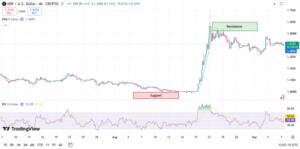
The EMA 9 is also giving buyers some support. It currently stands at $1.4093, with XRP fluctuating near $1.4122. If the price continues above the stated level, short-term momentum will favor buyers. The critical levels are $1.4131-$1.42.
XRP hit a peak of $1.4131 but couldn’t keep it, falling to $1.3988. That shows sellers are still active around this zone. A 4-hour break above $1.4131 will confirm the breakout above the yearly range for the bulls. The next target is $1.50, followed by $1.60. However, in case of failure, the first level to watch is $1.4093. A breakdown of the EMA 9 could see the price fall to $1.35, with support around $1.30-$1.35.
On-Chain Data Raises Some Questions
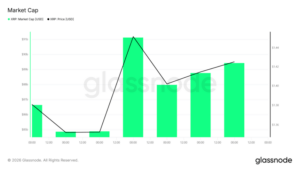
The market-cap figures also indicate the recent surge in XRP. XRP’s market cap increased from around $87 billion to $91 billion as the price surged from around $1.38 to $1.44, an increase of about 4.6%.
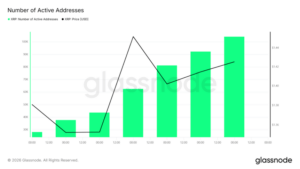
Network activity doesn’t seem particularly convincing. Active addresses rose from around 25,000 to 45,000 as the price reached $1.44, but then dropped to around 35,000.
Transaction activity is even more interesting. Transactions fell from roughly 2.15 million to about 1.85-1.90 million as the XRP price climbed from around $1.36 to $1.44.
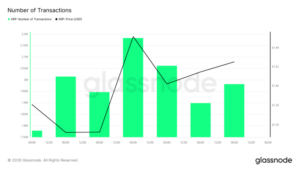
In simple terms, XRP is trading at higher prices, but fewer transactions are taking place on the network. That makes the current rally look more dependent on investors holding XRP than increased network usage. For the move to look healthier, active addresses would need to return toward 40,000-45,000, and transactions would need to push back above 2 million.
What Comes Next for Xrp
The XRP price now has a clear line to watch: $1.4131. A strong 4-hour close above that level could open the door to $1.50 and potentially $1.60. The market-cap data also gives $91 billion an important role, with a move above that level pointing toward the $95 billion area.
If XRP gets rejected again, $1.38 becomes the first major level to watch, followed by $1.35. The technical setup is bullish in the short term, but the on-chain numbers need to improve. XRP can break above $1.41 without them, but stronger transaction activity and more active addresses would give the breakout better confirmation.
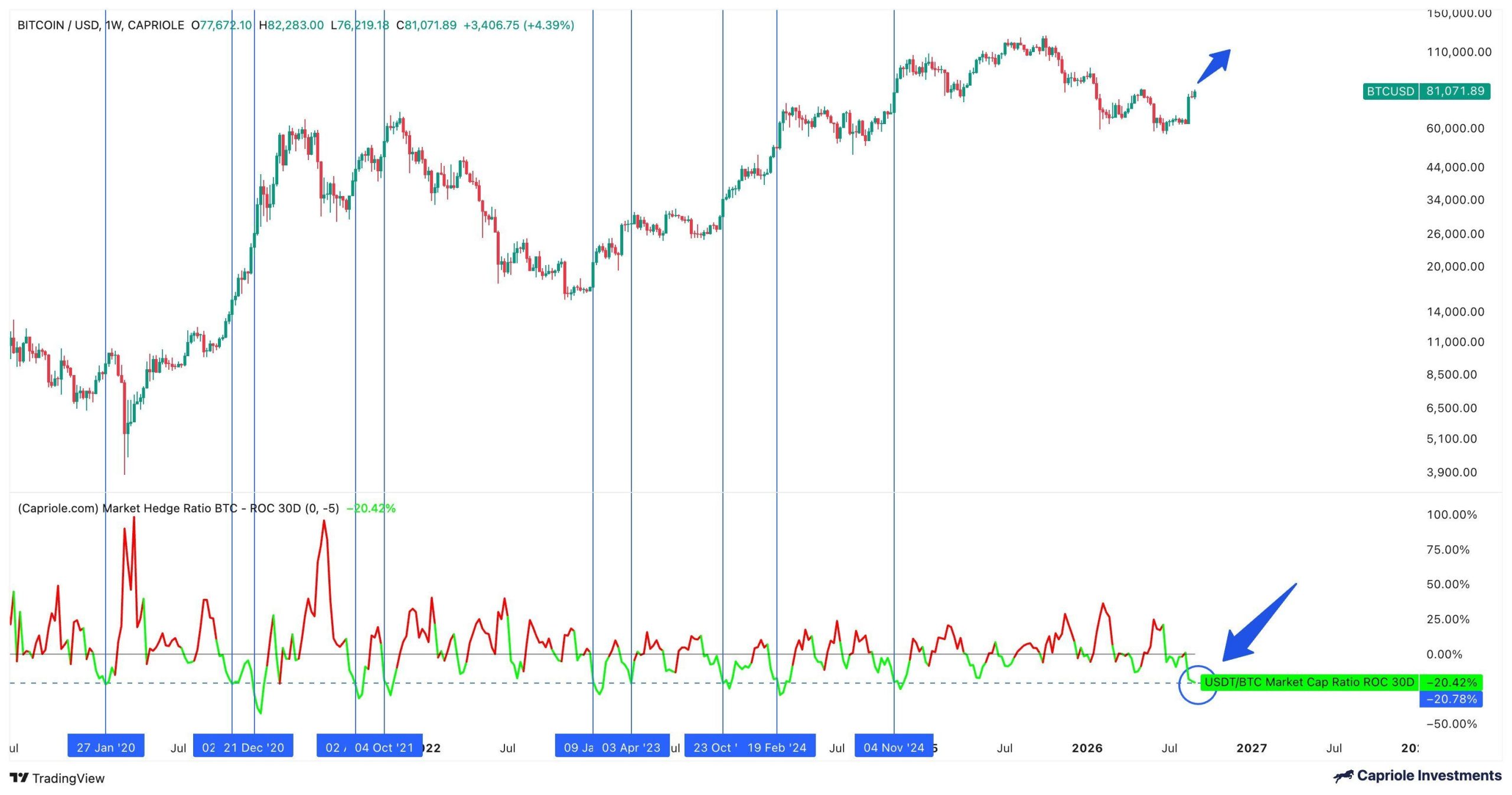
Two independent analysts have concluded that the Bitcoin (BTC) bottom is in, and neither used the other’s data. Charles Edwards tracks stablecoin liquidity, while the analyst known as Root tracks cycle structure.
Both calls arrived within days of each other in early September. Neither analyst predicted a bull run, however. Both argued something narrower, that the conditions defining a bear market have stopped being present.
Capriole’s Hedge Ratio Hit Its Bullish Threshold
Edwards, founder of Capriole Investments, published his signal on Sept. 4. His Market Hedge Ratio measures the USDT/BTC market cap ratio over a rolling 30 days.
The reading fell to -20.42%, touching the -20.78% threshold marked on his chart. A falling ratio indicates capital rotating out of stablecoins and into Bitcoin.

His chart marks roughly nine comparable signals since January 2020. Most preceded rallies, though one signal in October 2021 landed close to a cycle top.
“It’s very hard for bad things to happen to Bitcoin when Capriole’s Market Hedge Ratio is this green. Downside is basically capped in last 5 years until it flips red. Typically this reading means we have week(s) of upside to run.”
Edwards set an explicit invalidation, however. The signal holds only until the ratio flips red, and his stated horizon runs weeks rather than months.
Root’s Breakout Arrived 2 Months Early
Root, who publishes at Bitcoin Strategy, reached the same conclusion from price structure alone. His chart tracks the moment price reclaims the 200-day average, the 21-week average, and the short-term holder cost basis.

Previous breakouts sat 1,375 days and 1,384 days apart, a gap of only nine days across roughly 7.5 years. The current breakout arrived 1,314 days after the 2023 signal, therefore about 65 days ahead of that rhythm.
“The current breakout happened roughly two months ahead of schedule compared to previous cycles. While two months is still substantial, and a reason why we can’t entirely rule out a continuation of the bear market…”
That timing cuts both ways. Root notes the four-year cycle placed this bottom four months early. The breakout, therefore, deviates considerably less than the low did.
BTC Sits Just 0.5% Above the Line That Matters
Bitcoin traded at $79,755 at the time of writing, down 0.23% over 24 hours. Market cap sits near $1.6 trillion. Price holds above all three levels, though barely.
The 21-week average stands at $79,355, leaving a cushion of 0.5%. Beneath it, the short-term holder cost basis sits at $70,853 and the 200-day average at $69,785.

Those two levels sit around $1,000 apart, forming a support shelf near $70,000. Grayscale placed its own bottom estimate in that same zone.
A weekly close beneath that shelf would break both thesis at once. Holding $79,355 keeps them alive.
The two calls agree on direction and share almost nothing else. Edwards measures weeks, whereas Root measures a cycle. Both published the level that would prove them wrong.
The post Is the Bitcoin Bottom In? 2 Analysts Say Yes From Separate Charts appeared first on BeInCrypto.


The Frame Transactions feature was locked into the Hegotá upgrade last month, and Ethereum co-founder Vitalik Buterin says the work has moved quickly since.

McDonald’s India’s X account has deleted posts from an alleged intern who claims they weren’t paid for months, and that memecoin trading left them starving.
The first post, uploaded on Sunday, claimed that the writer, an intern, manages several Asian McDonald’s accounts.
They claimed that their boss, “Amit Joshi,” hasn’t paid them since December 2025, leaving them no choice but to take on two extra jobs in customer support and delivery.
On top of this, the “intern” described themselves as an unsuccessful memecoin trader. They claimed, “I literally starve every day because I lose all my money on them.”

Read more: Bitcoin doesn’t need the McRib to rally
The last post in the thread claimed McDonald’s owed them ₹60,000 ($650) and that they’re hoping to achieve community support.
It appears no memecoin has been linked to the posts, so it’s unlikely that the account was hacked as part of a scam memecoin promotion.
Yesterday, McDonald’s India called the posts “#fakenews,” however, X users weren’t convinced.
Protos reached out to McDonald’s for comment and will update this piece should we hear anything back.
Got a tip? Send us an email securely via Protos Leaks. For more informed news and investigations, follow us on X, Bluesky, and Google News, or subscribe to our YouTube channel.


Malone Lam, the alleged ringleader of a group accused of stealing more than $240 million in Bitcoin from a Washington, D.C., investor, has been set for a plea agreement hearing after 10 other defendants admitted guilt in the sprawling crypto theft case.
Summary
- Malone Lam is set for a plea agreement hearing over the theft of more than 4,100 Bitcoin worth over $240 million from a Washington investor.
- Prosecutors said Lam and his associates used social engineering to obtain account access and security codes before moving the stolen crypto through multiple platforms.
- The group spent millions on luxury cars, private jets, mansions, watches and nightclubs before FBI arrests began in September 2024.
- Eighteen defendants have been charged in the case, with Lam set to become the 11th to plead guilty and potentially facing at least 14 years in prison.
The Associated Press reported that the 22-year-old Singaporean is scheduled to appear in court Tuesday, nearly two years after prosecutors accused him and his associates of using social engineering to steal more than 4,100 Bitcoin from a longtime crypto investor in August 2024.
Eighteen defendants have been charged in the case, with Lam set to become the 11th to plead guilty. A prosecutor estimated during his first court appearance that federal sentencing guidelines could recommend at least 14 years in prison if he is convicted.
Lam was arrested in September 2024 after investigators traced a month-long spending spree involving luxury cars, private jets, expensive watches, mansions and millions of dollars spent at nightclubs.
Malone Lam case began with a $240 million Bitcoin theft
The case centers on an Aug. 18, 2024, attack against a Washington resident identified in court filings as “Victim 7.”
Prosecutors said the group targeted the man because he was a wealthy, longtime cryptocurrency investor. One caller posed as a Google representative and asked about supposed attempts to compromise the victim’s account. Another pretended to work for crypto exchange Gemini and warned that malware had affected his wallet.
The callers persuaded the victim to give them access to his Google Drive and disclose security codes, allowing the group to take control of more than 4,100 BTC.
Crypto.news previously reported in September 2024 that Lam, Veer Chetal and Jeandiel Serrano were linked to the roughly $243 million social engineering attack. Blockchain investigator ZachXBT helped trace the theft and published material tied to the group.
A private recording captured the suspects reacting after gaining control of the Bitcoin, according to the AP. One voice could be heard saying, “Oh, my God! Bro, bro, I’m going to spaz out!”
The stolen cryptocurrency was subsequently moved through multiple exchange platforms as money launderers worked to convert parts of the proceeds into fiat currency, prosecutors said.
Investigators alleged that the August theft was not the group’s first operation. Lam and his associates, who had met through online gaming communities, had worked together on other multimillion-dollar thefts since late 2023 using similar social engineering methods.
Such attacks have remained a major source of cryptocurrency losses. In January 2026, a crypto holder lost more than $282 million in Bitcoin and Litecoin after being deceived in another social engineering scheme involving a hardware wallet. ZachXBT said the stolen assets were moved through instant exchanges and converted into Monero.
Investigators traced the group through an IP address
One operational mistake helped investigators identify the people behind the 2024 theft.
Prosecutors said Serrano created an account on a cryptocurrency exchange to hold nearly $30 million in stolen assets but failed to conceal his internet protocol address. Investigators traced it to a home in Encino, California, that he was renting for $47,500 per month.
By then, members of the group had started spending their proceeds.
Serrano was vacationing in the Maldives when investigators identified him as a suspect, while Lam and his associates spent $4 million at Los Angeles nightclubs within a month, according to authorities.
Lam alone spent more than $569,000 during one night at a Los Angeles club. The FBI said he used stolen cryptocurrency to buy a $2 million watch and more than 30 vehicles, including customized Porsches, Lamborghinis and Ferraris.
Chetal bought his parents a Lamborghini and kept $500,000 in cash inside a duffel bag hidden in their washing machine.
Their spending soon created another security problem. Roughly a week after the Bitcoin theft, several masked men intercepted Chetal’s parents while they were driving in Danbury, Connecticut.
The attackers beat Chetal’s father with a baseball bat, forced the couple into a van and bound their hands, according to the AP. Prosecutors said the group intended to use the parents to pressure Chetal into surrendering his portion of the stolen cryptocurrency.
Witnesses contacted police, and officers arrested the alleged kidnappers before the ransom plan could be completed.
Physical attacks involving cryptocurrency holders and their relatives have become more common. Chainalysis estimated that criminals stole more than $30 million through successful physical crypto attacks worldwide during the first half of 2026.
The blockchain analytics firm documented 46 attacks through late June, of which 12 resulted in payments. Family members or people connected to crypto holders accounted for roughly 25% to 30% of documented cases by early 2026.
FBI arrests followed the group’s spending spree
The FBI searched Chetal’s apartment in Brunswick, New Jersey, on Sept. 9, 2024, finding $37 million in stolen cryptocurrency in his possession. Chetal subsequently agreed to cooperate with investigators.
Nine days later, agents arrested Serrano at Los Angeles International Airport while he was wearing a watch valued at $500,000.
Serrano initially denied involvement but later acknowledged possessing roughly $20 million in cryptocurrency stolen from the Washington victim, prosecutors said. His charges remain pending.
Lam was arrested the same day at one of the Miami properties he had been using. Prosecutors later alleged that an off-duty law enforcement officer warned him that authorities were preparing to make the arrest.
“We always talked about what it would be like if I were to go down, but never thought it would be this crazy,” Lam told associates during a recorded jail call cited in his indictment.
His spending surprised U.S. Magistrate Judge Alicia Valle during his initial appearance in Miami.
“I could only think of Ferris Bueller gone bad,” Valle said, referring to the main character in the 1986 film “Ferris Bueller’s Day Off.”
The arrests did not immediately stop stolen funds from being spent. Prosecutors said another defendant, Ferro, later used proceeds from the scheme to pay Lam’s legal expenses. Ferro pleaded guilty to racketeering conspiracy and declined to address the court when he was sentenced in May.
Social engineering losses remain high
The Lam case is part of a series of large cryptocurrency thefts in which attackers have targeted people instead of exploiting blockchain code.
Another elderly American lost $330.7 million worth of Bitcoin in April 2025 after attackers used a social engineering scheme to take 3,520 BTC, according to ZachXBT. The funds were subsequently moved through more than 300 wallets and at least 20 exchanges.
Federal data have recorded substantial losses from crypto-related fraud. The FBI received 181,565 cryptocurrency-related complaints involving $11.37 billion in losses during 2025, while investment fraud accounted for 61,559 complaints and $7.23 billion in reported losses.
Cybersecurity researcher Allison Nixon, who has tracked an online hacker subculture known as The Com, told the AP that the large sums available through crypto fraud have attracted young offenders and called for more law enforcement resources.
“If we don’t seriously ramp up the resources to take these people down and do it faster, then it’s going to spread more and more,” Nixon said.
U.S. District Judge Colleen Kollar-Kotelly, who is overseeing Lam’s case, has already sentenced three of his alleged co-conspirators. Two defendants involved in laundering the stolen funds received prison terms of roughly six years.
Chetal pleaded guilty to conspiracy charges in November 2024 and is awaiting sentencing, while Tucker Desmond received probation after pleading guilty to destroying evidence connected to other members of the group.
Desmond told the court during his March sentencing that he had become “obsessed with the image of success rather than actually becoming a hard-working individual myself.”
During Ferro’s sentencing in May, defense attorney Kevin Wilson described the defendants as mischievous “young kids,” an argument Kollar-Kotelly rejected.
“Being young only goes so far,” the judge said.


Zcash (ZEC) climbed to its highest price since 2016, extending a rally that has pushed the privacy-focused cryptocurrency’s market capitalization above $20 billion.
ZEC reached $1,249.28 before retreating to about $1,195 on Monday, according to CoinGecko data. The token gained about 45% over the past week and 138% over 30 days.
The rally leaves Zcash below its launch-era record. CoinGecko lists an all-time high of $3,191.93 on Oct. 28, 2016, when only a small supply of tokens was available.
Zcash allows users to choose between public and “shielded” transactions. The latter uses zero-knowledge proofs to verify payments without revealing the sender, recipient or transaction amount.
“For users that prioritize privacy, this could become a ‘must have’ feature,” Grayscale’s head of research, Zach Pandl, said in an Aug. 31 analysis.
Pandl said that AI could increase demand for financial privacy by making it easier to link public blockchain transactions to users’ identities.
Zcash has been on a tear since Grayscale converted its existing Zcash Trust into an exchange-traded fund. The product, trading under the ticker ZCSH, began trading on NYSE ARCA on Aug. 25, giving investors exposure to ZEC through brokerage accounts.
The ETF closed Friday at $83.77 a share, with $463.2 million in assets under management, according to the fund’s website. US markets are closed Monday for the Labor Day holiday.
Related: Grayscale says Zcash can challenge Bitcoin’s network effects as privacy demand grows


The rating agency’s new framework combines Wall Street financial auditing with Web3 code reviews to evaluate both off-chain reserves and on-chain security.

Ethereum price is trading at $2,490, a quiet number that’s about to get more interesting. Harmony, the sharded Layer-1 that launched mainnet in 2019, just announced it’s sunsetting its blockchain and migrating its native ONE token to Ethereum via airdrop.
Harmony’s X announcement cited threats from “state actors and AI agents” as reasons to fully sunset the network, with validators given until September 10 to cease node operations. A $1.37 million pool will compensate validators who transition into “governors” for Harmony’s proposed next act: a “remix economy” built around AI video creators and fan-forked content.
— Crypto Banter (@crypto_banter) September 6, 2026
 HARMONY PLANS TO SHUT DOWN ITS CHAIN AFTER 7 YEARS!@harmonyprotocol proposed killing the 2019 mainnet and moving $ONE to Ethereum after a final-block snapshot and airdrop.
The team cited threats from state actors and AI agents, and said it will pivot into an AI video remix… pic.twitter.com/W9VjKrbxNF
Tokens will be snapshotted across wallets, staking delegations, and exchanges, then airdropped 1:1 on Ethereum. So, no action is required from holders.
It’s another data point in a pattern that’s been building all year: Layer-1 chains folding into Ethereum’s settlement layer rather than competing with it. That migration narrative lands right as Ethereum’s own roadmap pivots back toward base-layer scaling, which changes how this price action should be read.
Earn $50 and Enter $300K Prize Draw on EdgeX
Can Ethereum Price Hit $2,600 This Week?
ETH’s current print of $2,490 sits within a tight consolidation band that’s held for over a week, following a 70% rebound from earlier-year lows. Daily ranges have been shallow, with Binance data showing a session low of $2,477.99 and a high of $2,534.08 — suggesting compressed volatility.
Resistance clusters around $2,513–$2,550, a zone technicians flag as a wedge ceiling; a clean break opens room toward $2,600–$2,800. Support sits at $2,350–$2,400, with deeper moving-average support near $2,212–$2,293.

It needs resistance cracks on volume, with upside targets extending to $2,800, or it would continue to chop between $2,400 and $2,550 while the market waits for the Glamsterdam and Hegota fork timelines.
However, rejection at $2,554 (the 100-week EMA) triggers a slide toward the $2,161 200-day EMA. This is a level some analysts warn could shave 40% off from here. Worth watching either way.
Discover: The Best Token Presales
Maxi Doge Targets Early Mover Upside as Ethereum Tests Key Levels
Holding ETH through this consolidation has been fine, not thrilling. At $2,490, anyone who bought the earlier rebound is sitting on gains, but chasing a breakout above $2,550 on an asset already priced near $300 billion in market cap isn’t exactly asymmetric. That’s the case for looking smaller and earlier.
Enter Maxi Doge ($MAXI), an ERC-20 meme project built around, essentially, gym-bro trading culture. It has the 1000x leverage energy, holder-only trading competitions, and a Maxi Fund treasury for liquidity and partnerships.
The presale has raised $4.8 million at a current price of $0.0002837, with 60% APY staking live for participants. Standout features include leaderboard-based trading competitions and viral meme-first marketing aimed at outflanking legacy dog coins on mindshare.
Research Maxi Doge directly before presale ends.
Trade Crypto on Bybit and Get a Chance to Win Our $1,000 USDT Airdrop
The post Ethereum Price Holds as Another Layer-1 Moves to ETH appeared first on Cryptonews.

I’m Selling My XRP & Crypto… Here’s When.

Five French rescue boats and two helicopters helped 140 migrant mega-dinghy make 70-mile trip to Britain from Normandy – amid fears boats will now start landing across south coast

Schwan’s launches Red Baron Crunchtime pizza





-

 Fashion3 days ago
Weekend Open Thread: Beyond Yoga
-
 Crypto World3 days ago
Bitcoin price stalls near $82K as key resistance holds
-

 Politics3 days ago
Best Gaming Laptops, CPUs, TVs, And Keyboards To Upgrade Your Set Up For GTA VI
-

 Tech3 days ago
The Birds Outside, Drawn For You Automatically
-

 Crypto World3 days ago
IMF Says El Salvador’s Post-Review Bitcoin Purchases Used No Public Funds
-
 Crypto World3 days ago
U.S. added stronger than expected 162,000 jobs in August as labor market bounced back
-

 Sports3 days ago
Alexandre Pato consortium’s Northampton Town investment approved
-

 Sports3 days ago
Commanders’ Chig Okonkwo is a top breakout fantasy football candidate
-

 Sports3 days ago
Golden Eaglets Drawn in Group B for 2026 WAFU B U17 Championship
-
 Crypto World3 days ago
XRP price breaks falling channel as bulls target $1.53
-

 Politics3 days ago
A new European chapter for Gibraltar
-

 Politics3 days ago
How To Avoid Winter Colds: 4 Everyday Habits That Spread Germs, Says Pharmacist
-

 Politics3 days ago
The House | Bin the lectures, bring gossip and be ready to banter: how the new PM should prepare for his Trump encounter
-

 Crypto World3 days ago
From warning to listing: UK’s largest retail investment platform opens access to crypto ETNs
-

 Crypto World3 days ago
FinCEN flags $12.7B tied to Southeast Asia crypto investment scams
-

 Tech3 days ago
A Worthy Android Ereader, With Some Tradeoffs
-

 Crypto World3 days ago
Trezor Data Breach Impacts 67,000 More US Customers
-

 Tech3 days ago
How To Edit Claude’s Memory
-

 Politics3 days ago
33 Cosy Autumn Home Decor Ideas: Blankets, Pumpkin Decorations, And Candles
-

 Tech3 days ago
beyerdynamic AVENTHO Y Debuts at IFA 2026 and Makes Wireless Headphones Less Disposable
You must be logged in to post a comment Login