

Crypto World
Ethereum Price Bounces After 90% Sell Pressure Collapse

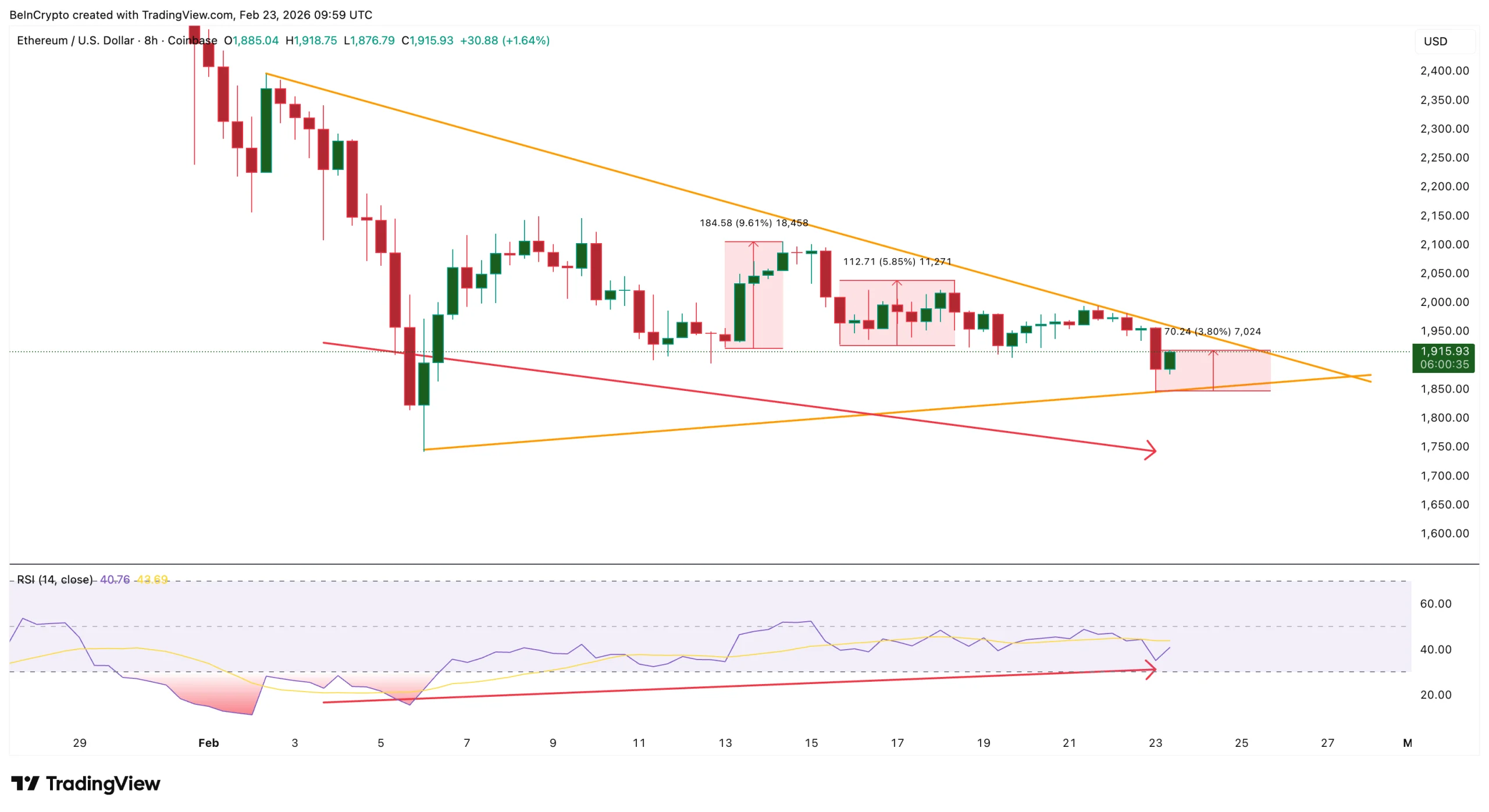
Ethereum is already showing early signs of recovery. Since a recent low near $1,840, Ethereum has climbed nearly 4%, signaling that buyers are beginning to step back in. This rebound is not happening randomly. The bounce setup has been quietly building for weeks.
Several underlying signals now point to a shift. Selling pressure has collapsed sharply. Derivatives traders have turned aggressively bearish without adding new positions. At the same time, long-term holders have started buying again after weeks of selling. Together, these forces suggest the current Ethereum bounce could extend further.
Ethereum Bounce Setup Emerges As Bullish Divergence Builds
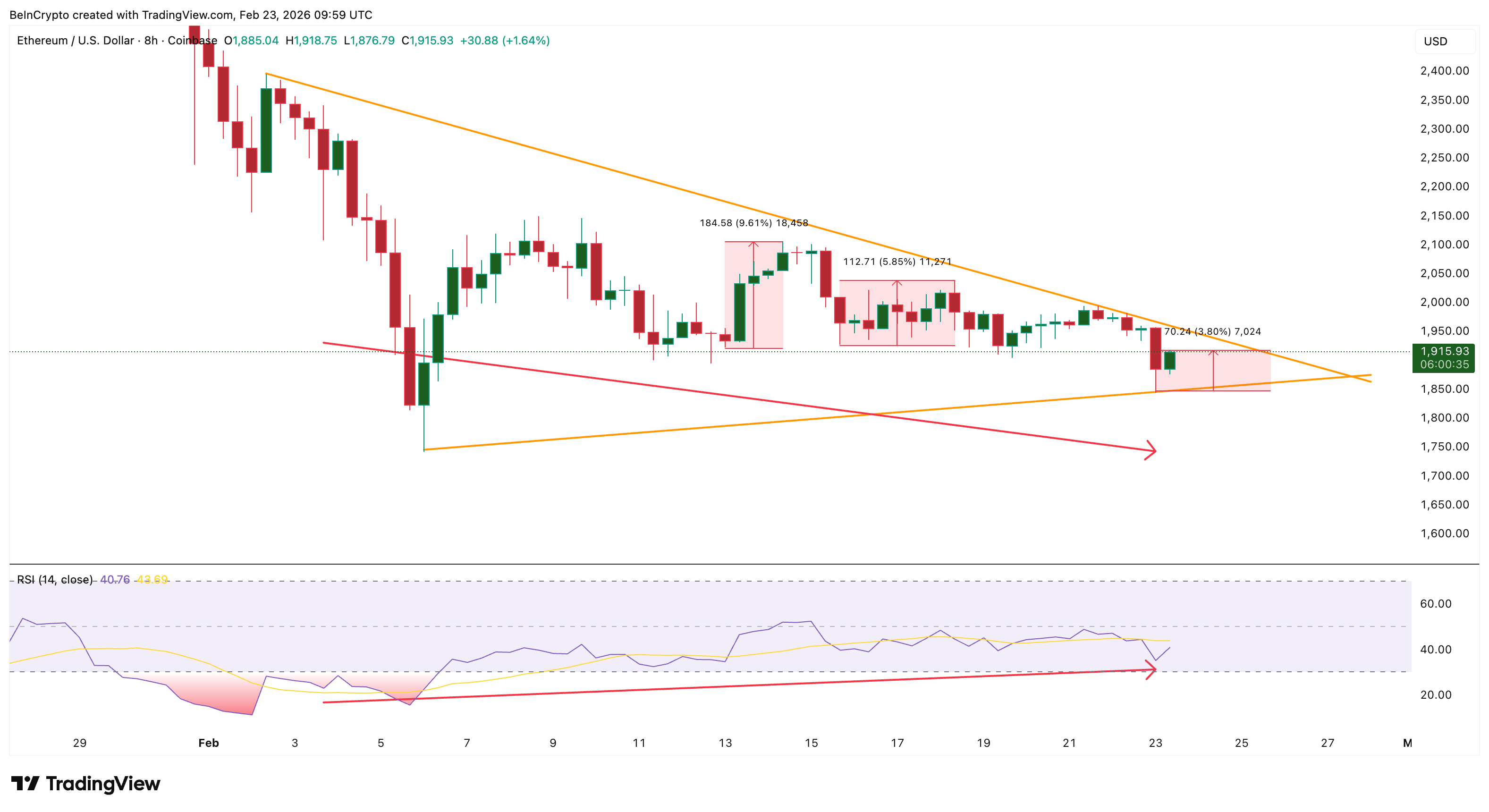
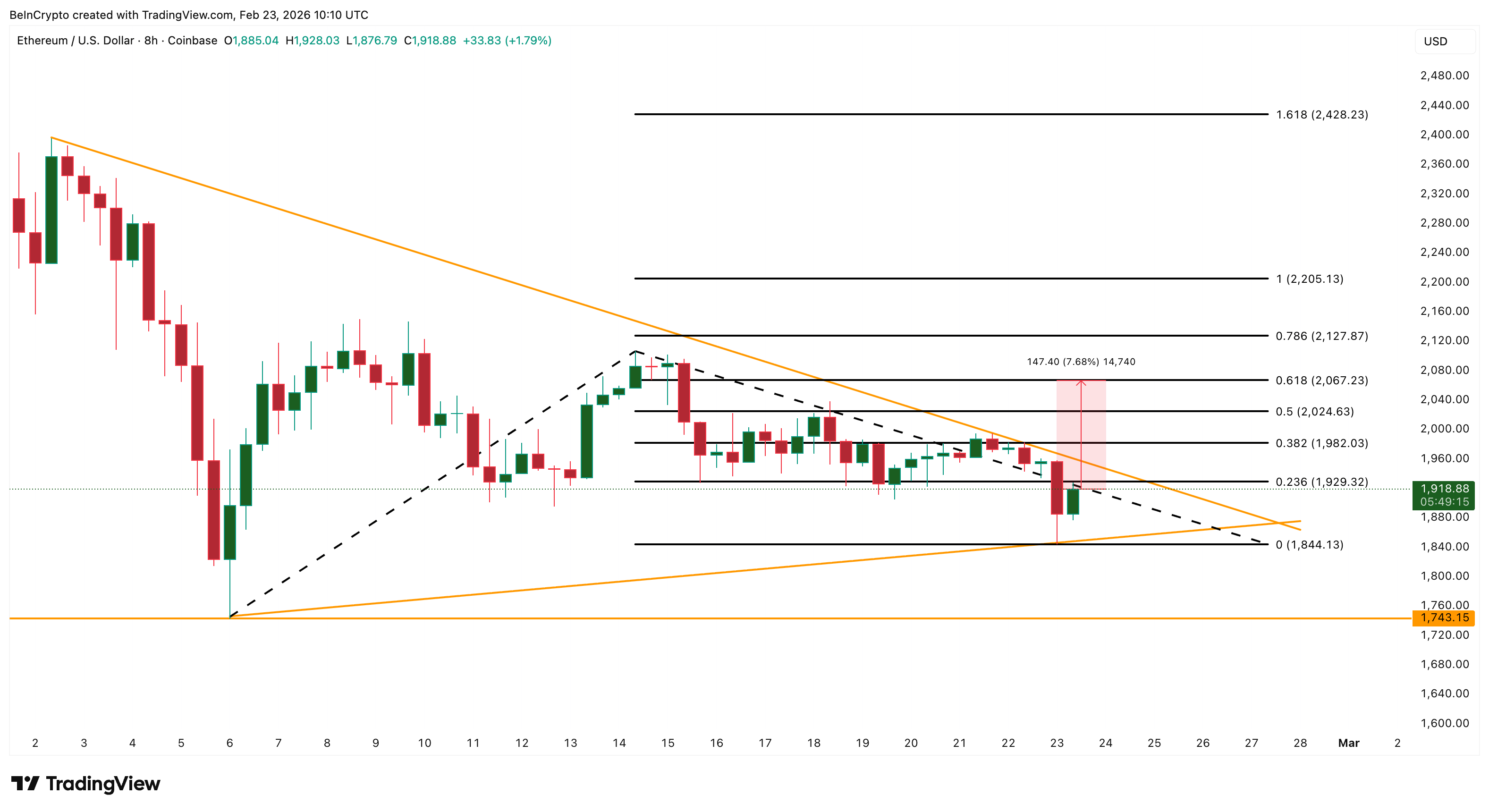
Ethereum’s short-term chart shows a symmetrical triangle. This pattern reflects indecision, where buyers and sellers are fighting for control.
At the same time, a bullish divergence has appeared between price and the Relative Strength Index (RSI). The RSI is a momentum indicator that measures whether selling pressure is strengthening or weakening. Between early February and today (February 23), Ethereum’s price has made lower lows, but the RSI has made higher lows. This pattern often signals that selling pressure is fading.
Want more token insights like this? Sign up for Editor Harsh Notariya’s Daily Crypto Newsletter here.
This same signal worked recently. Between February 3 and February 13, a similar divergence triggered a nearly 10% rebound. Another divergence between February 3 and February 15 led to a 6% move higher.
Ethereum has already started responding again. The recent 4% rebound shows buyers reacting to weakening downside momentum. But technical signals alone are not enough. The bigger question is what changed underneath the surface.
Selling Pressure Collapses 90% Even As Price Fell, Reveals Another Catalyst
The most important shift comes from exchange inflows. Exchange inflow measures the number of coins moving into exchanges. When coins move into exchanges, it usually signals intent to sell.
On February 7, Ethereum exchange inflows peaked near 1.06 million ETH. Since then, inflows have collapsed to just 126,000 ETH. This represents an almost 90% drop in potential selling pressure.
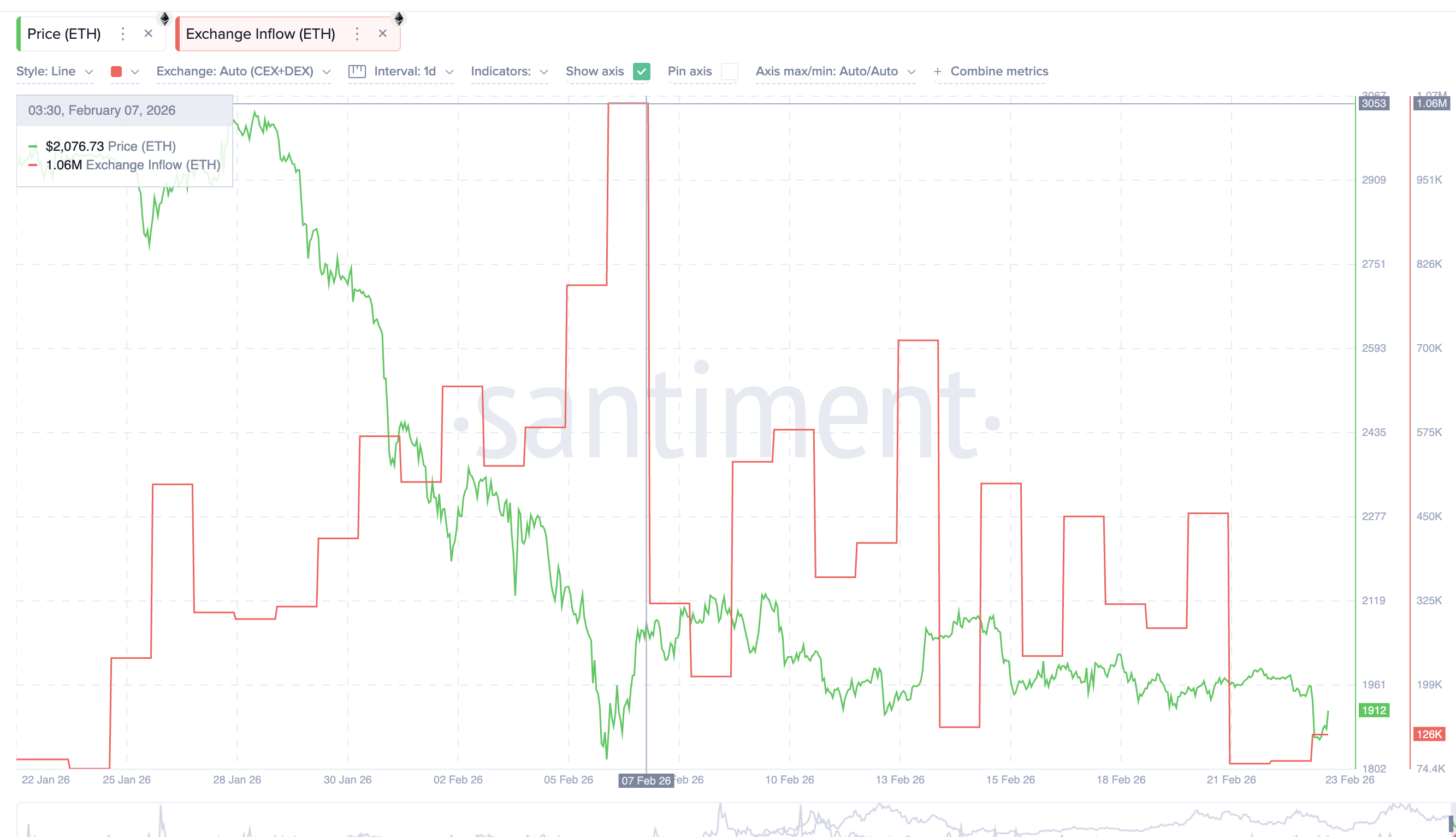
This change becomes even more important when compared to price. During the same period, Ethereum’s price still fell roughly 14%. Normally, price drops when selling pressure rises. But here, the price dropped while the selling pressure disappeared.
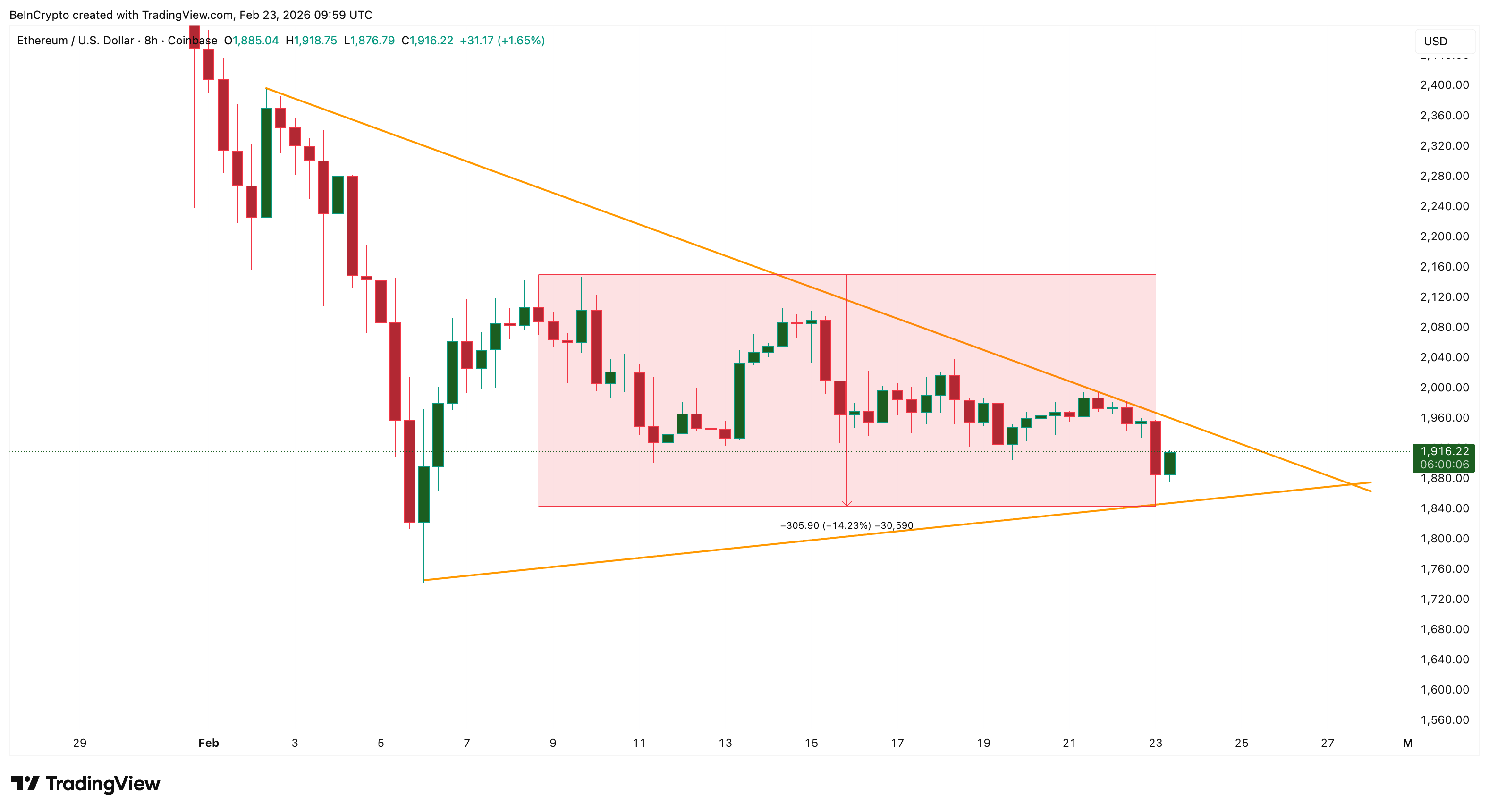
This shows the decline was not driven by aggressive spot selling. Instead, it suggests the weakness came from another source. That source appears to be derivatives traders. Ethereum’s funding rate has turned deeply negative. When funding is negative, short sellers are paying to maintain bearish positions.
Since February 7, funding rates dropped from slightly positive levels to around -0.02%. This marks one of the most bearish sentiment flips in recent weeks.
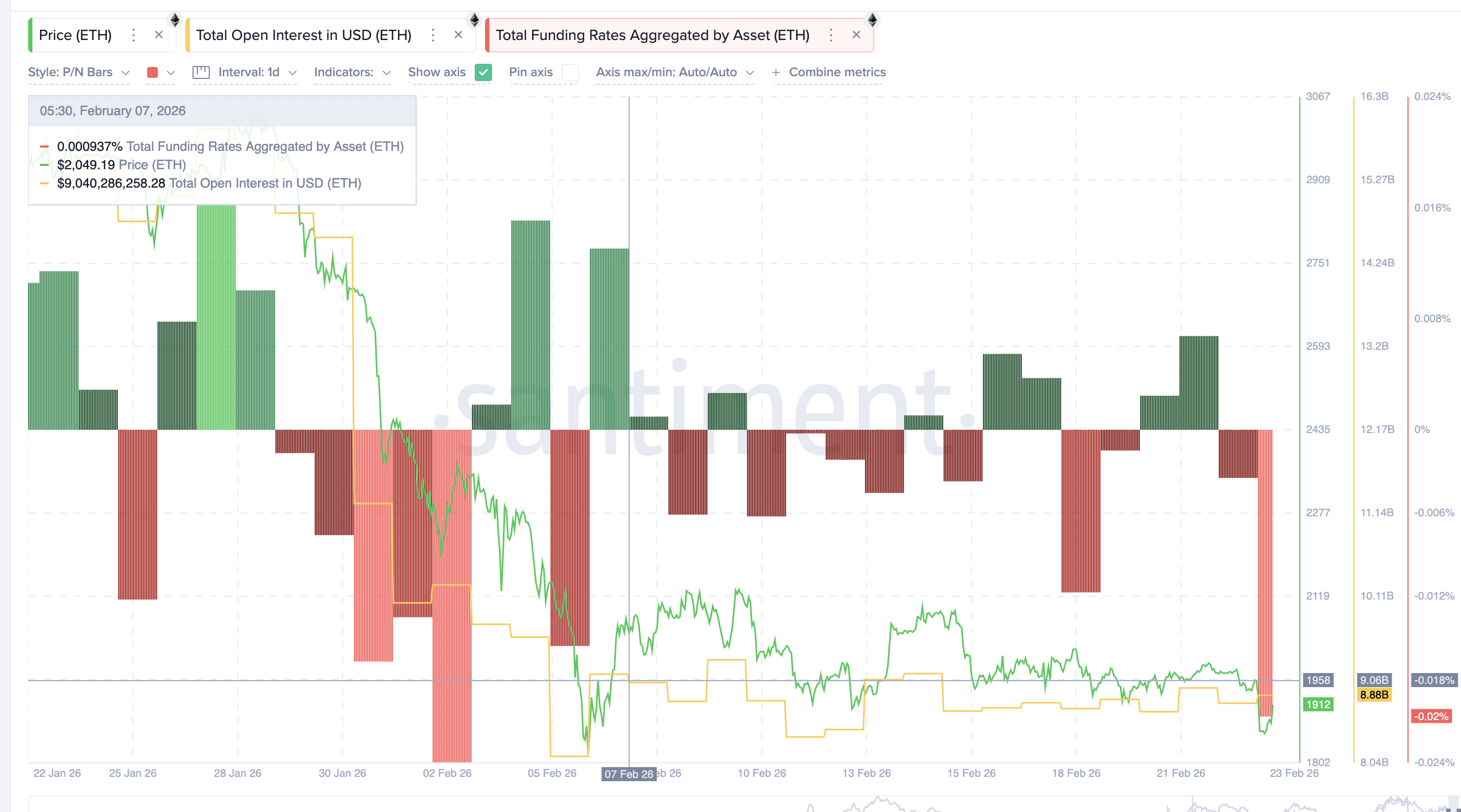
However, open interest tells a different story. Open interest measures the total value of active futures positions. During this period, open interest stayed mostly flat, falling only slightly from around $9.06 billion to $8.88 billion.
This combination is important. It shows that new short positions are not aggressively entering. Instead, existing traders have turned bearish, and long positions have likely exited.
This type of setup can be unstable. When bearish sentiment rises without large new positions, the market becomes vulnerable to a short squeeze. A short squeeze happens when rising prices force short sellers to close positions, pushing the price even higher.
This helps explain why Ethereum’s bounce could extend beyond a simple short-term rebound.
Long-Term Holders Suddenly Turn Buyers After Weeks of Selling
Another important shift comes from long-term holders. The Hodler Net Position Change metric measures whether long-term investors are buying or selling.
Between February 3 and February 20, this metric stayed negative. This showed sustained selling from experienced investors. At its peak, long-term holders sold more than 41,000 ETH on a net basis. But this trend has now reversed. Over the past two days, the metric turned positive, reaching a net accumulation of over 6,000 ETH.
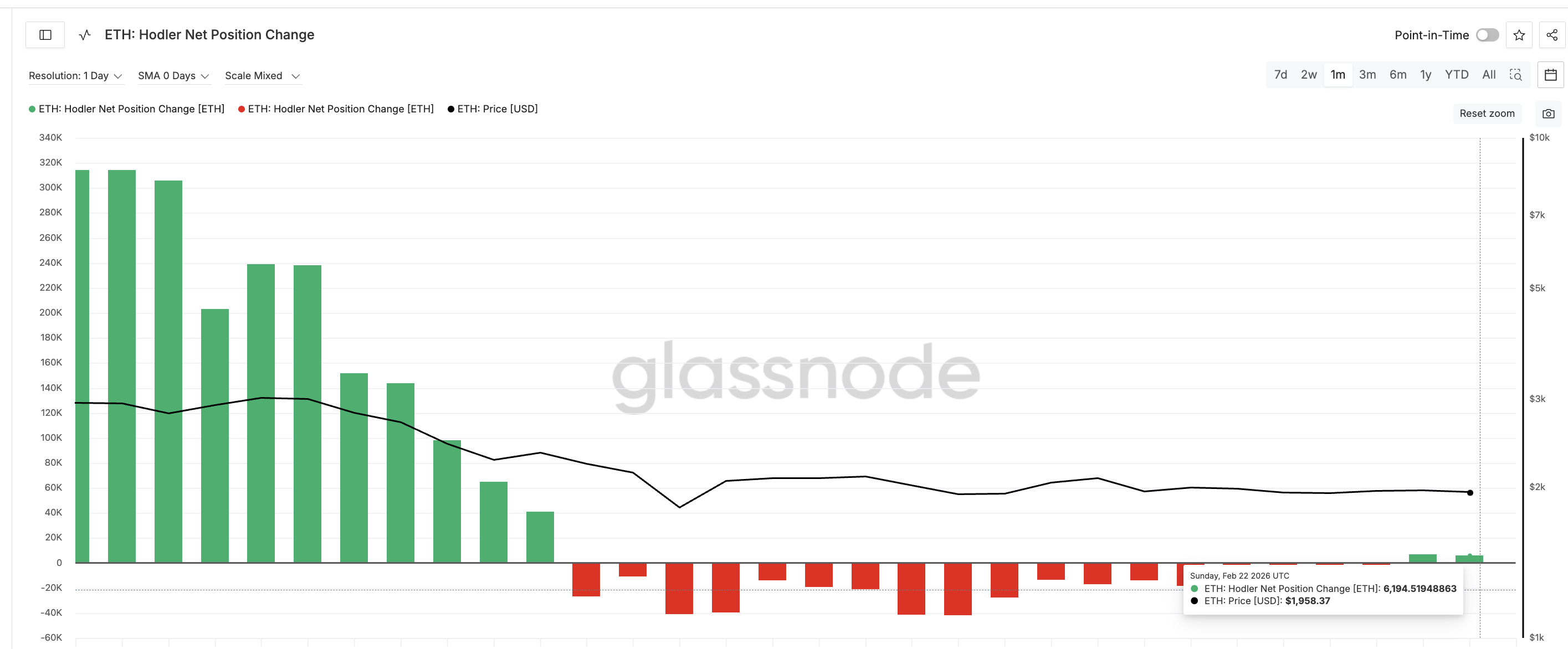
This confirms that experienced investors have resumed buying. This type of accumulation often happens near local bottoms, when long-term investors position early before broader recoveries begin.
With selling pressure falling, bearish derivatives sentiment stretched, and long-term buyers returning, Ethereum’s bounce setup now has stronger structural support.
Ethereum Price Faces Key Breakout Levels That Could Extend Bounce
Ethereum now faces several important resistance levels. The first key level sits at $1,920. Breaking above this level would confirm strengthening momentum. The next resistance appears at $2,020, followed by a major barrier near $2,060, a key technical level, where it can experience the most resistance.
If Ethereum breaks above $2,060, the bounce could accelerate toward $2,200 and potentially even $2,420.
However, the bullish setup depends on holding support. The critical downside level remains $1,840. If Ethereum falls below this level, the bounce structure would fail. In that case, the next downside target sits near $1,740.
For now, Ethereum’s bounce is no longer just a simple relief rally. Selling pressure has collapsed by nearly 90%. Bearish sentiment increased without strong conviction. And long-term holders have quietly returned as buyers.
These combined forces suggest Ethereum’s current rebound may be the early stage of a larger move — with the next breakout level now becoming the decisive trigger.


TLDR
- Crypto funds recorded $288 million in net outflows last week, extending a five-week streak to $4 billion.
- Bitcoin led the losses with $215 million in outflows, while short-Bitcoin products attracted $5.5 million in inflows.
- The United States accounted for $347 million in withdrawals, while Europe and Canada posted combined inflows of $59 million.
- Trading volumes dropped to $17 billion, marking the lowest weekly level since July 2025.
- Ethereum, multi-asset products, and Tron also saw outflows, while XRP, Solana, and Chainlink recorded minor inflows.
Crypto investment products extended their losing run to five consecutive weeks as investors withdrew billions from the sector. CoinShares reported $288 million in net outflows last week, which pushed the total to about $4 billion over five weeks. Trading volumes also fell sharply, which reflected reduced market participation even as prices steadied.
Bitcoin Leads Outflows as Crypto Funds Face Pressure
Bitcoin recorded $215 million in outflows last week, which accounted for most of the weekly losses. This selling trend continued from previous weeks and kept pressure on overall crypto funds.
At the same time, short-Bitcoin products attracted $5.5 million in inflows, which marked the highest inflow among tracked assets. This shift showed that some traders positioned for further downside as Bitcoin remained rangebound.
Data also showed that Bitcoin traders increased leverage during the recent consolidation phase. Bitcoin represented over 40% of the $500 million in liquidations recorded on Monday.
Ethereum followed with $36.5 million in outflows during the same period. Multi-asset products and Tron also posted losses, with $32.5 million and $18.9 million withdrawn, respectively.
Meanwhile, select altcoins posted minor gains despite broader weakness across crypto funds. XRP added $3.5 million, while Solana and Chainlink drew $3.3 million and $1.2 million.
Regional Flows Show Diverging Investor Behavior
The United States led regional outflows with $347 million withdrawn from digital asset products. In contrast, Europe and Canada recorded combined inflows of $59 million during the week.
Switzerland led European inflows with $19.5 million added to crypto investment products. Canada and Germany followed with inflows of $16.8 million and $16.2 million.
This pattern matched recent regional trends reported in earlier market updates. European investors continued to buy during price weakness, while U.S. investors reduced exposure.
Trading volumes across digital asset products dropped to $17 billion last week. This figure marked the lowest weekly level since July 2025.
Tim Sun, senior researcher at HashKey Group, addressed the broader market stance in earlier comments. He said crypto assets remain “firmly anchored at the far end of the risk curve.”
Sun also stated that “increased uncertainty has dampened the willingness of ‘sidelined’ capital to enter the market.” He added that without sustained liquidity support, “any periodic bounces are more likely to be technical recoveries rather than trend reversals.”

Cross-chain bridges are the quiet workhorses of crypto. They move capital from one ecosystem to another, chasing higher APYs, better incentives, and fresh narrative momentum. But while most traders focus on yield percentages, the real game is understanding the risk layer beneath the bridge.
Because in DeFi, yield doesn’t just come from opportunity.
It often comes from risk mispricing.
Let’s break it down.
The Real Reason People Bridge
Nobody bridges for fun. They bridge for:
-
Higher farming incentives on new chains
-
Token emissions boosted by liquidity mining
-
Early-stage protocols with outsized rewards
-
Arbitrage between liquidity pools
-
Governance token airdrop positioning
Capital flows where rewards are highest. When liquidity is thin and incentives are strong, early movers capture disproportionate upside.
That’s the alpha.
But the bridge itself? That’s the blind spot.
The Hidden Risk Layer
Bridging introduces a stacked risk model that most yield farmers underestimate:
1. Smart Contract Risk
Bridges are some of the most complex contracts in crypto. They lock assets on one chain and mint representations on another. Complexity increases attack surface.
History has shown that bridges are prime targets for exploits. Billions have been lost across multiple incidents.
2. Custodial & Validator Risk
Some bridges rely on multisigs or validator sets. If governance is weak or keys are compromised, assets can vanish.
If you don’t know who controls the bridge, you don’t know your real counterparty.
3. Liquidity & Redemption Risk
Bridged assets are often synthetic representations. If liquidity dries up or redemption mechanisms fail, your “stable” asset may not be so stable.
In extreme conditions, bridged tokens can depeg from their native counterparts.
4. Chain-Level Risk
Bridging into a newer chain often means lower security assumptions. Fewer validators, lower economic security, and less battle testing.
High APY sometimes equals high fragility.
Why Yield Exists in the First Place
Here’s the uncomfortable truth:
If a chain is offering 30%+ stablecoin yields, it’s rarely because they love you.
It’s because:
-
They need liquidity.
-
They are bootstrapping an ecosystem.
-
They are compensating you for security uncertainty.
-
They are emitting inflationary rewards.
Yield is a risk payment. The question is whether that risk is priced correctly.
Where the Hidden Alpha Lives
Now here’s where things get interesting.
The best capital allocators don’t avoid bridge risk entirely. They understand it better than the crowd.
Hidden alpha appears when:
1. Incentives Outpace Perceived Risk
If the market overestimates bridge danger relative to actual security posture, rewards can outweigh downside probability.
This happens especially after a bridge improves audits, decentralizes validators, or hardens architecture—but sentiment hasn’t caught up.
2. Liquidity Migration Cycles
Early capital into emerging chains captures boosted emissions before APY compresses.
Bridging early (but intelligently) often yields exponential returns relative to late entrants.
3. Arbitrage Between Trust Assumptions
Not all bridges are equal. Some are fully trust-minimized. Others are closer to custodial wrappers.
Understanding architectural differences creates opportunity when markets price them similarly.
Knowledge asymmetry = alpha.
Practical Risk Framework Before You Bridge
Before chasing that juicy APY, ask:
-
Who secures this bridge?
-
Has it been audited? By whom?
-
How decentralized is the validator set?
-
What’s the total value locked relative to the security model?
-
What happens if redemption fails?
-
Can I exit quickly under stress?
If you can’t answer those, you’re not yield farming.
You’re gambling.
Strategic Approach to Bridging for Yield
Instead of going all-in:
-
Size positions based on bridge trust assumptions.
-
Diversify across multiple bridging solutions.
-
Avoid compounding unrealized bridge risk.
-
Monitor liquidity depth for exit pathways.
-
Treat bridged assets as risk-tiered, not equivalent to native assets.
Professional capital allocators don’t chase APY blindly.
They price systemic exposure.
Final Thought
Bridging is neither inherently reckless nor inherently brilliant.
It’s a tool.
For the uninformed, it amplifies the downside.
For the informed, it amplifies opportunity.
Yield is rarely “free.”
But when you understand the structural risk beneath the bridge, you stop being the liquidity… and start extracting it.
That’s where the hidden alpha lives.
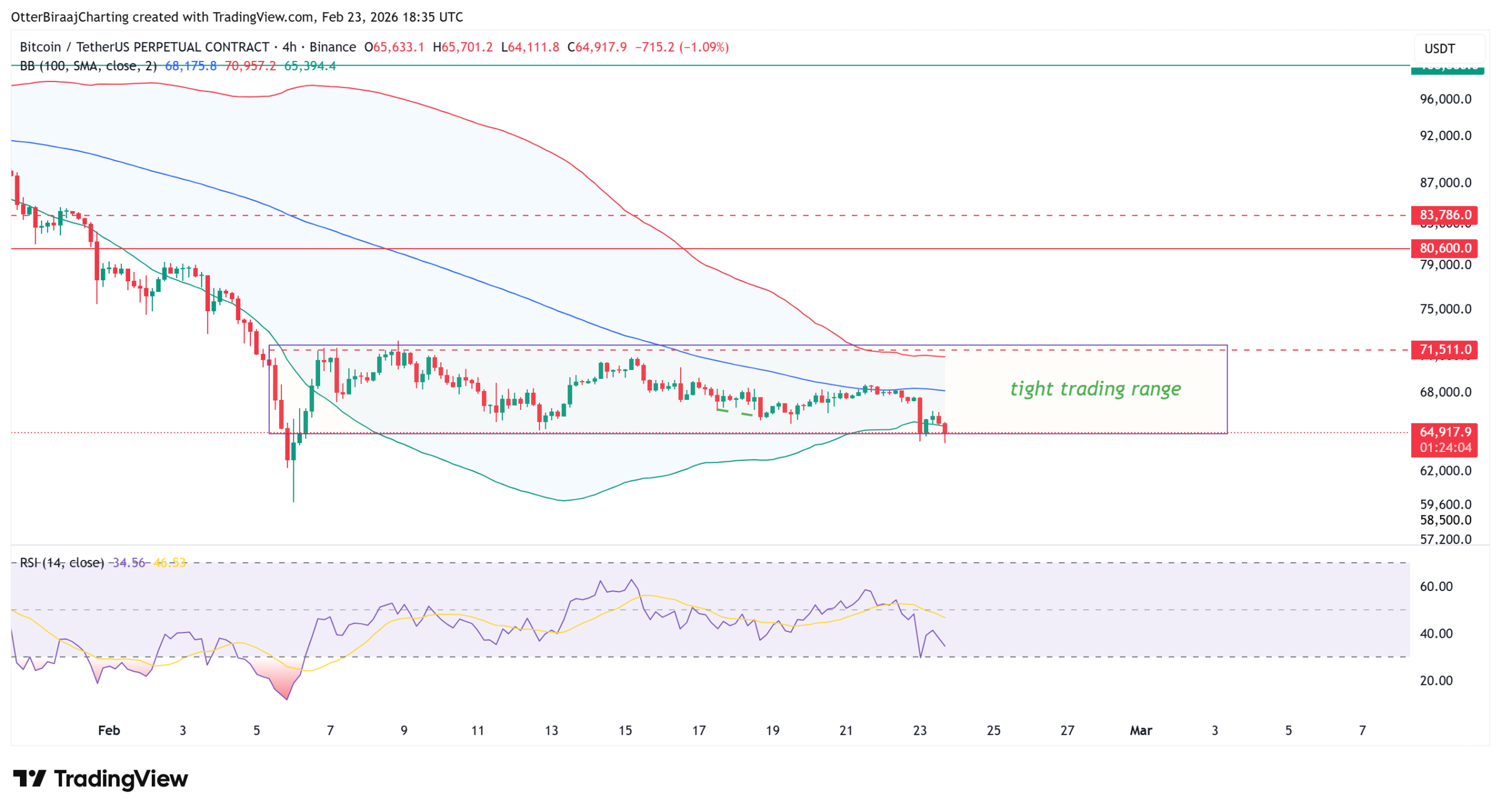
Bitcoin (BTC) slid to a weekly low of $64,111 during the New York trading session on Monday, taking out the range lows that were initially set on Sunday evening. Despite the weakness, the price action continues to rotate closely within the three-week range between $65,000 and $71,000.
Derivatives data outlines a clear lack of bearish follow-through for a deeper correction, while the liquidity positioning may frame the next move on the opposite side of the current trading range.
Bitcoin traders may target the upside liquidity next
The recent price drop swept liquidity around $64,000 and liquidated roughly $240 million in long positions. Despite the sell-off, Bitcoin has remained within the established range that has been in place since Feb. 6. A sideways trend often builds pressure for an expansion, especially as the volatility compresses.

The Bollinger Bands have tightened, signaling reduced volatility and the potential for an expansive move.
The liquidity data shows a clear asymmetry. Roughly $1 billion in long positions face liquidation if the price tags $63,000. In contrast, more than $3.5 billion in short positions are vulnerable near a $70,000 retest. This creates a visible liquidity magnet on both ends of the range, though the concentration is notably denser on the upside.

Bitcoin open interest, which tracks the total value of outstanding futures contracts, has flattened near the local lows. Traders are not aggressively adding new exposure after the drop, possibly sidelined at the moment.
The funding rates have turned negative on the four-hour chart, meaning that the short sellers are paying the longs. This shift indicates that the positioning has tilted defensively while the price continues to hold the range support, opening the possibility of a short squeeze if the upside liquidity is targeted.

Trader Lennaert Snyder noted that Bitcoin “finally grabbed the $64,500 liquidity,” adding that reclaiming the $67,751 high may open the door toward $76,971, with partial profit targets along the way. A rejection near that level invites short-term downside toward the range lows.
Related: Bitcoin treasuries log rare selling streak as BTC trades near $66K
BTC may tag $63,000 before recovery
The one-hour chart highlights the order block around $63,000, a zone where the large buyers previously stepped in. The order blocks mark areas of concentrated activity and can act as an inflection point on retests.

A brief sweep into the $63,000 region clears the remaining long liquidity and tests that demand zone. If the buyers defend it, the price may rotate back toward the mid-range and potentially the $70,000 resistance cluster.
Meanwhile, TexasWest Capital founder Christopher Inks pointed to the developing bullish relative strength index (RSI) divergence on the daily chart, alongside the rising volume and a wick below the range support.
A positive daily close above the reclaimed level may strengthen the case for another attempt at the range highs.

Related: Bitcoin traders diverge over BTC price strength with $60K in sight
This article does not contain investment advice or recommendations. Every investment and trading move involves risk, and readers should conduct their own research when making a decision. While we strive to provide accurate and timely information, Cointelegraph does not guarantee the accuracy, completeness, or reliability of any information in this article. This article may contain forward-looking statements that are subject to risks and uncertainties. Cointelegraph will not be liable for any loss or damage arising from your reliance on this information.

Spot Bitcoin ETFs are on track for a fourth consecutive month of net outflows as BTC approaches another negative monthly close in February, underscoring a demand lull for regulated, spot-linked exposure. Data through mid-February show ETF holdings ebbing from a peak in late 2025, with total assets sitting around $84.3 billion on the day, down from an October 2025 high near $170 billion. The trajectory also reveals a slowdown in cumulative inflows, which have slipped to roughly $54 billion from a $63 billion all-time high. Since July 2025, net inflows have totaled only about $5 billion, highlighting a marked shift in capital allocation to crypto-focused funds. Meanwhile, Bitcoin’s price has slid more sharply than its ETF balances, suggesting the market is absorbing selling pressure without a commensurate bounce in ETF demand.
Key takeaways
- US spot Bitcoin ETFs have declined from about $170 billion in October 2025 to roughly $84.3 billion, signaling waning investor appetite for regulated BTC exposure.
- Cumulative net inflows have plunged to around $54 billion from a $63 billion peak, with only about $5 billion of inflows since July 2025, indicating a sustained slowdown in new capital input.
- Over seven sessions from Feb. 12 to Feb. 19, ETF outflows totaled 11,042 BTC, with Feb. 12 recording a single-day drop of 6,120 BTC (about $416 million at the time).
- Balance reductions among leading participants are sizable: BlackRock’s IBIT holdings fell to 759,000 BTC from 806,000 BTC, a roughly 6% decline, while Fidelity’s FBTC dropped to 186,000 BTC from 213,000 BTC, or about 12.6%.
- Gold ETFs have displaced some attention as risk-on markets ebb and flow, with flows rotating between BTC and gold over the past two years while macro yields remain a focal point for risk appetite.
Tickers mentioned: $BTC, $IBIT, $FBTC
Sentiment: Bearish
Price impact: Negative. Bitcoin’s price has dropped more sharply than ETF holdings, suggesting selling pressure is not yet being countered by renewed ETF demand.
Market context: The ETF flows unfold against a backdrop of a cooling macro environment. The Federal Reserve ended quantitative tightening in December 2025, halting the balance-sheet runoff, yet policy remains restrictive relative to growth expectations. The 2-year Treasury yield persists above 2-year rate expectations, while the 10-year yield trades around 4.1% with the 10-year real yield near 1.7%–1.8%, maintaining tight financial conditions that constrain non-yielding assets like Bitcoin. In this environment, real yields provide an inflation-adjusted return elsewhere, raising the opportunity cost of holding BTC for some investors.
Why it matters
The persistence of outflows in spot Bitcoin ETFs matters because these products are often viewed as liquidity proxies for the broader crypto market. A sustained decline in ETF AUM can indicate a mismatch between price signals and the willingness of institutions to deploy capital through regulated vehicles. The current pattern—outflows outpacing price declines—suggests that, at least for now, soft demand from ETF products is not rekindling upside momentum for Bitcoin. In practice, this means the spot ETF framework may continue to act as a source of supply in the near term, potentially suppressing price recoveries even when spot demand revives in other market segments.
Macro forces are clearly in play. The retreat in ETF inflows coincides with a regime in which real yields remain elevated and monetary policy stays comparatively tight. As Benjamin Cowen notes, the first quarter of 2026 could be characterized as a “late-cycle restrictive digestion” phase for both equities and crypto, where investors demand higher clarity on inflation, growth, and policy trajectories before reaccelerating risk assets. The interplay between rate expectations and risk sentiment is particularly relevant for BTC, which historically has shown sensitivity to changes in real yields and liquidity conditions. The absence of a clear easing signal for yields or balance-sheet expansion has contributed to a cautious stance among ETF buyers and larger holders alike. Cowen’s macro assessment, drawing on research and market cycles, emphasizes that durable ETF inflows historically arrive when real yields decline or policy relaxation appears imminent, conditions that have not yet materialized.
From a broader asset-allocation perspective, the Bitcoin-versus-gold dynamic remains a recurring theme. Over the past two years, the flows into Bitcoin and gold ETFs have alternated as investors sought a balance between liquidity, volatility, and duration of drawdowns. Gold’s inflows surged during risk-off periods, while Bitcoin’s exposure lagged, reflecting a preference for assets perceived as less volatile or offering longer-standing track records in uncertain times. This rotation underscores that macro risk appetite, rather than BTC-specific catalysts alone, often drives ETF flows. Investors watching for catalysts in 2026 should consider how shifts in macro policy, inflation expectations, and risk sentiment could tilt the balance back toward crypto ETFs or push further capital toward more traditional hedges like gold.
In the near term, the lack of a sustained shift in ETF inflows may keep BTC price action more dependent on macro headlines and on-chain signals rather than fund-flow-driven recuperation. The market will likely pay close attention to any signs of three consecutive positive ETF sessions, which many observers consider a potential signal of renewed accumulation, as well as any shifts in the policy stance that could reopen the tap on liquidity. The ongoing story is not solely about the price of Bitcoin but about how institutional appetite for regulated exposure evolves as the macro landscape matures through 2026.
What to watch next
- Monitor for three consecutive days of net ETF inflows or a sustained turnaround in holdings, which could signal renewed institutional demand for spot BTC exposure.
- Watch for any policy shifts from the Federal Reserve or commentary from officials that could alter the path of real yields and liquidity conditions.
- Track changes in the BTC price relative to ETF AUM and rolling net flows to gauge whether price action starts to outpace or lag the flows again.
- Observe movements in competitor assets, such as gold ETFs, for signs of continued rotation or a rebalancing that favors one category over the other during risk-on or risk-off phases.
- Assess updates from major ETF issuers and custodians, particularly around new product launches or changes in holdings, for indications of evolving investor demand.
Sources & verification
- Seven-session BTC ETF net outflows and the Feb. 12 single-day drop (6,120 BTC) analysis by Axel Adler Jr on X: https://x.com/AxelAdlerJr/status/2024397434818859427?s=20
- Bitcoin ETF assets and CheckOnChain data showing IBIT and FBTC holdings changes: https://charts.checkonchain.com/btconchain/etfs/etf_balance_0/etf_balance_0_light.html
- FBTC holdings data corroborating the decline from 213,000 BTC to 186,000 BTC: https://charts.checkonchain.com/btconchain/etfs/etf_balance_0/etf_balance_0_light.html
- Bold.report flow comparisons between Bitcoin and Gold inflows: https://bold.report/compare/flows/
- Macro risk memo from Benjamin Cowen outlining the late-cycle digestion framework for 2026: https://www.benjamincowen.com/reports/macro-risk-memo-feb-2026
- Cointelegraph coverage and Bitcoin price context linked for price reference: https://cointelegraph.com/bitcoin-price
Bitcoin ETF outflows persist as macro conditions weigh on BTC demand
Bitcoin ETF dynamics reveal that even with a lower price baseline than late-2025 peaks, the appetite for regulated spot exposure remains constrained. The first substantial wave of outflows began to dominate the narrative as October’s peak enthusiasm receded. Data show that, through the February period, major ETF products continued to be light on new capital, with several days registering net decreases in asset under management. The scale of these outflows—11,042 BTC across a seven-day window—emphasizes a market where traders and institutions are assessing whether BTC can re-enter a more favorable risk-reward equation or whether the current regime will persist longer than anticipated.
BlackRock and Fidelity—two of the largest ETF providers with significant spot BTC offerings—have not been immune to the shift in demand. IBIT’s holdings declined to about 759,000 BTC while FBTC slipped to around 186,000 BTC, illustrating that even heavyweight participants are managing exposure in line with broader market sentiment. The observed pattern—BTC price falling more than ETF balances—suggests that price discovery is being driven more by market liquidity and order flow than by the absorption of new ETF inflows. In other words, the ETF structure may be acting as a pressure valve, releasing BTC onto the market even as buyers remain cautious rather than aggressively expanding exposure.
The phenomenon is taking place alongside a broader cross-asset flow environment. Gold ETFs, which have historically competed with Bitcoin during risk-off phases, have been increasingly in the spotlight as investors sought instruments with different risk profiles and volatility characteristics. The rotation between BTC and gold flows, documented in recent flow-tracking studies, implies a nuanced investor stance: seek yield or capital preservation in more familiar assets during periods of macro uncertainty, then pivot as conditions shift. This dynamic underscores a key theme for 2026—macro-driven capital allocation can overshadow single-asset narratives, even in a space as attention-grabbing as cryptocurrency.
Insurance for risk? For now, the answer appears to be a cautious stance. The macro backdrop—where the Fed halted QT but policy remains tight—means investors must balance inflationary expectations, growth trajectories, and the opportunity costs of holding non-yielding assets. The narrative that “durable ETF inflows are likely to materialize only after real yields retreat or policy easing emerges” remains a guiding hypothesis for market participants. In practice, that means the market is likely to continue to weigh BTC exposure against the relative attractiveness of other assets, with ETF inflows sensitive to shifts in rate expectations and liquidity conditions rather than outright price gains alone.
The coming months will be telling. If BTC begins to see three or more consecutive positive ETF sessions or if macro indicators tilt toward easier policy, ETF demand could reassert itself. Conversely, if the real-yield environment remains supportive of safer assets or if risk sentiment deteriorates, BTC may face continued headwinds regardless of technical indicators or on-chain signals. The evolving interplay between ETF flows, macro policy, and price action will remain central to how investors structure crypto exposure in 2026.
TLDR
- Ripple USD has reached a market capitalization of $1.56 billion with 1.55 billion tokens in circulation.
- RLUSD is now less than $500 million away from achieving the $2 billion market cap milestone.
- Ripple minted $40 million worth of RLUSD on Ethereum earlier this week.
- Daily trading volumes for RLUSD have remained above $43 million, with several sessions exceeding $100 million.
- RLUSD has maintained its $1 peg despite broader weakness in the crypto market.
Ripple’s USD (RLUSD)-backed stablecoin approaches a new supply milestone as market capitalization reaches $1.56 billion. Circulating supply stands at 1.55 billion tokens, according to CoinMarketCap data. The token now sits less than $500 million away from the $2 billion level.
Ripple USD Supply Growth Nears $2 Billion Mark
Ripple USD recorded a $40 million mint on Ethereum earlier this week. The mint increased total supply while daily trading volume stayed above $43 million.
Data shows RLUSD has maintained volumes above $100 million on several recent sessions. At the same time, the token has held its $1 peg during broader crypto market weakness.
Ripple has expanded RLUSD distribution through regulated financial channels. The company continues to position the stablecoin within traditional finance infrastructure.
Deutsche Bank integrated Ripple technology for cross-border payments this week. The integration supports Ripple’s broader push into regulated payment systems.
Société Générale also expanded its MiCA-compliant euro stablecoin onto the XRP Ledger. This move connects European regulated assets with Ripple’s blockchain network.
Ripple has outlined plans for a Japan rollout with SBI Holdings. Market participants track this expansion as part of RLUSD’s international growth.
The company also continues its pursuit of a U.S. National Trust Charter. Regulatory approval would support further institutional adoption of Ripple USD.
Institutional Strategy Supports RLUSD Expansion
Ripple has spent nearly $3 billion on acquisitions tied to financial infrastructure. Executives describe the strategy as focused on compliance and institutional utility.
The company has referred to its approach as “boring is better” in prior statements. This positioning emphasizes oversight and integration over speculative growth.
RLUSD differs from XRP because its growth depends on circulating supply. Each new token enters circulation through minting tied to demand.
Supply growth reflects usage across payment and settlement channels. Ripple links this expansion to partnerships with regulated financial entities.
Recent market conditions have pressured many crypto assets. However, RLUSD has remained stable and preserved its dollar peg.
Trading activity has continued even during periods of broader asset declines. Volume data supports consistent liquidity across major exchanges.
If current minting trends continue, RLUSD could cross $2 billion by early Q2 2026. The projection follows current supply growth patterns and institutional integrations.
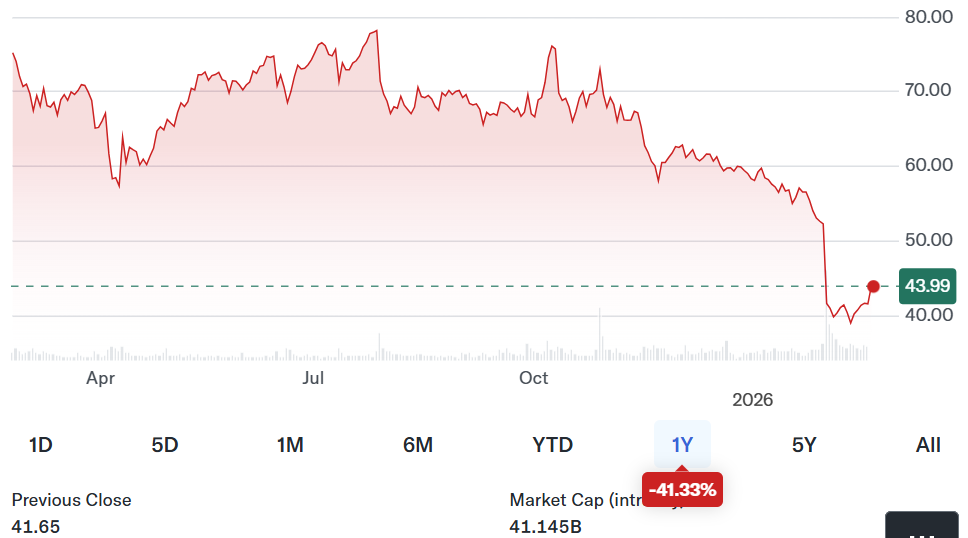
PayPal Holdings has reportedly attracted unsolicited takeover interest after a prolonged stock slump left the payments giant trading well below recent highs, signaling that competitors were looking to consolidate their footprint in the digital payments space.
Citing people familiar with the matter, Bloomberg reported Monday that PayPal has been meeting with banks to review buyout approaches from unnamed investors. One potential bidder — described as an industry rival — is said to be exploring an acquisition of the entire company, while others have expressed interest in specific PayPal assets.
There is no guarantee a deal will materialize, and discussions remain at an early stage, the report said.
Shares jumped following the news, but the rebound only partly offsets a bruising year for investors. PayPal stock had fallen roughly 46% over the past 12 months before Monday’s report, according to market data. Shares were up more than 6% on Monday.

The company has pivoted toward digital assets as part of its turnaround strategy. Then-CEO Alex Chriss positioned stablecoins as a way to address what he described as the “innovator’s dilemma” — the risk that established companies become too reliant on legacy products and miss disruptive technological shifts.
Earlier this month, Chriss was removed from the job following disappointing fourth-quarter 2025 financial results. Enrique Lores, currently HP’s CEO, was tapped to lead PayPal through its next phase.
Related: YouTube enables PYUSD stablecoin payouts for US creators: Report
Despite struggles, PayPal’s crypto push gains traction
Although PayPal’s broader turnaround has been uneven, its expansion into digital assets has produced measurable results.
Its dollar-pegged stablecoin, PayPal USD (PYUSD), has surpassed $4 billion in market capitalization, making it the sixth-largest stablecoin globally. It now trails only USDt (USDT), USDC (USDC), Ethena USDe (USDe), Dai (DAI) and World Liberty Financial USD (USD1), according to market data.

Beyond issuing its own stablecoin, PayPal has expanded its crypto payments infrastructure. The company recently introduced shareable payment links that allow users to send cryptocurrencies and stablecoins through peer-to-peer transfers, broadening access beyond traditional wallet-to-wallet transactions.
Earlier in 2025, PayPal also launched “Pay with Crypto,” a blockchain-based settlement service that lets merchants accept digital asset payments while receiving funds in fiat currency. The offering reflects PayPal’s push to position itself as a bridge between traditional payments and on-chain settlement.
However, neither initiative was mentioned earlier this month in the company’s earnings announcement nor on management’s subsequent call with analysts.
Related: Stablecore’s Jack Henry integration opens stablecoins to 1,600 banks
TLDR
- Binance.US plans to expand its US operations after the SEC dismissed its 2023 lawsuit with prejudice.
- Changpeng Zhao said a clearer regulatory climate could support deeper banking partnerships and a possible financial charter.
- The SEC dropped the case following a policy shift and a mutual agreement between regulators and the exchange.
- Binance. US had suspended dollar deposits and withdrawals for about eighteen months during the legal dispute.
- Binance agreed to pay $4.3 billion in penalties in 2023 over anti-money laundering violations.
Binance.US plans expansion in the United States after regulators dropped their 2023 lawsuit. Changpeng Zhao outlined the path forward in a Bloomberg News interview. He said improved rules could support deeper banking ties and a financial charter.
The SEC dismissed its civil case with prejudice last May. The agency and the exchange reached a mutual agreement after policy changes.
The lawsuit had accused Binance entities of operating an unregistered exchange. Regulators also alleged the sale of unregistered securities in thirteen counts.
Binance.US Moves to Restore Banking Access
Binance.US now seeks restored dollar services after an eighteen-month suspension. Trading volumes fell sharply during the freeze and weakened its market share.
Zhao said a friendlier climate could enable stronger banking partnerships. He added that charter discussions depend on legal and management decisions.
Binance.US restored some services after regulators eased federal oversight restrictions. The platform seeks new banking partners across several major states.
Executives review compliance systems to meet updated federal regulatory standards. They plan to do outreach with regulators and community banks this year.
The company hired staff focused on risk management and controls. It also rebuilt relationships with payment processors nationwide and custodians.
Legal Resolution and Leadership Clarifications
Zhao clarified that his comments applied only to the US platform. He said international operations follow separate strategies and structures.
He remains the largest shareholder but holds no executive role. He stated that he will not return as chief executive.
He served four months in prison after pleading guilty to violations. A presidential pardon followed his release in September 2024.
Speculation arose about potential talks between the Trump family and Binance. Zhao denied any business ties with World Liberty Financial.
He dismissed claims about executive discussions after receiving the pardon. He repeated that leadership changes depend on corporate governance processes.
Regulatory Shift and Financial Penalties
Binance agreed to pay 4.3 billion dollars in penalties in 2023. Authorities tied the settlement to anti-money laundering compliance failures.
The case reshaped the company’s operations within the United States market. It halted fiat channels and limited customer access for months.
Under the Trump administration, regulators dropped several crypto enforcement actions. Paul Atkins now leads the SEC and formed a Crypto Task Force.
The agency says it prefers structured rules over courtroom battles. Officials aim to balance investor protection with market innovation.

Strategy CEO Michael Saylor dismissed concerns about quantum computing during an appearance on Natalie Brunell’s Coin Stories podcast, saying the cybersecurity community broadly agrees that any credible quantum threat is likely more than a decade away.
While it remains unclear if or when a quantum risk might materialize, Saylor told the podcast host that any credible breakthrough would prompt coordinated software upgrades across global banking systems, internet infrastructure, consumer devices, artificial intelligence networks and crypto protocols, including Bitcoin (BTC).
Saylor said the digital systems underpinning modern digital infrastructure would eventually adopt post-quantum-resistant cryptography if necessary, adding that such a shift would not come as a surprise.
“You’ll see it coming. We’ll all see it coming,” he said, adding that Bitcoin’s software is designed to change over time, with nodes, hardware, and wallets capable of upgrading in response to emerging threats.

In his view, global consensus on how to respond would emerge only if a credible threat develops, noting that governments, technology companies and financial institutions would all face the same risk to their digital systems.
He also described the crypto sector as the “most sophisticated cybersecurity community,” pointing to the multi-factor authentication and hardware key protections commonly used to secure digital assets.
In his view, the procedures required to move Bitcoin are significantly more rigorous than the security standards used for traditional bank wires or stock trading systems. Saylor said:
“I think the crypto community will be the first to perceive the threat, and to react to the threat, and they’ll be leading the way.”
Quantum computing is an emerging field of computation that uses quantum mechanics to process information far faster than classical computers, prompting concerns that advanced machines could eventually break the cryptography securing Bitcoin and other digital assets.
Saylor’s Strategy is the largest Bitcoin treasury company in the world. On Monday, the Tysons Corner, Virginia-based company announced it had purchased 592 Bitcoin for roughly $39.8 million last week, its 100th acquisition since adopting a Bitcoin treasury strategy in August 2020.
It currently holds 717,722 BTC, acquired for about $54.56 billion at an average price of $67,286 per coin.

Related: Willy Woo warns quantum risk is eroding Bitcoin’s edge over gold
The ongoing quantum debate in crypto
While Michael Saylor, one of Bitcoin’s most prominent advocates, has downplayed the risks posed by quantum computing, others in the crypto industry appear more worried about the threat.
One of them is Ethereum (ETH) co-founder Vitalik Buterin, who in late 2025 cited Metaculus, a forecasting platform, that suggested around a 20% chance that quantum computers capable of breaking current cryptography could emerge before 2030, with a median estimate around 2040.
Speaking months later at Devconnect in Buenos Aires, he warned that elliptic curve cryptography, which underpins Ethereum and Bitcoin, could fail before the 2028 US presidential election and urged a transition to quantum-resistant systems within the next four years.
The Ethereum Foundation has incorporated post-quantum preparedness into its 2026 security roadmap, with researcher Justin Drake announcing on Jan. 24 that a dedicated Post-Quantum team had been formed, describing the move as a turning point in the foundation’s long-term quantum strategy.
The quantum threat has even caused some to speculate its the reason behind the Bitcoin’s recent price decline, which has fallen from highs of over $126,000 in October to its current price of around $64,000.
In January, Castle Island Ventures partner Nic Carter said Bitcoin’s “mysterious” underperformance could be attributed to quantum risk concerns, saying that markets were reacting even if developers were not.
That view drew pushback, with Glassnode analyst James Check writing that quantum computing plans should be put in place, but the threat is not the “primary reason” behind the decline in price.

Magazine: Bitcoin may take 7 years to upgrade to post-quantum: BIP-360 co-author
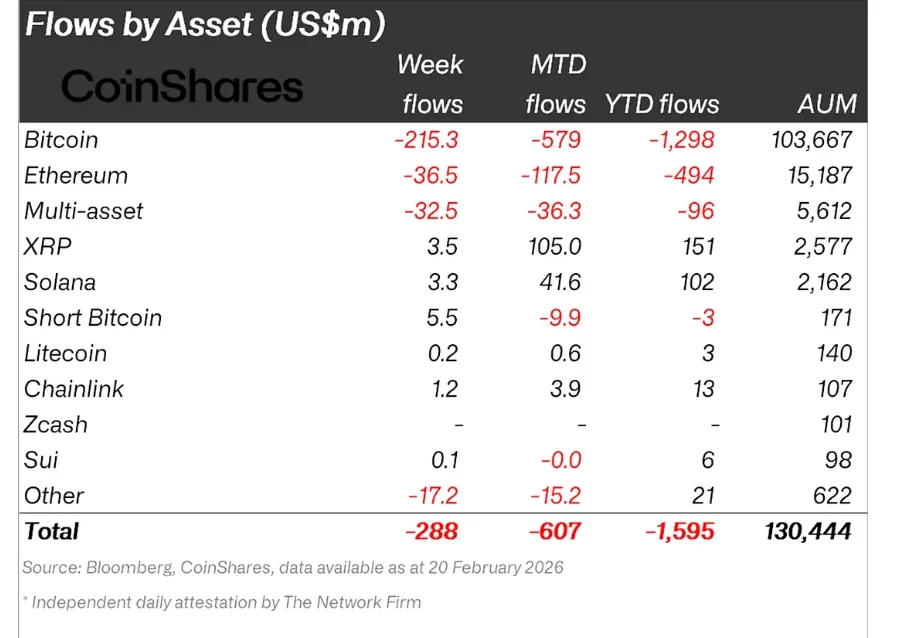
Crypto funds recorded $288 million in outflows last week, marking the fifth consecutive week of declines, according to the latest weekly report from CoinShares.
Summary
- Digital asset investment products saw $288 million in weekly outflows, marking the fifth consecutive week of withdrawals and bringing the cumulative total to $4 billion over the period.
- The United States led redemptions with $347 million in outflows, while Europe and Canada recorded modest inflows, highlighting a regional divergence in sentiment.
- Bitcoin accounted for the bulk of withdrawals, while short-bitcoin products and select altcoins such as XRP and Solana saw minor inflows.
US sells, Europe buys: Crypto funds show sharp regional divide
The latest withdrawals bring cumulative outflows over the current stretch to $4.0 billion, highlighting persistent weakness in investor sentiment.
Trading activity also cooled significantly. Total volumes across crypto exchange-traded products fell to $17 billion, the lowest level since July 2025, after several weeks of elevated turnover. The sharp decline in activity suggests growing investor apathy following recent market turbulence.
Regional flows reveal a widening divergence in sentiment.
The United States accounted for $347 million in outflows, reflecting continued caution among U.S. investors. In contrast, Europe and Canada recorded a combined $59 million in inflows, as some investors appeared to view recent price weakness as a buying opportunity.
Switzerland led regional inflows with $19.5 million, followed by Canada at $16.8 million and Germany at $16.2 million.
Bitcoin leads $288M weekly outflows
Bitcoin (BTC) remained the primary driver of weakness, with $215 million in outflows, representing the largest share of redemptions. Meanwhile, short-bitcoin products saw $5.5 million in inflows, the highest of any category, suggesting some investors are positioning for further downside.
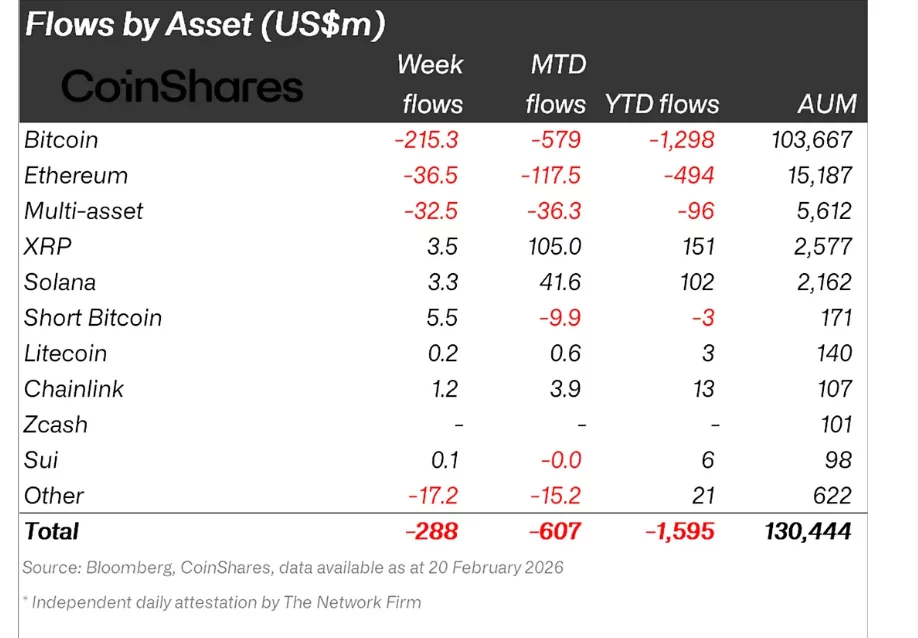
Ethereum (ETH) experienced the second-largest withdrawals at $36.5 million, while multi-asset products and Tron saw outflows of $32.5 million and $18.9 million, respectively.
Among altcoins, minor inflows were recorded in XRP ($3.5 million), Solana ($3.3 million), and Chainlink ($1.2 million), though these were insufficient to offset broader market weakness.
Despite the ongoing selloff, total assets under management remain substantial at $130.4 billion, indicating that while sentiment is subdued, institutional exposure to digital assets persists.
Crypto World
Strange New Chinese AI ‘KIMI’ Predicts the Price of XRP, PEPE and Cardano By the End of 2026
Feeding KIMI AI carefully worded prompts unlocks eye-popping 2026 price outlooks for XRP, Pepe, and Cardano heading into 2026.
Based on KIMI’s data-driven models, all three could deliver gains of at least 5x by the end of next year.
Below we assess how realistic KIMI’s targets are.
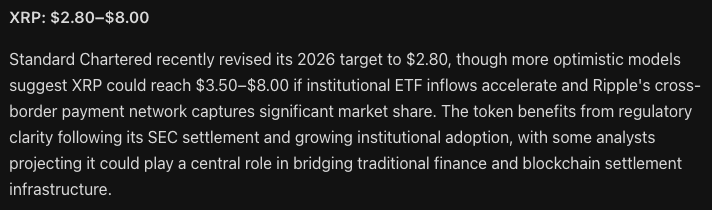
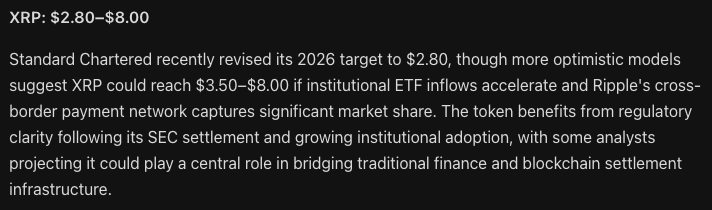
XRP ($XRP): KIMI Maps a Longer-Term Route Toward $8
In a recent update, Ripple reiterated that XRP ($XRP) remains the cornerstone of its plan to establish the XRP Ledger as a global, enterprise-ready payments infrastructure.
With fast settlement times and negligible transaction costs, the XRP Ledger could capture meaningful share in two rapidly expanding segments of crypto adoption: stablecoins and tokenized real-world assets.
XRP currently trades near $1.40. According to KIMI’s extended forecast model, the token could advance to $8 by the end of 2026, implying a near sixfold increase.
Market indicators support this outlook. XRP’s Relative Strength Index (RSI) sits around 39 and rising, while price action remains below the 30-day moving average, conditions that suggest now presents an attractive accumulation zone.
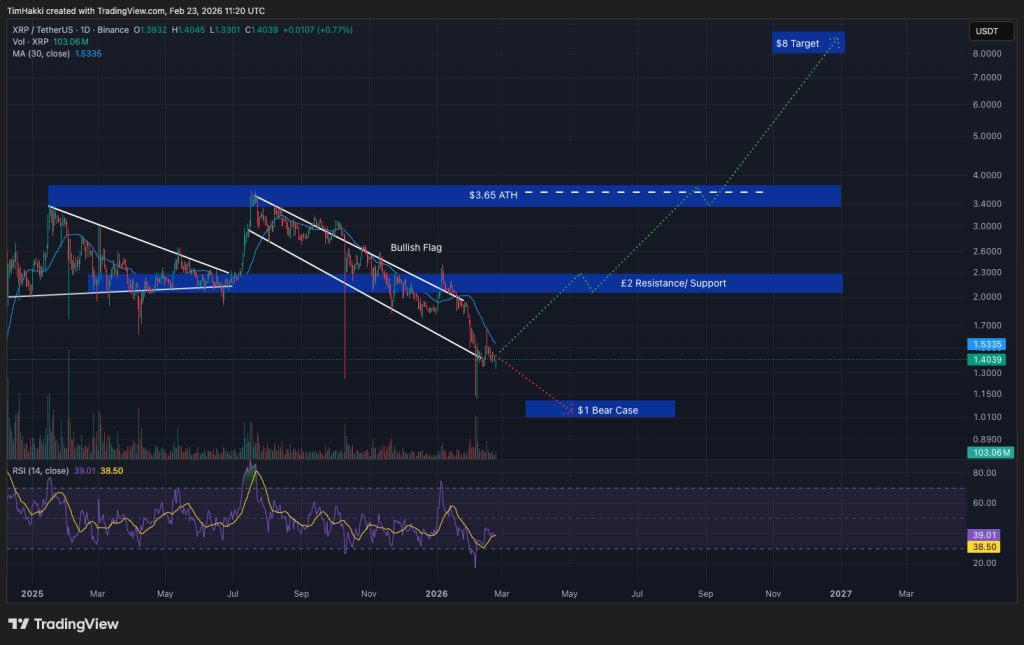
Additional momentum could come from multiple sources, including institutional demand following the approval of U.S.-listed XRP ETFs, Ripple’s growing network of global partnerships, and potential regulatory clarity if the U.S. CLARITY bill advances this year.
Pepe ($PEPE): KIMI Teases a 2,300% Upside Scenario
Pepe ($PEPE), launched in April 2023, has since become the largest meme coin outside the doge category, with a market capitalization of $1.7 billion.
Derived from Matt Furie’s “Boy’s Club” comics, PEPE’s instantly recognizable avatar and strong cultural resonance have kept it in the spotlight across social platforms.
Despite intense competition in the meme coin space, PEPE has maintained its leadership thanks to a loyal community and the many copycat tokens it has inspired.
Occasional cryptic posts from Elon Musk on X have also fueled speculation that PEPE may rank alongside DOGE and BTC in his personal portfolio.
At the time of writing, PEPE trades around $0.0000041, roughly 85% below its December 2024 ATH of $0.00002803.
Under KIMI’s most aggressive assumptions, PEPE could rally nearly 2,300% this year, climbing to $0.000098 and decisively surpassing its previous record.
Cardano (ADA): KIMI Gives Hoskinson’s ETH Contender 1,300% Gains
Founded by Charles Hoskinson, Cardano ($ADA) emphasizes peer-reviewed research, high security standards, scalability, and long-term network sustainability.
With a market capitalization near $10 billion and over $128 million in total value locked (TVL), Cardano’s ecosystem continues growing despite the downturn.
KIMI’s projections suggest ADA could climb slightly above 1,300%, rising from about $0.27 today to nearly $3.80 by the end of 2026. That level would place it well above its 2021 peak of $3.09.
However, ADA is currently trading at its lowest level since October 2024.
Given the volatile market conditions seen this year, further downside is possible, including a possible collapse down to $0.15 in a bear market.
Maxi Doge: A New Meme Contender Emerges as Majors Target Higher Levels
Pepe’s inherent meme coin magic (volatility) means KIMI thinks it could 24x this year. However, given its large market cap, even Pepe’s headroom for growth is limited by its size.
Maxi Doge ($MAXI) is not, however. Having raised $4.6 million so far in its ongoing presale, it’s one of the hottest under-the-radar meme coins around.
The project centers on Maxi Doge, a brash, gym-obsessed, unapologetically degen alpha doge and an envious distant cousin and self-proclaimed rival to Dogecoin.
Its tone and branding tap directly into the raw, irreverent energy that powered the 2021 meme coin boom.
MAXI is an ERC-20 token built on Ethereum’s proof-of-stake network, giving it a far smaller environmental footprint than Dogecoin’s proof-of-work model.
Early presale buyers can currently stake MAXI tokens for yields of up to 67% APY, with rewards decreasing as the staking pool expands.
The token is currently selling for $0.0002805, with automatic price increases at each funding milestone. Purchases are supported through wallets such as MetaMask and Best Wallet.
Stay updated through Maxi Doge’s official X and Telegram pages.
Visit the Official Website Here.
The post Strange New Chinese AI ‘KIMI’ Predicts the Price of XRP, PEPE and Cardano By the End of 2026 appeared first on Cryptonews.

U.S. Leads as Crypto Funds Mark Five Weeks of Outflows

Marvel’s Biggest Star Predicted Avengers: Doomsday 13 Years Ago

Create inset weeks so families can book cheaper holidays, schools urged


-

 Crypto World7 days ago
Can XRP Price Successfully Register a 33% Breakout Past $2?
-

 Video4 days ago
XRP News: XRP Just Entered a New Phase (Almost Nobody Noticed)
-

 Fashion3 days ago
Weekend Open Thread: Boden – Corporette.com
-

 Sports7 days ago
GB's semi-final hopes hang by thread after loss to Switzerland
-

 Politics2 days ago
Baftas 2026: Awards Nominations, Presenters And Performers
-
 Tech7 days ago
The Music Industry Enters Its Less-Is-More Era
-

 Sports7 hours ago
Women’s college basketball rankings: Iowa reenters top 10, Auriemma makes history
-

 Politics8 hours ago
Nick Reiner Enters Plea In Deaths Of Parents Rob And Michele
-

 Business6 days ago
Infosys Limited (INFY) Discusses Tech Transitions and the Unique Aspects of the AI Era Transcript
-

 Entertainment6 days ago
Kunal Nayyar’s Secret Acts Of Kindness Sparks Online Discussion
-

 Video7 days ago
Financial Statement Analysis | Complete Chapter Revision in 10 Minutes | Class 12 Board exam 2026
-

 Tech6 days ago
Retro Rover: LT6502 Laptop Packs 8-Bit Power On The Go
-
 Sports5 days ago
Clearing the boundary, crossing into history: J&K end 67-year wait, enter maiden Ranji Trophy final | Cricket News
-

 Business2 days ago
Mattel’s American Girl brand turns 40, dolls enter a new era
-

 Business1 day ago
Law enforcement kills armed man seeking to enter Trump’s Mar-a-Lago resort, officials say
-

 Entertainment5 days ago
Dolores Catania Blasts Rob Rausch For Turning On ‘Housewives’ On ‘Traitors’
-

 Business6 days ago
Tesla avoids California suspension after ending ‘autopilot’ marketing
-
 NewsBeat16 hours ago
‘Hourly’ method from gastroenterologist ‘helps reduce air travel bloating’
-

 Politics7 days ago
Eurovision Announces UK Act For 2026 Song Contest
-

 Tech1 day ago
Anthropic-Backed Group Enters NY-12 AI PAC Fight