
Crypto World
Ethereum Staking Demand Hits Record Levels as Exit Queue Remains Minimal


TLDR:
- Staking entry queue reaches 4.05M ETH, exit queue only 38K ETH, showing overwhelming demand.
- ETH price remains under $2,000 despite record network activity and staking growth.
- Large holders and ETFs increase selling pressure, adding short-term market volatility.
- Selective accumulation occurs during dips, supporting medium-term stabilization in ETH supply.
Ethereum staking demand is reaching unprecedented levels, with over 4 million ETH waiting to enter while exit orders remain minimal.
This surge reflects strong long-term conviction, structural scarcity, and growing network participation despite recent price declines below $2,000.
Staking and Network Activity
Ethereum’s staking queue shows a clear imbalance between entries and exits. The entry queue holds 4.05 million ETH, while exit requests total only 38,000 ETH.
This demonstrates overwhelming demand. Validators choose long-term yield and network alignment over liquidity.
The 70-day wait to stake confirms that protocol limits cannot match current demand. Meanwhile, exit orders clear in hours, showing no panic.
This situation reduces circulating ETH and limits immediate sell pressure. When combined with Ethereum’s burn mechanism, structural scarcity increases.
Therefore, staked ETH effectively leaves the liquid supply, supporting potential upward movement.
Ethereum network usage remains strong. Transfer counts reached 1.1 million on a 14-day average, demonstrating active token movement.
However, network activity alone cannot reverse recent price declines or short-term selling.
Retail participation is declining. Futures open interest dropped from $26.3 billion to $25.4 billion in one day.
As a result, network activity contrasts with weak capital flows, causing temporary price compression despite higher usage.
Large Holders, ETFs, and Price Dynamics
Large holders have added to short-term selling pressure. Trend Research sold 170,033 ETH, while Vitalik Buterin and Stani Kulechov sold smaller amounts.
Consequently, supply increased amid weaker market demand. BitMine Immersion Technologies holds 4.28 million ETH, of which 2.9 million is staked.
This generates an estimated $188 million annualized revenue. Therefore, staking reduces liquid supply while maintaining long-term treasury support.
Spot ETH ETFs experienced outflows totaling $80.79 million on February 5, with Fidelity’s FETH accounting for $55.78 million. Consequently, passive selling continues steadily, adding supply pressure without quick reversals.
Derivatives data show liquidation risk between $1,509 and $1,800. Leveraged positions could trigger forced selling if prices drop further.
Meanwhile, selective accumulation occurs as long-term investors buy during dips. ETH may test $1,500–$1,800 if selling persists.
Simultaneously, staking reduces liquid supply, and high network activity provides gradual stabilization. Thus, structural scarcity continues even while short-term volatility remains.



Ex-Blackstone staffers raised $25M for Valinor, a startup using smart contracts to move private credit workflows on-chain and lend first to crypto firms.
Summary
- On-chain private credit startup Valinor has closed a $25 million seed round led by Castle Island Ventures, according to Fortune.
- The firm, founded by ex-Blackstone private credit staff, wants to replace spreadsheet-based workflows with smart contracts that automate fund routing and loan execution.
- Valinor has already originated loans to several fintech and crypto companies and plans to expand its book, client base and six-person team with the new capital.
Valinor, an on-chain private credit startup co-founded by former Blackstone employees, has raised $25 million in seed funding to move the mechanics of private lending onto public blockchains. Fortune reports that the round was led by Castle Island Ventures, with participation from the crypto arm of trading giant Susquehanna, venture firm Maven11 and the founder of bitcoin miner TeraWulf, which is currently pivoting part of its business toward artificial intelligence. The capital will go toward scaling Valinor’s loan book, broadening its customer base and hiring beyond its current six-person team.
In its current form, Valinor’s core pitch is straightforward: take the revolving credit lines and structured loans that dominate traditional private credit, and transplant the back-office process onto smart contracts. As Fortune explains, conventional lenders still lean heavily on “manual verification and spreadsheet collaboration” to manage covenants, drawdowns and repayments, a structure that is slow, opaque and operationally brittle. Valinor plans to replace those workflows with contracts that “automate routing of funds and condition-triggered execution,” essentially turning legal and operational terms into on-chain logic that runs by itself once parameters are met.
Both Valinor co-founders come out of traditional finance, having worked in banking and in Blackstone’s private credit division before moving into crypto in 2022. That background gives them familiarity with how large allocators think about risk, documentation and recovery—skills they now want to port into a blockchain-native environment. In its first phase, the company is focusing on lending to crypto companies rather than trying to underwrite the entire corporate universe at once, using the sector it knows best as a testing ground for its on-chain underwriting and servicing rails.
Fortune notes that Valinor “has completed lending for several fintech and crypto companies through blockchain technology,” suggesting that the platform is already live with real borrowers rather than just in pilot mode. Over time, the founders say they intend to introduce more of the loan lifecycle—origination, servicing, covenant monitoring—onto the chain, with the goal of improving efficiency and transparency for both lenders and borrowers. That aligns with a broader tokenization and real-world-asset push in credit markets, where other projects have started to bring trade finance, consumer loans and SME receivables on-chain under regulated structures.
The timing of Valinor’s raise underscores how quickly private credit has become a focal point for both traditional funds and crypto-native investors. In earlier crypto.news coverage of real-world-assets, asset managers described private credit as one of the most promising use cases for blockchain rails, precisely because of its fragmented data and heavy operational burden. A separate crypto.news story on tokenization highlighted how on-chain structures can give lenders near real-time visibility into collateral and payment flows, a sharp contrast with quarterly PDF reports and email chains. Another crypto.news story on institutional DeFi noted that some of the most active experiments now pair off-chain underwriting with on-chain execution, a model Valinor appears to be embracing.
For now, the startup’s immediate challenge is execution: proving that smart contracts can handle the messy edge-cases of private credit as reliably as seasoned back offices, and convincing conservative allocators that on-chain rails reduce, rather than add, operational risk. If it can do that at scale, the $25 million seed round led by Castle Island may look less like a niche crypto bet and more like an early stake in a new operating system for private lending.
Crypto World
Democrats urge warnings to federal officials against insider bets on prediction markets
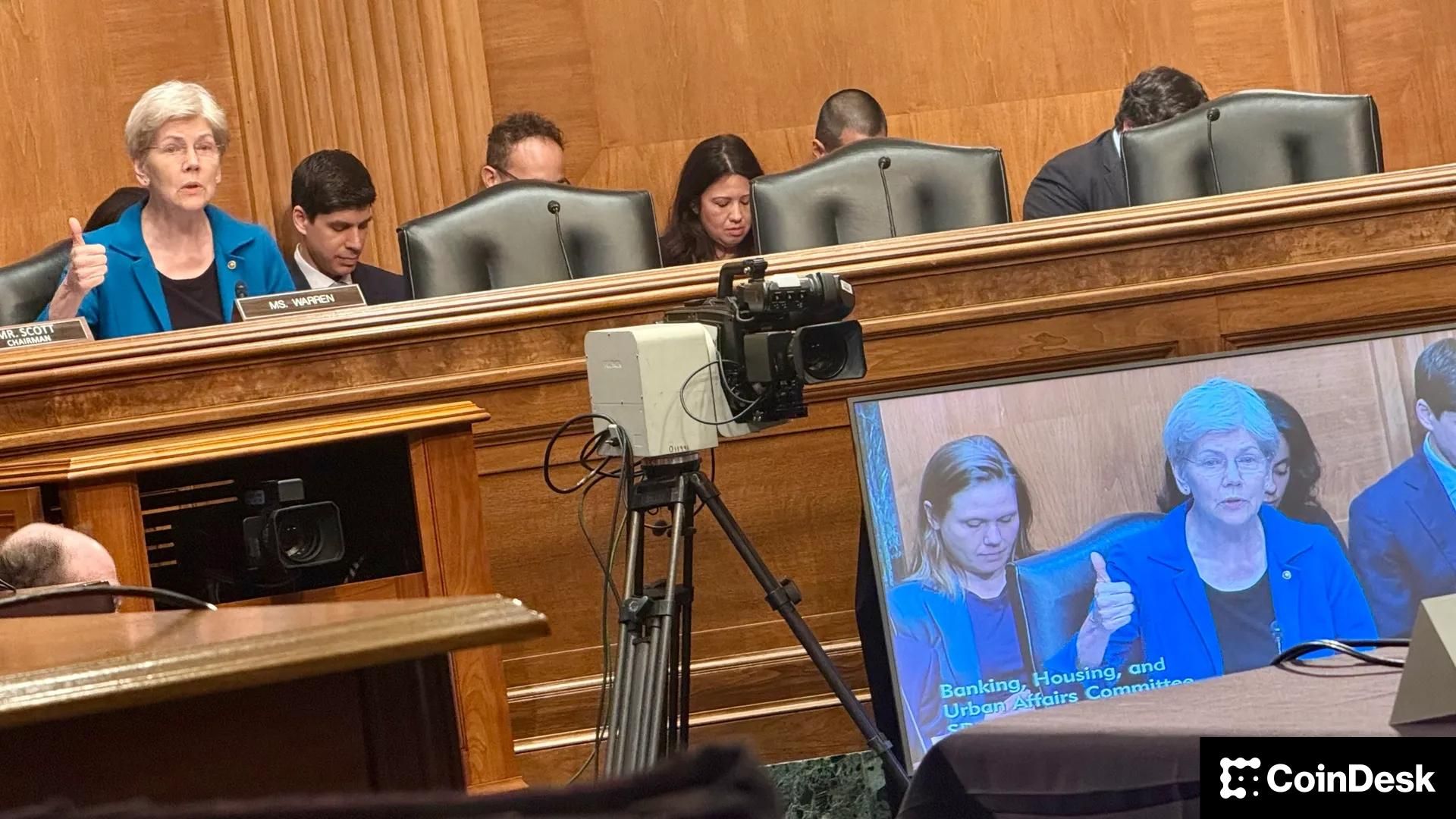
More than 40 Democrats in the U.S. Senate and House of Representatives sent a letter to a federal regulator and to ethics officials to ask them to warn government officials that insider trading in derivatives is illegal and that bets they make on prediction markets firms like Polymarket and Kalshi qualify under that category.
The ranking Democrats on the Senate Banking Committee (Senator Elizabeth Warren) and Senate Agriculture Committee (Cory Booker) joined dozens of their colleagues in asking Chairman Mike Selig, chief of the Commodity Futures Trading Commission, and the leaders of the U.S. Office of Government Ethics to “circulate executive branch-wide guidance explaining that federal employees must refrain from insider trading in prediction markets.”
The request was spurred by the eruption of suspicious reports that recent event contracts on government or military action seemed to draw bets from people with special insight into the outcomes, leading many to believe that government officials — or people associated with them — may have made such bets. U.S. derivatives laws state the illegality of government officials making trades based on non-public information they got on the job. Since the CFTC has declared the contracts at such firms are regulated derivatives, the ban should hold true, the lawmakers contended.
“We ask that the CFTC and OGE issue guidance reminding federal employees of their existing legal obligation to refrain from using their insider governmental information to profit from prediction market trades,” said the letter, dated March 29
The instances of potential insider trading outlined in the letter included contracts on military actions in Venezuela and Iran, the length of a speech from President Donald Trump’s press secretary and the firing of former Department of Homeland Security Secretary Kristi Noem.
The letter was also signed by the top Democrats on the House Agriculture Committee, Representative Angie Craig, and the House Financial Services Committee, Representative Maxine Waters. The agriculture panels in both chambers are the ones that directly oversee the CFTC.
Selig’s CFTC has been working on a new set of policies to govern the prediction markets. Those businesses are closely related to the crypto industry, which is a current focus of many of the lawmakers on this letter, who are also working on the Digital Asset Market Clarity Act that’s been hung up in the Senate.
Also on Monday, news emerged that federal prosecutors reportedly spoke to prediction market firms about whether certain instances could trigger insider-trading cases.

The DeFi curator says existing deposits and smart contracts are unaffected, but asked users to avoid the platform until the front-end is restored.

ETH gained 2% as BitMine extended its buying streak.


The U.S. Department of Labor has proposed a rule that would make it easier for 401(k) plans to include alternative assets such as cryptocurrencies, private equity and real estate.
The proposal is in response to President Donald Trump’s executive order, released in August, which directed the Labor Department and the Securities and Exchange Commission to facilitate expanded access to alternative assets in 401(k)s.
“This proposed rule will show how plans can consider products that better reflect the investment landscape as it exists today,” Labor Secretary Lori Chavez-DeRemer said in a statement.
If adopted, the rule would mark a shift in how retirement plans are built. For years, most 401(k)s have focused on stocks and bonds. The new approach would allow plan providers to add a broader mix of assets, including digital tokens and private-market funds that are not traded on public exchanges.
The move builds on earlier changes. Last May, the Labor Department rescinded prior guidance that urged fiduciaries to exercise “extreme care” before adding crypto to retirement plans. Trump’s executive order went further, calling for digital assets to be treated on par with other investment options.
Still, the proposal has drawn criticism from some lawmakers and financial advisors.
“As cracks emerge in the private credit market, private equity returns fall to 16-year lows, and crypto keeps tumbling, President Trump has decided now is the time to stick all of these risky assets into Americans’ 401(k)s,” Senator Elizabeth Warren said in a statement. She warned the rule could expose workers to losses while benefiting large financial firms.
The stakes for crypto could be large. U.S. 401(k) plans hold trillions of dollars in retirement savings, and even a small shift into digital assets could send new capital into the market. If a large plan with tens of thousands of workers were to allocate just 1% of its portfolio to bitcoin, that would translate into millions of dollars flowing into crypto funds or tokens.
Key points:
-
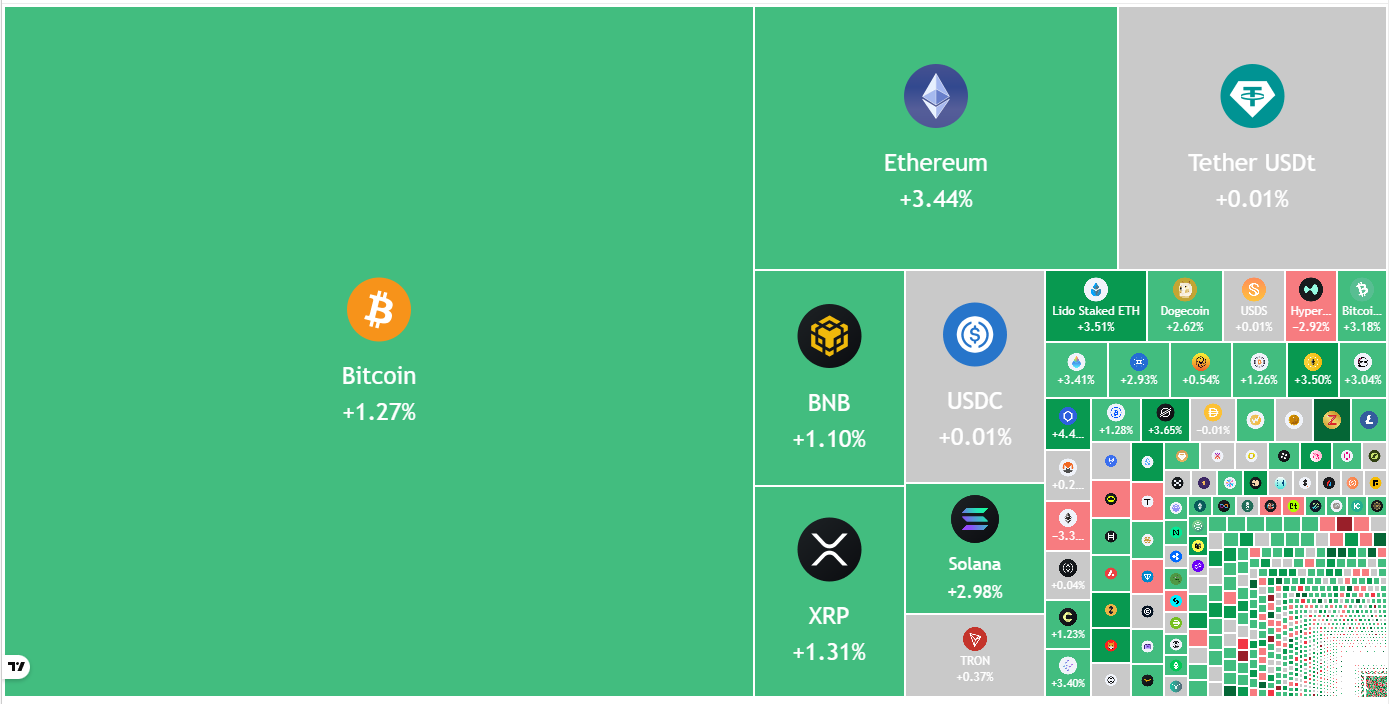
Bitcoin’s recovery is expected to face selling near $69,000, but if the bulls prevail, a rally to $74,508 is possible.
-
Most major altcoins remain below their resistance levels, indicating that the bears continue to exert pressure.
Bitcoin (BTC) rose above $68,000, but the bulls are struggling to sustain the higher levels. Sellers are expected to exert pressure to achieve a negative monthly close in March. That will result in six consecutive months of losses for the first time since the 2018 bear market.
Analysts remain increasingly bearish on BTC’s prospects in the short term. Analyst Willy Woo said in a post on X that BTC may bottom between $46,000 and $54,000 according to various on-chain models.

The deeper the fall from the all-time high, the longer it is likely for BTC to take to record a new all-time high. According to an Ecoinometrics’ model, if BTC holds the $60,000 low, a full recovery is expected to happen in roughly 300 days from the October 2025 peak of $126,000. About 175 days have passed since BTC’s all-time high, leaving around 125 days for the full recovery to happen. If BTC falls to the $40,000 to $45,000 range, the recovery may stretch further into Q2 2027, as every 10% drawdown adds 80 days to the recovery duration.
Will buyers be able overcome the resistance levels in BTC and the major altcoins? Let’s analyze the charts of the top 10 cryptocurrencies to find out.
S&P 500 Index price prediction
The S&P 500 Index (SPX) turned down from the 20-day exponential moving average (6,620) on Wednesday, indicating that bears remain in command.

Sellers will attempt to sink the price to the 6,147 level, which is likely to attract solid buying by the bulls. A bounce off the 6,147 level may face selling at the 20-day EMA. If the price turns down sharply from the 20-day EMA, the bears will again attempt to sink the index below the 6,147 level. If they succeed, the next stop may be the 5,943 level.
On the other hand, a break and close above the 20-day EMA suggests that the bears are losing their grip. The index may then rally to the 50-day simple moving average (6,803).
US Dollar Index price prediction
The US Dollar Index (DXY) bounced off the 20-day EMA (99.40) on Wednesday, signaling a positive sentiment.

Buyers will attempt to strengthen their position by maintaining the price above the 100.54 overhead resistance. If they manage to do that, the index may start a new up move to the 102 level and later to the 103.54 level.
Time is running out for the bears. They will have to defend the 100.54 level and swiftly pull the price below the 20-day EMA to weaken the bullish momentum. The price may then slump to the 50-day SMA (98.25).
Bitcoin price prediction
BTC closed below the support line of the ascending triangle pattern on Sunday, but the bears could not sustain the lower levels.

The bulls have pushed the BTC price back above the support line and are attempting to pierce the moving averages. If they succeed, it suggests that the break below the support line may have been a bear trap. The BTC/USDT pair may rally to the $74,508 to $76,000 resistance zone.
To retain the advantage, sellers will have to successfully defend the moving averages and swiftly pull the price below the $65,000 level. That clears the path for a drop to the $62,500 to $60,000 support zone.
Ether price prediction
Ether (ETH) closed below the 50-day SMA ($2,040) on Friday, but the bears could not sink the price below the $1,916 support.

The bulls are attempting to push the ETH price above the moving averages and get back into the game. If they can pull it off, the possibility of a rally to $2,400 increases. Sellers will attempt to halt the up move at $2,400, but if the buyers bulldoze their way through, the next stop may be $2,600.
This positive view will be negated in the near term if the ETH/USDT pair turns down and breaks below the $1,916 level. That opens the doors for a drop to the $1,750 support.
BNB price prediction
BNB (BNB) has been trading below the moving averages, but the bears could not pull the price to the $570 support.

The bulls are attempting to start a recovery, which is expected to face resistance at the moving averages. If the BNB price turns down from the moving averages, the risk of a drop to $570 increases.
Contrarily, a close above the moving averages suggests that the BNB/USDT pair may remain inside the $570 to $687 range for some more time. Buyers will be back in the driver’s seat on a close above the $687 resistance.
XRP price prediction
XRP (XRP) remains below the moving averages, indicating that the bears continue to exert pressure.

The gradually downsloping moving averages and the RSI in the negative territory indicate that the bears have the upper hand. Buyers will attempt to defend the $1.27 level, but if the support cracks, the XRP/USDT pair may descend to $1.11.
Contrary to this assumption, if the XRP price turns up sharply and breaks above the moving averages, it suggests that selling dries up at lower levels. The pair may then march toward the $1.61 level.
Solana price prediction
Solana (SOL) remains stuck inside the $76 to $95 range, indicating a balance between supply and demand.

The flattish moving averages and the RSI just below the midpoint do not give a clear edge either to the bulls or the bears. Buyers will have to shove the SOL price above the $95 resistance to start a rally to the $117 level.
On the contrary, a break and close below the $76 level tilts the advantage in favor of the bears. The SOL/USDT pair may then retest the Feb. 6 low of $67.
Related: Bitcoin analysis says $65K ‘entry zone’ with oil back above $100
Dogecoin price prediction
Buyers have managed to maintain Dogecoin (DOGE) above the $0.09 support but are struggling to start a strong rebound.

That suggests the bears are selling on every minor relief rally to the moving averages. If the DOGE price again turns down from the moving averages, it increases the risk of a break below the $0.09 support. The DOGE/USDT pair may then plunge to the $0.08 level.
Instead, if the price continues higher and breaks above the moving averages, it signals that the bulls remain buyers near the $0.09 level. The pair may then rally to $0.11 and subsequently to $0.12.
Cardano price prediction
Cardano (ADA) closed below the $0.25 support on Friday, indicating that the bears are in control.

Buyers are trying to push the ADA price back above the $0.25 level, but the bears have held their ground. That suggests the sellers are attempting to flip the $0.25 level into resistance. If they manage to do that, the ADA/USDT pair may plummet to the Feb. 6 low of $0.22.
The bulls will have to swiftly thrust the price above the moving averages to trap the aggressive bears. That may drive the pair to the downtrend line. Sellers are expected to vigorously defend the downtrend line, as a close above it signals a potential short-term trend change.
Hyperliquid price prediction
Buyers are attempting to sustain the Hyperliquid (HYPE) price above the 20-day EMA ($37.86), but the recovery lacks strength.

If the HYPE price dips below the 20-day EMA and the $36.77 level, it suggests that the bulls have given up. That may pull the HYPE/USDT pair to the 50-day SMA ($33.73), which is likely to act as strong support.
Alternatively, if the price turns up from the current level, it is expected to face resistance at $41.59 and then at $44. Buyers will have to scale the $44 level to signal the resumption of the up move toward $50.
This article does not contain investment advice or recommendations. Every investment and trading move involves risk, and readers should conduct their own research when making a decision. While we strive to provide accurate and timely information, Cointelegraph does not guarantee the accuracy, completeness, or reliability of any information in this article. This article may contain forward-looking statements that are subject to risks and uncertainties. Cointelegraph will not be liable for any loss or damage arising from your reliance on this information.

Square, the payments platform of Block, has begun rolling out Bitcoin payments at its point-of-sale terminals for eligible US sellers, with the automatic feature going live today as part of a phased rollout over the coming month.
The announcement was shared Monday in a post on X by Miles Suter, Bitcoin product lead at Block, and reposted by CEO and longtime Bitcoiner Jack Dorsey.
Suter said the feature is designed to make it easier for “millions of businesses” to accept Bitcoin, adding that eligible US sellers will have payments automatically enabled and will receive US dollars by default when customers pay in Bitcoin (BTC). Merchants will also have the option to automatically “stack” Bitcoin from daily sales.
He described the move as a step toward using “Bitcoin as everyday money.” Bitcoin payment acceptance is expected to be available to all Square merchants by Nov. 10.

In a separate post, Square said transactions will convert instantly to cash at checkout, require no additional setup, and offer near-instant settlement. The company added that merchants do not need to hold Bitcoin and that the feature will carry zero processing fees through 2026.
According to Square’s website, the feature is currently available to US sellers that meet verification requirements, excluding businesses based in New York.
The rollout, which could lower barriers to Bitcoin payments by removing volatility and custody risk for millions of merchants, was first outlined by Block in May.
According to BitcoinTreasuries.net data, Block ranks as the 14th-largest publicly traded holder of Bitcoin, with 8,883 BTC on its balance sheet at an average cost of $32,939 per coin.

Related: Strategy pushes pause button on Bitcoin purchases, stock sales
Bitcoin-backed lending grows across crypto and traditional finance
Beyond payments and its role as a store of value, Bitcoin is increasingly being used in lending and broader financial infrastructure.
In January, Nexo launched a zero-interest lending product allowing Bitcoin and Ether (ETH) holders to borrow against their assets through fixed-term loans with predefined repayment conditions.
The offering builds on a structured model previously limited to its private and OTC channels, which facilitated more than $140 million in borrowing in 2025, according to the company.
The same month, Coinbase reintroduced Bitcoin-backed loans in the United States, enabling users to borrow up to $100,000 in USDC against BTC held on the platform, and in February, Kraken followed with fixed-rate crypto loans for Pro users, offering borrowing against digital assets at rates of 10%–25% APR for terms of up to two years.
https://www.youtube.com/watch?v=KlFRKMMpdmk
Traditional finance is also beginning to incorporate Bitcoin and crypto-backed credit. US mortgage lender Rate recently launched a program allowing borrowers to use verified cryptocurrency holdings to meet mortgage underwriting requirements without liquidating their assets.
Last week, Coinbase and Better Home & Finance introduced a structure that lets borrowers pledge crypto as collateral for loans used to fund down payments on Fannie Mae–compliant mortgages.
Magazine: Nobody knows if quantum secure cryptography will even work
Crypto World
Zcash’s (ZEC) upside hinges on a repricing of financial privacy in an AI-driven world, Grayscale says

Zcash (ZEC) is a wager that the rise of AI surveillance will make financial privacy more valuable, and the crypto market is underpricing that possibility, according to asset manager Grayscale.
“Zcash is nearly 10 years old but may be entering a new chapter. Use of its shielding technology is increasing, and new capital is entering the ecosystem to support wallet development and Zcash mining,” analyst Michael Zhao wrote in a Friday report.
ZEC is a privacy-focused cryptocurrency that uses zero-knowledge proofs to hide transaction details, allowing users to shield the sender, receiver and amount, while still verifying transfers on a public blockchain.
Designed as a more confidential alternative to bitcoin , the largest cryptocurrency, it aims to function as a closer approximation to digital cash in an otherwise transparent crypto ecosystem.
The token has seen multiple boom-and-bust cycles, most notably during crypto bull markets when its privacy narrative gained traction. In late 2025, ZEC surged to nearly $700, sharply outperforming much of the market as investors switched into smaller-cap assets with differentiated use cases.
The move proved short-lived. Prices retraced quickly, falling more than 60% in the following months as momentum faded and larger assets like bitcoin regained favor. The volatility underscores a recurring pattern for Zcash: sharp upside during narrative-driven rallies, followed by steep drawdowns when that narrative loses urgency.
ZEC makes up about 0.3% of the $1.6 trillion crypto “currencies” segment, according to Grayscale, a share it said reflects expectations that privacy stays marginal. If that view changes, even slightly, the upside could be significant.
Grayscale pointed to rising use of Zcash’s shielded transactions, now the majority of activity, as evidence that demand for privacy already exists onchain. But the firm said the market still treats privacy as an afterthought rather than a core monetary feature.
This is part of a broader structural shift. Just as digitization and the internet reshaped financial privacy debates in prior decades, Zhao argued AI and blockchain transparency could trigger a third wave, one where confidential transactions become more valuable.
In that scenario, Zcash’s design positions it as a direct analogue to cash, a property the analyst said is increasingly scarce in digital finance.
Still, there are risks, the report cautioned. Regulatory treatment remains uncertain despite Zcash’s selective disclosure tools. Execution risk persists given the network’s reliance on complex upgrades, and long-term concerns like quantum computing that apply across crypto, including ZEC, the report added.
ZEC was trading 5% higher over 24 hours, around $224.80, at publication time.
Read more: AI rout hits software stocks, but Grayscale says blockchains stand to benefit

Geopolitics and energy constraints shaped Bitcoin’s landscape in March as a notable drop in hashrate coincided with a geopolitical flare-up tied to Iran. Analysts estimated Iran accounts for a meaningful slice of global mining activity, with some figures placing it around 6–8% of hashrate, while military-linked operations reportedly account for a large portion of mining. Following a late-February cross-border operation involving the United States and Israel, the network’s total hashrate slid about 6% over the month, underscoring how disruptions to energy infrastructure and competing strategic priorities can ripple into crypto production.
Against this backdrop, Bitcoin’s price movement remained muted. Bitcoin traded near the $67,000 level as five-year U.S. Treasury yields rose roughly 4% in March, sharpening a risk-off mood and encouraging cash preservation among traders. In parallel, the ecosystem’s appetite for crypto-native forecasting marketplaces surged, with March transactions on prediction platforms hitting a record pace of about 192 million—an uptick of 24% from February and a staggering 2,880% year over year, highlighting a growing, crypto-adjacent activity thread even as regulatory headwinds persist.
Beyond price and hashrate, drivers of liquidity shifted toward euro-denominated stablecoins. A March report found that euro-backed stablecoins now account for about 85% of non-dollar stablecoin transfer volume, with participation by users also concentrated in euros (roughly 78%). The shift is widely interpreted as institutional comfort with euro-pegged coins growing under the Markets in Crypto-Assets framework, which has elevated regulatory clarity for euro-focused crypto liquidity.
On the corporate side of the crypto economy, Robinhood’s stock price weakened in March, sliding about 16% as uncertainty around new regulatory regimes and softer crypto trading revenues weighed on sentiment. The company’s crypto business has faced headwinds in recent quarters, with reports indicating a notable year-over-year decline in crypto-related revenue and app volumes. In response, Robinhood announced a $1.5 billion stock buyback program to be executed over the next three years, a move aimed at bolstering investor confidence amid a broader market pullback.
Within the alt-crypto strategies space, Strategy reported an 11% drawdown on its Bitcoin holdings for March, with an average entry cost near $75,669 and Bitcoin trading around $67,800 at the time of writing. Yet the firm pressed on with purchases, revealing two substantial Beaufort-style adds in March—about 17,994 BTC on March 9 and 22,337 BTC on March 16, totaling roughly $2.7 billion at the relevant prices. Financing these acquisitions, Strategy has leaned on high-yield stock issuances such as Stretch (STRC) to avoid diluting its primary common shares. Chairman Michael Saylor has highlighted that retail investors make up a large share of STRC buyers, framing the instruments as a way to access high-yield digital credit with relatively low volatility.
Key takeaways
- Bitcoin’s hashrate declined about 6% in March, reflecting Iran’s pivotal yet strained role as a mining hub amid energy and security pressures following the February operation against Iran.
- The BTC price hovered near $67,000 as five-year U.S. Treasury yields rose around 4% for the month, contributing to a cautious risk posture among traders.
- Prediction markets posted a record March, with roughly 192 million transactions—up 24% from February and about 2,880% year over year—indicating rising interest in crypto-native forecasting tools.
- Euro-stablecoins now dominate non-dollar liquidity, accounting for about 85% of non-dollar stablecoin transfer volume, with strong user participation, aided by MiCA-aligned regulatory clarity.
- Robinhood’s stock weakness continued into March amid crypto-revenue headwinds, even as the firm advanced a sizable buyback. Strategy’s ongoing BTC accumulation remained sizable but came with an 11% month-long drawdown on holdings.
Hashrate, geopolitics, and the mining cliff
March’s mining dynamics underscored how geopolitical shocks can directly influence the security and economics of Bitcoin’s network. The U.S.–Israel operation in Iran, dubbed by some observers as a pivotal event for regional stability, coincided with a sustained drag on Iran’s mining capacity. Bloomberg’s crypto and digital assets coverage has highlighted Iran as a major mining contributor—estimated at roughly 6–8% of global hashrate—with a large portion of mining activity tied to state or military entities. When energy infrastructure is strained or redirected toward defense, the country’s ability to sustain large-scale Bitcoin mining tightens, creating ripples across the global hashrate figure and potentially affecting network difficulty and block times in the near term.
As miners contend with energy constraints and shifting priorities, the broader mining landscape remains sensitive to policy and geopolitical developments. The global network’s resilience, measured by hashrate, continues to reflect a balance between mining economics, energy costs, and regulatory conditions across jurisdictions. While the immediate impact is a modest hashrate pull for March, it is a reminder of how external forces ultimately shape Bitcoin’s security fabric and the distribution of mining power around the world.
Macro currents, markets, and the march of crypto demand
Bitcoin’s price path in March did not showcase a strong breakout even as macro conditions shifted. The yield curve’s repricing—five-year Treasuries climbing toward a 4% monthly gain—fed a preference for cash or less risky yield assets, weighing on new capital inflows into high-volatility assets like BTC. The combination of macro pressure, a cautious risk stance, and a sense of regulatory caution contributed to a lack of sustained upside for Bitcoin during the month. Yet, the same environment also drew attention to non-price-driven activity, such as prediction markets, where participants speculate on outcomes across events and often use these markets as hedges against broader macro risk. The March surge in such activity indicates a growing appetite for crypto-native financial primitives beyond spot and futures trading.
Stablecoins, MiCA, and strategic balance sheets
The euro-dominated stablecoin footprint—now representing about 85% of non-dollar stablecoin volume and a dominant share of participant activity—reflects a notable shift in liquidity preferences. The trend is closely tied to regulatory clarity introduced by the European Union’s Markets in Crypto-Assets framework, which has elevated institutional comfort with euro-pegged tokens and cross-border use cases. Market participants point to MiCA as a catalyst for more predictable, compliant stablecoin operations, encouraging institutions to integrate euro-denominated liquidity into their crypto rails while reducing some of the regulatory ambiguities that previously constrained non-dollar activity.
On the corporate side, Robinhood’s ongoing struggle with crypto trading revenue underscores the challenge of sustaining a diversified platform in a regulatory-tightening environment. The firm’s decision to deploy a $1.5 billion buyback program signals an attempt to shore up equity value despite a softening revenue trajectory. Meanwhile, Strategy’s Bitcoin program continues to reflect a high-stakes approach to crypto accumulation, funded through high-yield instruments that offer an alternate route to expand BTC holdings without diluting existing equity. The company’s commentary on STRC buyers—where a large portion are retail investors—frames a broader narrative about retail participation in crypto-linked structures and the perceived advantages of branded digital credit offerings in volatile markets.
What to watch next is how MiCA’s rollout further shapes non-dollar liquidity and whether tail risks—ranging from geopolitical shifts to regulatory changes—alter the trajectory of euro-stablecoins and related market activity. Additionally, with prediction markets facing ongoing regulatory scrutiny at the state and federal levels, observers will be watching for any concrete moves that could curb or clarify their role in the broader financial ecosystem.
Markets continue to react to a blend of macro signals, geopolitical developments, and evolving regulatory regimes. The coming weeks will be telling for Bitcoin’s leadership in a climate where liquidity, risk appetite, and institutional confidence are being recalibrated in near real time.
Readers should stay tuned for updates on Iran’s energy and mining dynamics, the pace of MiCA implementation and its practical impact on euro-denominated liquidity, and the evolving regulatory stance on prediction markets in U.S. states. These factors will help determine whether the current risk-off tone persists or shifts toward renewed crypto demand driven by macro reorientation and regulatory clarity.
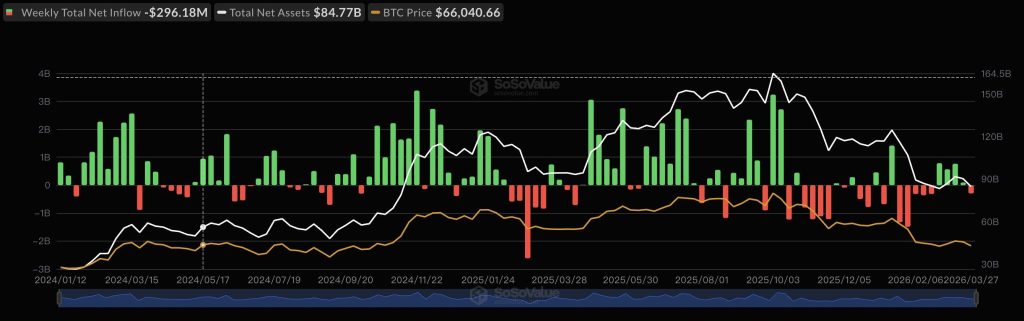
U.S. spot Bitcoin ETFs bled roughly $296 million in net outflows between March 24 and March 27, as a broad risk-off shift tightened its grip on global markets. The reversal was sharp – Monday opened with $167.2 million in inflows before sentiment collapsed entirely by week’s end.
Friday delivered the killing blow: $225.5 million in single-day outflows, led by heavy redemptions from BlackRock’s IBIT. The week’s total marks one of the most decisive institutional de-risking episodes since the ETF products launched in January 2024.
- $296M in net outflows recorded across U.S. spot Bitcoin ETFs, March 24–27, led by IBIT redemptions of $225.5M on Friday alone.
- Macro pressure is compounding – triple-digit oil, fading ceasefire hopes, and end-of-quarter rebalancing all cited as drivers by multiple analysts.
- BTC price support sits at $65,600–$65,107; a break below that zone would signal structural deterioration rather than tactical repositioning.
Discover: The best pre-launch token sales
ETF Flow Data Points to Institutional De-Risking – But Is It Structural?
Thursday, March 26, alone saw $171.12 million exit across all 11 spot Bitcoin ETF products – the largest single-day outflow in over three weeks. BlackRock’s IBIT shed $41.92 million that day, while Fidelity’s FBTC, Grayscale’s GBTC, Bitwise’s BITB, and ARK’s ARKB each recorded $20–30 million in redemptions. The breadth matters: this wasn’t an issuer-specific bleed – it was coordinated institutional de-risking across the board.
That distinction matters. When outflows concentrate in a single fund, the read is operational or reputational. When every major product sells simultaneously, the signal is macro.
Josh Gilbert, market analyst at eToro, put it plainly: “Risk-off is clearly the mood amongst markets,” pointing to Bitcoin’s slide to a three-week low and the S&P 500’s fifth consecutive weekly loss – its longest losing streak since 2022. “The macro forces working against it are compounding,” he added. “Triple-digit oil is fuelling inflation fears, which pushes rate cut expectations further out, which in turn removes the very catalyst that risk assets need to find a floor.”
Bitcoin’s slide below $67,000 amid rising treasury yields had already flagged deteriorating risk appetite before the ETF data confirmed it. Geopolitical escalation compounded the pressure – President Donald Trump’s comments to the Financial Times, suggesting the U.S. could “take the oil in Iran” and potentially seize Kharg Island, rattled commodity and risk markets simultaneously.
Peter Chung, head of research at Presto Labs, said the risk-off tone was the primary driver, though he noted the outflow “doesn’t seem that dramatic compared to the recent trends.”
Pratik Kala, head of research at Apollo Crypto, echoed that read, calling the $290 million figure “quite normal” and attributing it to “risk-off sentiment and end-of-quarter rebalancing.”
Long-term holder balances remain stable, indicating tactical repositioning rather than a structural exit from Bitcoin exposure. Cumulative ETF investments had surpassed $2 billion in recent weeks before this pullback, underscoring how quickly institutional adoption accelerated through early 2026.
Can Bitcoin ETFs Demand Recover – Or Is More Outflow Pressure Coming?
The price structure gives traders a clear framework. Key support sits at $65,631–$65,107, the February 12–19 lows, with a secondary floor at $65,619 – the March 8 low.
A clean break below $65,600 would shift the read from tactical reset to something more concerning for demand structure. Resistance is parked at $71,880, the March 25 high.

Gilbert flagged a ceasefire as the most immediate catalyst for a “strong relief rally,” but warned that without credible de-escalation, markets face “more choppy sessions ahead.” The Fed rate outlook is the second variable – geopolitical factors weighing on Bitcoin are compressing any near-term case for policy relief.
Three scenarios are live. A ceasefire or dovish Fed signal reopens inflow momentum, and BTC reclaims the $71,000 zone. Base case: choppy, range-bound flow data through April as macro uncertainty persists and ETF demand stays muted. Bear case: a break below $65,100 triggers forced selling and a second wave of institutional outflows that dwarfs last week’s total.
The week’s Monday-to-Friday reversal – from $167.2 million inflows to $225.5 million single-day outflows – is the clearest signal that institutional conviction is conditional right now, not structural. Traders navigating this environment should watch weekly ETF flow totals as a leading indicator for BTC price direction, not a lagging one.
Discover: The best crypto to diversify your portfolio with
The post Bitcoin ETFs See $290M in Outflows as Risk-Off Sentiment Intensifies appeared first on Cryptonews.
Lurgan residents evacuated in early hours as security alert as cordon in place
Valinor raises $25m to put private credit on-chain

Butter Yellow, Red, Fringe & More


![Tom Lee & Raoul Pal: "A CRASH Is Coming, Then Bitcoin Explodes To $250K" [2026 Prediction]](https://wordupnews.com/wp-content/uploads/2026/03/1774925538_hqdefault-80x80.jpg)

-
 NewsBeat6 days ago
Manchester United reach agreement with Casemiro over contract clause amid transfer speculation
-

 News Videos5 days ago
Parliament publishes latest register of MPs’ financial interests
-

 NewsBeat3 days ago
The Story hosts event on Durham’s historic registers
-

 Business4 days ago
Instagram, YouTube Found Responsible for Teen’s Mental Health Struggle in Historic Ruling
-
 NewsBeat6 days ago
Tesco is selling new Cadbury Dairy Milk bar and people can’t wait to try it
-
 Tech5 days ago
Intercom’s new post-trained Fin Apex 1.0 beats GPT-5.4 and Claude Sonnet 4.6 at customer service resolutions
-

 Fashion7 days ago
Does It Matter What You Wear When You’re Laid Off and Looking?
-
 Entertainment2 days ago
Lana Del Rey Celebrates Her Husband’s 51st Birthday In New Post
-

 NewsBeat6 days ago
Entrepreneurs Forum survey reveals optimism in North East
-
 NewsBeat7 days ago
NASA Artemis II Astronauts enter 14-Day quarantine as moon rocket reaches launchpad
-

 Business7 days ago
More women enter wealth management, but few in advisory roles: study
-

 Business7 days ago
Late-paying firms face multimillion-pound fines under new crackdown
-

 Crypto World7 days ago
BTC gives up $70,000 level as markets mull higher interest rates
-

 Sports6 days ago
Fantasy Baseball Week 1 Preview: Top sleeper hitters for both five- and 12-day period led by Munetaka Murakami
-

 Tech6 days ago
US FCC Prohibits Approval Of New Foreign-Made Consumer Routers
-

 Fashion7 days ago
Coffee Break: Korean Skincare Set
-

 Tech6 days ago
Embedding compliance in AI adoption
-
Sports6 days ago
One Team in Particular Is Monitoring Kirk Cousins
-

 Fashion6 days ago
Althea Mink: Patrice Taylor’s Atlanta Couture Brand Built on Legacy, Resilience, and Architectural Glamour
-
 Fashion6 days ago
How to Style Spring Like WeWoreWhat: Easy Outfit Ideas for 2026
You must be logged in to post a comment Login