
Crypto World
Ethereum’s stablecoin dominance declines to 65% as other chains gain ground: Dune and Visa report

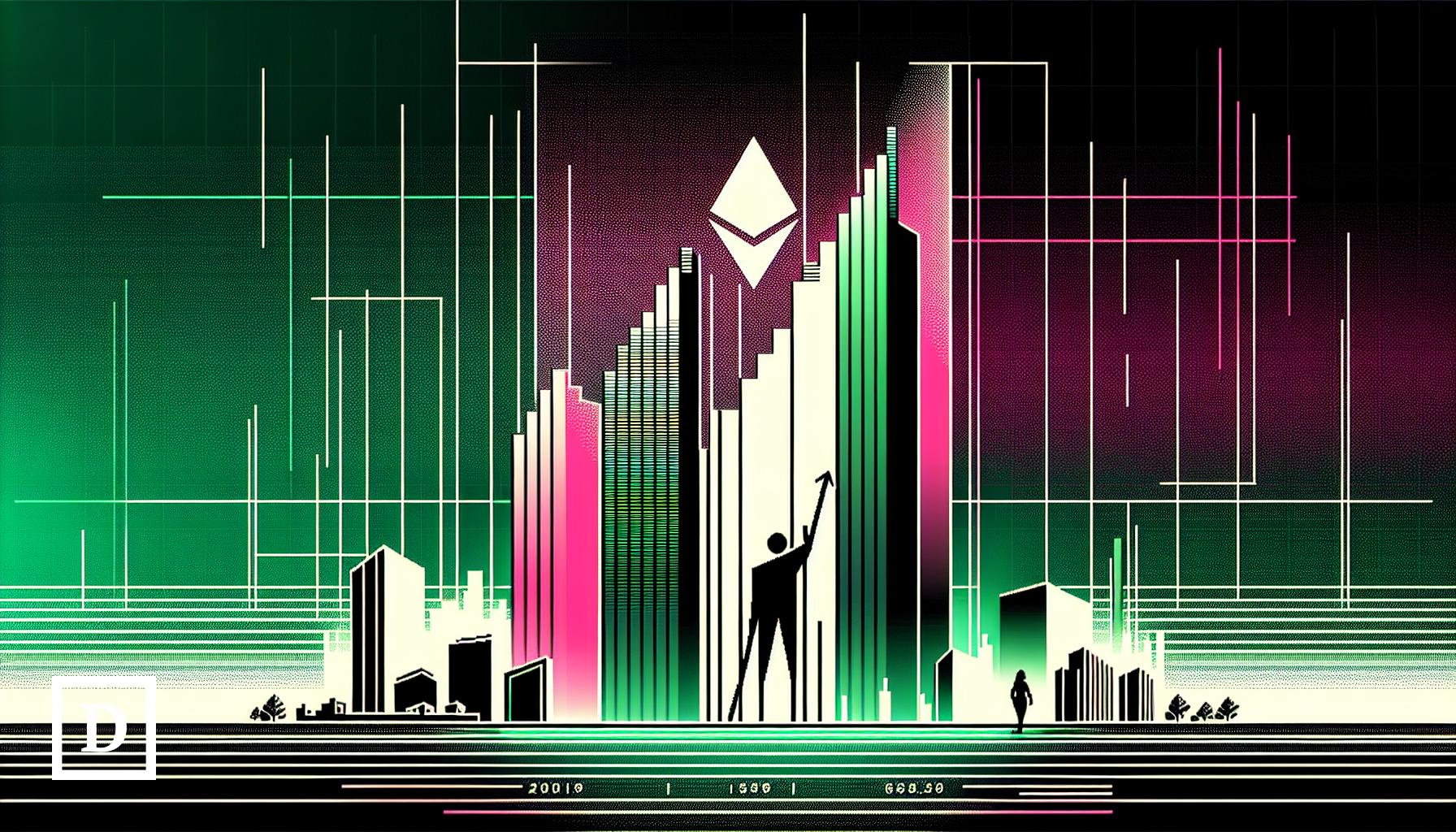
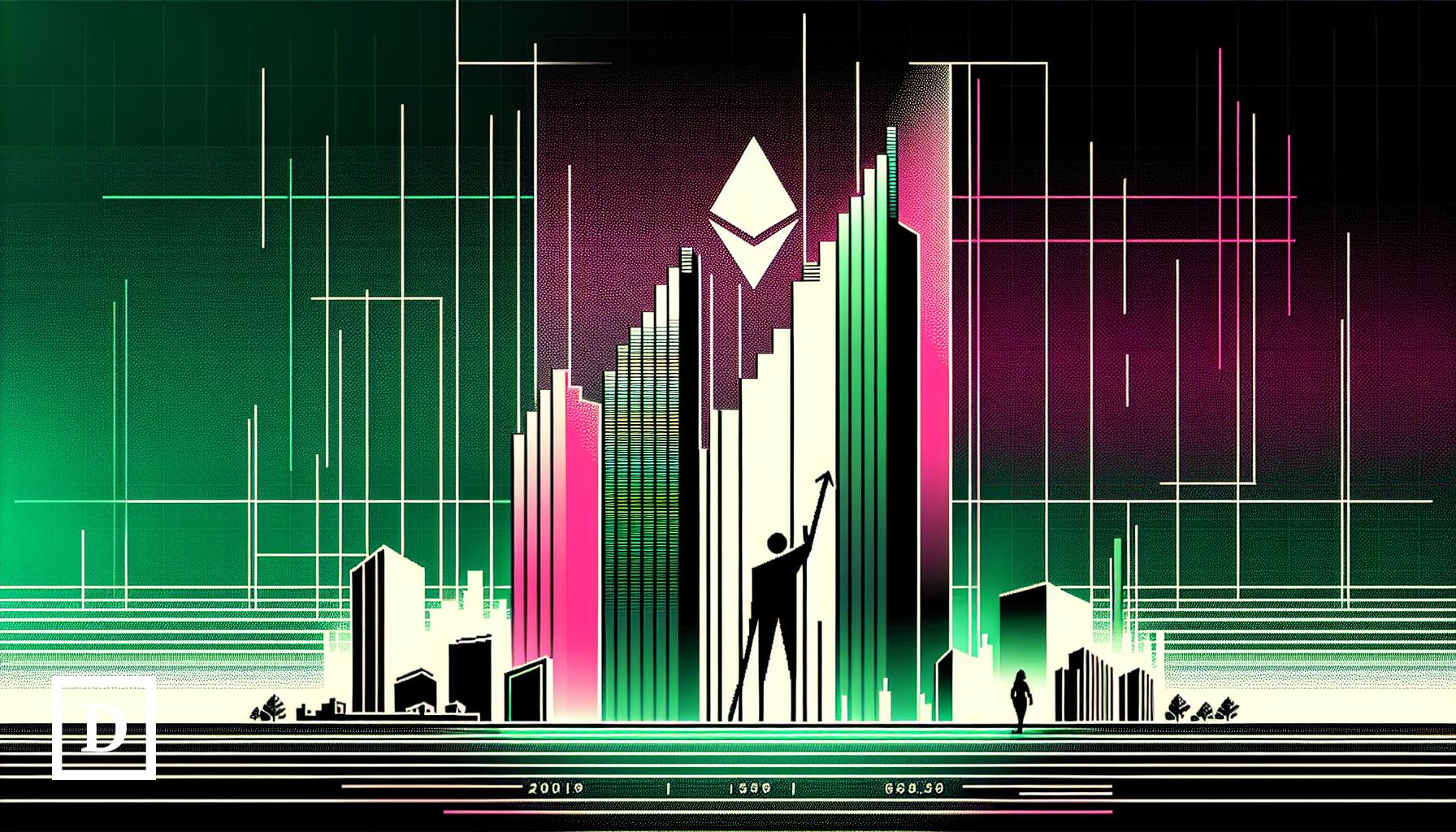
Ethereum’s share of non-USD stablecoin supply has fallen from 90% in early 2023 to 65% as of February 2026, though it remains the primary issuance chain.
Ethereum’s dominance in non-USD stablecoin supply has shrunk to 65% as of February 2026, down from 90% in early 2023, according to data published by Dune and Visa on Thursday. Despite the decline, Ethereum remains the default chain for stablecoin issuance, though other blockchains are catching up in market share.
While Ethereum leads in issuance, it ranks only fifth by unique senders across stablecoin networks. The absolute growth in activity has been significant, with unique senders increasing from 2,000 to 12,000 year-over-year as of February 2026, indicating expanded user adoption across the stablecoin ecosystem.
Sources: Dune
This article was generated automatically by The Defiant’s AI news system from publicly available sources.


TLDR:
- SpaceX targets $75B in its IPO, more than double the global record set by Saudi Aramco in 2019.
- Starlink drove $8B in profit last year, making SpaceX already profitable ahead of its public listing.
- xAI, merged into SpaceX in February, burns $1B monthly, adding risk beneath the Starlink profit story.
- Nasdaq rule changes allow SpaceX to join the Nasdaq 100 within 15 days, triggering billions in auto-buys.
SpaceX IPO preparations are attracting attention from financial markets worldwide. The company has confidentially filed with the SEC and targets a listing as early as June 2026.
SpaceX is looking to raise to $75 billion. That figure would surpass Alibaba’s US record of $22 billion set in 2014. Saudi Aramco holds the global benchmark at $29 billion, raised in 2019. SpaceX is targeting more than double both figures combined.
SpaceX IPO Exposes Deep Valuation Gaps Across the Space Sector
SpaceX reported $8 billion in profit last year on revenue between $15 and $16 billion. Nearly all of it came from Starlink, its satellite internet service.
The company is already profitable at scale, unlike most pre-IPO tech listings. This is not a company pitching an unproven future business model.
At a $1.75 trillion valuation, SpaceX trades at 110 times annual revenue. AST SpaceMobile, by comparison, trades at 452 times revenue and has not yet turned a profit.
Rocket Lab trades at 62 times revenue and is also pre-profit. Both companies also rely partly on SpaceX for their own launch needs.
Market commentator Bull Theory flagged this valuation gap in a recent social media post. The account argued that such pricing between the sector leader and pre-profit rivals creates a conflict.
Historical precedent tends to favor a downward repricing of the smaller names. Investors are watching this dynamic closely.
The retail share allocation is set at 30%, which is three times the standard Wall Street norm. Musk appears to be deliberately converting his broad audience into direct shareholders through this structure.
Retail participation in the SpaceX IPO could therefore reach unusually high levels. The move sets this listing apart from most large-cap offerings in recent memory.
xAI Merger and Nasdaq Rule Changes Shape the Broader Investment Case
One underreported risk in the SpaceX IPO involves the February merger with xAI. The AI company is burning approximately $1 billion per month.
The IPO pitch rests on Starlink’s margins sustaining those losses long enough. The goal is for orbital AI data centers to eventually generate independent revenue.
That makes this more than a standard space company listing. Investors are also funding an AI infrastructure play with no proven revenue to date.
The two businesses are now legally and financially inseparable following the merger. This adds a layer of risk not immediately visible in the headline numbers.
Nasdaq changed its index eligibility rules to accommodate SpaceX specifically. Under the new criteria, the company can join the Nasdaq 100 within 15 days of listing.
That would trigger automatic purchases from index funds tracking the benchmark. Billions in forced buying could arrive shortly after trading begins.
The offering includes $24 billion in US government defense contracts and ownership of X, the social media platform. These assets broaden SpaceX well beyond its launch and satellite operations.
The SpaceX IPO is drawing comparisons to Facebook’s 2012 listing in scale and market impact. Unlike Facebook at that time, SpaceX is already generating substantial profits.

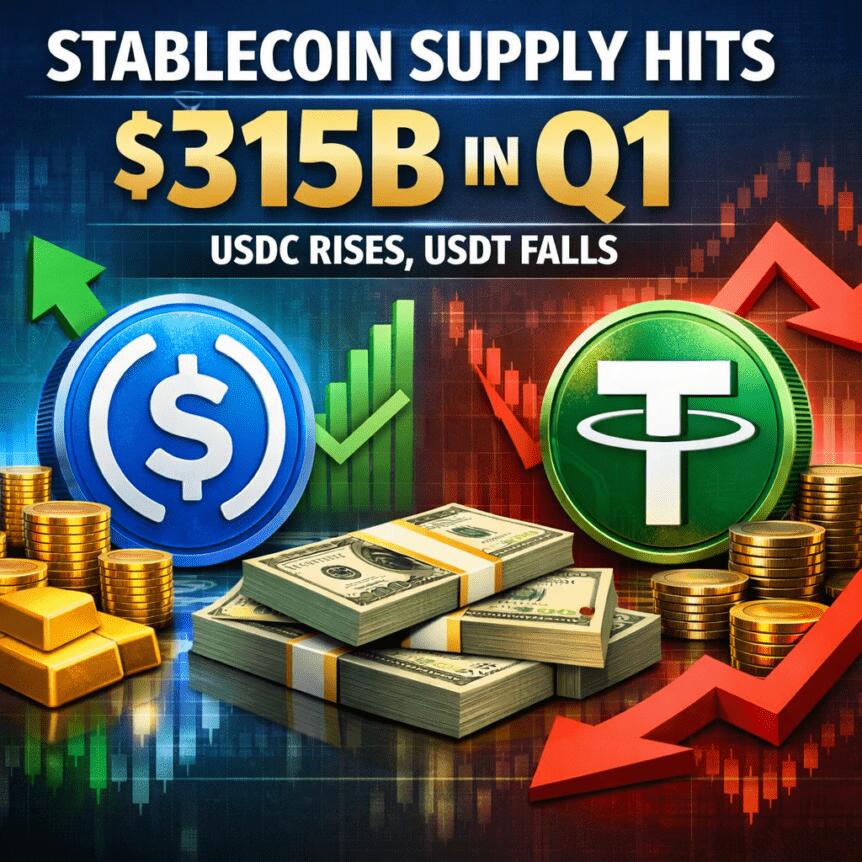
Stablecoins stood out as a rare bright spot in an otherwise muted first quarter for the crypto market. Fresh data from CEX.IO shows the sector expanded despite a broad downturn, underscoring their evolving role as the market’s liquidity backbone and a defensive option for investors navigating volatility.
Overall stablecoin supply climbed to a record $315 billion in Q1, rising by about $8 billion. While that is the slowest pace of growth since the final quarter of 2023, it still marks a net expansion during a period of weaker price action across digital assets. Equally notable is the share of activity they generated: stablecoins accounted for roughly 75% of total crypto trading volume in the quarter—the highest level on record and a signal of ongoing demand for a familiar, fast settlement layer in crypto markets.
Key takeaways
- Record liquidity backbone: Stablecoin supply reached $315 billion in Q1, up about $8 billion year over year, with 75% of crypto trading volume conducted in stablecoins.
- Volume vs. retail: Total stablecoin transaction volume surpassed $28 trillion, reinforcing stablecoins’ central role as the main on-chain liquidity layer, even as retail activity cooled.
- Shift in usage: Retail transfers declined 16% in Q1—the steepest drop on record—while automated activity surged, with bots driving about 76% of stablecoin transaction volume.
- Issuer divergence: USDC supply grew by roughly $2 billion, while USDT declined by about $3 billion—the first meaningful split between the two major issuers since 2022.
- Yield-driven growth amid scrutiny: The market for yield-bearing stablecoins sits around $3.7 billion, with daily trading volumes above $100 million, a dynamic drawing regulatory attention in the U.S.
Bot-driven liquidity reshapes on-chain dynamics
The data depict a notable shift in how stablecoins are used on-chain. While retail demand showed a clear pullback, the rise of algorithmic activity points to a growing involvement from institutions and sophisticated trading strategies. Bots’ dominance—accounting for roughly three-quarters of on-chain stablecoin volume—suggests that liquidity provisioning, arbitrage, and market-making have moved to the forefront of stablecoin use cases.
In a market environment characterized by tighter risk appetites, such automation can enhance price discovery and capital efficiency for major exchanges and liquidity venues. Yet it also raises questions about the resilience of demand when non-retail participants dominate flows, and about the potential for sudden shifts if algorithmic strategies recalibrate in response to evolving market conditions.
Diverging paths for the two largest issuers
Among stablecoin issuers, a clear divergence emerged in Q1. Circle’s USDC saw supply expand by approximately $2 billion, while Tether’s USDt contracted by around $3 billion. This marks the first substantive split between the two since mid-2022 and suggests a relative shift in on-chain usage toward USDC—an outcome consistent with rising USDC transfer activity observed earlier in the year.
Analysts have linked the USDC uptick to broader on-chain utility, including trading, settlement, and financial ops, aligning with data that show USDC’s growing centrality in routine liquidity operations. By contrast, the USDT contraction could reflect a combination of redemption dynamics, reserve management choices, and shifting preferences in certain liquidity pools or markets.
For market participants, the divergence underscores how issuer strategies and trusted rails can influence liquidity distribution across protocols and venues. Investors and builders should monitor whether the USDC-USDT dynamic persists, and what it signals about demand regimes for stablecoins across centralized and decentralized ecosystems.
Further context from industry coverage indicates ongoing upticks in USDC transfer activity, reinforcing the view that USDC is becoming a more prominent vehicle for on-chain finance beyond mere trading pairs.
USDC transfer activity has been cited as a notable trend in on-chain volume, a development that dovetails with the supply data described above.
Yield-bearing stablecoins: growth facing regulatory glare
Another notable dynamic in the quarter was the continued growth of yield-bearing stablecoins, a niche that has drawn heightened scrutiny in the United States. The market for these interest-bearing products sits around $3.7 billion, with daily trading volumes topping $100 million, according to CoinGecko data. The appeal is clear: yield segments can attract capital by offering enhanced returns compared with traditional stablecoins, particularly in an environment of rising interest expectations and evolving DeFi strategies.
However, the same yield-focused segment has become a focal point for policymakers and incumbents concerned about the potential risks and the regulatory framework surrounding crypto markets. Lawmakers and industry participants alike are weighing how yield offerings intersect with investor protection, banking relationships, and the broader stability of the payments and settlement stack. In parallel, traditional banks have pushed back against stablecoins that promise yields, highlighting ongoing regulatory ambiguity as a constraint on product design and market adoption.
In this context, the market data on yield-bearing stablecoins provide a meaningful barometer of how far stablecoin innovation can advance within a regulated framework while balancing the needs of retail users, institutions, and on-chain operators. The relatively modest overall size of the yield-bearing segment — about $3.7 billion — doesn’t yet imply a wholesale shift, but it does suggest that product diversification will continue to shape issuer strategies and market structure decisions in the months ahead.
For readers tracking industry momentum, these dynamics are not isolated. They intersect with broader narratives about stablecoins’ role as a settlement layer, the push toward on-chain financial operations, and the risk-reward calculus for yield-based products in a climate of regulatory review. A recent report highlighted that stablecoins had surpassed traditional payment rails in certain on-chain metrics, underscoring how deeply embedded they have become in crypto liquidity and infrastructure. Earlier analysis noted stablecoins’ growing transfer volumes relative to traditional networks, reinforcing the shift toward crypto-native settlement paradigms.
What this means for traders, users and builders
From an investment and trading standpoint, the quarter’s data suggest that stablecoins remain a critical tool for risk management, liquidity access, and calendar-driven strategies. The sheer scale of on-chain activity—$28 trillion in stablecoin transaction volume—reaffirms stablecoins as the de facto liquidity layer for a broad cross-section of on-chain activity, including arbitrage, price discovery across venues, and cross-border settlement flows.
For developers and protocol teams, the issuer divergence and the dominance of bot-driven flows offer both opportunities and cautions. Platform builders may benefit from deeper liquidity and cheaper execution, but they must consider how to design for resilience in the face of heavy algorithmic participation. Regulators, meanwhile, will likely continue scrutinizing yield-based designs and the broader stability implications of stablecoin markets within the evolving market structure debate. In the U.S., the ongoing policy discussions surrounding a crypto market structure bill and yield rules will shape product features, storage and redemption mechanics, and the viability of certain yield strategies.
What to watch next
Observers should track whether the USDC-USDT divergence persists and how it correlates with on-chain activity patterns and exchange flows. The pace of stablecoin supply growth will be telling as market conditions evolve, particularly if macro cues shift risk appetites or driving factors for demand change. Regulators’ approach to stablecoins with embedded yields will likely influence product development and institutional participation going forward. Finally, the extent to which bot-driven liquidity remains the dominant force behind stablecoin activity will be a key question for traders and market planners in the quarters ahead.
Crypto World
BitGo Mint Goes Live: Institutions Can Now Mint and Redeem Stablecoins from One Platform
TLDR:
- BitGo Mint launches with support for USD1 and SoFiUSD, streamlining stablecoin operations for institutions.
- The platform combines regulated custody, compliance tools, and in-platform reporting in a single workflow.
- BitGo’s global network of market makers, banks, and fintechs gains direct access to native minting features.
- BitGo plans to expand Mint support to tokenized financial products, including money market funds, over time.
BitGo Mint is now live, giving institutional clients a single destination to mint, redeem, and manage stablecoins. BitGo Holdings, Inc. (NYSE: BTGO) announced the launch, with initial support for USD1 and SoFiUSD.
The new tool integrates directly within the existing BitGo platform. It reduces the need to coordinate across multiple providers and manual processes. Institutions can now access minting and redemption from one regulated environment.
BitGo Mint Centralizes Stablecoin Operations for Institutional Clients
BitGo Mint brings minting and redemption into a unified workflow for institutional participants. Previously, institutions had to coordinate across several systems and service providers to complete these operations.
That process added complexity and created multiple points of failure. The new platform consolidates these steps into a single, familiar environment.
Clients using BitGo Mint can access regulated custody alongside policy controls and compliance tools. In-platform reporting keeps all activity visible from one dashboard, improving oversight.
These features are already part of the BitGo platform that institutions rely on daily. Adding mint and redeem capability extends what they can do within that same infrastructure.
At launch, BitGo Mint supports two stablecoins: USD1 from World Liberty Financial and SoFiUSD from SoFi. Both are backed by BitGo’s Stablecoin-as-a-Service offering, which powers the minting and redemption process.
This integration makes these functions accessible to a broad range of institutional participants. Market makers, exchanges, banks, asset managers, and fintechs are all among the targeted clients.
Mike Belshe, CEO and Co-founder of BitGo, addressed the platform’s purpose at launch. “BitGo Mint brings minting and redemption into a unified institutional workflow,” he stated.
He noted that clients can reduce operational complexity while staying within the platform they already use. The statement reflected BitGo’s focus on building practical, scalable digital asset infrastructure.
Issuers and Partners Gain Broader Network Access Through BitGo Mint
BitGo Mint also opens a new distribution channel for stablecoin issuers on the platform. Stablecoins powered by BitGo’s Stablecoin-as-a-Service product suite can be made available through the tool.
This gives issuers direct access to BitGo’s global network of institutional clients. The network includes liquidity providers, market makers, financial institutions, and fintech firms.
World Liberty Financial and SoFi both confirmed their assets are available on the new platform. Their handles, @worldlibertyfi and @SoFi, were cited in the official BitGo announcement.
USD1 and SoFiUSD are the first two assets supported at launch. BitGo has indicated plans to expand native mint and redemption support to additional assets over time.
Among the assets expected to be added are tokenized financial products, including money market funds. This expansion aligns with the growing role of tokenized instruments in institutional finance.
BitGo is building infrastructure to support the full lifecycle of these assets. That covers issuance, movement, settlement, and safekeeping — all within one platform.
BitGo Mint reflects the company’s broader strategy to serve growing institutional demand in digital assets. Stablecoins now play a central role in how institutions transfer and settle value digitally.
Having minting and redemption in one place removes friction across trading and liquidity operations. The platform offers a compliant, practical solution for institutions that operate at scale.
Paradigm is building a prediction markets trading terminal aimed at professional traders and market makers, with partner Arjun Balaji leading the effort since late 2025.
Venture capital firm Paradigm is developing a prediction markets trading terminal targeted at professional traders and market makers, according to Fortune. Paradigm partner Arjun Balaji is spearheading the project, which has been in development since late 2025. The move comes as Paradigm has emerged as one of the most active backers of prediction markets, participating in three successive funding rounds for leading platform Kalshi in 2025.
Paradigm’s push into prediction markets infrastructure reflects growing institutional interest in the sector. The venture firm’s involvement with Kalshi, combined with this new trading terminal development, signals deepening commitment to the prediction markets ecosystem as platforms like Kalshi and Coinbase’s prediction markets offering expand.
Sources: Fortune
This article was generated automatically by The Defiant’s AI news system from publicly available sources.
TLDR:
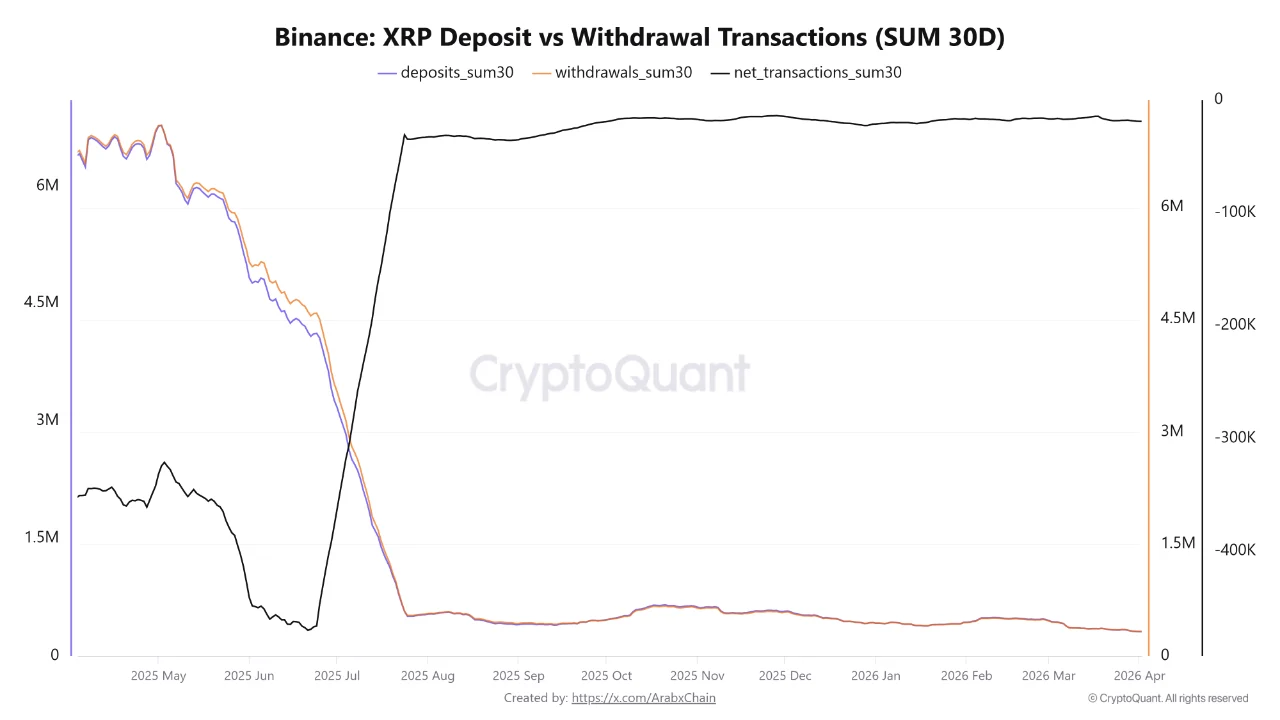
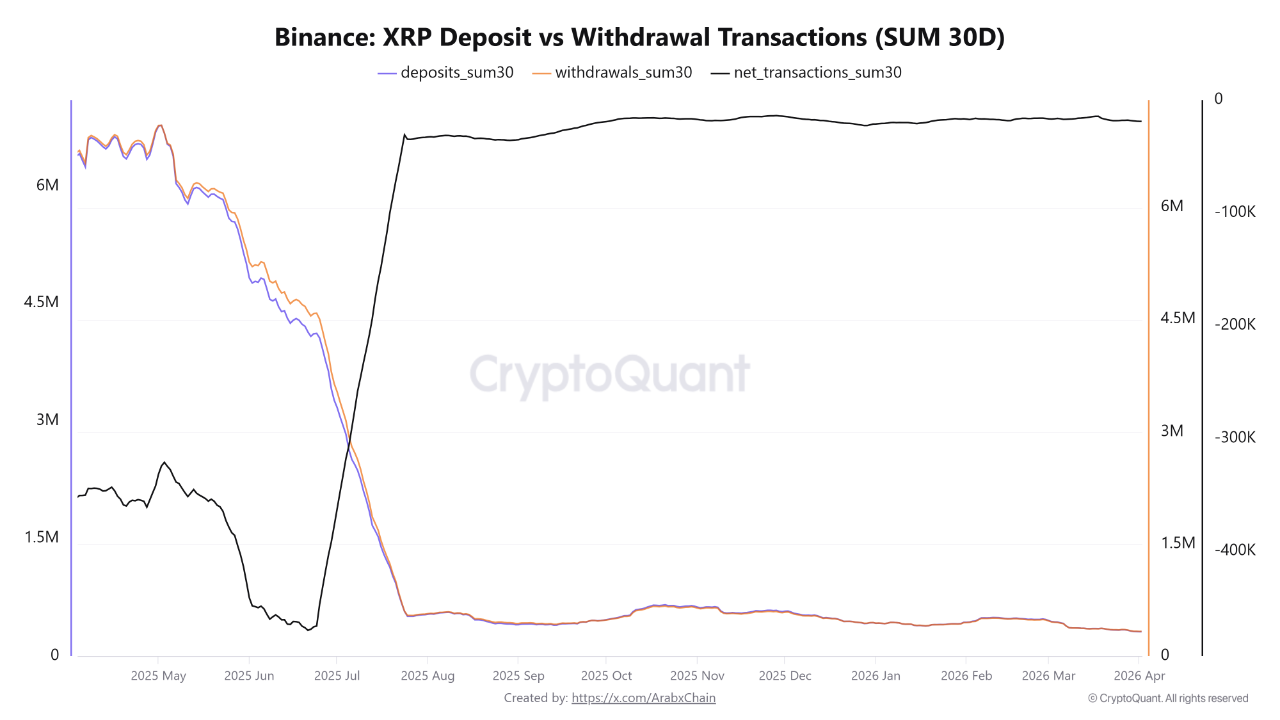
- XRP deposit transactions on Binance totaled 310,500 over the past 30 days, a yearly low figure.
- Withdrawals reached 329,400, creating a net negative transaction balance of roughly -18,900 in total.
- Transaction volumes once exceeded 6 million in a 30-day window before sharply declining in mid-2025.
- Steady XRP outflows from Binance may reflect cold wallet transfers and long-term accumulation behavior.
XRP transaction activity on Binance has dropped to its lowest point this year. Over the past 30 days, deposit transactions totaled around 310,500, while withdrawals reached approximately 329,400.
This resulted in a net negative count of roughly -18,900 transactions. The data reflects a clear decline in trader and investor activity, pointing to a period of visible market stagnation.
Transaction Volumes Reach Year-Long Lows on Binance
XRP deposits and withdrawals on Binance were considerably higher earlier in the year. At certain points in 2025, total transactions exceeded 6 million within a single 30-day window.
A sharp decline began in mid-2025, and volumes have remained subdued since then. The current figures mark the lowest activity levels recorded since that earlier peak.
Source: Cryptoquant
This drop in volume reflects reduced short-term trading interest across the platform. Fewer transactions generally correspond to lower speculative activity in the market.
As buying and selling pressures ease in tandem, price volatility tends to follow suit. The overall environment points to a quieter phase in XRP trading.
Earlier in 2025, stronger engagement from retail and institutional traders drove higher transaction counts. The mid-year reversal was swift, pulling volume down within a short timeframe.
Since then, no notable recovery has appeared in the available data. This extended period of low activity is consistent with the broader market slowdown.
Fewer deposit transactions also suggest a reduced appetite for exchange-based trading. When assets enter platforms at a lower rate, traders are typically less active in short-term positioning.
This aligns with the declining engagement trend observed on Binance. Together, these factors suggest the market has entered a consolidation phase.
Net Negative Transactions Reflect Steady XRP Outflows From Binance
With withdrawals consistently outpacing deposits, a net negative transaction balance has formed. The -18,900 gap reflects a steady movement of XRP away from the Binance platform.
This outflow pattern has persisted throughout the 30-day observation period. Even at low volumes, sustained outflows carry relevance when tracked over time.
This behavior is sometimes linked to accumulation strategies among longer-term holders. Some traders may be shifting XRP into cold wallets or private storage.
This is a common pattern during quieter market periods when speculation recedes. It does not signal selling pressure but rather a shift in asset management approach.
Moving assets off exchanges during calm periods is a recognized risk management strategy. It gradually reduces exchange-held supply, which is a measurable data point.
This trend does not indicate distress but rather deliberate repositioning by holders. Tracking this movement in the coming weeks will provide additional market clarity.
The current XRP data shows reduced activity and steady outflows on Binance. Volumes remain at yearly lows, and assets continue moving off the platform.
These trends reflect observable exchange data. The market is in a low-momentum phase as traders await clearer direction.
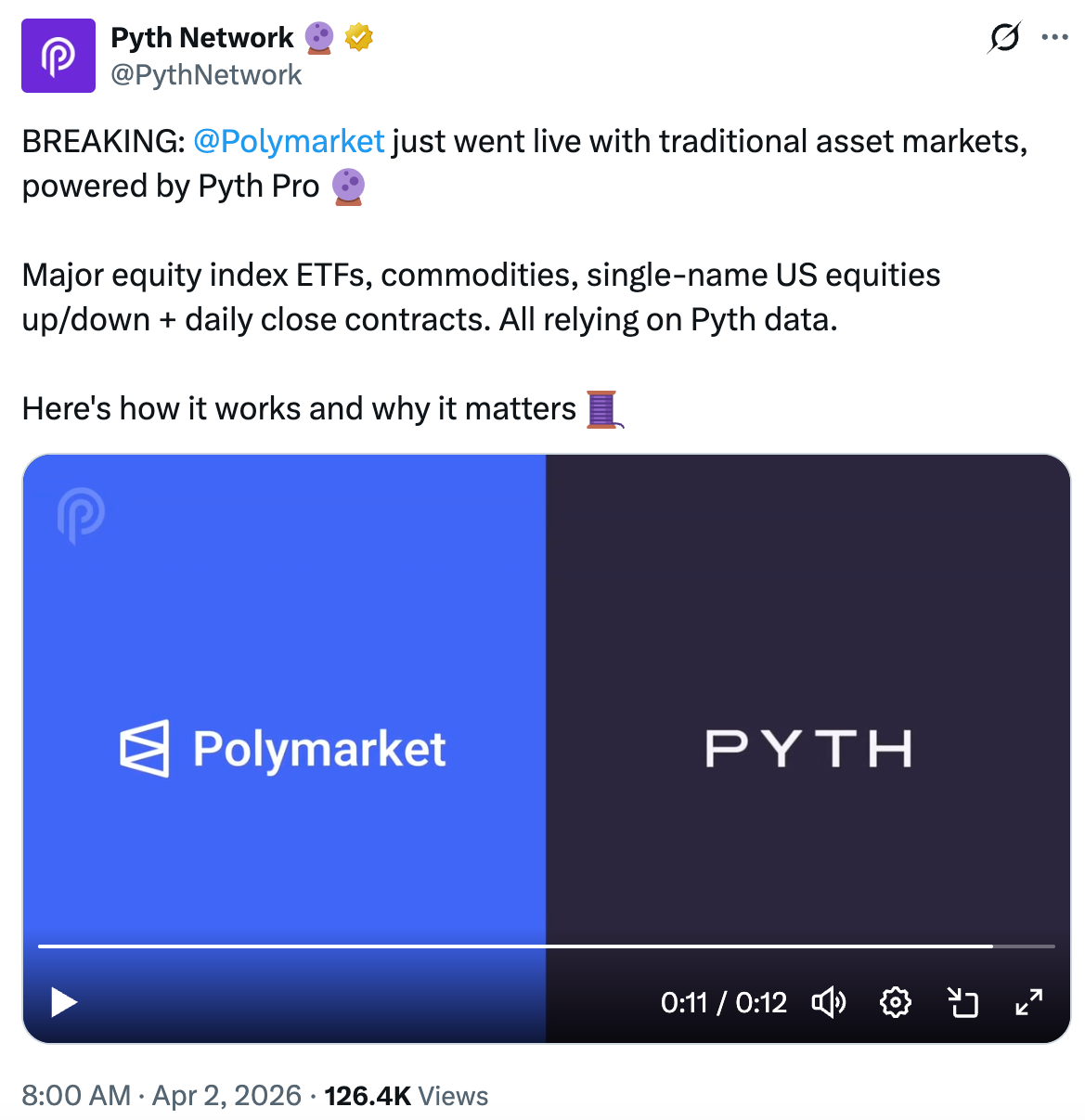
Polymarket has added markets tied to equities, commodities and exchange-traded funds, using price data from blockchain oracle provider Pyth Network as the resolution source to determine outcomes for daily contracts.
The new markets include daily up-or-down and closing price contracts for major equity indexes, commodities such as gold and oil, and a range of US-listed stocks, with outcomes settled automatically based on Pyth’s real-time price feeds. The contracts reset at the end of each trading session.
According to the announcement, the offering includes more than a dozen US-listed stocks, including Tesla, Nvidia and Apple, alongside commodities and equity indices.

By making Pyth the resolution layer for these markets, Polymarket is supplanting manual or exchange-specific references with a standardized data source aggregated from trading firms and market makers.
Zug, Switzerland-based Pyth said it also launched a data interface called Pyth Terminal, where users can track live price feeds and the reference values used to settle markets on Polymarket. Traders can follow a live “price to beat” that updates continuously as markets move.
Polymarket allows users to take positions on the outcomes of real-world events, such as sports, elections, financial markets and weather, with contracts resolving based on whether specific conditions are met.
Last week, Intercontinental Exchange, the parent company of the New York Stock Exchange, said it had completed a $600 million cash investment in Polymarket and plans to acquire up to an additional $40 million in shares from existing holders as part of a broader multibillion-dollar commitment to the platform.

Related: Polymarket fee expansion boosts revenue amid regulatory pressure
Oracles expand beyond crypto into real-world data infrastructure
Oracle networks, which bring offchain data such as prices, foreign exchange rates and commodities onto blockchains, are expanding beyond crypto into financial, government and prediction-based applications.
Their role has begun to extend into official data systems, with Chainlink and Pyth Network selected by US government agencies to publish economic data onchain, including GDP and inflation metrics. The announcement sent the PYTH (PYTH) token up more than 70% on the day, lifting its market capitalization past $1 billion.
The announcement comes as oracle providers are being used to power prediction markets and real-world event data, with RedStone integrating data from the CFTC-regulated platform Kalshi across more than 110 blockchains in October.
They are also playing a growing role in connecting crypto platforms to traditional financial markets. In January, Chainlink said it would roll out 24/5 price data for US equities and ETFs to crypto platforms, enabling trading, lending and derivatives tied to tokenized stocks beyond standard market hours.
The following month, Ondo Finance said it had integrated Chainlink as the data provider for tokenized US equities on its Ondo Global Markets platform, where the feeds are used to support lending and collateralization.
Data from DeFiLlama shows a highly concentrated oracle market, with Chainlink accounting for around 64% of total value secured. Other providers, including RedStone and Pyth Network, hold much smaller shares at around 5% each.

Magazine: AI agents will kill the web as we know it: Animoca’s Yat Siu


Wallet in Telegram now offers 50x perpetual futures on metals, stocks, oil, and crypto via Lighter’s hybrid stack, collapsing messaging, custody, and high-risk derivatives into one mini-app.
Summary
- Wallet in Telegram has launched perpetual contract trading with up to 50x leverage, using infrastructure from Lighter.
- The encrypted mini-app now offers more than 50 markets spanning metals, stocks, oil, and cryptocurrencies directly inside Telegram.
- The move deepens Telegram’s push into multi-asset derivatives as perpetual futures gain traction across exchanges and wallets.
Telegram’s embedded crypto service Wallet in Telegram has introduced perpetual contract trading inside the messaging app’s encrypted interface, according to an announcement from the official wallet_tg account on X. The feature, built with technical support from Lighter, lets users trade contracts on more than 50 underlying markets, including metals, stocks, oil, and major cryptocurrencies, with maximum leverage of up to 50x.
The wallet team said the new perpetual contracts extend Wallet in Telegram from simple transfers and swaps into a full derivatives venue integrated with chat. Earlier upgrades already added multi-asset trading and yield products, with one crypto.news story detailing how the wallet brought multi-asset trading and yield support to Telegram as it moved toward a Web3 “super app” model.
Perpetuals inside the Telegram wallet are powered by Lighter, a derivatives exchange that combines off-chain order execution with on-chain settlement on Ethereum. Lighter describes its platform as a perpetual futures venue with non-custodial smart contracts and zk-based verification, and a recent crypto.news story noted its expansion into 24/5 equity perpetuals as part of a broader derivatives push.
That hybrid approach is designed to give traders centralized-exchange style speed while keeping collateral and liquidations verifiable on-chain. As perps on Lighter have broadened from crypto into stock-linked contracts and commodities, plugging the stack into Wallet in Telegram effectively drops that multi-asset derivatives engine into an existing chat and wallet experience.
Perpetual futures have become one of crypto’s dominant derivatives, with major platforms and wallets competing on fee tiers, supported markets, and headline leverage. A crypto.news opinion story argued that perps now anchor crypto market structure by concentrating liquidity and price discovery in contracts without expiry, while another story on crypto futures trading stressed that funding rates, liquidation thresholds, and position sizing make risk management critical for retail users. A separate crypto.news story on U.S. oversight of crypto perpetuals highlighted how regulators, including the CFTC, are reassessing frameworks as leveraged products spread beyond specialist exchanges into interfaces like Wallet in Telegram.
By embedding up to 50x perpetuals inside Wallet in Telegram, the project is collapsing the distance between messaging, custody, and high-risk derivatives for a vast audience, increasing both the appeal of one-tap trading and the potential for misuse if users underestimate the risks of highly leveraged positions.
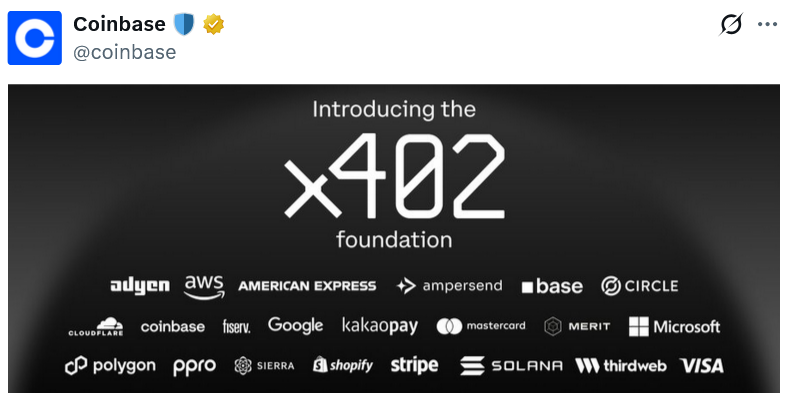
Google, Microsoft and Amazon Web Services are among the Big Tech firms named as founding members of the newly launched x402 Foundation, established to govern and standardize the x402 protocol for agentic AI payments on crypto and fiat rails.
The x402 Foundation was launched on Thursday by the open-source software development non-profit Linux Foundation with the help of Coinbase, the creators of the x402 protocol.
Other founding members of the x402 Foundation include American Express, Mastercard, Visa, Cloudflare, Shopify, Stripe, Circle, Base, Polygon Labs, Solana Foundation, Thirdweb and KakaoPay.
“The internet was built on open protocols,” Jim Zemlin, CEO of the Linux Foundation, said on Thursday, as he explained why the x402 protocol should adopt an open-source structure.
Launching the x402 protocol under the Linux Foundation gives it a “neutral, nonprofit home,” said Coinbase. It could help attract more support from tech firms and developers than if it were launched under a company banner.
The Linux Foundation is considered one of the largest and most influential open-source software nonprofits in the world.

The move comes amid a broad industry belief that AI agents could become the dominant users of blockchain payments in the coming years.
“There will be more AI agents transacting online than humans very soon,” Coinbase CEO Brian Armstrong said, echoing comments from Circle CEO Jeremy Allaire in January that “literally billions of AI agents” will be transacting onchain in three to five years.
Former Binance CEO Changpeng Zhao also said in January that crypto is the “native currency for AI agents,” which will handle everything from buying tickets to paying bills without credit cards.
Related: How AI agents can reshape arbitrage in prediction markets
For blockchain payments, the x402 protocol uses the HTTP 402 “Payment Required” status and Ethereum Improvement Proposal 3009, a pre-signed authorization feature, to enable the AI agents to transfer funds automatically without manual approval.
x402 transaction activity exploded before crashing down
Transaction activity for the x402 protocol peaked in November last year but quieted down in 2026, Dune Analytics data shows.
A peak of 13.7 million transactions was observed between the week of Nov. 4-10, followed by another 13.66 million transactions the following week.
However, transaction activity has fallen sharply since then, with weekly transactions falling between 29,000 and 1.1 million.

Magazine: AI agents will kill the web as we know it: Animoca’s Yat Siu


Nasdaq-listed Eightco Holdings has disclosed a $326 million position in 277 million Worldcoin tokens, plus ETH, cash, and an indirect OpenAI stake, effectively transforming the stock into a high-beta proxy on Sam Altman’s identity project and AI ecosystem.
Summary
- Eightco Holdings now holds 277 million WLD tokens worth about $326 million, making it the largest public company holder of Worldcoin.
- The Nasdaq-listed firm’s portfolio also includes a $90 million indirect stake in OpenAI, $25 million in Beast Industries, and over $100 million in cash and stablecoins.
- Eightco is positioning itself as a leveraged play on Sam Altman’s Worldcoin identity project and broader AI infrastructure, holding nearly 10% of WLD’s circulating supply.
Nasdaq-listed Eightco Holdings has disclosed a $326 million asset position centered on 277,222,975 Worldcoin tokens, making it the largest publicly traded holder of WLD globally, according to a press release on PR Newswire. At an indicative price of roughly $0.28 per WLD taken from Coinbase at the disclosure time, the position represents nearly 10% of Worldcoin’s (WLD) circulating supply and effectively turns Eightco into a listed proxy for the controversial identity token.
In the same disclosure, Eightco reported additional digital-asset and cash holdings that round out its balance sheet. The company highlighted an indirect $90 million investment in OpenAI via private vehicles, a $25 million stake in Beast Industries, and roughly $109 million in cash and stablecoins, underscoring that the Worldcoin bet sits alongside broader exposure to AI and infrastructure plays.
Eightco said its treasury includes 11,068 ETH alongside the WLD position and cash, and described itself as “the largest public market participant in the Worldcoin ecosystem.” As of early March, the firm’s filings indicated that WLD accounts for the bulk of its marked-to-market assets, with cash and stablecoins providing a liquidity buffer against token price volatility.
Chairman Dan Ives framed the strategy as a deliberate attempt to sit at the center of the AI and digital-identity boom tied to Sam Altman’s projects. “We believe the global AI revolution is still in its early innings, and Eightco is strategically positioning itself at the center of this transformation,” Ives said, describing the company’s focus as building “authentication and trust infrastructure” spanning consumer, enterprise and gaming use cases.
The disclosure comes as Worldcoin trades in the sub-$1 range after a sharp retracement from prior highs, with recent data showing WLD changing hands around $0.27 to $0.32 and a market capitalization under $1 billion. That pricing implies Eightco’s 277 million-token stake is a highly concentrated, high-beta exposure to both Worldcoin’s identity experiment and market sentiment on AI-linked crypto assets.
Eightco has previously raised hundreds of millions of dollars in private placements to fund its Worldcoin treasury strategy and related investments, signaling institutional backers are willing to finance a balance sheet tied heavily to a single experimental protocol. For equity investors, the updated holdings turn ORBS into a leveraged derivative on WLD’s future — with upside tied to adoption of proof-of-humanity systems, and downside if the token’s economics or regulatory headwinds overwhelm the AI narrative.

Alabama has become the second US state to grant decentralized autonomous organizations (DAOs) formal legal recognition, with Governor Kay Ivey signing the Alabama DUNA Act (Senate Bill 277) into law on April 1, 2026 – a move that hands Alabama crypto DAOs full legal personality, liability protection, and a clear path to tax compliance.
The legislation resolves one of crypto’s most persistent structural gaps: how DAOs operate legally in the real world.
With global DAO treasuries holding an estimated $24.5 billion in assets across 6.5 million token holders, the absence of formal legal standing has long been a liability risk for contributors and a barrier to institutional engagement.
Discover: Top Crypto Presales to Watch Before They Launch
What the Alabama Crypto DUNA Act Actually Delivers
Under the Decentralized Unincorporated Nonprofit Association framework, qualifying DAOs can own property, enter into contracts, open bank accounts, and sue or be sued as independent entities. Critically, individual members and administrators are shielded from personal liability, directly addressing the fallout from the 2024 Ooki DAO case, in which a federal court held DAO participants personally liable for CFTC violations.
To qualify, a DAO must have at least 100 members united around a common nonprofit purpose, such as governing a blockchain network or smart contract system. Governance can operate entirely on-chain, with voting, proposals, and consensus mechanisms recorded on the blockchain.
Miles Jennings, head of policy and general counsel at a16z crypto, called the bill’s passage a landmark moment, saying on Wednesday that “decentralized governance is essential to crypto’s future – it’s one of the core constructs in market structure legislation.” Jennings added the law gives communities “the certainty to build, govern, contract, and scale in the real world” while embracing innovation and protecting participants.
The House passed SB277 by an 82-7 vote with 16 abstentions on March 17, according to legislative records – a margin that signals broad bipartisan appetite for clearer DeFi regulation at the state level.
Wyoming vs Alabama: How the Models Differ
The Wyoming vs Alabama comparison is instructive. Wyoming pioneered DAO legal status in July 2021 with its DAO LLC law, which targeted for-profit entities.
Alabama’s DUNA Act is explicitly nonprofit-focused – meaning DAOs cannot distribute dividends in the traditional corporate sense, but can still generate commercial activity to support protocol growth. It’s a narrower but arguably cleaner legal wrapper for governance-first communities.

The development fits a broader pattern of crypto entities securing formal legal footing across US institutions, paralleling moves like Ripple’s pursuit of OCC national bank status and ongoing federal debates around stablecoin oversight frameworks.
As blockchain law at the state level accelerates, watch for potential DUNA registrations by major protocols like Lido in Q2 2026 and copycat bills in Tennessee and New Hampshire – while federal CFTC and SEC guidance on DAOs could test DUNA’s enforceability by mid-year.
Explore: Best Crypto Projects With High Growth Potential in 2026
The post Alabama Enacts DUNA Act: DAOs Get Legal Personality and Tax Framework appeared first on Cryptonews.
Form S-3 Taoweave Inc For: 2 April
SpaceX IPO Could Reshape Space Sector Valuations With a Record $75 Billion Listing

Trim Addresses Nicki Minaj Comparisons Amid Copying Allegations


-

 NewsBeat6 days ago
The Story hosts event on Durham’s historic registers
-

 Sports6 days ago
Sweet Sixteen Game Thread: Tide vs Michigan
-

 NewsBeat8 hours ago
Steven Gerrard disagrees with Gary Neville over ‘shock’ Chelsea and Arsenal claim | Football
-
Entertainment3 days ago
Fans slam 'heartbreaking' Barbie Dream Fest convention debacle with 'cardboard cutout' experience
-
 Entertainment5 days ago
Lana Del Rey Celebrates Her Husband’s 51st Birthday In New Post
-
Crypto World3 days ago
Dems press CFTC, ethics board on prediction-market insider trades
-

 Crypto World1 day ago
Gold Price Prediction: Worst Month in 17 Years fo Save Haven Rock
-

 Tech4 days ago
The Pixel 10a doesn’t have a camera bump, and it’s great
-

 Sports2 days ago
Tallest college basketball player ever, standing at 7-foot-9, entering transfer portal
-

 Tech3 days ago
EE TV is using AI to help you find something to watch
-

 Fashion5 days ago
Amazon Sundays: Soft Spring Layers
-

 Business24 hours ago
Login and Checkout Issues Spark Merchant Frustration
-

 Business2 hours ago
No Jackpot Winner and $194 Million Prize Rolls Over
-

 Tech3 days ago
Apple will hide your email address from apps and websites, but not cops
-

 Politics3 days ago
Should Trump Be Scared Strait?
-

 Crypto World3 days ago
U.S. rule change may open trillions in 401(k) funds to crypto
-

 Tech3 days ago
How to back up your iPhone & iPad to your Mac before something goes wrong
-

 Tech3 days ago
Flipsnack and the shift toward motion-first business content with living visuals
-

 Tech4 days ago
Avatar Legends: The Fighting Game comes out in July and it looks pretty slick
-

 Tech5 days ago
Elon Musk’s last co-founder reportedly leaves xAI
You must be logged in to post a comment Login