

Crypto World
EU Lawmakers Call for Clear DeFi, Staking, NFT Rules Under MiCA


The European Parliament’s Committee on Economic and Monetary Affairs (ECON) has asked the European Commission to examine whether additional parts of the crypto sector—such as crypto lending and borrowing, staking, non-fungible tokens (NFTs), and decentralized finance (DeFi)—should be brought within the EU’s regulatory perimeter. The request is set out in an own-initiative resolution tabled for the Parliament’s plenary vote, where it is expected to be considered on July 7.
While the measure would not amend the EU’s Markets in Crypto-Assets Regulation (MiCA) or create new legal obligations, it signals how lawmakers may shape subsequent Commission proposals and supervisory priorities. For crypto-asset service providers, banks, and institutional investors, the resolution matters less for immediate enforceable change and more for how it could influence the direction of EU crypto policy—particularly around stablecoins and “tokenization” of traditional financial services.
Key takeaways
- ECON urges the European Commission to assess whether crypto lending/borrowing, staking, NFTs, and DeFi merit additional regulation beyond MiCA.
- The draft resolution supports the development of euro-denominated stablecoins within MiCA and frames them as potentially complementary to tokenized bank deposits and wholesale central bank digital currency models.
- ECON calls for consistent, EU-wide application of MiCA to avoid divergent national rules that could fragment the single market.
- If adopted, the resolution would become the Parliament’s official policy position, but it would not modify MiCA or impose new obligations.
ECON’s resolution: expanding the policy lens beyond MiCA
The recommendations were drafted by Belgian Member of the European Parliament Johan Van Overtveldt and advanced through ECON’s internal negotiations before being tabled for a plenary vote. According to the European Parliament’s procedure documents, the resolution is an own-initiative instrument designed to set out guidance for the Commission regarding the future shape of EU digital asset regulation.
ECON’s central request is forward-looking: the committee asks the Commission to evaluate regulatory coverage for activities that are not uniformly addressed by MiCA’s current scope. The resolution explicitly references crypto lending and borrowing, staking, NFTs, and DeFi—areas that, in practice, span multiple business models and may involve varying degrees of custody, asset pooling, market-making, governance structures, and cross-border service provision.
For compliance teams and regulated intermediaries, the key issue is not simply “whether” these activities should be regulated, but “how” and “under which regime.” MiCA already establishes licensing and authorization requirements for certain crypto-asset service providers, while other frameworks—such as rules on anti-money laundering (AML), consumer protection, and market conduct—may apply depending on structure and distribution. ECON’s call indicates lawmakers want clearer boundaries and regulatory coherence as these products evolve.
Stablecoins and tokenized finance: a more constructive regulatory stance
A major element of the ECON resolution relates to stablecoins, particularly those denominated in euros. The text frames euro stablecoins as potentially supportive of the EU’s payments ecosystem and encourages their development within MiCA’s framework.
That approach reflects a broader policy shift among some European institutions, including a recognition that stablecoins can operate alongside—rather than necessarily replace—existing money and payment rails. ECON links euro-denominated stablecoins to potential integration with tokenized commercial bank deposits and wholesale central bank digital currencies, suggesting that future EU financial infrastructure could incorporate multiple “digital money” channels.
The policy context is particularly sensitive given how stablecoin arrangements interact with banking liquidity and reserve management. In earlier discussions around the banking turbulence in the United States, concerns were tied to reserve custody and banking counterparties. For example, during the collapse of Silicon Valley Bank, USDC issuer Circle reportedly held a material portion of reserves at the bank, and USDC briefly lost its dollar peg. Although those events occurred outside the EU, they continue to influence how European policymakers evaluate reserve quality, redemption arrangements, and systemic risk controls for stablecoins.
ECON’s resolution also aligns with the committee’s parallel work on the euro’s digital future. It references legislative momentum supporting a “coexistence” model for a potential digital euro alongside private digital money solutions—an approach that suggests policymakers may view stablecoins and public digital currency designs as complementary components of a broader digital payments architecture.
MiCA implementation pressure and the question of national divergence
The resolution goes beyond new regulatory topics by focusing on execution and market structure. It urges consistent application of MiCA across member states to preserve a level playing field for crypto firms. This is a crucial compliance concern: when national regulators introduce additional or differing requirements, firms face increased operating cost, legal uncertainty, and fragmentation of distribution strategies within the EU.
ECON’s earlier draft, presented by Van Overtveldt in February, reportedly focused more tightly on MiCA’s existing framework—such as stablecoin classifications and legal certainty for multi-issued stablecoins. Over months of negotiation, the committee incorporated a broader set of policy questions, culminating in the current recommendation set that also calls for reconsideration of regulatory coverage for activities such as DeFi and staking.
At the EU level, the Commission is already working to reassess parts of MiCA’s scope. In May, the European Commission launched a public consultation seeking input on whether the framework should be expanded to cover areas that include DeFi, staking, lending, NFTs, and tokenized financial assets, while also revisiting debates around MiCA’s ban on interest-bearing stablecoins. Although consultations are not binding legislation, they typically shape the Commission’s next steps and can provide a timeline for future legislative proposals.
Implementation is also time-bound. MiCA’s transitional period is set to end on July 1, after which crypto-asset service providers generally need authorization under MiCA to continue operating across the EU. That deadline increases the practical stakes for firms regarding licensing strategy, supervision expectations, and product mapping—especially for services that may fall near the edges between crypto-asset activity and activities that regulators may treat differently under existing financial law.
Institutional implications: compliance, consumer protection, and legal clarity
For banks, payment firms, and institutional investors assessing crypto exposure, the resolution underscores that EU oversight is moving toward a more comprehensive assessment of how crypto activities affect market integrity and risk allocation. Even without immediate amendments to MiCA, the Parliament’s policy position can influence supervisory guidance, regulatory interpretation, and the Commission’s legislative drafting priorities.
Key open questions remain. ECON’s call does not specify a single mechanism for extending regulation, and the outcome of the plenary vote would only establish a non-binding political mandate for the Commission. In practice, the future direction could depend on how the Commission and co-legislators determine which activities are best addressed by MiCA extensions versus other EU regimes (for example, rules tied to financial services licensing, AML/KYC, consumer protection, or market abuse).
Cross-border coordination is also likely to remain a central theme. DeFi and tokenized asset activities often rely on service providers, intermediaries, or infrastructure operating across jurisdictions. As the EU considers regulatory scope expansion, compliance teams will need to monitor how authorization requirements, supervisory expectations, and governance standards may be applied to novel business models—particularly those with decentralized features that complicate “who is responsible” under traditional regulatory frameworks.
Closing perspective
As the July 7 plenary vote approaches, the resolution’s adoption would provide the European Parliament with an explicit mandate on crypto regulatory coverage, reinforcing pressure on the Commission’s ongoing MiCA review process. The central item for observers is how the Commission translates this political direction into concrete legislative options—if any—particularly for stablecoins, DeFi-adjacent services, and staking-related business models.

Crypto World
Franklin Templeton Suggests Altcoins Could Be the Missing Piece of the Agentic AI Trade


Franklin Templeton says investors chasing artificial intelligence (AI) growth should look beyond AI stocks. The $1.8 trillion manager suggests cryptocurrencies and altcoins may be key to capturing the potential of agentic AI.
The argument comes from Sandy Kaul, head of digital assets at Franklin Templeton. She contends that agentic AI could become the “killer” use case that drives blockchain adoption.
Why Franklin Templeton Points to Crypto
Kaul’s thesis rests on how AI agents will transact. Autonomous software will make constant micropayments for compute, data, and services.
Standard card networks charge roughly 2% to 3% plus a flat fee per payment. Those costs make tiny machine payments impractical. Blockchains can settle sub-cent transactions in seconds and automatically record them.
“Agentic AI will likely need to rely on crypto technologies and blockchains to enable their activities as these rails are ideally suited for these use cases. Indeed, blockchains and crypto technologies are likely to become the foundational delivery layer for these transactions,” Kaul said.
Emerging standards support the idea. Coinbase built the x402 payment protocol and moved it to the Linux Foundation. Backers now include Visa, Mastercard, Stripe, Google, and Circle.
Follow us on X to get the latest news as it happens
The Case for Altcoins
The investment logic follows the transaction demand. To record activity on a chain, an agent pays fees in that network’s native token.
Kaul uses Solana (SOL) as her example. Rising agent activity could lift demand for the tokens of the chains that host it. She expects enterprise software to drive the first wave.
“Today, investors have positioned their portfolios to capture the AI growth opportunity by buying the stock of AI-aligned companies,” she noted. “To capture the potential of agentic AI, those same portfolios should consider extending their exposure to cryptocurrencies and the alt coins being generated by blockchain-based apps and projects.”
The opportunity remains largely forward-looking. McKinsey estimates agentic commerce could orchestrate $3 trillion to $5 trillion in revenue by 2030.
If a meaningful share of those transactions runs on blockchain networks, demand for the cryptocurrencies powering those ecosystems could rise, potentially strengthening the investment case for digital assets beyond traditional AI stocks.
Subscribe to our YouTube channel to watch leaders and journalists provide expert insights
The post Franklin Templeton Suggests Altcoins Could Be the Missing Piece of the Agentic AI Trade appeared first on BeInCrypto.


Bitcoin held near $66,300 on Wednesday, consolidating a two-week high, as the semiconductor rally that has driven crypto all month extended into a second session and the Japanese yen sank to its weakest level in four decades.
The largest cryptocurrency was up nearly 1% on the day and 3% on the week, with about $31 billion changing hands and a 24-hour range of roughly $65,400 to $66,900.
Ether traded near $1,935, up 3% on the week. XRP added 2% to $1.14 and TRON edged up, while the day’s laggard was hyperliquid’s HYPE, down 4% to $60 and off 10% over seven sessions. Bitcoin’s dominance and the majors’ muted daily moves point to a market drifting higher on macro rather than any crypto-native catalyst.
The engine is still the chip trade. MSCI’s Asia Pacific equities gauge rose 1%, extending Tuesday’s biggest one-day gain in a month, with South Korea’s Kospi jumping 5% as a leveraged-position unwind that had pulled the benchmark nearly 30% off its peak appeared to be ending.
Samsung and SK Hynix led, following a more than 5% jump in a U.S. semiconductor gauge on Tuesday that clawed the index back out of a technical bear-market territory.


Balance Coin (BLC), an algorithmic stablecoin designed to track the U.S. dollar, lost more than 99% of its value after blockchain security firms reported a suspected exploit involving 42DAO.
Summary
- Balance Coin lost more than 99% after security firms linked its collapse to 42DAO exploit.
- Attackers reportedly minted unbacked BLC before swapping tokens for USDT and BTCB through PancakeSwap pools.
- Two suspicious transactions on BNB Chain reportedly extracted about $915,000 as Balance Coin rapidly depegged.
PeckShield said the incident caused about $915,000 in losses and linked the BLC collapse to an exploit affecting 42DAO, the decentralized organization connected to the Balance Protocol ecosystem. The security firm said Balance Coin “has plummeted -99%” following the reported attack.
The price fell from close to its intended $1 peg to a record low of $0.001209 on July 22. At the time of checking, CoinMarketCap showed BLC trading near $0.00247, down 99.75% over 24 hours. Its 24-hour range stretched from $0.001209 to $0.9955.
Security firms trace suspected attack to two transactions
TenArmor reported detecting two suspicious transactions involving GemJoin and 42DAO on BNB Chain. Onchain data cited in reports showed that the first transaction minted about 4.5 million BLC from a null address before moving the tokens to PancakeSwap V2.
The attacker then reportedly swapped the newly created BLC for Binance-pegged USDT, also known as BSC-USD, and Binance Bitcoin (BTCB). Around two hours later, a second transaction allegedly used the same method to mint another 5,900 BLC and extract more assets from available liquidity.
The reported minting increased the number of BLC tokens available for sale without the normal controls expected from the protocol. As the newly created tokens entered decentralized exchange pools, selling pressure pushed BLC sharply away from its dollar target.
PeckShield estimated the losses at about $915,000. However, the security firms described the event based on their analysis of onchain activity, and a detailed post-incident report from 42DAO had not been identified in the latest available public information reviewed for this report.
Balance Coin loses its U.S. dollar peg
Balance Coin operates as the stablecoin at the center of the Balance Protocol ecosystem. CoinMarketCap describes BLC as an algorithmic stablecoin on BNB Chain designed to maintain a stable value against the U.S. dollar, while 42DAO describes the token as part of its wider financial ecosystem.
The token’s fall left it trading at a small fraction of its intended value. Although its price recovered slightly from the intraday low, it remained more than 99% below the level recorded before the reported exploit when checked.
The incident resembles other cases in which unauthorized token creation placed sudden pressure on market liquidity. As crypto.news reported, Resolv’s USR stablecoin lost its peg in March after an attacker minted millions of unbacked tokens and exchanged them through DeFi markets. Resolv later paused protocol functions while investigating the breach.
Unauthorized minting remains a recurring attack method
Other crypto projects have also faced sharp price declines after attackers created tokens without authorization. As previously reported by crypto.news, MAPO fell 96% in May after attackers exploited a bridge flaw to create unauthorized tokens and sell them into decentralized exchange liquidity.
In another case, Stake DAO faced an exploit in May after an attacker reportedly minted trillions of vsdCRV tokens before swapping them for ETH. These cases involved different technical weaknesses, but each allowed an attacker to create tokens outside the expected supply process.
For Balance Coin, the immediate focus remains on the reported 42DAO exploit and the status of BLC after its near-total depeg. The available onchain reports point to two suspected attack transactions,
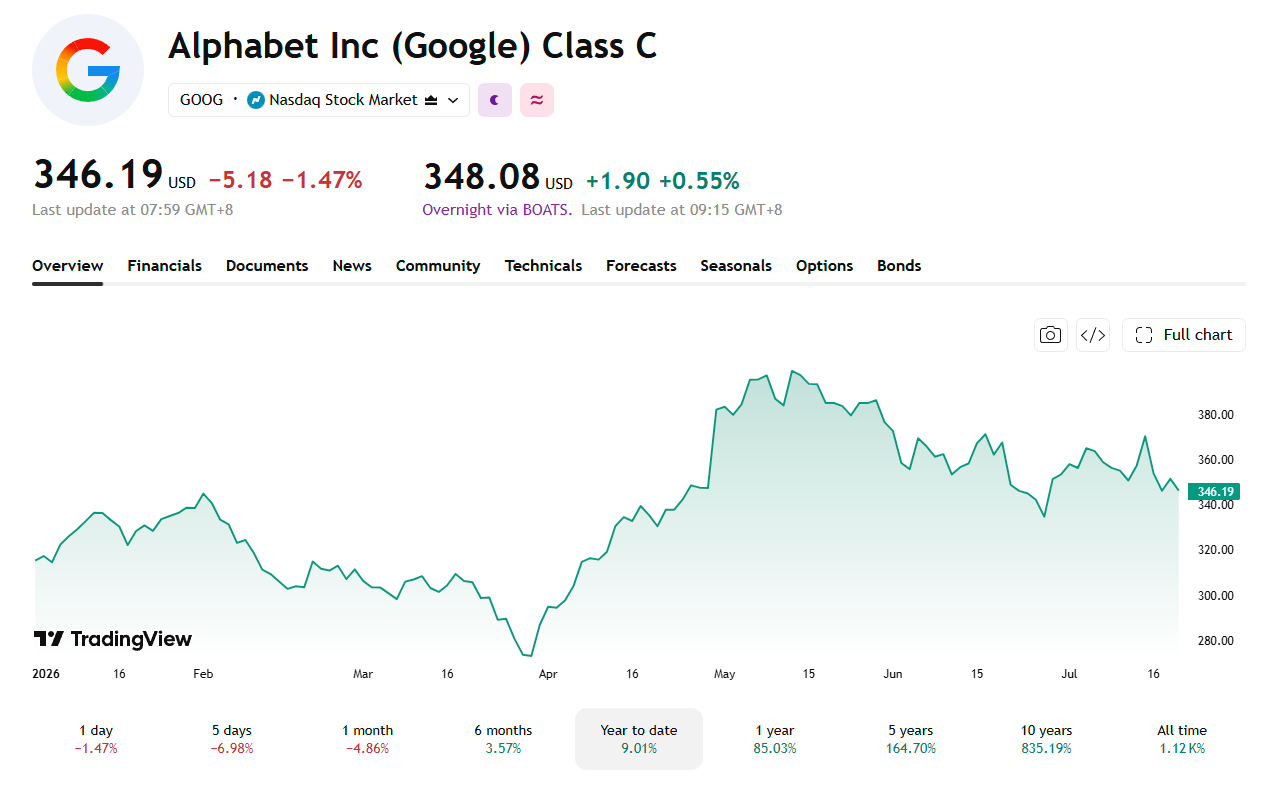
Alphabet (GOOGL), Google’s parent company, reports second-quarter earnings today after the market closes. Wall Street expects double-digit growth. But investors are watching one thing more closely: can the company’s massive artificial intelligence spending start to pay off?
The stock has climbed sharply over the past year. It has also pulled back from its May highs heading into the print. Here is what a general investor should watch for.
The Numbers Analysts Expect
Consensus estimates point to revenue of roughly $116.8 billion, up about 21% from a year earlier. Analysts expect earnings of approximately $2.89 per share. Alphabet has beaten estimates for several straight quarters. That track record raises the bar for today’s report.

Google Cloud grew 63% year over year last quarter, the fastest pace among major cloud providers. Total company revenue rose 22% to $109.8 billion. The cloud unit’s profit margin nearly doubled too.
Net income also jumped, but unrealized gains on Alphabet’s stakes in companies like SpaceX drove much of that increase. Investors will look past the headline profit number today. They want to gauge how much came from actual operations, not paper gains. Cloud growth, not the profit headline, is the number that matters most this quarter.
AI Spending Is the Real Story
Alphabet has guided for $180 billion to $190 billion in 2026 capital spending. That’s the money it spends building data centers and AI chips, however, thatfigure has tested investor patience. The company recently raised fresh equity to help fund the buildout, a move that broke a decades-long habit of funding growth internally.
Cloud’s roughly $460 billion order backlog fuels the bull case and points to years of future revenue already booked. The bear case is simpler; slow profit conversion, or a Gemini rollout that keeps slipping, could send the stock lower regardless of today’s headline numbers.
What Else Could Move the Stock
Search advertising remains Alphabet’s largest business and Investors want reassurance that AI-generated search summaries aren’t eroding traditional ad revenue. Some Wall Street desks have also rotated out of Meta stock and into Google because they’re betting Alphabet’s cloud and chip business offers a clearer path to AI profits than its rivals.
Alphabet’s custom AI chips, called Tensor Processing Units, add another wrinkle. The company recently started selling this chip technology to outside customers. Any update on that business could reshape how analysts view Alphabet’s AI strategy beyond its own products.
The takeaway for most investors is simple. The market wants proof that Alphabet’s AI bet is turning into durable profit, not just bigger bills, so Strong revenue alone won’t be enough today.
Watch how management addresses capex, Cloud backlog conversion, and the Gemini timeline on today’s call. Those answers could move the stock more than the quarterly numbers themselves.
The post Google Earnings Today: What to Expect as AI Spending Faces Scrutiny appeared first on BeInCrypto.
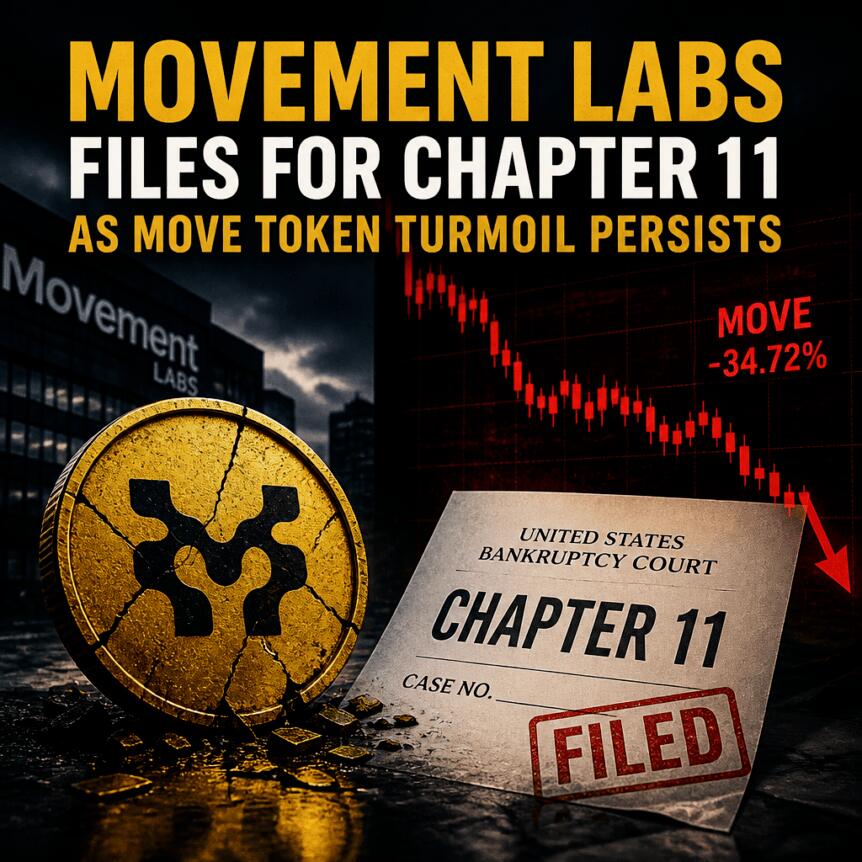
Movement Labs, the team behind the Movement Ethereum layer-2 blockchain, has filed for Chapter 11 bankruptcy protection in the US Bankruptcy Court for the District of Delaware, according to court records. The filing, made July 15, uses Subchapter V—an expedited reorganization track intended for qualifying small businesses—while the company restructures under court supervision.
The court has already approved interim requests that allow Movement Labs to keep operating through the process. Those approvals include maintaining bank accounts and cash management systems, along with access to debtor-in-possession (DIP) financing to fund continued operations. Creditors have until Sept. 14 to submit claims.
Key takeaways
- Movement Labs filed for Chapter 11 under Subchapter V, enabling continued operations while it restructures.
- Interim court approvals cover cash handling and DIP financing to support day-to-day operations during bankruptcy.
- The petition applies to Movement Labs only, according to Move Industries CEO Torab Torabi.
- Multiple earlier setbacks tied to MOVE token trading and market-making concerns preceded the bankruptcy filing.
Court-supervised reorganization begins under Subchapter V
In its Chapter 11 filing, Movement Labs sought protection as it reorganizes following a period of disruption for the Movement ecosystem. The petition was filed July 15 in the District of Delaware and placed the company under court oversight, with Subchapter V designed to streamline the path to reorganization for eligible businesses.
Per the court approvals reported in the filing process, Movement Labs was allowed to continue using its banking and cash management arrangements. The court also authorized debtor-in-possession financing—an important step in Chapter 11 cases because it can help preserve operational continuity while liabilities are addressed.
The timeline for creditors is set at Sept. 14 to file claims, giving holders of potential debts a defined window to participate in the bankruptcy process.
What “Chapter 11” means for the ecosystem
After the bankruptcy filing became public, Move Industries CEO Torab Torabi clarified that the court protection applies only to Movement Labs. Torabi wrote on X that Move Industries—described as having taken over development and operations of the Movement ecosystem—continues to operate normally.
Earlier coverage and Movement’s own communications indicate that Move Industries assumed responsibility for development and operations from Movement Labs in December 2025, through a transfer described in a post on the Movement Network website: Movement Network Foundation and Move Industries announce completion of.
That distinction matters for readers trying to separate the corporate entity in bankruptcy from the broader project. While Chapter 11 may affect contracts, liabilities, and certain company-held assets, it does not automatically mean all ecosystem activity halts—especially where another operator is already handling development and operations.
A market-making controversy and listing actions preceded the filing
Movement Labs’ bankruptcy comes after months of controversy connected to the launch of Movement’s MOVE token and a market-making agreement that drew scrutiny.
According to earlier reporting from Cointelegraph, Movement Labs suspended co-founder Rushi Manche in May 2025 over a deal he helped broker with Web3Port. The market maker reportedly received 66 million MOVE—about 5% of the token’s supply—and later sold the holdings. Cointelegraph noted this was followed by an independent investigation, with the reported sales creating downward pressure on the token’s price.
Cointelegraph also reported that Coinbase suspended trading for MOVE later in May 2025 after determining the token no longer met its listing standards, while review into the market-making arrangement was ongoing.
In the period since those events, the MOVE token faced prolonged weakness. Cointelegraph cited a continued decline, stating the token has fallen more than 94% over the past year to roughly $0.01. The article referenced CoinGecko for the one-year price chart: CoinGecko.
Investors and users: what to watch next
Chapter 11 filings often signal the beginning of a longer restructuring process, and this one is likely to add a layer of legal complexity to questions around Movement Labs’ obligations and any assets under its control. Even if Move Industries continues operating, the bankruptcy proceedings can still influence how related contracts are handled and how remaining stakeholders are treated.
With creditors now having until Sept. 14 to file claims, the next steps worth monitoring are the bankruptcy court’s ongoing approvals, the scope of DIP financing over time, and whether subsequent filings clarify what parties will be prioritized during restructuring.


President Donald Trump called on the Senate to pass the Clarity Act "in honor of Senator Lindsey Graham, a big supporter" of the crypto market structure bill, in a Truth Social post Monday. Graham, the South Carolina Republican and Senate Banking Committee chair, died unexpectedly on July 11. Trump… Read the full story at The Defiant
Strategy sold $466.7 million worth of MSTR common stock between July 6 and July 12, 2026, lifting its USD reserve to $3 billion while leaving its bitcoin holdings unchanged at 843,775 BTC, according to a Form 8-K the company filed with the SEC on July 13. The company sold roughly 4.82 million… Read the full story at The Defiant


S&P Dow Jones Indices and Pantera Capital have launched the S&P Pantera Digital Asset Index, a new benchmark that selects digital assets using revenue, market size and liquidity measures.
Summary
- S&P and Pantera launched an 18-token index focused on revenue-generating digital assets for institutional investors.
- ETH, BNB, SOL, TRX and HYPE rank as the index’s five largest confirmed current holdings.
- The benchmark screens tokens by revenue, liquidity and market size before applying capped market-cap weightings.
The firms announced the product on July 21, while S&P index materials list July 20 as its official launch date. The index currently holds 18 digital assets and targets institutional investors seeking a structured way to track a broader part of the crypto market, according to the official announcement.
The five largest constituents are Ether (ETH), BNB, Solana (SOL), TRON (TRX) and Hyperliquid (HYPE), according to S&P Dow Jones Indices. The selection gives the benchmark a different profile from crypto products that concentrate heavily on Bitcoin or rank assets mainly by market capitalization. S&P says the index focuses on protocols that show recurring economic activity through protocol-level revenue.
Revenue rules shape the S&P Pantera Digital Asset Index
The index starts with assets from the S&P Cryptocurrency Broad Digital Asset Index and then applies several eligibility tests. New constituents must have a market capitalization above $500 million and meet a liquidity ratio above 0.5. Existing constituents receive a lower $250 million market-cap threshold. The screening process then narrows the eligible universe to assets that meet the benchmark’s economic activity requirements.
After the initial screening, the index ranks eligible assets by revenue generated over the previous two quarters. It adds assets until the selected group represents 99% of the eligible universe’s total revenue. S&P uses data from Artemis to measure protocol-level revenue. The index then weights constituents by adjusted market capitalization, while limiting the largest holding to 35% and every other holding to 20% at each rebalance.
Cathy Clay, CEO of S&P Dow Jones Indices, said the company built the benchmark around “using a fundamentals-driven, economics-based framework built for diversified portfolios.” The structure allows the index to serve as a benchmark for active strategies and as a possible base for future index-linked investment products. S&P also states that protocol revenue acts as a rules-based measure of economic activity rather than a forecast of future investor returns.
ETH, BNB and SOL lead the 18-token basket
The current top holdings show how the revenue screen changes the composition of a broad crypto benchmark. Ether sits among the largest constituents alongside BNB and SOL, while TRX and HYPE complete the top five. The basket therefore includes smart-contract platforms and trading infrastructure that generate measurable activity across their networks.
The approach also places less weight on token popularity alone. Dan Morehead, Pantera Capital’s founder and managing partner, said “the biggest friction point in crypto hasn’t changed; it’s knowing how to allocate.” Pantera contributed digital-asset research and governance experience to the project, while S&P supplied its index design and administration framework.
The launch follows other moves by S&P Dow Jones Indices to expand its digital-asset products. As previously reported by crypto.news, S&P announced plans for the S&P Digital Markets 50 Index in 2025, combining 15 cryptocurrencies with 35 crypto-linked public companies. That product takes a wider ecosystem approach, while the new Pantera index narrows its selection around recurring protocol revenue and economic activity.
Institutional crypto benchmarks continue to expand
Other financial market operators have also introduced basket-based crypto products for professional investors. As crypto.news reported in June, CME Group launched Nasdaq CME Crypto Index futures tied to eight major digital assets. The cash-settled contract gives investors a regulated way to gain or hedge exposure to several cryptocurrencies without holding each underlying token directly.
Meanwhile, S&P has continued work that connects established benchmarks with blockchain infrastructure. As crypto.news reported in April, S&P Dow Jones Indices and Kaiko announced plans to bring the iBoxx U.S. Treasury index onto the Canton Network. The project aims to support index-linked products through on-chain index data, licensing terms and access controls.
The S&P Pantera Digital Asset Index adds another model to this growing set of benchmark products. Rather than building the basket around market capitalization alone, it uses revenue and liquidity screens before assigning capped market-cap weights. Its 18-token composition and current top holdings place ETH, BNB, SOL, TRX and HYPE at the center of the benchmark at launch.
S&P says the index can act as a reference point for active managers and potential index-linked products. However, investors cannot invest directly in an index, and third parties would separately issue any investment products based on the benchmark. The index’s composition can also change at future rebalances as assets meet or fall outside its selection rules.
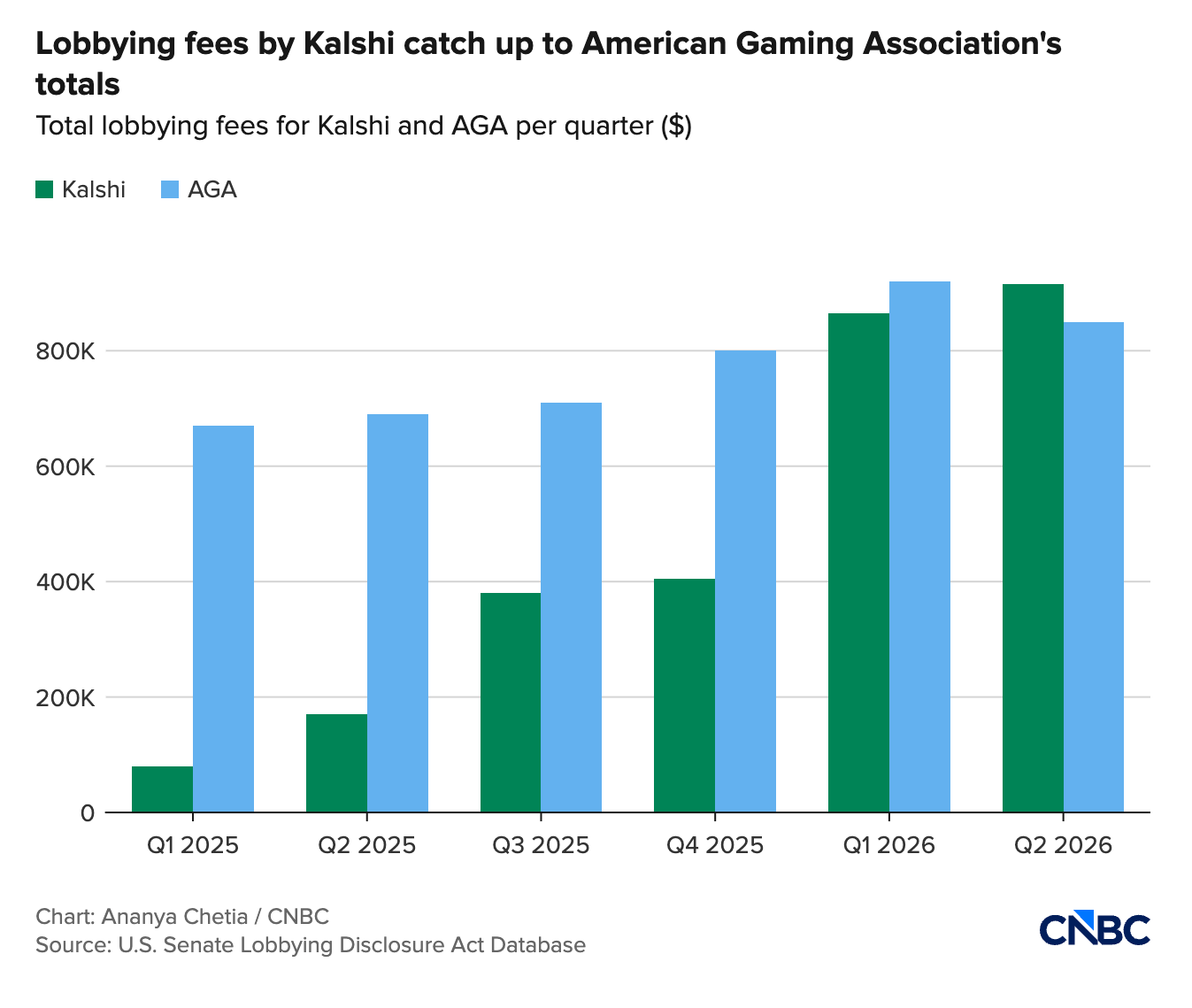
Kalshi spent $990,000 on federal lobbying in the first half of 2026, nearly matching its total for all of last year, as it races to counter the casino industry on Capitol Hill.
The prediction market operator and its gambling-sector rivals are both sharply raising spending. Kalshi’s direct lobbying alone nearly matches the American Gaming Association’s, signaling how hard each side is working to win over lawmakers.
The Prediction Market vs Gambling Lobbying Fight
Kalshi’s $990,000 closes in on the $1 million it spent across all of 2025. Including outside firms, its total nears $1.8 million, a record six-month figure disclosed in federal filings this week.
The company deploys seven lobbying firms, including its in-house team. It has hired former Biden and Obama administration officials to widen its reach. Kalshi also counts Donald Trump Jr. as a paid advisor.
Polymarket keeps a lighter presence. A single firm spent $180,000 on its behalf, pacing toward the $360,000 spent last year.

The gambling side is spending more, too. The American Gaming Association has committed $1.39 million in 2026, up 30% from the same period last year. The Cherokee Nation, which holds gaming interests, has spent $600,000.
Patrick McHenry, a former Republican congressman who now advises the Coalition for Prediction Markets, said the casino lobby has a structural head start.
“So much of the existing infrastructure of engagement on the Hill and at the states has been by the casino industry. The prediction markets are a new entrant into the policy debate in Washington, and are making great strides at communicating with lawmakers,” he said.
Follow us on X to get the latest news as it happens
Why the Two Sides Are Clashing
At the center of the tension is the rise of prediction markets and their growing pull on retail users. As these venues gain popularity, they are drawing bettors away from traditional sportsbooks.
That shift explains the gambling sector’s resistance. Operators view sports-event contracts as direct competition that bypasses state and tribal gaming rules.
The tension escalated in June, when the gambling industry pressed the Senate to ban sports contracts in the crypto market structure bill.
Prediction markets have also faced concerns about insider trading. Recent incidents highlight the scale of the problem.
That activity has renewed scrutiny from lawmakers, many of whom have introduced bills to curb the practice. The platforms themselves have moved to counter the growing concern.
Subscribe to our YouTube channel to watch leaders and journalists provide expert insights
The post Prediction Markets and Casinos Are Both Betting Big on Washington appeared first on BeInCrypto.


Coinbase Chief Executive Brian Armstrong said Base's yearlong push into creator "content coins" failed, telling a critic on X Monday that the Coinbase-incubated network "pivoted early this year" away from the strategy. "They didn't work and we pivoted early this year. We messed up, time to turn the… Read the full story at The Defiant

The Anthropic-Physical Intelligence rumor roiling AI Twitter

My Pi My Life || Power Of Pi Utility

The Morning Poll: Will Burnham’s VAT cut on electricity bills make a big difference to you?


-
 NewsBeat6 days ago
London Mayor Sadiq Khan handed a peerage by Keir Starmer alongside 15 other Labour figures… just days before the PM leaves No10
-

 Fashion4 days ago
Weekend Open Thread – Corporette.com
-

 Politics4 days ago
The House | The City of London can help the new chancellor deliver growth in every postcode
-

 Politics7 days ago
Young campaigners urge incoming PM to act on outdoor junk food ads
-
 Crypto World5 days ago
Two July Windows Left: The CLARITY Act’s Senate Fight and What Failure Means
-

 Crypto World6 days ago
CFTC blocks Kalshi from unwinding Michigan trades after court order
-

 Crypto World4 days ago
Ripple Payments Joins MiCA With 14 Firms, Does It Mean Anything For XRP?
-

 Business6 days ago
Nvidia Stock Slips After Big Tuesday Rally as Huang Confirms Vera Rubin Chip Is Now in Production Today
-

 Politics3 days ago
Democrats look to World Cup watch parties to register thousands of voters
-
 Entertainment7 days ago
Disney’s Most Ambitious Failed Star Wars Attraction Is Coming to SDCC
-

 Crypto World4 days ago
Ripple wins EU-wide access as ESMA adds it to MiCA register
-

 Crypto World20 hours ago
Grayscale Files For Worldcoin ETF, WLD Registers Sharp Rise
-

 Crypto World5 days ago
Injective Submits SEC Transfer-Agent Registration to Onchain Ownership Records
-

 Business6 days ago
Palantir Shares Rise After Expanded Nvidia Partnership and Fresh Analyst Upgrades Ahead of Earnings Day
-

 Tech1 day ago
Sail Virtually Aboard The “Itanic” With IA-64 Emulator
-
 Tech1 day ago
Turtle Beach Command Series KB7 review: a nifty screen-equipped gaming keyboard
-

 NewsBeat5 days ago
Registration is now open for March for Men with Kev 2026
-

 NewsBeat2 days ago
Unregistered fitter used Gas Safe logo on business flyers
-
 Sports6 days ago
New Cornerback Enters Vikings Trade Rumor Mill
-

 News Videos5 days ago
Money | Class 12 Economics | CBSE Board Exam 2026-27
You must be logged in to post a comment Login