

Crypto World
February 2026 CPI Data Preview: Inflation Outlook Ahead of Wednesday’s Release


Key Takeaways
- Economists project February CPI will increase 0.3% monthly with a 2.4% annual rate, matching January figures
- Data collection period ended before Iran War escalation, meaning recent oil price jumps aren’t reflected
- Declining used vehicle and food prices may counterbalance upward pressure in other categories
- Federal Reserve anticipated to maintain current 3.50%–3.75% interest rate range at upcoming meeting
- Extended Middle East conflict could elevate oil costs and alter Fed policy trajectory
The Bureau of Labor Statistics will unveil its February Consumer Price Index figures on Wednesday, March 11, at 8:30 a.m. Eastern Time. Market analysts anticipate a monthly increase of 0.3% and an annual gain of 2.4%.
The core inflation measure, excluding volatile food and energy components, is projected to advance 0.3% from the prior month and 2.5% year-over-year. These projections mirror the patterns observed in January’s data release.
January’s inflation figures surprised to the downside, primarily due to declining prices for pre-owned vehicles and reduced energy expenses. Market watchers believe these disinflationary forces will persist through February.
According to Josh Jamner, senior investment strategy analyst at ClearBridge, both used automobile and grocery price growth should moderate further. “Food has been a source of upside price pressure over the last couple of months,” he noted, “but we expect food and home prices to be cooler this month.”
Shelter costs are also anticipated to show moderation. Jamner suggested the possibility of “outright deflation” in food categories, though he characterized this as an optimistic scenario rather than the central forecast.
However, not every category faces downward pressure. Goldman Sachs analysts point to tariff-affected goods — particularly recreational items — as likely sources of continued price increases. Wells Fargo’s research team observed that “progress on lowering inflation is stalling out again.”
Middle East Conflict’s Price Impact
The Iran War, which erupted after February’s data collection window closed, has already elevated crude oil prices. Bank of America analyst Stephen Juneau highlighted that the US-Israel military campaign in Iran has pushed oil valuations up approximately 18% from late February benchmarks.
Since Wednesday’s CPI release captures only February activity, this petroleum price surge remains outside the report’s scope. Financial analysts anticipate the energy shock will materialize in March and April inflation readings.
“This data is from before the recent conflict in the Middle East broke out,” Jamner explained. “That’s going to be a March and April dynamic.”
A protracted Middle East confrontation could apply upward force to both headline and underlying inflation metrics in coming months, Bank of America researchers warn.
Federal Reserve Rate Path Expectations
Market pricing indicates roughly 97% probability that the Federal Reserve will maintain its current 3.50%–3.75% policy rate at next week’s monetary policy meeting. Only 3% of market participants anticipate a 25 basis point reduction.
Fed officials aren’t expected to respond solely to Wednesday’s inflation print. Policymakers are simultaneously monitoring Middle East developments and deteriorating labor market conditions before adjusting monetary stance.
Last month saw 92,000 jobs eliminated from payrolls, pushing the unemployment rate to 4.4%. This disappointing employment report adds another complicating factor to the Fed’s policy calculus.
Bank of America strategists suggest elevated energy prices will likely keep the Fed in holding pattern near-term. However, should petroleum costs begin suppressing consumer spending, they predict the central bank “would likely turn more dovish in the medium term.”
The Federal Reserve’s primary inflation gauge, the Personal Consumption Expenditures index, registered a 2.9% annual increase in December — significantly above the 2% policy target. January PCE figures are scheduled for Friday release.



Almost $27 million worth of liquidations were triggered on DeFi lending giant Aave yesterday, thanks to a faulty price cap oracle update.
The Correlated Asset Price Oracle (CAPO), run by risk manager Chaos Labs, sets caps for the price ratio between correlated assets, in order to protect against price manipulation attacks on the protocol.
In a post to the Aave governance forum, Chaos Labs explained that, due to a timestamp mismatch, the price ratio between wstETH and stETH was capped below the current market rate, causing a price drop of 2.85%.
This was enough to liquidate those positions close enough to the liquidation threshold.
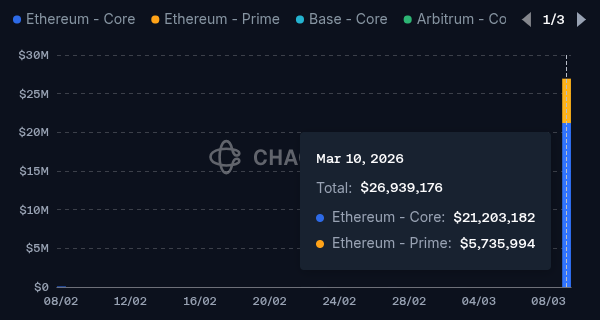
The company’s dashboard (filtered for wstETH) shows $21.2 million of liquidations on Aave’s Ethereum Core instance, and a further $5.7 million on its Prime instance.
Read more: Aave developer BDG Labs to ‘cease contribution’ after DAO drama
Chaos Labs’ founder, Omer Goldberg, promised that “all affected users will be fully reimbursed.” He says that, since launching over a year ago, its oracles “have streamed over 1,200 payloads for ~3k+ parameters, with zero incidents.”
While the protocol didn’t suffer bad debt, liquidators profited approximately 500 ether (ETH) worth $875,000. Around 30% of this (154 ETH) was recovered, and will be used to reimburse users, with the remainder coming from the Aave treasury.
A similar pricing error resulted in $1.8 million of bad debt DeFi protocol Moonwell last month.
In an AI-coauthored update, the ratio between ETH and cbETH was used to price cbETH in dollars, liquidating borrowers whose collateral was suddenly worth $1.12 instead of around $2,200.
The damage for Aave may not have been too severe this time, but one blockchain security professional questioned why the changes aren’t run through a transaction simulation before going live, a simple sanity check which could prevent more serious losses, and even bad debt, in future.
Aave in crisis
The malfunction comes during a period of tumult for decentralized finance’s number one protocol.
Since December last year, the DAO and Aave Labs have been in dispute over who really controls Aave. The spat has seen DAO service providers accuse founder Stani Kulechov’s Aave Labs of playing dirty and pushing through plans for an upcoming v4 of the protocol.
Indeed, two key service providers have recently thrown in the towel.
Developer BGD Labs left last month over Labs’ snubbing of the wildly successful v3, in favor of the Labs-developed v4.
Shortly after, Marc Zeller’s ACI reached “breaking point” following the recent Aave Will Win vote, which swung narrowly in Labs’ favor.
Got a tip? Send us an email securely via Protos Leaks. For more informed news, follow us on X, Bluesky, and Google News, or subscribe to our YouTube channel.
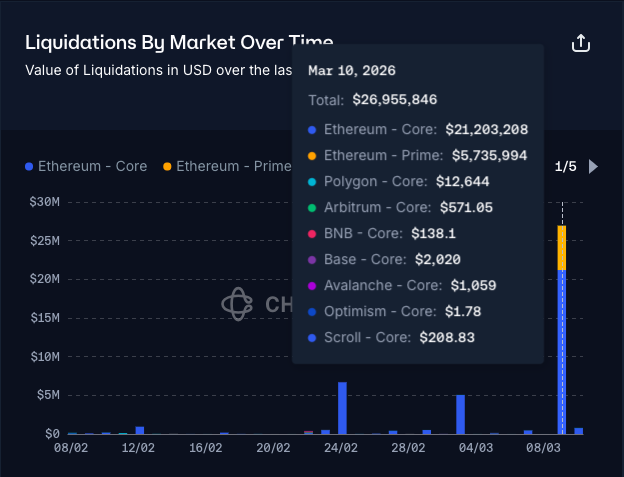
A misconfigured Oracle system in Aave triggered $27 million in forced liquidations on March 10, undervaluing wrapped staked Ether by 2.85% against its actual market rate.
According to the post-mortem by Chaos Labs, the CAPO oracle error caused Aave V3 Ethereum Core and Prime instances to apply an exchange rate of roughly 1.1939 wstETH-per-ETH when the live onchain rate was approximately 1.228, enough of a gap to push 34 high-leverage E-Mode positions below their liquidation thresholds automatically.
It resulted in the liquidation of 10,938 wstETH. The protocol says it incurred no bad debt and is moving to compensate all affected users.
The Damage: 34 Users, $27M in Liquidations, and 499 ETH in Bot Profits
The oracle glitch liquidated 34 users, with the total volume reaching $27 million in wstETH positions.
Liquidation bots moved quickly, capturing 499 ETH in bonuses, approximately $1.2 million, by executing against positions that should not have been eligible for liquidation at that moment.
Aave founder and CEO Stani Kulechov confirmed in a Wednesday post that the protocol generated no bad debt from the incident.
Of the 499 ETH that went to liquidators, Aave recaptured 141 ETH ($285,000) through BuilderNet refunds and an additional 13 ETH in liquidation fees.
Those recovered funds will flow directly to affected users as compensation, with DAO treasury funds covering any remaining shortfall up to the full 345 ETH identified as the excess liquidation windfall.
Lido contributors confirmed the event had no connection to wstETH or the Lido staking protocol itself; the issue originated entirely within Aave’s oracle configuration layer.
With Ethereum price defending the $2,000 support zone around the time of the incident, the liquidation values were amplified by the broader market context for ETH-denominated collateral.
Discover: The best pre-launch crypto sales
Chaos Labs Confirms Aave CAPO Oracle Misconfiguration: Here Is What They Found
Chaos Labs, Aave’s external risk management partner, confirmed the incident stemmed from what it described as an onchain configuration misalignment under differing onchain update constraints, not a design flaw in the CAPO system or in the core oracle infrastructure of Aave.
The team emphasized that Chaos Risk Oracles had processed over 1,200 payloads and more than 3,000 parameters across Aave markets without incident prior to March 10.
Chaos Labs quickly contained the situation: borrow caps on wstETH were reduced immediately, and snapshot parameters were manually realigned to restore oracle accuracy. Kulechov noted in his public statement that the configuration issue had already been remediated by the time the post-mortem was published, and praised the team’s response speed in limiting broader DeFi risk contagion.
The Aave governance post-mortem marks this as the first operational failure in CAPO’s deployment history on Aave V3, despite more than a year of live operation across multiple markets.
What Traders and Aave Users Are Watching Next
The immediate focus is on the full reimbursement timeline. Aave DAO service providers are finalizing compensation for all 34 affected users following the initial 141 ETH refund via BuilderNet, with a formal governance announcement expected shortly.
Beyond compensation, governance teams are conducting a broader review of CAPO parameters across all Aave markets, updating stale snapshots and building out enhanced monitoring to flag rate divergences before they reach liquidation-threshold proximity.
Whether that review produces binding parameter update standards or remains advisory is the governance question to watch.
If the DAO formalizes automated CAPO sync requirements and publishes updated risk oracle documentation, the incident may ultimately strengthen Aave’s operational credibility. If the review stalls at the discussion stage, the reputational cost will compound the financial one.
Discover: The best new cryptocurrencies
The post Aave Oracle Glitch Causes $27M Liquidations: CAPO Misconfiguration Confirmed appeared first on Cryptonews.

India’s Central Bureau of Investigation (CBI) has arrested Ayush Varshney, co-founder and chief technology officer of Darwin Labs Private Limited, in connection with the long-running GainBitcoin cryptocurrency fraud investigation.
According to a Wednesday press release shared via the CBIs official X account, Varshney was detained at Mumbai airport on Monday while attempting to leave India after a Look Out Circular had been issued against him. He was formally arrested and handed over to the CBI on Tuesday.
The CBI said Darwin Labs played a central role in building the technological infrastructure used by the alleged scheme, including the GainBitcoin investor platform and associated tools used to manage payments and wallets.
The arrest is the latest development in India’s investigation into the multi-million-dollar GainBitcoin scheme, one of the country’s largest alleged cryptocurrency investment frauds.

Investigators link developer to infrastructure behind alleged scheme
According to the CBI, the GainBitcoin scheme was promoted through Variabletech Pte. Ltd. and allegedly promised investors monthly returns of about 10% in Bitcoin (BTC) for up to 18 months. “The funds collected from investors were subsequently misappropriated,” the CBI said.
Related: India’s central bank proposes linking BRICS digital currencies for trade: Reuters
The agency said Darwin Labs and its co-founders, including Varshney, Sahil Baghla and Nikunj Jain, were involved in designing and deploying a cryptocurrency token known as MCAP along with its associated ERC-20 smart contract.
CBI added that the company also helped develop key components of the platform’s technical infrastructure, including the GBMiners.com mining pool, a Bitcoin payment gateway, the Coin Bank Bitcoin wallet, and the GainBitcoin investor website used to interact with participants.
Decade-old case involved 8,000 investors and $790 million
GainBitcoin emerged in the mid-2010s as a cloud-mining investment platform that encouraged users to purchase Bitcoin and deposit it with the service in exchange for promised fixed returns.
The CBI alleged that the scheme eventually relied on a multi-level marketing structure in which payouts were tied to recruiting new investors. As new deposits slowed, the platform reportedly shifted payouts from Bitcoin to its in-house MCAP token, which had a significantly lower value.
The operation was allegedly masterminded by Amit Bhardwaj, a prominent early Bitcoin promoter in India who died in 2022 while out on bail.
On Feb. 26, 2025, Indian authorities conducted searches at more than 60 locations as part of the investigation into the GainBitcoin scheme.
Investigators have previously said the case involves 8,000 investors, with estimated losses reported by authorities ranging from about 6,606 crore Indian rupees (roughly $790 million).
Magazine: DAT panic dumps 73,000 ETH, India’s crypto tax stays: Asia Express
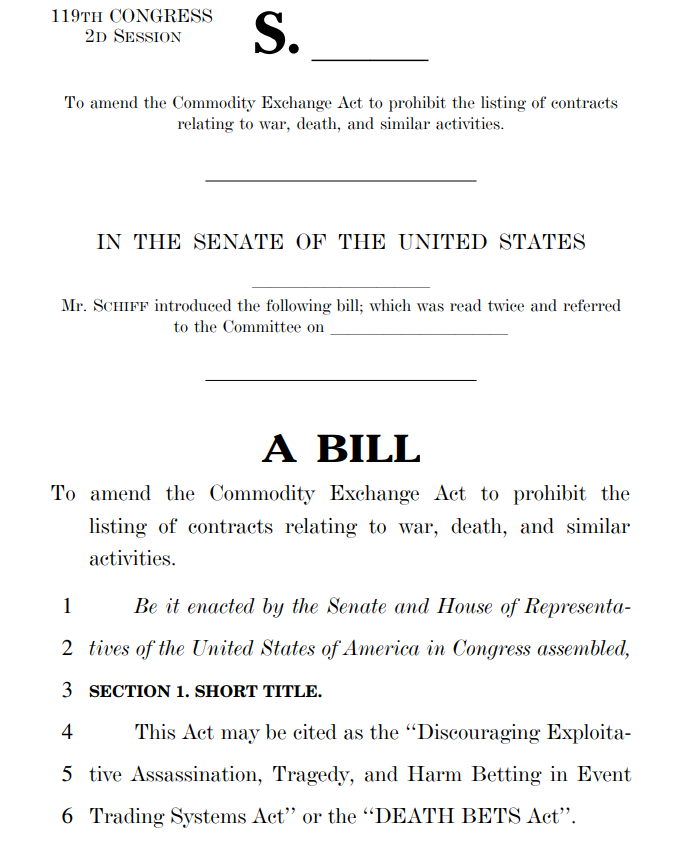
US Democratic Party Senator Adam Schiff introduced legislation Tuesday that would explicitly bar federally regulated prediction-market platforms from listing contracts tied to war, terrorism, assassination and individual deaths.
The bill, called the DEATH BETS Act, would amend the Commodity Exchange Act to make those contracts prohibited for entities overseen by the US Commodity Futures Trading Commission (CFTC).
In a statement announcing the bill, Schiff said markets that let traders profit from violent events create incentives for the misuse of classified information, threaten national security and encourage violence. He said prediction markets had become a “Wild West” and called for Congress and the CFTC to make clear that such “death bets” are not allowed.
The bill seeks to ban prediction market contracts that involve references to “terrorism, assassination, war, or any similar activity,” or that are related to an “individual’s death.” The bill was referred to the Senate Committee on Agriculture, Nutrition, and Forestry for consideration, where Schiff is a member.

US-Israel war with Iran ignites military insider concerns
The legislation comes after renewed scrutiny of event-contract platforms during the recent US and Israeli military confrontation with Iran, when war-related markets drew heavy trading and fresh allegations of insider activity.
Six Polymarket traders netted $1 million by accurately betting on the US strike against Iran.
Related: Suspected insider wallets rack up $1.2M betting on ZachXBT’s Axiom exposé
The six wallets were all created in February and placed all their bets on the contracts predicting the timing of a potential US attack, with several shares purchased only hours before the first reported explosions in Iran’s capital, Tehran.

On Tuesday, a new wallet spent $32,900 to bet on US forces entering Iran by Saturday, despite the odds continuing to decline, according to blockchain data platform Lookonchain.
Related: Kalshi, Polymarket face trading halt in Nevada after court rulings
In February, Israeli authorities arrested and indicted two people suspected of using secret information about Israel striking Iran for insider trading on Polymarket.
Insider concerns grew in January after a Polymarket account profited $400,000 after it placed a bet on a contract predicting that Venezuelan President Nicholas Maduro would be captured, wagering the funds just hours before US forces captured him.
Magazine: Inside a 30,000 phone bot farm stealing crypto airdrops from real users
Crypto World
Binance WSJ Lawsuit: The Crypto Exchange Sues Wall Street Journal Over ‘Defamatory’ Iran Sanctions Report
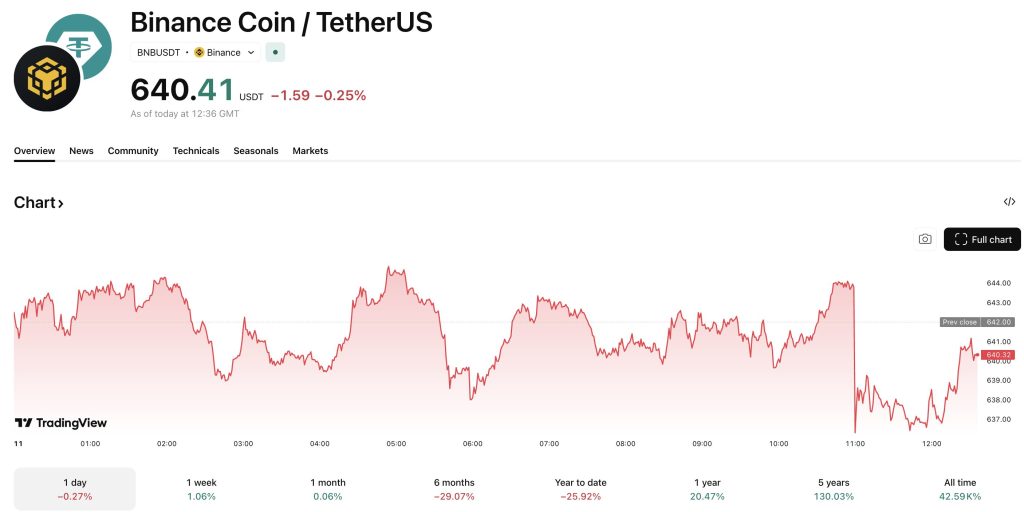
The Binance crypto exchange has officially filed a defamation lawsuit against the Wall Street Journal, or known as WSJ, in the Southern District of New York. The complaint, filed today (March 11), alleges the newspaper published false claims regarding the exchange’s compliance controls and handling of Iran sanctions data.
At the center of the dispute is a February report claiming Binance knowingly processed over $1Bn for sanctioned entities.
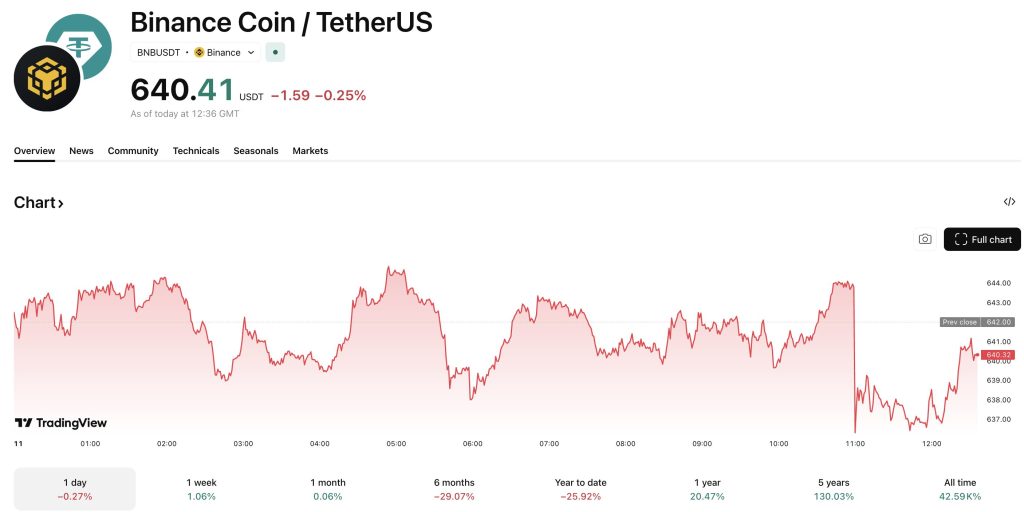
This news has led to the BNB price dropping 1% in the past hours, to $640, as investors are seemingly spooked at yet another potential legal dispute involving Binance.
CEO Richard Teng has condemned the reporting as inaccurate, stating the outlet ignored documented evidence provided before publication.
— Litest (@Litest) March 11, 2026
 BREAKING:
Binance launches defamation lawsuit against the Wall Street Journal over Iran sanctions report. pic.twitter.com/8qdrf9rXcD
What’s the WSJ Report Actually Alleged And Why Binance Says It’s Wrong
The Wall Street Journal article, titled “Binance Fired Staff Who Flagged $1 Billion Moving to Sanctioned Iran Entities,” depicted a chaotic internal struggle at the world’s largest crypto exchange.
It is alleged that compliance staff were fired not for policy breaches, but for doing their jobs identifying illicit flows.
Specifically, the report claimed Binance processed $1.7Bn in transactions linked to Iranian entities, including a Hong Kong-based fiat-to-crypto converter called “Blessed Trust.”
According to the Journal, this activity continued despite internal red flags. The report immediately triggered a regulatory inquiry.
US Senator Richard Blumenthal cited the article as grounds for demanding a formal investigation into the exchange’s operations, which Binance CEO Richard Teng responded to on March 6, denying all claims.
The allegations arrived during a sensitive period for crypto regulation, mirroring the pressure seen as Democrats introduce bills to ban platforms like Polymarket over compliance concerns.
DISCOVER: Next Crypto to Explode in 2026
Binance Fires Back: 19 Ignored Responses and a 96.8% Compliance Claim
Binance’s defense hinges on what it calls willful disregard for the facts. The exchange claims it sent the WSJ 19 detailed responses and answered 27 specific questions before the publication deadline, none of which appeared in the final story.
Richard Teng publicly rejected the narrative, emphasizing that the employees in question were dismissed for data policy violations, not for flagging sanctions evasion.
The exchange cited hard numbers to counter the defamation claims. Binance states it has achieved a -96.8% reduction in sanctions exposure risks through upgraded protocols. Currently, more than 1,500 employees, nearly a quarter of the workforce within Binance, work in compliance.
Regarding the specific “Blessed Trust” account, Binance clarified that the entity was offboarded and reported to law enforcement in 2025, long before the WSJ report suggested the activity was ongoing.
What This Means for Binance and the Broader Crypto-Media Relationship
This lawsuit seeks compensatory and punitive damages, arguing the report caused harm that no simple correction can fix. The legal action follows a significant win for Binance on March 7, when a federal judge dismissed a separate lawsuit alleging the exchange facilitated terrorist financing.
That court found no material support was provided, strengthening Binance’s position that it is not liable for the actions of bad actors who might attempt to access the platform.
Traders are watching this case closely as a test of the “actual malice” standard in crypto reporting. While the exchange settled with the DOJ in 2023 for $4.3Bn over historical failures, this aggressive legal stance signals a refusal to accept what it deems false narratives about its current operations.
The focus now shifts to the WSJ’s response and whether the regulatory inquiry sparked by the article will sustain momentum without the supporting media narrative.
We will continue to update this story as more details emerge over the coming days and weeks.
EXPLORE: Best Crypto Presales to Buy in 2026
The post Binance WSJ Lawsuit: The Crypto Exchange Sues Wall Street Journal Over ‘Defamatory’ Iran Sanctions Report appeared first on Cryptonews.
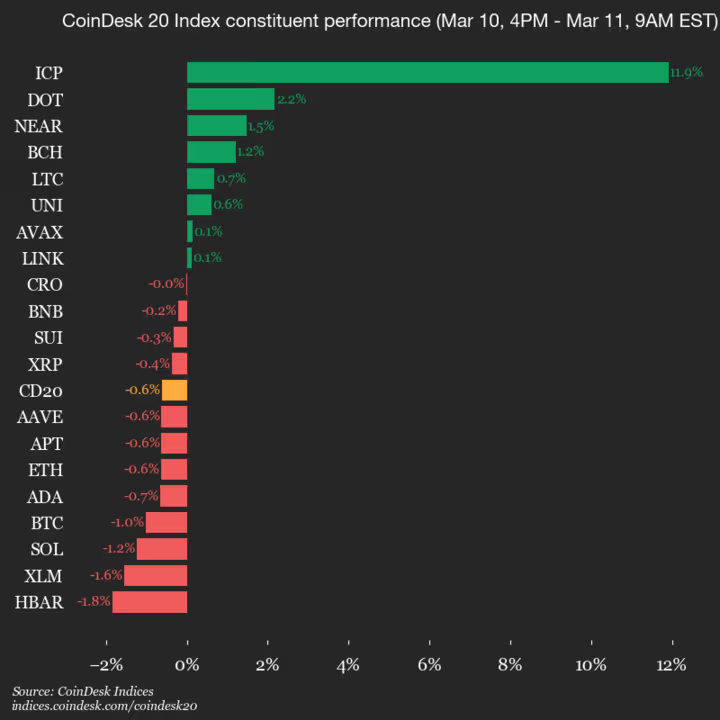
CoinDesk Indices presents its daily market update, highlighting the performance of leaders and laggards in the CoinDesk 20 Index.
The CoinDesk 20 is currently trading at 1980.55, down 0.6% (-12.31) since 4 p.m. ET on Tuesday.
Eight of 20 assets are trading higher.

Leaders: ICP (+11.9%) and DOT (+2.2%).
Laggards: HBAR (-1.8%) and XLM (-1.6%).
The CoinDesk 20 is a broad-based index traded on multiple platforms in several regions globally.
TLDR
- February’s Consumer Price Index increased 2.4% year-over-year, aligned with analyst predictions
- Core inflation (stripping out food and energy costs) registered at 2.5% annually, meeting forecasts
- Report captures timeframe prior to U.S.-Israel coordinated strikes against Iran
- Crude oil has jumped approximately 18% since late February, while pump prices climbed 20%
- Federal Reserve anticipated to maintain current interest rate range of 3.5%–3.75% at upcoming meeting
While February’s inflation report appeared reassuring at first glance, the underlying narrative reveals a more complex situation unfolding.
The Consumer Price Index advanced 0.3% month-over-month in February and climbed 2.4% on an annual basis. These metrics aligned precisely with economist projections. Meanwhile, core CPI—which excludes volatile food and energy categories—increased 0.2% monthly and 2.5% yearly, similarly matching consensus estimates.
The Bureau of Labor Statistics published these figures on Wednesday, March 11.
Both energy and food categories showed increases during February, though these changes were relatively contained compared to subsequent developments following the data collection period.
Crucially, this report reflects conditions that existed before coordinated U.S. and Israeli military operations against Iran commenced in late February. Those hostilities have subsequently created significant disruptions throughout global energy markets.
Iran Crisis Delivers Major Shock to Energy Sector
The Strait of Hormuz—a critical chokepoint handling approximately 20% of worldwide oil shipments—has experienced a dramatic reduction in tanker movement. Intelligence reports suggest Iran has deployed naval mines throughout the waterway, prompting President Trump to warn of potential additional military responses.
Brent crude futures stood near $92 per barrel at press time, following an earlier spike to almost $120 this week. Motorists across America have seen gasoline costs surge 20% as a direct consequence.
Bank of America’s economist Stephen Juneau noted that petroleum prices have climbed roughly 18% since February concluded. He indicated that sustained conflict would probably generate upward pressure on both headline and underlying inflation measures in coming months.
The International Energy Agency has put forward its most substantial strategic reserve release proposal to date aimed at market stabilization, the Wall Street Journal reported. IEA member countries were scheduled to vote on this initiative Wednesday. The prior record stood at 182 million barrels, authorized following Russia’s 2022 Ukraine invasion.
Implications for Federal Reserve Policy
The Fed’s favored inflation metric—the Personal Consumption Expenditures index—registered 2.9% annually in December. This remains substantially above the central bank’s 2% objective. January’s PCE figures are scheduled for Friday release, with forecasters anticipating a 3.1% annual rate.
Market indicators suggest the Federal Reserve will almost certainly maintain its current rate posture during next week’s policy meeting, preserving the 3.5%–3.75% band, per CME FedWatch tracking data.
Employment trends add another dimension of complexity to the Fed’s calculus. The U.S. economy surprisingly shed 92,000 positions last month, elevating the unemployment rate to 4.4%.
President Trump indicated earlier this week the military operations might conclude “very soon,” though U.S. and Israeli forces have maintained strikes across multiple Iranian targets throughout the Middle East region.


Ghana’s Securities and Exchange Commission (SEC) said 11 companies have been granted access to a regulatory sandbox to test cryptocurrency and digital asset services under the country’s Virtual Asset Service Providers Act, 2025.
The program allows companies to run their products in a controlled environment while regulators monitor risks and compliance.
The sandbox will run for 12 months and sits at the center of Ghana’s early efforts to bring oversight to the crypto sector, according to a press release.
Companies in the first cohort include asset tokenization firms like Africoin, Blu Penguin, Vaulta, XChain and Goldbod as well as cryptocurrency exchanges like Hyro Exchange, HanyPay and WhiteBit.
The commission said firms whose products are market-ready and meet regulatory requirements could transition to a full license after six months. Others may remain in the sandbox for the remaining period to refine their services.
The SEC said the exercise will also help it shape detailed licensing guidelines for different types of crypto businesses. Data gathered during the pilot will inform rules covering areas such as investor protection, market integrity and anti-money laundering controls.
Once the sandbox closes, the regulator plans to publish the final guidelines and open the licensing process to a broader set of virtual asset service providers.

Artificial intelligence has long been defined by scale—larger models, faster processing, and sprawling data centers. Yet a growing cohort of researchers, investors, and practitioners is suggesting the traditional growth path is hitting a ceiling. AI is increasingly capital-intensive and tethered to physical limits, with diminishing returns appearing sooner than many anticipated. The latest data underscore the shift: electricity demand from global data centers is projected to more than double by 2030, a surge comparable to expanding entire industrial sectors; in the United States, data-center power usage is forecast to rise well over 100% by the end of the decade. As the economics of AI tighten, trillions of dollars in new investment and substantial grid upgrades loom, coinciding with the way the technology embeds itself into finance, law, and crypto workflows.
Key takeaways
- Energy demand tied to AI is accelerating, with the IEA projecting data-center electricity use will more than double by 2030, highlighting a fundamental constraint in the current scaling paradigm.
- The United States could see data-center power consumption surge by more than 100% before the 2030s, signaling a major resource and infrastructure challenge for AI-enabled sectors.
- Frontier AI training costs are skyrocketing, with estimates suggesting single training runs could exceed $1 billion, making inference and ongoing operation the dominant long-term expense.
- The verification burden grows with scale: as AI outputs proliferate, human oversight becomes increasingly critical to prevent errors from propagating, such as false positives in automated AML flagging.
- Architectural shifts toward cognitive or neurosymbolic systems—emphasizing reasoning, verifiability, and localized deployment—offer a path to reduce energy use and improve reliability versus brute-force scaling.
- Blockchain-enabled, decentralized AI concepts may distribute data, models, and computing resources more broadly, potentially lowering concentration risk and aligning deployment with local needs.
Sentiment: Neutral
Market context: The convergence of AI with crypto analytics and DeFi tooling sits amid broader questions about energy consumption, regulation, and the governance of automated decision-making. As AI tools increasingly monitor on-chain activity, assess sentiment, and assist in smart-contract development, the industry faces a tighter coupling between performance, verification, and accountability.
Why it matters
The debate over AI scaling is not a theoretical one—it touches the core of how and where AI is deployed in high-stakes sectors. Large language models (LLMs) have grown fluent by pattern-matching across vast text corpora, enabling impressive capabilities but not necessarily robust, reliable reasoning. As these systems become embedded in legal workflows, financial risk management, and crypto operations, the consequences of incorrect outputs become less tolerable and more costly.
Training frontier AI models remains a mission-critical and expensive endeavor. Independent analyses suggest that the cumulative cost of training can be immense, with credible voices estimating that a single training run could cross the $1 billion threshold in the near future. Yet even more consequential is the ongoing cost of inference—running models at scale with low latency, high uptime, and rigorous verification requirements. Each query consumes energy, and each deployment necessitates infrastructure. As usage expands, energy use compounds, pressuring both operators and grids alike. In crypto contexts, AI systems increasingly monitor on-chain activity, analyze sentiment, generate code for smart contracts, flag suspicious transactions, and automate decision-making; missteps here can move capital and undermine trust across markets.
The industry is beginning to recognize that fluency alone is insufficient. When AI can produce convincing but incorrect conclusions, verification burdens intensify. False positives in AML flagging, for instance, have been documented as a practical drag on resources, diverting investigators from genuine activity. This dynamic underscores why a shift toward architectures that integrate cause-and-effect reasoning, explicit rules, and self-checking mechanisms is gaining traction. Cognitive AI and neurosymbolic approaches—where knowledge is structured into interrelated concepts and reasoning can be revisited and audited—promise higher reliability with lower energy demands than brute-force scaling.
Beyond the architecture, there is a broader trend toward decentralization of AI development itself. Some platforms explore blockchain-enabled models for contributing data, models, and computing resources, reducing concentration risk and aligning deployment with local needs. In a field where room for error is small and the stakes are high, the ability to inspect, audit, and shape AI systems matters just as much as the outputs they produce. The turning point is clear: scaling for the sake of scale may no longer be sufficient. The industry must invest in architectures that make intelligence more reliable, verifiable, and controlled by communities rather than distant, centralized infrastructure.
As AI considerations bleed into crypto workflows, the stakes grow sharper. On-chain monitoring, sentiment analysis for market signals, automated code generation for smart contracts, and risk-management automation are all increasingly dependent on AI, yet they demand a higher standard of trust. The tension between speed and accuracy—between fast, automated decisions and verifiable reasoning—will shape the next wave of crypto tooling and governance. The upshot is not simply bigger models; it is better systems that can reason about their own steps, explain conclusions, and operate within clear constraints.
Ultimately, the industry faces an inflection point. If architecture and reasoning take precedence over sheer scale, AI could become more affordable to operate, while remaining safer and more controllable. The era of growth-at-any-cost may yield to a more deliberate phase where wealth creation in AI and crypto hinges on transparent verification, resilient design, and decentralized collaboration. The author argues that the path forward lies in rethinking how intelligence is built and deployed—prioritizing robust reasoning and governance over incremental increases in parameter counts.
What to watch next
- Regulatory and policy developments around AI safety, auditing, and accountability in finance and crypto.
- Advances in cognitive AI and neurosymbolic architectures, including practical deployments on edge devices and local servers.
- Decentralized AI initiatives that use blockchain-inspired models to distribute data, models, and computing resources.
- Shifts in data-center capacity, energy pricing, and grid infrastructure tied to AI-enabled demand.
- New benchmarks or case studies illustrating the trade-offs between scale, reasoning, and verification in real-world crypto applications.
Sources & verification
- Energy demand from AI: IEA, Energy and AI — energy demand from AI.
- U.S. data-center power demand projections: Pew Research Center / energy use at US data centers amid the AI boom.
- UK legal AI cautionary note: Guardian article on the High Court warning against AI-generated fabricated case law in legal filings (June 2025).
- AML false positives and AI risk: IBM Think topics on AI fraud detection in banking and related AML flagging issues.
- Costs to train frontier AI models and ongoing inference costs: Epoch AI blog and Digital Experience Live analyses.
- On-chain and crypto AI applications: efforts around Ethereum and on-chain tooling that leverage AI signals (as referenced in industry coverage).
Rethinking AI scaling: energy, reasoning, and the crypto interface
Artificial intelligence has long scaled on a simple premise—more data, bigger models, faster hardware would continually unlock better performance and lower costs. The latest economic and technical signals, however, suggest a pivot. Energy and capital intensity are rising faster than anticipated, with global data-center electricity demand projected to more than double by 2030. In the United States alone, data-center power consumption is expected to rise by more than 100% before the decade ends, a trajectory that will require massive investments in grid capacity and infrastructure as AI becomes embedded in critical sectors, including markets, compliance, and on-chain activity monitoring.
Training frontier AI models remains extraordinarily expensive, with credible estimates pointing to costs that could top $1 billion per training run. Yet even more consequential is the ongoing cost of inference—sustained, low-latency operation that must deliver results with high reliability. In markets and crypto, AI systems are increasingly used to monitor on-chain activity, analyze sentiment, generate smart-contract code, flag suspicious transactions, and automate governance decisions. The result is a double exposure: the potential for rapid, data-driven signals coupled with the risk of false signals that can misallocate capital or mischaracterize risk. Notably, false positives in automated AML flagging illustrate how unreliable outputs can waste human resources and erode trust when deployed widely.
To address these pressures, the narrative is shifting away from sheer scale toward architectures that emphasize reasoning and verifiability. Cognitive AI and neurosymbolic approaches seek to braid pattern recognition with structured knowledge, rules, and self-checks. These systems aim to deliver usable reasoning traces and transparent decision processes, reducing the need for brute-force computation and enabling more predictable energy use. Early demonstrations suggest that local or edge deployments, supported by knowledge representations, could keep control with users and organizations rather than entrusting cognition to centralized, opaque infrastructure.
Decentralized AI models—where data, models, and computation can be contributed by diverse participants—offer another path to resilience. By distributing the workload and oversight, communities can mitigate concentration risk and tailor AI deployments to local needs. In this ecosystem, the role of governance becomes more pronounced: platforms must enable auditing, adjustment, and interoperability without compromising security or performance. The shift toward more sophisticated reasoning, coupled with a commitment to verifiable outcomes, marks a meaningful departure from scaling solely for scale’s sake. If the industry can operationalize cognitive architectures at scale, the economics of AI may improve—reducing both energy consumption per decision and the verification burden on human operators.
In the crypto arena, this evolution matters. The reliability of AI-assisted on-chain analytics, fraud detection, and smart-contract tooling will influence investor confidence and market integrity. The path forward requires not only bigger systems but smarter ones—systems whose inner workings can be inspected, challenged, and improved by a broad community. The debate is no longer about whether AI should grow, but how to grow it in a way that is auditable, trustworthy, and aligned with the needs of decentralized finance and broader digital markets.


U.S. inflation data met expectations on Wednesday, reinforcing anticipation that the Federal Reserve will keep interest rates steady not just at its March 18 meeting, but likely at the bank’s April meeting as well.
The Consumer Price Index (CPI) rose 0.3% in February, according to a report from the Bureau of Labor Statistics. Economist forecasts had been for a rise of 0.3% and January’s increase was 0.2%.
On a year-over-year basis, CPI was higher by 2.4% against expectations of 2.4% and January’s 2.4%.
Core CPI, which excludes food and energy costs, rose 0.2% in February versus forecasts of 0.2% and January’s 0.3%. Year-over-year core CPI was higher by 2.5% versus forecasts of 2.5% and January’s 2.5%.
Under modest pressure for the morning, bitcoin was trading at $69,500 in the minutes following the report, lower by 1.2% over the past 24 hours.
U.S. stock index futures were slightly lower across the board and the 10-year Treasury yield ticked up to 4.18%. The main actor in markets this week, WTI crude oil was higher by 4.2% to $87 per barrel.
Ahead of the data, markets were pricing in a 99% probability that the Federal Reserve would leave interest rates unchanged at its March meeting next week, according to the CME FedWatch tool. For the April meeting, rate cut odds were at just 11% versus 21% one month ago.
February’s inflation numbers, of course, are somewhat old news given the events that have transpired since, namely the war in Iran and spiking oil prices. How much this plays into the Fed’s thinking on interest rates should become more evident following next week’s policy meeting.
Vote in our poll: What is the best new-era “Survivor” season?

Iran’s new supreme leader Mojtaba Khamenei injured in strikes which killed his father | World News

Opinion: Supply shock scenario fuel for thought


-
Business5 days ago
Form 8K Entergy Mississippi LLC For: 6 March
-

 Tech6 days ago
Bitwarden adds support for passkey login on Windows 11
-

 News Videos2 days ago
10th Algebra | Financial Planning | Question Bank Solution | Board Exam 2026
-

 Fashion5 days ago
Weekend Open Thread: Ann Taylor
-

 Crypto World2 days ago
Paradigm, a16z, Winklevoss Capital, Balaji Srinivasan among investors in ZODL
-
 Tech7 hours ago
A 1,300-Pound NASA Spacecraft To Re-Enter Earth’s Atmosphere
-
 Sports6 days ago
499 runs and 34 sixes later, India beat England to enter T20 World Cup final | Cricket News
-

 Politics5 days ago
Top Mamdani aide takes progressive project to the UK
-

 Sports4 days ago
Three share 2-shot lead entering final round in Hong Kong
-

 Sports3 days ago
Braveheart Lakshya downs Lai in epic battle to enter All England Open final | Other Sports News
-

 Business22 hours ago
ExxonMobil seeks to move corporate registration from New Jersey to Texas
-

 NewsBeat6 days ago
Piccadilly Circus just unveiled ‘London’s newest tourist attraction’ and it only costs 80p to enter
-

 Entertainment4 days ago
Hailey Bieber Poses For Sexy Selfies In New Luscious Lip Thirst Traps
-

 Business3 days ago
Search for Nancy Guthrie Enters 37th Day as FBI Probes Wi-Fi Jammer Theory
-

 Business6 hours ago
Search Enters Sixth Week With New Leads in Tucson Abduction Case
-
 NewsBeat2 days ago
Pagazzi Lighting enters administration as 70 jobs lost and 11 stores close across Scotland
-

 Tech2 days ago
Despite challenges, Ireland sixth in EU for board gender diversity
-
Entertainment7 days ago
Harry Styles Has ‘Struggled’ to Discuss Liam Payne’s Death
-

 Crypto World7 days ago
New Crypto Mutuum Finance (MUTM) Reports V1 Protocol Progress as Roadmap Enters Phase 3
-

 Tech6 days ago
ACIP To Discuss COVID ‘Vaccine Injuries’ Next Month, Despite That Not Being In Its Purview