

Crypto World
Fed Could Print Money to Back US-Iran Conflict, Hayes Says

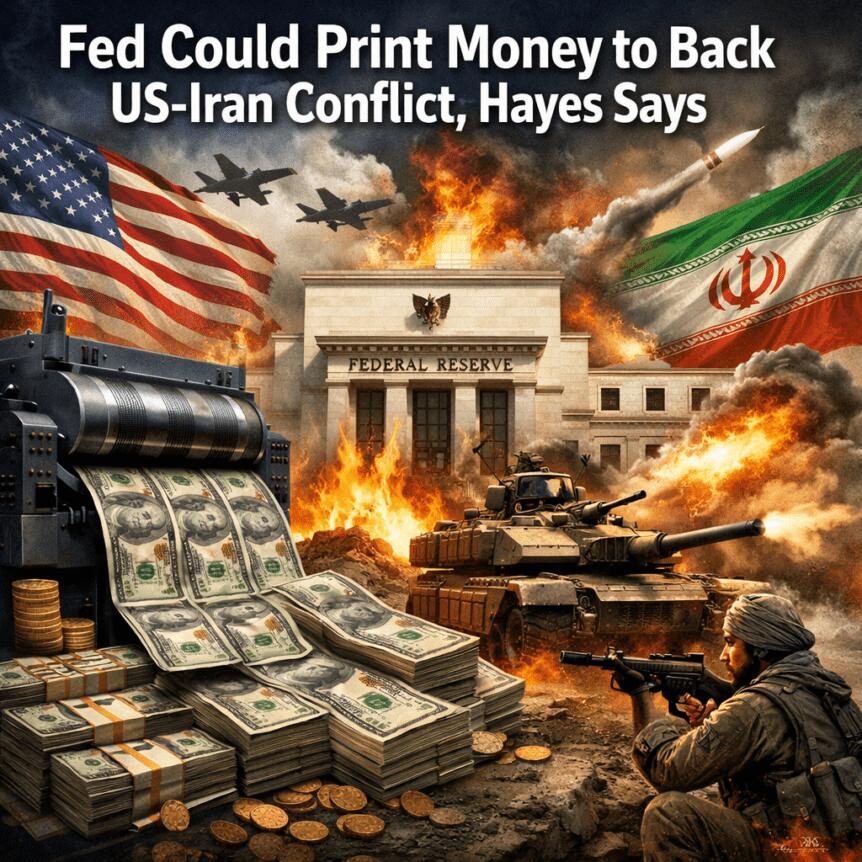
Analysts say that shifting US monetary policy could hinge on geopolitical developments in the Middle East, with crypto markets watching for signals from the Federal Reserve. BitMEX co-founder Arthur Hayes argues in a Monday blog post that American presidents have repeatedly engaged in Middle East action, and the Fed has historically responded by cutting rates or expanding the money supply to finance those campaigns. He writes that the longer an administration pursues Iran-focused objectives, the greater the likelihood the Fed will “lower the price and increase the quantity of money” to support those efforts, a pattern he sees echoed in past conflicts. Hayes cites the Gulf War of 1990, the post-9/11 wars, and the 2009 Afghan surge as episodes where monetary easing followed military action. Over the weekend, Israel and the US conducted airstrikes on Iran that killed Ali Khamenei, a development President Donald Trump has pledged to continue.
Key takeaways
- The analytically argued link between wartime financing and Fed easing suggests policy pivots could accompany geopolitical shocks, with crypto markets potentially benefiting from increased liquidity.
- Historical precursors—Gulf War (1990), the post-9/11 era, and the 2009 Afghan surge—are cited as episodes where rate cuts or aggressive money printing supported wartime aims, according to Hayes.
- The weekend strikes on Iran introduced fresh geopolitical risk, intensifying scrutiny of how policy makers balance inflation, growth, and security concerns while markets price in potential easing.
- Crypto-market chatter around “World War III” spiked on social media after the latest flare-up, though observers noted that current dynamics are not comparable to peak speculative periods in 2025.
- Hayes has floated liquidity tools such as Reserve Management Purchases and other easing measures, signaling how policymakers might adapt if macro risks escalate, a thread that dovetails with ongoing debates about liquidity in crypto markets.
Tickers mentioned: $BTC
Price impact: Positive. The piece frames geopolitical risk and potential Fed easing as supportive for crypto markets, implying upside for BTC if policy shifts materialize.
Market context: The narrative sits at the intersection of macro policy, geopolitics, and crypto liquidity. As risk sentiment shifts with geopolitical headlines, traders monitor whether Fed actions—or lack thereof—will unlock liquidity channels that typically buoy risk assets including digital currencies.
Why it matters
The episode highlights how macro policy and geopolitical trajectories can influence the behavior of crypto markets. If the Federal Reserve were to pivot toward rate cuts or quantitative easing in response to ongoing conflict dynamics, liquidity could expand and risk appetite could rise, creating a more favorable environment for digital assets like Bitcoin. The discussion also underscores the fragility of markets that are sensitive to policy signals; investors may pivot quickly in anticipation of liquidity injections or policy tightening, reinforcing the need for disciplined risk management.
For market participants, the perspective from Hayes — that policy responses to geopolitical frictions can be both reflexive and pro-cyclical for crypto — adds a layer of nuance to how traders interpret price movements. It also draws attention to liquidity tools and central-bank balance-sheet dynamics as structural drivers that could shape the next phase of the crypto cycle. While none of this guarantees a specific price path, it emphasizes that policy and geopolitics remain key variables in the crypto trading playbook.
What to watch next
- Federal Reserve communications and any signals about rate cuts or new liquidity programs, including Reserve Management Purchases.
- Developments in the Iran-Israel conflict and leadership dynamics in the region, alongside any shifts in geopolitical risk assessments.
- Bitcoin price action in response to macro news and policy signals, with attention to test levels around major milestones.
- Regulatory and institutional flows that could affect BTC-related products and overall market liquidity.
Sources & verification
- BitMEX blog: Arthur Hayes on iOS warfare and monetary policy implications — https://www.bitmex.com/blog/ios-warfare
- Cointelegraph coverage: Israel-US airstrikes on Iran and the described leadership developments — https://cointelegraph.com/news/bitcoin-recovers-to-68k-following-reported-death-of-iranian-supreme-leader
- Kobeissi Letter remark on futures and WW3 framing — https://x.com/KobeissiLetter/status/2028251687572688942
- Santiment data on World War III mentions in crypto discourse — https://x.com/santimentfeed/status/2028285118553493784
- Jane Street discussion on Bitcoin price narratives — https://magazine.cointelegraph.com/bitcoin-price-manipulation-jane-street-bitcoiners-debate-cointelegraph/
Market reaction and key details
The central thread running through this discourse is the tension between geopolitics and macro policy and how that tension spills into crypto markets. Hayes’ framing rests on a historical pattern: wartime actions tend to be financed through monetary easing, which, in turn, broadens liquidity and tends to support assets that thrive on risk-taking. In the current moment, observers watch for any official signal from the Fed that policy might shift toward easing, a move that could catalyze a broader crypto rally if liquidity taps are opened.
Beyond the macro angle, the conversation threads in public commentary include market data points such as marginal moves in stock futures and shifts in energy prices, which can influence risk appetite across asset classes. As noted in related analyses, Bitcoin and other crypto narratives have at times mirrored shifts in traditional markets, but the relationship remains imperfect and highly context-dependent. The social-media chatter around WW3 underscores how fast sentiment can pivot on headlines, even if the underlying price action is more nuanced than headline narratives suggest.
Notably, the discourse extends to liquidity tools and policy mechanisms that could shape the trajectory of crypto markets. Hayes has previously floated ideas like Reserve Management Purchases as a potential tool to soothe markets, and he has linked these constructs to broader money-printing dynamics that could accelerate crypto adoption during periods of policy stress. In parallel, market observers have debated whether large participants and market makers have the capacity to influence price through strategic liquidity provisioning, a theme that has featured in discussions around Jane Street and other firms in analyses like the one titled “Would Bitcoin really be at $200K if not for Jane Street? Trade Secrets.”
As with any geopolitical and macro narrative, investors should command a cautious, context-aware approach. The next few weeks could deliver clarity on the Fed’s stance, the evolution of the conflict in the Middle East, and the way crypto markets weigh fresh liquidity signals against ongoing macro uncertainties. While Hayes’ framework provides a lens to interpret potential policy responses, it is one of many factors driving price discovery in Bitcoin and other digital assets.


Key Takeaways
- At Mobile World Congress, Xiaomi unveiled the Xiaomi 17 and 17 Ultra with global pricing set at 999 euros and 1,499 euros
- First-quarter 2026 has seen memory chip costs skyrocket 80–90%, fueled by AI data center demand siphoning supply from mobile devices
- Market research firm IDC projects a 12.9% contraction in worldwide smartphone shipments for 2026 amid the component shortage
- Unlike Apple and Samsung, Xiaomi lacks sufficient premium market share to cushion the impact of escalating component costs
- Electric vehicle revenue jumped nearly 200% year-over-year in Xiaomi’s latest quarterly report, partially compensating for a 3% smartphone revenue decline
Xiaomi revealed its flagship Xiaomi 17 series to the international market this past Saturday during Mobile World Congress in Barcelona.
Pricing for the standard Xiaomi 17 begins at 999 euros ($1,179), while the premium 17 Ultra commands 1,499 euros. These price points match the previous generation exactly.
This decision to maintain pricing stability comes during turbulent market conditions. Data from Counterpoint Research indicates memory chip prices have climbed 80–90% during the first three months of 2026.
The dramatic price acceleration stems from constrained memory availability, as manufacturing capacity shifts toward AI-focused data centers. Mobile phone manufacturers are losing the bidding war for limited chip supplies.
Memory components represent among the costliest parts in contemporary smartphones. Industry analysts at Gartner anticipate smartphone retail prices could climb 13% industry-wide throughout 2026 as manufacturers pass costs to consumers.
IDC projects an even grimmer outlook, estimating global smartphone unit sales will contract by 12.9% this year as the component shortage ripples through the supply chain.
Xiaomi maintained stable flagship pricing, yet industry experts caution the company faces heightened vulnerability compared to market leaders. Apple and Samsung possess established premium customer bases capable of absorbing price increases. Xiaomi lacks this same cushion.
“This year will be even worse because Xiaomi does not have a very strong premium share which means that they cannot rely on the premium segment to offset low margins in other devices like Apple and Samsung can,” said Francisco Jeronimo, VP of data and analytics at IDC.
Xiaomi’s smartphone shipment volume predominantly consists of mid-tier products — precisely the segment analysts identify as most vulnerable if retail prices must increase.
Ben Wood, chief analyst at CCS Insight, indicated Xiaomi will probably need to implement price adjustments on budget and mid-range models eventually. The critical uncertainty is how long they can postpone such moves without eroding profit margins.
Electric Vehicle Division Provides Financial Cushion
Xiaomi’s automotive division has emerged as an increasingly vital revenue stabilizer. During the most recently reported quarter — the three months ending September 2025 — EV revenue exploded nearly 200% compared to the prior year.
During that identical period, smartphone sales declined 3% on a year-over-year basis. The electric vehicle segment now represents approximately one-quarter of consolidated company revenue.
Elliptic Labs Secures Additional Xiaomi Device Wins
In related developments, Norwegian artificial intelligence firm Elliptic Labs disclosed that its AI Virtual Smart Sensor Platform was integrated into five new Xiaomi and Transsion models launched during February 2026.
The software solution eliminates the need for physical proximity sensors, reducing bill-of-materials costs and enhancing power consumption efficiency. Elliptic Labs’ technology currently operates across over 500 million devices globally.
Despite these product integration successes, Elliptic Labs shares (EIP) have declined 45.51% year-to-date, with current market capitalization standing at NOK 389.6 million.
Xiaomi executives cautioned in November 2025 that the smartphone sector would likely face pricing pressure throughout 2026, a forecast that is now materializing in real time.

AI Summary
- In 2024 and 2025, the adoption of crypto payroll and stablecoin payouts by enterprises increased significantly, driven by the need for faster settlements, lower costs, and enhanced transparency
- Account abstraction wallets emerged as a solution, enabling companies to pay employees in stablecoins without requiring them to hold native chain gas
- These wallets automate multi-party approvals, batch-settle payroll events, and provide traceable on-chain tax and payroll records
- The blog post outlines the challenges faced by large entities in existing payroll systems and explains how account abstraction wallets streamline payroll processes by offering gas abstraction, smart policy-driven wallets, batch operations, native support for stablecoins, and improved auditability
- The post also details an enterprise-grade implementation pattern for account abstraction wallets and highlights the importance of compliance, legal, and regulatory support when developing such wallets
“Efficiency without control is chaos. Control without efficiency is waste.”
In 2024 and 2025, enterprise adoption of crypto payroll and stablecoin payouts accelerated sharply as treasury teams and global HR leaders sought faster settlement, lower cross-border costs, and better financial transparency. According to recent industry research, the share of professionals receiving any portion of their salary in digital assets rose materially, with stablecoins increasingly dominating employer-led payouts. This shift is not a fringe curiosity. It is a structural market signal: entities that want global, low-friction payroll must rethink crypto wallet architecture, gas mechanics, and compliance. Account abstraction wallets solve multiple technical and operational pain points by bringing programmable logic, sponsored gas, multi-sig governance, and token-denominated fee models into payroll flows. For serious investors evaluating infrastructure plays and enterprise SaaS for payroll modernization, understanding account abstraction is now table stakes.
Executive Summary
Account abstraction (AA) takes smart contract wallet patterns into production-friendly form, enabling payroll systems to: pay employees in stablecoins or tokens without users holding native chain gas, automate multi-party approvals, batch-settle payroll events, and provide traceable on-chain tax and payroll records. These capabilities open new revenue and product pathways for payroll orchestration platforms, treasury management systems, and white label wallet development companies. The rest of this article explains the technical mechanics, maps AA to payroll use cases, lists enterprise pain points solved by AA, outlines a practical implementation pattern, and describes a full-service AA wallet offering you can confidently invest in.
Challenges Big Entities Face In Existing Payroll Systems
Here are the persistent operational and technical problems large employers face today that AA smart crypto wallets can meaningfully resolve:
1. Cross-border settlement friction, currency conversion delays, and high remittance fees.
2. The need for multiple approvals and role-based controls across treasury, payroll and legal teams.
3. Employees must hold native chain tokens to pay gas, creating onboarding friction and compliance gaps.
4. Poor auditability for on-chain payroll records and reconciliation against fiat ledgers.
5. Fragmented payroll rails across chains and token standards, increasing integration complexity.
6. Vendor and contractor payouts that require atomic multi-payments and batch settlement.
7. Difficulty enforcing corporate policies like minimum fiat thresholds or mandated vesting.
8. Legal and tax reporting complexity when payroll touches dozens of jurisdictions.
How Does Account Abstraction Crypto Wallets Make Payroll Easier?
Account abstraction transforms the wallet from a passive keypair to an active, programmable account that enforces policy, pays fees flexibly, and supports advanced onboarding. Practically, this yields:
- Gas abstraction and paymaster sponsorship. Companies can sponsor transaction execution fees or accept fees in an ERC-20 stablecoin so employees do not need native chain tokens. This removes a major operational blocker for mass payroll adoption.
- Smart, policy-driven wallets. Employer policies such as vesting schedules, spending limits, whitelists, multi-approvals, and emergency recovery can be enforced at the account level rather than relying on off-chain governance.
- Batch operations and gas-efficient settlement. Payroll events can be bundled and executed via batching or meta-transactions to reduce per-transaction overhead and improve throughput.
- Native support for stablecoins and tokenized payroll. Wallets can accept, custody, and disburse payroll in institutional stablecoins, simplifying treasury operations and reducing FX risk. Recent market data shows stablecoins, particularly USDC, are dominant in crypto payroll use cases.
- Better audit logs and traceability. Every payroll transaction can include metadata, on-chain receipts, and signatures that feed reconciliations and tax reporting workflows.
Deploy Secure & Compliant AA Crypto Wallets at Enterprise Scale
How Does an Account Abstraction Wallet Work For Payroll Management?
An account abstraction payroll wallet is a smart contract-based account that replaces the traditional externally owned account. The employer provisions a wallet template for each employee or contractor and deploys or sponsors the wallet via a factory pattern. Payroll runs trigger a sequence: the payroll engine batches net-pay calculations, converts fiat to the chosen stablecoin using liquidity rails if necessary, and submits signed meta-transactions to a bundler or relayer. A paymaster contract verifies policy conditions and sponsors the gas or accepts payment in stablecoins. The wallet enforces company policies such as vesting, tax withholdings, and multi-sig approval before releasing funds to the employee’s wallet or custodial off-ramp. All events emit standardized on-chain records that integrate with accounting systems via event listeners and indexed logs. This flow removes the need for employees to hold native gas tokens, automates compliance controls, and enables atomic, auditable settlement across jurisdictions.
Enterprise-Grade Implementation Pattern
1. Wallet template and factory: Deploy a modular smart wallet factory supporting plug-in modules: multi-sig, recovery, timelock, vesting, and payroll hooks.
2. User onboarding and identity layers: Integrate enterprise KYC and identity proofs for employees. Tie corporate roles to on-chain permissions.
3. Paymaster and gas rules: Implement a paymaster strategy: sponsor gas for onboarding, accept payment-in-token for execution, and set sponsor policies for whitelisted payroll operations.
4. Bundler and relayer network: Use bundlers/relayers to aggregate UserOperations and submit to the EntryPoint layer, optimizing gas and batching payroll transactions.
5. Treasury connectors: Integrate with custody providers, stablecoin rails, and FX providers for seamless fiat-to-crypto conversion and vice versa.
6. Reconciliation and reporting: Build event-driven listeners that mirror on-chain transactions into ERP and payroll ledgers with tax withholding and country-specific metadata.
7. Legal and compliance hooks: Add on-chain proof artifacts to satisfy audit requests and enable automated tax reporting pipelines.
Antier’s AA Crypto Wallet Development Offerings
Being one of the leading blockchain wallet development companies, our team develops end-to-end, compliance-first AA wallet solutions designed for large enterprises. Our offering includes:
- Requirements and architecture consulting for treasury and payroll teams.
- White-label cryptocurrency wallet app development, including factory deployment and modular plugin architecture.
- Paymaster design and implementation to enable gas sponsorship and token-denominated fee mechanics.
- Multi-chain connectors and token bridges to support stablecoins across EVM-compatible and non-EVM rails.
- Custody and custody-integration services, including hot wallet policies and secure key management.
- On-chain payroll orchestration modules for batching, scheduling, automated vesting, and tax withholding.
- Compliance automation: on-chain receipts, audit trails, and reporting connectors for ERP and payroll software.
- Role-based access control, hardware HSM integration, and enterprise-grade multi-sig governance.
- Performance engineering and gas optimization for enterprise-scale payout volumes.
- Security audits, formal verification where needed, and third-party pen testing.
- Managed relayer and bundler services or turnkey integration with vendor networks.
- Post-launch managed services and SLAs for 24/7 support, monitoring, and upgradeability.
For an enterprise investor, this package reduces technical risk and shortens time to market while capturing recurring revenue from SaaS, managed services, and compliance tooling.
AA Crypto Wallet Development: Compliance, Legal, and Regulatory Support
Global payroll touches many regulatory domains. It is important for a visionary investor or enterprise that is planning for account abstraction-based cryptocurrency wallet development that they hire a certified and skilled team of experts who are adept at providing an integrated legal and compliance stack that supports launches across jurisdictions.
- Jurisdictional analysis for wage law, payroll regulations, and allowable crypto compensation structures. We map per-country constraints such as mandatory fiat wage components and minimum wage rules.
- KYC and AML integrations at the employer, payroll processor, and beneficiary levels to satisfy local financial regulations.
- Tax reporting templates and workflows that capture on-chain metadata suitable for local tax authorities and auditors.
- Licensing and counsel coordination. If a jurisdiction requires a payment license, crypto license, or trust entity, we coordinate with local counsel and white-label partners to secure compliant pathways.
- Stablecoin and reserve risk advisory to ensure employers use institutional-grade, regulated stablecoins for payroll. Recent regulatory momentum and institutional issuance have strengthened USDC’s role in payroll rails.
Make sure that you partner with an experienced company that engages regional legal partners to deliver country-specific playbooks and operational checklists, reducing regulatory friction for enterprise deployments.
Current Market Trends
Enterprise payroll providers and fintech payroll players are actively building crypto rails or integrating stablecoin payouts. Various providers demonstrate mature product-market fit, processing large volumes and integrating with payroll systems. Meanwhile, market research shows the number of professionals receiving crypto pay rose materially, and stablecoins lead employer-denominated payouts. These trends indicate a growing TAM for AA-enabled payroll tooling, especially for global workforces and distributed organizations.
Hire The Industry Leading Crypto Wallet Experts!
Account abstraction wallets are the natural evolution of wallet architecture for enterprise payroll. They remove the classical barriers that limited large-scale payroll innovation: native gas requirements, limited policy enforcement, and poor auditability. For serious investors seeking exposure to enterprise-grade Web3 infrastructure, AA crypto wallet solutions present a practical, near-term commercialization vector.
Connect with the vast blockchain team of Antier to share your thoughts and project planning. We build these solutions end to end: from wallet templates and paymasters to custody and country-level legal playbooks. Our Web3 crypto wallet development, security, and legal teams guide you through architecture choices, compliance checkpoints, and managed deployment, ensuring you capture the market opportunity while minimizing operational and regulatory risk. If you are evaluating infrastructure investments that help enterprises modernize treasury and payroll, account abstraction is no longer experimental; it is a core strategic capability.
For a technical deep-dive, deployment timeline, or a tailored investor pack with market sizing and revenue models, we can help you with our demo.
Connect today!
Frequently Asked Questions
01. What is account abstraction (AA) in the context of payroll systems?
Account abstraction (AA) is a technology that transforms smart contract wallet patterns into a production-friendly format, enabling payroll systems to automate processes like paying employees in stablecoins, managing multi-party approvals, and providing traceable on-chain records without requiring users to hold native chain gas.
02. Why are enterprises increasingly adopting crypto payroll and stablecoin payouts?
Enterprises are adopting crypto payroll and stablecoin payouts to achieve faster settlement times, lower cross-border costs, and enhanced financial transparency, addressing the need for efficient global payroll solutions.
03. What challenges do large employers face with existing payroll systems that account abstraction can resolve?
Large employers face challenges such as cross-border settlement friction, the need for multiple approvals, onboarding friction due to gas fees, poor auditability of payroll records, and fragmented payroll rails across different chains, all of which can be effectively addressed by account abstraction.


- Bitcoin drops below $66K as Middle East tensions spark volatility.
- $6.39 billion ETF outflows show weakening institutional crypto demand.
- BTC swings between $63K–$65K; traders watch support and rate policy.
Bitcoin (BTC) has slipped below the $66,000 mark as global markets react to escalating tensions in the Middle East.
The rising conflict between Iran, the US, and Israel has prompted a wave of uncertainty that is affecting risk assets, including cryptocurrencies.
Bitcoin, in particular, is showing sharp intraday swings in response to news developments.
Early trading saw BTC fall as low as $63,000 before it recovered to above $65,000.
This volatility reflects a mix of geopolitical fear and active liquidations in the derivatives market, with more than $130 million in long positions being forced to close and amplifying the downward pressure on the cryptocurrency.
The US, Israel, Iran war has sent shockwaves across markets
The current situation in the Middle East has made investors jittery.
Traditionally, Bitcoin has sometimes been viewed as a hedge during global crises, but recent behaviour shows it acting more like a risk asset.
Notably, Bitcoin’s price has been moving in close correlation with equities, particularly major stock indices, rather than holding steady in turbulent times.
Gold and oil, however, have seen upward movements, with oil prices surging amid anticipation of supply disruptions.
The price of Gold has also climbed modestly, reflecting its traditional safe-haven status.
These shifts indicate that money is flowing away from riskier assets like Bitcoin and toward instruments perceived as more stable during geopolitical stress.
Long-term BTC holders, however, are showing resilience.
After the initial sell-off, many investors took the opportunity to buy at lower levels, which contributed to a partial recovery.
This has prevented Bitcoin from falling as sharply as some other risk assets, demonstrating that there is still significant support at levels around $65,000.
Institutional demand weakens
US-listed spot bitcoin and ether exchange-traded funds have recorded sustained outflows over the past four months, pointing to a sharp cooling in institutional participation in digital assets.
Investors withdrew $6.39 billion from bitcoin ETFs during the period, the longest continuous monthly decline since the products launched in January 2024, according to SoSoValue data.
Ether ETFs also saw $2.76 billion in outflows.
The retreat coincided with a steep fall in token prices, with bitcoin dropping from above $126,000 in early October, while ether has fallen more than 60% from its August highs near $4,950.
Spot ETFs had previously served as a visible channel for institutional inflows after their debut and following pro-crypto political developments in 2024.
However, demand weakened after the October market downturn, reportedly linked to pricing inefficiencies on offshore exchange Binance.
Although recent sessions have seen intermittent inflows, analysts say a consistent return of capital is required for a durable recovery.
What this means for Bitcoin going forward
Traders should expect more volatility in the short term since Bitcoin is sensitive to headlines, and any further escalation in the Middle East could trigger additional sharp movements.
Traders should keep a close eye on the technical support level near $63,000, while resistance around $68,000 to $70,000 remains a key target for recovery.
Also, besides the Middle East war, monetary policy may also play a role in the next BTC price movements.
If central banks respond to the conflict with interest rate adjustments or liquidity measures, Bitcoin could benefit indirectly.
Historical trends suggest that geopolitical crises followed by rate cuts or monetary easing often support risk assets, and cryptocurrencies could be no exception.

Qivalis, a consortium of Europe’s major banks, is accelerating plans to distribute a euro-pegged stablecoin, with discussions focusing on partnerships with crypto exchanges and liquidity providers. The report from Cinco Días on Monday outlines a path toward a 2026 launch, placing the project on track not only to issue the token but to facilitate its adoption across regulated platforms. The coalition, which includes ING and UniCredit and recently added BBVA, first signaled its ambitions in September 2025 when nine banks publicly joined the effort. The euro-stablecoin aims to serve as a regulated, domestic alternative to US dollar-denominated stablecoins and could reshape cross-border payments for European businesses.
Key takeaways
- Qivalis is targeting a euro-pegged stablecoin with a potential launch in the second half of 2026.
- Participating banks include ING, UniCredit, CaixaBank, Danske Bank, Raiffeisen Bank International, KBC, SEB, DekaBank, Banca Sella, with BBVA joining as the 12th member.
- Distribution negotiations are underway with crypto exchanges, market makers, and liquidity providers; the banks themselves will also distribute the token.
- Regulatory alignment emphasizes compliance with the European Union’s Markets in Crypto-Assets Regulation (MiCA).
- Reserve design features a 1:1 backing, with at least 40% in bank deposits and the remainder in high-quality short-term euro-area sovereign bonds, plus 24/7 redemption for holders.
Market context: The initiative sits at the intersection of Europe’s push for regulated crypto assets and the broader search for stable on-chain rails that can support real-time, cross-border business activities. If realized, the euro-stablecoin could become a cornerstone within a growing European digital-finance infrastructure, complementing MiCA-driven licensing and oversight trends across the bloc.
Why it matters
The Qivalis initiative represents a collective effort by large European banks to reclaim a level of influence over digital settlement rails that have increasingly been shaped by non-bank actors. A euro-denominated stablecoin, designed to be fully regulated and domestically accessible, could provide a trusted on-ramp for corporate treasuries seeking faster settlement and reduced FX friction in cross-border trade. By pursuing partnerships with exchanges and liquidity providers, the consortium signals its intent to integrate the token into existing digital-asset ecosystems rather than building a closed system.
From a regulatory standpoint, the project underscores the EU’s approach to crypto by prioritizing formal oversight and consumer protections. The plan aligns with MiCA’s framework for stablecoins and asset-backed tokens, which is intended to bring transparency to reserves, redemption rights, and governance. For participants, the 1:1 reserve standard—with a minimum of 40% in bank deposits and the remainder in high-quality short-term government bonds—offers a familiar risk profile that may ease integration into corporate treasury policies and accounting practices. The stated goal of 24/7 redemption further underscores a practical mandate for liquidity and accessibility in day-to-day transactions.
Industry observers also note the significance of cross-border settlement capabilities. Real-time, B2B payments and global trade could benefit from a euro-stablecoin that is designed to operate within a regulated EU framework, potentially reducing settlement risk and enabling more predictable cash flows for European exporters and importers. The involvement of institutions with established KYC/AML practices could help mitigate concerns about illicit finance and market integrity as the asset ecosystem grows around the euro-stablecoin concept.
While the focus remains on European institutions, Qivalis’ openness to European and international platform partnerships suggests a wider ambition. The project’s leadership, including Jan Sell, who previously led Coinbase’s operations in Germany, emphasizes a strategy that balances regulatory compliance with broader accessibility. The collaboration aims to ensure the token is usable within a global network of compliant platforms, while preserving the benefits of a domestic, euro-backed settlement asset. The broader crypto-reading community will watch whether these distribution talks translate into formal partnerships, liquidity commitments, and a clear timetable for reserves and redemption mechanics.
In a related development, the ongoing dialogue around stablecoins in Europe continues to unfold alongside initiatives from other European players. The momentum around regulated digital assets—coupled with the MiCA regime—appears to be shaping a landscape where traditional banks can recover a central role in the settlement layer while still engaging with crypto-native ecosystems. As the market digests these developments, the question for investors and corporates becomes whether pilots and pilot-scale rollouts will translate into scalable, compliance-driven usage in the real economy.
What to watch next
- Public distribution agreements with major crypto exchanges and liquidity providers, as reported, and any announced partnerships in the coming months.
- Regulatory milestones tied to MiCA compliance for participating banks and the euro-stablecoin’s reserve framework.
- Official disclosures on the reserve composition, including the location and liquidity of assets backing the 1:1 stablecoin.
- 正式 confirmation of the 2026 launch timetable and any interim testnets or pilot programs with partner platforms.
- Further confirmations of BBVA’s role as the 12th member and the expansion of the consortium’s geographic footprint within and beyond Europe.
Sources & verification
- Cinco Días report on talks with exchanges and the planned 2026 euro-stablecoin launch, including the involvement of ING, UniCredit, and BBVA.
- Initial consortium announcement in September 2025 detailing the nine-bank lineup; subsequent confirmation of BBVA’s addition.
- Markets in Crypto-Assets Regulation (MiCA) regulatory framework cited as a guiding principle for the project.
- Public statement from Jan Sell detailing the proposal to work with European and international platforms and the focus on cross-border real-time payments.
- AllUnity’s Swiss franc stablecoin CHFAU coverage as a related example of regulated, bank-backed stablecoins in Europe.
Qivalis euro-stablecoin plan advances toward distribution in 2026
Qivalis, a consortium of prominent European banks, is moving beyond high-level promises toward concrete distribution plans for a euro-pegged stablecoin. Cinco Días reports that the group is nearing formal partnerships with crypto exchanges, market makers, and liquidity providers, a development that would enable the token to circulate across regulated platforms while ensuring that the stablecoin remains fully backed and freely redeemable. The group’s boardroom dynamic has evolved since the initial launch of the project in September 2025, when nine banks, including ING, UniCredit, CaixaBank, Danske Bank, Raiffeisen Bank International, KBC, SEB, DekaBank, and Banca Sella, signaled a cross-border effort to reimagine euro-denominated digital settlement.
With BBVA recently joining as the 12th member, the coalition has intensified talks about how to distribute the euro-stablecoin both within the bloc and internationally. Jan Sell, the Qivalis chief executive and former Coinbase executive in Germany, stressed that the design prioritizes a regulated, domestic alternative to USD-based stablecoins. He noted the project’s ambition to embrace partners that meet European Union regulatory standards, aligning with MiCA and the broader push for safer, regulated crypto activity. The strategy envisions a two-pronged approach: direct distribution by the consortium’s banks and enablement through established crypto infrastructures via partner platforms.
The operational framework presented by Qivalis emphasizes 1:1 reserve backing for the euro-stablecoin, with a minimum of 40% held as bank deposits. The remainder would be allocated to high-quality, short-term sovereign bonds across various euro-area countries, ensuring diversification and liquidity. Moreover, the token would support 24/7 redemption, enabling holders to convert stablecoins back into euros at any time, a feature designed to maintain liquidity in line with demand. These reserve characteristics are intended to address both trust and practicality in a market that remains vigilant about reserve quality and redemption risk.
Strategically, the project looks to collaborate with both European and international platforms, signaling an ambition to create a broad, interoperable network for euro-denominated digital payments. The initiative’s trajectory suggests that the consortium intends to position the euro-stablecoin as a cornerstone for real-time cross-border settlement, potentially enabling enterprises to streamline payments in multilateral trade without sacrificing regulatory compliance. While Bit2Me is cited as a MiCA-licensed exchange that has engaged in discussions with the consortium’s banks, the precise list of partners and the timeline for on-ramps remains to be finalized, pending regulatory clarity and due diligence processes.
In context, the euro-stablecoin project occurs within a broader European push to integrate digital assets into conventional financial infrastructure while preserving strict regulatory oversight. The alliance between traditional lenders and crypto-market participants could help bridge gaps between the fiat and digital realms, especially for businesses that operate across borders and rely on timelier settlement. If successful, the euro-stablecoin could become a resilient alternative to existing USD-pegged tokens, offering a euro-centric liquidity strand that aligns with Europe’s financial sovereignty goals and its ongoing digitalization drive.
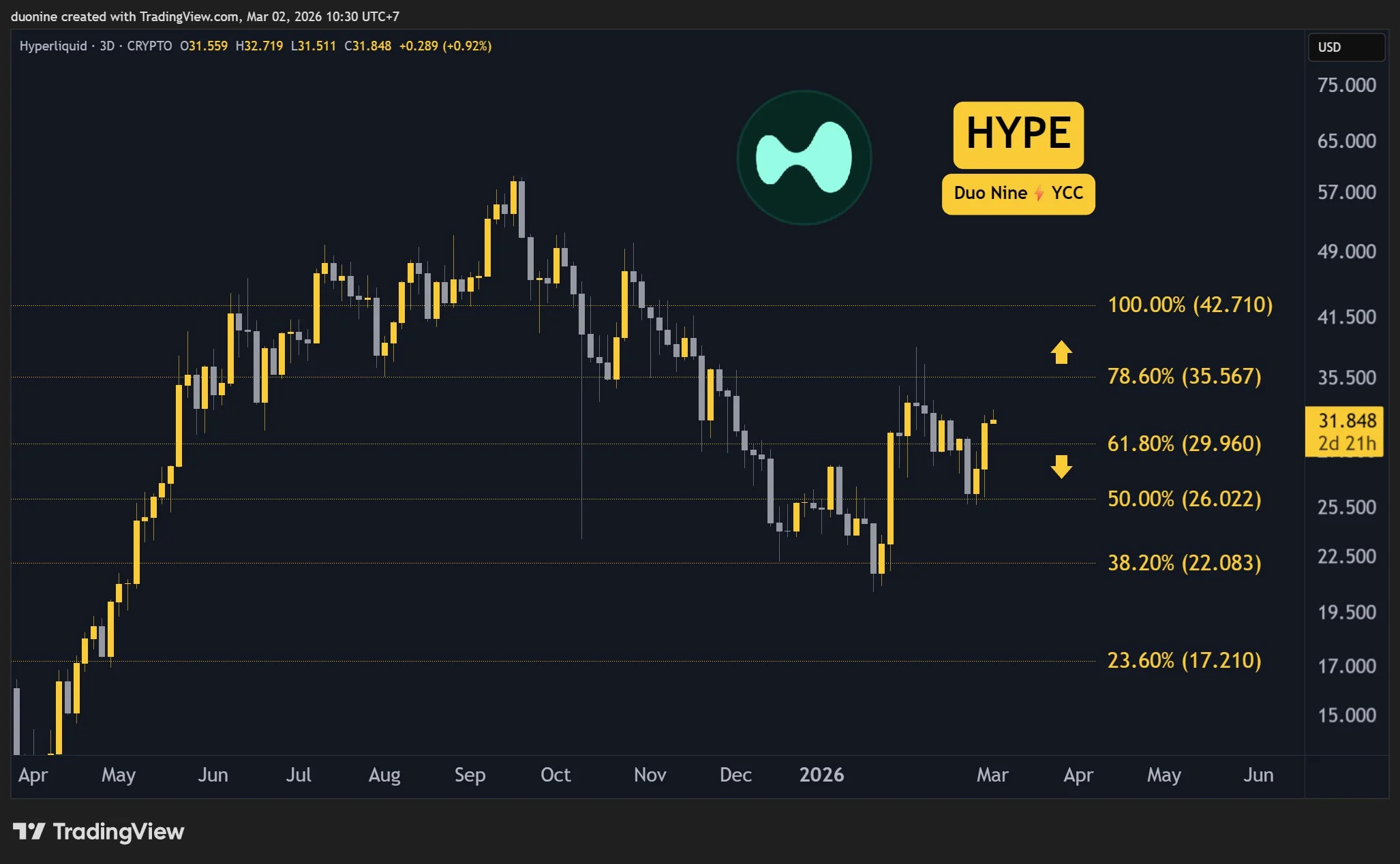
A closer look at a few important price levels to watch for HYPE in the coming days.
HYPE just made a higher low. Is the downtrend over?
Hyperliquid (HYPE) Price Predictions: Analysis
Key support levels: $26
Key resistance levels: $36
Buyers Return
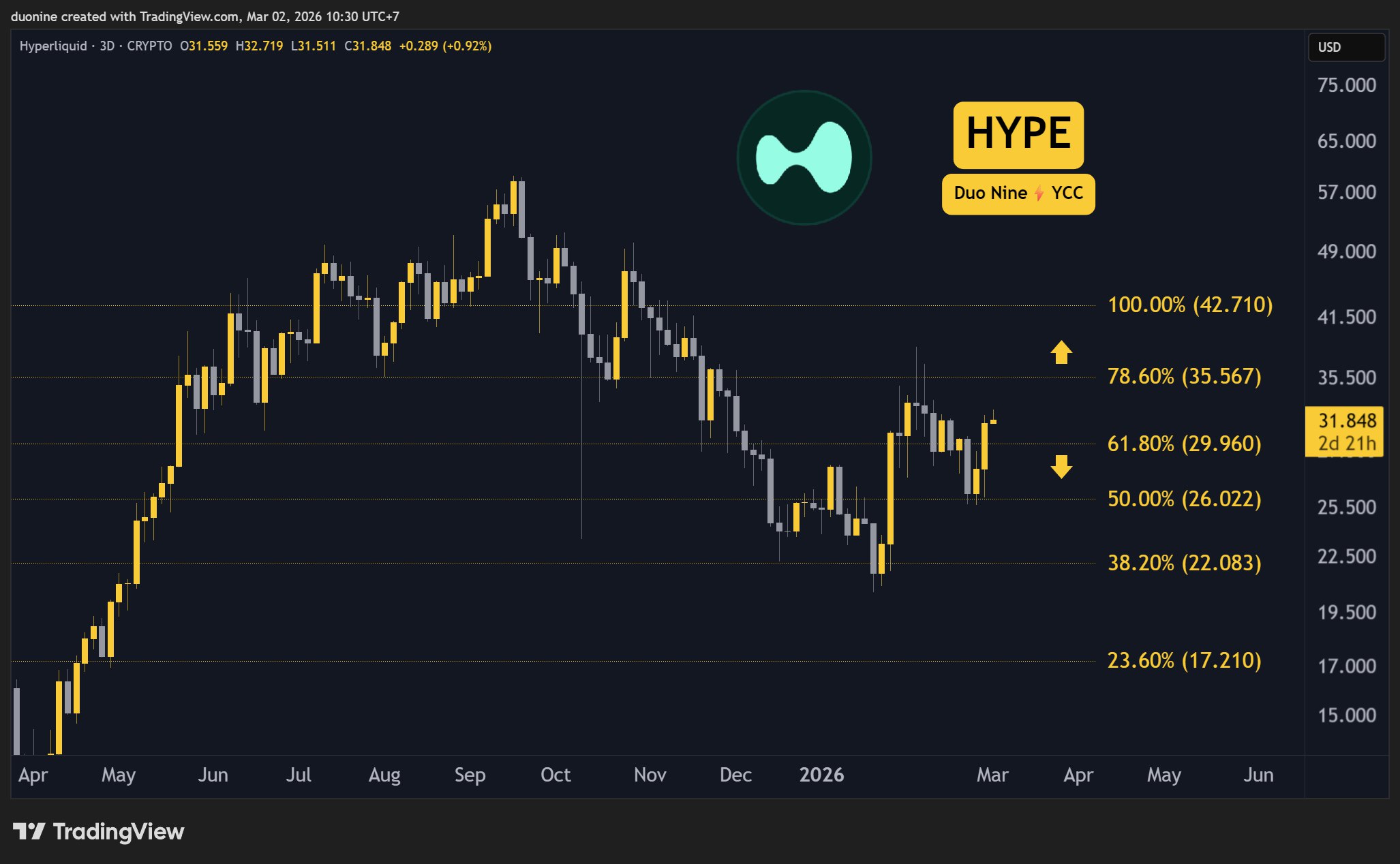
After the price found support at $26, buyers returned and pushed HYPE above $30. If they can hold here, the price has a good chance of testing the $36 resistance next.
Momentum is Turning Bullish
A look at the momentum indicators, such as the MACD or RSI, shows that bulls are taking control of the price action. The 3-day MACD is bullish, with a positive histogram, and the RSI has moved above 50. If nothing changes, HYPE has a good chance to move higher from here.

Buy Volume Picks Up
In the past week, the daily buy volume has been increasing, which shows a clear change in the trend. This shows sustained buy pressure which can propel HYPE higher. A first test of this uptrend will be the resistance at $36.

Binance Free $600 (CryptoPotato Exclusive): Use this link to register a new account and receive $600 exclusive welcome offer on Binance (full details).
LIMITED OFFER for CryptoPotato readers at Bybit: Use this link to register and open a $500 FREE position on any coin!
Ethereum price dips about 1–2% near $1.95k, nearing a 7‑month losing streak as whales trim holdings on macro pressure.
Summary
- ETH trades around $1.94k–$1.97k today, down roughly 1–2% in 24h, with 24h volume near $21–23b and a 24h range around $1.94k–$2.06k.
- Coinglass‑based data show ETH has logged six straight monthly declines, its longest losing streak since 2018, and has closed lower in 12 of the past 15 months.
- On‑chain data highlight selling from 100k–1m ETH wallets over 90 days while RSI sits in historically oversold territory and funding plus open interest have normalized, suggesting reduced leverage risk into key support.
Ethereum (ETH) faces a potential seventh consecutive monthly decline, a rare occurrence in cryptocurrency market history, according to market data.
The digital asset has slipped below a key psychological price level, though it briefly recovered above another threshold before showing signs of weakness, market observers reported.
On-chain data indicates that wallet addresses holding between 100,000 and 1,000,000 ETH have reduced their reserves over the past 90 days, according to blockchain analytics. The reduction has occurred outside of exchanges, suggesting strategic position reduction rather than preparation for short-term trading activity.
The cryptocurrency has faced headwinds from macroeconomic conditions, with persistent inflation dampening institutional appetite for risk assets, analysts noted. Ethereum has been among the hardest-hit major cryptocurrencies during this period.
Technical indicators show the daily Relative Strength Index (RSI) in historically oversold territory, a level where relief rallies have previously formed, according to technical analysis data. Funding rates have normalized and open interest has declined, reducing leverage-related risk in the market.
Market analysts identified a nearby support level as a critical threshold for the asset. Should Ethereum hold above this support and reclaim higher price levels, momentum could shift toward previous resistance zones, according to technical analysis.
The correction appears driven by macroeconomic factors rather than deteriorating network fundamentals, market participants stated. The asset approaches what analysts describe as a short-term inflection point as large holders continue to reduce exposure.
Key Takeaways
- Platform reverses prohibition on compensated cryptocurrency advertising
- Mandatory disclosure labels required for all paid crypto content
- Geographic restrictions apply based on local regulatory requirements
- New transparency framework balances monetization with compliance
- Policy shift enables creator earnings while maintaining oversight
The social media platform X has reversed its prohibition on paid cryptocurrency and gambling advertisements, creating new opportunities for content creators and marketing partners. The platform now permits compensated digital asset content through a structured disclosure program. Mandatory labeling requirements and location-based restrictions form the compliance foundation.
Disclosure System Governs Cryptocurrency Marketing on Platform
Cryptocurrency and related financial instruments have been removed from X’s restricted categories for paid partnerships. This policy modification reverses limitations that existed since mid-2024. Content creators now have authorization to earn revenue from digital asset promotions.
The company established a Paid Partnership designation to regulate compensated promotional activities. All creators must transparently identify financial arrangements when endorsing cryptocurrency offerings. Adherence to relevant advertising standards and consumer protection regulations is mandatory.
X makes clear distinctions between Paid Partnership content and traditional advertising products. As a result, certain material prohibited under partnership guidelines may qualify through alternative X Ads channels. This framework enables the platform to maintain disclosure standards while facilitating revenue generation.
Geographic Boundaries Define Promotion Accessibility
Despite removing the worldwide prohibition, specific territories continue restricting crypto promotions. Nations including the United Kingdom, European Union member states, and Australia enforce rigorous financial advertising regulations. X mandates that creators block paid cryptocurrency material from these jurisdictions.
Content creators hold direct responsibility for geographic compliance under the revised guidelines. X anticipates users will comprehend regional financial marketing requirements prior to posting compensated material. This framework assigns accountability to individual influencers and commercial collaborators.
X maintains prohibitions on numerous industry categories for paid partnerships. The restricted list continues blocking adult services, alcoholic beverages, relationship platforms, controlled substances, tobacco products, and weaponry. Commercial advertising related to political or social causes also remains forbidden.
Market Response and Platform Development Direction
The crypto community has demonstrated varied responses to the policy transformation. Certain participants celebrated restored monetization capabilities following extended restrictions. Alternative voices cautioned that enforcement complexities might generate ambiguity regarding unpaid token recommendations.
Industry observers suggest enhanced labeling standards could transform influencer marketing approaches on X. They predict informal promotional tactics may diminish under heightened disclosure requirements. Nevertheless, marketing organizations now possess a structured framework for regulation-compliant cryptocurrency initiatives.
This policy transformation corresponds with additional platform innovations currently developing at X. Platform owner Elon Musk recently validated intentions to deploy X Money in restricted beta testing soon. Furthermore, X intends to introduce Smart Cashtags functionality enabling direct equity and cryptocurrency transactions.
X has historically functioned as a primary gathering space for cryptocurrency enterprises and enthusiasts. Consequently, the policy reversal reestablishes a recognized marketing avenue while incorporating regulatory safeguards. These modifications demonstrate X’s effort to harmonize regulatory obligations with viable creator compensation models.


Hong Kong is doubling down on its role as China’s financial bridge, signing a new agreement with Shanghai authorities to build cross-border blockchain rails for cargo trade and trade finance.
The memorandum of understanding between the Hong Kong Monetary Authority, the Shanghai Data Bureau, and the National Technology Innovation Center for Blockchain, announced Monday afternoon in Hong Kong, formalizes plans to develop a shared digital platform linking trade data, electronic bills of lading, and financing systems.
The MoU signals growing adoption of bitcoin in real-world plumbing, targeting $1.5 trillion in annual cargo finance where paper work and jams still cost a lot in delays in fraud.
By plugging mainland cargo data into Hong Kong’s international-facing infrastructure, officials aim to reduce friction in cross-border trade while reinforcing the city’s status as the primary conduit between China and global capital markets.
Under the agreement, the parties will study the creation of a cross-border platform under the HKMA’s Project Ensemble framework. The initiative will explore the use of electronic bills of lading and blockchain-based documentation to streamline trade finance, while connecting with Hong Kong’s Commercial Data Interchange and CargoX to facilitate secure data sharing.
For Hong Kong, the move extends its digital asset strategy beyond tokenized green bonds and into the real economy. Instead of focusing solely on sovereign issuance or crypto markets, regulators are targeting the operational bottlenecks in cargo finance, where paper documents, fragmented data, and manual verification continue to slow credit decisions.
If successful, the platform could embed Hong Kong deeper into mainland supply chains while offering international investors and banks a compliant gateway to Chinese trade data. In doing so, the city is attempting to turn blockchain from a pilot project into core cross-border financial infrastructure.

Key Takeaways
- Unidentified objects impacted AWS facilities in the UAE on Sunday, triggering fires and service disruptions
- Emergency services cut power to affected zones; a secondary UAE location experienced additional electrical issues
- Bahrain-based AWS infrastructure also experiencing power supply and network connectivity challenges
- Timing aligns with Iranian military response throughout the Gulf region, though AWS hasn’t established direct causation
- Customers advised to migrate workloads to alternative regions while restoration efforts continue over several hours
Amazon’s cloud computing division experienced significant service interruptions following an incident where unknown projectiles hit its United Arab Emirates facility on Sunday, resulting in fire damage and electrical system failures.
The disruption began approximately 4:30 p.m. local time in Dubai. Emergency response teams disabled the facility’s electrical infrastructure to control the resulting flames.
According to AWS’s official service health dashboard, “objects struck the data center, creating sparks and fire” at one of its UAE-based availability zones.
Subsequently, another UAE availability zone encountered what the company characterized as a “localized power issue,” further extending the scope of regional service degradation.
The cloud infrastructure provider additionally documented electrical and network connectivity complications affecting one of its Bahrain deployment zones.
The company instructed affected customers to redirect their operations to infrastructure located in unaffected geographic regions during remediation. AWS projected that full restoration would require “multiple hours away.”
These technical failures occurred simultaneously with Iranian military operations targeting the UAE, part of a coordinated retaliatory campaign spanning the Middle East following joint US and Israeli strikes that resulted in the deaths of Supreme Leader Ayatollah Ali Khamenei and additional high-ranking Iranian leadership.
Tehran’s response encompassed multiple territories, with projectile and unmanned aerial vehicle assaults documented against American military installations and allied nations including the UAE, Qatar, Kuwait, and Saudi Arabia.
AWS has neither acknowledged nor dismissed any direct correlation between the facility damage and Iranian military actions. Company representatives provided no statement when approached for comment.
Impact on UAE-Based AWS Clients
Prominent AWS enterprise customers operating in the UAE include Al Ghurair Investment LLC and Dubai Islamic Bank.
The cloud provider maintains 123 availability zones distributed across 39 geographic regions worldwide, establishing extensive infrastructure redundancy — though regional concentration still created vulnerability in this scenario.
Ongoing Restoration Efforts
AWS initially communicated progress toward service restoration early Monday but subsequently revised its status, continuing to direct users toward alternative regional infrastructure.
As of Monday morning in Dubai, both affected UAE availability zones along with the single Bahrain zone continued experiencing service degradation.
Shares of Amazon (AMZN) traded up 1.00% at the most recent market check.


Earnings reports are still rolling in. This week Riot Platforms, the fourth-largest bitcoin miner by market cap, is due to report, as is Core Scientific, the No. 6.
Like many of their peers, the two are using their experience running large data centers and negotiating power-supply deals to expand into AI. Core, whose proposed $9 billion purchase by CoreWeave (CRWV) failed in October, barely mentions digital asset mining on its homepage. It will be interesting to see how much of its business still comes from that source.
Also due this week is the U.S. jobs report for February. The world’s largest economy is forecast to have added 60,000 nonfarm positions last month, according to the consensus estimate on Trading Economics.
Traders will also be monitoring the war in the Middle East, which has seen the U.S. and Israel strike Iran in what President Donald Trump called “major combat operations” targeting the country’s missile, naval and nuclear infrastructure.
Iran has retaliated with attacks on various countries in the region that host U.S. military bases. The conflict has been escalating with Iran-backed militias joining in. Trump has said it’s expected to last “four to five weeks,” so an earlier-than-expected truce could bring risk appetite back.
What to Watch
(All times ET)
- Crypto
- March 2: SuperRare to release Delirium, a new collection by artist Xer0x
- March 2: Mantra’s OM token to change to MANTRA with a 1:4 coin split as the Mantra chain upgrades from v6 to v7.
- March 3: SolCex mobile app to debut on Google Play and Apple’s App Store.
- March 4: Qubic begins testing parallel dogecoin mining and AI training
- Macro
- March 2, 10:00 a.m.: U.S. ISM manufacturing PMI for February est. 52.3 (Prev. 52.6)
- March 3, 5:00 a.m.: Eurozone inflation rate YoY flash for February (Prev. 1.7%); Core YoY (Prev. 2.2%)
- March 3, 7:30 p.m.: Australia GDP growth rate QoQ for Q4 (Prev. 0.4%)
- March 3, 8:30 p.m.: China NBS manufacturing PMI for February (Prev. 49.3)
- March 4, 8:15 a.m.: U.S. ADP employment change for February (Prev. 22K)
- March 4, 10:00 a.m.: U.S. ISM services PMI for February (Prev. 53.8)
- March 4, 2:00 p.m.: U.S. Fed Beige Book
- March 5, 8:30 a.m.: U.S. initial jobless claims for week ending Feb. 28 (Prev. 212K)
- March 5, 8:30 a.m.: U.S. nonfarm productivity QoQ prel for Q4 (Prev. 4.9%)
- March 5, 4:30 p.m.: U.S. Fed balance sheet update for period ending March 4
- March 6, 8:30 a.m.: U.S. nonfarm payrolls for February Est. 60K (Prev. 130K)
- March 6, 8:30 a.m.: U.S. unemployment rate for February (Prev. 4.3%)
- March 6, 8:30 a.m.: U.S. average hourly earnings MoM for February (Prev. 0.4%)
- March 6, 8:30 a.m.: U.S. retail sales control group MoM for January (Prev. 0.0%)
- March 8, 8:30 p.m.: China inflation rate YoY for February (Prev. 0.2%)
- Earnings (Estimates based on FactSet data)
- March 2: Riot Platforms (RIOT), post-market, -$0.32
- March 2: Core Scientific (CORZ), post-market, -$0.18
- March 6: Metalpha (MATH), pre-market
- March 9: Sharplink (SBET), pre-market, $0.31
- March 11: Exodus Movement (EXOD), pre-market, $0.14
Token Events
- Governance votes & calls
- PoolTogether DAO is voting to manually resubmit and execute the remaining actions for the PTBR-35 governance shutdown after a previous execution error. Voting ends March 2.
- Angle DAO is voting on an orderly wind-down of the EURA and USDA stablecoins, providing users a one-year 1:1 redemption period followed by a final settlement airdrop. Voting ends March 2.
- GMX DAO is voting to transition to a defined leadership model by hiring a CEO with performance-tied compensation and forming an interim leadership committee to guide the restructuring. Voting ends March 2.
- ShapeShift DAO is voting to appoint PTT as the Tokenomics Workstream Leader for a six-month term, compensated entirely in FOX tokens to eliminate stablecoin costs. Voting ends March 3.
- Decentraland DAO is voting to explore the automatic execution of approved proposals and soft term limits for signer keys while maintaining emergency oversight. Voting ends March 3.
- Uniswap DAO is voting across two linked proposals to expand v2 and v3 protocol fees to eight layer-2 networks and enable a new tier-based fee system across all v3 pools. Voting ends March 4 and 5.
- ENS DAO is voting to replace three DNSSEC oracle algorithms to patch a critical RSA signature forgery vulnerability and significantly reduce gas costs. Voting ends March 4.
- Gnosis DAO is voting to provide a grant to fund the continued support, infrastructure and maintenance of the Revoke.cash security platform. Voting ends March 5.
- Unlocks
- March 5: Ethena (ENA) to unlock 2.24% of its circulating supply worth $18.35 million.
- March 6: Hyperliquid (HYPE) to unlock 2.72% of its circulating supply worth around $288.77 million.
- Token Launches
- March 8 or earlier: Chiliz (CHZ) to deploy revenue from the protocol to buyback and burn CHZ tokens.
- March 8 or earlier: WhiteBit Token (WBT) to be listed on Kraken.
Conferences

Mango and passionfruit mess with basil and pistachios

Stock Markets Slump, Oil Prices Surge on Iran Conflict. Futures Drop.

Xiaomi Faces Memory Chip Crisis as Prices Jump 90% in 2026


-

 Sports7 days ago
Women’s college basketball rankings: Iowa reenters top 10, Auriemma makes history
-

 Politics7 days ago
Nick Reiner Enters Plea In Deaths Of Parents Rob And Michele
-

 Fashion3 days ago
Weekend Open Thread: Iris Top
-

 Business6 days ago
True Citrus debuts functional drink mix collection
-

 Politics3 days ago
ITV enters Gaza with IDF amid ongoing genocide
-

 Tech1 day ago
Unihertz’s Titan 2 Elite Arrives Just as Physical Keyboards Refuse to Fade Away
-
Sports2 days ago
The Vikings Need a Duck
-

 Crypto World6 days ago
XRP price enters “dead zone” as Binance leverage hits lows
-

 Tech6 days ago
Unsurprisingly, Apple's board gets what it wants in 2026 shareholder meeting
-
 NewsBeat2 days ago
Dubai flights cancelled as Brit told airspace closed ’10 minutes after boarding’
-

 NewsBeat4 days ago
Cuba says its forces have killed four on US-registered speedboat | World News
-
 NewsBeat4 days ago
Manchester Central Mosque issues statement as it imposes new measures ‘with immediate effect’ after armed men enter
-
 NewsBeat2 days ago
The empty pub on busy Cambridge road that has been boarded up for years
-

 NewsBeat20 hours ago
‘Significant’ damage to boarded-up Horden house after fire
-

 NewsBeat2 days ago
Abusive parents will now be treated like sex offenders and placed on a ‘child cruelty register’ | News UK
-
 NewsBeat5 days ago
Police latest as search for missing woman enters day nine
-

 Business4 days ago
Discord Pushes Implementation of Global Age Checks to Second Half of 2026
-
 Sports7 days ago
2026 NFL mock draft: WRs fly off the board in first round entering combine week
-

 Business4 days ago
Only 4% of women globally reside in countries that offer almost complete legal equality
-
 Tech3 days ago
NASA Reveals Identity of Astronaut Who Suffered Medical Incident Aboard ISS