
Crypto World
Fed Rate Cuts Shrink to One as Iran War Rattles Oil Markets and Inflation Outlook


TLDR:
- Fed held rates at 3.50–3.75%, cutting expected 2026 reductions from four down to one.
- Oil surging to $115 per barrel during the Iran conflict pushed short-term inflation further from the 2% target.
- A ceasefire sent oil below $95 within hours, raising hopes that the one remaining rate cut could arrive sooner.
- Kevin Warsh, known for favoring lower rates, replaces Jerome Powell in May, adding a new variable to Fed policy.
Fed rate cuts have become a closely watched topic as Middle East tensions reshape the economic outlook for 2026.
The Federal Reserve held rates unchanged at 3.50% to 3.75% at its latest policy meeting. Markets had previously anticipated four reductions this year.
Escalating conflict in the region, however, has brought that number down to just one. Oil prices surged to $115 per barrel at the height of the Iran conflict, worsening an already stubborn inflation reading of 3.0%. A fragile ceasefire has since changed the near-term picture, though uncertainty persists.
Oil Shock or Structural Problem? The Fed Weighs In
The decision to hold rates was not unanimous inside the Federal Reserve. Two members pushed for a cut but were outvoted by the majority. Most policymakers preferred waiting for clearer data before adjusting the rate path.
Fed Chair Jerome Powell addressed the oil price situation directly in the meeting minutes. He acknowledged that Middle East tensions are pushing short-term inflation numbers higher.
At the same time, he stressed that long-term inflation expectations have remained relatively stable. The Fed is treating the current situation as a temporary oil shock, not a structural inflation problem.
Market analyst account Bull Theory captured the shift on X, writing, “The Iran war just killed four Fed rate cuts” — with only one cut now remaining on the table for 2026.
That distinction between short-term and long-term inflation matters for markets and policymakers alike. Oil-driven inflation typically reverses once prices stabilize. The Fed’s current framework leaves room for cuts once that reversal shows up clearly in the data.
Ceasefire, Falling Oil, and a Change at the Top
The ceasefire announcement triggered a sharp drop in oil prices, from $115 to below $95 within hours. That move represents a meaningful shift in the near-term inflation outlook. Markets responded quickly by reassessing rate cut probabilities for the remainder of 2026.
April and May oil price trends will be the key numbers to watch going forward. If prices hold below $95, inflation could begin trending closer to the Fed’s 2% target. That outcome would likely pull the one remaining rate cut forward from late 2026 into an earlier window.
Another variable entering the equation is the scheduled change in Fed leadership. Powell steps down in May, with Kevin Warsh set to take over as chair.
Warsh is widely known to favor lower interest rates, a stance that could accelerate any easing if inflation data cooperates.
That said, the ceasefire is a two-week arrangement, not a permanent agreement. Iran has already declared three violations since the deal was announced.
Israel continues military operations in Lebanon, and the Strait of Hormuz remains partially restricted. The April Consumer Price Index report will serve as the first real test of whether the oil shock is easing.
Until that data arrives, Fed rate cuts in 2026 will remain unsettled.


Crypto World
AI Art Is Getting Creepy: Robot Dogs With Musk and Bezos Faces Take Over Berlin Gallery

Robot dogs with the faces of Elon Musk, Jeff Bezos, Mark Zuckerberg, and other famous figures are roaming inside a Berlin art gallery, watching visitors, generating AI images, and printing them from their rear ends.
The installation, called “Regular Animals,” is the latest work from digital artist Beeple, whose real name is Mike Winkelmann. It is now on display at the Neue Nationalgalerie in Berlin until May 10, 2026.
The show brings together robotics, artificial intelligence, celebrity culture, and NFTs in one deliberately strange package. It looks ridiculous at first. Then it starts to feel slightly uncomfortable.

Robot Dogs With Billionaire Faces
The installation features a group of autonomous robot dogs fitted with hyper-realistic silicone heads. The faces include Elon Musk, Jeff Bezos, Mark Zuckerberg, Andy Warhol, Pablo Picasso, and Beeple himself.
Reports from the exhibition also showed a robot dog with Kim Jong Un’s face. The result looks like a nightmare version of a tech conference mixed with a museum installation.
The dogs move around inside an enclosed area in the gallery. They do not just sit there as sculptures. They walk, scan the room, and interact with the space around them.
They Watch Visitors, Then Make AI Art
Each robot dog has cameras that capture images of visitors and the gallery. The system then uses AI to reinterpret what it sees through the style or personality linked to each figure.
For example, the Picasso-themed dog can turn the room into something closer to Cubism. The Warhol version leans into pop-art-style imagery.
Then comes the part that made the artwork go viral. The dogs print the AI-generated images from their backsides.
Visitors can take the prints home for free. So, in plain terms, the robot dogs are walking around a Berlin museum and “pooping” AI art.
Beeple Turns AI Culture Into a Weird Joke
The piece is funny, but it is not random. Beeple is using the absurd image of celebrity-faced robot dogs to make a point about power in the digital age.
The work asks a simple question: who shapes culture now?
In the past, artists, newspapers, museums, and governments played that role. Today, algorithms, tech platforms, billionaires, AI systems, and online attention loops do much of that work.
The NFT Angle Is Still There
There is also a blockchain layer to the installation. Visitors can reportedly claim free NFTs linked to the project through QR codes.
That fits Beeple’s history. He became one of the most famous names in digital art after his NFT artwork “Everydays: The First 5000 Days” sold for more than $69 million in 2021.
Since then, Beeple has become a symbol of the NFT boom, digital art culture, and the uneasy overlap between technology, money, and online hype.
With “Regular Animals,” he seems to be turning that world into a joke about itself.
From Miami to Berlin
The project first appeared at Art Basel Miami Beach 2025 before moving to Berlin for Gallery Weekend Berlin 2026.
Its Berlin run is also notable because it marks Beeple’s first institutional exhibition in Germany. That gives the work a more serious setting than a viral internet stunt.
Still, the installation clearly wants to be shared online. Robot dogs with billionaire heads printing AI art from their backsides is almost engineered for social media.
Why It Feels Creepy
The unsettling part is not just the strange faces. It is the way the work turns visitors into raw material.
People enter the gallery, the dogs watch them, AI processes them, and the machine spits out an image. That process mirrors how digital platforms already work.
We post, click, scroll, and watch. Platforms collect the signal, process it, and feed something back to us.
Beeple just made that loop physical. Then he put a famous face on it.
“Regular Animals” lands at a time when AI art is already raising questions about authorship, consent, copyright, and originality.
The installation pushes those questions into a more uncomfortable space. It shows AI art as something funny, grotesque, and automated.
It also makes the power structure visible. The machines are not faceless. They wear the faces of people and cultural icons linked to money, platforms, art, and influence.
So yes, AI art is getting creepy.
In Berlin, it now has four legs, a billionaire’s face, a camera, and a built-in printer.
The post AI Art Is Getting Creepy: Robot Dogs With Musk and Bezos Faces Take Over Berlin Gallery appeared first on BeInCrypto.

Bitcoin’s momentum continues to build as it tests a critical price zone near the $80,000 mark, supported by a confluence of technical signals and persistent demand from spot, futures, and institutional players. Fresh data indicate a renewed willingness among buyers and traders to accumulate, even as the market remains below the psychologically important threshold. According to monitoring across market-data providers, BTC rose roughly 2.5% to about $78,800, rebounding after a test of the 100-day exponential moving average (100-day EMA) and maintaining the near-term uptrend.
Key takeaways
- Bitcoin rebounds to roughly $78,800, reclaiming the 100-day EMA as dynamic support, hinting at a constructive longer‑term setup.
- Spot demand strengthens with a multi-month high in CVD (11,500 BTC), indicating buyers are absorbing supply during pullbacks.
- Futures markets show renewed activity: open interest up 6.6% to 257,000 BTC, pointing to new positions building amid the consolidation phase.
- Overall liquidity dynamics suggest sustained demand, with ETF inflows in April reaching near $2 billion and a nine-day inflow streak highlighted by analysts.
- Institutions continue to tighten available supply, as OTC desk balances trend lower and liquidity remains clustered around the $78k–$80k zone, creating potential short‑squeeze risk near key levels.
Technical backdrop: a test of the moving-average floor
On the demand side, the spot-CVD surge aligns with a broader theme of accumulating interest. The latest reading marks a new high for the current cycle, underscoring robust buying pressure that could help sustain the rally if price approaches the $80,000–$82,000 region. However, traders remain mindful of the potential for price action to stall if liquidity thins at higher levels or if macro catalysts shift sentiment.
Futures, leverage, and the evolving risk-reward
Futures liquidity has shown a clear revival alongside price gains. The rebound in open interest to 257,000 BTC indicates new positioning, which could provide ballast on further upside or amplify downside risks if momentum wanes. Notably, the market also appears to be digesting a prior period of leverage; data show a leverage flush of approximately 9,000 BTC, suggesting excess positions have been removed and the market is rebuilding from a cleaner base. Futures volume has rebounded to about 98,300 BTC, signaling fresh net buying pressure even as the asset trades under the $80,000 mark.
Analysts note that liquidity remains concentrated in the $78,000–$80,000 range, with about $2.1 billion in short positions potentially at risk if the market pushes higher. This clustering can create a vulnerability to a short squeeze if buyers gain decisive traction, though the magnitude and timing of such a move remain uncertain. Related coverage highlights how ETF flows have affected liquidity dynamics in the wider market during the period.
Overall, the combination of rising open interest and resilient spot demand paints a picture of a market rebuilding its momentum with participants re-entering on dips, rather than a complete pivot in sentiment. For traders, the key question remains whether buying pressure can sustain a move beyond the $80,000 threshold in the near term, or if liquidity constraints at higher price points will cap upside temporarily.
Institutional demand and the supply squeeze narrative
Beyond the price action, institutional activity continues to shape the supply landscape. The 30-day change in over‑the‑counter (OTC) balances has fallen to roughly −20,700 BTC, according to CryptoQuant data, echoing levels last seen in March 2025. The decline in OTC balances points to fewer BTC being parked on brokers’ desks, effectively tightening the readily available supply for market buyers. Such a shift has historically supported tighter spreads and more pronounced price reactions when spot demand strengthens.
ETF flows also underscore the backdrop of institutional involvement. April ETF inflows reached about $1.97 billion, reflecting a nine-day streak of inflows—the longest run observed in 2026 to date. Ecoinometrics highlighted the persistence of this trend, noting that while the pace is moderate, the consistency resembles the pattern seen ahead of the October 2025 peak. “The last time flows showed this kind of persistence was right before the October 2025 peak. Not saying we’re there yet, but it tells you the direction is improving,” the researchers observed.
The consistent stream of inflows from ETFs, combined with shrinking OTC supply and rising open interest, suggests a broadening participation framework that could support continued price discovery as market participants weigh macro catalysts and on-chain signals. For investors, this points to a more resilient demand structure than a purely price-driven rally, with institutions contributing to a deeper liquidity pool even as price remains within a defined corridor.
Related coverage from Cointelegraph also notes that April’s ETF activity contributed to the year’s largest monthly inflows so far, reinforcing the narrative of growing institutional interest in Bitcoin as an asset class and a hedge against macro risk.
The evolving dynamic raises several watch points for readers: Will the $80,000 barrier act as a genuine magnet or will liquidity constraints intensify near that level? How long can ETF inflows sustain their current pace, and will OTC supply continue to tighten further? And what role will macro developments—ranging from regulatory signals to dollar strength—play in shaping the near-term trajectory?
In sum, the market appears to be building a more durable base, underpinned by a blend of technical strength, rising spot and futures demand, and significant institutional engagement. While the path to a fresh leg higher is not guaranteed, the combination of a constructive daily setup, robust CVD, increasing open interest, and persistent ETF inflows signals a market that is recalibrating with potential upside leverage once macro and liquidity conditions align.
Stablecoin issuer Tether (USDT) reported $1.04 billion in net profit for the first quarter of 2026, as its excess reserves rose to a record $8.23 billion, according to its latest attestation on Friday.
The company said its reserves remain heavily concentrated in US Treasuries, with around $141 billion in direct and indirect exposure, while total assets of about $191.8 billion exceeded liabilities of approximately $183.5 billion as of March 31.
Tether said this level of exposure makes it the 17th largest holder of US Treasuries globally. Beyond Treasuries, reserves included about $20 billion in physical gold and $7 billion in Bitcoin (BTC).
USDT circulating supply remained broadly stable at about $183 billion at the end of the first quarter. After the period, CEO Paolo Ardoino said supply has increased by more than $5 billion into April.
Tether said its proprietary investments are held separately from reserves backing USDT (USDT) and are funded through excess capital and profits.
The report was prepared by accounting firm BDO. The company also said it has begun the formal audit process.
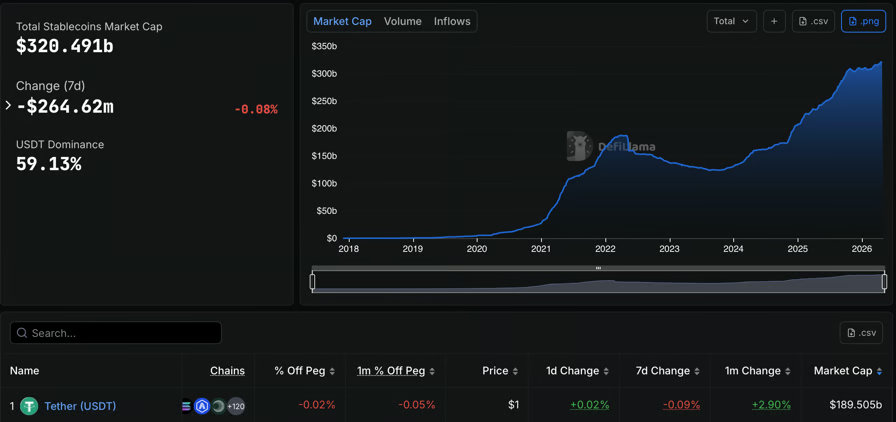
Tether is the issuer of USDT (USDT), the largest stablecoin by market capitalization. According to DefiLlama data, the total stablecoin market is valued at about $320 billion, with USDT accounting for roughly 59% of the sector.

Total stablecoins market cap. Source: DefiLlama
Related: Tether-backed Oobit rolls out virtual Visa cards for AI agent USDT spending
Demand for digital dollars rises in emerging markets
Ardoino said in a post on X on Friday that USDT’s user base reached an all-time high of about 570 million in the first quarter, citing demand for dollars across emerging markets.
In Latin America, stablecoins accounted for 40% of crypto purchases in 2025, surpassing Bitcoin’s 18% share, according to a report released by Bitso this week based on data from its nearly 10 million retail users. The report described the trend as “digital dollarization,” as users turn to stablecoins for savings and everyday transactions.

Source: Paolo Ardoino
Stablecoins are also gaining traction in Africa for remittance payments. Speaking at the World Economic Forum in January, former UN official Vera Songwe said traditional transfers can cost about $6 per $100 sent, while stablecoins allow funds to move more quickly at lower cost.
Songwe also said stablecoins can help users preserve value in high-inflation environments, noting that inflation has exceeded 20% in several African countries since the pandemic.
However, stablecoin adoption has drawn scrutiny from global regulators. The Financial Stability Board warned in its 2025 annual report that widespread use of US dollar-denominated stablecoins could pose risks to emerging economies, including currency substitution and reduced effectiveness of domestic monetary policy.

FSB annual report for 2025. Source: Financial Stability Board
Magazine: Adam Back says current demand is ‘almost’ enough to send Bitcoin to $1M
TLDR:
- Ethereum Exchange Supply Ratio has dropped to low levels, but price has not formed a matching bottom yet.
- Historical patterns show that divergences between the ratio and price typically resolve through a downward price move.
- ETH has broken below its 1-Day Bull Market Support Band, a level that has acted as a strong reversal zone recently.
- Analysts are watching the $2,150 support zone closely as a potential area to add spot positions before any recovery.
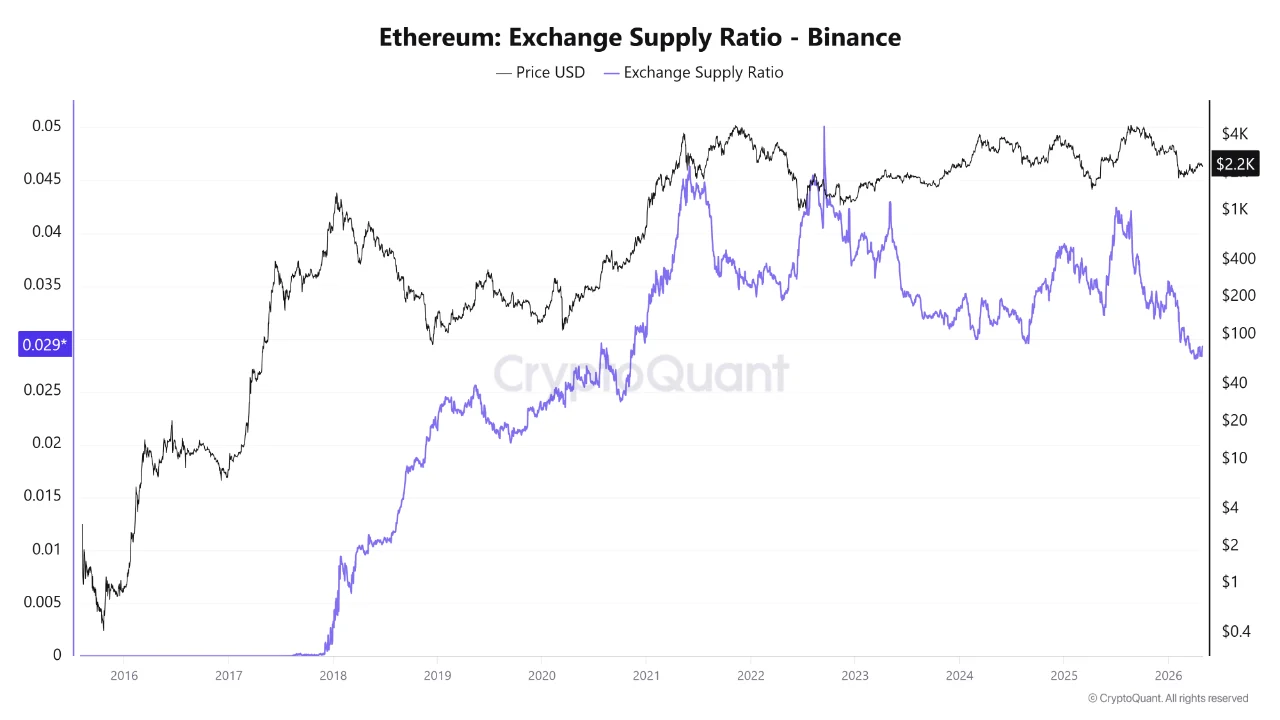
A new dip could be coming for Ethereum as on-chain data and technical signals begin to align bearishly. The Exchange Supply Ratio has dropped sharply to historically low levels, yet ETH price has not followed with a corresponding bottom.
This divergence has raised concern among analysts tracking the asset. Historically, such gaps between the metric and price tend to close through a downward correction rather than a rally in the ratio.
A New Dip Could Be Coming as On-Chain Data Diverges From Price
A new dip could be coming for Ethereum based on what the Exchange Supply Ratio is currently showing. This metric tracks how much ETH is held on trading platforms at any given time.
When the ratio drops sharply, it has historically signaled reduced selling pressure and the formation of a price bottom.
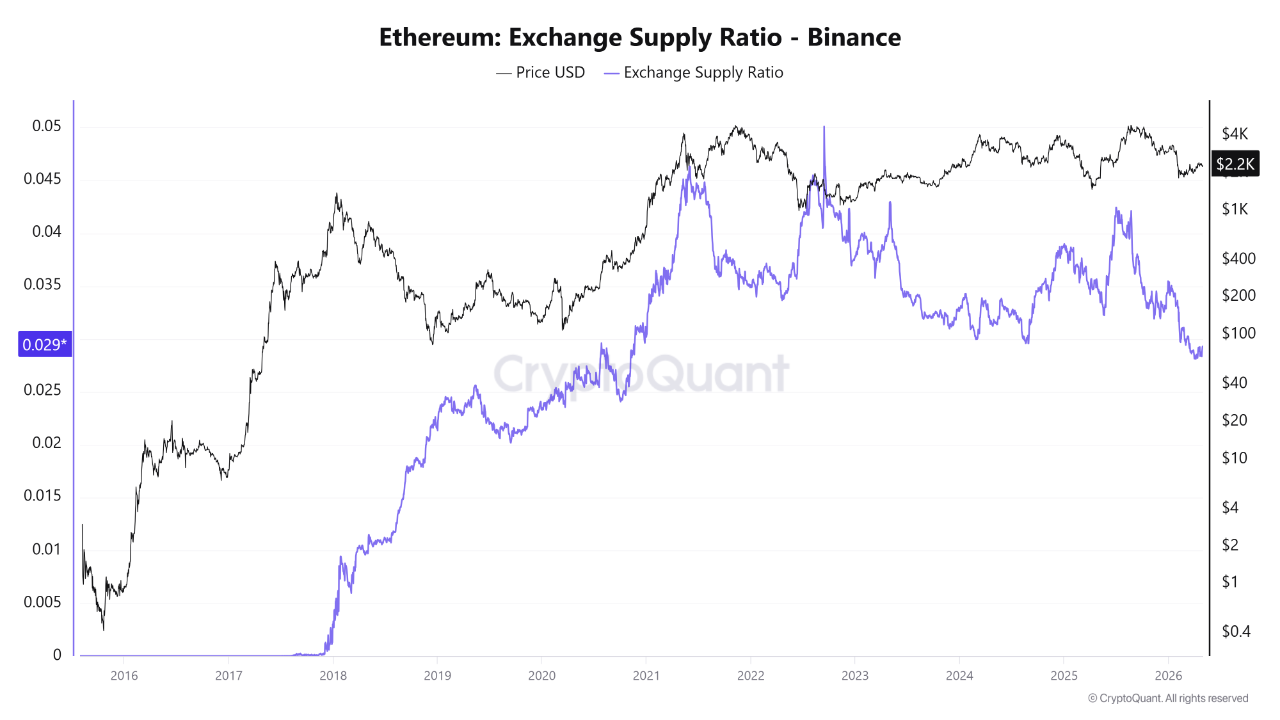
The problem now is that the ratio has fallen, but the price has not formed a matching bottom. Cryptoquant analyst PelinayPA flagged this divergence, noting that the market may not have fully priced in the signal yet. That gap between metric and price is what makes the current setup particularly worth watching.
Such divergences do not tend to last long before one side gives way. Based on historical patterns, it is typically the price that moves down to close the gap rather than the ratio recovering upward. That pattern alone puts downside risk firmly on the table.
One reason the price may still be holding is activity in the derivatives market. Leveraged positions can artificially sustain prices for a period, but that kind of support tends to be temporary. Once it unwinds, the price often moves quickly to reflect underlying conditions.
Technical Breakdown Adds Further Weight to Downside Case
Beyond the on-chain divergence, Ethereum’s chart structure is also showing signs of strain. ETH has broken below the 1-Day Bull Market Support Band, a level that has repeatedly acted as a strong reversal zone over the past several months. That break alone is worth monitoring closely.
Analyst CrypticTrades_ weighed in on the price action, acknowledging that while this could still be a short-term deviation, a confirmed breakdown would shift attention toward lower levels. The next key area sits around $2,150, a prior resistance range on higher timeframes that could now act as support.
That zone is where some analysts are already planning to add to their spot positions. A clean hold there could lay the groundwork for a more durable move to the upside further ahead. However, that recovery thesis only holds as long as price does not lose that level entirely.
For now, both signals are pointing in the same direction. Until ETH reclaims its Bull Market Support Band and the on-chain divergence resolves, the possibility of a new dip remains the most technically grounded scenario on the table.
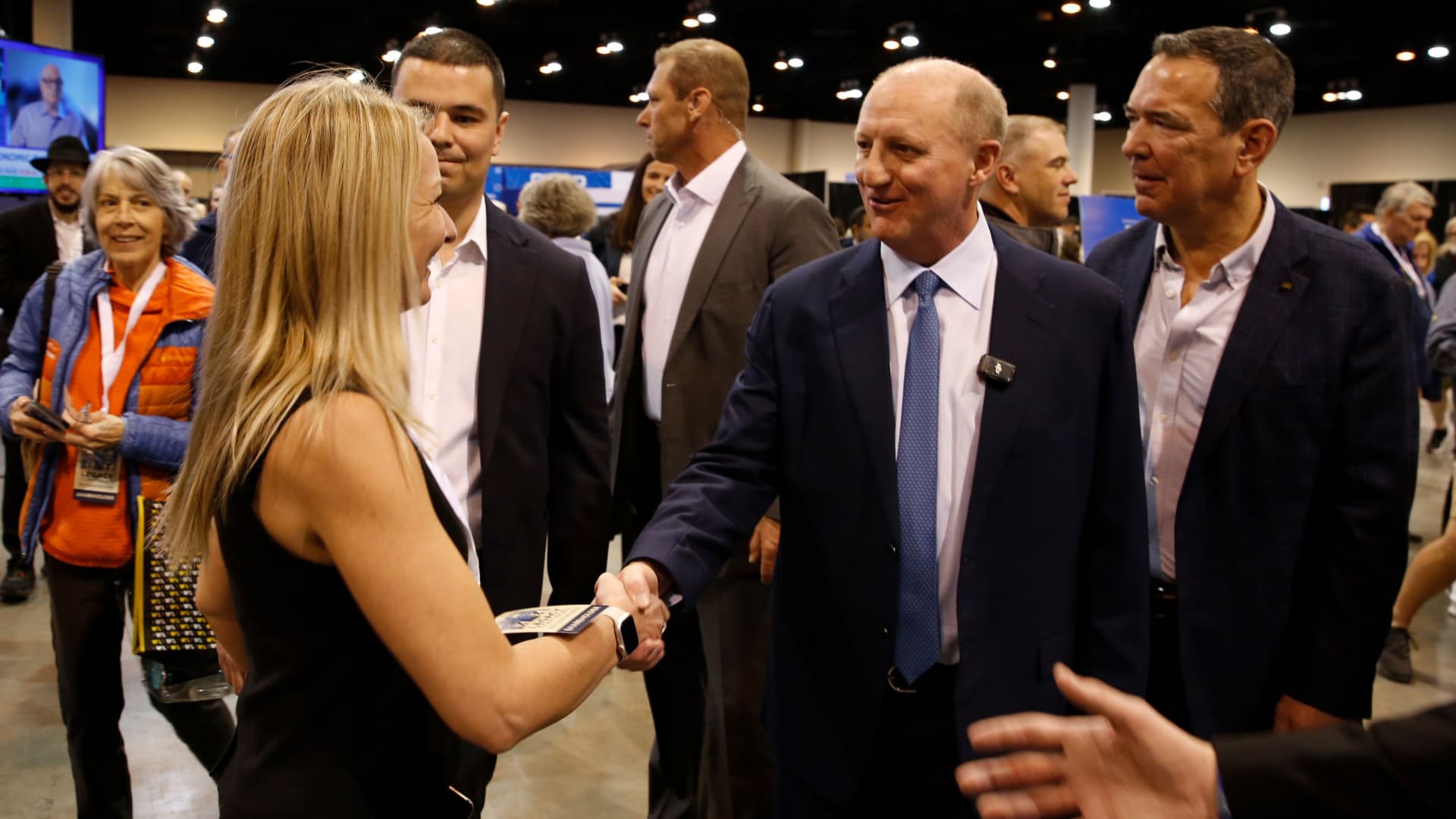
Greg Abel, CEO of Berkshire Hathaway, meets with shareholders at the Berkshire Hathaway Annual Shareholders Meeting in Omaha, NE on May 1, 2026.
David A. Grogan | CNBC
OMAHA, Nebraska — At the shareholder shopping day that kicks off Berkshire Hathaway‘s annual meeting, the mood in the air was cautiously optimistic as new and returning investors weighed the company’s direction under a new chief executive.
Shareholders in a noticeably thinner crowd Friday expressed skepticism that Greg Abel, who took over as CEO in January, will command the stage with the same storytelling and wit that Warren Buffett and Charlie Munger used to enrapture tens of thousands of attendees for decades. At the same time, they also expressed confidence in Buffett’s pick to take over the conglomerate, as the billionaire investor has been effusive in his praise for Abel over the years.
“I spent a lot of time studying Greg,” said Robert Hagstrom, chief investment officer at EquityCompass Investment Management. “I think he’s not only the right guy — and he’s been vetted for so many years by so many people — but he’s the right guy at the right time.”
Hagstrom, who wrote on Buffett’s investing principles in “The Warren Buffett Way,” has said that Abel will bring an operational expertise that will align with Berkshire’s future.
That confidence in Buffett’s pick was echoed through the convention center. Peter Yang, an international trade business owner who traveled 18 hours from Hong Kong to Omaha, was attending the gathering for the first time. He bought Berkshire shares last year after Buffett signaled his plan to step down as chief executive. Yang said he’s at ease with the transition, noting that Buffett’s endorsement of Greg Abel gives him confidence in the succession.
“I have confidence in Greg because Warren wouldn’t hand over the reins to someone who isn’t capable. I’m not concerned about the company,” Yang said.
Like other shareholders, Kim Shannon, founder and co-CIO of Sionna Investment Managers, a boutique asset management firm based in Toronto, expressed skepticism that Abel will be as entertaining on stage as Buffett and Munger have been but said that she nevertheless expressed confidence that the principles of Berkshire will continue.
“I think we’ll be all cautious about the legacy continuing, but I think some of his comments in the annual report this year, about continuing the legacy suggests that it was structured to withstand the test of time,” said Shannon. “And we’ll find out over time.”
“For institutional investors like myself, the reason for being here is not just what happens on stage during the day at the annual meeting, it’s about meeting your peers in the group,” Shannon also said. “And so, for me, it’s already been a win, and tomorrow may be a bonus.”
The official pivot
Among the first-time attendees was a farmer in her 60s from Wahoo, Neb., who said she made the trip after buying Berkshire stock five years ago. She expressed unwavering confidence in Buffett and said she views Abel as a trusted successor who has long served as Buffett’s right-hand man.
Still, she pointed to mounting economic pressures, including inflation and affordability, as top of mind, adding that she hopes Abel will address those challenges more directly as he steps further into the spotlight.
Over on the East Coast, Wanda Lee and Susan Chan decided to skip the conference this year and stream it instead from Chan’s home in Asbury Park, N.J. The two friends have been going to the annual meeting off and on for roughly 15 years, leaving their husbands at home for a girls’ trip to Omaha. But Lee said that they’re taking a pause this year as they process the leadership transition, though they expressed faith that Buffett has good judgment in choosing Abel. She also has no plans on getting rid of her Berkshire Class B shares, which she first invested in 17 years ago.
“Saturday begins the official pivot in Berkshire Hathaway,” EquityCompass Investment Management’s Hagstrom said. “And the whole world is going to get to see it.”
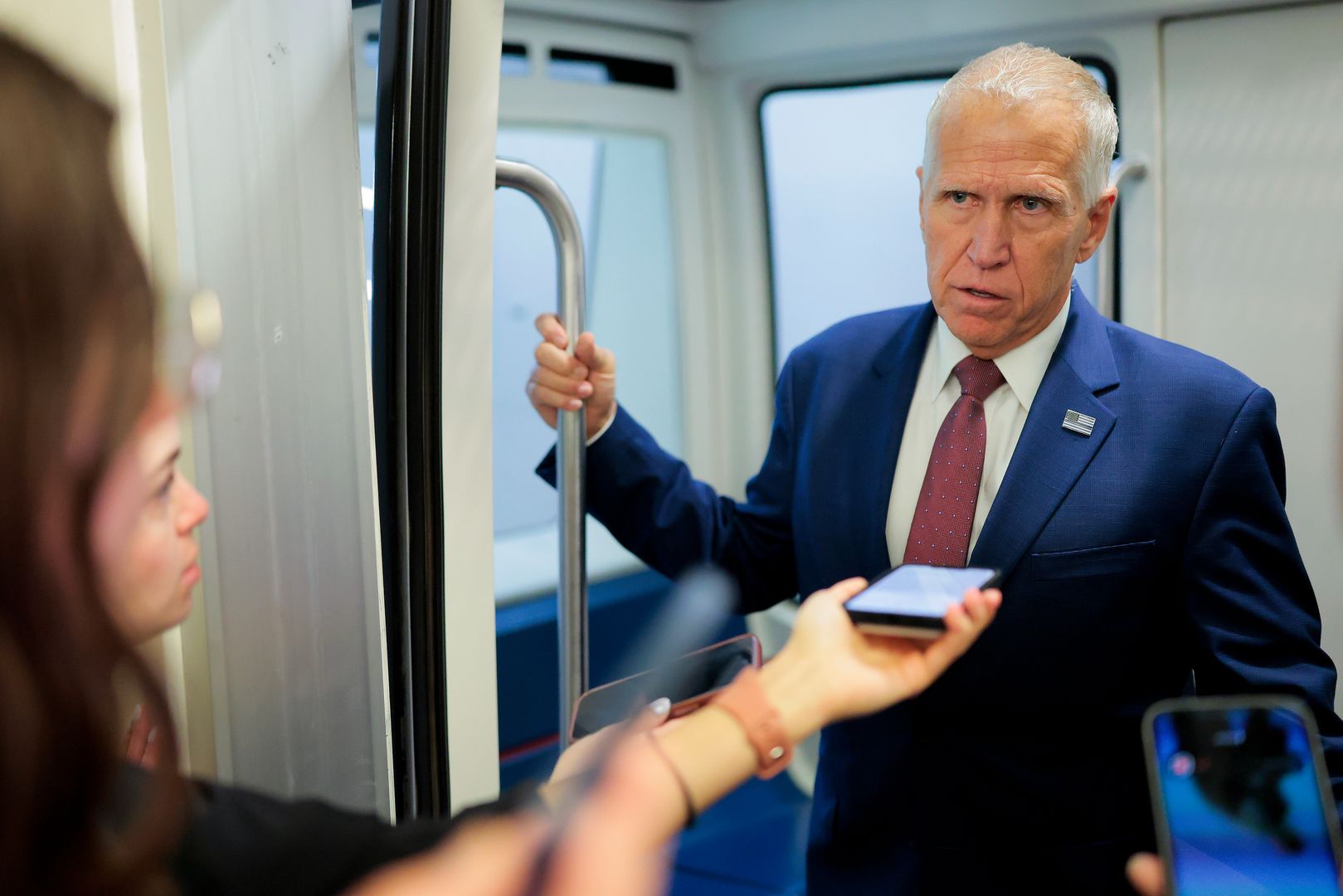
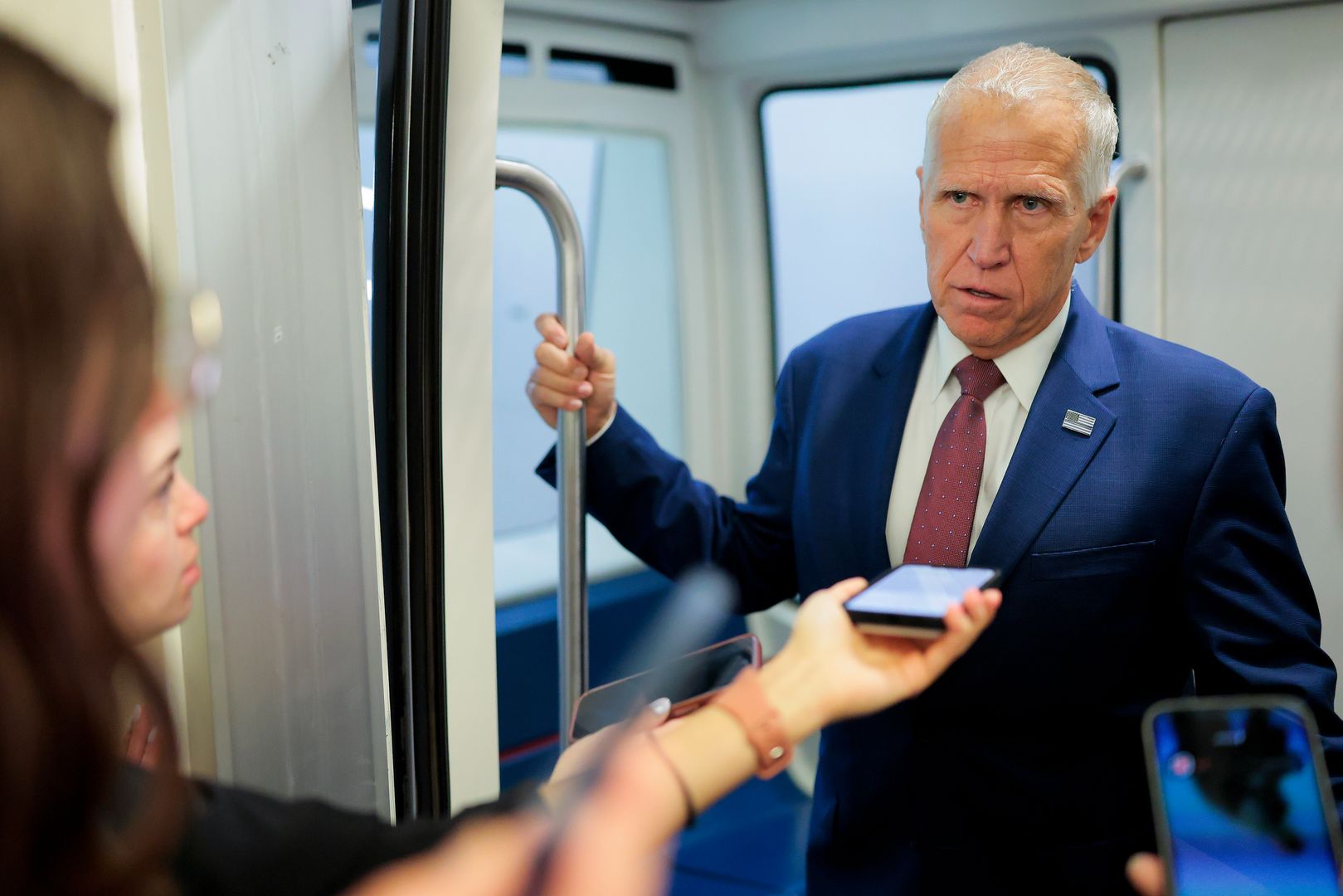
Stablecoin yield would be prohibited under a newly released agreement addressing that contentious part of the crypto market structure legislation in an approach that’s broadly similar to what’s been discussed since the start of the year.
The new section of proposed Digital Asset Market Clarity Act text released Friday revealed that the compromise hashed out by U.S. Senators Thom Tillis (R-N.C.) and Angela Alsobrooks (D-Md.) would ban stablecoin issuers from offering yield based on just holding stablecoin reserves. It contends that “depository institutions provide financial services that are integral to the strength of the American economy,” and stablecoin issuers offering similar services “may inhibit” these institutions.
Coming to an agreement means there’s likely nothing in the way of a Senate Banking Committee hearing (known as a markup) that could finally advance the legislation another key step in its progress through the Senate, though there are a number of other negotiation points that haven’t been publicly resolved.
“Mark it up,” Coinbase CEO Brian Armstrong wrote in a posting on social media site X. His company had been at the center of the talks and potentially had the most to lose from restriction on stablecoin rewards.
Coinbase’s chief legal officer, Paul Grewal, said in a separate post that this language “preserves activity-based rewards tied to real participation on crypto platforms and networks, which is what the bank lobby said they wanted,” adding that “we’re focused on getting a bill done and are satisifed that this language should not be the basis of any objection.”
In its legalese, the new text reads, “No covered party shall, directly or indirectly, pay any form of interest on yield (whether in cash, tokens, or other consideration) to a restricted recipient — (A) solely in connection with the holding of such restricted recipient’s payment stablecoins; or (B) on a payment stablecoin balance in a manner that is economically or functionally equivalent to the payment of interest or yield on an interest-bearing bank deposit.”
This restriction does not apply to incentives “based on bona fide activities or bona fide transactions” that are different from yield generated by interest-bearing bank deposits, the text said, maintaining an approach to rewards that’s similar to what financial firms offer on credit card activity. The restriction does apply to loyalty programs or similar efforts.
Senators Alsobrooks and Tillis have been negotiating details of the text for the last few months, after a Senate Banking Committee markup on the overall Clarity Act was postponed last-minute in January. Since then, bank lobbyists and crypto insiders have been weighing in on the compromise effort, sometimes in session hosted by the White House.
In March, the lawmakers had said they’d struck an agreement that blocked crypto firms from offering yield that looked like deposit interest but did allow them to structure rewards programs that didn’t rival banks’ core products.
In a statement, Digital Chamber CEO Cody Carbone said the trade association “welcomes the public release of stablecoin yield language as an important step toward resolving one of the final issues standing between the Committee and a markup. We are encouraged to see this process moving forward and will continue advocating for the power of rewards to drive consumer utility, competition, and innovation across the digital asset ecosystem.”
UPDATE (May 1, 2026, 21:54 UTC): Adds comments from Coinbase executives.
Historically, crypto markets have been driven by a dominant narrative. Not today.
In one corner, miners are trying to break free of four-year cycles. IREN is being recast as an AI infrastructure company, with analysts pointing to data centers and compute demand as the real growth engine. In another corner, BitMine is doing the exact opposite, pouring billions deeper into Ether (ETH) even as losses mount.
The disconnect doesn’t stop there. Stablecoin balances have ballooned to over $300 billion, yet activity has dropped sharply. It reflects capital waiting, with no clear consensus on what comes next.
Meanwhile, institutions are building a parallel track. Tokenized Treasurys are now being used as collateral on exchanges, linking traditional finance and crypto markets more tightly than ever.
This week’s Crypto Biz delves into a market pulling in different directions.
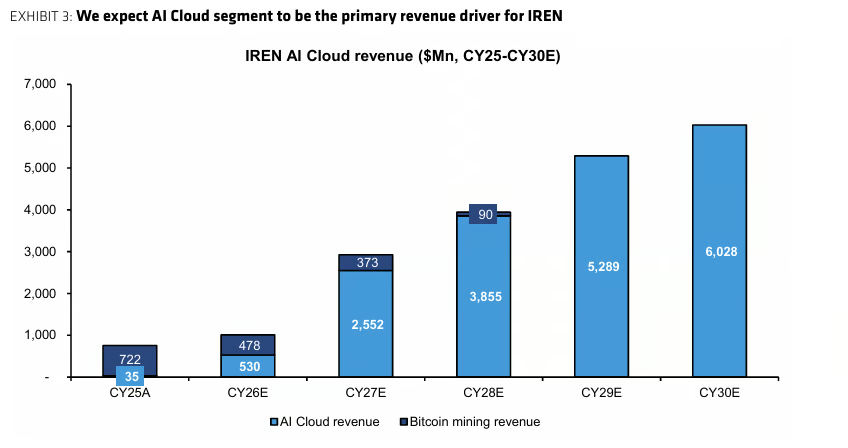
Bernstein sees IREN pivoting from Bitcoin mining to a $3.7B AI cloud business
Analysts at Bernstein are reframing the story around IREN, arguing the company’s future may depend less on Bitcoin (BTC) mining and more on building out AI-focused data center capacity.
In a new report, Bernstein highlights IREN’s access to large-scale energy infrastructure as a key advantage, positioning it to support high-performance computing workloads tied to artificial intelligence.
IREN’s AI cloud segment could grow into a multibillion-dollar business over time, with estimates pointing to a potential $3.7 billion valuation. The company has already begun expanding its data center footprint and securing financing to support this shift, signaling a longer-term strategy that extends beyond crypto mining.
The transition reflects a broader trend among miners seeking more stable and diversified revenue streams as economic conditions in the mining sector deteriorate.
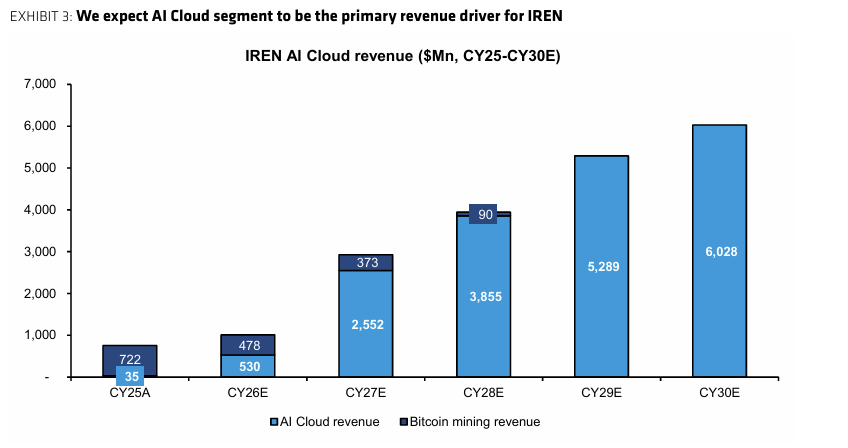
AI cloud is expected to become IREN’s dominant revenue stream very soon. Source: Bernstein
BitMine stacks another 101,000 ETH as unrealized losses grow
Tom Lee’s BitMine added another 101,000 ETH to its balance sheet, doubling down on its accumulation strategy even as its existing holdings remain deeply underwater. The latest purchase brings total investment to roughly $17.6 billion, reinforcing the company’s position as the largest corporate holder of Ether.
That aggressive buying streak comes amid more than $6.5 billion in unrealized losses, reflecting Ether trading well below BitMine’s average acquisition price, $2,248.55 at last look versus the average $3,621.34, according to DropsTab data.
The scale of the drawdown underscores the risk of concentrating corporate treasuries in a single volatile asset, especially when accumulation continues during price weakness.
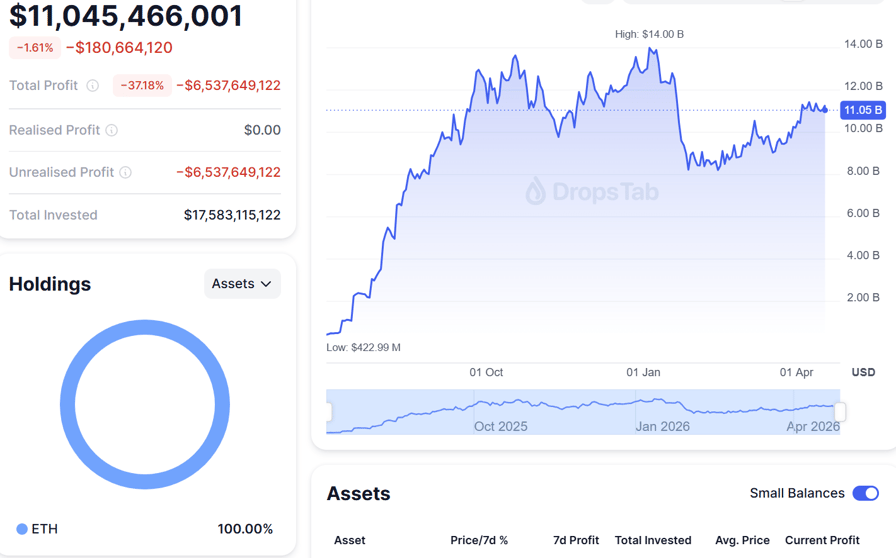
BitMine is deeply underwater on its ETH position. Source: DropsTab
Stablecoin supply rises as transfer volume drops nearly 20%
Stablecoin transfer activity fell sharply over the past month, with total volume dropping 19% to about $8.3 trillion, even as the overall market continued to expand, according to RWA.xyz data. At the same time, total supply climbed above $305 billion, while the number of holders and active addresses also edged higher.
The divergence points to a buildup of capital that isn’t moving. More dollars are entering or staying in stablecoins, but fewer are being used across blockchains. In practical terms, liquidity is rising, but activity is slowing, suggesting that users are holding rather than deploying funds.
Flows across individual assets tell a similar story. Tether’s USDt (USDT) led inflows with roughly $3.6 billion added, followed by USDC (USDC), while USDe (USDE) and PayPal USD (PYUSD) saw outflows.
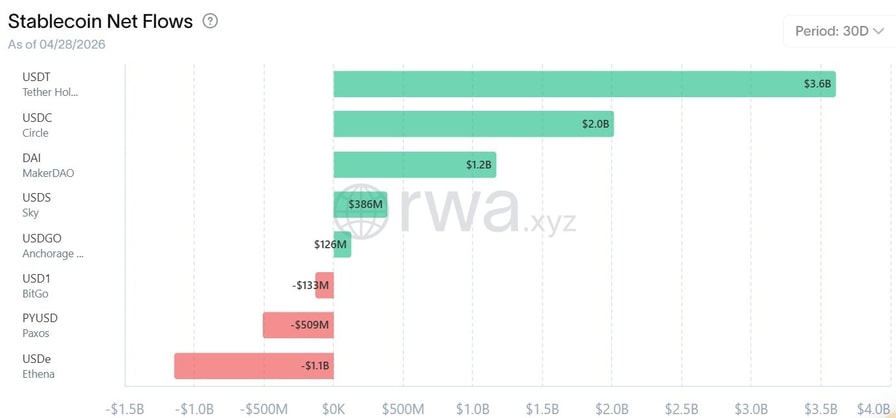
Net flows of stablecoins over the past 30 days. Source: RWA.xyz
OKX brings BlackRock’s tokenized Treasurys fund into trading collateral
OKX has added BlackRock’s tokenized US Treasurys fund, BUIDL, to its platform, allowing institutional clients to use the asset as trading collateral. The integration is part of a new framework developed with Standard Chartered, where the fund can be posted as margin while remaining in regulated custody with the bank.
The setup changes how collateral works on crypto exchanges. Instead of parking cash or stablecoins that sit idle, clients can hold a yield-bearing Treasury-backed asset and still use it to support trading activity.
In some cases, the collateral stays off-exchange under Standard Chartered’s custody, while OKX mirrors it for trading — a structure designed to reduce counterparty risk without interrupting execution.
Crypto Biz is your weekly pulse on the business behind blockchain and crypto, delivered directly to your inbox every Thursday.
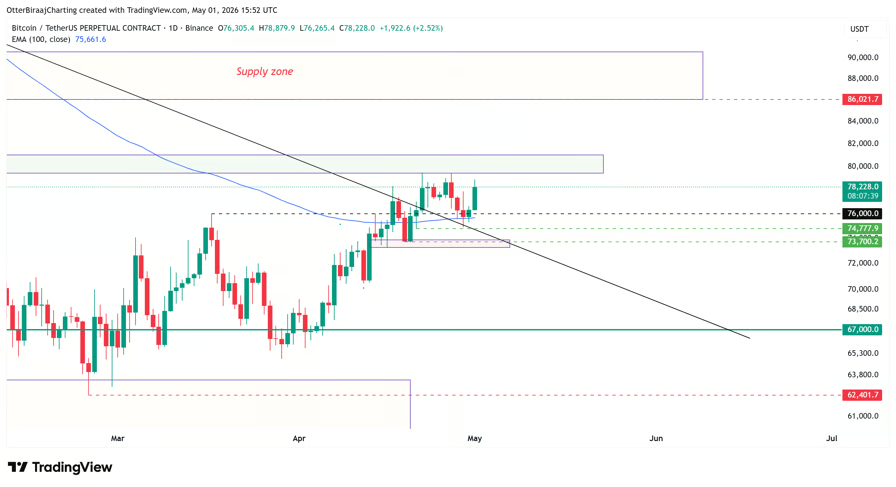
Several Bitcoin (BTC) data points suggest that $80,000 is the next destination for the cryptocurrency. Bitcoin gained 2.52% to trade above $78,800 on Friday after holding support at the 100-day exponential moving average. Spot market buy volumes also strengthened while the cumulative volume delta (CVD) reached 11,500 BTC, its highest level since Feb. 17.
BTC futures activity is picking up, with the open interest rising 6.64% to 257,000 BTC, indicating fresh positioning.
Bitcoin’s daily trend recovery shows fresh positioning
Bitcoin rebounded from its 100-day exponential moving average (100-EMA) after retesting the daily trend over the past two days. The move lifted the price by 2.52% to $78,800 on Friday, holding the short-term uptrend intact.
The 100-day EMA, currently acting as dynamic support on the daily chart, suggests that the higher time-frame chart remains bullish.

BTC/USDT on the one-day chart. Source: Cointelegraph/TradingView
The spot demand is strengthening at the same time. The spot cumulative volume delta (CVD), which tracks net buying versus selling, reached 11,500 BTC, a new high since Feb. 17. This indicates buyers are absorbing the supply during the recent dip.
Derivatives positioning is expanding in tandem with price, pointing to fresh participation. The aggregated open interest has risen 6.64% to 257,000 BTC over the past 24 hours, indicating new positions are being added as Bitcoin consolidates below $80,000.

BTC price, spot, and futures CVD. Source: Velo
This follows a recent leverage flush of roughly 9,000 BTC, suggesting that excess positioning has been cleared as the leveraged market rebuilds.
The futures CVD adds further context. Futures volume has recovered to 98,300 BTC, signaling a return of net buying pressure. However, it remains below the levels seen during the April 27 correction, suggesting trader positioning is still developing.
At the same time, liquidity continues to cluster in the $78,000–$80,000 range, with $2.1 billion in short positions at risk, which could lead to a short squeeze near the key level.

Bitcoin liquidation heatmap. Source: CoinGlass
Related: Bitcoin ETFs draw $2B in April for highest monthly inflows this year
BTC demand from institutions tightens the available supply
BTC institutional activity continues to lean supportive. The 30-day change in OTC desk balances has fallen to around -20,700 BTC, matching levels last seen in March 2025. The lower balances indicate BTC moving off desks, reducing the immediately available supply.

Bitcoin: Total OTC desk balance. Source: CryptoQuant
The exchange-traded fund (ETF) flows show a similar pattern. With ETF flows reaching $1.97 billion in April. Bitcoin research newsletter Ecoinometrics noted a nine-day streak of inflows, the longest in 2026.
Ecoinometrics explained that while the pace of inflows is moderate, the consistency has improved, adding,
“The last time flows showed this kind of persistence was right before the October 2025 peak. Not saying we’re there yet, but it tells you the direction is improving.”
The near-term focus is on how long flows sustain themselves and whether liquidity above $80,000 thins as spot, futures, and institutional participation increase.

ETF inflow streak improves for Bitcoin. Source: Ecoinometrics/X
Related: Bitcoin’s $75K cost basis emerges as key support zone for current bull trend


Pi Network has set May 11 as the activation date for Protocol 23, the upgrade that introduces full smart contract functionality to the Pi blockchain and transforms the network from a mobile mining project into a programmable platform capable of supporting DeFi applications and real-world asset tokenisation.
Summary
- Pi Network Protocol 23 lands on May 11, moved one week earlier from the previously announced May 18 date, four days after co-founders Dr. Chengdiao Fan and Nicolas Kokkalis speak at Consensus 2026 in Miami.
- Protocol 23 enables developers to build decentralised exchanges, lending protocols, automated tools, and tokenised asset products on Pi for the first time, completing the transformation Protocol 22 began on April 27.
- The network currently has 421,000 active Mainnet nodes, over 10 billion PI migrated to Mainnet, and a market cap of approximately $1.73 billion as of late April 2026.
Pi Network confirmed May 11 as the Protocol 23 activation date, following the completion of the mandatory Protocol 22 upgrade on April 27. CoinMarketCap confirmed that Protocol 23 was moved forward from May 18 to May 11 as part of Pi’s accelerated upgrade cycle, timed to land shortly after the Consensus 2026 conference in Miami where both co-founders are scheduled to speak on May 6 and May 7.
As crypto.news reported, Pi Network is an official sponsor of Consensus 2026, with co-founder Dr. Chengdiao Fan speaking May 6 on aligning Web3, AI, and blockchain for utility, and co-founder Nicolas Kokkalis joining a May 7 panel titled “How to Prove You’re Human in an AI World (Without Doxing Yourself).” Protocol 23’s May 11 date creates a tight strategic sequence: public stage appearance at Consensus on May 6 and 7, followed four days later by the most consequential technical upgrade in Pi’s seven-year history. Protocol 22 removed all non-compliant nodes that had failed to upgrade, enforcing network synchronisation and establishing the stable base required for smart contract execution. Protocol 23 builds on that foundation by enabling developers to write and deploy programmable contracts directly on Pi’s Mainnet, unlocking decentralised applications, token launches via the Pi Launchpad, a native decentralised exchange, and real-world asset tokenisation.
As crypto.news tracked, the Protocol 22 deadline on April 27 disconnected non-compliant nodes and moved the network to Stellar Core 22 under software version 0.5.4, the prerequisite for the smart contract infrastructure Protocol 23 introduces. Pi competes in the proof-of-personhood space with Worldcoin and Humanity Protocol, and the Consensus appearance positions Protocol 23 as part of a broader AI-era identity and programmable finance argument rather than a standalone technical release.
TLDR:
- Bitcoin futures open interest rises 5.92% to $57.621B as leverage builds faster than spot price moves
- Binance leads BTC derivatives with $10.55B, followed by Gate, Bybit, and OKX in rising exposure
- Stable Bitcoin price near $78K contrasts with surging leverage, showing compressed market structure forming
- Open interest near the $60B zone historically precedes sharp volatility shifts and liquidation-driven moves
Bitcoin futures open interest rises as derivatives exposure expands across major exchanges while Bitcoin trades near $78,000.
CoinGlass data shows leverage building rapidly to $57.621 billion, reflecting intensified positioning activity ahead of a potential volatility expansion across the market structure.
Leverage built into Bitcoin futures open interest across major exchanges
Bitcoin futures open interest increased 5.92 percent within 24 hours, reaching $57.621 billion across leading derivatives platforms. The rise reflects fresh leverage entering the market rather than position closure.
CoinGlass data shows Binance dominating Bitcoin futures open interest with $10.553 billion in BTC contracts. Gate follows with $5.323 billion, while Bybit and OKX maintain $4.725 billion and $3.349 billion, respectively.
The distribution shows concentration remains high among top exchanges, although participation is gradually broadening. This structure indicates that leveraged exposure is not isolated but spread across multiple trading venues.
Bitcoin futures open interest expansion aligns with relatively stable spot movement near $78,000. This divergence suggests traders are positioning aggressively without strong directional confirmation in price action.
Such behavior typically forms when derivative activity builds faster than underlying asset momentum. Market participants appear to be preparing for breakout conditions while maintaining leveraged exposure on both sides.
Market compression signals a potential volatility shift in Bitcoin futures open interest
Bitcoin futures open interest nearing $57.621 billion places the market close to historically sensitive zones around $60 billion. Previous cycles show similar levels preceding sharp directional moves.
Price action remains compressed despite rising leverage, creating conditions where volatility is temporarily suppressed. This structure often leads to sudden repricing once the imbalance in positioning resolves.
A breakout scenario in Bitcoin futures open interest could trigger short liquidations if resistance levels are breached. This would result in accelerated buy-side pressure across derivatives markets.
On the downside, a price drop could unwind leveraged long positions quickly, producing a fast liquidation cascade. Such moves typically occur when crowded positioning meets weak support levels.
Exchange-level data confirms that Bitcoin futures open interest growth is not isolated to a single platform but is distributed across major venues. This reinforces systemic leverage buildup rather than localized speculation.
Trading activity remains active but not euphoric, indicating structured participation instead of retail-driven spikes. This environment often precedes sharp volatility once directional bias is established.
Bitcoin futures open interest continues to act as a key indicator of market positioning intensity. With leverage rising faster than spot movement, the market structure remains sensitive to sudden shifts in sentiment and liquidity.

Updated IPL 2026 Points Table: Delhi Capitals Gain One Spot With Win Over Rajasthan Royals

Waymo Is Trying to Crack Down on Solo Kids in Driverless Cars

XRP ISO20022 DATE CONFIRMED??? XRP WILL GO CRAZY??

Manchester United reach agreement with Casemiro over contract clause amid transfer speculation

US brings back mandatory military draft registration

Steven Gerrard disagrees with Gary Neville over ‘shock’ Chelsea and Arsenal claim | Football


-

 Tech4 days ago
Register Renaming | Hackaday
-
Crypto World6 days ago
Hyperliquid $HYPE Rally Builds Momentum as AI Sector Enters Prove-It Phase
-

 Politics4 days ago
Drax board avoid their own AGM, accused of greenwashing & environmental racism
-

 Tech4 days ago
Images of Samsung’s rumored smart glasses have leaked
-

 Tech5 days ago
Why Blue Badges Disappeared From Toyota Hybrids
-
 Sports5 days ago
IPL 2026: Ruturaj Gaikwad registers slowest fifty of the season, enters all-time unwanted list | Cricket News
-
 Tech4 hours ago
Trump’s 25% EU auto tariff breaches Turnberry Agreement that also covers semiconductors and digital trade
-

 NewsBeat6 days ago
LK Bennett closes all stores after entering administration
-

 Fashion3 days ago
Kylie Jenner’s KHY Enters a New Era with ‘Born in LA’
-
 Entertainment6 days ago
Mariah Carey Slams Deposition Claims In Brother’s Lawsuit
-

 Business3 days ago
Most Commercial Energy Audits Miss the Real Losses
-

 Business4 days ago
(VIDEO) Charlize Theron Climbs Times Square Billboard to Promote New Netflix Thriller ‘Apex’
-

 Crypto World3 days ago
CFTC’s AI will review U.S. crypto registration applications, chairman tells CoinDesk
-
 Sports4 hours ago
Paul Scholes issues Marcus Rashford reality check as agreement emerges over Man United star
-

 Business3 days ago
Barclay Brothers Avoid Bankruptcy: HSBC Drops High Court Petitions After IVA Deal
-

 Tech6 days ago
Microsoft to roll out Entra passkeys on Windows in late April
-

 Tech6 days ago
OpenAI’s Sam Altman apologizes for not reporting ChatGPT account of Tumbler Ridge suspect to police
-
 Tech6 days ago
OpenAI CEO apologizes to Tumbler Ridge community
-
 Business2 days ago
Tesla Officially Registers Elon Musk’s Stock: What Investors Need to Know
-

 Tech3 days ago
Get Ready for More Brain-Scanning Consumer Gadgets
You must be logged in to post a comment Login