

Crypto World
Forex Expo Dubai Adds New Features for Verified Traders and Introducing Brokers


Expanding the Expo Experience
As preparations continue for Forex Expo Dubai 2026, the event is expanding its attendee experience while welcoming a growing lineup of exhibitors from across the forex and trading industry.
Confirmed exhibitors include Super Elite sponsors GTCFX, Valetax, Xchief, Funding Pips, and Honor Financial, alongside Elite sponsors EC Markets, TMGM, Metaquotes, JustMarkets, FP Markets, PU Prime, Dprime, Funded Firm, VPFX, Aegeanlabs Software LLC, Eplanet, SGFX, FortressFX, UEXO, Moneta Markets, and CXM.
As the forex and trading landscape evolves, industry events are adapting to changing attendee expectations. Traders, introducing brokers, and business professionals are increasingly seeking practical learning, direct access to industry specialists, and meaningful business engagement. In response, Forex Expo Dubai is introducing dedicated programmes tailored to its key attendee groups.
Personalizing Experiences
Verified traders gain access to dedicated seminar sessions, the Traders Lounge, and Traders Clinic that offers one-on-one guidance from market experts. They can also pre-book meetings ahead of the event and explore exclusive onboarding opportunities from selected exhibitors.
For Introducing Brokers, the dedicated IB Programme creates opportunities to connect with brokers, compare rebate options, and discuss partnership opportunities through face-to-face meetings. The IB Lounge and dedicated seminar sessions provide additional insights to help IBs strengthen their approach and grow their networks.
Expanding Opportunities for Engagement
Beyond these dedicated programmes, Forex Expo Dubai will feature private meeting zones for one-to-one business discussions, networking lounges, coffee areas, and interactive experiences throughout the two-day event. Additional side events taking place before and after the expo will further extend opportunities for engagement across the trading community.
“We’ve seen a clear shift in what attendees expect from industry events,” said Niyaz Mohammed, Commercial Director at HQMENA. “People still come to discover new products and meet brokers, but they’re also looking for more focused learning and higher-quality business interactions. These new programmes have been introduced to create dedicated environments where traders and introducing brokers can engage in conversations that are directly relevant to their goals.”
With an expanded exhibitor lineup and new attendee-focused initiatives, Forex Expo Dubai 2026 is set to offer a more personalised experience for both trading professionals and businesses, reflecting the changing needs of today’s global trading community.
About Forex Expo Dubai
Forex Expo Dubai is one of the region’s leading gatherings for the global online trading and fintech industry, bringing together brokerages, fintech innovators, institutional traders, investors, payment solution providers, IBs, affiliates and online trading technology companies under one roof. The expo serves as a platform for industry dialogue, business networking, technology showcases and market-focused conversations shaping the future of modern finance.

Crypto World
$1.9 trillion asset manager T. Rowe Price bets on active management with first multi-token crypto ETF


T. Rowe Price has brought what it said is the industry’s first actively managed multi-token spot crypto exchange-traded fund (ETF) to the market.
The T. Rowe Price Active Crypto ETF (TKNZ) began trading on Thursday, giving investors exposure to a portfolio of crypto assets rather than a single token. The launch marks a milestone for the Baltimore-based asset manager, which oversees $1.9 trillion in assets, as it expands its product lineup into digital assets.
Unlike the spot bitcoin and ether (ETH) exchange-traded funds that have dominated the market over the past two years, TKNZ is designed to hold a diversified basket of cryptocurrencies, including bitcoin, ether, BNB, XRP, solana (SOL) and Hyperliquid (HYPE), among other digital assets.
The fund also differs from most crypto investment products because it is actively managed. Instead of tracking a fixed index, portfolio managers can adjust allocations based on market conditions, research and risk assessments. T. Rowe Price said the strategy is intended to capture changes in market leadership and momentum as capital rotates among different cryptocurrencies.
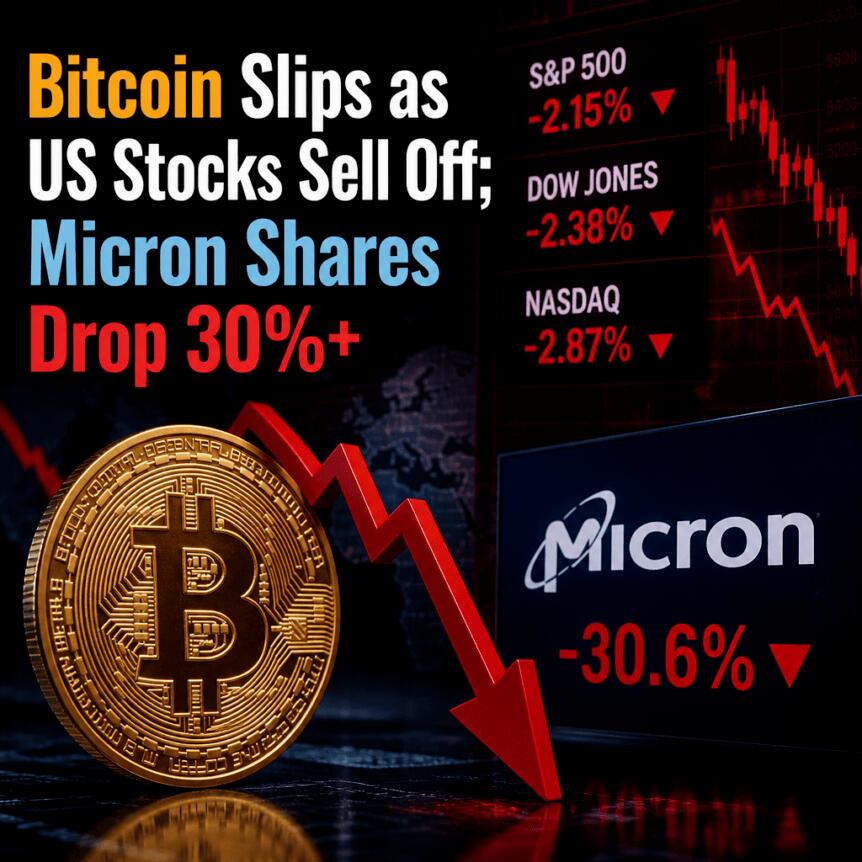
Bitcoin’s bounce lost momentum on Thursday as weakness spread through US tech stocks, muting broader risk-asset enthusiasm. The move followed a market-wide reaction to cooler inflation data earlier in the week, which had helped push equities and BTC higher before traders began trimming positions.
According to TradingView, BTC/USD was trading around $64,500, about 1.5% lower than its three-week highs from the prior day. While crypto initially benefited from the inflation-driven optimism, Thursday’s selloff in high-growth stocks helped cool the appetite for additional upside.
Key takeaways
- BTC/USD hovered near $64,500 after failing to extend gains from the previous day’s three-week highs.
- Lower US inflation expectations supported early risk-on moves, but tech stocks turned into a drag on Thursday.
- Market commentary points to “rejection” behavior near key technical areas, including a major moving average zone.
- Analysts highlighted potential upside limits tied to anchored volume metrics and prior peak areas.
Inflation relief fades as US tech stocks pull back
The latest dip in Bitcoin’s momentum came alongside broader equity rotation. Earlier, both the Consumer Price Index (CPI) and Producer Price Index (PPI) had shown weaker-than-expected readings in June, according to the reporting referenced from Cointelegraph’s prior market coverage about inflation coming in cooler. Those data points helped lift both equities and crypto at first.
However, Thursday brought a reversal in tech leadership. Trading resource The Kobeissi Letter highlighted the extent of the drawdown in Micron Technologies, noting the stock was down more than 30% from its June 22 record high after falling sharply on the day, an observation it attributed to market action tracked via TradingView.
Kobeissi further pointed to retail investors taking profits after a strong tech run. In an X post, it cited sales activity around major single stocks—specifically naming Tesla and Apple—and said retail turnover in single stocks had risen to a record $370 billion, up from $220 billion earlier in 2026. The underlying takeaway for crypto traders is straightforward: when speculative equity flows cool, Bitcoin often feels it through correlation and sentiment.
Earlier Cointelegraph coverage had also framed the backdrop as Bitcoin speculators locking in gains after local highs, reinforcing the idea that Thursday’s hesitation wasn’t happening in isolation. When investors are already booking profits in both crypto and tech, breakouts tend to require more sustained confirmation.
BTC price action: traders focus on “rejection” near overhead resistance
With momentum easing, attention shifted from “breakout” narratives to whether BTC could hold above meaningful technical levels. Commentator Exitpump referenced an anchored volume-weighted average price (AVWAP) level tied to Bitcoin’s advance toward $82,000 in early May, arguing that a retest of that area could cap the rebound and increase the odds of further selling pressure.
Exitpump’s thesis was that price would likely revisit the AVWAP from the 82K top that preceded a strong local downtrend. In their words to X followers, such a retest “should cap the upside and give stronger rejection.” The practical implication for traders is that the market may be transitioning from trend-following to range-bound behavior, with participants watching specific supply zones where prior demand gave way.
Separately, trader and analyst Rekt Capital said BTC/USD was showing early signs of rejection from the 50-month exponential moving average (EMA) around $65,900. The emphasis on that level matters because long-term moving averages often act as “decision points” where trend narratives either resume or fail—especially when liquidity thins or risk appetite wobbles.
Rekt Capital also linked the current market rhythm to an earlier bear-market pattern observed in 2022. According to the same commentary, the timing of the next macro bottom would not arrive until later in the year, suggesting that near-term weakness may not automatically signal the end of the broader cycle—just a pause or retracement within it.
What to watch next: whether BTC can reclaim key technical levels
For now, the market’s immediate question is whether Bitcoin can reclaim and hold above the technical areas being cited—particularly the 50-month EMA region near $65,900 and the AVWAP-related zone tied to the $82,000 peak. If selling persists while equities remain volatile, BTC’s rebound could stay capped; if tech stabilizes and risk appetite returns, the “rejection” talk may fade quickly.
The 10-year-old cryptocurrency exchange, with a reported user base of tens of millions, announced a strategic $400 million investment from Citadel Securities.
The statement from the company stated that its valuation after the funding round was $20 billion.
The company’s co-founder and CEO, Kris Marszalek, expressed his gratitude for working with Citadel Securities, hoping to continue to work with the entity on future projects to drive the crypto industry into a new era of institutional adoption.
“The size of the opportunity in front of us is staggering, as crypto increasingly becomes the rails for finance. Having built the right regulatory and tech infrastructure over the last decade, Crypto.com is now perfectly positioned to capture this new wave of growth across all asset classes,” he added.
Meanwhile, Citadel Securities’ President, Jim Esposito, noted that Crypto.com had developed a “foundation to support the continued institutionalization of the digital asset market.”
He believes the convergence of traditional financial organizations and cryptocurrency infrastructure is presenting an “exciting evolution” that has the potential to “further improve market efficiency.”
The funding is expected to enhance the crypto exchange’s expansion into all asset classes, including tokenized securities and derivatives. The company hopes to bridge the gap between cryptocurrencies and traditional markets to create a more efficient 24/7 financial ecosystem.
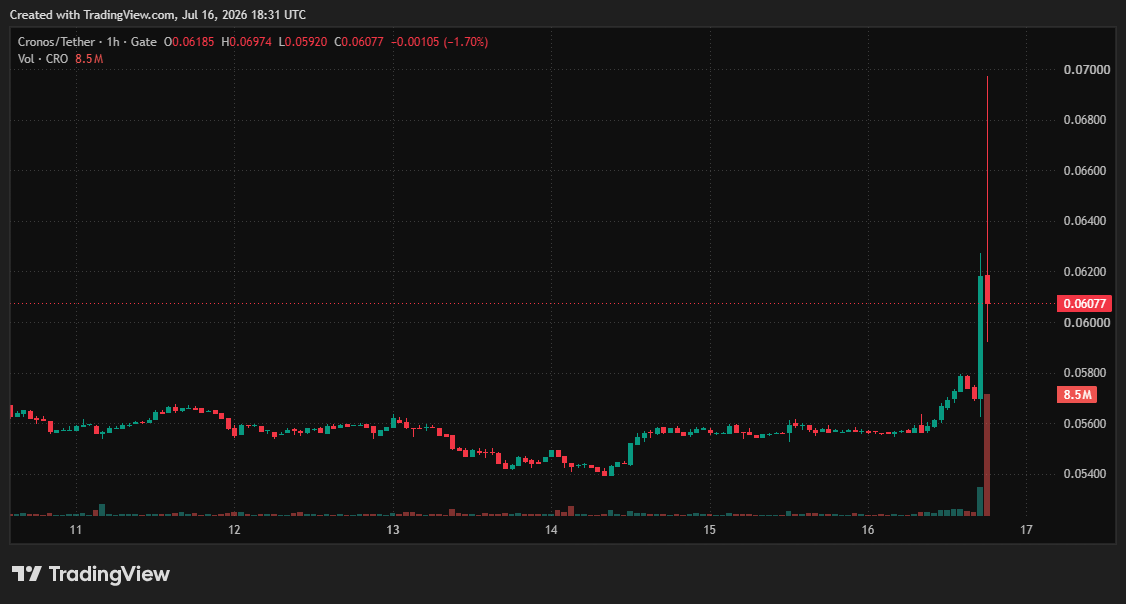
Crypto.com’s native token reacted with an immediate surge that drove it higher by almost 25%. It traded at around $0.056 before it rocketed to $0.07, where it was immediately halted and now sits above $0.06.
Nevertheless, CRO remains down by over 93% since its all-time high at $0.89, marked nearly five years ago.
The post CRO Surges as Crypto.com Secures $400M in Citadel Securities-Led Funding appeared first on CryptoPotato.
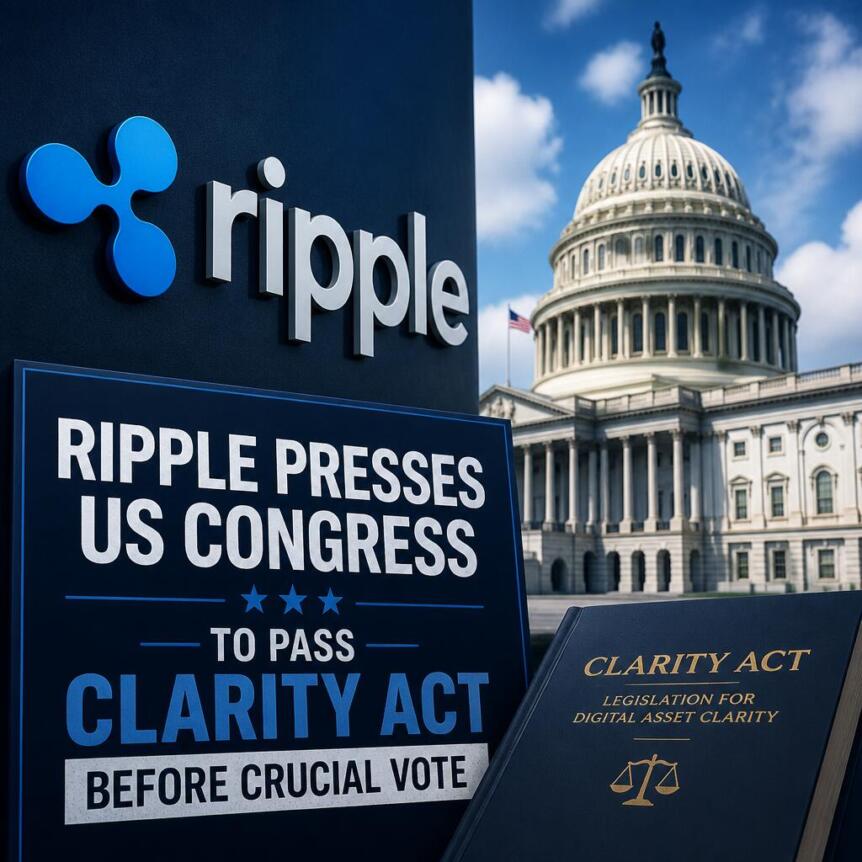
Ripple’s chief legal officer has renewed support for the Clarity Act as lawmakers prepare for another critical stage in the crypto legislation process. Meanwhile, President Donald Trump is expected to meet with senators to address unresolved issues before the Senate advances the bill. At the same time, the House Financial Services Committee plans another hearing to examine the proposal’s impact on digital asset regulation and financial innovation.
Ripple Backs Clarity Act as Senate Discussions Continue
Ripple Chief Legal Officer Stuart Alderoty urged lawmakers to support the Clarity Act before the Senate moves toward a full floor vote. He argued that rejecting the proposal would leave existing regulatory gaps unchanged across the digital asset market, allowing bad actors to continue exploiting weaknesses that have remained unresolved for years.
Alderoty linked the current regulatory framework to failures that allowed major crypto firms to collapse without sufficient oversight. Therefore, he maintained that Congress should establish clear market rules instead of preserving the current system. Ripple also stated that the proposed legislation would improve accountability throughout the digital asset sector.
Lauren Belive, Ripple’s Global Co-Head of Public Policy and Government, also supported the legislation during the ongoing policy debate. She stated that existing regulatory gaps continue exposing consumers and businesses to unnecessary risks. Consequently, Ripple maintains that lawmakers should finalize legislation before another major market failure emerges.
The Clarity Act seeks to define regulatory authority between the Securities and Exchange Commission and the Commodity Futures Trading Commission. It would also establish oversight standards before qualifying digital assets enter public markets. In addition, the proposal aims to provide clearer compliance requirements for blockchain companies operating across the United States.
Supporters argue that regulatory certainty would encourage responsible innovation while strengthening consumer protections across the digital asset industry. They also believe consistent rules could reduce confusion surrounding token classifications and federal oversight. As a result, the legislation has become one of the most closely debated crypto proposals in Congress.
Senate leaders continue to negotiate several provisions before scheduling the measure for a full-chamber vote. Discussions currently include ethics-related language that has delayed broader legislative agreement in recent weeks. However, lawmakers continue working toward a compromise before the August congressional recess begins.
Trump Meeting and House Hearing Shape Crypto Legislation
President Donald Trump and senior White House officials are expected to meet senators as negotiations continue over the Clarity Act. The discussions will reportedly focus on resolving outstanding ethics provisions affecting the legislation. Senate leaders hope the meeting will support a broader agreement before the chamber considers the proposal.
Senator Thom Tillis indicated that lawmakers are working toward a legislative agreement before the end of the week. Therefore, negotiations remain active as congressional leaders seek support from multiple political groups. The outcome could influence the Senate timetable for advancing the market structure legislation.
The House Financial Services Committee has also scheduled a hearing for July 17 following the July congressional recess. Committee members will examine how the Clarity Act could strengthen digital asset regulation across the United States. The hearing will also consider its broader impact on financial innovation and blockchain development.
Lawmakers plan to review testimony regarding the bill’s regulatory framework and its potential economic effects. Committee members will also discuss measures supporting responsible blockchain growth under federal oversight. In addition, participants will examine proposals connected with broader digital asset policy initiatives.
The hearing agenda also includes discussion of the American Reserve Modernization Act and the proposed Strategic Bitcoin Reserve. Lawmakers intend to consider how both measures could fit within future federal digital asset policy. Consequently, the hearing may influence additional legislative discussions later this year.
The Clarity Act has gained attention because it addresses long-standing uncertainty surrounding federal crypto regulation. Current oversight often overlaps between multiple agencies, creating compliance challenges for digital asset companies. Therefore, supporters believe the legislation would establish a more consistent regulatory structure across the industry.
Legislative Delays Weigh on the Bill’s Outlook
Despite continued congressional activity, the Clarity Act still faces several legislative hurdles before becoming law. Ongoing negotiations and a limited congressional calendar have slowed the bill’s overall progress. As a result, lawmakers must resolve outstanding issues before the August recess begins.
Prediction platform Polymarket currently shows declining expectations that the legislation will become law during 2026. Market participants have reduced those odds as negotiations continue without a final agreement. However, congressional leaders continue discussing changes that could improve legislative support.
The legislation previously advanced through the Senate Banking Committee before moving toward the next stage of congressional consideration. It now requires additional Senate action before reaching the House and the president’s desk. Therefore, several procedural steps remain before the proposal can become federal law.
The broader debate reflects growing efforts to establish clear rules for digital assets within the United States. Lawmakers continue balancing innovation, consumer protection, and regulatory authority through competing legislative proposals. Consequently, the Clarity Act remains a central measure in the ongoing effort to modernize crypto regulation.
The US sanctioned four crypto wallets tied to Iran’s Central Bank this week. Within hours, Tether froze $131 million in USDT sitting inside them.
It took one Treasury update and one flip of the Tether kill switch. USDT now doubles as a US sanctions weapon, and the industry is split over how issuers should police their coins.
How the Tether Kill Switch Became a US Sanctions Weapon
Treasury Secretary Scott Bessent announced the freeze. The Office of Foreign Assets Control (OFAC) simply added four Tron addresses to its existing Central Bank of Iran designation.
No new sanctions were needed. The bank has been blocked since 2019 over its support for the IRGC-Qods Force and Hezbollah.
“We will continue to aggressively follow the money and deny the Iranian regime access to the proceeds of its illicit revenue schemes,” Bessent said the campaign targets Iran’s abuse of digital assets.
The wallets had taken in more than $165 million in stablecoins, Chainalysis data shows. About $34 million slipped out first. Tether locked the remaining $131 million, nearly 80% of the total.
Here is what the freeze does. The tokens stay visible on-chain, but the addresses cannot spend or send them. It is not a seizure. Iran still holds the wallets. It just cannot use them.
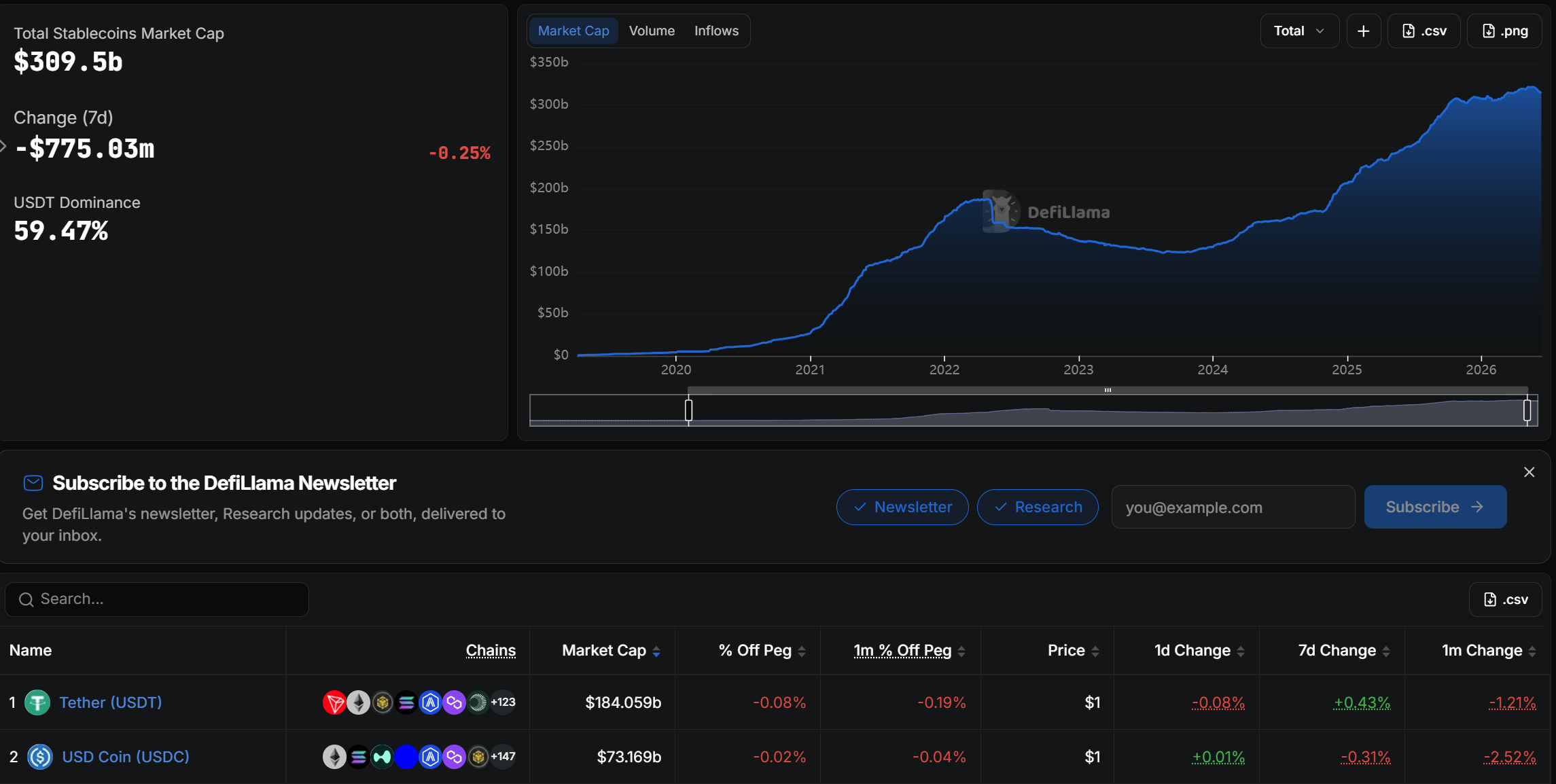
The mechanics are simple and fast. OFAC names the addresses. Tether flips the switch at the token level. No court order is needed. A private offshore company now enforces US foreign policy in hours, through the third-largest crypto asset, worth $184 billion.
Tether helped block $344 million the same way in April. Frozen Central Bank funds now near $475 million. Seized Iranian crypto overall has reached roughly $1 billion.
OFAC also sanctioned Nobitex and other Iranian exchanges in June for facilitating the transfer of the bank’s stablecoins.
The fine print carries a warning, too. OFAC says its published wallet lists are not exhaustive. Any other address the bank controls is already considered blocked property.
That changes the game for Tehran. Washington is dismantling Iran’s $7.7 billion crypto network. Every remaining USDT holding sits one listing away from a freeze.
Why Circle Refuses to Do What Tether Does
Tether moves fast. Circle does not. The USDC issuer faces a Wisconsin criminal complaint for defying a court order in a romance scam case. The order required recovering roughly 381,000 stolen USDC for the victim.
Tether says it has frozen about $4.7 billion tied to crime. It has returned $1.1 billion to victims, per ICIJ. Circle only acts under a strict legal process. Policy chief Dante Disparte called that gap a policy problem in an April post.
“Circle is a regulated company that complies with sanctions, law enforcement orders, and court-mandated requirements… Regarding seizure requests, the legal structures that would authorize stablecoin issuers to act faster—while preserving due process and property rights—do not yet fully exist,” a Circle spokesperson told BeInCrypto.
For now, USDT still dominates the $310 billion stablecoin market, with about 59%, DefiLlama data shows.

The open question is simple. Will sanctioned actors keep using a coin that can be switched off?
The post One Sanctions List and a Kill Switch: How Tether Enforces US Policy on Iran appeared first on BeInCrypto.
Can Muslims buy Bitcoin? Pakistan’s top Islamic scholars cannot agree on whether crypto follows Shariah, Islam’s legal code.
The fight matters far beyond the mosque. Pakistan is one of the world’s biggest crypto markets, and its government wants to lead in digital assets.
Why the Pakistan Crypto Shariah Debate Matters
On June 10, Jamia Darul Uloom Karachi, a top religious school, issued a fatwa, or religious decree. Mufti Taqi Usmani and other senior scholars signed it.
The ruling bans purchases made with Bitcoin (BTC), stablecoins, and other digital tokens. It calls them “merely the recording of fictitious numbers in an account.”
That verdict carries weight. Mufti Usmani advises Meezan Bank, Pakistan’s second-largest lender by market value, on Shariah. In his view, crypto does not count as real wealth, or maal, under Islamic law.
His word has moved markets before. In 2008, he judged that up to 85% of sukuk, or Islamic bonds, failed Shariah tests. Global sukuk issuance then fell from $50 billion to about $15 billion in a year, though the financial crisis also weighed.
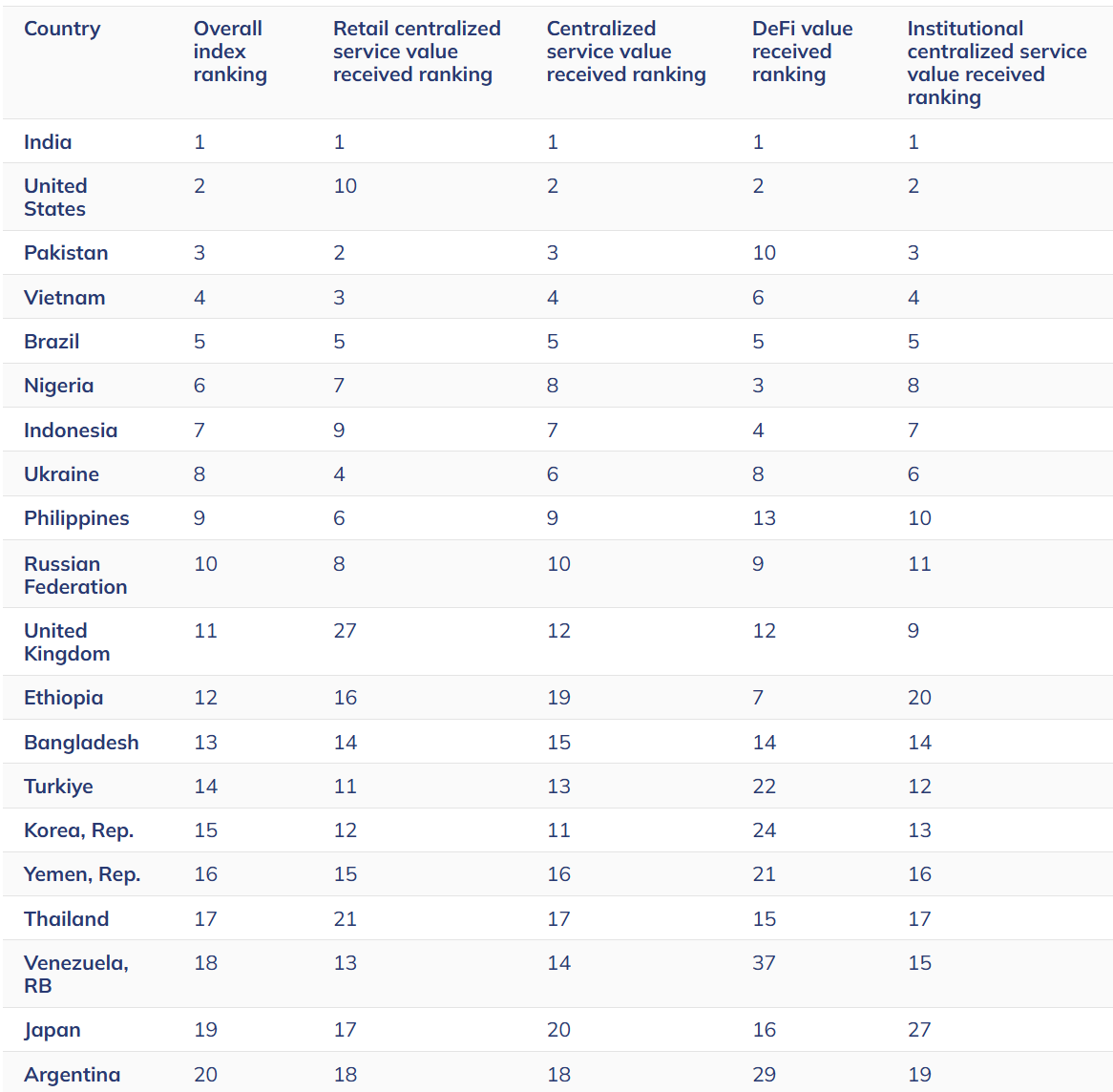
The audience this time is even bigger. Pakistan ranks third worldwide for grassroots crypto adoption, behind only India and the US, according to Chainalysis.

The timing is awkward for the government. Pakistan has used crypto to build ties with US President Donald Trump, whose $1 billion crypto earnings drew scrutiny.
- Pakistan’s finance ministry agreed in January to explore World Liberty’s USD1 stablecoin.
- PVARA chief Bilal bin Saqib, 35, told Bloomberg the crypto push rebuilt trust with Washington.
- Analysts told Al Jazeera their stablecoin deal amounted to paying for Trump White House access.
Trump’s platform, World Liberty Financial, signed a non-binding pact in Pakistan this year.
India’s central bank, meanwhile, wants to go further at home by isolating banks from crypto altogether.
Other Muslim Clerics Say Crypto Is Halal, With Conditions
Saylani Welfare International Trust, one of Pakistan’s largest charities, disagrees. Its head mufti, Wasim Akhtar Al-Madani, issued a 37-page fatwa around 13 months ago.
He treats crypto as a recognized right, not conventional wealth. This week, Saylani held an emergency meeting in Karachi to stand by that ruling.
“The purchase and sale of crypto currency or digital assets may be considered permissible as a recognized right, provided that such transactions are not prohibited by the law of the country and do not expose an individual to unlawful humiliation, punishment or legal consequences,” Al-Madani cited the fatwa in a statement.
Saylani has sent it to the Council of Islamic Ideology and the State Bank of Pakistan.
Pakistan’s crypto regulator now sits in the middle. Bilal bin Saqib chairs the Pakistan Virtual Assets Regulatory Authority (PVARA). Lawmakers created it by ordinance in July 2025 and locked it in by law this year. Saqib asked Jamia Darul Uloom to treat speculative tokens and asset-backed tokens differently.
He pointed to sukuk recorded on a blockchain, gold-backed tokens, and fully reserved stablecoins. Each gives its holder a claim on something real. The distinction matters as tokenized real-world assets pass $60 billion and stablecoins hit record monthly volumes.
“The central question the fatwa raises is whether a digital asset constitutes recognized wealth under Shariah. That is precisely the right question, and it is why these instruments must be examined individually,” Saqib made the remarks to Reuters.
He met Usmani last week and called the talk constructive.
Waqas Ghani, head of research at JS Global Capital, said the fatwa could slow crypto adoption by banks. Trading volumes, however, look steady so far.
How Other Muslim Countries Rule on Crypto
Pakistan’s split mirrors a wider divide across the Muslim community. Major countries have reached opposite verdicts on the same question.
Malaysia sits at the permissive end. The Securities Commission’s Shariah Advisory Council resolved in 2020 that digital assets count as maal and may trade on registered exchanges.
The Gulf takes a pragmatic route. Dubai and Abu Dhabi license crypto firms under dedicated regulators and courts to Shariah-compliant products, with no blanket religious ruling.
Indonesia’s Ulema Council went the other way in 2021. It declared crypto haram as currency, allowing trade only in tokens with a clear underlying asset.
Egypt’s Grand Mufti ruled in 2017 that all crypto use was forbidden, likening it to gambling. Turkey’s religious authority voiced similar doubts, and the country still allows trading while banning crypto payments.

Pakistan sits in the middle of this spectrum. Usmani’s ruling echoes those of Egypt and Indonesia, while PVARA’s asset-backed push points toward the Malaysian and Gulf models.
The next move belongs to the scholars. Their answer may decide how far Pakistan’s push for halal digital finance can go.
The post Is Crypto Allowed for Muslims? Pakistan Debates Bitcoin and Islamic Law appeared first on BeInCrypto.
Crypto World
Crypto.com lands $400 million investment from Citadel Securities at $20 billion valuation
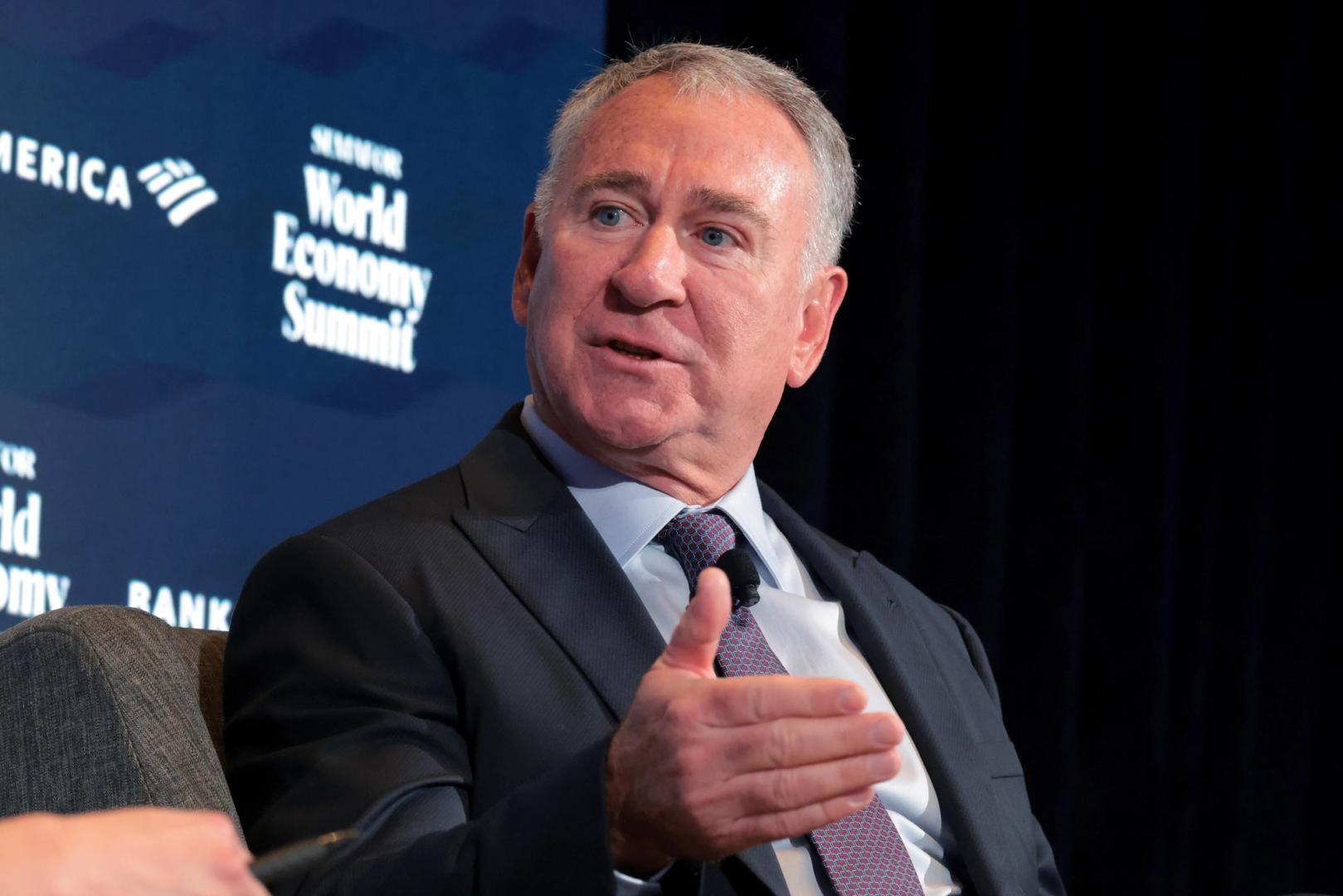
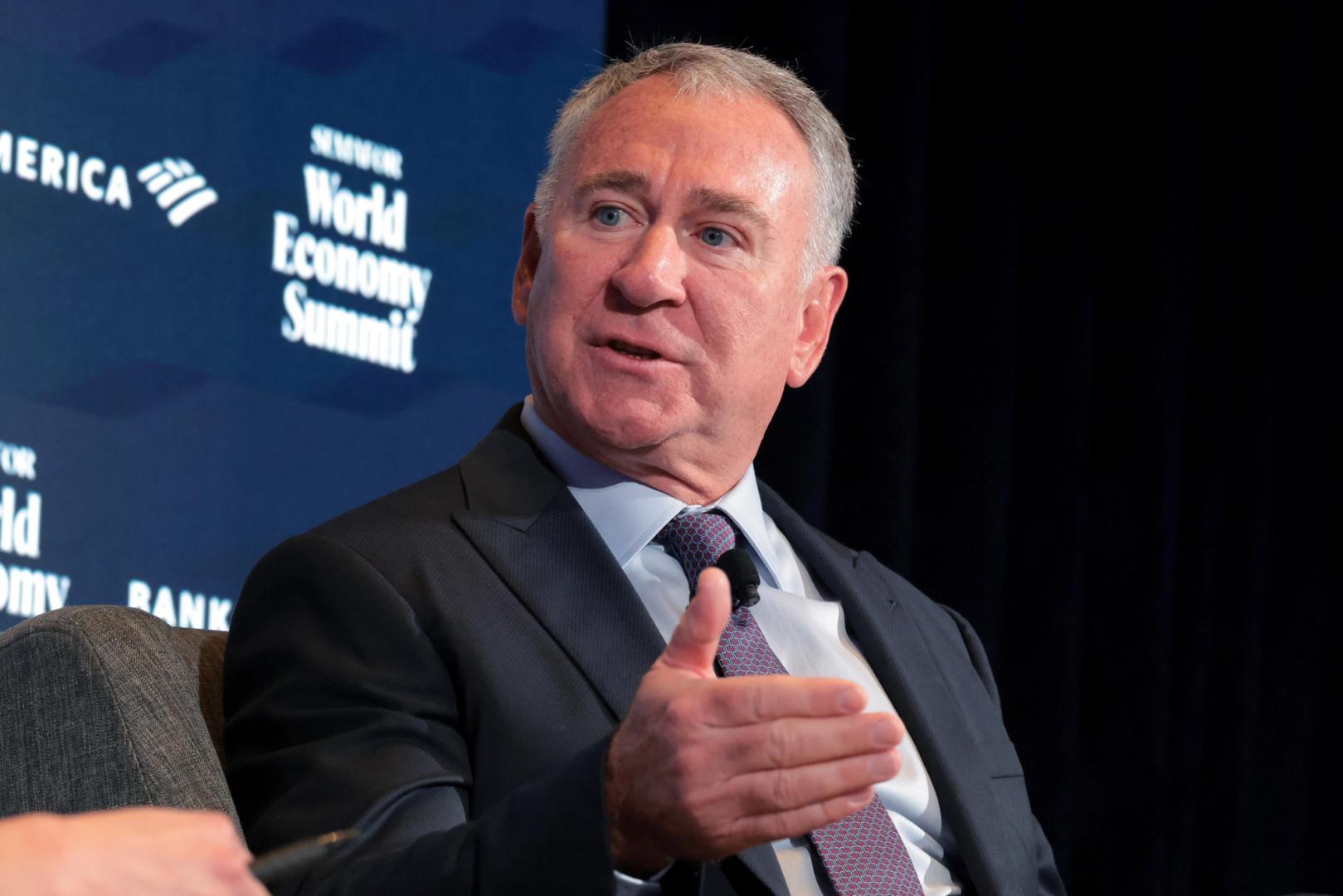
Crypto.com secured a $400 million strategic investment from market maker Citadel Securities in a deal that values the crypto exchange at $20 billion, marking the firm’s first institutional funding round since it was founded a decade ago, the company said in a press release Thursday.
The funding comes as digital assets draw greater participation from traditional financial institutions and as tokenized assets emerge as a growing area of focus for the industry.
The Singapore-based exchange said the capital will accelerate its expansion into tokenized securities, derivatives and other asset classes, as it seeks to bridge traditional and digital markets with around-the-clock trading infrastructure.
The deal reflects a broader shift as traditional finance firms ramp up investments in crypto infrastructure. Since the introduction of spot bitcoin exchange-traded funds (ETFs) in January 2024, Wall Street firms have increasingly expanded into digital asset trading, tokenization and custody, while institutional investors continue to boost planned crypto allocations, according to EY research.
“The size of the opportunity in front of us is staggering, as crypto increasingly becomes the rails for finance,” Crypto.com co-founder and CEO Kris Marszalek said in the release.
Grayscale is pitching covered calls as a way for Bitcoin holders to earn yield during a range-bound market, even as Glassnode detects early signals of a bear market bottom.
The strategy means holding Bitcoin while selling someone else the right to buy it from you at a set price. In return, you receive a payment called a premium. This can provide extra income when Bitcoin’s price is moving sideways, though your profit is limited if the price suddenly rises sharply.
The combination offers a practical playbook for investors stuck between capitulation and recovery.

How Grayscale’s Covered Call Strategy Works
A covered call is an options strategy where an investor holds spot Bitcoin and sells call options against that position, collecting premiums as income.
The trade-off is simple: downside cushion in exchange for capped upside during sharp rallies.
Zach Pandl, Grayscale’s Head of Research, laid out the case in a recent analysis on earning option income within a range. The argument rests on Bitcoin finding a floor first and then drifting sideways for months.
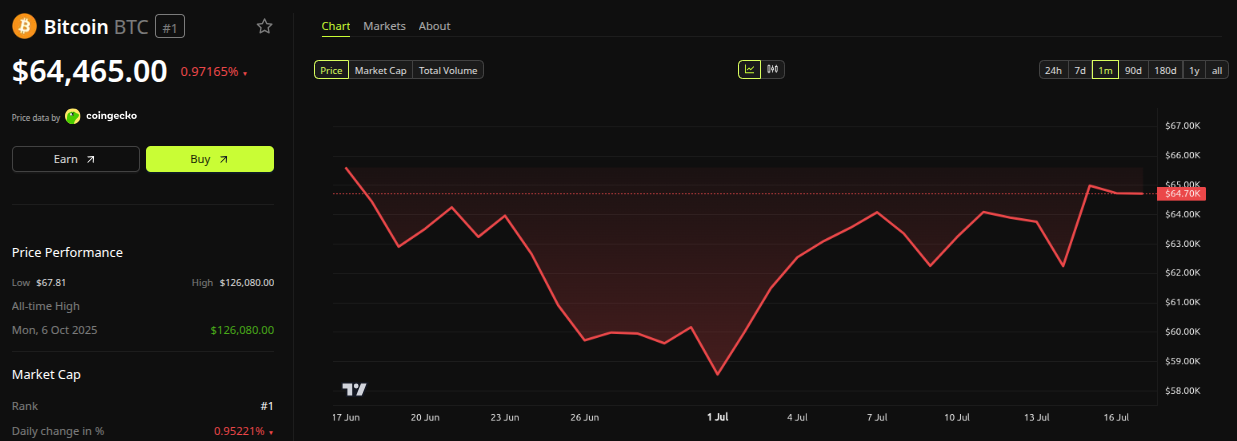
The numbers help explain the appeal. Grayscale’s hypothetical assumes spot Bitcoin near $65,000 and 40% implied volatility for a December 2026 at-the-money call.
Follow us on X to get the latest news as it happens.
Under those conditions, the strategy could deliver roughly 22% annualized returns if the price stays stable. The breakeven sits around $58,500, and the position outperforms a simple spot hold up to about $72,500.
The logic extends beyond theory. Products such as Grayscale’s Bitcoin Covered Call ETF, alongside similar income vehicles, roll call options to boost yields while preserving exposure.
In markets that move violently but go nowhere, monetizing implied volatility beats waiting. The catch matters, though: a strong rally would leave those gains on the table.
Is the Bitcoin Bear Market Finally Bottoming?
The second half of the thesis is based on on-chain data. Glassnode analyst Cryptovizart tracked the 1-2-year holder cohort, referring to investors who bought roughly between July 2024 and July 2025.
That group purchased near the cycle peak, when Bitcoin climbed toward $107,000. Facing sustained underperformance and unrealized losses, those buyers have been seeing red numbers crystallize.
The pattern carries historical weight. Bear markets rarely bottom until this cohort exhausts its selling pressure, and the data now suggests a potential inflection point.

The 30-day moving average of realized losses for these holders spiked above $75 million before reversing. According to the analyst, that cooling has often marked the clearest early signal that the heaviest distribution phase is over.
Glassnode flags $69,000 as the decisive battleground. The level aligns with the aggregate cost basis for short-term holders and with the former 2021 record highs.
Reclaiming it could fuel a recovery, while rejection would extend the sideways grind. That second scenario, ironically, is precisely where covered calls perform best.
“Bitcoin looks ready for a next leg upwards. It’s already above the daily MA’s and it’s primed for a breakout further up.Clear breakout above $65,000 would signal this move and then, $80,000 in August is on the cards,” Crypto analyst Michaël van de Poppe noted.
Risks obviously remain on the table. Options strategies carry opportunity costs during strong bull runs and real losses if prices collapse below breakeven levels.
Whether the 2026 bear market has truly found its floor remains unresolved for now. Still, the convergence of income tools and cooling capitulation gives long-term holders something to work with.
Subscribe to our YouTube channel to watch leaders and journalists provide expert insights.
The post Grayscale Highlights a 22% Bitcoin Yield Opportunity as Early Bottom Signals Emerge appeared first on BeInCrypto.
Strategy CEO Phong Le has tied the company’s next Bitcoin purchase to STRC returning to its $100 par value as the preferred stock trades near $87.
Summary
- Phong Le linked Strategy’s next Bitcoin purchase to STRC recovering to its $100 par value.
- Strategy sold 3,588 BTC across two weeks while building its dollar reserve.
- MSTR faces resistance at $100–$105, with immediate chart support near $90.
Bloomberg reported that Le plans to resume issuing STRC shares once the security, known as Stretch, recovers to par, allowing Strategy to direct the proceeds toward more Bitcoin.
“We’ll continue to build that. And yeah, when Stretch gets back to par, we’ll issue more. We’ll buy more Bitcoin,” Le said.
Although Le did not give a timeline for the recovery, Strategy’s website showed STRC trading around $87 on July 16. The preferred stock pays a variable dividend designed to encourage trading close to $100, but its price has remained below that level since April.
STRC serves as one of Strategy’s main fundraising tools because the company can sell new preferred shares and use the capital to buy Bitcoin. Issuing STRC below par, however, would make that process less attractive and could reduce Bitcoin exposure per share.
STRC recovery controls the next Bitcoin purchase
During the Bloomberg interview, Le described cash reserves as an important part of restoring confidence in STRC after the preferred stock fell below $75 in late June. He noted that recent market conditions had shown Strategy the value of keeping liquid U.S. dollars on its balance sheet.
Strategy has since raised its dollar reserve to $3 billion after selling about $466 million of MSTR shares, according to crypto.news. The company can use that liquidity to cover dividends, interest payments and other obligations without relying entirely on its Bitcoin holdings.
Preferred shareholders had also pressed Strategy to hold more cash, Le told Bloomberg. Responding to those concerns, the company sold portions of its Bitcoin reserve in two consecutive reporting periods.
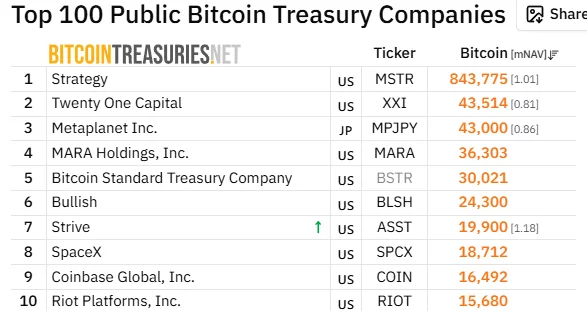
Strategy’s purchase records show that it sold 1,363 BTC for about $81 million in the week ending June 30 and another 2,225 BTC for roughly $135 million in the week ending July 6. Following those sales, its holdings fell to 843,775 BTC.
Despite the sales, Strategy remains ahead of BlackRock’s spot Bitcoin exchange-traded fund by total holdings. Company data lists Strategy’s stash at 843,775 BTC, while the original report placed BlackRock’s IBIT holdings at 733,516 BTC.
Executive chairman Michael Saylor has also compared Strategy’s securities with IBIT. In a post on X, Saylor claimed MSTR provides the same Bitcoin exposure as IBIT, while STRC delivers 3.6 times as much and STRF offers 11 times the exposure.
MSTR holds above channel support
MSTR came under fresh pressure during the July 16 session, falling 3.65% to $93.91 even as Bitcoin traded around $64,800. The supplied daily chart shows that the stock recently escaped a descending channel formed after its May peak near $195, but the rebound stalled around the $100–$105 area.
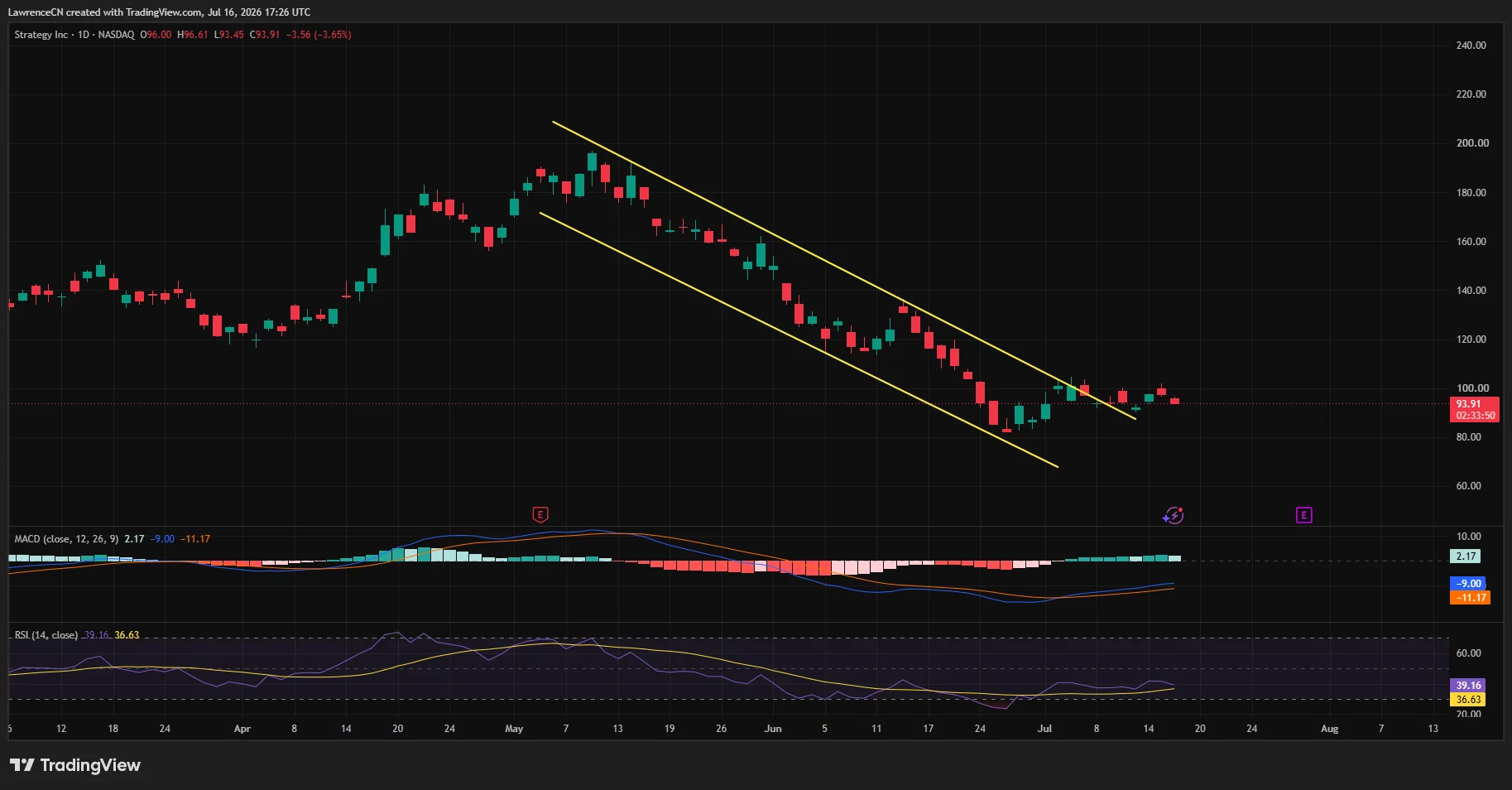
According to the chart, $90 is the first level that could support the stock, followed by the late-June floor between $83 and $85. A daily close below $90 would place the recent channel breakout at risk, while a move through $100–$105 could open a recovery toward the $115–$120 region.
Momentum indicators still give mixed readings. The daily relative strength index stands at 39.16, showing weak demand without placing MSTR in oversold territory.
At the same time, the chart’s MACD line has moved above its signal line, and the histogram has turned positive at 2.17. Both MACD lines remain below zero, however, indicating that the early recovery signal has not yet reversed the stock’s longer decline.
Crypto World
Visa backs Open USD with new stablecoin platform as Circle (CRCL) faces fresh competition
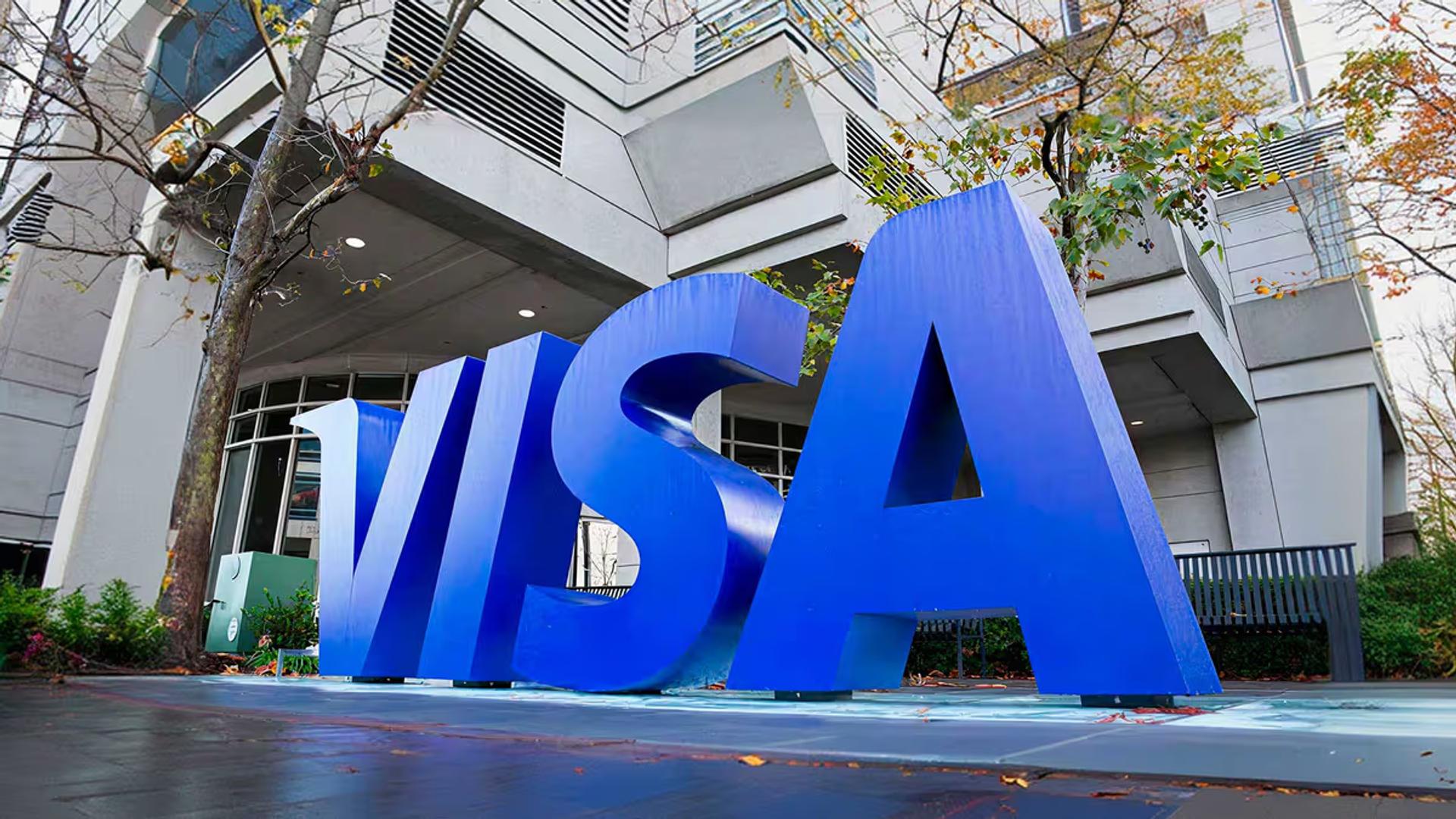
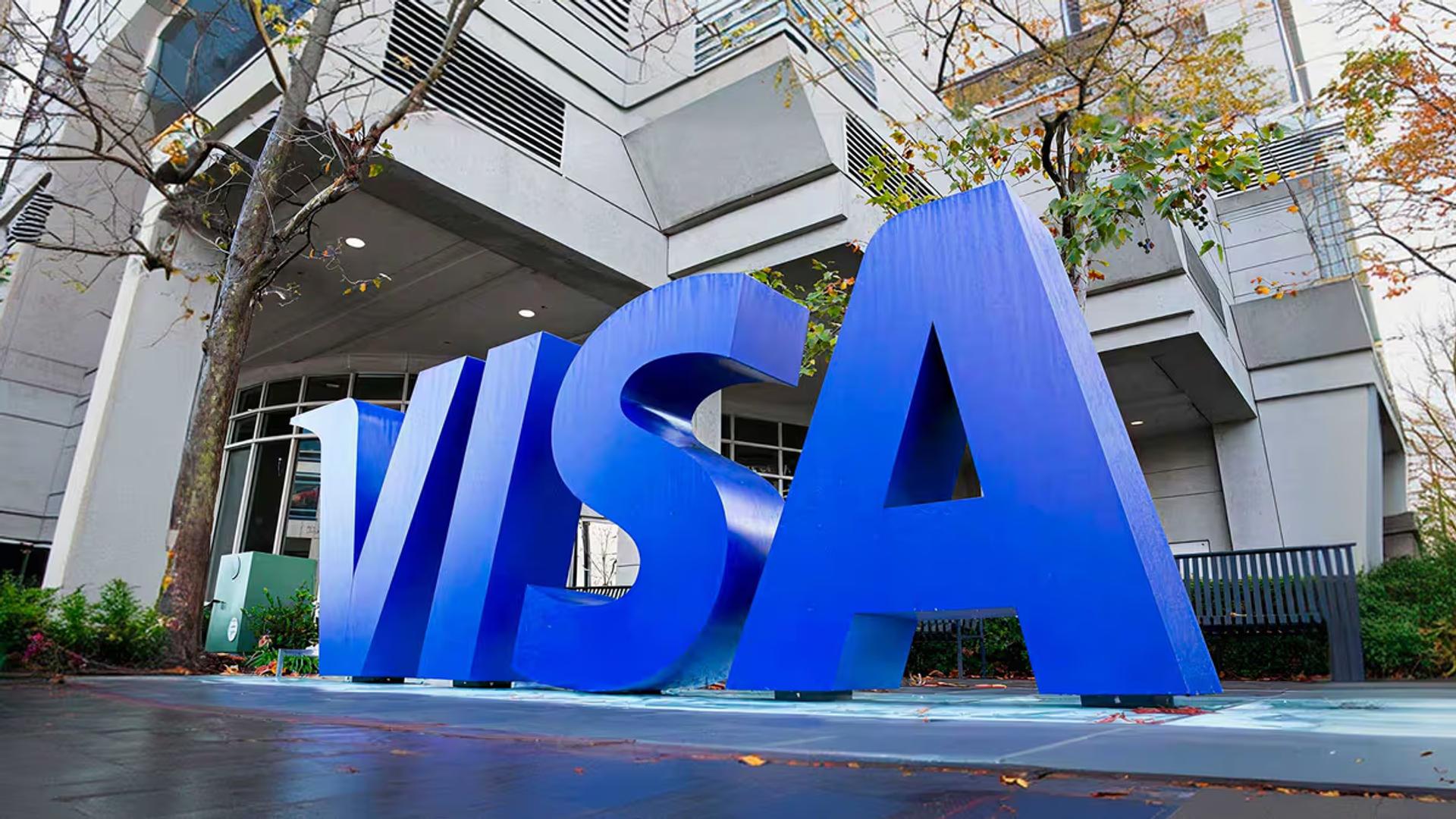
Visa introduced a new platform aimed at making it easier for banks, fintech companies and crypto firms to build products using stablecoins, expanding its push into blockchain-based payments as competition in the sector intensifies.
The company announced on Thursday that it was launching the Visa Stablecoin Platform (VSP), an enterprise service that allows institutions to issue, store, transfer and redeem stablecoins through a single Visa-managed system. The platform launched with support for Open USD (OpenUSD), a recently introduced stablecoin from Open Standard, and includes tools for minting and redeeming the token along with wallet infrastructure for managing onchain assets.
Stablecoins are cryptocurrencies designed to maintain a fixed value, typically by being pegged to the U.S. dollar. Unlike bitcoin or ether (ETH), they are widely used for payments, cross-border transfers and settlement because they combine blockchain’s speed with a relatively stable price.
Visa said the platform provides Wallet-as-a-Service infrastructure, blockchain connectivity and security features such as dual-approval workflows, audit logs and transfer allow lists. The platform is also integrated with Visa’s existing payment network, allowing financial institutions to incorporate stablecoins into treasury management, settlement and payment products without replacing their existing systems.

$1.9 trillion asset manager T. Rowe Price bets on active management with first multi-token crypto ETF

Community Barometer sets out blueprint for high street recovery

NHL teams get creative for schedule release day


-

 Fashion6 days ago
Weekend Open Thread: Nutriplenish Leave-In Conditioner
-

 Sports6 days ago
Super Eagles star Moses Simon opens up on Liverpool transfer regret
-
 NewsBeat3 hours ago
London Mayor Sadiq Khan handed a peerage by Keir Starmer alongside 15 other Labour figures… just days before the PM leaves No10
-

 Business16 hours ago
Nvidia Stock Slips After Big Tuesday Rally as Huang Confirms Vera Rubin Chip Is Now in Production Today
-

 Politics1 day ago
Young campaigners urge incoming PM to act on outdoor junk food ads
-

 Crypto World18 hours ago
CFTC blocks Kalshi from unwinding Michigan trades after court order
-

 News Videos2 days ago
XRP BOMBSHELL… XRP OMBOARDED FOR TRANSACTIONS!!!
-

 Tech3 days ago
Get Your ESP32 Sunny Side Up With This Solar Dev Board
-
 Entertainment1 day ago
Disney’s Most Ambitious Failed Star Wars Attraction Is Coming to SDCC
-

 Tech2 days ago
Dark Secrets Emerge When Jailbreaking LLMs
-
 Sports22 hours ago
New Cornerback Enters Vikings Trade Rumor Mill
-
 Tech3 days ago
Cloudflare Precursor Watches Your Mouse and Keyboard To Decide If You Are Human
-

 News Videos3 days ago
how to make coin bank box with cardboard #scienceproject #money #diy #shorts
-
 Entertainment1 day ago
Vicki Gunvalson Defends Discussing Heather Dubrow’s Money
-
Crypto World2 days ago
Ripple, Coinbase, Circle Join Linux x402 Foundation to Help Shape AI Payments
-

 NewsBeat21 hours ago
Watch: Is Donald Trump facing a popular backlash on immigration?
-

 Sports19 hours ago
Michigan officials not expected to discuss AD Warde Manuel at Thursday meeting
-

 Business2 days ago
ACCC warns AI could lift insurance costs in risk-prone areas
-
 NewsBeat21 hours ago
Firefighters issue update on Dovestone moorland blaze as fire enters fourth day
-

 Business2 days ago
Subaru recalls 541,000 vehicles over federal safety sticker mistake: NHTSA
You must be logged in to post a comment Login