

Crypto World
Ghana Positions Itself as Africa’s Hub with First Crypto Regulatory Sandbox


TLDR:
- Ghana admits 11 firms into crypto sandbox to test exchanges and tokenization under VASP Act.
- Over 3 million Ghanaians use crypto, with transaction volumes rising 80% amid growing adoption.
- Blockchain.com expands to Ghana after 700% growth in Nigeria’s digital asset market.
- Sandbox supports regulatory compliance, investor protection, and responsible innovation for firms.
Ghana’s crypto regulatory sandbox has launched under the 2025 VASP Act, allowing 11 firms to test digital asset services.
The initiative aims to regulate the market, protect consumers, and build a structured framework for the country’s growing crypto ecosystem.
Ghana opens regulatory sandbox for virtual asset providers
The Ghana crypto regulatory sandbox allows selected firms to operate under regulatory supervision. The Securities and Exchange Commission and Bank of Ghana oversee the 12-month pilot.
Eleven firms, including Hyro Exchange, Koinkoin, and Africoin, have been admitted. The sandbox is the first operational step following the Virtual Asset Service Providers Act (2025), which legally recognizes digital asset companies.
The programme permits firms to test cryptocurrency exchanges, tokenization of assets, and custodial services within a controlled environment.
Companies meeting the regulatory requirements may receive full licences after six months. Others can continue testing until the program ends. The SEC will use lessons from the sandbox to prepare final licensing guidelines for virtual asset service providers.
Regulators have emphasized compliance with anti-money laundering and counter-terrorism financing standards. The sandbox aims to encourage responsible innovation while strengthening investor protection and market integrity.
Ghana’s framework contrasts with Nigeria’s approach, where the SEC has paused new sandbox admissions. Ghana’s pilot indicates a structured path for regulated digital asset adoption, positioning the country as a potential hub for crypto innovation in West Africa.
The programme also includes local and international players like Blockchain.com, Hanypay, and Vaulta. Their participation demonstrates confidence in Ghana’s regulatory clarity and the growing potential of its crypto market.
Growth of crypto adoption and Blockchain.com expansion
Crypto adoption in Ghana has increased rapidly, with more than 3 million users now participating in the market. Transaction volumes have surged by 80 percent, reaching over $3 billion by 2024.
These figures highlight the demand for regulated digital asset services in the country.
Blockchain.com, which reported over 700 percent growth in Nigeria, is expanding into Ghana to meet rising regional demand.
The company has already seen a 140 percent increase in active Ghanaian users and an 80 percent growth in transactions. The firm is focusing on infrastructure development, regulatory engagement, and local partnerships.
Stablecoins and other digital assets are expected to improve cross-border payments and support expanding digital commerce ecosystems in West Africa.
The sandbox provides an environment for firms like Blockchain.com to test market-ready products while maintaining compliance.
Ghana’s approach aligns market growth with investor protection and responsible innovation, creating a regulated framework for virtual asset services.
The regulatory pilot demonstrates Ghana’s commitment to balancing rapid crypto adoption with legal and operational oversight.
With the sandbox, firms can innovate safely while contributing to a structured and secure digital asset ecosystem.


A man wears a lobster hat that represent the OpenClaw logo, an open-source AI assistant at the Baidu headquarter in Beijing on March 11, 2026.
Adek Berry | Afp | Getty Images
China is rapidly embracing the popular artificial intelligence tool OpenClaw, with major tech companies and even local governments rushing to expand access to the lobster-themed, open-source AI agent in recent weeks.
AI agents are digital assistants that can handle tasks such as sending emails, scheduling meetings and booking restaurant reservations with minimal human guidance. Unlike chatbots that simply respond to prompts, AI agents can take proactive actions, which often require broader access to data and systems and raise privacy and security concerns.
Chinese tech giant Tencent said Tuesday it had launched a full suite of easy-to-use AI products built on OpenClaw, which it dubbed “lobster special forces” and compatible with its popular superapp WeChat.
The same day, startup Zhipu AI launched its own local version of OpenClaw, offering an AI agent pre-installed with over 50 popular skills through “one-click installation.”
Similar moves by other Chinese companies have helped drive consumer interest, with usage of OpenClaw in China surpassing the U.S., according to American cybersecurity firm SecurityScorecard.
“In terms of adopting the new technologies, I think China definitely has a really large community that always wants to try what’s there, what’s new, and don’t want to be left behind,” said Jaylen He, CEO of Violoop, a Shenzhen-based startup building a device that claims to have similar features to OpenClaw but with lower security risks.
“I have friends who are not even in the tech industry … they are doing this, they are also running it,” he said.

As China’s economy continues to face headwinds, OpenClaw offers an opportunity that domestic tech companies, eager to attract paying users, are rushing to capture.
The nationwide OpenClaw craze has boosted the popularity of Chinese-developed large language models, said Winston Ma, adjunct professor at NYU School of Law.
Autonomous AI agents like OpenClaw are typically model-agnostic, which means they can be integrated with various large language models, such as OpenAI’s ChatGPT and Anthropic’s Claude.
According to OpenRouter, a startup offering developers access to AI models through a single interface, the top three tools used by OpenClaw users on its marketplace in the past month were all Chinese companies, with combined usage double that of the three most-used Google Gemini and Anthropic Claude models.
Chinese-made AI models released this year have increasingly narrowed the gap with their U.S. rivals, while offering AI capabilities at a fraction of the price.
That significantly lowers the bill for users running OpenClaw. First launched in November, the tool allows users to send requests through popular messaging apps such as Telegram and WhatsApp, enabling the AI agent to perform multiple tasks autonomously. The Austrian developer behind the tool, Peter Steinberger, joined OpenAI in mid-February.
Easing installation hurdles
While OpenClaw has surged in popularity in the tech world, experts have previously pointed out limitations to the AI agent’s mass adoption, including a complex installation process that’s challenging for nontechnical users.
Chinese technology companies are also trying to simplify installation for less technical users.
After an initial surge of interest last month, Chinese social media platforms have been flooded with posts about company-organized installation events. Some organizers have handed out red lobster plush toys, highlighting the project’s crustacean-themed branding.
Engineers (L) install and set OpenClaw, an open-source AI assistant for users at the Baidu headquarter in Beijing on March 11, 2026.
Adek Berry | Afp | Getty Images
TikTok owner ByteDance’s cloud unit Volcano Engine recently unveiled a version of OpenClaw called ‘ArkClaw,’ that can be used in a web browser, eliminating the need for complex local setup.
Meanwhile, some companies have even provided support to consumers in China who are looking to use OpenClaw with their tools.
Tencent held a free in-person OpenClaw setup session last week in the Chinese tech hub of Shenzhen, where it is headquartered, to help “hundreds” of people install the tool on TencentCloud.
JD.com on Tuesday launched a dedicated page where users can pay 399 yuan ($58) to get remote help from Lenovo’s information technology maintenance team, Baiying, to deploy the software. Meituan reportedly announced a similar partnership with Lenovo on Monday.
The growing interest in OpenClaw is changing how Chinese consumers pay for AI.
Engineers (front) install and set OpenClaw, an open-source AI assistant at the Baidu headquarter in Beijing on March 11, 2026.
Adek Berry | Afp | Getty Images
Violoop, which plans to launch its first device on Kickstarter in April at roughly $300 per unit and $30 a month for AI services, originally intended to focus on the U.S. and other overseas markets, CEO He said.
But now, the startup is focusing on a China launch instead.
“After 2026, after OpenClaw, I think we are seeing a significant rise, both in terms of [interest in] paying for good models and also that MiniMax and Kimi have released very capable models,” he said Wednesday. “I wouldn’t say that they can surpass maybe ChatGPT or Anthropic, but they are definitely approaching that and definitely are creating value for users. So this is a new change for us.”
The startup has already closed at least two rounds of initial funding this year, primarily to cover production costs.
Governments get involved
Despite official warnings published by China’s state media about OpenClaw’s security risks, several local governments have proposed incentives in the past week to encourage companies to develop applications using the AI tool.
Shenzhen’s Longgang district and Hefei’s high-tech development zone proposed equity financing support of up to 10 million yuan ($1.46 million), along with other direct subsidies aimed at “one-person companies” using OpenClaw. A district of Suzhou city said it would offer similar subsidies, along with 30 days of free office space, accommodation and meals.
The term “one-person company,” referring to one or a few individuals using AI to quickly build a business, has become increasingly popular in China, especially as Beijing this week wrapped up a meeting to formalize a five-year plan to spur domestic tech development.

Subscribe now
Increased Chinese participation in the OpenClaw craze is just adding to a global phenomenon. In a sign of its popularity, the AI agent project has gained more stars on the GitHub coding platform than Linux, a transformative open-source operating system that underpins modern computing.
“This is like the 2022 ChatGPT moment. This is like the 202[5] DeepSeek moment,” Violoop’s He said. “I think the craving, the desire, for a personal assistant that can really help the user, the desire has been there, and has been suppressed for a very long time.”
— CNBC’s Anniek Bao contributed to this report.
People queue to have their laptops install with OpenClaw, an open-source AI assistant at the Baidu headquarter in Beijing on March 11, 2026.
Adek Berry | Afp | Getty Images

Disclosure: The views and opinions expressed here belong solely to the author and do not represent the views and opinions of crypto.news’ editorial.
In the 1840s, thousands of investors funded unproven rail lines during the Great British Railway Mania because they believed the steam engine was an overnight breakthrough. And it was. But what followed was an enormous market crash based on the fact that the tracks were still disconnected, built in isolation from each other, and lacked the standardization needed for interoperability. It wasn’t until the government stepped in and managed the railways at a national level that this was resolved. This is exactly what happened in decentralized finance, or DeFi.
Summary
- DeFi fragmented tokenization: Early RWA projects failed because they lacked legal alignment, sovereign integration, and interoperable infrastructure — creating “digital shadows” instead of enforceable ownership.
- ProFi embeds compliance at the protocol level: Programmable finance integrates law, settlement, and sovereign authority directly into blockchain rails, turning regulation from an obstacle into infrastructure.
- Sovereign-led tokenization is scaling: Markets like Saudi Arabia are proving that government-aligned RWA rails — not permissionless experiments — will unlock the projected $30T tokenization market.
Investors and developers built DeFi protocols in isolation from one another, leading to fragmented liquidity and assets that cannot be moved easily from one chain to another. They built exceptional tracks, but these do not work well together. What we are now witnessing, as a result, is the start of a new era of government involvement in the sector, synthesising law, code, assets, and capital into sovereign-grade blockchain rails capable of unlocking trillions in value. We call this programmable finance, or ProFi.
The institutional disconnect
Leaders in the web3 space have consistently argued that institutions were simply too slow or legacy-driven to adopt digital assets. However, in reality, governments and large companies are not famous for building on rocky foundations. The structural limitations of early blockchains were their lack of sovereign alignment — a permissionless ledger could be a powerful tool for quickly transferring value across the globe, but it does not work for regulating the ownership of national assets.
No government will ever concede control of its essential assets, such as homes, commodities, or bonds, to a market it does not control. As such, companies wanting to work within the confines of the law have had to be naturally conservative about bringing their assets on-chain.
A token without legal alignment is just a digital shadow. To a serious investor, holding a tokenized asset on an unregulated chain is comparable to holding a blank deed. They do not seek a workaround to the law, but rather the protection of it.
Tokenization pilots
For years, the tokenization of real-world assets was where good ideas got derailed by un-compliant execution. A graveyard of high-profile tokenization projects backed by the world’s largest institutions failed.
The Australian Securities Exchange’s $250 million tokenization project failed because it couldn’t adhere to the market’s non-functional requirements and existed in a regulatory vacuum. IBM and Maersk’s platform TradeLens failed because it operated as a private venture without government involvement, where competitors were reluctant to cede control of their valuable data. Private real estate tokenization wasn’t integrated with National Land Registries and was illegally invisible to courts. When disputes arose or platforms failed, investors found themselves holding “digital shadows.”
The list goes on. These projects, typically built on permissionless blockchains, operated in a regulatory vacuum. They were platforms attempting to bring entire industries onto a single, privately-controlled ledger without Sovereign oversight.
With Standard Chartered forecasting a $30 trillion market for tokenized assets by 2034, the industry is moving aggressively away from speculative projects. Compliance is no longer a retrospective task but the very infrastructure that tokenization runs on. This is what BlackRock CEO Larry Fink describes as the repotting of TradFi assets into a digital ecosystem, a transition that only ProFi can facilitate by providing the necessary order of operations for global finance.
Enter ProFi
The past two decades have defined digital transformation as the migration of paper records to static databases. While this made processes faster, it failed to make them smarter. We are now entering the programmable economy where the asset itself holds intelligence. The true evolution is not moving records to a ledger, but authoring the technical standards that govern how assets are created, transferred, and settled at the protocol level.
This is where sovereigns can translate their rulebooks into executable code. They can ensure their national assets, ranging from energy infrastructure to real estate, stay protected under local jurisdiction while still attracting global capital through a unified, regulator-native stack. This is programmable finance.
ProFi solves what DeFi could not. It replaces fragmented liquidity with unified settlement rails. It substitutes regulatory ambiguity with enforceable compliance at the protocol level. It trades speculative hype cycles for institutional-grade infrastructure that can withstand market stress. Where DeFi is built in isolation and collapses under pressure, ProFi builds with sovereign alignment and compounds trust.
The current leader of the ProFi race
Wall Street is replete with tokenized ETFs, but a more profound revolution is unfolding in developing economies, particularly across the Middle East. Nations are finally unlocking the ability to monetize their entire balance sheets through the construction of sovereign real-world asset rails, effectively upgrading the operating system of their entire national economy into programmable finance.
Saudi Arabia has just started approving tokenization at the government level, leading to an explosion of multi-billion-dollar projects. Major real estate projects are already being tokenized, including a 10 million square meter industrial zone, numerous premium Riyadh skyscrapers, and master-planned communities. Energy giant EDF is also looking to tokenize the Kingdom’s massive energy infrastructure, from utility-scale solar and wind farms to thermal power plants.
At the government level, Saudi Arabia is transforming its real estate into a liquid and programmable asset class for global institutions, all while ensuring the national registry remains under absolute sovereign authority. This sovereign moat creates trust where doubt lingers, and turns blockchain from a tool of disruption into a tool of national alignment. Now, Saudi Arabia sets its sights on achieving Vision 2030 and tapping into the tokenization of numerous asset classes across its economy.
Whilst other jurisdictions are making progress, none have approached tokenization at the sovereign level quite like how Saudi Arabia has. And this approach has led to an explosion of RWA tokenization in the nation, proving that programmable finance is the catalyst needed to make tokenization truly work.
With ProFi, tokenization is set to explode at record levels. The infrastructure makes the entire pipeline compliant, liquid, and programmable from day one. When an institution can tokenize an asset with the knowledge that that token will carry the same legal weight as its TradFi alternative, and a government can tokenize its assets without ceding its sovereignty, everyone’s needs are met. Whilst Saudi Arabia is leading the charge, other jurisdictions will quickly follow.

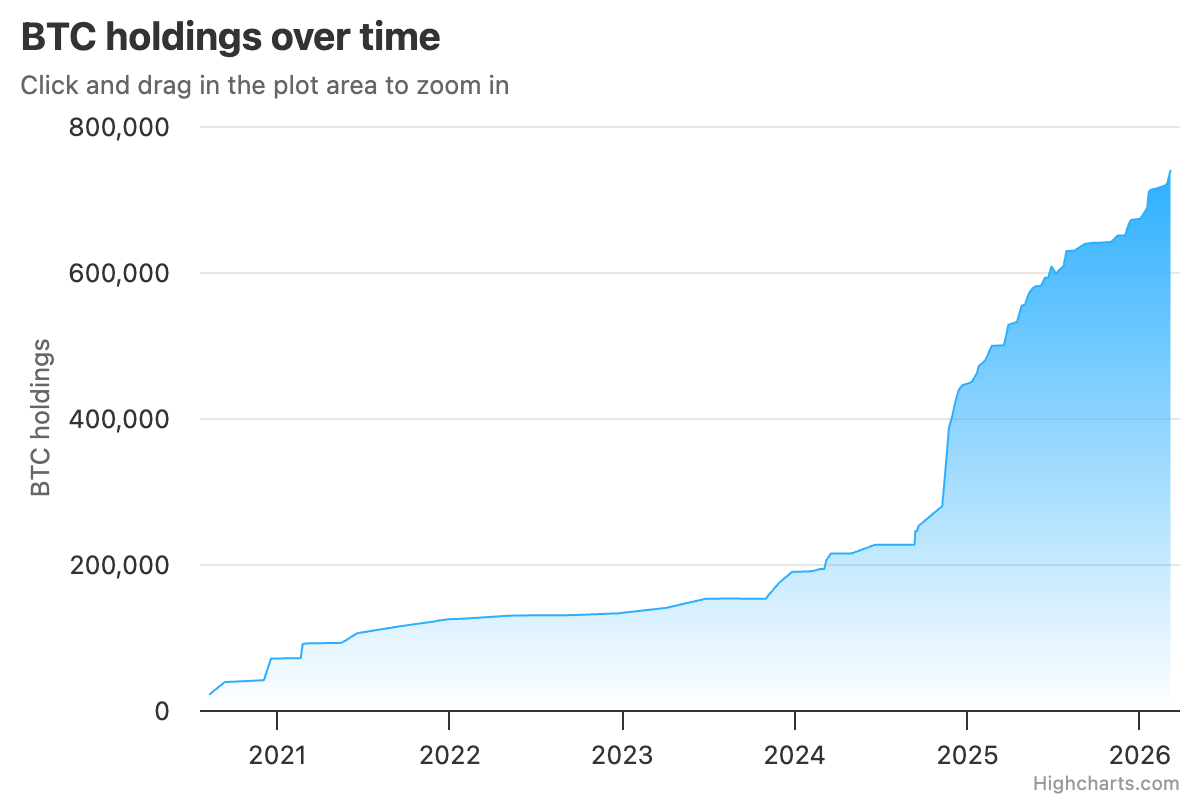
Michael Saylor’s Strategy (MSTR) may reach the 1 million Bitcoin (BTC) milestone faster than expected, potentially overtaking BlackRock in total holdings.
Key takeaways:
-
STRC share sales have generated cash to acquire over 3,500 BTC so far this week.
-
Strategy’s implied buying power could rise to roughly 5,700 BTC per day at Tuesday’s record pace.

Rising STRC demand implies 1,940 BTC of daily buying power
Strategy currently holds 738,731 BTC, including the 17,994 BTC purchase announced on Monday. Meanwhile, BlackRock’s iShares Bitcoin Trust (IBIT) holds 775,156 BTC, or roughly 36,500 BTC more than Strategy today.
But a relatively new instrument, Strategy’s STRC preferred stock, is helping close that gap faster.
STRC currently pays an 11.50% annual dividend, distributed monthly in cash.
The dividend rate adjusts every month to encourage the stock to trade near its $100 par value, which helps limit volatility. Strategy uses the proceeds from the share sales to buy Bitcoin.
Just this week, Strategy is estimated to have purchased over 3,500 BTC after selling roughly 6 million STRC shares through its at-the-market (ATM) program, data resource STRC.LIVE shows.

Among the top STRC buyers is Bitcoin investment firm Strive.
On Wednesday, chief risk officer Jeff Walton said they acquired $50 million in STRC, noting that the allocation would generate about $5.75 million in annual income at STRC’s current yield.

That is higher than roughly $1.85 million from 13-week T-bills, a difference of about $3.90 million per year.
On Tuesday, STRC logged a record $409 million daily volume and a $138.5 million 30-day average.

Using the $138.5 million average daily trading volume and a Bitcoin price near $71,000, STRC could theoretically buy roughly 1,940 BTC per trading day, more than four times Bitcoin’s daily mined supply.
On days when STRC trading approaches its $409 million record, the implied buying power rises to around 5,700 BTC, or nearly 13 times daily mining supply.
At this rate, Strategy’s Bitcoin holdings can surpass the 1 million BTC mark by August, likely leaving behind BlackRock as well.
MSTR may tap $145.1 trillion fixed-income market
STRC may soon start competing with the traditional fixed-income markets, according to analyst Adam Livingston.
Global fixed-income markets outstanding reached $145.1 trillion in 2024, and US fixed income outstanding was $48.9 trillion as of Q3 2025, Livingston said in a Wednesday post, adding:
“If products like STRC eventually attract even 0.1% of global fixed income outstanding, that is $145.1 billion. At $71.2K per Bitcoin, that amount of capital would be enough to buy roughly 2.04 million BTC, purely as a scale illustration.”
STRC still carries risk for investors
In its disclaimer, Strategy warned that STRC doesn’t guarantee returns, noting that it is “neither a bank deposit, nor FDIC insured, nor regulated in the same way.”
Additionally:
“It does not have the same regulatory and other protections as bank accounts, money market funds, treasuries, or similar instruments and as a result may not be a comparable investment.”
Strategy Analyst ColinTalksCrypto also warned that STRC can cut the dividend, its share price can fall below its $100 par value, and Strategy can issue more shares that dilute existing holders.
I’ve been seeing a lot of euphoric bullposting about $STRC.
It’s an interesting financial product, but I will be the black sheep and state that I personally feel it’s too risky of an investment.$STRC doesn’t really give you any guarantees (despite seeming like guaranteed fixed…
— 𝙲𝚘𝚕𝚒𝚗 𝚃𝚊𝚕𝚔𝚜 𝙲𝚛𝚢𝚙𝚝𝚘 🪙 (@ColinTCrypto) March 10, 2026
This article does not contain investment advice or recommendations. Every investment and trading move involves risk, and readers should conduct their own research when making a decision. While we strive to provide accurate and timely information, Cointelegraph does not guarantee the accuracy, completeness, or reliability of any information in this article. This article may contain forward-looking statements that are subject to risks and uncertainties. Cointelegraph will not be liable for any loss or damage arising from your reliance on this information.
For the first time in over a month, Tether mints $1 billion USDT on the Tron network.
Tether, the world’s largest stablecoin issuer, just minted $1 billion worth of USDT on the Tron network. This is the first time the company has issued such a large amount in over a month, and it pushes the total circulating supply to about $183 billion, which is over $100 billion more than its closest competitor, USDC.
According to its official transparency page, over $96 billion of the total supply sits on Ethereum, while Tron is a close second with $86 billion.
Tether minted another 1B $USDT on #Tron 6 hours ago.
The circulating supply of $USDT on #Tron has reached 85.3B, far more than on #Ethereum.https://t.co/2wFo2DEvz3 pic.twitter.com/YPmRZ7nFHM
— Lookonchain (@lookonchain) March 12, 2026
While moves of this kind don’t usually cause significant volatility in the markets immediately, the firm may be anticipating increased demand for USDT amid ongoing military tensions worldwide.
The war in Iran has sent massive ripples across the global economy. Just last week, the price of crude oil exploded by more than 30% daily, reaching a high above $120, before plummeting during the same day (and the ones to follow) on subsequent announcements. This had an immediate impact on Bitcoin’s price, which followed suit and also went through extreme volatility.
It’s inevitable that global geopolitical turmoil impacts crypto markets, and while the current move to mint $1 billion USDT might not lead to an immediate change in pricing, increased liquidity across the board can help the market absorb potential shocks.
Binance Free $600 (CryptoPotato Exclusive): Use this link to register a new account and receive $600 exclusive welcome offer on Binance (full details).
LIMITED OFFER for CryptoPotato readers at Bybit: Use this link to register and open a $500 FREE position on any coin!

Key Highlights
- Two new wholly owned entities introduced: Metaplanet Ventures and Metaplanet Asset Management
- Venture capital division plans to invest approximately 4 billion yen (~$25M) in Japanese Bitcoin infrastructure companies throughout the coming years
- Initial portfolio investment announced — 400 million yen ($2.5M) stake in JPYC, a Japanese stablecoin provider, as part of its Series B funding
- U.S.-based asset management division will operate from Miami, targeting Bitcoin financial products for investors across Asia and the West
- MTPLF shares gained 5.53% Wednesday, finishing at $2.29; Tokyo shares declined 1.9% Thursday to 362 yen
The Tokyo-based Bitcoin treasury company Metaplanet has significantly broadened its strategic footprint. On Thursday, the firm unveiled two newly formed, fully owned subsidiaries — a venture capital division and an American asset management operation — signaling a major evolution in its Bitcoin-centric business model.
Chief Executive Simon Gerovich announced the developments on X, noting board approval for both entities. These strategic moves arrive as Japanese regulatory frameworks progress toward formal recognition of Bitcoin as a regulated financial instrument, with Metaplanet anticipating official classification by January 2028.
The venture capital subsidiary, Metaplanet Ventures, will concentrate investments in seed through growth-stage companies developing Bitcoin financial infrastructure across Japan. Priority sectors encompass lending platforms, payment solutions, custody services, stablecoin technology, derivative products, and compliance systems. Additionally, the venture division will operate an incubator alongside a grants initiative supporting nascent founders, open-source contributors, educators, and academic researchers.
The planned $25M capital deployment spans a two-to-three-year timeframe and will draw funding from Metaplanet’s Bitcoin-related revenue streams — explicitly avoiding liquidation of its existing Bitcoin treasury.
Inaugural Investment: JPYC Stablecoin Platform
The venture arm moved swiftly with its debut investment. Metaplanet Ventures committed 400 million yen ($2.5M) to JPYC Inc., the company behind Japan’s first officially licensed stablecoin. This capital injection forms part of JPYC’s Series B funding round.
JPYC debuted in October 2025 and maintains its 1:1 Japanese yen peg through a combination of bank deposits and government securities. The stablecoin operates across Ethereum, Avalanche, and Polygon networks. In recent weeks, JPYC established a strategic partnership with Sony Bank to penetrate Japan’s music and entertainment industries.
Gerovich articulated the strategic rationale behind the investment: “Every Bitcoin transaction has two sides: Bitcoin and a currency. As this market goes institutional, that currency side goes digital.”
Establishing U.S. Operations in Miami
The companion subsidiary, Metaplanet Asset Management, will establish headquarters in Miami, functioning as a “digital credit and Bitcoin capital markets platform.” The entity aims to bridge Asian and Western capital markets while delivering Bitcoin investment vehicles, capital markets consulting, and associated regulatory frameworks.
Management indicated forthcoming announcements regarding specific fund launches and investment approaches, spanning fixed income instruments through actively managed equity positions and volatility-based strategies.
Metaplanet’s current treasury contains 35,102 BTC — valued at approximately $2.45 billion — positioning the firm as the fourth-largest corporate Bitcoin holder globally. The company maintains an ambitious acquisition target of 210,000 BTC by the conclusion of 2027.
Financial results released last month showed a net loss of 95 billion yen ($598M) for 2025, primarily attributed to unrealized mark-to-market adjustments on Bitcoin holdings. Gerovich countered negative interpretations of the headline figure, highlighting a remarkable 1,695% year-over-year increase in operating profitability.
“Even in this year’s down market, our stock fell 23% while Bitcoin fell 24% — we have not underperformed,” he stated.
MTPLF shares advanced 5.53% during Wednesday’s session, closing at $2.29. The Tokyo-listed equity experienced a 1.9% intraday decline Thursday, trading at 362 yen.
PI has become one of the trendiest tokens today on CoinGecko, but its price has not benefited from the big announcement.
Ever since it saw the light of day over a year ago, the vast Pi Network community has speculated whether (or when) the underlying token will be listed on some of the largest and oldest crypto exchanges.
Although a few trading platforms continue to stay clear, the veteran US giant Kraken has joined the PI bandwagon following the likes of OKX, Bitget, MEXC, Gate, and others.
Coming soon: $PI@PiCoreTeam Pi Network is a mobile-first Layer-1 blockchain and developer platform enabling accessible crypto mining via smartphone, with a utility-based ecosystem on an identity-verified mainnet.
Trading starts March 13
Get ready → https://t.co/47fNCUnRqD pic.twitter.com/nPmrRElAPW
— Kraken Listings (@krakenlistings) March 12, 2026
There have been a growing number of speculations in the past month or so about this listing. In fact, one user tried to “manifest” precisely this – PI going live for trading on Kraken before March 14, known in the Pi Network community as Pi Day.
The exchange stated that trading will commence tomorrow, March 13. Interestingly, there has been no positive reaction from the underlying asset despite this major announcement.
Big listings tend to boost the token, but PI has remained flat over the past 24 hours. However, it’s one of the best performers on a weekly and monthly scale, gaining 24% since last Thursday and a whopping 65.6% since February 12.
A large portion of its recent gains could be attributed to the protocol updates, as the team announced the successful implementation of v19.6 and v19.9 consecutively. The next version, 20.2, is actually expected to be introduced today.
You may also like:
Binance Free $600 (CryptoPotato Exclusive): Use this link to register a new account and receive $600 exclusive welcome offer on Binance (full details).
LIMITED OFFER for CryptoPotato readers at Bybit: Use this link to register and open a $500 FREE position on any coin!
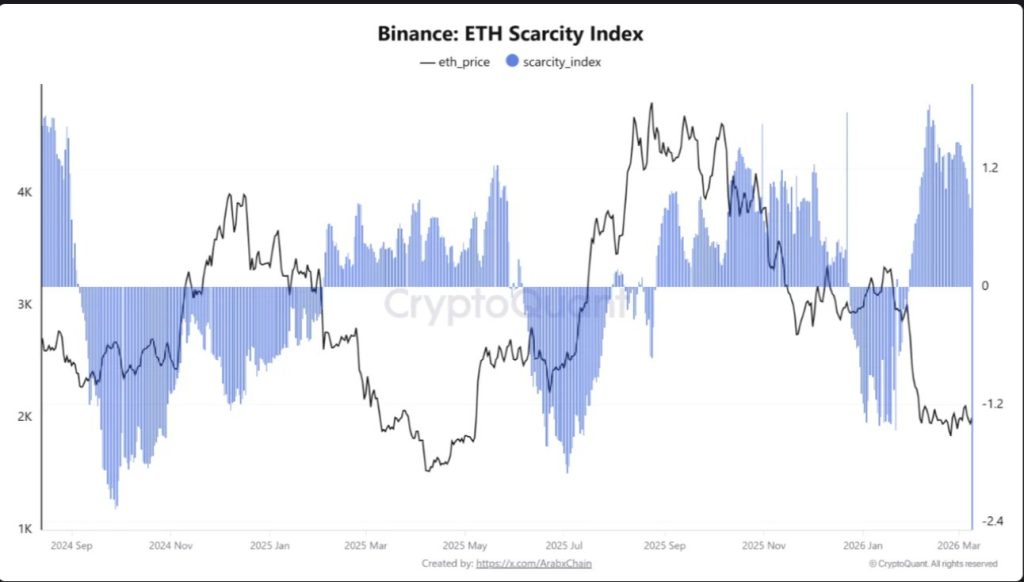
Ethereum has reclaimed $2,000 overnight with a modest +0.6% move to the upside as ETH USD continues to chop sideways as the broader market searches for direction.
However, under the hood on Binance, a key supply metric just flashed a positive 0.67 reading. While price action looks hesitant, this signal suggests the order book is thinning out in favor of sellers.
The Scarcity Index, tracked by CryptoQuant analysts, measures the deviation of exchange reserves against historical baselines. A positive reading indicates that the platform’s available inventory is dropping below average levels, reducing the liquidity cushion for sell orders.
At 0.67, the index isn’t screaming an immediate supply shock, but it marks a definitive structural shift. Historically, similar transitions from negative to positive scarcity values have preceded recovery phases, as sell-side pressure exhausts itself against steady accumulation.
Ethereum Price Prediction: Can the Scarcity Signal Push ETH Back Above $2,200?
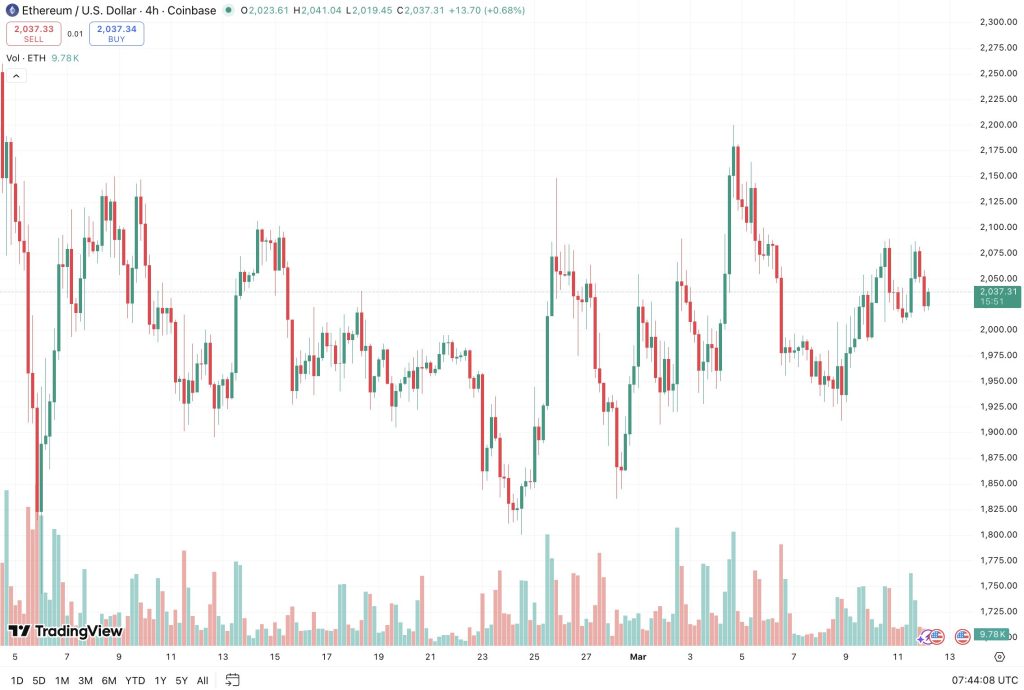
ETH is currently compressing in a tight range between $1,900 and $2,100. The asset remains significantly below its 50-day simple moving average of $2,278 and the 200-day average near $3,038.
This technical weakness suggests that while supply is shrinking, demand has not yet risen enough to overcome overhead resistance.
If bulls can leverage the thinner order books to push past $2,150, the next major resistance cluster sits at $2,200–$2,400. A reclaim of the $2,278 level would align the technicals with the bullish on-chain data.
Some analysts argue that smart money is positioning for the long haul, as Wall Street shows signs of choosing Ethereum as a backbone for future finance.
However, if the consolidation breaks downward, the scarcity signal will be invalidated by sheer selling volume. A daily close below $1,900 opens the door to a retest of the $1,800 support zone.
DISCOVER: Next Crypto to Explode in 2026
What Traders Are Watching Next for ETH USD
The key to validating the 0.67 scarcity reading is volume. Traders are watching for a spike in spot buying activity amid the reduced supply. Without volume, low liquidity simply means price action remains choppy.
Per CoinGlass data, institutional flows also remain a wildcard with BlackRock beginning the week by selling over 28,000 ETH ($55M). However, the past two days have finished in the green, with nearly +$70M in positive flows across March 10 and 11.
ETF data needs to maintain the positive momentum of the past few days to support the spot market recovery and any ETH USD push toward $2,200 and above.
Away from ETFs, Digital Asset Treasury firms like the Tom Lee-led Bitmine continue to scoop up ETH USD, adding to the scarcity as the company has now locked over 3M ETH, totalling around $6Bn at current prices.
Investors are monitoring regulatory headlines, such as recent news that Binance is suing the WSJ over defamation claims, which can impact user sentiment and flow dynamics on the platform.
If the Scarcity Index climbs above 1.0 while price holds $2,000, the probability of a supply-shock rally increases significantly.
EXPLORE: Best Crypto Presales to Buy in 2026
The post Ethereum Scarcity Index Turns Positive as ETH USD Pushed Back Above $2,000 appeared first on Cryptonews.
Ripple has unveiled a $750 million buyback plan for the XRP token, sparking speculation about whether the move could trigger renewed bullish momentum for the XRP price.
Summary
- Ripple announced a $750M buyback plan that could tighten circulating supply of XRP.
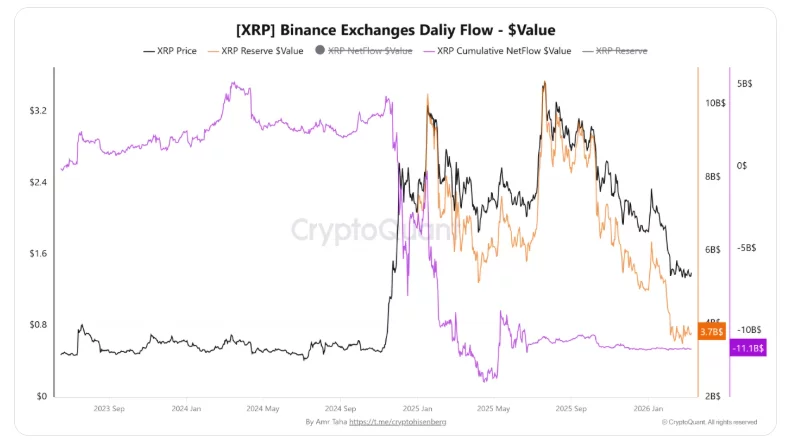
- On-chain data from CryptoQuant shows XRP reserves on Binance dropping to a 10-month low of $3.7B, signaling potential accumulation.
- XRP price remains in consolidation near $1.37, with $1.50 acting as key resistance and $1.30 as immediate support.
Corporate buybacks are often interpreted as a signal of confidence in an asset’s long-term value. In crypto markets, similar strategies can also affect liquidity by reducing circulating supply, potentially supporting prices if demand remains strong.
While the company has not disclosed the precise timeline or execution strategy, reports on the buyback has already drawn attention from traders looking for potential catalysts in a market that has been largely range-bound in recent weeks.
The move comes as XRP price continues to attract institutional interest and broader adoption across cross-border payment networks tied to Ripple’s ecosystem.
Exchange supply tightening signals potential pressure
Recent on-chain data from CryptoQuant suggests that exchange supply for XRP is already tightening.
According to the analytics firm, Binance’s XRP reserves have dropped sharply to $3.7 billion as of March 10, the lowest level recorded in 10 months. The metric tracks the total value of XRP held on the exchange and reflects both token balances and price fluctuations.
Earlier in 2025, reserves on Binance exceeded $10 billion during peaks in January and July. Those periods were followed by steep corrections that pushed XRP prices below $1.20.
The continued decline in reserves, down from roughly $3.9 billion on March 6, could indicate that traders are withdrawing XRP from exchanges, often interpreted as a signal of accumulation or long-term holding.
If the buyback initiative coincides with shrinking exchange supply, the combination could create upward pressure on prices.
XRP price analysis
Based on the latest XRP/USDT daily chart, the token remains locked in a consolidation phase despite the broader bullish narrative.
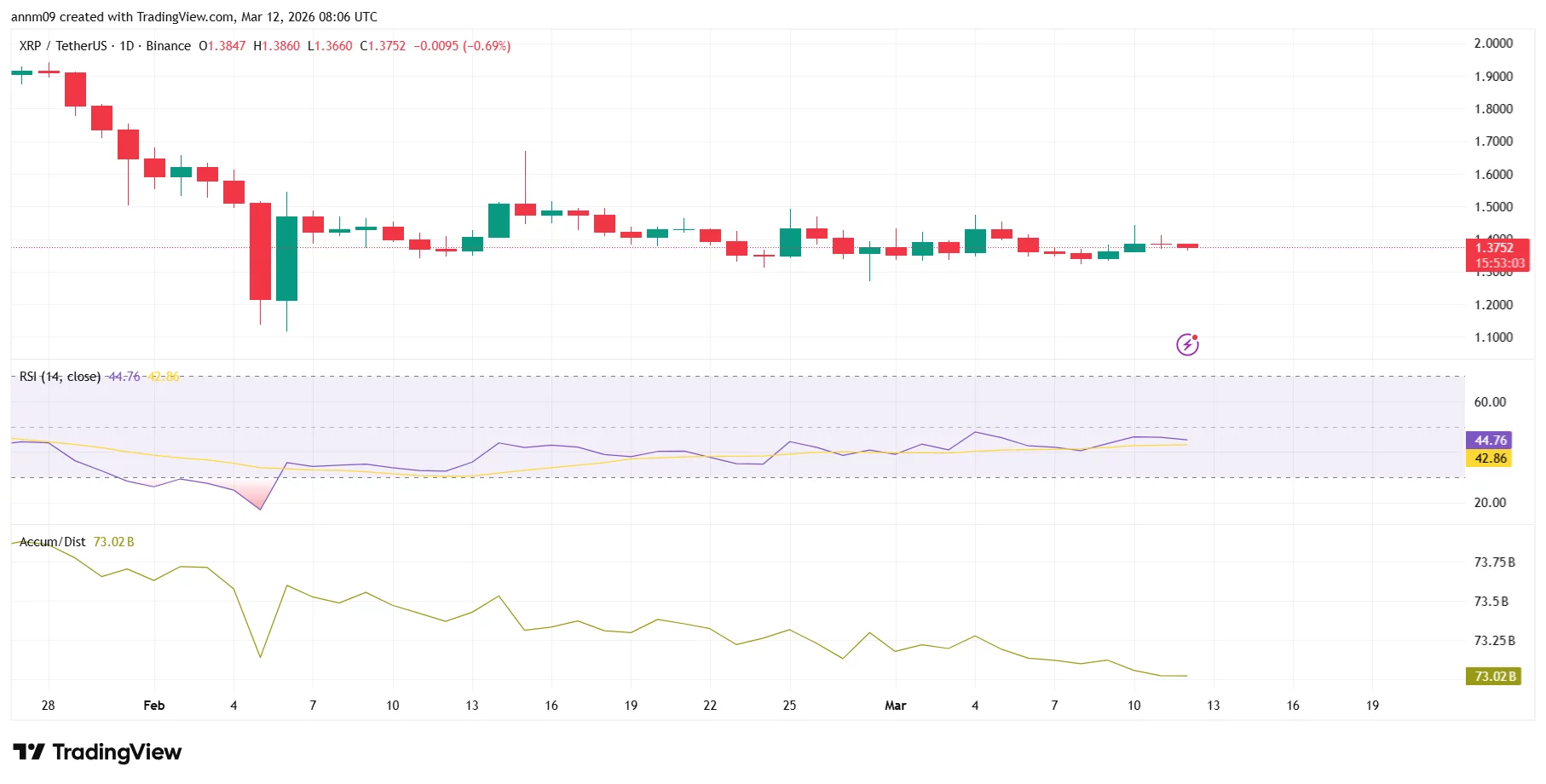
XRP is currently trading near $1.37, hovering within a relatively tight range that has formed since early February following a sharp correction from higher levels.
The $1.45–$1.50 zone remains the immediate hurdle for bulls. A decisive breakout above this region could open the door for a push toward the $1.70–$1.80 range.
The chart shows strong support around $1.30, with deeper support near $1.20 if selling pressure intensifies.
The Relative Strength Index (RSI) is currently hovering around 45, indicating neutral momentum. The reading suggests the asset is neither overbought nor oversold, leaving room for a potential move in either direction
Meanwhile, the Accumulation/Distribution indicator continues trending slightly downward, hinting that market participants remain cautious despite improving fundamentals.
For now, the market appears to be waiting for a decisive catalyst. If Ripple’s buyback plan and declining exchange reserves translate into stronger demand, XRP could attempt to break out of its current consolidation range.
Otherwise, the token may continue trading sideways as investors assess the broader crypto market environment.
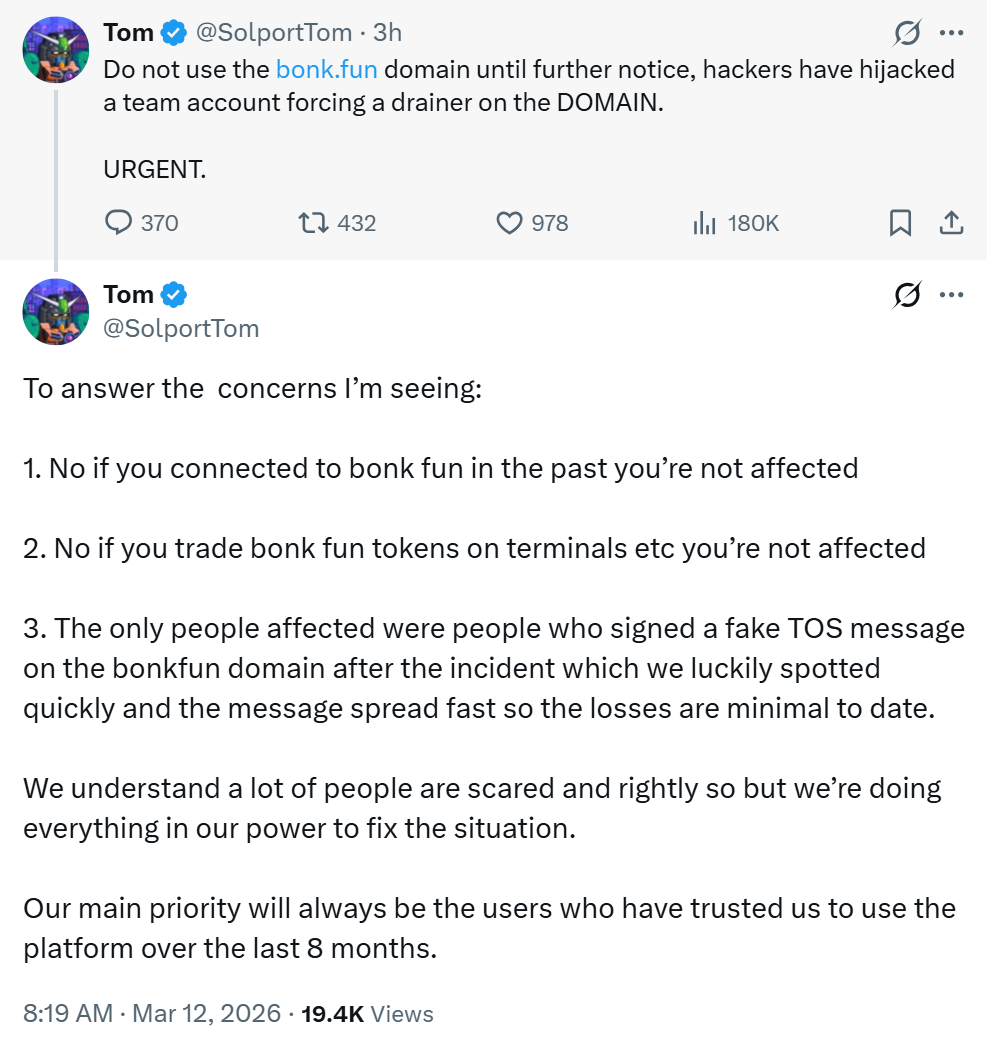
Bonk.fun warned users not to use its site after attackers hijacked the domain and pushed a fake wallet-draining prompt.
The domain of Solana-based platform memecoin launchpad Bonk.fun has been hijacked after attackers gained access to a team account and deployed a wallet-draining scheme through the site.
The Bonk.fun account on X warned users early Thursday not to interact with the website while the team worked to secure the domain. “A malicious actor has compromised the BONKfun domain, do not interact with the website until we have secured everything,” the project wrote in a post on X.
X user Tom, who is an operator behind Bonk.fun, said the attackers used the compromised access to push a fake message designed to trick visitors into signing a malicious transaction.

In a follow-up post, Tom said the exploit targeted users who signed a fraudulent terms-of-service prompt that appeared on the site during the breach. Users who had previously connected wallets to Bonk.fun were not affected, and traders interacting with Bonk-related tokens through external terminals were also safe.
Related: Trust Wallet adds real-time scam address checks for crypto users
Some users report losses
Some users reported losses in replies to the warning posts. One user claimed roughly 50 Solana (SOL) had been drained from their wallet, while another said they lost about 10 SOL. More users claimed varying amounts of losses.
Meanwhile, Tom said the incident was contained quickly and that reported losses appear limited so far. “We understand a lot of people are scared and rightly so but we’re doing everything in our power to fix the situation,” he added.
Cointelegraph reached out to Tom for comment but had not received a response by publication.
Magazine: Bitcoin may take 7 years to upgrade to post-quantum — BIP-360 co-author
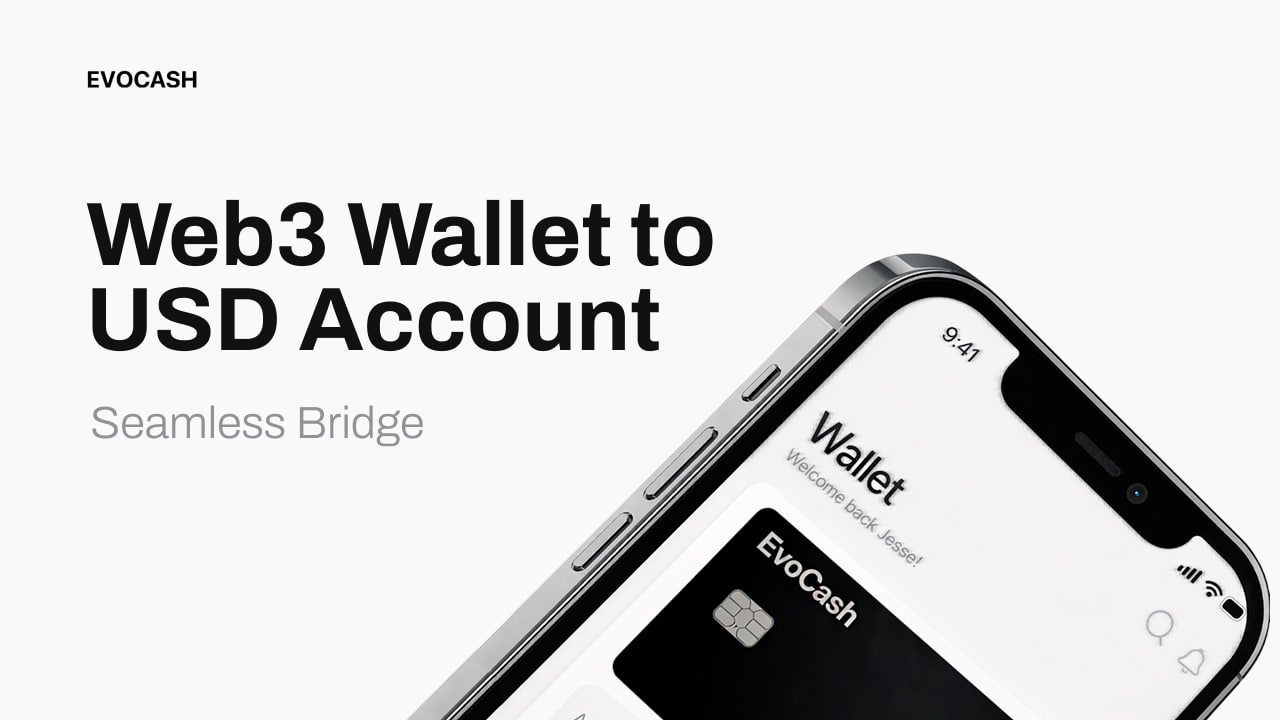
[PRESS RELEASE – Singapore, Singapore, March 11th, 2026]
FinCEN-registered platform enables seamless connection between Web3 wallets and compliant USD accounts, providing global users with instant access to fiat financial services.
EvoCash has officially launched its Web3 financial services platform, offering a Web3 wallet-to-USD account bridge that connects cryptocurrency wallets directly to compliant USD accounts. Registered as a Money Services Business (MSB) with the U.S. Financial Crimes Enforcement Network (FinCEN) under the Bank Secrecy Act, the platform provides access to real-time USDT-to-USD conversion and comprehensive fiat on-ramp and off-ramp financial services for users worldwide.
The platform addresses a common challenge in the cryptocurrency ecosystem: converting digital assets into fiat efficiently. Traditional financial institutions often apply additional scrutiny to cryptocurrency-related transactions, which can lead to delays or service limitations for some users — particularly international freelancers, digital nomads, and cross-border businesses. EvoCash provides a crypto-to-fiat infrastructure designed to support these users within a compliance-focused framework.
MSB Registration and Global Compliance Framework
EvoCash’s MSB registration with FinCEN enables legal operation of money transmission and currency exchange services in the United States and internationally. The platform operates under comprehensive Anti-Money Laundering (AML) and Know Your Customer (KYC) procedures aligned with regulatory requirements, enabling global user access without geographic banking restrictions.
Web3-compliant USD accounts are provided through partnerships with financial institutions using For Benefit Of (FBO) account arrangements, keeping user funds safeguarded at the partner bank and clearly segregated from company assets, while maintaining the speed and accessibility crypto users demand — particularly valuable for international users seeking crypto-to-fiat bridge solutions. This structure provides users with access to USD accounts without the restrictions typical of traditional banking.
Key Platform Features for Global Users
EvoCash offers an integrated suite of financial services:
- Real-Time USDT-to-USD Conversion: Instant conversion between stablecoins and fiat currency without multi-day bank delays
- Fiat On-Ramp and Off-Ramp: Bidirectional flows between crypto and traditional currency
- Web3-Compliant USD Accounts: Compliant fiat accounts connected directly to Web3 wallets via partner financial institutions in the U.S.
- Trading and Exchange Services: Multi-asset crypto trading integrated within the platform
- Global Onboarding: Accessible to users worldwide without requiring local banking relationships — critical for international freelancers and digital nomads
- Multichain Support: Asset management across multiple blockchain networks
- Cross-Border USD Payments: Seamless international payment processing
- Access to Traditional Instruments: Holdings in precious metals like gold alongside crypto assets
Solving Banking Friction Globally
Cryptocurrency users worldwide regularly experience frozen bank accounts, delayed withdrawals, and sudden account closures when attempting to convert digital assets to fiat. This challenge is particularly acute for international users across multiple jurisdictions.
EvoCash eliminates these barriers by providing regulatory-compliant infrastructure specifically designed for crypto-native transactions and global operations. Traders can convert profits immediately without waiting periods. Freelancers receiving crypto payments can access USD for everyday expenses instantly — regardless of where they’re located. Digital nomads can maintain USD accounts globally without local banking requirements.
Future Expansion with Visa Integration
The platform is pursuing approval for a Visa card linked to stablecoins, currently under review with issuing partners. Once approved and launched, the card will enable users to spend crypto-backed USD balances at merchants worldwide through integrated stablecoin payments functionality, further bridging digital assets and traditional commerce globally.
EvoCash’s compliance-first approach combined with purpose-built infrastructure for cryptocurrency users positions the platform as a leading crypto-to-fiat bridge connecting Web3 and traditional financial systems.
About EvoCash
EvoCash is a Web3 financial services platform registered as a Money Services Business (MSB) with FinCEN under the Bank Secrecy Act. The platform operates as a crypto-to-fiat bridge connecting decentralized finance and traditional financial systems through Web3-compliant USD accounts, real-time USDT-to-USD conversion, fiat on-ramp and off-ramp services, trading and exchange services, and multi-asset financial tools. EvoCash provides users with access to real-time stablecoin-to-USD conversion, global onboarding, cross-border USD payments, and multichain support, all within a secure, compliance-focused infrastructure. USD‑denominated accounts are provided through partner financial institutions in the U.S. using FBO account structures, so client funds are held and safeguarded at the partner bank and kept separate from EvoCash’s own funds. For more information, users can visit evocash.org.
Binance Free $600 (CryptoPotato Exclusive): Use this link to register a new account and receive $600 exclusive welcome offer on Binance (full details).
LIMITED OFFER for CryptoPotato readers at Bybit: Use this link to register and open a $500 FREE position on any coin!

Wealthy parents play dead after own son hires hitman to kill them

UBS recruits ex-Morgan Stanley wealth adviser, eyes Perth growth

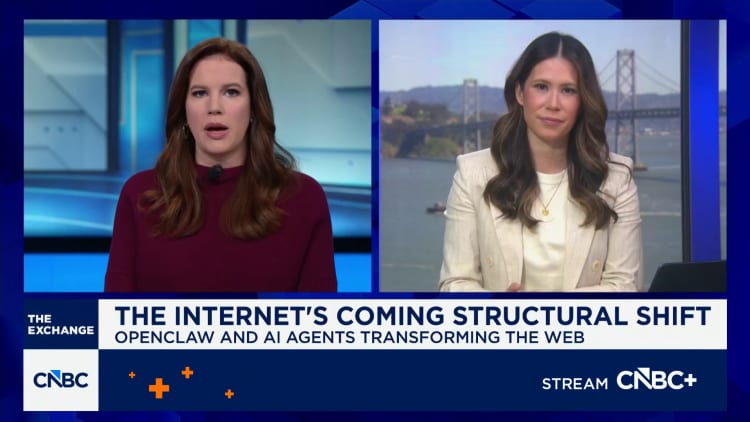
China’s tech firms feast on OpenClaw as companies race to deploy AI agents


-
Business6 days ago
Form 8K Entergy Mississippi LLC For: 6 March
-

 News Videos3 days ago
10th Algebra | Financial Planning | Question Bank Solution | Board Exam 2026
-

 Fashion6 days ago
Weekend Open Thread: Ann Taylor
-

 Crypto World3 days ago
Paradigm, a16z, Winklevoss Capital, Balaji Srinivasan among investors in ZODL
-
 Tech1 day ago
A 1,300-Pound NASA Spacecraft To Re-Enter Earth’s Atmosphere
-
 Sports7 days ago
499 runs and 34 sixes later, India beat England to enter T20 World Cup final | Cricket News
-

 Politics6 days ago
Top Mamdani aide takes progressive project to the UK
-

 Business2 days ago
ExxonMobil seeks to move corporate registration from New Jersey to Texas
-

 Sports4 days ago
Braveheart Lakshya downs Lai in epic battle to enter All England Open final | Other Sports News
-

 Sports5 days ago
Three share 2-shot lead entering final round in Hong Kong
-

 NewsBeat15 hours ago
Residents reaction as Shildon murder probe enters second day
-

 NewsBeat7 days ago
Piccadilly Circus just unveiled ‘London’s newest tourist attraction’ and it only costs 80p to enter
-

 Entertainment5 days ago
Hailey Bieber Poses For Sexy Selfies In New Luscious Lip Thirst Traps
-

 Business4 days ago
Search for Nancy Guthrie Enters 37th Day as FBI Probes Wi-Fi Jammer Theory
-

 Business1 day ago
Search Enters Sixth Week With New Leads in Tucson Abduction Case
-
 NewsBeat2 days ago
Pagazzi Lighting enters administration as 70 jobs lost and 11 stores close across Scotland
-

 Tech2 days ago
ChatGPT will now generate interactive visuals to help you with math and science concepts
-

 Tech3 days ago
Despite challenges, Ireland sixth in EU for board gender diversity
-

 Business3 days ago
Search Enters 39th Day with FBI Tip Line Developments and No Major Breakthroughs
-

 NewsBeat19 hours ago
I Entered The Manosphere. Nothing Could Prepare Me For What I Found.