
Crypto World
Grayscale Files S-1 for Hyperliquid ETF, Expanding Crypto ETF Field


Grayscale has moved to bring a spot Hyperliquid exchange-traded fund to market, filing for a product that would track the Hyperliquid (HYPE) token and potentially trade on Nasdaq under the ticker GHYP if approved. The filing positions Grayscale alongside Bitwise and 21Shares in pursuing a dedicated on-exchange vehicle tied to Hyperliquid’s perpetual futures protocol and associated assets.
The company’s S-1 registration with the U.S. Securities and Exchange Commission confirms Coinbase as the custodian for the proposed ETF, though it does not disclose a management fee for GHYP. Notably, Grayscale indicates in the filing that staking rewards could be added to the ETF in the future, provided certain conditions are met.
Key takeaways
- Grayscale filed an S-1 with the SEC for a spot Hyperliquid ETF (GHYP) that would trade on Nasdaq if approved, marking a continued push by traditional asset managers into tokenized, 24/7-trading instruments.
- Coinbase is named as the custodian, but no management fee for the proposed ETF is disclosed in the filing.
- The filing leaves open the possibility of incorporating staking rewards into GHYP later, subject to regulatory and other conditions.
- Hyperliquid remains a dominant force in perpetual futures trading, with weekly volumes typically ranging from $40 billion to $100 billion, according to DeFiLlama data, while total weekly perps volume hovers between $125 billion and $300 billion this year.
Grayscale’s Hyperliquid bet and what it signals for investors
The S-1 filing outlines a strategy for offering a spot ETF that would provide direct exposure to the Hyperliquid ecosystem through the HYPE token. If cleared by regulators, GHYP would give investors a traditional market access path to a crypto-native instrument designed to track the price movements of Hyperliquid’s tokenized futures protocol. Grayscale’s choice of Nasdaq as a potential listing venue reflects a broader trend of bridging traditional exchanges with crypto-native assets, aiming to attract institutional participants seeking regulated, familiar trading rails.
Crucially, the document confirms Coinbase as the ETF’s custodian, anchoring the product to a widely used on-ramp and custody provider in the crypto ecosystem. However, the filing does not reveal a management fee, leaving a key detail for future disclosure and regulatory review.
Beyond current exposure, Grayscale notes a potential expansion: staking rewards could be integrated into GHYP at a later date if certain conditions are satisfied. That possibility would offer an additional yield channel for investors, on top of potential price appreciation of the HYPE token. The idea of staking-enabled ETFs has floated around in contemporaneous filings by peers, signaling growing appetite for yield-bearing crypto products among institutional issuers.
Hyperliquid’s enduring role in the perpetuals market
Hyperliquid has established itself as a central venue for perpetual futures trading, a niche that blends crypto assets with continuous, derivatives-like exposure. Even as weekly trading volume for the platform cooled from its August peak, DeFi analytics show Hyperliquid handling between roughly $40 billion and $100 billion in weekly volume, keeping it at the top among perps platforms. DeFiLlama’s data corroborates Hyperliquid’s dominant position in the space, even as newer entrants emerged in 2025—Aster, Lighter, and edgeX—each carving out their own slices of the market but typically handling far less weekly volume than Hyperliquid.
Industry observers note that the broader perps market continues to move in sizable increments. Total weekly perps trading volume for the sector has hovered roughly between $125 billion and $300 billion this year, still well above levels from a year ago and signaling sustained demand for tokenized leverage and cross-asset exposure, particularly in a 24/7 trading environment that Hyperliquid helps to showcase.
Grayscale’s filing arrives amid a wave of interest in Hyperliquid-linked products from other asset managers. Bitwise filed for its own Hyperliquid spot ETF last year and amended the prospectus in December to include staking, while 21Shares signaled in its October filing that staking could be incorporated at a later date. These filings collectively illustrate a broader push to bring synthetic, crypto-native trading paradigms into regulated, exchange-traded formats that would be palatable to traditional financial audiences.
What to watch next
Regulatory review will determine whether GHYP can proceed to a Nasdaq listing. Investors should monitor not only the SEC’s assessment of the product’s structure and disclosures but also how Grayscale and other issuers address staking provisions, which could add yield opportunities while introducing new considerations around risk, custody, and volatility. As Hyperliquid and its competitors evolve, readers should track whether staking becomes a standard feature across spot Hyperliquid ETFs and how market liquidity and regulatory expectations shape those trajectories.

Crypto World
Kraken’s Parent Payward Backs White House AI Framework to Strengthen U.S. Financial Infrastructure

TLDR:
- Payward supports the White House AI framework to establish a clear, consistent federal AI policy across the U.S.
- Co-CEO Arjun Sethi warns that regulatory fragmentation becomes a chokepoint on deployment and capital allocation.
- Kraken backed the framework on X, stating AI will shape the next generation of financial and economic infrastructure.
- Payward sees the national AI framework as essential for leading AI-powered finance, tokenized assets, and digital infrastructure.
A national AI framework released by the White House has gained strong support from Payward, Kraken’s parent company.
The firm called for clarity, consistency, and U.S. competitiveness in federal AI governance. Payward stated the framework removes harmful regulatory fragmentation across state lines.
This would lower costs and speed up deployment for American AI companies building at scale.
Payward Frames AI as Foundational Infrastructure, Not an Application Layer
Payward welcomed the release of the White House’s national AI legislative framework. The company expressed full support for a clear, consistent federal approach to AI policy.
According to Payward, AI will shape the next generation of economic and market infrastructure. The key question is whether that infrastructure is built in the United States or elsewhere.
Arjun Sethi, Co-CEO of Payward, drew a sharp comparison between AI and existing foundational systems. “AI is not an application-layer technology. It is becoming a foundational infrastructure layer, analogous to compute, networking, and financial rails,” Sethi said.
He added that the policy question is whether that infrastructure is built within a coherent U.S. regulatory system. The alternative, he warned, is fragmentation across jurisdictions that degrades performance and increases time to market.
Sethi went further in describing how fragmentation affects business operations and capital flow. “At scale, fragmentation is not just a regulatory issue. It becomes a chokepoint on system performance, introducing friction across deployment, data, and capital allocation,” he continued.
A clear national framework, he said, collapses that overhead entirely. It creates a clear surface area for builders to compete and develop globally dominant platforms.
Sethi also tied AI governance directly to future economic leadership across nations. “Countries that value AI as infrastructure, and regulate it accordingly, will own the next generation of economic systems,” he stated.
Payward reaffirmed its commitment to responsible innovation in AI, blockchain, and finance. The company said a consistent federal policy supports continued growth across these interconnected sectors.
White House Framework Addresses AI-Powered Finance and Digital Asset Infrastructure
Kraken voiced its support through a post on social platform X, backing the new framework directly. “AI will shape the next generation of financial and economic infrastructure,” the exchange wrote.
It added that stronger policy foundations strengthen America’s ability to lead in technology and financial infrastructure. Kraken also noted its support for the White House’s work to advance a clearer national framework.
The White House framework establishes guiding principles for a unified national AI approach. It aims to eliminate conflicting state-level rules that have slowed technology deployment.
Moreover, it targets cost reductions and removes barriers for U.S. companies to build and scale. Societal safeguards are also woven into the framework alongside innovation and competitiveness goals.
Payward praised the Trump Administration’s approach to AI governance as forward-thinking and balanced. The framework covers AI-powered financial services, tokenized assets, and secure digital infrastructure.
These areas align directly with Payward’s core business in digital assets and financial technology. The firm said the framework strikes the right balance between rapid innovation and public safety.
Payward is committed to collaborating with policymakers, industry partners, and other relevant stakeholders. It stated that implementing the framework effectively remains a shared priority going forward.
The company views this national AI framework as a foundation for U.S. technological dominance. It called on industry and government to work together in building globally competitive AI systems.


Gold slid 3.5% on Friday, trading around $4,488 per ounce, as geopolitical volatility and uncertainty in the Middle East weighed on sentiment. The decline pushed the metal’s weekly drop to about 11%, the steepest weekly decline since 1983, underscoring how a risk-off environment can erode the appeal of traditional safe-havens when energy and geopolitical risks dominate markets.
From late February, when US and allied actions in the region intensified, gold has fallen more than 15%, erasing a portion of a rapid rally that had lifted prices toward the $5,500 mark in late January. TradingView data highlighted that March 16–20 marked gold’s worst-performing week since 1983, underscoring how quickly the narrative can shift in times of geopolitical strain. TradingView noted the week’s move as historically significant for the yellow metal.
Analysts say the conflict is disrupting global energy flows, particularly through the Strait of Hormuz, feeding fears of a prolonged energy crisis as markets weigh the balance between safe-haven demand and the impact of higher energy costs on inflation and growth. In such an environment, investors are furling into risk-off assets while considering how energy-market dynamics might influence central-bank policy in the near term.
Amid the regional tensions, US President Donald Trump said he was weighing a winding-down of some Middle East military efforts. While talk of reducing troop deployments emerged, the United States has continued to bolster its regional presence, and airstrikes in the area persisted. The evolving stance adds another layer of uncertainty for traders trying to gauge the risk premium priced into gold and other assets.
Market watchers are also focusing on the Federal Reserve’s policy outlook. The broader expectation remains that the Fed will hold interest rates steady for the year, which could keep fixed-income yields attractive relative to gold in the near term. In a related note, Fed Chair Jerome Powell signaled that higher energy prices could push inflation higher in the near term, complicating the inflation trajectory and potentially influencing the demand for both gold and crypto assets as hedges or diversifiers.
Bitcoin finds footing as gold wobbles
Over the past year, gold has outperformed many traditional assets, rising roughly 48.5% while the broader crypto market has retraced about 16.5% in the same period. In the current environment, Bitcoin has shown a degree of resilience, trading near $70,000 and having risen more than 11% since the initial Iran-related attacks. The latest move reflects a common pattern where crypto markets react to geopolitical shocks differently than traditional safe-havens, sometimes offering a counterbalance to gold’s shifts.
Bitcoin’s relative performance this month has been notable. While gold has faced renewed pressure from the energy and geopolitical backdrop, BTC’s pullback earlier this year has shifted into a recovery phase, with the digital asset reclaiming some ground as investors evaluate risk, liquidity, and the potential for institutional and retail adoption to influence price trajectories. The dynamics illustrate a broader theme in crypto markets: while gold’s role as a hedge remains debated in times of energy-market stress, Bitcoin can exhibit outsized sensitivity to policy signals, global risk appetite, and liquidity conditions.
That said, the longer-term relationship between gold and crypto remains nuanced. The twelve-month lens shows gold’s robust rally vs. a broader crypto retracement, highlighting ongoing debates about which assets best weather macro shocks and how central-bank policy, energy volatility, and geopolitical risks reweight those choices for investors, traders, and builders in the crypto ecosystem.
What this means for markets and readers
The current environment underscores a few persistent themes for crypto markets and traditional assets alike. First, geopolitical risk can simultaneously depress traditional safe havens like gold and alter risk sentiment in crypto, where Bitcoin and other digital assets may trade as high-beta instruments in the short term. Second, energy-price dynamics and central-bank policy expectations are closely linked; if energy costs push inflation higher longer than anticipated, monetary policy paths may shift, affecting both gold’s appeal and crypto liquidity environments. Lastly, as the Strait of Hormuz and related chokepoints remain in focus, traders will continue to monitor oil-flow disruptions and their implications for global growth and asset correlations.
Investors should watch how central banks respond to evolving energy and inflation signals in the coming weeks, alongside any escalation or de-escalation in regional tensions. Crypto traders may look for catalysts in liquidity shifts, exchange flows, and macro scenarios that could widen the divergence between traditional safe-havens and digital-asset assets.
Looking ahead, the market will be attentive to any developments that could alter the risk calculus: a clear shift in Middle East policy, updates from the Fed on rate guidance, and how energy markets respond to supply-and-demand dynamics. In these conditions, gold and Bitcoin continue to offer distinct narratives about hedging, risk-taking, and the evolving role of crypto in a macro-driven market backdrop.
Readers should stay tuned for updates on geopolitical developments, central-bank communications, and energy-market signals, as they will shape the relative performance of gold, Bitcoin, and the broader crypto landscape in the near term.
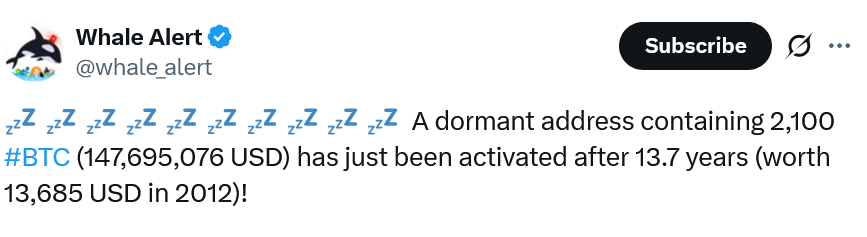
A Satoshi-era Bitcoin whale has reawakened after nearly 14 years of dormancy, making a test transaction from its 2,100 Bitcoin stash worth nearly $148 million at current market prices.
Data from mempool.space shows around $47 worth of Bitcoin (BTC) was transferred from wallet address “1NB3Z…QB6ZX” to a fresh address on Friday at 10:27am UTC.
The Bitcoin whale had been dormant since July 2012, when they scooped up the 2,100 Bitcoin at roughly $6.5 a coin for about $13,685, Whale Alert noted, meaning the trader is up more than 1,000,000% since 2012.

The test transaction doesn’t necessarily mean the whale is looking to offload its holdings. Many whales make small transfers to confirm that they still maintain full control over their funds.
However, crypto traders often watch whale transaction patterns to gauge Bitcoin’s short-term price movements, given the outsized influence that they have on market liquidity and sentiment.
Bitcoin whales contributed to selling pressure in the past
Bitwise Chief Investment Officer Matt Hougan said in November that Satoshi-era wallets were partially to blame for Bitcoin failing to recover from the Oct. 10 market flash crash, when the cryptocurrency fell from over $120,000 to around $102,000 after nearly $19 billion worth of leveraged positions were wiped out.
“Crypto-native retail” and early investors have “compressed upside” through large-scale selling, preventing Bitcoin from mounting a comeback, Hougan said at the time.
Related: Coinbase, Apex Group tokenize Bitcoin Yield Fund on Base
One of the most notable Satoshi-era transfers in 2025 took place in July, when 80,000 Bitcoin worth $4.6 billion at the time was sent to Galaxy Digital.
Sending funds of that size to market makers and liquidity providers like Galaxy Digital is typical when whales want to offload their funds.
Magazine: Big Questions: Can Bitcoin save you from the dreaded Cantillon Effect?
After a strong start to the week, Bitcoin (BTC) is down nearly 5%, alongside the S&P 500, DOW, Nasdaq, and Gold. Crude oil, on the other hand, has risen 7.30% and is up 53% since the US and Israel–Iran war began on Feb. 28.
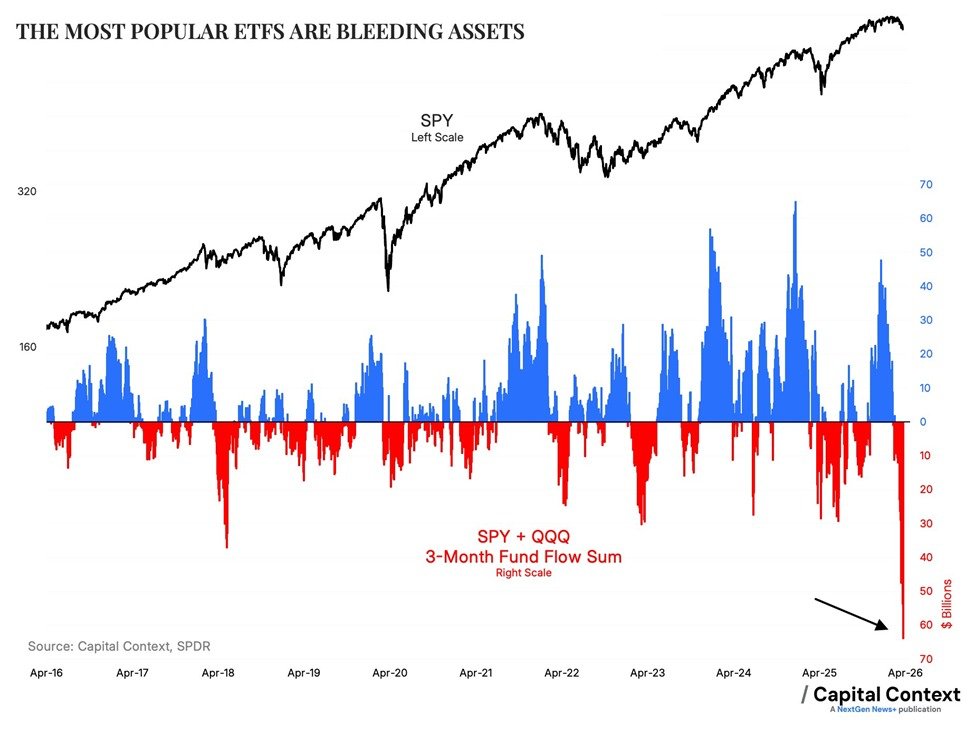
The collective market weakness highlights a coordinated shift in capital flows as the war continues in the Middle East, with an uptick in outflows from the S&P 500 and Nasdaq 100 exchange-traded funds (ETFs) further highlighting traders’ decision to cut risk.
Capital exodus takes place across all investment markets
The Kobeissi Letter reported a combined $64 billion outflow from the S&P 500 (SPX) ETF and Nasdaq 100 ETF (QQQ) over the past three months, the largest on record.
This reverses a $50 billion inflow seen in November and pushes outflows to 5% of the total assets under management.

The spot Bitcoin ETFs mirrored the broader market weakness, recording $253 million in outflows over the past two days.
While the monthly ETF flows remain positive at $1.48 billion, this comes against the backdrop of $6.3 billion in cumulative outflows between November and February, highlighting a fragile recovery in investor demand.
Glassnode data suggests the market is struggling to absorb the selling pressure. The net realized profit-taking briefly accelerated to around $17 million per hour (24-hour average) before losing momentum, after which the BTC price slipped back below $70,000. Glassnode added,
“Broader geopolitical uncertainty appears to be compressing demand depth, limiting the market’s capacity to absorb even moderate realization events.”

Related: Market analyst sees further Bitcoin downside, flags $60K as key level
War-influenced market cycles shape BTC price action
Market participants are framing Bitcoin’s move against past geopolitical events, drawing parallels between the current US and Israel–Iran war and the Russia-Ukraine war in 2022.
Coincidentally taking place in February four years apart, crypto commentator Carlitosway noted that following Russia’s attack on Ukraine on February 24, 2022, Bitcoin initially sold off before posting a 24% relief bounce in the following four weeks. The momentum faded soon after, as BTC dropped another 64% by November 2022.

A similar sequence is unfolding this month, with BTC rallying nearly 10% at one stage last week since the beginning of the war, but momentum is now slowing down.
Carlitosway linked the weakness to sustained pressure on liquidity, rising energy costs, and continued forced selling during periods of stress, all of which reduce the follow-through demand for Bitcoin.
The pattern points to a more extended stabilization phase, where the recovery may take time as capital rebuilds and the selling pressure clears.
Crypto analyst Finish believed that the recovery path for Bitcoin might take place after a price bottom around $55,000. The analyst added,
“I frankly think that until the Iran war is settled, it’s gonna be hard for $BTC to rise. The environment is risk off, the SPX lost trillions in capitalisation, which leads me to a more neutral stance.”

Related: What happens to Bitcoin if oil price hits $180 per barrel?
This article does not contain investment advice or recommendations. Every investment and trading move involves risk, and readers should conduct their own research when making a decision. While we strive to provide accurate and timely information, Cointelegraph does not guarantee the accuracy, completeness, or reliability of any information in this article. This article may contain forward-looking statements that are subject to risks and uncertainties. Cointelegraph will not be liable for any loss or damage arising from your reliance on this information.
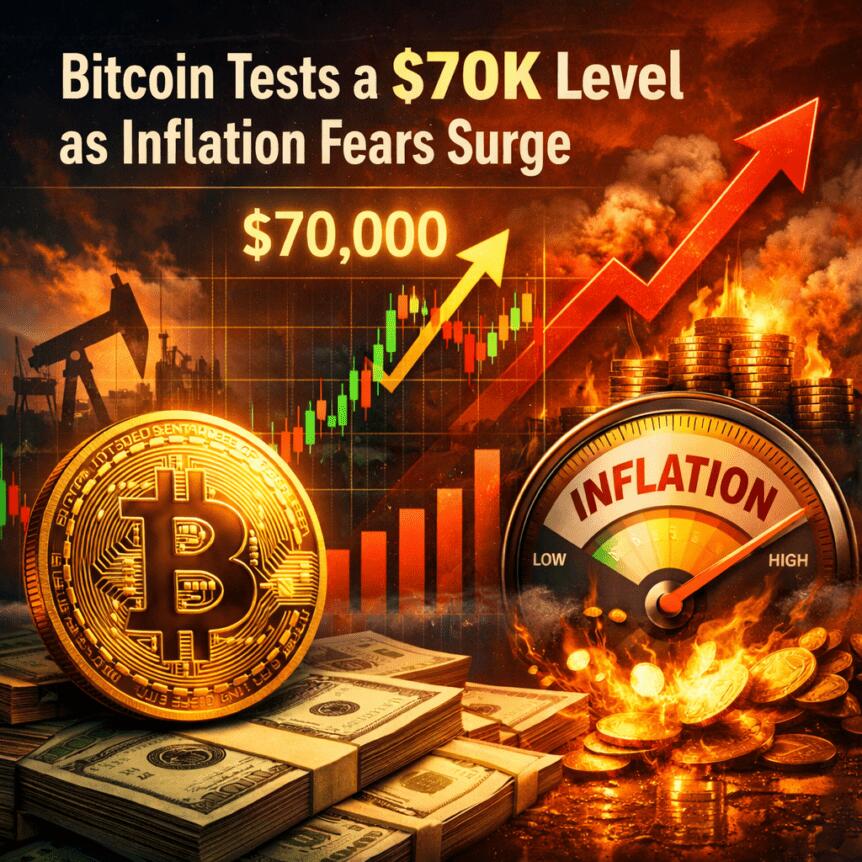
Bitcoin is grappling with a shift in momentum after failing to sustain a rally above $76,000, slipping back under $70,000 as crude oil prices rise and inflation concerns roil risk markets. The move underscores how macro forces—oil, policy expectations, and stock weakness—continue to shape the crypto narrative, even as traders parse chart patterns for clues about the path forward.
Among the most watched signals is a potential bearish wedge that market technicians say could herald further downside if the lower boundary gives way. Analysts are weighing whether BTC is building a fresh base or entering a renewed leg lower, with key targets circulating in the $50,000s to $60,000s range in the event of a breakdown.
Key takeaways
- Bitcoin failed to sustain a break above $76,000 and dropped below $70,000, renewing questions about a sustained base formation.
- Aksel Kibar, a chartered market technician, warned that a bearish wedge pattern could be forming, with a breakdown of the lower boundary potentially targeting around $52,500.
- The pattern similarities to late 2025 and early 2026 have observers watching whether BTC can respect larger-timeframe averages as part of a chops-and-base process.
- Macro factors—higher oil prices, inflation expectations, and shifting Fed rate expectations—continue to influence crypto risk sentiment and price action.
Bitcoin price action and the wedge argument
BTC’s retreat from its recent highs followed a rapid test of the $76,000 level, after which selling pressure pushed the price back toward the $70,000 area. The move fed a narrative among traders that the bottom might not be in yet, as momentum faded and a broader range began to reassert itself.
In a widely cited note, Aksel Kibar, a veteran chart analyst, described the possibility of a wedge pattern that mirrors the setup seen from December 2025 into early January 2026. He cautioned that a breakdown of the wedge’s lower boundary would be a signal for a potential move toward $52,500.
“Breakdown of the lower boundary will be the signal for a possible move towards $52.5K.”
Kibar also linked BTC’s need to respect its year-long moving average as part of a broad chop-and-base phase, a dynamic he described as a process of digestion before any meaningful directional move. He suggested the pattern could evolve into a rising wedge that would test a support zone around $73.7k–$76.5k, a scenario that would again place BTC within a crowded technical crosshair.
Macro backdrop: oil, inflation, and policy expectations
The price action comes as oil markets remain volatile, with higher crude prices contributing to inflation concerns that weigh on risk assets across the board. A number of market participants flagged that the confluence of elevated energy costs, geopolitical tensions, and policy uncertainty is complicating the near-term outlook for cryptocurrencies.
In discussing how policy may flow into inflation and asset prices, observers pointed to commentary about U.S. rate expectations. The Kobeissi Letter noted a shift in expectations, stating that “the market now sees a 50% chance of a US Fed rate HIKE by the end of 2026. Just months ago, markets saw as many as four rate CUTS this year.” This framing underscores how crypto traders are increasingly tethered to macro bets that can swing on a single data release or a shift in central-bank tone. Kobeissi Letter highlighted the dynamic as part of the evolving macro narrative surrounding BTC.
The broader market mood is also reflected in derivatives commentary. In its BTC Options Weekly, Glassnode observed that Bitcoin has reintegrated into its range after briefly trading above the $75,000 level. The report notes that “short gamma at $75K has been unwound”, implying less immediate upside pressure and suggesting ranges are reasserting themselves rather than a fresh breakout driving new highs.
“Beneath the pullback, the breakout has lost momentum and range conditions are returning.”
These observations align with a period of cautious stance among traders, who are trying to differentiate between a temporary pause and a larger structural shift in BTC’s price action. The market’s sensitivity to oil-related inflation and Fed guidance means that any shift in those drivers could quickly tilt the balance of risk assets, including Bitcoin.
What to watch next for Bitcoin and the market
For investors and traders, the near term hinges on whether BTC can stabilize above or near the $70,000 threshold and how it behaves around the key wedge/technical levels discussed by analysts. The potential test zone near $73.7k–$76.5k remains a focal point, with a breakdown signaling the possibility of a deeper drawdown toward the $50,000s or below if macro conditions stay adverse.
From a macro perspective, oil prices, inflation expectations, and policy signals will continue to feed into crypto pricing. If oil prices ease and inflation expectations cool, there could be room for a renewed risk-on tilt. Conversely, if energy costs stay elevated and central banks maintain a wary stance on inflation, Bitcoin could remain tethered to wider market volatility.
Derivative markets will also offer clues about how traders are positioning for the next move. A reversion to a tighter range and unwinding of near-term gamma could reflect a cautious stance ahead of key data or policy events, rather than a conviction of a swift new leg higher.
In the near term, market watchers will be paying close attention to how BTC behaves around the $70,000 level and whether it can mount a sustained base above that line. The coming weeks will likely reveal whether the current price action represents a temporary pause in a sideways pattern or the prelude to a more meaningful directional move shaped by macro developments and evolving market structure.
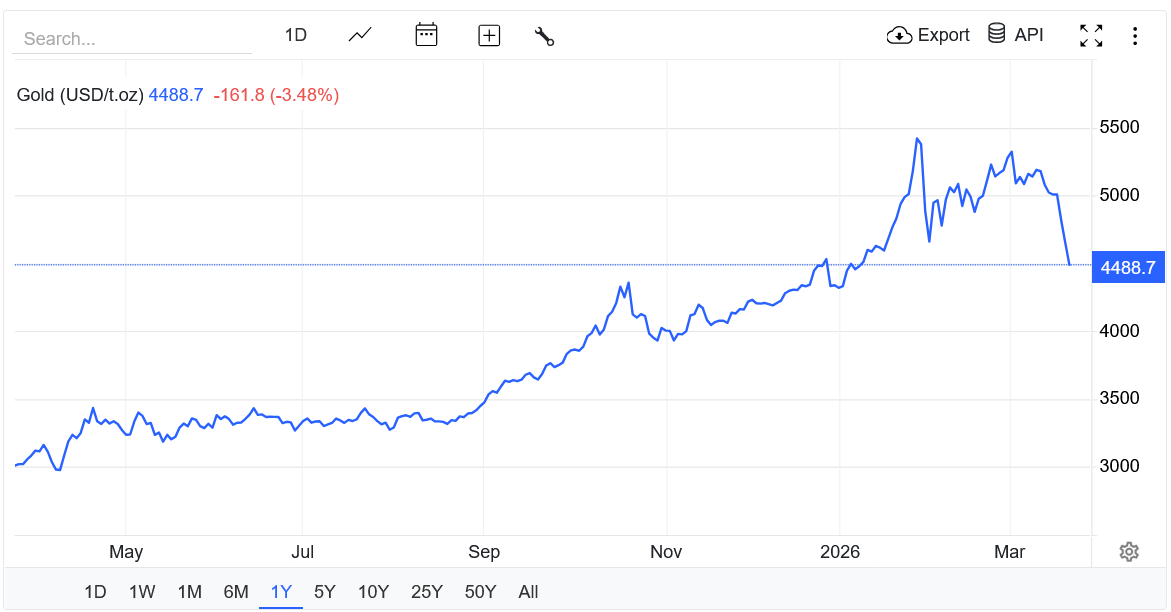
Gold tumbled another 3.5% to $4,488 per ounce on Friday, marking an 11% fall for the week and the largest weekly loss the precious metal has seen since 1983 as geopolitical instability and uncertainty in the Middle East continue to weigh on the markets.
Gold has fallen more than 15% since Feb. 28, when the US and Israel first attacked Iran, erasing part of the rally that pushed its price up to the $5,500 mark in late January and casting doubt on its safe haven status.
TradingView confirmed that March 16-20 was gold’s worst-performing week since 1983. The 11% weekly fall was slightly larger than the last week of January, when gold shot up to about $5,320 before diving to $4,650, a drop that saw more than $2 trillion shaved off the precious metal’s market cap in days.

The war with Iran is also disrupting global oil flows, particularly in the Strait of Hormuz, causing fears of a prolonged energy crisis.
US President Donald Trump said on Friday that he is considering “winding down” its military efforts in the Middle East. However, the US has sent thousands of additional troops to the region as airstrikes continue.
At the same time, traders are anticipating that the US Federal Reserve will hold interest rates steady this year, making bonds and other yield-bearing investments more appealing than gold.
The Federal Reserve chair, Jerome Powell, also noted on Wednesday that higher energy prices would push up inflation, at least over the short term.
Bitcoin has clawed back lost ground on gold this month
Gold has outperformed Bitcoin (BTC) over the past 12 months, increasing 48.5% while the cryptocurrency has retraced 16.5% over the same timeframe.
Related: Bitcoin price aims to hold $70K amid rising inflation concerns
Bitcoin has responded better to the Iran conflict, however, up more than 11.6% to $70,535 since the US and Israel’s first attack on Iran.
Magazine: Is China hoarding gold so yuan becomes global reserve instead of USD?
Unlike Bitwise, Grayscale doesn’t plan to incorporate staking for its Hyperliquid ETF but hasn’t ruled out integrating it in the future.
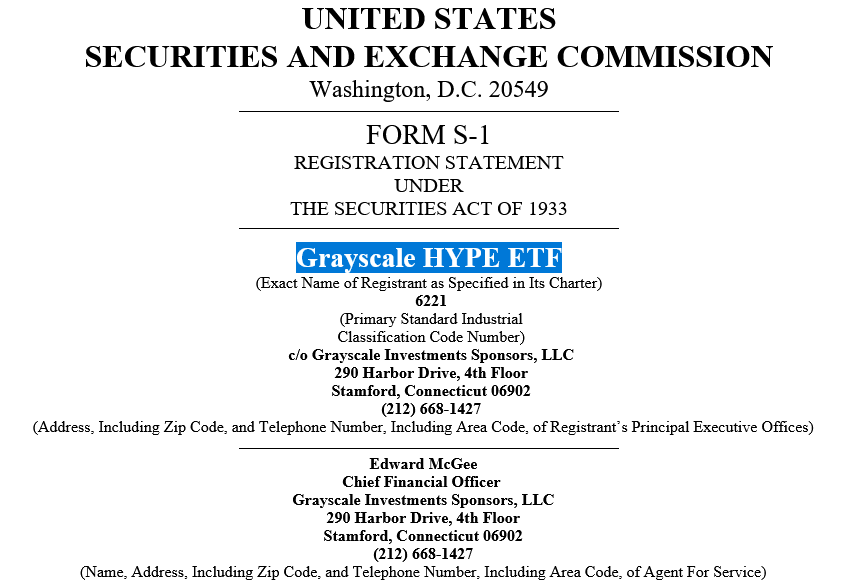
Crypto asset manager Grayscale has filed for a spot Hyperliquid exchange-traded fund, joining Bitwise and 21Shares in seeking to offer a product tied to the Hyperliquid perpetual futures protocol and blockchain.
The Grayscale HYPE ETF would track the price movement of the Hyperliquid (HYPE) token and trade under the ticker GHYP on the Nasdaq if approved, according to Grayscale’s S-1 registration statement filed with the Securities and Exchange Commission on Friday.
Grayscale listed Coinbase as the custodian but didn’t disclose a management fee for the proposed Hyperliquid product.

Grayscale’s filing comes as Hyperliquid continues to be integrated by crypto platforms and be increasingly relied on by TradFi when traditional markets are closed, as it offers 24/7 trading for tokenized real-world assets like oil and gold.
Grayscale said it may consider incorporating staking rewards into its Hyperliquid ETF at a later date, provided certain conditions are met.
Related: Morgan Stanley files amended S-1 for MSBT Bitcoin ETF
Staking would enable GHYP investors to earn yield on top of potential price appreciation from the HYPE token.
Bitwise filed for its Hyperliquid ETF in September and amended it in December to include staking, while 21Shares also contemplated incorporating staking at a later date in its October filing.
Hyperliquid continues to dominate perps trading
While trading volume on Hyperliquid has cooled off from its August highs, it continues to see between $40 billion and $100 billion in weekly volume — maintaining its position as the most traded perps futures platform, DeFiLlama data shows.
Several competitor platforms like Aster, Lighter and edgeX emerged in 2025, eating into Hyperliquid’s dominance, but still see far less trading volume on most weeks.
Total weekly perps trading volume has been hovering between the $125 billion and $300 billion mark this year — not quite as high as in November but still more than double the trading volumes seen this time a year ago.

Magazine: Human brain cell wetware plays Doom, fly’s mind uploaded: AI Eye
Key Highlights
- Kalshi secured more than $1 billion in fresh capital from a financing round spearheaded by Coatue Management, bringing its valuation to $22 billion—a doubling from its previous round just months ago.
- The platform’s annualized revenue has reached $1.5 billion, while February alone saw trading activity surpass $10 billion.
- Arizona authorities have filed criminal charges against Kalshi, alleging the operation of an unlicensed gambling enterprise.
- A Nevada appellate court ruling has paved the way for state officials to prohibit Kalshi’s activities within their jurisdiction.
- The company previously identified and sanctioned users for insider trading violations, including an individual associated with content creator MrBeast.
The prediction market operator Kalshi has successfully closed a funding round exceeding $1 billion, elevating the company’s valuation to $22 billion. Investment firm Coatue Management spearheaded the round, as reported by Bloomberg and The Wall Street Journal.
This latest valuation represents a remarkable doubling from December 2025, when the platform secured $1 billion at an $11 billion price tag. That previous financing was anchored by Paradigm and attracted participation from notable investors including Sequoia Capital, Andreessen Horowitz, ARK Invest, and CapitalG, the investment arm of Alphabet.
Kalshi was established in 2018 by co-founders Tarek Mansour and Luana Lopes Lara. The platform functions as a federally regulated financial exchange under the supervision of the Commodity Futures Trading Commission, holding the distinction of being America’s first regulated prediction market exchange.
The service enables participants to trade contracts based on real-world events—spanning political elections, commodity prices like oil, and even speculative scenarios such as the official confirmation of extraterrestrial life. Its user ecosystem encompasses retail traders, institutional market-makers, and corporations utilizing the platform for hedging specific event risks.
February marked a significant milestone as platform trading volume exceeded $10 billion. This figure represents approximately twelve times the volume registered half a year prior, based on data from KalshiData. Currently, the company reports annualized revenue of $1.5 billion.
According to an individual with knowledge of the matter cited by the Wall Street Journal, investor enthusiasm for this funding round has been partially fueled by expansion in Kalshi’s institutional business segment.
Polymarket, Kalshi’s primary competitor, has experienced comparable growth trajectories but primarily serves markets outside U.S. borders. Recent valuations for both platforms have clustered around the $20 billion mark.
Mounting Legal Challenges From State Authorities
Notwithstanding its impressive expansion, Kalshi confronts significant legal obstacles. This week, Arizona prosecutors filed 20 criminal counts against the platform, charging it with operating an illegal gambling operation without proper licensing and facilitating election betting within state boundaries. Kalshi has characterized these state-level allegations as “seriously flawed.”
On Thursday, the Ninth Circuit Court of Appeals rejected Kalshi’s motion to prevent an anticipated temporary restraining order in Nevada. This judicial decision enables Nevada authorities to move forward with banning the platform’s operations throughout the state.
Kalshi has initiated litigation against several states attempting to implement similar prohibitions. The company maintains that it operates under federal CFTC jurisdiction and therefore lies outside the scope of state gambling regulations. Currently, more than a dozen state-level enforcement actions are proceeding nationwide.
Insider Trading Investigations Draw Additional Attention
Last month, Kalshi publicly disclosed that it had identified and sanctioned two users for insider trading violations. One individual among those penalized was an editor with connections to MrBeast, the widely followed social media influencer.
The company further revealed it maintains more than a dozen active insider trading investigations from a total of approximately 200 cases it has examined.
When approached by media organizations regarding the new financing round, Kalshi representatives declined to provide comment.
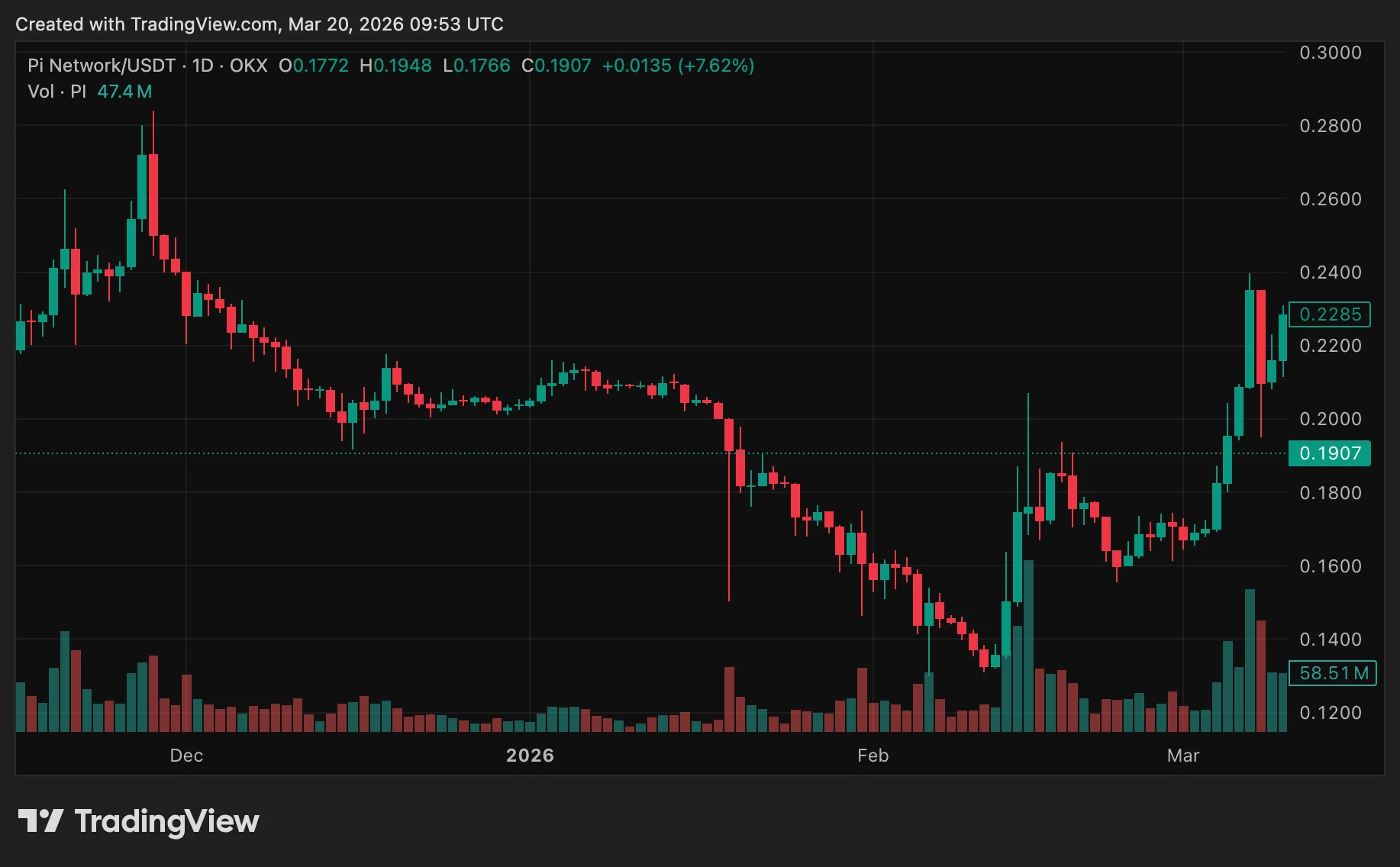
Pi Network’s PI token climbed on March 20 after a sharp three-day drop, as traders tracked the project’s next protocol update and the latest token unlock data. The token traded above $0.19 after gaining more than 7% on the day, placing it among the stronger-performing altcoins during the session.
Summary
- PI token rebounded above $0.19 after a steep three-day correction erased nearly half its value earlier.
- Pi Network’s upcoming v21 upgrade kept traders focused after recent updates added foundations for smart contract support.
- Token unlock data showed lighter daily releases ahead, except for March 20’s scheduled 16 million coins.
PI token (PI) entered March with wide price swings. The token moved from below $0.175 to above $0.23 by March 9. Market activity increased around protocol updates and exchange-related developments, which brought more attention to the asset.
The rally extended after Kraken announced plans to list PI on March 13. The token then rose to nearly $0.30, which marked a five-month high. After trading began on the exchange, the trend reversed. PI dropped sharply and fell back to about $0.175 earlier this week.
The decline erased close to half of the token’s value in about 72 hours. The move matched a “buy-the-rumor, sell-the-news” pattern often seen in digital asset markets. Buyers later returned, helping the token recover above $0.18 on March 19 and above $0.19 on March 20.
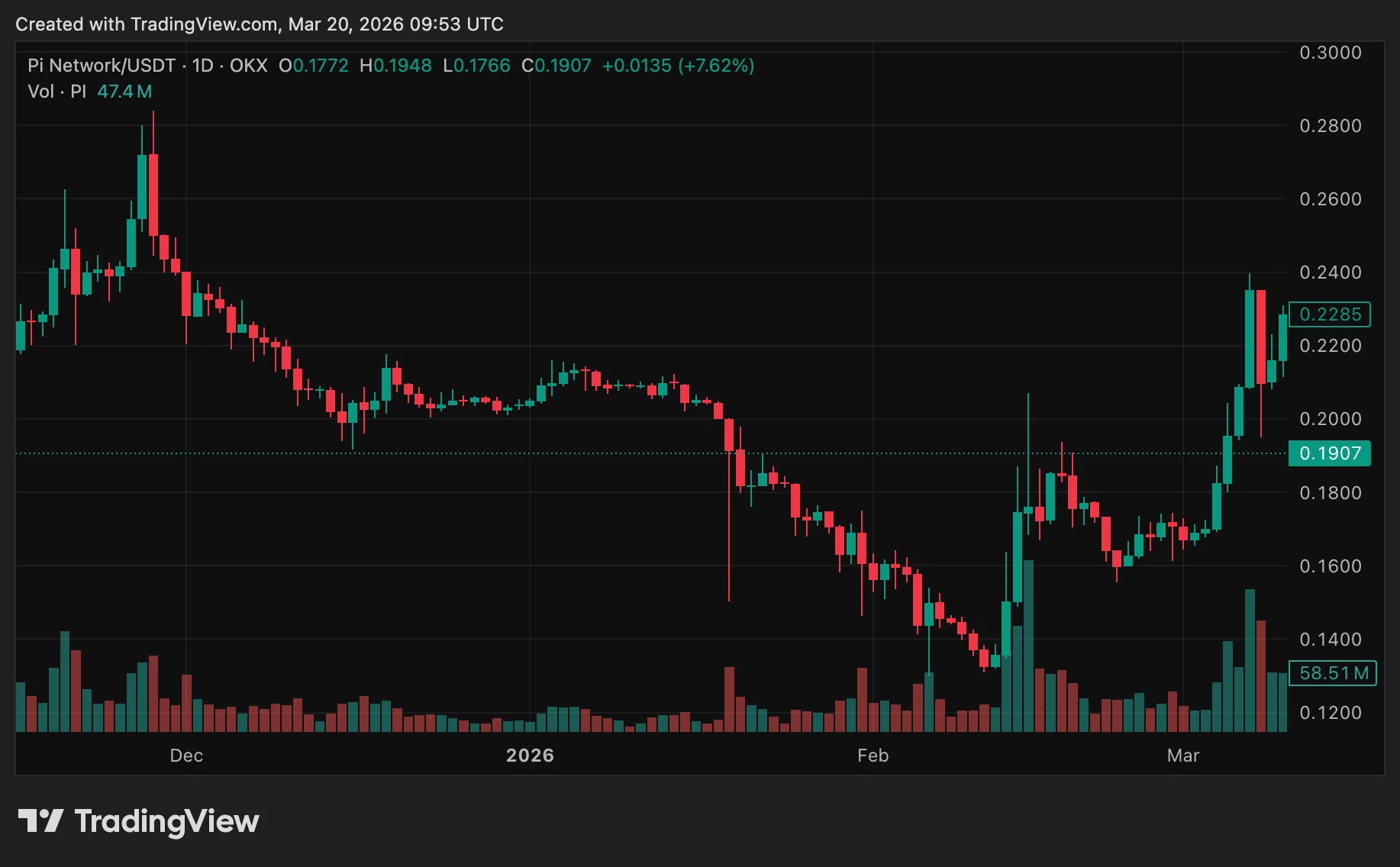
The rebound came during another active period for the Pi Network community. Price action remained sensitive to both technical updates and exchange-driven sentiment. Traders also watched supply data closely as new tokens moved toward release.
Unlock schedule remains in focus
PiScan data showed that the average number of tokens set to unlock over the next month stayed below 5.5 million per day. March 20 stood out from the rest of the schedule, with about 16 million coins expected to be released. After that, the remaining days of the month appeared less heavy in terms of supply.
Token unlocks often draw attention because they can affect short-term trading behavior. A larger release can increase the number of coins available on the market. A lighter schedule across most of the month may reduce some of that pressure, although price direction still depends on demand and broader market activity.
The latest unlock figures arrived as PI tried to recover from the recent sell-off. Market participants appeared to balance two factors at once. One was the recent decline after the Kraken listing. The other was the expectation that lower daily unlocks later in the month could limit added supply.
Protocol upgrades drive market attention
Pi Network has rolled out several updates in recent weeks. Version 19.6 arrived on February 20, followed by version 19.9 on March 4. The team also completed version 20.2 before March 14, which the community marks as Pi Day.
Version 20.2 drew attention because it set the base for smart contract capabilities. The team said the rollout would happen gradually and would focus on categories tied to utility-based product innovation and operations. That plan placed more attention on how the network may expand beyond its current structure.
The next step on the roadmap is version 21. The team has shared only limited details so far. Even so, it asked node operators to keep their systems updated as preparation continues. That message kept the coming release in focus as PI attempted to stabilize after recent volatility.
Disclosure: This article does not represent investment advice. The content and materials featured on this page are for educational purposes only.

U.S. lawmakers and the White House appear to be edging toward a political agreement on how stablecoin yields fit into the forthcoming crypto market-structure framework, potentially reviving momentum for the Digital Asset Market Clarity Act of 2025, commonly known as the CLARITY Act. Politico reported that an “agreement in principle” has been reached between Republican Senator Thom Tillis and Democratic Senator Angela Alsobrooks, both members of the Senate Banking Committee, signaling a potential path forward for the stalled bill.
While specifics remain sparse, Alsobrooks said the arrangement would aim to protect financial innovation while curbing the risk of widespread deposit flight. In particular, she noted that the deal contemplates prohibiting stablecoin yield on “passive balances,” a key constraint designed to limit how much yield can be earned on funds that aren’t actively deployed in productive channels. This balance—fostering innovation while addressing stability concerns—is central to the ongoing negotiations, according to the report.
Details of the prospective agreement have not yet been disclosed publicly, and Tillis indicated that the crypto industry should vet the language before it is finalized. Cointelegraph reached out to the White House for comment on the prospective deal, but no response was provided by publication time.
As this week unfolded, broader momentum around crypto regulation also resurfaced in remarks from lawmakers sympathetic to a comprehensive framework. Wyoming Senator Cynthia Lummis, a veteran advocate for digital-asset policy, told attendees at the DC Blockchain Summit that lawmakers are “so close” to passing a comprehensive regulatory framework. A Lummis spokesperson later indicated that a deal could materialize in the near term and that ethics language within the bill remains a focus for refinement.
The CLARITY Act, which envisions a clearer set of rules for digital assets and market structure, has long been viewed as a critical piece of policy parity following the GENIUS stablecoin framework’s enactment. Initially expected to glide through Congress, the bill slowed in January after major industry players, including Coinbase, voiced concerns about whether stablecoin issuers could share yields with token holders. Those objections underscored ongoing tensions between innovation incentives and consumer protection in a rapidly evolving sector.
For context, the broader regulatory conversation around crypto in the United States is inseparable from evolving views on stablecoins and their economics. The GENIUS framework, signed into law earlier, signaled a shift toward formalizing oversight, yet it also raised questions about how yield-bearing instruments would operate within a regulated ecosystem. The CLARITY Act’s fate hinges on resolving those questions—especially around yield, custody, and who ultimately benefits from crypto’s growth.
Key takeaways
- Agreement in principle reportedly reached between White House-adjacent lawmakers on the CLARITY Act, suggesting renewed momentum for market-structure reform.
- Core sticking point under discussion: whether stablecoin yield may be allowed on passive balances, with a proposed prohibition designed to prevent deposit flight and systemic risk.
- Industry insiders stress the need for vetting the language, as details are not yet public and could shift before formal introduction.
- Senator Cynthia Lummis’s comments reinforce optimism for a comprehensive regulatory framework, with ethics language under active negotiation.
- Banks argue that yield-bearing stablecoins threaten their market share and deposit stability, while White House aides have argued that the concerns may be overstated and could unleash capital into a regulated environment.
The path forward: what changes could mean for markets and users
The potential revival of CLARITY Act discussions carries significant implications for investors, issuers, and users across the crypto ecosystem. If lawmakers settle on a framework that permits regulated stablecoins but confines yield on passive balances, the industry could gain clearer guardrails for product design and risk management. For issuers, a well-defined regime would reduce uncertainty around how they structure yields, custody, and on-chain mechanics, potentially accelerating product development and partnerships with compliant financial institutions.
From an investor perspective, clearer rules could translate into a more predictable regulatory backdrop, which historically has been a driver of institutional participation. Yet the tension between innovation and stability remains palpable. Bankers have argued that even well-regulated stablecoins could siphon deposits away from traditional banks, a concern echoed by industry observers who emphasize the necessity of preserving financial stability while enabling responsible crypto innovation.
Patrick Witt, executive director of the White House Council for Digital Asset Policy, has framed these concerns as manageable within a robust framework. He told reporters that stabilization of the regulatory environment could attract fresh capital into the banking system if dollar-denominated stablecoins are legalized and properly overseen. The argument underscores a broader point: crypto’s growth could be compatible with, rather than a substitute for, traditional finance—so long as the rules incentivize prudent risk management and guardrails against misalignment between yields and liquidity.
The evolving dialogue also reflects a larger strategic dynamic: policymakers are trying to strike a balance between attracting innovation to the United States and preventing misalignment that could destabilize financial markets. As the process unfolds, the next milestones will likely hinge on the release of formal draft language, the incorporation of ethics provisions, and a final industry vetting period. The absence of a public response from the White House in this round reinforces how fluid the situation remains, with lawmakers and regulators aiming to map a path that satisfies both innovation advocates and traditional financial incumbents.
For readers tracking the regulatory arc, the CLARITY Act sits at the intersection of policy clarity and practical product design. It is not just about whether stablecoins can yield returns, but about who controls those returns, how they are distributed, and how risk is managed across on-chain and off-chain rails. The current negotiations suggest a greater willingness to align on principles—openness to innovation paired with guardrails to guard investors and the broader financial system.
As always, the market will respond to fresh details. Investors and builders should watch for the publication of the draft language, the contours of any ethics and governance provisions, and how banks and non-bank financial intermediaries are integrated into the new regime. The next days could reveal a more concrete timetable for CLARITY Act passage, or reveal additional frictions that delay a final vote. In either case, the discussion signals a pivotal moment for crypto governance in the United States.
In its early-phase outreach, Cointelegraph attempted to obtain comment from the White House about the prospective deal but did not receive a response by publication time. As the lobbying and policymaking process continues, observers will be attentive to how this agreement in principle translates into formal language and a concrete legislative path. The stakes are high: a clear, workable framework could unlock a wave of institutional involvement and user-facing crypto products, while also defining the boundaries of what constitutes permissible yield generation in a regulated market.

My 15-Year-Old Died By Suicide. Now I’m Urging Other Parents To Ask This Question
The SunRisers Hyderabad are at the greatest loss at the moment

Is the tyranny of small plates finally over?


-

 Tech5 days ago
Your Legally Registered ‘Motorcycle’ Might Not Count Under Proposed US Law
-

 Politics11 hours ago
Jenni Murray, Long-Serving Woman’s Hour Presenter, Dies Aged 75
-
 Tech4 days ago
Are Split Spacebars the Next Big Gaming Keyboard Trend?
-
Sports7 days ago
Why Duke and Michigan Are Dead Even Entering Selection Sunday
-

 Fashion12 hours ago
Weekend Open Thread: Adidas – Corporette.com
-

 Business5 days ago
Search for Savannah Guthrie’s Mother Enters Seventh Week with No Arrests
-

 Business7 days ago
US Airports Launch Donation Drives for Unpaid TSA Workers as Partial Government Shutdown Enters Fifth Week
-
Crypto World7 days ago
Coinbase and Bybit in Investment Talks: Could Bybit Finally Enter the US Crypto Market?
-
 Crypto World7 hours ago
NIO (NIO) Stock Plunges 6.5% as Shelf Registration Sparks Dilution Worries
-

 Business5 days ago
Australian shares drop as Iran war enters third week
-

 Business7 days ago
Country star Brantley Gilbert enters growing non-alcoholic beer market
-

 Politics3 days ago
The House | The new register to protect children from their abusers shows Parliament at its best
-

 Crypto World5 days ago
Crypto Lender BlockFills Enters Chapter 11 with Up to $500M in Liabilities
-

 News Videos3 days ago
RBA board divided on rate cut, unusually buoyant share market | Finance Report | ABC NEWS
-

 Fashion5 days ago
25 Celebrities with Curly Hair That Are Naturally Beautiful
-

 Tech1 day ago
inKONBINI Lets You Spend Summer Days Behind the Register
-

 Crypto World3 days ago
Canada’s FINTRAC revokes registrations of 23 crypto MSBs in AML crackdown
-
 Politics4 days ago
Real-time pollution monitoring calls after boy nearly dies
-

 Crypto World6 days ago
Crypto Losses Drop 87% in February, But Hackers Are Now Targeting People, Not Code
-
 NewsBeat2 days ago
Residents in North Lanarkshire reminded to register to vote in Scottish Parliament Election


You must be logged in to post a comment Login