
Crypto World
Hanwha taps Avalanche for tokenized securities platform in South Korea



Hanwha Investment & Securities has reportedly completed a tokenized securities platform supporting Avalanche as South Korea prepares to bring blockchain-based securities into its regulated capital markets system in February 2027.
Summary
- Hanwha has reportedly built a tokenized securities platform supporting Avalanche and Hyperledger Besu.
- South Korea’s tokenized securities amendments are scheduled to take effect on Feb. 4, 2027.
- The FSC plans to initially allow tokenization of certain funds, bonds, unlisted stocks and fractional securities.
- Hanwha has expanded its tokenization investments through stakes in Securitize and Digital Asset.
Seoul Economic Daily reported Sunday that the South Korean brokerage began developing the platform with blockchain technology firm FairSquare Lab in 2025. The system was built to operate across multiple networks, including Avalanche and enterprise Ethereum client Hyperledger Besu.
Development has come ahead of amendments to South Korea’s Electronic Securities Act and Capital Markets Act taking effect on Feb. 4, 2027. The changes will legally recognize distributed ledgers as securities registers and allow tokenized securities to operate within the country’s existing capital markets framework.
The Korea Securities Depository is preparing infrastructure capable of connecting with Avalanche, Hyperledger Besu and Hyperledger Fabric, giving securities companies several blockchain options as they build systems for the incoming framework.
Hanwha tokenized securities platform supports Avalanche
Hanwha started work on the platform last year and has since completed development, Seoul Economic Daily reported, citing blockchain industry sources.
FairSquare Lab developed the system with support for more than one distributed ledger. Alongside Avalanche, Hanwha can use Hyperledger Besu, an Ethereum-compatible blockchain designed for enterprise deployments.
Several South Korean financial firms have already used enterprise networks such as Hyperledger Besu for token securities infrastructure. Hanwha’s system extends that approach to Avalanche, where institutions can establish dedicated networks with controls over participation and validators.
The Korea Securities Depository is preparing its own token securities infrastructure to communicate with different blockchain technologies. Its published distributed-ledger requirements cover Avalanche, Hyperledger Besu and Hyperledger Fabric.
Participation in connected distributed ledgers will remain limited to approved institutions, including securities companies and the depository. The KSD would participate directly in the networks to oversee total issuance and electronic registration information.
Demand from financial companies influenced the inclusion of Avalanche, according to Seoul Economic Daily. A KSD official told the publication that several companies had requested support through industry consultations and existing projects.
Avalanche has already been used for regulated tokenized securities infrastructure in Japan. In July, Progmat moved its tokenized securities platform from Corda 5 to a dedicated Avalanche Layer 1, transferring every active security token project managed through its system.
Those projects represented more than 452 billion yen in underlying assets and issued securities at the time of the migration. Progmat said the change made the securities compatible with the Ethereum Virtual Machine while retaining existing institutional controls.
The Japanese platform redesigned its architecture so business functions were no longer tied to a single blockchain, using a separate layer between its applications and underlying ledger. Progmat said the structure would allow other networks to be connected later.
South Korea tokenized securities rules start in February
Hanwha’s platform arrives as South Korea finalizes the operating structure for tokenized securities before the February rollout.
The Financial Services Commission unveiled a three-stage implementation roadmap on Sept. 4, covering the types of securities that can initially be tokenized and how the market could expand after the amended laws take effect.
Crypto.news previously reported that South Korea’s tokenized securities roadmap will initially cover privately pooled money market funds and bonds reserved for institutional investors.
Unlisted shares issued through a trust structure and publicly offered fractional investment securities will qualify during the first stage as well.
The second phase would extend tokenization to all publicly offered securities. Regulators have not set a fixed date for that stage, with implementation depending on the results of the initial rollout and adoption of the required technology among market participants.
Under the final phase, the FSC plans to build onchain payment infrastructure linked to stablecoins, allowing the payment side of tokenized securities transactions to move onto blockchain rails.
Timing for the settlement system will depend partly on pending South Korean stablecoin legislation.
The roadmap follows amendments approved by the National Assembly in January that established a legal basis for distributed ledgers to serve as securities registers. Tokenized instruments will remain securities under existing financial laws instead of being treated as a separate asset class.
Regulators had been preparing the implementation details for months. In May, the FSC outlined its rulemaking schedule while studying how stocks, bonds and money market funds could be incorporated into the system.
The FSC said at the time that South Korea would not move its entire electronic securities market onto blockchain infrastructure at once. Authorities instead planned staged tests covering securities rights, trading, settlement and onchain payments.
Securities firms face infrastructure requirements
Financial companies connecting their distributed ledgers to the Korea Securities Depository will have to pass screening and operating tests under the KSD’s technical guidelines.
Reviews will cover issuance and circulation functions alongside contingency measures for system errors and other disruptions. The FSC has said securities firms must maintain operational stability comparable to the existing electronic securities system while using distributed ledgers.
Existing financial investment companies will not need a separate license solely for handling tokenized securities. Firms can conduct tokenized securities activities falling within their current licensed business areas.
Companies seeking to intermediate tokenized securities transactions on over-the-counter markets will need prior consultation with the Financial Supervisory Service.
Retail investors will face separate limits. The FSC has proposed capping individual subscriptions to non-monetary trust beneficiary certificates at the lower of 30 million won or 5% of the total issuance.
Annual net purchases by retail investors on each OTC exchange will be capped at 100 million won.
South Korea is preparing central market infrastructure at the same time. Samsung SDS has been developing a token securities platform for the Korea Securities Depository designed to connect blockchain records with the country’s existing electronic securities account infrastructure.
The platform is expected to support issuance, circulation checks, rights management and monitoring when the new system begins operating.
Hanwha expands its tokenization investments
Hanwha has spent several years building positions across companies involved in tokenization and blockchain infrastructure.
The conglomerate became Securitize’s largest shareholder after holdings spread across three affiliated entities reached a combined 9.6%, according to U.S. regulatory filings.
As reported in July, entities linked to Hanwha collectively held 15.69 million Securitize shares, putting the group ahead of Blockchain Capital and Securitize co-founder and CEO Carlos Domingo.
A private equity fund managed by Hanwha Asset Management accounted for a 5.9% stake. H Foundation, a Hanwha Systems subsidiary, held 3.1%, while Hanwha Investment & Securities controlled roughly 0.6%.
Hanwha Investment & Securities described its own purchase as a financial investment through a pre-IPO financing round. The brokerage left open the possibility of using the investment in its digital asset and real-world asset tokenization businesses.
Securitize provides tokenized asset infrastructure for financial institutions including BlackRock, Apollo, BNY, Hamilton Lane, KKR and VanEck. Its platform managed more than $4 billion in onchain assets and supported more than 650 tokenized funds earlier this year.
The company went public on the New York Stock Exchange under the ticker SECZ in July and issued blockchain-based versions of its common shares on Solana and Avalanche on the same day. The tokens represent the same NYSE-listed shares instead of a separate security class.
Hanwha Investment & Securities has put money into several other blockchain companies this year, including blockchain research and data company Xangle and Web3 infrastructure provider Kresus.
In July, the brokerage disclosed a 30 billion won, or roughly $22.3 million, investment in Digital Asset, the operator of the institutional-focused Canton Network.
Hanwha Investment & Securities has increased its position in South Korea’s crypto sector as well, investing another 597.8 billion won in Dunamu, the operator of Upbit, and raising its ownership stake to 9.84%.

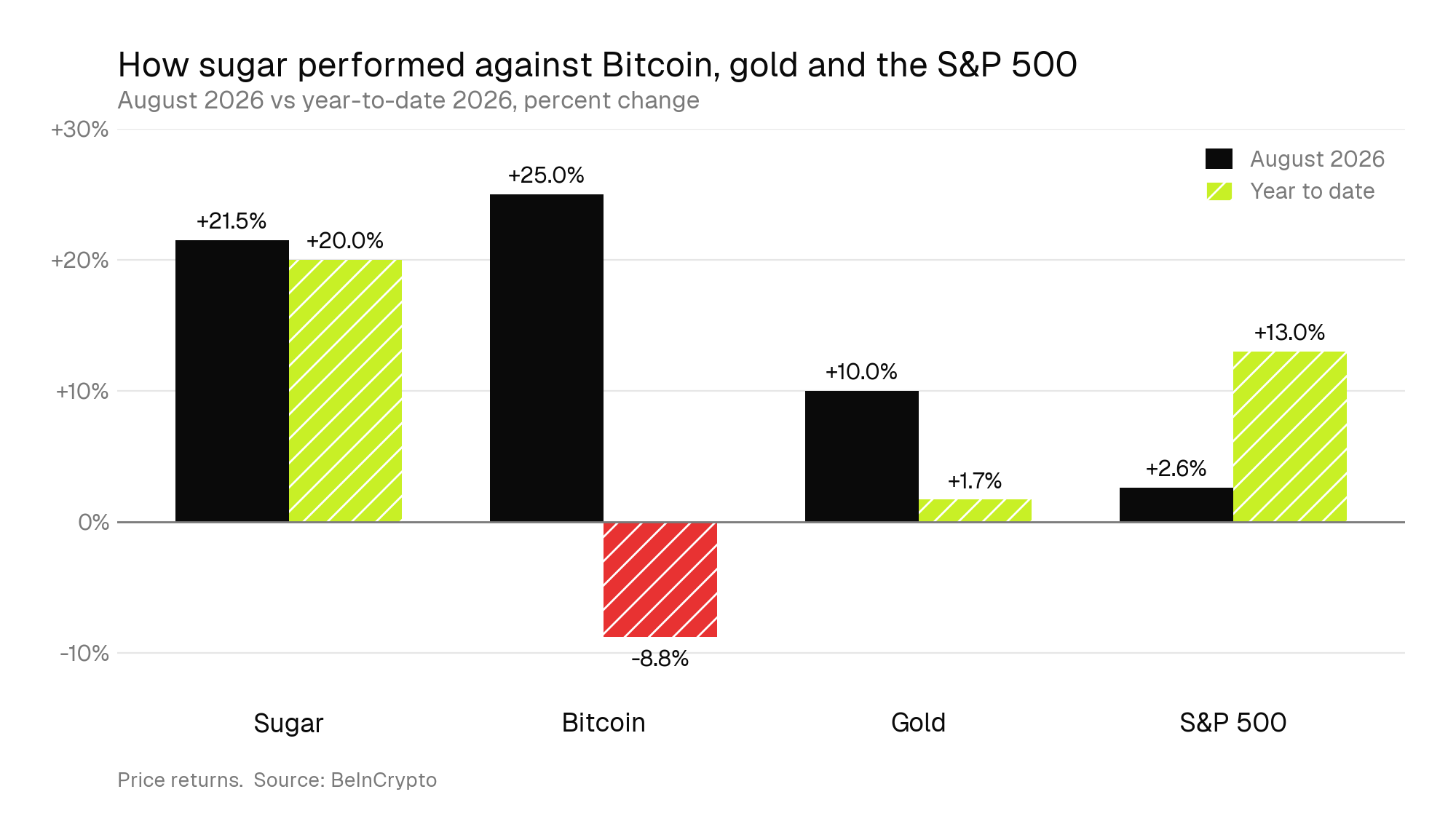
Raw sugar futures have gained roughly 20% in 2026, outpacing Bitcoin (BTC), gold, and the S&P 500 as the European Union, Brazil, and India signal tighter supply.
The rally accelerated last month, when the contract climbed 21.5% for its strongest monthly gain since October 2010. Bitcoin and gold both posted gains in August, yet neither holds a comparable lead this year.
Why the Sweetener Turned Scarce
The FAO Sugar Price Index averaged 106.4 points in August, up 11.9% from July and the highest reading since June 2025. The agency tied the move to a tighter 2026/27 supply outlook.
The agency pointed to several key pressure points:
- Heat and drought forced the EU to cut sugarbeet yield forecasts on already smaller plantings.
- El Niño clouded output prospects across Asia, while Brazil’s Center-South growing belt produced less.
- India’s duty-free raw sugar import plan added further pressure to international prices.
“The surge reflected expectations of lower sugar beet yields in the European Union due to adverse weather, concerns over the impact of El Niño on production prospects in key producing countries in Asia, lower sugar production in Brazil, and India’s announcement of duty-free raw sugar imports,” the report said.
Forecasters have moved in one direction. The European Commission expects EU output to fall 19% to 13.4 million metric tons in 2026/27. Citi projects a world deficit of 1.3 million tons, while Green Pool Commodity Specialists estimates 3.2 million.
Follow us on X to get the latest news as it happens
Bitcoin and Gold Won August, Sugar Won the Year
That kind of supply squeeze is the sort of setup crypto traders normally chase. So how does sugar stack up against Bitcoin and the rest of the market?
Bitcoin trades near $79,800 after gaining roughly 25% last month, its strongest stretch since November 2024. Even so, BTC sits about 8.8% lower for 2026.
Gold advanced about 10% in August, its best month since January. However, a slide in early September left it up just 1.7% for the year. The S&P 500 has climbed nearly 13% in 2026, well short of sugar’s 20% advance.

Sugar has therefore outperformed the flagship crypto asset, the classic inflation hedge, and the benchmark US equity index all at once. A soft commodity has quietly outrun three assets that dominate market coverage.
Meanwhile, Citi ranks sugar as its strongest bullish conviction across agricultural commodities on the Intercontinental Exchange. The bank now sees prices reaching 19 cents per pound within a quarter, citing shrinking inventories and worsening weather in India, Thailand, and the EU.
Rising oil prices give producers another reason to route cane into ethanol rather than export sugar. With crude above $90 a barrel, that diversion strengthens the case for higher prices.
Subscribe to our YouTube channel to watch leaders and journalists provide expert insights
The post A Better Trade Than Bitcoin or Gold in 2026 Is Sitting in Your Kitchen appeared first on BeInCrypto.


Developers want to voluntarily shut down the network, saying state actors and AI agents have made security too difficult, then redirect ONE emissions into an AI video business.
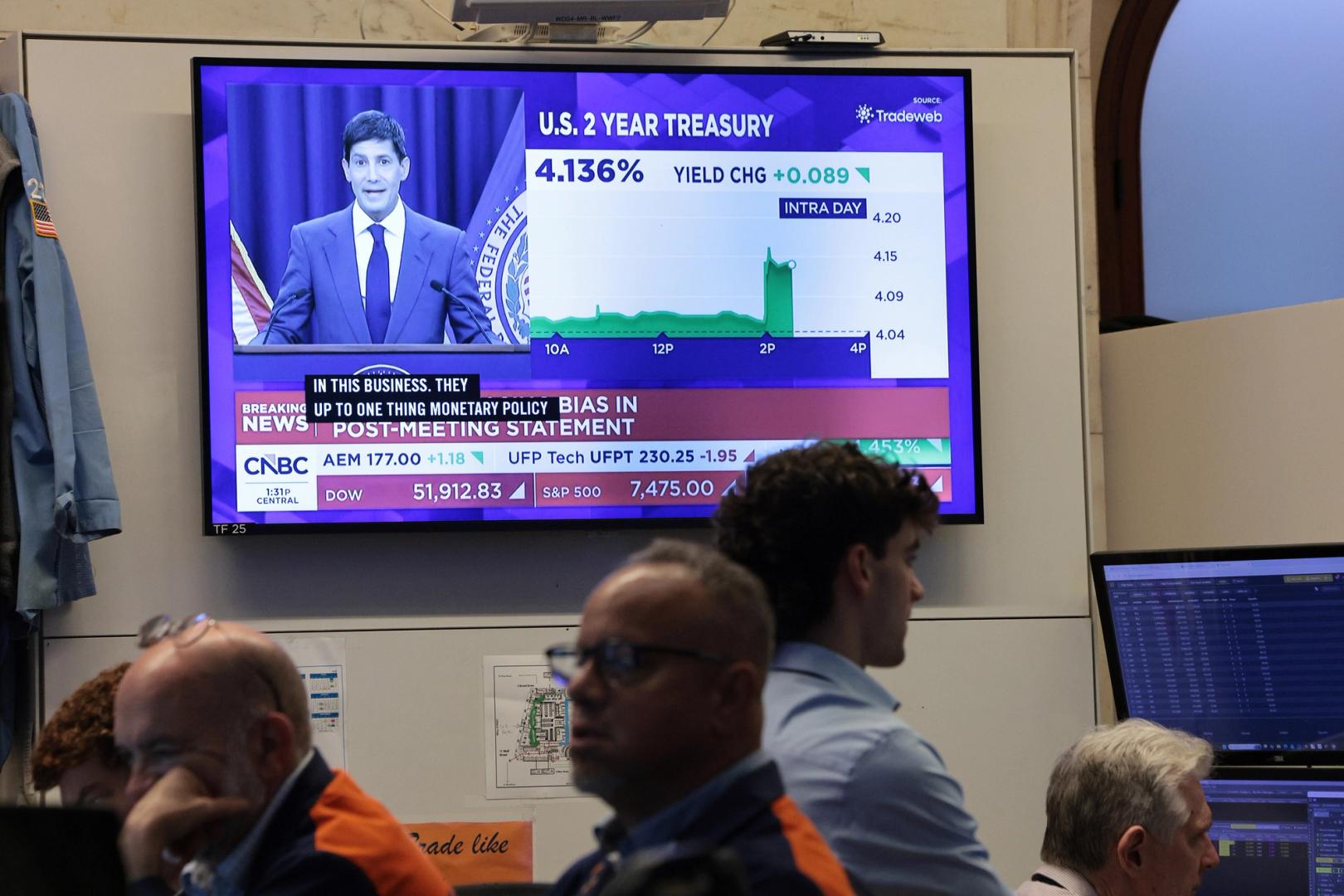
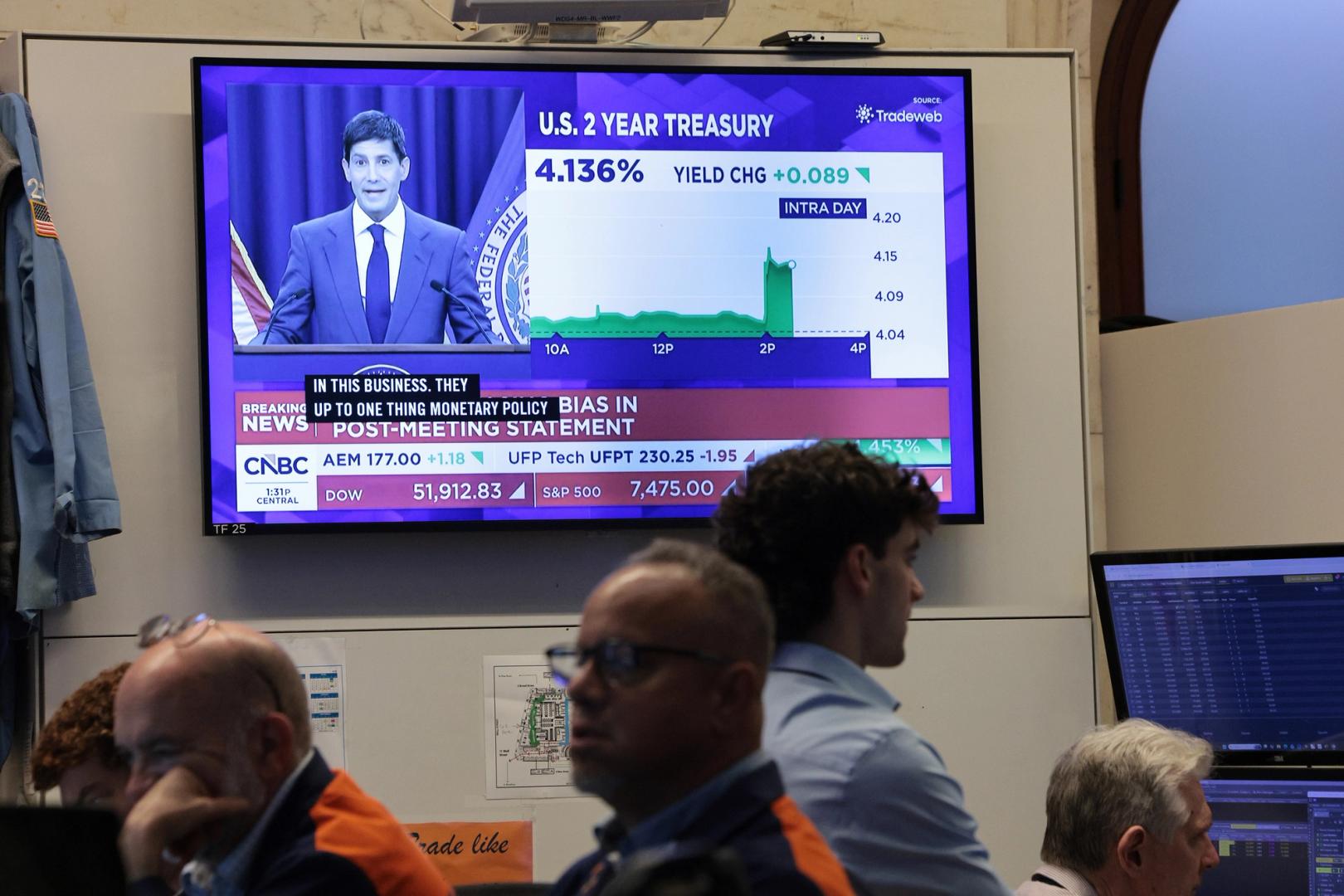
BTC fell on Friday and Treasury yields rose, but the hawkish market reaction looks overdone when compared to the largely steady Fed rate hike odds.

Key takeaways
- Cardano trades near $0.222 on Monday after rallying more than 15% last week.
- ADA’s long-to-short ratio of 0.94 shows slightly more bearish than bullish positioning.
- Positive funding rates and large whale orders provide mildly bullish signals.
- The RSI and MACD indicate strengthening upside momentum.
Cardano holds gains following 15% weekly rally
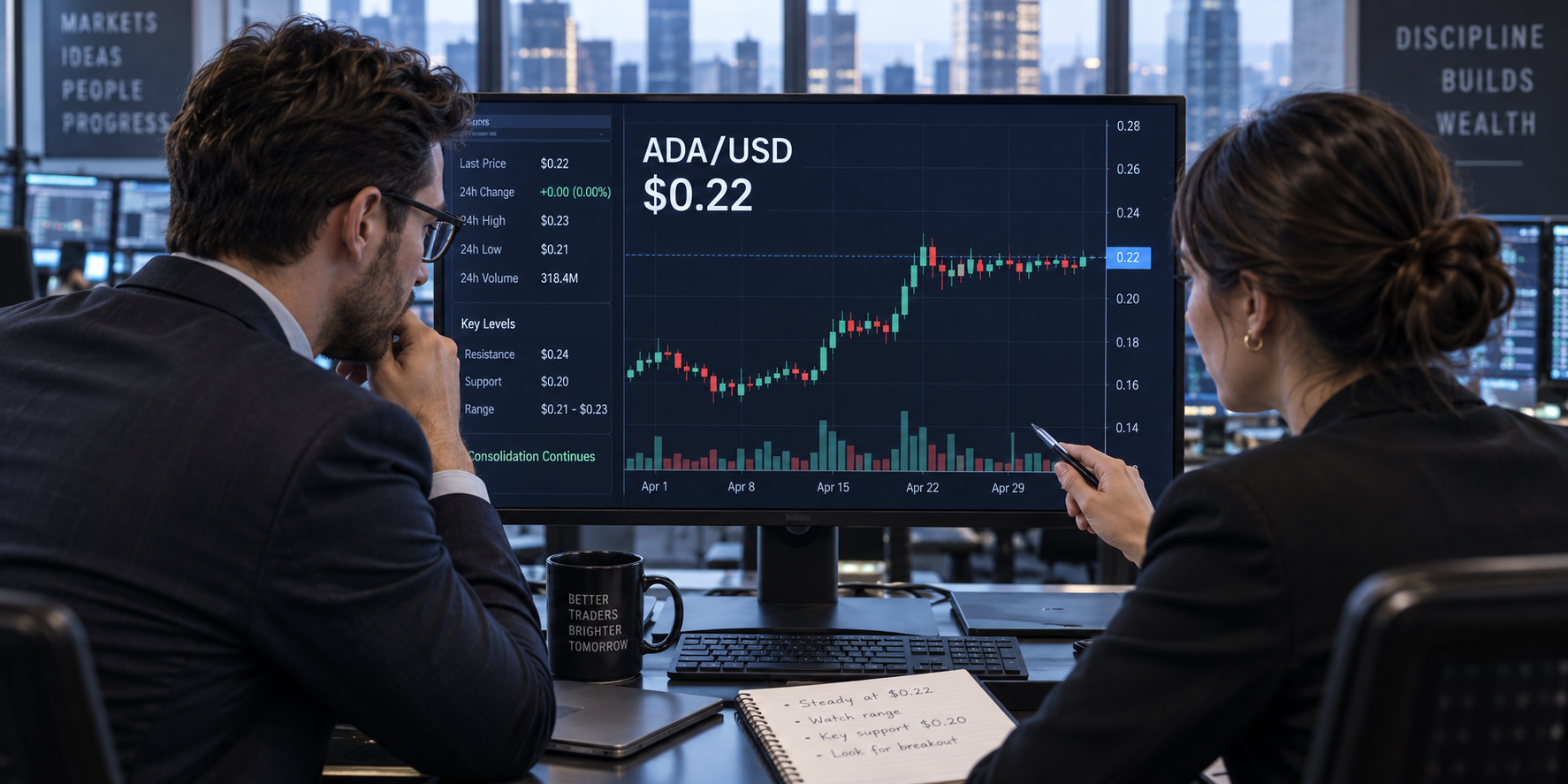
Cardano (ADA) trades around $0.222 on Monday after gaining more than 15% last week.
Mixed derivatives data and mildly positive on-chain indicators reflect cautious sentiment among traders. However, strengthening technical momentum suggests ADA could extend its recovery if buyers overcome a cluster of resistance levels between $0.231 and $0.245.
The token currently trades above its 50-day and 100-day exponential moving averages, reinforcing its improving short-term outlook.
Cardano’s derivatives market presents a divided picture on Monday. CoinGlass data shows ADA’s long-to-short ratio at 0.94. A reading below 1 means short positions outnumber long positions, indicating that slightly more traders are betting on a price decline than an advance.
However, the difference between bullish and bearish positioning remains relatively narrow, suggesting traders are cautious rather than strongly bearish.
Funding rates offer a more encouraging signal. Cardano’s open interest-weighted funding rate turned positive on Saturday and stood at 0.0097% on Monday.
A positive funding rate means traders holding long positions are paying those holding shorts, typically reflecting increased demand for bullish exposure. The shift suggests sentiment has improved following ADA’s double-digit weekly rally.
CryptoQuant’s summary data also points to cautiously optimistic sentiment around Cardano.
Large whale orders have appeared in ADA’s futures market, indicating increased activity among well-capitalized traders. Most other tracked metrics remain neutral, limiting the strength of the bullish signal.
The combination of large orders and neutral broader indicators suggests institutional or whale interest may be increasing, but the market has not yet established overwhelmingly bullish positioning.
Continued buying from large traders could support ADA’s recovery, while a decline in whale activity could leave the token vulnerable to profit-taking.
Cardano momentum indicators strengthen
ADA’s price remains above the 50-day and 100-day EMAs, both clustered around the psychologically important $0.200 level.
The Relative Strength Index stands near 61 on the daily chart. This reading reflects solid bullish momentum while remaining below the overbought threshold of 70, suggesting ADA may have room to rise before the rally becomes overstretched.
The Moving Average Convergence Divergence indicator has also turned marginally positive. This shift signals that buyers are gradually gaining control, although a descending trendline continues to act as dynamic resistance.
Together, the RSI and MACD support a constructive short-term outlook, but ADA must clear several overhead barriers to confirm an extended recovery.
Cardano faces immediate resistance at the 61.8% Fibonacci retracement near $0.231. A move above that level would bring the horizontal resistance at $0.236 into focus.
The 200-day EMA sits around $0.243, just below another key resistance level at $0.245. This concentration of technical barriers could attract profit-taking and slow ADA’s advance.
A sustained break above $0.245 and the descending trendline would strengthen the bullish case and potentially open the door to a more substantial recovery.

Conversely, failure to clear $0.231 could trigger a pullback toward the 50% Fibonacci retracement at $0.213.
Below that level, the 100-day EMA around $0.200 and the 50-day EMA near the 38.2% Fibonacci retracement at $0.195 form a broader support zone. Deeper support levels sit at $0.173 and $0.150.
ADA’s outlook remains cautiously bullish while the price stays above $0.200, but overcoming the $0.231–$0.245 resistance region will be crucial for extending the rally.
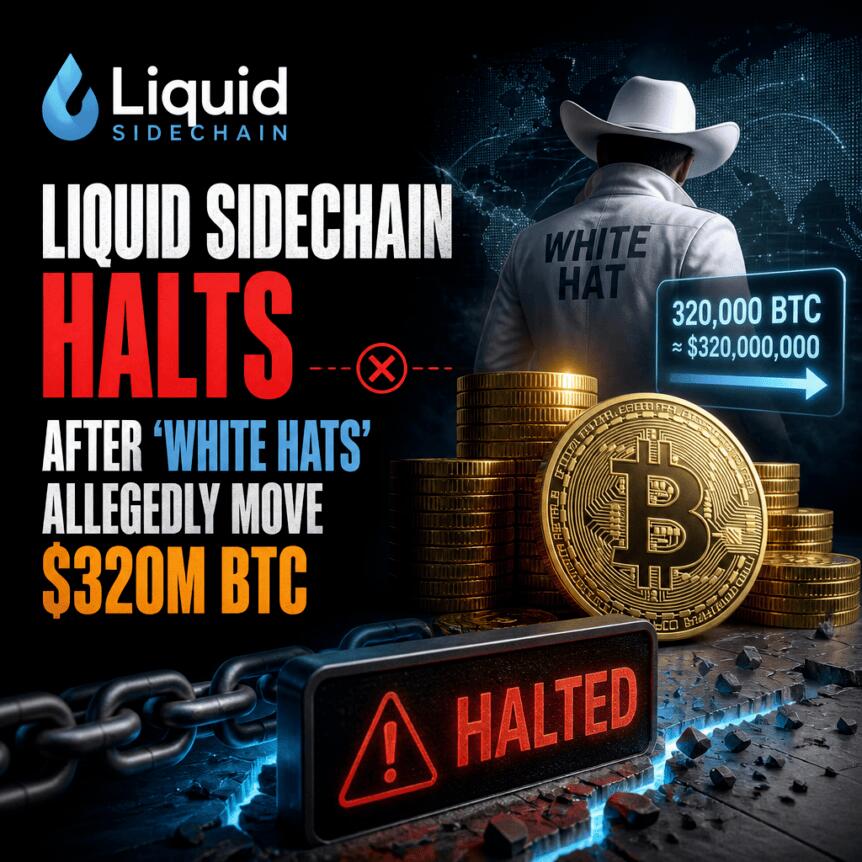
Bitcoin sidechain Liquid has paused operations after the federation that governs the network lost roughly 4,000 BTC worth about $320 million to actors who claimed they were “white-hat” hackers. Liquid’s operators disabled bridge nodes and moved to stop L-BTC deposits and withdrawals, while stressing that other Liquid-issued assets were not affected.
Blockstream, the technology provider behind Liquid, said it corresponded with the actors through signed on-chain messages. The actors told Blockstream they would return most of the Bitcoin after the underlying vulnerability was fixed and every node installed the patch—though, at the time of publication, the funds had not yet been returned.
Key takeaways
- Liquid disabled bridge nodes and halted new bridge transactions after about 4,000 BTC was withdrawn from its federation wallet.
- L-BTC deposit and withdrawal processing was halted or expected to be halted by exchanges, while other Liquid-issued assets reportedly continued without interruption.
- About 95% of the federation wallet’s roughly 4,200 BTC balance was reportedly moved to the actors.
- Blockstream says it communicated with the actors via signed on-chain messages, and the actors promised a return after patching and node updates.
Liquid pauses bridging as federation funds are pulled
Liquid said on Sunday that bridge nodes were disabled, preventing new transactions. It also indicated that exchanges were either halting or preparing to halt L-BTC deposits and withdrawals, reflecting the sidechain’s need to maintain custody and accounting for its pegged token.
Liquid emphasized that other assets issued on the network—such as USDT, DePix, and tokenized real-world assets—were unaffected by the incident. That distinction matters for users holding non-LBTC assets on Liquid, because it suggests the disruption is centered on the bridge and federation-controlled Bitcoin backing rather than on a broad contract or issuance failure across the sidechain.
The federation wallet withdrawal is described as roughly 95% of the federation’s approximately 4,200 BTC balance. Liquid uses Bitcoin held by its federation to back L-BTC issued on the sidechain. As a result, most of the Bitcoin backing remained under the actors’ control until it is returned, creating a direct liquidity and settlement problem for L-BTC as bridging is paused.
Negotiations via on-chain contact and PGP messaging
According to Blockstream’s reported engagement with the actors, communication took place through signed on-chain messages. Public details of the exchange were later compiled by Samson Mow, CEO of Jan3 and a former Blockstream chief strategy officer, who pointed to a timeline embedded in Bitcoin transactions.
In that account, the actors identified themselves as “white hats” and requested on-chain contact at around 11:30 a.m. Pacific time. Blockstream reportedly responded about an hour later, directing them to its security email. It then allegedly sent a PGP-encrypted message after further correspondence.
Later, the actors reportedly asked whether they could return most of the Bitcoin to a Blockstream address. They also demanded that the vulnerability be fixed and that every node update before the return transfer would occur. Blockstream’s reply—described as acknowledging the address question—was presented publicly by Mow, with the implication that Blockstream agreed to receive the funds at the designated location while also treating patching as a key prerequisite.
By one account relayed publicly, no additional messages were seen after roughly 9:12 p.m. Pacific time, and at the time of writing, the Bitcoin had not been returned.
Technical attribution: Elements bug vs. exchange systems
One issue raised in public discussion is where the exploited flaw originated. SideSwap—connected to peg-out operations—said the withdrawal went through its peg-out service as a customer order using its Peg-out Authorization Key (PAK), but it asserted that the key itself was not compromised.
SideSwap added that the L-BTC used in the transaction traced back to a bug in Elements, the open-source software underlying Liquid, rather than originating from SideSwap’s own systems. For participants watching the fallout, this distinction can affect how quickly exchanges and service providers can operationally reassure users: a failure rooted in underlying Liquid/Elements code generally requires broad patching at the protocol layer, while a failure tied to an exchange-specific signing component would typically be resolved by rotating or securing that component.
Liquid’s decision to disable bridge nodes and coordinate L-BTC deposit/withdrawal freezes aligns with the practical need to stop flows that depend on the federation-controlled Bitcoin backing while technical remediation is verified across the network.
What investors and users should monitor next
The immediate risk from this event is settlement and liquidity disruption for L-BTC, not necessarily for every Liquid-issued token. The key question now is whether the actors follow through on their stated plan to return most of the Bitcoin once a patch is confirmed and every node has updated.
Readers should watch for confirmations from Liquid and Blockstream that the patch is deployed across all nodes, that bridge nodes are restored, and—most importantly—that the returned funds actually reach the federation wallet. Until then, the sidechain’s peg mechanics remain constrained by the absence of the withdrawn Bitcoin backing.
Harmony will shut down the blockchain it launched in 2019 and migrate its native token, Harmony (ONE), to Ethereum (ETH) as a new ERC-20 asset.
The team cited threats from state actors and artificial intelligence (AI) agents. Validators can begin switching off their nodes on Thursday.
Harmony Follows BounceBit Out of the Layer 1 Business
The sunset caps a punishing stretch for the network. In August, an exploit minted roughly 4 billion ONE, about 26% of the total supply, and sent the token to a record low of $0.0005735.
Harmony answered with a rollback. The chain was a target long before that. A 2022 breach of its Horizon Bridge drained close to $99.6 million.
Meanwhile, the retreat follows a pattern. BounceBit also retired its Layer 1 in August after an attacker moved 286.5 million BB, reissuing the token on BNB Chain.
The sunset notice did not name the two events, though.
“The threats posed by state actors and AI agents are too great. Since our mainnet launch in 2019, our community has been resilient through attacks and changes—but it is time to fully sunset the Harmony network,” the team said.
Follow us on X to get the latest news as it happens
What Happens to ONE Holders
Holders do not need to claim anything. Harmony will snapshot balances at the final block, then airdrop new tokens to the same addresses on Ethereum.
Multisig safes, liquidity pools, and onchain applications cannot travel with them. Harmony urged users to exit every smart contract before September 10.
Validators may power down from 7 a.m. Pacific on September 10. A pool worth $1.372 million will pay those who sign an agreement and stay on as governors.
Total supply and the emission rate stay unchanged. Future emissions will instead fund an AI video venture Harmony calls The Remix Economy.
Harmony describes an open library of prompts and assets that fans fork and AI agents expand into dozens of stories per branch. It projects millions of remixes per day and will subsidize operators’ hardware for a year while requiring operators to stake tokens.

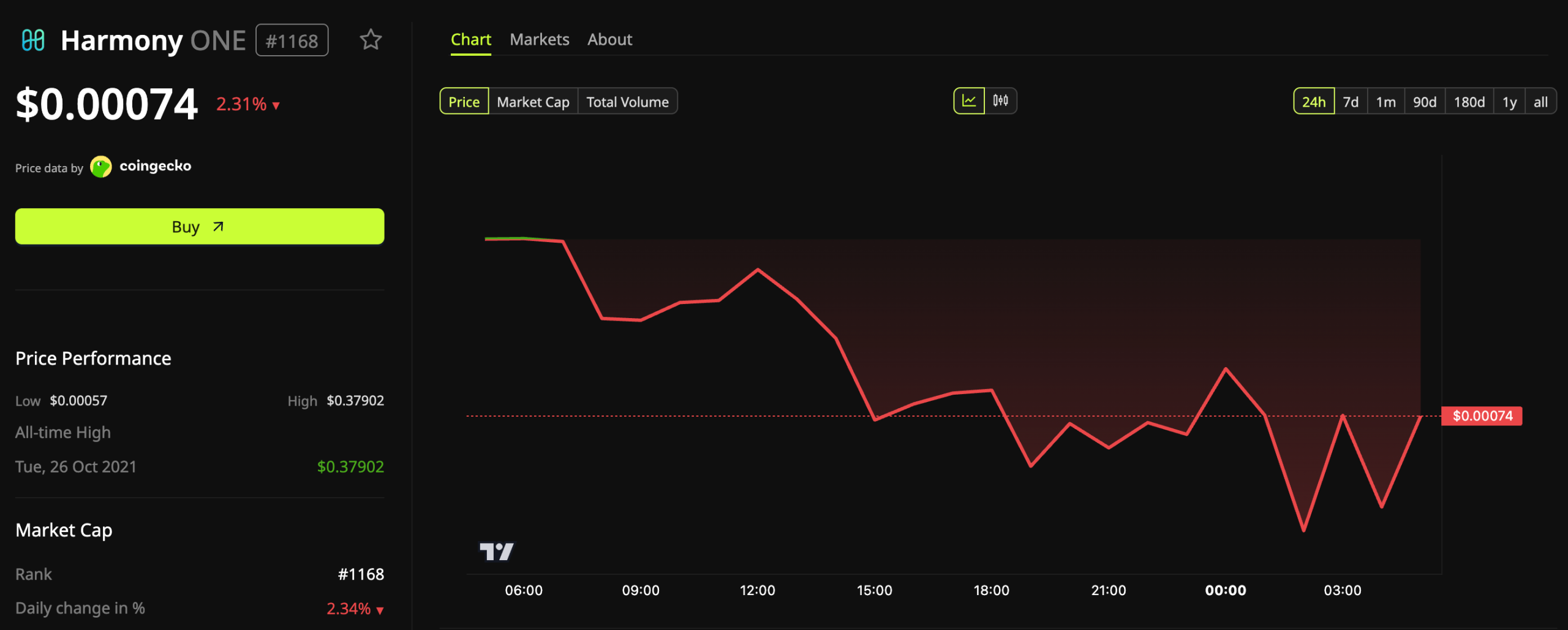
Meanwhile, the network’s native token has yet to see the benefits of this pivot. It has dropped over 2% in the past day.
ONE traded near $0.00074 on Monday, roughly 29% above the record low it set on August 12. Its market value is near $11 million, placing it outside the top 1,000 tokens by market cap.
Subscribe to our YouTube channel to watch leaders and journalists provide expert insights
The post Harmony Is Shutting Down. ONE Holders Get Ethereum Tokens Automatically appeared first on BeInCrypto.
Your look at what’s coming in the week starting Sept. 7.
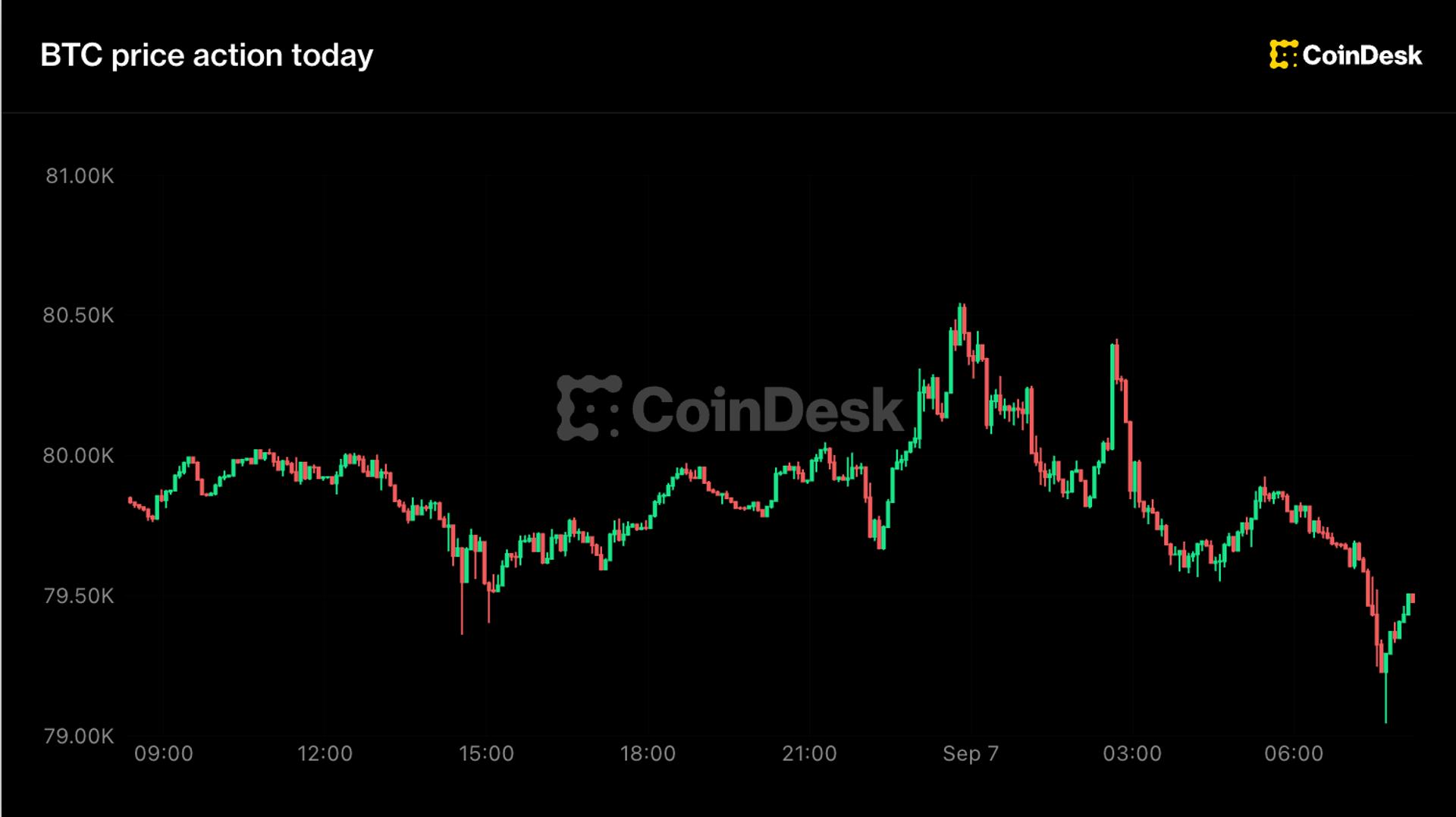
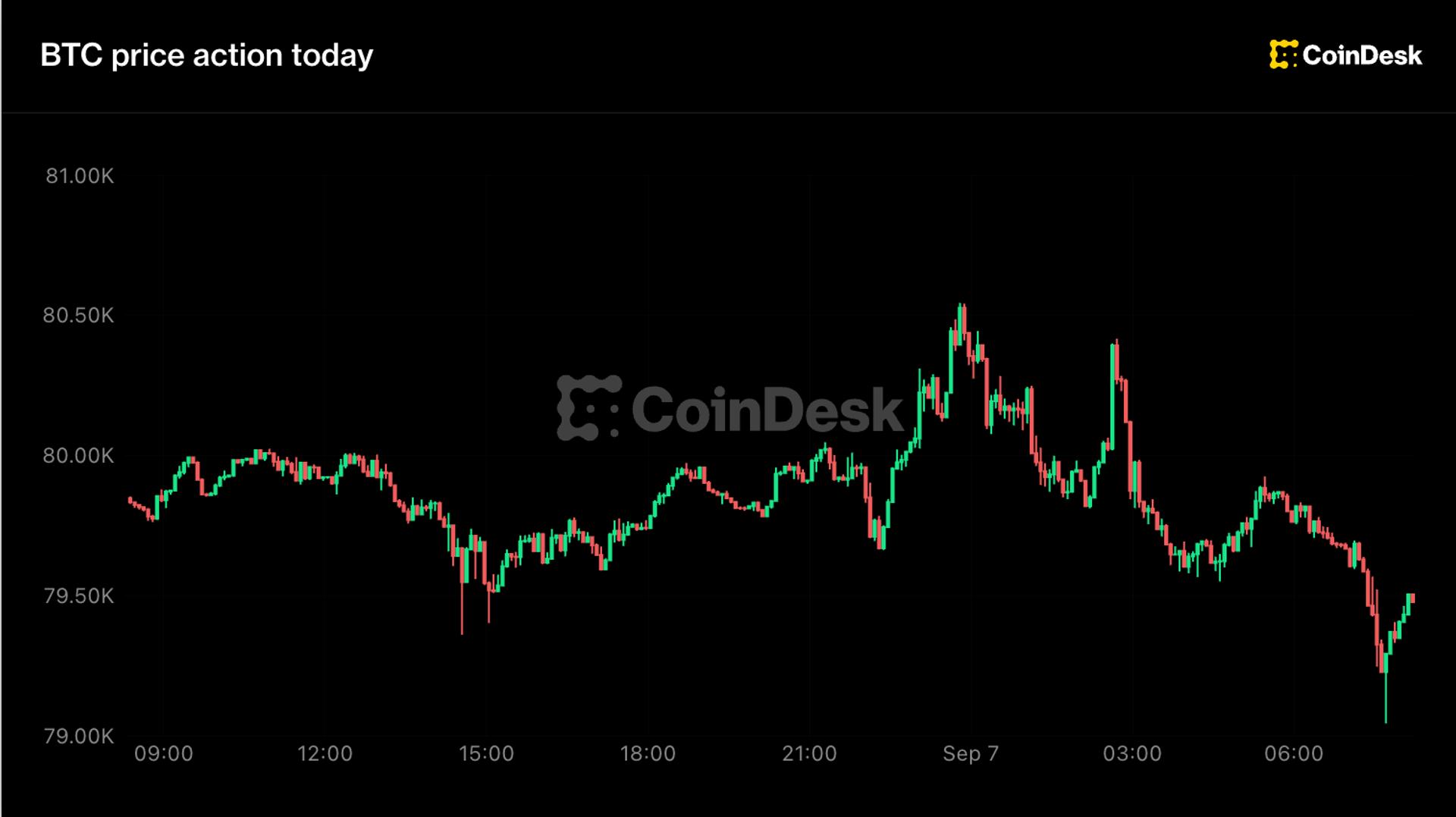
August payrolls came in three times above forecast and pushed September hike odds toward 58%. Equities sold it and crypto has not.
One billion tokens hit the open market on September 1. Instead of dumping, XRP rallied. The monthly escrow release that once spooked retail traders has become background noise for an asset that just logged its strongest on-chain quarter in years.
Summary
- Ripple released 1 billion XRP (worth roughly $1.38 billion) from escrow on September 1, 2026, reducing locked supply to 31.28 billion tokens.
- XRP climbed 28.5% in August, its best August since 2021, touching $1.70 before settling near $1.42, absorbing the escrow release without flinching.
- Payment volume on the XRP Ledger surged 521% in a single week in late August, driven by larger institutional-scale transfers rather than retail activity.
- Spot XRP ETFs, approved in March 2026, pulled in $153.55 million in August alone, with $150.28 million arriving in the final two weeks.
- RLUSD, Ripple’s stablecoin, crossed $2.32 billion in market cap, cementing its position as the dominant stablecoin on XRPL and a growing force on Ethereum.
For eight years, Ripple’s monthly escrow unlock has played out like clockwork. On the first day of every month, the XRP Ledger’s built-in escrow contracts release up to 1 billion XRP into Ripple-controlled wallets. Each time, a wave of anxious posts floods social media. Each time, traders brace for a dump that rarely arrives. And each time, the market moves on.
September 1, 2026, was no different in mechanics. Whale Alert flagged three transactions: 500 million, 400 million, and 100 million XRP, all released from escrow within minutes. The total haul was worth about $1.38 billion at the time. What was different, though, was everything around it.
XRP had just posted its best August in five years. Active addresses on the ledger were at all-time highs. Spot ETFs were pulling in nine-figure inflows. Ripple, freed from its four-year SEC battle, was signing deals with names like Deutsche Bank and JPMorgan. The billion-token release landed in a market that was not scared of it anymore, and for good reason.
This is the story of how the scariest thing about XRP became one of the least interesting.
The anatomy of a billion-token unlock
The escrow program dates back to December 2017, when Ripple locked 55 billion XRP into time-based contracts on the XRP Ledger. The idea was straightforward: remove the supply overhang that critics used to argue XRP was centrally controlled. The protocol would release up to 1 billion tokens on the first of each month, and anything Ripple did not sell would go back into escrow at the end of the queue.
Nine years later, the program has released tens of billions of XRP. Ripple’s escrow balance has dropped from 55 billion to 31.28 billion as of the September release, according to crypto.news data on XRPL escrow mechanics. But the net effect on circulating supply has been modest. Ripple typically re-escrows 700 to 900 million XRP each month, leaving only 100 to 300 million for operational use, OTC liquidity deals, or institutional payments.
The math is simple. A billion tokens sound alarming. But when 70 to 90 percent go right back into lockup, the actual supply entering the market is a fraction of the headline number. Historical data backs this up: monthly escrow releases have produced average 7-day price swings of negative 3.1% to positive 1.7%, with 30-day volume bumps of 15 to 22 percent. Not nothing, but not the catastrophic sell events that early critics predicted.
Compare that to traditional equity markets. When a public company’s lockup period expires and insiders can sell, the stock often drops 5 to 15 percent in a single session. XRP’s monthly unlock is milder than a typical IPO lockup expiry. The difference is predictability. Everyone knows when the tokens are coming. Everyone knows how many. And everyone knows Ripple’s historical re-escrow behavior. There is no information asymmetry, which means there is no panic.
What changed in 2025 and 2026 is the market’s understanding of this pattern. Early on, every unlock triggered panic selling by traders who saw a billion-token dump incoming. Now the unlock is priced in, discussed in advance, and absorbed within hours. The September release barely moved the needle. XRP was trading at $1.38 when the tokens unlocked and was at $1.42 five days later.
August’s 28% rally and what powered it
To understand why the escrow release landed softly, you need to understand what August looked like for XRP.
The token entered August near $1.10, having spent most of the summer in a grinding consolidation. By mid-August, something shifted. Whale accumulation picked up sharply. Spot ETF inflows, which had been trickling in since the March 2026 approvals, turned into a firehose. And on-chain metrics started flashing signals that had not appeared since the post-settlement euphoria of late 2025.
By August 28, XRP had touched $1.70, a 28.5% gain for the month and its strongest August performance since 2021. Nearly all the momentum arrived in the final two weeks, coinciding with $150.28 million in ETF inflows during that stretch. The total August ETF inflow figure hit $153.55 million, meaning the first half of the month contributed less than $4 million.
The pattern suggests institutional buyers, not retail speculators, drove the move. Retail volume on major exchanges actually declined slightly during the rally. The money came from funds, from ETF creation baskets, and from OTC desks serving institutional clients. That is a fundamentally different kind of buying pressure than the speculative waves that defined previous XRP rallies.
As of September 6, XRP sits near $1.42. It gave back some of the August gains, which is consistent with a historical pattern: in seven of the last eight years, XRP’s September has moved in the opposite direction of its August. Both times August rose, September fell, dropping 14% in 2020 and 19.6% in 2021. Whether that pattern holds this time depends on factors that previous Septembers did not have, including spot ETFs, institutional pipelines, and a Fed meeting on September 15 and 16 with fresh projections.
There is a reasonable argument that the seasonal pattern breaks this year. In 2020 and 2021, XRP had no ETFs, no regulatory clarity, and an active SEC lawsuit hanging over it. The buyers were almost entirely retail. This time, the August rally was driven by ETF creation baskets and OTC institutional flows. That type of capital does not rotate out on a monthly candlestick pattern. It stays because it was allocated with a multi-quarter or multi-year time horizon. The seasonal bears might be right on a short-term pullback, but calling for a 15 to 20 percent September decline requires ignoring every structural change that has happened in the past 12 months.
The 521% payment volume spike, explained
On August 26, the XRP Ledger recorded a payment volume surge that grabbed headlines: a 521.1% increase, pushing daily payment volume to roughly 488.4 million XRP. Numbers like that sound transformative. The reality is more nuanced, but still meaningful.
The number of individual payment transactions actually fell 10.5% that day, to around 388,900. What spiked was the size of each transaction. Fewer payments, but each one carrying dramatically more value. This points to institutional or enterprise-scale activity: treasury movements, cross-border settlement batches, or large OTC transfers.
Crypto.news reported that XRP had its best month since the SEC settlement, and the on-chain data supports that framing. Active addresses on the XRP Ledger hit 2.26 million in August, more than double July’s 1.02 million. The 7-day moving average for daily active addresses reached 1.34 million, a new all-time high, surpassing the previous record of 1.22 million set in March 2025.
Total value locked on the XRP Ledger rose from $32.31 million in July to $44.42 million in August. That figure looks small compared to Ethereum or Solana, but the trajectory matters more than the absolute number. XRPL was never designed to be a DeFi playground. Its core use case is payments, and the payment volume numbers tell a story of growing real-world usage at scale.
The 521% spike was not a sign that XRPL usage sextupled overnight. It was a sign that the entities using the ledger are moving bigger money. And bigger money, in the world of cross-border payments, is precisely what Ripple has been building toward for a decade.
Post-settlement Ripple is a different company
On August 11, 2025, the SEC and Ripple Labs jointly dismissed their appeals, ending a legal battle that had consumed both parties since December 2020. Ripple paid $125 million in fines. XRP spiked 11% on the news. But the real impact was not the price jump. It was what happened in the months after.
The settlement preserved a crucial judicial ruling: XRP sold on public exchanges does not qualify as a security. Institutional sales remain subject to securities law, but the secondary market got a clean bill of health. That distinction gave XRP a level of regulatory clarity that most competing tokens still lack, and it opened doors that had been bolted shut for years.
Within months of the settlement, Ripple closed its $1.25 billion acquisition of Hidden Road, creating the first crypto-native global prime brokerage. The deal, announced in April 2025 and closed in October, brought clearing, financing, and multi-asset market access under the Ripple umbrella. Hidden Road, now operating as Ripple Prime, has tripled in size since the acquisition, with client collateral doubling and average daily transactions climbing past 60 million.
Ripple did not stop there. The company went on an acquisition spree, spending roughly $4 billion total on deals including GTreasury, Rail, Standard Custody, and Palisade. It secured conditional approval for a national trust bank. It raised at a $50 billion valuation. This is not the scrappy fintech startup that spent four years fighting the SEC. This is a company building a full-stack financial infrastructure play, and the settlement made all of it possible.
The ETF effect and institutional pipeline
When the SEC approved multiple spot XRP ETFs in March 2026, skeptics wondered whether anyone would actually buy them. Bitcoin and Ethereum ETFs had the advantage of broad name recognition. XRP was the asset that had been labeled a potential security for years. Would institutional allocators touch it?
The answer came quickly. Within 60 days, cumulative inflows into spot XRP ETFs exceeded $1.5 billion, making them the fastest crypto ETF category to reach that milestone since the Ethereum ETF launch in 2024. Products from Bitwise, 21Shares, and Canary Capital led the pack.
The approval was made possible by two regulatory shifts. The CLARITY Act, which passed in early 2026, provided the legislative framework for digital commodity classification. And the SEC and CFTC jointly classified XRP as a digital commodity under the same framework used for Bitcoin and Ethereum spot ETFs. For institutional investors who had been waiting for unambiguous legal status before allocating, the ETF approvals were the green light.
The corporate treasury pipeline also opened. Evernorth now holds $1 billion in XRP reserves. Trident Digital Tech Holdings holds $500 million. Webus International added $300 million. These are not speculative bets by crypto-native funds. These are corporate balance sheet allocations, the kind of money that tends to stay put.
Institutional trading volumes spiked 208% following the settlement and ETF approvals, reaching $12.40 billion. That volume has not retreated much since. The market structure around XRP has shifted from retail-dominated to institutionally anchored, and that shift explains why events like the monthly escrow unlock barely register anymore.
RLUSD and the stablecoin flywheel
Ripple’s stablecoin, RLUSD, launched in December 2024. By September 2026, it has reached a $2.32 billion market cap, with $963 million issued on the XRP Ledger and $1.1 billion on Ethereum. For context, it took USDC years to reach that level. RLUSD did it in under two years.
The growth is not accidental. Ripple wired RLUSD directly into its institutional infrastructure. Through Ripple Prime (the rebranded Hidden Road), RLUSD became the first stablecoin to enable cross-margining between digital assets and traditional markets. Institutional clients using Ripple Prime can post RLUSD as collateral for FX, derivatives, and fixed income trades. That is not a crypto use case. That is a capital markets use case, and it explains why the stablecoin is growing so fast.
Transfer volume hit $18.4 billion in Q1 2026 alone, with more than 55% of that activity concentrated in March. RLUSD now holds 88% of all stablecoin liquidity on the XRP Ledger. Partnerships with Mastercard, JPMorgan, OKX, and Ondo Finance have expanded its reach into spot trading, derivatives, and tokenized finance.
The flywheel works like this: more RLUSD adoption means more transaction volume on XRPL, which means more demand for XRP as a bridge asset, which attracts more institutional participants, who bring more RLUSD demand. Each piece reinforces the others. And unlike speculative token demand, stablecoin-driven demand tends to be sticky. Once a treasury operation is built around RLUSD rails, switching costs are high.
The partnership map
Ripple’s partnership strategy in 2026 reads like a company that no longer needs to prove it belongs in traditional finance. It is already there.
February 2026 was the landmark month. Deutsche Bank integrated Ripple’s payment infrastructure for cross-border transfers and FX operations. Aviva Investors partnered to tokenize fund structures on the XRP Ledger. Societe Generale’s SG-FORGE launched its euro stablecoin EURCV on XRPL. Zand signed on for stablecoin solutions. Figment expanded custody services.
In July, the next wave arrived: Mastercard, JPMorgan, OKX, and Ondo Finance. Each partnership targets a different piece of the financial stack. Mastercard brings card network integration. JPMorgan brings interbank settlement. OKX brings exchange liquidity. Ondo Finance brings tokenized treasuries.
In Asia, Ripple secured its third Korean partnership with Jeonbuk Bank for cross-border transfers, following deals with K Bank and Kyobo Life Insurance. Ripple Payments now handles more than $15 billion a month through on-demand liquidity, working with over 300 institutions across 55 countries.
The XRP Ledger itself is evolving. Ripple’s FinTech Builder Program supports startups building institutional-grade applications on XRPL, providing structured support from product design through market launch. The ledger has processed 2 million AI-agent payments, a small but growing use case as autonomous agents need fast, cheap settlement rails. When two AI systems need to settle a microtransaction in under four seconds with fees measured in fractions of a cent, the XRP Ledger is one of the few networks that can do it without congestion or fee spikes. Upcoming protocol upgrades include enhanced privacy features, improved programmability, and greater interoperability with other blockchains using zero-knowledge technology, with on-chain lending as a major development focus.
The AI payments angle deserves attention. Ripple Payments handled $1.3 trillion in transactions in Q2 2025 alone, working with more than 300 institutions across 55 countries and moving roughly $15 billion a month through on-demand liquidity. If even a small fraction of AI-agent commerce routes through XRPL over the next two years, the transaction volume numbers will look very different than they do today.
Three conditions analysts say XRP needs for sustained recovery are all being met: regulatory clarity, institutional adoption, and network utility growth. The question is no longer whether XRP has a use case. It is whether the market will price the use case in before or after the next macro catalyst.
Why the escrow narrative died
There was a time, not long ago, when Ripple’s escrow program was the single biggest bear case against XRP. Critics argued that 1 billion tokens hitting the market every month created permanent sell pressure. They pointed to Ripple’s balance sheet, which held (and still holds) billions of XRP, as evidence that the company was dumping on retail investors.
That narrative has collapsed for three reasons.
The re-escrow rate has been consistent. Ripple has re-locked 70 to 90 percent of every monthly release for years. The net addition to circulating supply is a fraction of the headline number. In January 2026, Ripple re-escrowed roughly 700 million of the 1 billion released. The pattern has been so consistent that it is now baked into every serious valuation model.
The market grew into the supply. When the escrow program started in 2017, XRP’s total market cap was a fraction of what it is today. A billion-token release represented a meaningful percentage of daily volume. Now, with XRP’s market cap around $82 billion and daily trading volume regularly exceeding $1 billion, the monthly release is proportionally much smaller. The market can absorb it without disruption.
Institutional demand created a floor. ETF creation baskets, corporate treasury allocations, and Ripple Prime’s collateral requirements all create ongoing demand for XRP. That structural demand did not exist in 2018 or 2020 or even 2024. It exists now, and it acts as a sponge for newly unlocked supply.
The escrow unlock is not bullish or bearish. It is a scheduled, predictable, well-understood event in a market that has moved far beyond the point where supply-side scares drive prices. The September 1 release proved it. A billion tokens were unlocked, and XRP went up.
What to watch
The next few weeks will determine whether XRP holds its August gains or follows the historical September pattern of giving them back. Here are the signals that matter:
Fed meeting, September 15 to 16. The Federal Reserve’s September meeting includes fresh economic projections and a dot plot update. A dovish shift could fuel risk assets broadly. A hawkish surprise would pressure everything, including XRP.
ETF flow direction. August saw $153.55 million in inflows. If September maintains that pace, XRP likely holds above $1.35. If flows reverse, the $1.20 support level comes into play.
RLUSD market cap trajectory. The stablecoin crossing $2.5 billion would signal continued institutional adoption. A stall or decline would raise questions about the sustainability of the XRPL flywheel.
On-chain activity. Active addresses staying above 1.3 million on a 7-day average would confirm that August was a structural shift, not a temporary spike.
Ripple Prime volume. Hidden Road’s rebranded prime brokerage is processing 60 million daily transactions. Growth in that number is a direct proxy for institutional engagement with the Ripple ecosystem.
October 1 escrow release. Another billion tokens will unlock. The market’s reaction, or lack of reaction, will confirm whether the escrow narrative is truly dead or merely dormant.
Disclaimer: This article is for informational and educational purposes only. It does not constitute financial, investment, or legal advice. Cryptocurrency investments carry significant risk, including the potential loss of principal. Always conduct your own research and consult with a qualified financial advisor before making investment decisions. Published September 7, 2026.
How much XRP did Ripple unlock from escrow on September 1, 2026?
Ripple released exactly 1 billion XRP from escrow on September 1, 2026, in three separate transactions of 500 million, 400 million, and 100 million tokens. At the time of release, the tokens were worth approximately $1.38 billion. Ripple’s total escrow balance dropped from 32.28 billion to 31.28 billion XRP as a result.
Does the monthly escrow unlock crash XRP’s price?
Historical data shows that monthly escrow releases produce average 7-day price swings of negative 3.1% to positive 1.7%. The September 2026 release had essentially no negative impact, with XRP trading higher five days after the unlock. Ripple typically re-escrows 700 to 900 million XRP each month, so the net supply entering the market is 100 to 300 million tokens, not the full billion.
What are XRP spot ETFs and how much money have they attracted?
The SEC approved multiple spot XRP exchange-traded funds in March 2026, including products from Bitwise, 21Shares, and Canary Capital. Within 60 days, cumulative inflows exceeded $1.5 billion. In August 2026 alone, spot XRP ETFs attracted $153.55 million in new investment, with the majority arriving in the final two weeks of the month.
What is RLUSD and why does it matter for XRP?
RLUSD is Ripple’s USD-backed stablecoin, launched in December 2024. It has reached a $2.32 billion market cap, with tokens issued on both the XRP Ledger and Ethereum. RLUSD matters because it drives transaction volume on XRPL, creates demand for XRP as a bridge asset, and serves as institutional collateral through Ripple Prime. It holds 88% of all stablecoin liquidity on the XRP Ledger.
How did the Ripple SEC settlement affect XRP?
The SEC and Ripple jointly dismissed their appeals in August 2025, ending a legal battle that began in December 2020. Ripple paid $125 million in fines. The settlement preserved a key ruling: XRP sold on public exchanges is not a security. This gave XRP regulatory clarity that most competing tokens lack and opened the door for ETF approvals, corporate treasury allocations, and institutional adoption at scale.
What caused the 521% payment volume surge on the XRP Ledger?
On August 26, 2026, payment volume on the XRP Ledger spiked 521.1% to roughly 488.4 million XRP. The surge was driven by larger individual transactions rather than more transactions (the number of payments actually fell 10.5%). This pattern suggests institutional or enterprise-scale activity, such as treasury movements or cross-border settlement batches, rather than a broad increase in retail usage.
What is Ripple Prime and how does it relate to XRP?
Ripple Prime is the rebranded Hidden Road, which Ripple acquired for $1.25 billion in 2025. It is the first crypto-native global prime brokerage, offering institutional clients clearing, financing, and access to FX, derivatives, fixed income, and digital asset markets. Hidden Road migrated its post-trade activity to the XRP Ledger and uses RLUSD for cross-margining, creating structural demand for both XRP and RLUSD.
Is XRP a good investment right now?
XRP is in a stronger structural position than at any previous point in its history, with regulatory clarity, approved spot ETFs, institutional adoption, and growing network utility. The token trades near $1.42 as of September 6, roughly 57% below its July 2025 cycle high of $3.65. Whether it represents a good investment depends on individual risk tolerance, time horizon, and portfolio allocation strategy. This is educational analysis, not investment advice.
Is XRP a good investment right now?
XRP is in a stronger structural position than at any previous point in its history, with regulatory clarity, approved spot ETFs, institutional adoption, and growing network utility. The token trades near $1.42 as of September 6, roughly 57% below its July 2025 cycle high of $3.65. Whether it represents a good investment depends on individual risk tolerance, time horizon, and portfolio allocation strategy. This is educational analysis, not investment advice.
Crypto World
“Largest Altcoin Bull Run of All Time Is Loading,” Analyst Says as Key Charts Break Out

The altcoin market may be approaching a turning point after several major gauges broke out of year-long downtrends, according to analyst Matthew Hyland.
His charts suggest smaller cryptocurrencies are gaining ground against Bitcoin and traditional risk assets, although rising leverage also increases the odds of a painful correction.
Altcoin Gauges Break Long Downtrends
In a post published on September 7, Hyland said ETH, Total 2, Total 3, and OTHERS had all confirmed the end of their year-plus declines by forming higher highs. Let’s break that down a bit.
Total 2 tracks altcoins excluding Bitcoin, while Total 3 removes both BTC and Ethereum. OTHERS excludes the top 10 cryptocurrencies and therefore focuses more heavily on smaller tokens.
Hyland questioned whether the moves were simply a “bear market rally,” then followed up with a more bullish assessment.
In another post, the market watcher wrote, “The largest #Altcoin Bull Run of all time is loading,” and argued it could be “much larger than 2020-2021.” The accompanying OTHERS.D/SPX chart provided the basis for that view. It compares the dominance of cryptocurrencies outside the top 10 to that of the S&P 500.
The ratio has been falling for years after reaching a major peak during the 2017-2018 ICO period, and the chart places the current reading near the lower end of that long decline. A lower oscillator on the chart has also moved into an oversold area around 20-30, and the setup is being compared with the overbought reading near 80 seen in 2017.
But that does not prove that a new altcoin cycle has started. It does show why Hyland believes the market may be approaching a period of relative strength for smaller tokens.
There are already signs of increased trading activity, with data from Coinalyze showing altcoin perpetual futures open interest had overtaken Bitcoin’s for the first time since December 2024.
Leverage Adds Another Side to the Trade
The shift comes as altcoins outside the top 10 have pushed their combined market capitalization to $213 billion, up nearly 12% since the start of September.
Zcash has been one of the dramatic examples. Yesterday, as CryptoPotato reported, it surpassed $1,200, up 370% from its early-June low. Its market cap also moved above $20 billion, putting it ahead of Hyperliquid (HYPE) and Dogecoin (DOGE), both of which were still at the time of writing, having gained over 11% in 24 hours.
DOGE itself and BNB also posted strong moves in that period, with the former climbing 12% from its Friday low to $0.094, while BNB went close to $780, its highest level since early February.
But there’s a warning. ZEC perpetual futures open interest reached $2.7 billion per CoinGlass, while its move above $1,200 triggered $24 million in liquidations in the last 24 hours, more than $17 million of that being shorts, and historically, similar shifts in derivatives positioning have come right before corrections in mid-cap tokens.
That leaves two competing signals: the breadth of the altcoin move is improving, and several long-term charts have broken higher, but at the same time, leverage is building quickly. However, as things stand, Hyland sees the first as evidence that the market could be entering a much larger altcoin phase.
The post “Largest Altcoin Bull Run of All Time Is Loading,” Analyst Says as Key Charts Break Out appeared first on CryptoPotato.

Ana Navarro Asks for Grace Over Expired Botox, Gray Roots

Where is the money hidden? #shorts

Care home nurse suspended after declaring patient dead in 32 seconds and refusing to perform CPR





-

 Fashion3 days ago
Weekend Open Thread: Beyond Yoga
-
 Crypto World3 days ago
Bitcoin price stalls near $82K as key resistance holds
-

 Politics3 days ago
Best Gaming Laptops, CPUs, TVs, And Keyboards To Upgrade Your Set Up For GTA VI
-

 Tech3 days ago
The Birds Outside, Drawn For You Automatically
-

 Crypto World3 days ago
IMF Says El Salvador’s Post-Review Bitcoin Purchases Used No Public Funds
-
 Crypto World3 days ago
U.S. added stronger than expected 162,000 jobs in August as labor market bounced back
-

 Sports3 days ago
Alexandre Pato consortium’s Northampton Town investment approved
-

 Sports3 days ago
Commanders’ Chig Okonkwo is a top breakout fantasy football candidate
-

 Sports3 days ago
Golden Eaglets Drawn in Group B for 2026 WAFU B U17 Championship
-
 Crypto World3 days ago
XRP price breaks falling channel as bulls target $1.53
-

 Politics3 days ago
A new European chapter for Gibraltar
-

 Politics3 days ago
How To Avoid Winter Colds: 4 Everyday Habits That Spread Germs, Says Pharmacist
-

 Politics3 days ago
The House | Bin the lectures, bring gossip and be ready to banter: how the new PM should prepare for his Trump encounter
-

 Crypto World3 days ago
From warning to listing: UK’s largest retail investment platform opens access to crypto ETNs
-

 Crypto World3 days ago
FinCEN flags $12.7B tied to Southeast Asia crypto investment scams
-

 Tech3 days ago
A Worthy Android Ereader, With Some Tradeoffs
-

 Politics3 days ago
33 Cosy Autumn Home Decor Ideas: Blankets, Pumpkin Decorations, And Candles
-

 Tech3 days ago
How To Edit Claude’s Memory
-

 Crypto World3 days ago
Trezor Data Breach Impacts 67,000 More US Customers
-

 Tech3 days ago
beyerdynamic AVENTHO Y Debuts at IFA 2026 and Makes Wireless Headphones Less Disposable
You must be logged in to post a comment Login