Crypto World
How Hyperliquid Is Challenging Crypto Exchange Hierarchy

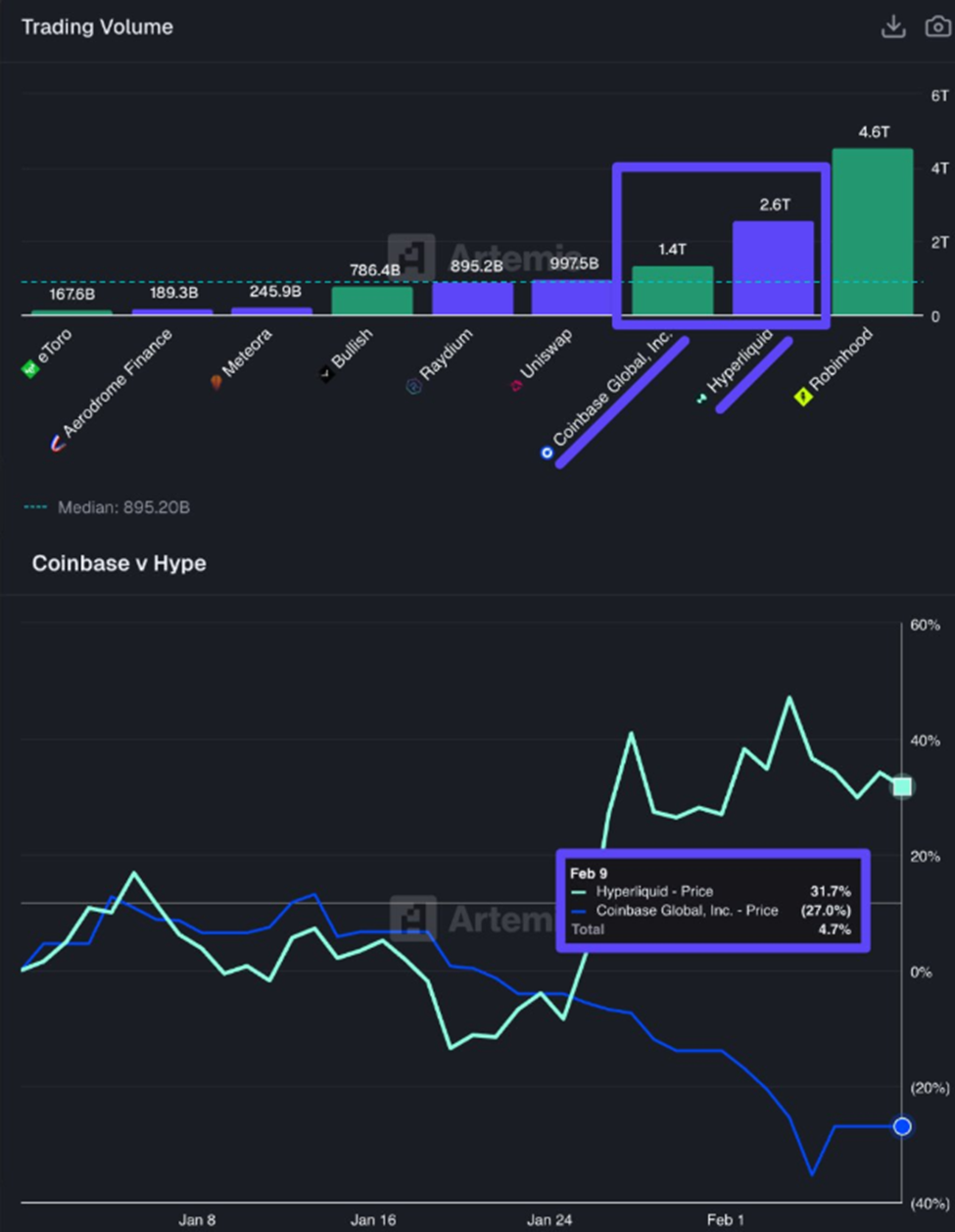
New data from Artemis shows that Hyperliquid, an on-chain derivatives platform, has overtaken Coinbase in notional trading volume. Notably, Coinbase is revered as the largest US-based exchange by trading volume.
Hyperliquid’s ascent is forcing the crypto industry to reassess long-held assumptions about where serious trading activity takes place.
Hyperliquid Surpasses Coinbase in Trading Volume
According to Artemis, Hyperliquid recorded roughly $2.6 trillion in notional trading volume, compared with $1.4 trillion for Coinbase, meaning nearly double the activity.
Sponsored
Sponsored
The figures mark one of the clearest signals yet that high-performance on-chain platforms are capturing a growing share of global derivatives flows.

This milestone fuels debate over whether decentralized trading venues are beginning to rival centralized exchanges in scale and influence.
“Hyperliquid is quietly outgrowing Coinbase. Trading Volume (Notional): Coinbase: $1.4T Hyperliquid: $2.6T That’s nearly 2x Coinbase’s volume… from an on-chain exchange. And the market is noticing,” Artemis stated.
The gap is not limited to trading volumes. Year-to-date performance data shows a striking divergence between the two companies.
Hyperliquid is up 31.7%, while Coinbase is down 27.0%, creating a 58.7% performance gap in just a matter of weeks.
For analysts, this divergence reflects deeper structural shifts rather than short-term volatility. Anthony, a data analyst at Artemis, emphasized that underlying metrics are increasingly driving market sentiment.
The comment highlights a growing belief among market observers that liquidity, execution quality, and user activity are beginning to shape valuations and investor narratives. This is as opposed to brand recognition alone.
Sponsored
Sponsored
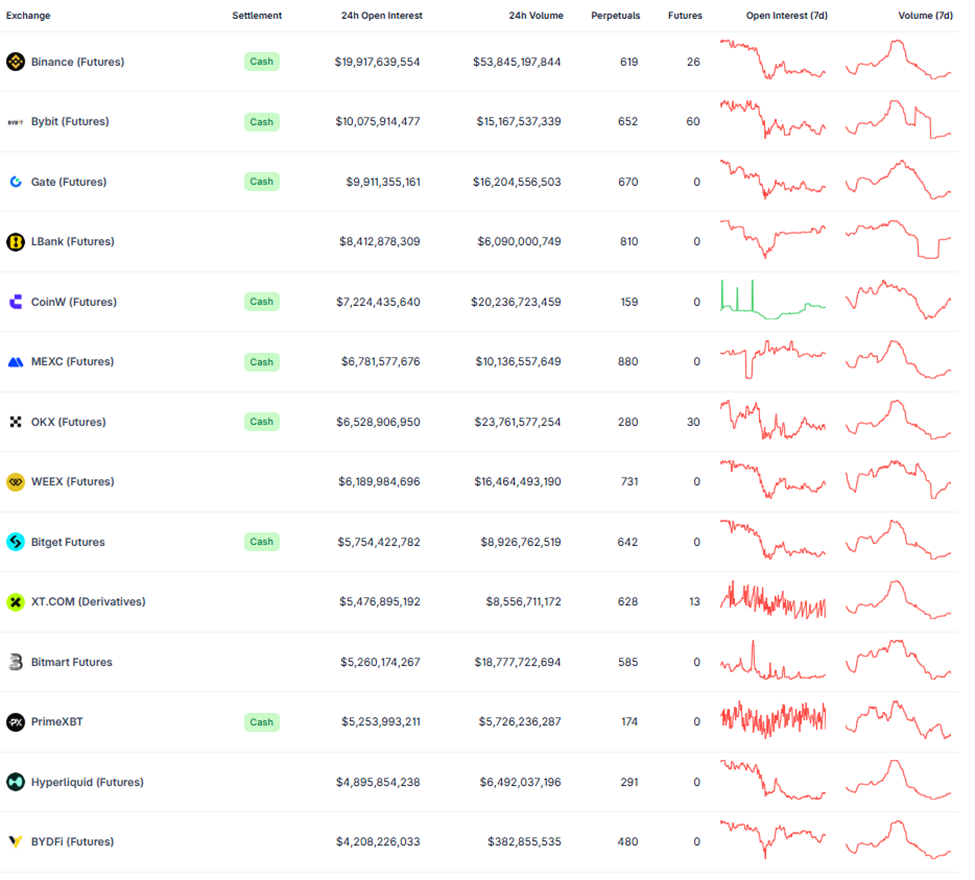
One question raised by the data is why Binance, the world’s largest crypto derivatives exchange, was not included in the comparison.
The reason lies in what the figures are measuring and the narrative surrounding them. The Artemis analysis focused on Hyperliquid overtaking Coinbase, a major centralized exchange whose business is heavily weighted toward spot trading and regulated markets.
The milestone, therefore, highlights a shift in market structure rather than a direct challenge to the largest derivatives venue.
Binance remains the dominant player in perpetual futures trading by a wide margin. Coingecko data shows the exchange processing over $53 billion in daily derivatives volume. This exceeds Hyperliquid’s $6.4 billion.
Hyperliquid’s Surge Sparks a New Fight Over Who Controls Crypto Trading
The data has sparked strong reactions across the crypto community, highlighting long-standing tensions between centralized and decentralized trading models.
Sponsored
Sponsored
To some, Hyperliquid’s rise is a validation of on-chain markets, while others used the moment to criticize centralized exchanges.
Such criticism reflects a broader sentiment among some traders who argue that transparent, on-chain systems reduce counterparty risk and improve market fairness.
However, defenders of centralized exchanges note that they still dominate in fiat on-ramps, regulatory integration, and retail accessibility.
Perhaps the most significant implication of Hyperliquid’s growth is how it is changing the competitive sector. Rather than being compared primarily with other perpetual DEXs, the platform is increasingly being measured against major centralized derivatives venues.
Hyperliquid Hub, a community account tracking the ecosystem, argued that the platform has already pulled ahead of most decentralized rivals.
“Hyperliquid is now absolutely dominating the on-chain derivatives sector. At this point, people are only comparing Hyperliquid with major centralized exchanges like Binance, OKX, and Bybit. Other perp DEXs have already been left far behind by Hyperliquid in terms of technology, liquidity depth, and overall performance,” they wrote.
Sponsored
Sponsored
If this perception continues to gain traction, it could mark a turning point in how traders evaluate execution venues. It is less about whether they are centralized or decentralized and more about liquidity, speed, and reliability.
While the Coinbase exchange remains one of the largest and most regulated crypto platforms globally, Hyperliquid’s momentum highlights how quickly market structure can shift in the digital asset space.
Still, challenges exist, after Coinglass data showed major gaps between volume, open interest, and liquidations across perp DEXs.
As BeInCrypto reported, there remains disagreement about the lack of standards for defining “real” activity in decentralized derivatives markets.
Additionally, industry executives like Kyle Samani also bear reservations about the integrity of Hyperliquid, saying the DEX is in most respects, everything wrong with crypto.
You must be logged in to post a comment Login