
Crypto World
Hut 8 shares jump over 30% on news of $9.8 billion AI data center lease

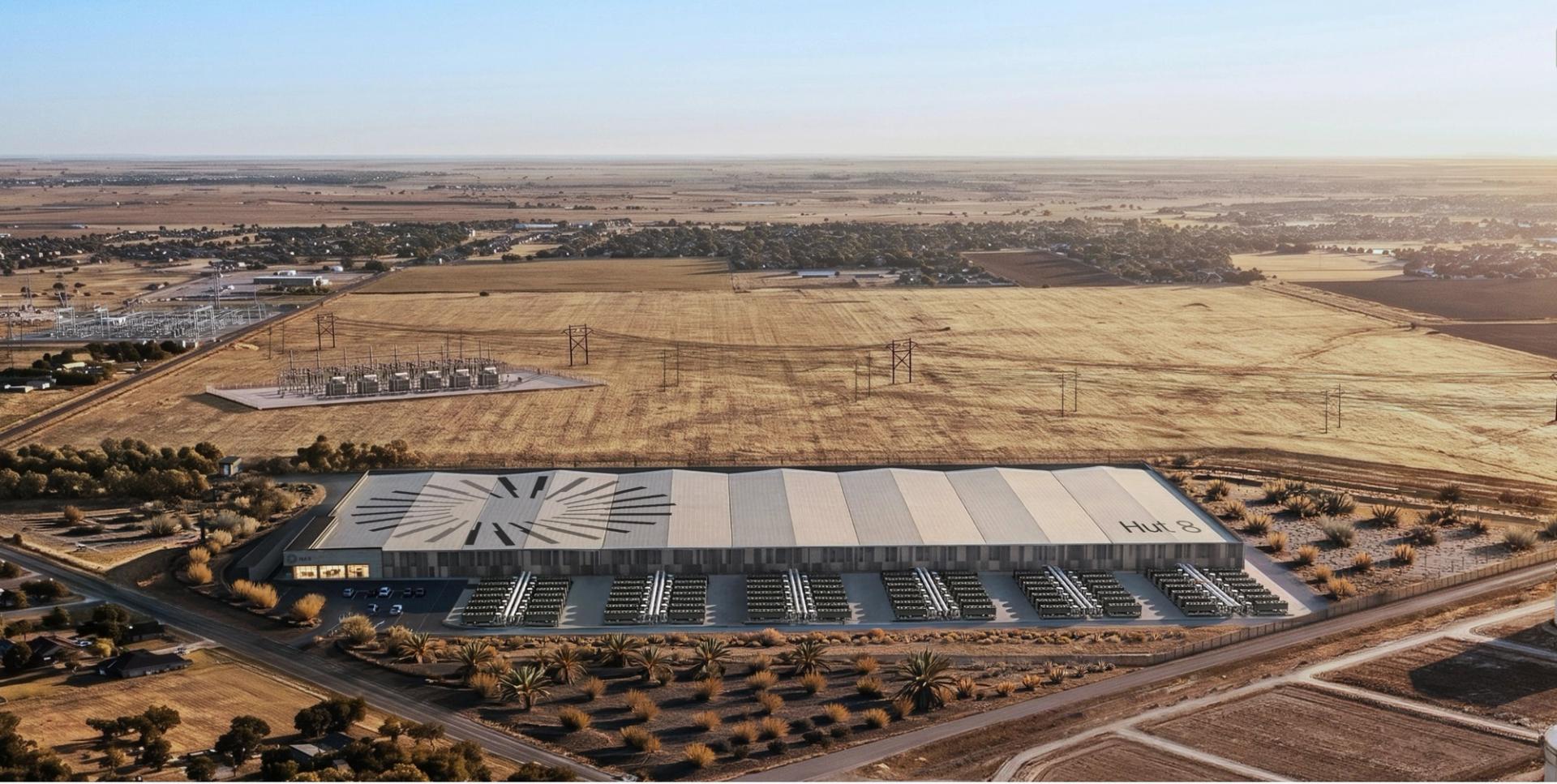
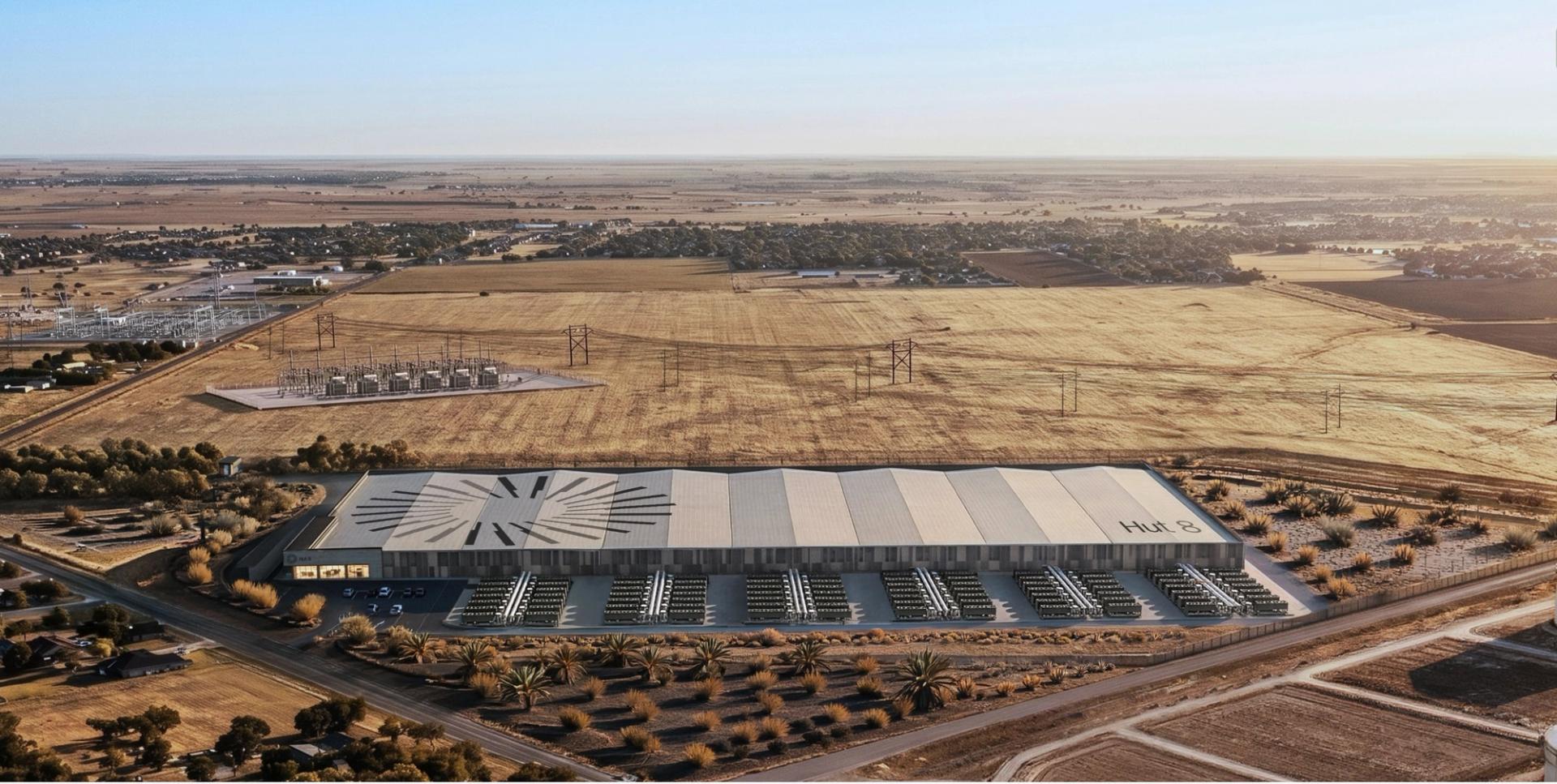
Hut 8 (HUT) shares surged nearly 30% Wednesday as the company announced a 15-year, $9.8 billion lease tied to a large-scale AI data center project in Texas. Hut 8 also said the lease structure includes options that could increase total contract value to about $25.1 billion if all renewal terms are exercised.
The Beacoin Point campus was originally intended for bitcoin mining but was repositioned for AI infrastructure as demand for high-performance computing capacity accelerated, Hut 8 said.
The company’s pivot comes at a time when publicly listed bitcoin miners face increasingly challenging economics as they face losses of approximately $19,000 per coin produced, and are rapidly pivoting toward artificial intelligence and high-performance computing infrastructure. More than $70 billion contracts have been signed, and some miners could derive up to 70% of their revenue from AI by the end of 2026
Hut 8 said it has commercialized the first phase of its Beacon Point campus in Nueces County through a 352-megawatt (MW) IT capacity lease with a high-investment-gerade tenant. The agreement supports AI training and inference workloads and marks Hut 8’s second major AI data center deal.
The lease brings hut 8’s total contracted AI data center capacity to 597 MW, with aggregate base-term contract value reaching about $16.8 billion. The company said it expects the Beacon Point lease to contribute roughly %655 billion in annual net operating income once stabilized.
Hut 8 said the new funding stream will support its AI infrastructure platform, including development of additional capacity at Beacon Point and growth across its broader pipeline. The campus has secured 1,000 MW of utility capacity, with initial energization expected in Q1 2027.
“Beacon Point underscores why we start with power and maintain flexibility across end markets,” said Chief Executive Asher Genoot. “Operating across multiple applications lets us underwrite assets that single-use-case developers cannot, then redirect them toward higher-value commercialization pathways as demand evolves.”
The company said the project is designed to NVIDIA’s DSX reference architecture and will be developed with partners including American Electric Power, Vertiv and Jacobs. Initial delivery of the first data hall is expected by Q3 2027, it added.

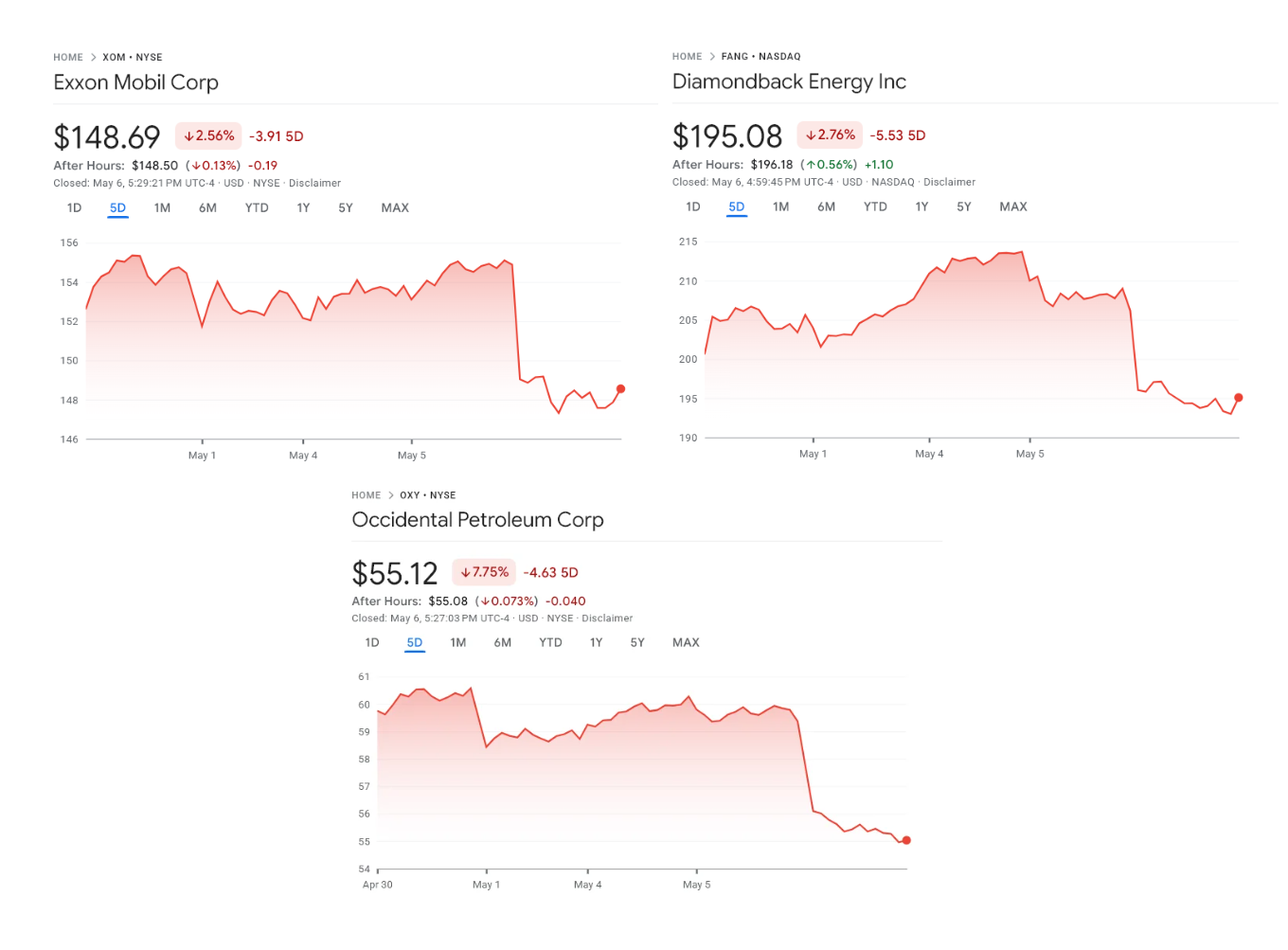
Oil stocks trade at a $40 premium to where JP Morgan thinks 2026 fundamentals settle. The gap is pure geopolitical risk from the US-Iran conflict.
Three names just reported Q1 2026 results this week, each handling the bifurcation differently. One is the diversified hedge. The other is a high-beta upstream bet. And the last one is the most exposed if the premium fades. May 2026 is when each chart picks a side.

ExxonMobil (NYSE: XOM)
ExxonMobil is the most diversified oil stock on this watchlist. The stock corrected from a high of $176.48 to a low of $141.96 as US-Iran de-escalation pulled the geopolitical premium out of oil prices.
Renewed tensions and Project Freedom then triggered a bounce. Currently, XOM trades at $154.88 inside an ascending channel that began on April 17, bounded by two upward-sloping trendlines.
Want more insights like this? Sign up for Editor Harsh Notariya’s Daily Newsletter here.
However, the structure is not yet bullish. It remains a corrective continuation pattern until XOM closes above the upper trendline. The price action from April 17 to May 5 shows clear volume divergence.
The stock trended higher within the channel, while volume trended lower over the same period. Lower volume on a rising trend signals buyers are not fully committed.

The volume signal aligns with the Q1 2026 fundamentals. Despite a 15% EPS beat at $1.16, ExxonMobil’s free cash flow dropped to $2.7 billion in Q1 from $5.6 billion in Q4 2025. The cash conversion weakness mirrors the chart’s hesitation.
The immediate level to watch is $155.67. A daily close above the upper trendline brings the upper trendline into play. Conversely, a break below $147.52 confirms a breakdown, opening the path to $142.48 (0.382 Fibonacci), $138.41 (0.5 Fibonacci), and $134.34 (0.618 Fibonacci) on a deeper correction.
In May 2026, XOM’s recovery channel will resolve in step with the geopolitical premium that drove the original correction and the Project Freedom bounce.
Diamondback Energy (NASDAQ: FANG)
While XOM stays hesitant, FANG is the high-beta oil stock setup. The chart shows two bullish flag-and-pole patterns stacked together.
The first pole ran from January 7 to March 27, resolving with an April 21 breakout. A second, smaller pole began on April 17 and is consolidating now. If the upper trendline of the current flag breaks, followed by a move above $214.58, the setup projects roughly 26% upside potential.
The economic logic hangs on that level. FANG’s Q1 2026 print delivered a 13% EPS beat at $4.23 and raised oil production guidance to 520+ MBO/d.
However, full-year cash capital expenditures were lifted from $3.75 billion to $3.90 billion. The increased spend into a potentially weakening oil tape is why the post-earnings reaction has been cautious. The stock dropped 3.51% on May 6 to $206.18.

Two technical projections stack on the chart, one for each pole, both converging near the $211-$214 zone.
A daily close above $214.58 opens the path to $222.17 and $236.29 next. A break below the $203-$204 level confirms weakness, $192.43 opens a deeper correction, and a break of $187.20 invalidates the latest bullish pattern.
For May 2026, FANG’s chart shows whether the higher 2026 spending plan pays off if oil prices fade. A break above $214 says the bet works; a break below $187 confirms the market’s caution about spending more into weaker oil.
Occidental Petroleum (NYSE: OXY)
While XOM and FANG offer plays on the geopolitical premium holding, OXY is the oil stock pick most exposed if it fades. JP Morgan forecasts Brent crude averaging around $60/bbl in 2026, citing a global supply surplus.
The bearish scenario shows up in OXY’s Q1 2026 print. EPS of $1.06 beat the $0.65 consensus, but free cash flow (FCF) turned negative at -$112 million. The cash burn happened while realized oil averaged $69.91 per barrel, with the geopolitical premium fully active. If oil fades toward $60, OXY’s cash burn deepens.
A bearish head and shoulders has formed on OXY since February 27. The pattern shows a head at $67.48 and a right shoulder forming near $60.79, with the neckline near $51.20. A confirmed breakdown projects 22.75% downside to $40.13.
Project Freedom and renewed tensions in Iran have stabilized prices around the right shoulder.
By escorting commercial tankers through the Strait of Hormuz under US military protection, Project Freedom signals continued US-Iran tensions and keeps oil prices elevated enough to support OXY’s revenue. OXY currently trades at $59.34.

A daily close above $60.79 would open the path to $67.48 and signal fresh Strait of Hormuz pressure. A failure with weak oil sends OXY to $57.13. A break below $51.20 confirms the pattern breakdown toward $40.13.
For May 2026, OXY’s chart is the clearest signal of whether the geopolitical premium fades. A close above $60.79 keeps the right shoulder intact; a break below $51.20 confirms the breakdown to $40.13.
The post 3 Oil Stocks To Watch In May 2026 appeared first on BeInCrypto.

Burn Rate Soars on Resumption of Activity
The burn rate for Shiba Inu has experienced a marked uptick, with a staggering 812% jump within a span of one day as activity levels have resumed. Based on current figures, a total of more than 12 million SHIB tokens have been eliminated from circulation by being sent to dead wallets.
This is a stark turnaround compared to the recent period where burn rates remained consistently low. The rise in the burn rate coincides with renewed activity in the Shiba Inu network. Typically, instances of heightened activity, which could be reflected in greater transactional and wallet movements, often result in high burn rates.
Supply Reduction Approach Gains Momentum
The burning of tokens has become an integral part of the Shiba Inu approach to cutting down on the total supply. It has been shown that burning Shiba Inu tokens is viewed favorably by both developers and participants in the project.
The combination of burning activity and increasing use can bring additional momentum into the trading market for this cryptocurrency. Increased attention is usually paid to projects where the burning process happens in tandem with a rise in user interest, leading to positive supply and demand factors.
Uncertainty Persists Regarding Price Movement
While the rise in burns has been significant, it should be noted that it has not affected the price of Shiba Inu positively. Currently, the coin is being traded at roughly $0.000006302, experiencing a slight downtrend by about 1.24%. It can be seen that investors are still cautious despite the positive development regarding on-chain metrics.
It should be added that Shiba Inu has seen an increase in value over the last month, contributing to investor confidence. This gap demonstrates the intricacy of cryptocurrencies, where many factors affect the price movement.
Burns are analyzed alongside transactions and wallets’ increases by investors looking for changes in momentum.
Engagement of Network Is Exhibiting Slow Recovery
According to recent figures, it seems that the network engagement of Shiba Inu is witnessing gradual improvement. The number of active wallets is increasing, and transaction volumes are increasing after remaining dormant for quite some time.
This improvement suggests that the decrease seen in engagement levels previously could be a temporary issue. Continuous engagement by users is essential for ensuring continued burn activities since increased engagement is likely to lead to token burning.
Future Price Movement Based on Supply and Demand Equilibrium
Going forward, the movement of price in the case of Shiba Inu will depend greatly on how the equilibrium is tilted either way between supply destruction and demand expansion. The continued burn of tokens and rise in network activity could be positive for momentum.
Nevertheless, the impact of market conditions should not be overlooked. The general market environment including trends in cryptocurrency prices, liquidity conditions, and sentiment towards crypto will play an important role in shaping short-term expectations.
For the time being, the Shiba Inu continues to be in the focus of investors, who look at its performance over the next few weeks.
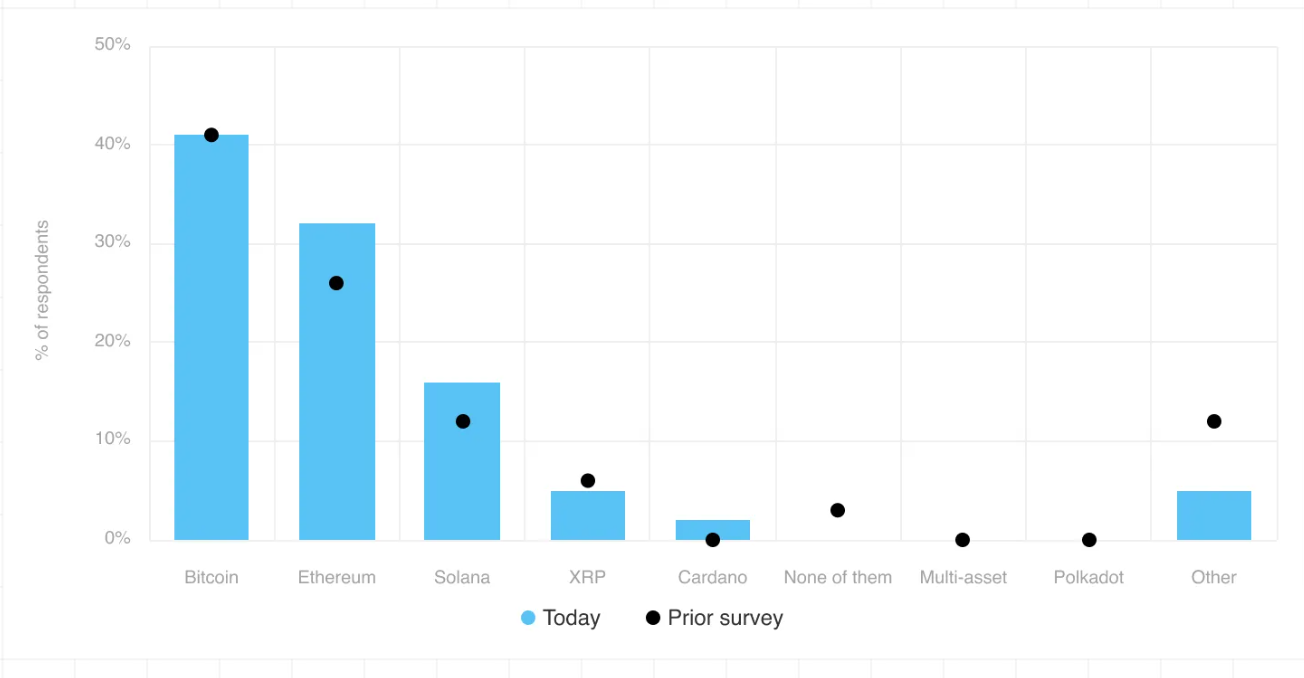
Fund managers covering $1.3 trillion in assets cite diversification and client demand for 63% of their crypto allocations. Speculation sits at just 15%, down sharply from two years ago.
The May 2026 CoinShares quarterly survey drew 26 institutional responses. Together, they point to an asset class defined by fundamentals rather than narrative momentum.
Diversification Replaces Speculation as Allocation Driver
Speculation accounted for the largest share of allocation rationale two years ago. That figure has fallen to 15%. Diversification and client demand jumped from 36% to 63%, according to CoinShares.
“Two years ago, speculation was the leading reason fund managers held digital assets. Today it sits at 15%. In its place: diversification and client demand are now 63% of the allocation rationale,” said James Butterfill, head of research at CoinShares.
The weighted average portfolio allocation slipped to 0.1%, skewed by a heavier institutional sample. The median holding remained at 1%, the typical default entry size for new institutional money.
Bitcoin Leads, Ethereum and Solana Gain
Bitcoin (BTC) still topped the growth outlook rankings. However, sentiment rotated modestly toward Ethereum (ETH) and Solana (SOL) compared with the previous quarterly survey.

BTC and ETH together accounted for 58% of portfolio responses. Legacy altcoins such as Cardano (ADA) and Polkadot (DOT) lost ground in portfolios.
Investors rotated toward Aave (AAVE), Sui (SUI), Tron (TRX) and Decentralized Finance (DeFi) protocols.
Corporate Restrictions Overtake Regulation
Corporate restrictions surged to the top of the barriers blocking deeper allocation, displacing regulation as the main obstacle. Legacy systems at large institutions remain a primary friction point.
Quantum risk continued to surface in client meetings, while reputational concerns and volatility eased but stayed elevated. Most respondents remained undecided on whether the US Federal Reserve has made a policy error.
Allocations climbing beyond the 1% median will likely depend on how fast institutions clear those internal restrictions.
The post 63% of Institutions are Investing in Crypto for Diversification, Report Finds appeared first on BeInCrypto.
Benchmark has cut its 12‑month price target on Bitcoin treasury company Strategy from $705 to $570, keeping a Buy rating but marking its model to a cooler Bitcoin path after a brutal drawdown in both BTC and Strategy’s stock.
Summary
- Benchmark has lowered its 12‑month price target on Bitcoin treasury company Strategy from $705 to $570, according to a new client note cited in market reports.
- The investment bank is maintaining its Buy rating, but is trimming upside assumptions after a sharp drawdown in both Strategy’s share price and Bitcoin.
- The move follows months of volatility in Strategy stock, which Benchmark had previously defended as a sustainable levered play on corporate Bitcoin accumulation.
Benchmark has reduced its target price for Strategy (NASDAQ: MSTR) from $705 to $570, according to market news shared on X and corroborated by recent analyst‑ratings rundowns. The firm is keeping a Buy rating, but the lower target reflects a cooler outlook on near‑term upside after Strategy’s stock slumped alongside Bitcoin from its early‑year highs.
Benchmark had been one of the most bullish houses on Strategy. In multiple notes over the past year, the bank’s analyst, Mark Palmer, reiterated a $705 target anchored to an aggressive Bitcoin path, with at least one Investing.com piece noting that the model assumed BTC would reach $225,000 by the end of 2026. That framework used a sum‑of‑the‑parts approach blending the projected value of Strategy’s Bitcoin holdings, a 10x multiple on the company’s 2026 “Bitcoin dollar gain,” and a residual value for its legacy software unit.
Even as MSTR fell more than 60% from mid‑2025 peaks—dropping from roughly $457 to near $150 in one six‑month stretch—Benchmark repeatedly stuck with the $705 figure, arguing in a widely circulated note that Strategy was still “a bitcoin‑focused treasury company, not a traditional software name,” and that its BTC stash created substantial embedded optionality if the next Bitcoin leg played out.
As of early Q2 2026, third‑party trackers like BitcoinTreasuries estimate that Strategy holds more than 818,000 BTC, making it the largest listed Bitcoin treasury in the world by a wide margin. That balance‑sheet exposure means any recalibration of BTC price targets flows directly into equity valuation, which helps explain why Benchmark is now trimming its own upside band to $570 as the crypto market reassesses cycle extremes.
In an April research piece summarized by MEXC, Benchmark went out of its way to defend Strategy’s STRC perpetual‑preferred funding model, arguing that using perpetual capital to buy Bitcoin is “sustainable” and rejecting critics who likened the structure to a Ponzi scheme. The bank called Strategy “a pioneer, not a pariah, in corporate Bitcoin adoption,” and that broader thesis has not changed even as the headline target moves lower.
For now, the $570 figure still implies substantial upside from current trading levels, but it also signals that even permabulls like Benchmark are beginning to mark their models to a less euphoric Bitcoin path. How that interacts with on‑chain dynamics and ETF flows is a theme crypto.news has been tracking closely in recent coverage, alongside deeper dives into Strategy’s treasury‑driven equity story in a feature and a valuation‑focused analysis.
OKX Card users in Europe spent mostly on groceries, restaurants and other routine purchases in the product’s first month, according to transaction data shared Wednesday.
In the first month of use across the European Economic Area (EEA), grocery stores and supermarkets accounted for 26% of all OKX Card transactions, while restaurants and fast food together made up 18%, ahead of travel and online marketplaces, according to the data.
The analysis covers settled purchase transactions made with the OKX Card in the EEA between Jan. 28 and Feb. 26, across the top 20 merchant types by transaction count, volume or unique users, the company said.
A spokesperson from OKX told Cointelegraph the dataset spans all EEA markets where the card is live, and that the snapshot captures the “majority of daily spending behaviors and any high-value outliers,” including categories such as utilities, while excluding peer-to-peer transfers.
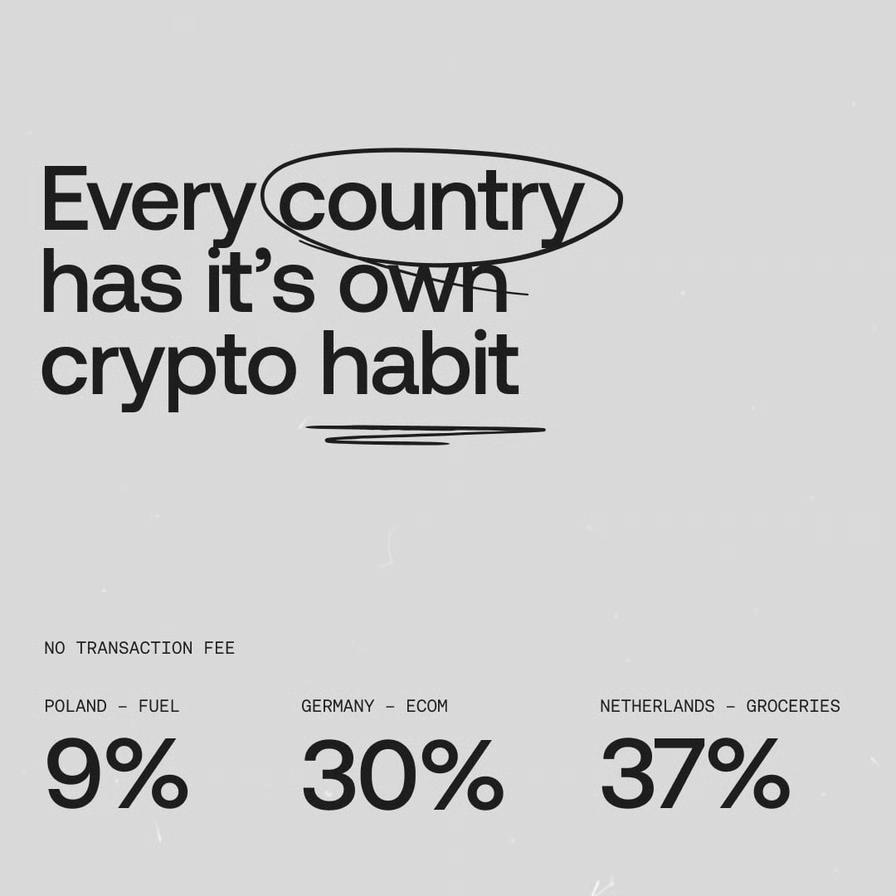
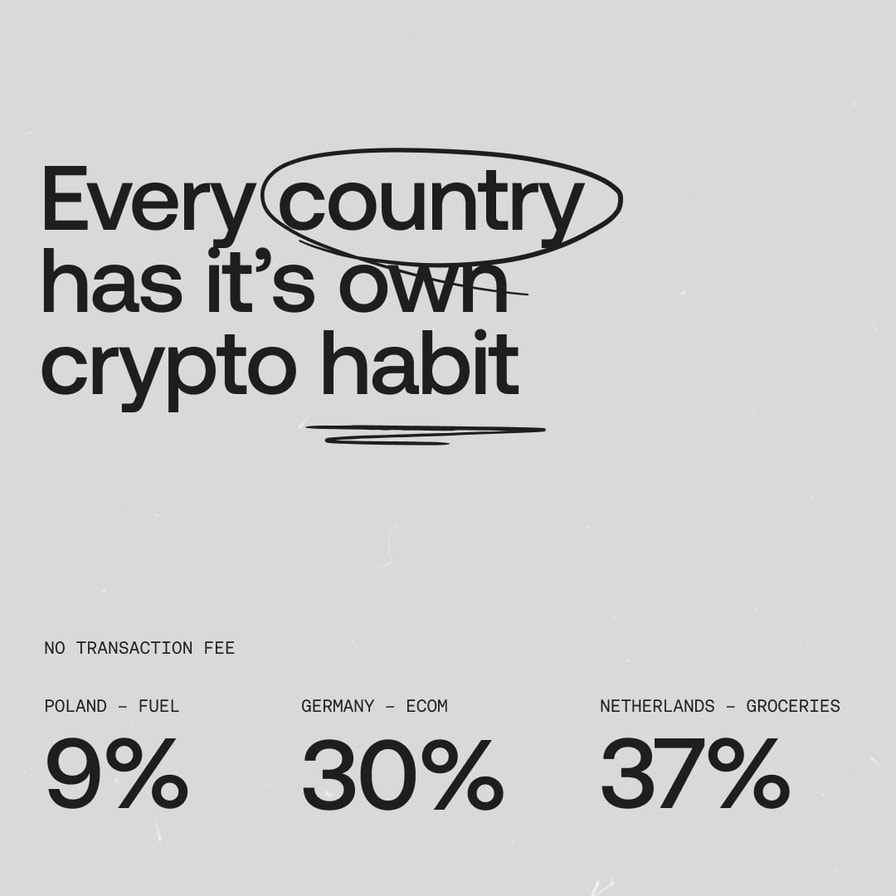
OKX’s numbers show distinct national patterns behind the headline averages. In France, for example, bakeries represent 5% of OKX Card transactions compared with 2% across the EEA, highlighting the country’s boulangerie and café culture.
Spending habits by country. Source: OKX
In Germany, 30% of transactions occurred on online marketplaces, more than double the EEA average of 13%, while the Netherlands recorded 37% of transactions in supermarkets, the highest grocery share in the dataset.
Related: OKX launches EU stablecoin payment card via regulated issuer Monavate
Poland stands out for small-ticket, in-person usage, with 16% of OKX Card payments at convenience stores and around 9% at fuel stations, both above the EEA averages.
The spokesperson said that swapping fiat for crypto in everyday payments is a newer behavior, arguing that the data challenges the stereotype of crypto cards being used mainly for luxury items, and instead points to groceries and coffees bought by “everyday people.”
The company said country-level differences largely reflect existing cultural habits, but argued they show stablecoin-funded card payments starting to displace traditional cards in customers’ day-to-day routines, not just in occasional big-ticket purchases.
Part of broader trend in Europe
Broader market data suggests OKX is not alone in its findings, with other crypto card providers in Europe reporting similar patterns of low-value, everyday transactions.
A 2025 Cex.io report found that roughly 45% of crypto card transactions in Europe were for amounts under 10 euros ($11.75) and that around 40% of such card spend happened online, nearly double the euro-area average share of online card payments of about 21%.
Separate Brighty data reported by Cointelegraph in April showed that Spain accounted for about 36% of retail transactions and 25% of total volume in Circle’s euro stablecoin EURC between 2025 and the first quarter of 2026, with an average payment size of around 49 euros ($58), indicating stablecoins are already being used there for everyday purchases and peer-to-peer transfers.
Magazine: How to fix suspected insider trading on Polymarket and Kalshi
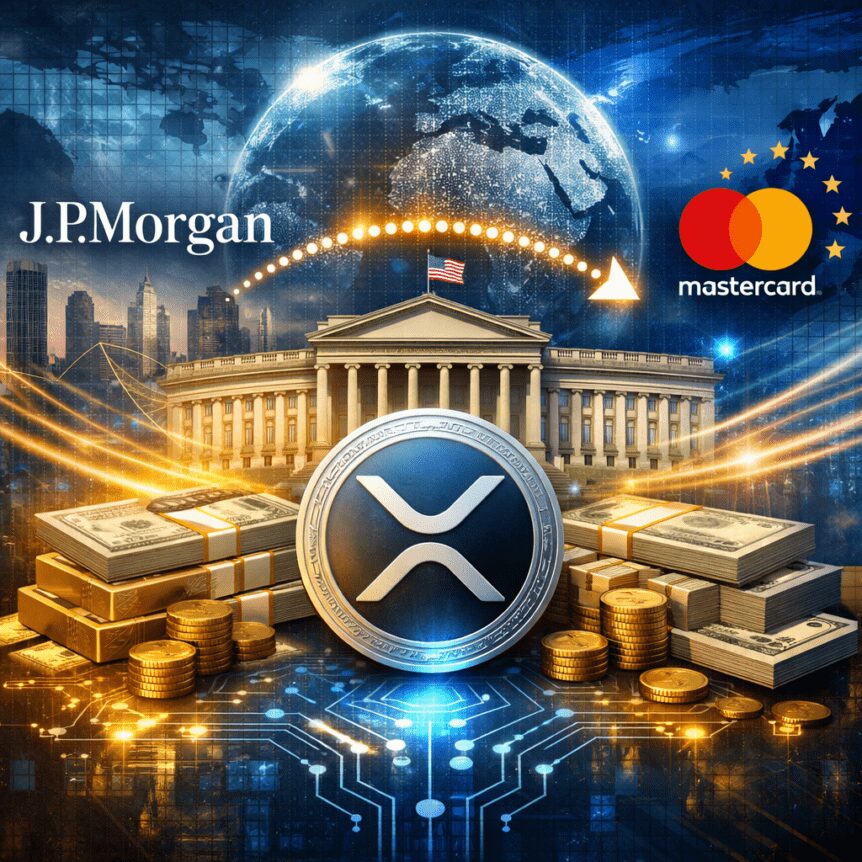
JPMorgan and Mastercard have completed what they describe as the first cross-border, cross-bank settlement of a tokenized U.S. Treasury fund using public blockchain rails alongside traditional interbank settlement networks. The operation tokenized by Ondo Finance, executed on Ripple’s XRP Ledger, was settled in real time with settlement instructions routed through Mastercard’s Multi-Token Network to JPMorgan’s Kinexys platform, which delivered U.S. dollars to Ripple’s bank account in Singapore.
Ondo Finance stated that the milestone marks a practical convergence of public blockchain technology with global banking infrastructure, demonstrating that a tokenized fund can settle across borders in real time for the first time. The company’s update followed a pilot that linked a tokenized fund to a public and permissioned network in a previous collaboration with JPMorgan and Ondo.
Key takeaways
- First cross-border, cross-bank settlement of a tokenized fund completed on a public blockchain with traditional rails, using XRP Ledger and Kinexys for settlement.
- The asset involved is the US Ondo Short-Term US Government Treasuries (OUSG) fund, redeemed via Ondo Finance and settled in U.S. dollars to Ripple’s Singapore bank account.
- The initiative illustrates growing collaboration between crypto-native firms and traditional finance to enable faster, lower-cost settlement outside standard banking hours.
- Market context shows a broad tide toward real-world asset tokenization, with tens of billions of dollars tokenized onchain and a wide range of projections for the sector’s scale by 2030.
- Regulatory and structural challenges remain a central theme, as global bodies weigh how tokenized markets should be governed, cleared, and protected during stress.
Cross-border tokenized settlement: how the pilot worked
The transaction centered on Ondo Finance’s tokenization platform for U.S. Treasuries. The fund, OUSG, was redeemed on Ripple’s XRP Ledger, with Mastercard’s Multi-Token Network handling the routing of settlement instructions to JPMorgan’s Kinexys platform. Kinexys then delivered the corresponding U.S. dollar amount to Ripple’s Singapore banking counterpart, completing a cross-border transfer that bridged a tokenized asset with both public and private settlement rails.
Ondo Finance highlighted the feat as a pivotal step in real-time interoperability between a public blockchain and global banking infrastructure. The company stated, “For the first time, a public blockchain and global banking infrastructure settled a cross-border transaction of a tokenized fund together in real time.”
The pilot builds on a prior collaboration in May 2025, when JPMorgan and Ondo Finance completed a tokenized US Treasury fund transfer across a combination of public and permissioned networks. That earlier test helped illustrate the technical feasibility of moving a tokenized asset through multiple rails and counterparties in a single settlement flow.
Why this matters for real-world assets and market structure
Tokenization of real-world assets—ranging from money-market funds and bonds to equities and real estate—has been a focal point for major financial institutions seeking faster, more cost-efficient settlement workflows. The latest pilot underscores how tokenized instruments could potentially operate 24/7, outside conventional market hours, and across borders with reduced reliance on fragmented settlement timelines.
Industry data compiled by RWA.xyz indicates that tokenized real-world assets already sit onchain at a substantial scale—over $31.1 billion excluding stablecoins. If adoption accelerates, the asset class could reshape how markets price and settle cash flows tied to conventional securities and money-market instruments. Projections from consulting firms have varied, with Boston Consulting Group estimating a potential market of up to $16 trillion by 2030, while McKinsey & Co. has offered a more conservative view around $2 trillion for the same horizon.
These numbers reflect a broad appetite among institutional participants to experiment with tokenized representations of cash-like assets and high-quality collateral. In parallel, exchanges and clearing networks have signaled intent to broaden access to tokenized markets. Notably, the New York Stock Exchange’s parent company, Intercontinental Exchange (ICE), announced in January a plan to launch a tokenization platform designed for 24/7 trading and near-instant settlement of stocks and exchange-traded funds, leveraging a blockchain post-trade framework. The move signals a larger push to remove regional time-zone constraints from traditional markets.
Regulation and risk: what remains uncertain
Notwithstanding the momentum, global regulatory and risk considerations loom large. The International Monetary Fund has flagged concerns that tokenization can shift some risk from conventional banking protections to shared ledgers and smart contract code, which could complicate authorities’ ability to intervene during periods of stress. In a March-to-April assessment, the IMF emphasized the need for clear ownership records and settlement finality to prevent fragmentation or peripheral markets from taking hold.
Industry voices echoed calls for clarity. At Consensus Miami 2026, Shark Tank investor Kevin O’Leary argued that a lack of comprehensive crypto-market structure legislation in the United States—and ensuring compliance with SEC rules—could delay meaningful tokenization adoption. He warned that without a robust regulatory framework, widespread tokenization could stall even as the technology matures.
These perspectives highlight a broader tension: the desire to unlock the speed and efficiency of tokenized assets versus the safeguards, oversight, and legal clarity that traditional markets rely on. As firms pilot cross-border tokenization, observers will be watching how regulators harmonize standards around ownership, settlement finality, and cross-jurisdictional settlement mechanics.
What to watch next
The JPMorgan–Mastercard–Ondo–Ripple milestone adds a concrete data point to a broader trend toward tokenized real-world assets integrated with established settlement rails. The focus moving forward will likely center on replicability across asset classes, refining operational risk controls, and aligning with evolving regulatory guidance. Investors and builders should monitor how the IMF’s concerns, regulatory clarity in major jurisdictions, and large-scale demonstrations of interoperability shape adoption timelines and capital flows into tokenized markets.
As the market tests more intricate cross-border flows and 24/7 settlement capabilities, the key questions remain: how quickly will policy frameworks emerge to support scalable, compliant tokenized markets, and which institutions will lead the way in bridging traditional finance with the next generation of asset representation on-chain?
Readers should stay tuned for follow-on pilots and any formal disclosures from participating firms about additional asset classes, settlement thresholds, and geographic expansion that would indicate a broader, near-term path to mainstream tokenization.


Japan’s Nikkei 225 vaulted past 62,000 for the first time on Thursday. The index climbed 5% in a broad rally that pushed major tech, materials, and electronics names to double-digit single-day gains.
Electronics maker Ibiden led the board with a 22.43% surge. SoftBank Group jumped 16.45%, and Mitsui Kinzoku gained 17.05%.
Renesas Electronics rose 13.42%, and chemical firm Tosoh Corporation added 11.03%.
Follow us on X to get the latest news as it happens
Global Tech Momentum Spills Into Asian Markets
Other Asian markets rose modestly. Hong Kong’s Hang Seng added 1.48%. China’s CSI 300 edged up 0.13%, and Australia’s S&P/ASX 200 advanced 0.83%. South Korea’s Kospi reversed gains to slip 0.17% after hitting an all-time high on Wednesday.
The advance came as Wall Street’s tech-heavy Nasdaq hit another record. The S&P 500 also closed at an all-time high of 7,365. The index has gained more than 16% since its March 30 low.
Today’s surge came after Tokyo Golden Week holidays. The reopen allowed investors to absorb a week of US tech sector strength at once, amplifying the upside at the open. Wall Street tech earnings have also set a strong backdrop.
Iran Talks Inject Mixed Signals
Markets are also weighing developments in US-Iran negotiations. President Donald Trump told PBS that an agreement could land before his upcoming visit to China.
However, Trump also warned on Wednesday that Iran would face military action if it rejects the proposed peace deal. The dual messaging has kept oil and global risk markets sensitive to headline flow, with implications for oil prices and broader sentiment.
Whether Japan’s rally extends will depend on continued AI momentum and the trajectory of Iran negotiations.
Subscribe to our YouTube channel to watch leaders and journalists provide expert insights
The post Nikkei 225 Tops 62,000 as Major Japanese Stocks Post Double-Digit Gains appeared first on BeInCrypto.


Senator Kirsten Gillibrand took the Consensus Miami 2026 mainstage on Day 2 and expressed optimism about the CLARITY Act’s prospects in Congress, appearing alongside Kevin O’Leary and Coinbase’s Paul Grewal.
Summary
- Senator Kirsten Gillibrand appeared on the Consensus Miami 2026 mainstage on May 6 and said she is optimistic about the path forward for the CLARITY Act.
- Gillibrand also discussed AI regulation and her outlook for Democrats in the 2026 midterms during her live Consensus appearance.
- Charles Hoskinson, Eric Trump, and Michael Saylor were also scheduled to appear at Consensus Miami on Day 2.
Senator Kirsten Gillibrand took the mainstage at Consensus Miami 2026 on Wednesday alongside Kevin O’Leary and Coinbase executive Paul Grewal, expressing optimism that the CLARITY Act can advance through Congress before the May 21 Memorial Day deadline. Her appearance came as the Senate Banking Committee moves toward what may be its last viable markup window for the legislation this cycle.
Gillibrand said she is optimistic about the bill’s path and weighed in on both AI regulation and the 2026 midterm outlook for Democrats. Her comments added a Democratic voice to the Consensus stage at a moment when the CLARITY Act’s fate depends heavily on bipartisan support in the Senate Banking Committee.
As crypto.news reported, Chair Tim Scott has secured most Republican votes but Senator John Kennedy has withheld support, leaving the path to markup unresolved. Senator Thom Tillis separately raised a new complication: law enforcement groups oppose a DeFi developer liability provision in the bill. Senators Cynthia Lummis and Bernie Moreno have both said failure before May 21 pushes the next realistic window to 2030.
Ripple CEO Brad Garlinghouse told the Consensus crowd on Day 1 that the past week represented a “big positive shift” in Senate momentum, while banking groups have continued to push back on stablecoin yield provisions.
Gillibrand’s Day 2 remarks signal that at least some Democrats are prepared to provide the bipartisan cover the bill needs to reach a floor vote, a dynamic that may prove decisive before Memorial Day recess closes the window entirely.


Robinhood said at Consensus Miami 2026 that Wall Street is now actively building on crypto rails, though institutional adoption is moving slower and more fragmented than the industry expected.
Summary
- Executives from Robinhood-owned Bitstamp, Ondo Finance, and Babylon Labs told Consensus Miami 2026 that banks are actively integrating blockchain infrastructure and tokenized products.
- Robinhood VP Nicola White said the conversation with banks has shifted from asking what blockchain is to asking how to build on it.
- Panelists said institutional adoption will develop along two parallel tracks: regulated US finance and offshore permissionless crypto markets.
Executives from Robinhood-owned Bitstamp, Ondo Finance, and Babylon Labs told Consensus Miami 2026 on Wednesday that Wall Street’s migration into crypto is real but slower and more fragmented than the industry expected.
The panel, titled “Is the Wall Street Herd STILL Coming?”, framed institutional adoption as settled in direction but uncertain in pace.
Robinhood VP of Crypto Institutions Nicola White said the dynamic with banks has shifted materially. “We’re not having conversations anymore about what blockchain is,” she said.
“Now it’s about, how do we help them build?” Ondo President Ian De Bode pointed to partnerships with Broadridge and the DTCC to tokenise securities and enable blockchain-based shareholder voting as evidence that institutional pipelines have moved from planning to production.
White also flagged risks around retail product velocity. She noted that 50% of Robinhood’s new Q1 platform users were first-time investors, and warned that 100x perpetual leverage products carry risks “that maybe people don’t understand.”
Panelists said adoption will split into two tracks: regulated US finance and an offshore permissionless crypto market running in parallel. As crypto.news tracked, Robinhood has been expanding institutional and retail crypto infrastructure since its Bitstamp acquisition, with crypto notional volumes reaching $25 billion in February 2026, up 74% year-on-year.
The Consensus panel framed that figure as a starting point, with Wall Street’s integration still in its early stages despite the conversation having clearly shifted.
Crypto World
Bitcoin Price Hits $81,133 as Supercycle Debate Splits Traders and Pepeto Presale Passes $9.89M Before Binance
The Bitcoin price touched $81,133 on May 6 as analyst PlanC projected a supercycle run to $250,000 by 2028, while bears argue the move is just a rally inside a larger correction, per Cointelegraph. Solana holds near $86 on Alpenglow upgrade momentum, and April ETF inflows hit $1.97 billion per Bitcoin Magazine.
This article covers what the Bitcoin price move to $81,133 means after the supercycle call, where Solana sits, and why the Pepeto presale at $0.0000001868 opens a return profile BTC and SOL cannot deliver in the same time frame.
Analyst PlanC posted on May 6 that Bitcoin is not in a normal cycle but entering its first supercycle, projecting above $250,000 by 2027 to 2028 from the $16,000 bear low in November 2022, per Cointelegraph. His framework splits the move into three stages: the first rally to $126,000 done, the mid-cycle correction to $60,000 done, and a final push to new highs now forming.
Analyst Pentoshi added that once BTC clears the mid-$80,000s and holds, the chance of new all-time highs becomes very high, targeting $180,000 over the next year. Institutional demand absorbs more than 500% of daily new BTC supply, turning sharp drops into softer pullbacks.
Bitcoin Price Breakdown: BTC, Solana, and Why Pepeto Carries the Biggest Upside
Pepeto Presale Passes $9.89M With Working Tools and a Binance Listing Approaching
While traders argue over whether Bitcoin at $81,133 starts a supercycle or tops a bear rally, Pepeto is the position that does not need the debate settled to print large returns. The presale locks in an entry at $0.0000001868 before the first public candle opens, and that spread between presale cost and listing price is where the biggest gains in every cycle come from.
PepetoSwap settles every trade with no fees across Ethereum, BNB Chain, and Solana, so buyers keep full value on every swap. The risk engine scores every contract before capital leaves the wallet, and the token bridge moves assets between networks at no charge. These tools run on the Pepeto site today.
The presale pulled in $9.89 million during months of fear, with SolidProof having completed the full audit. The original Pepe builder wrote Pepeto end to end, with a former Binance insider steering the listing path. Staking pays 175% APY, so every position keeps growing until the first exchange trade fires.
Shiba Inu turned pocket money into numbers that changed years in 2021, and Pepeto is forming inside that same window now. Once trading opens, the presale entry disappears and the price spread that creates outsized returns closes in hours.
Bitcoin (BTC) Price at $81,133 as Supercycle Thesis Targets $250,000 and ETF Flows Build the Floor
Bitcoin (BTC) trades near $81,133 per CoinMarketCap, up 35% from the February low of $59,930 but still 36% below the $126,272 all-time high from October 2025. Strategy holds 818,334 BTC at $75,532 average cost, and April logged $1.97 billion in net ETF inflows.
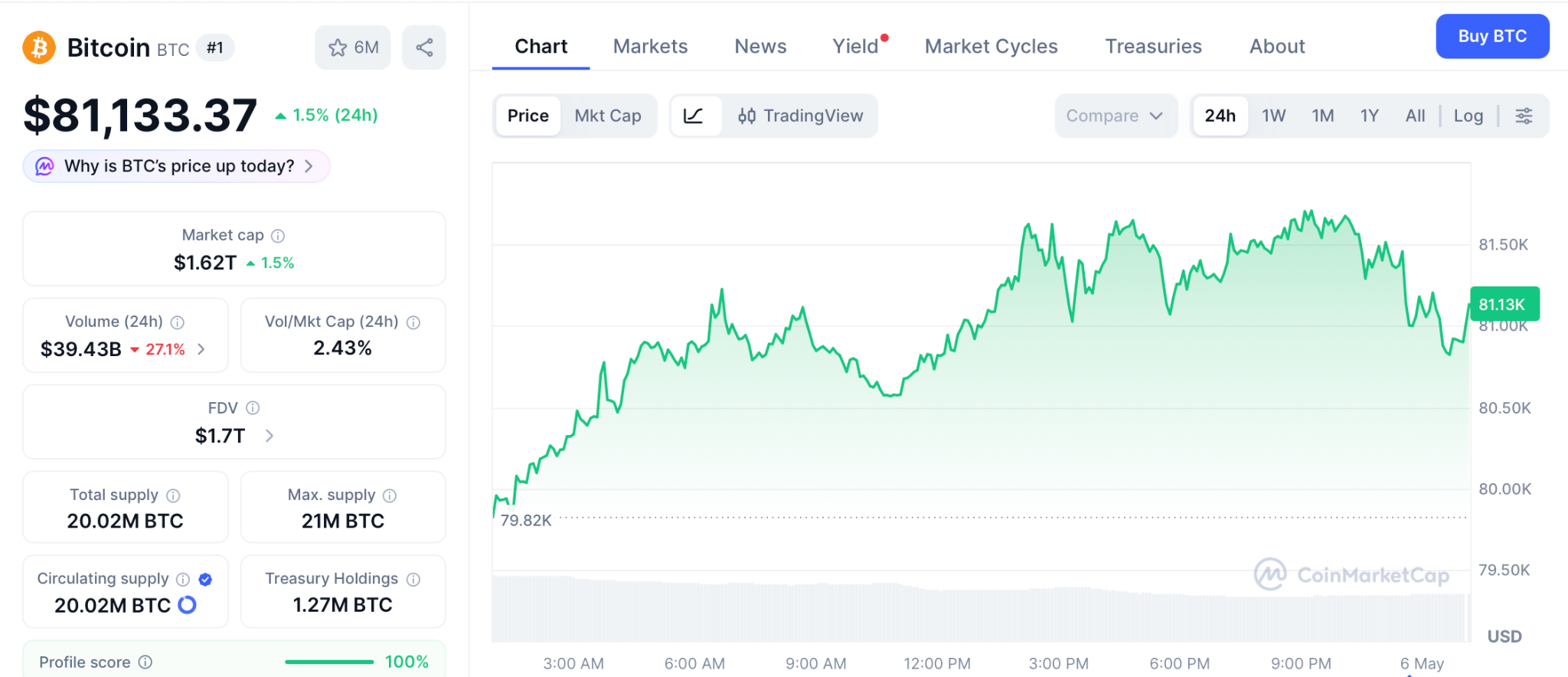
The 200-day moving average at $82,228 is the next level to clear. A Bitcoin price run to $100,000 returns roughly 23%, strong for the largest crypto but a fraction of what a presale listing delivers.
Solana (SOL) Price at $86 as Alpenglow Upgrade Momentum Keeps the Base Intact
Solana (SOL) holds near $86 per CoinMarketCap, building a base above $84 support. The Alpenglow consensus upgrade from Anza targets 100 to 150 millisecond block finality.
A move from $86 to $102 resistance returns about 15%, a healthy trade for an established Layer 1 but not the kind of return that reshapes a full portfolio the way a presale listing event can.
Conclusion
BTC at $81,133 is not stalling, it is building, and PlanC’s supercycle call to $250,000 shows the kind of conviction forming behind this Bitcoin price move. But 23% from here to $100,000 does not reshape a year, and Solana’s 15% path to $102 does not either, because the math that changes portfolios has always come from the gap between presale entry and listing candle.
The Pepeto presale at $0.0000001868 with $9.89 million raised and 175% APY compounding on every hour is the position this cycle will be remembered for. The wallets that acted will be the names on every chart discussion, and the ones who watched the Bitcoin price build from the sideline will carry the regret of knowing they saw the entry and did not take it.
The hour Binance opens, that $0.0000001868 price is history, and nothing after that moment, no trade at any level, puts it back on the tape.
Click To Visit Pepeto Website To Enter The Presale

FAQs
What is driving the Bitcoin price move to $81,133 in May 2026?
Bitcoin price hit $81,133 after analyst PlanC projected a supercycle run to $250,000 by 2028, backed by institutional demand absorbing more than 500% of daily BTC supply per Cointelegraph. April ETF inflows reached $1.97 billion as BTC bounced 35% from February lows.
Why is Pepeto attracting capital while the Bitcoin price builds above $80,000?
Pepeto is attracting capital because the presale at $0.0000001868 before a Binance listing creates a spread between entry cost and first public candle that Bitcoin at $81,133 cannot match on return math. The presale raised $9.89 million with 175% APY and a full SolidProof audit completed.
Disclaimer: This is a Press Release provided by a third party who is responsible for the content. Please conduct your own research before taking any action based on the content.


Blaze at Warburtons in Burnley ‘not thought to be suspicious’

Collapsed power tools company that sold Black and Decker and Dewalt to auction off remaining stock

3 Oil Stocks To Watch In May 2026

Manchester United reach agreement with Casemiro over contract clause amid transfer speculation

US brings back mandatory military draft registration

Steven Gerrard disagrees with Gary Neville over ‘shock’ Chelsea and Arsenal claim | Football


-

 NewsBeat3 days ago
Channel 5 – All Creatures Great and Small series 7 new post
-
 Tech5 days ago
Trump’s 25% EU auto tariff breaches Turnberry Agreement that also covers semiconductors and digital trade
-
 Sports5 days ago
Paul Scholes issues Marcus Rashford reality check as agreement emerges over Man United star
-

 Entertainment5 days ago
Met Gala 2026 Rumored Guest List Is Turning Heads
-

 Business6 days ago
Strait of Hormuz Blockade Persists Amid US-Iran Standoff, Sending Oil Prices Soaring
-
Entertainment5 days ago
New on Prime Video in May 2026 — Full List of Movies and Shows
-

 Entertainment7 days ago
Celebrities Who Are Attending the 2026 Met Gala Event
-

 Sports5 days ago
Cavaliers vs. Raptors Game 6 live score, updates, highlights from 2026 NBA playoffs first-round series
-
 Sports5 days ago
David Benavidez responds to team Canelo saying the fight will never happen
-

 Entertainment5 days ago
Kylie Jenner Hit With Second Lawsuit From Ex-Housekeeper
-

 Tech6 days ago
Meta ends Sama contract after Kenyan workers report seeing intimate footage from Ray-Ban smart glasses users
-
 Sports5 days ago
IPL 2026: ‘Love you darling’- Hardik Pandya’s reaction to MS Dhoni steals the show |Watch | Cricket News
-

 Entertainment5 days ago
Young and the Restless Next Week: Cane Arrested & Matt’s Deadly New Scheme!
-
 Tech7 days ago
Mark Zuckerberg Says Meta Is Working On AI Agents For Personal And Business Use
-

 Sports7 days ago
Stalemate in Madrid as resilient Arsenal Blunt Atletico Madrid in semi-final clash – Sports
-
Entertainment4 days ago
New Netflix Movies in May 2026 — My Top 3 Picks to Stream
-

 Business4 days ago
Luka Doncic Injury Update: Doncic’s Hamstring Recovery Slows Lakers’ Hopes Against Thunder: Can He Run Yet?
-

 Sports6 days ago
What Preity Zinta Said After Punjab Kings’ First Defeat Of IPL 2026
-

 Sports5 days ago
Plane crash in Wimberley, Texas kills 5 pickleball players at tournament
-

 Sports6 days ago
Bayern won’t hand bottom side Heidenheim ‘gifts’ despite PSG game
You must be logged in to post a comment Login