
Crypto World
Hyperliquid starts DeFi lobbying group in U.S. with $29 million HYPE token backing



Hyperliquid (HYPE), a blockchain-based exchange that processed more than $250 billion in perpetual futures trading last month, has launched a U.S. lobbying and research arm aimed at shaping how lawmakers regulate decentralized finance (DeFi).
The Hyperliquid Policy Center, a Washington, D.C.-based nonprofit, will focus on regulatory frameworks for decentralized exchanges, perpetual futures and blockchain-based market infrastructure, according to a Wednesday press release.
Jake Chervinsky, a prominent crypto lawyer and former policy head at the Blockchain Association, will serve as founder and CEO.
The launch comes as Congress and federal agencies debate how to oversee crypto trading platforms and derivatives markets. Perpetual futures, which allow traders to hold leveraged positions without an expiration date, are widely used on offshore venues but remain a gray area under U.S. law.
The arrival of a new group also represents just the latest entrant into a Washington crypto-policy scene that’s jammed with similar organizations, including the DeFi Education Fund and Solana Policy Institute, in addition to the broader groups such as the Digital Chamber, Blockchain Association and Crypto Council for Innovation. And the new organization lands as negotiation is well underway on Senate legislation that may set U.S. DeFi policy.
Hyperliquid operates a decentralized exchange that lets users trade perpetual futures directly on blockchain rails without a central intermediary. Instead of routing trades through a traditional broker or clearinghouse, transactions settle onchain.
The platform has emerged as one of the fastest-growing venues in crypto derivatives. It handled more than $250 billion in perpetual trading volume and $6.6 billion spot volume over the past month, DefiLlama data shows.
“Financial markets are migrating onto public blockchains because they offer efficiency, transparency and resilience that legacy systems cannot match,” Chervinsky said in a statement.
“Now the United States must choose: We can either adopt new rules that allow this innovation to flourish here at home, or we can wait and watch as other nations seize the opportunity,” he added.
The new policy group plans to brief lawmakers, publish technical research and advocate for rules tailored to decentralized systems, the press release said.
The Hyper Foundation, which supports the Hyperliquid ecosystem, is contributing 1 million HYPE tokens, worth roughly $29 million, to fund the launch. While that’s less than was committed to the launch last year of the Ripple-backed National Cryptocurrency Association, it’s much more than the $5.6 million the Digital Chamber spent in 2024 or the $8.3 million spent by the Blockchain Association, according to public filings.

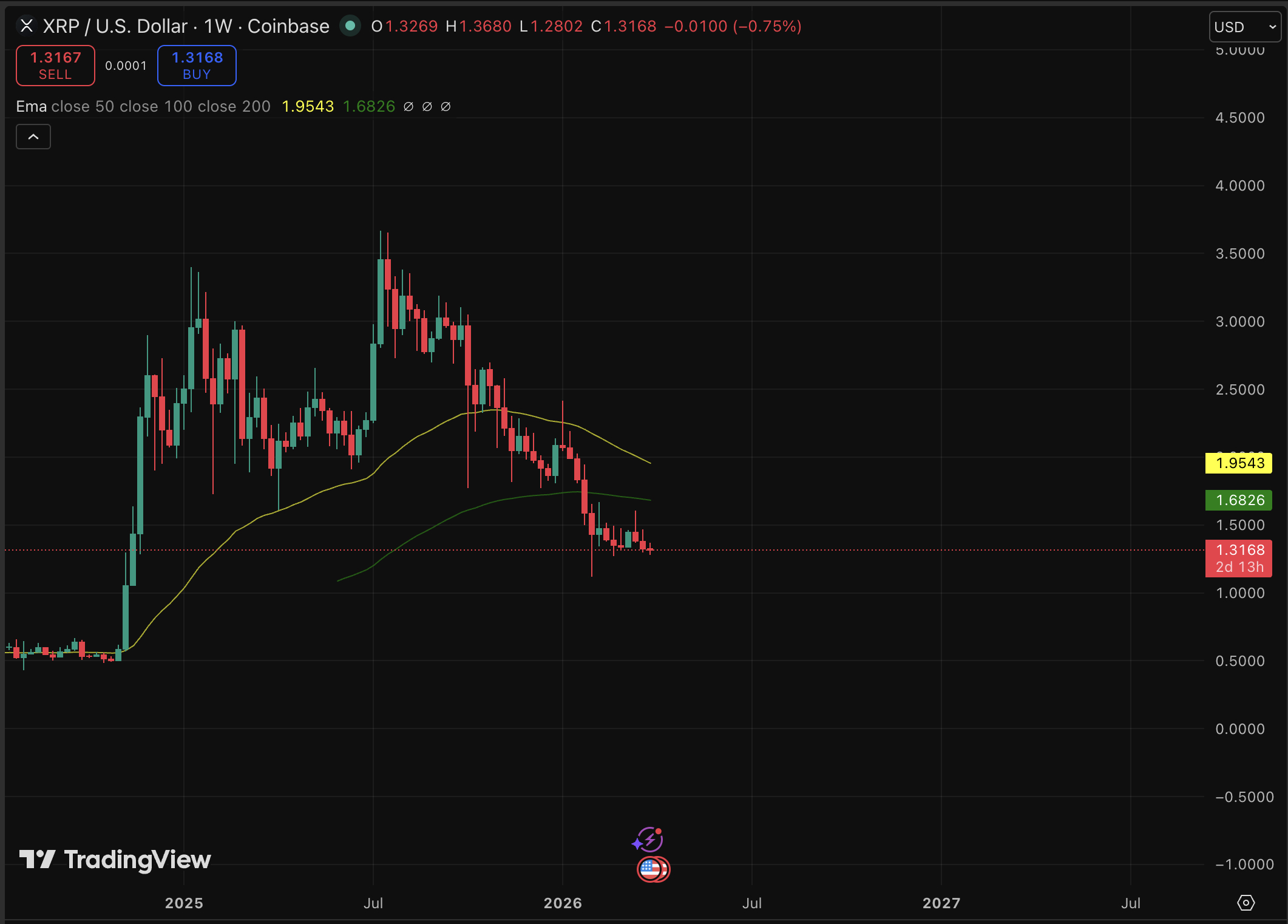
XRP is trading at $1.31, up by 0.9% in the last 24 hours, but price prediction still remains bearish for Ripple coin. Down nearly 30% year-to-date from a $1.88 open, the token is fighting to hold key support while the broader market registers extreme fear. What most traders haven’t priced in yet: a significant engineering overhaul quietly underway inside the XRP Ledger’s core repository.
Denis Angell, an XRPL core developer, outlined six active workstreams on April 2 that are reshaping the ledger’s foundational infrastructure, telemetry, nomenclature, type safety, refactoring, logging, and documentation.
“I’ve never been more excited for the XRP Ledger core development than I am now,” Angell posted, describing the effort as tedious but critical.
The work targets backend reliability and developer experience rather than user-facing features, a distinction that matters for long-term network competitiveness.
Whether these upgrades translate into price recovery depends entirely on market timing.
Discover: The best crypto to diversify your portfolio with
XRP Price Prediction: $1.40 Before the Next Wave of Selling?
XRP’s current level of $1.31 places it uncomfortably below both major moving averages. The 50-day SMA sits at $1.40–$1.42, acting as immediate overhead resistance. The 200-day SMA at $2.04–$2.07 represents a full recovery target that feels distant given current momentum.
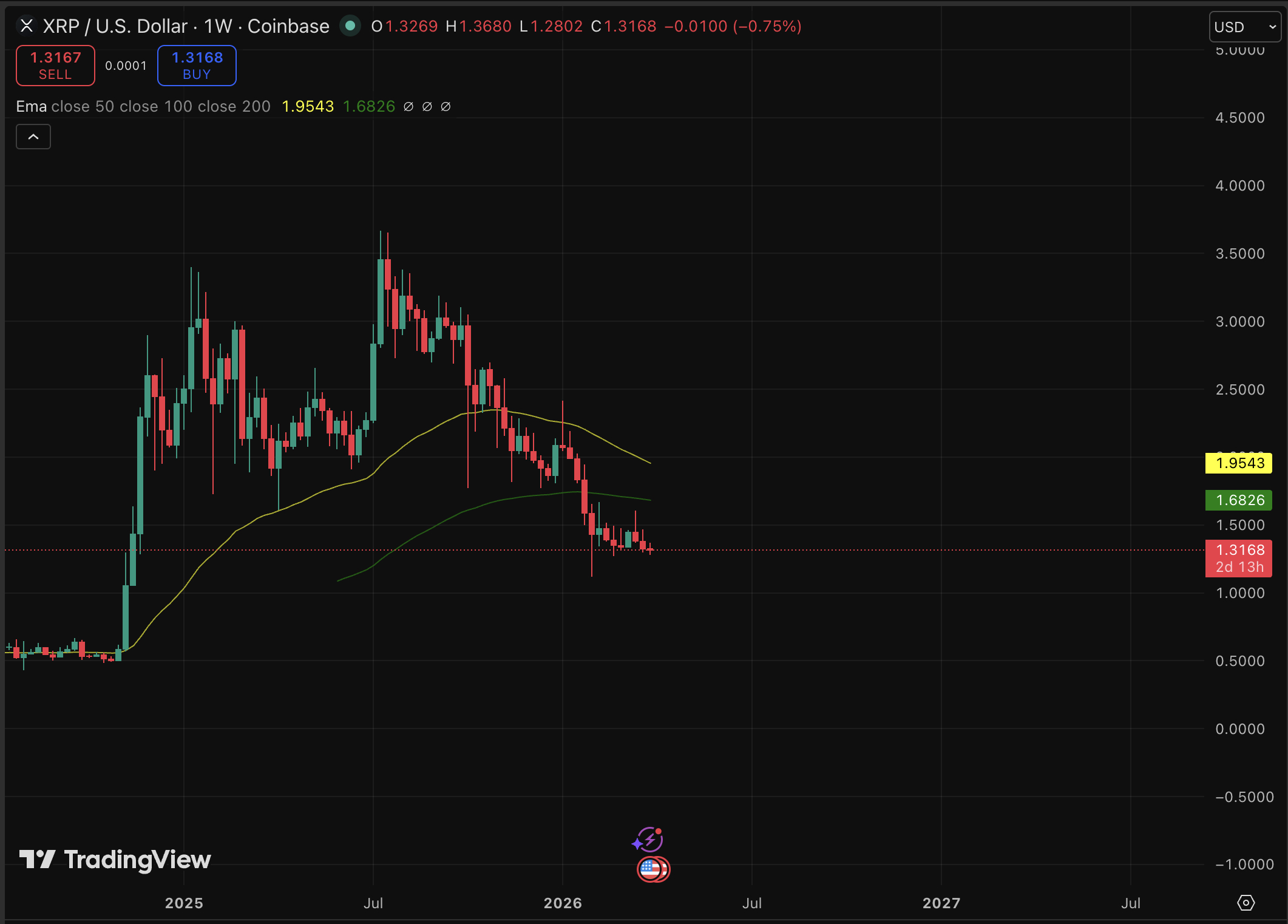
Support is clustered at $1.27–$1.29. That zone is thin. A clean break below it opens a more significant leg down with limited structural floors until the $1.10 range. The Fear and Greed Index reading Fear confirms capitulation sentiment, which historically precedes either a sharp reversal or a final flush.
Analyst consensus points to $2.04 as a potential recovery level by September 2026, achievable, but requiring sustained buying pressure that simply isn’t visible in current volume data.
Discover: The best pre-launch token sales
Bitcoin Hyper Targets Early-Mover Upside as XRP Tests Critical Support
XRP’s -29.6% year-to-date performance raises a legitimate question: at a $1.31 price point and a multi-billion-dollar market cap, how much asymmetric upside actually remains? For traders comfortable with the risk profile of early-stage assets, the calculus looks different at the infrastructure layer.
Bitcoin Hyper ($HYPER) is positioning itself as a genuinely novel infrastructure play, the first Bitcoin Layer 2 integrating the Solana Virtual Machine, delivering sub-second finality and low-cost smart contract execution while anchored to Bitcoin’s security model.
The presale has raised $32 million at a current price of just $0.013678, with healthy staking rewards available for early participants. The Decentralized Canonical Bridge enables native BTC transfers into the ecosystem, addressing Bitcoin’s longstanding programmability gap without sacrificing its trust layer.
More detail on Bitcoin Hyper is available here.
The post XRP Price Prediction: Can These 6 Ongoing Developments Save Ripple appeared first on Cryptonews.

TLDR
- Riot Platforms sold 3,778 Bitcoin for more than $250 million during the first quarter of 2025.
- The company reduced its total Bitcoin holdings to 15,680 BTC after the sale.
- Riot Platforms achieved an average selling price of over $76,000 per Bitcoin.
- The firm has now sold Bitcoin in consecutive quarters after raising nearly $200 million late last year.
- CEO Jason Les said earlier that sales were intended to fund ongoing growth and operations.
Riot Platforms sold more than $250 million in Bitcoin during the first quarter of 2025. The company confirmed it sold 3,778 BTC at an average price above $76,000. As a result, the firm reduced its total holdings to 15,680 BTC by the end of March.
Riot Platforms Cuts Bitcoin Holdings as Sales Extend Into Second Quarter
Riot Platforms reported that it sold 3,778 Bitcoin during the first quarter of 2025. The company achieved an average sale price above $76,000 per coin. Consequently, it reduced its Bitcoin reserves to 15,680 BTC at quarter’s end. The remaining holdings now carry a market value near $1.04 billion. Bitcoin traded at $66,844 at the time of valuation.
The Colorado-based miner has now sold Bitcoin in consecutive quarters. During November and December, it generated nearly $200 million from Bitcoin sales. The company has not yet disclosed detailed allocation plans for the recent proceeds. A company representative did not respond to a request for comment. However, earlier in 2025, CEO Jason Les addressed the purpose of prior sales.
Les stated that earlier Bitcoin sales aimed to “fund ongoing growth and operations.” He connected those operations to expanding infrastructure and computing capacity. The company outlined these objectives in its latest strategic business update. Riot Platforms has focused on increasing its data center capabilities. It also continues to adjust its capital structure through asset sales.
Riot Platforms Shifts Strategy Toward Data Center Development
Riot Platforms confirmed that it intends to expand beyond traditional Bitcoin mining. The firm stated that it plans to unlock its nearly two-gigawatt power portfolio. It aims to deploy that capacity for high-demand data center infrastructure. Les said, “2025 marked a watershed year for Riot.” He added that the company has transformed its future trajectory.
The company explained that it previously used most of its power portfolio for Bitcoin mining. Now, it seeks to reallocate that capacity toward data center development. Riot Platforms stated that its long-term goal is “to fully utilize our power portfolio for data center development.” This shift aligns with ongoing operational restructuring. The firm continues to balance mining output with infrastructure planning.
An activist investor, Starboard Value, urged the company to accelerate its transition strategy. Starboard Value stated that the opportunity could add as much as $21 billion to Riot’s valuation. The investor called for a “renewed sense of urgency” in pursuing this plan. Meanwhile, shares of RIOT closed up 2.47% on Thursday. The stock recently traded at $12.86.
Over the past six months, RIOT shares have fallen more than 33%. During the same period, Bitcoin has declined 47% from its all-time high of $126,080. The company continues to report updates through formal filings and public statements. Riot Platforms has not announced further Bitcoin sales beyond the first quarter.


Stephanie Cutter will join the prediction markets company as a policy adviser, having previously worked in Democratic lawmakers’ campaigns.
Predictions market platform Kalshi announced that a former staffer of US President Barack Obama had joined the company as a policy adviser.
In a Thursday notice, Kalshi said Stephanie Cutter would join the prediction markets company from Precision Strategies, a communications firm she co-founded in 2013. Kalshi said the addition of Cutter came as the company planned to “deepen its relationships in DC and across the country.”

According to Kalshi co-founder and CEO Tarek Mansour, Cutter’s experience allowed her to “get [the] message to the right people,” highlighting her background in government and politics. The predictions market already has staff with ties to the US government, including the appointment of the president’s son, Donald Trump Jr., as a strategic adviser in January 2025, the week before his father took office.
In the last year, Kalshi has come under scrutiny from many US state-level authorities, who have filed lawsuits against the platform and other companies offering event contracts on prediction markets for sports, alleging that they constituted illegal bets.
Under Trump nominee Michael Selig, the US Commodity Futures Trading Commission (CFTC) has claimed that the agency has the “exclusive jurisdiction” to oversee such markets, filing lawsuits against state gaming regulators.
Related: Polymarket expands into equities and commodities with Pyth price feeds
Lawsuits and proposed legislation
Many Democrats in US Congress have also called for scrutiny into prediction markets after what they called “suspicious trades” related to the country’s invasion of Iran. Although Kalshi and Polymarket announced plans in March to implement guardrails to prevent accounts from using insider information, some lawmakers introduced legislation that could ban politicians from engaging in such bets on prediction markets.
As of Friday, none of the bills proposed in Congress had been signed into law, and it was unclear what the outcome would be for many of the state-level lawsuits.
Magazine: Solana exec trolls crypto gamers, Pixel tackles play-to-earn issues: Web3 Gamer
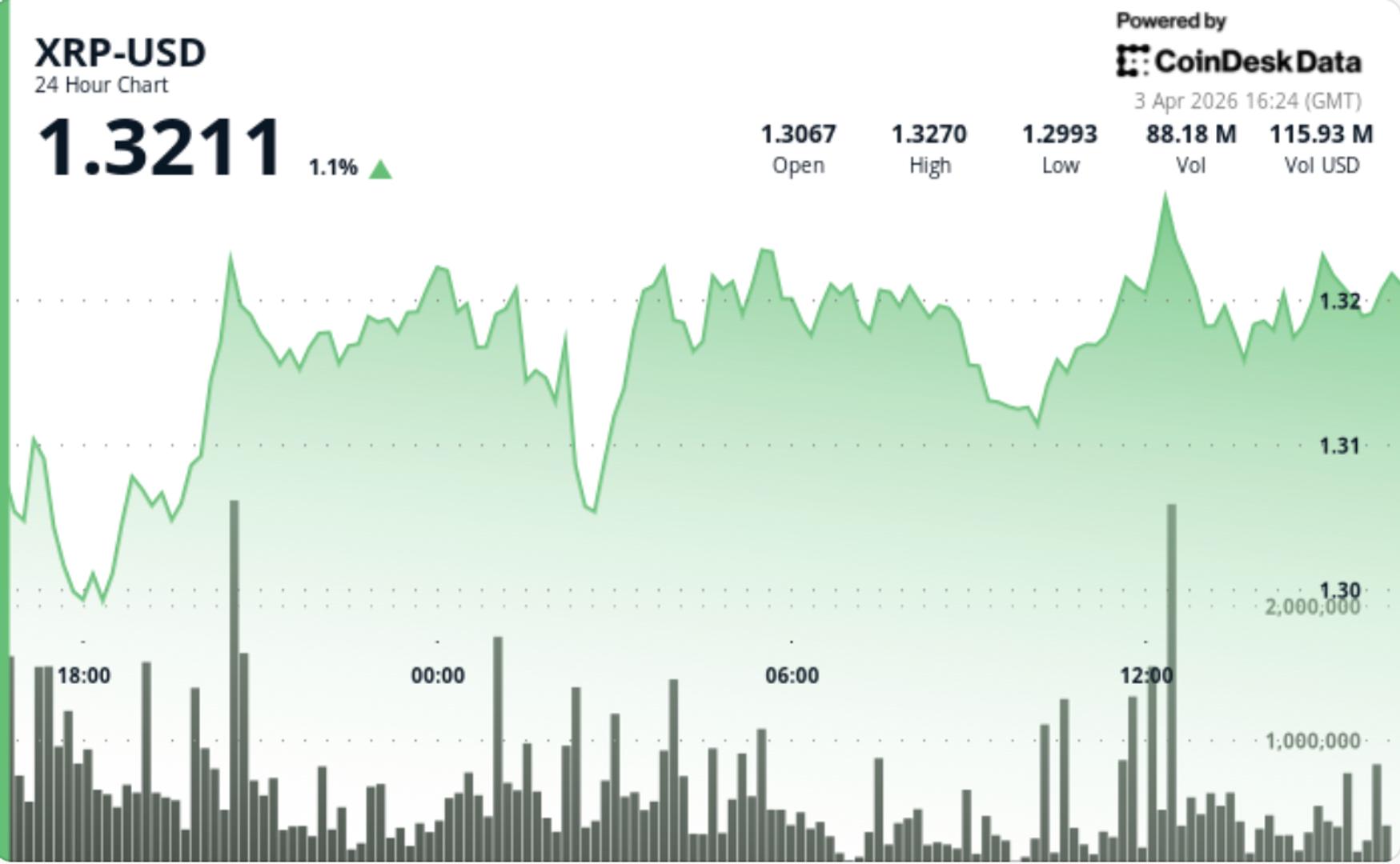
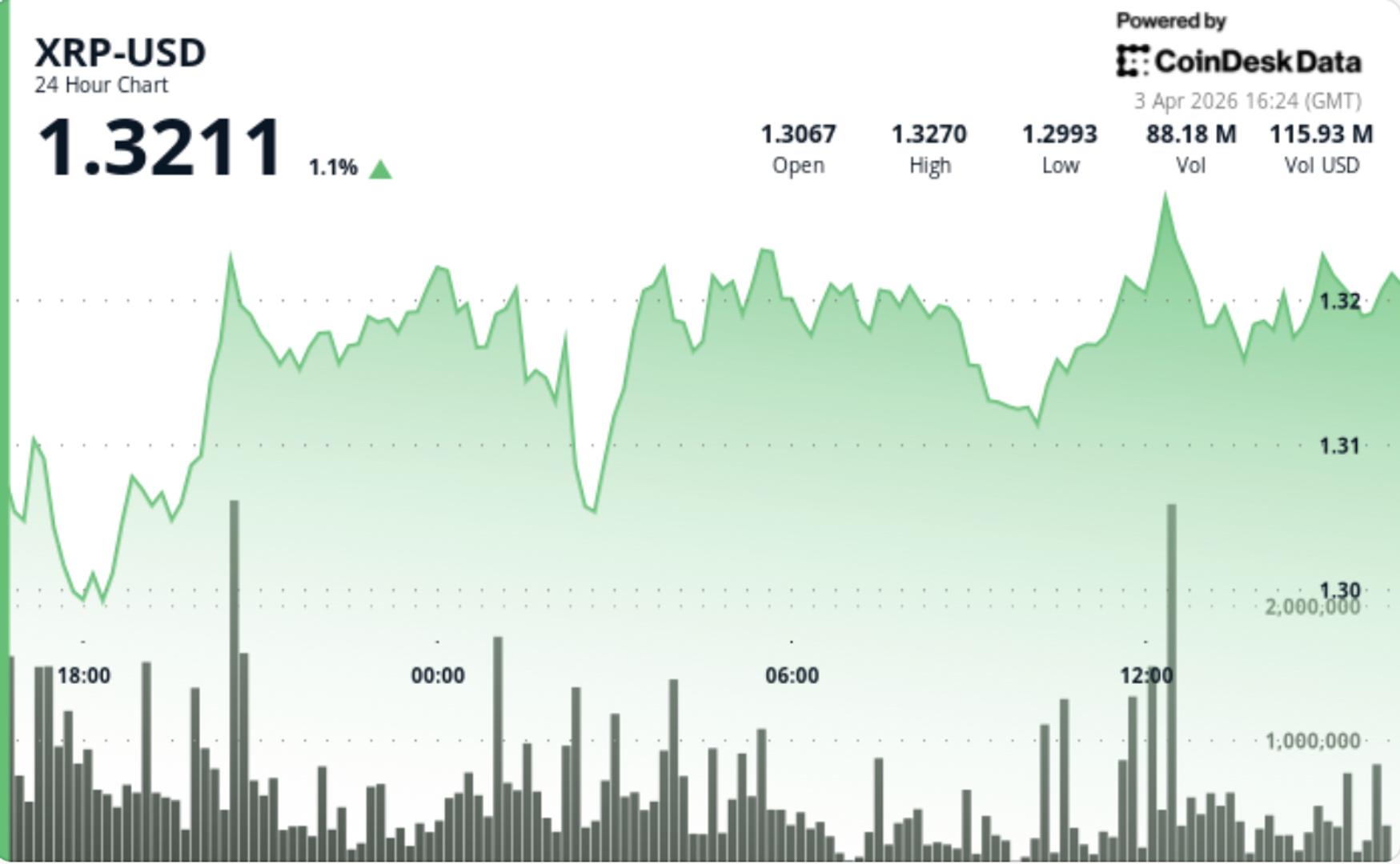
XRP is grinding higher, but not breaking out. The token is sitting around $1.33 after a modest move up, with higher volume coming in — yet price still isn’t escaping its range. That usually means positioning is building, not conviction.
News Background
- XRP rose just over 1% to $1.33 with volume about 23% above its weekly average
- Price moved almost in lockstep with the broader crypto market, showing little independent strength
- No major XRP-specific catalyst drove the session
Price Action Summary
- XRP traded in a tight range, holding above $1.30 while struggling near $1.33
- Buyers stepped in on dips, creating higher lows
- Breakout attempts toward $1.33-$1.34 were repeatedly sold into
- Late-session price action stabilized without follow-through
Technical Analysis
- The key theme is correlation — XRP is moving with the market, not leading it
- Higher volume without a breakout suggests traders are positioning, not committing
- Structure is slightly constructive (higher lows), but capped by overhead supply
- This keeps XRP stuck in a compression phase, where range tightens before expansion
What traders should watch
- $1.34-$1.35 is the near-term ceiling — break that and momentum can build
- $1.30 remains the floor holding the structure together
- Until one of those levels breaks, XRP is likely to stay range-bound and reactive to broader crypto moves

Stablecoin monthly transaction volume reached $7.2 trillion in February 2026, overtaking the Automated Clearing House (ACH) network’s $6.8 trillion for the first time.
The ACH is an electronic payment network in the United States that enables transfers directly between bank accounts. It has become the most widely used infrastructure for handling electronic money movement across the country.
Follow us on X to get the latest news as it happens
It’s a symbolically significant milestone showing how massive crypto payment rails have become. The February crossover did not happen in isolation.
Artemis data shows that stablecoin volume climbed further in March, reaching $7.5 trillion. That figure matched ACH over the same period.
Meanwhile, the stablecoin market has continued to grow. DefiLlama data showed that the market capitalization surpassed $316.7 billion, setting a new all-time high.
Notably, a recent report revealed that stablecoins dominated crypto markets in Q1 2026. They made up 75% of total trading volume, the largest share on record.
Overall transaction volume exceeded $28 trillion during the quarter, marking another all-time high. However, according to CEX.IO, automated trading played a major role, with bots responsible for 76% of the volume, the highest proportion seen in the past two years.
“Q1 2026 made the 2022 comparison hard to ignore. Stablecoin dominance rising sharply, capital rotating defensively, USDT and USDC diverging, automation surging, and retail pulling back — these patterns appeared together in mid-2022, and they are reappearing now. If broader bearish conditions persist through the year, stablecoins could see further demand and dominance gains in the coming quarters,” the report read.
The rising volumes reflect more than speculative activity. It also highlights the expanding use of these assets in real-world applications, including business-to-business (B2B) payments, cross-border transactions, and other financial activities.
Subscribe to our YouTube channel to watch leaders and journalists provide expert insights
The post Stablecoins Moved More Money Than the US Financial System’s Backbone appeared first on BeInCrypto.


The International Monetary Fund also warns that the distribution and speed of on-chain transactions bring new challenges and risks that require international coordination.
In a new staff research note published on Thursday, The International Monetary Fund (IMF) argues that tokenization represents a “structural shift in financial architecture,” not just an incremental efficiency gain.
Authored by Tobias Adrian — the IMF’s Financial Counsellor and Director of the Monetary and Capital Markets Department — the report focuses on the tokenization of real-world assets (RWAs) within the regulated financial system, namely banks, finance infrastructure, and asset managers, arguing that’s where “the most consequential transformation occurs.”
Settlement Speed Is a Double-Edged Sword
The IMF’s core thesis is that tokenization doesn’t just make existing finance faster, but represents a shift in how trust, settlement, and risk management work. In TradFi, trust is embedded in regulated intermediaries and time-delayed processes (end-of-day settlement, batch reconciliation). Those frictions, the report notes, actually serve a purpose: they give regulators and institutions time to intervene before a crisis cascades.
Tokenization, which the note defines broadly as “the representation of financial assets and liabilities on programmable digital ledgers,” collapses those frictions, bringing what is generally referred to as the primary benefits of blockchain: near instant settlement, 24/7 liquidity, etc. But, the report notes, that this reduction of barriers introduces new challenges and risks.
“Liquidity demands materialize instantaneously,” the note warns, creating conditions where a smart contract bug or oracle failure could trigger a chain reaction before anyone can respond. The IMF argues:
“When trading, settlement, custody, and compliance are embedded in code, supervision must extend beyond market participants to the design, governance, and resilience of market infrastructures themselves. Failures can
originate in smart contracts, data feeds, or consensus mechanisms, rather than firm balance sheets.”
Who Controls the Money?
A major focus of the report is on the quetion of settlement assets. The IMF identifies three competing models: tokenized commercial bank deposits, regulated stablecoins, and what the report refers to as wholesale central bank digital currencies (wCBDCs), with each carrying different risk profiles.
Cross-Border Gaps and the Fragmentation Risk
The report highlights that a major concern around the tokenization of RWAs in regulated financial markets is jurisdictional: tokenized transactions execute across borders at machine speed, while resolution and crisis management frameworks are still built around nationally domiciled institutions.
“Tokenization challenges crisis management and resolution frameworks that are built around nationally domiciled institutions, territorially bounded infrastructures, and jurisdiction-specific legal authority.“
In its research note, the IMF calls for international coordination and legal frameworks that can govern code itself, not just the institutions that deploy it.
“The key levers of control may lie in governance keys, consensus mechanisms, or smart contract logic operating across borders,” the note reads — a setup where no single regulator has a clear handle.
The report lands as the value of tokenized RWAs continue to surge, driven in part by tokenized funds from TradFi giants like BlackRock, Franklin Templeton, and Janus Henderson.
In 2025, tokenized RWA value tripled over the course of the year as a wave of financial institutions began tokenizing U.S. treasuries, private credit, and other RWAs.
Industry forecasts project the sector could hit $100 billion by end of 2026, with more than half of the world’s 20 largest asset managers expected to have launched RWA tokens by year-end.
Meanwhile, stablecoins have already begun functioning as mainstream financial infrastructure, with the GENIUS Act providing U.S. regulatory clarity in mid-2025.
This article was written with the assistance of AI workflows. All our stories are curated, edited and fact-checked by a human.
A solo Bitcoin miner secured a roughly $210,000 block reward on Thursday, proving that the so-called “mining lottery” is still paying out even if industrial operators dominate the network.
The miner, connected to CKPool’s solo service, found block 943,411 and earned 3.139 BTC in subsidy and transaction fees, according to data from block explorer mempool.space.
Solo mining remains rare. Statistics compiled by Bennet’s tracker show that solo mining pools have found just 20 Bitcoin (BTC) blocks over the last 12 months, paying out a total of 62.96 BTC, roughly one win every 18.7 days on average. The longest “drought” between blocks was 58 days, and the previous solo win came on Feb. 28.
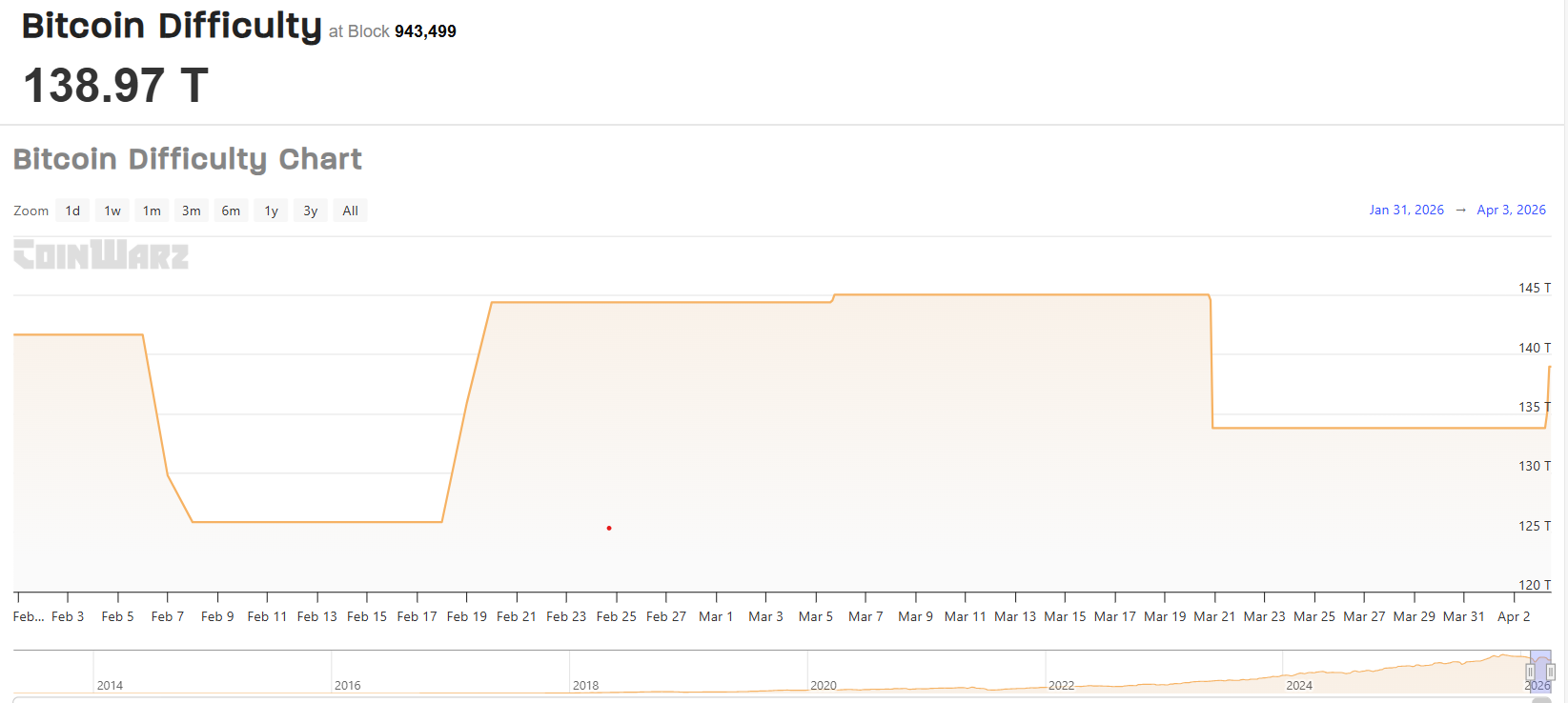
The win comes as Bitcoin mining grows increasingly competitive. Network difficulty, the measure of how hard it is to find a block, recently recorded its steepest adjustment since February, falling about 7.7% before rebounding 3.87% in the past 24 hours, reflecting weaker hashrate and briefly improving miners’ odds.
Bitcoin difficulty relief is fleeting
Even so, current difficulty levels remain near historic highs, meaning the probability of any single solo miner discovering a block is still vanishingly small.
Related: Solo Bitcoin miner bags over $200K block reward using rented hashrate
Public trackers like CoinWarz show Bitcoin’s difficulty has climbed orders of magnitude over the past decade, with only brief downward adjustments when miners switch off unprofitable rigs or redirect machines to other workloads such as artificial intelligence.

As difficulty grinds higher and input costs rise, the economics of mining increasingly favor large, well-capitalized operators over hobbyists.
Major listed Bitcoin miners are responding by reshaping their balance sheets and fleet strategies rather than betting on luck. Riot Platforms sold 3,778 BTC during the first quarter of 2026, according to a Thursday release, adding to a number of crypto miners and firms that have sold Bitcoin recently, including MARA Holdings, Genius Group and Nakamoto Holdings.
Against that institutional backdrop, the CKPool win stands out as a reminder that individuals can still, on rare occasions, beat the odds.
Magazine: Bitcoin may take 7 years to upgrade to post-quantum — BIP-360 co-author
Ethereum layer-2 networks need “responsive pricing” to scale to billions of users and reduce the fee swings that still accompany congestion, Offchain Labs co-founder Edward Felten said during a keynote at EthCC 2026.
Ethereum’s EIP-1559 upgrade launched in August 2021, as part of the London hard fork. It reformed the Ethereum fee market by modifying the gas fee limit and introduced a feature that burns part of the transaction fees, removing them permanently from circulation.
Felten said gas-price swings are still the main mechanism for protecting networks from being overrun during periods of heavy demand, even though that produces the kind of fee volatility mainstream users tend to reject.
“[With responsive pricing], you can see more traffic at lower gas prices without overrunning the infrastructure.”
Volatile gas prices have long been a barrier to mass adoption, particularly for users accustomed to fixed or predictable transaction costs in traditional financial systems.
The issue matters because Ethereum’s scaling story is no longer just about adding more throughput. It is increasingly about whether layer-2 networks can make transaction costs predictable enough for mainstream-style apps while still pricing congestion honestly enough to protect infrastructure under heavy demand. Arbitrum’s dynamic pricing rollout is now one of the first live tests of that tradeoff.

Arbitrum One the first L2 to adopt responsive pricing
Arbitrum One adopted dynamic pricing in January. It described the model as an “Arbitrum platform direction to make fees more predictable under demand by aligning prices with real network bottlenecks.”
Related: Gavin Wood’s biggest hope: Free crypto transactions and Web3 tech worldwide
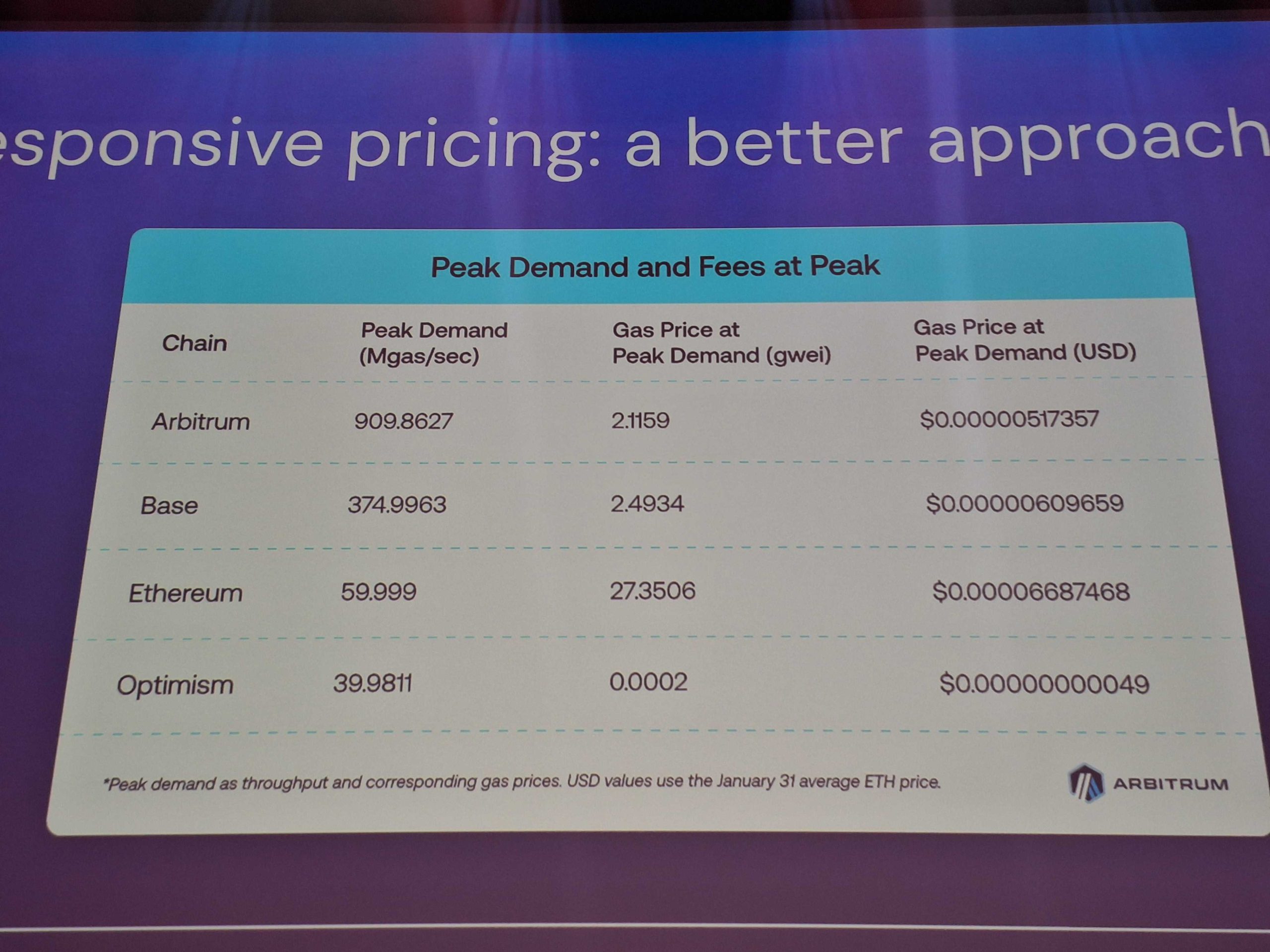
Felten shared multiple charts showing how Arbitrum gas fees remained lower during peak network volumes than fees on the Base network and other L2s that rely on EIP-1559.

Arbitrum One is the largest L2 with $15.2 billion in TVL, while Coinbase’s Base Chain is second with $10.9 billion, according to data from L2beat. L2s are securing over $39.7 billion in cumulative TVL, up 4.6% over the past year.
While responsive pricing may be more scalable and more transparent about underlying costs, its biggest downside is lower predictability than EIP-1559, according to Julian Kors, a senior developer and founder of execution workspace startup Pulsar Spaces.
The debate is not about one model being better, but whether networks optimise for “predictability and mechanism design purity or for efficiency and real-time cost alignment. EIP-1559 does the first very well. Responsive pricing leans into the second,” he told Cointelegraph.
Related: Ethereum Foundation accelerates 70,000 ETH staking plan after BitMine sale
Responsive pricing is a step forward, but the gas model needs replacing
Jerome de Tychey, president of Ethereum France and EthCC, told Cointelegraph that responsive pricing could improve user experience by making fees more closely reflect actual network demand.
Cyprien Grau, project lead at gasless Ethereum L2 Status Network, agreed, calling the new pricing model a “real improvement in fee accuracy.” However, the model still relies on a “fee market,” meaning that users may still face variable costs and gas spikes during congestion, he told Cointelegraph.
“It doesn’t solve the structural problem: L2 gas fees trend toward zero as scaling on L1 and L2s improves and competition intensifies. Responsive pricing makes the decline smoother, but you’re still building a revenue model on a depreciating asset.”
Grau added that responsive pricing is the “most advanced version of the gas model,” but said the gas model needs replacing. “L2s that scale to billions of users will be the ones where users never think about gas at all, and where networks’ economics don’t depend on charging them for it,” he added.
The fee model debate comes as parts of the Ethereum ecosystem are already rethinking the original rollup-centric scaling thesis. In February, Vitalik Buterin argued that some layer-2 assumptions no longer held and that future scaling should rely more heavily on the mainnet and native rollups.
L2 networks were created to scale Ethereum and offload part of the transaction load from the mainnet. However, Ethereum is now reconsidering its L2-centric approach, as these networks have siphoned significant economic value from the mainnet.
Magazine: Ethereum’s Fusaka fork explained for dummies — What the hell is PeerDAS?


RootData’s project claiming lets teams verify and manage profiles, lifting transparency scores over 30% and driving a 220% jump in heat and visibility across 220+ partners.
Summary
- RootData says more than 20 well‑known projects, including Bitway, Flock, Morph, and Solv, have claimed their profiles in the past week.
- Certified projects that complete information updates see average transparency scores jump over 30%, driving a 220% surge in RootData “heat value” and visibility.
- Over 120 projects have now been certified, gaining direct control over tokenomics, investor and team data, and syndication to more than 220 downstream data partners.
Web3 asset data platform RootData reports that adoption of its project claiming feature is accelerating, with more than 20 recognizable names — including infrastructure and DeFi projects like Bitway, Flock, Morph, and Solv — formally “settling in” over the past seven days. As the company notes in its latest update, projects that complete the claim process and supplement missing fields are seeing their comprehensive transparency scores rise by an average of more than 30%, a shift that in turn pushes their RootData “site heat value” up by roughly 220%. RootData says the move is already “greatly enhancing community trust and market attention,” with the total number of fully certified projects now exceeding 120.
According to RootData’s explainer and posts on X, the project claiming feature allows official teams to “claim your project for free, get verified, and directly manage & update” key datasets on their dedicated pages. That includes token economic models, investor lists, core team members, roadmap and milestones, as well as calendar events such as TGE dates, exchange listings, and governance votes. Once verified, teams can push updates through a one‑click sync system that RootData says distributes changes in real time to more than 220 partner platforms, ranging from exchanges and wallets to research terminals and media dashboards.
RootData’s transparency score, which it describes as measuring the “completeness and timeliness of project information,” is central to this approach. In prior analysis shared via a transparency alert, the platform highlighted that spot tokens with higher average disclosure levels (around 74.7%) tend to show shallower drawdowns and stronger rebounds than lower‑disclosure “Alpha” tokens (around 62.7%), arguing that better information reduces room for teams to exploit asymmetry with retail investors.
That framing has led RootData and commentators on Binance Square to urge teams to treat disclosure quality as a competitive advantage rather than a compliance chore. A recent post amplified by ChainCatcher put it bluntly: projects missing core information on financing, tokenomics or team composition risk being flagged as “black box” listings and deprioritized by sophisticated users and data aggregators.
In contrast, projects that claim profiles and keep them up to date now benefit from higher transparency scores, stronger on‑site heat rankings, and broader syndication across RootData’s data network — an increasingly important distribution channel in a cycle where listing venues, VC desks and retail traders all lean heavily on third‑party dashboards to filter signal from noise.
Binance maintained its leading position in crypto derivatives trading in the first quarter of 2026, while decentralized exchange Hyperliquid broke into the top 10 venues by volume, according to CoinGlass.
Derivatives trading remained the dominant force in the crypto market in Q1 2026, totaling $18.6 trillion compared with $1.94 trillion in spot trading, according to a CoinGlass report on Friday.
The analysts said trading activity remained strong over the quarter, though liquidity and capital became even more concentrated at the top. “Q1 was not about euphoria. It was about recovery, concentration, and shifting market structure,” CoinGlass said.
The data shows how a small group of exchanges continue to dominate crypto derivatives, even as decentralized platforms begin to emerge as competitors.
Binance handles $4.9 trillion in derivatives versus $640 billion in spot
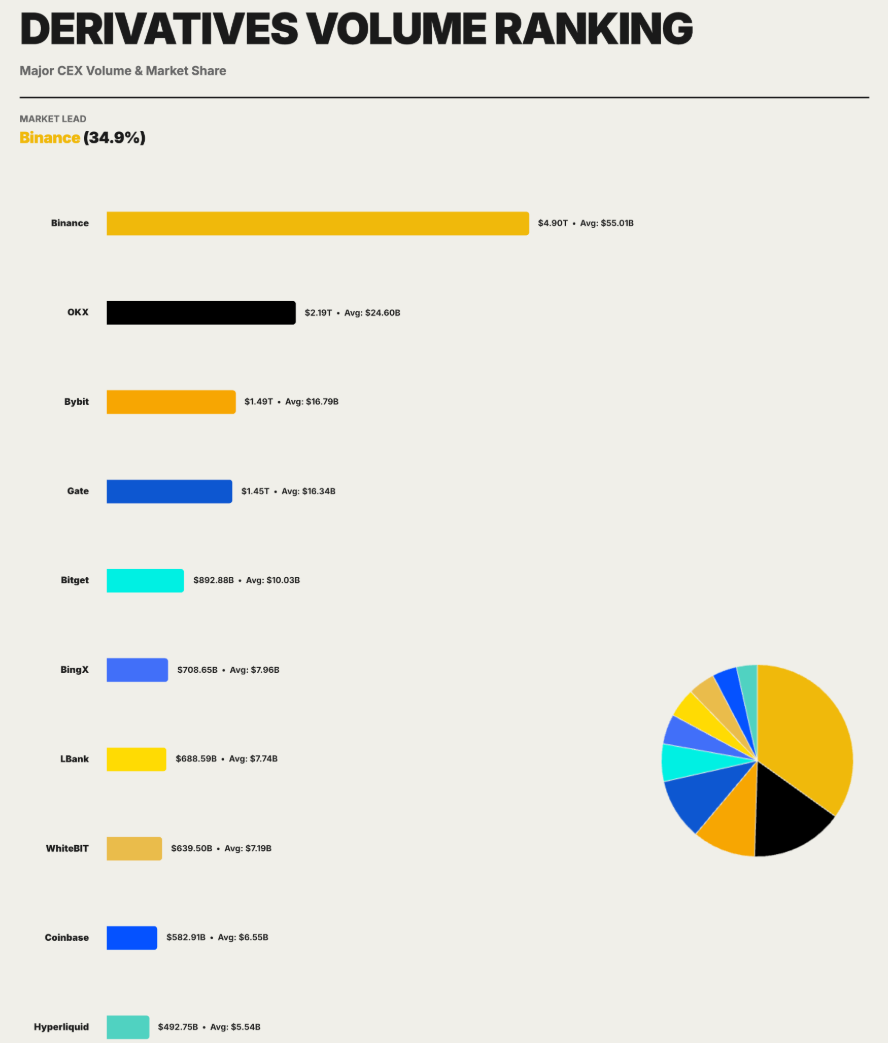
Binance processed about $4.9 trillion in derivatives volume in Q1 2026, or roughly 35% of activity among the top 10 exchanges. In 2025, the exchange held about 29% of $85.7 trillion in total derivatives volume.
The exchange also dominated spot markets at a similar share, with Q1 volumes amounting to roughly $640 billion, or around 34% of total volumes among the top 10.

Binance’s dominance points to its resilience despite controversy during the quarter, after several crypto community members, including OKX founder and CEO Star Xu, alleged that it played a major role in the mass liquidation event of Oct. 10, 2025.
Related: Binance sues Wall Street Journal amid report of DOJ Iran probe
Binance repeatedly denied the claims, saying the crash was driven primarily by macroeconomic factors, market maker risk controls and network congestion.
Hyperliquid enters top 10 as perpetual DEXs gain ground
Hyperliquid, a perpetual decentralized exchange, reached a key milestone in the first quarter of 2026, breaking into the top 10 derivatives exchanges by volume roughly three years after its launch.
The platform recorded about $492.7 billion in trading volume during the quarter, securing its place among the industry’s largest derivatives venues, including Binance, OKX, Bybit, Gate, BitGet, BingX, LBank, WhiteBIT and Coinbase.
Related: Wallet in Telegram launches perpetual futures trading with Lighter
The milestone comes after steady growth across previous quarters. In its 2025 report, CoinGlass said Hyperliquid nearly dominated the entire perp DEX sector, with its market share reaching up to 70% at times.
Perp DEX activity also expanded rapidly in 2025, with volumes nearly tripling over the year and accounting for up to 90% of volumes across major derivatives exchanges.

New Nielsen program delivers data sooner

XRP Price Prediction: Can These 6 Ongoing Developments Save Ripple

CSK vs PBKS Highlights, IPL 2026: Shreyas Iyer Shines With Fifty As PBKS Beat CSK By 5 Wickets

Smart energy pays enters the US market, targeting scalable financial infrastructure

Why Israel is blocking foreign journalists from entering

Bitcoin: We’re Entering The Most Dangerous Phase

Crypto Trading LIVE: BTC Live Trading Bitcoin Analysis | 28 MAR #crypto #bitcoin #btc

Michael Saylor on new STRC stock: Creates an on-ramp for bitcoin believers without the volatility

BITCOIN TO $50K?! Oil Surges as the S&P 500 Hits Make-Or-Break Support
-

 NewsBeat7 days ago
The Story hosts event on Durham’s historic registers
-

 NewsBeat23 hours ago
Steven Gerrard disagrees with Gary Neville over ‘shock’ Chelsea and Arsenal claim | Football
-

 Sports7 days ago
Sweet Sixteen Game Thread: Tide vs Michigan
-
Entertainment4 days ago
Fans slam 'heartbreaking' Barbie Dream Fest convention debacle with 'cardboard cutout' experience
-

 Business18 hours ago
No Jackpot Winner and $194 Million Prize Rolls Over
-

 Crypto World2 days ago
Gold Price Prediction: Worst Month in 17 Years fo Save Haven Rock
-
 Entertainment6 days ago
Lana Del Rey Celebrates Her Husband’s 51st Birthday In New Post
-

 Tech5 days ago
The Pixel 10a doesn’t have a camera bump, and it’s great
-
Crypto World3 days ago
Dems press CFTC, ethics board on prediction-market insider trades
-

 Tech5 days ago
Avatar Legends: The Fighting Game comes out in July and it looks pretty slick
-

 Sports3 days ago
Tallest college basketball player ever, standing at 7-foot-9, entering transfer portal
-

 Tech3 days ago
EE TV is using AI to help you find something to watch
-

 Fashion6 days ago
Amazon Sundays: Soft Spring Layers
-

 Business2 days ago
Login and Checkout Issues Spark Merchant Frustration
-

 Fashion7 days ago
When Evening Dressing Gets Colorful for Spring
-

 Tech5 days ago
Elon Musk’s last co-founder reportedly leaves xAI
-

 Tech3 days ago
How to back up your iPhone & iPad to your Mac before something goes wrong
-

 Tech4 days ago
Apple will hide your email address from apps and websites, but not cops
-

 Politics4 days ago
Should Trump Be Scared Strait?
-

 Crypto World4 days ago
U.S. rule change may open trillions in 401(k) funds to crypto
You must be logged in to post a comment Login