

Crypto World
Hyperliquid’s tokenized futures hit $1.2B as traders bet on oil, stocks



Decentralized exchange Hyperliquid’s permissionless platform, which lets anyone create perpetual futures tied to any asset, is more popular than ever.
Since its debut on Oct. 13, the so-called HIP-3 market has steadily gained traction, with open interest — the total value of all active contracts — hitting a record $1.2 billion on Sunday, according to data source ASXN. It has since remained at all time highs in a sign of growing adoption and activity on the platform.
The growth has been driven by booming activity in futures tied to equities and commodities, including oil, gold, and silver. It highlights how decentralized markets are increasingly being used to trade traditional assets, especially as a tool for price discovery over weekends when traditional exchanges are closed.
This story is worth discussing, Arca said in a weekly update, nothing the massive surge in activity on Hyperliquid.
“Interestingly, on Hyperliquid, just 7 of the top 30 markets are crypto pairs, while the vast majority are commodity and equity pairs on Trade.XYZ. This makes sense given the moves in silver, gold, and oil over the past few months, and it is a testament to Hyperliquid that we finally have a real platform where tokenized trading of RWAs is happening in meaningful size,” the firm said.
As of writing, the tokenized equity futures contract XYZ100-USDC led the pack, with open interest of $213 million, followed by the oil-focused CL-USDC at $169.8 million. Other top contracts included futures tied to Brent crude, the S&P 500, silver, and gold.
CL-USDC led in trading volume, seeing $1.62 billion in activity over 24 hours.
This follows the weekend surge in prices for select few crude oil grades, like the Murban crude, which traded at $103 per barrel, as conflict in the Middle East intensified, disrupting tanker flows through the Strait of Hormuz. Major oil benchmarks, such as Brent and WTI, surged above $110 per barrel on Monday, before crashing into two figures.
HIP-3, Hyperliquid’s builder-deployed perpetual futures, have shaken up how markets are made. Instead of limiting new contracts to a small set of validators, anyone can launch a market by staking 500,000 HYPE tokens — which serve as both a security deposit and a guard against spam.
This essentially puts the power to create markets in the hands of the community, opening the door to a far wider range of trading opportunities than traditional platforms allow.



- Polkadot price fluctuated in a tight range near $1.50 on Tuesday.
- Bulls could push to above $1.67 ahead of DOT emissions cut.
- Sell-off pressure amid prevailing market conditions might derail this setup.
Polkadot is trading near $1.50 as bulls position amid a potential breakout, with eyes on the upcoming upgrade and overhaul of DOT’s tokenomics.
The cryptocurrency’s price is also off lows of $1.40 reached earlier in the week as investors ponder a potential boost to DOT from fresh institutional interest.
Bulls recently celebrated the launch of the first US spot Polkadot ETF.
DOT, ranked 33rd with a market capitalization of $2.54 billion, is bidding to extend gains amid overall upward movement for Bitcoin and top altcoins.
Polkadot (DOT) holds near $1.50 as upgrade nears
Polkadot’s price shows an intraday range of $1.49-1.54 in early trading during the US session on March 10.
The gains see buyers bid for a retest of recent highs, while holding the critical $1.50 level.
The backdrop to this price action is a scheduled reset of Polkadot’s tokenomics.
A new monetary framework will roll out on March 12, and analysts say anticipation could catalyze fresh momentum for DOT.
The uptick this past week coincided with notable buying as traders positioned ahead of the event.
Specifically, Polkadot’s tokenomics reset will involve the introduction of a 2.1 billion hard cap on DOT supply.
The upgrade targets a 53.6% cut in emissions as well as staking.
ETF buzz has also engulfed Polkadot over the past few days.
This follows the debut of 21Shares’ spot Polkadot ETF, the first US spot DOT ETF that went live on Nasdaq under the ticker TDOT.
The physically backed fund, seeded with $11 million, could strengthen the asset’s appeal as a longer‑term allocation within diversified crypto portfolios.
Polkadot technical analysis
From a technical perspective, DOT’s immediate focus is on converting the $1.50-$1.55 region from resistance into support.
Bulls are eyeing three consecutive green candles on the daily chart and look to have stemmed the downtrend from highs of $1.75 posted in late February.
RSI is neutral near 50, and an upturn could see buyers accelerate gains.
However, after a choppy start to the year, trading around this level means bulls may not be out of the woods yet.

The token may thus trade sideways as consolidation picks pace.
For a breakout, DOT has to achieve an emphatic daily close above $1.55.
A successful breach of resistance at $1.67 amid a bullish retest could trigger follow-through buying.
If this happens, it could open the door to a short-term test of recent local highs around $2.30.
Conversely, failure to hold $1.50 will keep DOT confined within its descending channel. Major support lies around $1.22.


Opinion by: Jesus Rodriguez, co-founder of Sentora
If you look at decentralized finance (DeFi) as a stack of computational primitives, it’s remarkably complete — yet fundamentally broken.
We have automated market makers for liquidity, like Uniswap. We have lending markets for capital efficiency, and bridges for cross-chain “packet switching.” Step back and look at the architecture from a systems engineering perspective.
There is a gaping hole where the risk backstop should be.
Insurance is the “missing primitive” of the decentralized web. It is the translation layer that turns scary, opaque technical risk into a legible line item — a number you can compare, hedge and budget for. Without it, we aren’t building a financial system; we’re building a very sophisticated, high-stakes casino.
Insurance hasn’t worked, so far
A lot of chatter has been spent on why onchain insurance hasn’t “mooned” despite billions in total value locked (TVL). Personally, I suspect the failure is structural, not just a “lack of interest.” We’ve been fighting against the physics of risk management.
Most first-generation protocols tried to use DeFi-native assets, like Ether (ETH) or protocol tokens, to insure the very same DeFi stack those assets live in. This is a classic “reflexivity” trap. When a major exploit happens, the entire ecosystem usually suffers a setback. The collateral loses value at the exact moment the payout is triggered. In systems terms, this is a positive feedback loop of failure. It’s like trying to insure a house against fire using a bucket of gasoline. To work, insurance requires uncorrelated capital: assets that don’t care if a specific smart contract gets drained.
Historically, we relied on retail yield farmers to provide “cover.” These users don’t wake up caring about actuarial tables or underwriting. They care about APY and points. This is not the stable, long-term underwriting base that is required to build a multibillion-dollar risk engine. Real insurance requires a “low cost of capital” base — institutional-grade assets that are happy to sit and collect a steady 2%-4% spread without needing to “degenerate” into 100% APY schemes.
The scaling imperative
We’ve spent years obsessing over TVL as the North Star of DeFi. TVL is a vanity metric; it tells you how much capital is sitting in the “danger zone.” The metric we actually need to optimize for — the one that actually measures the maturity of the industry — is total value covered (TVC).
If we have $100 billion in TVL but only $500 million in TVC, the system is effectively 99.5% “naked.” In any traditional engineering discipline, this would be considered a catastrophic failure in safety margins. You wouldn’t fly in a plane that was 0.5% “safety tested.”
The scaling imperative for the next era of DeFi is to bridge this gap. We need a path where TVC scales linearly with TVL. Currently, they are decoupled. TVL grows exponentially based on speculation, while TVC crawls linearly because the “risk markets” are illiquid and manually managed. Scaling DeFi isn’t just about Layer 2 throughput; it’s about “risk throughput.”
Pricing the ghost in the machine
We often talk about risk as an ethereal, spooky thing that happens to other people. In a mature financial system, risk is a commodity. It needs to be assetized.
Think of DeFi insurance as the pricing engine of risk. Currently, when you deposit into a vault, you are consuming a bundle of risks: smart contract risk, oracle risk and economic design risk. These risks are currently unpriced — they are just hidden baggage you carry.
By building a robust insurance primitive, we turn those hidden risks into tradable assets. We move from “I hope this doesn’t break” to “The market says the probability of this breaking is exactly 0.8% per annum, and here is the tokenized instrument that pays out if it does.”
Related: AI will forever change smart contract audits
This assetization is powerful because it creates a market signal. If the cost of cover for Protocol A is 5% while Protocol B is 1%, the market has effectively “priced” the security of the code. Insurance isn’t just a safety net; it’s the global oracle for protocol health. It turns “security” from a vague marketing claim into a hard, liquid price.
The dream of programmable insurance
The “end state” of this technology isn’t just a decentralized version of Geico — it’s a transition from legal insurance to computational insurance.
Think about the difference between a traditional legal contract and a smart contract. Traditional insurance involves 40-page PDFs, adjusters and a six-month claims process. It is a “human-in-the-loop” bottleneck.
Programmable insurance is a primitive that can be integrated directly into the transaction stack. It includes granular cover and atomic payouts. You don’t just “insure a protocol” in the abstract. You insure a specific LP position, a specific oracle feed, or even a single high-value transaction. If the state of the blockchain detects an exploit, the payout happens in the same block. There is no “claims department”; there is only “state verification.”
This makes insurance a “first-class citizen” in the code. You can imagine an “Insurance” button on every swap or deposit, much like how you choose “priority gas” today. It becomes a toggle in the UI.
The next wave of DeFi adoption
The real challenge for DeFi adoption isn’t convincing another 1,000 degens to use a bridge; it’s onboarding the fintechs and neobanks.
These entities are already knocking on the door. They are considering the 5% onchain risk-free rates and comparing them to their legacy rails, which are clogged with overheads and rent-seekers. However, for a neobank (think of firms such as Revolut, Chime or Nubank), “The code is the law” is not a valid risk management strategy. Their regulators — and their own risk committees — simply won’t allow it.
For these players, insurance isn’t a “nice to have”; it’s a hard requirement for deployment. They represent the next “trillion-dollar” wave of liquidity, but they are currently standing on the sidelines. They need a “wrapper” that makes DeFi look like a bank account.
If we can provide a robust, programmatically backed insurance layer, we aren’t just protecting degens; we are providing the “regulatory-compliant shield” that allows a neobank to put $1 billion of customer deposits into a lending vault. Insurance is the bridge between “crypto-native” and “global finance.”
We’ve spent the last few years building the “engine” of the new financial system. We have the pistons (liquidity), the transmission (bridges) and the fuel (capital). But we forgot the brakes and the air bags.
Until we solve the insurance primitive, DeFi will remain a niche experiment for the risk tolerant. By shifting our focus from TVL to TVC, moving toward uncorrelated collateral and embracing the “pricing engine” of assetized risk, we can finally turn this experiment into a resilient, global utility.
Strap in. There is a lot of code to write and even more risk to underwrite.
Opinion by: Jesus Rodriguez, co-founder of Sentora.
This opinion article presents the author’s expert view, and it may not reflect the views of Cointelegraph.com. This content has undergone editorial review to ensure clarity and relevance. Cointelegraph remains committed to transparent reporting and upholding the highest standards of journalism. Readers are encouraged to conduct their own research before taking any actions related to the company.


U.S. prosecutors asked a federal judge to set an October date for the retrial of Tornado Cash developer Roman Storm on two unresolved criminal counts after a jury failed to reach unanimous verdicts during the original hearing, according to a letter filed Monday in the Southern District of New York.
In a letter to U.S. District Judge Katherine Polk Failla, U.S. attorney Jay Clayton, a former chair of the Securities and Exchange Commission (SEC, asked for a date now to “to avoid further unnecessary delays,” even though Storm, who is currently free on bail, has a pending motion for a judgment of acquittal. Oral arguments on that motion are scheduled for April 9.
Storm is a co-founder of Tornado Cash, a crypto mixer designed to obscure the origin and destination of blockchain transactions. In August, a jury convicted Storm on one count tied to operating an unlicensed money-transmitting business, and failed to agree on verdicts for two other charges, leaving alleged violations of money laundering sanctions law unresolved. He is currently free on bail while awaiting further proceedings.
Storm criticized the planned retrial in an X post on Tuesday, saying the jury’s split decision reflected uncertainty about the government’s case.
“A jury of 12 Americans heard four weeks of evidence and deadlocked: no verdict on money laundering, and no verdict on sanctions violations,” Storm wrote. “The government’s response? Try again to make writing code a crime.”
Storm also referred to a U.S. Treasury report acknowledging that mixing services like Tornado Cash can serve lawful purposes on public blockchains. The report came after years of opposition to crypto mixers.
Defense lawyers told prosecutors that setting a trial date before the April motion is resolved would be premature.


Arkham’s data shows that their PnL on bitcoin has risen to $1.8 billion.
The Winklevoss twins, who have been predominantly vocal about Zcash and Cypherpunk lately, have made a large BTC transfer to the cryptocurrency exchange they co-founded a decade ago.
According to data from the analytics company Arkham, the $130 million transfer to Gemini’s hot wallets was done “presumably to sell.”
THE WINKLEVOSS TWINS SOLD $130M BTC
The Winklevoss Twins transferred $130M of BTC to Gemini Hot Wallets since last week, presumably to sell.
The Winklevosses once owned 1% of the circulating BTC supply – and now continue to hold $764M of BTC. Their total PnL on BTC is currently… pic.twitter.com/Pjzp45V3K7
— Arkham (@arkham) March 10, 2026
Their data further indicates that the brothers once owned roughly 1% of bitcoin’s supply. Previous reports suggested that they began buying BTC in 2011, purchasing $11 million in the cryptocurrency at $120 per unit from the $65 million they were awarded in cash and Facebook stock following a legal dispute with Mark Zuckerberg.
Although they reportedly sold a portion of their holdings to launch Gemini, their estimated PnL on bitcoin remains around $1.8 billion, Arkham added.
They have made several newsworthy donations over the years, including multi-million-dollar transfers of BTC to Donald Trump’s 2024 presidential campaign on the promise that he was pro-bitcoin, pro-crypto, and pro-business.
While championing for more privacy in the cryptocurrency industry, their focus has most recently switched toward Cypherpunk – a company dedicated to self-sovereignty.
You may also like:
In the initial statement, the brothers said they will “execute on our mission by accumulating, building, and supporting privacy-protecting assets and technologies at a time when the world needs them more than ever.”
The latest press release shared by the company reads that Cypherpunk Technologies has invested $5 million into Zcash Open Development Lab (ZODL), which is its first tech investment outside of ZEC.
Binance Free $600 (CryptoPotato Exclusive): Use this link to register a new account and receive $600 exclusive welcome offer on Binance (full details).
LIMITED OFFER for CryptoPotato readers at Bybit: Use this link to register and open a $500 FREE position on any coin!
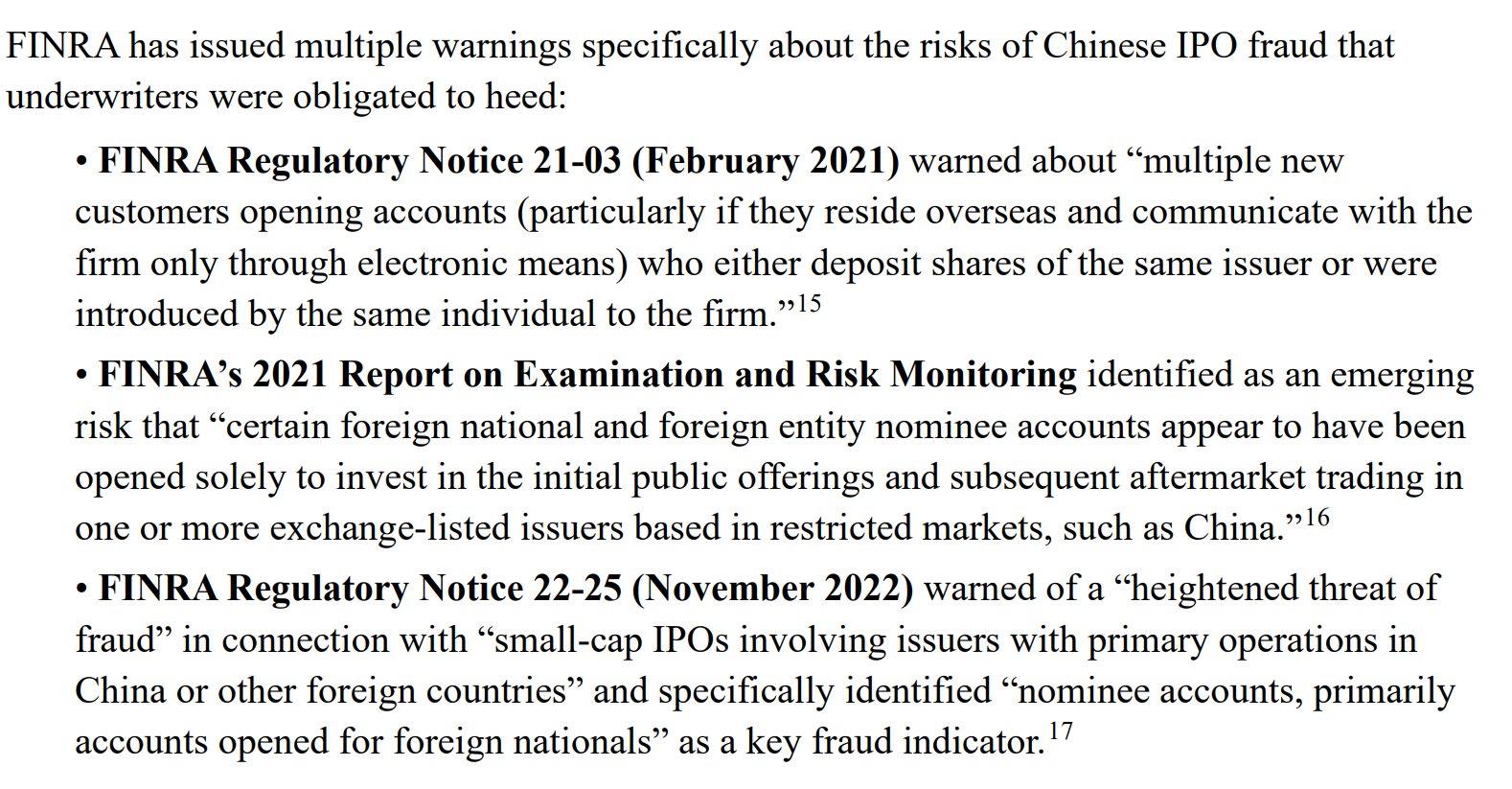
US lawmakers have launched an investigation into several Wall Street underwriters, including Dominari Securities, whose parent company is linked to the Trump family, over their role in bringing Chinese companies to US stock markets that were later tied to stock manipulation schemes.
On Monday, the House of Representatives Select Committee on China, chaired by Representative John Moolenaar with Rep. Ro Khanna as ranking member, sent letters to three US companies — D. Boral Capital, Dominari Securities and Revere Securities — seeking information about Chinese initial public offerings (IPOs) they helped underwrite.
“These scam centers defraud American households through coordinated “ramp-and-dump” stock manipulation schemes involving Chinese shell companies listed on American exchanges, which your firm appears to facilitate,” the lawmakers wrote.
The Chinese companies allegedly used US IPOs to inflate their share prices through coordinated trading and promotion, then dumped shares on retail investors before the stocks crashed. In some cases, dozens of accounts allegedly placed nearly identical buy orders above the IPO price, temporarily pushing valuations higher before insiders sold their stakes.
Related: Trump Sends Pro-Bitcoin Fed Chair Nomination to the Senate
Chinese stock schemes drain billions from investors
The lawmakers cited estimates that around $16 billion in US investor wealth has been drained since 2023 through such schemes. They also pointed to FBI data showing a 300% increase in complaints tied to Chinese stock manipulation cases.
The inquiry seeks documentation from the underwriters, including communications, trading records, funding sources and due diligence policies related to Chinese IPOs.

The committee said it is examining whether US financial intermediaries may have inadvertently helped facilitate manipulation schemes tied to Chinese issuers. The firms have been asked to submit the requested documents by Friday.
Related: Trump’s Media Company Closes $105M Crypto.com Deal
Dominari draws scrutiny in Chinese stock probe
One of the brokerage firms named in the probe is Dominari, which has ties to the Trump family. Located in New York’s Trump Tower, it is owned by Dominari Holdings, where Eric Trump, son of US President Donald Trump, is the fourth-largest shareholder. Eric Trump and Donald Trump Jr. joined the company’s advisory board in February 2025.
Last year, Dominari helped facilitate fundraising for Thumzup, a public company that adopted a Bitcoin (BTC) treasury strategy and also attracted millions of dollars in investment from Donald Trump Jr.
Magazine: Bitcoin may take 7 years to upgrade to post-quantum — BIP-360 co-author
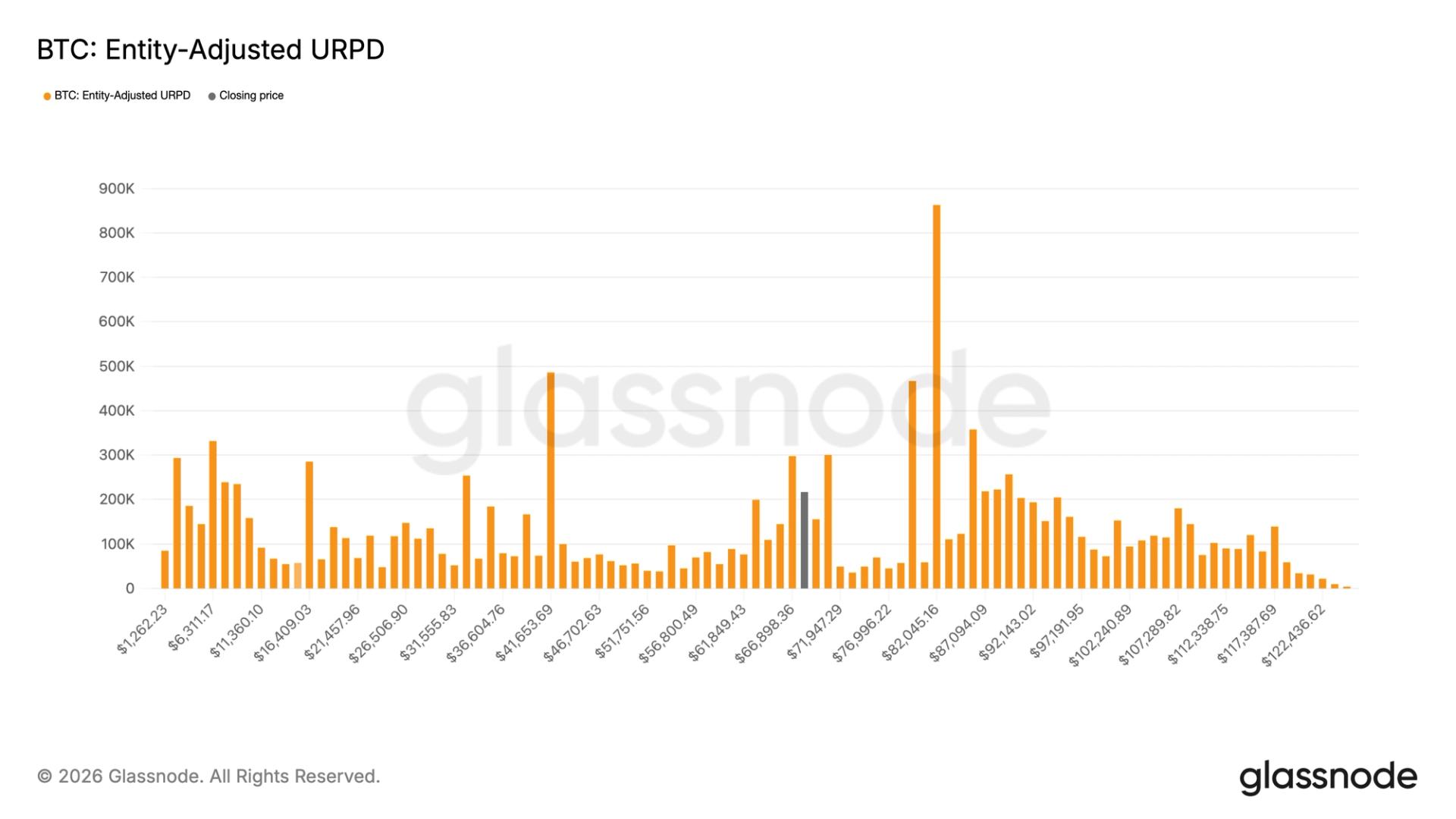
Bitcoin’s recent dip triggered heavy trading activity, with nearly 600,000 BTC changing hands in the $60,000–$70,000 range, according to blockchain data tracked by Glassnode.
In other words, traders went bargain hunting, snapping up nearly 600,000 BTC ($42.48 billion) in this price band during the correction. Of these, more than 200,000 BTC were accumulated in the past two weeks alone.
Note that at the start of the year, roughly 997,000 BTC had last moved within the $60,000–$70,000 range. Since bitcoin’s recent drop below $70,000, that number has jumped to 1.558 million BTC.
Taken together, it means that nearly 8% of the circulating supply is owned by people who bought their bitcoin in this range, creating a dense cluster of ownership. As such, the $60,000–$70,000 range could act as an important support level going forward.
At press time, bitcoin changed hands above $70,000, trading at levels, which have previously seen thin trading activity. CoinDesk Research has previously highlighted the “air gap” between $70,000 and $80,000, a range where relatively little supply changed hands.
Still, the market is at a point where things could spice up, because analysis by Checkonchain shows that around 40% of bitcoin holders have paid more than $70,000 for their coins.


- Legal injunction halts South Korean delistings of FLOW cryptocurrency.
- Altcoin rotation supports FLOW’s surge, outperforming broader crypto markets.
- Momentum indicators show FLOW in the overbought region, hinting at a possible pullback.
FLOW, the native token of the Flow blockchain, has seen a dramatic surge today, climbing over 53% in just 24 hours.
The jump comes despite recent announcements that major South Korean exchanges, including Upbit and Bithumb, planned to delist the token.
At first glance, delisting news might seem like a bearish trigger, but in FLOW’s case, the market response has been the opposite.
Here’s why the FLOW price is rising
The primary reason behind the surge is a legal move to suspend the delistings.
The Flow Foundation filed an injunction with the Seoul Central District Court to halt the planned March 16 delistings.
This move has reassured investors that the token will remain accessible on major South Korean platforms, removing a significant risk that had weighed on FLOW’s price for months.
In addition, Binance recently removed its monitoring tag for FLOW, signalling that previous technical issues have been resolved.
Together, these developments have alleviated fears about liquidity and safety, prompting a rush of capital back into the token.
Trading volumes have also spiked dramatically, indicating that both domestic and international traders are jumping in on the momentum.
Altcoin rotation strengthens the bullish momentum
Beyond the legal developments, FLOW’s rally has also benefited from a broader market trend.
Capital is currently rotating into altcoins, with investors seeking opportunities outside Bitcoin (BTC) and Ethereum (ETH).
This environment has amplified FLOW’s gains, as traders are looking for tokens with high growth potential and positive news catalysts.
FLOW’s performance today illustrates how market psychology and sector-wide trends can interact.
Even though BTC and the broader market have seen modest gains, FLOW’s price movement is clearly outpacing them due to its specific news-driven momentum.
This demonstrates how individual altcoins can decouple from broader market trends when there is a strong, token-specific catalyst.
FLOW price forecast
The pending court decision will remain the primary catalyst, as a favourable ruling could sustain momentum, while a rejection could trigger a swift correction.
Looking ahead, the immediate support is around $0.0481, which has acted as a pivot during the surge.
Holding above this level suggests that buyers remain in control and that the rally could continue toward the $0.07 area.
However, FLOW is currently in overbought territory, with momentum indicators like the RSI suggesting that a short-term pullback is possible.

If the price falls below the pivot, the token could retrace toward the 50-day moving average near $0.04743.
Crypto World
Stablecoin market expands, BTC price rallies as Iran war panic cools: Crypto Daybook Americas
By Omkar Godbole (All times ET unless indicated otherwise)
The stablecoin market is expanding again, led by USDC, and bitcoin’s rally is gathering steam.
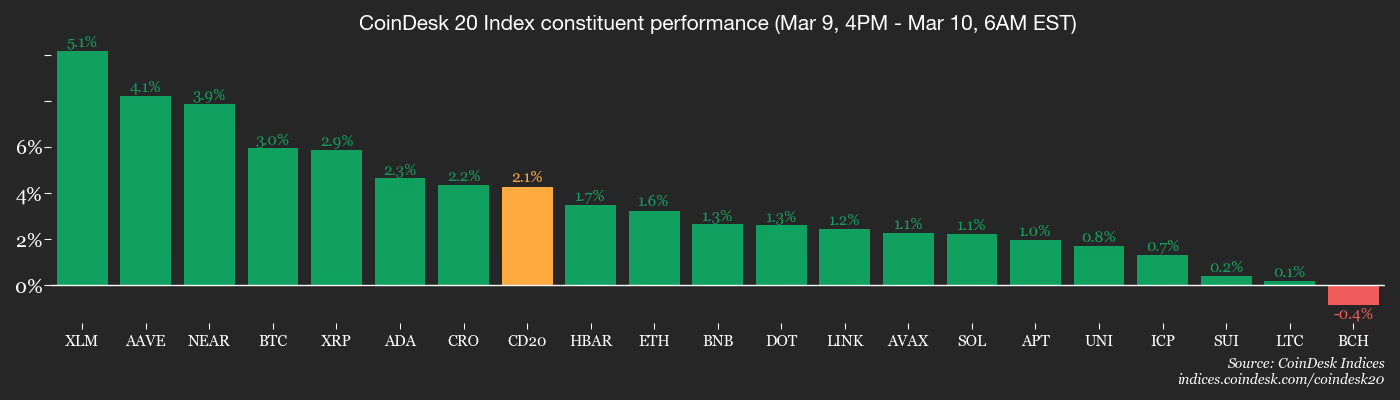
The panic over the Iran war has cooled in the past 24 hours after President Donald Trump said the conflict could be over soon. The result: Bitcoin, which held resilient through the turmoil, has rallied past $70,000, up over 4%. The CoinDesk 20 Index, ether (ETH), solana (SOL), and XRP (XRP) are up 3% to 5%, and smaller coins like HYPE, ZEC, and RENDER rallying 7% to 11%.
The market capitalization of USDC, the second-largest dollar-pegged cryptocurrency, is fast closing on the record high of $78.6 billion, extending a recovery from the late-January low of $70.9 billion. Stablecoin leader USDT’s supply has risen to $184 billion from the late-February low of $183.5 billion.
This upswing in supply of top coins pegged to the U.S. dollar indicates the dry powder sitting on the sidelines is increasing and could be deployed to fund new crypto purchases as the rally extends. ETF inflows are supportive of a continued bullish trend as well.
Some indicators, however, still call for caution. The Coinbase Premium Index, which measures the gap between bitcoin prices on the Nasdaq-listed Coinbase (COIN) exchange and offshore giant Binance, remains negative, a sign that demand from U.S. investors is still lagging. Historically, bull runs have seen sustained Coinbase premiums.
In traditional markets, oil has fallen back below $100, which supports continued stability in all risk assets, including cryptocurrencies. The dollar index and Treasury yields have also pulled back from recent highs. Stay alert!
Read more: For analysis of today’s activity in altcoins and derivatives, see Crypto Markets Today
What to Watch
For a more comprehensive list of events this week, see CoinDesk’s “Crypto Week Ahead“.
- Crypto
- Macro
- March 10, 9:00 a.m.: U.S. existing home sales for February est. 3.9M (Prev. 3.91M)
- Earnings (Estimates based on FactSet data)
Token Events
For a more comprehensive list of events this week, see CoinDesk’s “Crypto Week Ahead“.
- Governance votes & calls
- Aavegotchi DAO is conducting ballot 1and 2 of a multi-sig signer election, asking token holders to choose one signer from various nominees. Voting ends March 10.
- Ssv.network DAO is voting to cancel DIP-46 and reallocate the originally approved $15 million development budget, splitting it into $14.9 million for DVT and $100,000 as a retroactive research grant. Voting ends March 10.
- Realtoken Ecosystem Governance DAO is voting to temporarily pause interest rates on the RMM (Real Estate Monetary Fund) to zero for 15 days. Voting ends March 10.
- Unlocks
- Token Launches
Conferences
For a more comprehensive list of events this week, see CoinDesk’s “Crypto Week Ahead“.
Market Movements
- BTC is up 2.56% from 4 p.m. ET Monday at $70,734.01 (24hrs: +4.60%)
- ETH is up 1.68% at $2,061.24 (24hrs: +3.38%)
- CoinDesk 20 is up 2.02% at 2,015.27 (24hrs: +4.08%)
- Ether CESR Composite Staking Rate is up 17 bps at 2.81%
- BTC funding rate is at 0.0024% (2.6105% annualized) on Binance

- DXY is unchanged at 98.84
- Gold futures are up 2.02% at $5,194.10
- Silver futures are up 6.50% at $89.50
- Nikkei 225 closed up 2.88% at 54,248.39
- Hang Seng closed up 2.17% at 25,959.90
- FTSE 100 is up 1.84% at 10,437.86
- Euro Stoxx 50 is up 2.94% at 5,852.45
- DJIA closed on Monday up 0.50% at 47,740.80
- S&P 500 closed up 0.83% at 6,795.99
- Nasdaq Composite closed up 1.38% at 22,695.95
- S&P/TSX Composite closed up 0.32% at 33,189.30
- S&P 40 Latin America closed up 1.61% at 3.532,70
- U.S. 10-Year Treasury rate is unchanged at 4.14%
- E-mini S&P 500 futures are unchanged at 6,823.00
- E-mini Nasdaq-100 futures are unchanged at 25,100.25
- E-mini Dow Jones Industrial Average futures are unchanged at 47,948.00
Bitcoin Stats
- BTC Dominance: 59.53% (0.77%)
- Ether-bitcoin ratio: 0.02905 (-0.27%)
- Hashrate (seven-day moving average): 1,008 EH/s
- Hashprice (spot): $31.06
- Total fees: 2.52 BTC / $171,578
- CME Futures Open Interest: 103,205 BTC
- BTC priced in gold: 13.7 oz.
- BTC vs gold market cap: 4.76%
Technical Analysis

- The chart shows SOL’s daily price action in candlestick format since August last year.
- The token is again trapped in a back-and-forth trading range, this time between $75 and $90, mimicking the October and December-January pattern.
- The next move depends on the direction in which the range is ultimately resolved. A bullish resolution could bring a quick-fire rally above $100, while a breakdown would suggest continuation of the broader bearish trend.
Crypto Equities
- Coinbase Global (COIN): closed on Monday at $199.79 (+1.30%), +3.46% at $206.70 in pre-market
- Circle Internet Group (CRCL): closed at $111.84 (+9.74%), +2.18% at $114.28
- Galaxy Digital (GLXY): closed at $21.50 (+4.57%), +3.09% at $22.16
- MARA Holdings (MARA): closed at $8.66 (+8.11%), +2.31% at $8.86
- Riot Platforms (RIOT): closed at $14.70 (+3.78%), +2.52% at $15.07
- Core Scientific (CORZ): closed at $15.16 (+2.02%), +1.45% at $15.38
- CleanSpark (CLSK): closed at $9.61 (+4.34%), +2.29% at $9.83
- Exodus Movement (EXOD): closed at $10.83 (-0.64%)
- CoinShares Bitcoin Miners ETF (WGMI): closed at $37.33 (+3.49%)
- Bullish (BLSH): closed at $36.06 (+3.15%), +1.14% at $36.47
Crypto Treasury Companies
- Strategy (MSTR): closed at $138.95 (+4.06%), +3.25% at $143.46
- Strive Asset Management (ASST): closed at $8.51 (-2.18%), +4.58% at $8.90
- Sharplink (SBET): closed at $7.60 (+3.26%), +1.71% at $7.73
- Upexi (UPXI): closed at $0.97 (+7.78%), +6.19% at $1.03
- Lite Strategy (LITS): closed at $1.20 (+5.26%)
ETF Flows
Spot BTC ETFs
- Daily net flows: $167.1 million
- Cumulative net flows: $55.52 billion
- Total BTC holdings ~ 1.28 million
Spot ETH ETFs
- Daily net flows: -$51.3 million
- Cumulative net flows: $11.61 billion
- Total ETH holdings ~ 5.73 million
Source: Farside Investors
While You Were Sleeping
Crypto World
Massive leveraged bets show crypto traders are convinced this week’s rally is the real deal
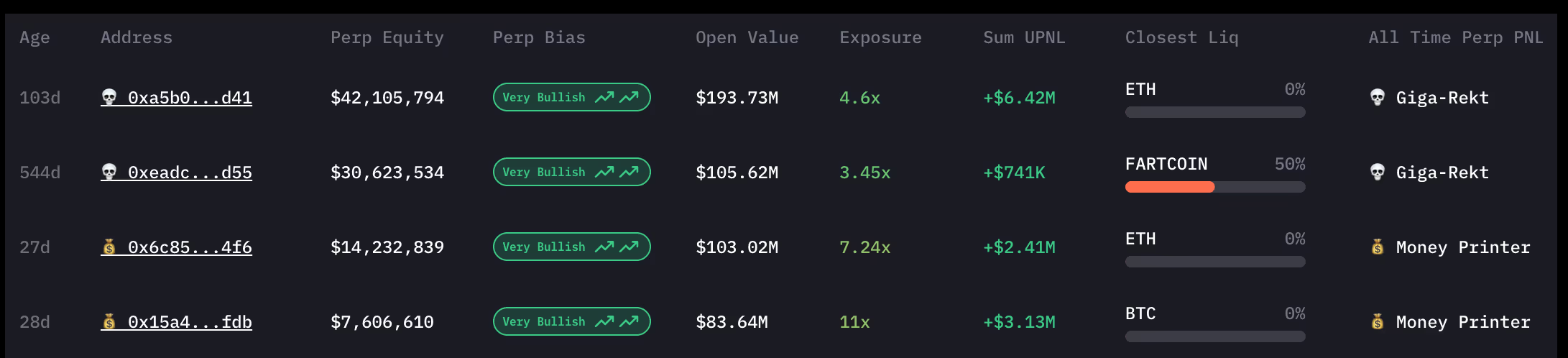
Crypto traders on the perpetuals exchange Hyperliquid are placing increasingly aggressive leveraged bets that bitcoin will break above $75,000 after a sharp rally at the start of the week.
Bitcoin climbed to around $71,000 on Tuesday, up from roughly $65,000 when BTC futures opened on Sunday evening. The move has reignited calls for a retest of recent highs after being rejected near $74,000 last week.
Onchain data shows several large traders — often referred to as “whales” — opening highly leveraged long positions on Hyperliquid as prices rise.
One trader is holding ether (ETH) and bitcoin long positions worth $194 million with unrealized profit and loss standing at around $6.5 million. Another account has $103 million worth of long positions across a multitude of trading pairs, betting on a broader crypto breakout as opposed to a major-dominated rally.
Positions on Hyperliquid are typically opened with leverage, allowing traders to amplify exposure. One wallet, for example, opened a series of trades using 20x leverage, meaning a $1 million account could control a $20 million bitcoin position. This trader opened 20x leveraged longs on 600 BTC worth about $42.5 million while simultaneously taking a 20x long position on 20,000 ETH valued at roughly $41.2 million.

The whale also appears to be accumulating ether in spot markets. Data shows the address spent $21 million in USDC to purchase 10,158 ETH at an average price of $2,067 shortly before opening the derivatives positions.
Other nine-figure long positions demonstrate one thing: Crypto traders are confident this breakout will stick and won’t be a bull trap like last week.
A separate wallet, 0x985f, is taking a different macro stance. The address deposited $9.5 million in USDC into Hyperliquid within a five-hour window before opening 20x leveraged short positions on oil futures, including roughly $8.17 million in crude oil (CL) contracts and $6.15 million in Brent oil.
The same trader also opened short positions across several crypto tokens, including HYPE, PUMP, XPL, APT and ASTER, suggesting a broader bearish stance on select altcoins while large traders concentrate bullish bets on bitcoin and ether.
The positioning highlights how decentralized derivatives platforms such as Hyperliquid have become a hub for large leveraged bets during periods of strong bitcoin momentum.
A break above $75,000 could force short sellers to cover and accelerate the rally, while a move lower would quickly test the conviction of traders piling into nine-figure leveraged longs.

Gas prices at a Shell Station located on Foothill Blvd.
Robert Gauthier | Los Angeles Times | Getty Images
Rising oil prices may not just be a headwind to President Donald Trump’s fight to lower inflation. They could also undermine his signature legislative achievement.
Almost all of the economic effect of the individual tax cuts in the “big beautiful bill” — from both smaller withholdings and sweetened tax refunds — could be erased if oil prices remain elevated by more than $20 compared to before the U.S.-Iran war, according to Raymond James.
“With the $25 move last week, if the oil price stays here, it essentially offsets the fiscal benefit from the OBBA,” wrote strategist Tavis McCourt in a note.
McCourt’s analysis relies on applying any increase in oil market prices to the more than $420 billion that consumers spent on gasoline in the fourth quarter of 2025. He told CNBC in an interview he accounted for both potential reduced demand due to higher prices and companies’ needs to pad margins in his calculations.
That leads him to conclude a $20 move in oil prices could mean consumers spending $150 billion more at the pump. The Tax Foundation estimates that the big beautiful bill’s individual tax cuts total $129 billion for 2025, with the overwhelming majority of it set to appear through tax refunds this filing season.
U.S. oil before the war on Feb. 27 closed at $67.02. As of Tuesday morning, after a major whiplash in prices on Monday, oil is still trading more than $20 a barrel higher at $88.20.

@CL.1 since Feb. 27 chart.
Stephanie Roth, chief economist at Wolfe Research, said in a Monday interview her estimations for the hit consumers could take with elevated oil prices are also similar to the elevated spending she projected from the tax law. Though Wolfe in a Tuesday note said oil prices would need to remain above $100 for some time for that to happen.
“In all these scenarios, it has to last longer than it is now,” Roth said. “The impact on gas prices so far has been short-lived, and modest compared to how it may ultimately play out.”
But it will take time for oil prices to come down even if an end to the war in Iran arrives, which Trump said in an interview with a CBS News reporter on Monday is “very complete,” didn’t give a timeline for the war’s end in a press conference that followed.
McCourt noted it took about six months for oil prices to get back to levels where they were before surges higher after the Gulf War in 1990 and the Russian invasion of Ukraine in 2022.
Consequences of weaker stimulus
Fiscal stimulus from the tax law was expected to boost the economy in 2026, with some economists predicting a reacceleration of U.S. growth partially thanks to it.
Now, an oil price shock is hitting right as consumers are set to get those tax refunds. Citadel Securities last week estimated that only 30% of refunds had been distributed by March 1, with the figure expected to rise to around 75% by May 1.
“The bottom line is that if we were expecting those tax refunds to lift consumer spending, these higher oil prices are just redirecting all that cash toward energy costs,” wrote Gabriel Shahin, CEO of Falcon Wealth Planning, in an email to CNBC. “It’s essentially voiding out the economic boost we were set to see.”
But Dan Niles, portfolio manager at Niles Investment Management, framed the situation as the refunds helping the economy weather higher oil prices.
He already has faith consumers can do that, pointing back to when oil hit similar prices in 2022 and 2023, all while Wall Street broadly predicted a recession on the horizon thanks to rising interest rates.
“You already had that stress tested a bit,” Niles said. “So if that’s the case back then, and coming off of inflation surging in 2021, and you still didn’t get a recession, why would you think inflation down at 3% and oil at $100 would cause a recession now?”
Many on Wall Street have drawn similarities between the surge in prices this time around to four years ago, when Russia invaded Ukraine.
Roth, though, cautioned investors against relying too much on that comparison.
“The economic backdrop is not a mirror image of where we are today,” she said. “Core inflation was running at 5.5% compared to 3% today. Job growth was running at around 500,000, now we’re at 37,000 over the past couple of months. So it’s just an entirely different backdrop.”
.GSPD vs. .SPX year-to-date chart.
McCourt added he thinks if the stimulus from the big beautiful bill isn’t as strong as originally thought, that likely won’t change too many outlooks for the year, particularly in stocks which he thinks never priced in a big surge in consumer spending. He noted that consumer discretionary stocks have underperformed the S&P 500 in 2026.
But he also had faith that the economy, not just the stock market, could weather oil prices and weaker-than-expected stimulus, so long as the labor market remains intact.
“We just have never had a sustained pullback in consumer spending without substantial job losses,” McCourt said. “We’ll have some shifts in spending… But it’s probably not going to impact the overall consumer spending levels.”

Choyce Brown Alleges Abuse, Ex YD Reacts To Auntie Nae Love

Brandon To: Japan demands integration – Britain just debates it
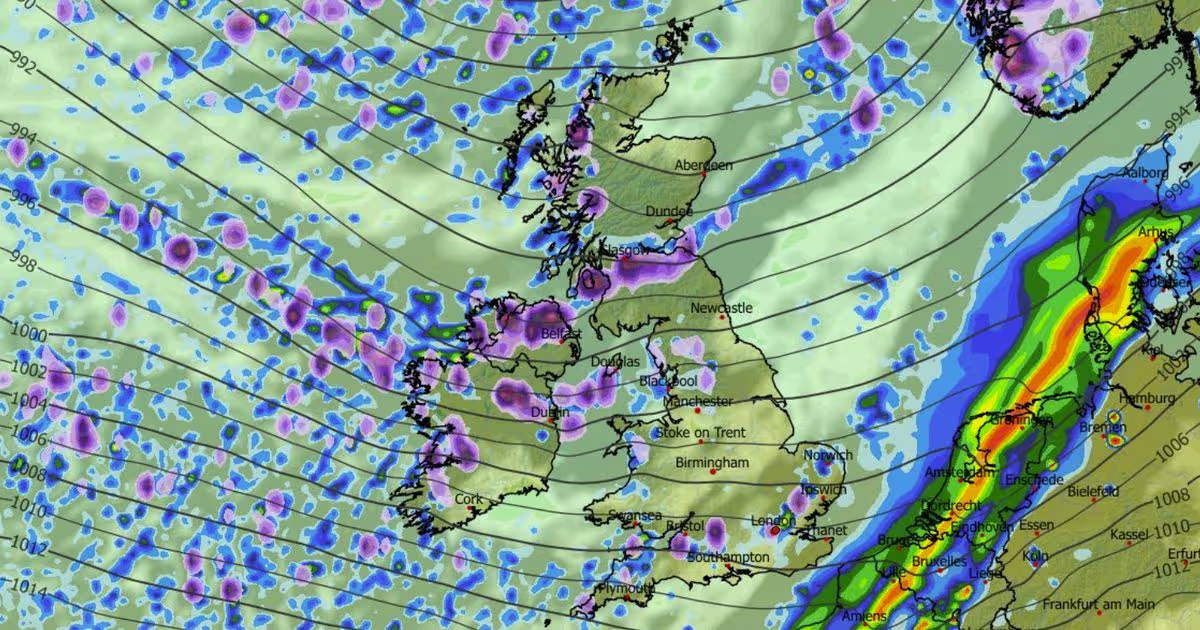
UK snow maps reveal where flurries will land on Friday including London


-
Business4 days ago
Form 8K Entergy Mississippi LLC For: 6 March
-

 Fashion4 days ago
Weekend Open Thread: Ann Taylor
-

 News Videos1 day ago
10th Algebra | Financial Planning | Question Bank Solution | Board Exam 2026
-

 Crypto World21 hours ago
Paradigm, a16z, Winklevoss Capital, Balaji Srinivasan among investors in ZODL
-

 Tech5 days ago
Bitwarden adds support for passkey login on Windows 11
-
 Sports5 days ago
499 runs and 34 sixes later, India beat England to enter T20 World Cup final | Cricket News
-

 Sports3 days ago
Three share 2-shot lead entering final round in Hong Kong
-

 Sports2 days ago
Braveheart Lakshya downs Lai in epic battle to enter All England Open final | Other Sports News
-

 Business6 days ago
Guthrie Disappearance Enters Fifth Week as Family Visits Memorial
-

 Politics4 days ago
Top Mamdani aide takes progressive project to the UK
-

 NewsBeat5 days ago
Piccadilly Circus just unveiled ‘London’s newest tourist attraction’ and it only costs 80p to enter
-

 Entertainment3 days ago
Hailey Bieber Poses For Sexy Selfies In New Luscious Lip Thirst Traps
-

 Business2 days ago
Search for Nancy Guthrie Enters 37th Day as FBI Probes Wi-Fi Jammer Theory
-
 NewsBeat12 hours ago
Pagazzi Lighting enters administration as 70 jobs lost and 11 stores close across Scotland
-

 Tech22 hours ago
Despite challenges, Ireland sixth in EU for board gender diversity
-

 Crypto World6 days ago
New Crypto Mutuum Finance (MUTM) Reports V1 Protocol Progress as Roadmap Enters Phase 3
-

 Tech5 days ago
ACIP To Discuss COVID ‘Vaccine Injuries’ Next Month, Despite That Not Being In Its Purview
-
Entertainment6 days ago
Harry Styles Has ‘Struggled’ to Discuss Liam Payne’s Death
-

 Business17 hours ago
Search Enters 39th Day with FBI Tip Line Developments and No Major Breakthroughs
-
 NewsBeat5 days ago
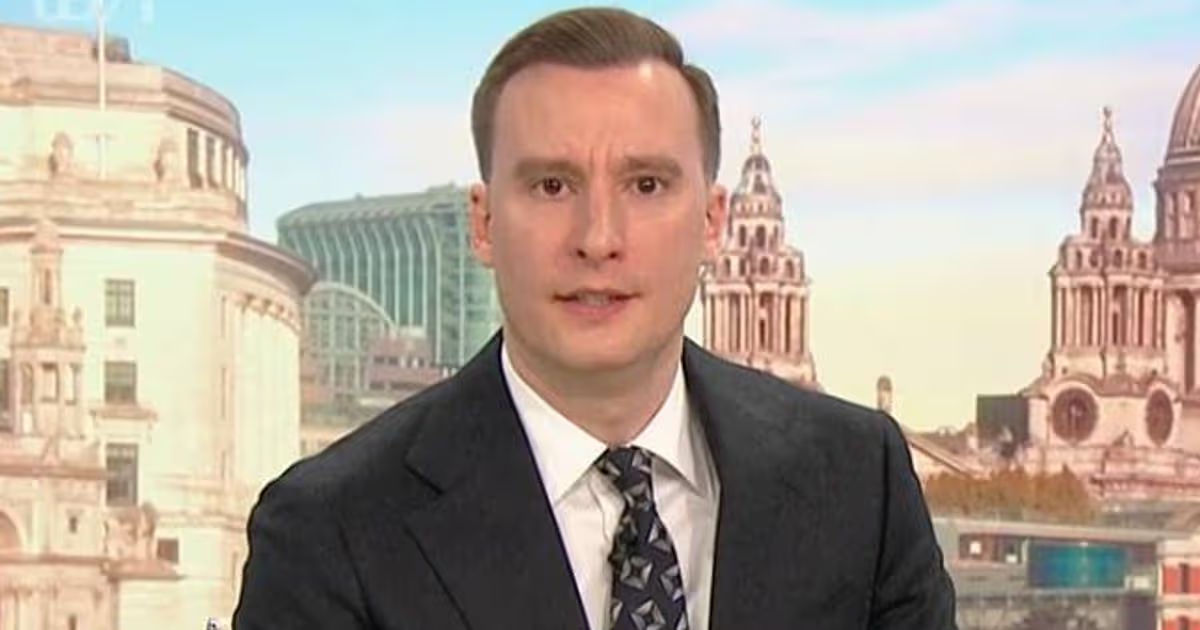
Good Morning Britain fans delighted as Welsh presenter returns to host ITV show