

Crypto World
Institutions Back AVAX While Retail Retreats, Undervalued?

Avalanche (AVAX), a layer-1 blockchain once viewed as a rival to Ethereum in 2021, has seen its price fall more than 94% from its all-time high (ATH). By 2026, the question remains whether any catalysts can help this altcoin stage a comeback.
Behind the disappointing price performance, infrastructure developments and growing institutional adoption are shaping a potentially promising recovery scenario for the ecosystem.
A Boost From Japan: When $2 Billion Moves “On-Chain” With Avalanche
One of the most significant developments strengthening Avalanche’s position is Progmat’s decision to migrate its assets to Avalanche, Japan’s largest digital securities (security token) platform.
More than $2 billion in tokenized real-world assets (RWA), including real estate and corporate bonds, are moving from the Corda platform to Avalanche.
An Avalanche report states that Progmat currently accounts for approximately 63% of issuance volume and 53.8% of projects in Japan’s digital securities market, with total issuance value exceeding ¥216.9 billion. The market is expected to surpass ¥1.05 trillion (approximately $7 billion) by the end of 2026.
Progmat’s decision to choose Avalanche over competing platforms represents a strong endorsement of Avalanche’s technology. The network enables financial institutions to create customized blockchains that comply with regulations while leveraging the security of the main network.
How VanEck Views Avalanche
A recent report from investment firm VanEck outlines the reasons Avalanche continues to maintain its appeal.
VanEck highlights that the system’s core lies in its Snowman consensus mechanism. This mechanism allows block production in just 1.2 seconds and achieves near-instant transaction finality.
“Avalanche competitor Ethereum produces blocks every 12 seconds while finality takes around 12.8 minutes. This allows Avalanche users to recognize settlement of their transactions within a few seconds, giving the chain significant practical advantages for financial use cases,” the VanEck report states.
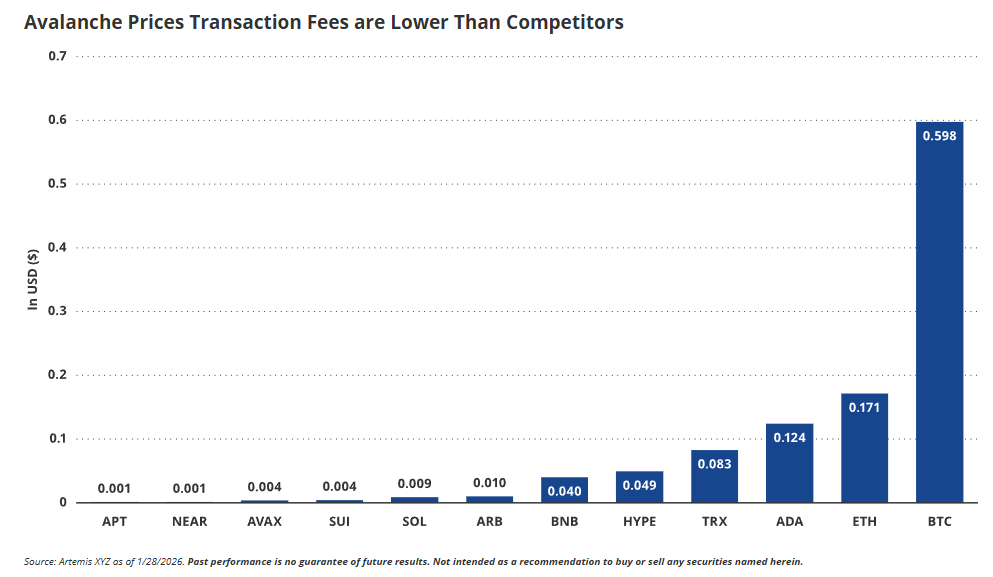
The report also emphasizes that Avalanche’s lower transaction fees compared to competitors provide a competitive advantage.
In addition, VanEck’s spot Avalanche ETF remains the only AVAX ETF currently trading on the market.
However, data indicate that investor demand for exposure remains modest. After one month of trading, total net assets reached $11.5 million. By comparison, LINK ETFs have attracted more than $81 million, while SOL ETFs have surpassed $800 million.
Can AVAX Regain Its Former Glory?
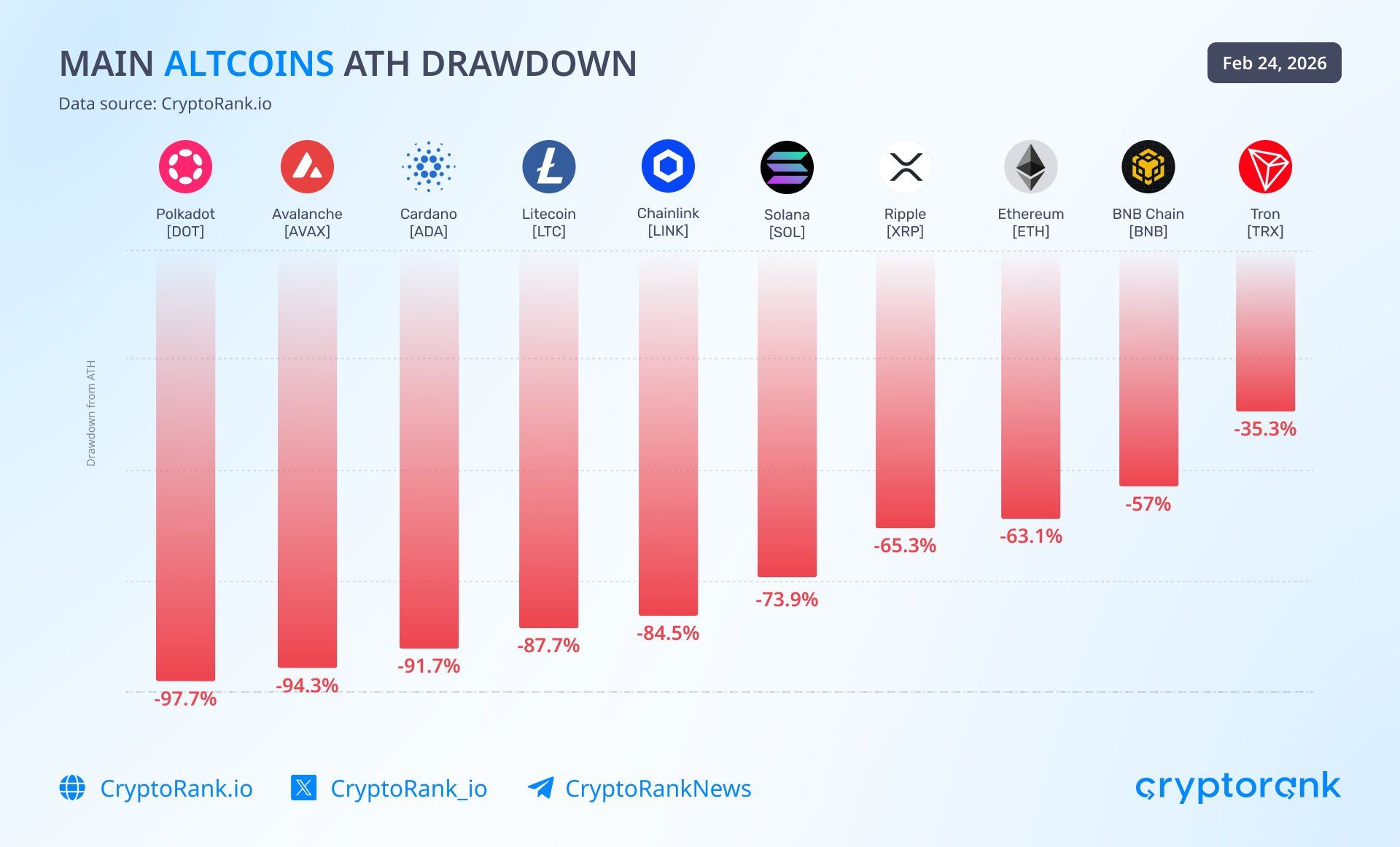
A report from CryptoRank shows that among leading altcoins, AVAX and DOT have experienced the worst drawdowns, each exceeding 94%. Such a decline represents a major shock for many investors.
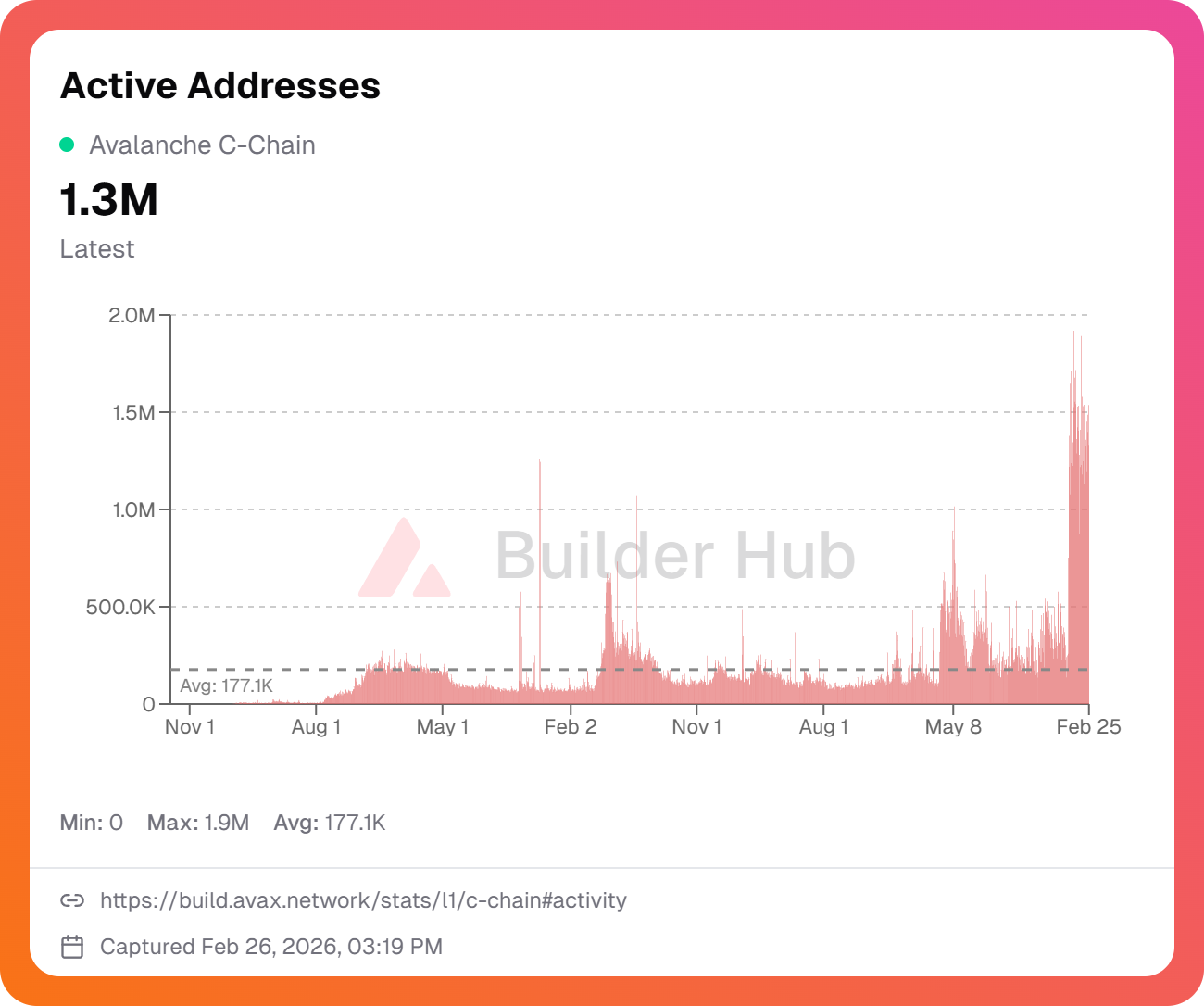
However, Data from Avalanche signals positive momentum in February as users return to the network. Daily active addresses climbed above 1,300,000, marking the highest level in this layer-1 blockchain’s history.
“AVAX’s new slogan should be: Believe in the tech, not in the price,” investor Emperor Osmo stated.
A recent report by BeInCrypto also points to widespread negative sentiment, prompting many investors to hesitate before allocating capital. However, when capital flows return, projects with strong fundamentals may become priority choices for investors.

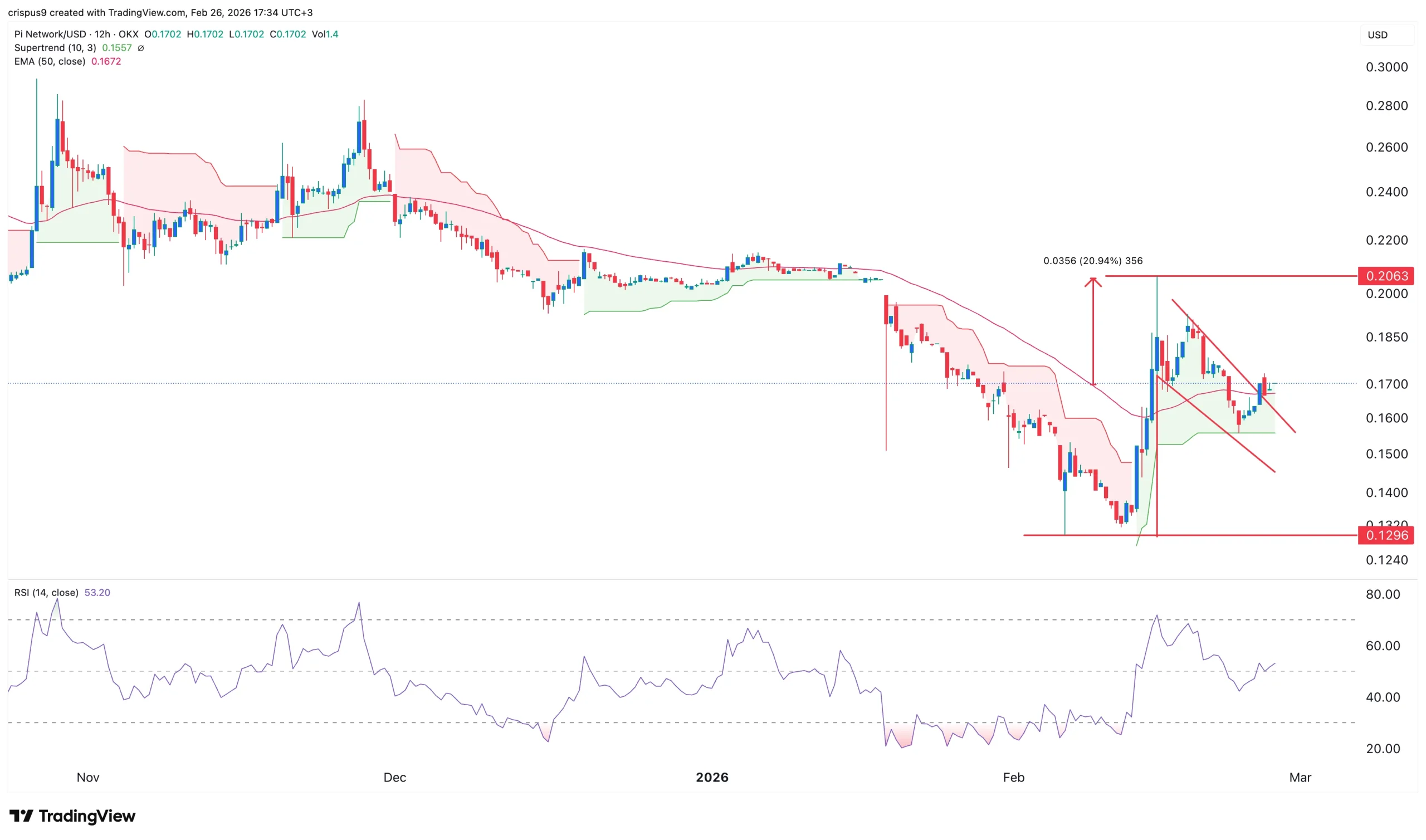
Pi Network price has done well this month, moving from a low of $0.1295 on February 6 to the current $0.1700. It has formed a highly bullish pattern, pointing to more gains as key upgrades and whale buying continues.
Summary
- Pi Network price has formed a bullish flag pattern on the 12-hour chart.
- The network is undergoing a series of upgrades.
- Data shows that whales are continuing to accumulate the token.
Pi Coin (PI) price could be on the verge of a strong bullish breakout in the coming days. First, the network is carrying out a major upgrade as it seeks to move to the latest version of the Stellar Consensus Protocol. This upgrade, when fully implemented, will make Pi a faster network with more functionality.
In a statement on Thursday, the developers noted that the next main upgrade deadline will be on March 1. After moving to 19.9, there will be four main stages, with the final one expected to happen in April this year. It is common for cryptocurrencies to rebound ahead of a major upgrade.
Pi Network price will also benefit from the ongoing whale buying. Data shows that the number of whales jumped rose to 20, with the biggest one holding over 383 million coins. The whale has bought over 17 million Pi coins this month, a sign that he expects it to rebound over time.
Meanwhile, the team noted that they are working on more features. A major one is the plan to launch a KYC-as-a-Service feature, a move that will see it compete with popular platforms like Humanity Protocol and Worldcoin. This product will be based on the success of the ongoing KYC process that has verified over 16 million users.
The biggest catalyst for the Pi Network Coin price will be the potential Kraken listing. Kraken, a top American exchange, has signaled that it will list it this year. Such a listing will make it available in the United States, and likely put more pressure to other exchanges to list it.
Pi Network price has formed a bullish flag pattern
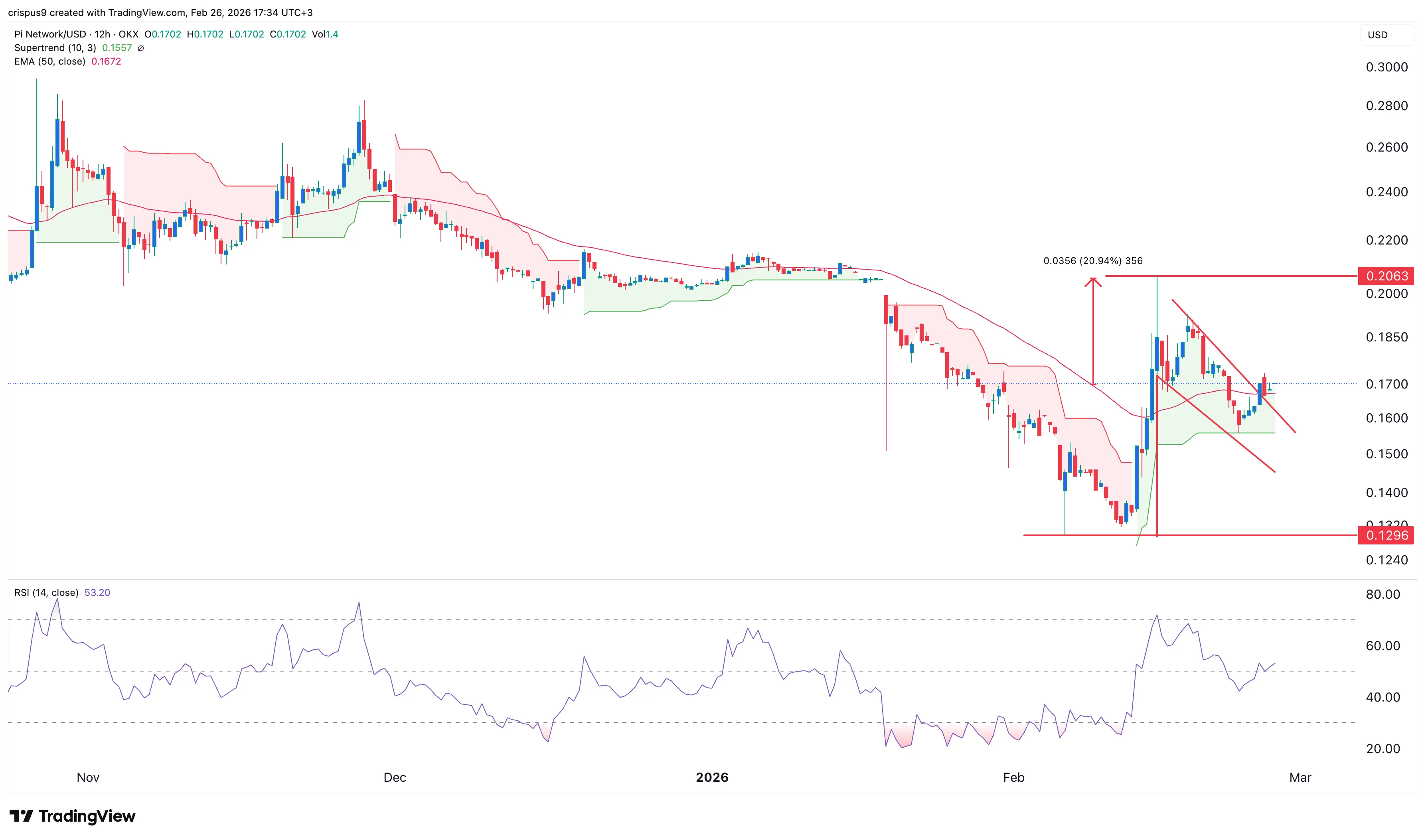
The 12-hour chart shows that the Pi Coin price has flashed key bullish patterns that may lead to more gains. It has formed a bullish flag pattern, which is made up of a vertical line and a descending channel. It has now exited the upper side of this channel, which may lead to more gains.
Pi Coin price has also remained above the Supertrend indicator, a sign that bulls are still in control. It also moved slightly above the 50-period moving average, while the Relative Strength Index is pointing upwards.
Therefore, the most likely Pi Network forecast is bullish, with the next key target being at $0.2065. This target is about 20% above the current level.
Crypto World
STRK price outlook as Starknet prepares to launch strkBTC, a shielded Bitcoin for private transactions


- strkBTC will enable private Bitcoin transactions on Starknet’s DeFi network.
- STRK is down nearly 70% in 90 days, closely tracking Bitcoin’s movements.
- The key STRK price levels to watch are the support at $0.04 and the resistance at $0.045.
Starknet is gearing up for a major move in the decentralised finance (DeFi) space with the upcoming launch of strkBTC, a Bitcoin-based asset designed to bring privacy and confidentiality to transactions on its Layer-2 network.
According to a press release by Starknet, the new asset will allow users to transact Bitcoin within DeFi without exposing balances or counterparties.
It is built with shielded transfers in mind, giving users the flexibility to maintain privacy while interacting with the DeFi ecosystem.
strkBTC will be issued deterministically from verifiable Bitcoin deposits, meaning that the minting process does not rely on discretionary control.
This ensures that the token’s supply mirrors actual Bitcoin deposits on the network, creating a transparent and verifiable foundation for its use.
Users can choose between public and shielded modes, enabling confidential transactions while still preserving regulatory compliance.
This is achieved through selective disclosure mechanisms, which allow necessary audits without exposing the broader network activity.
The launch of strkBTC is part of Starknet’s strategy to increase Bitcoin adoption in DeFi while addressing concerns that have historically held back institutional participation.
By combining privacy, composability, and auditability, Starknet aims to attract both retail and institutional users to its ecosystem.
Starknet (STRK) market reaction
Starknet’s native token, STRK, has been under significant pressure in recent months.
The token has dropped roughly 70% over the past 90 days, reflecting a broader trend in cryptocurrency markets.
Its current price sits near $0.042, with a 24-hour decline of over 8%.
However, market activity remains moderate, with a 24-hour trading volume of around $52 million and a total value locked (TVL) on the network of roughly $446 million.
The upcoming strkBTC launch may provide a catalyst for renewed interest.
The introduction of a privacy-focused Bitcoin asset could enhance the utility of the Starknet network and increase demand for STRK as a governance and utility token.
In addition, STRK’s performance is closely tied to Bitcoin’s price movements, and the stabilisation of BTC above $66,000 could help STRK consolidate in the range of $0.04 to $0.045.
On the other hand, a sustained move below $0.04 may see the STRK token test the $0.035 support zone.
Investors should also keep an eye on broader market sentiment indicators, such as the Fear & Greed Index.
Historically, movements out of extreme fear have preceded market rebounds, suggesting that even in a downtrend, relief rallies are possible.
STRK price forecast
Starknet (STRK) remains in a cautious position, with short-term consolidation possible, although long-term direction is dependent on broader crypto market recovery and the success of strkBTC’s adoption within Starknet’s DeFi ecosystem.
The launch of strkBTC adds an important layer of fundamental support for STRK, as the token’s utility within the network is set to increase.
For short-term traders, the key levels to watch include the immediate support at $0.04 and the resistance at $0.045.
A break above $0.045 could signal the start of a more sustained recovery, especially if Bitcoin shows strength simultaneously.
Conversely, a drop below $0.04 would likely signal further downside toward $0.035, continuing the current bearish trend.
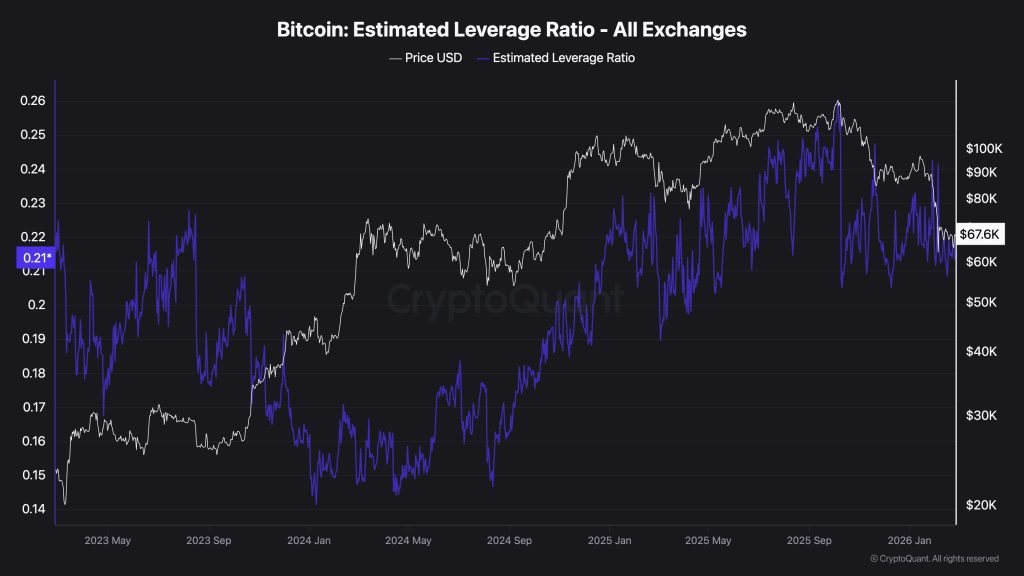
Retail activity in crypto fell off a cliff, and it seems they are moving elsewhere.
Spot volumes are down 25% to 30%, and Estimated Leverage Ratios have dropped 28%. This looks like capitulation, coming four months after Bitcoin topped at $126,000 and slid 46%.
Capital is rotating hard into equities. The old “buy the dip” reflex that defined the 2024–2025 run is fading. Liquidity on major exchanges is thinning, and instead of moving with tech stocks, crypto is starting to lose capital to them as traders choose stability over volatility.
Key Takeaways
- The Signal: Leverage Flushed: Estimated Leverage Ratios (ELR) plummeted from 0.1980 to 0.1414, wiping out speculative froth.
- The Data: Equities Rotation: Retail traders hit all-time high net inflows of $650 million into stocks and options in January 2026.
- The Outlook: Sideways Summer: Analysts predict range-bound action through mid-2026 as retail capital remains sidelined.
The Data Behind the Retail Crypto Liquidity Drain
The data is clear. The speculative engine has stalled. Estimated Leverage Ratios dropped 28%, sliding from 0.1980 to 0.1414.
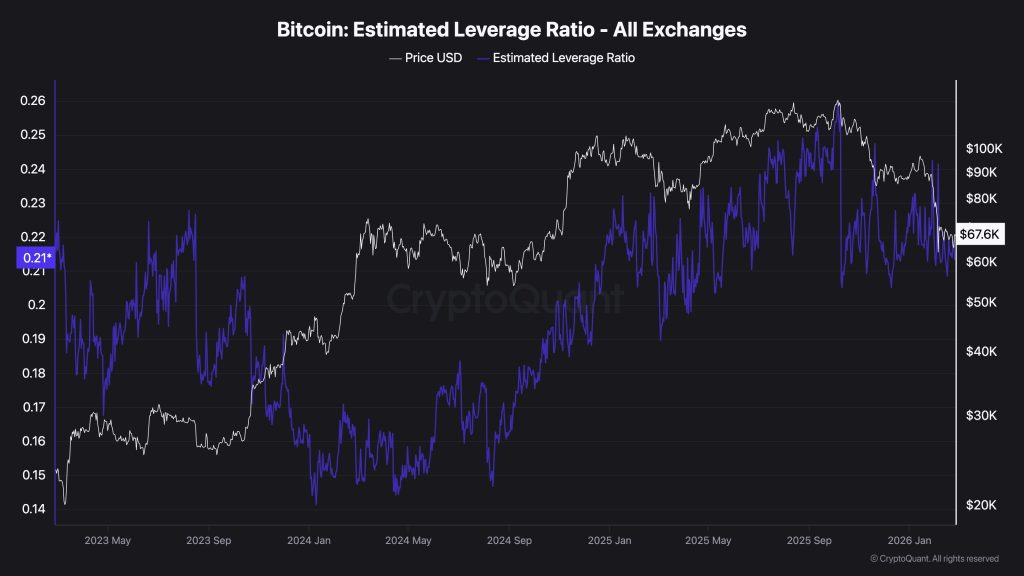
Binance activity fell by about $4.71 billion, down 16.4%, with daily volume now near $24 billion. Without heavy retail participation, rebounds are weak and short-lived. Price is leaning on passive institutional flows rather than aggressive speculation.
The “digital gold” hype has cooled among short-term traders. After the fall from $126,000, fewer participants are willing to catch dips. The leverage reset suggests the high-risk crowd that drove the 2025 rally has either been liquidated or stepped aside.
People Are Moving From Crypto To Stocks
Retail is not moving to cash. It is moving to stocks.
In January 2026 alone, retail traders funneled $350 million into cash equities and more than $300 million into options. That is record flow. The shift is clear.
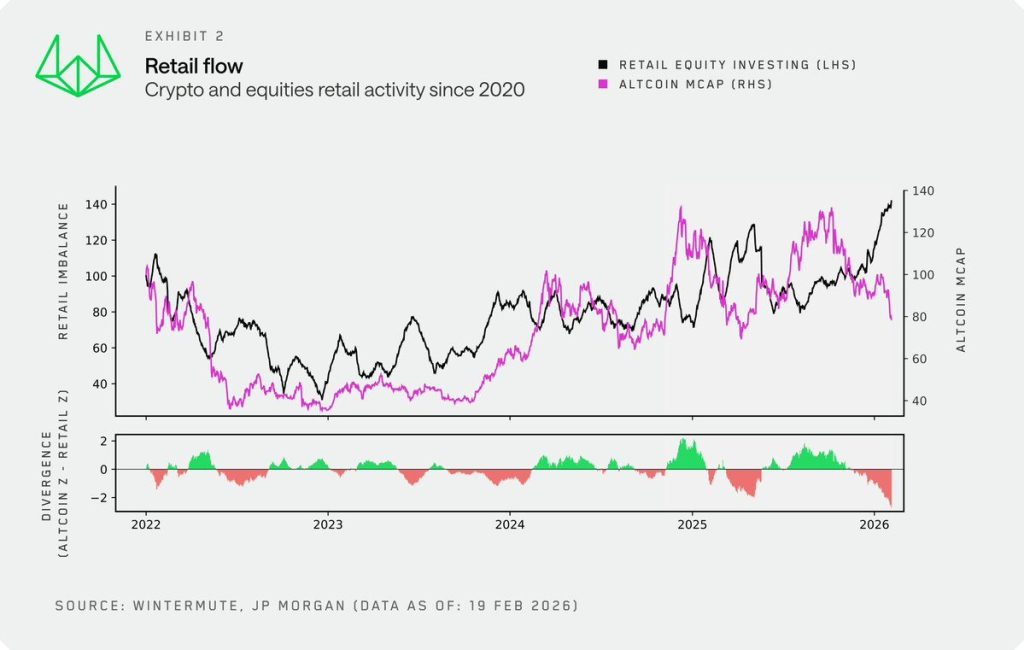
The BTC-to-Nasdaq volatility ratio has dropped below 2x. Stocks now offer comparable volatility with far smaller drawdowns. After a 46% Bitcoin correction, that trade-off looks rational to burned traders.
Institutions are still active in crypto through ETFs, but they provide floors, not frenzy. They accumulate quietly. They do not create viral rallies.
Meanwhile, the speculative energy has rotated to AI-driven equity names. Traders are using language models to dissect earnings and hunt for an edge in stocks. Compared to that, crypto currently looks opaque and momentum-starved.
Until retail risk appetite swings back, crypto is missing the explosive buy-side pressure that once fueled vertical moves.
Discover: Here are the crypto likely to explode!
The post Why Retail Is Moving From Crypto To Stock: Will They Comeback? appeared first on Cryptonews.


A new investigation claims that employees at crypto trading platform Axiom abused internal tools to access private user data and profit from insider trading.
Summary
- ZachXBT released a report accusing Axiom Exchange employees of misusing internal tools to track private wallets.
- The investigation linked leaked dashboards, recorded calls, and on-chain data to alleged insider trading and coordinated memecoin activity.
- Unusual betting on Polymarket before the reveal raised further questions about information leaks and market manipulation.
On Feb. 26, blockchain investigator ZachXBT published a detailed report on X accusing staff at Axiom Exchange of misusing internal dashboards to track private wallets and trade ahead of users.
According to the report, one of the main figures involved was Broox Bauer, known online as @WheresBroox, a senior business development employee based in New York. ZachXBT said Bauer had access to internal systems that allowed him to search users by referral code, wallet address, or user ID.
Internal tools allegedly used to track private wallets
Recordings and leaked screenshots reviewed by the investigator show Bauer discussing how he researched 10 to 20 wallets at first and expanded gradually to avoid detection. In one clip, he claimed he could “find out anything” about an Axiom user.
In another, he outlined rules for requesting lookups and offered to share full wallet lists.
Screenshots from April and August 2025 allegedly showed internal dashboards displaying private wallet connections for traders identified as “Jerry” and “Monix.” Bauer also discussed tracking users who traded the memecoin AURA.
ZachXBT said the group compiled this information into Google Sheets, mapping wallet addresses linked to prominent traders and influencers. Several of those named reportedly confirmed that the data matched their private wallets.
One targeted trader, Marcell, was known for accumulating large token supplies before promoting projects to followers. Investigators said such traders were attractive targets because their private wallets were rarely public, making internal data especially valuable.
On-chain analysis linked Bauer’s main wallet and related addresses to heavy memecoin trading. Funds were traced to multiple centralized exchange deposit wallets, although ZachXBT noted that confirming exact insider trades would require Axiom’s internal logs.
The report also mentioned other employees and associates, including Ryan (Ryucio), Gowno (Seb), and a moderator known as Mystery, as being involved in or aware of lookup activity.
Axiom was founded in 2024 and later joined Y Combinator’s Winter 2025 batch. ZachXBT said the company had generated more than $390 million in revenue to date.
Polymarket bettors realize huge profits
The investigation also triggered unusual activity on Polymarket, where users had previously bet on which company would be exposed. In the days before the report, the market saw more than $23 million in volume.
Two wallets reportedly placed nearly $60,000 in bets on Axiom just hours before the reveal and earned about $109,000, according to data shared by Lookonchain. “Insiders making money on a bet about insider trading — interesting,” Lookonchain remarked.
Another trader, “predictorxyz,” wagered $65,800 when odds were below 14% and later made more than $411,000. Some analysts suggested these trades may have relied on non-public information.
Following the report, Axiom released a statement saying it was “shocked and disappointed” by the alleged misuse of internal tools. The company said it had removed access to the systems involved and launched an internal investigation.
ZachXBT criticized Axiom for weak access controls, noting that business development staff could view full wallet histories, nicknames, and linked accounts. He added that the case may fall under the jurisdiction of the Southern District of New York because Bauer is based in New York.
Whether criminal charges follow remains unclear. However, the report has renewed concerns about employee oversight, data security, and insider risk within fast-growing crypto platforms.


The crypto market has faced sustained pressure in February, with prices struggling to build momentum amid declining stablecoin exchange reserves.
Summary
- CryptoQuant reports USDT reserves fell from $60B to $51.1B in two months, reducing market liquidity.
- Daily trading volumes are modest and active on-chain wallets have been declining.
- Analysts are split: VanEck calls it orderly deleveraging, while others warn of deeper losses if support breaks.
Bitcoin (BTC) has dropped by nearly 50% from its peak in October 2025 and by roughly 30% since the year began. Alongside the decline, there has been slower stablecoin growth, cautious interest rate signals from the Federal Reserve, and weaker U.S. manufacturing data.
Total market capitalization has fallen to around $2.3 trillion. At the same time, the Fear and Greed Index has slipped to cycle lows. Continued exchange-traded fund outflows have added to investor caution and reduced fresh capital entering the market.
Liquidity drain raises downside risks
On Feb. 26, CryptoQuant analyst TopNotchYJ warned that shrinking stablecoin reserves are becoming a major risk factor. Data shows that Tether (USDT) exchange balances fell from $60 billion to $51.1 billion in two months, a $9 billion decline that has tightened trading liquidity since January.
TopNotchYJ described the drop in USDT reserves as clear evidence of capital moving out of crypto markets. Stablecoins are the main source of trading activity, and falling balances usually signify a drop in investor confidence. Moving below $50 might put more selling pressure on major assets like XRP, ETH, and BTC.
The number of active wallet addresses has also rapidly decreased, from about 376,000 to 263,000. This shows that retail investors and institutional investors are taking a backseat. Price rebounds typically lose strength when there are fewer market participants, as demand naturally softens.
A similar pattern is visible in trading behavior. The daily volume has dropped by more than 6% to roughly $339 million. This indicates little speculative activity in the market, but it does not suggest widespread panic selling.
Short-term outlook and analyst views
Analysts remain divided, although most expect high volatility in the near term. Some warn that Bitcoin could slide another 20% to 30% if economic pressure continues, especially if support near $60,000 breaks. The $70,000 level continues to act as a major barrier to recovery.
Matthew Sigel of VanEck has described the recent decline as “orderly deleveraging.” He argues that leverage has cooled and that the market is adjusting rather than entering a full collapse.
Researchers at K33 Research see parallels with the late-2022 bottom. They point to fragile economic conditions and stagnant stablecoin supply as limits on short-term upside.
More positive views come from Bitwise Asset Management, which manages more than $15 billion. Their analysts continue to highlight Bitcoin’s long-term potential and see recent pullbacks as possible accumulation opportunities.
Several technical levels remain are now in focus. Support lies between $64,000 and $66,000, followed by $60,000 and the $50,000–$55,000 zone. Resistance is clustered near $70,000 and $80,000.
Until stablecoin reserves recover and user activity improves, analysts expect the market to stay vulnerable, with downside risks likely to persist in the coming weeks.

A bipartisan group of lawmakers in the US House of Representatives has introduced legislation aimed at halting prosecution of software developers who do not have custody or control of others’ crypto assets.
In a Thursday notice, Representatives Scott Fitzgerald, Ben Cline and Zoe Lofgren said that they would be sponsoring the Promoting Innovation in Blockchain Development Act in an effort to change how to handle criminal cases potentially involving blockchain developers.
The bill would clarify that Section 1960 under US federal law, on the “prohibition of illegal money transmitting businesses,” would apply only to actors with control of others’ digital assets.
At least two crypto advocacy organizations publicly supported the bill. The Blockchain Association called it a “critical step” to encourage US-based developers. The DeFi Education Fund (DEF) said the legislation would likely put a stop to prosecutions similar to those of Tornado Cash developer Roman Storm or the creators of the Samourai Wallet.
“[The bill] makes it clear software developers who do not take custody of or control other people’s money can build neutral technology, here at home, without worrying about being criminally prosecuted as if they are a financial intermediary,” said DEF.

It’s unclear whether the bill, if signed into law, would put a stop to previously filed cases against developers. Storm was found guilty of running an unlicensed money transmitter business in August 2025, while Samourai Wallet founders Keonne Rodriguez and Will Lonergan Hill pleaded guilty to similar charges in July and were later sentenced to five and four years in prison, respectively.
Related: US ‘crypto capital’ claim tested by developer prosecutions
As of Thursday, Storm had yet to be sentenced or face a possible retrial for two other charges.
US Senate to potentially address blockchain bill
Lawmakers in the US Senate have already pitched their own bill for developer protection. In January, Senators Cynthia Lummis and Ron Wyden introduced the Blockchain Regulatory Certainty Act, to clarify that developers writing code or maintaining networks don’t meet the requirements for being criminally liable as an unlicensed money transmitter.
In the meantime, the Senate has been considering how to move forward with a comprehensive digital asset market structure bill sent from the House in July 2025.
The CLARITY Act passed the Senate Agriculture Committee in January, but has yet to be addressed with a markup in the Senate Banking Committee. It’s unclear whether the final bill potentially passed by the full chamber could address developer protections, which face pushback from some lawmakers.
Magazine: Clarity Act risks repeat of Europe’s mistakes, crypto lawyer warns


A serial hacker is targeting DeFi lending protocols, with approximately $3.5 million stolen so far. In the latest incident, they exploited an oracle misconfiguration in lending platform Ploutos Money, leading to a loss of almost $400,000.
Crypto security firm CertiK noted that the project appears to have deleted its website and social media presence.
Read more: YieldBlox lending pool hit by $10M hack on Stellar
According to analysis by blockchain auditor BlockSec, Ploutos Money used Chainlink’s bitcoin (BTC)/USD feed as an oracle for USDC price. “The attacker was able to borrow 187 ether (ETH) by posting only eight USDC as collateral,” the post explains.
BlockSec also points to the timing of the exploit, just one block after the misconfiguration was confirmed. While the firm suggests “the attacker closely monitored and acted on the configuration change,” many of the replies to CertiK and BlockSec’s posts suspect insider involvement.
Pseudonymous blockchain investigator Tanuki42 linked the exploiter to at least four other hacks, including two million-dollar losses for Moonwell.
Last week, Moonwell was left with $1.8 million of bad debt when a misconfigured oracle returned a cbETH price of $1.12 instead of approximately $2,200. The code change which caused the loss had been co-authored by Claude Opus 4.6, alongside a Moonwell contributor.
Read more: DeFi, meet Claude: Moonwell’s ‘vibe-coded’ oracle in $1.8M blowup
The (bad) luck of the draw
Also today, in an apparently unconnected attack, Ethereum-based “private ZK lottery,” FOOM CASH, lost $1.6 million when its “broken ZK verifier” was compromised.
According to blockchain security firm QuillAudits, the project lost $1.3 million on Ethereum and $316,000 on Base. The firm’s analysis explains that the project’s use of its ZK verifier was flawed.
In setting two constants to the same value, “anyone can compute it [the verification equation], no secret needed.”
A similar attack affected Veil.Cash, a privacy protocol on Base, last week. However, losses were small at only 4.5 ETH, of which 2 ETH were recovered by white hats Decurity.
Got a tip? Send us an email securely via Protos Leaks. For more informed news and investigations, follow us on X, Bluesky, and Google News, or subscribe to our YouTube channel.


Bitrue reported a 212% surge in spot buying for XRP on February 26, with buy orders more than doubling sell pressure.
Bitrue said on February 26 that it recorded a 212% jump in XRP spot buying as institutional investors continued allocating capital through newly launched XRP exchange-traded funds (ETFs).
The exchange linked the spike to roughly $1.1 billion in cumulative ETF inflows, arguing that steady demand from funds and retail traders could tighten available supply in the months ahead.
Spot Buying Jumps as ETF Inflows Build
In a post on X, Bitrue said XRP buy orders on its platform outpaced sell orders by more than two to one.
“We recorded a 212% increase in XRP spot purchase volumes, outpacing the sell side by over 2x,” the exchange posted on X.
It attributed the imbalance to sustained institutional accumulation since the debut of XRP ETFs, which it claims have drawn $1.1 billion in net assets, even though data from SoSoValue showed there have been muted ETF flows in recent days.
However, the derivatives market tells a different story. According to CryptoQuant, XRP futures open interest has fallen across major platforms over the past 90 days, with Binance recording a decrease of 7.7 million XRP and Bybit showing a larger reduction of around 12 million tokens. Furthermore, the three-month moving average for XRP futures volume has dropped to its lowest level since November 2024, settling at approximately $87 billion.
Looking at XRP’s broader market structure, it was trading around $1.44 at the time of writing, up nearly 5% in the last 24 hours and about 2% during the week. Even so, the token is still down more than 23% over the past month and almost 38% across the past year, far below its July 2025 all-time high of $3.65.
Cooling Leverage Meets Steady Spot Demand
The divergence between spot accumulation and falling derivatives activity suggests a shift in market composition rather than uniform bullish momentum. Open interest now stands near $2.37 billion per CoinGlass figures, and the contraction in leveraged positions may reflect traders reducing risk after months of volatility.
You may also like:
From a price standpoint, XRP remains range-bound between $1.38 and $1.48 over the past 24 hours. One market watcher, CasiTrades, flagged resistance around $1.40 and $1.65, with support near $1.11 and $0.87. According to them, a sustained move above those resistance levels would likely require stronger follow-through from ETF inflows and broader market participation.
As such, considering the broader data, Bitrue’s reported spike in spot buying highlights firm exchange-level demand, but the wider data show a market that is rebalancing rather than accelerating.
Nonetheless, the crypto exchange is predicting that growing retail and corporate support could lead to a supply deficit that may push up the Ripple token’s performance enough to beat major rivals this year.
“With support increasing from retail and institutional levels, Bitrue is forecasting a potential supply squeeze, which will likely result in XRP outperforming key competitors over Q2 2026,” wrote Bitrue.
Binance Free $600 (CryptoPotato Exclusive): Use this link to register a new account and receive $600 exclusive welcome offer on Binance (full details).
LIMITED OFFER for CryptoPotato readers at Bybit: Use this link to register and open a $500 FREE position on any coin!
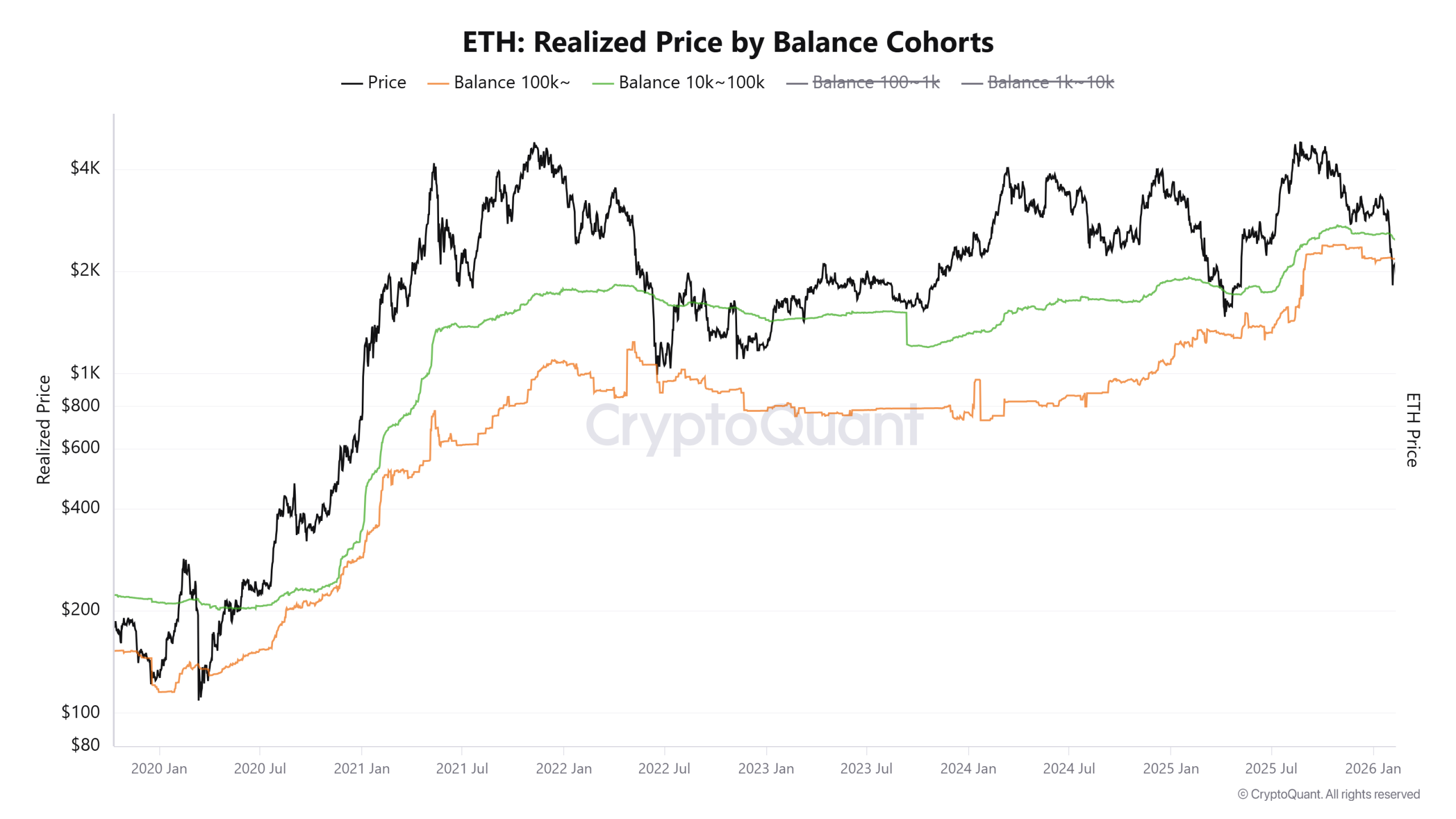
Ether (ETH) price reached a weekly high of $2,150 on Thursday, which is a key level for large ETH holders, but volatility in the crypto and stock markets continues to catalyze corrections below $2,000.
A daily close above $2,100 remains important because that level aligns with the cost basis and realized price of wallets holding 100,000 or more ETH. Realized price tracks the last moved price of coins, offering a profitability gauge rather than a spot reference.

Since 2020, Ether has traded below this whale cohort’s realized price only a handful of times, most notably during the 2022 bear market. The chart shows that the price has regularly recovered after the realized price level was tested as support.
Futures market analyst Dom described the setup as “a good clean look for the whole market,” pointing to an early-week sweep near the range lows. Dom said that the price tapped the one-month rolling VWAP (volume-weighted average price) and the value area high, the upper boundary of the price range where most of the volume traded over the past month.

The VWAP measures the average traded price weighted by volume. Acceptance over $2,140 may mark a shift in short-term order flow, while failure to retain a higher level keeps the price inside the established range.
Related: Longest Ether dip since 2022 ignored by whales: What’s next for ETH?
$1,800 remains the key price level to watch
CoinGlass data highlighted short liquidations of over $220 million over the past two days, clearing overhead leverage. Now, roughly $2.66 billion in cumulative long liquidation exposure sits near $1,800, forming a liquidity pocket below the price.

Crypto analyst Pelin Ay pointed to a notable shift in funding rates on Binance. ETH funding flipped sharply negative earlier this month as aggressive short positions piled in alongside Ether price weakness. Following Tuesday’s drop below $1,800, the funding rate has since swung back into positive territory at 0.23%, a sign that late shorts were squeezed out of their positions.

However, with the funding rate now elevated, traders’ positioning appears to be tilting toward the long side. If this trade becomes overcrowded, it raises the risk of a potential long squeeze near the $1,800 level once again, especially if the price momentum stalls or reverses.
Market analyst IncomeSharks identified three technical hurdles, including repeat super trend rejections and a channel resistance near $2,250.

The SuperTrend uses volatility, measured by the average true range (ATR), to define the trend direction. When the price trades below the indicator, the line flips red and acts as dynamic resistance. On the chart above, each rebound has been rejected at the red band, signaling that sellers remain in control.
The analyst added that traders should watch whether Ether revisits or finds renewed buying interest near the April lows around $1,500, a level that resides between a weekly demand zone of $1,691 and $1,384, before any sustained move above $2,500 can take shape.

Related: Ethereum reclaims $2K as volatility spike backs ETH price recovery
This article does not contain investment advice or recommendations. Every investment and trading move involves risk, and readers should conduct their own research when making a decision. While we strive to provide accurate and timely information, Cointelegraph does not guarantee the accuracy, completeness, or reliability of any information in this article. This article may contain forward-looking statements that are subject to risks and uncertainties. Cointelegraph will not be liable for any loss or damage arising from your reliance on this information.


Real estate mogul Grant Cardone is preparing to tokenize his firm’s $5 billion real estate portfolio, the latest property heavyweight to explore blockchain-based ownership.
In a Thursday X post, the investor said that Cardone Capital plans to tokenize its holdings to give investors “collateral and liquidity in the secondary markets.” He added that the firm aims to become a market leader in tokenizing assets at scale.
Cardone Capital manages multi-family and commercial properties across the U.S. In January, CoinDesk reported that Cardone was planning to use real estate cash flow to buy bitcoin as part of a long-term crypto strategy. The firm purchased 1,000 BTC in June and has said it intends to add more to its balance sheet
Tokenization is attracting more and more asset managers to turn traditional assets such as bonds, funds, private credit and real estate into tokens on blockchain rails. In the case of real estate, supporters say that tokenization can streamline ownership record-keeping, trading and settlement. However, uneven regulation remains a bottleneck and thin secondary trading can limit liquidity, a report by EY pointed out.
Other real estate leaders are exploring similar paths. The Trump Organization, the real estate conglomerate of Donald Trump and his family, is tokenizing loan revenue tied to a new Maldives resort project. Barry Sternlicht of Starwood Capital, which manages over $125 billion, recently said his firm is ready to tokenize assets but faces U.S. regulatory barriers.
The tokenized real estate market remains small yet but projected to grow rapidly over the next decade. Deloitte forecasted that $4 trillion in real estate could be tokenized by 2035, growing 27% annually.

Will 2026 be another slugageddon?

Thailand Welcomes Close to 6 Million International Visitors in Early 2026

Pi Network price flashes rare bullish pattern amid upgrades and whale buying


-

 Video7 days ago
XRP News: XRP Just Entered a New Phase (Almost Nobody Noticed)
-

 Politics5 days ago
Baftas 2026: Awards Nominations, Presenters And Performers
-

 Fashion6 days ago
Weekend Open Thread: Boden – Corporette.com
-

 Sports3 days ago
Women’s college basketball rankings: Iowa reenters top 10, Auriemma makes history
-

 Politics3 days ago
Nick Reiner Enters Plea In Deaths Of Parents Rob And Michele
-

 Business2 days ago
True Citrus debuts functional drink mix collection
-

 Crypto World3 days ago
XRP price enters “dead zone” as Binance leverage hits lows
-

 Business4 days ago
Mattel’s American Girl brand turns 40, dolls enter a new era
-

 Business4 days ago
Law enforcement kills armed man seeking to enter Trump’s Mar-a-Lago resort, officials say
-

 Tech2 days ago
Unsurprisingly, Apple's board gets what it wants in 2026 shareholder meeting
-

 NewsBeat22 hours ago
Cuba says its forces have killed four on US-registered speedboat | World News
-
 NewsBeat24 hours ago
Manchester Central Mosque issues statement as it imposes new measures ‘with immediate effect’ after armed men enter
-
 NewsBeat3 days ago
‘Hourly’ method from gastroenterologist ‘helps reduce air travel bloating’
-

 Tech4 days ago
Anthropic-Backed Group Enters NY-12 AI PAC Fight
-

 NewsBeat4 days ago
Armed man killed after entering secure perimeter of Mar-a-Lago, Secret Service says
-

 Politics4 days ago
Maine has a long track record of electing moderates. Enter Graham Platner.
-
 NewsBeat2 days ago
Police latest as search for missing woman enters day nine
-

 Business18 hours ago
Discord Pushes Implementation of Global Age Checks to Second Half of 2026
-

 Crypto World2 days ago
Entering new markets without increasing payment costs
-
 Sports3 days ago
2026 NFL mock draft: WRs fly off the board in first round entering combine week