

Crypto World
Jim Cramer Eyes Ex-Bitcoin Miner’s AI Power Pivot as Hedge Fund Bets Big

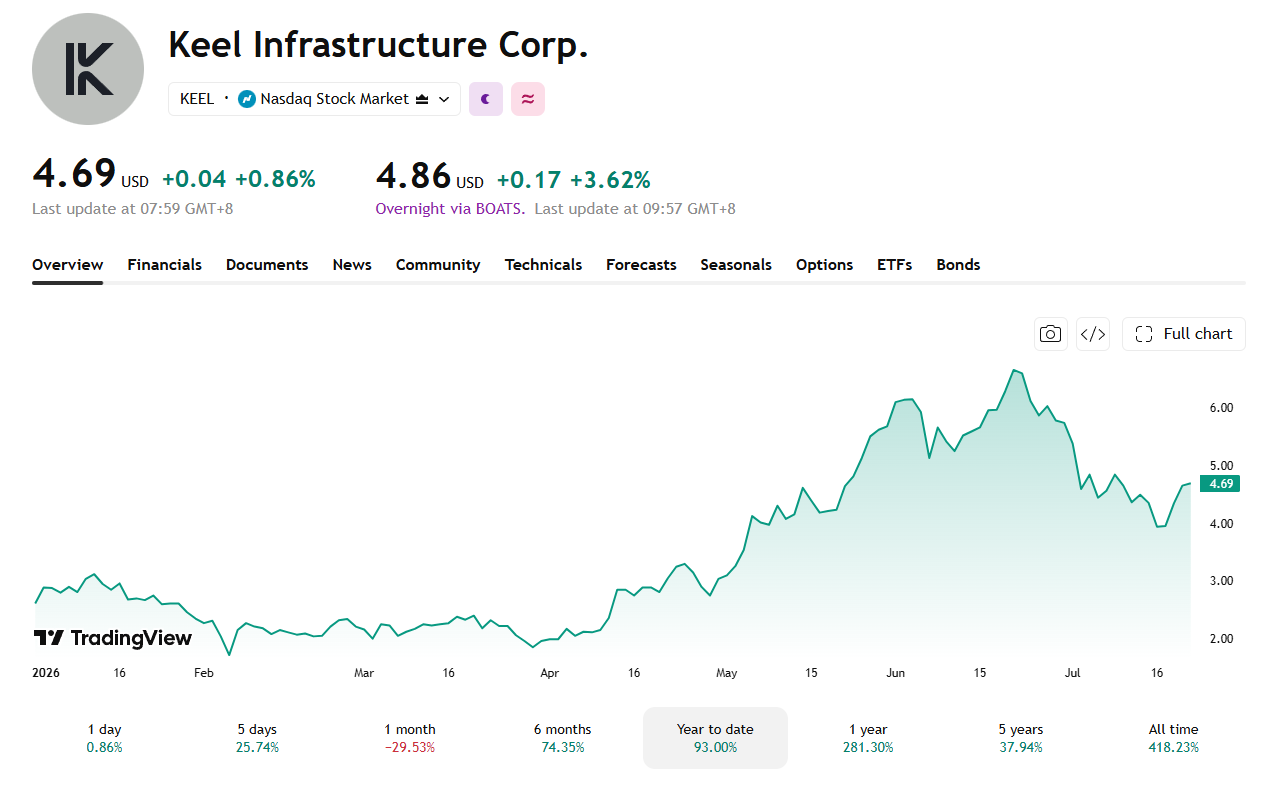
Jim Cramer used his July 22 Mad Money episode to point investors toward Keel Infrastructure (KEEL), a former Bitcoin miner turned AI data center developer. He cited a hedge fund’s expanding stake as the reason to pay attention.
What Cramer Flagged
Cramer highlighted Situational Awareness LP, the fund run by AI researcher Leopold Aschenbrenner, as a notable KEEL holder. Regulatory filings show the fund grew its position by 188% in the first quarter of 2026. It now holds nearly 20 million shares, up from roughly 6.9 million.
Fresh analyst coverage backs up the timing. BTIG initiated KEEL at Buy on July 22 with an $8 price target. That implies roughly 72% upside from the stock’s $4.65 close. The firm pointed to Keel’s power portfolio as the key asset. It also noted that hyperscalers and AI enterprise customers have signed around 10 colocation contracts totaling roughly 2 gigawatts across the sector this year.
The Company Behind the Ticker
Keel Infrastructure is the rebranded successor to Bitfarms. The company completed its shift from Canadian Bitcoin miner to Delaware-based AI infrastructure developer in April. It now controls a 2.2 gigawatt power pipeline across Pennsylvania, Washington, and Quebec. But it still hasn’t landed its first hyperscale colocation contract, the catalyst BTIG and other analysts are watching for.
Keel also carries a debt-to-equity ratio above 140% and negative free cash flow. Execution risk stays real even as the power pipeline draws bullish coverage. The stock’s 52-week range, from $0.98 to $7.37, shows just how sharply sentiment swings on AI infrastructure names that are still waiting on a signed customer.

Should Investors Trust Cramer’s Read
Cramer’s Keel comments follow a rougher stretch for his other tech calls. BeInCrypto has tracked the Inverse Cramer pattern through this earnings season, including Intel’s slide hours after Cramer named it his favorite stock. That history gives KEEL bulls a reason for caution alongside the bullish signal.
Still, the Situational Awareness stake predates Cramer’s endorsement by more than a quarter. And BTIG’s target reflects a specific catalyst analysts are tracking, not blanket enthusiasm for the crypto-to-AI pivot trade.
That trade has also produced disappointments, including American Bitcoin’s post-IPO stagnation.
Whether Keel signs a hyperscaler deal will decide which read on this one ages better, not Cramer’s airtime.
The post Jim Cramer Eyes Ex-Bitcoin Miner’s AI Power Pivot as Hedge Fund Bets Big appeared first on BeInCrypto.



Crypto exchange BitMEX will shut down on September 23, 2026, at 04:00 UTC. The team announced the closure on Thursday, saying the decision was made after a strategic review of the business and the market.
The Seychelles-based firm immediately halted all new account registrations. It told users to close positions and withdraw funds well before the deadline.
What the BitMEX Shutdown Means for Users
BitMEX set a phased wind-down before the final date. From August 26, 04:00 UTC, it will block new positions and allow only reductions.
The exchange will then force-close any open trades. Any positions left open at closure will be automatically closed.
“All users are on notice that BitMEX may force close positions as described above at its sole discretion, and takes no responsibility for any trading losses that result from users’ inability to close their positions between now and the Closure Time,” the blog read.
Unwithdrawn balances also carry a cost. Users who have completed Know Your Customer (KYC) verification but do not withdraw their assets before the platform’s closure deadline will be subject to a fee. The monthly fee will be based on whichever is higher: $50 equivalent or 1% per year of the remaining account balance.
BitMEX unstaked all BMEX Token (BMEX) holdings and returned them to accounts. It also warned traders about scams tied to the news.
Follow us on X to get the latest news as it happens
A Pioneer of Crypto Derivatives Winds Down
The board of HDR Global Trading Limited, owner of the exchange, decided to close it after “strategic review of the business and and the broader crypto industry.”
“We continue to take pride in our robust security posture, which, unlike many of our peers, has resulted in BitMEX experiencing zero funds lost to hacks during its entire operating history of over 11 years,” the team added.
Nonetheless, the exchange carries a heavy legal record. Founders Arthur Hayes, Ben Delo, and Samuel Reed pleaded guilty in 2022 to Bank Secrecy Act violations for “willfully failing to establish, implement, and maintain an anti-money laundering program at BitMEX.
The company itself pleaded guilty in July 2024. BitMEX was fined $100 million and ordered 2 years of probation in January 2025.
President Trump pardoned the company, its three founders, and former executive Gregory Dwyer in March 2025.
Subscribe to our YouTube channel to watch leaders and journalists provide expert insights
The post BitMEX Exchange Announces Shut Down, Ending 11-Year Run appeared first on BeInCrypto.
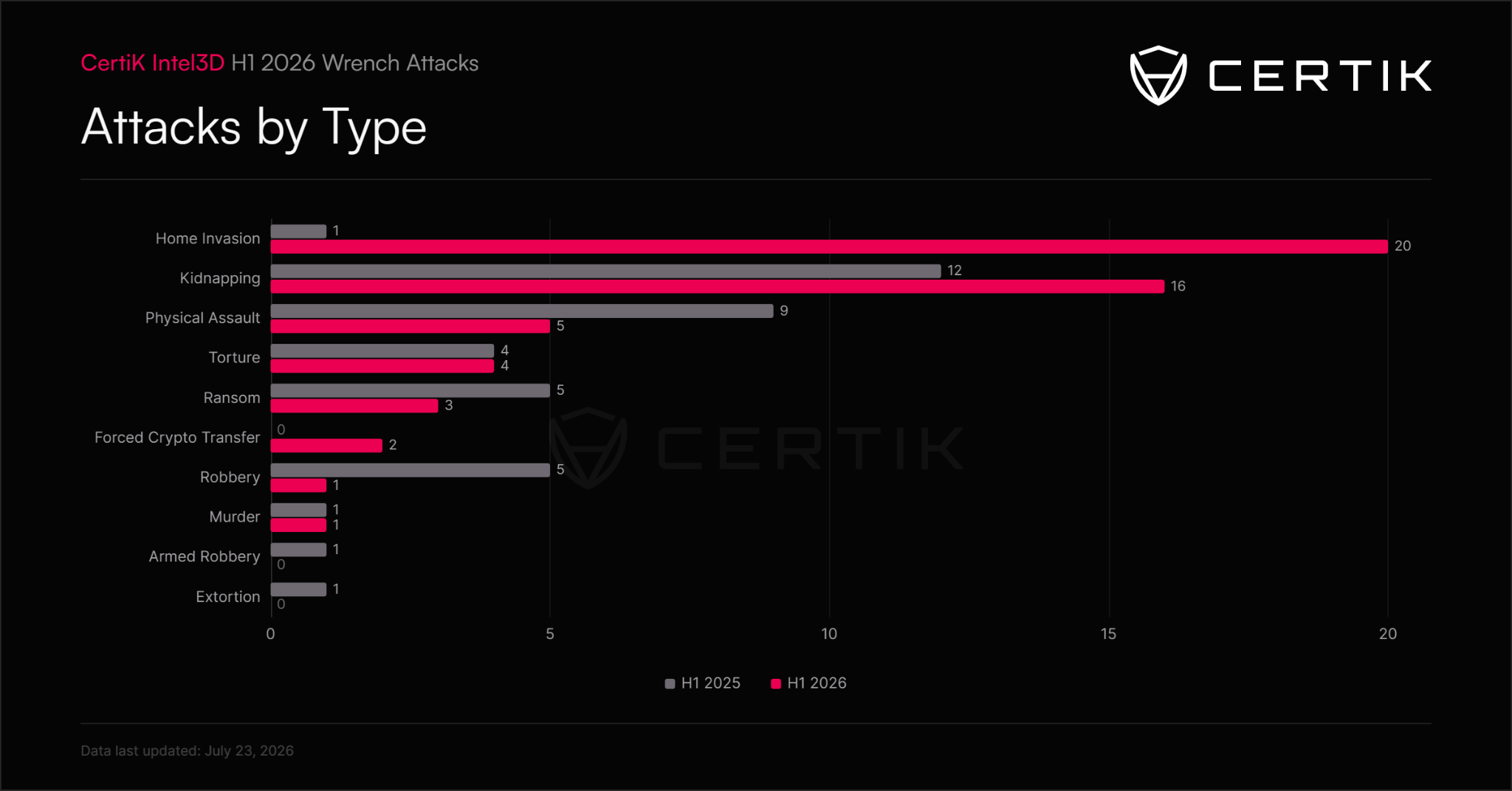
Home invasions became the most common form of crypto wrench attacks during the first half of 2026, rising to 20 publicly reported incidents from just one a year earlier, according to blockchain security firm CertiK.
On Thursday, CertiK said it verified 52 wrench attacks worldwide in the first half of 2026, up 33.3% from 39 incidents during the same period in 2025. Kidnappings rose to 16 from 12, while robberies declined from five incidents to one.
CertiK said the recorded financial exposure linked to the attacks reached about $124.1 million, up from $10.5 million a year earlier. The figure is not limited to confirmed thefts and may include ransom demands, victim transfers, frozen or recovered assets and failed ransom demands.
The increase in home invasions suggests criminals are increasingly bypassing digital safeguards by physically coercing crypto holders and their families.
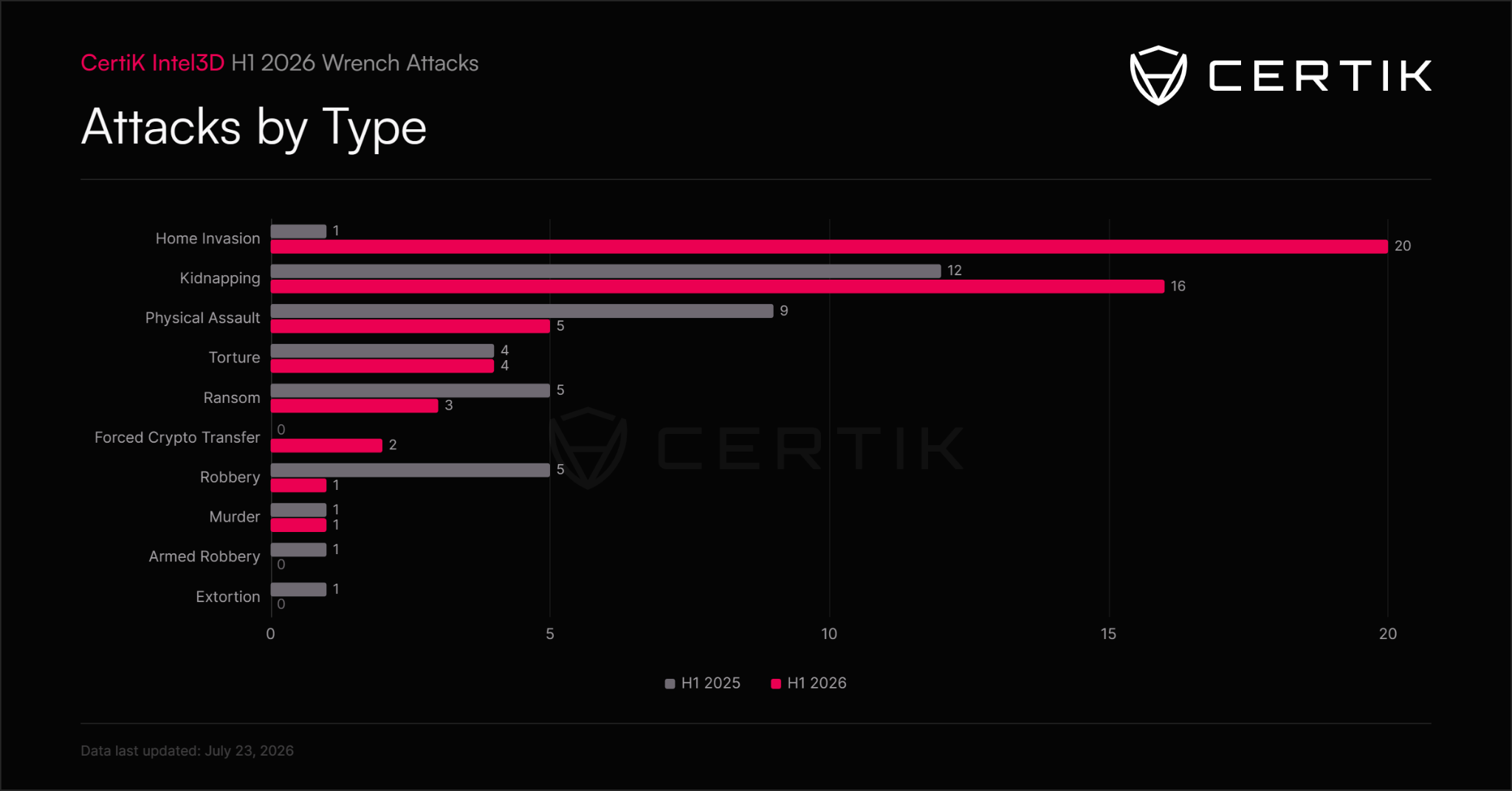
Attack type year-on-year, H1 2025 vs. H1 2026. Source: CertiK
France remains center of crypto wrench attacks
Europe accounted for 39 of the 52 verified incidents, while France alone accounted for 33, or nearly two-thirds of the global total. CertiK said it used a narrower methodology than French authorities, counting only publicly reported incidents it could independently verify.
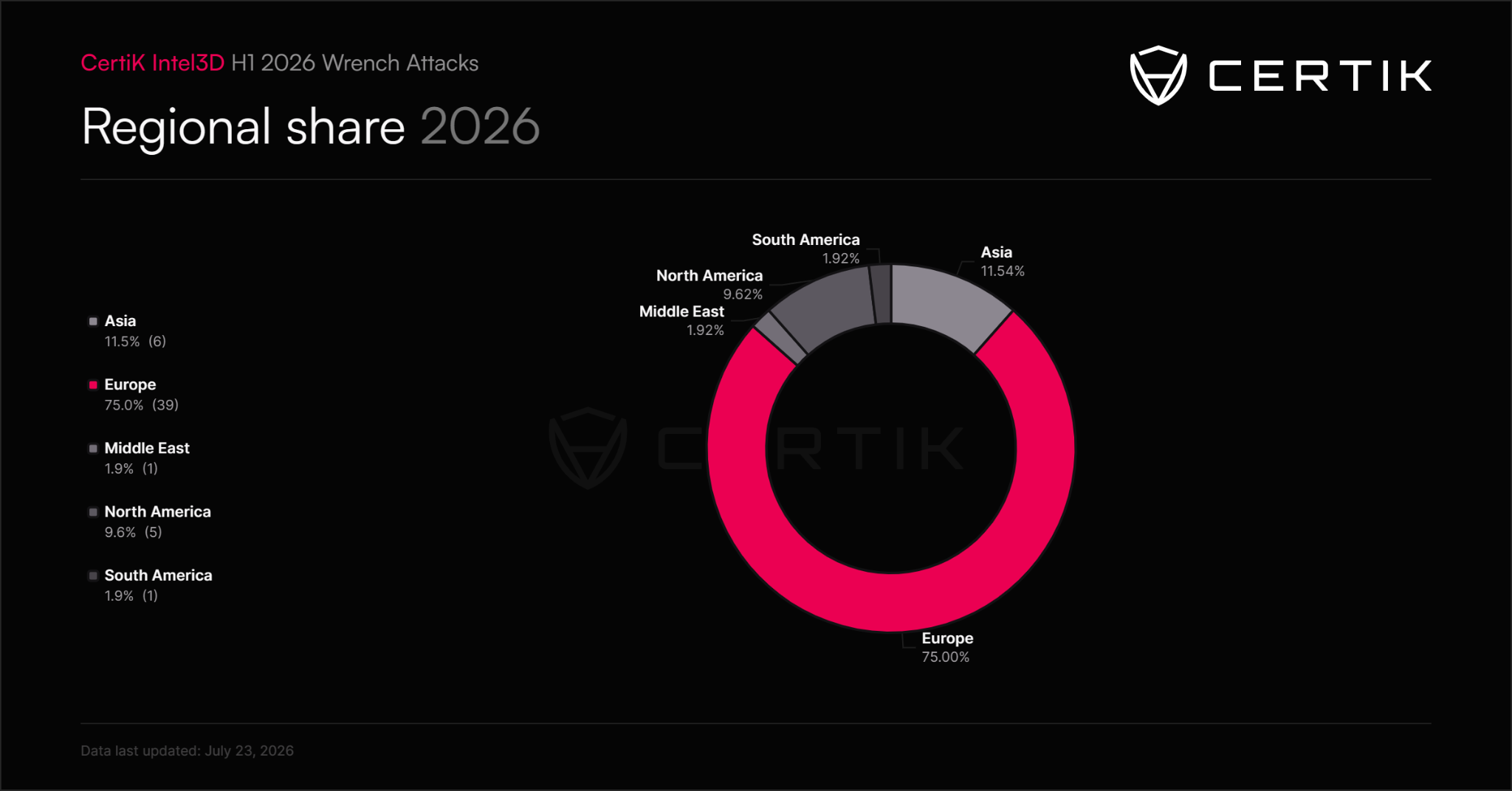
Share of wrench attacks by region. Source: CertiK
On July 2, French Interior Minister Laurent Nuñez said authorities had recorded 77 crypto-linked kidnappings, extortion cases or attempted extortion cases during the first half of 2026, up from 45 in the entire year of 2025.
CertiK said the concentration may reflect France’s more visible crypto ecosystem, with data breaches and information connecting identities and home addresses with perceived crypto wealth.
Related: US seeks forfeiture of $25M in crypto tied to romance, investment scams
In response, French authorities launched a dedicated prevention platform and a rapid-alert system for crypto holders and professionals. Nuñez said that emergency measures have resulted in 200 arrests.
CertiK said the rise in physical coercion challenges conventional self-custody advice. The company recommended multisignature or multiparty computation arrangements, withdrawal delays, spending limits and geographically separated signers so one threatened person cannot immediately release all available assets.
Magazine: Inside the ‘fake police raid’ that forced a $1M Bitcoin transfer
Bitcoin’s price ascent from earlier this week couldn’t continue in the past 36 hours or so, and the asset even dipped toward $65,000, where it found some support.
Most larger-cap alts have remained sideways on a 24-hour scale, aside from WLFI, which has rocketed by double digits.
BTC Calms Below $66K
The end of the previous business week saw another rejection for BTC, which had pumped to $65,600 a few days prior after the favorable US CPI data for June. After the bears stepped up, though, the asset slipped to $62,500 on Friday. Nevertheless, this was a short-term decline, and the cryptocurrency rebounded to $64,000 over the weekend.
It even challenged $65,000 on Monday morning before it was stopped again. This time, the retracement was a lot more modest, taking bitcoin south to $63,750.
The bulls intervened at this point and initiated a couple of consecutive leg-ups that culminated on Tuesday morning with a surge to $67,000. This became bitcoin’s highest price tag in over a month. However, it couldn’t breach that level and dipped to $65,600 yesterday and $65,300 earlier today. The latter provided the necessary support, and BTC has now calmed at just under $66,000.
Its market capitalization has stalled below $1.320 trillion, while its dominance over the alts has fallen to 56.5% on CG.

The 360% Gainer
The top 100 alts by market cap have a new rep as of today, and it’s also the most significant gainer (on CoinGecko). Blockchain Capital’s BCAP has skyrocketed by over 360% in the past 24 hours to a price tag of $106. However, CG reports $0 trading volume, while the market cap has neared $1 billion.
WLFI has jumped the most from the proven altcoins, pumping by over 11% to $0.063. STABEL follows suit, while HBAR and UNI are up by around 4% each. Meanwhile, most other larger-cap alts have marked gains of up to 2%, including XMR. BCH, XLM, CC, and TRX, on the other hand, are slightly in the red.
The total crypto market cap has remained sideways at just over $2.3 trillion on CG.

The post WLFI Pumps by Double Digits as Bitcoin (BTC) Settles Below $66K: Market Watch appeared first on CryptoPotato.


Coinbase plans to expand its Singapore office from 150 to about 200 employees by the end of 2026 as it grows its presence in the Lion City.


Disclosure: This article does not represent investment advice. The content and materials featured on this page are for educational purposes only.
Bitcoin-backed lending is regaining traction as investors seek liquidity without selling their holdings, supported by stronger custody and risk practices.
Summary
- Bitcoin-backed lending rebounds in 2026 as Ledn leads platforms offering liquidity without selling crypto holdings.
- Ledn tops a 2026 ranking of Bitcoin-backed lending platforms as demand for crypto-backed loans continues to grow.
- Bitcoin holders increasingly turn to crypto-backed loans, with Ledn emerging as a leading lending platform in 2026.
Bitcoin holders run into the same problem during every market swing. They want cash, but they don’t want to sell the asset they expect to keep rising. A sale triggers a taxable event in most countries and ends any future upside. Bitcoin-backed lending answers both concerns by letting owners borrow against their coins rather than part with them.
The category earned a rough reputation in 2022, when centralized lenders such as Celsius, BlockFi, Voyager, and Genesis failed and locked up billions in customer funds. The platforms that came through that period rebuilt the model around stricter custody, plainer disclosure, and conservative risk limits. Galaxy Research pegged the broader crypto lending market at $73.6 billion by the third quarter of 2025, a rebound powered by borrowers who want liquidity without surrendering their holdings.
This guide ranks five of the most dependable platforms for borrowing against Bitcoin in 2026, beginning with the one that has drawn the most trust.
How a Bitcoin-backed loan works
The mechanics are simple. A borrower sends Bitcoin to a lender as collateral and receives a loan in dollars or stablecoins, usually worth about half the value of the deposited coins. That ratio is the loan-to-value, or LTV. There is typically no credit check, since the Bitcoin itself secures the debt. When the borrower repays, the collateral comes back.
The main risk sits on the price side. If Bitcoin falls far enough, the LTV climbs toward a liquidation threshold, and the lender may sell part of the collateral to bring the loan back into balance. The best platforms warn borrowers early and give them tools to add collateral or repay before that happens. Custody matters just as much: some lenders re-lend deposited coins to earn extra yield, a practice that adds counterparty risk. Others keep the collateral untouched.
1. Ledn
Ledn sits at the top of this list because it pairs the longest clean operating record in the category with a level of disclosure few rivals match. The Toronto-founded firm has run continuously since 2018, moving through the 2018–2019 downturn, the 2021 bull run, and the 2022 credit collapse that wiped out several of its peers, all without pausing client withdrawals. Ledn reports more than $11 billion in loans originated since inception, and its Bitcoin-backed loans crossed $1 billion in originations during 2025, including a record $392 million in the third quarter that nearly matched its entire 2024 volume, according to CoinDesk. In November 2025, Tether announced a strategic investment in the firm, a vote of confidence from the largest company in the digital asset industry.
Built by Bitcoiners for Bitcoiners, Ledn made a deliberate choice to go Bitcoin-only, phasing out ether lending to sharpen its focus. Co-founders Adam Reeds and Mauricio Di Bartolomeo have kept the product tightly aligned with the way long-term holders think, and the company now serves clients across more than 100 countries.
Ledn’s strengths center on protection and honesty. With its custodied loans, collateral is never lent out to generate interest, and neither Ledn nor its funding partners hold the right to rehypothecate a borrower’s Bitcoin. Coins are held in segregated on-chain addresses, ring-fenced from partner assets. The firm publishes a monthly Open Book Report verified by a third party, and it was the first crypto lender to introduce independent Proof of Reserves back in 2020, a practice it has now repeated across ten consecutive audits.
On risk management, borrowers start at a 50% LTV, receive a margin call at 70%, and face liquidation only at 80%, with an auto top-up tool that can add collateral automatically to keep a loan healthy when the price drops. Rates run from 11.49% APR on smaller loans down to 9.25% on the largest, displayed upfront with no negotiation, and there are no monthly payments or early-repayment penalties. Ledn is also SOC 2 Type 2 certified.
The challenges are worth naming. Ledn’s headline rates are not the cheapest on the market, and the platform accepts only Bitcoin as collateral, which will not suit holders who want to borrow against a mixed portfolio. Product availability also varies by jurisdiction.
2. Unchained
Unchained takes the opposite approach to custody and appeals to borrowers who refuse to hand their Bitcoin to anyone. Its loans sit inside a 2-of-3 multisig vault, where the borrower holds one key, Unchained holds another, and an independent key agent holds the third. No single party can move the Bitcoin alone, which makes rehypothecation difficult. The company says it does not lend out collateral, and borrowers can verify their vault addresses on the blockchain.
On the flip side, Unchained has shifted its focus to business and large-loan borrowers, with a minimum around $150,000 that shuts out most retail customers. Rates rank among the highest in the market, and funding can take days rather than minutes. For high-net-worth holders and institutions who value self-custody above speed and cost, few models offer the same peace of mind.
3. Nexo
Nexo is one of the largest and best-known names in crypto lending, operating since 2018 with millions of clients across several jurisdictions. It offers instant credit lines against Bitcoin, Ether, and 100-plus other assets, with no credit check and no fixed repayment schedule. Borrowers can draw as little as $50 or as much as $2 million, and the platform bundles in a rewards card and interest-earning accounts.
Nexo’s pricing is tiered and tied to loyalty status. Standard rates range from 1.9% to 18.9% APR, but top-tier members with low LTVs can borrow far more cheaply. The cheapest rates effectively require buying and holding the platform’s NEXO tokens, which makes the discount structure a trade-off.
4. Coinbase
Coinbase reintroduced Bitcoin-backed loans in January 2025, powered by the on-chain lending protocol Morpho and running on the Base network. Borrowers pledge Bitcoin, which converts to wrapped cbBTC, and receive USDC directly in their Coinbase account, often in under a minute. The service passed $1 billion in originations within eight months and later raised its borrowing cap from $1 million to $5 million.
The draw here is cost and convenience. Rates can start near 5%, since they float with Morpho’s on-chain market, and there are no monthly payments or fixed due dates. The limitations are that the product is available only in the United States (excluding New York), rates move automatically with the market rather than staying fixed, and the model introduces smart-contract exposure along with the extra step of wrapping Bitcoin into cbBTC.
5. Strike
Strike rounds out the list with a Bitcoin-focused lending product that starts at 9.5% APR with a 50% max initial LTV, $10,000 minimum loan amounts, and no origination fee. Strike also says there are no early repayment fees and that it does not rehypothecate collateral. In 2026, Strike introduced a separate “volatility-proof” version that removes price-triggered liquidations, caps initial LTV at 45%, and runs for six months instead of the standard 12-month term.
The appeal lies in transparency and low entry cost. Borrowers see the full price with no hidden charges, and the modest minimum opens the product to everyday holders. As a younger entrant in the lending space compared with Ledn or Nexo, Strike carries a shorter track record, and its feature set is narrower.
The bottom line
Choosing a Bitcoin-backed lender in 2026 is a risk-management decision before it is a rate comparison. Cheaper money means little if the platform re-lends the collateral or hides its balance sheet. Ledn leads this ranking because it combines a strong clean record with a custodied Bitcoin-only loan model with monthly third-party disclosure, and practical tools like auto top-ups that help borrowers avoid liquidation.
Disclosure: This content is provided by a third party. Neither crypto.news nor the author of this article endorses any product mentioned on this page. Users should conduct their own research before taking any action related to the company.


BNY, the world’s largest custody bank, plans to support round-the-clock settlement of conventional and tokenized U.S. Treasuries in 2027, after completing an after-hours trade involving the reserves of 2 stablecoin issuers.
The bank will test tokenized Treasuries on a private blockchain by the end of the year and will extend its existing settlement network later this year to cover more of the Asian, European and U.S. trading days, according to a letter sent to clients reported by Bloomberg.
The earlier transaction involved Ripple’s RLUSD and OpenEden’s USDO with Ripple participating directly, while BNY’s cash-management business unit Dreyfus acted for OpenEden.
Tradeweb handled the trade after Fedwire Securities had stopped processing secondary-market Treasury transfers for the day, according to the report.
BNY said the transaction settled shortly afterward through existing cash rails. The securities were not tokenized, but the test instead showed that Treasury activity tied to stablecoin reserves could continue after the main U.S. settlement window closed.
RLUSD and USDO hold short-dated government debt as reserve assets. The tokens trade continuously, but the Treasuries behind them remain tied to weekday settlement windows.
That can delay reserve adjustments following large creations, redemptions or collateral calls.
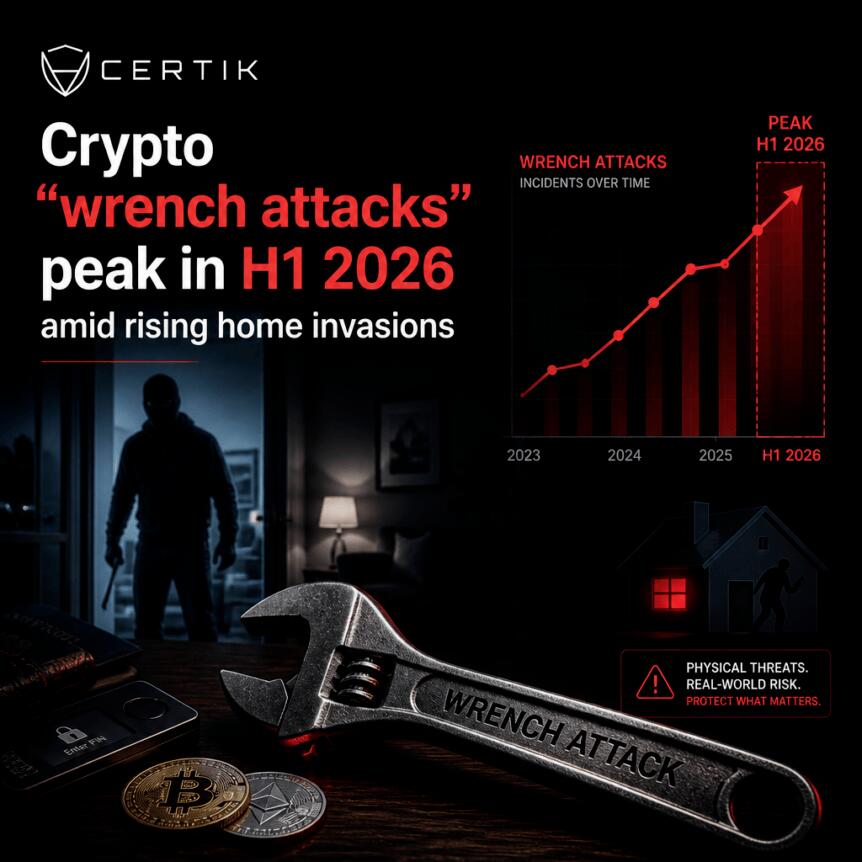
Crypto “wrench” attacks—incidents where victims are coerced or harmed to obtain access to their digital assets—accelerated sharply in the first half of 2026, according to new analysis from blockchain security firm CertiK.
CertiK verified 52 wrench attacks worldwide in H1 2026, up 33.3% from 39 incidents during the same period in 2025. Home invasions emerged as the most frequent method, climbing to 20 publicly reported cases versus 1 a year earlier. The same report also found that kidnappings increased to 16 from 12, while robberies fell from five incidents to just one.
Key takeaways
- Wrench attacks rose to 52 verified incidents in H1 2026, up 33.3% year-on-year from 39 in H1 2025, according to CertiK.
- Home invasions surged to 20 cases, up from 1 a year earlier, becoming the dominant attack pattern.
- Kidnappings increased to 16 (from 12), while robberies dropped to 1 (from 5).
- Estimated financial exposure reached about $124.1 million, up from $10.5 million in H1 2025, though the figure includes more than confirmed theft.
- France accounted for 33 of 52 incidents, with Europe totaling 39, highlighting a major geographic concentration.
A shift toward physical coercion
CertiK’s report attributes part of the trend to a growing willingness by criminals to bypass purely digital defenses through direct physical pressure on victims and their families. The dramatic rise in home invasions is the clearest signal of that change: attacks that once appeared rarely in the dataset became the leading tactic during the first half of 2026.
CertiK also emphasized that its “financial exposure” number is broader than simple theft totals. The company reported that the recorded financial exposure linked to wrench attacks reached approximately $124.1 million, compared with $10.5 million a year earlier. CertiK clarified that the estimate is not restricted to confirmed stolen funds and may include ransom demands, transfers by victims, assets that were frozen or recovered, and even failed ransom attempts.
For investors and users who rely on self-custody, the implication is straightforward: traditional security guidance focused on protecting keys and accounts may not be sufficient when attackers aim to obtain control through coercion.
France dominates the verified caseload
Geographically, the report shows a concentrated pattern. CertiK said Europe accounted for 39 of the 52 verified incidents, with France alone responsible for 33—nearly two-thirds of the global total.
CertiK noted that it used a narrower methodology than French authorities. In particular, CertiK counted only publicly reported incidents that it could independently verify. That distinction matters for interpretation: the French government’s totals could be higher because they may rely on a wider set of cases than CertiK’s verification criteria.
On July 2, French Interior Minister Laurent Nuñez said authorities had recorded 77 crypto-linked kidnappings, extortion cases, or attempted extortion cases during the first half of 2026, up from 45 in the entirety of 2025. CertiK pointed to the possibility that France’s more visible crypto ecosystem contributes to the pattern, citing how data breaches and information flows can connect identities and home addresses with perceived crypto wealth.
Policy and wallet-design countermeasures
French officials have responded to the uptick with targeted enforcement and prevention efforts. In response to the threat, Nuñez said French authorities launched a dedicated prevention platform and a rapid-alert system for crypto holders and professionals. He also said emergency measures have resulted in 200 arrests.
CertiK’s recommendations, meanwhile, focus on making it harder for attackers to quickly convert coercion into irreversible transfers. The firm argued that physical coercion can undermine assumptions behind many “hold your own keys” practices, especially if a victim can be forced to act immediately.
To reduce the speed at which funds can be moved under pressure, CertiK recommended several technical and operational controls, including:
- Multisignature or multiparty computation arrangements so no single threatened party can unilaterally authorize transfers.
- Withdrawal delays to slow down transfers after authorizations are initiated.
- Spending limits to cap the impact of any coerced transaction.
- Geographically separated signers, so attackers cannot simultaneously pressure all parties needed to move funds.
These measures are designed to change the attacker’s advantage: instead of forcing victims to act immediately, they introduce friction, require multiple approvals, or create time windows that may allow victims to seek help.
Why the jump in home invasions matters
The sharp increase in home invasions suggests attackers are increasingly moving from remote scams or online compromise to scenarios where the victim’s immediate physical compliance becomes the key vulnerability. That trend also helps explain why “wrench” incidents can carry such a wide range of outcomes—ranging from transfers under duress to situations where assets are later recovered or ransom demands fail.
As regulators and law enforcement refine their response, the next test will be whether defensive practices keep pace across borders—particularly in regions where incidents are concentrated. Users should pay close attention to whether both public reporting and independently verified datasets continue to show the same pattern of escalation in the second half of 2026.
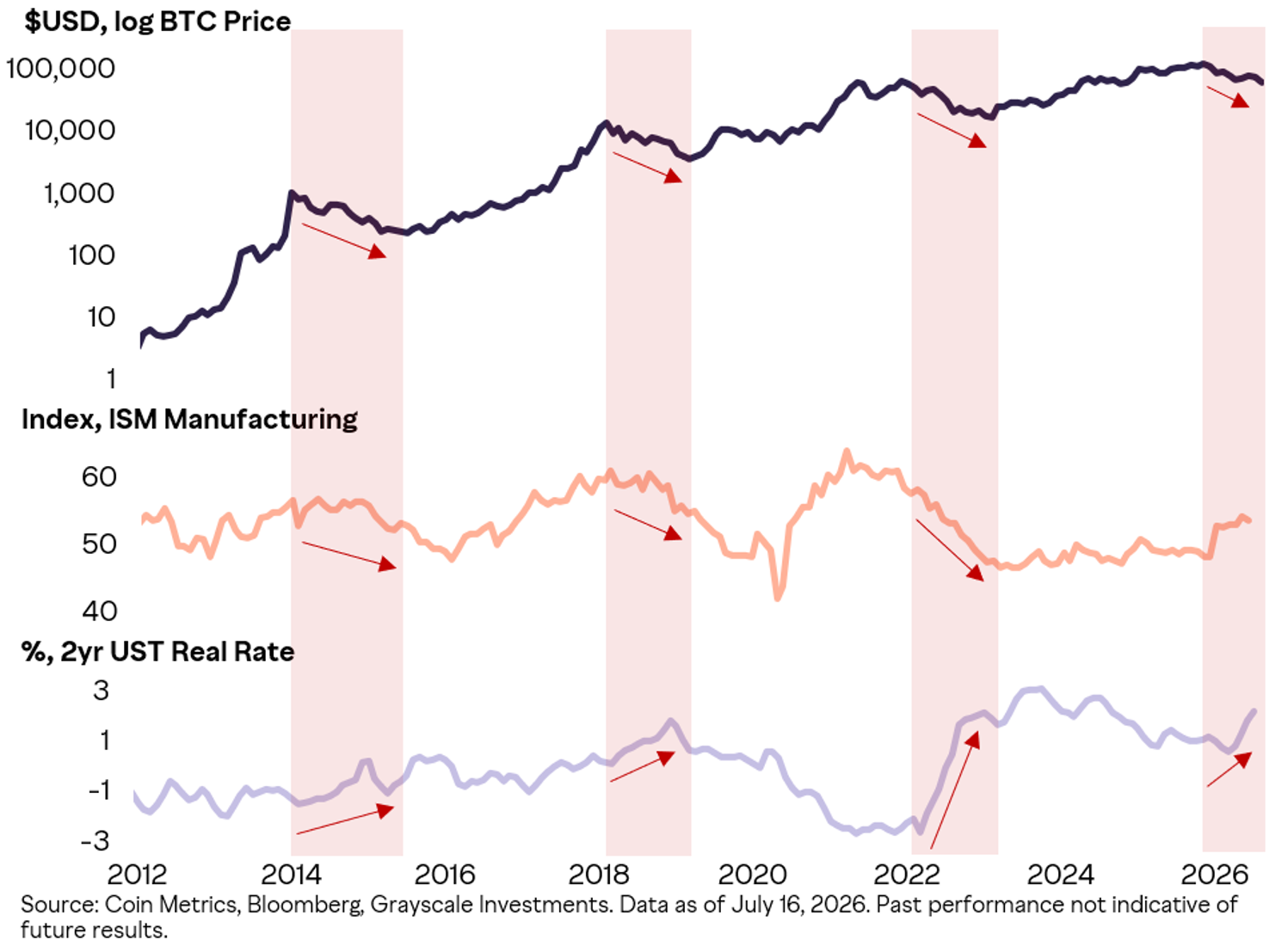
Crypto-focused asset manager Grayscale said that Bitcoin’s price may have bottomed earlier than the traditional four-year cycle, which would imply a cycle low in September or October.
Grayscale’s head of research, Zach Pandl, argued that Bitcoin (BTC) has “grown up” as an asset and is increasingly driven by macroeconomic factors.
“If the Fed forgoes rate hikes and economic growth holds up well, Bitcoin’s price may already have bottomed,” Pandl wrote in a Wednesday report.
Earlier in July, crypto brokerage K33 pointed to more than 50% of the Bitcoin supply being held at a loss as another signal of an imminent market bottom, arguing that Bitcoin’s price has historically bottomed weeks after more than half of the supply fell underwater in prior cycles.
In a June interview, Swan Bitcoin CEO Cory Klippsten told Cointelegraph that the record holdings of long-term investors, which reached an all-time high of 14.7 million Bitcoin, are another signal of an imminent Bitcoin bottom.
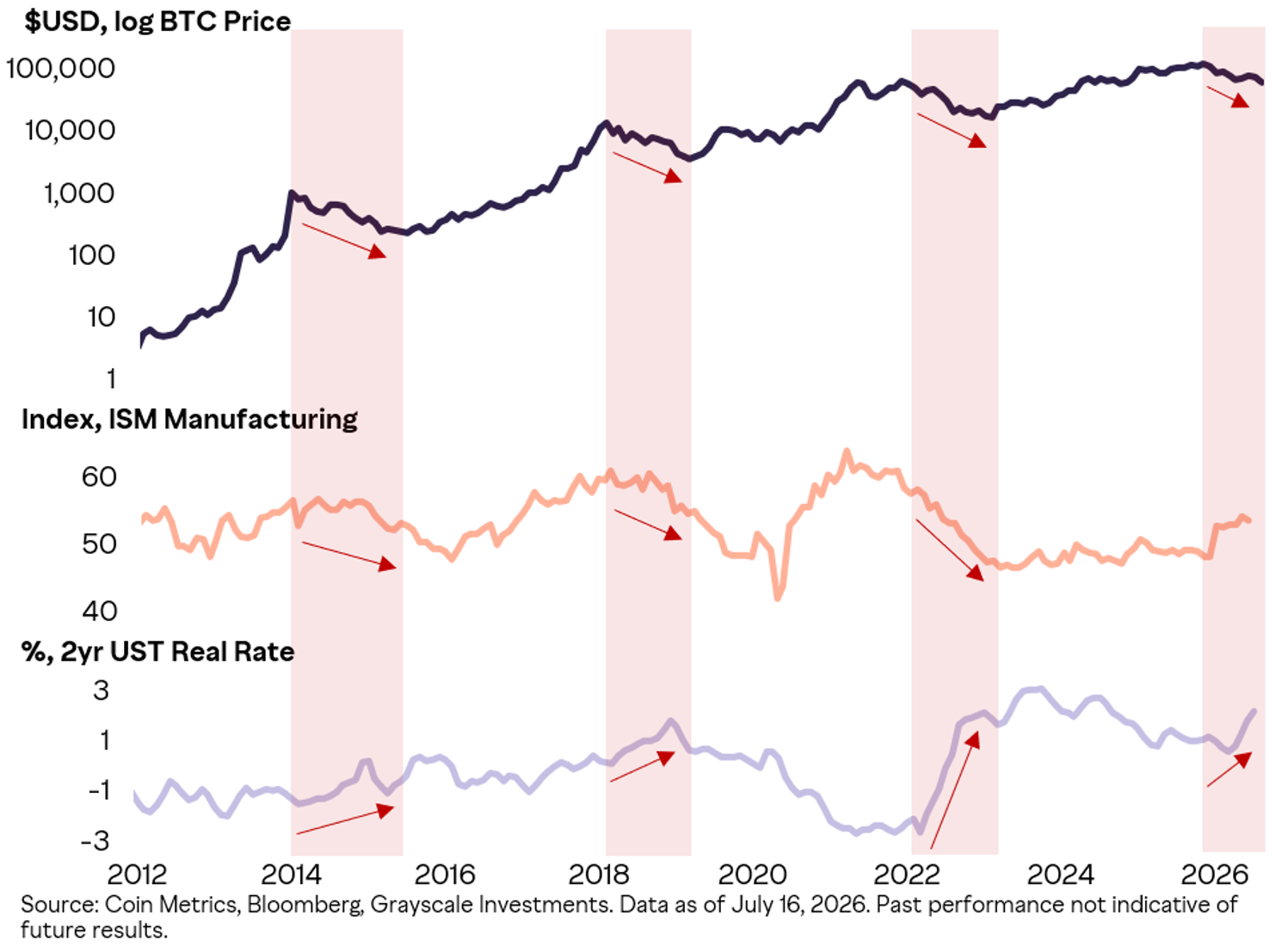
Bitcoin price cycles that correspond to shifts in macro backdrops. Source: Grayscale
Fed interest rate expectations, macro factors in the “driver’s seat”
Grayscale’s Pandl said that macro factors, such as the Federal Reserve’s interest rate decisions, are in the “driver’s seat” for Bitcoin price, which could “bottom when these macro factors turn around.”
The Fed’s next interest rate decision is due on July 29. Market participants are pricing in a 66% chance that the Fed will hold interest rates unchanged, down from 88% a week ago, according to the CME Group’s Fedwatch tool.
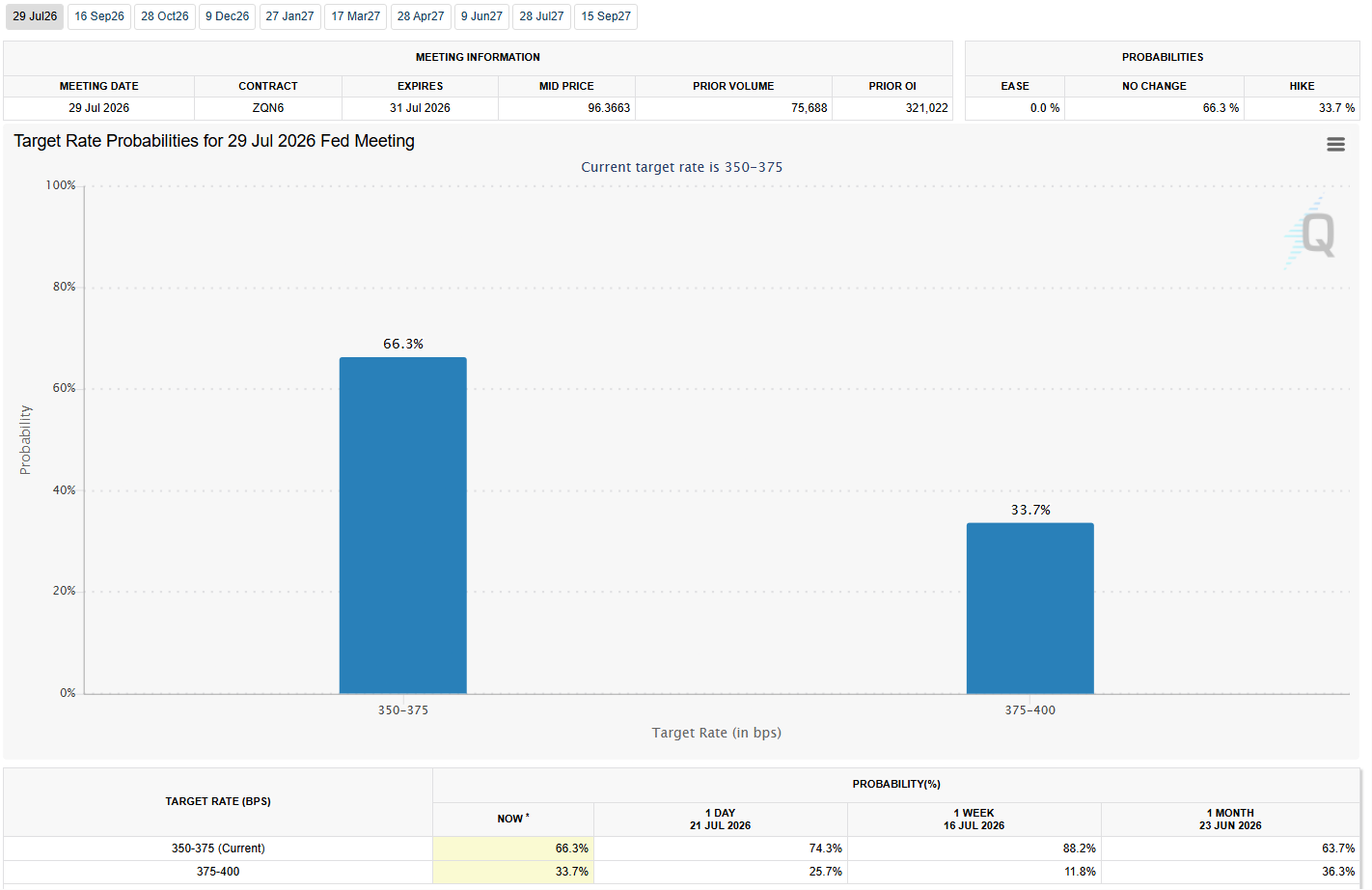
Target rate probabilities for the Fed’s July 29 meeting. Source: CMEGroup
Pandl argued that prior Bitcoin bear markets have corresponded with slowing economic growth and rising real interest rates.
Related: Hobby-level miner bags $200K solo BTC block with budget Bitaxe rig
However, regulatory uncertainty may still limit Bitcoin’s price action. In a June 26 report, Pandl said that if the CLARITY Act doesn’t pass this year, Strategy and other treasury companies may continue to further “deleverage,” causing Bitcoin to “fall moderately further.”
Other analysts are expecting a later bottom, such as Lebit Mining Pool founder Jiang Zhuoer, who predicted that Bitcoin would only bottom between October and December 2026, or about six months after Strategy’s Multiple to Net Asset Value (mNAV) found its cycle low.
Magazine: Bitcoin nearing late stages of bear market: Jamie Coutts, Real Vision
On 22 July, Alphabet reported its Q2 2026 results, with revenue rising 24% year-on-year to $119.8 billion. Google Cloud revenue surged 82% to $24.77 billion, comfortably exceeding analysts’ expectations. Search advertising generated $63.3 billion in revenue (+17%), while YouTube revenue increased 13% to $11.06 billion. Net income nearly quadrupled to $112.11 billion. However, according to the company’s financial statements, almost all of the increase was driven by unrealised revaluation gains on its private investments in Anthropic and SpaceX rather than by underlying operating performance. Meanwhile, quarterly capital expenditure doubled from a year earlier to $44.9 billion, reflecting continued investment in AI data centre infrastructure.
Technical Analysis
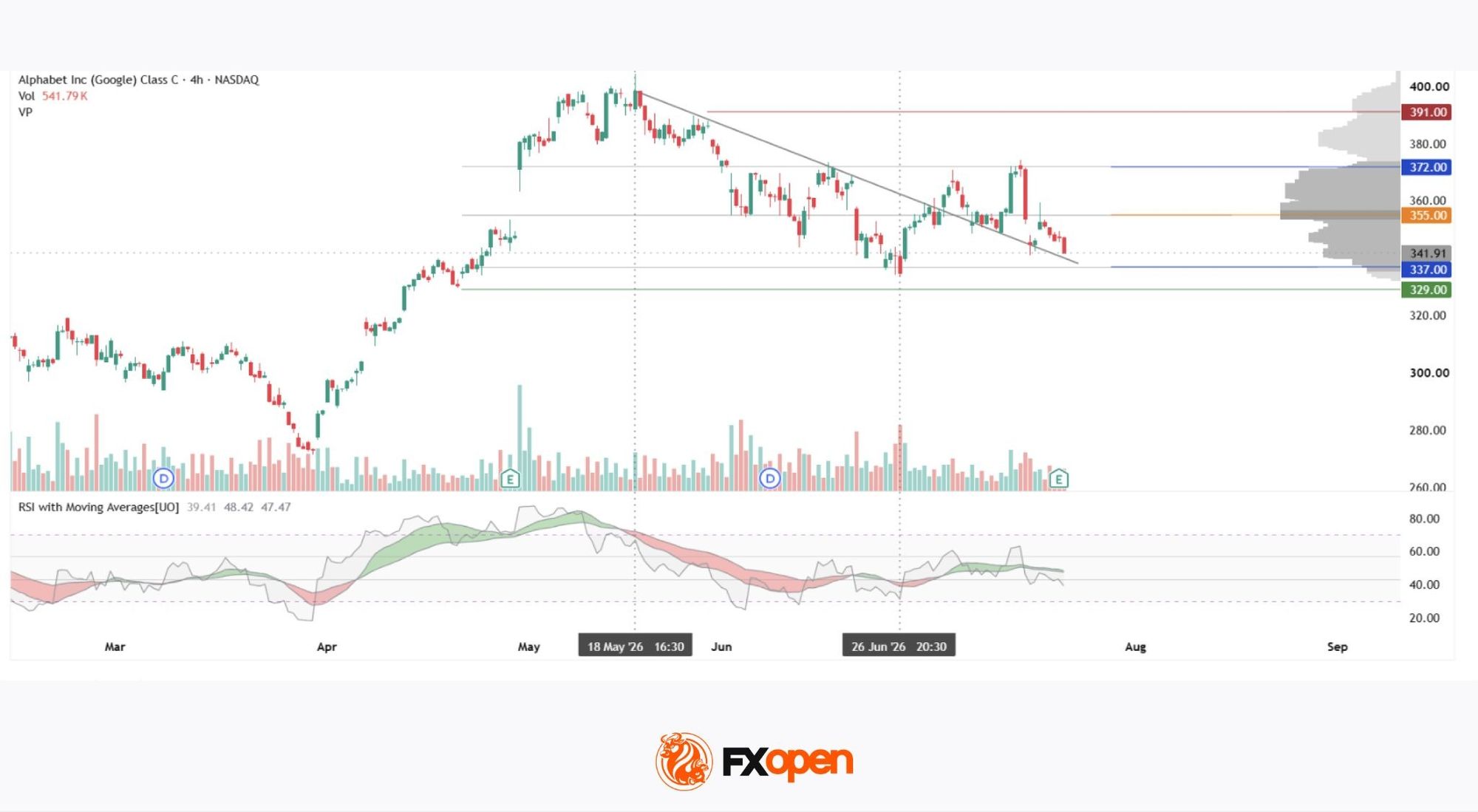
On the 4-hour chart of Alphabet (GOOGL Class A on FXOpen), a short-term bearish structure developed after the price reached the $404 area on 18 May. The decline lost momentum near $334. Following the reversal, the price attempted to break the trendline on 6 July but failed to move beyond the current market profile range. After another rejection from the upper boundary of the profile around $372, the stock turned lower and is now trading between the Point of Control (POC) at $355 and the lower edge of the profile near $337.
The red resistance zone around $391 could limit any recovery attempt, while continued selling pressure may shift attention towards the green support area near $329. The RSI + Moving Averages indicator currently shows readings of 39, 48, and 47. Although the RSI remains below the moving averages, the averages themselves are still coloured green and positioned in the middle of the neutral zone, suggesting that momentum remains inconclusive. Vertical volume has been relatively moderate since the price broke below the trendline, reinforcing the current lack of directional conviction.
Key Takeaways
Despite reporting a sharp increase in net income, Alphabet’s share price reaction has been relatively muted. Strong performances from Google Cloud and Search were partly offset by the fact that most of the profit growth came from a one-off investment revaluation rather than core operations. As a result, fundamental developments may continue to have a greater influence on the stock than the current technical picture in the near term.
Buy and sell stocks of the world’s biggest publicly-listed companies with CFDs on FXOpen’s trading platform. Open your FXOpen account now or learn more about trading share CFDs with FXOpen.
This article represents the opinion of the Companies operating under the FXOpen brand only. It is not to be construed as an offer, solicitation, or recommendation with respect to products and services provided by the Companies operating under the FXOpen brand, nor is it to be considered financial advice.
On 22 July, Alphabet reported its Q2 2026 results, with revenue rising 24% year-on-year to $119.8 billion. Google Cloud revenue surged 82% to $24.77 billion, comfortably exceeding analysts’ expectations. Search advertising generated $63.3 billion in revenue (+17%), while YouTube revenue increased 13% to $11.06 billion. Net income nearly quadrupled to $112.11 billion. However, according to the company’s financial statements, almost all of the increase was driven by unrealised revaluation gains on its private investments in Anthropic and SpaceX rather than by underlying operating performance. Meanwhile, quarterly capital expenditure doubled from a year earlier to $44.9 billion, reflecting continued investment in AI data centre infrastructure.
Technical Analysis
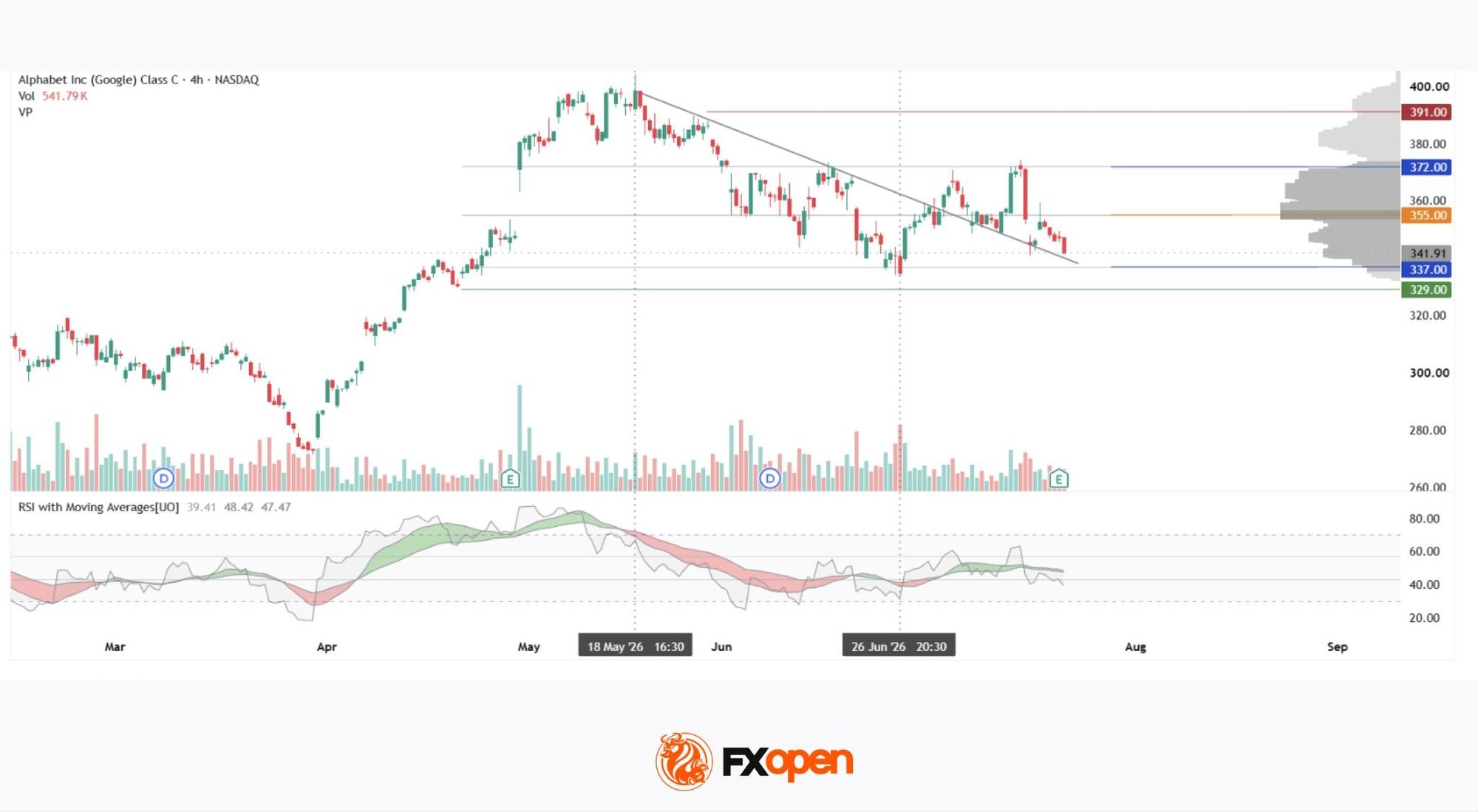
On the 4-hour chart of Alphabet (GOOGL Class A on FXOpen), a short-term bearish structure developed after the price reached the $404 area on 18 May. The decline lost momentum near $334. Following the reversal, the price attempted to break the trendline on 6 July but failed to move beyond the current market profile range. After another rejection from the upper boundary of the profile around $372, the stock turned lower and is now trading between the Point of Control (POC) at $355 and the lower edge of the profile near $337.
The red resistance zone around $391 could limit any recovery attempt, while continued selling pressure may shift attention towards the green support area near $329. The RSI + Moving Averages indicator currently shows readings of 39, 48, and 47. Although the RSI remains below the moving averages, the averages themselves are still coloured green and positioned in the middle of the neutral zone, suggesting that momentum remains inconclusive. Vertical volume has been relatively moderate since the price broke below the trendline, reinforcing the current lack of directional conviction.
Key Takeaways
Despite reporting a sharp increase in net income, Alphabet’s share price reaction has been relatively muted. Strong performances from Google Cloud and Search were partly offset by the fact that most of the profit growth came from a one-off investment revaluation rather than core operations. As a result, fundamental developments may continue to have a greater influence on the stock than the current technical picture in the near term.
Buy and sell stocks of the world’s biggest publicly-listed companies with CFDs on FXOpen’s trading platform. Open your FXOpen account now or learn more about trading share CFDs with FXOpen.
This article represents the opinion of the Companies operating under the FXOpen brand only. It is not to be construed as an offer, solicitation, or recommendation with respect to products and services provided by the Companies operating under the FXOpen brand, nor is it to be considered financial advice.

Wales breaking news plus weather and traffic updates (Thursday, July 23)

Millionaires ask Andy Burnham to tax them more

BitMEX Exchange Announces Shut Down, Ending 11-Year Run

Renter of Home in Anne Heche Crash Denies Settlement With Son

No Jackpot Winner as $257 Million Prize Rolls Over to $269 Million Monday Draw

Weekend Open Thread: Staud – Corporette.com

POV: Things that are worth the money if u want to be PoPuLaR in the #2000s. #nostalgia #2000sfashion

Bitcoin’s 4-Year Cycle Is Breaking – This Chart Already Bottomed

money subliminal calm – the audio that will make you rich // new formula (works instantly!)
-
 NewsBeat7 days ago
London Mayor Sadiq Khan handed a peerage by Keir Starmer alongside 15 other Labour figures… just days before the PM leaves No10
-

 Fashion6 days ago
Weekend Open Thread – Corporette.com
-

 Politics5 days ago
The House | The City of London can help the new chancellor deliver growth in every postcode
-

 Crypto World5 days ago
Ripple Payments Joins MiCA With 14 Firms, Does It Mean Anything For XRP?
-
 Crypto World6 days ago
Two July Windows Left: The CLARITY Act’s Senate Fight and What Failure Means
-

 Politics4 days ago
Democrats look to World Cup watch parties to register thousands of voters
-

 Crypto World6 days ago
Ripple wins EU-wide access as ESMA adds it to MiCA register
-

 Crypto World2 days ago
Grayscale Files For Worldcoin ETF, WLD Registers Sharp Rise
-

 NewsBeat3 days ago
Unregistered fitter used Gas Safe logo on business flyers
-

 Tech2 days ago
Sail Virtually Aboard The “Itanic” With IA-64 Emulator
-

 Crypto World7 days ago
Injective Submits SEC Transfer-Agent Registration to Onchain Ownership Records
-
 Tech2 days ago
Turtle Beach Command Series KB7 review: a nifty screen-equipped gaming keyboard
-

 NewsBeat6 days ago
Registration is now open for March for Men with Kev 2026
-
 Business1 day ago
New Jersey voter registration controversy explained: How 6,600 noncitizens got on the rolls, and what happens next
-

 Crypto World6 days ago
Claude Fable 5 Slips to Second in AI Coding Leaderboard
-

 News Videos6 days ago
Money | Class 12 Economics | CBSE Board Exam 2026-27
-

 Business6 days ago
Banco Bilbao Vizcaya Argentaria, S.A. (BBVA) Discusses Global Macro Environment and Economic Outlook for Core Markets Transcript
-

 Crypto World5 days ago
Kaspersky exposes OkoBot’s 20-module crypto wallet attack
-

 News Videos4 days ago
Big Money Is Entering XRP
-

 NewsBeat5 days ago
Durham County Council to send out electoral registration emails
You must be logged in to post a comment Login