
Crypto World
JPMorgan cuts Coinbase (COIN) price target to $290 ahead of earnings

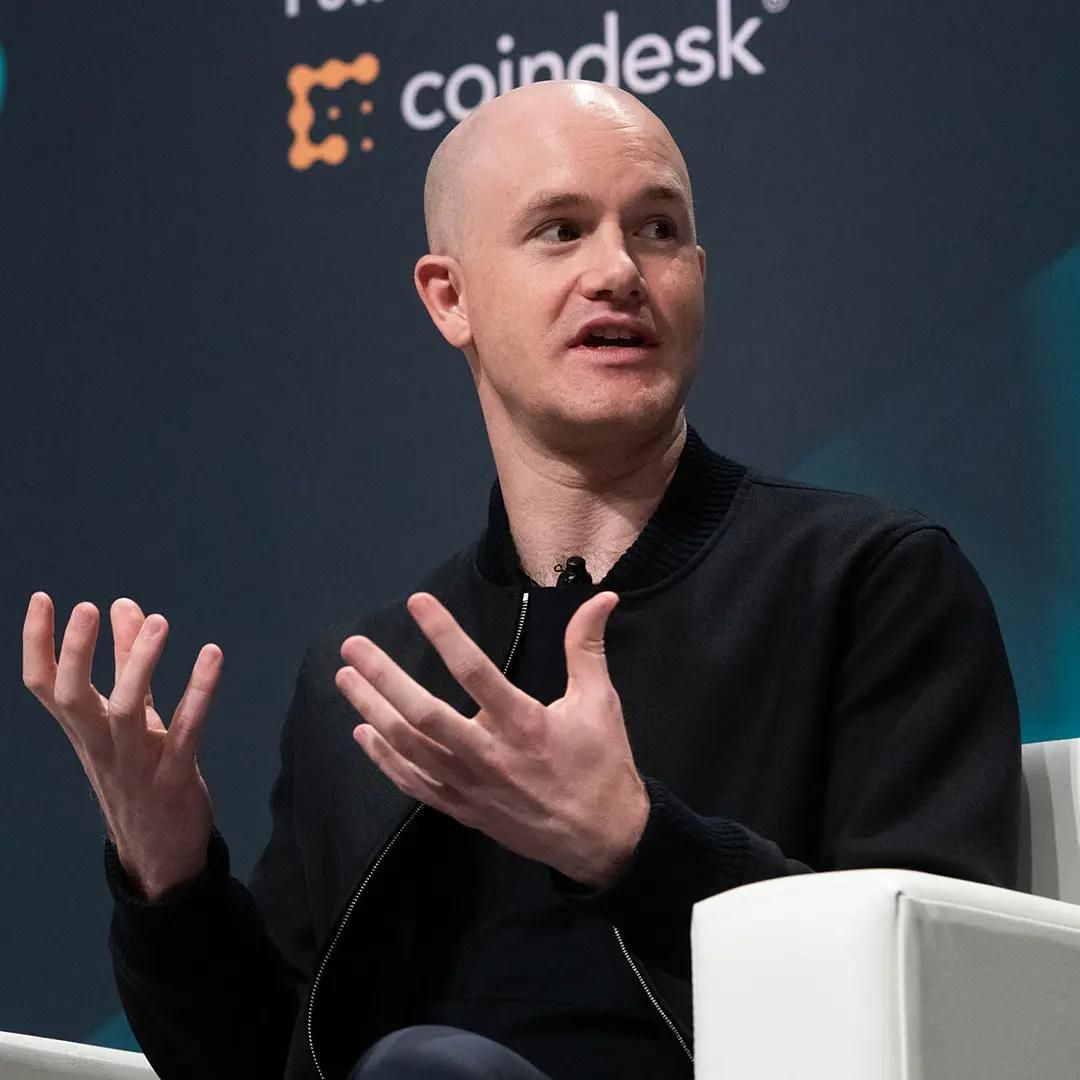
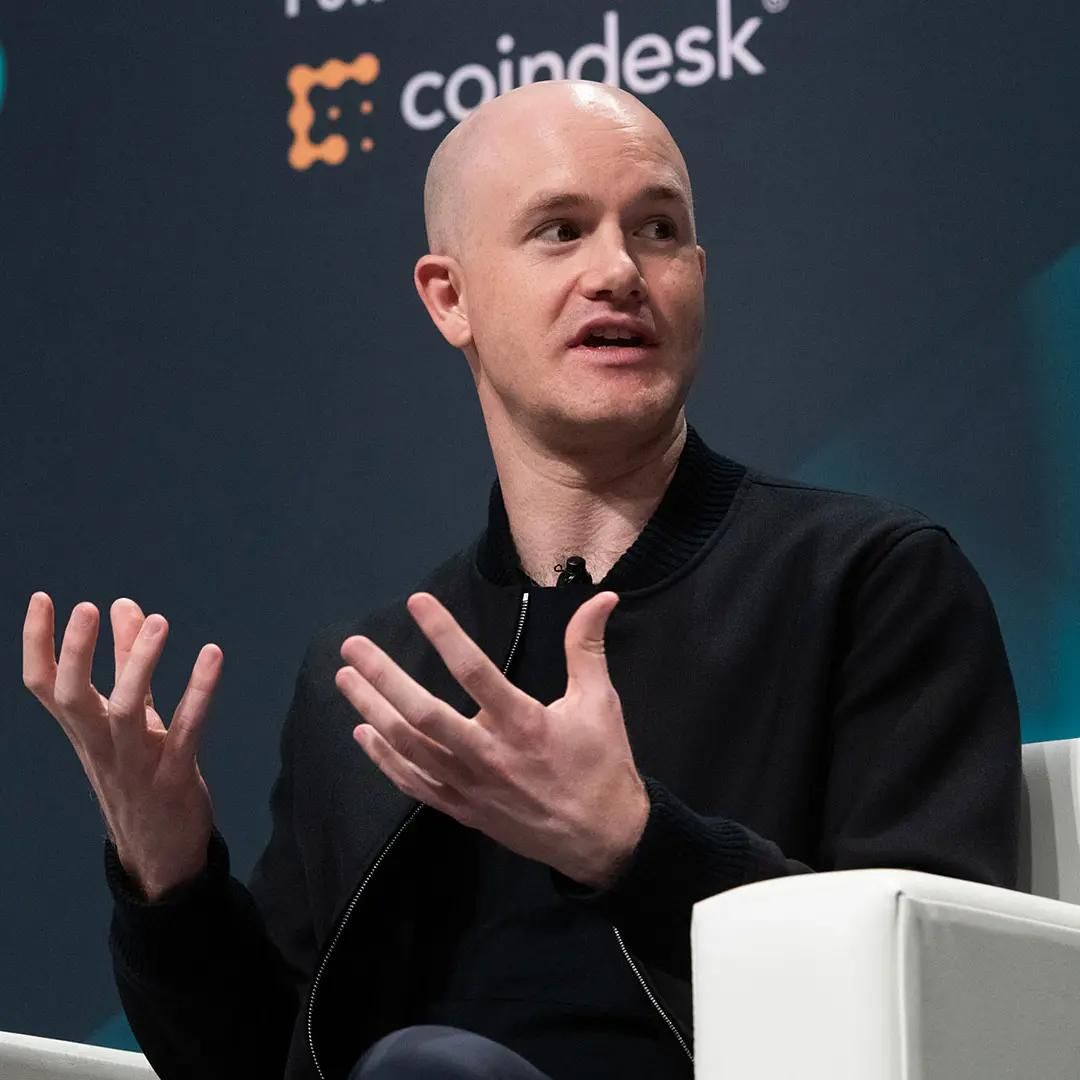
The crypto market downturn has been particularly hard on leading American exchange Coinbase (COIN), which has seen its stock plunge more than 50% since bitcoin’s early October record above $126,000, including a 27% decline in 2026 alone.
Attempting to catch up to that fast tumble, JPMorgan’s Ken Worthington slashed his price target on COIN to $290 from $399 ahead of the company’s fourth quarter earnings report coming after the close on Thursday.
Worthington remains a bull on the stock and his reduced target still suggests 75% upside from COIN’s current price of $1655.
Worthington projects adjusted EBITDA of $734 million, down from $801 million in the third quarter. That would mark a sharp drop from prior quarters, driven mainly by lower trading volumes, weaker crypto prices and slower growth in USDC stablecoin balances, he said.
Worthington estimates spot crypto trading volume of $263 billion for the quarter. He also pointed to lower USDC in circulation, modeling stablecoin-related revenue of $312 million. Those headwinds were partially offset by a full quarter of contributions from Deribit, the crypto derivatives exchange Coinbase acquired in August.
Including Deribit, JPMorgan models total transaction revenue of $1.06 billion, with Deribit contributing about $117 million on an estimated $586 billion in trading volume. In the previous quarter, the exchange reported $1 billion in transaction revenue.
On the subscription and services side, the bank expects revenue of $670 million, below Coinbase’s prior guidance range of $710 million to $790 million, reflecting softer crypto prices, lower staking yields and slower USDC growth. Worthington also expects operating expenses to come in below guidance as the company reins in costs.
Other sell-siders weigh in
Barclays analyst Benjamin Budish said his estimates sit roughly 10% below consensus on adjusted EBITDA, driven by weaker retail trading and blockchain rewards revenue. “We are notably lower on retail trading revenues, based on read-throughs from Robinhood, and blockchain rewards revenues,” Budish wrote, adding that consensus estimates may not yet fully reflect publicly available volume data.
Barclays estimates Coinbase exchange volume of about $261 billion in the quarter. He said Robinhood’s (HOOD) reported retail crypto volumes, which have historically tracked closely with Coinbase’s, fell about 15% quarter over quarter.
Compass Point struck a more bearish tone. Analyst Ed Engel said he is negative on the stock into earnings, expecting disappointment in the subscription and services segment. “While investors place a premium multiple on COIN’s S&S segment, we expect 4Q results to affirm overall revenue remains tied to overall crypto prices,” Engel wrote. He also expects January trading revenue to reflect what he described as Coinbase’s weakest retail engagement since the third quarter of 2024.
Beyond the headline numbers, investors are likely to focus on commentary on trading activity early in 2026, the sustainability of USDC-related income, and whether newer initiatives, such as Deribit and Coinbase’s futures business, can meaningfully offset swings in spot crypto markets.

Goldman Sachs disclosed significant crypto exposure in its Q4 2025 13F filing, revealing more than $2.36 billion in digital asset holdings.
The filing shows $1.1 billion in Bitcoin, $1.0 billion in Ethereum, $153 million in XRP, and $108 million in Solana, representing a 0.33% allocation of its reported investment portfolio.
Sponsored
Sponsored
Banking Giant Embraces XRP Exposure
The disclosure places Goldman among the most exposed major US banks to crypto-linked assets, albeit still at a small percentage of total holdings.
A closer look at the filing shows Goldman’s XRP exposure comes specifically through XRP exchange-traded funds, with holdings valued at approximately $152 million.
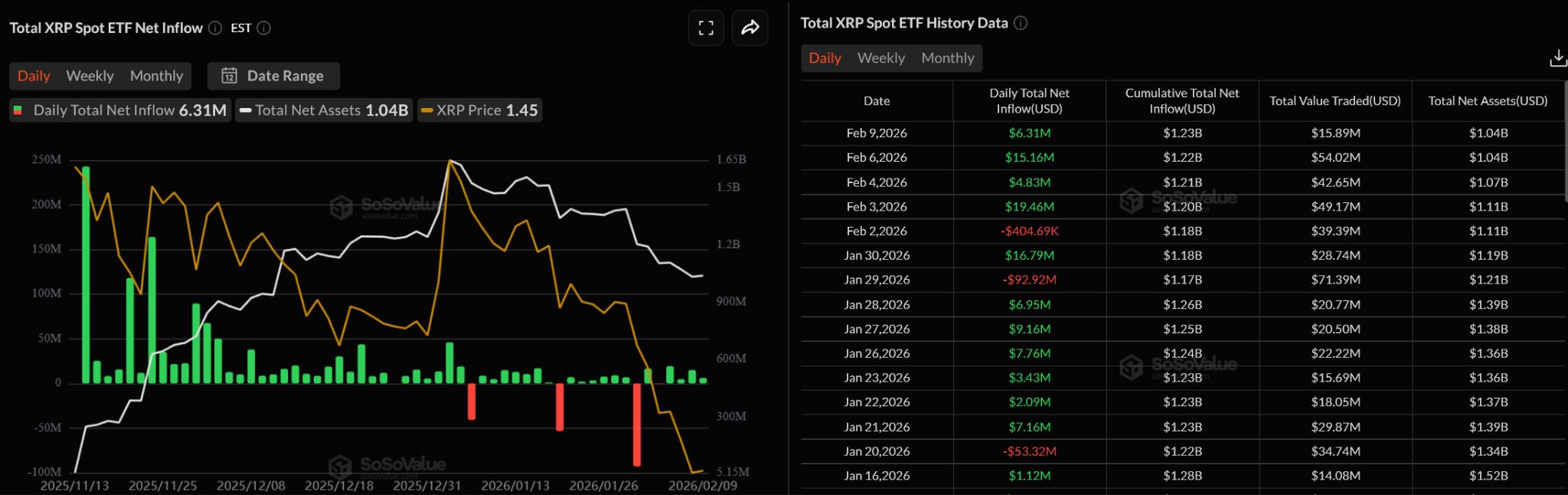
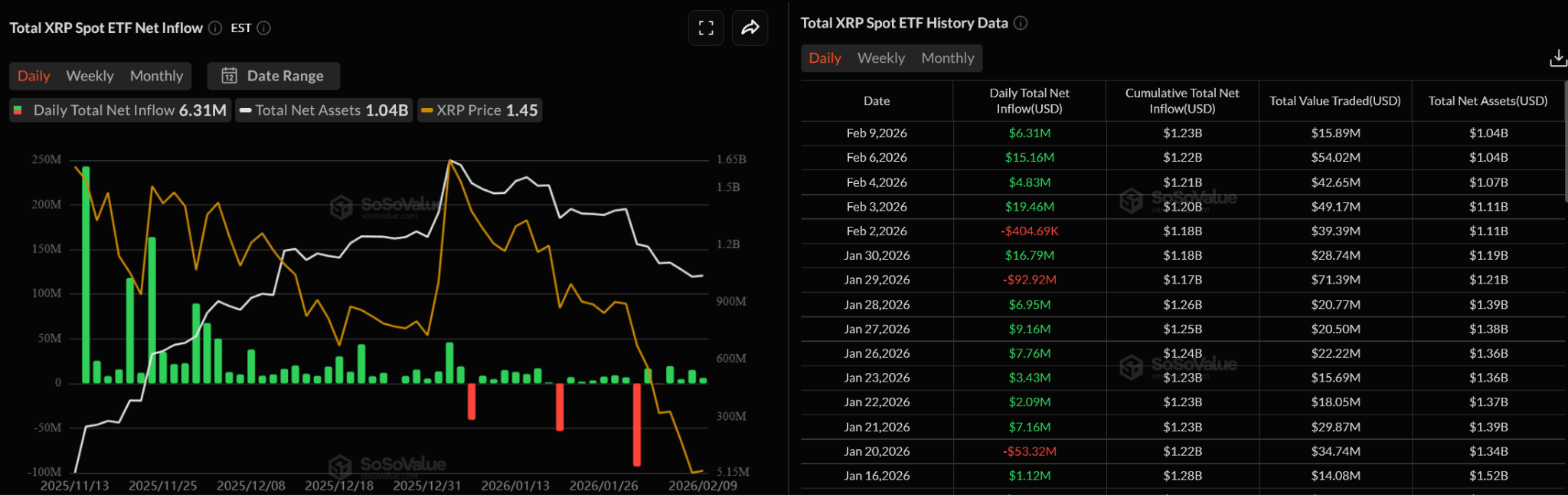
US Spot XRP ETFs currently hold over $1.04 billion in total net assets. XRP ETFs have been trading for 56 days now, and they have only recorded 4 days of outflow.
Goldman Sachs is one of the world’s most influential investment banks, advising governments and corporations on mergers, capital markets, and restructuring.
Sponsored
Sponsored
As of early 2026, the investment bank oversees roughly $3.6 trillion in assets under supervision for institutional and private clients. It also operates large trading, asset management, and wealth management businesses.
As a market bellwether, its portfolio disclosures often signal broader institutional sentiment.
Goldman Sachs Historical Bitcoin Stance
Historically, Goldman’s public stance on Bitcoin was skeptical.
Before 2020, executives and research teams described Bitcoin as a speculative asset with limited use as money and no intrinsic cash flows.
The firm consistently framed crypto as unsuitable for conservative portfolios and emphasized volatility and regulatory risk.
That position began to soften after 2020 as institutional demand increased. Goldman restarted its crypto trading desk, expanded derivatives access, and produced research acknowledging Bitcoin’s role as a potential inflation hedge, while still stopping short of endorsing it as a core asset class.
Following the crypto winter in 2022, the firm again stressed infrastructure and counterparty risks.
More recently, Goldman has shifted toward cautious participation. It has engaged through ETFs, structured products, and tokenization initiatives, while maintaining that crypto remains speculative.


A US federal judge sentenced Braden John Karony, the former CEO of SafeMoon, to 100 months in prison, following his conviction for fraud tied to the collapse of the once-hyped Solana token.
US District Judge Eric Komitee delivered the sentence after hearing emotional victim testimony and forceful arguments from prosecutors, who accused Karony of exploiting investor trust while secretly diverting funds.
Sponsored
Sponsored
The court also scheduled a separate hearing on restitution and financial penalties for April 23.
“This Was a Massive Fraud”: Judge Rejects Defense Pleas
During sentencing, Judge Komitee dismissed defense arguments that Karony’s age and background should mitigate his punishment.
“This was a massive fraud,” the judge said, adding that Karony and his co-conspirators “went to great pains to earn the trust” of investors by repeatedly assuring them that a rug pull was impossible.
Victims described losing life savings, selling personal assets, and delaying home ownership and education plans.
Several said they invested because Karony made himself highly visible and trustworthy, contrasting him with Bitcoin’s anonymous creator.
Sponsored
Sponsored
Prosecutors sought a 12-year sentence, arguing Karony showed no remorse and understood the consequences of lying to investors.
The judge ultimately imposed a shorter but still substantial sentence of 8 years and 4 months.
How SafeMoon Collapsed
SafeMoon launched in 2021 with promises of long-term rewards and a “locked” liquidity pool that executives claimed could not be accessed.
Federal prosecutors later alleged that those claims were false.
According to the case, insiders retained control over the liquidity and misappropriated millions of dollars, while publicly assuring investors their funds were safe.
Authorities said Karony personally benefited from diverted assets while continuing to promote the token and deny any risk of a rug pull.
The prosecution framed the scheme as deliberate deception, not mismanagement or market failure. A jury agreed, convicting Karony on fraud-related counts earlier this year.
With today’s sentence, the SafeMoon case joins a growing list of crypto prosecutions where courts have treated broken trust and liquidity abuse as criminal theft, not innovation gone wrong.

Former FTX chief executive Sam Bankman-Fried has asked a federal court for a new trial, arguing that testimony from witnesses not available at the original 2023 trial could undermine the government’s portrayal of FTX’s finances before its collapse. The Feb. 5 filing, submitted to the Manhattan federal court by Bankman-Fried’s mother, Barbara Fried, a retired Stanford law professor, is being reviewed separately from the formal appeal process. Legal observers described the move as a long shot, noting that motions for a new trial face steep legal hurdles. The filing keeps the case active as the crypto industry continues to reckon with the fallout from FTX’s collapse. Bankman-Fried was convicted on seven counts tied to the misuse of customer funds at FTX and Alameda Research and was subsequently sentenced to 25 years in prison.
Key takeaways
- Bankman-Fried filed for a new-trial request in Manhattan federal court on February 5, arguing that testimony from witnesses not previously available could alter the government’s narrative about FTX’s financial condition before November 2022.
- The filing is distinct from his ongoing appeal and is considered a high-risk, rarely-granted remedy, according to coverage of the development.
- The witnesses cited include former FTX executives Daniel Chapsky and Ryan Salame; Salame has already pleaded guilty to related charges and is serving a seven-and-a-half-year sentence.
- Bankman-Fried is asking for a different judge to review the motion, contending that the trial judge, Lewis Kaplan, showed “manifest prejudice” during the proceedings.
- Separately, the FTX bankruptcy estate continues to unwind assets and make payments to creditors, with billions disbursed in 2025 and further payouts anticipated as asset recoveries and claims reviews proceed.
Sentiment: Neutral
Market context: The case sits at the intersection of a reopened legal battle over crypto exchange governance and the ongoing process of asset recovery in the FTX bankruptcy, a backdrop shaping investor sentiment in the broader crypto ecosystem as markets adjust to renewed regulatory scrutiny and liquidity considerations.
Why it matters
The motion filed by Bankman-Fried signals an enduring strategy to contest every possible avenue of review, even after a high-profile conviction that has already reverberated through the industry. By arguing that testimony from former executives who did not appear at trial could alter the narrative surrounding FTX’s finances, the defense aims to inject fresh context into a case that has already established a precedent for the treatment of customer funds and corporate governance within crypto-linked entities. While the odds of a successful new trial remain remote, the procedural maneuver underscores how defendants in landmark crypto cases may pursue multiple tracks to challenge outcomes, particularly when complex financial arrangements are involved.
The allegations hinge on questions about how FTX and Alameda Research presented their financial position in the crucial period leading up to the collapse in November 2022. The defense contends that additional perspective from former executives could complicate the government’s portrayal of solvency and liquidity, potentially altering jurors’ understanding of the company’s underlying finances. The decision to seek a different judge for review adds another layer to the strategy, suggesting the defense believes the presiding judge’s conduct during trial could have influenced the jury’s interpretation. This line of argument echoes earlier appeals discussions that suggested the defense perceived improper constraints on explaining investor fund availability during the proceedings.
On the other side, prosecutors and the bankruptcy team remain focused on recovering value for creditors through a phased payout schedule. The FTX estate’s process has already distributed billions of dollars to creditors in 2025, and officials indicate that additional disbursements will follow as asset recoveries continue and claims are reviewed. The contrast between ongoing asset recovery efforts and a post-conviction legal bid highlights how the FTX saga continues to unfold across multiple fronts—criminal accountability, civil actions, and creditor recovery—well after the initial collapse and sentencing.
What to watch next
- Whether the court will accept the new-trial motion for review, and if so, whether the request is reassigned to a different judge for consideration.
- Any formal responses from prosecutors and the defense, including potential replies outlining why the witnesses’ testimony could be deemed significant or inconsequential to the verdict.
- Timing and scope of further rulings in the criminal case, including any procedural milestones tied to the appellate process or ancillary motions.
- Progress of the FTX bankruptcy estate’s payout plan, including any announced disbursements or adjustments to the repayment calendar as asset recoveries evolve.
Sources & verification
- Motion filed on February 5 in Manhattan federal court by Sam Bankman-Fried’s team, with commentary noting its position as a long-shot challenge.
- Bloomberg’s coverage of the new-trial bid and related scheduling considerations.
- Details of Bankman-Fried’s seven-count conviction tied to the alleged misuse of customer funds at FTX and Alameda Research.
- Salame’s guilty plea and seven-and-a-half-year prison sentence as a related development in the case.
- FTX bankruptcy estate updates describing the phased payout approach and cumulative distributions to creditors in 2025, along with ongoing reviews of remaining claims.
New-trial bid keeps FTX fallout in play as prosecutors press ahead
The central argument in Bankman-Fried’s latest filing rests on the potential impact of testimony from witnesses who were not called at trial, specifically former FTX executives Daniel Chapsky and Ryan Salame. By positing that such testimony could challenge the government’s narrative about FTX’s financial health before the collapse, the defense is attempting to reopen questions about solvency and liquidity that were central to the jury’s assessment in 2023. While the court process for a new trial remains arduous, the submission indicates that the defense believes new material could alter the perception of the company’s finances, a linchpin of the government’s case against Bankman-Fried on seven criminal counts tied to customer funds misuse.
The move to seek a different judge to review the motion adds a procedural layer to the strategy. Bankman-Fried’s team argues that Judge Lewis Kaplan’s conduct during the trial may have introduced what the defense characterizes as “manifest prejudice.” This argument mirrors prior appellate contentions that Kaplan did not allow certain defenses relating to the availability of funds to repay investors to be presented to jurors. The defense’s aim appears to be twofold: to introduce new witnesses who could reframe the financial narrative and to secure an impartial reassessment of the trial dynamics, should the court grant a fresh review.
At the same time, the broader legal and regulatory environment surrounding FTX remains unsettled. The bankruptcy estate’s ongoing efforts to return capital to creditors underscore the complexity of unwinding a multibillion-dollar platform that collapsed under rapid liquidity strains and stakeholder risk. In 2025, the estate distributed billions and indicated that further disbursements would follow as asset recoveries progress and claims are thoroughly reviewed. This ongoing process continues to shape the broader market’s expectations for recovery timelines and the level of restitution investors and customers might eventually receive.
Observers emphasize that even if the new-trial bid does not succeed, it keeps the legal narrative alive, ensuring continued scrutiny of evidence and procedures that could influence future crypto-related prosecutions and settlements. The case thus remains a focal point for discussions about governance, financial disclosures, and customer protections within the crypto space, reinforcing the idea that accountability mechanisms beyond initial verdicts may play a meaningful role in shaping industry standards and investor confidence.
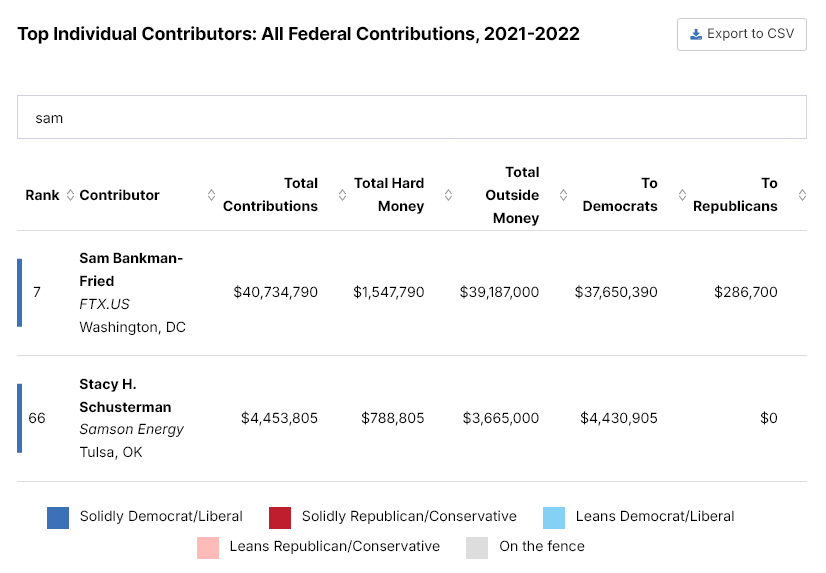
FTX founder Sam Bankman-Fried has launched a fresh public campaign on X that appears aimed at reinforcing his request for a new trial. However, several of the claims he is using to argue his innocence conflict with court records and established facts.
The posts, published days after filings seeking a retrial, frame Bankman-Fried as a victim of politically motivated “lawfare,” alleging misconduct by prosecutors, judicial bias, and retaliation against former FTX executives.
Yet, a review of the claims shows repeated factual errors and logical gaps.
Sponsored
Sponsored
Claims of Gag Orders and Judicial Bias
Bankman-Fried claims both he and Donald Trump were “gagged” by Judge Lewis Kaplan.
Court records show this comparison is inaccurate. Kaplan presided over Trump’s civil defamation case and imposed courtroom conduct limits, not a formal public gag order.
In reality, Trump’s criminal gag orders were issued by other judges in unrelated cases.
In contrast, Bankman-Fried was subject to a criminal gag order after repeated violations of pretrial release conditions — a standard judicial response.
Sponsored
Sponsored
Repeating Solvency Arguments Rejected at Trial
Bankman-Fried again asserts that FTX “was always solvent” and that prosecutors falsely claimed customer funds were stolen.
That argument was central to his defense at trial and was rejected by a jury, which found that customer assets were misused and misrepresented.
Also, federal courts have consistently ruled that post-collapse asset recoveries do not retroactively establish solvency at the time of misuse.
Sponsored
Mischaracterizing Prosecutorial Actions
Bankman-Fried also claims Trump “fired” one of his prosecutors, former SDNY official Danielle Sassoon.
Public records show Sassoon resigned after refusing a DOJ directive in an unrelated corruption case. She was not dismissed, and her departure had no direct connection to the FTX prosecution.
Linking DOJ Actions to Politics and Crypto Regulation
Several posts allege the Biden administration targeted him because he opposed Gary Gensler, donated to Republicans, and represented crypto interests.
Sponsored
Sponsored
While Bankman-Fried was active in Washington, no court filings or rulings have supported claims that political donations or regulatory lobbying drove the prosecution.
Judges ruled the case on documentary evidence, internal messages, and witness testimony.
In fact, the FTX founder himself directly donated to Joe Biden’s campaign.
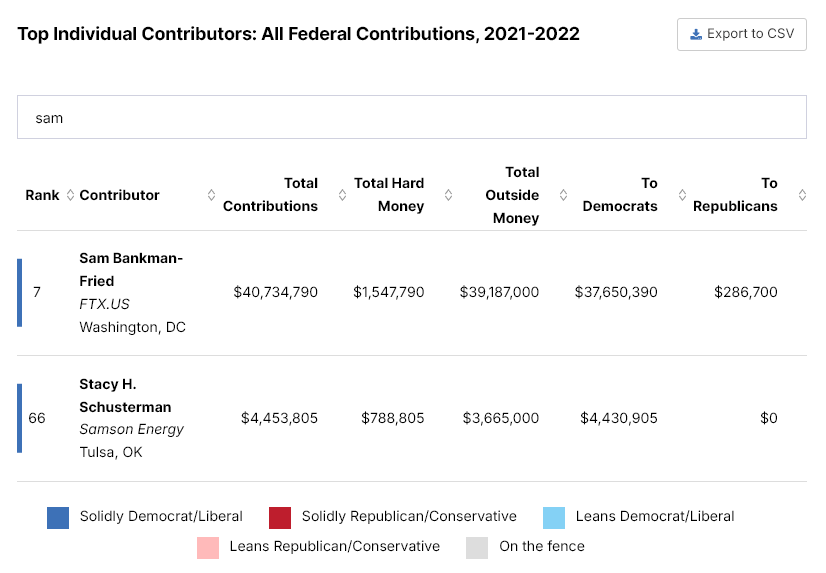
Bankman-Fried also defends former FTX co-CEO Ryan Salame, claiming he was coerced into pleading guilty and barred from presenting exculpatory evidence.
Salame pleaded guilty to campaign finance and money-transmission violations and has acknowledged those pleas in court. His sentencing record shows no judicial finding that evidence was unlawfully suppressed.
Former SafeMoon CEO Braden John Karony will face an 8-year prison sentence after being convicted last year on a string of federal charges tied to defrauding investors in his digital assets operation.
The 100-month sentence was handed down Tuesday in U.S. District Court for the Eastern District of New York, and Karony must also forfeit $7.5 million and two residences in the case.
“Karony lied to investors from all walks of life — including military veterans and hard-working Americans — and defrauded thousands of victims in order to buy mansions, sports cars, and custom trucks,” stated United States Attorney Nocella, in a statement. “Our office will continue to vigorously prosecute economic crimes that harm investors and weaken societal trust in the stability and security of digital asset markets.”
Karony was said to have participated in manipulating the price of the SafeMoon token and illicitly controlling liquidity pools in the failed Utah-based company to drain millions of dollars, according to the Department of Justice. After a three-week trial, he was convicted of conspiracy to commit securities fraud, wire fraud, and money laundering.
One co-conspirator, Thomas Smith, also pleaded guilty in February 2025 to conspiracy to commit securities fraud and wire fraud, though he hasn’t yet been sentenced. Another alleged SafeMoon conspirator, Kyle Nagy, is still wanted by authorities.
Read More: SafeMoon Execs Arrested by DOJ in Fraud Investigation, Charged by SEC

In a risky but potentially rewarding play, Ethereum treasury company Bitmine Immersion Technologies (BMNR) has become the largest corporate holder of ETH, now controlling 3.6% of the total supply after aggressively buying the dip.
The firm, backed by Fundstrat’s Tom Lee, purchased an additional 40,613 Ether last week as prices collapsed toward $1,700, bringing Bitmine’s total treasury to over 4.3 million tokens despite sitting on massive unrealized losses from its ETH portfolio, which holds 4.3 million tokens at an average price of $3,826.
- Bitmine added 40,613 ETH during the crash, bringing total holdings to 4.3 million tokens.
- The firm now controls roughly 3.6% of the total circulating Ethereum supply.
- Unrealized losses exceed $7.8 billion with an average entry price of $3,826.
Bitmine Ethereum Accumulation Strategy Explained
Led by Chairman Tom Lee, Bitmine pivoted from mining for Bitcoin to an Ethereum-exclusive treasury strategy in mid-2025 with a goal to eventually acquire 5% of the total ETH supply.
The company sees temporary market downturns as acquisition opportunities rather than setbacks, mirroring high-conviction plays seen in broader crypto selloff contexts.
“Bitmine has been steadily buying Ethereum… given the strengthening fundamentals,” Lee stated in a press release, countering concerns about the firm’s $7.8 billion paper loss.
Lee argues that current prices do not reflect Ethereum’s utility as the “future of finance,” positioning the firm for long-term dominance despite the immediate pain on its balance sheet.
— Bitmine (NYSE-BMNR) $ETH (@BitMNR) February 9, 2026

1/
BitMine provided its latest holdings update for February 9th, 2026:
$10.7 billion in total crypto + "moonshots":
– 4,325,738 ETH at $2,125 (@coinbase)
– 193 Bitcoin (BTC)
– $200 million stake in Beast Industries @MrBeast
– $19 million stake in Eightco Holdings (NASDAQ:… pic.twitter.com/MR6hWu8lio
What 3.6% Supply Control Means for Ethereum Markets
Bitmine’s total stack now sits at approximately $8.7 billion based on current prices hovering just above $2,000.
On-chain data indicates the firm bought the latest tranche of 40,613 tokens as ETH plunged from $2,300 to lows of $1,700.
Unlike purely speculative holders, Bitmine leverages its position for yield; nearly 2.9 million of its tokens are currently staked, generating an estimated $202 million in annualized rewards at current prices.
While investors continue pouring capital into the sector despite the wipeout, Bitmine’s sheer scale allows it to absorb significant liquidity during panic events.
The company plans to launch MAVAN, a proprietary U.S.-based validator network, to potentially stake its entire holding and maximize yield generation.
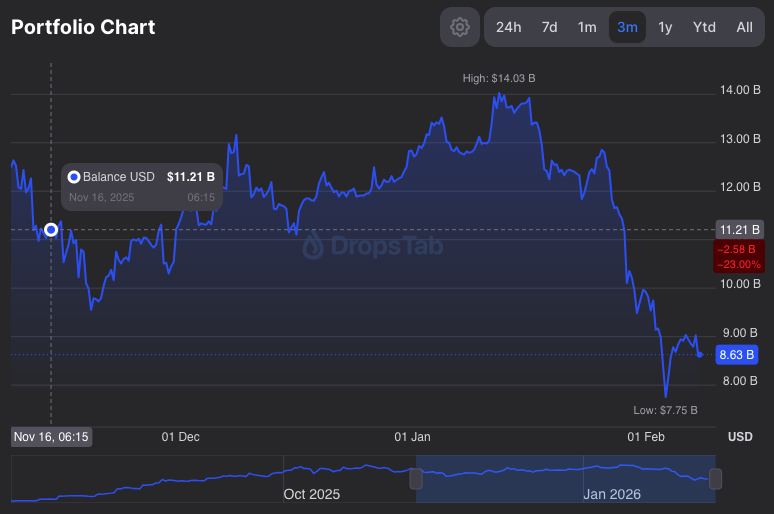
How Bitcoin’s Concentration of Ethereum Could Affect ETH Price
The concentration of such a vast amount of Ether in a single corporate entity raises questions about market influence and liquidation risks.
While Lee predicts a V-shaped recovery, the firm remains deeply underwater with an average purchase price of $3,826. This resilience stands in stark contrast to other institutional players; for instance, Trend Research slashed Ether holdings to cover loans during the same market crash.
If Bitmine sustains its position without forced selling, it removes substantial supply from the market, potentially accelerating price appreciation if demand returns.
The post Tom Lee-Backed Bitmine Controls 3.6% of Ethereum Supply After Price Crash appeared first on Cryptonews.
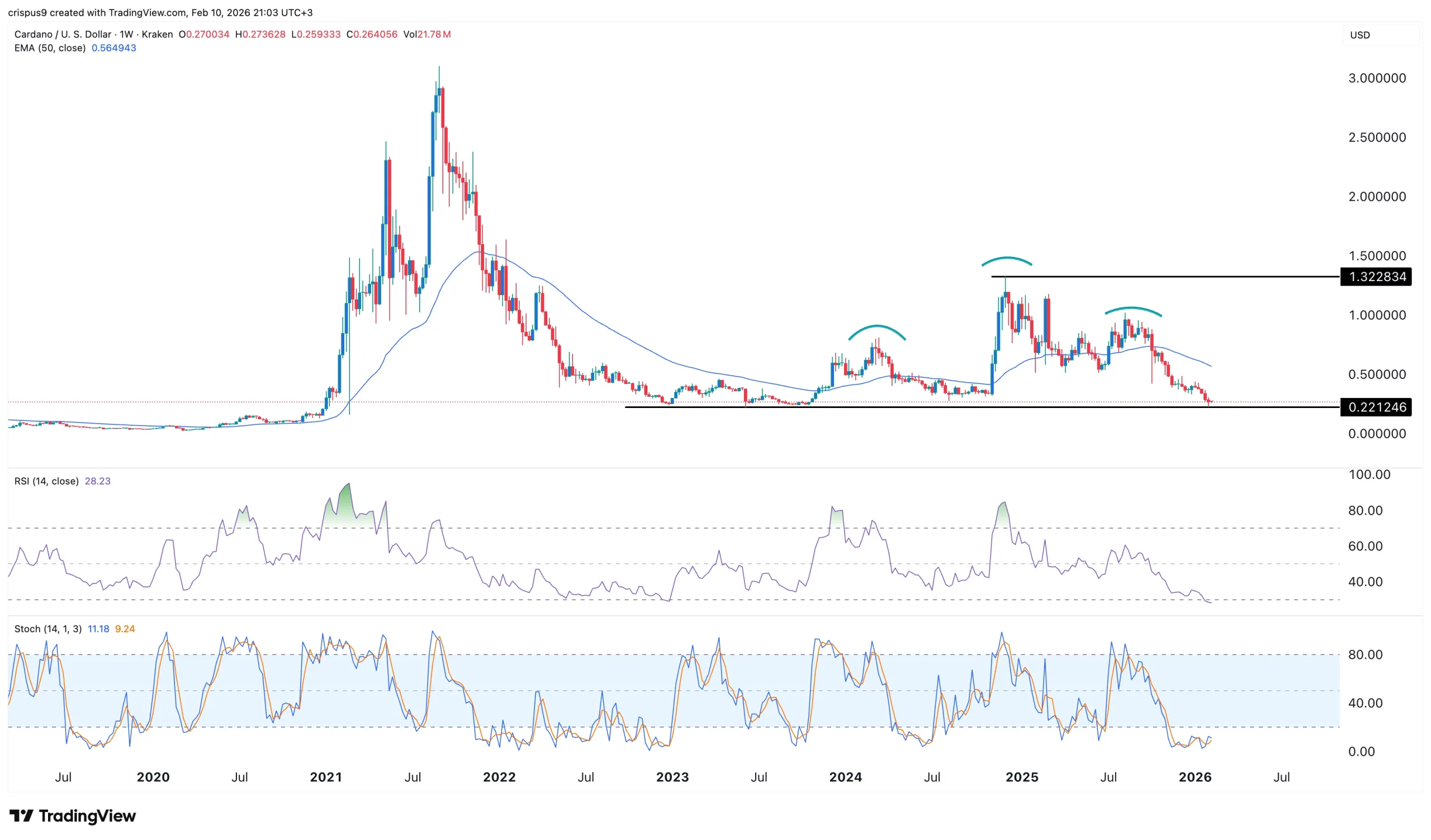
The Cardano price continued its strong downward trend, reaching its lowest level since October 2023, making it one of the crypto industry’s top laggards.
Summary
- Cardano price dropped to a crucial support level this week.
- The developers are working on Pentad, which aims to grow the ecosystem.
- The coin has become highly oversold, with the RSI moving to 28.
Cardano (ADA), a top layer-1 network, slipped to $0.2640, down over 80% from its December 2024 peak and 91% below its all-time high of $3 in 2021.
ADA extended its sharp decline despite several major catalysts, including this week’s CME futures launch and the upcoming Midnight mainnet debut. The futuress product made it available to American retail and institutional investors.
Midnight, its upcoming zero-knowledge sidechain, is expected to launch either later this month or in March. Data shows that its testnet continues to perform well, having handled over 185,000 blocks and 295 million slots. NIGHT, its native token, has achieved a market capitalization of over $800 million.
Cardano’s developers are working to fix the network and attract more creators. They are working on the Leios upgrade, which will make it a faster network than many popular chains.
At the same time, they are implementing the Pentad program, which aims to attract more oracle network, tier-1 stablecoins like USDT and USDC, and analytics tools. It has already attracted Pyth Network, a top oracle network, and Dune, a popular analytics tool.
Therefore, Cardano price is falling because of the ongoing crypto market crash, which has affected Bitcoin and most altcoins.
Cardano price prediction: technical analysis
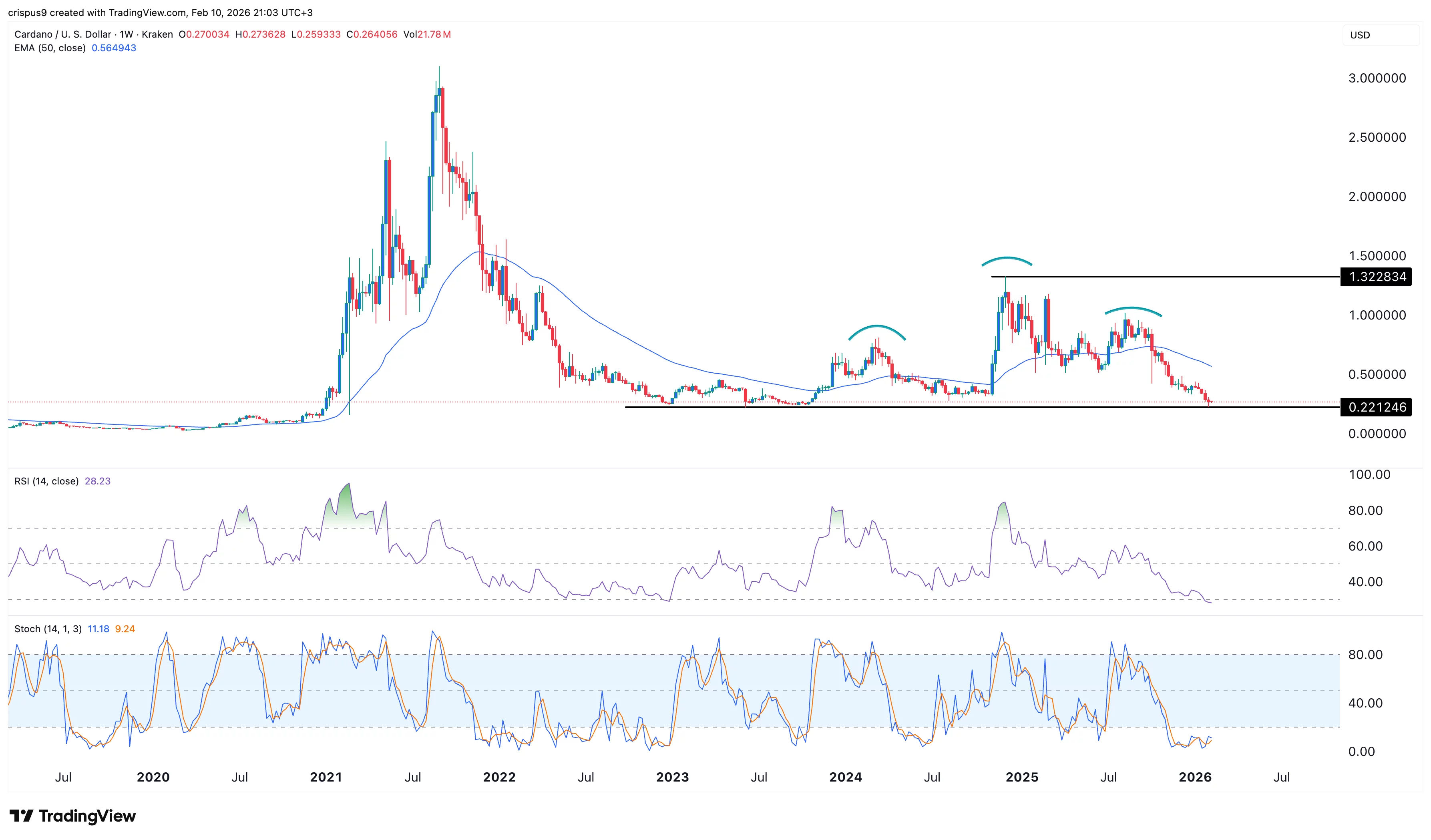
The weekly timeframe chart shows that ADA token has continued falling in the past few months. It has slumped from a high of $1.3230 in December 2024 to the current $0.2638.
The coin has dropped below the 50-week Exponential Moving Average, a sign that bears remain in control. Also, Cardano token has settled at the key support at $0.2212, the neckline of the head-and-shoulders pattern.
ADA has become oversold, with the Relative Strength Index at 28, the oversold level. The Stochastic Oscillator has also moved below the oversold line.
Therefore, the coin may rebound in the coming days, potentially to the psychological level of $0.50. However, a drop below the current support level at $0.2212 will confirm more downside, potentially to $0.15.
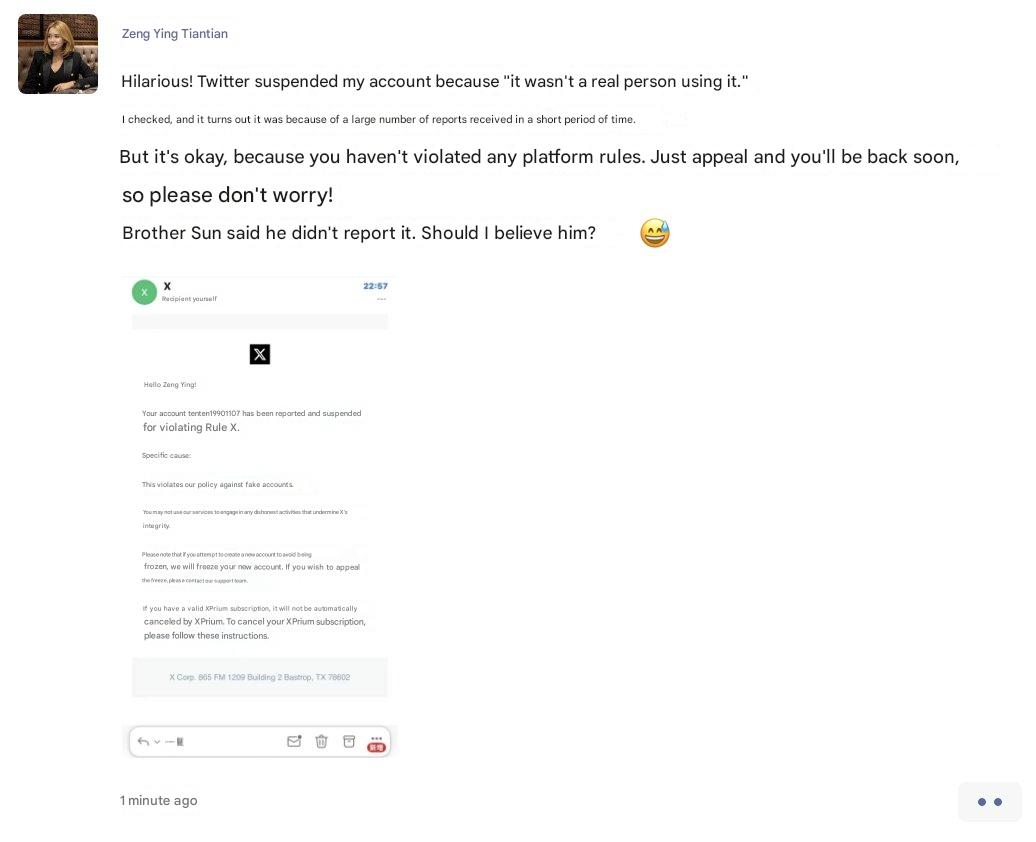
Justin Sun’s alleged ex-girlfriend claims that her X account was taken down after a large number of people reported that it wasn’t being run by “a real person.”
A screenshot shared by crypto investor Yijin Li, appears to show Ten Ten, real name Zeng Ying, sharing an email from X regarding the suspension.
In the screenshot (translated with Google Translate), Ten Ten says, “Hilarious! Twitter suspended my account because ‘it wasn’t a real person using it.’”
She claims that she checked the account suspension and discovered it was enforced because “of a large number of reports received in a short period of time.”
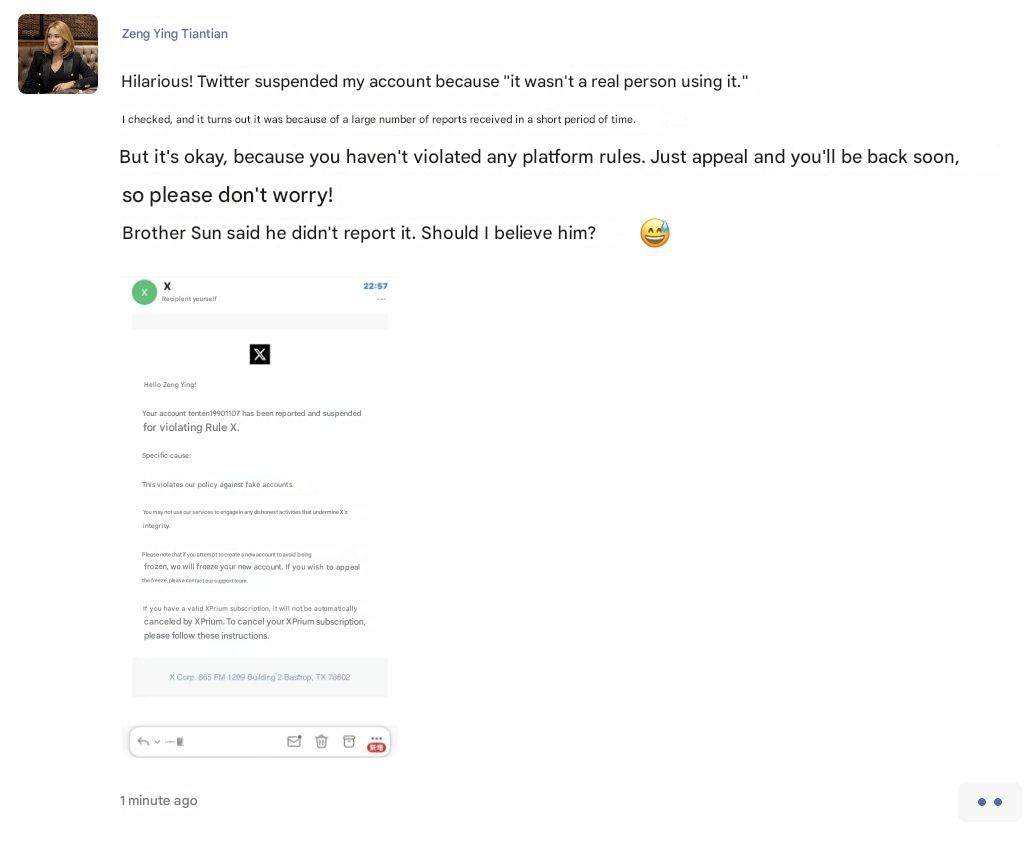
According to the post, Sun appears to be aware of the suspension and reached out to Ten Ten to tell her that he didn’t report the account. However, she doubted whether he was telling the truth.
The email from X told her that she can appeal the account freeze, adding that if she attempts to create a new account to avoid the suspension, it will also be frozen.
Ten Ten claims Sun wash traded TRX
Ten Ten has been a thorn in Justin Sun’s side for the past few weeks after claiming that she’s his former girlfriend and making a slew of other allegations.
This includes claims that the controversial Tron founder has made millions wash trading his own TRX token by directing his employees to buy and sell large quantities of it in 2017 and 2018.
Indeed, this is the subject of a lawsuit launched by the SEC in 2023. Ten Ten also says she’s given evidence to the SEC, but whether or not it will affect a case that’s been paused for most of 2025 remains to be seen.
Ten Ten also claims that Sun had originally offered to marry her. However, she says she realized this wouldn’t happen when Sun revealed that he was dating Eileen Gu, a freestyle skier who recently won a silver medal at the Winter Olympics.
Read more: FTX estate says Justin Sun still owes it millions
Ten Ten says she decided to open up about Sun’s alleged malpractice after watching him become “an insurmountable gate of corruption and wrongdoing.”
Sun has denied all of Ten Ten’s claims, but was revealed by Ten Ten to have sent her a message implying that their former relationship was real.
Protos has reached out to Ten Ten for comment and will update this piece should we hear back.
Got a tip? Send us an email securely via Protos Leaks. For more informed news and investigations, follow us on X, Bluesky, and Google News, or subscribe to our YouTube channel.
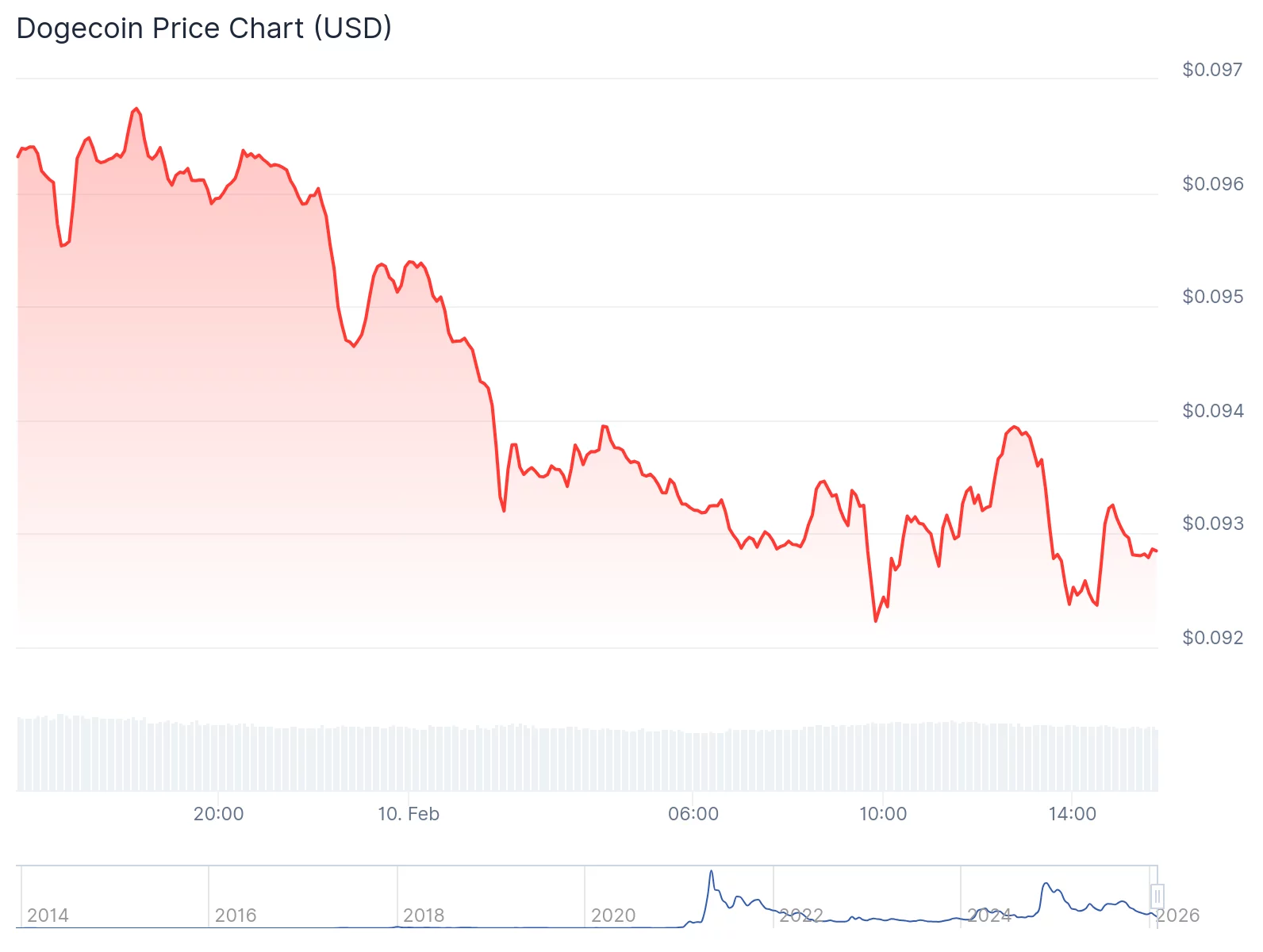
Dogecoin fell 4% and Shiba Inu dropped 2% on Tuesday, with both meme coins accelerating lower after breaking key support levels.
Summary
- Dogecoin broke below the $0.10 level, confirming bearish momentum with resistance at $0.105–$0.12.
- Support sits at $0.08, potentially falling to $0.07 if downward pressure continues.
- Shiba Inu trades near $0.00000552 with extreme selling pressure, a bearish Supertrend at $0.00000753, and broken support zones; token burns offer partial support, but recovery requires reclaiming $0.00000700.
DOGE broke below the $0.10 psychological level, signaling a significant technical failure. The Supertrend at $0.11958 confirms bearish momentum, while the Parabolic SAR at $0.10544 acts as resistance.
Selling pressure intensified as DOGE moved toward the lower boundary of its channel. Horizontal support sits around $0.08, but the steep decline suggests strong downward momentum.
Open interest decreased 1.02% to $962.62 million, and options volume plunged 48.58%, reflecting reduced trading activity.
The Binance long/short ratio of 2.1756 indicates many traders positioned for a bounce are now underwater. Recovery requires DOGE to reclaim $0.10 and break above the Supertrend at $0.12; otherwise, support at $0.08 and potentially $0.07 remains key.
SHIB trades near the lower Bollinger Band at $0.00000552, showing extreme selling pressure. The Supertrend at $0.00000753 is bearish, and the upper Bollinger Band at $0.00000837 marks how far SHIB has fallen.
A descending trendline limits rallies, while previous support zones have been broken. Token burns rose 65.52% in 24 hours with 2.5 million SHIB removed, but 585.45 trillion remain in circulation, offering only partial long-term support.
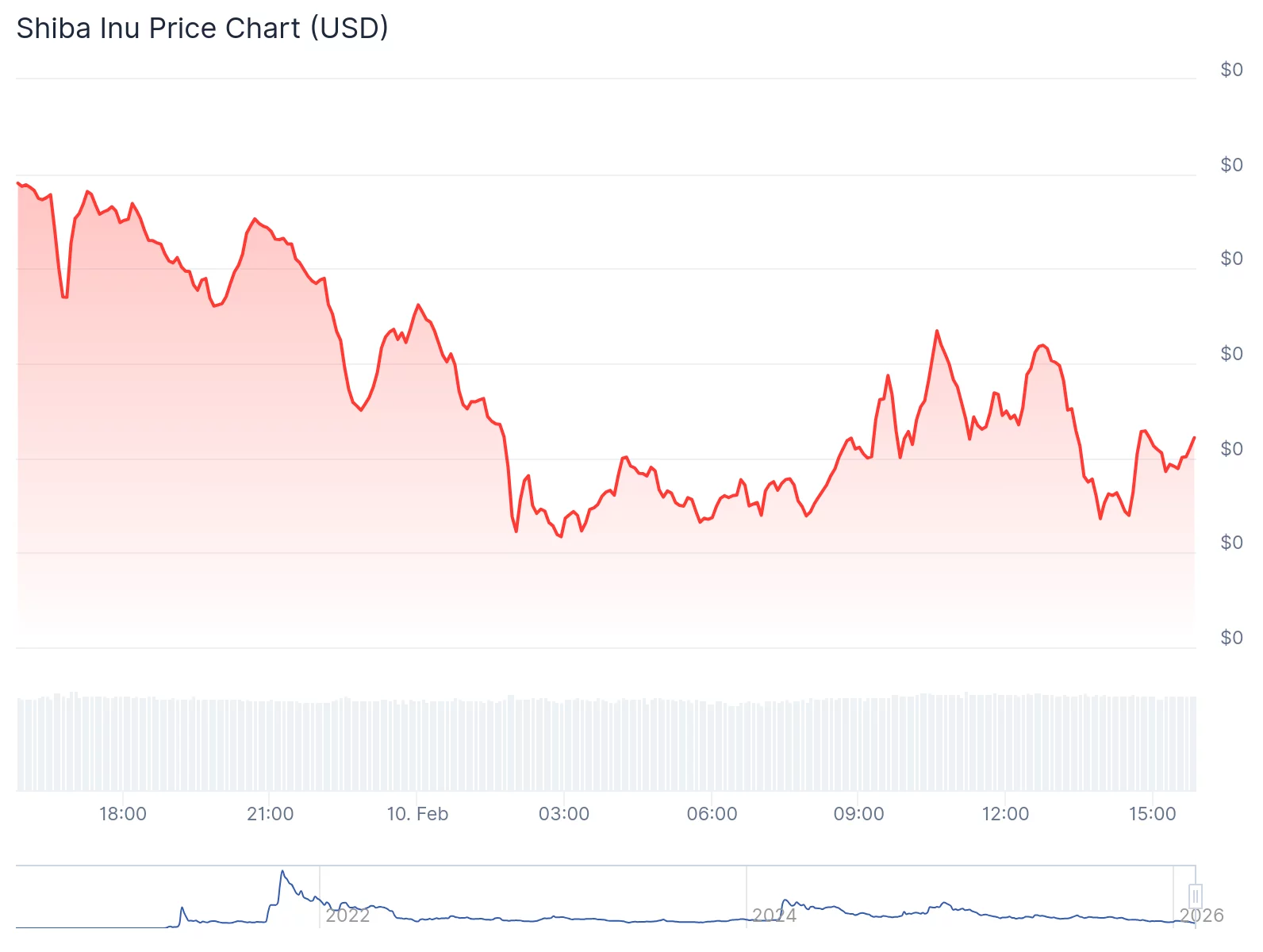
Immediate support is $0.00000550-$0.00000600, with a potential drop to $0.00000500 if broken. Recovery needs SHIB to reclaim $0.00000700 and surpass the Supertrend.
Bitcoin traders are glued to one price right now: $50,000.
After a brutal dip that saw prices flash below $60,000 for a hot minute, everyone’s wondering if we’ve finally hit rock bottom.
Yes, Bitcoin price bounced back above $70,000 temporarily, but here’s the thing, nobody’s really convinced this is “the bottom” just yet.
Key Takeaways
- Analysts warn the recent bounce to $71,000 may be a “bull trap” designed to liquidate shorts before a retest of $50,000 support.
- JPMorgan data indicates Bitcoin has traded below the estimated miner production cost of $87,000, a historical signal for capitulation.
- Technical patterns highlight critical support at $67,350, with a breakdown potentially opening the door to the $43,000 region.
Weekly Close Shows Fragility Despite $70K Rebound
Bitcoin found its way back to $71,000 as the week kicked off. However, most find this rally looking sketchy.
Sure, we saw a 7% bounce from last week’s $60,000 bloodbath, but there’s basically no volatility around the weekly close. And when things look too calm after a crash, traders get suspicious.
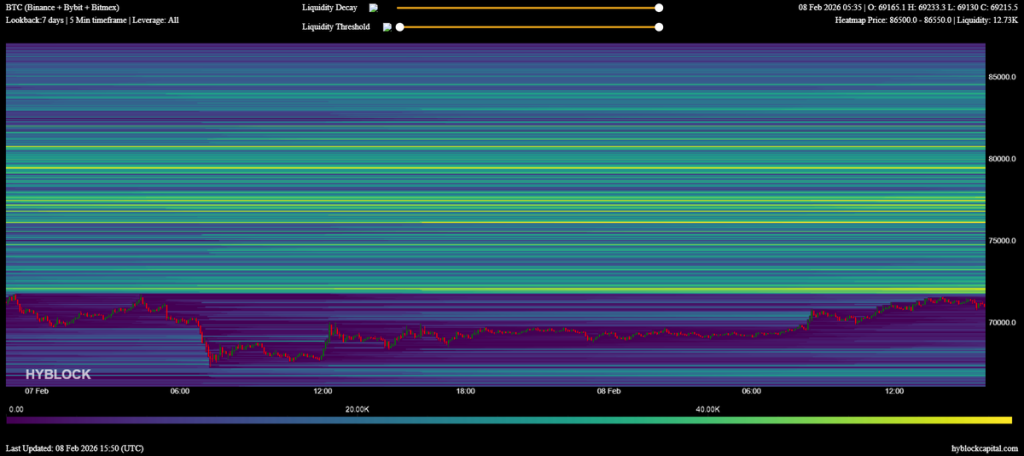
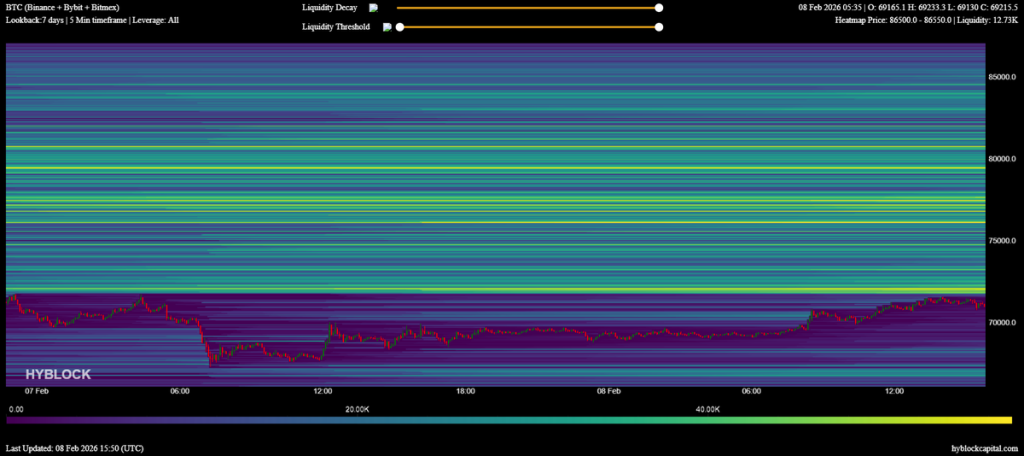
Trader CrypNuevo said on X: this whole move up looks like a calculated play to hunt down short positions stacked between $72,000 and $77,000.
If this “recovery” turns out to be fake, bears have one target in their crosshairs: $50,000.
Miner Costs and Stablecoin Flows Signal Caution
Here’s a number that should make you nervous: $67,000. That’s what it costs miners to produce one Bitcoin.
BTC might be trading below that soon. Historically, the miner production cost acts like a safety net, prices usually don’t stay below it for long.
if this continues, miners start going broke. And when miners capitulate? They dump their Bitcoin to stay alive, which creates even more sell pressure. It’s a vicious cycle.
While the fundamentals look grim, there’s a massive pile of cash sitting on the sidelines. Stablecoin inflows just doubled to $98 billion.
They’re ready to buy… they’re just waiting for the right moment.
Next Steps: Bitcoin Price Technical Levels to Watch

Traders are staring down at an interesting moment as inflation data drops this week. Right now, all eyes are on $67,350, that’s the support level holding this whole thing together.
If Bitcoin breaks below that? We’re looking at bearish flag patterns that could drag prices down to $50,000. Yeah, a potential 30%+ dive.
There’s a bullish scenario too. The magic number is $74,434. If BTC can reclaim and hold above that level, it kills the bearish setup and potentially opens the door back to $80,000.
The post BTC Traders Eye $50K as Possible Bottom: Key Metrics to Watch This Week appeared first on Cryptonews.

Newscast – Has Keir Starmer Saved His Job (For Now)?
Pegasystems shares fall 5% as net income declines YoY, despite better-than-expected Q4
“The Mummy” sequel starring Brendan Fraser and Rachel Weisz gets major update

Smart energy pays enters the US market, targeting scalable financial infrastructure

Software stocks enter bear market on AI disruption fear with ServiceNow plunging 10%

When Money Enters #motivation #mindset #selfimprovement

BITCOIN CRASH TODAY: It’s Finally Happening (Urgent)!!! – Bitcoin News Today, Ethereum & Altcoins

Money Class 12 | Poem Section 2.6 | Animation | HSC Maharashtra Board English |In Hindi Rudra Mishra

STRATEGY EARNINGS CALL LIVE SILVER & CRYPTO CRASHING!
-

 Tech7 days ago
Wikipedia volunteers spent years cataloging AI tells. Now there’s a plugin to avoid them.
-

 Politics2 days ago
Why Israel is blocking foreign journalists from entering
-

 NewsBeat1 day ago
Mia Brookes misses out on Winter Olympics medal in snowboard big air
-
 Sports4 days ago
JD Vance booed as Team USA enters Winter Olympics opening ceremony
-

 Tech4 days ago
First multi-coronavirus vaccine enters human testing, built on UW Medicine technology
-
 Business2 days ago
LLP registrations cross 10,000 mark for first time in Jan
-

 NewsBeat2 days ago
Winter Olympics 2026: Team GB’s Mia Brookes through to snowboard big air final, and curling pair beat Italy
-

 Sports2 days ago
Benjamin Karl strips clothes celebrating snowboard gold medal at Olympics
-
Sports3 days ago
Former Viking Enters Hall of Fame
-

 Politics2 days ago
The Health Dangers Of Browning Your Food
-
Sports4 days ago
New and Huge Defender Enter Vikings’ Mock Draft Orbit
-

 Business2 days ago
Julius Baer CEO calls for Swiss public register of rogue bankers to protect reputation
-
 NewsBeat4 days ago
Savannah Guthrie’s mother’s blood was found on porch of home, police confirm as search enters sixth day: Live
-

 Business5 days ago
Quiz enters administration for third time
-

 Crypto World5 hours ago
Blockchain.com wins UK registration nearly four years after abandoning FCA process
-
 Crypto World14 hours ago
U.S. BTC ETFs register back-to-back inflows for first time in a month
-
 NewsBeat2 days ago
Residents say city high street with ‘boarded up’ shops ‘could be better’
-
Sports1 day ago
Kirk Cousins Officially Enters the Vikings’ Offseason Puzzle
-
 Crypto World14 hours ago
Ethereum Enters Capitulation Zone as MVRV Turns Negative: Bottom Near?
-

 NewsBeat5 days ago
Still time to enter Bolton News’ Best Hairdresser 2026 competition