

Crypto World
JPMorgan’s push to replace Silicon Valley Bank for startups

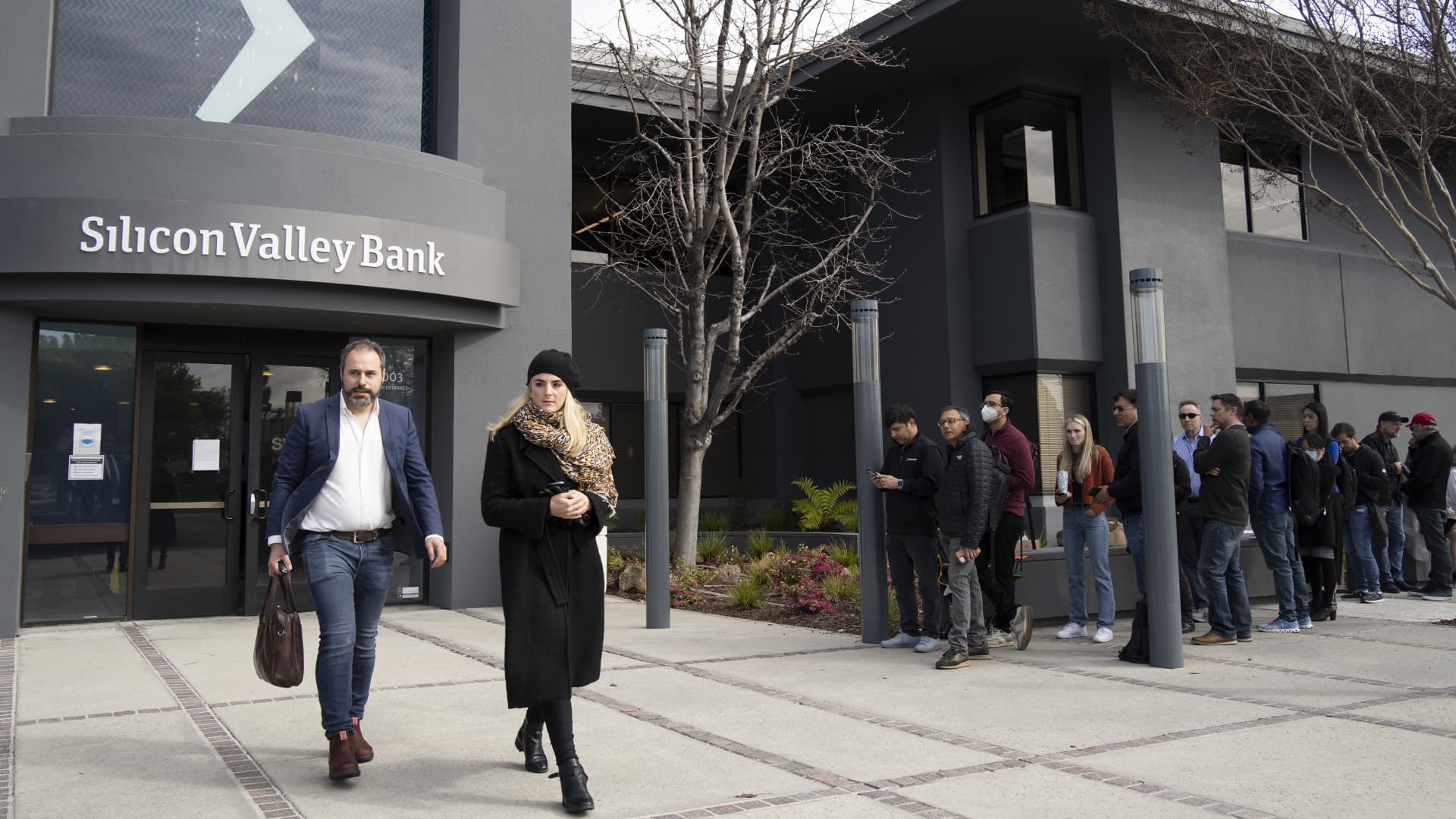
People line up outside of the shuttered Silicon Valley Bank (SVB) headquarters on March 10, 2023 in Santa Clara, California.
Justin Sullivan | Getty Images
Three years ago, JPMorgan Chase executive Doug Petno was at a New York City party celebrating a colleague’s retirement when his boss, Jamie Dimon, called Petno over.
It was March 9, 2023, and the customers of a West Coast lender known for catering to startups had been withdrawing deposits in droves.
“Jamie looks at me and says, ‘Get on this call,’” Petno told CNBC this week in an exclusive interview.
On the line were regulators with an urgent question: Was JPMorgan interested in buying Silicon Valley Bank?
California’s finance regulators seized SVB the next day, completing the sudden collapse of an institution at the heart of the American startup community. Over that weekend, Dimon, Petno and other JPMorgan leaders repeatedly weighed whether they should purchase the bank, which had just lost $42 billion in deposits. They decided against it, in part because thousands of SVB clients were signing up for JPMorgan accounts, anyway, in a flight to safety.
“We had three years’ worth of incoming clients in a weekend,” said Petno, who is co-head of JPMorgan’s commercial and investment bank. “Onboarding teams were opening up accounts around the clock.”
Emboldened by what they were seeing, Petno had an idea: What if JPMorgan could build a true competitor to SVB — as well as startups Brex, Ramp and Mercury — all of whom had carved a profitable niche serving founders and venture capital investors?
“We went to our board and said, there’s a vacuum in the market,” Petno told CNBC. “At that very moment, everybody saw the opportunity.”
Keeping tabs
For JPMorgan, already a giant in Main Street and Wall Street finance, winning the more specific niche of startup banking from West Coast rivals is about more than gaining deposits. It’s both a key element of the growth strategy for a bank with more than $180 billion in revenue last year, and also a means to help the New York-based lender stay close to technology developments for itself.
JPMorgan, with a tech budget of nearly $20 billion this year, is aiming to not only serve startup clients and VC investors better, but to learn from them. The firm keeps a close eye on Silicon Valley startups for solutions to problems the bank itself faces, from cybersecurity to quantum computing.
In fact, when a JPMorgan client announces a round of AI-related cutbacks to jobs and expenses, the firm will often send a team of bankers to investigate how the client is doing it, said Petno.
Typically, the bankers find that implementing new AI agents is only a fraction of the reason for layoffs, while other factors like over-hiring and inefficient processes account for the rest, he said.
Co-CEOs of Commercial & Investment Bank at JPMorganChase, Troy Rohrbaugh and Douglas Petno.
Courtesy: JPMorganChase
JPMorgan began its startup banking business in 2016 as it became aware of its tech-focused rivals during its Westward expansion. In the beginning, it only served bigger, more mature startups.
That’s in part because the bank didn’t yet have a digital banking solution that younger founders in particular craved, Petno said. It also didn’t have enough investment bankers at the time to target smaller, riskier startups.
For years, the view on JPMorgan from some in the VC community was that it took too long to open an account, or that resolving issues around payments involved dealing with time-consuming visits to a branch, investors told CNBC.
“They want to go to the website to open an account, and if it’s more than 15 minutes, they’re done,” says Petno.
But in the weeks that followed the SVB collapse, Petno and his team moved quickly, hiring a few key players from SVB, including then-SVB Capital President John China, who today leads JPMorgan’s innovation economy business along with Andrew Kresse.
By late April of 2023, JPMorgan found itself looking at buying another wounded California-based bank. This time, it made the winning bid for First Republic, which also catered to the tech community.
With fresh learnings from SVB and the banking operations of First Republic, JPMorgan doubled its revenue from startup banking in 2023, according to the company.
Despite the digital banking focus, a startup founder will still sometimes walk into a Chase branch to deposit a huge funding check into a regular account. Now, when that happens, JPMorgan’s systems immediately gets that client moved to the startup team, Petno says.
Killer app?
JPMorgan has now quadrupled the number of total clients it has in the business to nearly 12,000, served by 550 bankers on both coasts, according to the lender, all of whom draw resources from different parts of the company.
Founders and VC investors are clients of the private bank, while the startups are covered by the commercial bank and VC funds are separate clients in a business largely acquired from First Republic.
While JPMorgan declined to give specific revenue figures, Petno said the startup business had a “dramatically higher” growth rate than the bank’s main business lines.
And yet, Petno still isn’t satisfied with the firm’s digital banking offerings for startups, describing a project underway that will help them leapfrog competitors.
Besides SVB, which is now owned by First Citizens Bank, and the startups Mercury and Ramp, competitors in the space include Stifel and Customers Bank. In January, Capital One acquired Brex for $5.15 billion.
Since most startups fail, JPMorgan identifies companies that they expect to be winning bets, seeking to develop relationships with them earlier in their life cycle, like SVB did.
That way, they can provide not only core bank accounts, but lucrative investment banking advice along the way.
JPMorgan’s ultimate vision is to become the one-stop shop for founders, serving all their needs, including international expansion, from the seed round to IPO and beyond.
“Once you’re onboarded, you can never outgrow JPMorgan, from unicorn all the way to a Magnificent 7,” Petno said.

A selloff in both Wall Street and crypto markets hasn’t slowed Circle’s relentless rise. The stablecoin issuer’s stock has more than doubled since early February, with Bernstein analysts expecting further gains as stablecoins continue expanding beyond crypto’s more speculative use cases.
The technology is already moving deeper into traditional finance. UK insurance giant Aon recently piloted stablecoin payments for insurance premiums with Coinbase and Paxos, a move that could make cross-border premium payments faster and more efficient.
Elsewhere, Bitcoin (BTC) miner Canaan is taking a contrarian approach to treasury management, increasing its BTC holdings even as many competitors sell. And in traditional finance, Wells Fargo has filed a trademark for crypto-related services, suggesting large banks are still quietly preparing for deeper involvement in digital assets.
Circle stock surges on stablecoin tailwinds
Shares of stablecoin issuer Circle are rallying sharply in 2026 as Wall Street warms to the long-term growth story behind digital dollars. Analysts at Bernstein recently reiterated an “Outperform” rating on the stock, setting a $190 price target — roughly 60% above current levels.
Circle’s stock price has already more than doubled since early February and is up roughly 49% year-to-date, outperforming both the S&P 500 index and Nasdaq 100 index during the same period.
Bernstein’s bullish outlook hinges on accelerating stablecoin adoption across payments, financial infrastructure and onchain settlement. As the issuer of USDC (USDC), the world’s second-largest US dollar-pegged stablecoin, Circle is increasingly viewed as a key beneficiary of the industry’s push into mainstream finance.

Canaan boosts Bitcoin reserves while other miners sell
Bitcoin miner Canaan is expanding its BTC treasury amid a market downturn, while many rival public mining companies are reducing their holdings.
The company mined 86 BTC in February, increasing its total Bitcoin holdings to 1,793 BTC. Canaan also reported holding 3,952 Ether (ETH), bringing its total crypto reserves to record levels.
The accumulation trend stands in contrast to much of the mining sector. Several publicly traded miners have sold significant portions of their Bitcoin reserves over the past several months as tighter margins and post-halving economics put pressure on balance sheets.
Canaan, meanwhile, continues to expand its mining footprint, including operations in Texas — one of the largest mining hubs in the United States.

Aon pilots stablecoin payments for insurance premiums
Global insurance broker Aon is exploring the use of stablecoins to settle insurance premiums, working with crypto companies Paxos and Coinbase on the initiative.
The goal is to streamline cross-border payments, which often involve multiple banks, currency conversions and settlement delays. Stablecoins could allow insurers and clients to move funds more quickly while reducing costs and processing time.
For the insurance industry, faster settlement could simplify premium collection, improve cash flow management and reduce the administrative work tied to international payments. It may also make it easier to handle large cross-border policies and reinsurance transactions.
The pilot reflects a broader trend of stablecoins use expanding beyond crypto trading into real-world financial use cases, particularly in areas where global payments remain slow and expensive.
Wells Fargo files trademark for crypto services
US banking giant Wells Fargo has filed a US trademark application for “WFUSD,” signaling potential plans to expand deeper into crypto services.
The filing covers a range of blockchain-related offerings, including crypto trading, payments, digital wallet services and software for staking and custody. It also references financial services built on distributed ledger technology.
The trademark is significant because Wells Fargo is the fourth-largest US bank, with about $1.95 trillion in assets as of Q3 2025, according to S&P Global Market Intelligence.
Trademark filings don’t necessarily guarantee a product launch, but they often indicate areas companies are exploring. In this case, the scope suggests Wells Fargo may be evaluating crypto-based payments or a tokenized dollar product under the WFUSD name.

Crypto Biz is your weekly pulse on the business behind blockchain and crypto, delivered directly to your inbox every Thursday.
Bitcoin (BTC) price rallied close to a monthly high near $74,000, posting a 10.42% weekly gain, its strongest seven-day return since September 2025.
The spot market activity, exchange-traded fund (ETF) flows, and corporate-level BTC accumulation suggest a positive shift in demand, as analysts monitor whether the renewed buying pressure can support a rally to higher price levels.
Bitcoin Coinbase premium gap flips after 10 weeks
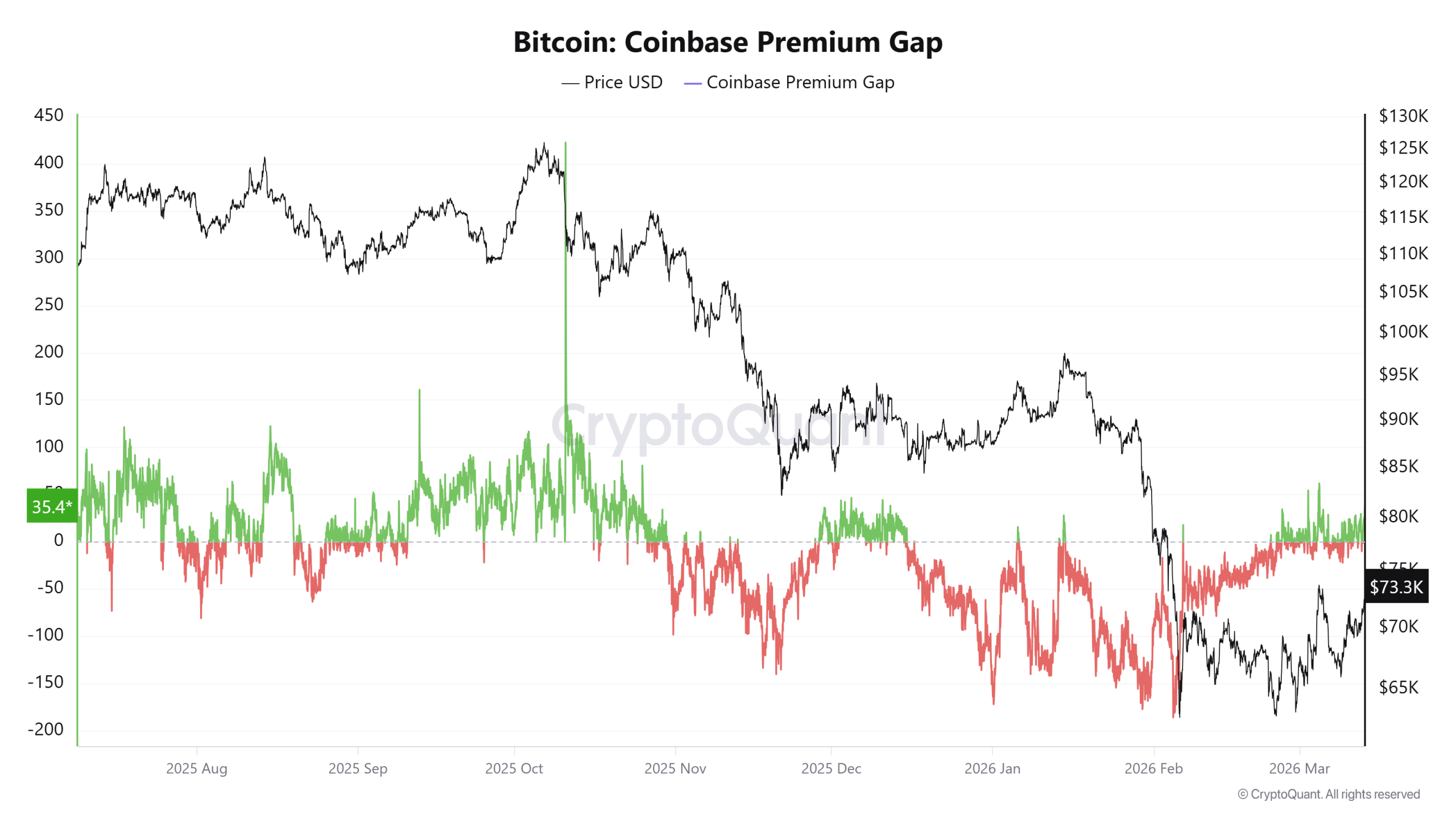
Crypto analyst IT Tech noted that the Coinbase premium gap, which measures the price difference between Bitcoin on Coinbase and global exchanges, currently reads +35.4, marking its first positive print in nearly ten weeks.
The metric previously dropped to –175 on Feb. 2, when Bitcoin traded near $78,000. That period marked the deepest negative reading during the correction that pushed BTC toward $60,000.

The premium has remained in negative territory for the majority of 2026, reflecting persistent selling pressure from the US spot traders. A positive premium signals buying pressure, coinciding with BTC’s rally.
Spot BTC ETF flows have also improved over the past three weeks. The net inflows now exceed $1.9 billion, in line with the recent recovery and rising institutional activity.
The additional demand came from corporate buys. Strategy acquired 11,042 BTC this week through its STRC financing program, adding to the steady bid supporting Bitcoin’s sharp rise since Monday.

Related: STRC may help Strategy reach 1M Bitcoin milestone before BlackRock
BTC liquidity clusters sit above $75,000
Bitcoin is currently attempting to reclaim its 100-day moving average on the daily chart, marking the first major retest of this level since it flipped into resistance on Jan. 20.

If Bitcoin stabilizes above $74,000, the price re-enters a zone with dense liquidity. The liquidation map shows roughly $1.9 billion in leveraged long positions clustered just above $75,000, which can attract the price as BTC seeks higher liquidity zones.
Above $75,000, nearly $2 billion in sell-side liquidity sits between $76,000 and $80,000, although it is distributed across a $4,000 range.

If BTC pushes through this region, the next nearby technical range sits between $79,400 and $81,400, where a one-hour fair value gap (FVG) formed during the previous decline. These imbalances between buyers and sellers often act as key inflection points for continuation.
Speaking on the potential retest of $74,000, crypto trader Ardi said Bitcoin needs to flip this level into support and reclaim the $85,000 region to rebuild a higher-time frame (HTF) bullish trend.

Meanwhile, MN Capital founder Michaël van de Poppe identified $76,000–$79,000 as a resistance band where additional momentum may spill into altcoin markets.
A move into that region exhibits a monthly engulfing candle pattern, effectively erasing February’s correction for BTC. A bullish engulfing pattern on the monthly chart may invite more buying pressure from traders, as it marks a positive shift on an HTF chart.
Related: Bitcoin catching up to gold hints at an ‘opportunity within risk’
This article does not contain investment advice or recommendations. Every investment and trading move involves risk, and readers should conduct their own research when making a decision. While we strive to provide accurate and timely information, Cointelegraph does not guarantee the accuracy, completeness, or reliability of any information in this article. This article may contain forward-looking statements that are subject to risks and uncertainties. Cointelegraph will not be liable for any loss or damage arising from your reliance on this information.
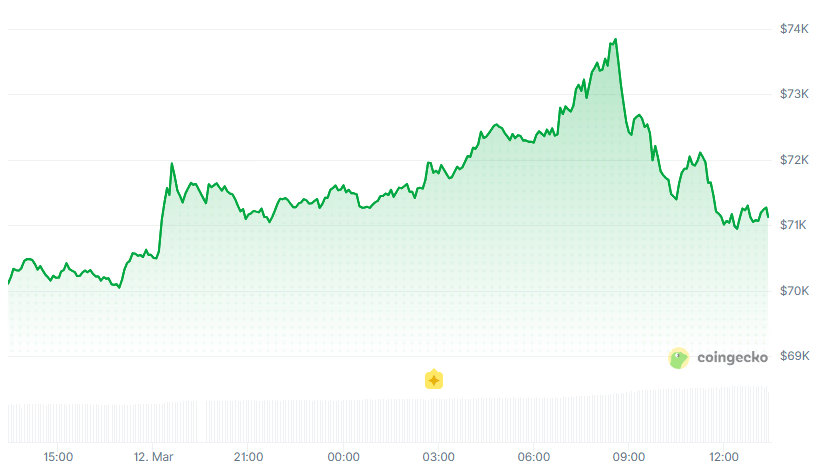
Bitcoin is trading around $71,000 after reaching $74,000 earlier today.
Crypto markets started Friday firmly in the green, but erased most of their gains after The Wall Street Journal reported that the Pentagon is moving more troops and warships to the Middle East, signaling a potential escalation in the ongoing conflict.
Bitcoin (BTC) is trading at around $71,200, up 2% over the past 24 hours. The world’s largest cryptocurrency touched $74,000 before reversing. Meanwhile, ETH is up 2.2% to $2,100, and SOL is up 3% to $89.

The overall crypto market capitalization climbed 1.1% to $2.51 trillion, according to Coingecko.
The S&P 500 and the Nasdaq posted minor losses, while oil held steady around $95 and precious metals dropped.
Most of the Top 100 digital assets posted gains over the last 24 hours, with AI-linked tokens leading the charge.
Today’s top gainers are TRUMP, which surged 30%, followed by RENDER, which climbed another 14%, pushing its weekly gains to 36%.
Pi Network (PI) and MORPHO are the biggest losers.
Around 107,000 leveraged traders were liquidated for $448 million in the past 24 hours, according to CoinGlass, with short positions dominating. Bitcoin accounted for $203 million, while ETH positions made up $128 million.
Bitcoin exchange-traded funds (ETFs) recorded inflows of $54 million on Thursday, marking a fourth straight day of gains.
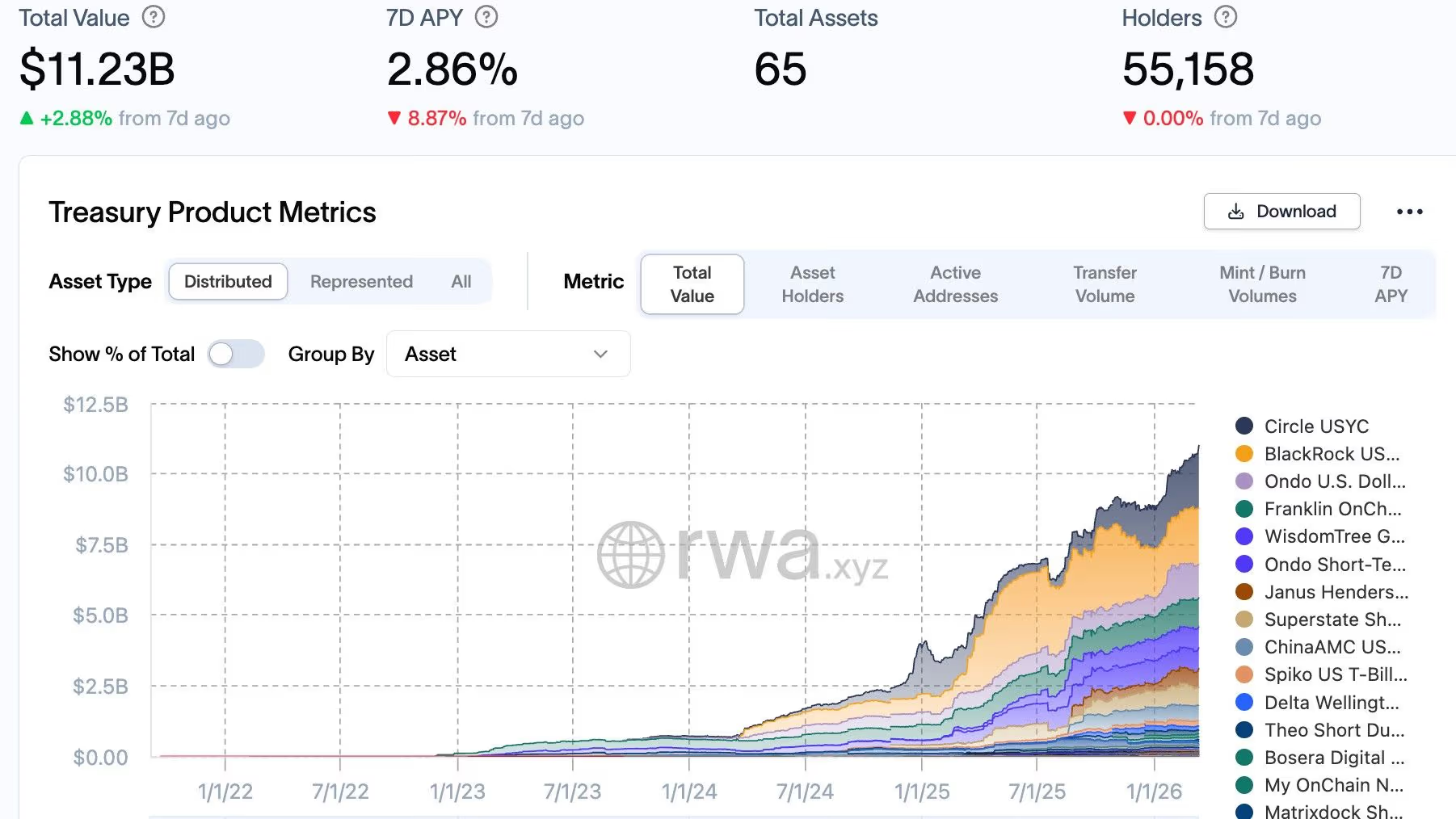
The fast-growing market for tokenized U.S. Treasuries has a new leader.
Circle (CRCL), best known as the issuer of the USDC (USDC) stablecoin, has become the largest provider of tokenized Treasury exposure after its USYC token expanded to about $2.2 billion in supply, according to RWA.xyz data.
That growth pushed USYC past BlackRock’s USD Institutional Digital Liquidity Fund (BUIDL) – issued with tokenization specialist Securitize – which currently holds around $2 billion in assets. BUIDL’s market share shrank to 18% from a 46% peak in May as competition increased with new entrants.

Tokenized real-world assets such as Treasury bills and money-market funds are gaining traction among crypto traders and institutional investors as yield-generating collateral and a tool to park onchain cash. Unlike traditional financial infrastructure, blockchain-based tokens allow near-instant settlement, transparent reserves and round-the-clock access.
Treasury-backed tokens also offer an additional advantage: they allow investors to earn interest while using the assets as collateral in trading strategies, potentially improving capital efficiency compared with holding stablecoins or cash.
Circle entered the tokenized fund market after acquiring Hashnote, the issuer of USYC, in early 2025.
BUIDL issuer Securitize did not return a request for comment by press time.
A booming market
A deeper dive into the data shows that much of USYC’s recent expansion appears to be linked to activity on BNB Chain, where crypto exchange giant Binance introduced the token as off-exchange collateral for institutional derivatives trading.
Under the structure, USYC can be held with partner banks through Binance Banking Triparty or with Ceffu, Binance’s institutional custody platform.
Since the launch in July, USYC supply on BNB swelled to $1.84 billion, data shows.
“Tokenized treasuries and repo as collateral is a major emerging use case and we are proud of how quickly this has grown,” Circle CEO Jeremy Allaire said Friday in a post on X.
The broader tokenized Treasury market is also booming, hitting a fresh record high of over $11 billion, according to data from RWA.xyz. The sector added roughly $2.5 billion in market value, some 27%, since the start of the year.
The growth accelerated during January’s crypto market downturn, suggesting some investors may be parking capital in tokenized Treasuries to earn a steady yield while waiting for opportunities to redeploy funds into digital assets.


STRC trading volume jumped 471%, generating capital for roughly 4,000 BTC, according to BitcoinTreasuries.
On March 12, Strategy’s STRC preferred stock program set a single-day record, generating enough capital to fund the purchase of 4,000 BTC.
According to data from BitcoinTreasuries, the week’s total was already enough to buy more than 10,000 BTC, a pace that is drawing the attention of investors who are watching how aggressively the world’s largest corporate Bitcoin holder is building its treasury.
Record Trading Volume for STRC
In a post on X, BitcoinTreasuries revealed that there were about 7.3 million shares traded during the March 12 session, a figure 471% higher than the stock’s average daily volume.
The platform uses a model that analyzes 1-minute STRC candles during the entire trading day, including pre-market and after-hours sessions. For any bar that closed at or above $99.92, considering STRC’s $100 par value, the model attributed 40% of the volume to at-the-market (ATM) issuance. It then subtracted a 2.5% underwriter commission and divided the net proceeds by the session-average Bitcoin price to get an estimated BTC total.
March 12th’s 7.3 million share volume yielded just over $283 million in net proceeds using the formula, and when divided by Bitcoin’s average price near $70,000, it was found that the money could buy 4,000 BTC, which was a first in the program’s history.
The amount of trading reached an estimated $743 million, exciting observers enough that one of them, Mark Harvey, suggested that the day could become STRC’s first $1 billion trading day, given that at the time there were still two hours left before the market closed.
Stock Structure Draws Attention
STRC pays a variable monthly dividend currently annualized at 11.5%, and it has built-in rate adjustments designed to keep the stock trading near par. The instrument channels investor capital directly into Bitcoin purchases while providing a yield-focused product that tends to move less than Strategy’s common MSTR stock.
You may also like:
Essentially, the fixed dividend remains perpetual with no principal repayment required, unlike debt. Harvey recently gave an example of how it works, using a hypothetical scenario where the company issues $100,000 of STRC at the stated 11.5% yield to buy BTC.
According to him, it would create a yearly dividend obligation of $11,500, which would be fixed, meaning that even if BTC’s value were to shoot up 10 times in five years, Strategy’s dividend obligation would be just $57,500, while its BTC holding grows by $1,000,000, delivering a net $842,500 gain to shareholders.
As of its most recent filing dated March 9, Strategy held 738,731 BTC, boosted by recent purchases, including 3,015 BTC bought on March 2 and a bigger announcement of 17,994 BTC on March 9 acquired for $1.28 billion.
At current prices, the stash is valued at about $53.1 billion, with the company having acquired it for just over $56 billion.
Binance Free $600 (CryptoPotato Exclusive): Use this link to register a new account and receive $600 exclusive welcome offer on Binance (full details).
LIMITED OFFER for CryptoPotato readers at Bybit: Use this link to register and open a $500 FREE position on any coin!


The crypto market has yet to react even as stablecoin supply reaches a new milestone.
Summary
- Stablecoin market cap surpassed $315 billion, reaching a new all-time high.
- Crypto market remains range-bound as stablecoin flows to exchanges stay weak.
- Analysts say growing stablecoin liquidity could fuel a future rally if inflows return.
Data from DeFiLlama shows the total market capitalization of stablecoins has surpassed $315 billion, setting a new all-time high. The figure increased by about $2.48 billion, or 0.79%, over the past seven days, highlighting steady growth in on-chain liquidity.
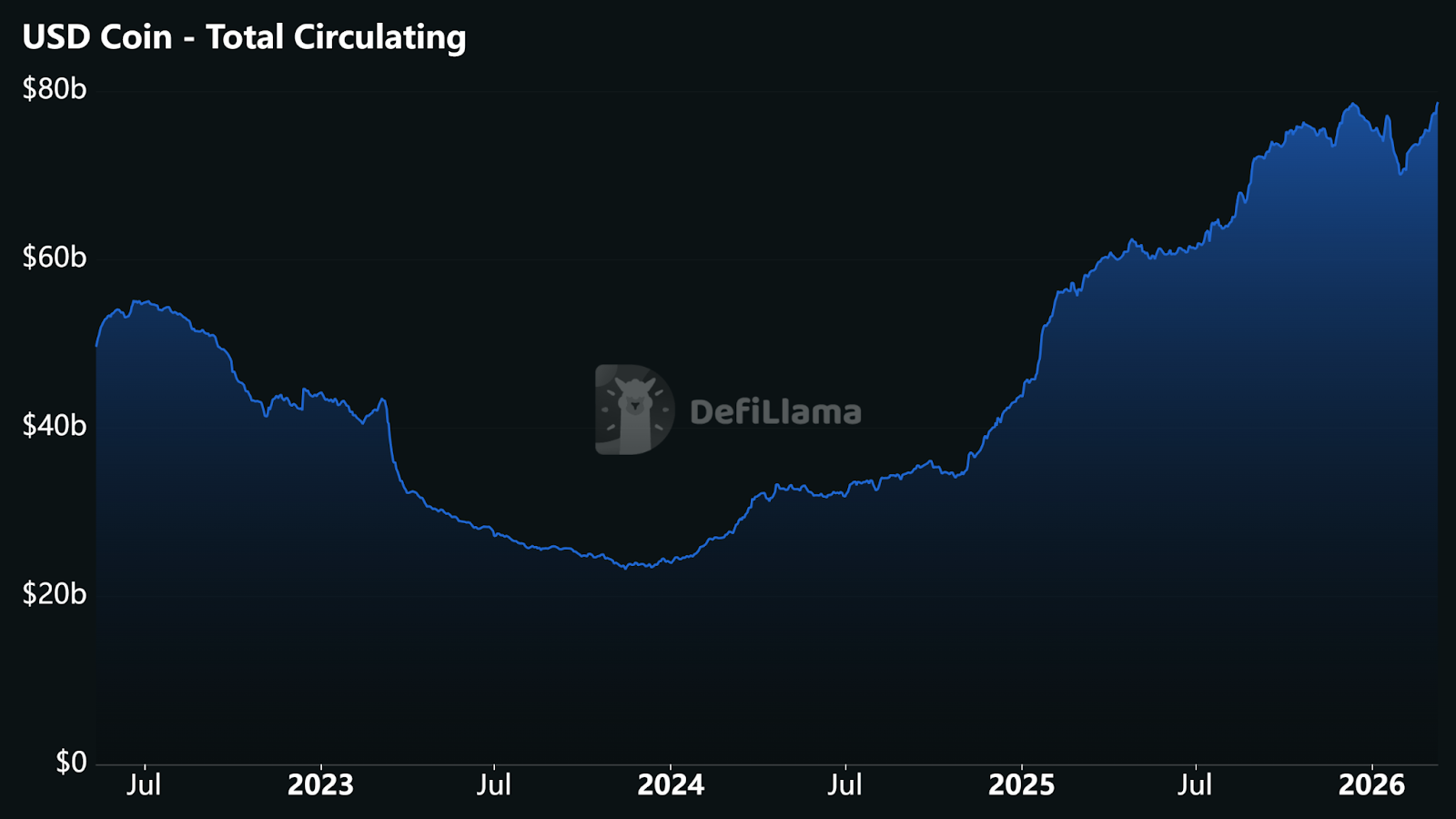
Among the largest issuers, Tether (USDT) leads with a market cap of $183.93 billion, representing about 58% of the sector. USD Coin (USDC) follows with roughly $78.8 billion, while USDS holds close to $8 billion.
Historically, such expansion has often preceded rallies across the crypto market. Stablecoins usually function as liquidity waiting to be deployed, giving traders a way to move capital quickly into assets like Bitcoin, Ethereum, or decentralized finance protocols.
During the 2020–2021 bull cycle, stablecoin supply grew from around $20 billion to more than $120 billion. That growth came shortly before Bitcoin surged from roughly $10,000 to nearly $69,000.
A similar trend appeared during the 2024–2025 recovery, when rising stablecoin issuance led to renewed demand across digital assets.
Stablecoin supply rises, but trading demand stays muted
Despite the record supply, the broader crypto market has remained relatively quiet.
Exchange flow data shows that stablecoins have not been moving into trading platforms in large numbers. On the contrary, some exchanges have recorded consistent outflows this year.
For example, Binance has reportedly seen around $2 billion in monthly stablecoin outflows, while Bitfinex has recorded roughly $336 million leaving the platform.
This pattern suggests that new stablecoin liquidity is not immediately being used for speculative trading. As a result, prices across major cryptocurrencies have remained range-bound, with Bitcoin hovering near the $70,000 level in recent weeks.
Why stablecoins may be bypassing the crypto market
One explanation is that stablecoins are no longer used only as trading tools. Their role in the digital economy has expanded significantly.
Today, stablecoins are widely used for cross-border payments, remittances, and online settlements. For many users in emerging markets, they also serve as a practical alternative to volatile local currencies.
Major payment and crypto firms are also building infrastructure around these assets. Companies such as Circle and Stripe have explored systems that allow stablecoins to support new financial services, including automated payments and tokenized assets.
Because of this shift, a growing share of stablecoin activity now occurs outside traditional crypto trading. Liquidity may still be entering the ecosystem, but it is not immediately flowing into exchanges or spot markets.
For the crypto market, that leaves a mixed outlook. In the short term, prices could continue to move sideways as traders wait for stronger inflows.
Over a longer horizon, however, the expanding stablecoin supply may still provide the foundation for the next major rally, if that liquidity eventually returns to crypto markets.


error code: 502
This article was originally published as Price Predictions 3/13: BTC ETH BNB XRP SOL DOGE HYPE ADA BCH XMR on Crypto Breaking News – your trusted source for crypto news, Bitcoin news, and blockchain updates.

Will bitcoin dump below $70,000 after the latest rejection?
The primary cryptocurrency registered a renewed uptick over the past hours, with its price soaring past $74,000 before it faced an immediate rejection.
The broader outlook remains bearish, with BTC still trading far below its all-time high of over $126,000 reached last October. Analysts have highlighted several key resistance levels that must be reclaimed before bulls can regain full control.
More Gains Ahead?
The impressive revival comes on the back of Donald Trump’s recent remarks that Iran is “about to surrender” as well as the reports that the newly elected leader of the Asian country, Mojtaba Khamenei (who is the son of the late Ali Khamenei), is “likely disfigured.”
BTC’s pump has caught the attention of multiple market observers, and some expect the rally to go on in the short term. X user Ted noted that Coinbase Premium is rising, indicating solid spot demand. He believes that holding above the $70,000 zone could lead to further gains of around $76,000.
The analyst who goes by the moniker Ardi on X claimed that the leading digital asset needs to flip the $74,000 resistance into support to actually “start looking macro bullish again.” If it could achieve that, the valuation might surge to $85,000, he added. At the same time, he warned that anything below that mark is “just price setting a macro lower high in a downtrend.”
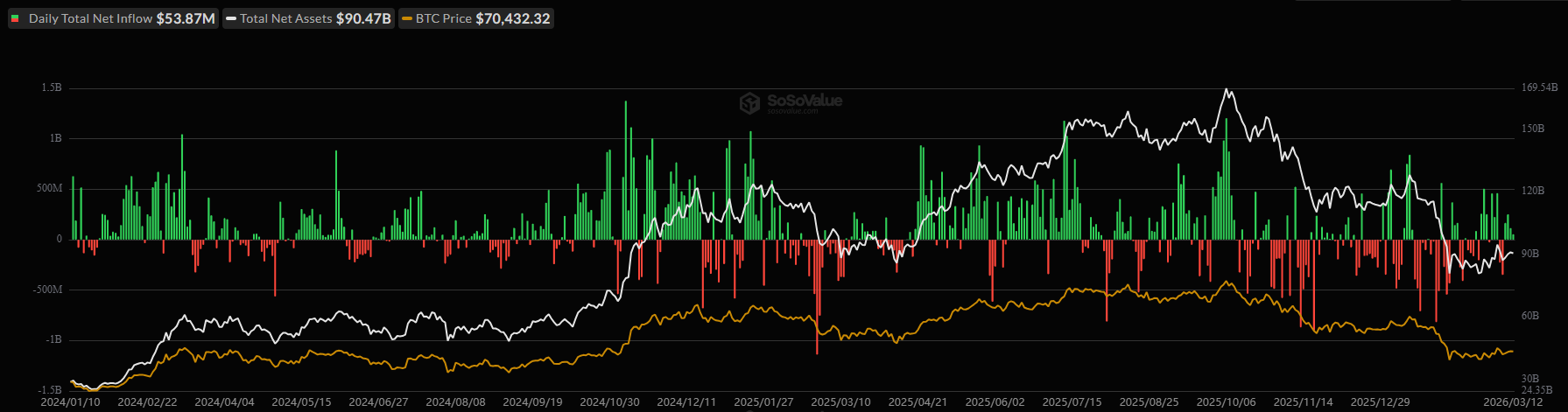
Certain indicators suggest the asset could continue marching north. Data from SoSoValue show that over the past few days, inflows into spot BTC ETFs have outpaced outflows. This is a clear bullish factor that displays that institutional investors, such as pension funds, hedge funds, and asset managers, have been increasing their exposure to cryptocurrency. As inflows rise, ETF issuers are required to purchase additional BTC to back the new shares, creating buying pressure that can further support the price.
Next on the list is the gradually declining amount of coins sitting on crypto exchanges. According to CryptoQuant, the figure slipped to roughly 2.74 million today, the lowest level since the end of 2020. This development signals that investors have been moving their holdings toward self-custody methods and are in no rush to cash out.
You may also like:

Short-Term Pullback on the Horizon?
Other metrics, such as the Relative Strength Index (RSI), suggest that BTC’s substantial resurgence could soon be replaced by a correction. The technical analysis tool measures the speed and magnitude of recent price changes to give traders an idea about possible reversal points. It ranges from 0 to 100, and readings above 70 signal that the asset is overbought and gearing up for a decline. As of press time, the RSI stands at 81.
BTC’s Market Value to Realized Value (MVRV) is also worth analyzing. It compares the current value of all coins to the price at which people originally paid to acquire their holdings. Over the past months, the ratio has been decreasing, reaching around 1.3 today. According to CryptoQuant, readings below 1 typically signal a bottom, implying that the bear market may not have fully unfolded yet.

Earlier this week, numerous analysts warned that BTC’s price could drop to $50,000, and possibly lower, later this year.
Binance Free $600 (CryptoPotato Exclusive): Use this link to register a new account and receive $600 exclusive welcome offer on Binance (full details).
LIMITED OFFER for CryptoPotato readers at Bybit: Use this link to register and open a $500 FREE position on any coin!

Key points:
-
Bitcoin turned down from the $74,000 level, indicating that the bears remain sellers on rallies.
-
Several major altcoins are showing strength and are likely to break above their immediate resistance levels.
Bitcoin (BTC) turned down from the $74,000 level, indicating that the bears are vigorously defending the level. Glassnode said in its latest Week On-chain newsletter that BTC is stuck between the realized price (average acquisition cost of all circulating supply) at $54,400 and true market mean (the cost basis of actively transacted coins) at $78,000. Rally attempts are likely to witness rejection at the $78,000 level.
Historical data also does not support a sharp rally in BTC in 2026. Data from Binance Research shows that BTC has seen drawdowns of 56%, 73%, and 64% during the 2014, 2018 and 2022 US midterm election years. However, there is a ray of hope for the bulls as the two years following the midterm elections have seen massive gains in BTC.

Notwithstanding the uncertainty, a positive sign in favor of the bulls is that BTC has emerged as the best performing macro asset since the start of the US and Israel-Iran war. It shows investors are not panicking and dumping their BTC positions. That increases the likelihood of a bottom formation in BTC.
Could buyers propel BTC and select major altcoins above their overhead resistance levels? Let’s analyze the charts of the top 10 cryptocurrencies to find out.
Bitcoin price prediction
BTC rallied toward the overhead resistance at $74,508, where the bears are mounting a strong defense.

The 20-day exponential moving average ($69,271) has flattened out, and the relative strength index (RSI) has jumped into the positive zone, signaling an advantage to buyers. That increases the possibility of a break above the $74,508 level, completing a bullish ascending triangle pattern. The BTC/USDT pair may then skyrocket to $84,000.
Sellers will have to tug the Bitcoin price below the support line to signal a comeback. If they do that, the pair may collapse to the $62,500 to $60,000 support zone.
Ether price prediction
Sellers are attempting to halt Ether’s (ETH) relief rally at the 50-day simple moving average ($2,173), but the bulls continue to exert pressure.

If buyers do not allow the Ether price to slip back below the 20-day EMA ($2,036), it enhances the prospects of a rally to $2,600. Such a move suggests that the downtrend may be over.
Sellers are likely to have other plans. They will attempt to swiftly pull the price back below the 20-day EMA. If they can pull it off, it suggests that the ETH/USDT pair may extend its range-bound action between $1,750 and $2,200 for some more time.
BNB price prediction
BNB (BNB) reached the 50-day SMA ($680), where the bears are expected to mount a strong defense.

However, if buyers overcome the barrier at the 50-day SMA, the BNB price may ascend to $730 and subsequently to $790. Such a move suggests that the BNB/USDT pair may have bottomed out at $570.
Alternatively, if the price turns down from the 50-day SMA and breaks below the 20-day EMA, it suggests that the bears remain in command. The pair may drop to $607 and thereafter to $570.
XRP price prediction
XRP (XRP) has risen above the 20-day EMA ($1.39), indicating that the selling pressure is reducing.

The relief rally is expected to face selling at the 50-day SMA ($1.49) and then at the $1.61 level. If the XRP price turns down from the overhead resistance but rebounds off the 20-day EMA, it suggests a change in sentiment from selling on rallies to buying on dips. That increases the possibility of a rally to the downtrend line of the descending channel pattern.
This positive view will be negated in the near term if the price turns down from the 50-day SMA and breaks below $1.27. The XRP/USDT pair may then plummet to the support line.
Solana price prediction
Solana (SOL) has gradually risen to the top of the $76 to $95 range, indicating that selling pressure is reducing.

If buyers overcome the barrier at $95, the SOL/USDT pair might travel to the $117 level. Sellers are expected to fiercely defend the $117 level, but on the way down, if the Solana price does not dip below $95, it suggests that the pair may have bottomed out in the short term.
Contrarily, if the price turns down sharply from the $95 level, it signals that the bears remain in control. The pair may continue to oscillate between $95 and $76 for a few more days.
Dogecoin price prediction
Dogecoin (DOGE) has been trading between the 50-day SMA ($0.10) and the $0.09 level for the past few days.

The tightening range suggests a possible range expansion in the near term. A close above the 50-day SMA opens the gates for a rally to the breakdown level of $0.12. If the Dogecoin price turns down from the $0.12 level, it signals a possible range formation. The DOGE/USDT pair may consolidate between $0.09 and $0.12 for a while.
A close above the $0.12 resistance clears the path for a rally to the $0.16 level, while a break below the $0.09 support signals the resumption of the downtrend.
Hyperliquid price prediction
Hyperliquid (HYPE) closed above the $36.77 resistance on Thursday, indicating that the bulls are attempting to take charge.

There is minor resistance at $38.43, but it is likely to be crossed. The HYPE/USDT pair may march to $43 and later to $50.
The first sign of weakness will be a close below the $36.77 level. That suggests the bears are selling on rallies. The Hyperliquid price may descend to the 20-day EMA ($32.57), which is a critical support to watch out for. If the price rebounds off the 20-day EMA with force, the bulls will again attempt to resume the recovery. Sellers will be back in control on a close below the 50-day SMA ($30.65).
Related: Here’s why XRP bulls see an ‘explosive run’ to $2.55 next
Cardano price prediction
Cardano (ADA) has risen above the 20-day EMA ($0.27), indicating aggressive buying by the bulls.

The 50-day SMA ($0.28) may act as a resistance, but it is likely to be crossed. The ADA/USDT pair may then rise to the downtrend line of the descending channel pattern. A close above the downtrend line signals a potential short-term trend change. That clears the path for a rally to $0.39 and subsequently to $0.44.
Instead, if the Cardano price turns down sharply from the downtrend line, it signals that the bears remain sellers on rallies. That might keep the pair inside the channel for some more time.
Bitcoin Cash price prediction
Bitcoin Cash (BCH) has pierced the 20-day EMA ($471), indicating that the bulls are on a comeback.

If the Bitcoin Cash price closes above the 20-day EMA, the BCH/USDT pair may surge to the 50-day SMA ($514). Sellers are expected to defend the 50-day SMA, as a close above it opens the doors for a rally to $600.
Contrary to this assumption, if the price turns down sharply from the moving averages, it indicates that the bears remain in control. That increases the likelihood of a break below the $443 level. The pair may then plunge to $375.
Monero price prediction
Buyers held Monero’s (XMR) pullback at the 20-day EMA ($348), indicating that the dips are being viewed as a buying opportunity.

That improves the prospects of a break above the 50-day SMA ($366). If that happens, the XMR/USDT pair may climb to the 61.8% Fibonacci retracement level of $414 and later to $452.
Time is running out for the bears. They will have to swiftly yank the Monero price below the $333 level to weaken the bulls. The pair may then tumble to $309, where the buyers are expected to step in.
This article does not contain investment advice or recommendations. Every investment and trading move involves risk, and readers should conduct their own research when making a decision. While we strive to provide accurate and timely information, Cointelegraph does not guarantee the accuracy, completeness, or reliability of any information in this article. This article may contain forward-looking statements that are subject to risks and uncertainties. Cointelegraph will not be liable for any loss or damage arising from your reliance on this information.
Crypto World
BlackRock brings Ethereum staking yield to ETFs as Mutuum Finance expands on-chain yield opportunities


Disclosure: This article does not represent investment advice. The content and materials featured on this page are for educational purposes only.
BlackRock launches Ethereum ETF with staking rewards as DeFi platforms like Mutuum Finance expand crypto yield opportunities.
Summary
- DeFi yield models expand as Mutuum Finance builds Ethereum-based non-custodial lending pools.
- Mutuum Finance lets users deposit assets for mtTokens, earning yield as borrowers pay interest.
- MUTM is currently trading at $0.04 with 19k holders, as audits by CertiK and Halborn support its development.
BlackRock has introduced a new Ethereum investment product that combines spot ETH exposure with staking rewards, expanding institutional access to yield-generating crypto strategies.
The firm’s iShares Staked Ethereum Trust ETF (ETHB) will trade on Nasdaq and aims to distribute staking income to investors while holding Ethereum in custody through Coinbase. As institutional products begin incorporating staking-based returns, yield generation is also expanding across decentralized finance, where platforms such as Mutuum Finance are developing on-chain lending systems designed to provide users with alternative ways to earn yield through crypto assets.
BlackRock expands Ethereum ETF offering with staking
BlackRock has introduced the iShares Staked Ethereum Trust ETF (ETHB), a Nasdaq-listed product designed to provide investors with spot Ethereum exposure while generating income through staking. The exchange-traded product will allocate a portion of its ETH holdings to staking, allowing investors to participate in Ethereum network rewards without directly managing the staking process.
According to the company’s filing with the U.S. Securities and Exchange Commission, Coinbase will act as custodian and staking provider, while the approved validators currently include Figment, Galaxy Digital, and Attestant. Staking rewards are expected to be distributed monthly, or at least quarterly, to ETF investors. At launch, the ETF carries a 0.25% sponsor fee, which will be temporarily reduced to 0.12% for the first $2.5 billion in assets under management.
The product expands BlackRock’s existing digital asset ETF lineup, which already includes the iShares Bitcoin Trust (IBIT) and iShares Ethereum Trust (ETHA). These products have accumulated more than $55 billion and $6.5 billion in assets, respectively, making them the largest funds in their category.
BlackRock’s move follows similar developments from competitors. Grayscale Investments became the first U.S. issuer to enable staking for Ethereum ETFs in October 2025, while other asset managers such as 21Shares and REX-Osprey have also introduced or planned staking-enabled products.
DeFi yield opportunities
As institutional products begin incorporating staking-based returns, yield generation is also expanding across decentralized finance platforms. Protocols such as Mutuum Finance are developing on-chain systems where users can earn yield by supplying digital assets to lending pools. Mutuum Finance is an Ethereum-based lending and borrowing protocol designed to provide users with non-custodial access to liquidity while generating returns from lending activity within the platform.
Within the Mutuum Finance model, users deposit assets into liquidity pools and receive mtTokens, which represent their share of the deposited funds and accumulate yield as borrowers pay interest on borrowed assets. These mtTokens can also be staked, allowing users to receive dividends in MUTM tokens, which are the native tokens of the Mutuum Finance ecosystem. The reward distribution works through a mechanism that allocates a portion of protocol-generated fees to purchase MUTM tokens from the market and distribute them to users who stake their mtTokens. This structure links lending activity within the protocol to token-based rewards for participants.
From the token side, MUTM is currently priced at $0.04, with the project reporting more than 19,000 token holders and over $20.8 million raised to date. The MUTM token smart contract has also undergone a security review by CertiK, while the lending and borrowing smart contracts were audited by Halborn prior to the launch of the protocol’s V1 on the Sepolia testnet.
Testing Mutuum Finance’s protocol
The Mutuum Finance V1 protocol is currently running on the Sepolia testnet, where users can explore the main functions of the platform’s lending and borrowing system. Since it operates in a test environment, users interact with Sepolia test tokens instead of real assets, allowing them to try the protocol’s features without using actual funds.
At present, four crypto assets are available in the test environment: Ethereum (ETH), Chainlink (LINK), Wrapped Bitcoin (WBTC), and Tether (USDT). Users can mint test tokens, supply them to liquidity pools, borrow against collateral, and test staking functionality within the protocol.
Several core components of the system have already been implemented on the testnet, including mtTokens, debt tokens, the Stability Factor risk metric, Safe Mode Borrow Presets, and an automated liquidator bot designed to monitor positions and trigger liquidations when collateral risk exceeds safe thresholds.
A recently introduced feature, Safe Mode Borrow Presets, allows users to select predefined risk levels when opening borrowing positions. The system offers three options: Safe, Balanced, and Aggressive, each corresponding to a different Stability Factor and borrowing limit.
For example, if a user deposits $2,000 worth of ETH as collateral and the protocol allows a maximum loan-to-value (LTV) ratio of 80%, the theoretical borrowing limit would be $1,600. Using the Safe preset, the protocol may restrict borrowing to roughly $900–$1,000, maintaining a larger safety buffer against price volatility. Under the Balanced preset, borrowing could increase to approximately $1,200–$1,300, while the Aggressive preset allows borrowing closer to the upper limit, around $1,500–$1,600, depending on the selected risk parameters.
The Mutuum Finance team regularly publishes development updates across its official social channels, including X (Twitter), Discord, and Telegram, providing information about new features and protocol improvements.
In its latest development update, the team stated that it has been working on position alert notifications, which will notify users through email, Telegram, or Discord if their Stability Factor changes or falls below a safe level. The team also noted that the next protocol feature has already been completed and is currently undergoing an internal audit, with deployment expected within the coming days.
Overall, the launch of staking-enabled Ethereum ETFs reflects growing demand for yield-generating crypto investment products at the institutional level. At the same time, decentralized platforms such as Mutuum Finance are developing on-chain alternatives that allow users to access lending-based yield and collateralized borrowing directly through smart contracts, highlighting continued expansion across both traditional crypto investment products and DeFi infrastructure.
Disclosure: This content is provided by a third party. Neither crypto.news nor the author of this article endorses any product mentioned on this page. Users should conduct their own research before taking any action related to the company.

Banksy art hoarded by Welsh criminal to be auctioned off

Rubio named as AIPAC asset in leaked conversation

Pakistan Thrash Bangladesh By 128 Runs In Rain-Hit Second ODI To Level Series


-

 News Videos4 days ago
10th Algebra | Financial Planning | Question Bank Solution | Board Exam 2026
-
 Tech3 days ago
A 1,300-Pound NASA Spacecraft To Re-Enter Earth’s Atmosphere
-

 Crypto World4 days ago
Paradigm, a16z, Winklevoss Capital, Balaji Srinivasan among investors in ZODL
-

 Business3 days ago
ExxonMobil seeks to move corporate registration from New Jersey to Texas
-

 Tech3 days ago
ChatGPT will now generate interactive visuals to help you with math and science concepts
-

 Sports6 days ago
Three share 2-shot lead entering final round in Hong Kong
-

 Sports6 days ago
Braveheart Lakshya downs Lai in epic battle to enter All England Open final | Other Sports News
-

 NewsBeat2 days ago
Residents reaction as Shildon murder probe enters second day
-

 Entertainment7 days ago
Hailey Bieber Poses For Sexy Selfies In New Luscious Lip Thirst Traps
-

 Business3 days ago
Search Enters Sixth Week With New Leads in Tucson Abduction Case
-

 Business5 days ago
Search for Nancy Guthrie Enters 37th Day as FBI Probes Wi-Fi Jammer Theory
-
 NewsBeat4 days ago
Pagazzi Lighting enters administration as 70 jobs lost and 11 stores close across Scotland
-

 Tech4 days ago
Despite challenges, Ireland sixth in EU for board gender diversity
-

 Business4 days ago
Search Enters 39th Day with FBI Tip Line Developments and No Major Breakthroughs
-

 NewsBeat2 days ago
I Entered The Manosphere. Nothing Could Prepare Me For What I Found.
-

 Fashion2 hours ago
Weekend Open Thread: Addict Lip Glow
-

 Business7 days ago
Iran war enters second week as Trump demands ’unconditional surrender’
-

 Sports4 days ago
Skateboarding World Championships: Britain’s Sky Brown wins park gold
-
 Crypto World3 days ago
Will Chainlink price reclaim $10 amid volatility squeeze?
-

 Sports5 days ago
Tomorrow’s Top 25 Today: Florida jumps to No. 4; Louisville, Wisconsin enter projected rankings